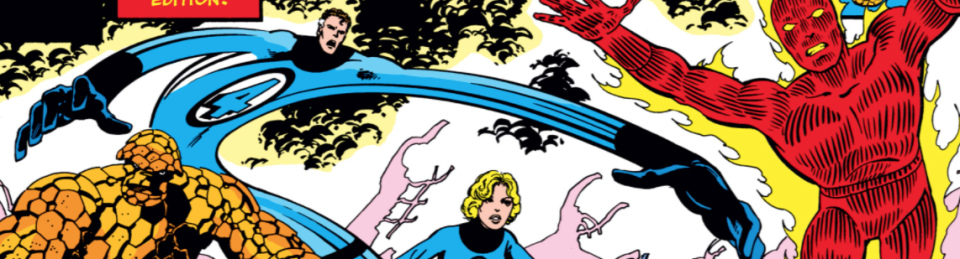
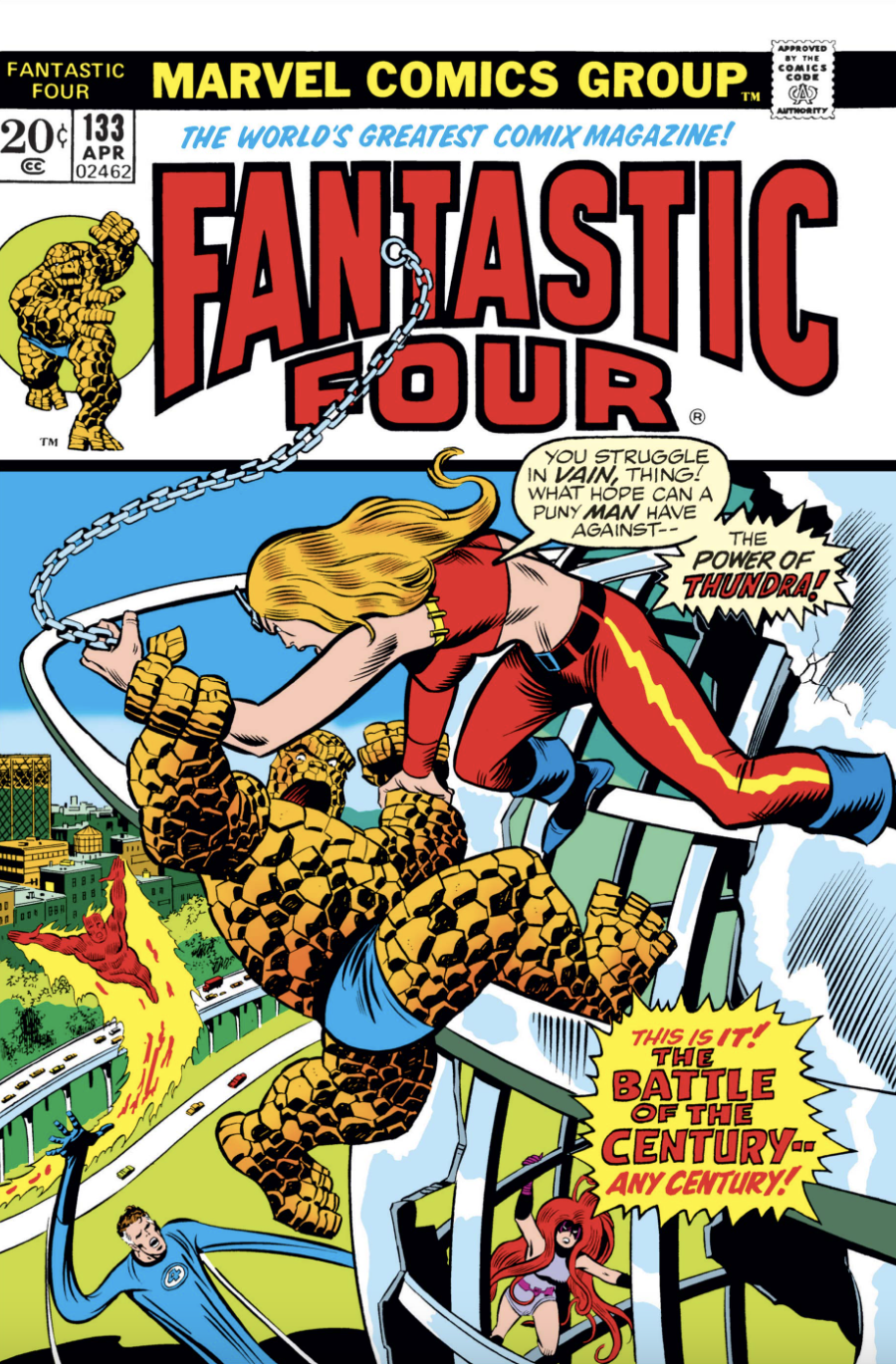
Fantastic Four 133
“Thundra at Dawn”
Published Jan. 1973
Plotter: Roy Thomas
Scripter: Gerry Conway
Pencils: Ramona Fradon
Inker: Joe Sinnott
Letters: John Constanza
Colors: Stan Goldberg
Editor: Thomas
Cover: John Buscema and Sinnott
Synopsis
In a plot engineered by the Frightful Four, Thundra challenges the Thing to a duel at Shea Stadium, and kidnaps Alicia Masters to ensure he accepts the challenge. Thundra is on the verge of killing Ben when Mr. Fantastic momentarily returns the Thing to his human form, leading Thundra to abandon the fight.
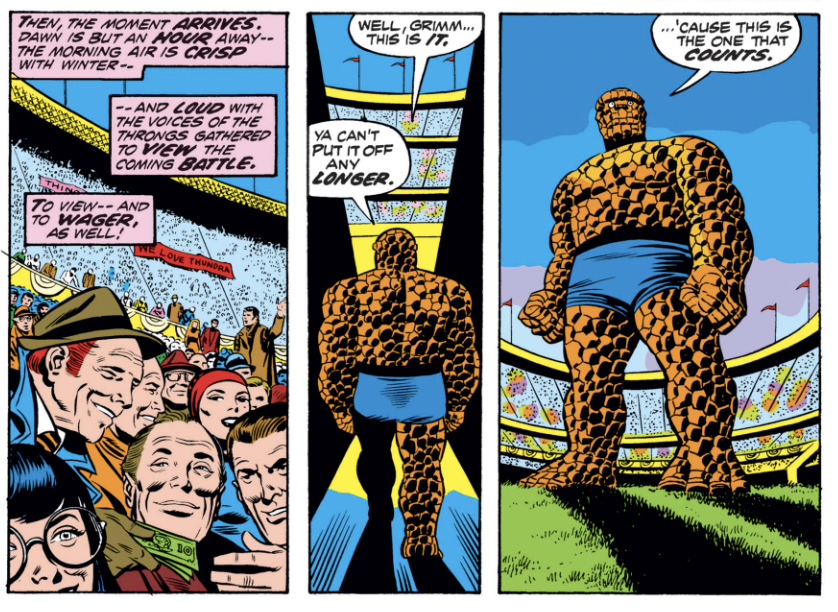
What’s going on here?
This is a consequential issue! It features a new writer and a new penciler (and a kinda sorta new colorist), and the first issue of the new-look FF, with Medusa stepping in for the Invisible Girl.
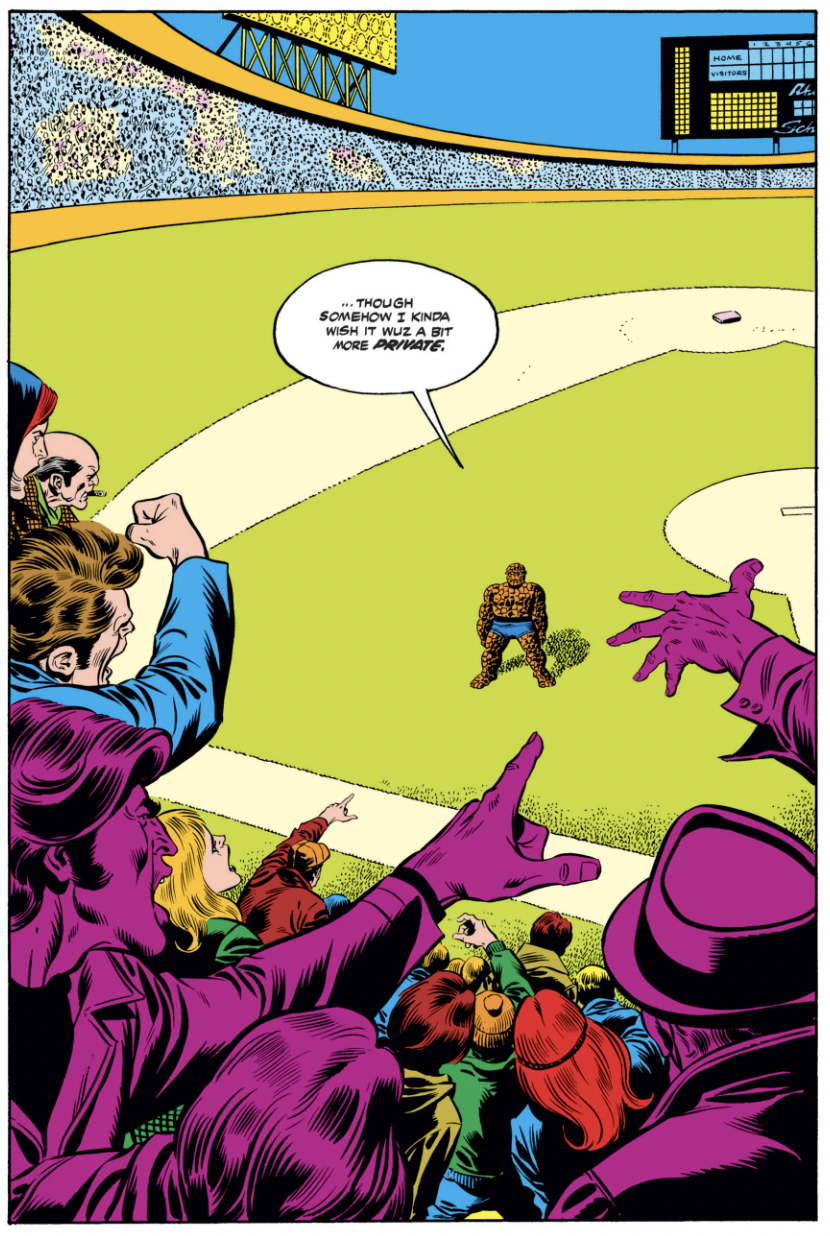
Probably the most notable debut is that of Ramona Fradon as penciler. Fradon, who passed away in February at age 97, was a comic industry legend, with her first credit in 1949 and was drawing commissions up until last year (I was on her commission list at the end). By 1973, she was an established veteran with years of drawing Aquaman under her belt. FF 133 was her only work on the Fantastic Four and, it seems, the only time a female artist has penciled an issue of the Fantastic Four’s flagship title. Joanna Estep drew something called “100th Anniversary Special: Fantastic Four 100” in 2014, and there have been a number of women who colored the FF, but as far as I can tell, Fradon was the only woman in 70 years to pencil the comic. If I’m missing someone, let me know!
Her fill-in issue, along with Ross Andru’s on issue, 131 was announced in the letters page a few months earlier, and I don’t think it’s a coincidence this issue featured Thundra, a female villain. Here’s a look at Fradon’s distinct style.
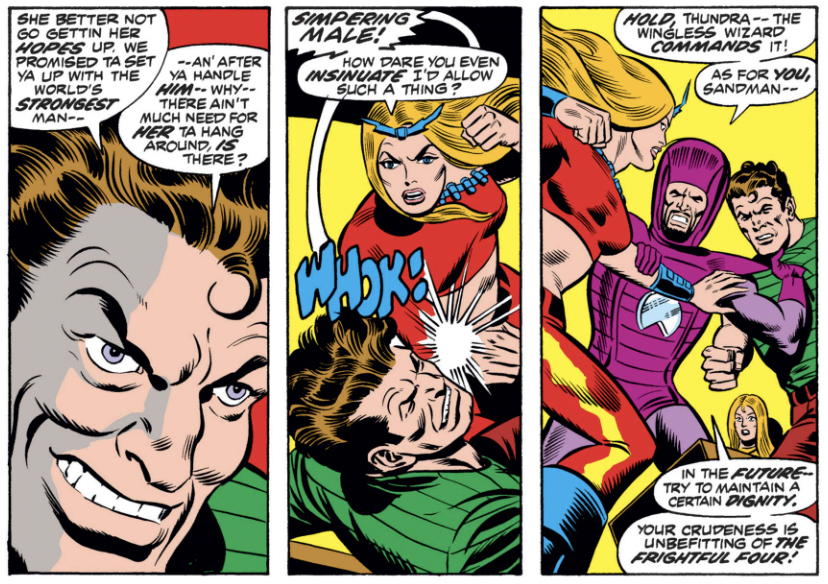
She also wasn’t afraid to go big:
This issue also marks the debut of Gerry Conway as a Fantastic Four writer. Thomas is credited as the plotter, with Conway as scripter, but by next issue Conway takes over and writes the book for the next few years. Conway had been in the industry for a few years at this point and established himself as an incredibly prolific writer. The month FF 133 came out, Conway was credited with writing six comics, including the Amazing Spider-Man and Thor.
Also appearing in the credits for the first time is colorist Stan Goldberg (who doesn’t appear to be related to Petra Goldberg, who colored the last few issues). Stan Goldberg’s name may be appearing for the first time, but he was the main Marvel colorist in the 1960s, and probably colored dozens of issues of the Fantastic Four during the Kirby years well before Marvel began crediting colorists. You can read more about him here.
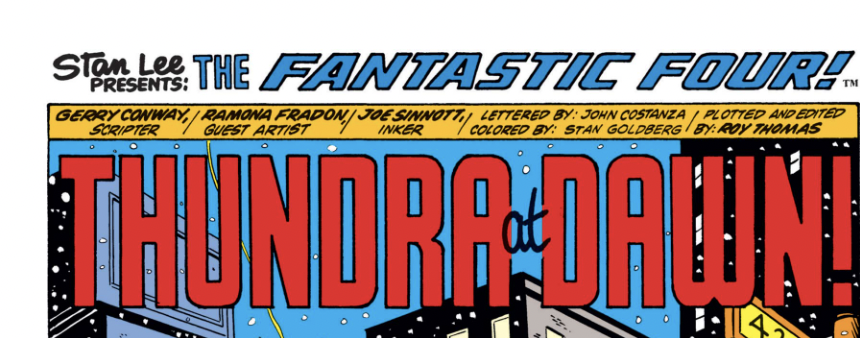
Within just a few issues, the creative team behind the Fantastic Four has now almost completely turned over, with inker Joe Sinnott the only constant. John Buscema will return, but we’ve entered a period of relative instability in FF writers and artists. Recall, that until issue 114 the FF had only ONE writer (or two, depending on how you divide the labor between Jack and Stan) and through issue 130, there had been only three pencilers. We’ve now had four (or five) writers and five pencilers, and there will be many more over the next decade. It really isn’t until the start of the John Byrne era with FF 232 in 1981 that the creative team remains stable for more than a dozen issues at a time. How does all this flux affect the story telling? We’ll find out.
What I liked
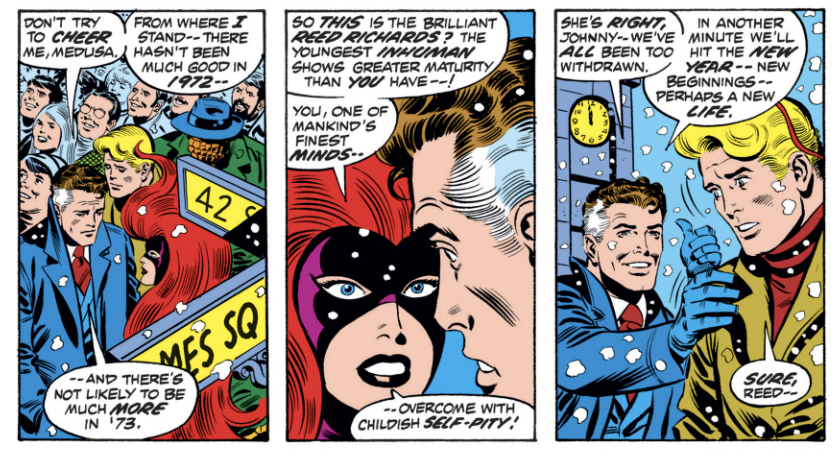
As a story, FF 133 is pretty much standard fare, although there was some healthy character development as Reed processes Sue leaving the team and Johnny mourns his breakup with Crystal.
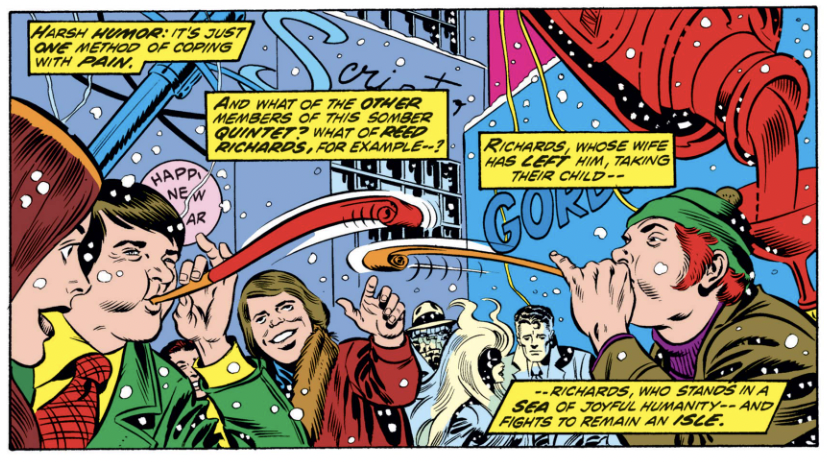
Fradon’s pencils are a refreshing change. I enjoyed her extensive crowd shots, and I can only assume they are populated with people she knows. Is anyone recognizable?
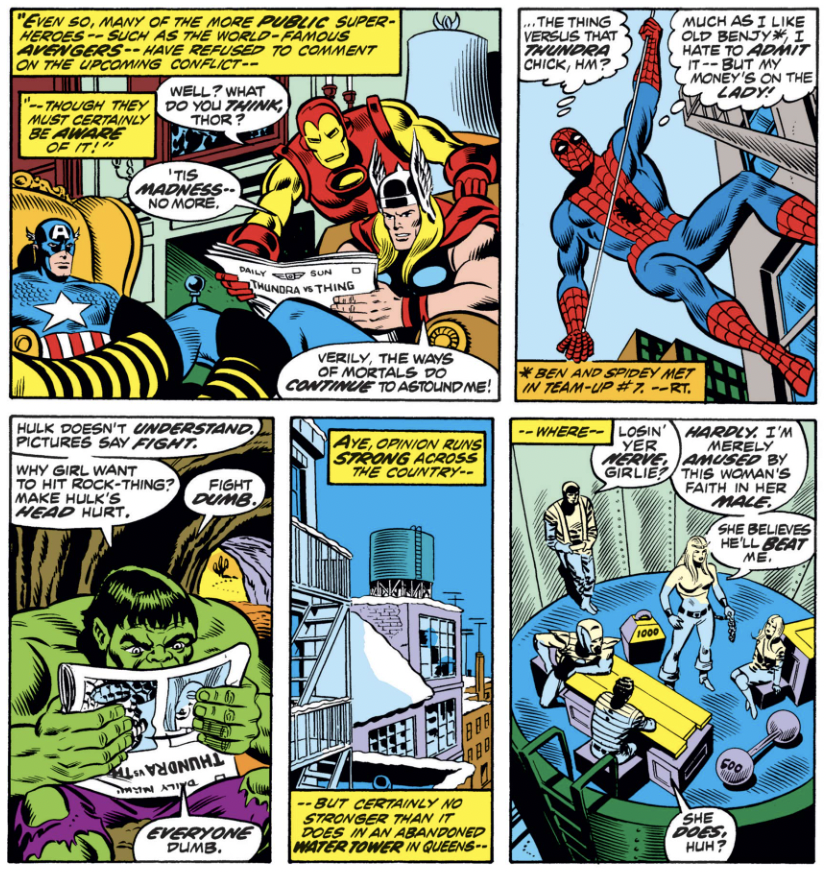
I also liked the cameo appearances from other heroes. As mentioned recently, after lots of crossovers with other Marvel characters in the mid-60s, the FF began to feel isolated from the rest of the Marvel universe. It makes sense that Conway, who was by now writing half of Marvel’s comics, and Thomas, who writing the other half, would be the ones to integrate them back into the mainstream.
What I didn’t like
Reed’s use of the ray gun to return Ben to human form feels very deus ex machina. It’s not previewed nor hinted at, and given all the drama over the years surrounding Reed’s inability to reverse Ben’s transformation, this device comes and goes without much discussion.
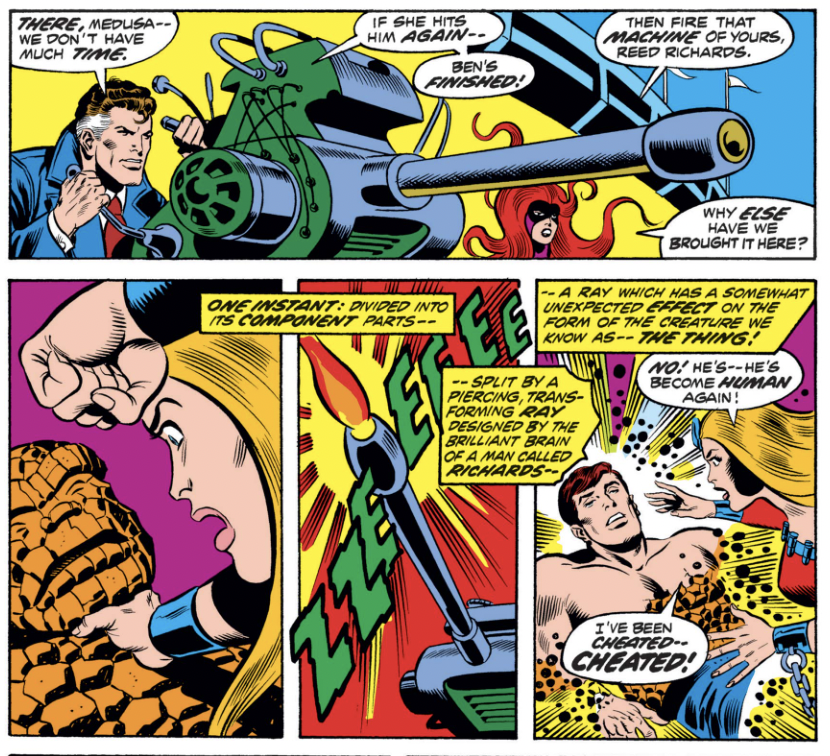
Medusa barely appears in this issue. It’s an odd choice, given that it’s an opportunity to introduce her as the newest member of the FF, and probably related to Conway taking the reins. I’m also wondering why Medusa is wearing her mask when she is out enjoying New Year’s Eve festivities with the rest of the team. I guess it’s an Inhuman thing?
Anything else?
Pinning this comic’s date to New Year’s Eve 1972 is unusually specific. Comic writers generally like to keep dates vague, to give themselves more flexibility. And it presents a problem for advocates of the Marvel sliding timescale theory, which basically means everything in Marvel’s history slides forward in time, which is why Peter Parker is in his 30s in 2024, and not his 70s. Byrne suggested the events of Fantastic Four 1 took place seven years before his run (which was 20 years after FF 1), and the current FF issues by Ryan North feels like they take place about 20 years after FF 1. When an issue is clearly taking place in 1972, that’s harder to reconcile with the sliding timeline.
Overall
A fun comic, with plenty for comic book historians to chew on.
 Percival Henry: The Fantastic Four and more