• About Percival Henry

Percival Henry: The Fantastic Four and more

~ Blogging the Fantastic Four issue by issue (plus whatever else grabs my attention)

Percival Henry: The Fantastic Four and more

Monthly Archives: February 2014

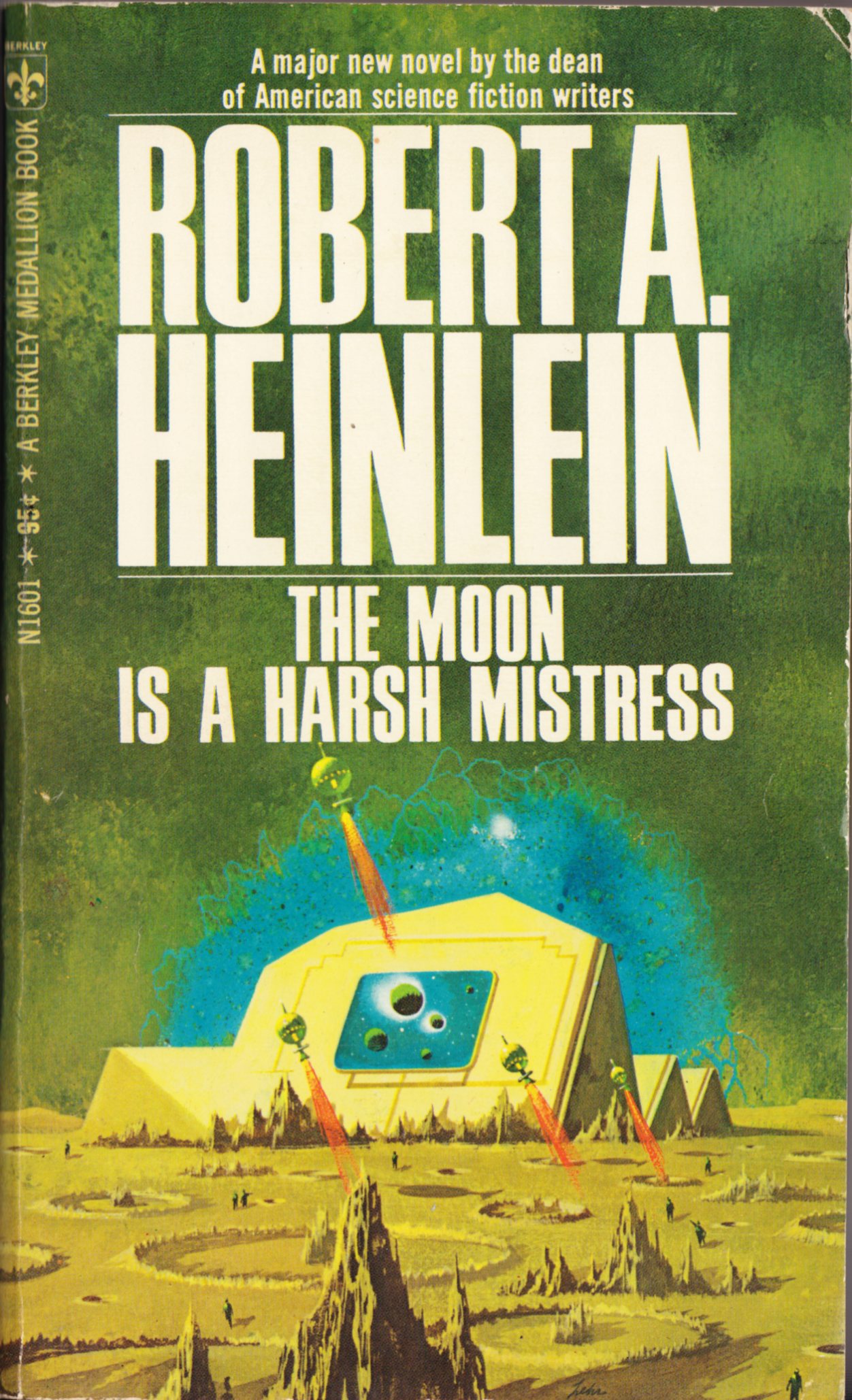
Year of Fiction: The Moon is a Harsh Mistress, by Robert Heinlein (1965)

26 Wednesday Feb 2014

Posted by percivalhenry in Year of Fiction

≈ Leave a comment

Tags

fiction, sci-fi

Image

I like to have a science fiction book going while I’m also reading something more ambitious – something to read on my phone if I’m caught without anything else to read. I’m fortunate to have a big collection of bootlegged sci-fi ebooks on my phone, and I’ll dip into them almost at random.

In this case, I re-read a book I remember loving when I first encountered it as a teenager. I went through a Heinlein period, starting when I was about 12 with what are known as his juvenile books – titles like Starship Troopers, Tunnel in the Sky and Space Cadet. I loved them – they were fun, escapist stories, perfect entertainment for a bookish kid. Next came his middle period, with books like Moon is a Harsh Mistress and Farnham’s Freehold, which were more challenging, but still satisfying. I moved on at that point, and never made it to his later works, like Friday and The Cat Who Walked Through Walls.

“Moon” tells the story of an uprising of Earth’s lunar penal colony. Neglected and oppressed, the residents of the moon band together to throw off the yoke of the Federated Nations of Earth. The protagonist is Manuel O’Kelley-Davis, a one-armed handyman and, critically, a computer technician who has befriended the moon’s central operating system, nicknamed Mike, which has become sentient. With a small band of collaborators, Manny and Mike orchestrate a rebellion.

Heinlein delves deep into revolutionary theory, the structures of successful insurgencies and the uses of propaganda and media. He describes a quirky, multi-ethnic lunar culture with its own pidgin tongue, where men outnumber women 2:1, making group marriages common, and where there’s almost no government, so disputes are handled informally and troublemakers are thrown out of airlocks.  Most “loonies” make their living as farmers, growing wheat in tunnels and harvesting lunar ice. Earth, by comparison, is crowded, hungry, close minded and bureaucratic.

What seemed like a plausible sci-fi set-up as a kid now reads as Heinlein’s libertarian fantasy. On the moon, the hardy colonialists are literally five times lighter than Earth’s residents, and once they travel to Earth, the heavier gravity pins them down. The book’s heroes are resourceful individuals who survive by their wits and elbow grease, and live by the slogan Tanstaafl – There ain’t no such thing as a free lunch. Their foils are found in committee meetings and congress, academics and politicians who want to “talk-talk” everything to death and derail the revolutionaries’ ingenious plans. This theme can get tiresome.

From the perspective our completely wired, Snowden-informed era, the idea of a central computer that can monitor and manipulate all aspects of society doesn’t seem far fetched, but Heinlein was prescient. In “Moon,” Mike the computer is a childlike innocent, learning how to have a sense of humor, who grows to become the (artificial) face of the rebellion under the tutelage of his well-meaning human friends. But it’s not hard to imagine another book where Mike’s mentors are motivated by less noble goals and where a society free of laws or controls is no paradise.

Books completed this year:
1, The Man in the High Castle (Dick)
2, Disgrace (Coetzee)
3, The Finkler Question (Jacobson)
4, The Moon is a Harsh Mistress (Heinlein)

How to win an Olympic medal

12 Wednesday Feb 2014

Posted by percivalhenry in Sports

≈ Leave a comment

Tags

Olympics, sports

Image

What sport is the easiest to earn an Olympic medal in? I’m voting for doubles luge.

I’m not saying it’s an easy sport – I’m sure its hard not to flip over and it certainly looks uncomfortable – but I am saying that given how few people are competing in it globally, if you’re taking part, your odds of winning a medal are relatively high. Some sports, because of global popularity and ease of access are certain to attract more competitors, and some of them will be freakish athletes. The more popular the sport, the larger the pool of athletes and the harder it is to stand out. The more obscure and inaccessible the sport, the fewer chances a superior athlete will land there and the better chance an average athlete can succeed.

What sports are the hardest to medal in?

(I’m going to leave out soccer, which is the world’s most popular sport, but at the Olympic level, participation is constrained by some arbitrary rules concerning age.)

1, Running. OK, I will cop to some personal bias here, but in terms of universality and ease of access, I can’t think of a more wide open sport – the number of people who have been in some sort of footrace in their lives probably dwarfs the number who haven’t. It’s contested  in every country and requires literally no equipment (not even shoes – ask Zola Budd).

2, Boxing. Contested everywhere. Even by people who don’t know it’s a sport.

3, Basketball. Some equipment required, but it’s immensely popular around the world, including in high population countries like China, Russia, Brazil and the U.S.

4, Volleyball. There are apparently 220 national volleyball associations, the most of any sport. If it’s played in more countries than there are countries, seems like its going to be hard to medal.

5,  Table tennis. Any sport that’s big in China is going to be hard to crack. But ping pong is popular around the world

What sports are easiest to medal in? In reverse order this time:

5, Equestrian. What percentage of the world population A, owns a horse that B, is willing to jump C, with you on it?

4, Synchronized swimming. Not only do you need a pool, you need a culture that appreciates Esther Williams movies.

3, Ski jumping. The ski jumping complex at Sochi cost $265 million. Don’t expect one at your neighborhood rec center anytime soon.

2, Bobsled. There are just 17 bobsled tracks in the world and an individual sled can cost up to $100,000. This is not a mass participation sport.

1, Doubles luge. There’s the same problem bobsled has, with only 17 tracks  in the world and none in China or India. There’s the risk of maiming, which probably limits its popularity. And then you have to convince someone to do it with you. I’m guessing the total field of doubles luge athletes is under 5,000 worldwide, or fewer competitors than in your average Central Park road race. So if you’re one of them, congratulations. Your odds of medaling are excellent.

Very Short Review: Man of Steel

11 Tuesday Feb 2014

Posted by percivalhenry in Uncategorized, Very Short Review

≈ Leave a comment

Tags

movies

Image

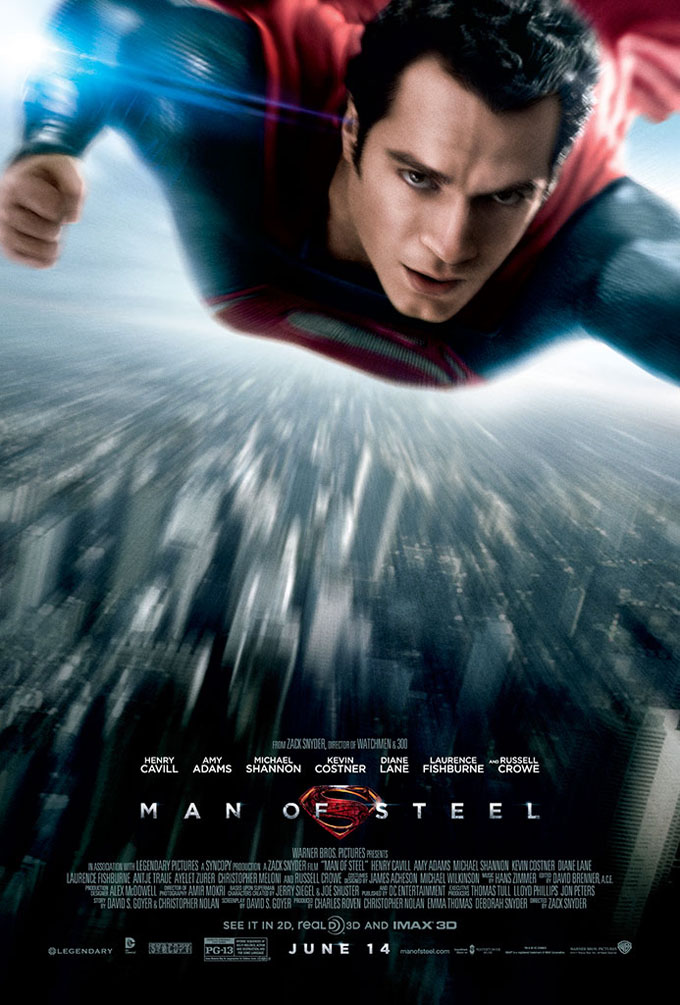
As a longtime collector of comic books, I’m pre-disposed to like super hero movies. This one was a challenge. A retelling of Superman’s origin from Zack Snyder (300, Watchmen), Man of Steel is big, bulky and disjointed, with key points of the story told through distracting flashbacks. A long opening chunk of the movie is set on Krypton, where Superman’s father Jor-El (played by Russell Crowe) has been re-imagined as an action hero, flying a winged beast through a collapsing city and battling the evil General Zod over the future of their dying race. In this telling, young Kal-El becomes a symbol of Jor-El’s hope for the species, and Zod vows to hunt him down. If you accept superhero stories are a form of American mythology, there should be room for new interpretations and you can’t get too hung up on any one version being correct. The problem with this approach, though, is that Jor-El never recedes into the background (he reappears after his death as a sort of helpful ghost who engineers plot points) and Superman becomes a pawn in his own story. Structurally, the plot – which ties Superman’s origin to the climactic battle with Zod  – obscures the development of much else we associate with the Superman, so we never see Clark Kent at the Daily Planet, his youth is told in flashbacks, and Lois Lane (played with style by Amy Adams) is crammed awkwardly into the narrative. The movie is all first and third acts. Man of Steel also suffers from a gloom that feels borrowed from the last Star Trek movie, and particularly, the Dark Knight trilogy. In the comics, there’s the idea that Gotham City is New York south of 14th St., and Metropolis is the city north of 14th. That tonal difference should be reflected in the characters and their stories. Here, the clouds rarely part and when Superman plays earnest and sincere – asking a skeptical humanity to trust him – he comes across as a naive simpleton.

Very Short Review: Frances Ha

07 Friday Feb 2014

Posted by percivalhenry in Very Short Review

≈ Leave a comment

Tags

movies

Image

Saw this on DVD the other night. It was fun and breezy, with enough uncomfortable moments to make it interesting. And I liked the idea of a female loser, which is rare in movies. But star Greta Gerwig seemed too old for the role of an aspiring young dancer, and the whole project, shot in black and white, had the feel of a film student’s first feature, financed with credit cards, not the work of a veteran (Noah Baumbach) with dozens of titles under his belt.

Year of Fiction: The Finkler Question, by Howard Jacobson (2010)

07 Friday Feb 2014

Posted by percivalhenry in Year of Fiction

≈ Leave a comment

Tags

Books, London, Year of Fiction

Image

I resolved to read more fiction this year, and specifically tackle the enormous backlog of books I’ve been accumulating (and lugging from city to city, and continent to continent) for 20 years now. My strategy is to stop reading the New York Times on my commute and read paperbacks. It’s really only about 40 minutes a day but it adds up and I’m slowly nibbling my way through my stack. I intend these reviews to be very short. I’m also using this to keep track of what I’ve read.

The Finkler Question, set in contemporary London, is the story of the gloomy, directionless middle-aged Julian Treslove and his narrow circle of friends. Treslove is a gentile, but his friends are Jewish and he is drawn deeper and deeper into their world. The book explores modern Jewish identity, anti-Semitism and Zionism, overlaid with questions about aging, mourning and loss. Jacobson is a skilled stylist, and writes with humor and insight, but the book starts slowly and never picks up speed. Treslove starts out unsympathetic, and never seems convincing as a character – he’s more of a collection of neuroses. (It didn’t help that I read The Finkler Question immediately after finishing Disgrace, by J.M. Coetzee, which treads some similar territory to much more powerful effect). There’s a claustrophobic quality to the work, as the book’s handful of characters keep on bumping into each other, and every conversation and event circles around the same theme of Jewishness. With its small cast, domestic setting and heavy message, I wonder if it might have made a better play than novel.

Books completed this year:
1, The Man in the High Castle (Dick)
2, Disgrace (Coetzee)
3, The Finkler Question (Jacobson)

Is Wolverine on Steroids?

07 Friday Feb 2014

Posted by percivalhenry in Uncategorized

≈ Leave a comment

Tags

comics, movies

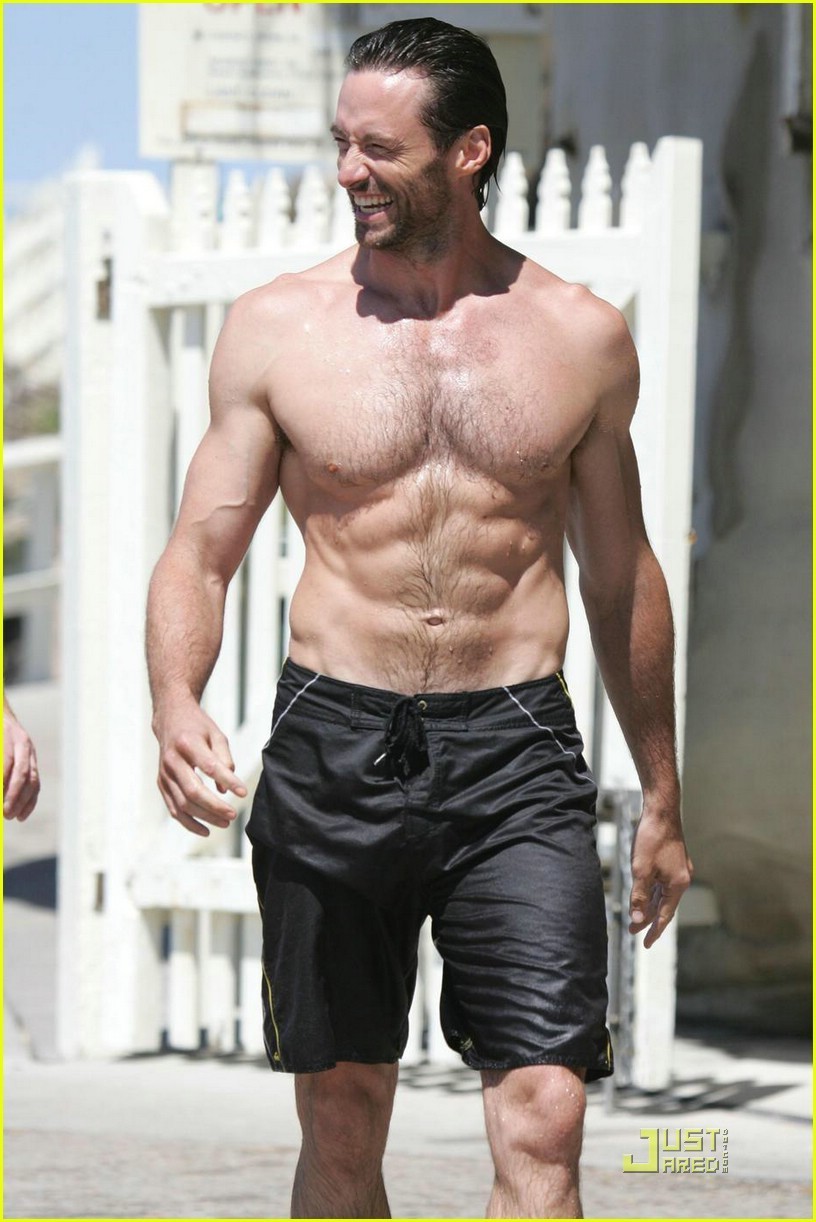
The thought occurred to me after watching The Wolverine the other night with my wife that Hugh Jackman probably took steroids for that role. The guy is a 45-year-old actor and he looks like this:

Image

He may be a fitness fanatic, but I suspect to get in shape, and stay in shape, he’s aided by chemistry. And so long as he’s taking them under the supervision of a doctor, that’s fine. Steroids are used in a medical context all the time. We only get bent out of shape about them in sports, when we feel they are being used to create an unfair advantage. (Some people argue that the full legalization of steroids in sports would recreate a level playing field. It might, but it would also distort comparisons with athletes from the past.) We also don’t like it when kids take them, because of health concerns. I have no ethical issue with an actor taking steroids to prepare for a role; there’s no competition at stake here, besides with the egos of other 40-something males, and no party is injured.

But should steroids only be for actors? If they can be taken safely and legally, should others in professions that rely on strength – and where the artificial rules of competition are not enforced – be taking them? Do we want our fireman and soldiers to be as strong as possible, to fulfill their missions? Probably. How about sanitation workers? Would a regimen of safe steroids enhance garbage collection?

And that took me back to Wolverine. In the fictional comic book universe, would super heroes with only normal human strength be on steroids? If you accept the premise that their heroics are protecting lives and saving the world , then shouldn’t they maximize their strength by any (safe) means possible? Maybe some characters would shun them on moral grounds, but even Captain America, that pillar of rectitude, was created by  vita-rays, a 1940s version of steroids. I’m guessing characters like Batman and Wolverine, who look for every other advantage, would quite naturally be on the juice.

  • “The World’s Greatest Comic Magazine!” Fantastic Four Annual No. 15
  • “The World’s Greatest Comic Magazine!” Fantastic Four No. 223
  • “The World’s Greatest Comic Magazine!” Fantastic Four No. 222
  • “The World’s Greatest Comic Magazine!” Fantastic Four No. 221
  • “The World’s Greatest Comic Magazine!” Fantastic Four No. 220
  • July 2026
  • June 2026
  • May 2026
  • April 2026
  • March 2026
  • February 2026
  • January 2026
  • December 2025
  • November 2025
  • October 2025
  • September 2025
  • August 2025
  • July 2025
  • June 2025
  • May 2025
  • April 2025
  • March 2025
  • February 2025
  • January 2025
  • December 2024
  • November 2024
  • October 2024
  • September 2024
  • August 2024
  • July 2024
  • June 2024
  • May 2024
  • April 2024
  • March 2024
  • February 2024
  • January 2024
  • December 2023
  • November 2023
  • September 2023
  • July 2023
  • June 2023
  • May 2023
  • April 2023
  • March 2023
  • February 2023
  • January 2023
  • December 2022
  • November 2022
  • October 2022
  • September 2022
  • August 2022
  • July 2022
  • June 2022
  • May 2022
  • April 2022
  • March 2022
  • February 2022
  • January 2022
  • December 2021
  • November 2021
  • October 2021
  • September 2021
  • August 2021
  • July 2021
  • June 2021
  • May 2021
  • April 2021
  • March 2021
  • February 2021
  • January 2021
  • December 2020
  • February 2018
  • May 2016
  • February 2016
  • January 2016
  • December 2015
  • November 2015
  • October 2015
  • September 2015
  • August 2015
  • July 2015
  • April 2015
  • March 2015
  • January 2015
  • December 2014
  • November 2014
  • October 2014
  • September 2014
  • August 2014
  • June 2014
  • May 2014
  • April 2014
  • March 2014
  • February 2014
  • July 2026
  • June 2026
  • May 2026
  • April 2026
  • March 2026
  • February 2026
  • January 2026
  • December 2025
  • November 2025
  • October 2025
  • September 2025
  • August 2025
  • July 2025
  • June 2025
  • May 2025
  • April 2025
  • March 2025
  • February 2025
  • January 2025
  • December 2024
  • November 2024
  • October 2024
  • September 2024
  • August 2024
  • July 2024
  • June 2024
  • May 2024
  • April 2024
  • March 2024
  • February 2024
  • January 2024
  • December 2023
  • November 2023
  • September 2023
  • July 2023
  • June 2023
  • May 2023
  • April 2023
  • March 2023
  • February 2023
  • January 2023
  • December 2022
  • November 2022
  • October 2022
  • September 2022
  • August 2022
  • July 2022
  • June 2022
  • May 2022
  • April 2022
  • March 2022
  • February 2022
  • January 2022
  • December 2021
  • November 2021
  • October 2021
  • September 2021
  • August 2021
  • July 2021
  • June 2021
  • May 2021
  • April 2021
  • March 2021
  • February 2021
  • January 2021
  • December 2020
  • February 2018
  • May 2016
  • February 2016
  • January 2016
  • December 2015
  • November 2015
  • October 2015
  • September 2015
  • August 2015
  • July 2015
  • April 2015
  • March 2015
  • January 2015
  • December 2014
  • November 2014
  • October 2014
  • September 2014
  • August 2014
  • June 2014
  • May 2014
  • April 2014
  • March 2014
  • February 2014
“The World’s Greatest Comic Magazine!” Fantastic Four Annual No. 15

“The World’s Greatest Comic Magazine!” Fantastic Four Annual No. 15

percivalhenry's avatar by percivalhenry July 18, 2026
“The World’s Greatest Comic Magazine!” Fantastic Four No. 223

“The World’s Greatest Comic Magazine!” Fantastic Four No. 223

percivalhenry's avatar by percivalhenry July 14, 2026
“The World’s Greatest Comic Magazine!” Fantastic Four No. 222

“The World’s Greatest Comic Magazine!” Fantastic Four No. 222

percivalhenry's avatar by percivalhenry July 5, 2026
“The World’s Greatest Comic Magazine!” Fantastic Four No. 221

“The World’s Greatest Comic Magazine!” Fantastic Four No. 221

percivalhenry's avatar by percivalhenry June 25, 2026
“The World’s Greatest Comic Magazine!” Fantastic Four No. 220

“The World’s Greatest Comic Magazine!” Fantastic Four No. 220

percivalhenry's avatar by percivalhenry June 15, 2026
“The World’s Greatest Comic Magazine!” Fantastic Four No. 219

“The World’s Greatest Comic Magazine!” Fantastic Four No. 219

percivalhenry's avatar by percivalhenry June 7, 2026

Blog at WordPress.com.

  • Subscribe Subscribed
    • Percival Henry: The Fantastic Four and more
    • Join 74 other subscribers
    • Already have a WordPress.com account? Log in now.
    • Percival Henry: The Fantastic Four and more
    • Subscribe Subscribed
    • Sign up
    • Log in
    • Report this content
    • View site in Reader
    • Manage subscriptions
    • Collapse this bar