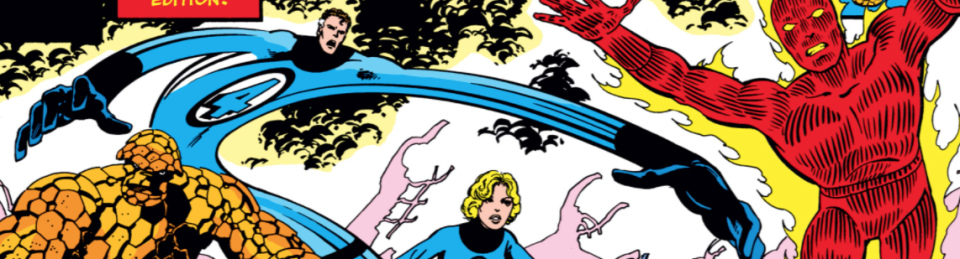
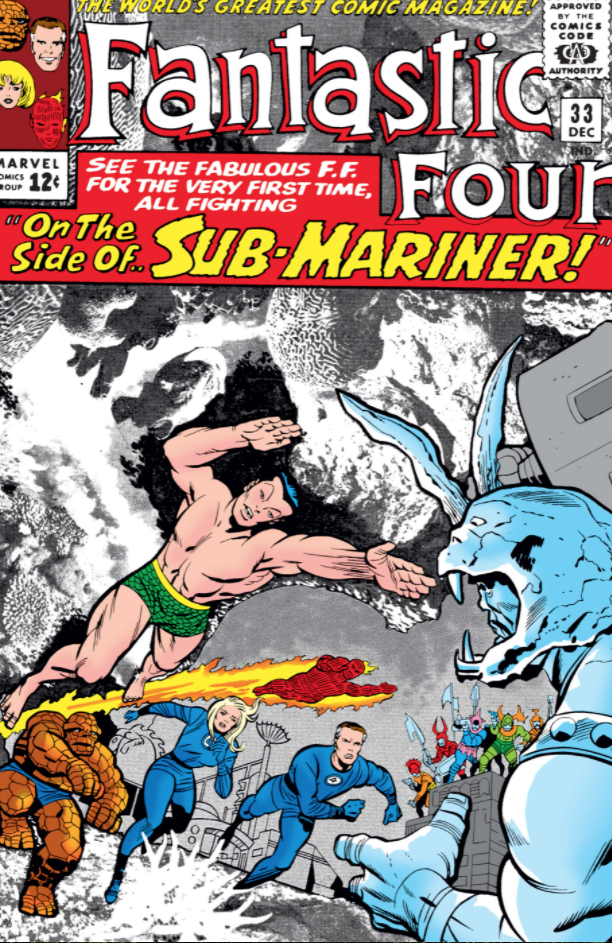
(This cover image on Marvel Unlimited is irritatingly cropped, so this is the best I can do – sorry)
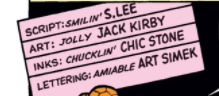
Fantastic Four 33 “Side-by-Side with the Sub-Mariner!” Published: Sept. 1964 Story: Stan Lee and Jack Kirby Script: Lee Pencils: Kirby Inks: Chic Stone Letters: Artie Simek Cover: Kirby and Stone
Synopsis
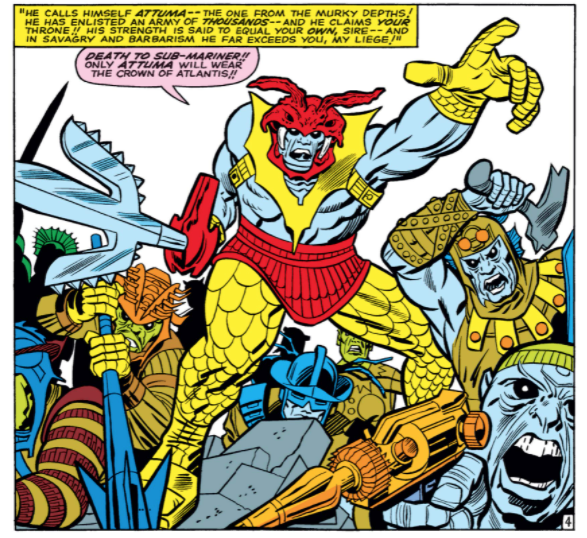
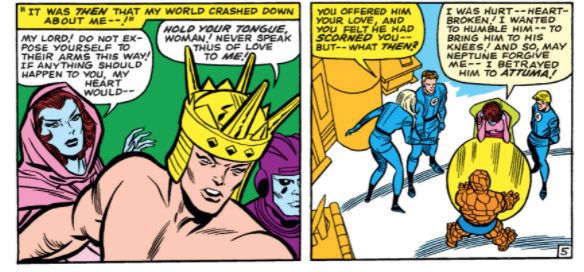
FF 33 opens with the team in the Baxter Building, examining a strange undersea creature that washed up on shore. Sensing something is amiss beneath the ocean, Mr. Fantastic sends the Human Torch to patrol the shoreline, where he discovers Lady Dorma of Atlantis, last seen in FF Annual 1, surfacing. Johhny brings her to the Baxter Building, where she explains the barbarian warlord Attuma has attacked Atlantis. Worse, she betrayed the Sub-Mariner and aided Attuma because Namor spurned her affections. Now she asks the FF for help.
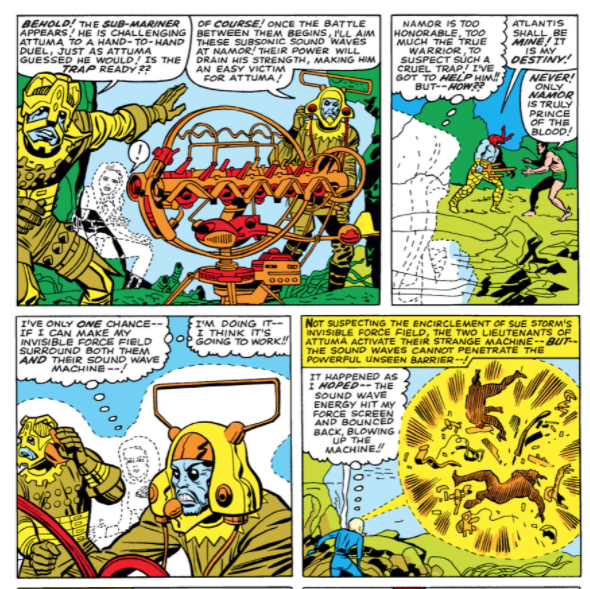
The team, aided by an “Oxy-Spray” that allows them to breath underwater, descend with Dorma to Atlantis, where Namor is battling Attuma’s forces. The team surreptitiously helps him, with Sue making Namor invisible at a critical juncture, helping him defeat Attuma. The FF runs out of oxygen, however, and flees to the surface, leaving Namor unaware they aided him. The issue concludes with Namor forgiving Lady Dorma for her betrayal.
What’s going on here
FF 33 is a pretty straightforward story, told in the traditional style: It opens in the Baxter Building, the plot unfolds slowly, the second half is mostly action, and it’s all tied up in a few panels at the end. To the extent it adds to the FF’s larger narrative, it does signal Sue seems to be over her infatuation with Namor (although we don’t know if Namor is done with her, since he doesn’t know she’s helping him) and it’s another step in recasting the Sub-Mariner as a hero. Here, he is a noble warrior fighting for his kingdom. The story also introduces Attuma, who becomes a main antagonist of Namor’s over the years. Surprisingly, it’s one of the few times he appeared in the FF’s own comic.
The sexist sixties
The whole plot hinges on Lady Dorma betraying Namor because her feelings are hurt. It’s a trite and lazy story-telling device, and the same result—Dorma enlists the FF—could have been achieved in a number of other ways.
On the flip side, Stan and Jack give Sue a rare star turn in combat, where she uses her force field power to cause some real damage.
Weird science
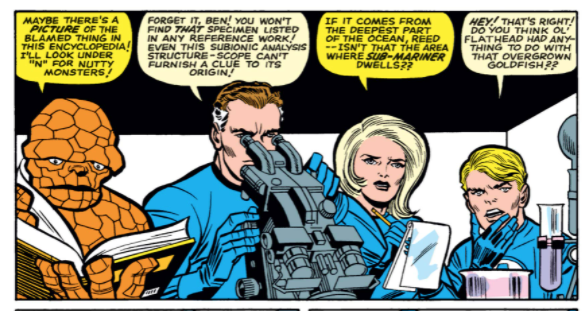
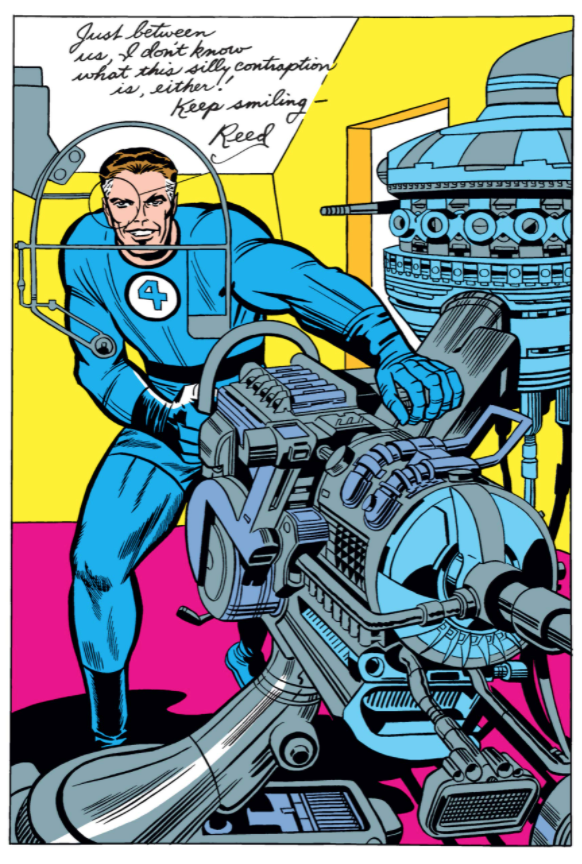
FF 33 is a gold mine for zany, pseudo-scientific devices, starting with Reed’s “subionic analysis structure-scope.”
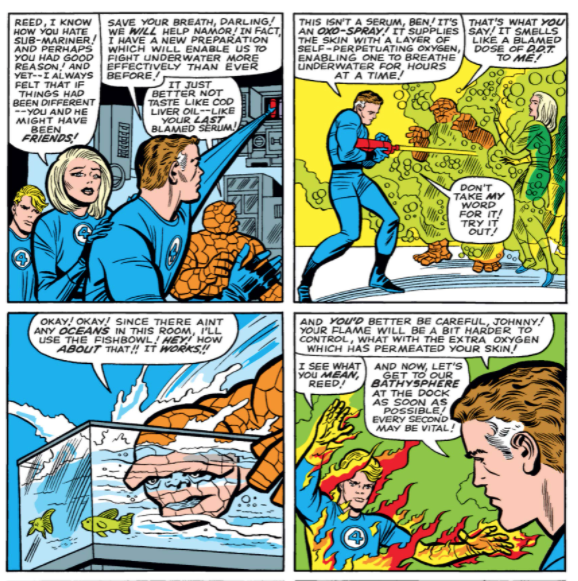
There’s also Oxo-Spray…
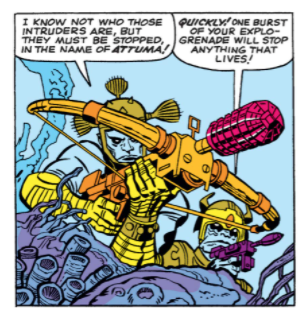
and Explo-Grenades (it’s unclear how these are different than normal exploding grenades)…
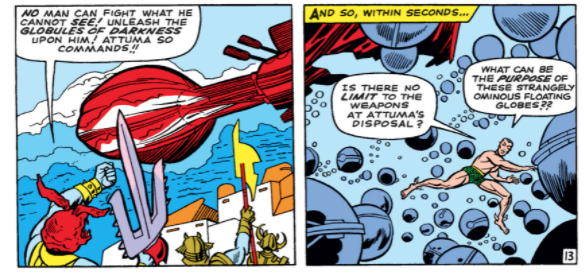
and Globules of Darkness …
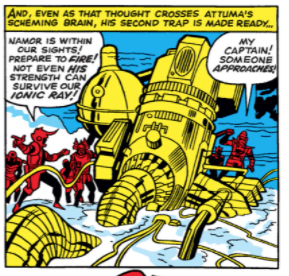
and Ionic Rays …
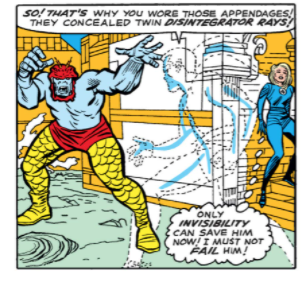
and when that fails, Disintegrator Rays. All this stuff works underwater, too.
The Incredible Mr. Fantastic
Reed changes his shape into a manta ray, which is kind of cool
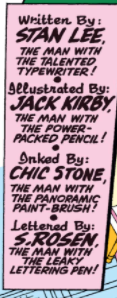
Krazy Kredits
A little more sedate in this ish.
All’s well that ends well
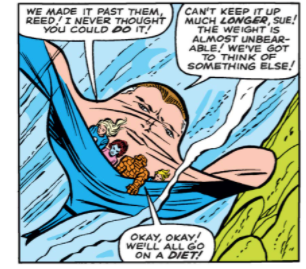
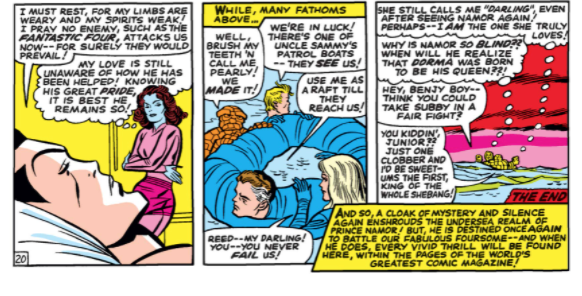
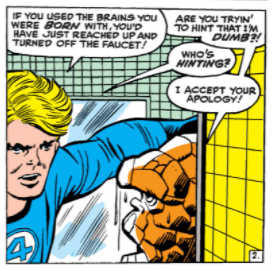
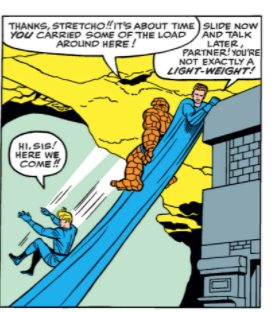
Stan and Jack stuff a whole lot into the last three panels here: We learn Namor is unaware of the FF’s help, Reed is convinced of Sue’s love, and we get a bit of snappy banter between Ben and Johnny.
Dig that Kirby Krackle
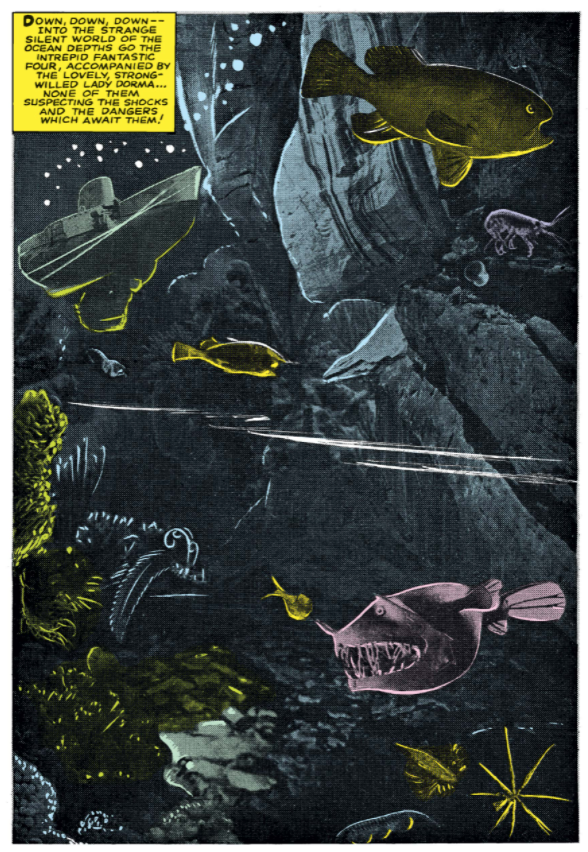
Jack gives us another pair of collages, with one on the cover, and this one:
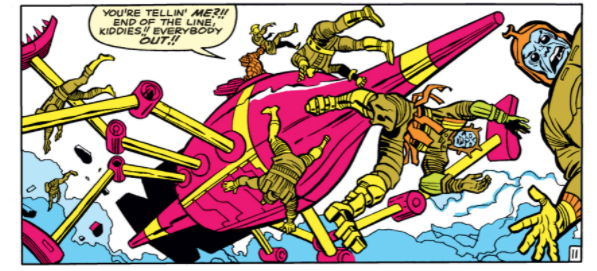
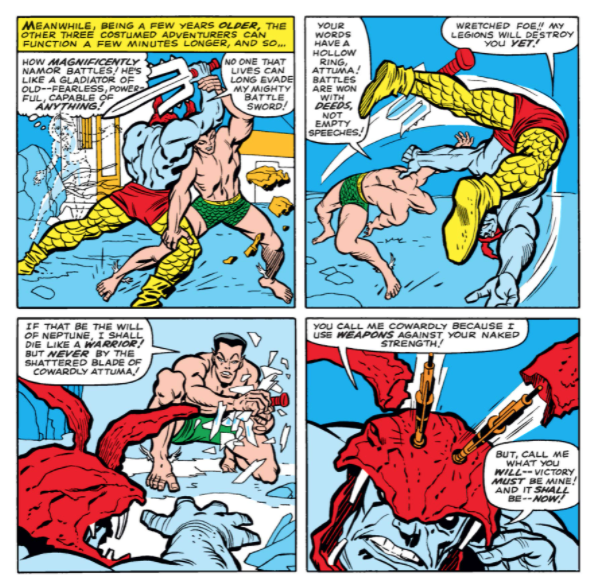
Also, there are some great fight scenes, like this:
And this:
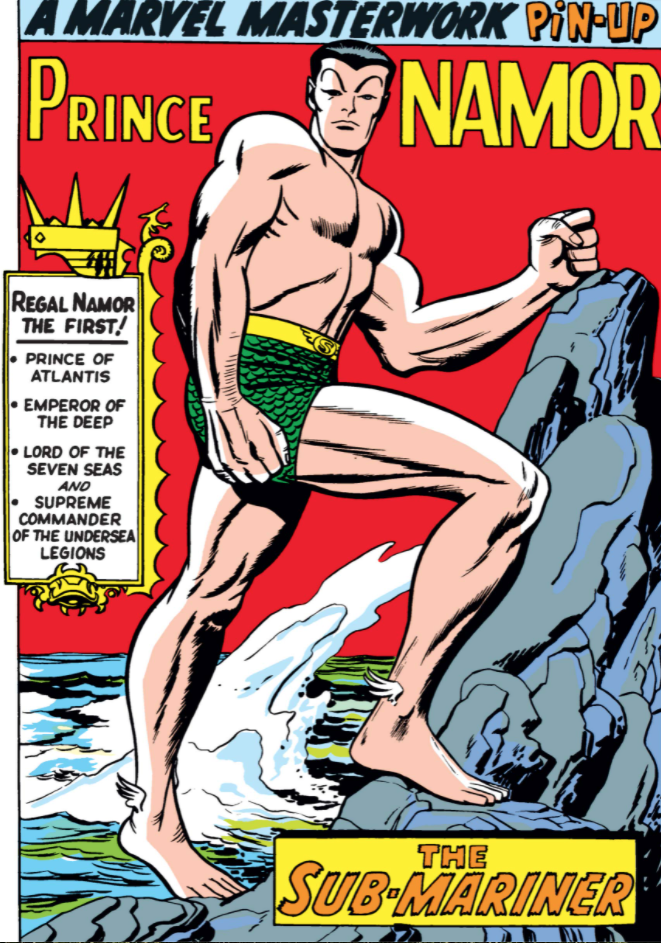
Pin up!
For sale
In near mint (9.8) condition, FF 33 will cost you $32,000. A Fine version (6.0) is $240. Both seem high to me, to be honest.
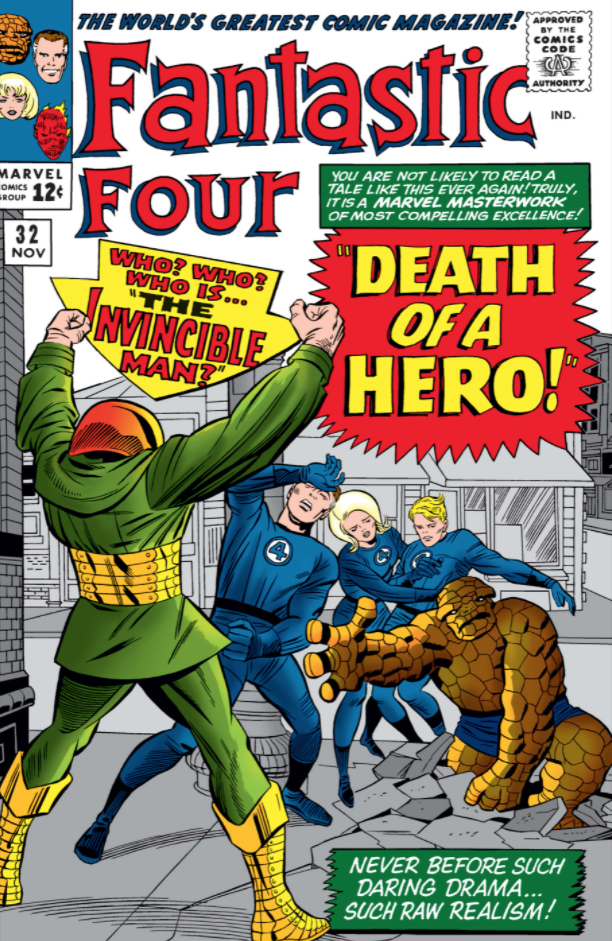
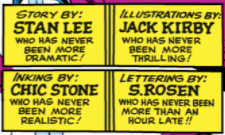
Fantastic Four 32 “Death of a Hero!” Published: Aug. 1964 Story: Stan Lee and Jack Kirby Script: Lee Pencils: Kirby Inks: Chic Stone Letters: Sam Rosen Cover: Kirby and Stone
Synopsis
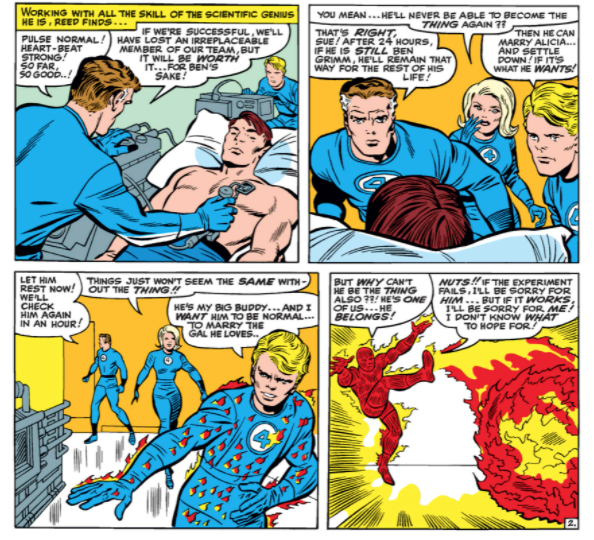
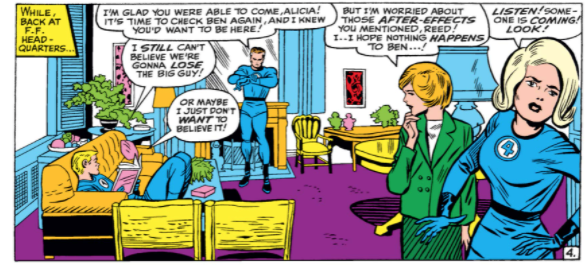
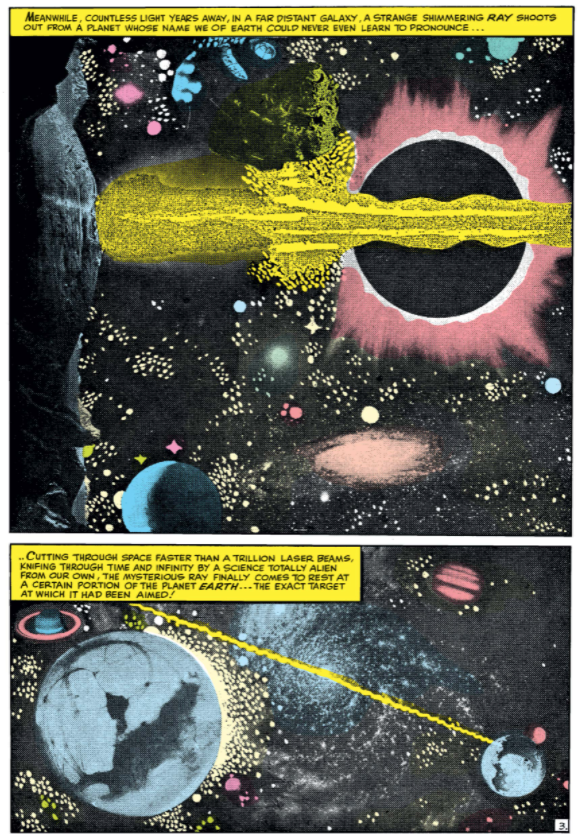
FF 32 opens in the Baxter Building with Mr. Fantastic, once again, trying to return the Thing to human form. The procedure works, but Ben loses his memory of the team and Alicia, so Reed reverses the process. Meanwhile, a ray from outer space blasts open a volcano on earth, and an unknown creature emerges. The creature enters the prison cell of Franklin Storm, the father of the Human Torch and Invisible Girl introduced last issue, and takes his form, sending Storm to outer space.
Sue and Johnny Storm, attempting to visit their father, find him transformed, and he uses new powers to blast out of prison. Sue and Johnny summon Reed and Ben, and together the team confronts Franklin, who is now costumed and calls himself the Invincible Man. They fight, but Sue and Johnny can’t bear to hurt their father, and the Invincible Man escapes, much to the chagrin of Reed.
The team retreats to the Baxter Building, where Reed devises a gizmo to defeat their foe, who, he tells Sue and Johnny, is not really Franklin Storm. When the team confronts the Invincible Man, Reed tells him he is communicating via “ultra-sonic radio transmitter” to his home galaxy, and demands Franklin Storm be returned. The Invincible Man then reveals himself to be the Super-Skrull, who had been trapped in the volcano since FF 18, and he is transmitted back to his home planet while Franklin Storm is returned.
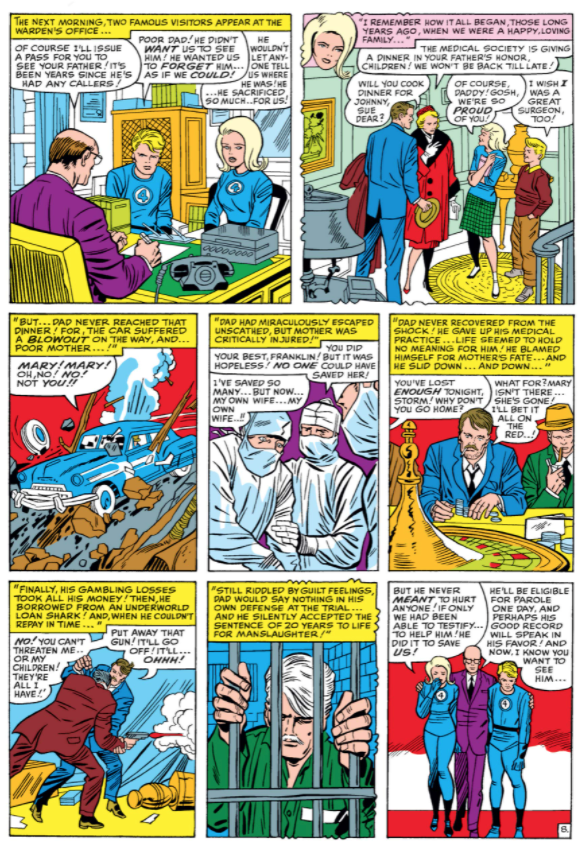
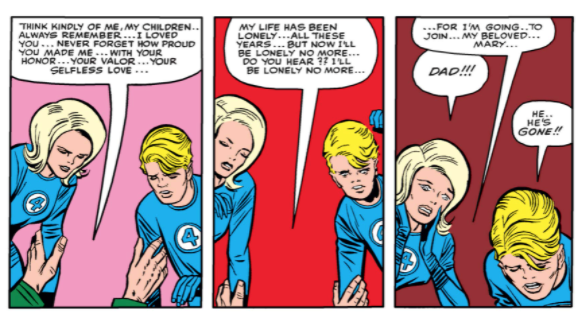
Storm, however, is booby-trapped with a bomb, and he absorbs the blast rather than endanger the FF and his children, dying a heroic death in the arms of his children.
What’s going on here
FF 32 marks the second half of Franklin Storm’s story arc. Introduced last issue as a fugitive surgeon, it seems Stan and Jack liked his character so much they used him again. They also tied up any potential messy loose ends by killing him off, but not before we hear his sad story.
He then has a poignant—and long!—death scene, told in part with this nice perspective from Jack:
Unlike in FF 31, where Franklin’s appearance was awkwardly jammed into the comic, FF 32 is much more coherent, and tells a satisfying story. Not that there aren’t some holes in the plot: It’s not obvious why the Super-Skrull needed to take the form of Franklin Storm to defeat the FF—Reed says it was to discredit the team when the Storm children refuse to fight their father—and Reed defeats the Super-Skrull by basically threatening to fight him to the death, leading him the Skrull to run away. Some warrior.
Stan and Jack also spend nearly four pages on Reed’s latest unsuccessful effort to transform Ben back to human form. While it gave us some nice character moments, with Johnny torn about whether he wants Ben as a happy human or his monstrous teammate, the episode has no further bearing on the plot and feels like padding.
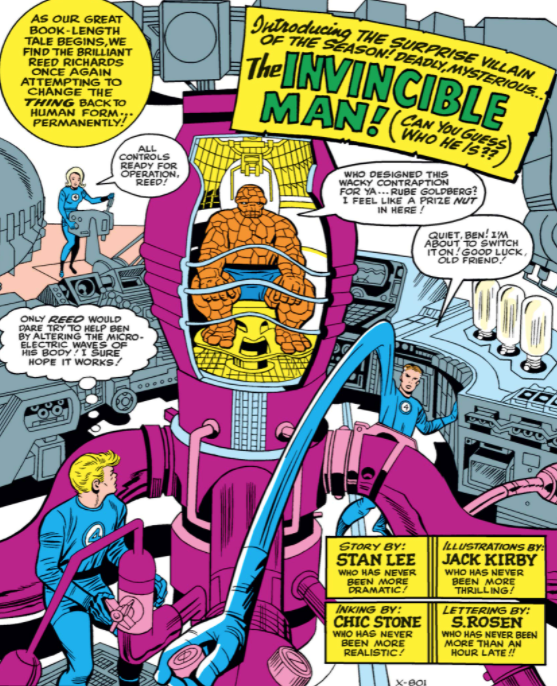
Krazy Kredits
Byrne Baby Byrne
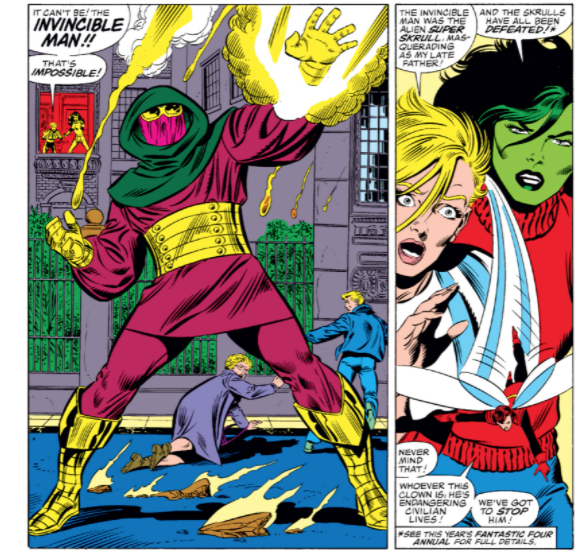
John Byrne borrowed the Invincible Man for a throwaway character in 1986’s FF 287 (inks by the legendary Joe Sinnott!).
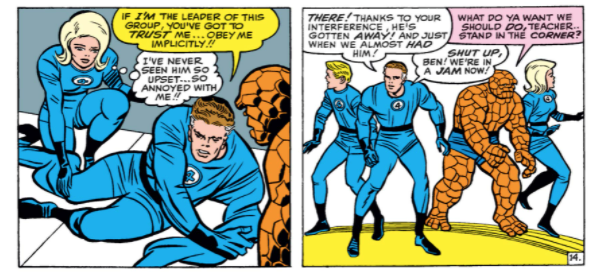
Reed Richards is a jerk!
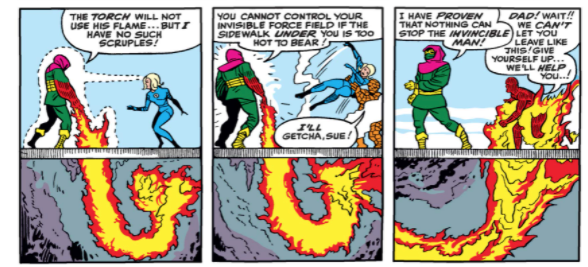
Reed gets a bee in his bonnet when the Storms won’t fight their father.
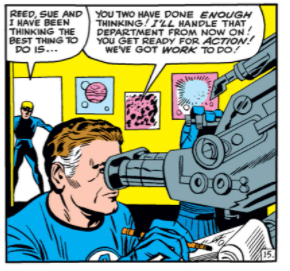
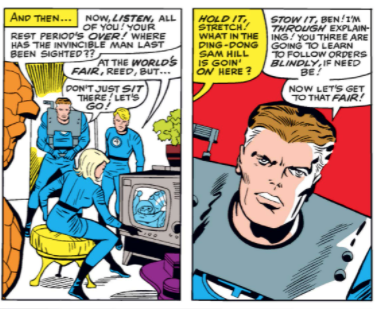
He stays pissy about it for several more pages.
Finally, he sort-of apologizes.
Snappy banter
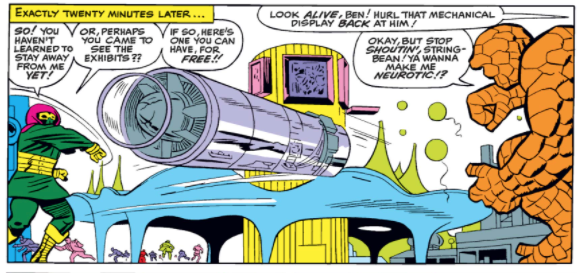
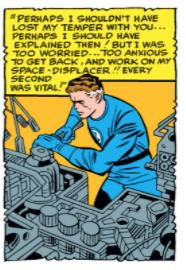
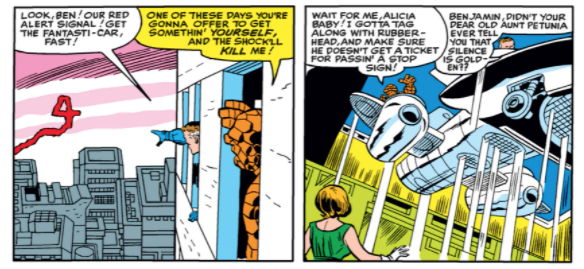
Reed’s peevishness is contrasted by his playful dialogue with Ben earlier.
Midcentury modern
The Baxter Building looks a bit more tasteful in this issue.
Weird science
I’m not sure how trillion laser beams are faster than one, but maybe it’s Skrull technology.
Dig that Kirby Krackle
Jack returns to the photo collage, with stunning effect.
The splash page is pretty cool too
And so is this little sequence:
For sale
A mint (9.8) copy of FF 32 could cost you $17,000. A fine version (6.0) is a more reasonable $80.
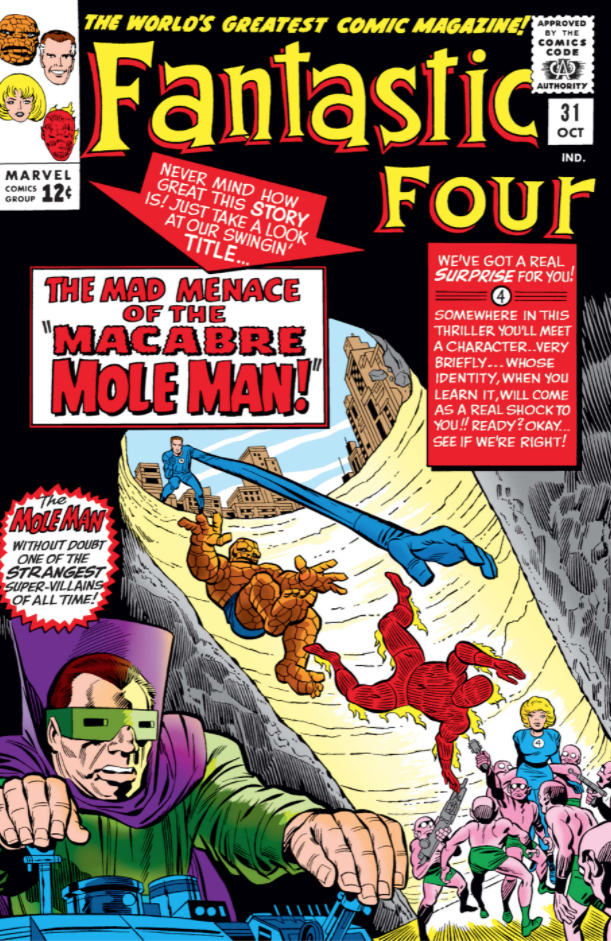
Fantastic Four 31 “The Mad Menace of the Macabre Mole Man!” Published: July 1964 Story: Stan Lee and Jack Kirby Script: Lee Pencils: Kirby Inks: Chic Stone Letters: Sam Rosen Cover: Kirby and Stone
Synopsis
Earthquakes rock the Baxter Building and New York City. The Fantastic Four investigate, but as they rush out, the Invisible Girls sees a newspaper article about a man escaping from prison that gives her pause, and tells the rest of the team to go without her.
At the scene, the team discovers a city block has disappeared, leaving only a deep hole. Unbeknownst to the team, the Mole Man is responsible. The team returns to the Baxter Building to find the Invisible Girl has been take hostage by the Mole Man. The three use a Pogo Plane to descend to the Mole Man’s subterranean kingdom, avoiding obstacles along the way. There, the Mole Man demands the FF stand aside as he conquers the surface world, or risk losing Sue.
The team ascends to the surface to find the Avengers preparing to attack the Mole Man. After a brief scuffle, the FF convinces the Avengers to let them handle it and Mr. Fantastic invents a device that allows him to pinpoint Sue’s location. He then directs the Human Torch to blast a new tunnel down to the Mole Man’s kingdom, and Reed and Ben follow. With Johnny’s help, Sue escapes and the team returns the city blocks to the surface. But as the team ascends, Sue is hit by debris and is rushed to the hospital.
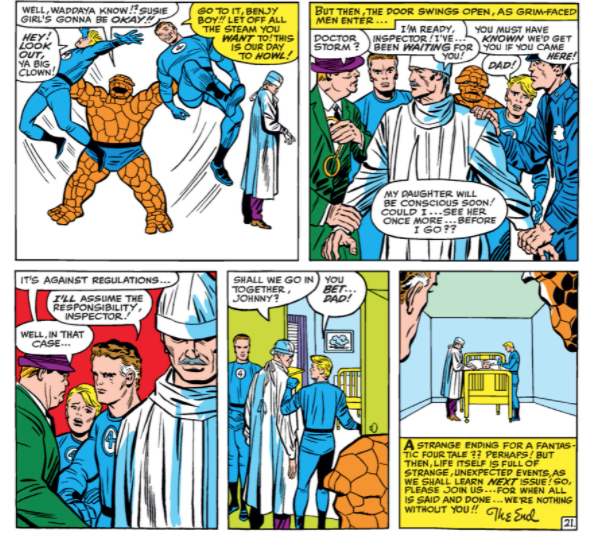
There, the doctors say only one surgeon can perform the necessary life-saving surgery, and he just escaped from prison. That man just appears, announces he is Sue and Johnny’s father, and successfully operates on Sue. He and Johnny have a moment at Sue’s bedside before the police arrive to return him to prison.
What’s going on here?
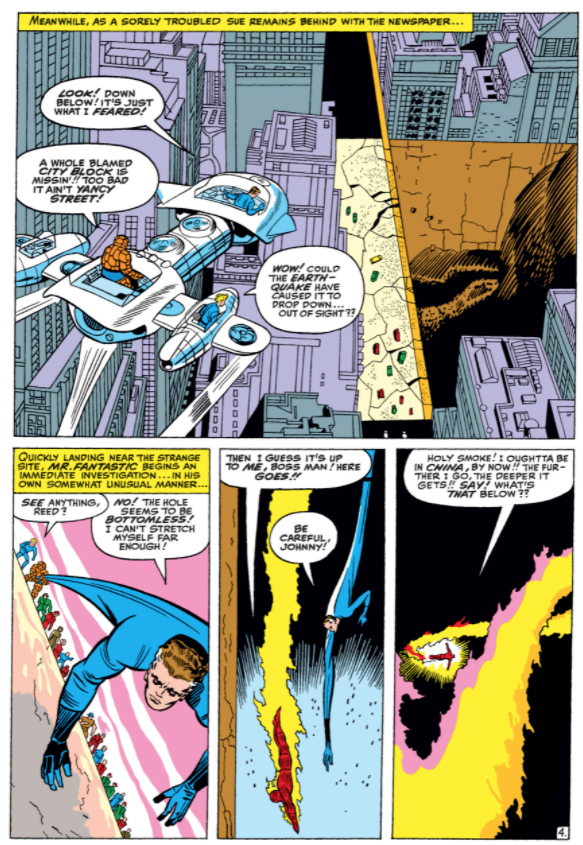
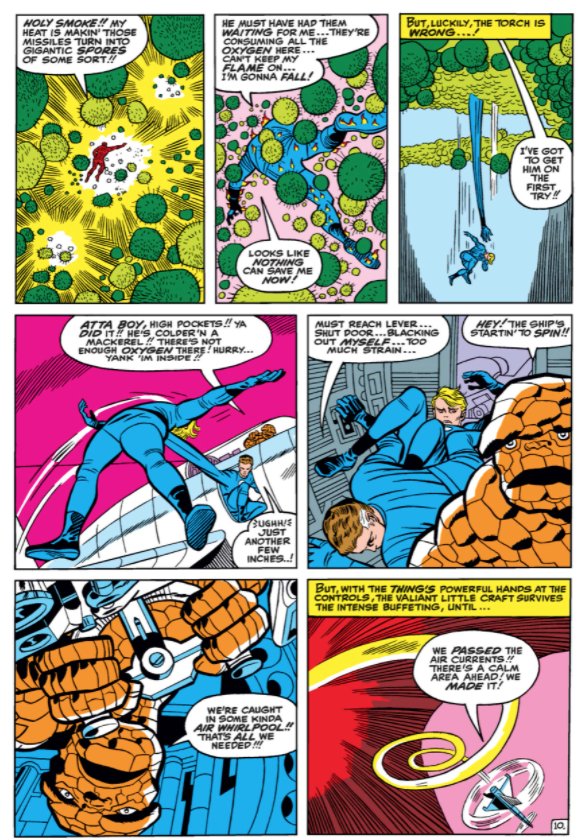
Fantastic Four 31 is notable for a few reasons, One is that Jack Kirby’s art seems to reach a new level of dynamism and creativity in this issue. Really, starting in issue 28, the Kirby’s art has been notably stronger, and FF 31 is a new peak. Some of that is Chic Stone’s inks, but it’s mostly Kirby who is using bigger panels, and more inventive perspectives and angles. Check out this page, for instance:
Or this one:
It seems light-years more sophisticated and interesting than the first few issues of the FF. I don’t know exactly why his art made a leap in 1964, but one idea may have been the increased popularity of the FF, and the sense that he and Stan were creating something special. Jack was famously overworked, so it’s to be expected that he would rush through most of his projects. But it also makes sense that he would take his time on a comic that he knew was being widely read and appreciated.
Also, FF 31 is marked by the appearance of Sue and Johnny’s father, Franklin. This is the first time any of the FF’s family has appeared in the book, and perhaps, after the lengthy unveiling of Dr. Doom’s origin in the FF Annual 2, Stan and Jack realized we knew more about Doom’s past than the FF’s. Even Reed claimed he didn’t know about Sue’s father, and assumed she and Johnny were orphans (or maybe he just didn’t pay attention when she told him). Over the years, we’ll meet more and more of the FF’s family and learn much more about their backstory.
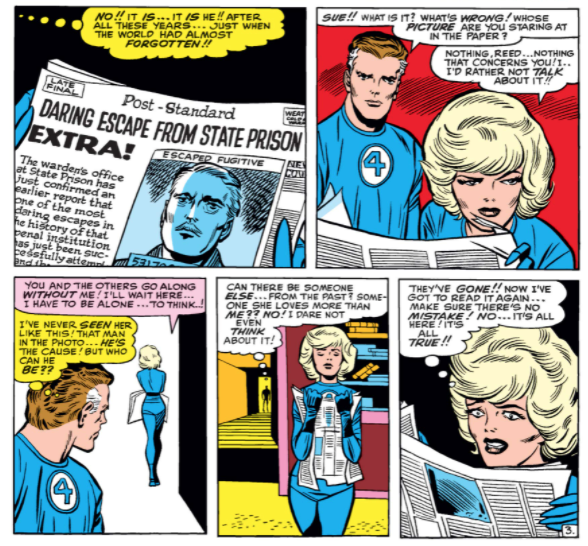
Of course, Franklin Storm’s initial appearance is milked for maximum melodrama. First comes the foreshadowing in the newspaper:
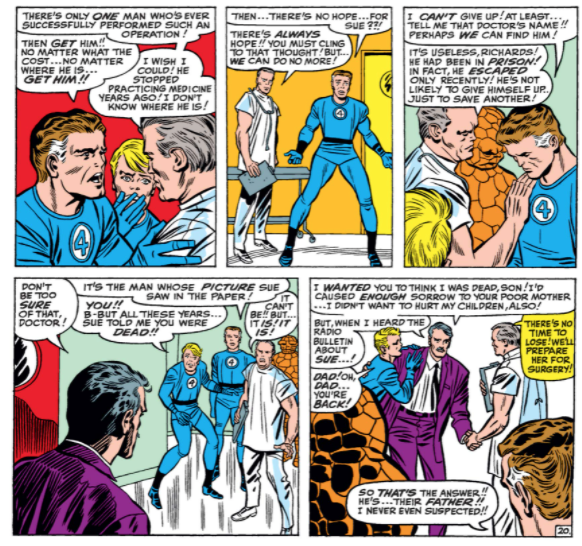
then the deus ex machina revelation at the hospital:
and finally the reunion at Sue’s bedside:
But even while it’s clear Stan and Jack were building up to the conclusion, Sue’s injury and Franklin’s dramatic appearance seems strangely shoehorned into the story. We never actually see Sue get hurt, and the whole business with her hospitalization and operation is stuffed into the last two pages of the story.
Stan and Jack clearly thought introducing Franklin Storm was a big deal, though, teasing his appearance both on the cover and the splash page. But the story has a weird rhythm to it, and feels like an episode of Perry Mason or some other show where all plots are wrapped up in 22 minutes.
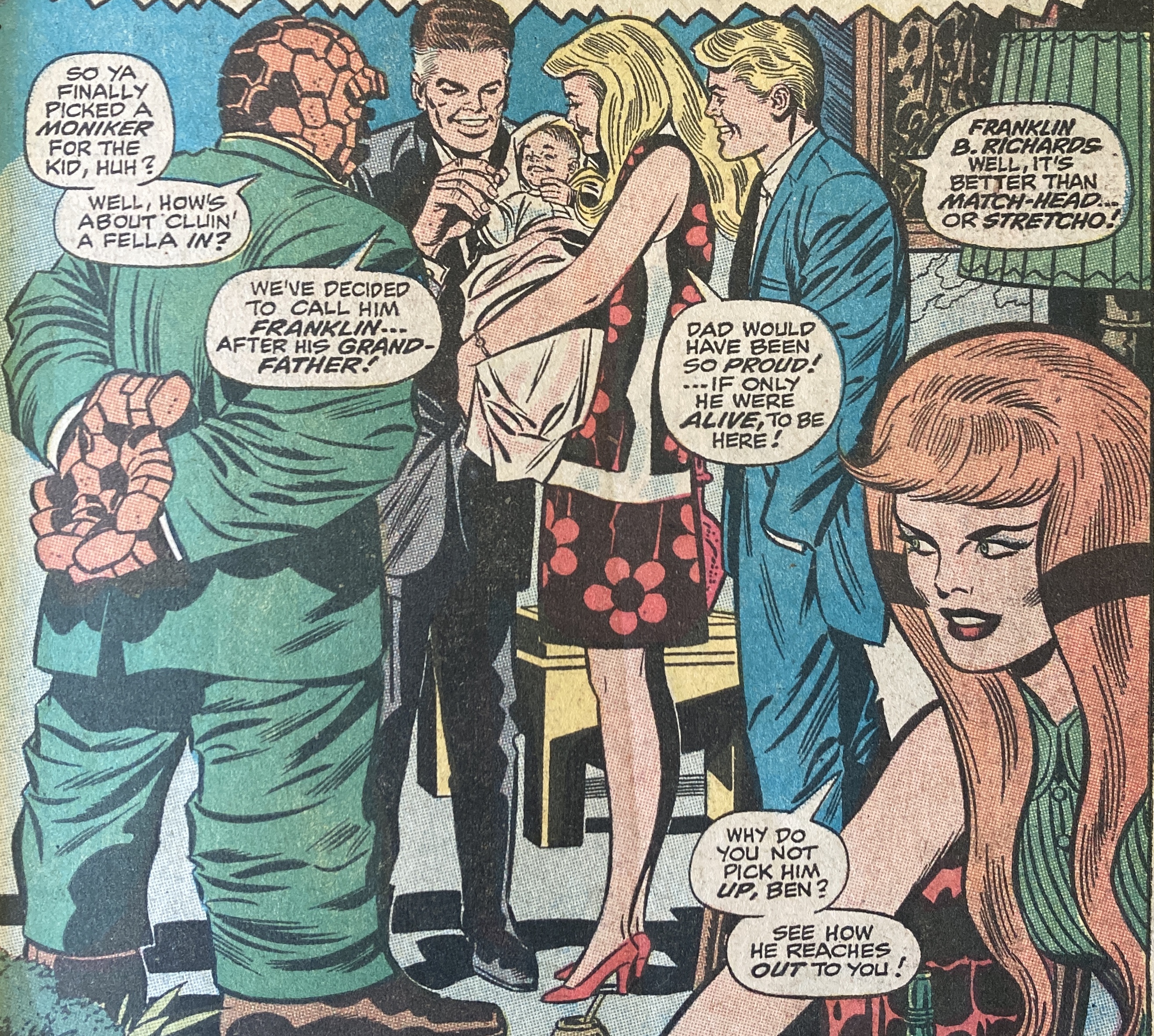
We will learn more about Franklin Storm in the next issue, but he doesn’t become as significant character as reed’s father, Nathaniel. He is, of course, the namesake of Franklin Richards, who gets his name in FF 94 (the B is for Benjamin):
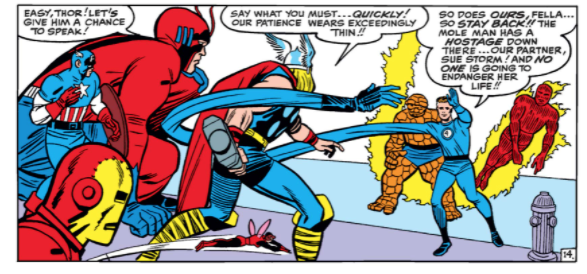
Lastly, FF 31 includes a brief appearance from the Avengers. While from an in-universe perspective it’s not particularly surprising—if city blocks started disappearing in New York, the Avengers should show up—but at this point in the Marvel Universe, super teams weren’t routinely crossing paths. The encounter, which of course includes a brief fight, only lasts about a page, and doesn’t even warrant a mention on the cover.
The sexist sixties
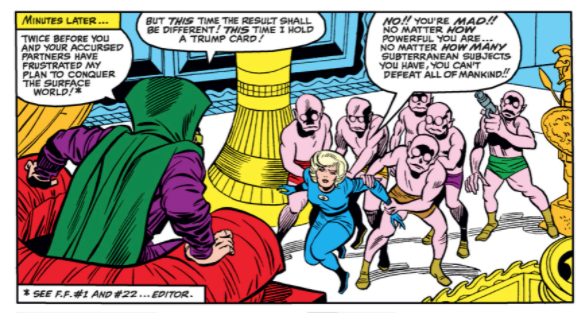
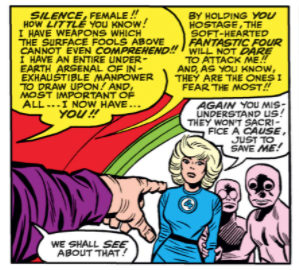
I’ve lost track of how many times Sue has been kidnapped or taken hostage in the first 31 issues (and I don’t have the heart to count) but I’m sure it’s approaching double digits. And if it isn’t Sue who’s taken hostage, it’s usually Alicia.
Snappy banter
The brawling between the team has been replaced by witty repartee, at least for this issue.
Krazy Kredits
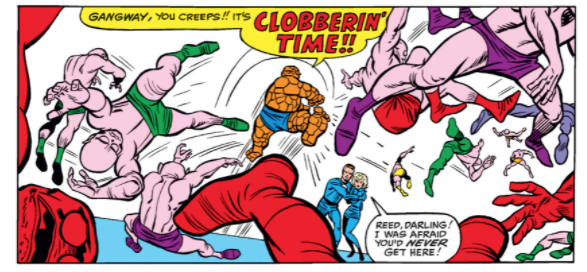
It’s Clobberin’ Time!
For sale
A mint (9.8) copy of FF 31 should cost around $26,000. An issue in fine condition (6.0) is about $120.
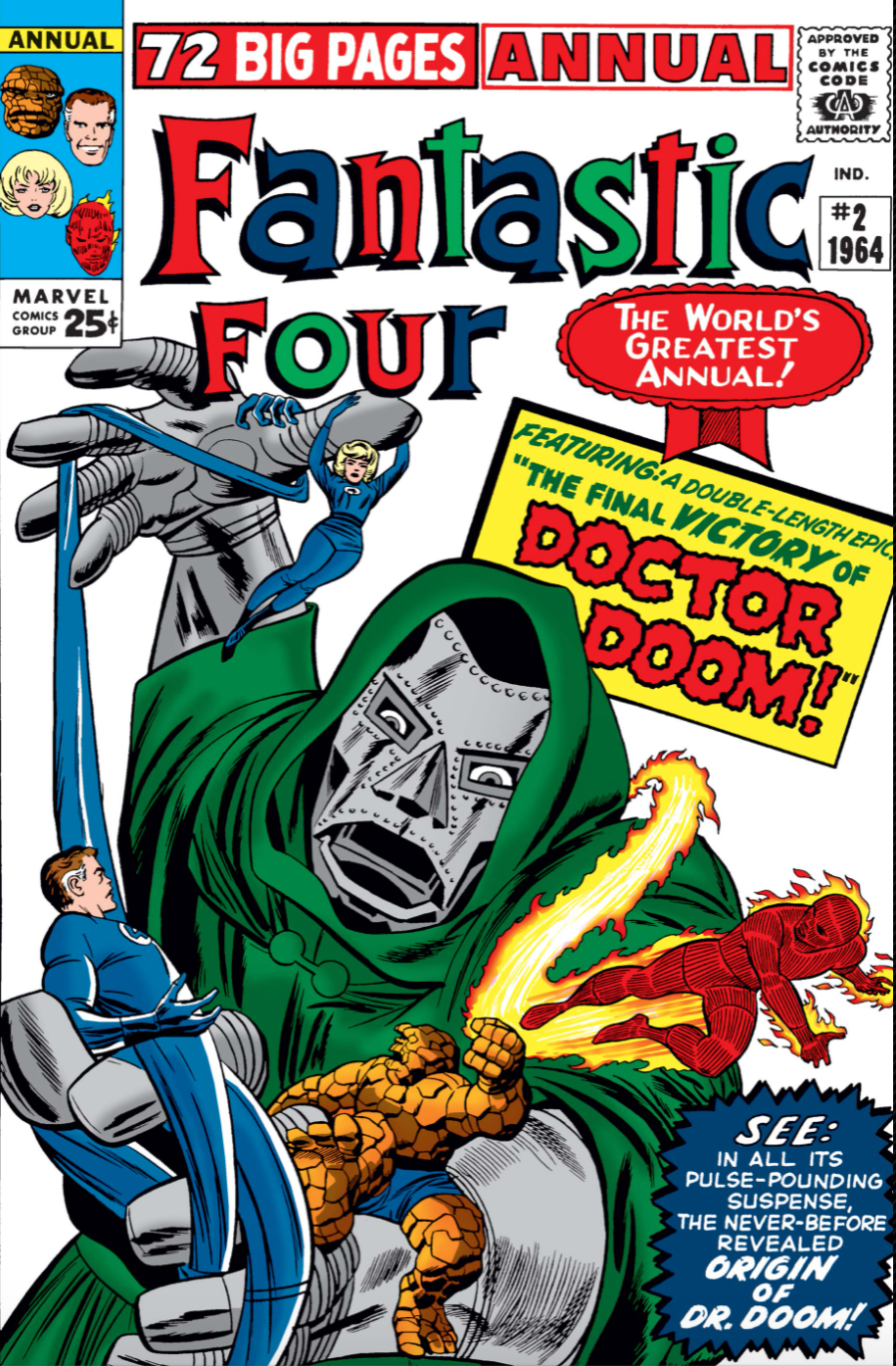
Fantastic Four Annual 2 “The Fantastic Origin of Dr. Doom” and “The Final Victory of Dr. Doom” Published: July 7, 1964 Stories: Stan Lee and Jack Kirby Scripts: Lee Pencils: Kirby Inks: Chic Stone Letters: Sam Rosen Cover: Kirby and Sol Brodsky
This is a big one! Strap yourselves in, because a giant-size comic book means a giant-size blog post.
The Fantastic Four’s second annual contains three stories. One is a reprint of Fantastic Four 5, the first appearance of Dr. Doom. The other two are new, and both contain major contributions to the story of Dr. Doom, the Fantastic Four’s (and arguably the Marvel Universe’s) most significant antagonist.
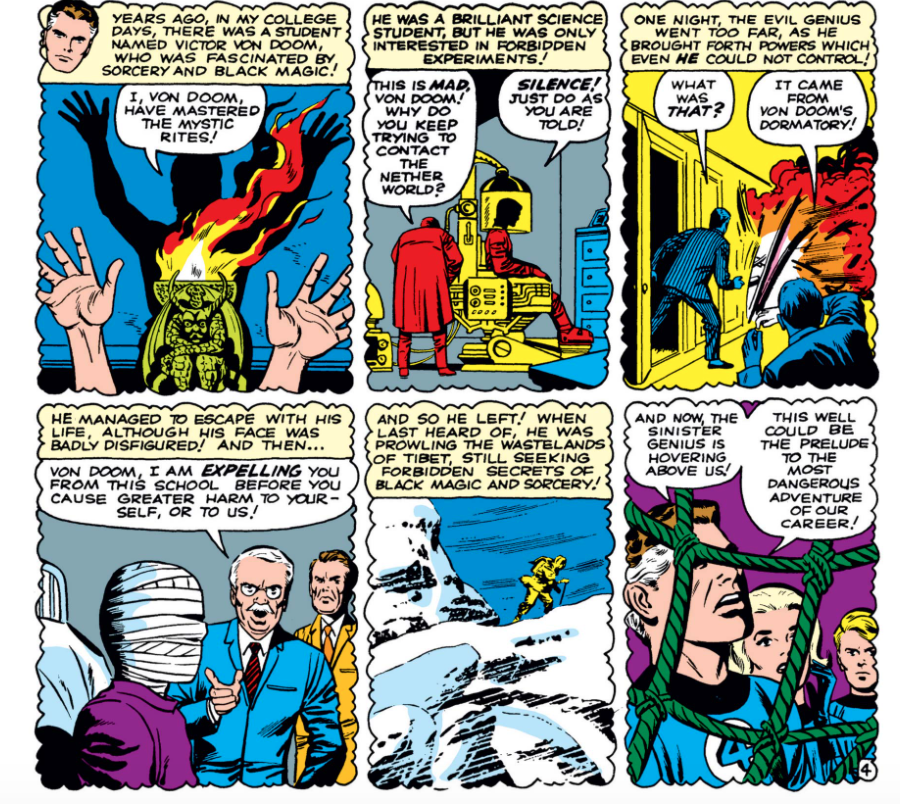
First up is Doom’s origin story in a 12-page retelling that expands greatly on this brief, five-panel origin in FF 5:
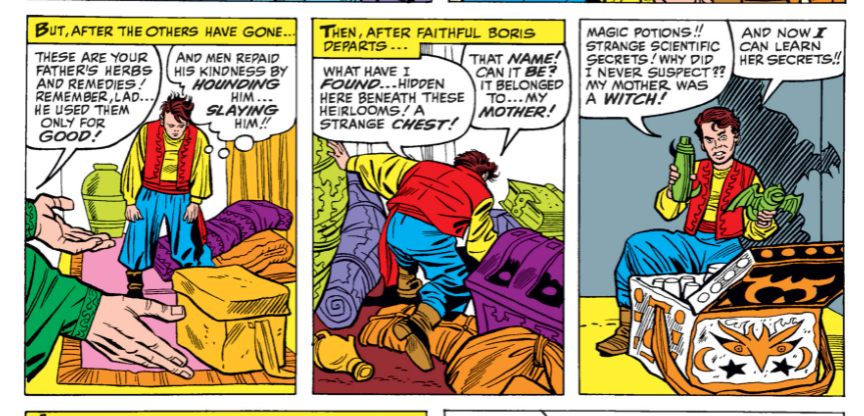
In Annual 2, we learn that Doom was a gypsy, the son of a sorceress and and healer. As a child, the cruel local Baron demands Doom’s father heal his ailing wife. When he can’t save her, the Baron vows revenge, and Werner Von Doom flees with young Victor, eventually dying of exposure while saving his son. Now an orphan, Victor discovers his mother’s magical artifacts and devotes himself to learning her secrets.
As a young man, Doom becomes a sort of con-man Robin Hood, selling inventions like a self-playing violin to the wealthy before they fell apart. He (somehow) attracts the attention of the dean of Empire State University, who offers him a scholarship. At ESU, Doom meets Reed Richards, and haughtily rebuffs his offer to be roommates. Doom spends his free time working on a device designed to “contact the nether world” and arrogantly dismisses Reed when he warns Doom about his miscalculations. The device explodes, scarring Doom’s face, and he is expelled from ESU.
Still seeking occult knowledge, he travels to the Himalayas and joins a hidden order of monks, eventually becoming their master. He commands them to build him a suit of armor, and he leaves as Dr. Doom.
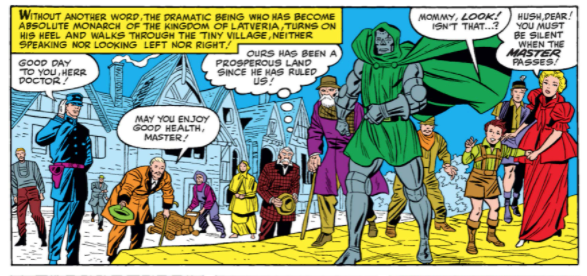
The story wraps up with Doom striding through Latveria, where his subjects seem to both love and fear him.
What’s going on here?
A lot. For the first time we learn about Doom’s sorceress mother, the tragic death of his father, and the origin of his armor. Notably, FF Annual 2 also introduces Doom as monarch of Latveria, one of Marvel’s most important fictional nations (Wakanda, Atlantis, and Genosha are the others). Remember, up to this point, Doom’s castle was in the Adirondack mountains in upstate New York. Making Doom a sovereign—giving him both diplomatic immunity and threats from coups and insurgencies—opened up dozens of story angles for FF writers over the years.
While Annual 2 expands Doom’s origins, it’s hardly the last word on the subject. Given Doom’s centrality in the Marvel universe, it’s not surprising his story has been continually revisited, tweaked, and retconned. While the same basic elements are always in place, over the decades writers have played with the specifics.
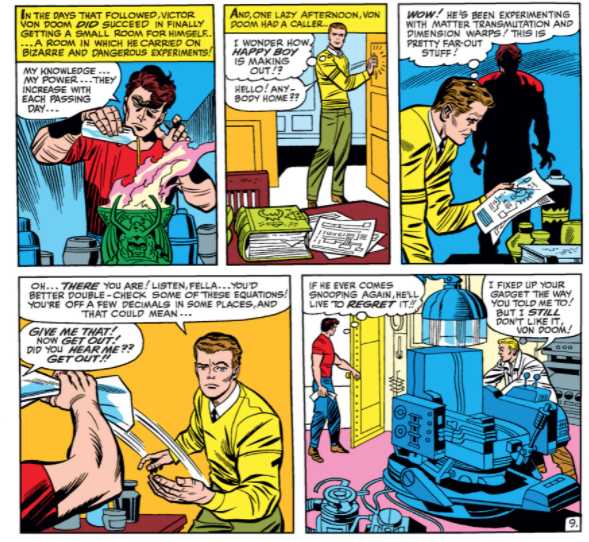
For example, here’s the scene where Reed tries to alert Doom to his miscalculations. First, in Annual 2:
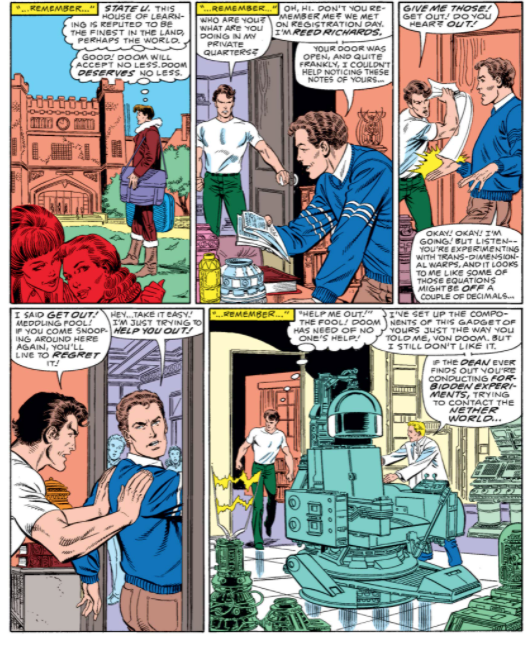
Here’s how John Byrne depicted the same scene 20 years later, in a flashback in FF 278 (inks by Jerry Ordway):
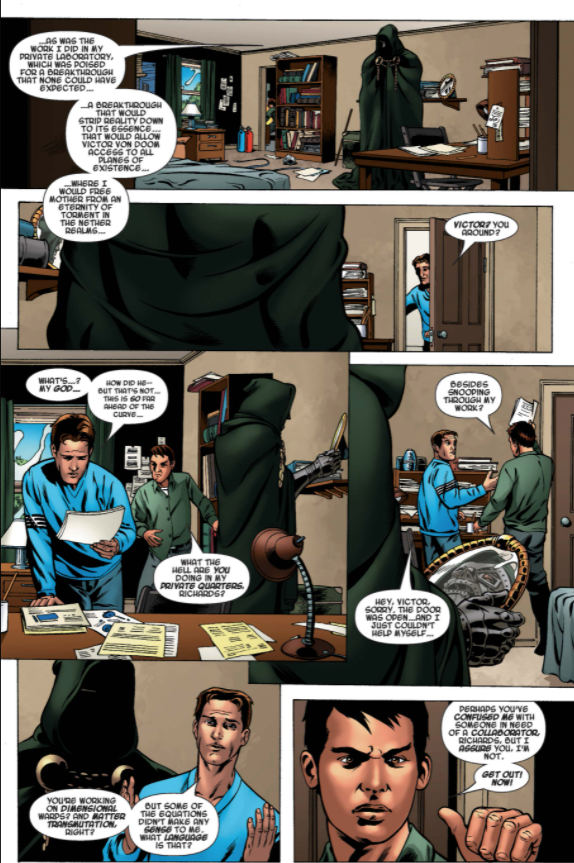
And here’s how Ed Brubaker treated the same scene in 2006’s Books of Doom, a six-part series that expanded Doom’s origin at even greater length (art by Pablo Raimoni and Mark Farmer):
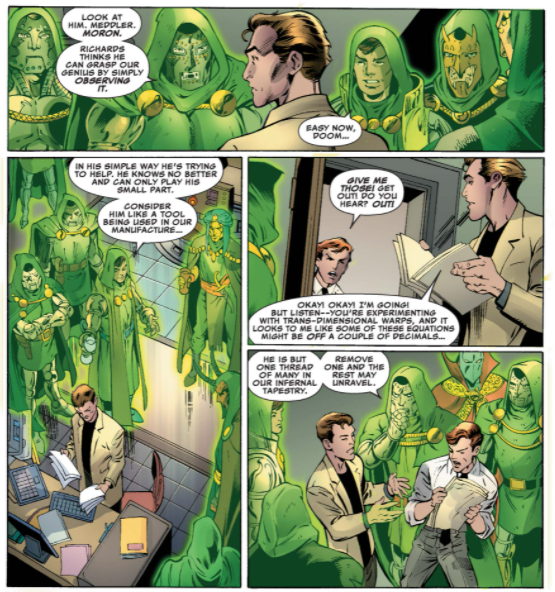
And finally, in 2013’s Fantastic Four, vol. 4, issue 9, Matt Fraction has a host of interdimensional Dooms visit what Doom here calls his “nativity” (art by Mark Bagley and Mark Farmer):
Interestingly, “dimensional warps” appear in all four tellings.
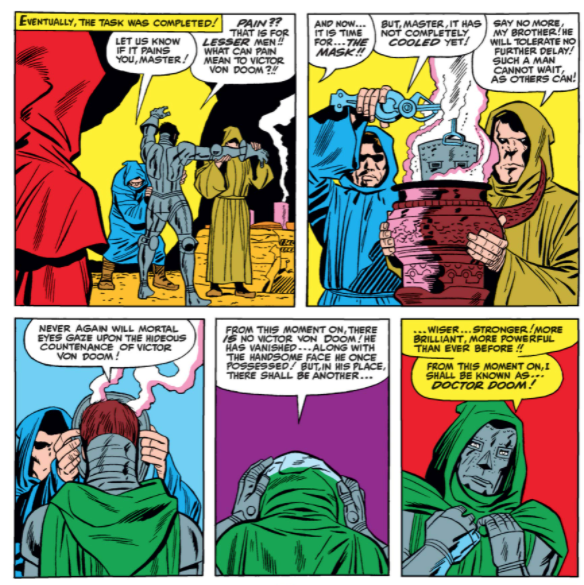
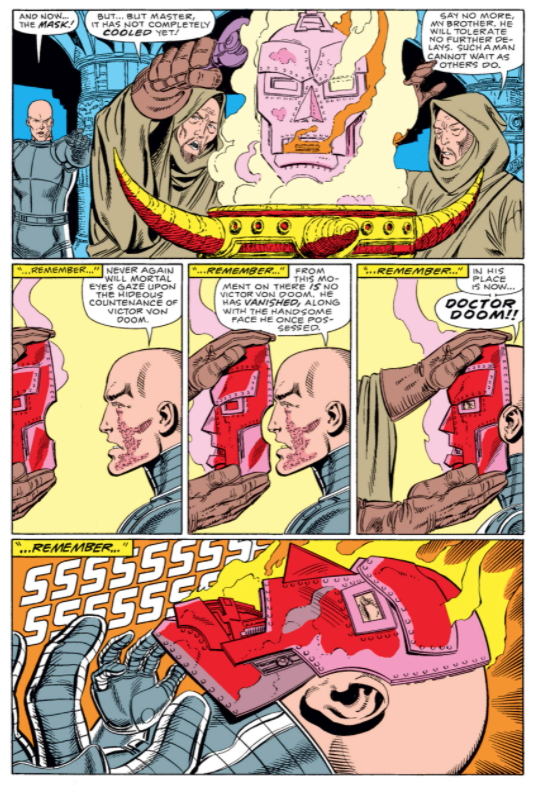
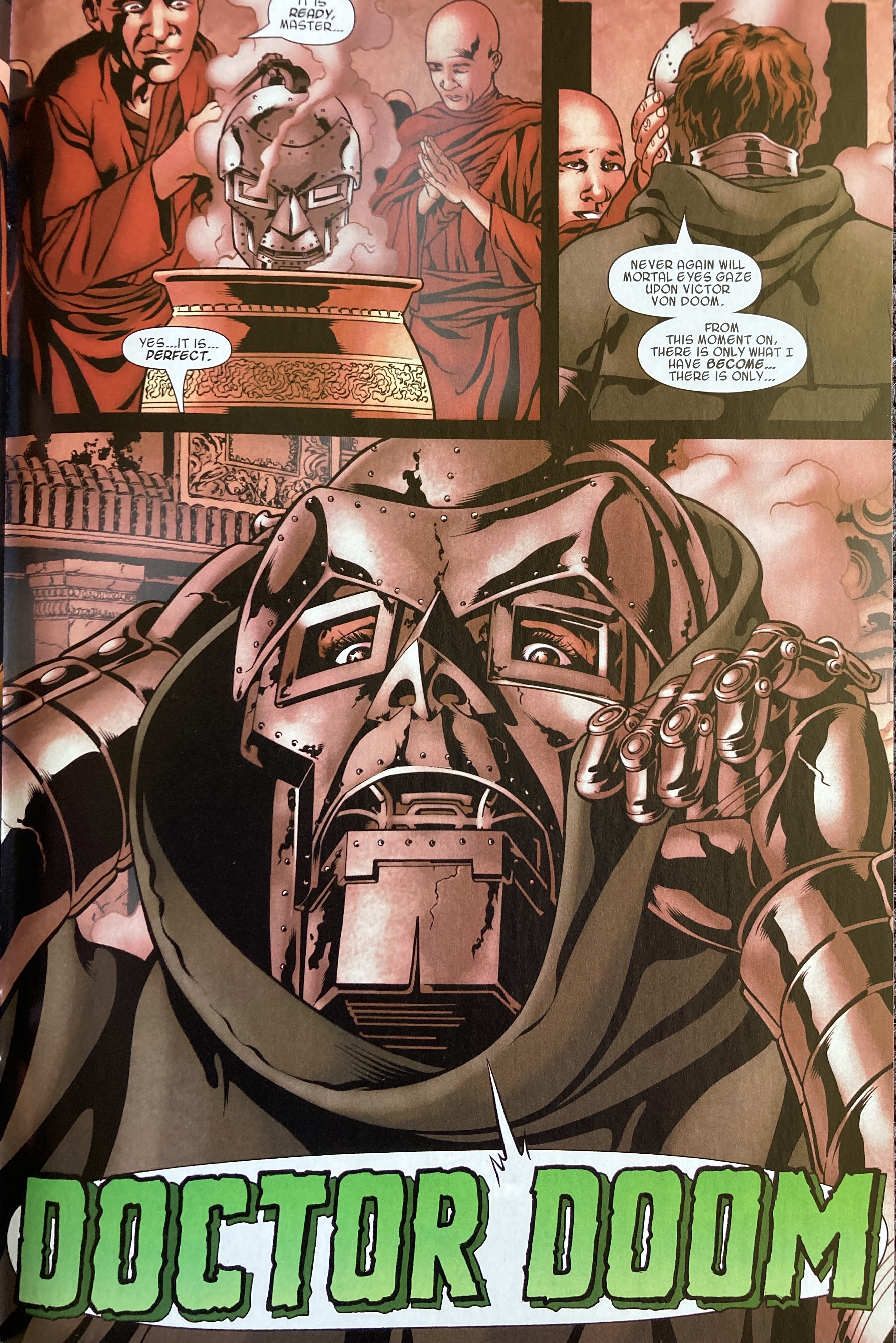
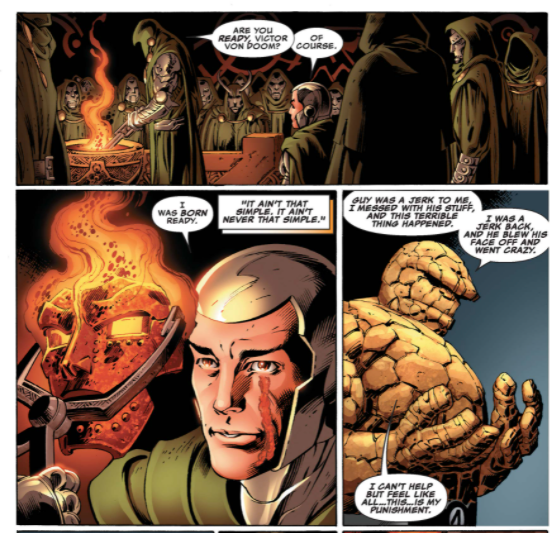
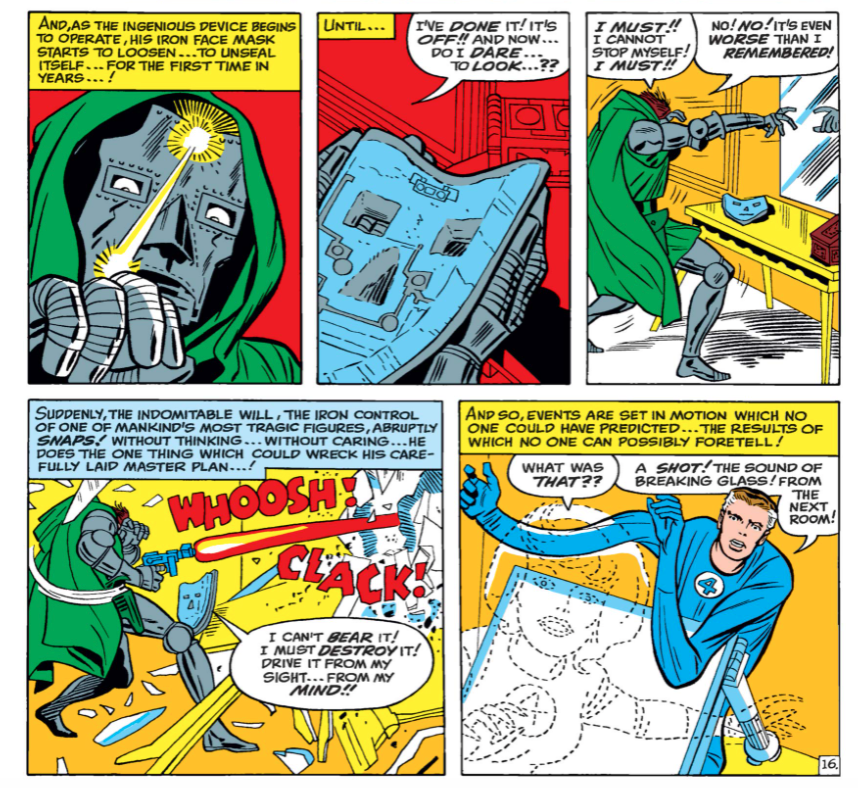
Here’s the various tellings of another critical scene, when Doom first puts on his mask.
First, in Annual 2:
Then, in FF 278:
Books of Doom:
And FF Vol. 4, No. 9 (Ben and Reed are also revisiting Doom’s origin):
The second new in Annual 2 story is a more straight forward FF adventure, with Doom as the villain.
Synopsis
The story opens with the Fantastic Four barely managing to land a balky Fantasticar on a New York City street. After some hijinks with the locals, we turn to outer space, where Doom, last seen drifting in the void in FF 23, is rescued by Rama-Tut. There, they discuss how they may in fact be the same person in different times, and they agree they must defeat the Fantastic Four.
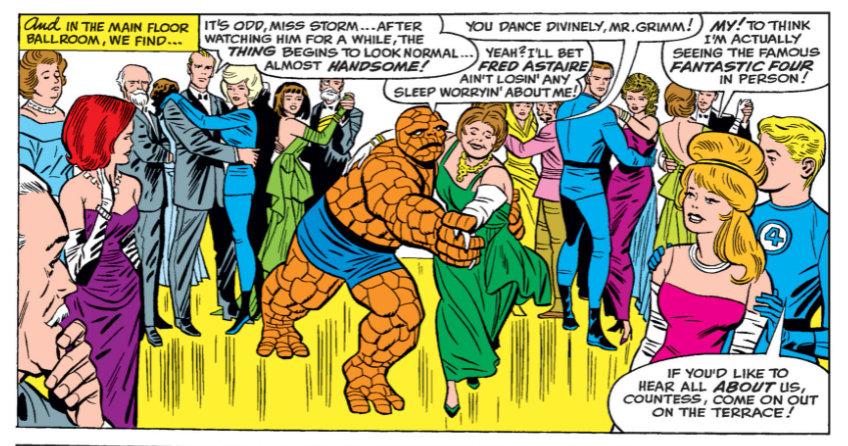
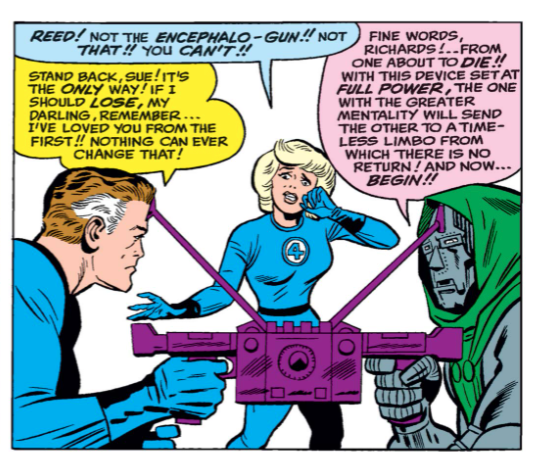
In a spacecraft borrowed from Rama-Tut, Doom returns to Earth and Latveria’s embassy in New York (technically, it should be a consulate since the embassy would be in Washington, but we’ll let it slide) to launch his plan. Meanwhile, the Fantastic Four are back in the Baxter Building, clowning around, when they are invited to a state dinner at the Latverian embassy. There, they are served a berry juice which causes hallucinations, leading the FF to fight with each other. Doom, however, attracts their attention when he breaks a glass mirror (after looking at his unmasked face), and the team pursues him to the Baxter Building. There, after a scuffle with the rest of the FF, Doom is challenged to a duel by Reed. After drinking a toast, they square off using the “encephalo-gun,” a device that will send the one with the lesser brain power “to a timeless limbo.”
Doom appears to win as Reed disappears, and walks off in triumph, only for Reed to reveal he tricked Doom into drinking the Latverian berry juice, and Doom only hallucinated defeating Reed.
What’s going on here?
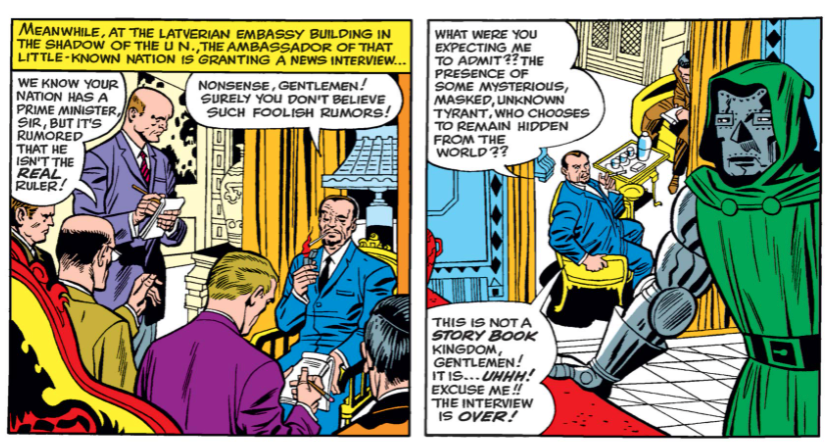
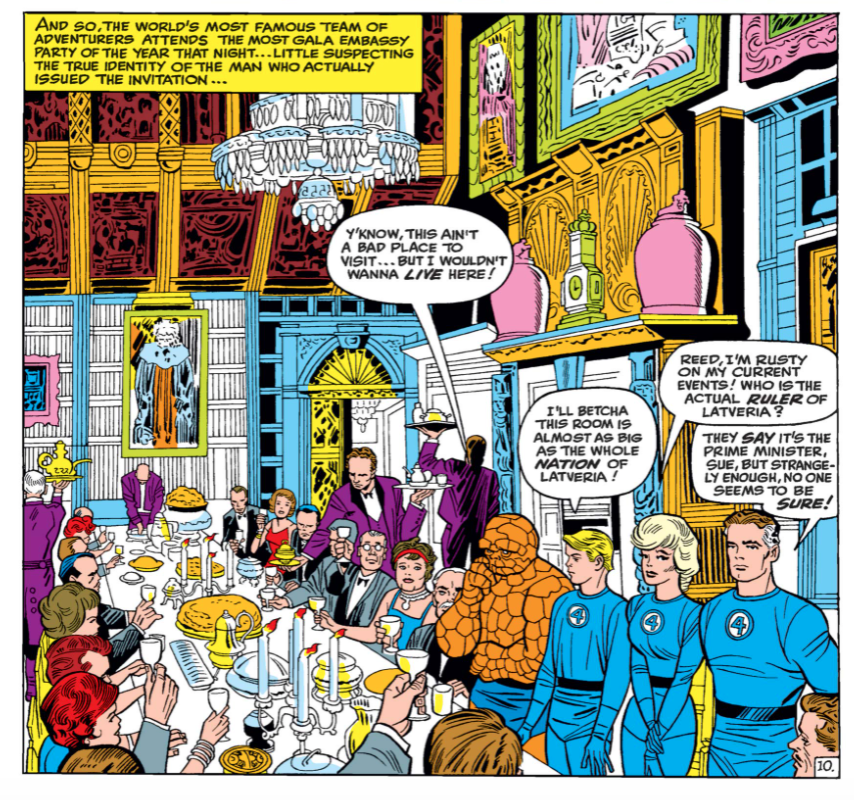
The whole business with the berry juice and encephalo-gun make this one of the sillier FF stories in a while, but there some interesting nuggets are revealed along the way. One detail is that while the earlier story established Doom is ruler of Latveria, it’s apparently not common knowledge outside the country, which is why the FF wouldn’t be suspicious of an invitation to the embassy. Stan and Jack have a bit of fun with this idea here:
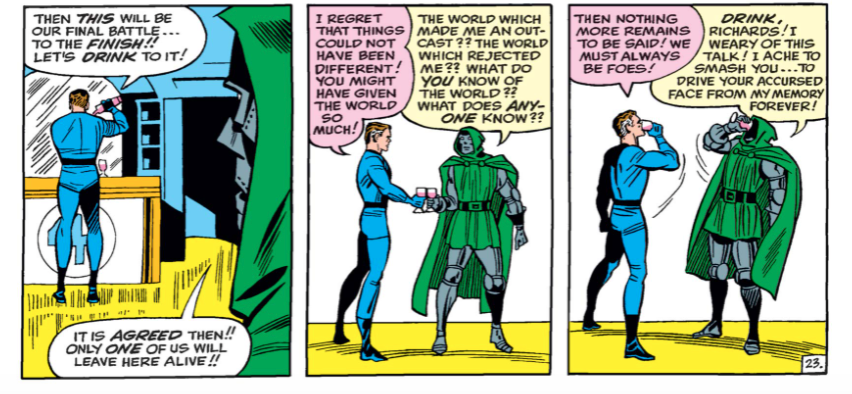
The story also helps establish the weird relationship between Doom and Reed, where they are enemies but have a grudging respect for one another that at times get very close to a friendship. We see that in the toast scene (which also suggests Doom is far stupider then we think if he falls for that trick):
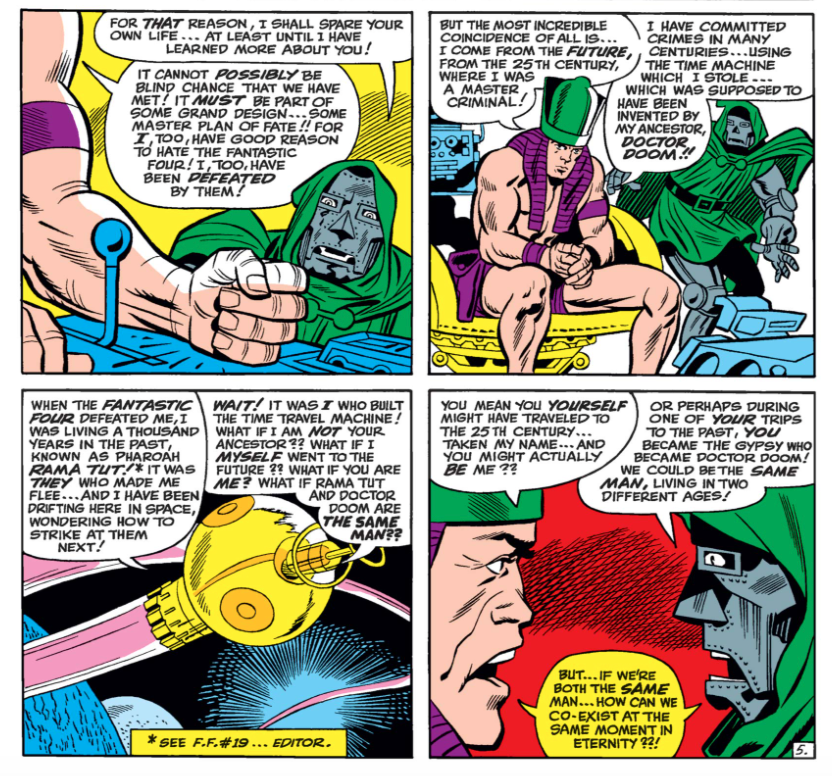
FF Annual 2 also gives us an early glimpse into the time-twisting storylines featuring Rama-Tut/Kang/Immortus so beloved of later Marvel writers like Steve Englehart, Roger Stern and Kurt Busiek. Like most of those stories, I found this exchange between Rama-Tut and Doom completely baffling. Maybe in a future blog post I’ll try and unravel it all.
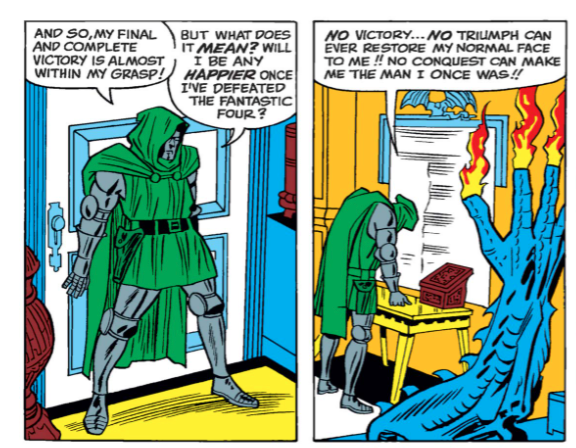
We also get a bit of drama about Doom’s face. We are told this is the first time in years he has taken off his mask.
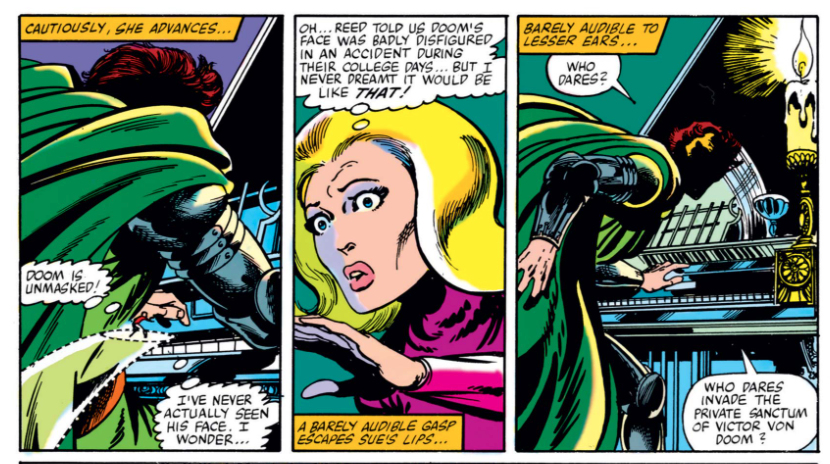
But his discomfort with his unmasked face seems to fade over the years, since he removes his mask to play the piano in FF 236 (by Byrne):
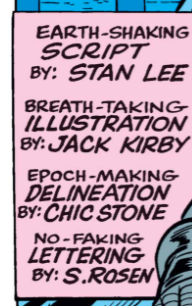
Krazy Kredits
Two stories means two opportunities for goofiness:
and
The sexist sixties
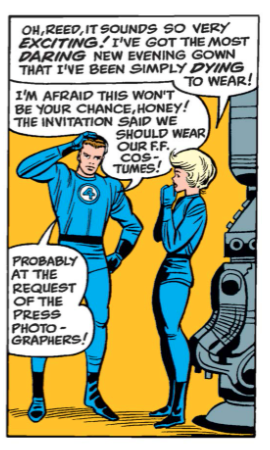
After a few issues where Sue was coming into her own as an effective member of the team, this story seriously back-slid into embarrassing sexism. First, there’s a return to Sue’s obsession with clothes:
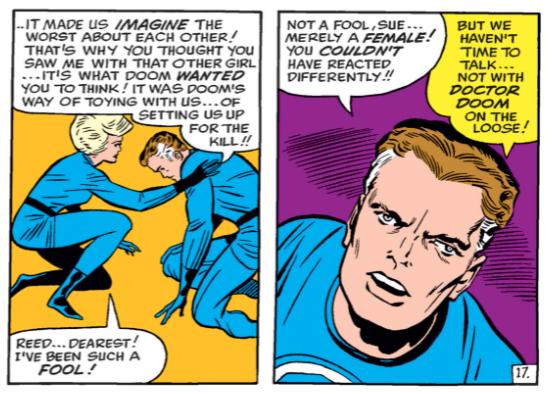
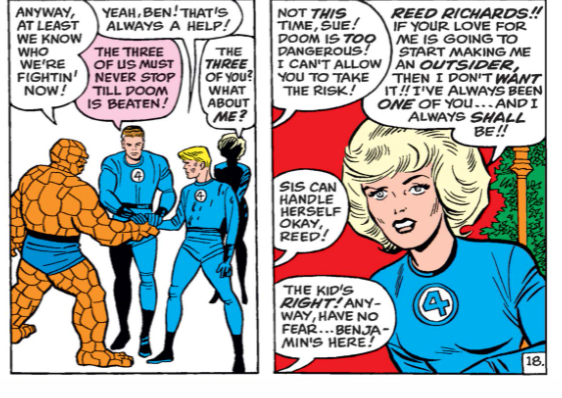
Then this painful dialogue:
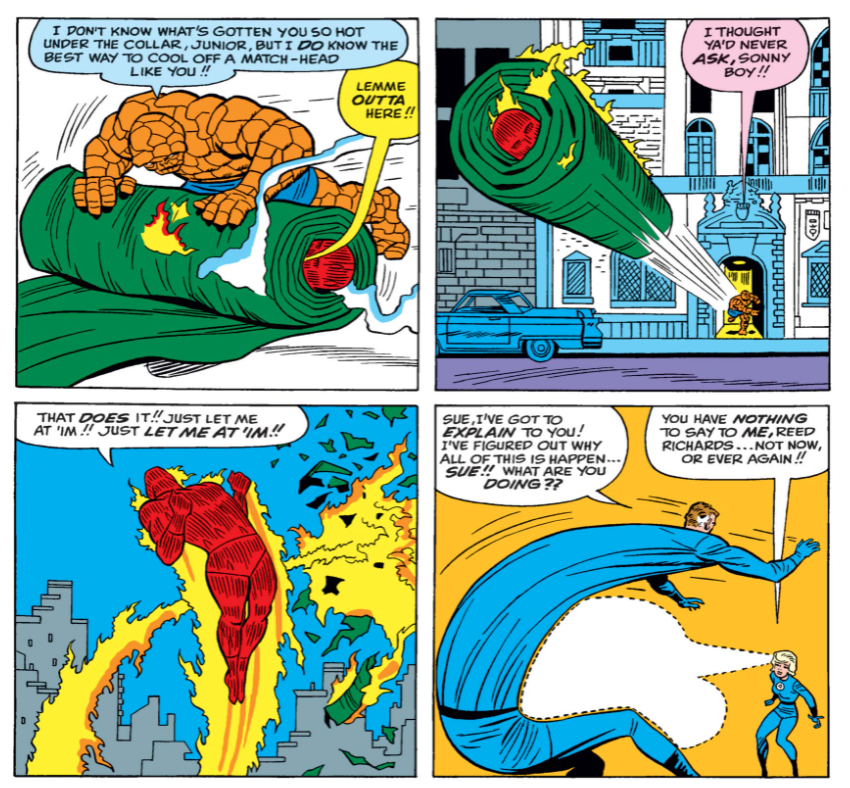
After Sue has proven her worth in about a dozen issue, Reed still wants to shunt her aside. Johnny, of all people, comes to her defense.
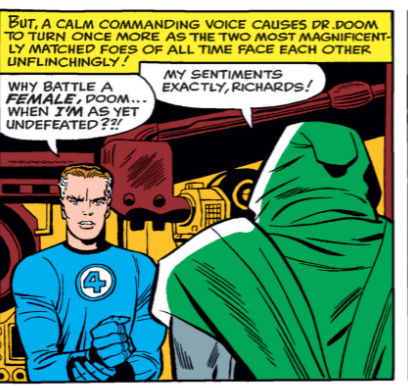
Then, after Sue battles Doom to a standstill, Reed intervenes to say:
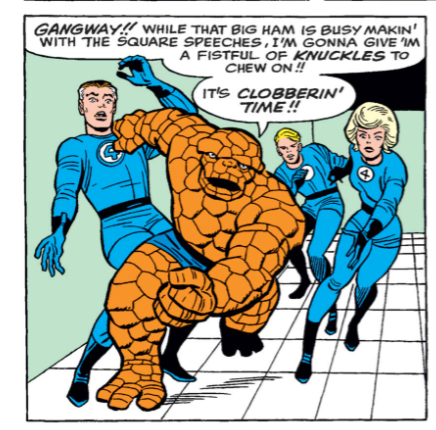
It’s clobberin’ time!
I believe this is only the second time we hear Ben use his signature phrase:
Weird science
Not the Encephalo-Gun!! Not that!!
They’re fighting again
The juice made them do it.
Mid-Century Modern
Doom also has a creative decorator.
Speaking of art
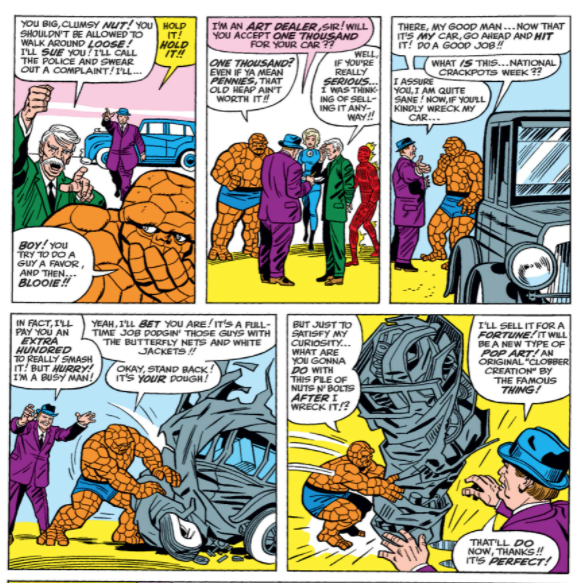
A bystander pays Ben to destroy a car to create a piece of modern art:
This would be just another example of Stan and Jack making fun of the excesses of 60s culture, expect artist John Chamberlain had a successful career making sculpture out of demolished cars:
Pin-ups!
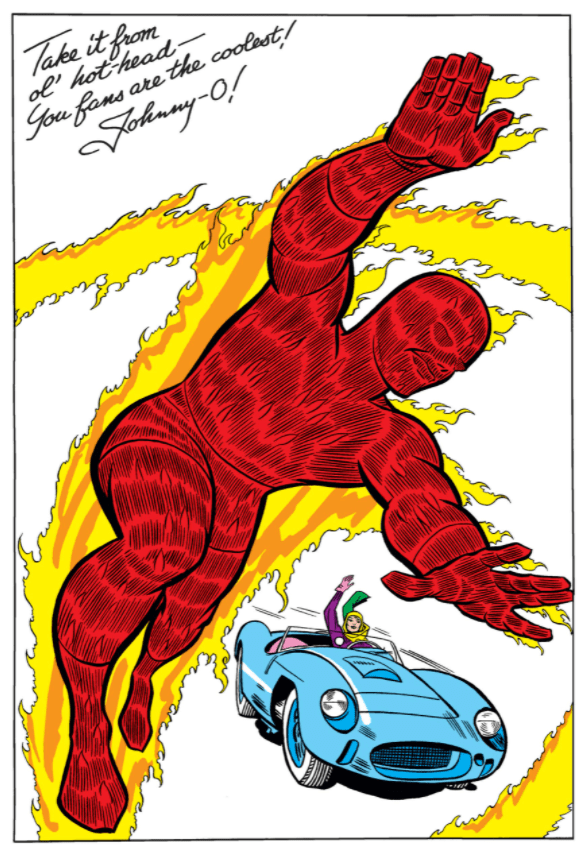
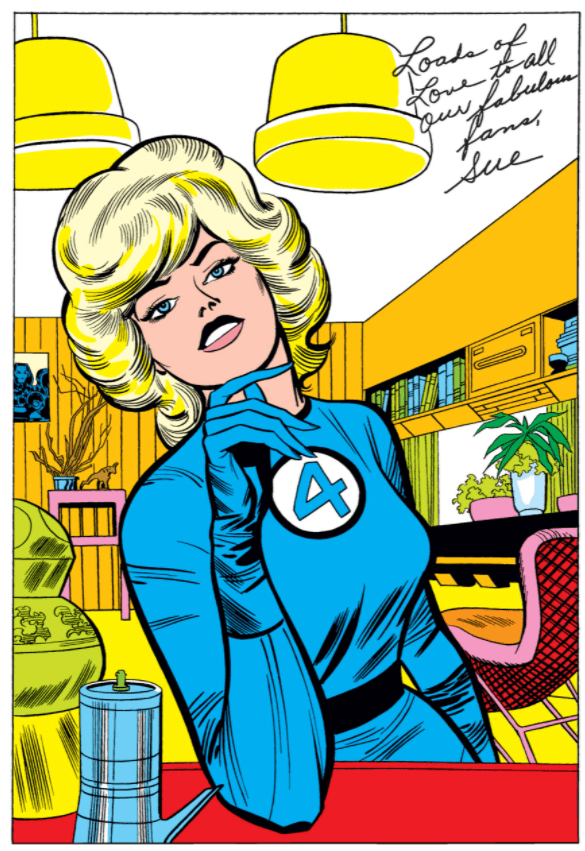
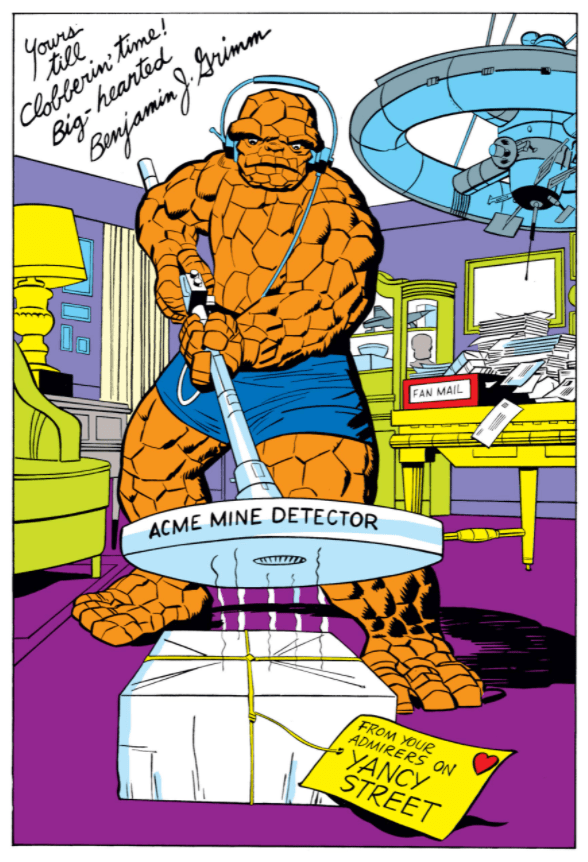
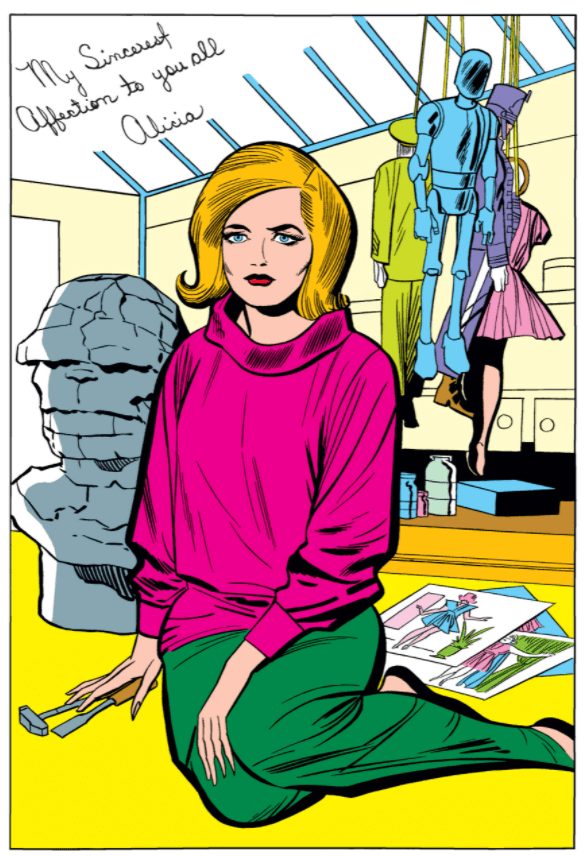
FF Annual 2 has a collection of run-of-the mill pin-ups of villains, and some exquisite pin-ups of the FF (and Alicia). Kirby put a lot of attention to detail in these, particularly Reed’s and Johnny’s (and despite Ben only saying “it’s clobbering time” once before this issue, it’s already identified as a catch-phrase in is pinup).
Dig that Kirby Krackle
Check out this panel, of the party at the Latverian embassy:
And this is a great sequence:
For sale
A mint (9.8) copy of FF Annual 2 could cost you $50,000. An issue in Fine (6.0) condition is about $800.



 Percival Henry: The Fantastic Four and more