• About Percival Henry

Percival Henry: The Fantastic Four and more

~ Blogging the Fantastic Four issue by issue (plus whatever else grabs my attention)

Percival Henry: The Fantastic Four and more

Monthly Archives: January 2015

Year of Fiction: Moby-Dick, by Herman Melville (1851)

18 Sunday Jan 2015

Posted by percivalhenry in Year of Fiction

≈ Leave a comment

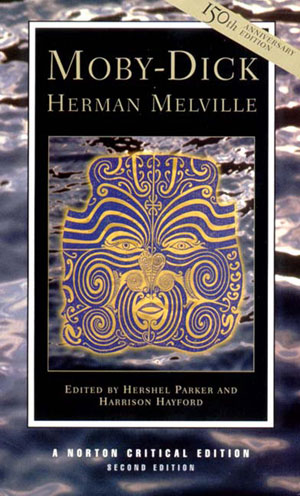
9780393972832_300

I finished Moby-Dick a few months ago and I’m still sort of astonished I did. It’s more or less how I felt after finishing my first marathon. It’s an amazing, exhausting, frustrating and brilliant book, and I’ve been tumbling the themes and images over in my head since I completed it. There’s a lot to say about it, but since there’s probably little I could say that hasn’t been said before, I’ve held off writing about it.

As I read it, I kept thinking how theatrical the book was and, particularly, how cinematic. Melville paints rich pictures of the sea and sky, the bloody work of whaling and hard, sweaty labor of the men who do it. Consider this description, in chapter 96, of the three harpooners boiling blubber into oil at the Pequod’s “try-works” as the ship sailed deep into the night:

Their tawny features, now all begrimed with smoke and sweat, their matted beards, and the contrasting barbaric brilliancy of their teeth, all these were strangely revealed in the capricious emblazonings of the works. As they narrated to each other their unholy adventures, their tales of terror told in words of mirth; as their uncivilized laughter forked upwards out of them, like the flames from the furnace; as to and fro, in their front, the harpooneers wildly gesticulated with their huge pronged forks and dippers; as the wind howled on, and the sea leaped, and the ship groaned and dived, and yet steadfastly shot her red hell further and further into the blackness of the sea and the night, and scornfully champed the white bone in her mouth, and viciously spat round her on all sides; then the rushing Pequod , freighted with savages, and laden with fire, and burning a corpse, and plunging into that blackness of darkness, seemed the material counterpart of her monomaniac commander’s soul.

Consider, also, the scenes when Tashtego falls into the whale’s skull, or when Ahab rails at the St. Elmo’s Fire on the masts, or when the Pequod is pursued by Malay pirates as it chases a pod of whales, or when Starbuck picks up Ahab’s musket and contemplates murdering the sleeping captain.

Melville wrote Moby-Dick as a novel, because what other choices did he have in 1850? The influence of Shakespeare is obvious, but the book would fail written as a play; without the sea and ship and, of course, the whale, it would lose all the tension between man and nature that is at the heart of the book. But what about a movie? If Melville were alive today, would he want Moby-Dick made into a movie? I think yes (not least because he was broke).

Moby-Dick has been filmed, and I was surprised to discover how many versions there are (I confess to having seen none of them). There’s the well-regarded 1956 version directed by John Huston (screenplay by Ray Bradbury!), with Gregory Peck as Ahab. There’s a 1998 TV movie, with Patrick Stewart as Ahab and Peck returning to play Father Mapple. There’s a 2011 TV miniseries, with William Hurt as Ahab and Ethan Hawke as Starbuck. There are silent versions, a cartoon versions, parody versions. There’s even a version set in a nuclear submarine, featuring a 400-foot whale that attacks helicopters. (Seriously. Check out the trailer.)

I conjured up a version directed by Steven Spielberg (Jaws meets Amistad!), and starring Daniel Day-Lewis as Ahab. I had fun on Twitter casting the movie and soliciting suggestions. But I also encountered resistance from one follower, who argued that the format of the novel – which includes lengthy non-fiction digressions about whales and the history and nature of whaling – makes it impossible to film and maintain the integrity of the work. He argued that the digressions needed to be in the movie, as true to Melville as possible.

I disagree. Melville’s long, often tedious asides are essentially footnotes, there to help the reader understand the world of whaling. They’re not part of the narrative, but they support the narrative. In a movie, what’s necessary to the telling of Moby-Dick can be told through the characters, and what’s not can be excluded.
watchmen_ver18_xlg

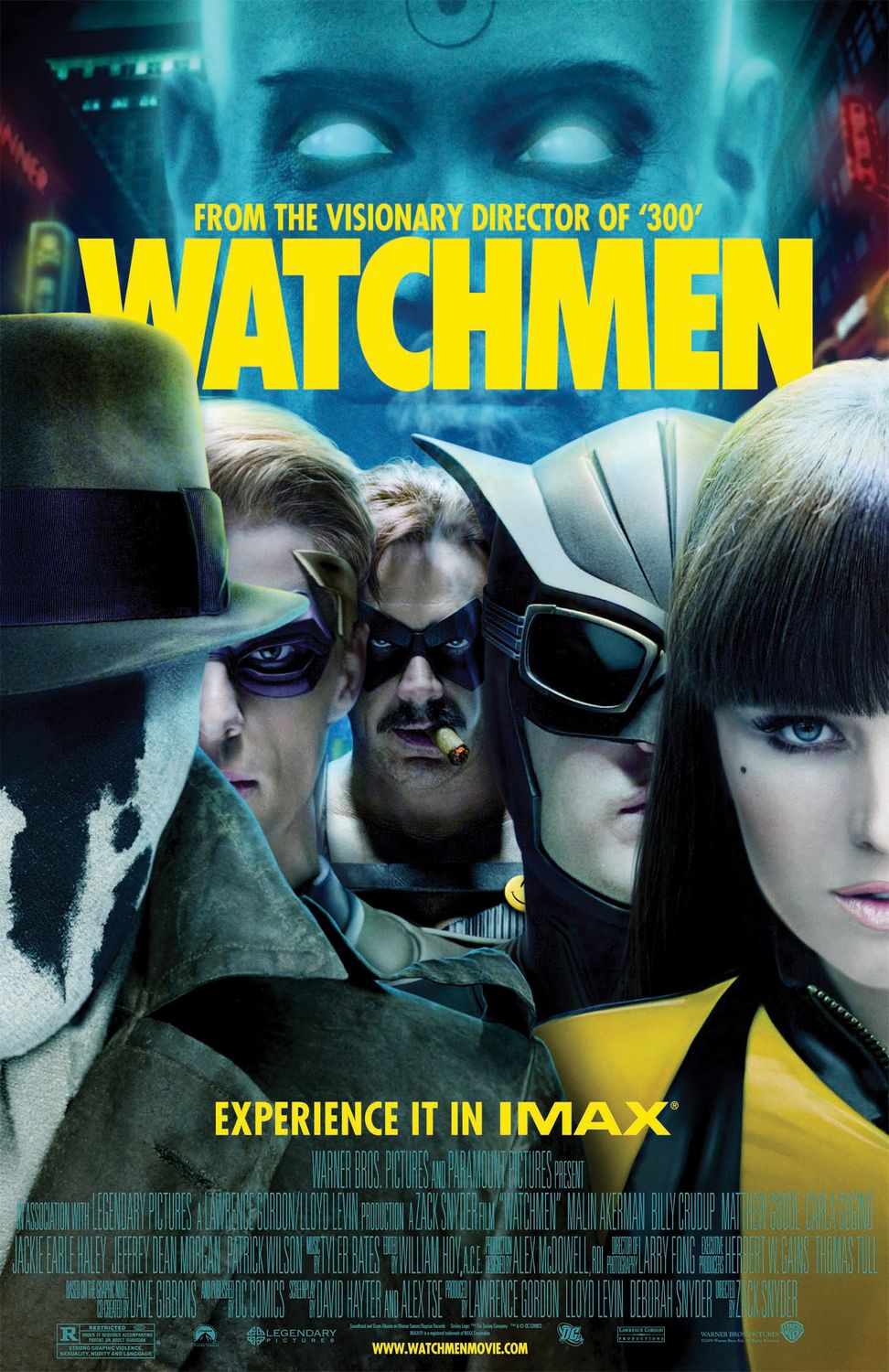
Slavish devotion to the source material can be as big a mistake as ignoring it. “Watchmen,” Zack Snyder’s 2009 movie version of the 1985 comic book, was as close to a panel-for-panel adaptation is possible, and yet failed because what works in a comic doesn’t necessarily work in film. Peter Jackson’s “Lord of the Ring” struck the right balance, cutting scenes and manipulating the order of events to suit the conventions of movie making, yet staying true to the tone and spirit of Tolkien’s books.

Later this year, “In the Heart of the Sea,” a big-budget movie by Ron Howard opens. The movie is based on a 2000 non-fiction book by Nathanial Philbrick, but very prominently claims to be “based on the incredible true story that inspired Moby-Dick.” This might be Hollywood’s latest solution to tackling Melville: by adapting a modern book, it maintains a modern sensibility yet preserves the man vs. whale conflict at the heart of the book.

It’s understandable, but unfortunate, but because won’t have the slightly unhinged richness and mania of Melville. It easy to make an earnest account of the dangers of whaling; much harder to include – as Melville does – scenes of Fleece, the cook, arguing with sharks; Ishmael and the polynesian harpooner Queequeg sharing a bed in port; and later, Queequeg commissioning a coffin that eventually saves Ishmael life. Melville writes with humor, wit and passion, and that’s much harder to adapt for film than any of his treatises on whaling law or flensing technique.
Very Short Review: Shutter Island (2010)

16 Friday Jan 2015

Posted by percivalhenry in Very Short Review

≈ Leave a comment

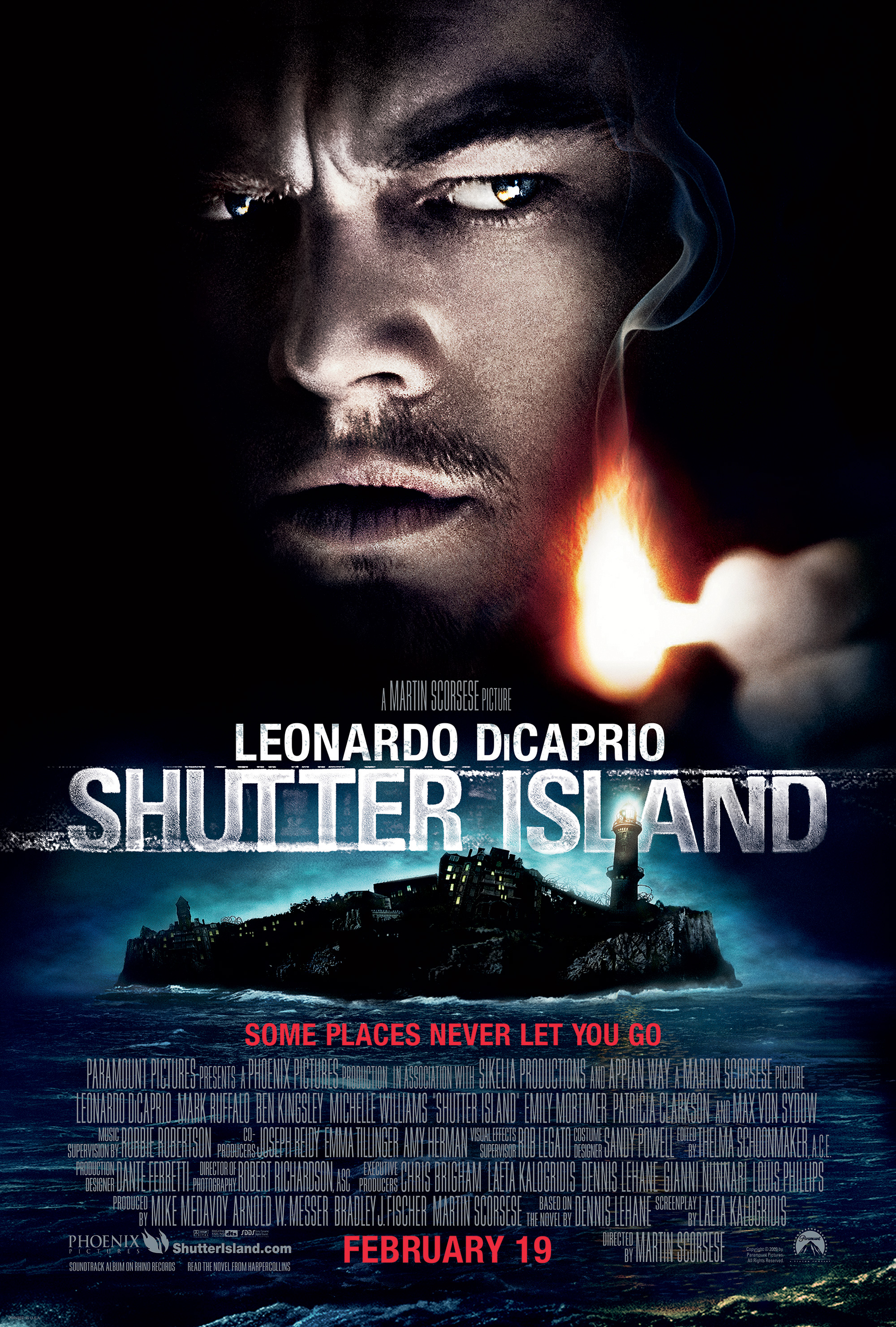
???????????????????????????   I haven’t seen every Martin Scorsese movie, but I’ve seen most and “Shutter Island” is easily the worst. Whatever the flaws of “Bringing Out The Dead” or “The Age of Innocence,” they weren’t boring and I never regretted watching them. Not so with “Shutter Island,” an exercise in lurid tedium. The movie starts out promisingly, with Leonardo DiCaprio as a harried federal marshal in the 1950s investigating a missing inmate at a mental institution on an island in Boston Harbor.  Things go awry as DiCaprio quickly descends into typical horror movie territory: sinister scientists, driving rain, flashing lightning, now way to escape the island etc. Scorsese clearly has fun paying homage to the genre, and there are a few scenes that thrill. But rather than taking us on a brisk ride, he buries us in convoluted twists and turns, adding layers of exposition before finally delivering a twist so predictable it was telegraphed an hour earlier (particularly to anyone who saw A Beautiful Mind).  DiCaprio does his best but seems wrong for the part – he’s too boyish and good looking to play a man at the end of his rope – and Mark Ruffalo again plays a federal agent who is not quite what he seems. A contrarian view might be that Scorsese was fully aware what he was doing, and he ladled on the melodrama with intent, perhaps as a misguided tribute to some B-movie from his youth. In either scenario it failed, utterly.

Thoughts on Serial

11 Sunday Jan 2015

Posted by percivalhenry in Uncategorized

≈ 1 Comment


serial-2-w352

I finally listened to the last episode of Serial this week. I was waiting to complete the season before commenting on it, but I didn’t need to. The finale was as shot-through with doubts and second-guessing as all the other episodes, so it ended without really concluding. And that’s appropriate. If there was one over-arching theme to the series, it was just how murky and ambiguous the pursuit of truth, and human relations more broadly, can be.

I don’t have a lot to add to all the other discussions about the guilt or innocence of Adnan Syed, or who might have killed Hae Min Lee. Smarter commentators than I can do that. But do have some thoughts about Serial as a work of journalism.

1, It helps to have help. This may be obvious, but it took a tremendous amount of work to produce the show, and far more resources were devoted to it than to most investigations. It’s hard to count but alongside Sarah Koenig, there seemed to be at least two full-time producers helping her with reporting for most of a year. She also pulled in a team of lawyers and paralegals from an innocence project in Virginia. Even the most ambitious stories at New York Times or the Wall Street Journal rarely get that level of attention. Some of the work was necessary – reading the court documents, contacting prospective sources, walking the crime scene – and some of it went above and beyond. Checking the architectural plans of the Best Buy to establish whether it had a phone booth in 1999, for example. When they searched for an AT&T customer service contract from that era – to establish if an accidental cell call would show up on a bill – and found one in the court documents of a class action lawsuit,  I thought, now you’re just showing off.

2, Koenig and her team got lucky. Granted, luck is the residue of design, and we don’t know how many dry wells they sank before arriving at the gusher that was Adnan Syed. But in ways large and small, they benefitted from really rich source material.

Consider the problem of Lee. Any journalist telling the story of a murder would want to convey a sense of the victim. In Lee’s case, her family wouldn’t participate, and few of her friends spoke for her. But Koenig didn’t need them to because she had something better: Lee’s diary. And not just a diary, but a seemingly totally candid, emotional account of her relationships with Adnan and her new boyfriend, Don. Short of some actual recording of Lee confiding her innermost romantic desires, it’s hard to imagine a better vehicle to capture her voice. How many teenagers kept diaries in 1999? Ten percent? Fewer? That’s just lucky.

There are lots of instances where the people in the story, major or incidental, are far more interesting or colorful that the reporters had a right to expect. Syed’s lawyer wasn’t just a run-of-the-mill incompetent attorney, but brilliant defender with a foghorn voice who flamed out in spectacular fashion. The guy who found Lee’s body wasn’t just a school janitor, but also a convicted streaker. Jay Wilds, whose testimony convicted Syed, had surprising depth of character for a petty drug dealer. None of these characters would have salvaged Serial if Syed wasn’t so articulate, thoughtful and charismatic, but they all helped the story telling.

3, Format matters. Telling the story over several months meant it changed as new evidence and sources materialized. That both helped and hindered Serial. Some developments that seemed critical early in the narrative – the Asia McClain letter that offered a potential alibi for Syed (and  supported the argument of an incompetent defense) – fade in importance as Koenig chases other, more promising ideas, such as the discrepancies between the cell-phone towers and Jay’s description of events. Instead of each episode building in importance, the earlier ones just seem irrelevant.

It also meant important voices absent from the beginning didn’t surface until the show began to air. Don, Lee’s boyfriend, is an enigma when first introduced; he’s in his early 20s, but dating a high school student. He seems at best a loser, and at worst creepy and possibly suspicious. But when we finally hear from him in the final episode, he sounds thoughtful and genuinely distressed about Lee’s death, 15 years later. Don’s belated appearance made Serial stronger – and perhaps he only would have emerged once the show became a phenomenon.

Telling a story episodically is completely different that most long-form journalism, certainly from the sort I practice. Most conventional articles present their strongest evidence early on, then elaborate on it as they go. In print, you never want to take your reader’s attention span for granted; there’s no guarantee they’ll make it to the end, so you make sure they know what your story is about early on. Broadcast is different – think of how sports highlights wait for the end to tell you the score, instead of at the beginning like a newspaper account – and Serial, a broadcast spread over weeks, was radically different. Each episode whet our appetite for more, building toward a climax. And ultimately, that’s where the format may have hurt Serial. Because – to its credit – there was no climax, no big reveal at the end.  Rather than appreciating Serial for what it was, critics and observers were frustrated it was tied up like an episode of Law & Order. We’re habituated to thinking that all stories work that way. But that real life is rarely that entertaining.

  • “The World’s Greatest Comic Magazine!” Fantastic Four Annual No. 15
  • “The World’s Greatest Comic Magazine!” Fantastic Four No. 223
  • “The World’s Greatest Comic Magazine!” Fantastic Four No. 222
  • “The World’s Greatest Comic Magazine!” Fantastic Four No. 221
  • “The World’s Greatest Comic Magazine!” Fantastic Four No. 220
  • July 2026
  • June 2026
  • May 2026
  • April 2026
  • March 2026
  • February 2026
  • January 2026
  • December 2025
  • November 2025
  • October 2025
  • September 2025
  • August 2025
  • July 2025
  • June 2025
  • May 2025
  • April 2025
  • March 2025
  • February 2025
  • January 2025
  • December 2024
  • November 2024
  • October 2024
  • September 2024
  • August 2024
  • July 2024
  • June 2024
  • May 2024
  • April 2024
  • March 2024
  • February 2024
  • January 2024
  • December 2023
  • November 2023
  • September 2023
  • July 2023
  • June 2023
  • May 2023
  • April 2023
  • March 2023
  • February 2023
  • January 2023
  • December 2022
  • November 2022
  • October 2022
  • September 2022
  • August 2022
  • July 2022
  • June 2022
  • May 2022
  • April 2022
  • March 2022
  • February 2022
  • January 2022
  • December 2021
  • November 2021
  • October 2021
  • September 2021
  • August 2021
  • July 2021
  • June 2021
  • May 2021
  • April 2021
  • March 2021
  • February 2021
  • January 2021
  • December 2020
  • February 2018
  • May 2016
  • February 2016
  • January 2016
  • December 2015
  • November 2015
  • October 2015
  • September 2015
  • August 2015
  • July 2015
  • April 2015
  • March 2015
  • January 2015
  • December 2014
  • November 2014
  • October 2014
  • September 2014
  • August 2014
  • June 2014
  • May 2014
  • April 2014
  • March 2014
  • February 2014
  • July 2026
  • June 2026
  • May 2026
  • April 2026
  • March 2026
  • February 2026
  • January 2026
  • December 2025
  • November 2025
  • October 2025
  • September 2025
  • August 2025
  • July 2025
  • June 2025
  • May 2025
  • April 2025
  • March 2025
  • February 2025
  • January 2025
  • December 2024
  • November 2024
  • October 2024
  • September 2024
  • August 2024
  • July 2024
  • June 2024
  • May 2024
  • April 2024
  • March 2024
  • February 2024
  • January 2024
  • December 2023
  • November 2023
  • September 2023
  • July 2023
  • June 2023
  • May 2023
  • April 2023
  • March 2023
  • February 2023
  • January 2023
  • December 2022
  • November 2022
  • October 2022
  • September 2022
  • August 2022
  • July 2022
  • June 2022
  • May 2022
  • April 2022
  • March 2022
  • February 2022
  • January 2022
  • December 2021
  • November 2021
  • October 2021
  • September 2021
  • August 2021
  • July 2021
  • June 2021
  • May 2021
  • April 2021
  • March 2021
  • February 2021
  • January 2021
  • December 2020
  • February 2018
  • May 2016
  • February 2016
  • January 2016
  • December 2015
  • November 2015
  • October 2015
  • September 2015
  • August 2015
  • July 2015
  • April 2015
  • March 2015
  • January 2015
  • December 2014
  • November 2014
  • October 2014
  • September 2014
  • August 2014
  • June 2014
  • May 2014
  • April 2014
  • March 2014
  • February 2014
“The World’s Greatest Comic Magazine!” Fantastic Four Annual No. 15

“The World’s Greatest Comic Magazine!” Fantastic Four Annual No. 15

percivalhenry's avatar by percivalhenry July 18, 2026
“The World’s Greatest Comic Magazine!” Fantastic Four No. 223

“The World’s Greatest Comic Magazine!” Fantastic Four No. 223

percivalhenry's avatar by percivalhenry July 14, 2026
“The World’s Greatest Comic Magazine!” Fantastic Four No. 222

“The World’s Greatest Comic Magazine!” Fantastic Four No. 222

percivalhenry's avatar by percivalhenry July 5, 2026
“The World’s Greatest Comic Magazine!” Fantastic Four No. 221

“The World’s Greatest Comic Magazine!” Fantastic Four No. 221

percivalhenry's avatar by percivalhenry June 25, 2026
“The World’s Greatest Comic Magazine!” Fantastic Four No. 220

“The World’s Greatest Comic Magazine!” Fantastic Four No. 220

percivalhenry's avatar by percivalhenry June 15, 2026
“The World’s Greatest Comic Magazine!” Fantastic Four No. 219

“The World’s Greatest Comic Magazine!” Fantastic Four No. 219

percivalhenry's avatar by percivalhenry June 7, 2026

Blog at WordPress.com.

  • Subscribe Subscribed
    • Percival Henry: The Fantastic Four and more
    • Join 74 other subscribers
    • Already have a WordPress.com account? Log in now.
    • Percival Henry: The Fantastic Four and more
    • Subscribe Subscribed
    • Sign up
    • Log in
    • Report this content
    • View site in Reader
    • Manage subscriptions
    • Collapse this bar
Loading Comments...