• About Percival Henry

Percival Henry: The Fantastic Four and more

~ Blogging the Fantastic Four issue by issue (plus whatever else grabs my attention)

Percival Henry: The Fantastic Four and more

Monthly Archives: September 2015

Looking: Agnes Martin

24 Thursday Sep 2015

Posted by percivalhenry in Looking

≈ Leave a comment

Tags

art, art history

Agnes Martin, the subject of a retrospective now at the Tate Modern, was born in Saskatchewan in 1912, and spent much of her adult life in rural New Mexico. It’s easy to draw connections between her bare, minimalist paintings to those stark landscapes, although she may have been more influenced by the zen philosophy she studied at Teachers College than by the Canadian prairie.

Her early works – paintings of biomorphic shapes, and found objects – show the influence of O’Keeffe, Miro and Johns, but she quickly found her own language of the rigid grids and bands she tinkered with for the rest of her career.

One of her most successful works is A Grey Stone (1963), a vast canvas that immediately strikes the viewer as a wall of, yes, grey. Get closer, and you see it’s a grid of tiny rectangles, hundreds or thousands of them, etched faintly into the dark paint. (Get even closer and you set off an alarm. Sorry).

A Grey StoneA Grey Stone, 1963

Gray Stone (detail)
A Gray Stone (detail)

Martin’s precision creates the illusion of machined perfection, but it’s made by hand, and it has the imperfections of the hand made. The slightly varying lines make the work organic and natural, and the pattern here suggests animal hide, snake skin, human cells. It’s bulk and texture suggests an immense beast, like a rhinoceros or Brontosaurus, while the fine lines reveal the creature’s intricate engineering. Stepping back, we can see the painting’s surface is not uniform, but one that varies slightly across its expanse, like a faint clouding. A Grey Stone is both a work of brute force and exquisite delicacy.

Martin’s paintings can be appreciated for their creativity and subtle beauty in their own right, but it’s in comparison to her abstract expressionist peers that her work really become remarkable. Led by Jackson Pollock –  a Wyoming native who like Martin descended from the high plains – a generation of painters freed paint from the restrictions of line and shape, and reveled in riotous colors and exuberant energy. Martin went in another direction, and her paintings are a study in restraint, calm and discipline. When she experimented with color later in her career, her work goes astray and veers into the merely decorative. (One group of broadly striped painting in pale blue and salmon unfortunately suggests a line of beach towels).

Some of Martin’s most powerful works come when she pared her palette down to minute variations of white. In a collection called The Islands, 12 white-on-white paintings hang together. The grouping invokes comparisons to Mark Rothko’s collection of black-on-black paintings done for the Menil chapel in Houston, and it’s possible that Martin was inspired by them. But despite the obvious similarities, the works have a much different feel: while Rothko’s breathe and pulse with life, Martin’s are cool and distant.

Island VIIIsland VII, 1979

One typical, but outstanding, work in the group is Island VII. A field of white with faint horizontal lines etched in pencil, the painting is sectioned into seven bands of alternating width, and almost imperceptible changes in tone. In some cases, the bands are separated by a single line, in others, two lines in parallel. The closer you look, the more nuanced the work becomes. The white paint clumps, and is thicker in some parts than others. The painting is both uniform, and irregular. And as Martin creates a tension between the detail within the painting and the whole of the painting, she does the same with the single work and the collection of The Islands as a whole. Viewed from afar, they are identical squares of while. Up close, each is distinct.

Not all artists benefit from an exhaustive retrospective, and Martin falls in this group. Unlike some artists, whose work evolves dramatically over time, Martin’s consistency and discipline over the decades means the variations over time are gradual. Seeing them all is overwhelming, and the affect is numbing. Martin, I think, is best hung in isolation, or in a collection of her contemporaries, where her bold and distinct choices are most obvious.

Very Short Review: Everest (2015)

20 Sunday Sep 2015

Posted by percivalhenry in Very Short Review

≈ Leave a comment

Tags

climbing

Everest-Movie

The history of recent mountaineering movies is pretty dismal, and most involve overlaying the plot of a lame thriller over a climbing backdrop. (See: Vertical Limit, Cliffhanger). Those movies didn’t have faith that the inherent drama in climbing big mountains could sustain a plot. Not so Everest, a new film based on the 1996 disaster that saw eight climbers die in a tangle of greed, poor planning, miscommunication and horrible weather. The catastrophe was well documented, in part because one climber, writer Jon Krakauer, turned it into a best selling book, Into Thin Air. Other books and accounts followed. The events are compelling enough they don’t need embellishment, and as far as I can tell (based on my reading of Krakauer’s book 18 years ago), there isn’t any. The movie, directed by Iceland’s Baltasar Kormakur, does streamline the action, focusing on New Zealand guide Rob Hall and his clients, and leaved out some of the other climbing teams that played a role in the disaster. Kormakur revels in the mountain setting, and his camera swoops in and out of the Himalaya, showing the massive size of Everest, and the scale of the challenge. One sequence involving a helicopter rescue at 20,000 feet is heart stopping. He’s also faithful to the sport. As a (very) amateur climber who has tackled some big peaks, I was ready (eager almost) to pick apart the inaccuracies, but there weren’t many (the self-arrest technique of one guide needed work). He also captures the pain and difficulty of operating in a high-altitude environment, and how it debilitates even the most accomplished mountaineer. Kormakur’s bigger challenge is crafting the individual narratives of the characters, most of which are vague sketches. He delves into the back story of one climber, Beck Weathers (played by Josh Brolin) a brash Texan, but he rarely rises above a stereotype. The heart of the movie, and its one fully realized personality, is Hall (Jason Clarke), whose compassion proves to be his greatest flaw. Hall’s narrative – including his poignant conversation from the top of Everest with his pregnant wife (Keira Knightly) at home – is so well known that for many viewers, there’s little suspense. It’s nonetheless a powerful story, more so because it’s true, and even if you know what’s coming, the film’s climax is surprisingly affecting.

Nobody Asked Me But … Here are Three Ways to Improve the NFL

18 Friday Sep 2015

Posted by percivalhenry in Nobody Asked Me But ..., Sports

≈ Leave a comment

Tags

football, London, NFL

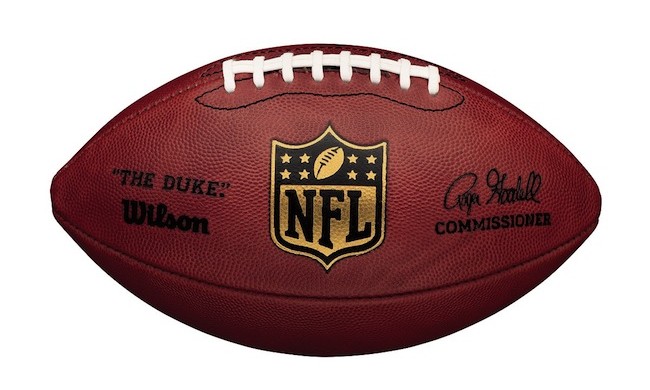
NFL-football-650x390

The National Football League is a sports and entertainment juggernaut, but it’s far from perfect. Here are three things it could do to improve the product.

1, Let quarterbacks deflate the ball.

Let me be clear here: if Tom Brady and the Patriots knowingly broke the rules, they should be punished. But no one has explained to my satisfaction the purpose of the rule. What harm is there in letting a quarterback adjust the ball so it’s easier to throw? Why not let teams inflate it to their preferred level? If both teams can do it, is any team gaining an advantage? While basketball and soccer teams share possession of the ball and might differ on what the proper pressure should be, a football is overwhelmingly possessed by one team (and a deflated football is probably easier to catch, and therefore intercept, anyway).  And unlike other forms of tinkering with sports equipment, like corking bats and using stickum, deflating balls is self regulating: if you lower the pressure by too much, it’s harder to throw. So the amount of variance between balls will always be modest. In sports, the fewer rules, the better, and this one’s unnecessary. Here’s my proposal: let teams try it next preseason. I bet no one would notice a difference.

2, Expand the season to 18 games.

Here’s the catch: Make the season 18 games, but mandate that no player can play more than 16 games a season. To make this work, I’d eliminate the bye week, and expand the roster from 53 to 60. An 18-game season has all sorts of benefits. The NFL gets the two extra games it wants, giving it more product to sell to networks, and each team gets one more home game (which will pay for the additional players). Fans get more games, and they get a new wrinkle in strategy, as coaches must weigh which teams to sit their best players against. Coaches get to see backups play in meaningful situations. Players get more rest (and forced rest, so there can be no accusations of being soft for sitting out a game) and with expanded rosters, there are more jobs. The integrity of the 16-game season is preserved, so individual records are still meaningful. It’s a win-win-win-win. The only hitch: I can’t see teams carrying two kickers and punters, so I might waive the 16-game rule for those positions.

3, Move the Jaguars to London.

This is more of a prediction than recommendation, as it looks like it may happen, but it makes sense and the league should do it. (Disclosure: I live in London). The Jaguars have signed up to play one game in London every year from 2013 through 2017, and while the games are purportedly to build an international fan base (and somehow entice Londoners to games in northeast Florida) it’s clear that the league is laying the groundwork for moving the franchise. Jacksonville’s owner, Shad Khan, already has a foothold in the U.K., owning the Fulham soccer team. The NFL has eyed Europe hungrily for decades, even sponsoring the ill-fated World League of American Football (Amsterdam Admirals, anyone?). They want this to happen. Jacksonville isn’t the smallest NFL market (that would be Green Bay), nor are they worst at drawing fans. But the team is the third NFL franchise in its state, and arguably the sixth most popular football team (trailing the Dolphins, Bucs and three college programs). Weighed against being the sole team in a city of 8.6 million (10 times Jacksonville’s population) and on a continent of 400 million, it seems a no brainer.

There are obstacles. One is the Jaguars stadium lease with the city Jacksonville, which locks them in until 2027 (this article has the details). But if the team and the NFL wanted them to move, I suspect it would happen. Then there’s scheduling. While the flights from the East Coast of the U.S. to London are long (six to eight hours, depending on the direction), it’s similar to a flight Miami to Seattle. The bigger problem is the time zone difference, which is five hours between the East Coast of the U.S. and London, and eight from the West Coast. Making that adjustment eight times a season (or nine, if you adopt my first suggestion) would be brutal for the Jaguars and competitive disadvantage. But here’s how to make it palatable: schedule two road trips of four and five games long.  The team would spend the duration in the US, then come back for a four or five game home stand, minimizing the number of transatlantic flights. Visiting teams would only have to make the trip once a year, and it could be done to so it’s the week after a bye or before a Monday game.

Would fans in London turn out? I think so. The NFL is now selling out 90,000 seat Wembley three games a year. They would need to fill it five (or six) more times, which wouldn’t be hard once fans had a home town to support (and the team could eventually move into a smaller stadium of their own). A winning product would help, but the initial novelty would sustain it for a few years. Look at the support for NYC FC, a fledgling soccer team, in New York. It had a fan club before it played a game. I suspect the reaction would be similar for an American sports product going th other way.

But they may not need to sell out to be a success for the league. The NFL last year experimented with a 2:30 p.m. London kickoff, meaning fans on the East Coast could watch the games at 9:30. a.m. Ratings were good, and this year all three games will have the early kick off. Having a full slate of morning games would give the NFL more inventory, which could be sold as a separate TV package (as suggested by ProFootballTalk here).

Ultimately, I think this will happen, even if the Jaguars have to wait until 2027, and a London franchise may be the first of four teams in Europe, enough to create another division and ease some of the travel burden. And the Super Bowl winners can finally claim to be world champions.

Anthems and Patriotism

16 Wednesday Sep 2015

Posted by percivalhenry in politics

≈ Leave a comment

What’s the purpose of a national anthem?

In the U.K. this week, it seems to be a litmus test for patriotism.

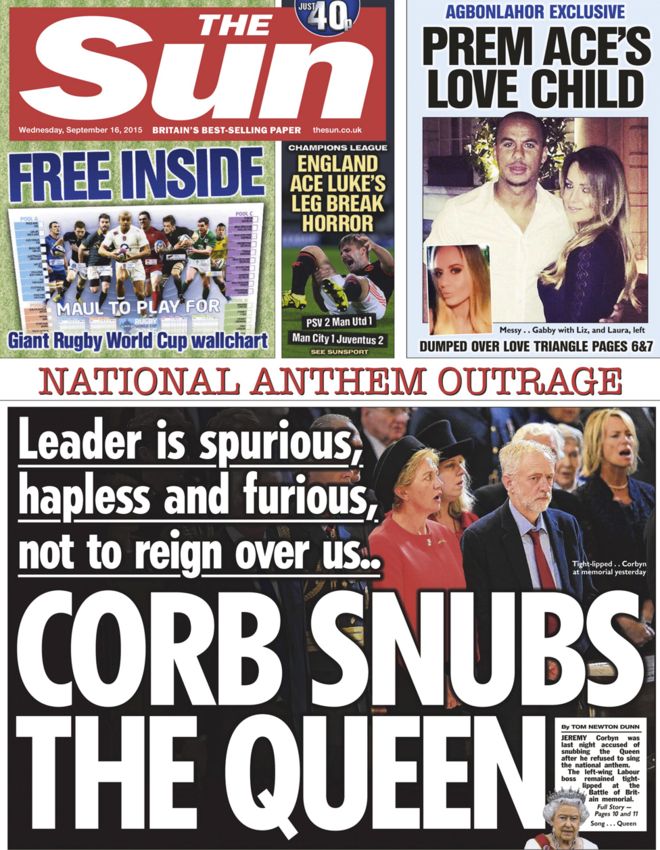
If you haven’t been paying attention to this mini-scandal, newly elected Labour Party leader Jeremy Corbyn didn’t sing “God Save the Queen” at a World War II memorial service yesterday. Corbyn, a rumpled socialist from the old school, was blasted by conservative MPs and newspapers for not showing proper respect to veterans and the war dead, the Queen and the British people in general.

_85570922_thesunfrontpage160915

National anthems are tricky things. They can inspire and help forge a unity of spirit during times of national crisis, but they’re also exclusionary and made trivial by their ubiquity. In the U.S., the “Star Spangled Banner” is played constantly, most notably before sporting events, and standing in solemn silence is considered mandatory. Slouching in your seat impatiently is met with dirty looks, or hurled objects. No matter how many singers have mangled it, or how lowly the contest it proceeds, the anthem remains sacred. Abstaining is not tolerated. Just ask Mamoud Abdul-Rauf.

Thankfully, in the U.S., anthem playing is mostly confined to sports, not other forms of entertainment. Not so in Thailand, where they play it before movies, accompanied by a slide show of the king. In a nation where insulting the monarchy is a criminal offense, you better make sure you stand.

The U.S.’s Pledge of Allegiance is even more problematic, with its insistence that the country is “one nation under God” and implications of disloyalty for those who don’t recite it (as I did as a reporter covering city hall meetings). A Cold War relic, courts have repeatedly found that requiring its utterance to be unconstitutional but that’s of little use to children ostracized by classmates and teachers for bowing out.

Confident nations don’t need pledges and anthems to prod their citizens into loyalty, and a free nation means citizens should be free not to join the herd. Allegiance to a nation isn’t something that comes from rote recitation, and patriotism doesn’t come from singing a song.

The U.K.’s national anthem is particularly thorny. It requires anyone singing it with conviction to believe in God and in the monarchy, positions many Britons don’t agree with. Corbyn is an avowed republican (that’s U.K.-speak for an anti-monarchist) and not singing the anthem was consistent with his principles, if not political realities.

As Obama found during the kerfuffe over the flag pin on his lapel in the 2008 campaign, sometimes political expediency trumps principle. In the future, Corbyn will sing the anthem, the BBC reports.

Britain, the refugee crisis and 1914

08 Tuesday Sep 2015

Posted by percivalhenry in politics

≈ Leave a comment

Tags

news, politics, refugee crisis, U.K.

large

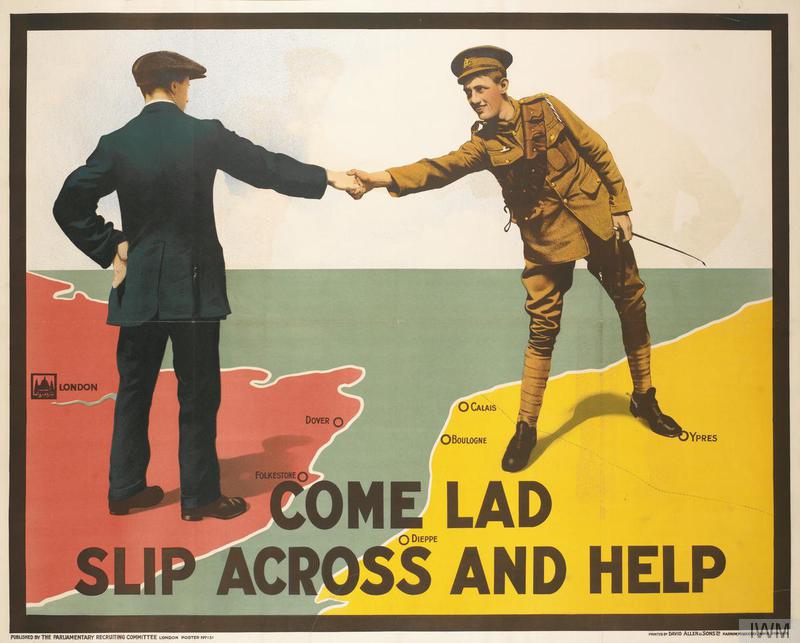
I’m in the process of reading The Guns of August, Barbara Tuchman’s masterful account of the first month of World War I in (naturally) August of 1914. The book explains in excruciating detail the wrong-headed thinking, preconceived ideas and dithering that led to the deaths of 17 million. While the focus is on the politics and strategies of the French and Germans, Tuchman spends some time on the British and their tepid and inept approach to the war in its opening weeks.

Britain was drawn into the conflict through its loose alliance with France. Not directly threatened, it initially sent about 80,000 men with a vague plan to help shore up the French left side against the massive German army of half a million men sweeping down through Belgium. Though they fought well at Mons, the British were overwhelmed by the superior numbers and their commander, John French, doing everything he could to mimimize losses, retreated rapidly and infuriated France’s generals. Probably correctly, he understood there would be no tolerance among U.K. politicians or the public for large-scale casualties in a conflict they were not yet invested in.

I thought about Britain’s half-hearted commitment to fighting in the early days of World War I when I heard Prime Minister David Cameron announce the U.K.’s response to the refugee crisis boiling over in central Europe. The country will take in 20,000 Syrian refugees over the next five years (until the next general election. At 4,000 a year, it’s a tiny number compared to the need. (There are more than 4 million registered Syrian refugees in camps in Turkey, Jordan and Lebanon). About 18,000 arrived in Germany last weekend alone.

An_Aerial_View_of_the_Za'atri_Refugee_Camp

— Za’tari refugee camp, Jordan (U.S. State Dept. photo)

Further, Cameron said the U.K. wouldn’t participate in a Europe-wide quota system or help settle refugees already on the continent. Money to resettle the refugees will come from the U.K. international aid budget. Not surprisingly, the pledge is being described as totally inadequate. The Archbishop of Canterbury, that noted radical, called it “a very slim response.”

(The U.S., too, should do more, in recognition of its wealth and its role in destablizing the Middle East. But as the refugee crisis is primarily a European problem, it first needs a European solution.)

The U.K.’s historical ambivalence about its place in Europe is well documented. In the 12th century, it embraced the continent so tightly that it possessed half of France. Today, it seems Britain regards itself somewhere in the mid-Atlantic, as close to Newfoundland as Normandy, rather than 21 miles off the shores of France. If Cameron could drop oars and row the island closer to the U.S., I suspect he would.

As Prime Minister Asquith did in 1914, Cameron is making a political calculation, balancing his European obligations and domestic cries for action against the anti-immigration, anti-Europe forces that have dominated domestic politics over the last few years (and forced a referendum on the U.K.’s place in the E.U.). The U.K.’s national interest aren’t yet threatened by the crisis. That could change, however, if the European Union begins to fracture over disputes on how to settle the refugees.

In 1914, it took the news of German atrocities in Belgium to rally public support for the war, and in the end, the British response was sustained and massive and its sacrifice enormous.  The U.K. is not facing war, and the threat is not the same, but the refugee challenge is far greater than it acknowledges. Already, images of drowned children are prompting cries for a greater U.K. commitment and as the crisis grows, Cameron will likely bow to the pressure to do more. If he wants to show leadership at home and abroad, he should do it sooner than later.

  • “The World’s Greatest Comic Magazine!” Fantastic Four Annual No. 15
  • “The World’s Greatest Comic Magazine!” Fantastic Four No. 223
  • “The World’s Greatest Comic Magazine!” Fantastic Four No. 222
  • “The World’s Greatest Comic Magazine!” Fantastic Four No. 221
  • “The World’s Greatest Comic Magazine!” Fantastic Four No. 220
  • July 2026
  • June 2026
  • May 2026
  • April 2026
  • March 2026
  • February 2026
  • January 2026
  • December 2025
  • November 2025
  • October 2025
  • September 2025
  • August 2025
  • July 2025
  • June 2025
  • May 2025
  • April 2025
  • March 2025
  • February 2025
  • January 2025
  • December 2024
  • November 2024
  • October 2024
  • September 2024
  • August 2024
  • July 2024
  • June 2024
  • May 2024
  • April 2024
  • March 2024
  • February 2024
  • January 2024
  • December 2023
  • November 2023
  • September 2023
  • July 2023
  • June 2023
  • May 2023
  • April 2023
  • March 2023
  • February 2023
  • January 2023
  • December 2022
  • November 2022
  • October 2022
  • September 2022
  • August 2022
  • July 2022
  • June 2022
  • May 2022
  • April 2022
  • March 2022
  • February 2022
  • January 2022
  • December 2021
  • November 2021
  • October 2021
  • September 2021
  • August 2021
  • July 2021
  • June 2021
  • May 2021
  • April 2021
  • March 2021
  • February 2021
  • January 2021
  • December 2020
  • February 2018
  • May 2016
  • February 2016
  • January 2016
  • December 2015
  • November 2015
  • October 2015
  • September 2015
  • August 2015
  • July 2015
  • April 2015
  • March 2015
  • January 2015
  • December 2014
  • November 2014
  • October 2014
  • September 2014
  • August 2014
  • June 2014
  • May 2014
  • April 2014
  • March 2014
  • February 2014
  • July 2026
  • June 2026
  • May 2026
  • April 2026
  • March 2026
  • February 2026
  • January 2026
  • December 2025
  • November 2025
  • October 2025
  • September 2025
  • August 2025
  • July 2025
  • June 2025
  • May 2025
  • April 2025
  • March 2025
  • February 2025
  • January 2025
  • December 2024
  • November 2024
  • October 2024
  • September 2024
  • August 2024
  • July 2024
  • June 2024
  • May 2024
  • April 2024
  • March 2024
  • February 2024
  • January 2024
  • December 2023
  • November 2023
  • September 2023
  • July 2023
  • June 2023
  • May 2023
  • April 2023
  • March 2023
  • February 2023
  • January 2023
  • December 2022
  • November 2022
  • October 2022
  • September 2022
  • August 2022
  • July 2022
  • June 2022
  • May 2022
  • April 2022
  • March 2022
  • February 2022
  • January 2022
  • December 2021
  • November 2021
  • October 2021
  • September 2021
  • August 2021
  • July 2021
  • June 2021
  • May 2021
  • April 2021
  • March 2021
  • February 2021
  • January 2021
  • December 2020
  • February 2018
  • May 2016
  • February 2016
  • January 2016
  • December 2015
  • November 2015
  • October 2015
  • September 2015
  • August 2015
  • July 2015
  • April 2015
  • March 2015
  • January 2015
  • December 2014
  • November 2014
  • October 2014
  • September 2014
  • August 2014
  • June 2014
  • May 2014
  • April 2014
  • March 2014
  • February 2014
“The World’s Greatest Comic Magazine!” Fantastic Four Annual No. 15

“The World’s Greatest Comic Magazine!” Fantastic Four Annual No. 15

percivalhenry's avatar by percivalhenry July 18, 2026
“The World’s Greatest Comic Magazine!” Fantastic Four No. 223

“The World’s Greatest Comic Magazine!” Fantastic Four No. 223

percivalhenry's avatar by percivalhenry July 14, 2026
“The World’s Greatest Comic Magazine!” Fantastic Four No. 222

“The World’s Greatest Comic Magazine!” Fantastic Four No. 222

percivalhenry's avatar by percivalhenry July 5, 2026
“The World’s Greatest Comic Magazine!” Fantastic Four No. 221

“The World’s Greatest Comic Magazine!” Fantastic Four No. 221

percivalhenry's avatar by percivalhenry June 25, 2026
“The World’s Greatest Comic Magazine!” Fantastic Four No. 220

“The World’s Greatest Comic Magazine!” Fantastic Four No. 220

percivalhenry's avatar by percivalhenry June 15, 2026
“The World’s Greatest Comic Magazine!” Fantastic Four No. 219

“The World’s Greatest Comic Magazine!” Fantastic Four No. 219

percivalhenry's avatar by percivalhenry June 7, 2026

Blog at WordPress.com.

  • Subscribe Subscribed
    • Percival Henry: The Fantastic Four and more
    • Join 74 other subscribers
    • Already have a WordPress.com account? Log in now.
    • Percival Henry: The Fantastic Four and more
    • Subscribe Subscribed
    • Sign up
    • Log in
    • Report this content
    • View site in Reader
    • Manage subscriptions
    • Collapse this bar
Loading Comments...