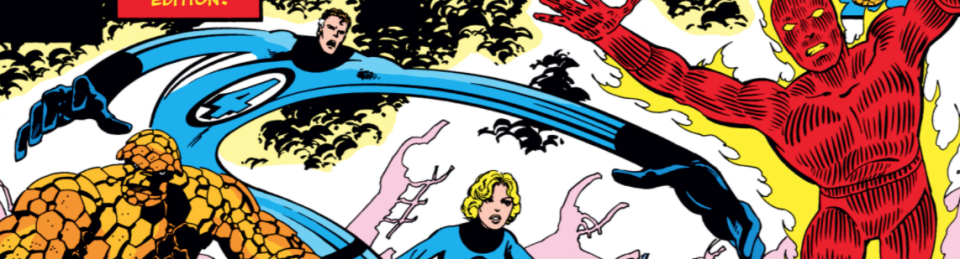
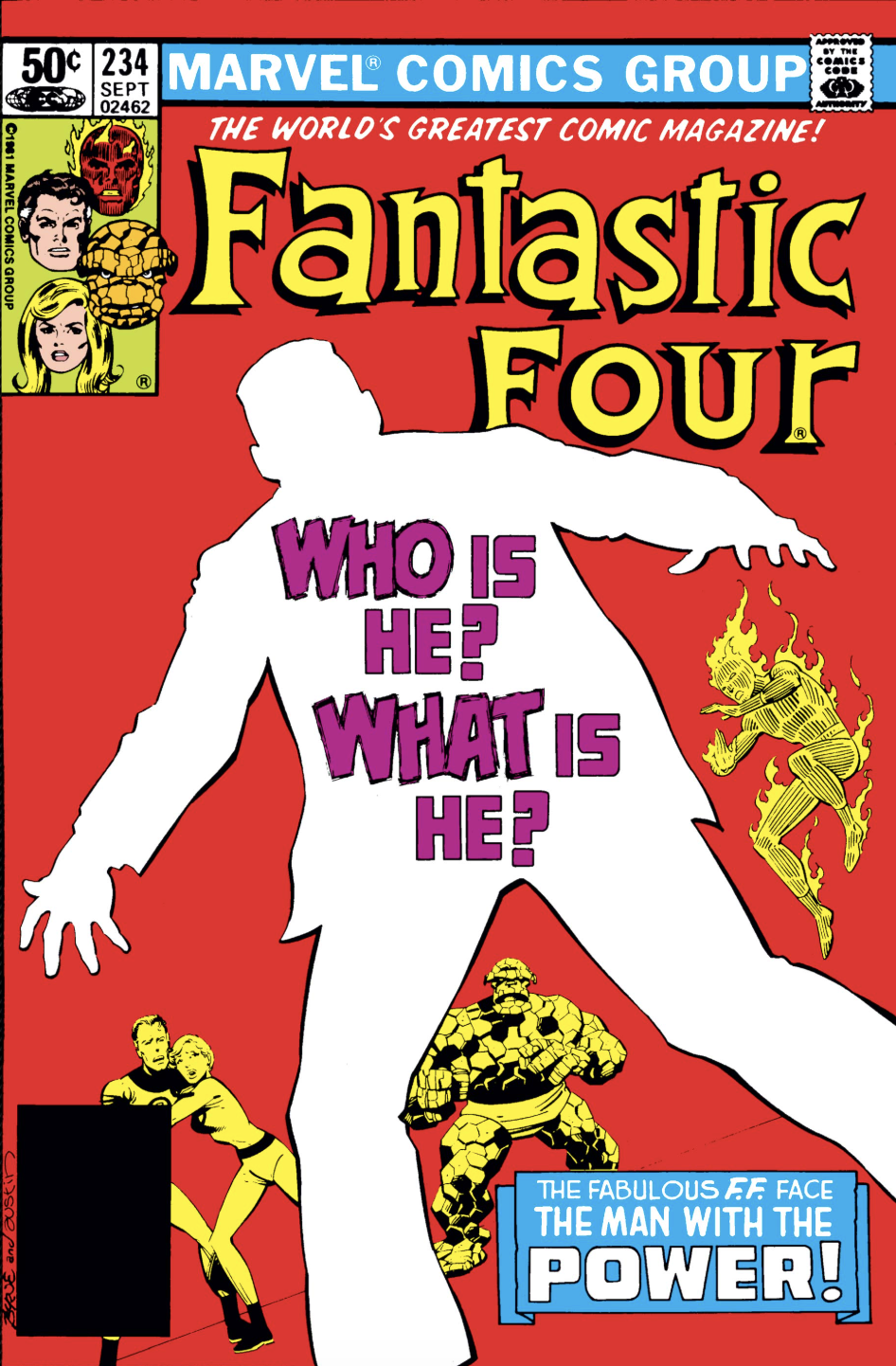
Fantastic Four 234
“The Man With The Power!”
Published June 1981
Writer: John Byrne
Pencils: Byrne
Inks: Byrne
Letters: Jean Simek
Colors: Bob Sharen
Editor: Jim Salicrup
Cover: Byrne and Terry Austin
Some news: I’ve created a Substack and have started re-posting earlier entries from this site there. My long-term plan is to eventually transition this blog from WordPress to Substack, but not for a while. I will give you plenty of head’s up before that happens. In the meantime, check out the Substack (https://fantasticfourfan.substack.com/) and please subscribe. Thank you!
Synopsis
The comic begins by following Skip Collins, an average man who unknowingly has extraordinary powers to remake reality. On a business trip to New York, Collins observes members of the Fantastic Four help save lives as gravity waves from space pummel the city. Collins eventually uses his powers to return Earth to normal as the FF travel to space to discover the source of the chaos is Ego, the Living Planet.
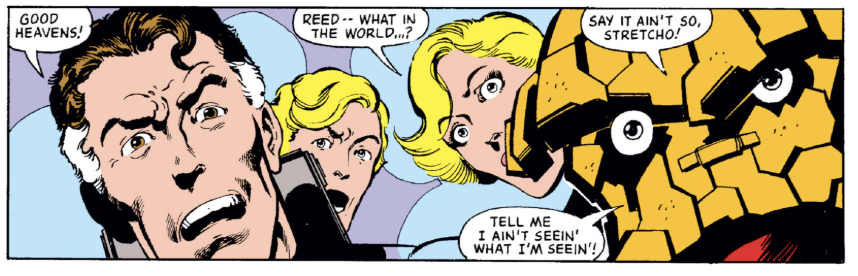
What’s going on here?
This is an interesting issue, and one that shows Byrne’s ambitions as a writer, although I’m not sure it’s ultimately successful. Like last issue, it begins with an in-depth focus on an individual unconnected to the FF, but who somehow crosses their paths. As in the last issue, Byrne really emphasizes the celebrity of the Fantastic Four, and contrasts their star power with the ordinary people who view them from afar (and I wonder of Byrne is taking this approach after years of dealing with the outcast X-Men). In this case, the FF never meet Skip Collins, and only the Thing has any sort of encounter with him.
And therein lies the story’s problem: Despite the elaborate build up, Collins is never really the focus of the story’s action, and while we are primed to believe he is the source of the devastating gravity waves, it’s a red herring, since they come from Ego. In fact, it feels like the whole purpose of introducing Collins is for him to clean up the mess the FF leave behind as they fly into space. Byrne essentially introduces a character with Beyonder-like power, then dismisses him before he can ever interact with the comic’s protagonists. By the end of the story, Byrne tells us Collins has lost his powers, and he never appears again.
Terry Austin returns to ink the cover, although his talents seem wasted with this one, and Jean Simek makes her debut as an FF letterer, despite having spent a decade lettering a wide range of titles at both Marvel and DC.
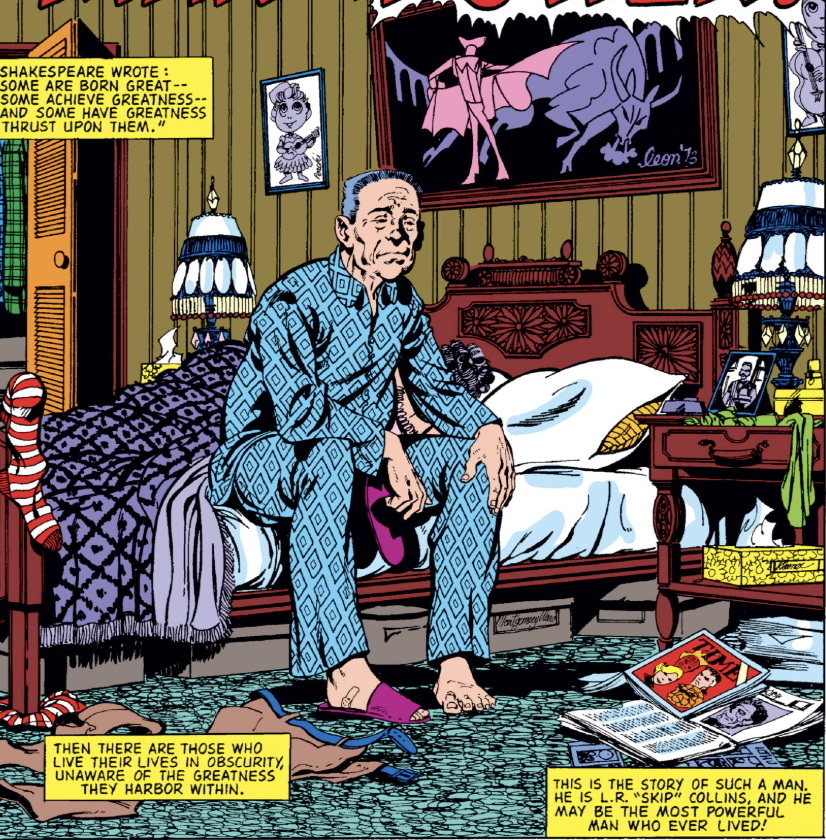
What I liked
The star of the show is again Byrne’s art, which is just off the charts. Check out the detail in the image above (from the title splash page). The FF on the TIME cover, Collins’s band aid, the odd paintings, the carvings on the headboard, the patterns on his pajamas and bedspread. It’s a virtuoso performance, and there another dozen like it in the comic. His best images may be when he shows the before-and-after when Collins uses his powers, like here:
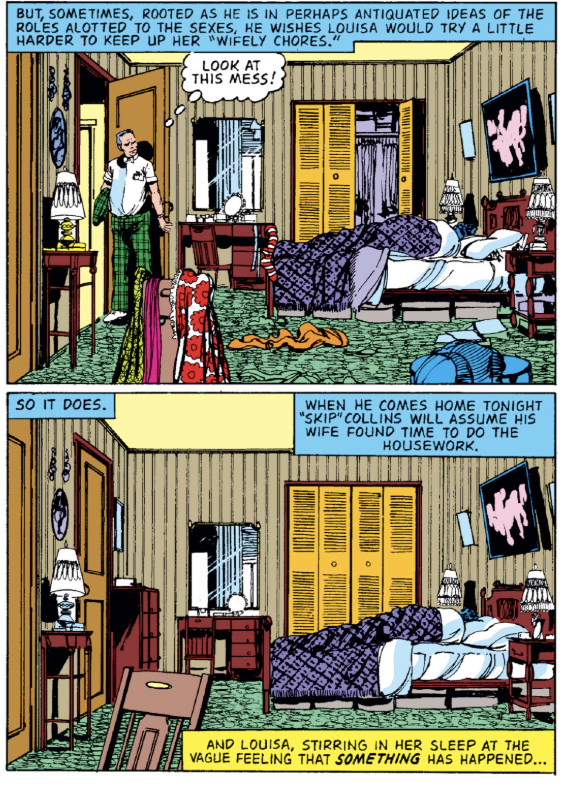
and here:
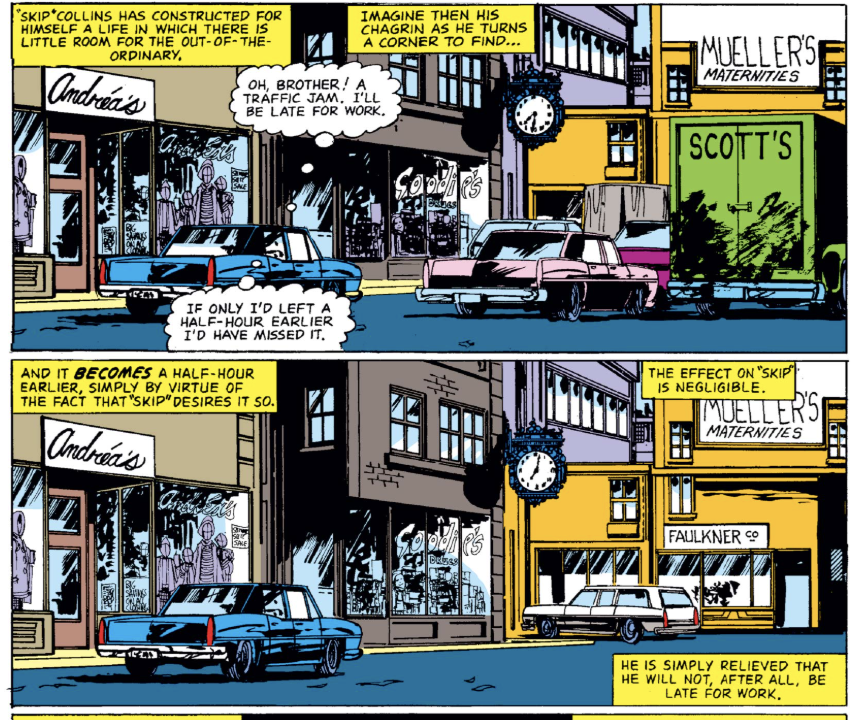
(I’m curious about the names above the stores (Andrea, Coodie, Mueller, Faulkner. They’re not other comic creators, at least none that I recognize — I’m guessing friends of Byrne.)
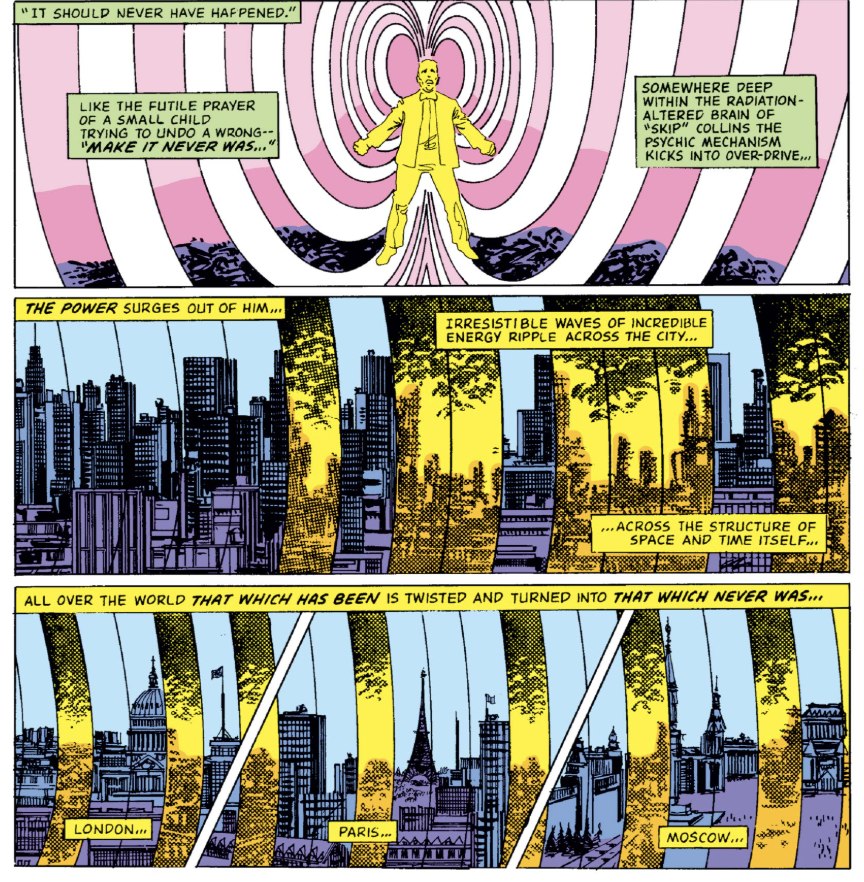
This sequence was also impressive:
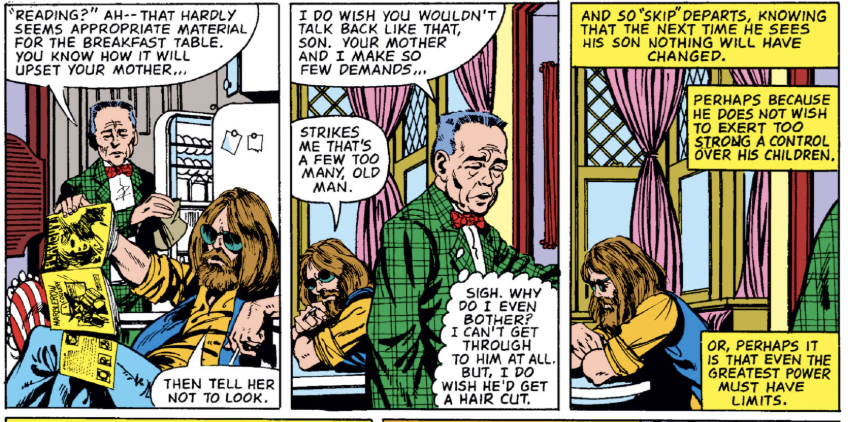
Byrne’s politics are always a bit of a mystery to me, and hopefully they will become clearer as I re-read his run. Sometimes I think he’s a traditional conservative, sometimes a libertarian, sometimes a liberal. This sequence seems to be saying something, I’m just not sure what:
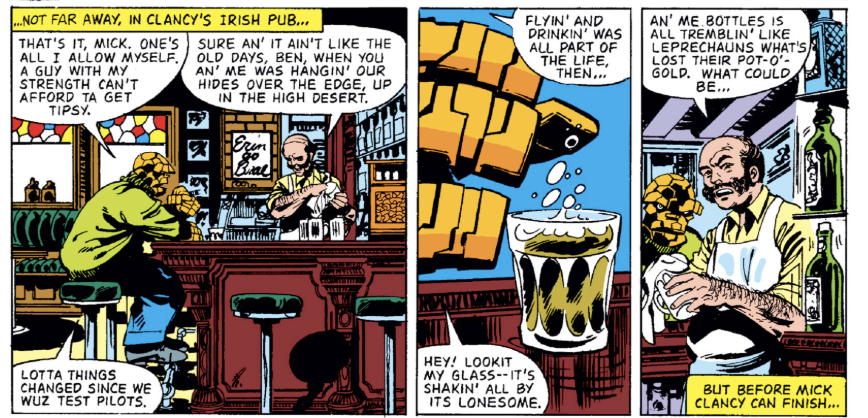
I liked this sequence with Ben and his friend, Mick Clancy, a bar keeper and former test pilot. Unfortunately, this is first and last appearance.
What I didn’t like
I’ve already explained why I think the story doesn’t really work, and Collins’s elaborate backstory, which includes a flashback to his time in the army when he got his powers from a atomic bomb test, seems unnecessary for a character that never shows up again.
Byrne also continues explaining that which need not be explained, like here:
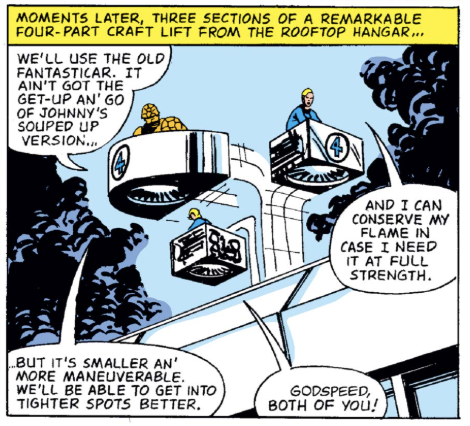
We really don’t need to know what they chose this particular Fanasticar. We trust them. Really.
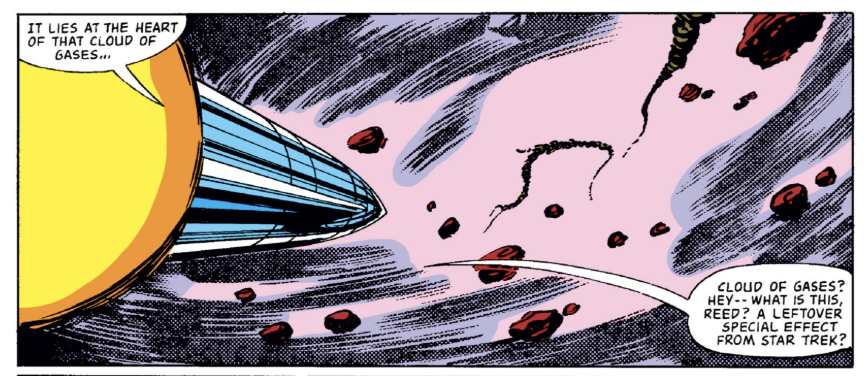
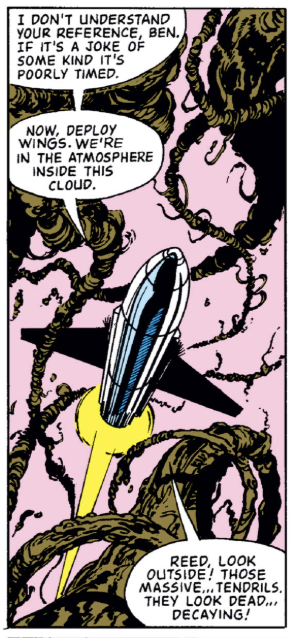
Also, this sequence seems a bit unfair to Reed. Reed is an egg head, but we’ve seen that he’s plugged into the world. It seems that a guy who invented a spaceship and met dozens of aliens would have at least heard of Star Trek.
Anything else?
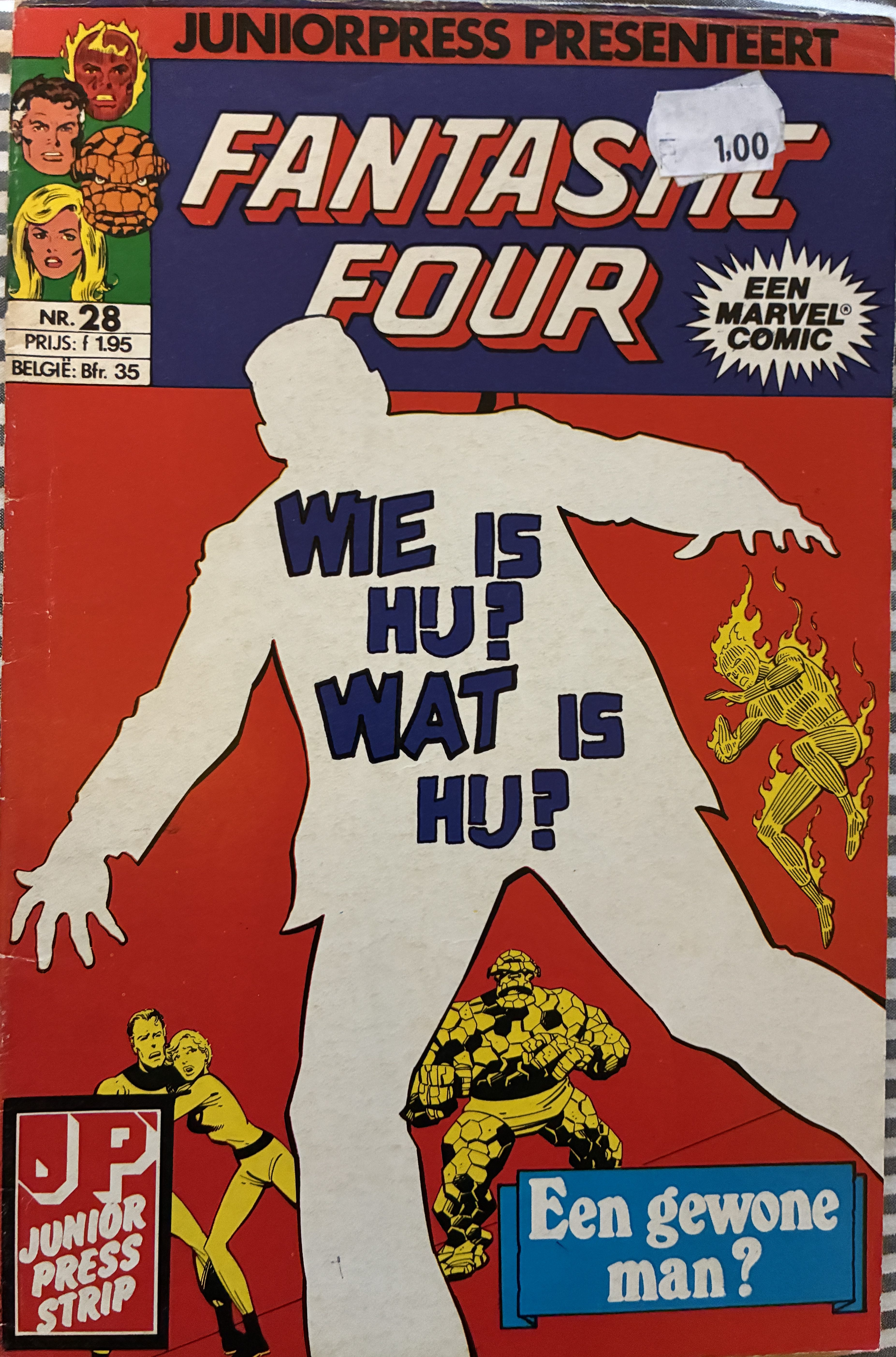
A friend recently was on vacation in the Netherlands and brought me back this comic as a present. Thanks Jeff!
Overall
Not his best, but still solid effort from Byrne.


Another odd issue from John Byrne. Next issue seemed a bit more straightforward. But it wasn’t until the anniversary issue that thought Byrne found his “groove” for this title.
That issue had struck me as awkward when I first read it at the age of 13 (I am now 59!), but it made a whole more sense in later years and I got to appreciate it immensely. It seems to me that Byrne was a trailblazer here: he tried to give readers a more realistic and credible picture of the FF as public heroes in American society. He did so by placing them in the real world, with fleshed-out characters living away from the Big Apple, in this case in a small Midwestern town, facing real-life daily concerns and anxieties. Skip Collins needs to get up and go to work worrying over being late to the office, showing saddness that his “rebel without cause” son is disrespectful and lazy, and leading an overall drab life while being a responsible husband and father. And most of this portrait of an average working middle-ager is artfully packed in only a few pages! His visit to New York is a rare emotional uplift from the monotony of daily life, and he sees the city as any middle or working class American visitor would. I appreciated how the Baxter Building is portrayed as one of NYC’s famous tourist attractions, although natives are shown passing it by unimpressed, because they are so used to it, and Reed and Sue’s appearance in civvies walking casually also added realism to the scens. In all, the issue grasped well the spirit of the ’80s in both rural America and the Big Apple.
Nw, regarding Byrne’s politics. Based on his run in thi title as well as In X-Men, I believe he is a staunch liberal, striving as he does to challenge preconceptions and sensitize readers to bigotry of all sorts. Perhaps not a radical liberal, but a liberal nonetheless. Remember he introduced Northstar as the first openly gay hero in comicdom.
Unfortunately, the following issue was a total disappointment, for all the reasons that you mentioned, which just confrms that his otherwise great run on the FF, in my vew the best ever on this title, was uneven.
Anyway, thanks for reminding me of my earlier years, brther. Greetings from Athens, Greece.
Hi Haralampos, Thanks for the thoughtful comment. I do think you’re right about Skip Collins representing the ordinary man in a world where superheroes command the main stage. In a sense, it predicts Marvels, the Kurt Busiek / Alex Ross miniseries that followed photographer Philip Sheldon as he witnesses the feats of superheroes.
Interesting thought about Byrne’s politics. Mutants have always been understood as a civil rights metaphor, and it makes sense that Byrne (with Claremont) would share those ideas. Although I believe Northstar was revealed to be gay much later, and it was never Byrne’s intention to make him so.
PS Apologies for the spelling errors.
Um, I’m not sure what this is referring to – hopefully I didn’t miss a comment