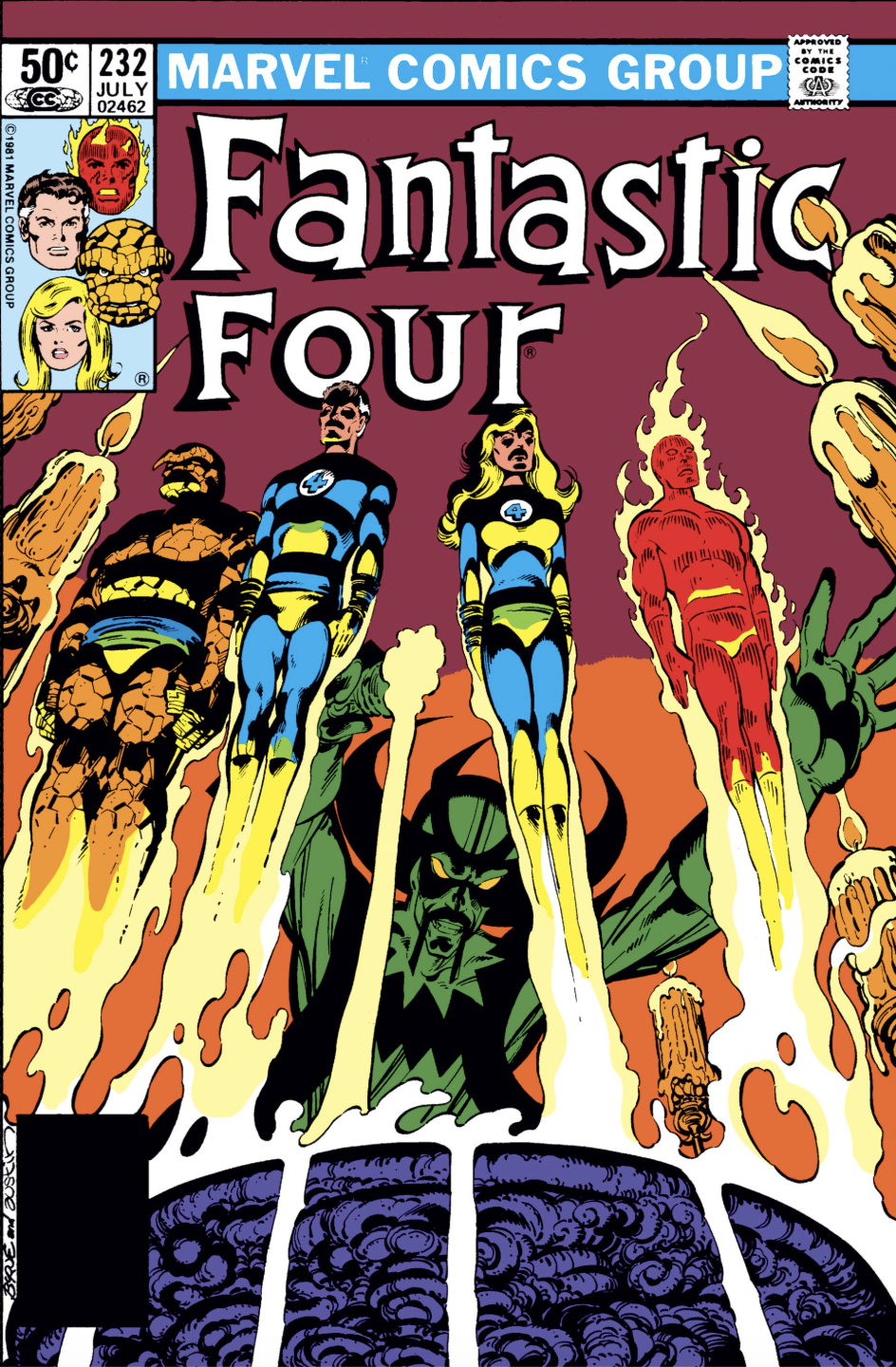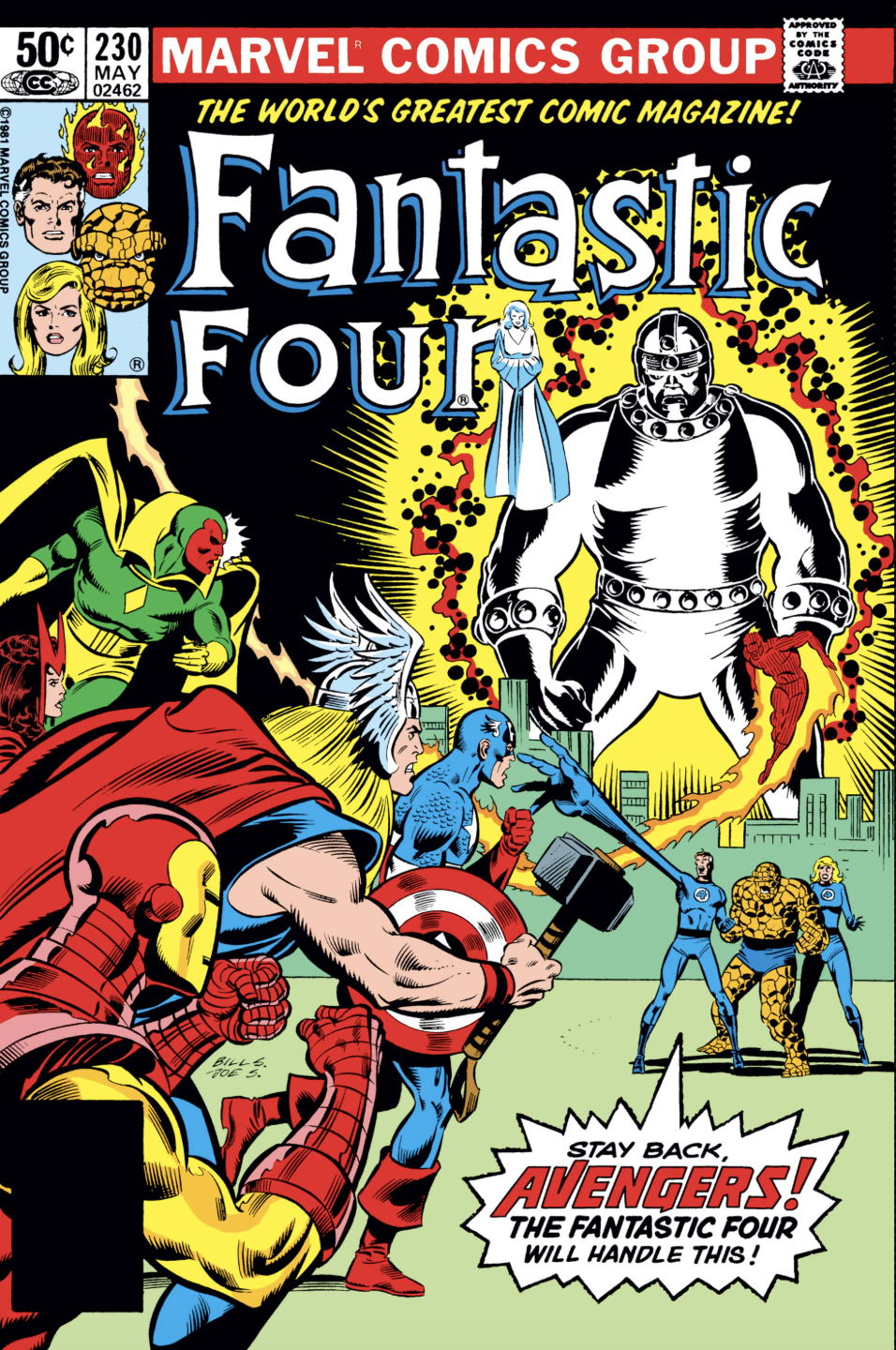
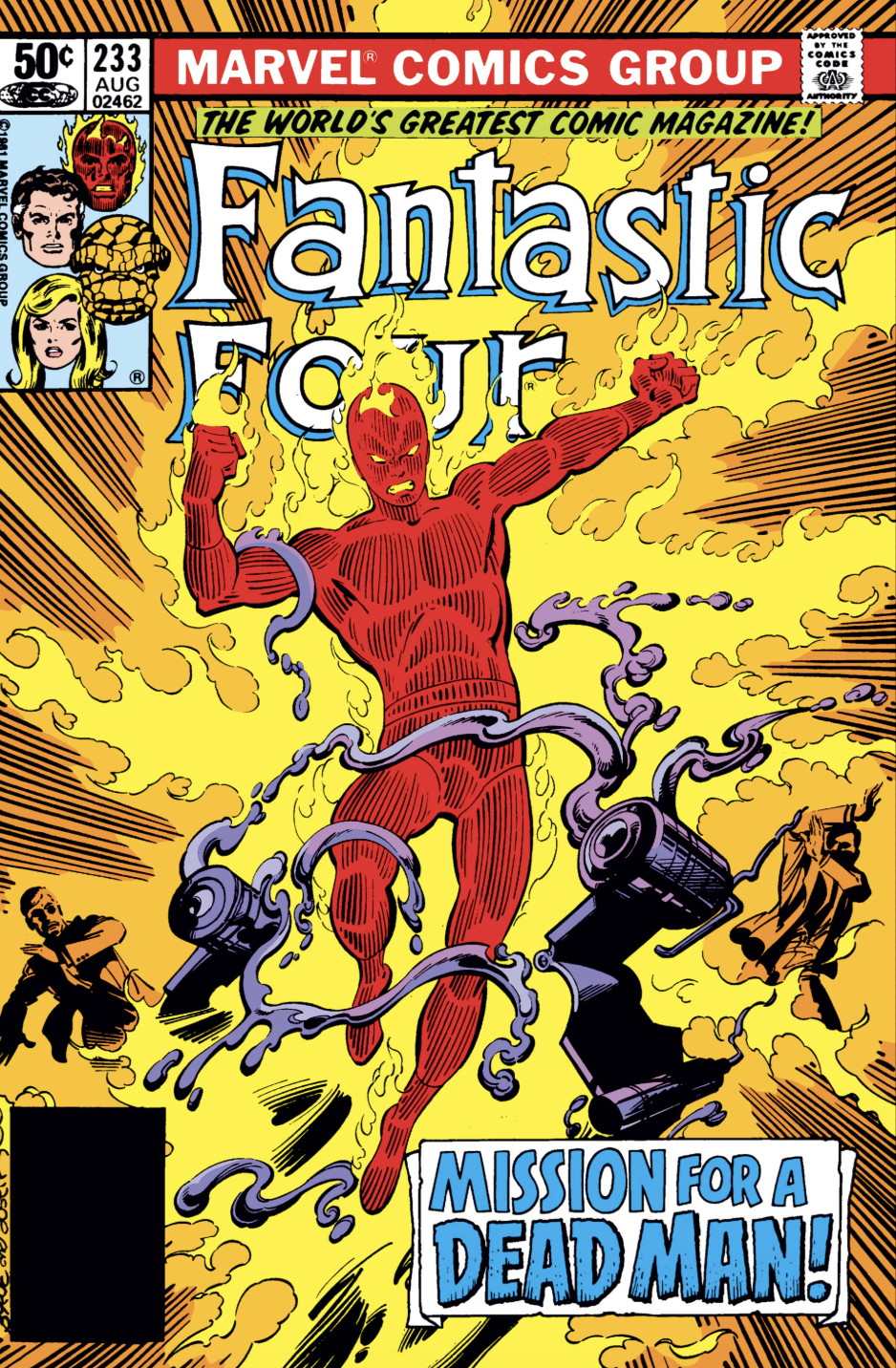
Fantastic Four 233
“Mission for a Dead Man!”
Published May 1981
Writer: John Byrne
Pencils: Byrne
Inks: Byrne
Letters: Jim Novak
Colors: Glynis Wein
Editor: Jim Salicrup
Cover: Byrne and Terry Austin
Synopsis
Condemned prisoner Georgie Munson asks a priest to deliver a message to the Human Torch, asking him to exonerate him for the murder for which he’ll be executed. After receiving the letter at the Baxter Building, Johnny, who knew Munson in high school, begins investigating, and eventually follows the trail to “maggia” strongman Hammerhead. The two fight, and while Hammerhead escapes, the police arrest his associates. Johnny eventually uses the Kingpin’s records to reveal Munson was framed for murder while committing a robbery.
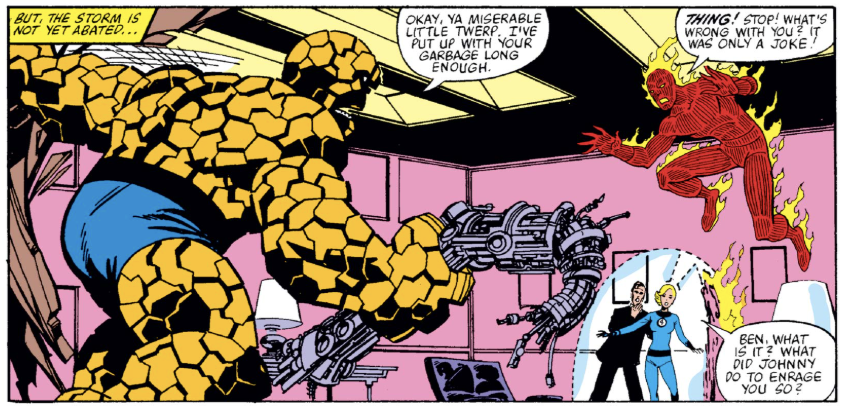
What’s going on here?
This is an odd comic, particularly for John Byrne’s second issue in the driver’s seat. It’s a solo story, featuring the least compelling member of the Fantastic Four. It’s a detective story, starring a character who never solves crimes. And it’s basically anticlimactic, since Johnny has to rely on the Kingpin’s records turned up by Daredevil to piece together the mystery. Overall, it reads like an old issue of Strange Tales starring Johnny, rather than the Lee / Kirby FF stories Byrne loved so much. I wish I knew why Byrne chose this story right out of the gate; my guess is he had it in his back pocket — maybe as the plot for a Marvel Team-Up story — and chose to use it here instead.
Byrne’s art is, of course, excellent (get used to me saying that), and the story has its moments, but it takes a while to get going and there is again way too much exposition.
What I liked
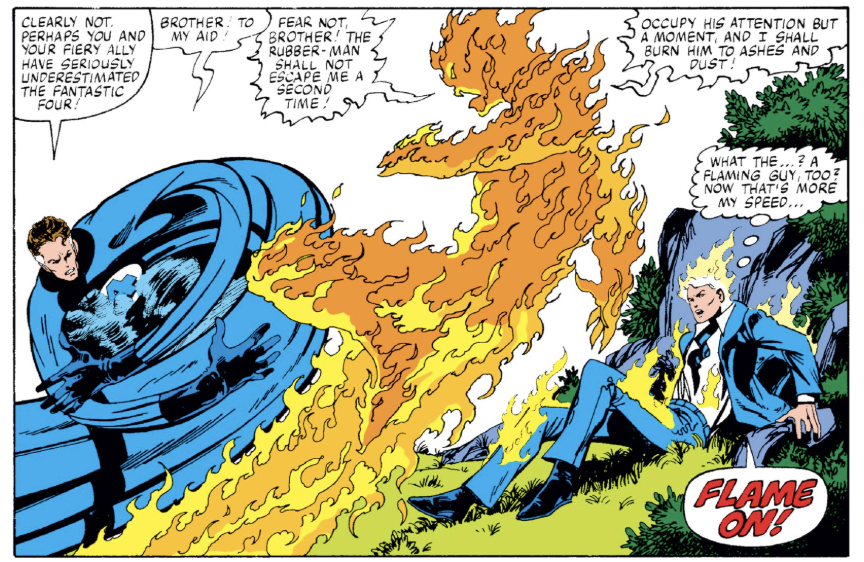
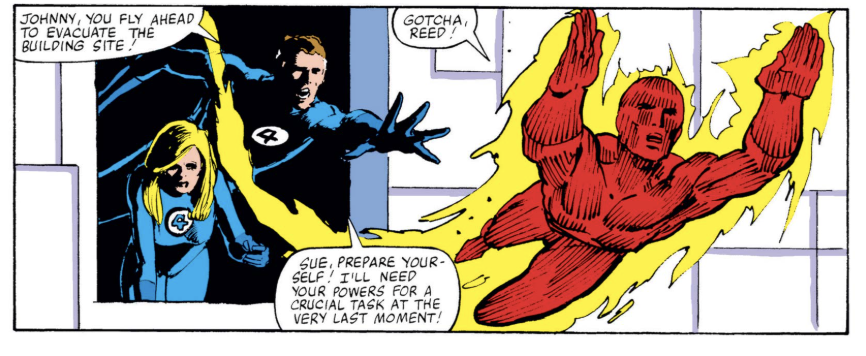
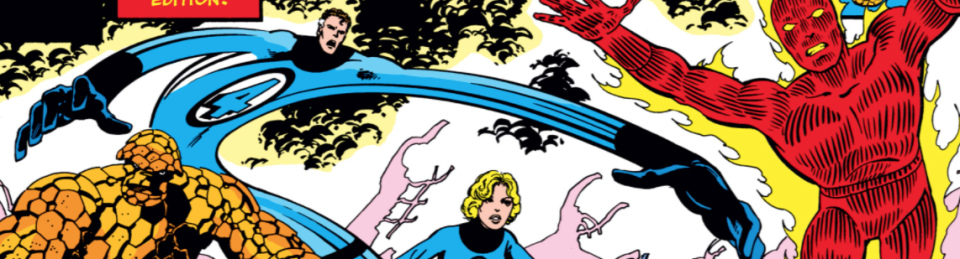
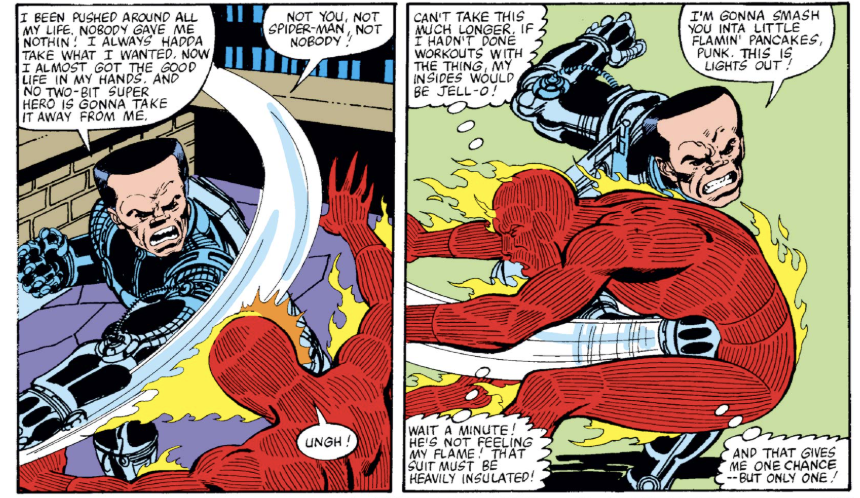
As befits his “back to basics” approach, Byrne introduces the Fantastic Four with the Thing and Torch fighting in the Baxter Building, as Jack and Stan did about two dozen times. This fight seems particularly vicious, though, and Byrne does a great job of sequencing the action throughout the panels.
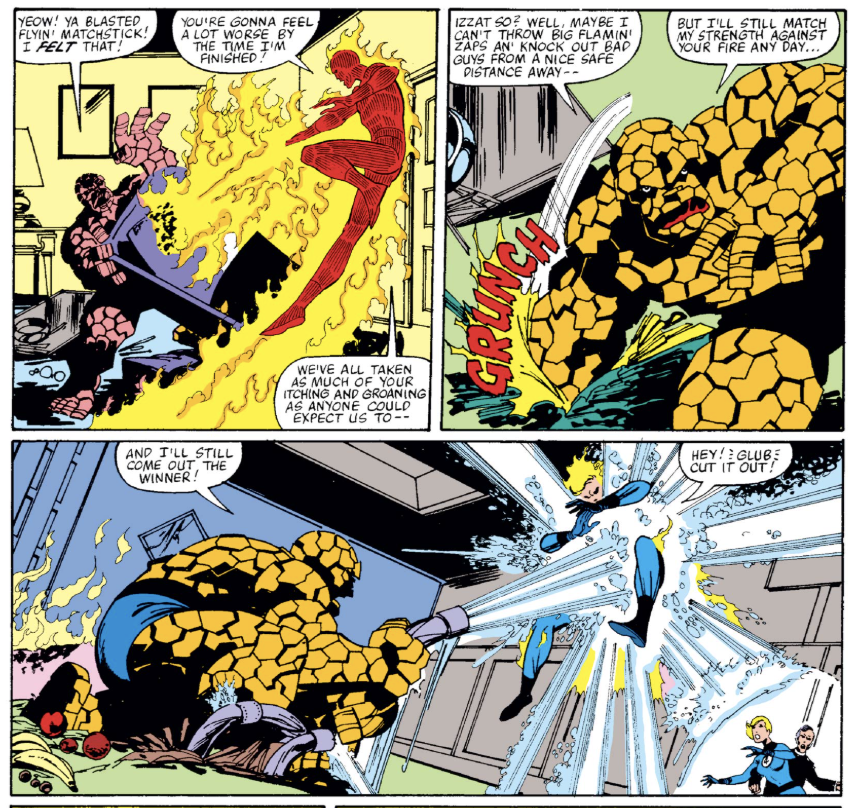
He does something similar here, where you can feel the action move you from panel to panel:
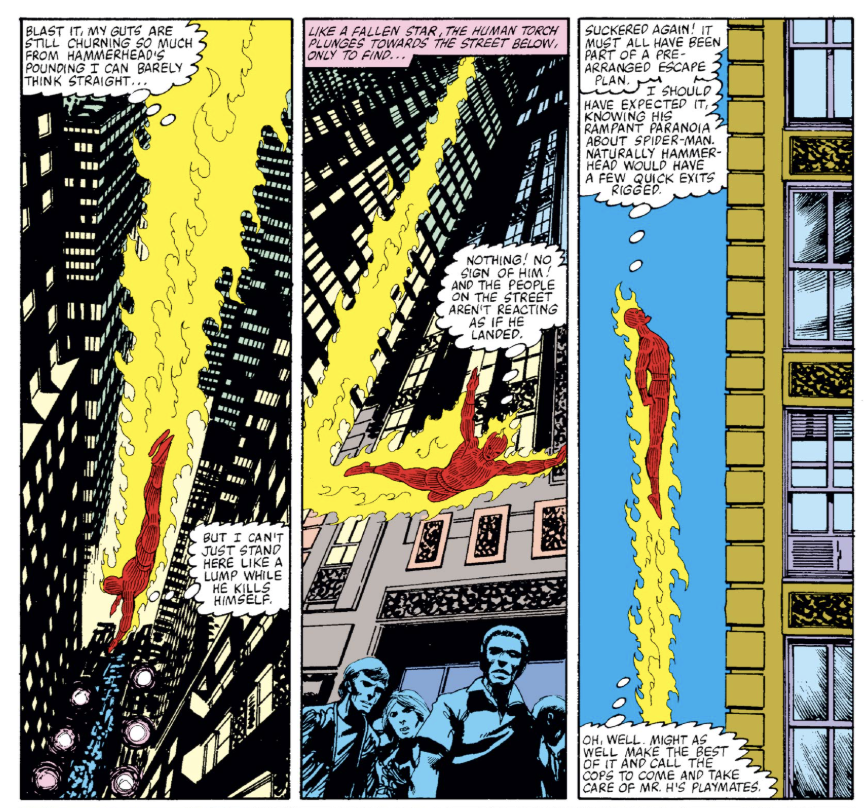
And here, you can tell that after Hammerhead swings with his right, he’s going to follow with his left:
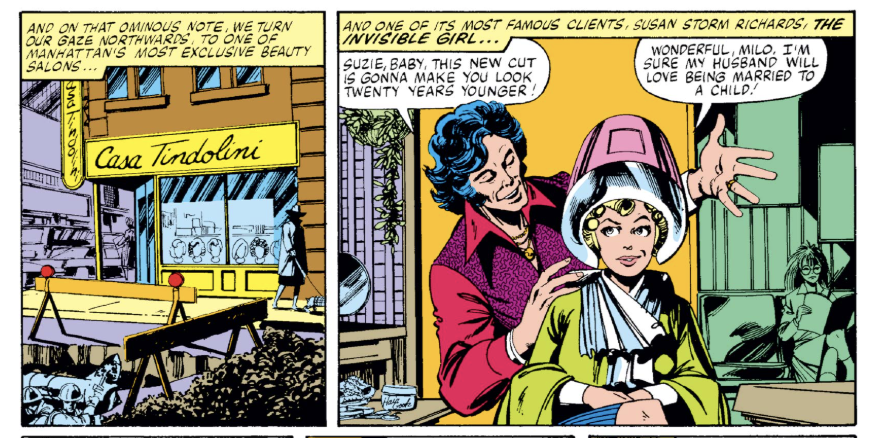
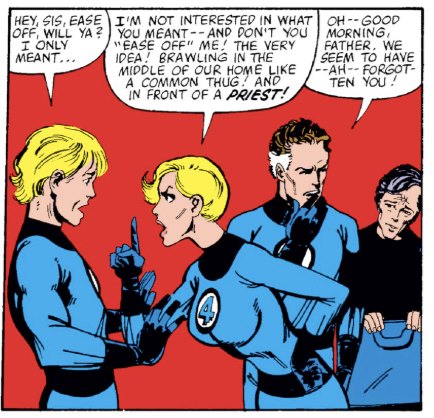
I also liked this panel of Sue dressing down Johnny. After being called out for his immaturity, it raises the stakes as he takes on the responsibility of fulfilling a dead man’s request. Sue’s haircut is great, too.
What I didn’t like
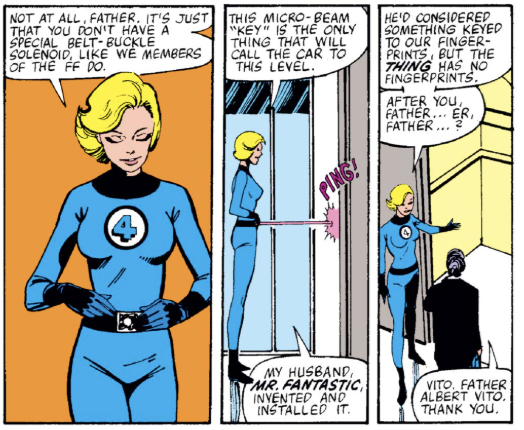
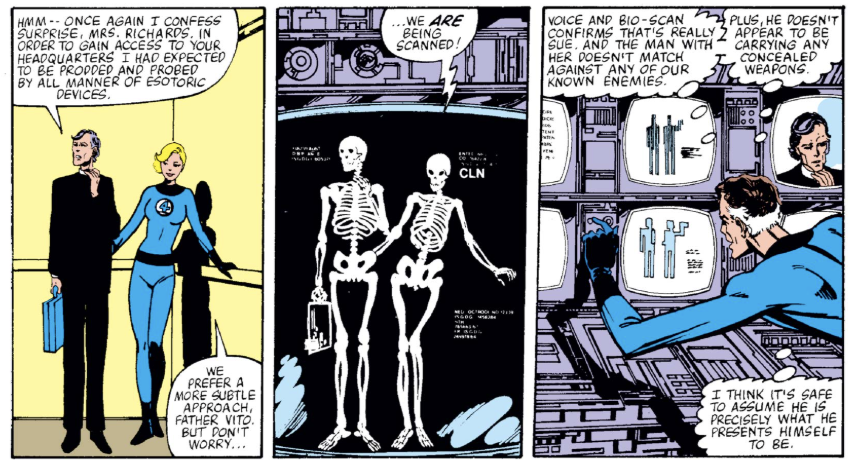
As mentioned, there is way too much explaining going on. This sequence feels very unnecessary:
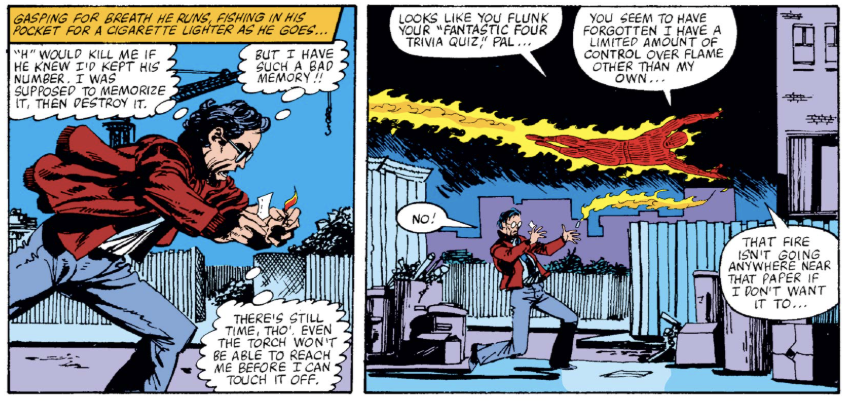
Byrne also seems to want to explain every facet of the Torch’s powers, even when they don’t make much sense for the situation. Here’s a bad guy running while trying to light a piece of paper on fire. Really? And of course, Johnny has to explain it all to him.
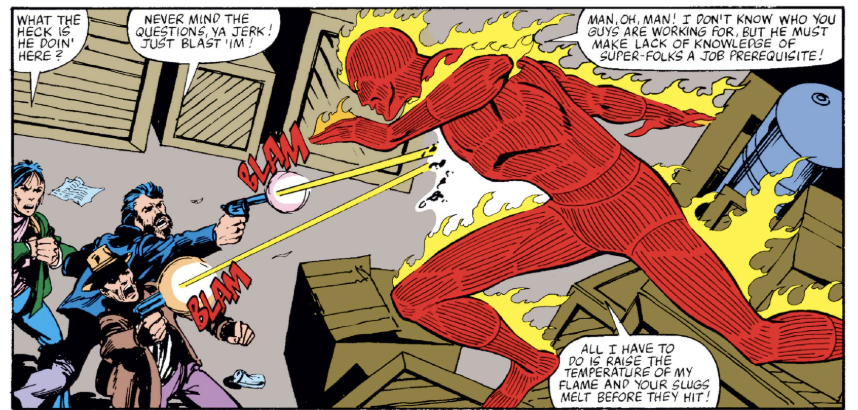
And here, Johnny says his heat can melt bullets before they can hit him. Bullets from a handgun travel at about 1,200 feet per second. I’m not sure how hot he would have to be to melt a bullet traveling that fast before it hit him, but I’m guessing it would be something like the surface of the sun.
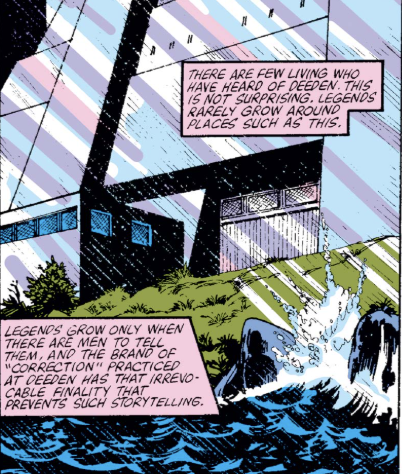
Lastly, Byrne, at least early in his scripting career, has a tendency to indulge in some pretty melodramatic writing.
Anything else?
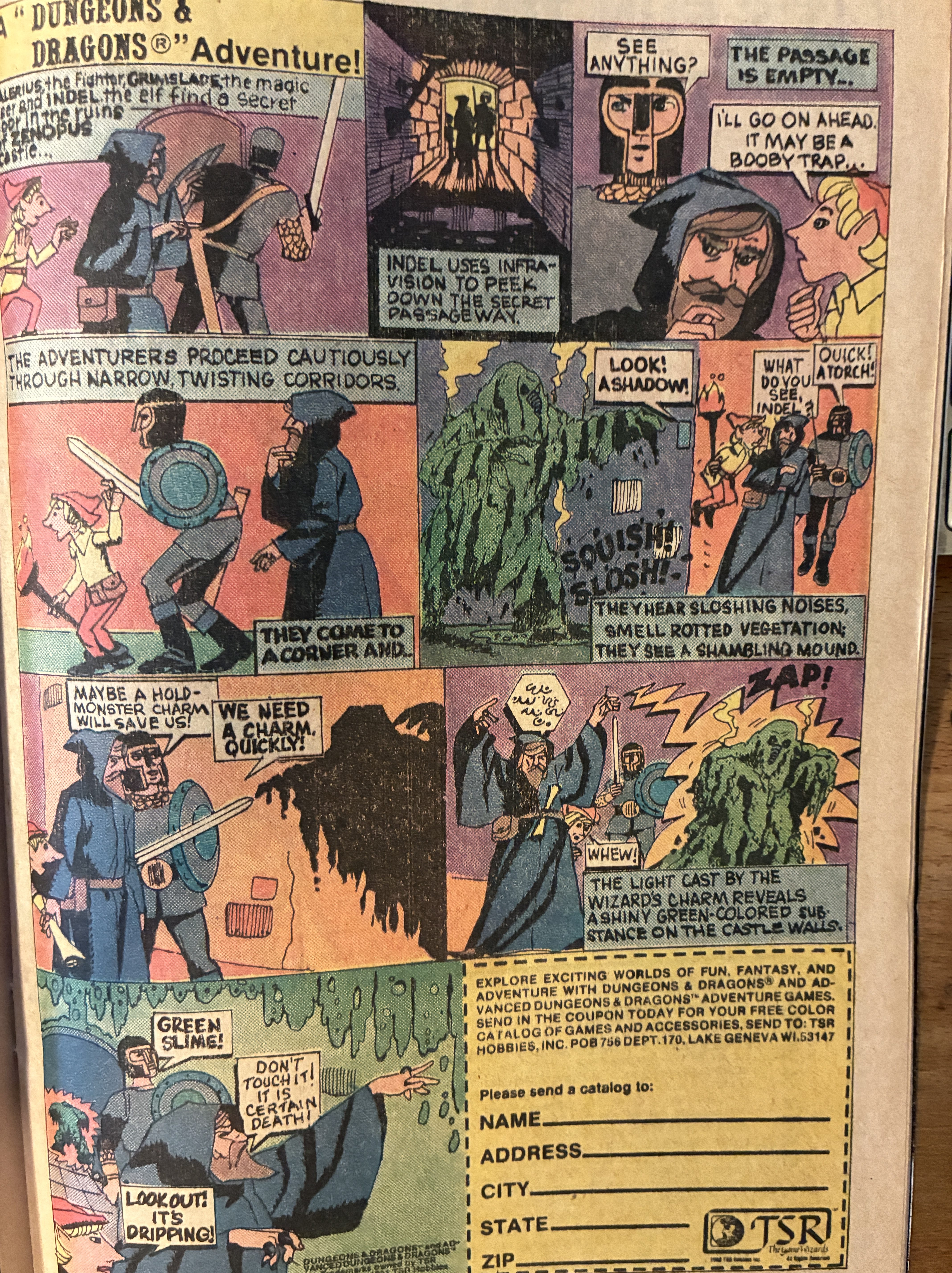
A strange ad for Dungeons and Dragons. You think they could have hired a professional comic artist.
Overall
Solid but unspectacular