Fantastic Four 93
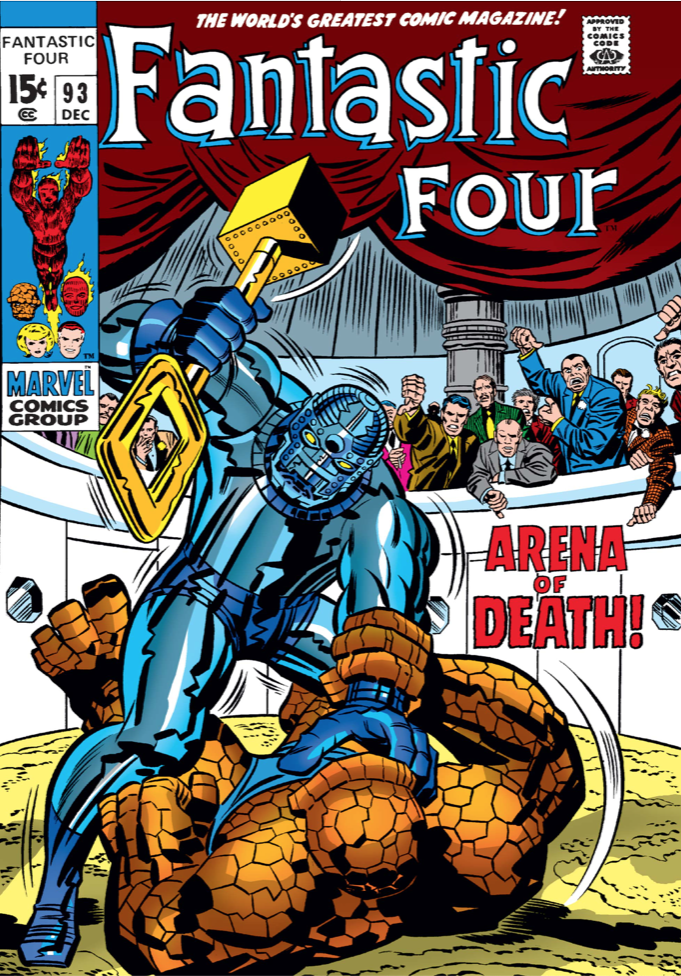
“At The Mercy of Torgo!”
Published Sept. 1969
Story: Stan Lee and Jack Kirby
Script: Lee
Pencils: Kirby
Inks: Frank Giacoia
Letters: Artie Simek
Cover: Kirby and Giacoia
Synopsis
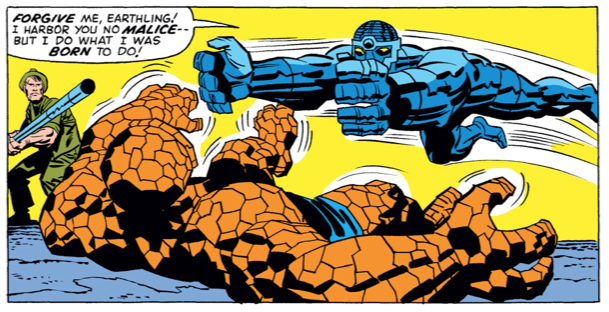
The Thing, abducted to a Skrull planet to fight as a gladiator, prepares to enter the arena to battle Torgo, a massive robot-like creature who doesn’t wish to fight but fears he has no choice. The Skrulls keep their slaves in line with a sonic ray device that can knock the home planet of the slaves out of orbit, thus ensuring their obedience. As the battle begins, various weapons are introduced and the Skrull spectators—who dress and act like 1920s Chicago gangsters—argue and debate the fine points of the rules.
Meanwhile, Mr. Fantastic, the Human Torch and Crystal—the Invisible Girl was left behind to care for her infant—have left Earth in search of Ben in a Skrull flying saucer, and eventually locate the ship of another Skrull, leading them to the Skrull planet.
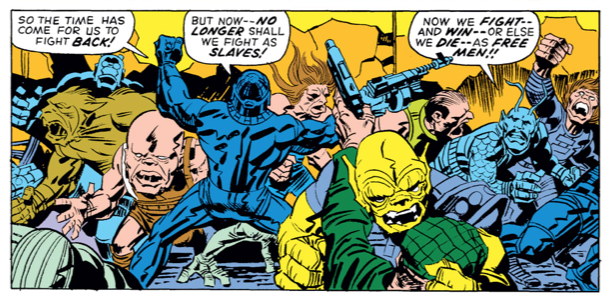
Back in the arena, Ben briefly takes the upper hand, but can’t bring himself to kill Torgo. Torgo, in turn, uses a weapon that releases a nerve gas, paralyzing Ben. But just as Torgo prepares to take his life, the Fantastic Four—who have infiltrated the Skrull planet by appearing to be gangsters themselves—intervene. Crystal uses her powers to cause a shockwave that destroys the sonic ray, releasing the Skrulls hold on the slaves, who attack their abductors. In the confusion, the reunited Fantastic Four escape the Skrull plant.
What’s going on here?
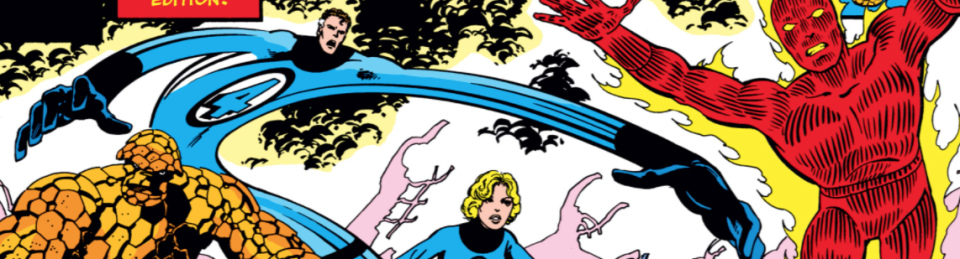
This issue ends a pretty satisfying arc that’s one of the high-points of the late Lee/Kirby run (sadly there are less than 10 issues left before Jack leaves Marvel). The story is a classic science fiction yarn that combines many of the tropes of both gladiator and gangster movies, and it’s well-paced and plotted. Like most FF stories, the ending seems rushed, but in this case it doesn’t feel too cramped, and there’s a fun twist when Reed, Johnny and Crystal unexpectedly appear in 1920s attire. The story of how they landed and infiltrated the Skrull planet easily could be a comic of its own — maybe some future writer will revisit the story.
This arc doesn’t rank as highly as others (it’s not listed as one of CBR’s 60 greatest FF stories, for example) but I think it’s deserving of recognition.
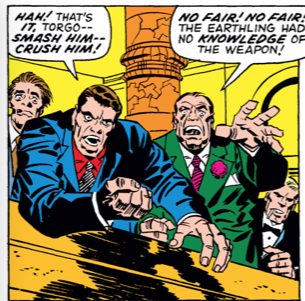
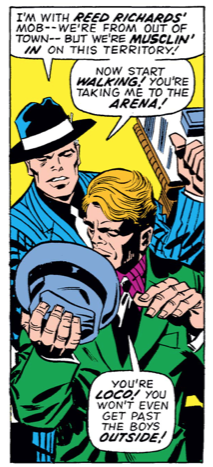
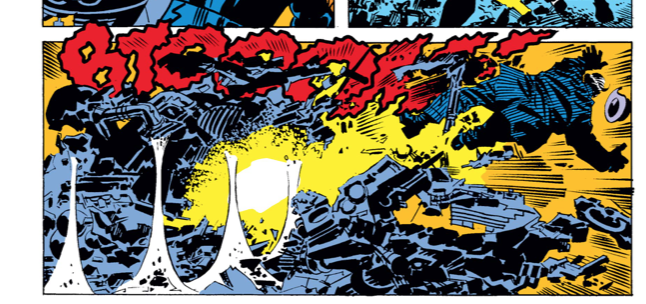
Probably the most notable aspect of FF 93 is it’s the first in 48 issues not to be inked by Joe Sinnott. I’m not sure why—hey, everyone needs a vacation—but Frank Giacoia steps in and does an admirable job. His ink work is noticeably different—it’s rougher and lacks the sheen of Sinnott—but it’s effective and an interesting change. Here are some panels I think illustrate his style:
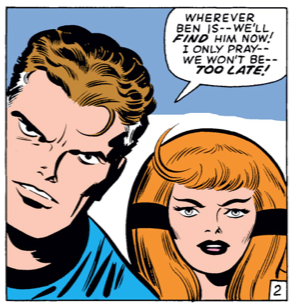
Sinnott returns with issue 94, and then continues to ink the majority of FF issues until John Byrne took over penciling and inking duties with issues 232, but occasionally skips about one issue out of 10. His 48-issue inking streak remains a record for the FF, as far as I am aware
Weird science
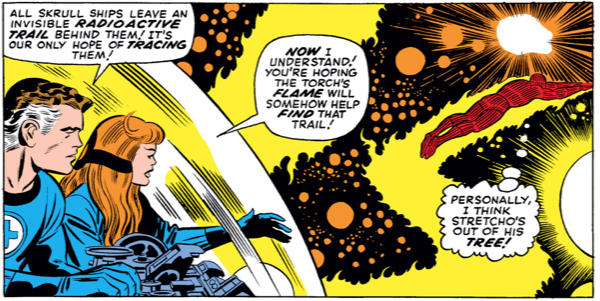
Usually when the Human Torch is flying in space there’s some explanation given about how he can sustain his flame with no oxygen (much less breathe). Not in this issue.
Reunion
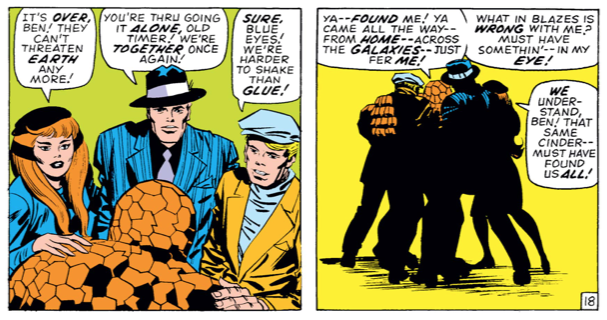
This was a touching scene:
The Roaring 20s
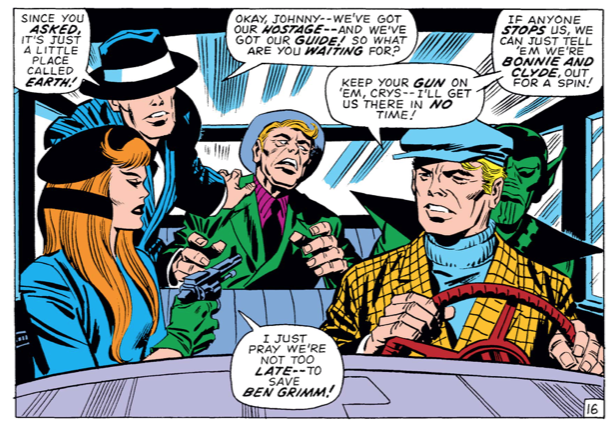
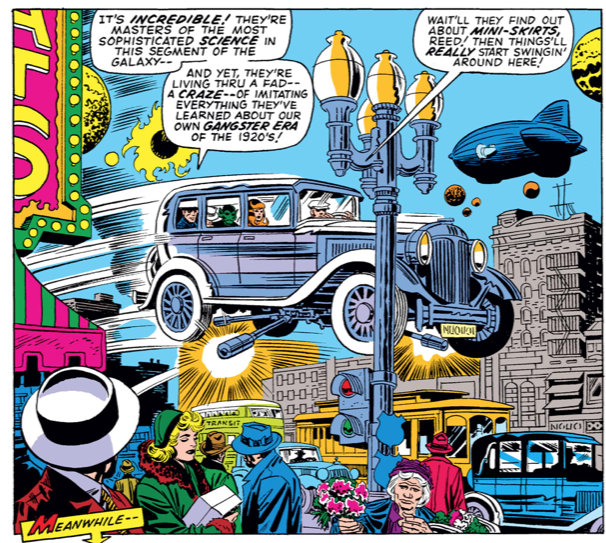
As mentioned earlier, there’s a fun reveal when Reed, Johnny and Crystal appear as gangsters:
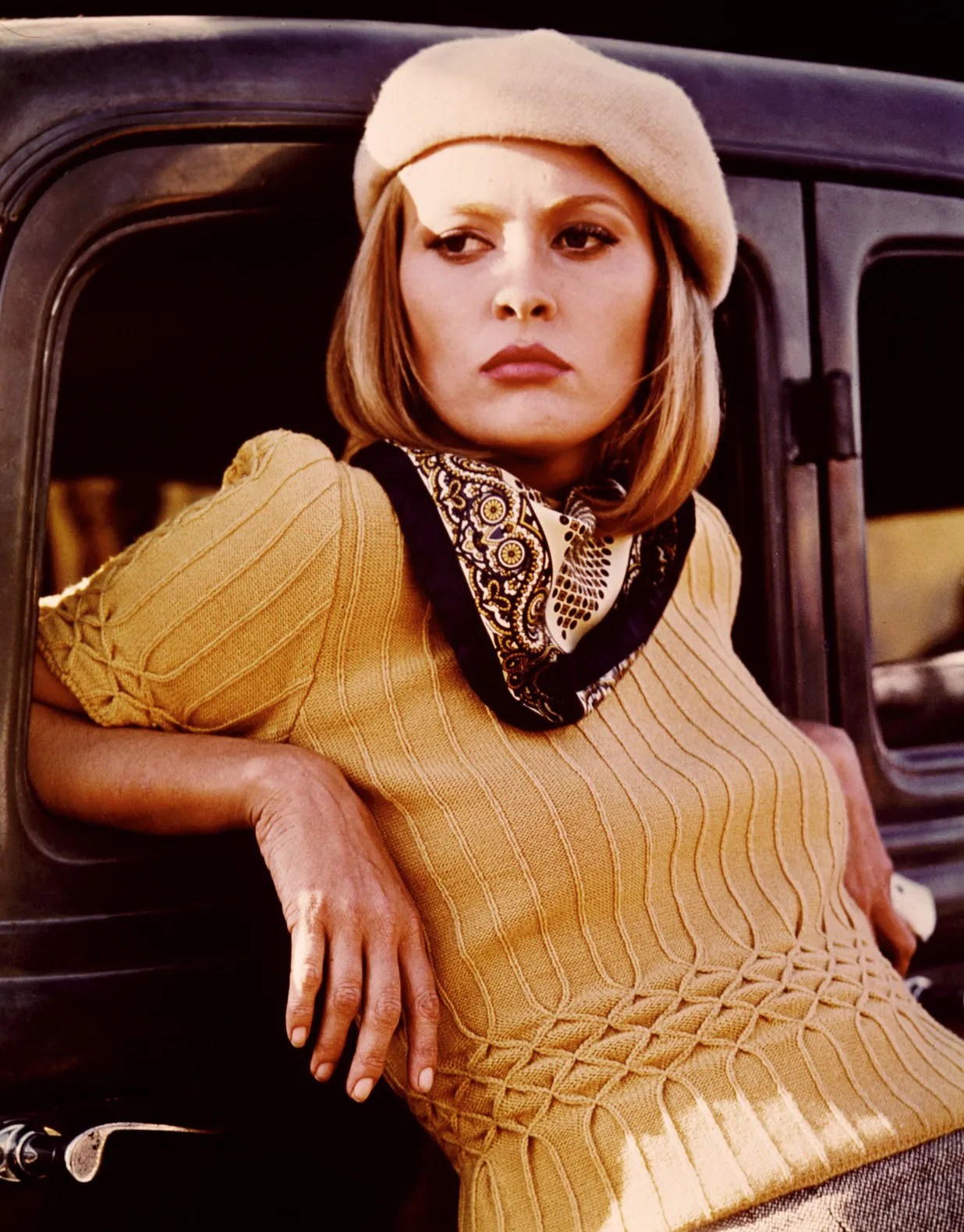
It’s hard not to think Crystal’s beret is inspired by Faye Dunaway in Bonnie & Clyde, which came out in 1967:
Man or machine?
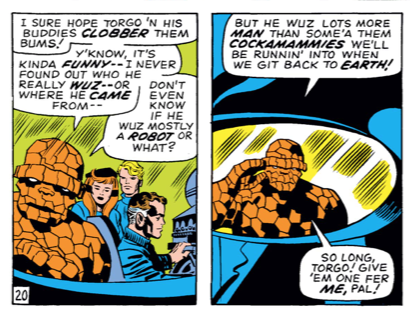
I’ve written before about how in the last few years Stan and Jack have introduced a number of villains that appear to be robot-like men, or human-like robots (The Thinker’s Android Man, Galactus’s Punisher, Doom’s Robots, among others). It’s interesting how the line blurs with these characters, as if the distinction between man and machine isn’t as clear, or as important, as we might think. Torgo seems to fit that pattern and here, Ben remarks on Torgo’s humanity:
Dig that Kirby Krackle
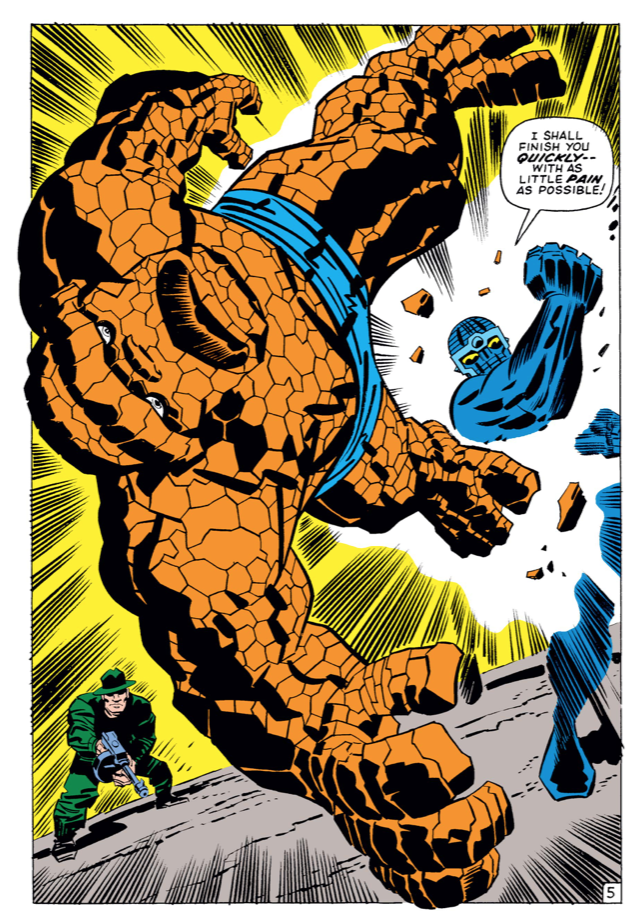
There’s only one splash page in this issue (besides the opening page) but it’s a beaut:
Some other fun panels:
For sale
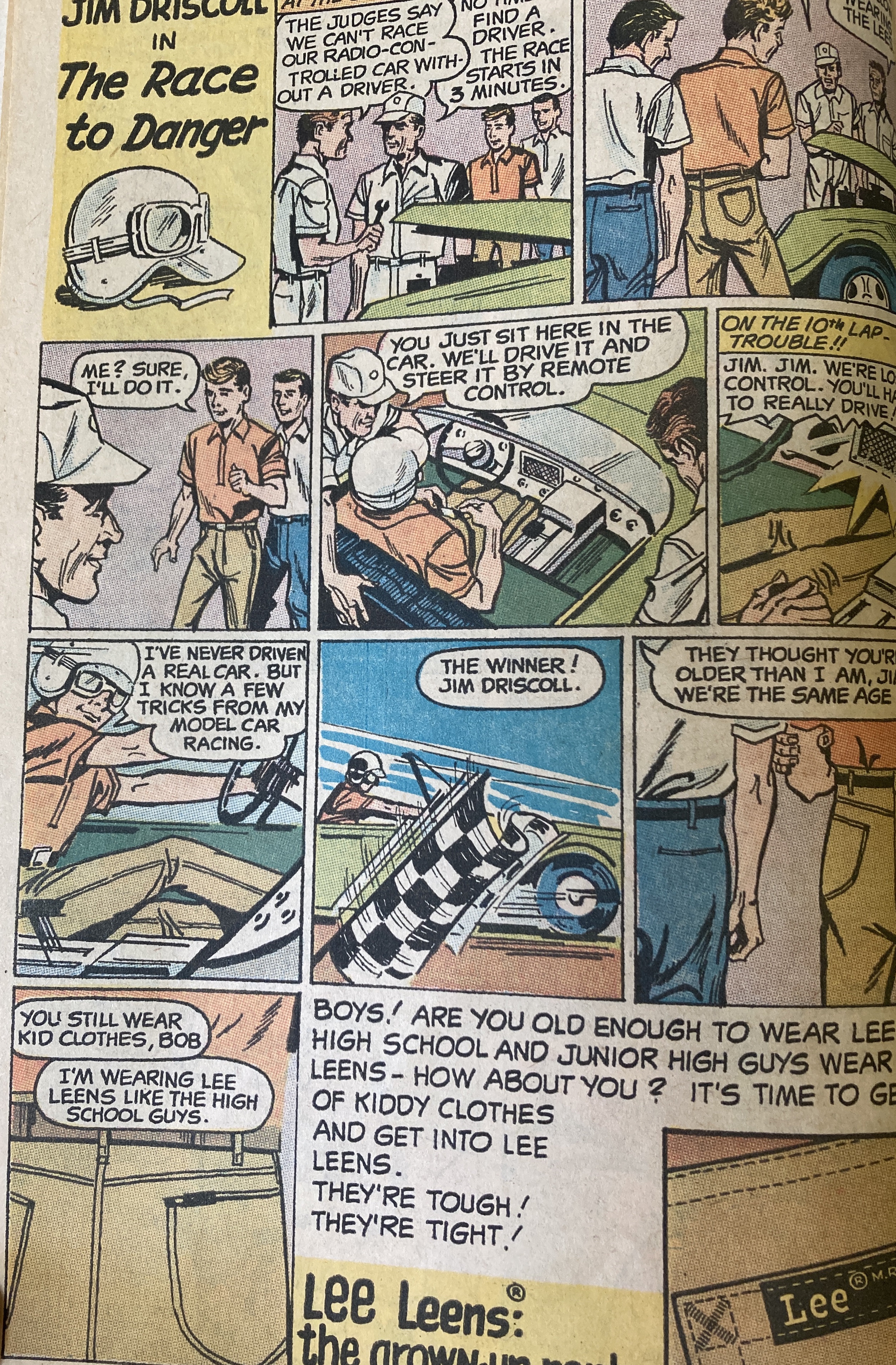
Some ads worth noting in this issue. First up, a great-slash-creepy ad for Lee jeans, which really drives home the importance of kids looking older:
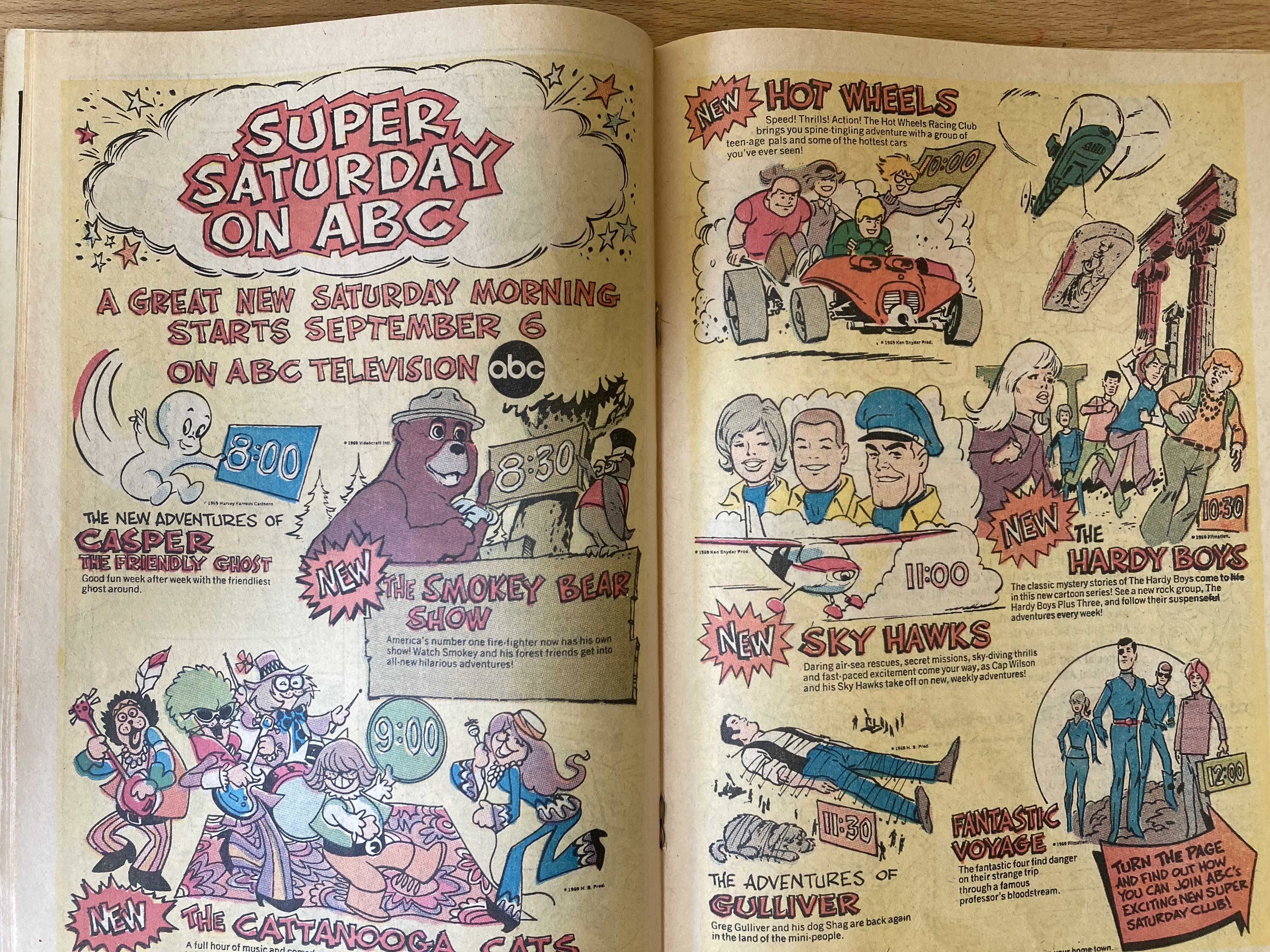
Also, this ad for ABC’s Saturday morning cartoons. These ads announcing the network’s fall line up were ubiquitous when I was a kid in the 1980s (when Saturday cartoons were a big deal) but this is the first appearance of them that I’m aware of.
We get letters
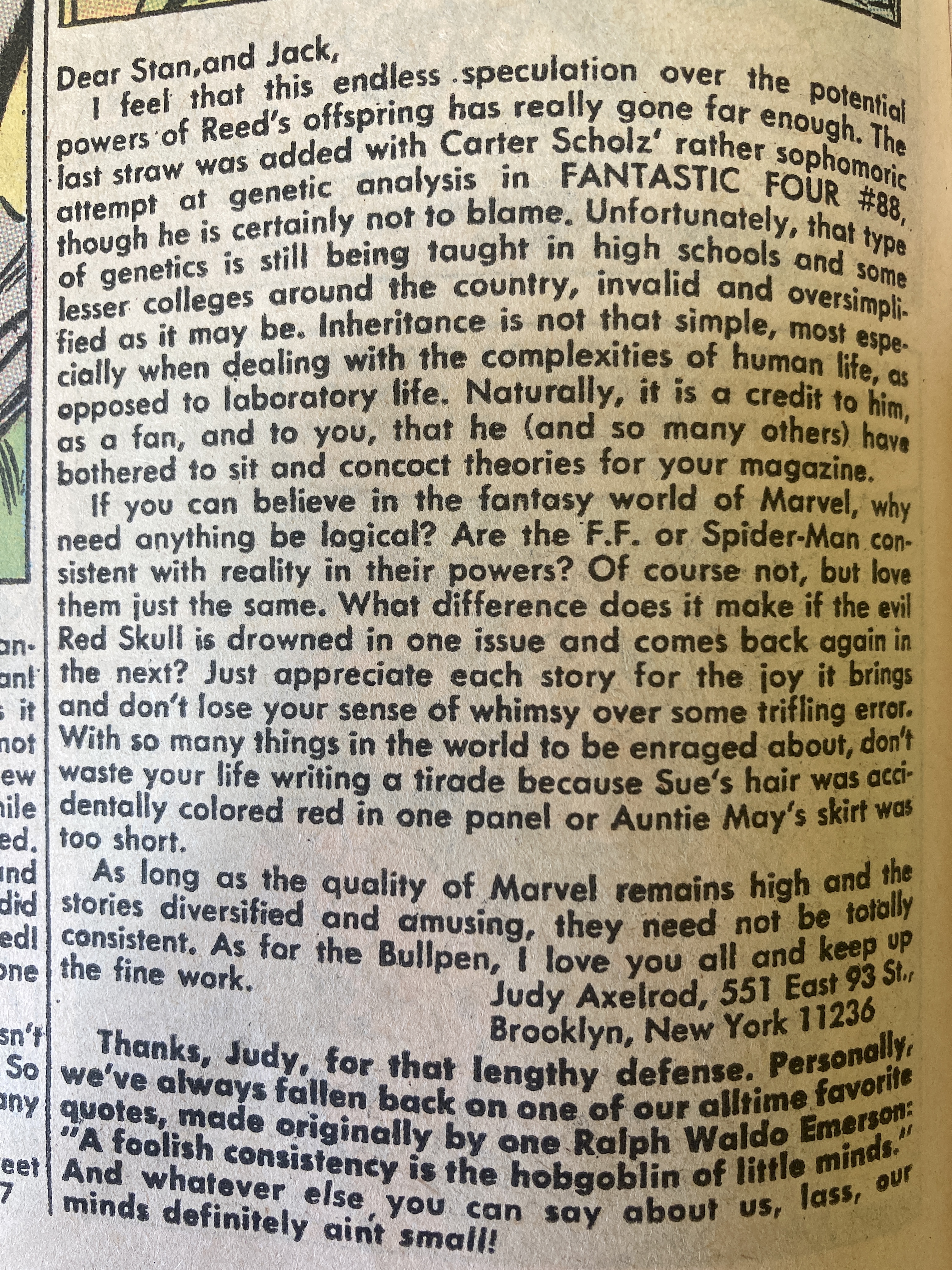
This is a good one from Judy Axelrod, from Brooklyn, pointing out how genetics isn’t properly taught in high schools and colleges (in the context of whether Reed and Sue’s child will inherit their powers). There is a Dr. Judith Axelrod who practices neurology in New York that graduated med school in 1967—perhaps the same?
Also on newsstands
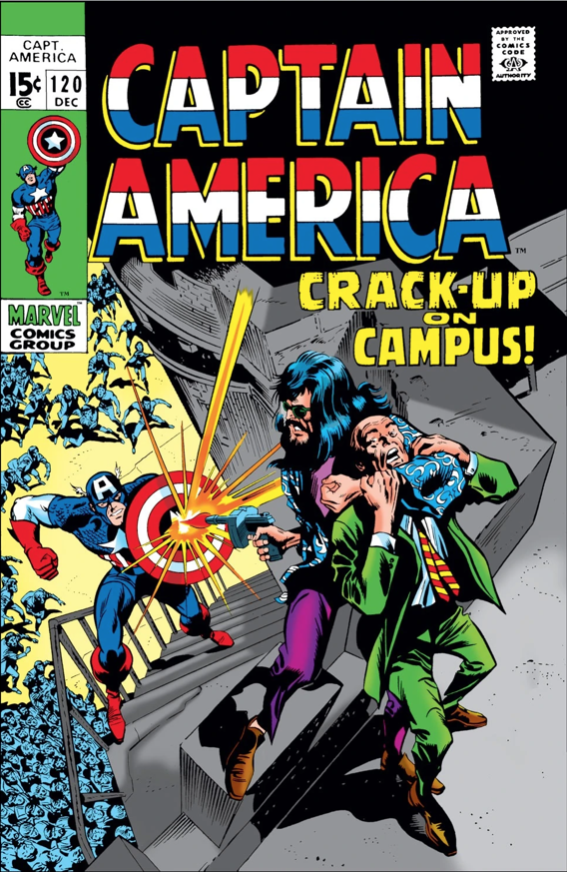
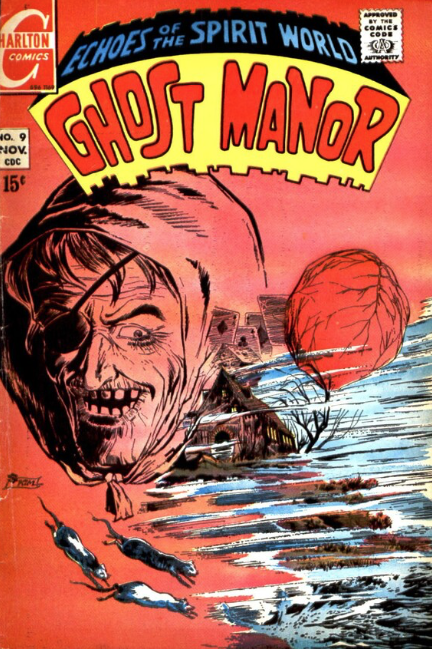
What else was on sale in Sept 1969?
Next issue: The return of the Frightful Four!
 Percival Henry: The Fantastic Four and more