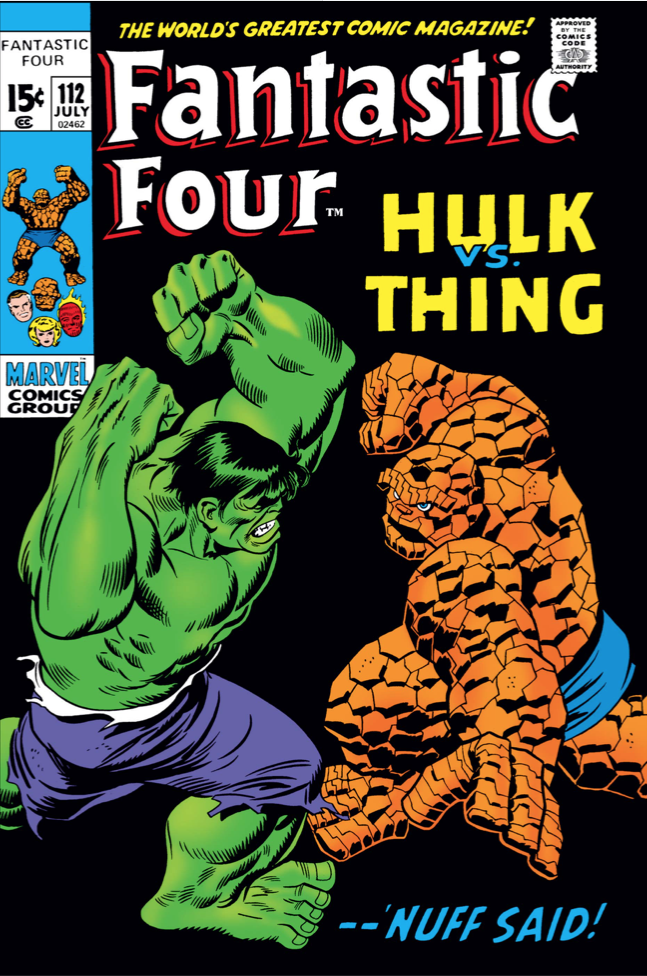
Fantastic Four 112 “Battle of the Behemoths!” Published: April 1971 Writer: Stan Lee Pencils: John Buscema Inks: Joe Sinnott Letters: Sam Rosen Cover: Buscema and Frank Giacoia
Synopsis
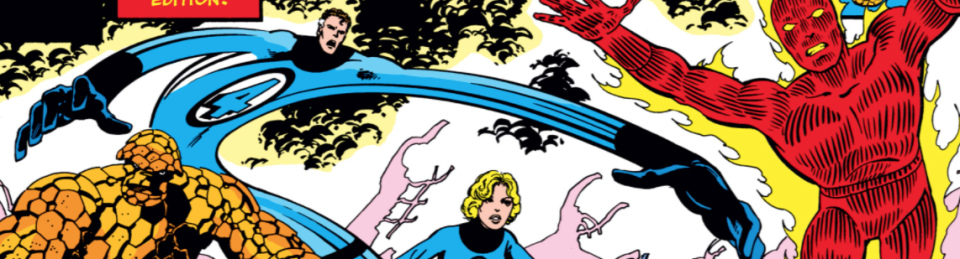
As the Thing battles the Hulk in mid-town Manhattan, Reed and Johnny work frantically to find a cure for Ben’s mind-altered state.
What’s going on here
For some, this is an iconic comic and could be viewed as the real launching point of the Bronze-era FF. It’s the third fight between the Hulk and Thing (the others coming in FF 12 and 24-25) and to date the most sustained slugfest between the two. The cover is an absolute classic, and all those elements together combine to make it prized by collectors (it sells for five to 10 times more than the surrounding issues).
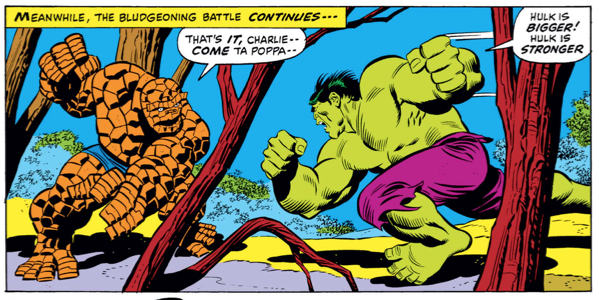
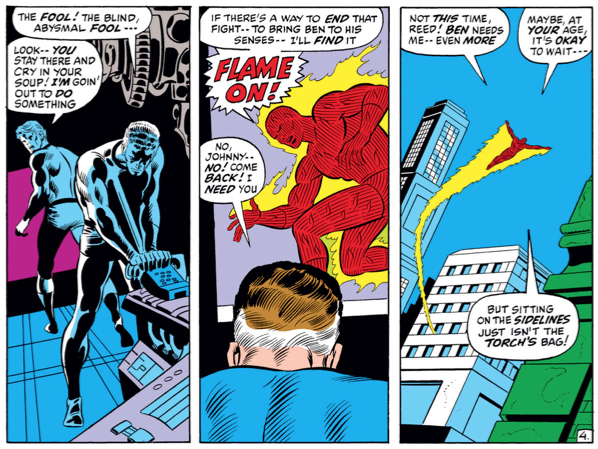
Unfortunately, I’m not sure the story lives up to the issue’s reputation. As mentioned previously, the conflict with the Hulk comes out of nowhere (Reed summons Bruce Banner in the closing panels of last issue) and there’s almost nothing at stake here. Ben and the Hulk are fighting for the sake of fighting, and while it’s a fun brawl that take up essentially the entire issue, it begins to feel repetitive. The real tension in the story is between Reed and Johnny arguing about how to save Ben—Reed accuses Johnny of being a hot head, Johnny accuses Reed of lacking urgency—and that conflict feels pretty familiar.
What I liked
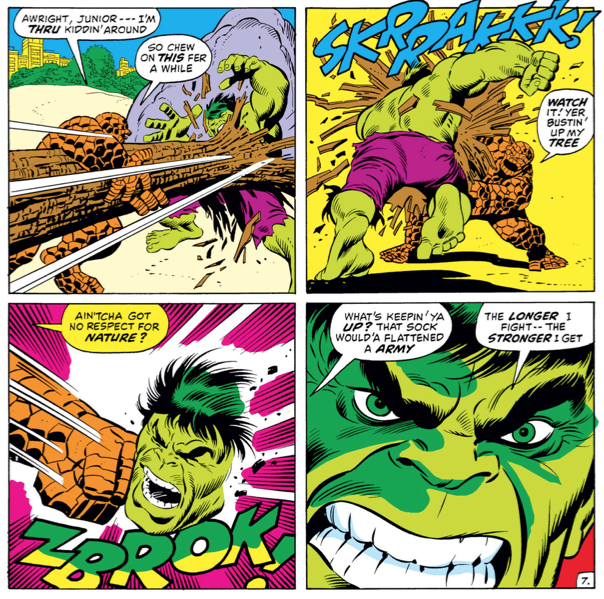
It’s hard to deny the power in Big John’s layouts of the fight scenes. No one really does it better.
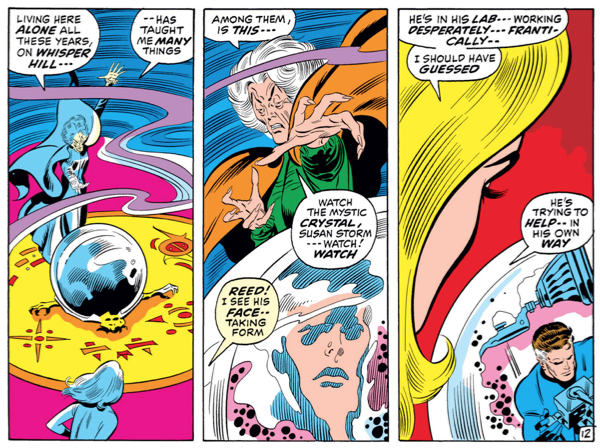
I also liked this quieter, almost ethereal scene with Sue and Agatha Harkness.
What I didn’t like
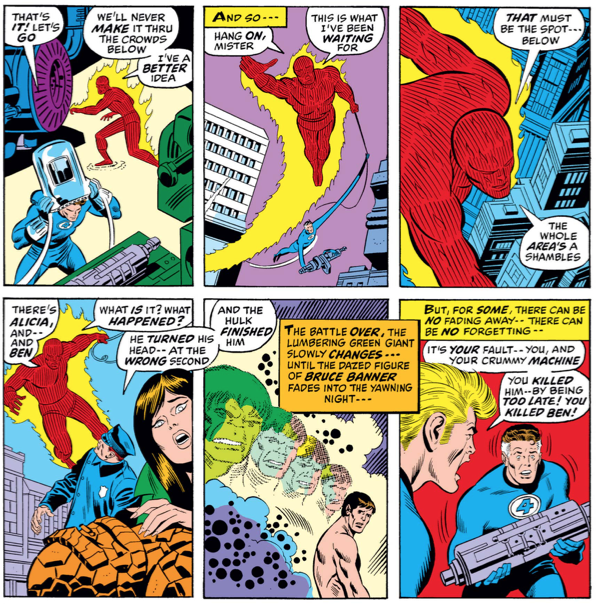
While the story as a whole is pretty lackluster, the end is really disappointing. Ben is distracted by Alicia, the Hulk knocks him out (and disappeared as abruptly as he arrives) and Reed and Johnny arrive too late. It just feels anticlimactic.
Anything else?
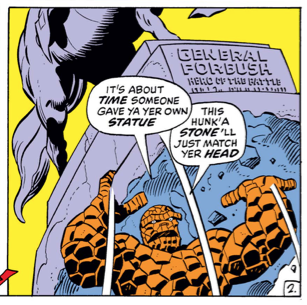
FF 112 features an Irving Forbush cameo (or maybe one of his distinguished ancestors).
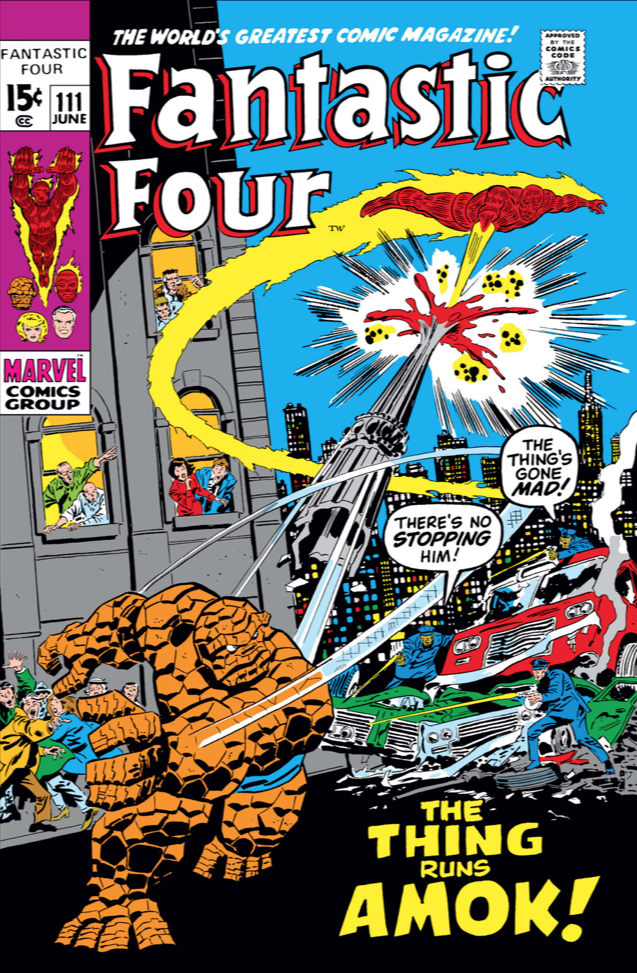
Fantastic Four 111 “The Thing Amok!” Published: March 1971 Story: Stan Lee & John Buscema Pencils: Buscema Inks: Joe Sinnott Letters: Sam Rosen Cover: Buscema & John Verpoorten
Synopsis
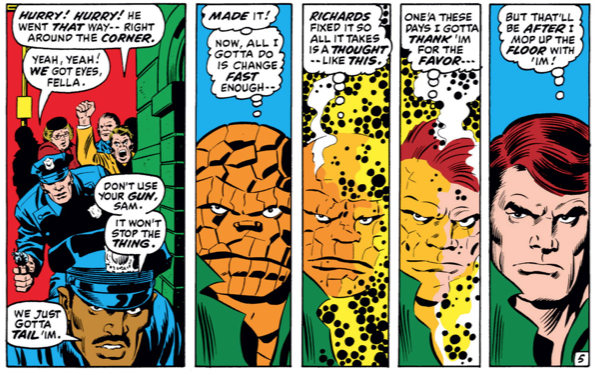
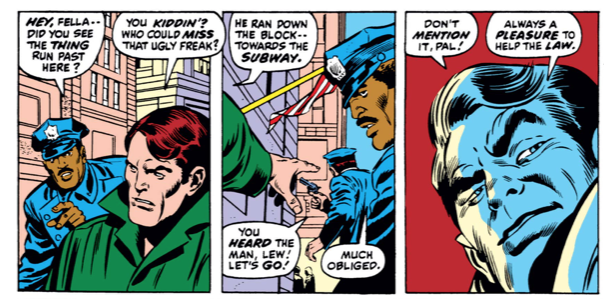
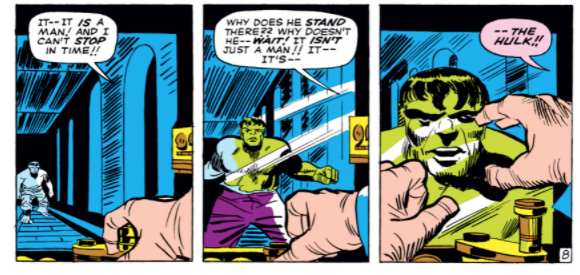
Ben, his mind affected by his new ability to change to human form, goes on a rampage throughout Manhattan as Johnny tries to keep up. Finally, Reed calls in Bruce Banner to help, only for the Hulk to appear and confront Ben.
What’s going on here?
This is very much a table-setting issue, preparing us for the big confrontation with the Hulk next month, but it’s still pretty effective. As discussed earlier, the groundwork for Ben’s descent was laid over many issues, so it feels organic and earned. It’s not the first time we’ve seen a plot centered around the Thing turning against his teammates (and won’t be the last) but the mechanism for this is more interesting than mind control or sorcery. It’s quite plausible that on some level, were Ben to lose the humanity and compassion that makes him, he would act this way. He has reason to be angry!
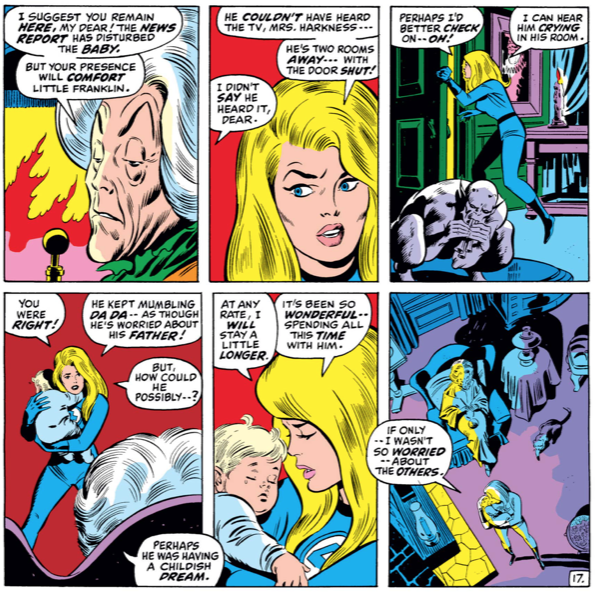
There’s also some good foreshadowing of trouble to come with baby Franklin, and again, it’s being spooned out methodically.
What I liked
This feels like the first FF issue where John Buscema is the recognizable artist I’m familiar with. The previous few issues felt like he was either trying to mimic Kirby or Joe Sinnott’s inks overpowered his penciled, but here we see some great Buscema panels.
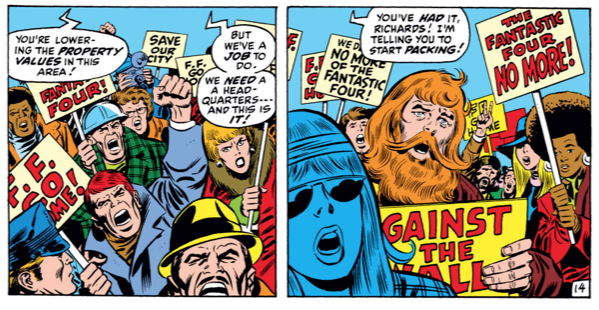
These crowd scenes are fun. Hardhats on one side, hippies on the other.
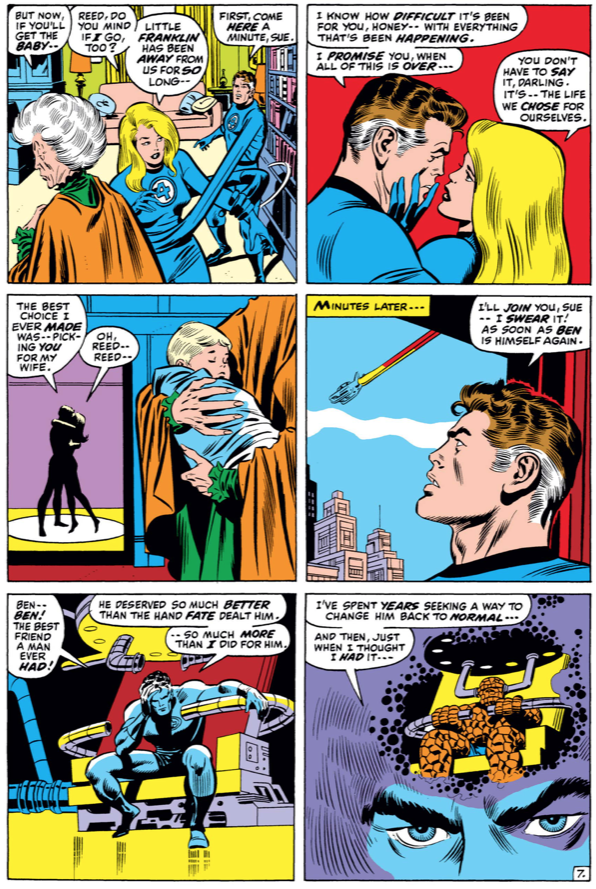
There is a great quiet page of Reed, first with Sue, then contemplating how he again failed Ben. We have so many pages of Reed acting like a bullying blowhard that this display of his human side feels refreshing and necessary.
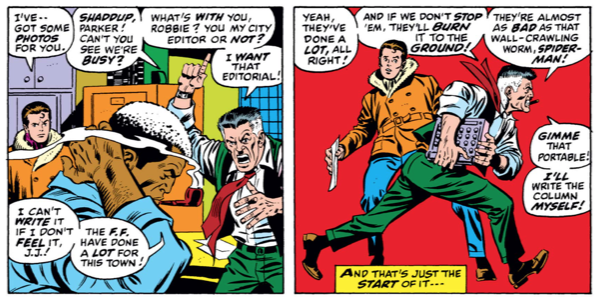
Also, J. Jonah Jameson shows up again, this time with pesky Bugle photographer.
What I didn’t like
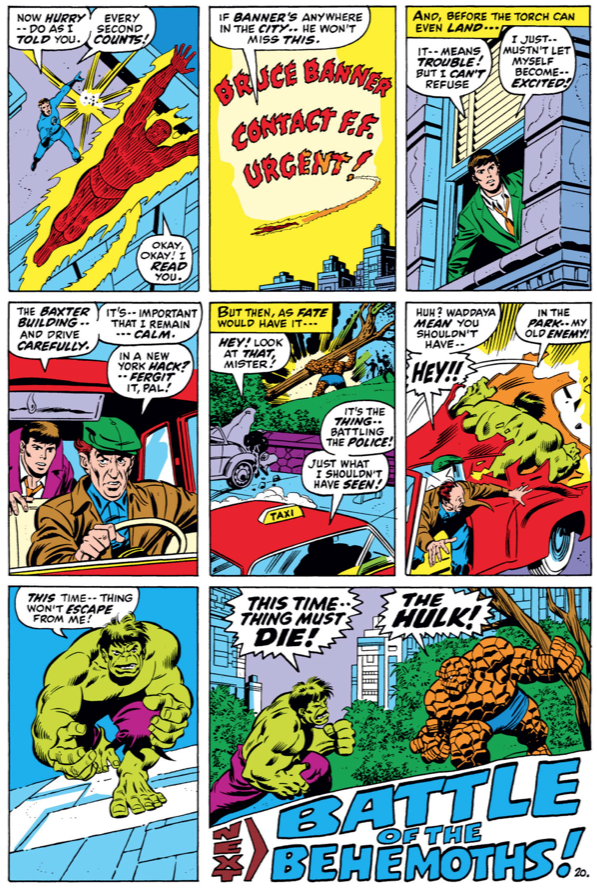
The appearance of the Hulk feels really abrupt, the opposite of the slow-boil that got us to this issue. Within seven panels, we go from Reed summoning Bruce Banner to the Thing and Hulk about to fight.
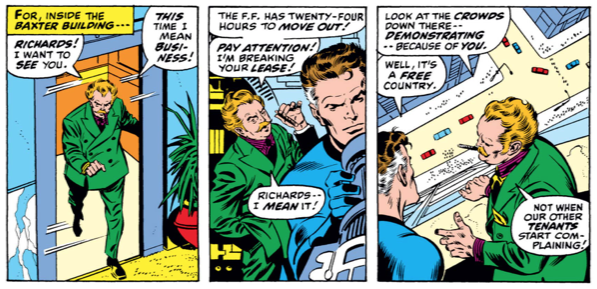
I confess I get annoyed with every interaction the FF has with their landlord (and any other real-world business issue). Maybe I know too much about commercial real estate but it always feels clumsy and unrealistic. I’m pretty sure the FF have lawyers to deal with this sort of thing.
Anything else?
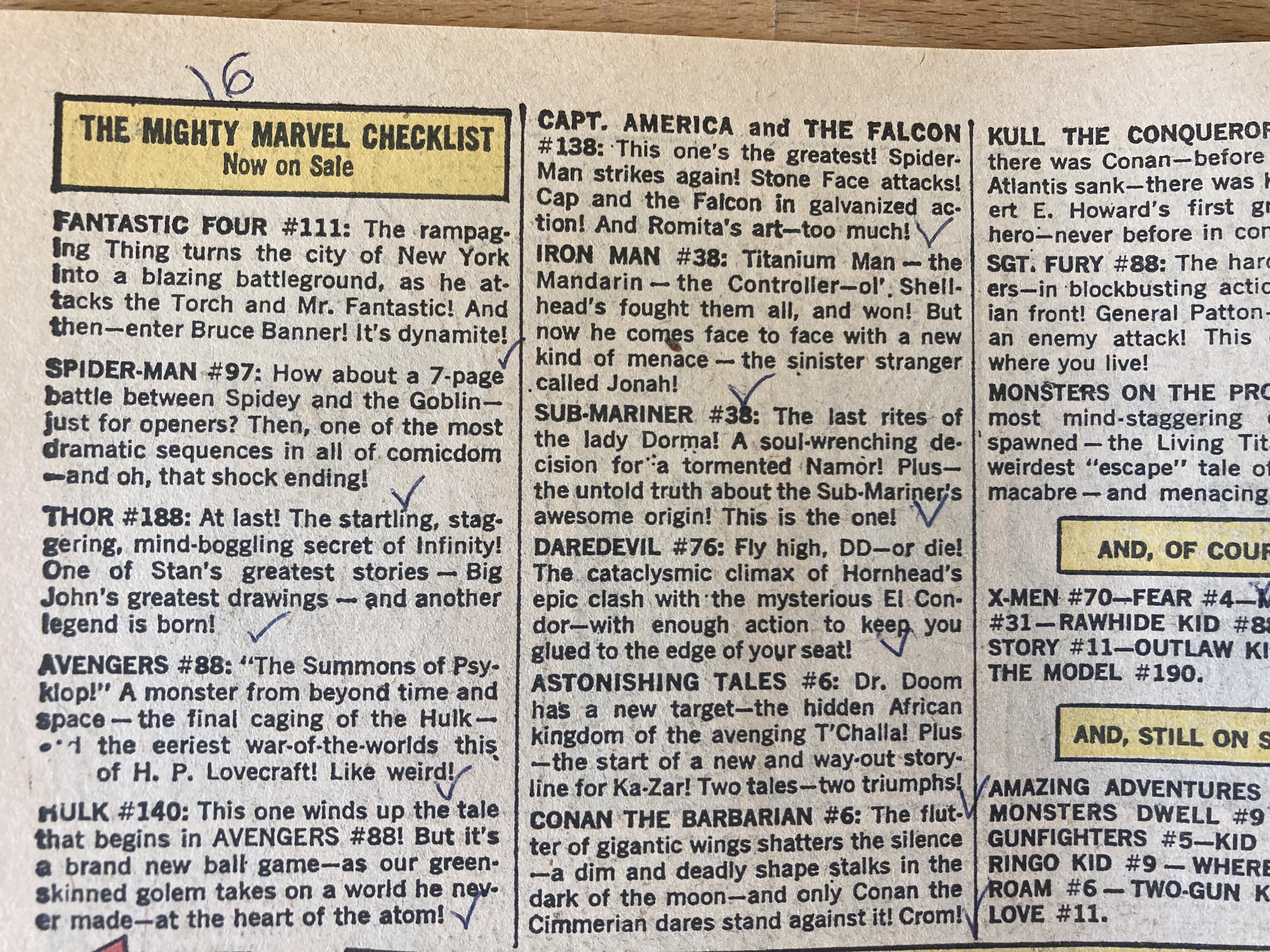
The kid how bought this comic in 1971 took the idea of a check list seriously:
Fantastic Four 26 “The Avengers Take Over” Published Feb. 1964 Story: Stan Lee and Jack Kirby Script: Lee Pencils: Kirby Inks: George Roussos Letters: Art Simek Cover: Kirby and Sol Brodsky
Synopsis
Fantastic Four 26 picks up right where the last issue left off. As the Hulk rampages through New York looking for the Avengers—who he feels abandoned him—the Thing again tried to stop him. The Human Torch, injured in the last issue, leaves the hospital to rejoin the fray, but the Hulk overpowers them both and eventually make his way (by subway!) to Avengers mansion. There, he tangles with both the FF and the Avengers but escapes with his erstwhile sidekick Rick Jones to a skyscraper under construction. There, the Hulk battles most of both teams individually until Jones gets him to swallow a “Gamma-ray treated capsule,” which turns him back to Bruce Banner.
What’s going on here?
Action! FF 26 is really just a prolonged action sequence, with almost no breaks for character development. There’s none of the shenanigans in the Baxter Building, no squabbling between Ben and Johnny, no pontificating by Reed. In fact, Reed is almost entirely sidelined in these two issues with an illness, and when he does appear in FF 26, he’s mostly ineffectual. It’s Rick Jones, with an assist from Bruce Banner, who saves the day.
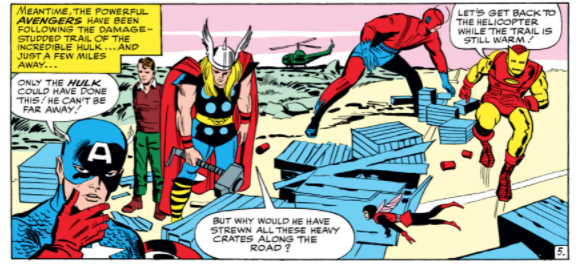
The issue does give us an extended look at the Avengers, and we get the same character beats that have lasted 60 years. Iron Man is arrogant, the Wasp is ditzy etc. Notably, this is just Captain America’s second appearance since he was unfrozen from the ice in Avengers 3 (FF 26 came out between Avengers 3 and 4) so in some ways Stan is still feeling his way around Cap’s character.
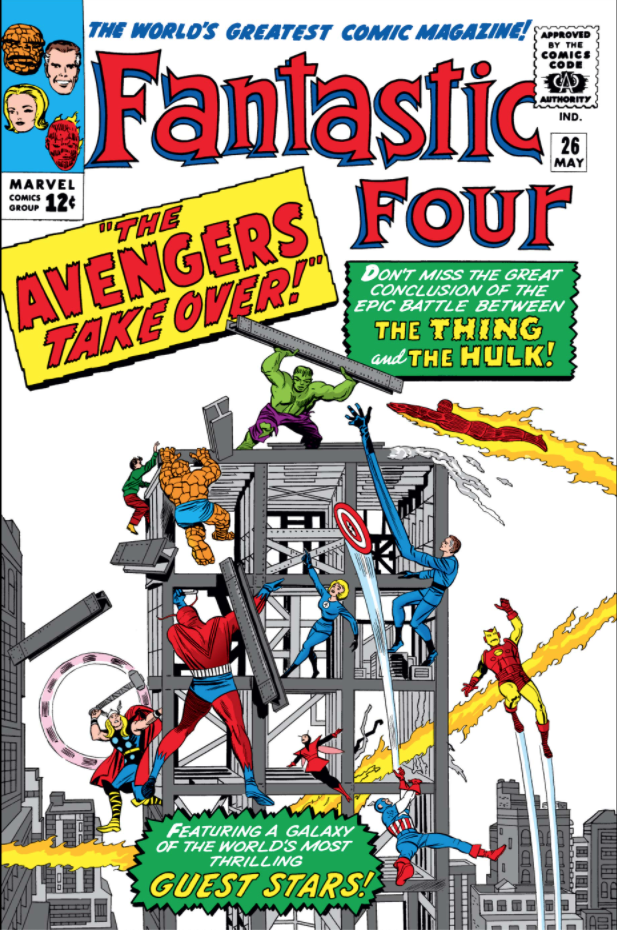
About that cover
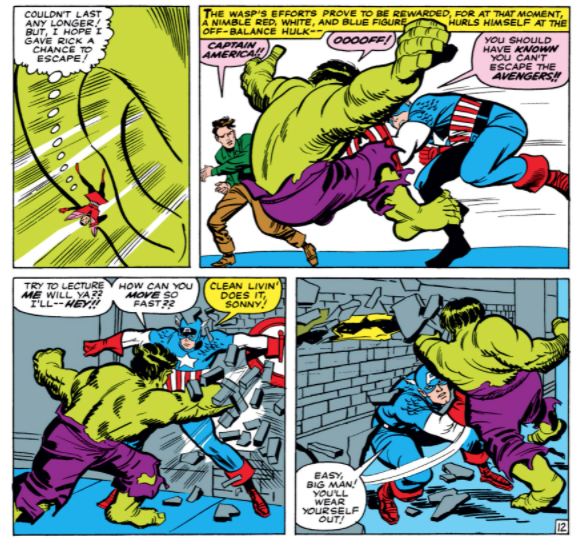
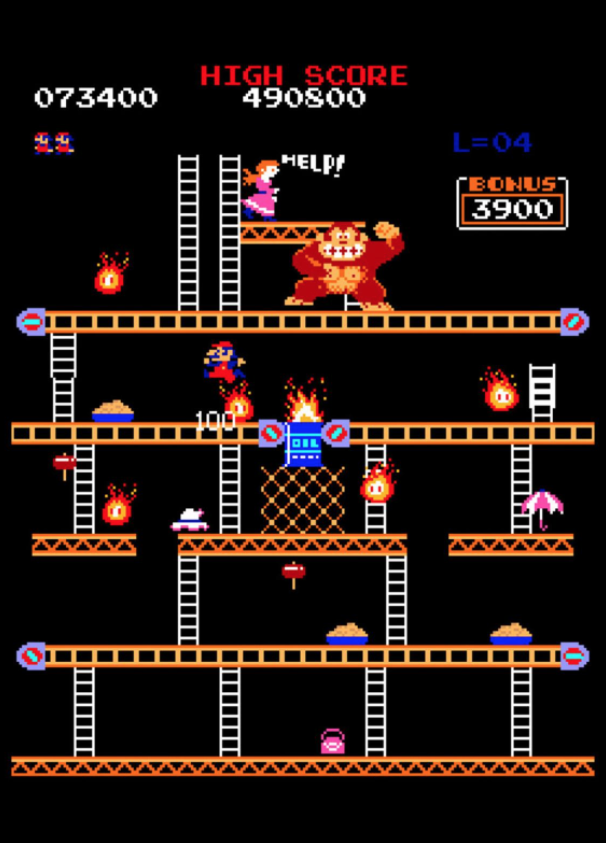
Something about it looks familiar ….
Alert the media
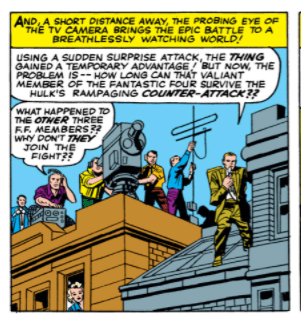
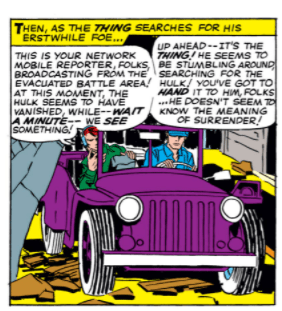
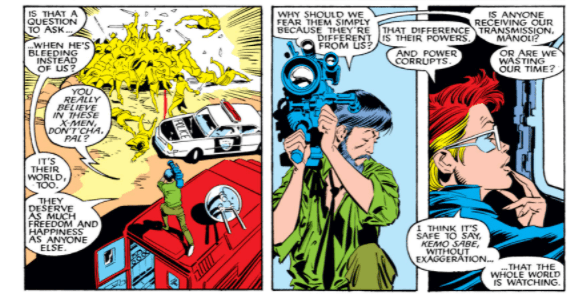
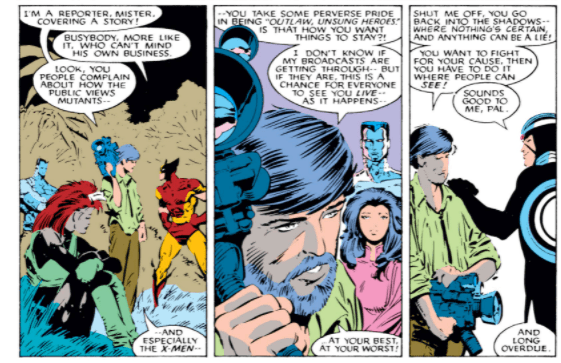
Throughout FF 26 radio and TV reporters pop up to narrate the action, acting as a sort of Greek chorus and helping magnify the stakes of the battle.
While it’s a device used in lots of movies and TV shows, it only occasionally is used in comics as well. In the Dark Knight Returns, the TV news features prominently, both to provide commentary on the events and a comment about the role of media in society. But I most associate the device with the “Fall of the Mutants” storyline in the Uncanny X-Men from 1988, where a TV crew becomes part of the storyline:
UXM 226 and 227 (1988, art by Marc Silvestri and Dan Green)
They’re fighting again
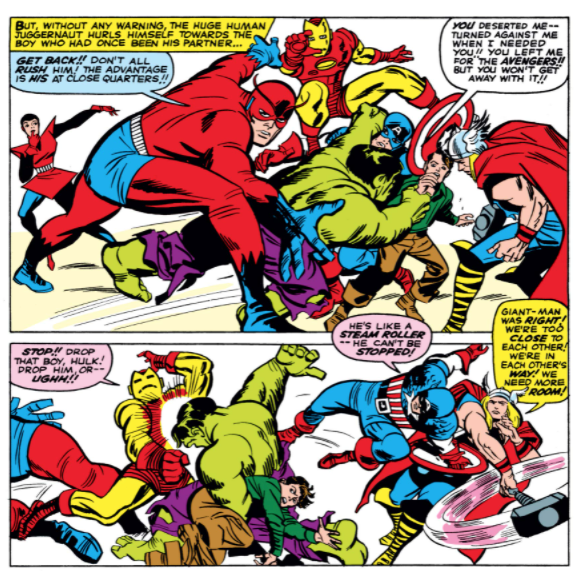
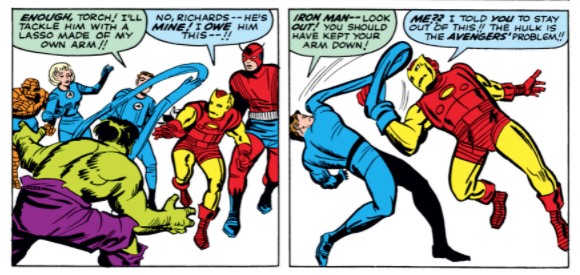
In the grand tradition of all superhero team-ups, the FF and Avengers first must fight with each other before tackling their common foe
Weird Science
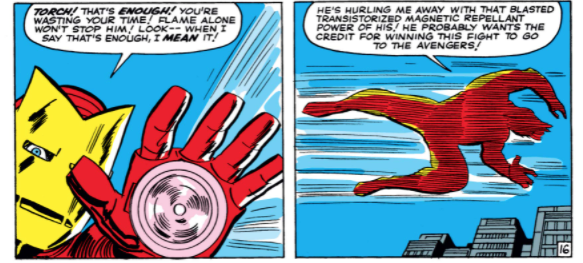
Transistors were still a novel technology in the early 1960s, and Iron Man was really into them.
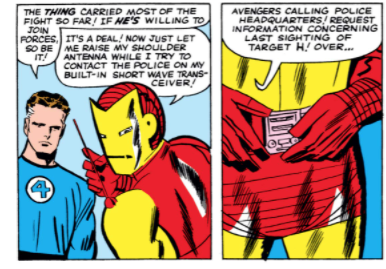
More sixties technology: Iron Man has a built-in short-wave radio, complete with a shoulder antenna. Incredible!
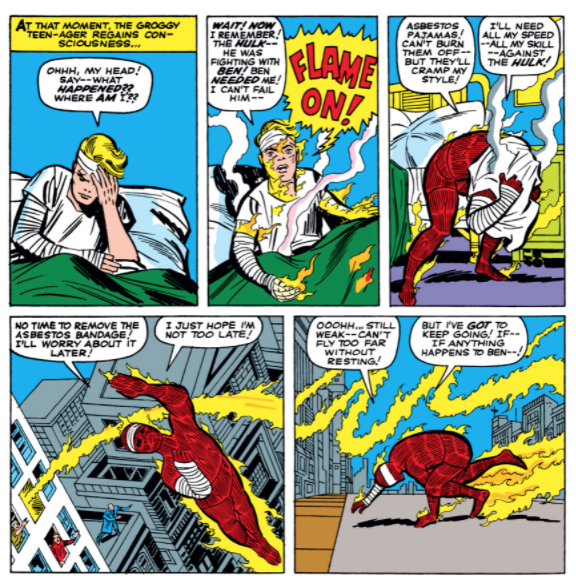
Also, asbestos were a thing back then. Apparently even pajamas were made out them.
The sexist sixies
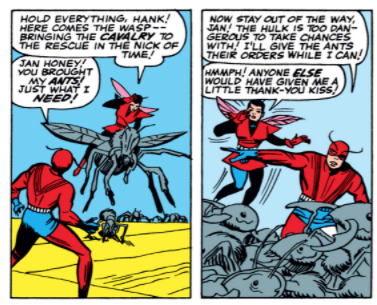
This time is Jane Van Dyne who gets written like a dingbat
Dig that Kirby Krackle
Great sequence here:
These panels, too:
For sale
A mint edition (9.8) of FF 26 will run you about $22,000.
Next issue: The return of the Sub-Mariner (plus Dr. Strange)!
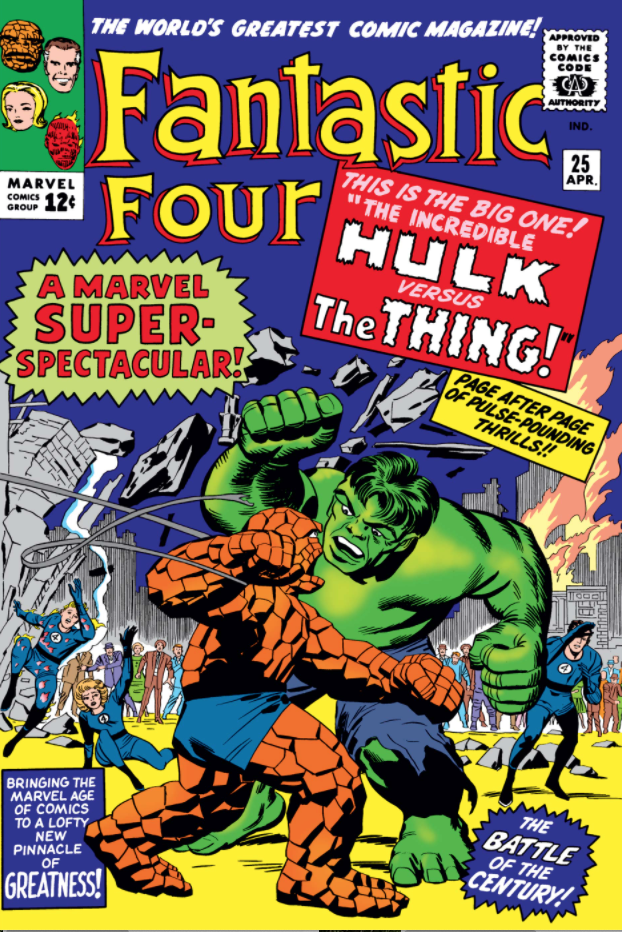
Fantastic Four 25 “The Hulk vs. The Thing” Published: January 1964 Story: Stan Lee and Jack Kirby Pencils: Kirby Script: Lee Inks: George Roussos Letters: Sam Rosen Cover: Kirby & Roussos
Synopsis
In a lab in the Baxter Building, Mr. Fantastic tries to persuade a reluctant Thing to try a formula that will revert Ben back to his human form. Just then, Alicia Masters walks in with news that the Hulk has left the Avengers and been replaced by Captain America.
Meanwhile, in New Mexico, the Hulk returns to the lab of Bruce Banner (called Bob Banner here) and, discovering a newspaper article about Captain America replacing him, vows to destroy the Avengers. Leaping across the US, he arrives in New York as Reed falls ill from the experimental microbes he used to make the formula for the Thing.
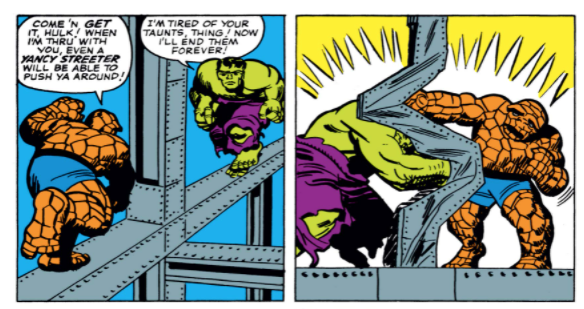
As the Hulk rampages through the city, first the Human Torch, then the Thing try to subdue him while Sue tends to the ailing Reed. After a lengthy battle, the Hulk escapes Ben, who vows to stop him or die trying.
What’s going on here?
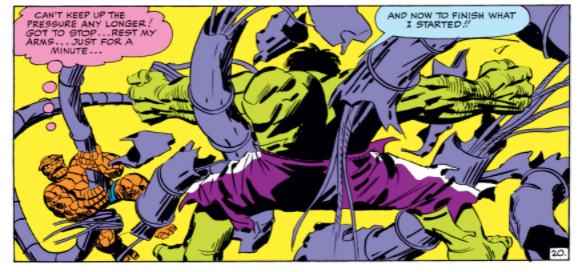
Fantastic Four 25 is probably most notable for the scale of the fight between Ben and the Hulk. At about 12 pages, it takes up nearly half the comic, and is significantly more dramatic than their first fight, in FF 12. Here, we have a sense there are real stakes involved: With Reed out of commission, only Ben can stop the Hulk from destroying Manhattan as he pursues the Avengers. It’s another example of Ben rising above his wise-cracking, goof-ball persona and showing the heart of a true warrior.
FF 25 is also the first real cliffhanger in the comic’s short history. While a few stories have carried over from one issue to the next, in all previous cases the main story was resolved. But after more than two years of publishing the FF, Stan and Jack must have had enough confidence in their readers to trust them to come back for the second half of a story. In other words, they knew their readers were no longer causal buyers but fans invested in the FF for the long haul.
In another first, FF 25 marks the Avengers’ debut in the Fantastic Four, although it’s only for a brief few panel and they don’t interact with the FF (I assume we’ll see more of then in FF 26). As with the previous guest appearances of the Hulk, Ant-Man, and Nick Fury, the Avengers appear here shortly after the launch of their own comic (Avengers 3 was published the same month as FF 25), and it seems clear Stan was hoping the leverage the FF’s popularity to juice sales of a new comic.
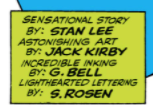
Lastly, FF 25 introduces the gag credits that became a signature Marvel feature. We’re not yet at the nickname state, but those are coming.
Ben and Alicia
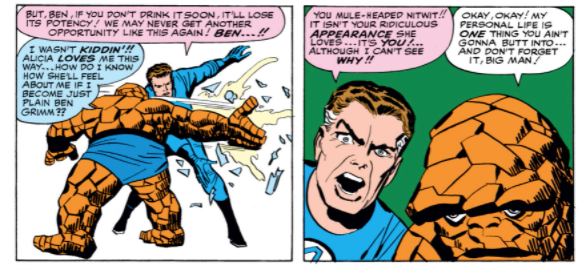
Ben makes it pretty explicit here that he doesn’t want to revert back to his human form because he fears Alicia is only attracted to him as the Thing
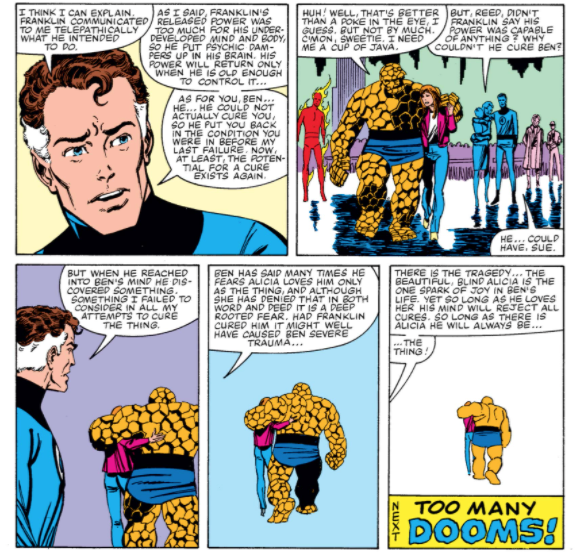
That makes the big reveal in FF 245—in which John Byrne discloses why Ben can’t return to human form (as discussed here) — a bit less surprising. It is, however, further evidence of how deeply Byrne mined these early FFs for plot points.
FF 245, art by Byrne
Who’s Bob?
Throughout FF 25, the Hulk’s alter ego is referred to as “Bob Banner,” years after he was introduced as Bruce Banner. As Brian Cronin helpfully explains, Stan simply forgot his name and retroactively changed his name to “Robert Bruce Banner” to cover his goof.
A new ‘do
Sue Storm reveals yet a new hairstyle in FF 25, in what appears to be a bee-hive or bouffant.
Sue’s hair in the first few years of the FF is like a catalog of women’s hair styles from the 1960s. Here are some other looks:
FF 2, a “flick up”
FF 18, “the artichoke”
FF 21, a “bouffant”
FF 24, a “bouffant flip”
FF Annual 1 “bouffant
Dig that Kirby Krackle
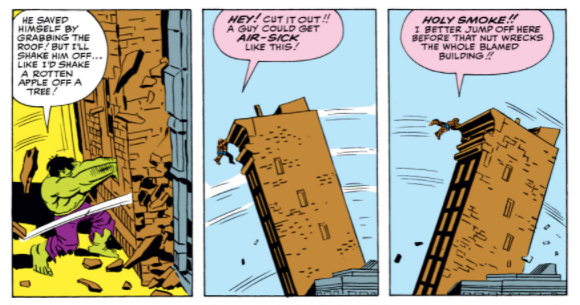
We get lots of examples of Jack’s Hulk in FF 25. Maybe because we’re used to a different, more stylized Hulk as drawn by artists like Herb Trimpe and Sal Buscema, but there’s something particularly monstrous about this more human-like Hulk of Kirby.
We also get a lot of cool action sequences as Ben and the Hulk tussle.
For sale
FF 25 in mint (9.8) condition will cost you about $66,000, a lot more than FF 24 but not unexpected given Hulk-Thing battles are always popular.
Fantastic Four 12 “The Incredible Hulk” Published Dec. 1962 Story: Stan Lee and Jack Kirby Script: Lee Pencils: Kirby Inks: Dick Ayers Cover: Kirby and Ayers
Synopsis
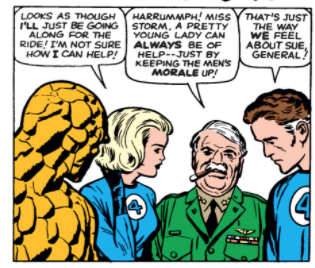
Ben Grimm and Alicia Masters are leaving the symphony when a company of soldiers mistake Ben for the Hulk and try to capture him. Later, at the (still unnamed) Baxter Building, General Thunderbolt Ross tells the Fantastic Four the Army is searching for the Hulk, who it believes is destroying military hardware. The team discusses how they would capture the Hulk.
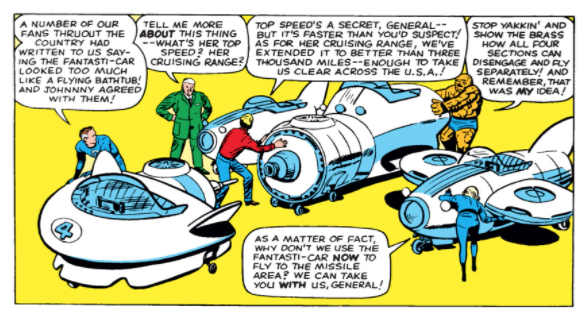
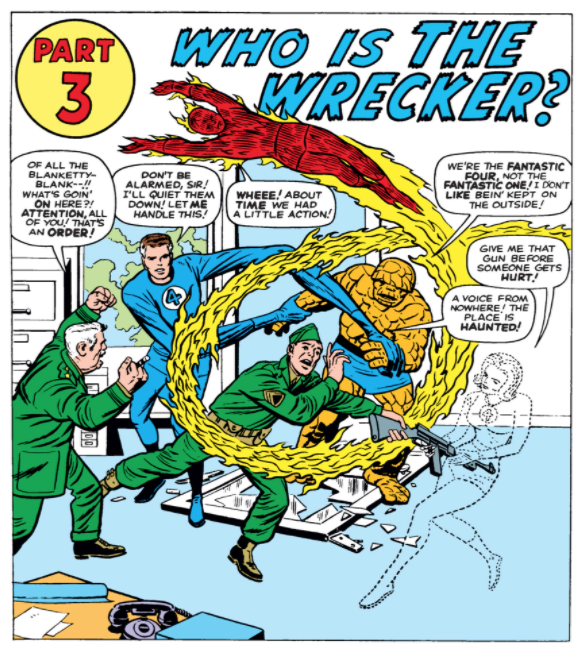
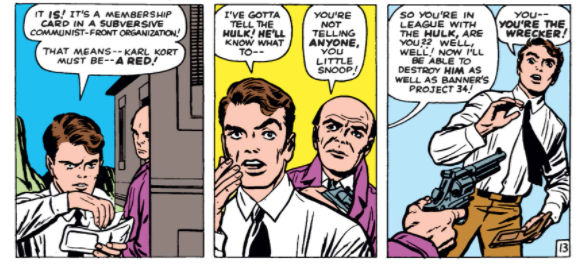
The FF and Ross fly to the southwest in a newly remodeled Fantasticar, where the meet Bruce Banner (secretly the Hulk, of course), his sidekick Rick Jones, and his new assistant Karl Kort. Banner and Jones try to persuade Ross and the FF that the Wrecker, not the Hulk, is not responsible for the damage but the FF persist in investigating. While leaving, Kort drops his wallet and when Jones finds it, he discovers Kort is a communist. Kort—in a Scoobey-Doo-esque plot twist that should surprise no one—is revealed to be the Wrecker, and takes Jones prisoner. He then blackmails the Hulk to drive the FF out of the area.
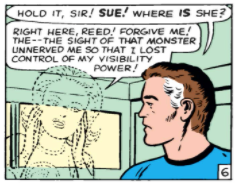
The FF searches for the Hulk in the tunnels beneath the military installation, and he finally confronts them. After a battle, the Hulk is knocked out by a ray from a giant robot wielded by the Wrecker. The Thing and the Invisible Girl apprehend Kort while the Hulk escapes.
What’s going on here?
It takes an extremely convoluted story to do it, but after 12 issues, the Fantastic Four finally cross over with another headliner in the Marvel Universe. This same month, the FF will also make a brief appearance in Amazing Spider-Man 1. These stories firmly plant the FF in the same interconnected world as other Marvel characters, and helps establish the pattern of cross overs and tie-ins that knit together the Marvel universe. That shared universe is big part of the secret sauce that makes comics, and later Marvel’s movies, so addictive to fans. It’s both the fear of missing out on a vital chapter, and the rewards that come from knowing the full story. Marvel would of course learn to cynically exploit this later with massive crossover events, but for fans who first encountered it here in its embryonic stage, it much have been thrilling.
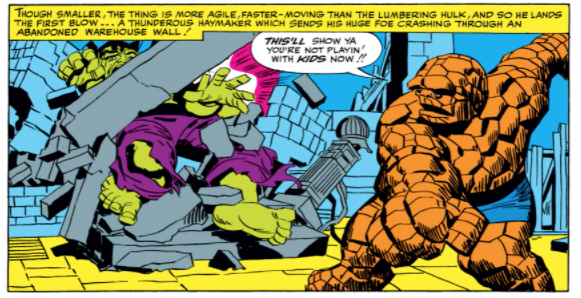
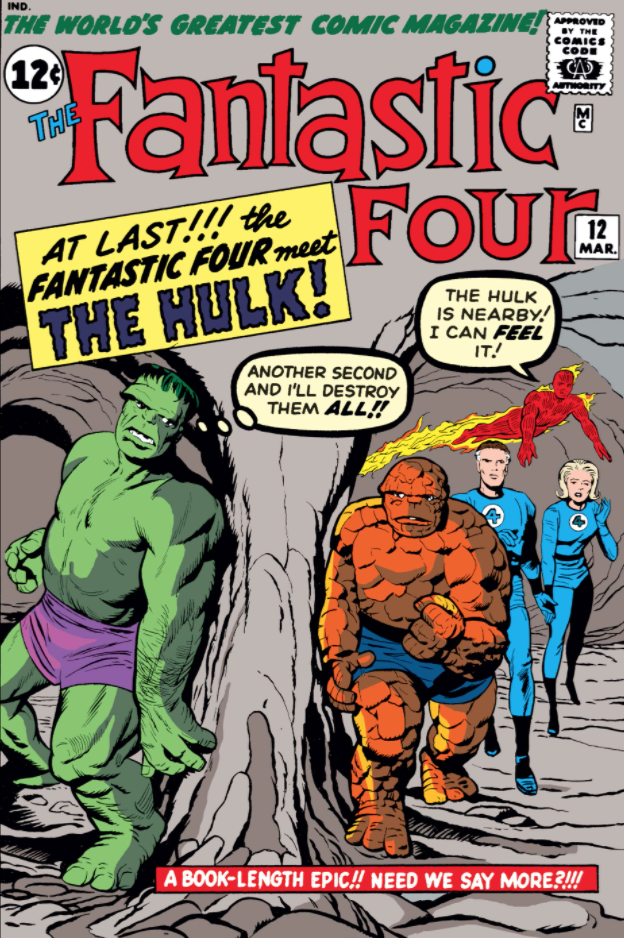
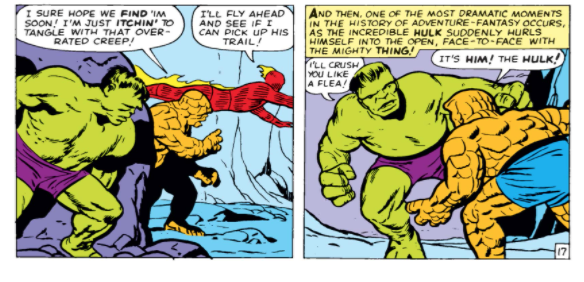
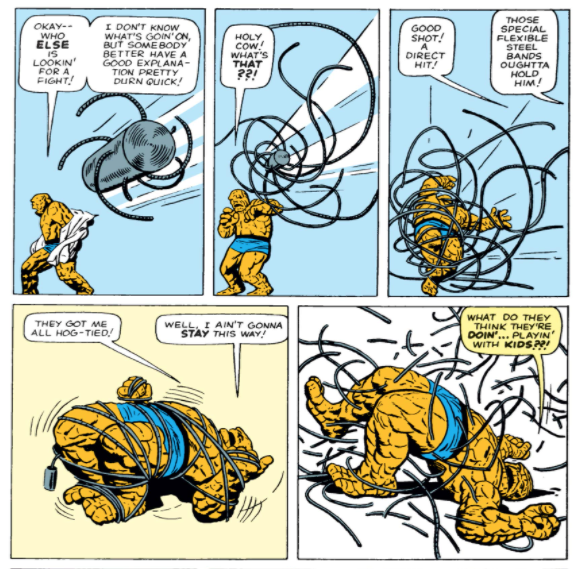
The story also features a fight between the Hulk and the Thing, the first of dozens of times they tangled. It takes 17 pages to get there, and Stan violates the first rule of writing by telling us, instead of showing us, what a big deal it is with a caption describing it as “one of the most dramatic moments in the history of adventure-fantasy.”
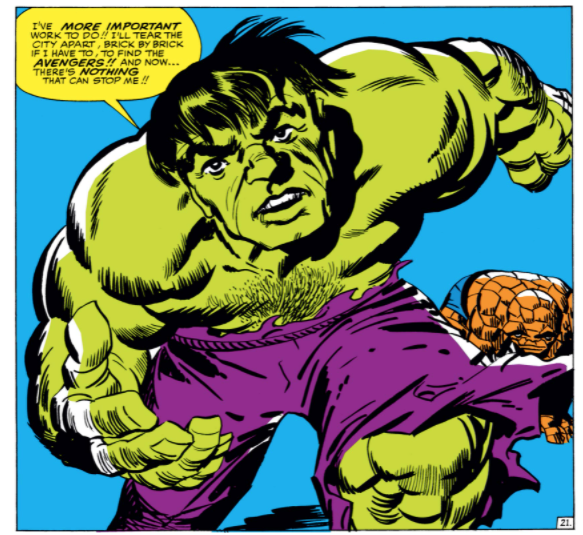
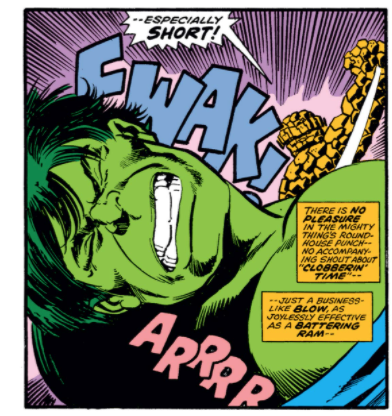
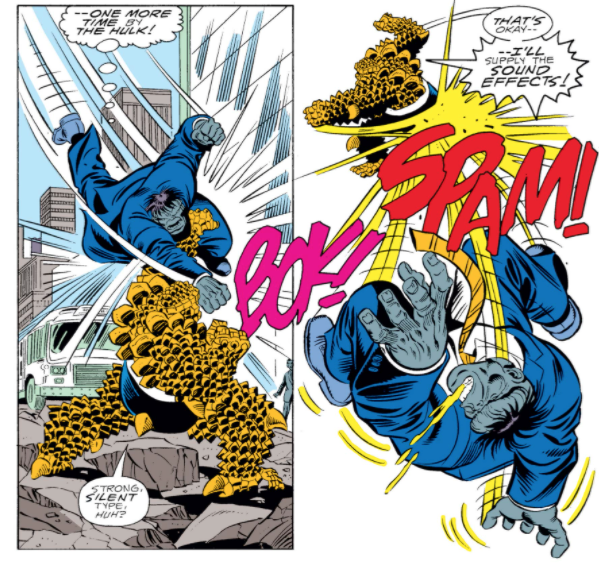
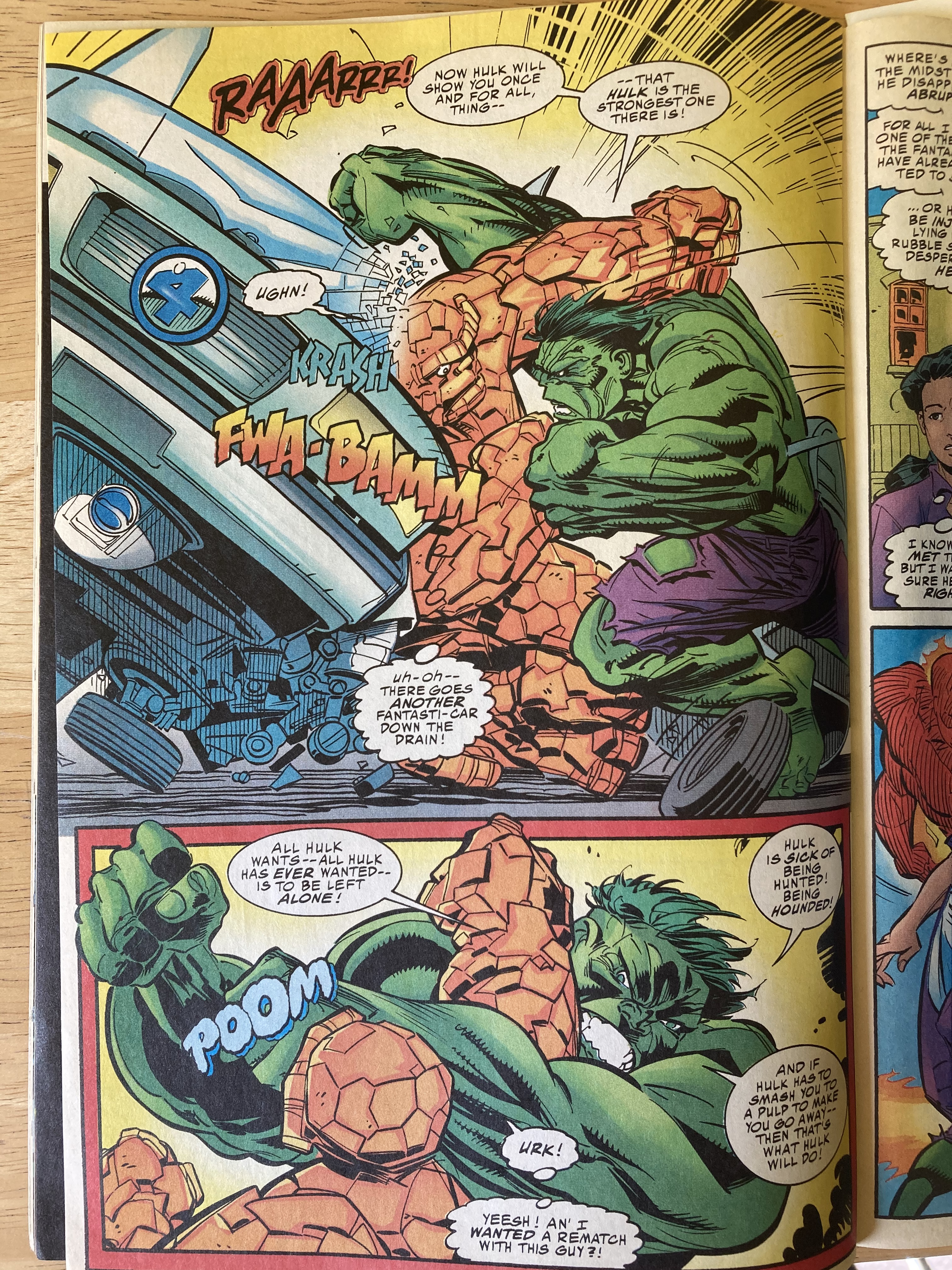
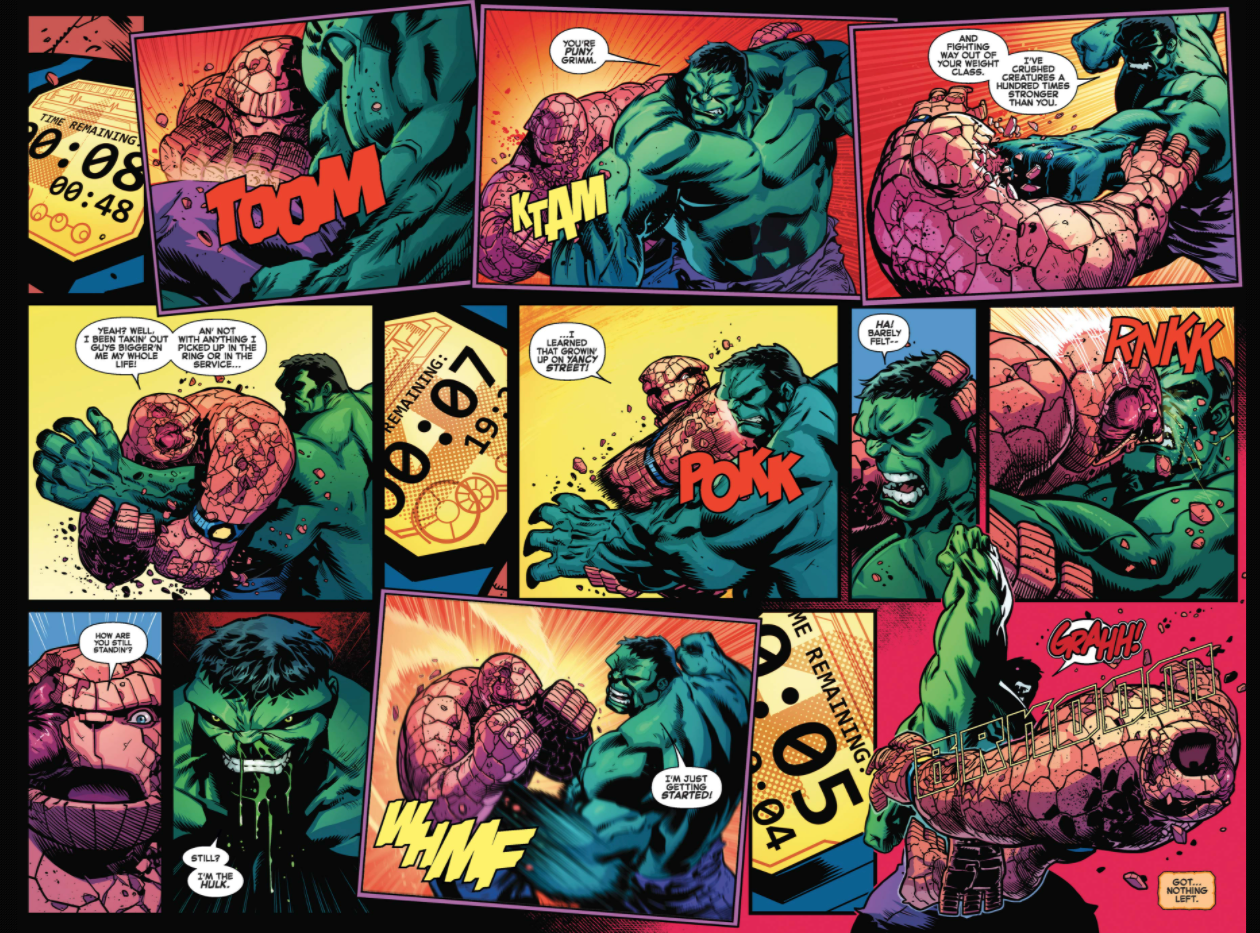
Given their roles as Marvel’s two biggest, baddest bruisers, it’s perhaps inevitable they would fight frequently. The Hulk—stronger and more ferocious—usually comes out on top, although the Thing occasionally scores a moral victory, often by displaying more “heart.”
 Percival Henry: The Fantastic Four and more