• About Percival Henry

Percival Henry: The Fantastic Four and more

~ Blogging the Fantastic Four issue by issue (plus whatever else grabs my attention)

Percival Henry: The Fantastic Four and more

Tag Archives: Dr. Doom

“The World’s Greatest Comic Magazine!” Fantastic Four Annual No. 15

18 Saturday Jul 2026

Posted by percivalhenry in The World's Greatest Comic Magazine

≈ Leave a comment

Tags

1980, Captain Marvel, Doug Moench, Dr. Doom, Fantastic Four, Fantastic Four Annual 15, George Perez, Marvel, Marvel comics
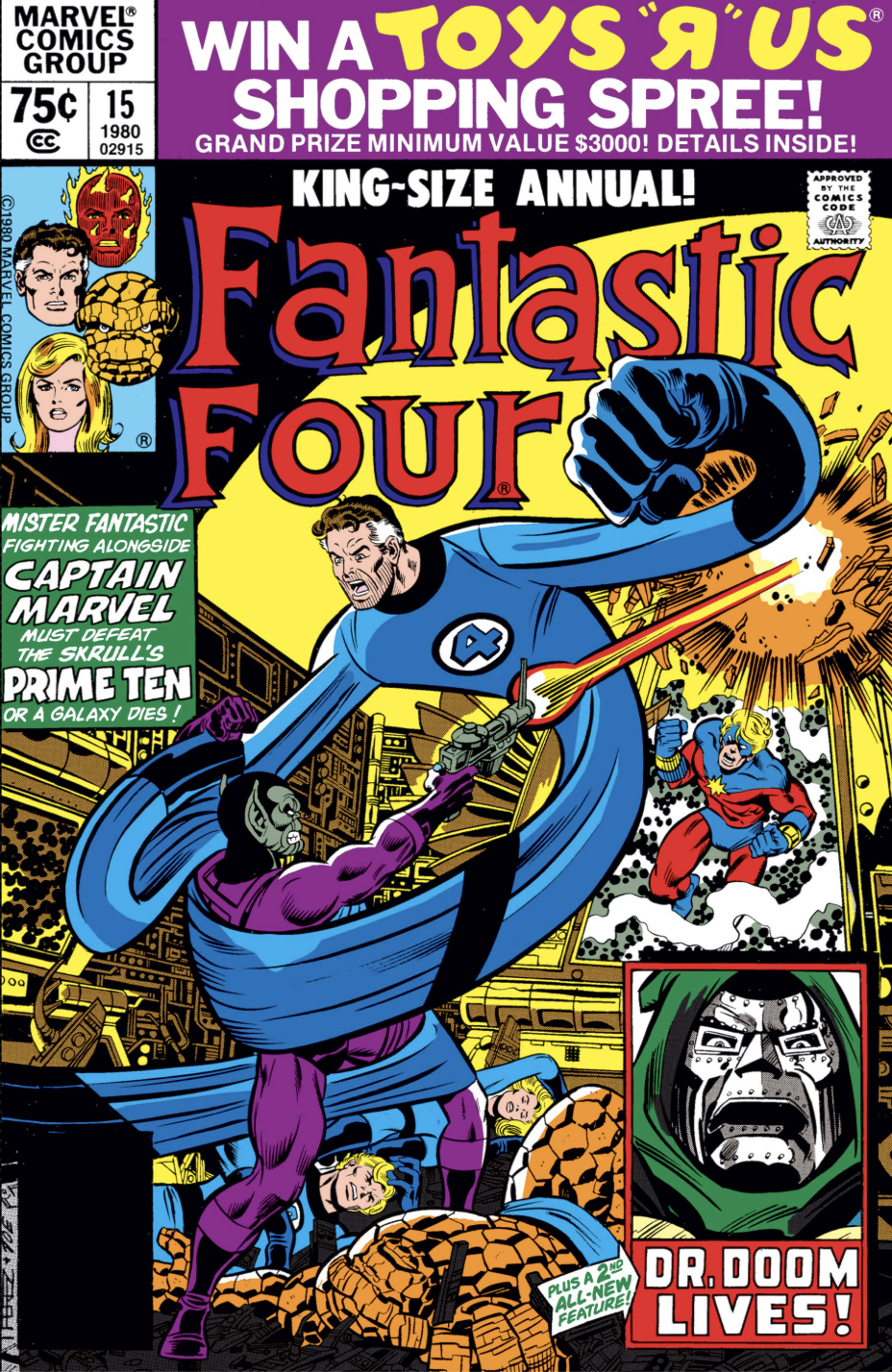
Fantastic Four Annual 15
Published July 1980
Cover: George Perez & Joe Sinnott
Editor: Jim Salicrup

“Time for the Prime Ten!”
Writer: Doug Moench
Pencils: Perez
Inks: Chic Stone, John D’Agostino and Mike Esposito
Letters: Jim Novak
Colors: George Roussos and Ben Sean

“The Power of the People!”
Writer: Moench
Pencils: Thomas Sutton
Inks: Sutton
Letters: Novak
Colors: Sean


Synopsis

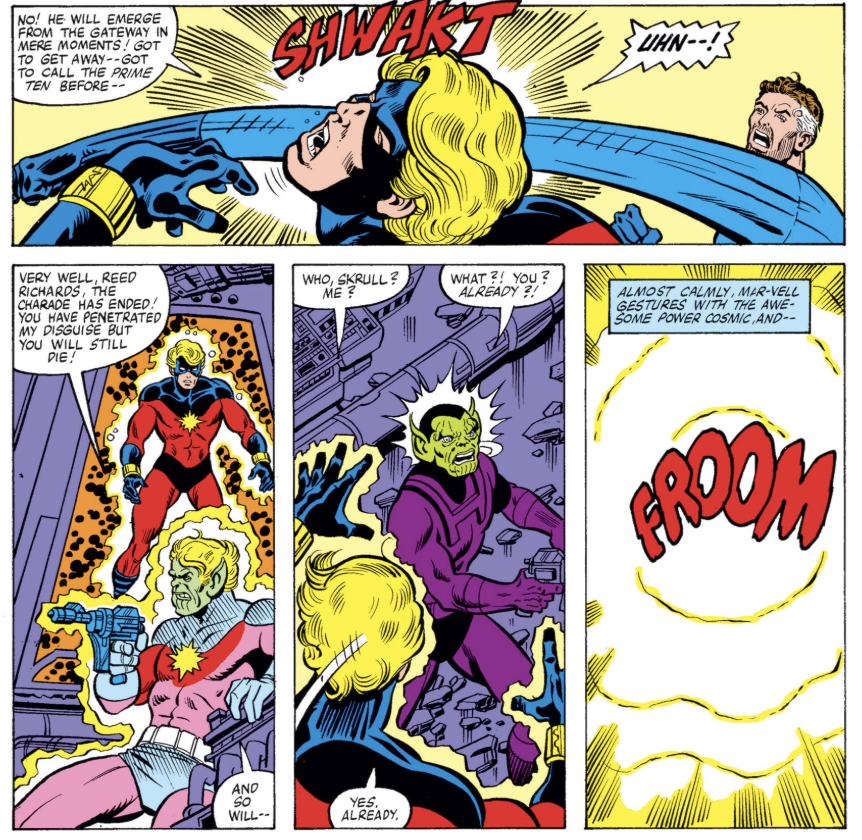
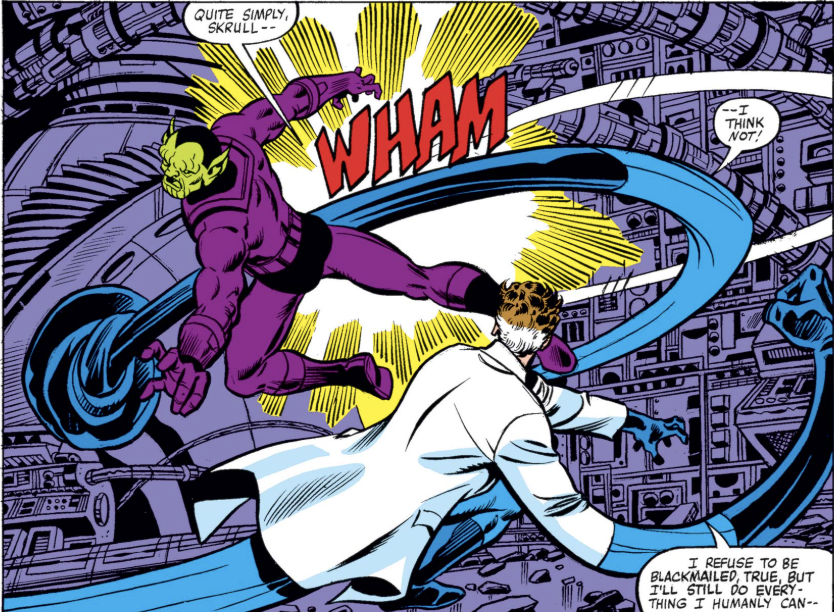
In the first story, Mr. Fantastic — after toiling for weeks in his lab — makes a breakthrough discovery that allows him to transmit energy through the air. But unexpectedly, Reed realized it has opened a portal into space, where he witnesses Captain Marvel, and discovers solid objects can also be transmitted. Meanwhile, the FF gets an unexpected visitor, their former mailman Willie Lumpkin, who soon reveals himself to be a Skrull. The Skrull confronts Reed, telling him he has captured the rest of the team and demanding he turn over his new energy transmitter. Suddenly, Captain Marvel appears, traveling through the energy transmitter, and asks Reed to hand it over so he can defeat the Skrulls. Reed deduces Marvel is also a Skrull at the same time the real Marvel appears. More Skrulls arrive, but with the rest of the FF, they are defeated and sent them back to space, destroying the transmitter at the same time. An epilogue reveals Sue, Ben and Johnny were never captured but were shunted two hours into the future by the Skrull.

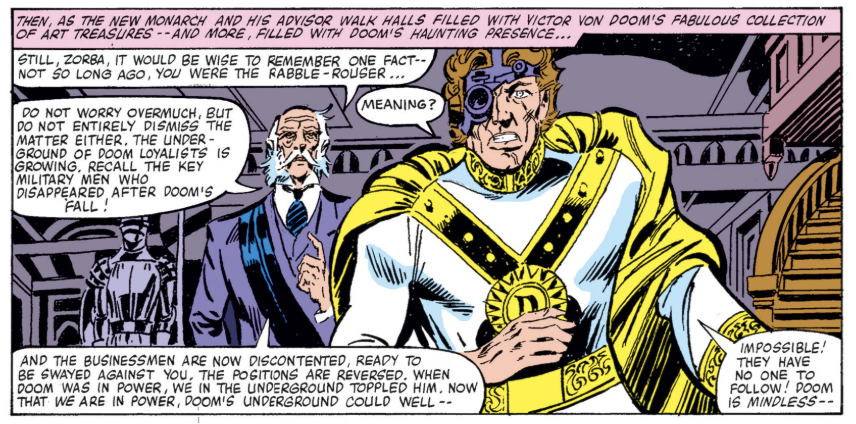
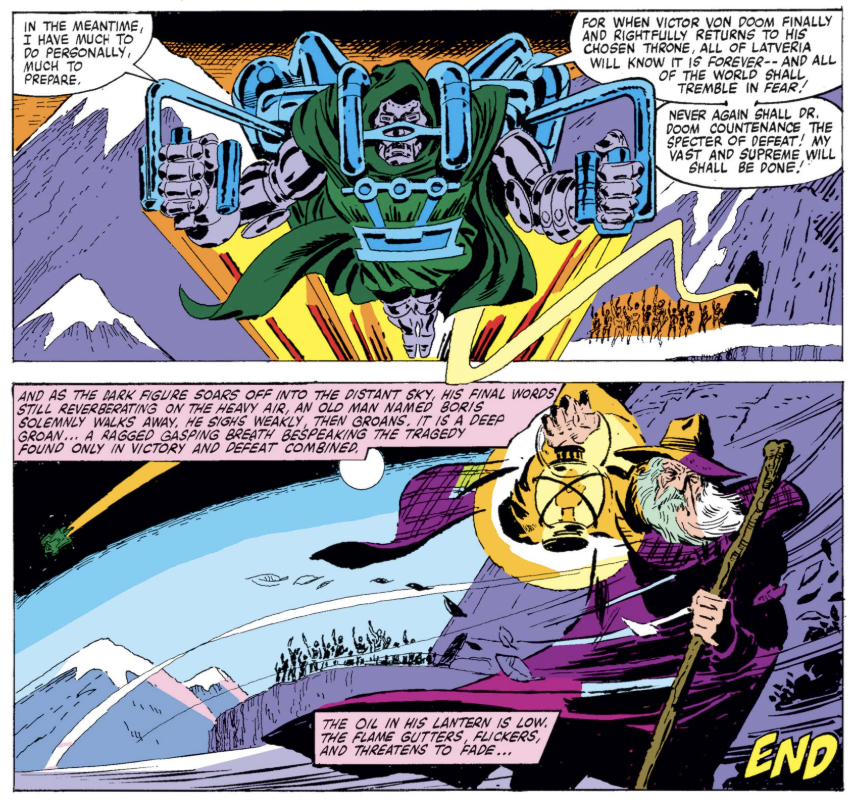
The second story takes place in Latveria, where its new leader Zorba, who has introduced democracy after the defeat of Dr. Doom in FF 200, is confronted by protests. Anxious, Zorba checks on the catatonic Doom only to discover he is a robot replaced by Doom loyalists. They then steal Doom’s armor, and through some science, use the armor’s energy to restore Doom to consciousness. Doom then drives out Zorba and makes plans to regain control of Latveria.

What’s going on here?


This is a pretty satisfying pair of stories and as a young reader I would have been pretty pleased with 75 cent investment in this annual. The Skrulls and Doom are not only among the FF’s oldest enemies (first appearing in issues 2 and 5) but some of their best, and put together these stories feel like a bit of a reset, returning the FF to core principles.

In some ways, the shorter Doom story is the better of the two. The FF don’t appear, but it’s a tightly plotted tale that further develops Latveria as a character in its own right, and gives more dimension of Doom’s henchmen and lackeys like Boris and Hauptman. It also serves the important role of returning Doom to the status quo ante and restoring a major part of the FF’s universe.

My sense is Moench — who spent a decade writing mostly horror, kung-fu and science-fiction comics — is more comfortable with a story of palace intrigue than the classic super hero adventures he’s tasked with writing for the Fantastic Four. The artist, Thomas Sutton, who is making his FF, had a very long career, starting in 1967 mostly at Marvel and Warren before working at DC and on independent comics in the 80s and 90s. He and Moench appear to have worked on many titles together.

The other, main story is a bit more uneven, although still solid. The appearance of Captain Marvel, or Mar-Vell, is interesting one. His own comic, last written by Moench, was just canceled, and I suspect Marvel was under pressure to use him in order to preserve the copyright, which was the subject of a long and tangled legal battle. Marvel was killed off by Jim Starlin right before I began reading comics, and unlike virtually every other deceased hero, he has managed to stay dead. Because I never made the effort to read his back issues, he’s always been a bit of a mystery. I’m not sure his appearance here was particularly illuminating, but it’s fun to see a new guest star.

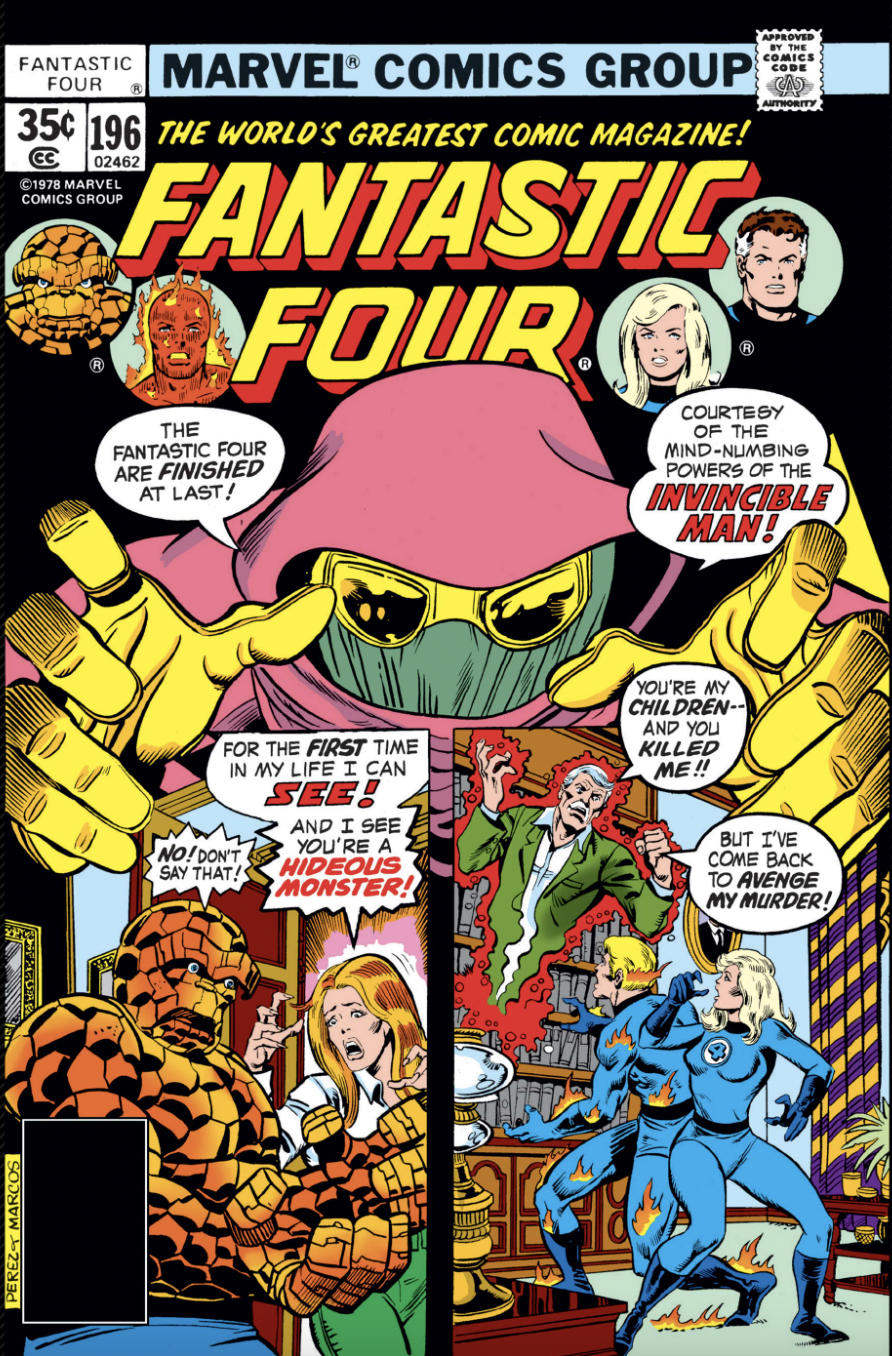
George Perez returns to pencil the story, although he is credited only with breakdowns. Three inkers (Chic Stone, John D’Agostino and Mike Esposito) finished the art, although I’m not skilled enough to identify what pages were inked by what artists. Despite all that, Perez’s stamp on this comic is pretty clear, particularly in his dynamic layouts. Perez’s cover, inked by Joe Sinnott, is also excellent (although marred by that dumb Toys R Us ad)
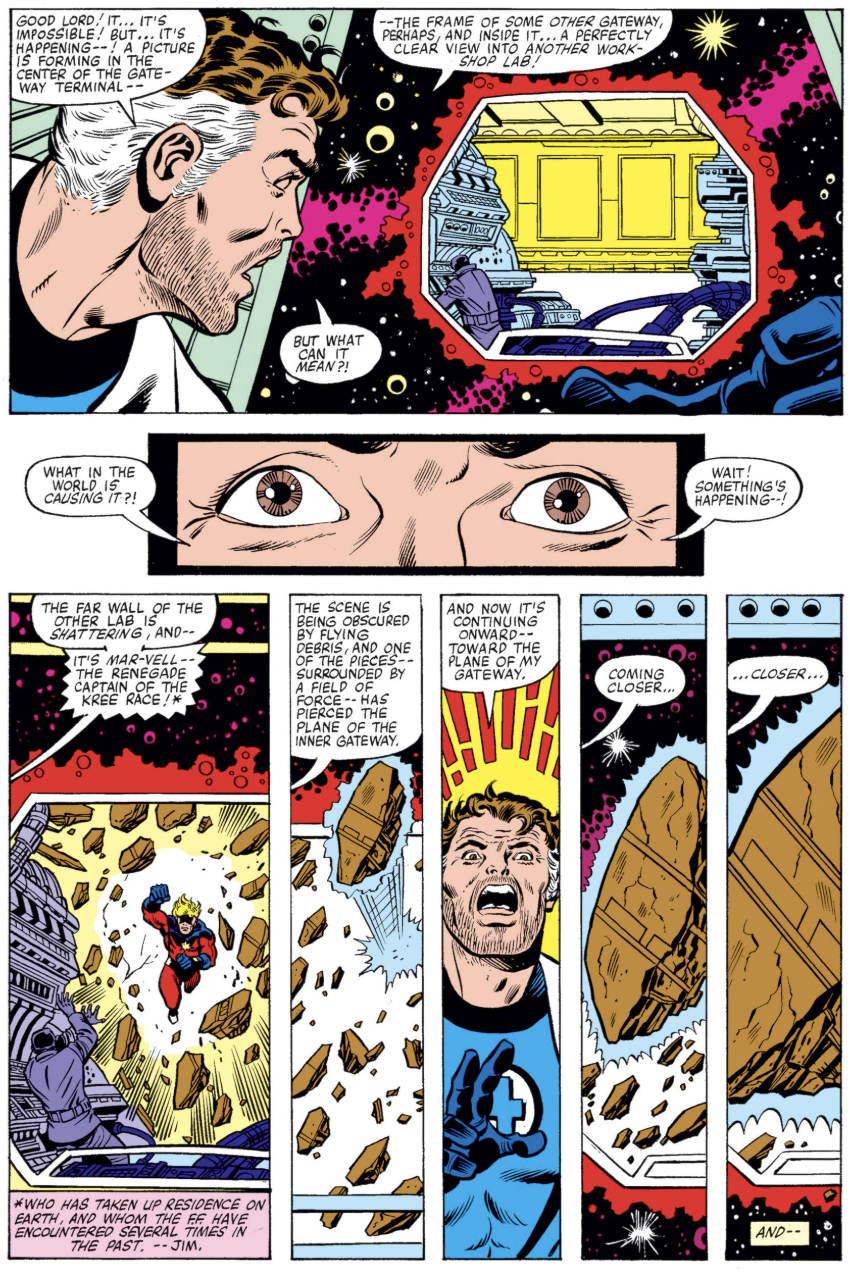

What I liked

Moench does a good job of keeping us guessing throughout the story, particularly with some odd cutaways to ordinary people on the streets of Manhattan who have nothing to do with the story.
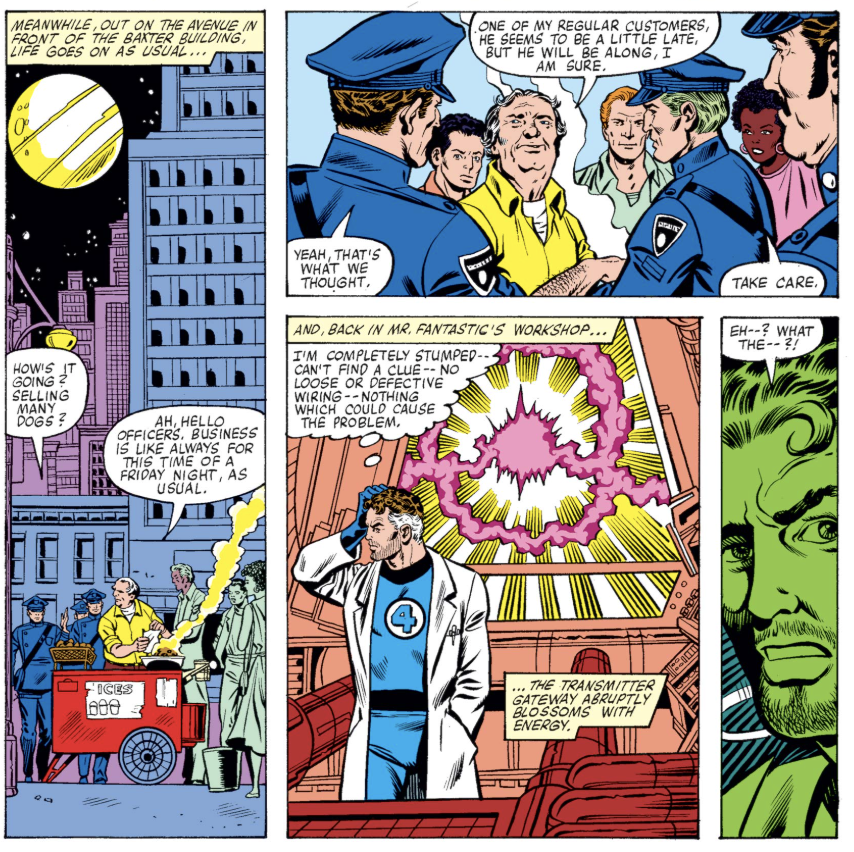
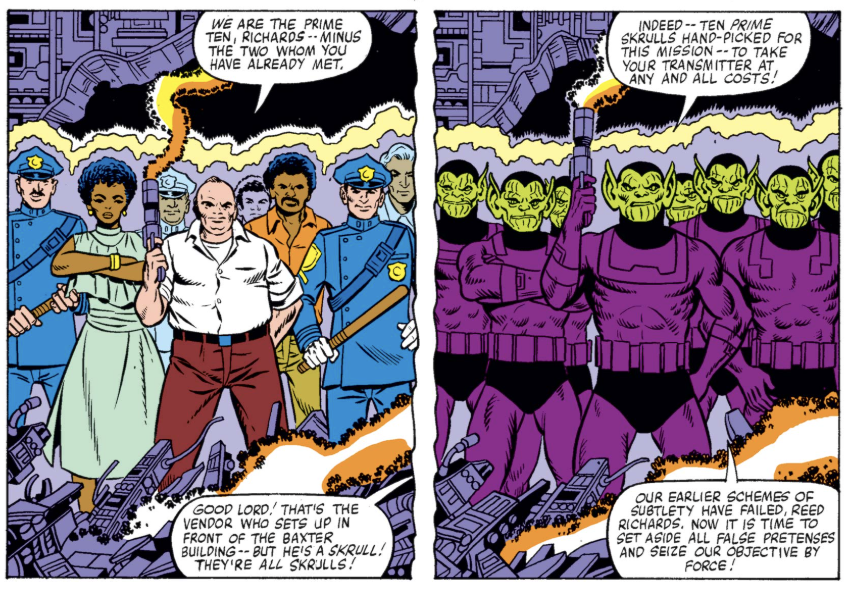
Only later are they revealed to be the Prime Ten Skrulls.
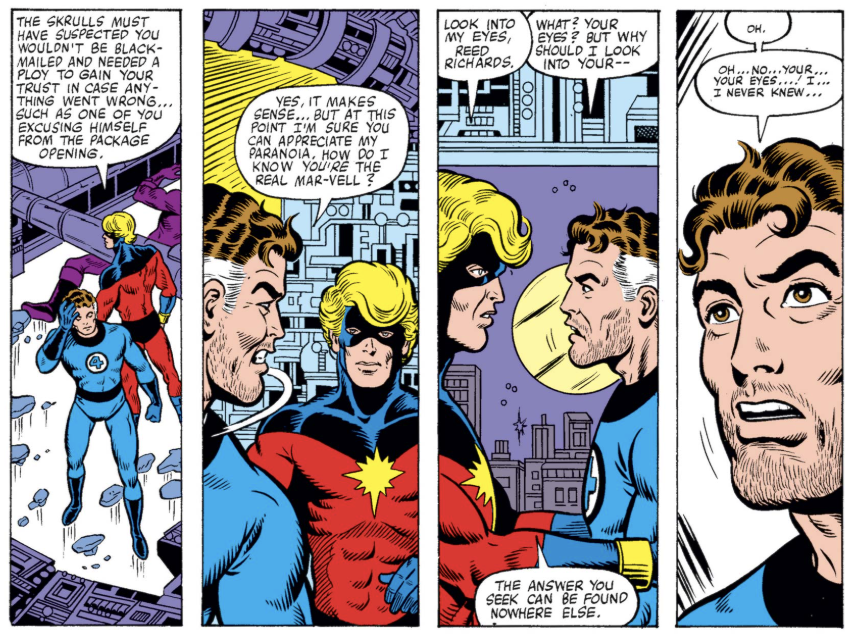
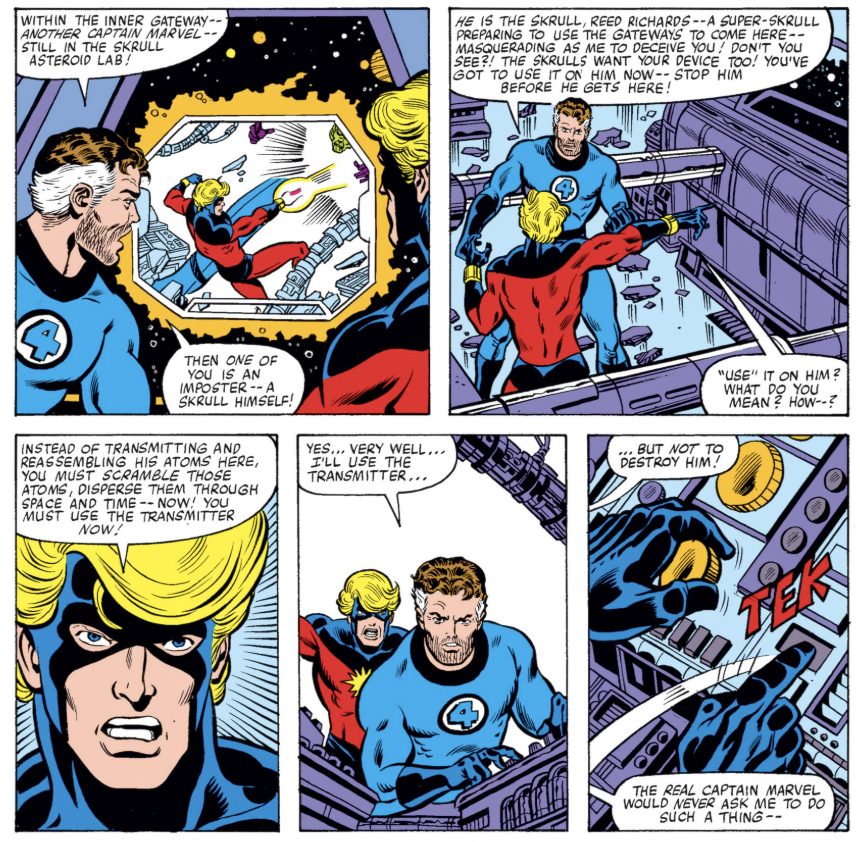
I also liked this interaction between Marvel and Reed, who is understandably a bit skeptical that he is who he says he is.
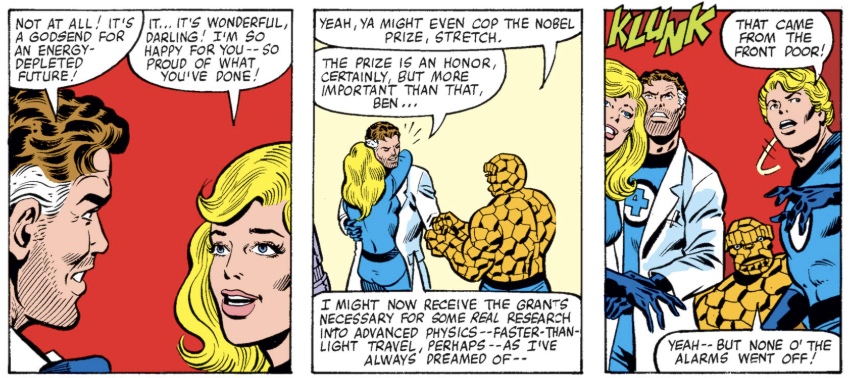
This is a notable exchange. Reed accepts congratulations for his new invention, the first (and maybe last) time I’ve read an actual discussion of the realities of science research funding in the FF (also, in that first panel you can see the limits of Perez’s breakdowns)

What I didn’t like

Despite all the dramatic potential of having two Captain Marvel’s face off — one ersatz, one real — it never comes to pass. First Reed suspects the Skrull of being a fake, then the real Marvel shows up It seems like a huge missed opportunity from Moench.

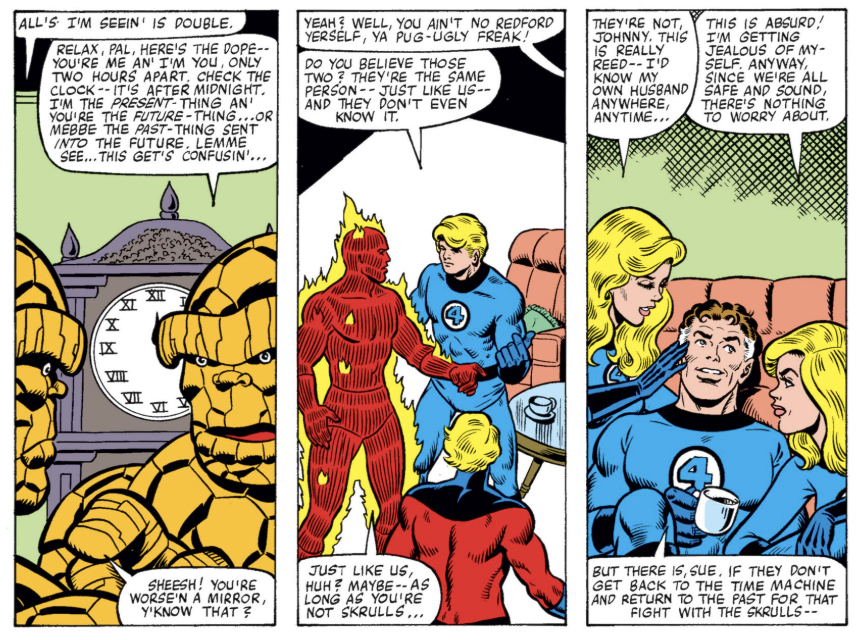
Also, the story’s time traveling twist serves no real purpose, and the epilogue just adds unnecessary confusion
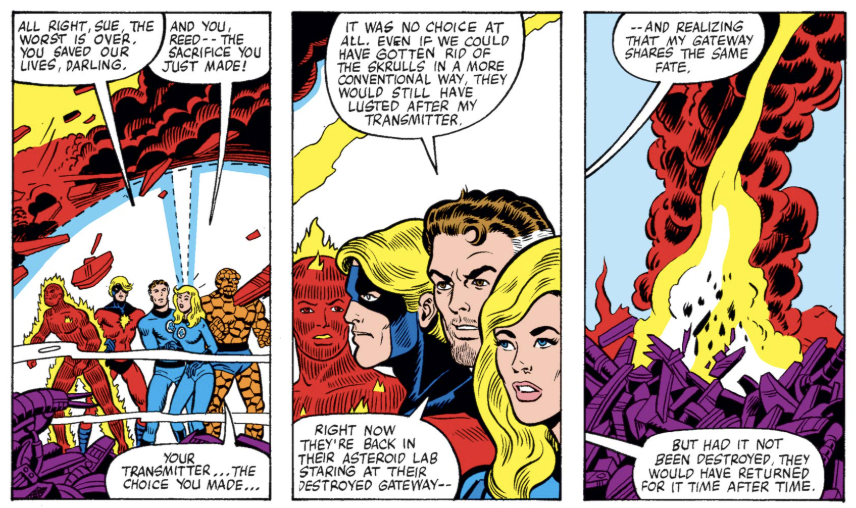
I’m not sure why Reed is so broken up about losing his energy transmitter. Surely he wrote down the plans, right?

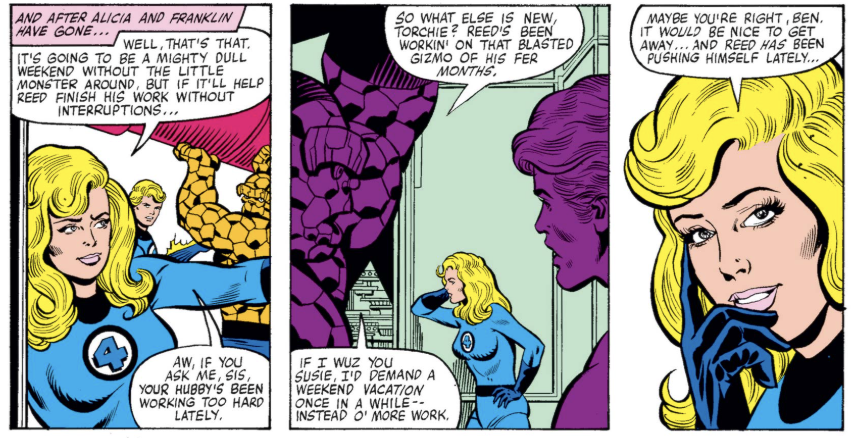
And lastly, are they really packing of Franklin for the weekend just so Reed can concentrate? Another dubious parenting decision from the Richards.

Overall

A lot of bang for the buck
“The World’s Greatest Comic Magazine! Fantastic Four No. 200

10 Wednesday Dec 2025

Posted by percivalhenry in The World's Greatest Comic Magazine

≈ 1 Comment

Tags

1978, Dr. Doom, Fantastic Four, Fantastic Four 200, jack Kirby, marv wolfman, Marvel comics
Fantastic Four 200
“When Titans Clash!
Published August 1978
Writer: Marv Wolfman
Pencils: Keith Pollard
Inks: Joe Sinnott
Letters: John Costanza
Colors: Francoise Mouly
Editor: Wolfman
Cover: Jack Kirby and Sinnott
Synopsis

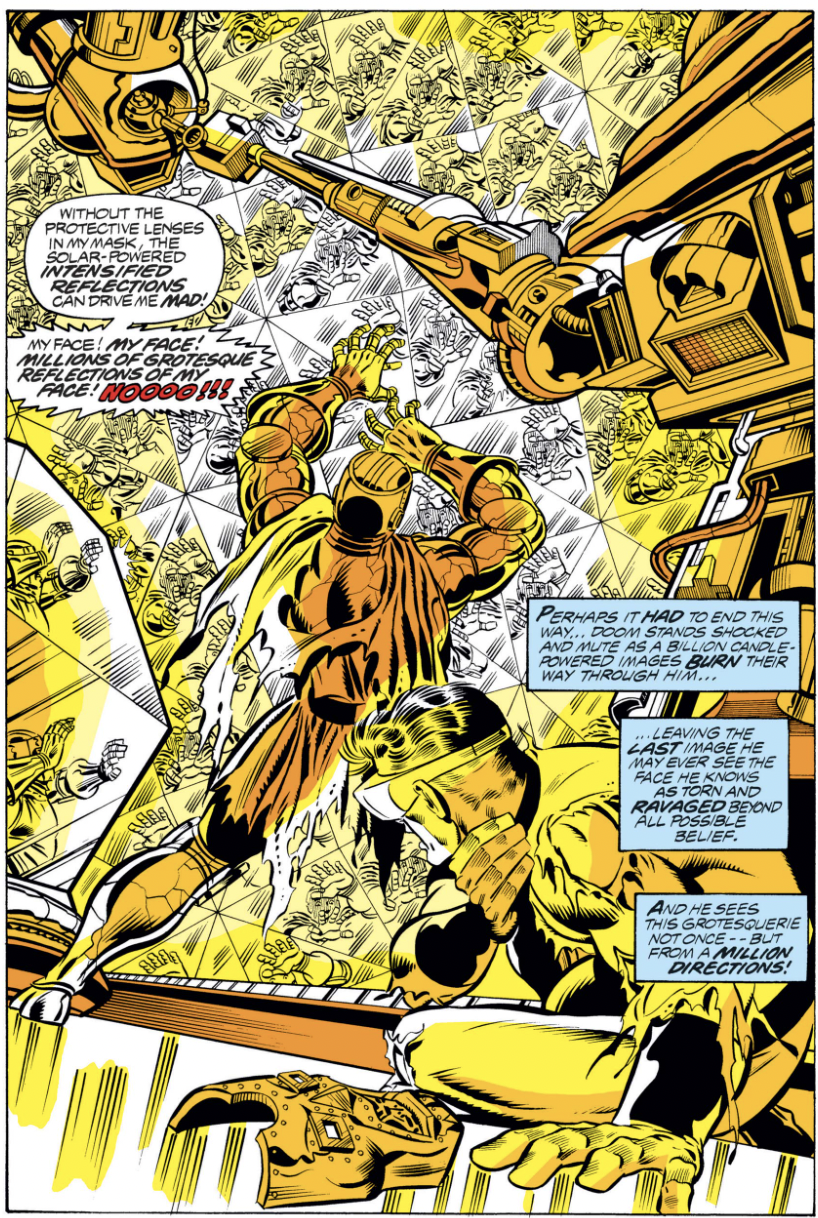
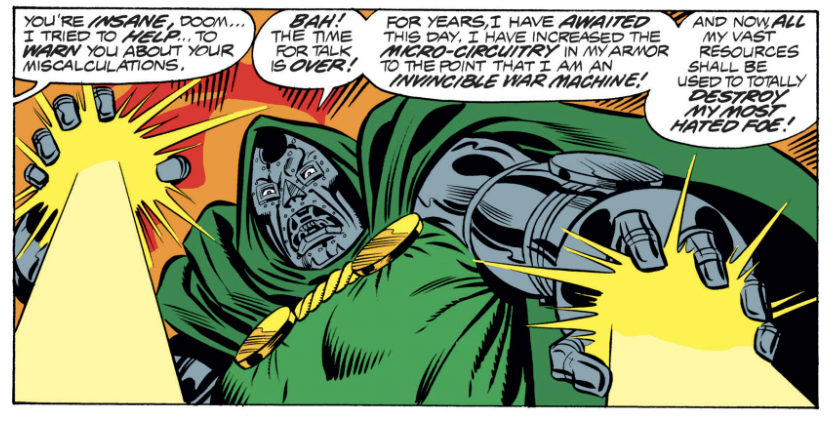
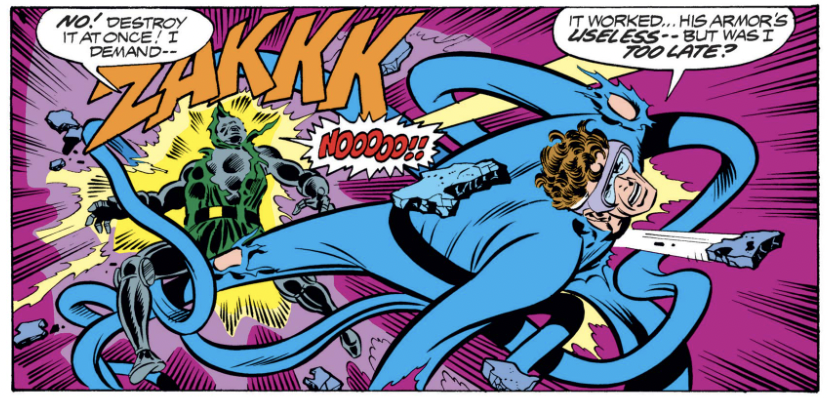
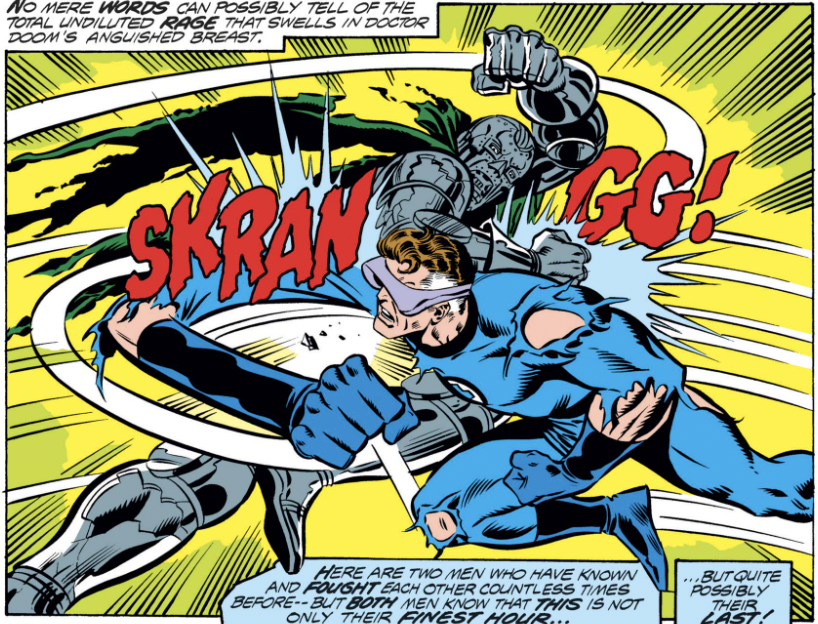
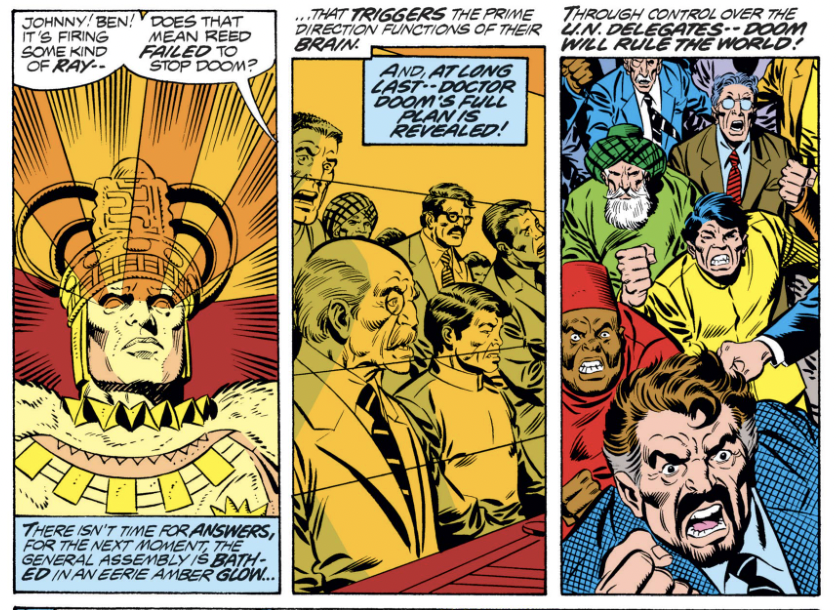
Reeling after the death of his son/clone, Dr. Doom traps the Fantastic Four in his Latverian castle and flies to New York to realize his plan of world domination. The FF escape, rescue Alicia and follow Doom, with Mr. Fantastic confronting Doom at his stronghold in the Adirondacks while the rest of the team flies to the United Nations to thwart Doom’s scheme. While Reed and Doom battle, Doom’s statue — sculpted by Alicia and intended as a gift to the UN — hypnotizes the delegates, who then attack Ben, Sue and Johnny. Reed eventually gets the better of Doom, and rips off his mask, where the image of his disfigured face reflected back at him hundreds of times in the facets of a giant crystal drive him into a catatonic state. Reed shuts down the UN device and with Doom in a mental institution, Zorba is installed as the leader of Latveria.

What’s going on here?

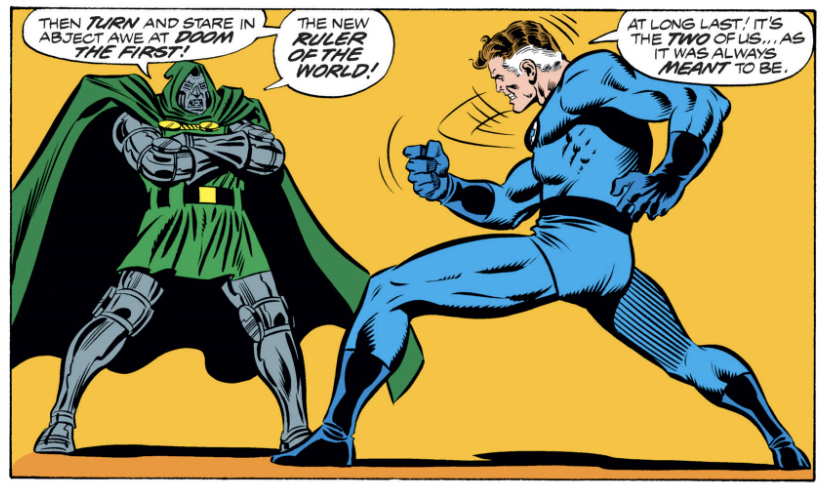
This is a big milestone issue and almost in spite of itself, the comic lives up to the occasion. It’s the conclusion of a five-part act that meandered unnecessarily — particularly with the clone-of-Doom subplot which fizzled out anti-climatically — but Marv Wolfman manages to stick the landing. He correctly recognizes the conflict between Reed and Doom is the central tension in the book and he gives the two the battle they deserve. Because it’s a double-sized anniversary issue, he has room to stretch out the confrontation, and includes a flashback to their time at university together that reminds us (and informs new readers) of the origin of Doom’s enmity toward Reed. The climax, where Doom goes mad at the sight of his own face reflected back at him, is clever story telling, and centers Doom’s defeat in his own vanity and insecurity. It feels like less of a triumph for Reed than a tragic downfall for Doom. (Although I would have preferred Doom not telling us he was going mad as he was going mad).


A lot of credit for this issue’s success goes to Keith Pollard and Joe Sinnott. Pollard, particularly, uses the extra pages in this issue to stretch out, particularly in the fight scenes, where there are often just four panels per page. There are also three full-page splashes (not including the opening one), a rarity in this era.

This is the most successful of the Fantastic Four’s big milestone issues to date. Issue 50, which included the conclusion of the Galactus saga, didn’t make note of it being a meaningful issue. Issue 100 was a dud, and came at the end of the Lee / Kirby partnership. Issue 150, featuring the marriage of Crystal and Quicksilver, felt more like an Avengers comic (and not a very good one, either). Looking into the future, issues 300 and 400 aren’t that impressive either. Issue 200 manages to deliver story that both feels big, satisfying and consequential.

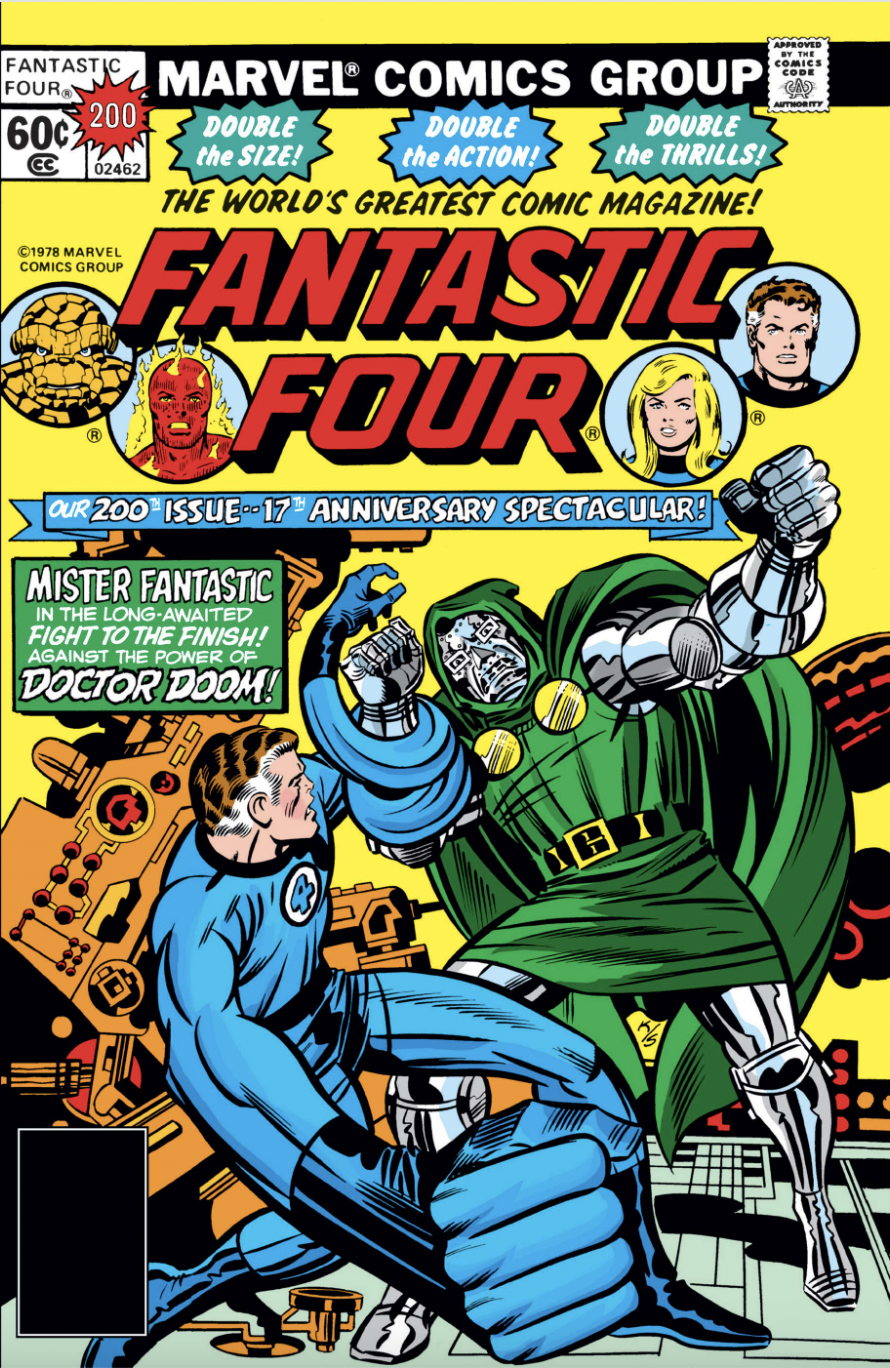
Fantastic Four 200 also features one of the best covers in the history of the comic, by none other than Jack Kirby. Kirby’s FF covers over the last few years have been hit or miss, but this one has all the hallmarks of classic Kirby (although it’s is unfortunately cluttered with too many blurbs hyping the comic). Sadly, this is Kirby’s last original work on the Fantastic Four and one of his last at Marvel.

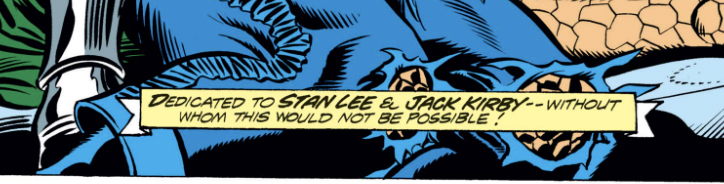
And in a nice touch, the comic is dedicated to Stan and Jack:


What I liked

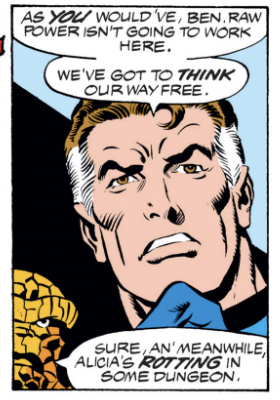
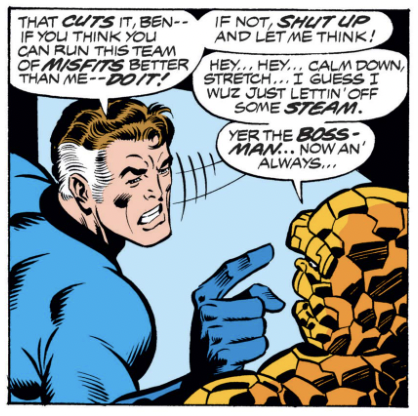
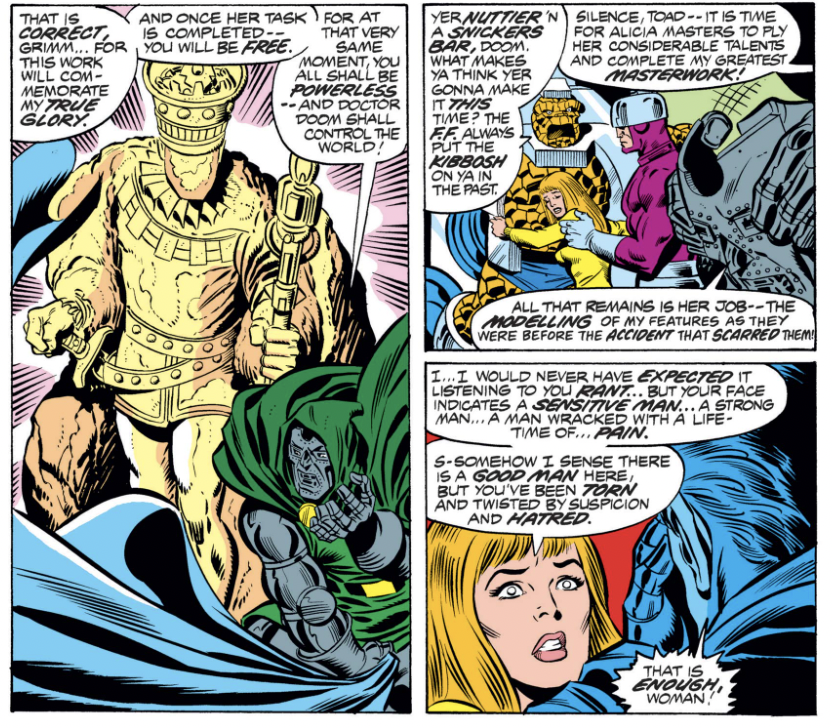
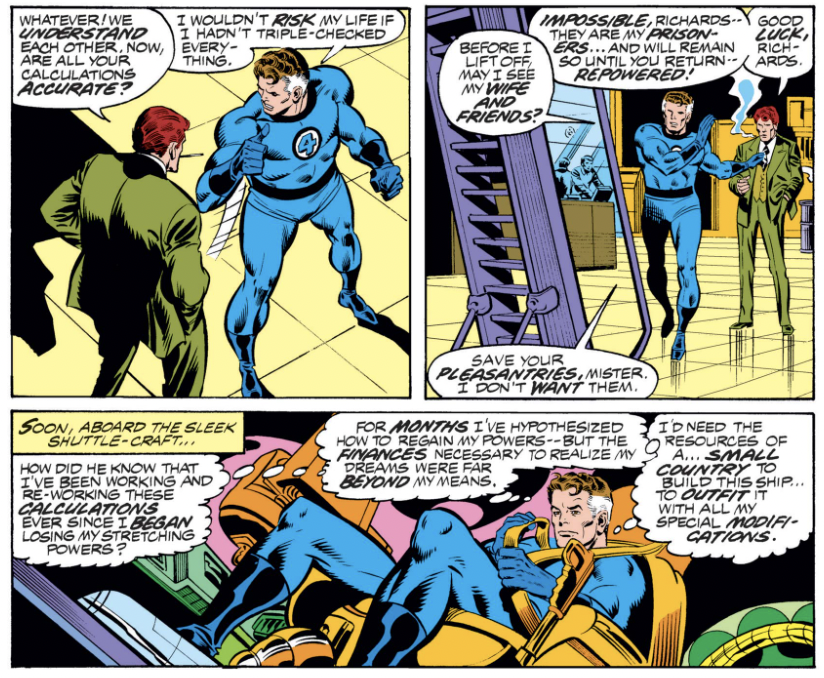
Despite its bombast, the issue also deliver some nice moments of character development. There is this testy exchange between Ben and Reed:


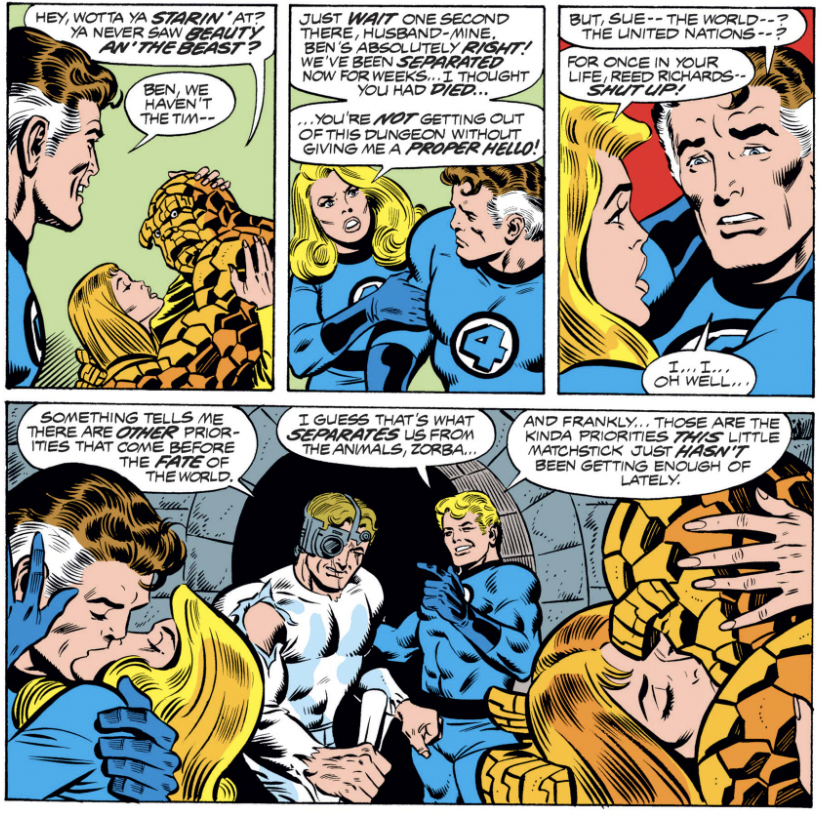
And this romantic interlude:


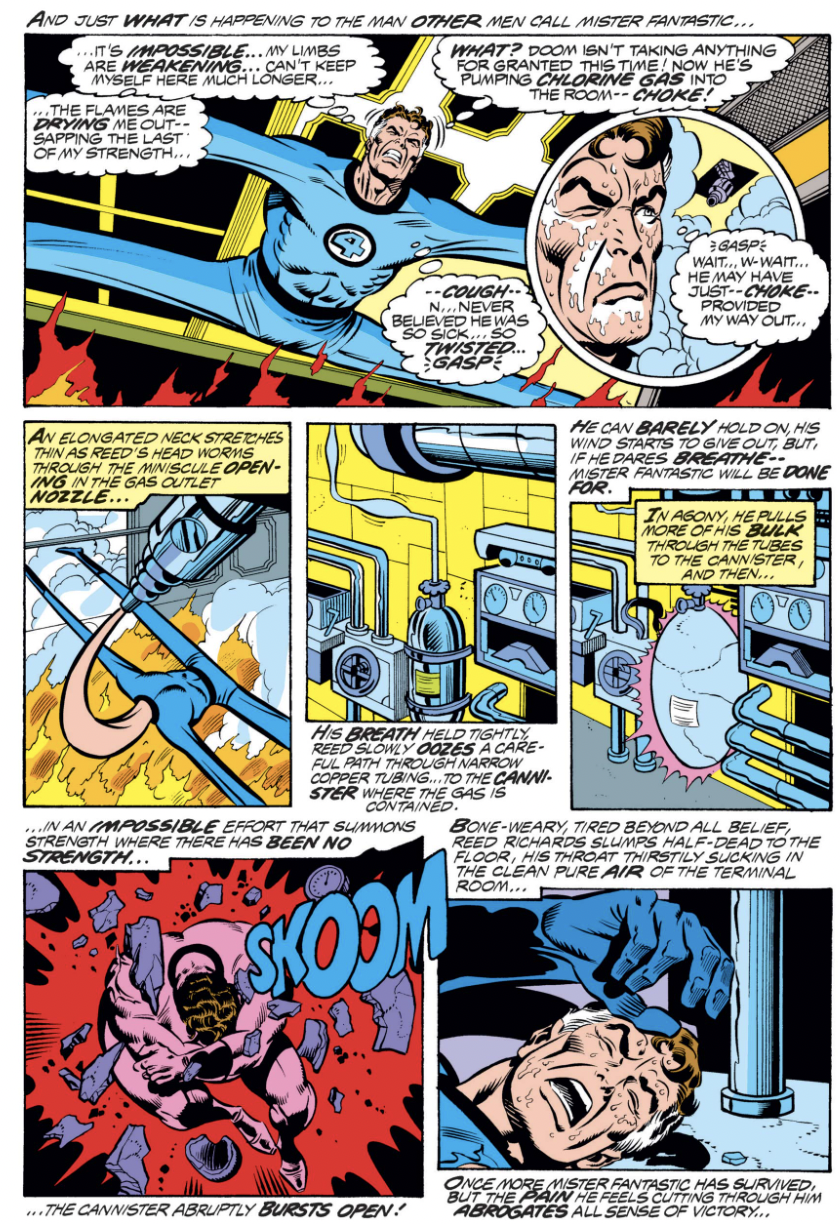
After restoring Reed’s powers, Wolfman seems serious about powering him up, and in two separate sequences Reed stretches himself into tiny apertures to escape confinement. This one is the most impressive:


Pollard has a real knack for interesting action shots. Here are a few I liked:


What I didn’t like

The plot device — the McGuffin, if you will —of this story never makes much sense. Doom somehow thinks he’s going to take over the world by hypnotizing United Nation’s delegates? If he spent more than a minute paying attention to the UN’s long history of ineptitude, he would realize how ridiculous an idea this was.


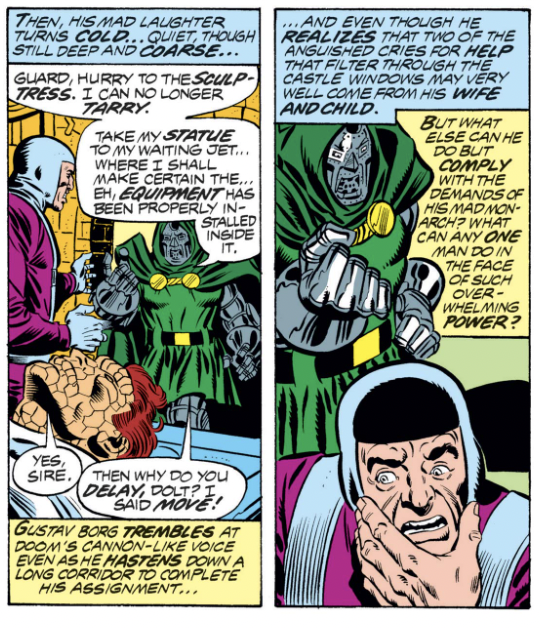
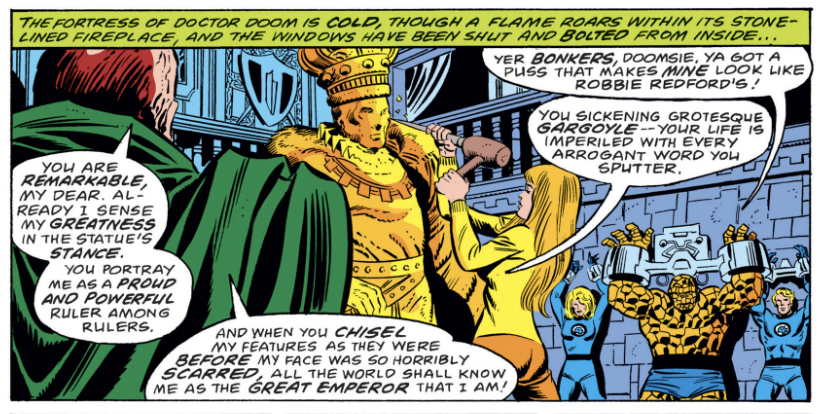
We also have the same problem of Doom’s lackeys as in last issue. Are they humans? Or robots? or both? Here one of them has a wife and child, further confusing things.


Anything else?

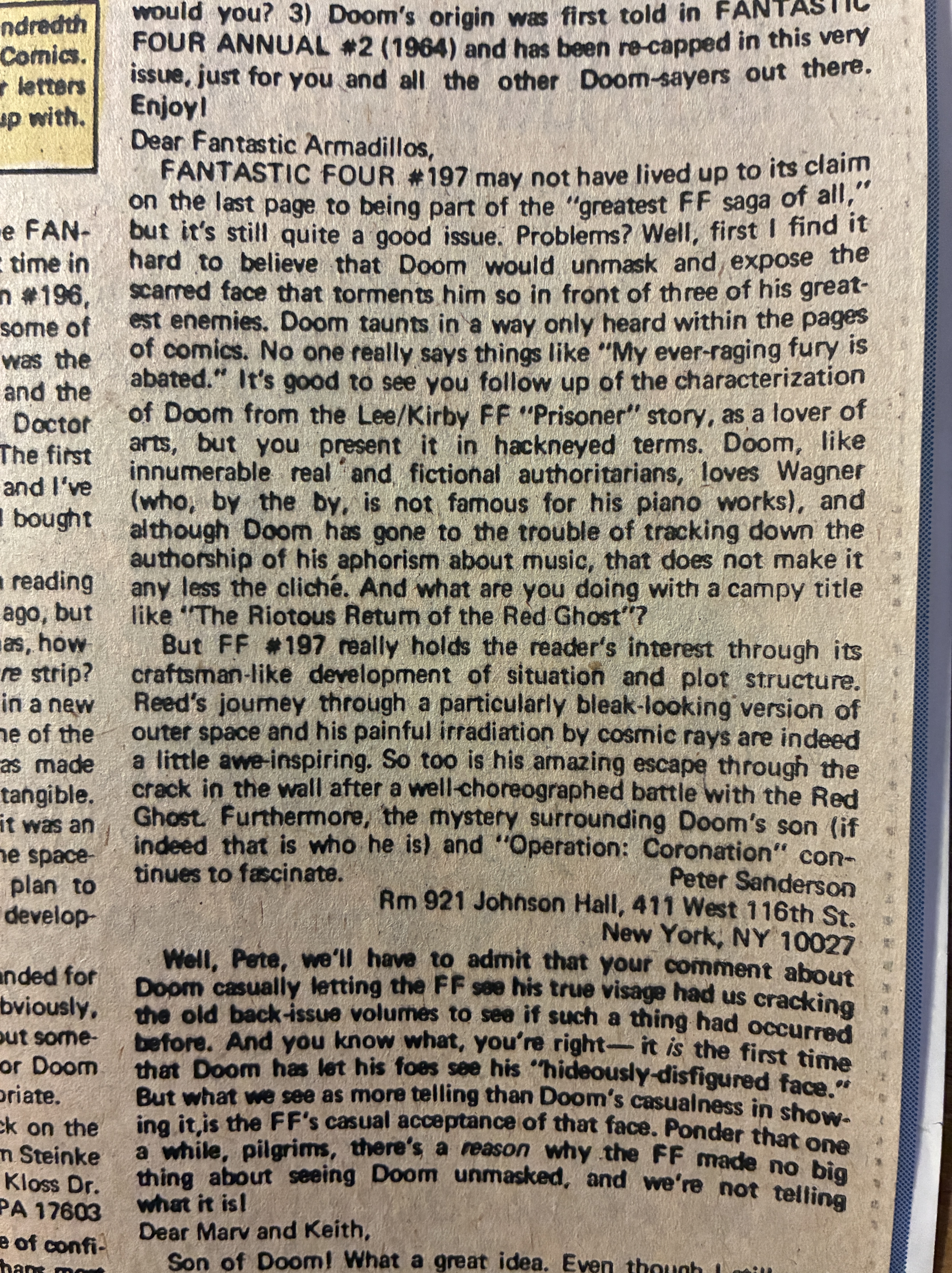
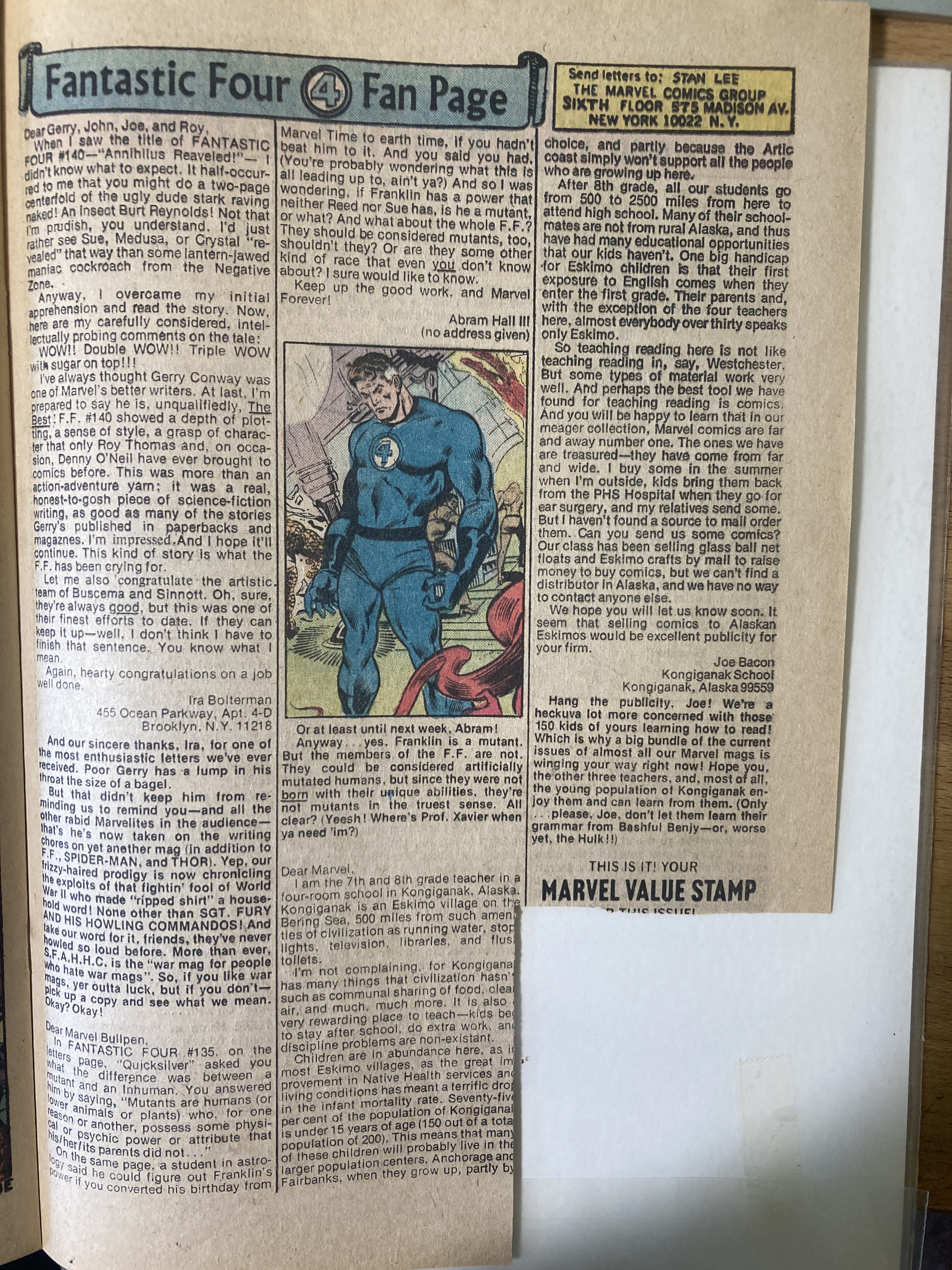
A letter to the editor from future writer/editor/comic historian Peter Sanderson, who appears to be writing from his Columbia University dorm room:


Overall

Good stuff!

“The World’s Greatest Comic Magazine!” Fantastic Four No. 199

30 Sunday Nov 2025

Posted by percivalhenry in The World's Greatest Comic Magazine

≈ Leave a comment

Tags

1978, Dr. Doom, Fantastic Four, Fantastic Four 199, marv wolfman, Marvel comics

Fantastic Four 199
“The Son of Doctor Doom!”
Published July 1978
Writer: Marv Wolfman
Pencils: Keith Pollard
Inks: Joe Sinnott
Letters: John Costanza
Colors: Janice Cohen
Editor: Wolfman
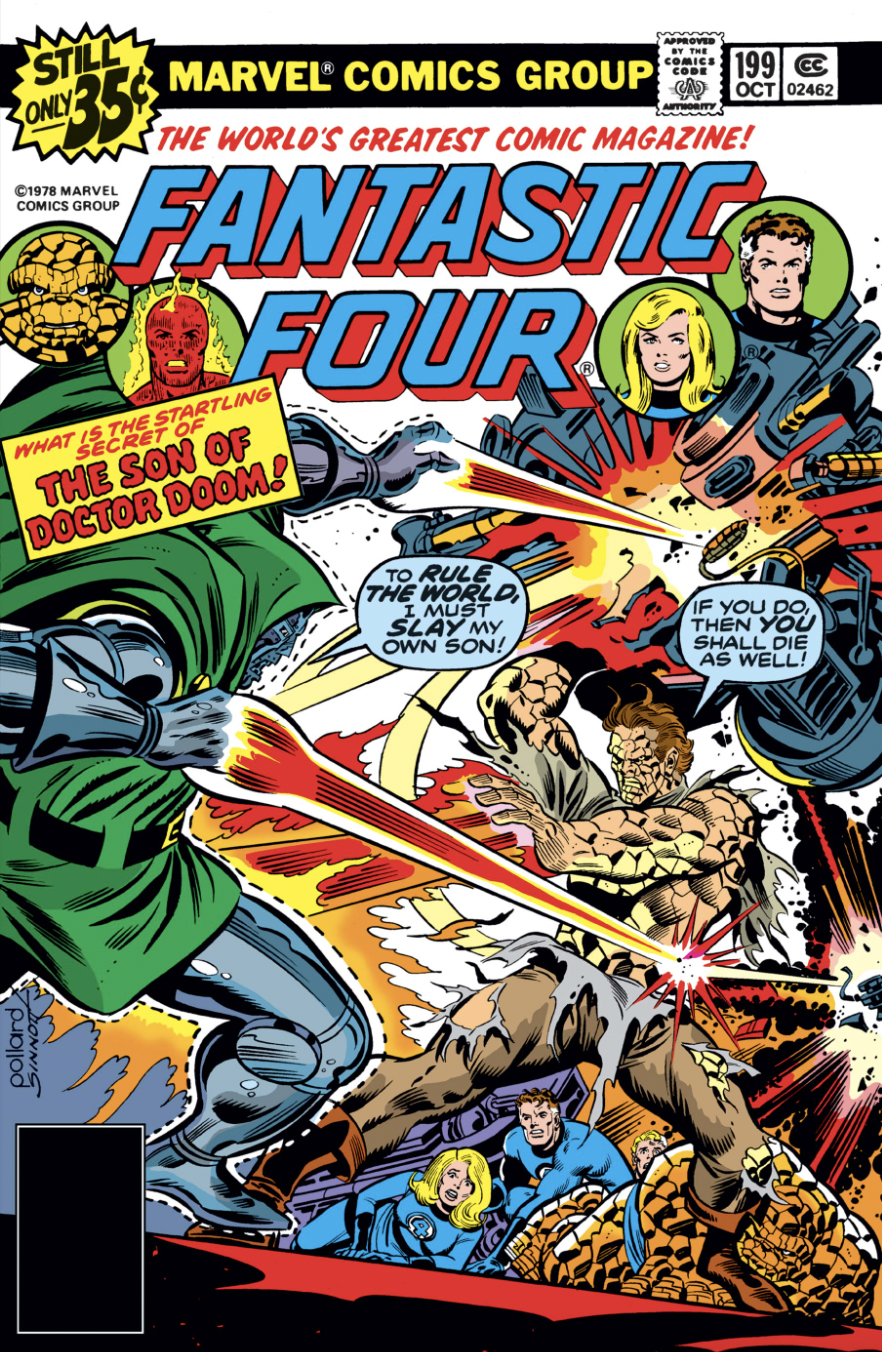
Cover: Pollard and Sinnott

Editor’s note: Fantastic Four Annual 13 came out between FF 198 and 199, but it’s a stand alone story so I’m going to finish the Doom / Zorba story arc first and pick up the annual after issue 200.

Synopsis

Dr. Doom advances his scheme to transfer the powers of the Fantastic Four to his son — actually his clone — as part of a scheme to keep Latveria in the United Nations, but faces unrest from the rebels of Latveria. Meanwhile the FF escape captivity but are thwarted by Doom, who has taken Alicia hostage. Doom’s clone then battles Doom, who kills him, setting up a showdown between Doom and Reed in issue 200.


What’s going on here?

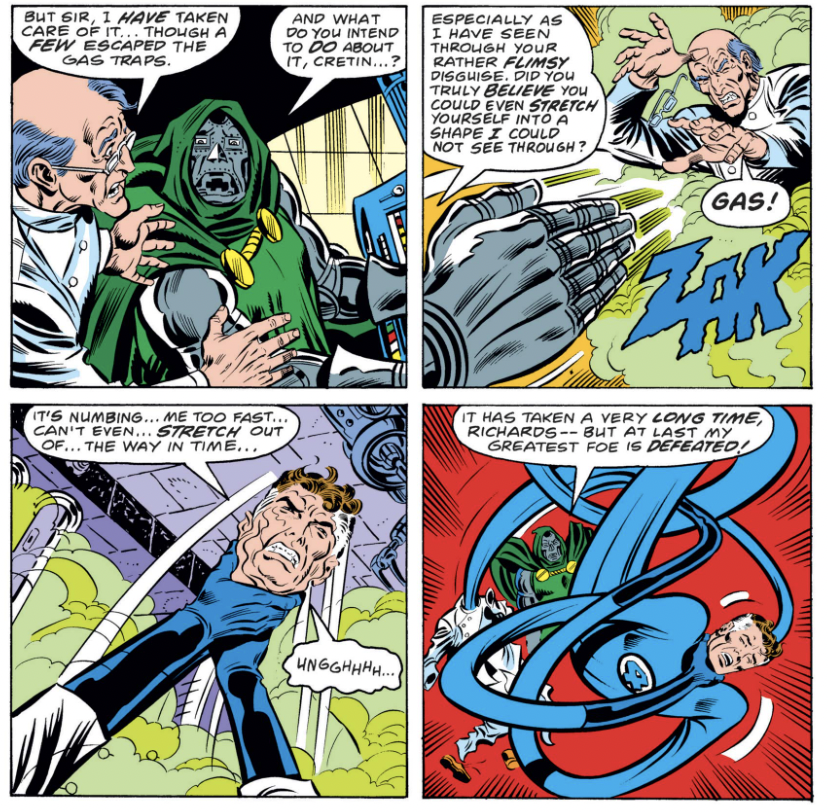
This is another uneven story. The basic outlines of the plot are interesting: There’s political intrigue, Doom’s Machiavellian plotting, the FF reunited and the ersatz son of Doom gaining the powers of the FF (although the concept was done better with the Super-Skrull). But it’s all jumbled and incoherent, with Doom’s stated motivation for setting all this in motion — a desire to keep Latveria in the U.N. — absurd on its face. And we never quite learn why he’s transferring his powers to the clone.

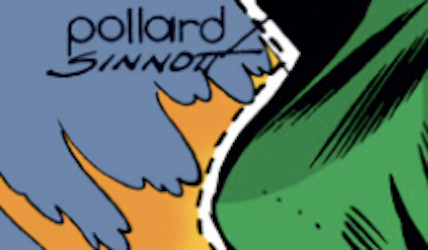
What salvages the comics are some excellent action sequences delivered by the steady team of Keith Pollard and Joe Sinnott. There’s nothing flashy about their art but it packs a punch (sometimes literally). And I believe this is the first issue of the FF were Pollard signs the cover with his distinct lower-case signature, one of the best in comics.


What I liked

Here are a handful of the fun action panels in this comic:


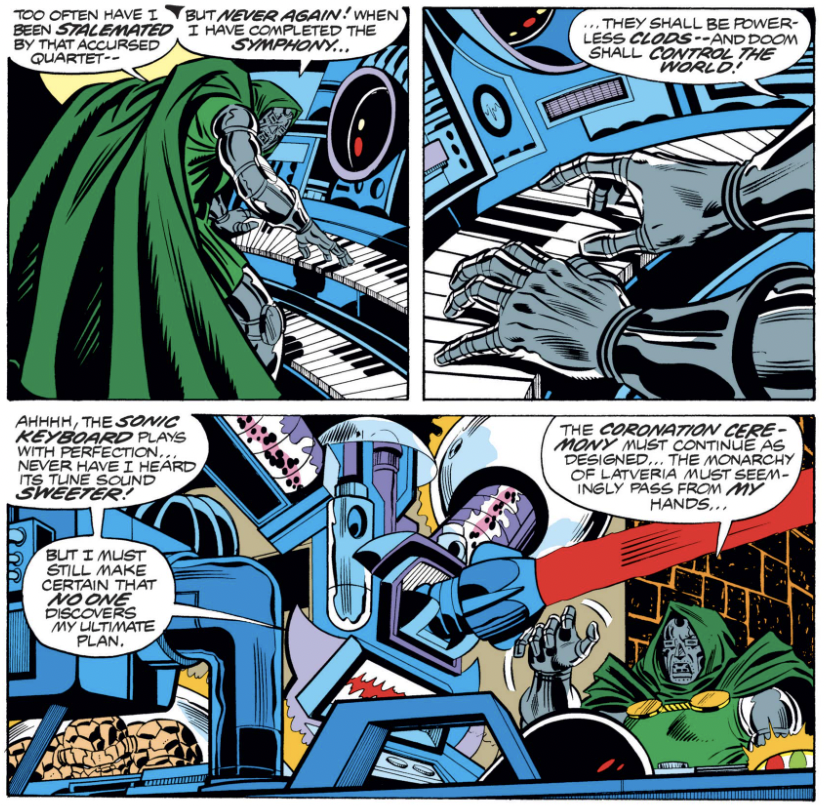
I also liked the keyboard- control device Doom uses to power up his clone.


What I didn’t like

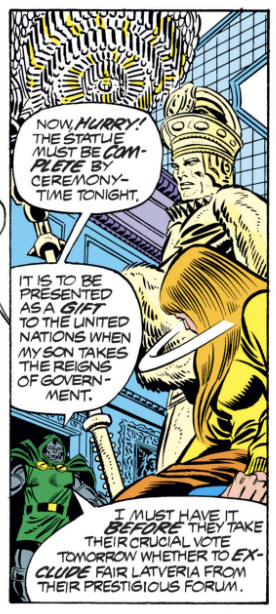
Most of the flaws in this comic seem to stem from Wolfman’s lack of understanding of Doom and his character. The Dr. Doom I’m familiar with could care less if Latveria was kicked out of the U.N. (hell, most of the U.S. would feel the same way) and would probably wear it as a badge of honor. I assume the hollow sculpture will house a bomb or some device but would Doom really offer a gift to the U.N.?


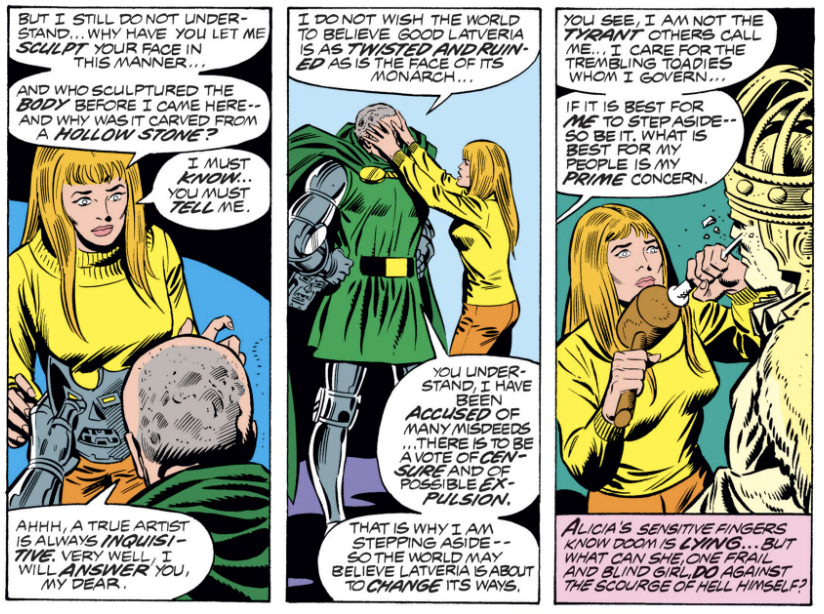
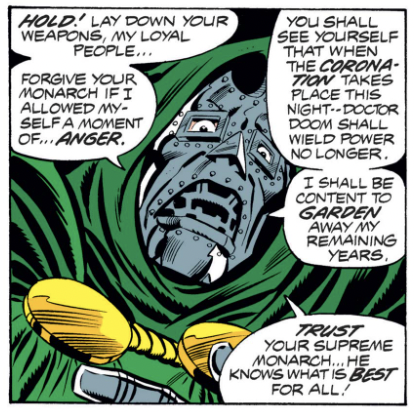
Nor would Doom feel the need to explain himself to his subjects, or rationalize his decision to abdicate the throne.


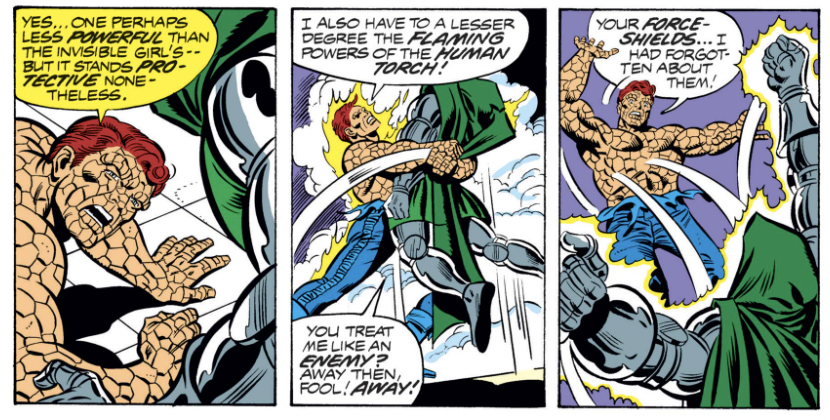
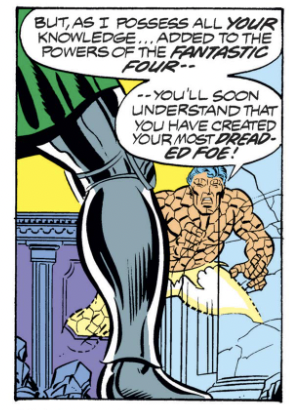
Doom’s clone also had odd moments. Here, he goes out of his way to explain he’s like the Fantastic Four but slightly less so. Then he says he forgot Doom had force shields, one panel before he claims to have all of Doom’s knowledge. Which is it, dude?


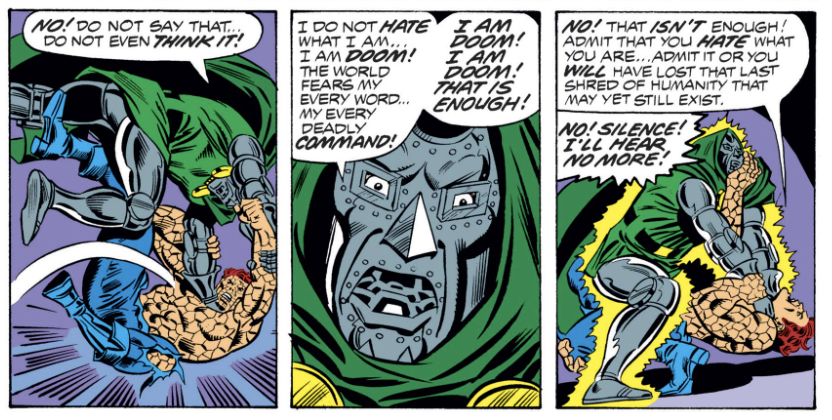
And the climax, where Doom’s clone faces Doom to acknowledge his self loathing should have been a powerful moment, but instead feels clumsy.


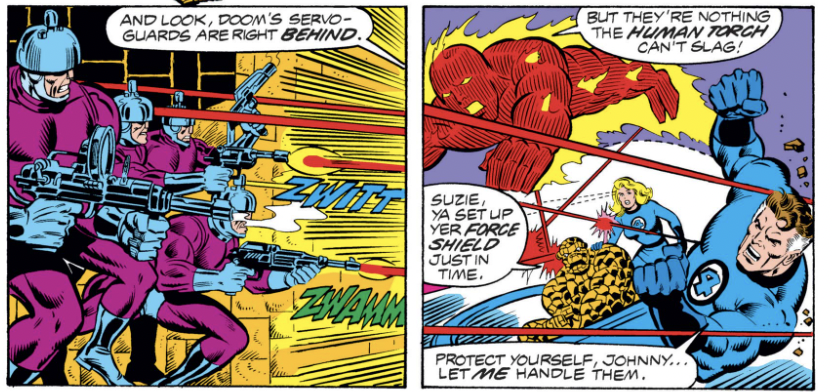
Lastly, longtime readers of this blog will recall that I was puzzled by how Stan Lee and Jack Kirby wrote and drew may of the robots and androids that populated the book. In their hands, they were often muscled like humans and seemed to speak like humans. We have the same problem here. In the last issue, Doom’s henchmen were discussing their children. But now they seem to have been turned into “servo-robots,” even if they still look pretty human.


Overall

Hit and miss

“The World’s Greatest Comic Magazine!” Fantastic Four No. 198

23 Sunday Nov 2025

Posted by percivalhenry in The World's Greatest Comic Magazine

≈ Leave a comment

Tags

1978, Dr. Doom, Fantastic Four, Fantastic Four 198, Latveria, marv wolfman, Marvel comics, Zorba

Fantastic Four 198
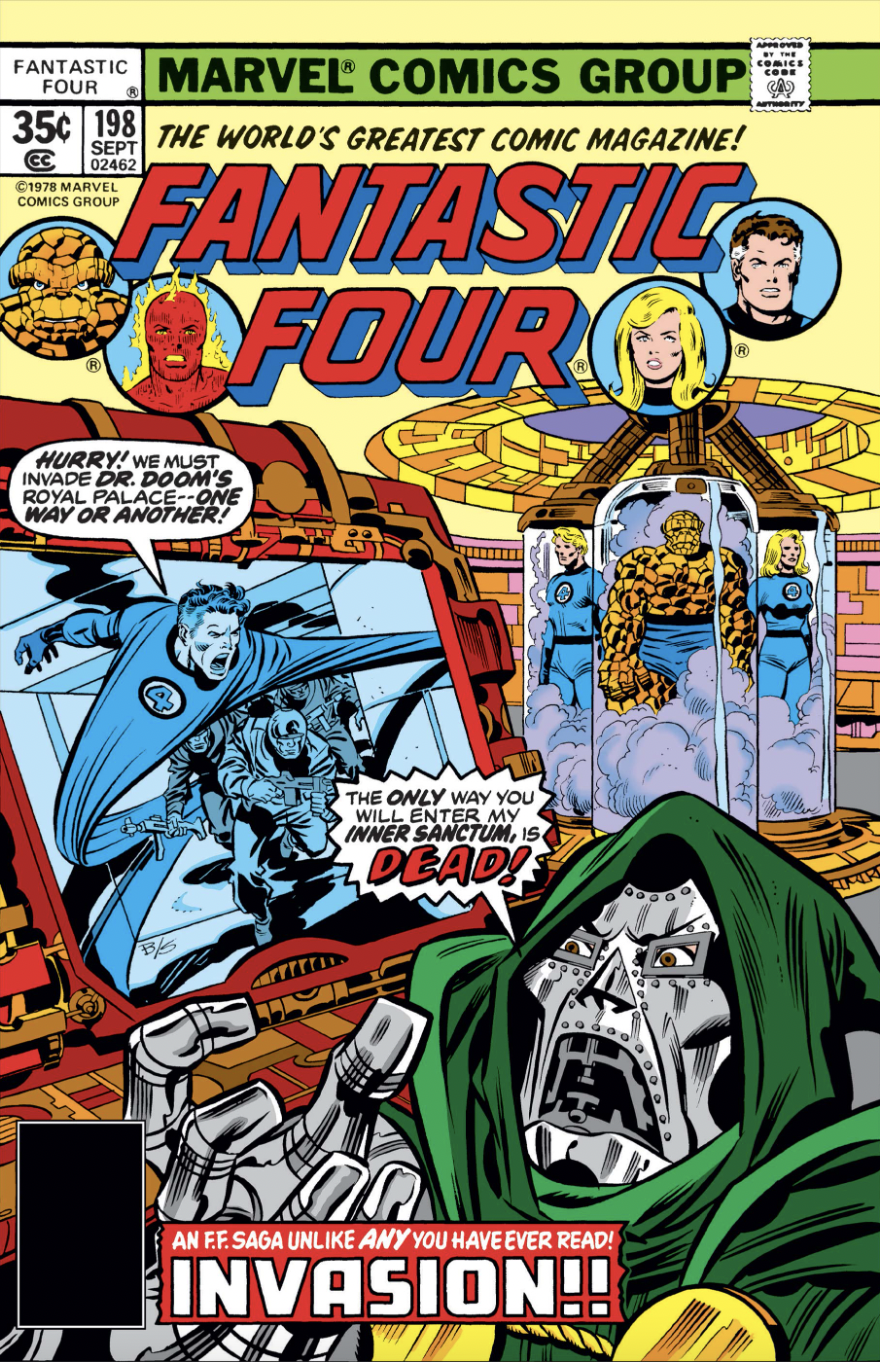
“Invasion!”
Published June 1978
Writer: Marv Wolfman
Pencils: Keith Pollard
Inks: Joe Sinnott
Letters: Rick Parker
Colors: Janice Cohen
Editor: Wolfman
Cover: John Buscema and Sinnott

Synopsis

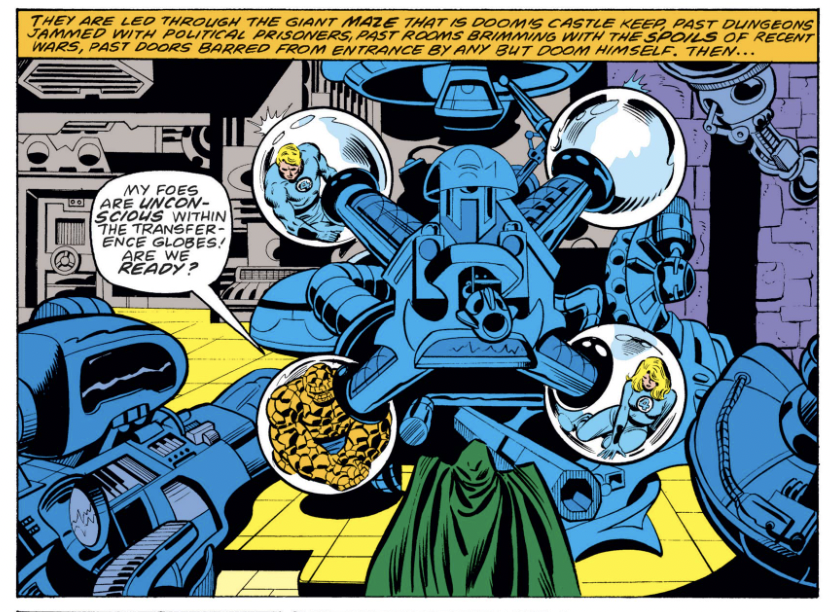
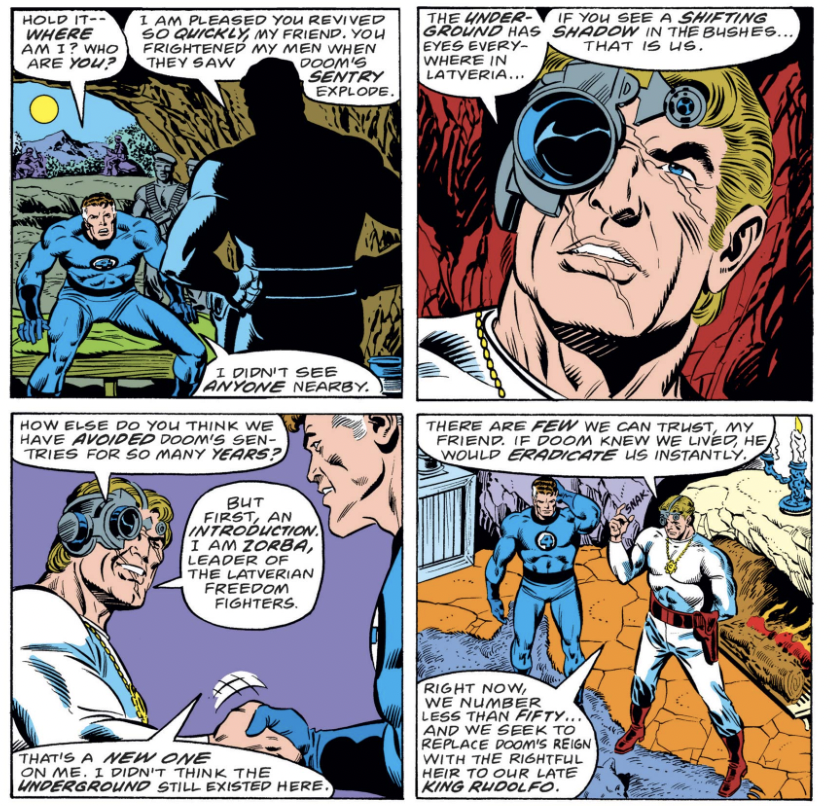
Now in possession of his powers again, Mr. Fantastic flies to Latveria to free the rest of the team from Dr. Doom, who is planning to transfer all of their powers to his son. Reed battles Doom’s robots and is subdued, but he is rescued by the Latvian resistance, led by Zorba. Reed and Zorba’s men storm the castle, but are defeated and Reed is captured.


What’s going on here?

The Doom / Zorba story continues to plod along. This is a pretty lackluster comic and it’s clear this five-part arc could have been told in four or even three issues. This installment feels full of padding as Reed battles robots and Doom’s henchmen, but ultimately ends up captured. The only real development of note is the introduction of the unfortunately named Zorba, the leader of the Latverian freedom fighters. (It’s hard not to picture Anthony Quinn as Zorba the Greek whenever I read that name). This Zorba has a cool, Kirby-esque device on his face and seems to fulfill every stereotype of the noble rebel.

Zorba will reappear in a few more issues over the years and becomes a more complex figure when written by John Byrne.

The art team of Keith Pollard and Joe Sinnott deliver solid, if unspectacular work. The rather confusing cover is by John Buscema and Sinnott.

What I liked

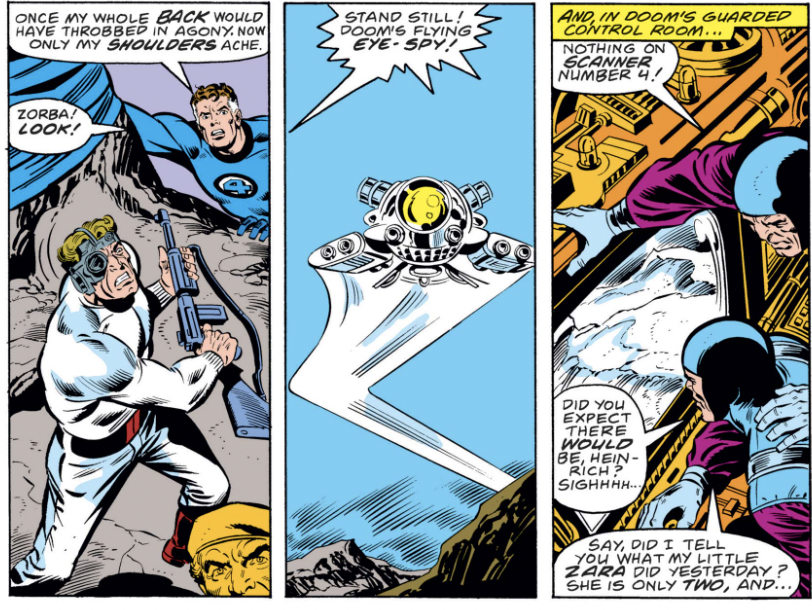
There were a few fun elements in this comic. Throughout, writer Marv Wolfman gives Doom’s soldiers bits of personality, such as this one discussing his daughter:

My sense is these vignettes are intended to illustrate their humanity, in order to highlight Doom’s cruelty when he later reveals he had these men killed. I also liked the appearance of the drone. Technology that seems wildly futuristic in 1978 is now commonplace.

And I liked Reed using his stretching powers to disguise his facial features, something he will do more frequently in years to come:


What I didn’t like

Overall, Wolfman’s writing feels lazy and cliché-laden. It’s not enough to have a mountain, it was to be an “unscalable mountain,” only for it to be scaled in the next panel.

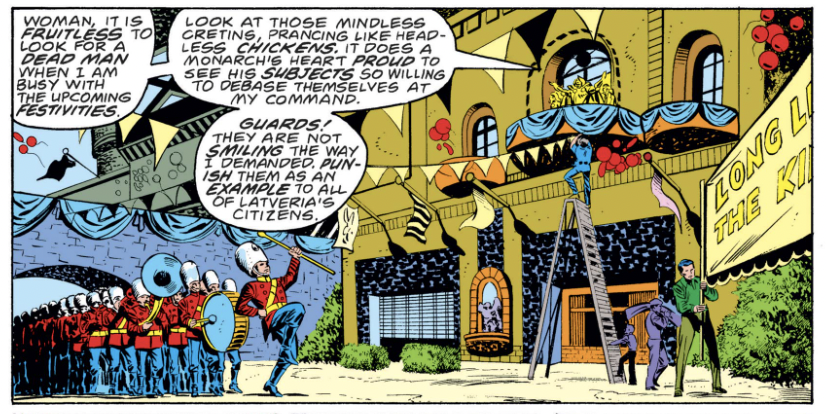
Wolfman doesn’t really have a handle on Doom, who he writes as a thuggish tyrant, rather than an aloof monarch. Here, Doom mocks the people of Latveria, which feels very different from the protective, paternalistic view of his people that we’ve seen elsewhere:


And here, he takes of his mask in front of the Fantastic Four, which would seem a sharp departure from how he has viewed his disfigurement in the past (and which sort of defeats the purpose of the mask):


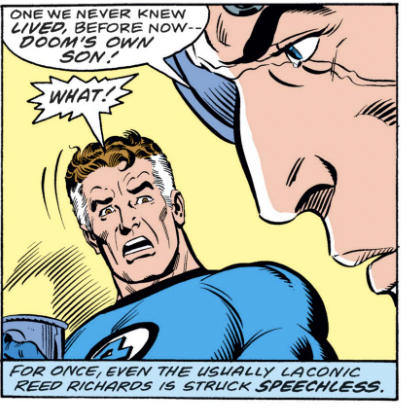
There are other, smaller mistakes throughout. It appears Wolfman doesn’t know the definition of “laconic:”

And here, Reed pilots a pogo plane that normally can fit four members of the FF plus guests, but now is a two-seater:


None of these little errors are that consequential (and I’m sure any Marvel fan could explain them away to earn a No-Prize) but cumulatively they’re distracting and make the story less engaging.

Anything else?

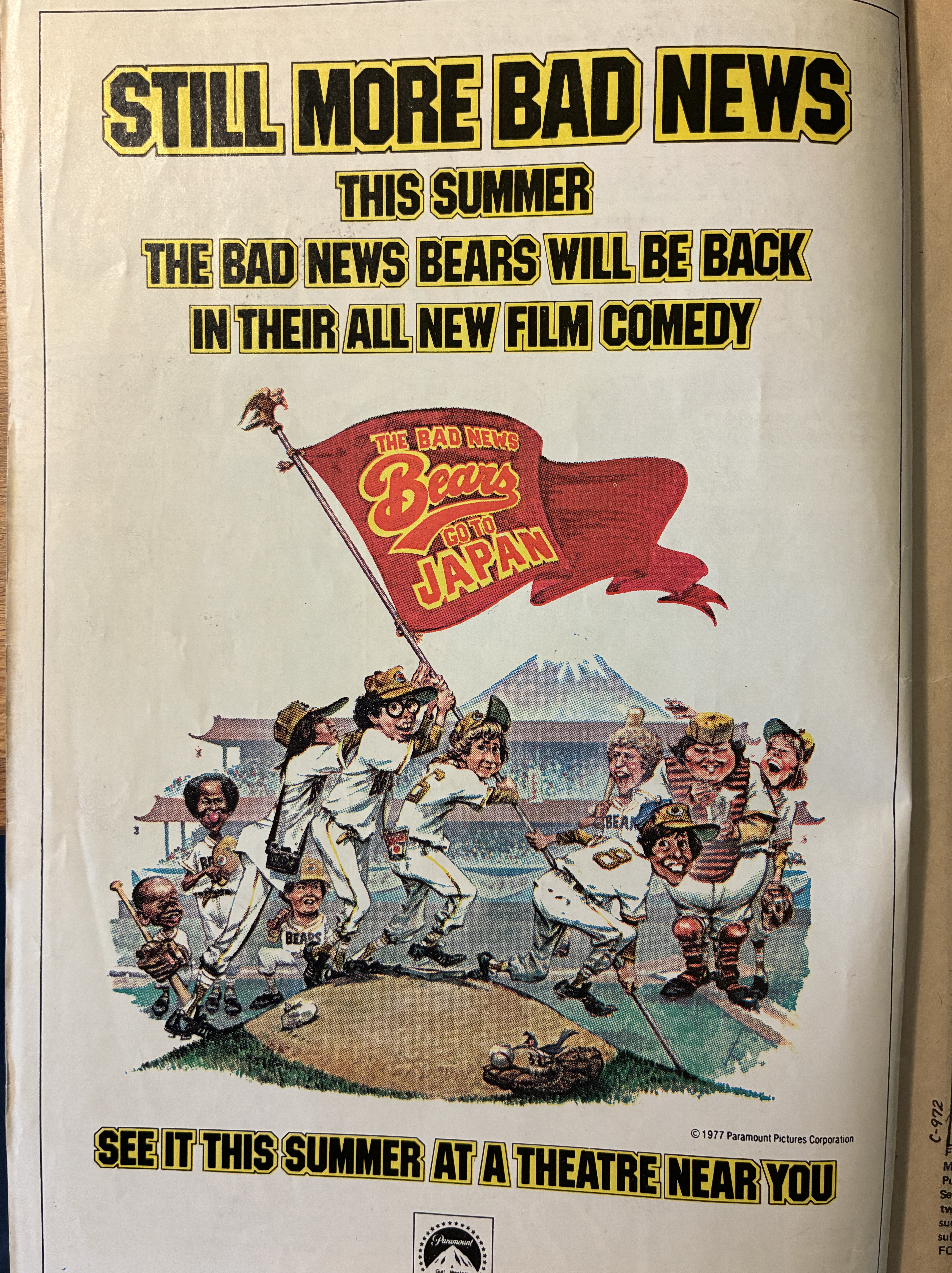
Guys, did you know the Bad News Bears are going to Japan?


Overall

Not much to recommend in this one

“The World’s Greatest Comic Magazine!” Fantastic Four No. 197

16 Sunday Nov 2025

Posted by percivalhenry in The World's Greatest Comic Magazine

≈ Leave a comment

Tags

1978, Dr. Doom, Fantastic Four, Fantastic Four 197, Joe Sinnnott, marv wolfman, Red Ghost

Fantastic Four 197
“The Riotous Return of the Red Ghost!”
Published May 1978
Writer: Marc Wolfman
Layouts: Keith Pollard
Finishes: Joe Sinnott
Letters: John Costanza
Colors: Barry Grossman
Editor: Wolfman
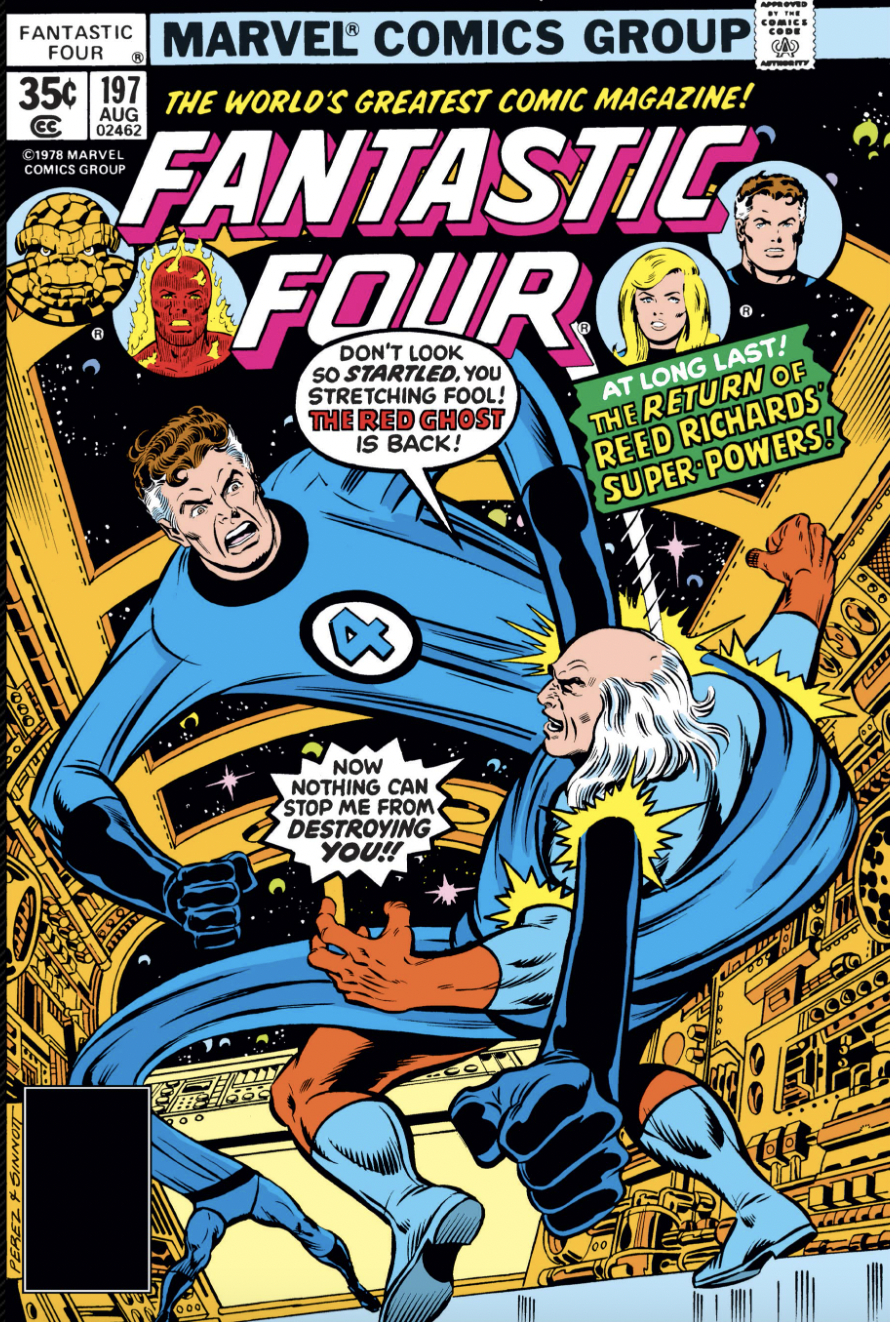
Cover: George Perez and Joe Sinnott

Synopsis

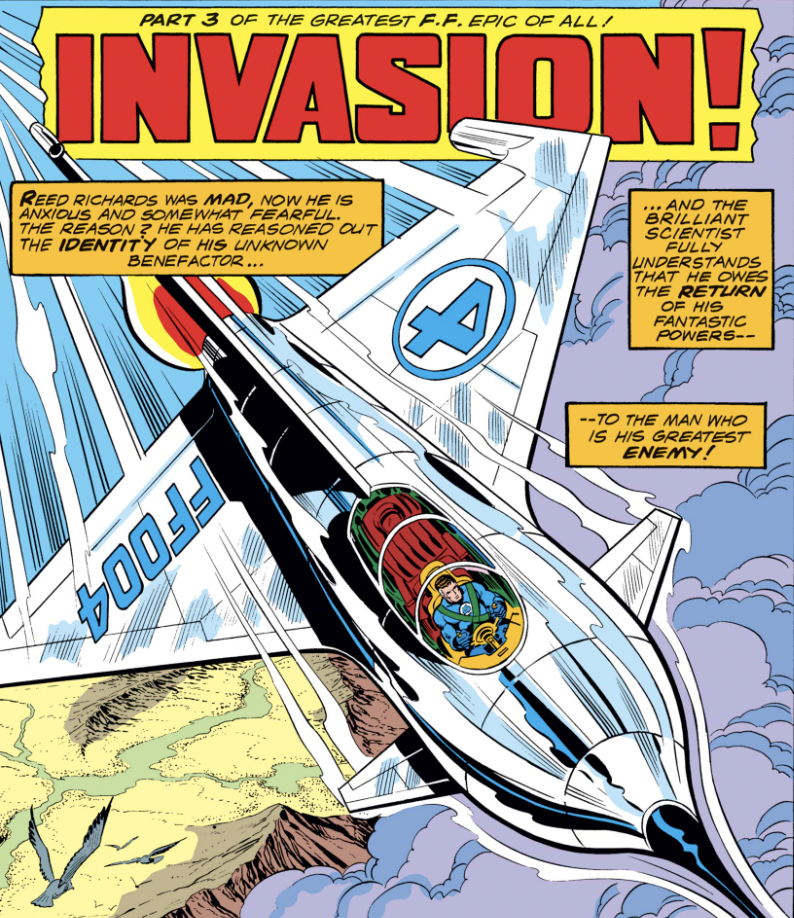
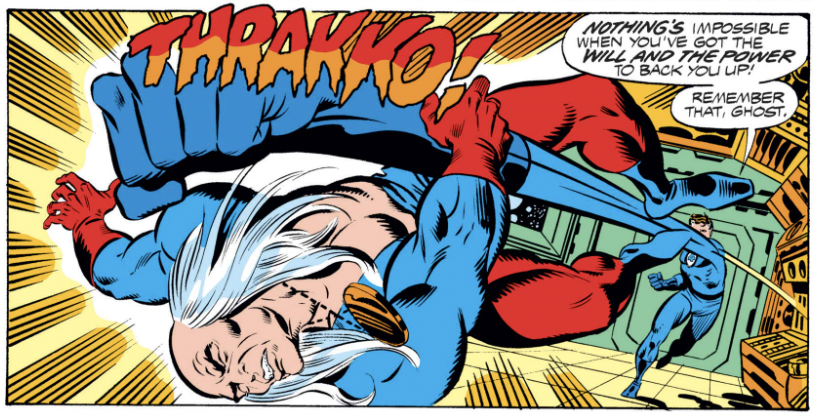
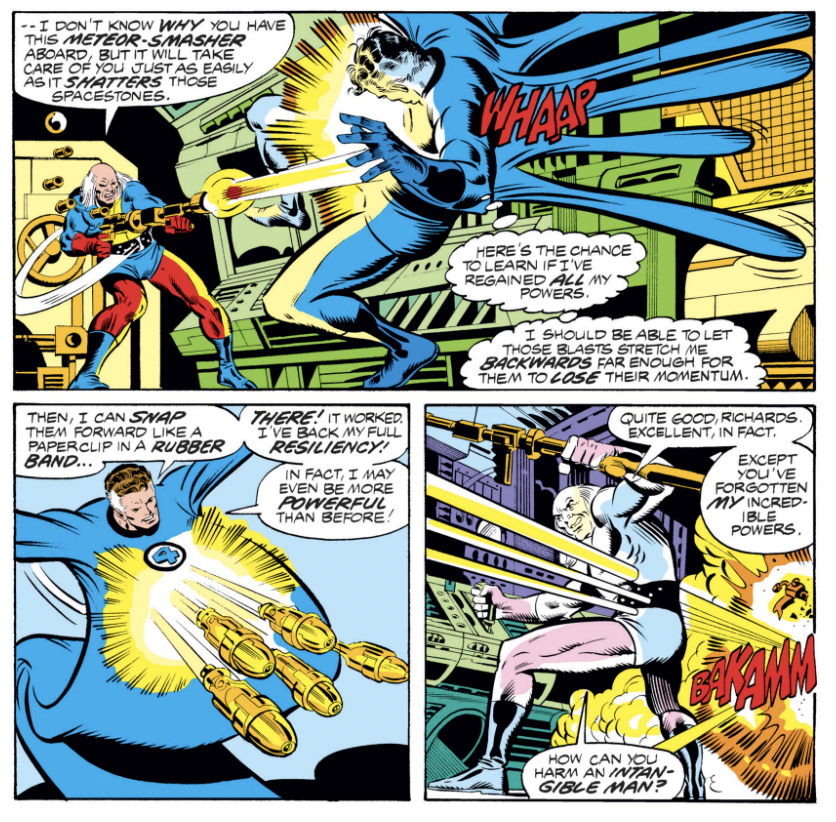
Under the threat of harm coming to his teammates by a mysterious figure (later revealed in this issue to be the son of Dr. Doom), Mr. Fantastic is forced to board a rocket designed to expose him to cosmic rays, thus restoring his powers. But while his powers return, the cosmic rays also (somehow) reconstitute the Red Ghost, who has been dematerialized and floating in space. The two battle and the Ghost sabotages the space ship, which crashes into the ocean with Reed managing to escape. Meanwhile in Latveria, Doom holds the other FF members captive, while summoning Alicia Masters to sculpt his image.


What’s going on here?

This issue continues the Doom / Zorba story arc that will conclude in issue 200. But the big event here is Reed’s battle in space with the Red Ghost, which doesn’t really have anything to do with the main story or Doom’s machinations. The Red Ghost shows up in one of those only-in-comics coincidences, and his appearance feels like an unnecessary distraction from the main story arc. On the other hand, the other three FF members had their own solo stories that followed the team’s break up (well, sort of: Sue shared her’s with Namor) so maybe it’s only fair that Reed gets his own. The other big development is Reed gets his powers back; more on that later.

The introduction of Doom’s son is a bit of a head fake, as we shall see. He’s not to be confused with Kristoff, who will debut in a few years.

Joe Sinnott returns to inking, and the comic reverts to its familiar style in his hands. The Pollard / Sinnott team is solid, but I miss Pablo Marcos’s inks, which gave the book a refreshingly different look. George Perez and Sinnott deliver an excellent cover.

Jim Shooter is now credited as “editor-in-chief.” He’s the first Marvel EIC to be so credited, as far as I can recall, and it’s somewhat revealing about how he viewed himself.

What I liked

Despite his implausible return, the Red Ghost is an entertaining bad guy and in his fight with Reed, shows he’s no joke (despite what the new Fantastic Four movie would have you believe).


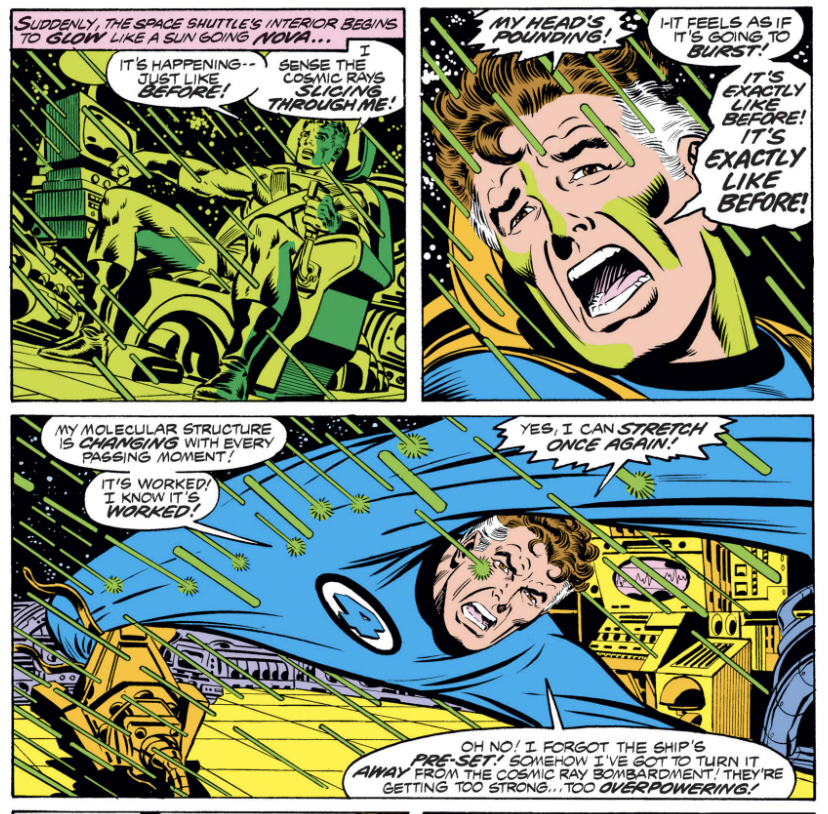
I also liked this sequence of Reed’s power returning:


And I liked the sequence with Alicia and Doom, which serves to add more depth to his character:


What I didn’t like

There’s a lot in this comic that doesn’t make much sense. Reed is being forced to take a space flight but just takes it on this guy’s word that Sue and the others are his captives.


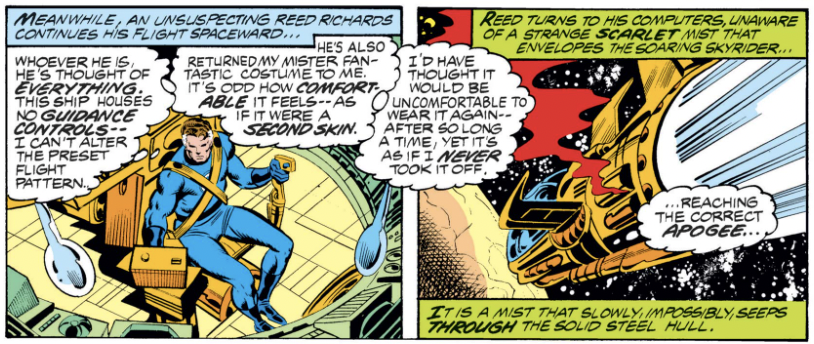
Further, Reed apparently designed and built the space ship, yet has no ability to control it:


Then there”s the matter of his lost powers. Reed’s powers faded over the course of many issues before disappearing altogether, which led him to disband the Fantastic Four. It was never explained why his powers ebbed (or why the other’s did not) but the assumption was we would eventually learn the cause. In this issue, however, they are returned to him by renewed exposure to cosmic rays. No further explanation is offered. Did they simply wear out? It’s a frustrating failure of story telling, probably due to the book having three writers over the length of the story arc.

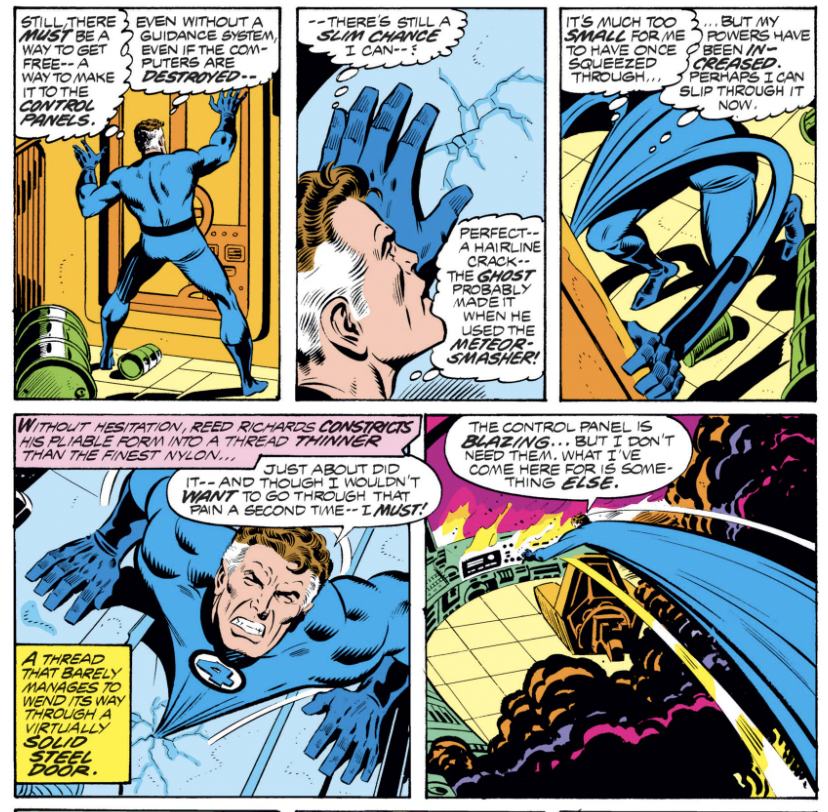
Now that his powers have returned, Reed is apparently more powerful. Here, he squeezes through a tiny crack:


A get the impression that Wolfman was eager to return the team to the status quo ante as soon as practical, and didn’t feel the need to get bogged down with the particulars.

Overall

A mixed bag

“The World’s Greatest Comic Magazine!” Fantastic Four No. 196

13 Thursday Nov 2025

Posted by percivalhenry in The World's Greatest Comic Magazine

≈ Leave a comment

Tags

1978, Dr. Doom, Fantastic Four, Fantastic Four 196, Jim Shooter, Keith Pollard, marv wolfman, Marvel comics, Pablo Marcos

Fantastic Four 196
“Who In The World Is The Invincible Man?”
Published April 1978
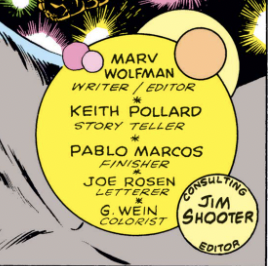
Writer: Marv Wolfman
Layouts: Keith Pollard
Finishes: Pablo Marcos
Letters: Joe Rosen
Colors: Glynis Wein
Editors: Marv Wolfman and Jim Shooter
Cover: George Perez and Pablo Marcos

Synopsis

The Thing and the Human Torch join the Invisible Girl, Franklin and Agatha Harkness in Los Angeles, where they are confronted by what appears to be the Invincible Man, and are overcome by his mental powers. They are imprisoned by the same mysterious evil-doers who have captured Mr. Fantastic, who was in fact the man in the Invincible Man’s disguise. The team, reunited in a prison cell, manages to escape, only to discover their captor is Dr. Doom.


What’s going on here?

One drawback to this exercise of retroactively reviewing comics published 50 years ago is it’s hard to gauge the impact of certain plot developments. In this issue, we learn on the last page that Dr. Doom is the mysterious villain behind Reed’s abduction. Unfortunately, I knew this was coming, so there wasn’t much suspense of me. But I imagine it was a big surprise for at least some readers at the time. If so, it would ratchet up a very good comic into an excellent one.

This is the first appearance of Doom in the FF since issue 157, an eternity by the standards of today, when he appears about every dozen or so issues. His intentions at this point are still pretty murky and the plot is confusing but I think it’s safe to assume it will all build up to a big conclusion in issue 200.

The Invincible Man is a bit of an oddity, since there never really was an Invincible Man. It started off as an identity created by the Super-Skrull who was masquerading as Sue and Johnny’s father, back in issue 32. Then we have this appropriation of the Invincible Man identity by a hypnotized Reed. And in issue 287, Doom — in the body of Norman McArthur — again uses the Invincible Man identity.

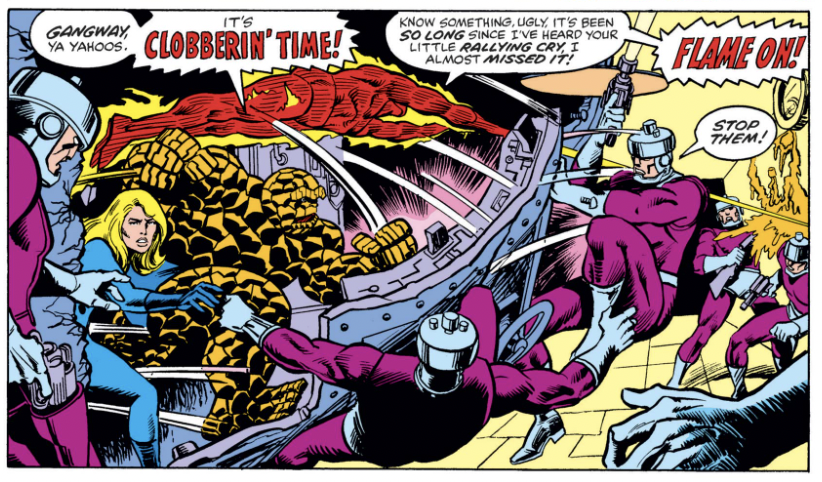
Like last issue, the art is by Keith Pollard, who seems to be just doing layouts, and Pablo Marcos, whose finishes are dynamic and fun. This issue also has an interesting credit: Jim Shooter, as “consulting editor.” Shooter had recently taken over as Marvel editor-in-chief, ending a half decade of dysfunction and ushering in a period of growth and stability. Shooter, who passed away this year, wasn’t universally beloved but it’s hard to argue with his success.


What I liked

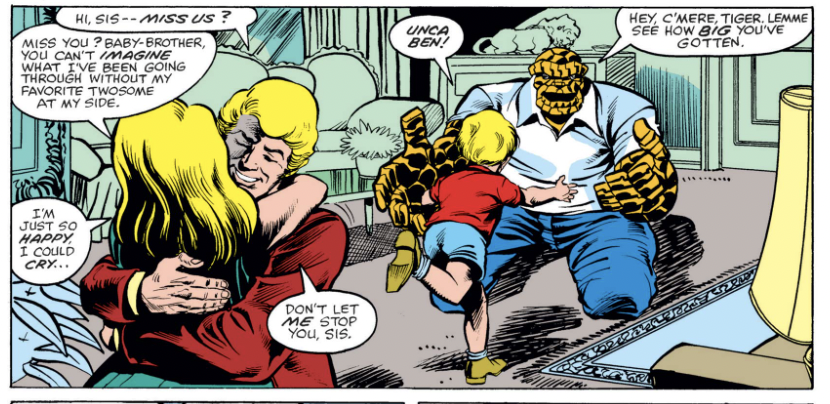
Sue and Franklin’s reunion with Ben and Johnny is touching and well written by Marv Wolfman.


I liked this sequence of a phantom Alicia beating the snot out of Ben.


Wolfman seems to be continuing Len Wein’s project of powering up Sue, expanding the use of her powers and making her more of an asset. It’s a welcome change.


As mentioned, the Pollard/ Marcos combination is very successful. Here’s an example:

and another:


What I didn’t like

Wolfman seems obsessed with all thing Hollywood, and as in the previous issue, is eager to beat this horse to death. What starts of as mildly amusing quickly becomes tedious, especially his running gag of the FF being mistaken for other celebrities.


Overall

A satisfying read

“The World’s Greatest Comic Magazine!” Fantastic Four No. 157

05 Sunday Jan 2025

Posted by percivalhenry in The World's Greatest Comic Magazine

≈ Leave a comment

Tags

1975, Dr. Doom, Fantastic Four, Fantastic Four 157, John Buscema, Marvel comics, Roy Thomas

Fantastic Four 157
“The Endgame Cometh!”
Published January 1975
Writers: Roy Thomas and Len Wein
Pencils: Rich Buckler
Inks: Joe Sinnott
Letters: Joe Rosen
Colors: Petra Goldberg
Editor: Thomas
Cover: Bucker and Sinnott

Synopsis

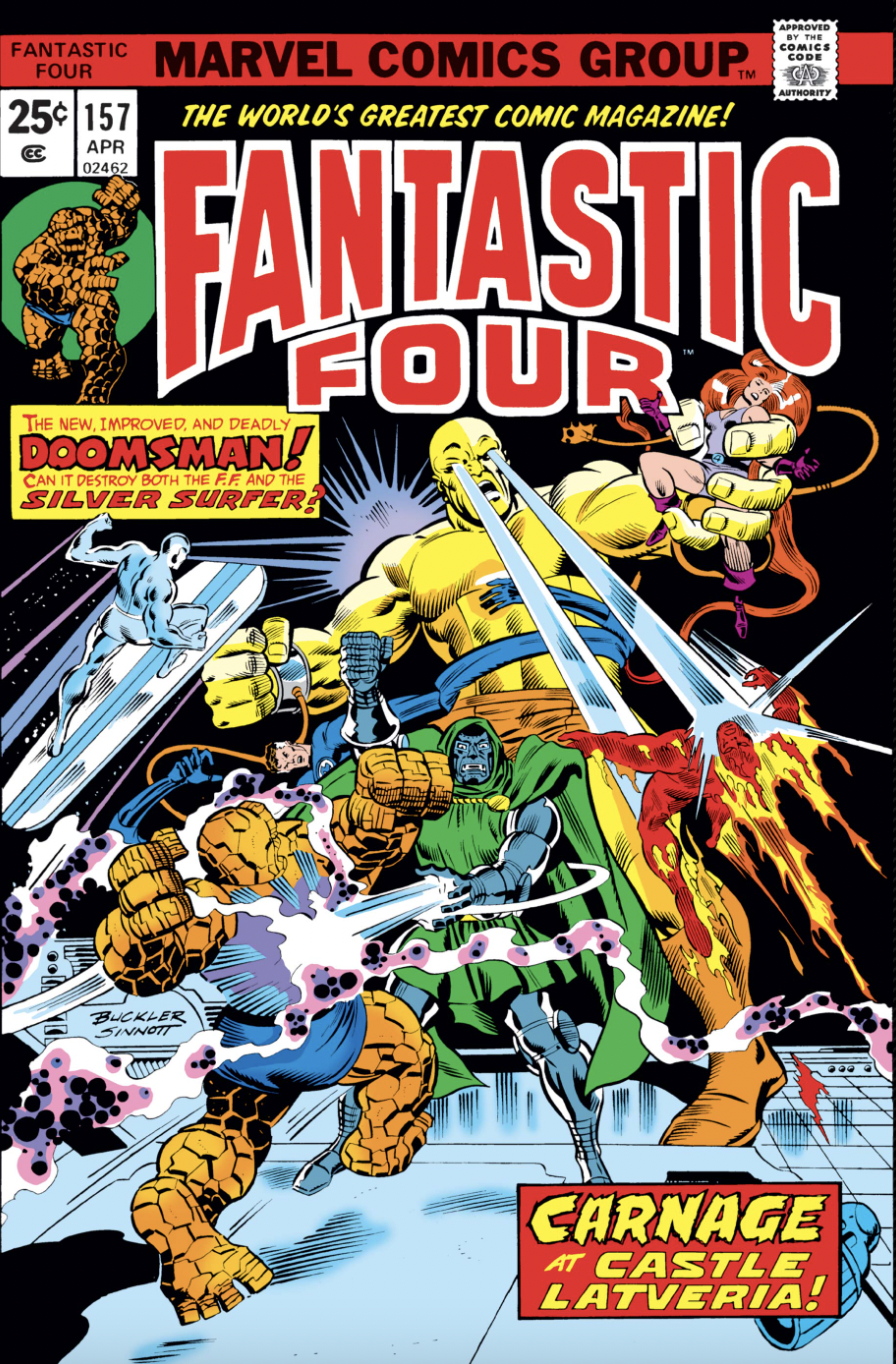
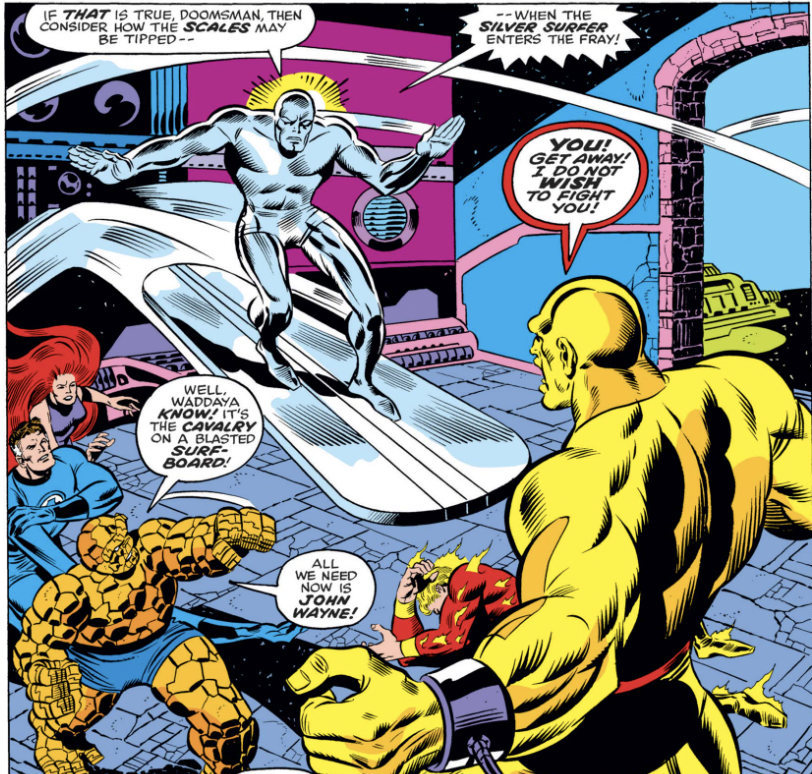
Trapped in Dr. Doom’s castle, the Fantastic Four battle Doomsman II, an android imbued with the Silver Surfer’s power. Meanwhile, the Silver Surfer’s lost lover is revealed to be a Latverian peasant girl, Helena, brainwashed by Doom into believing she is Shalla-Bal. The Surfer then joins the FF to defeat Doomsman, and they are about to go to battle with Doom himself when Helena begs them to spare Doom’s castle from destruction. The issue ends with the demon Mephisto, the Surfer’s nemesis, revealing that Helena was Shalla-Bal all long, put on earth to torment the Surfer.


What’s going on here?

This is Roy Thomas’s first full issue in his return gig as the Fantastic Four’s writer, and as if to announce he’s back, he’s crafted a classically complicated Thomasian story, full of odd tangents, obscure references and callbacks to plot points from earlier comics.

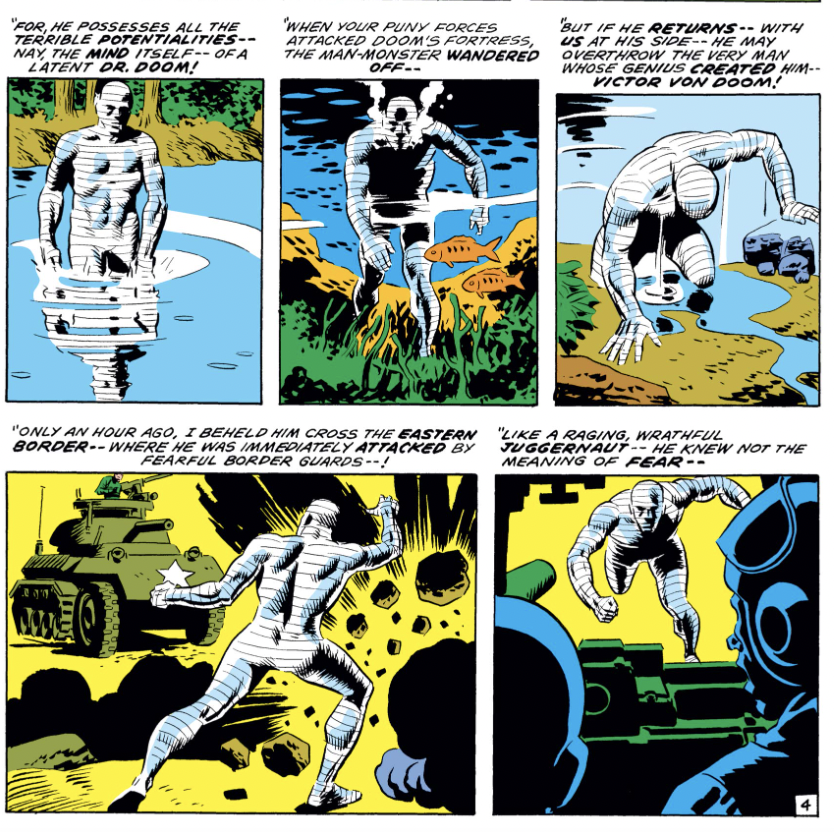
A big chunk of this comic’s backstory was told in Astonishing Tales 1-3, a complicated story by Thomas from 1970 that explains how Doom created the first Doomsman using cosmic rays and his own brain waves and lost control of it (the art is by the legendary Wally Wood).


The story also references Giant-Size Super Villain Team-Up 1, a comic on sale at the same as FF 157 (also by Thomas), that among other things explains how Doom survived his seeming death in FF 144 (he crashed to the ocean and was rescued by the Sub-Mariner).

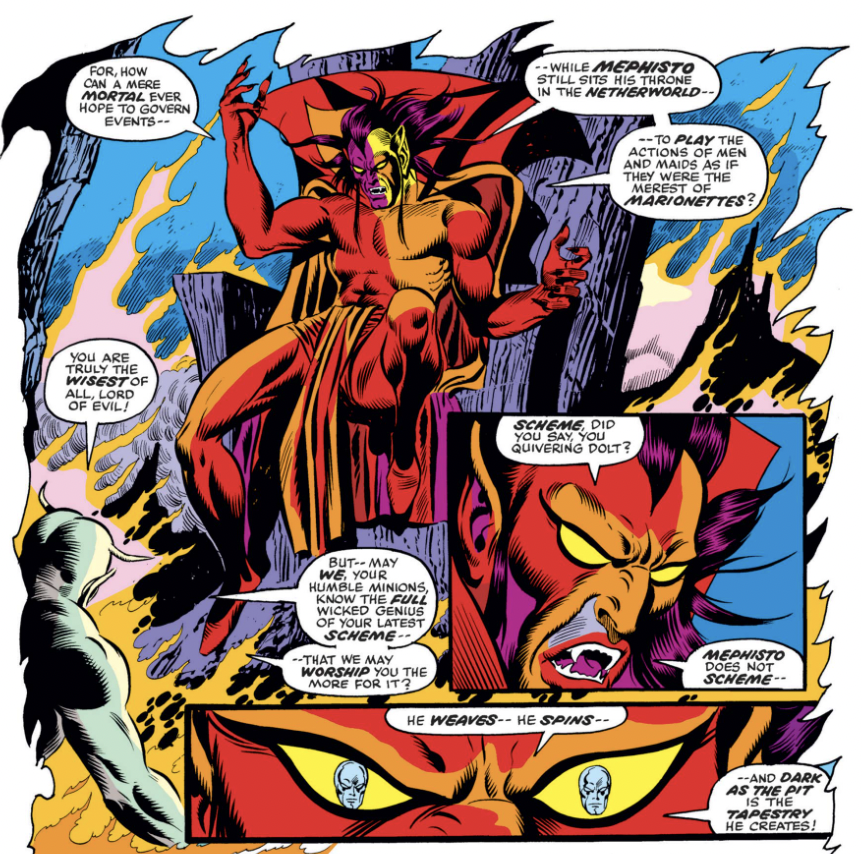
The last scene in FF 157, featuring Mephisto chewing the scenery, is basically pulled from the Silver Surfer’s own comic and I don’t recall him ever appearing in the FF prior to this comic.

There’s not a lot of explanation in FF 157 about any of these plot points, and the assumption is readers would have read these other comics. If all you read was the Fantastic Four, you’d be baffled by these goings on. It’s also reminder of how tightly woven Marvel stories were back then and how much emphasis Thomas placed on continuity. (It also makes me glad I have a subscription to Marvel Unlimited).

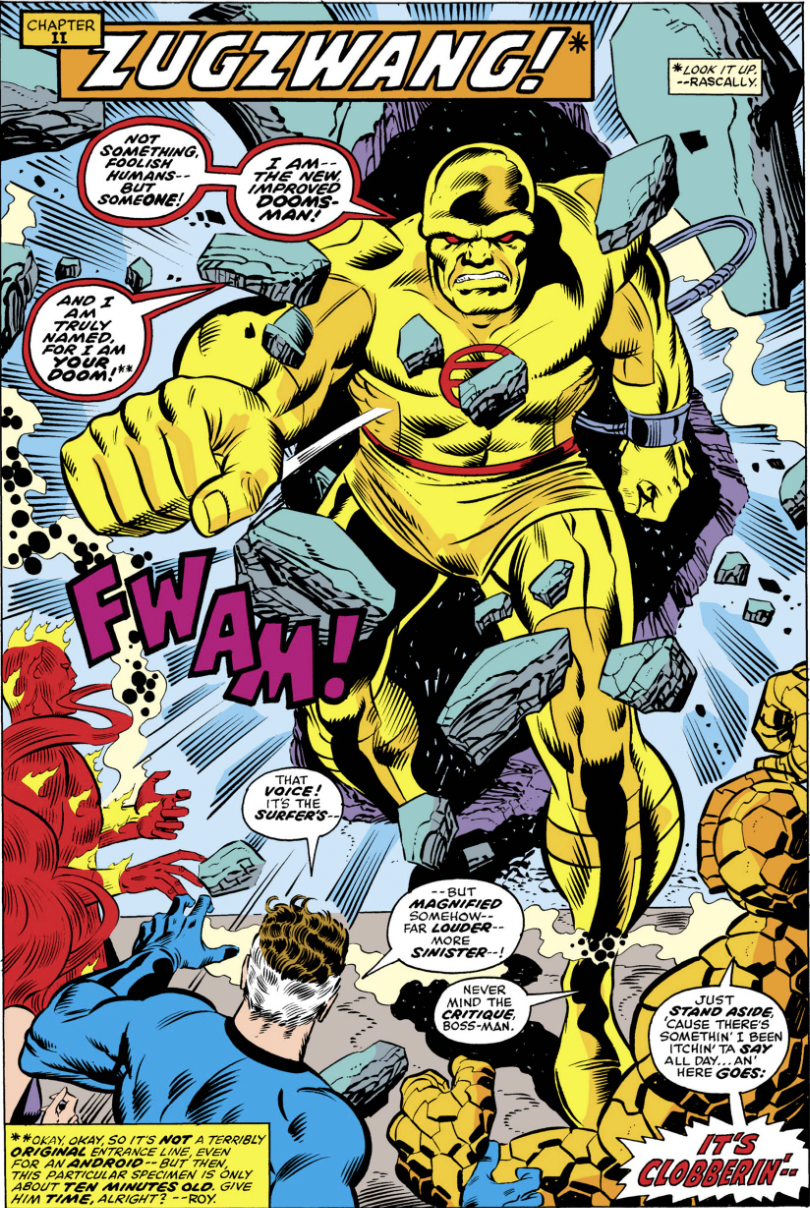
Lastly, another example of Thomas’s zany storytelling: titling a chapter of the comic “Zugzwang!” with no explanation. (It’s a German term used in chess, a play on the chess metaphor in the comic’s title). And self-referential footnotes mocking his own writing.


What I liked

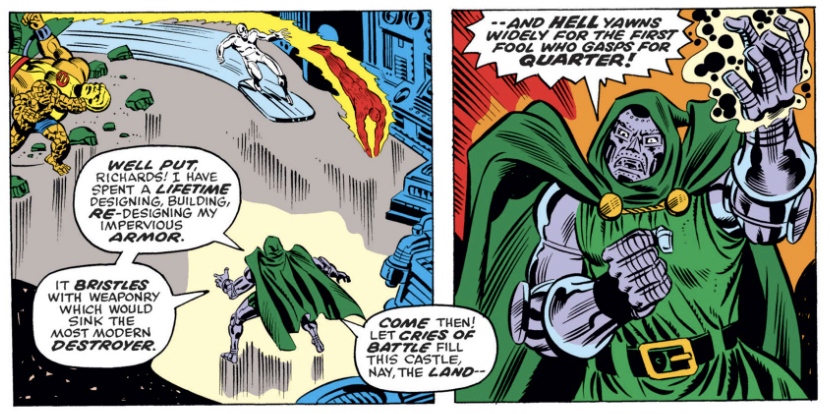
This was a fun comic, despite all its weird intricacies and jarring transitions. Thomas clearly loves writing Doom, and gives him some great, preposterous lines:


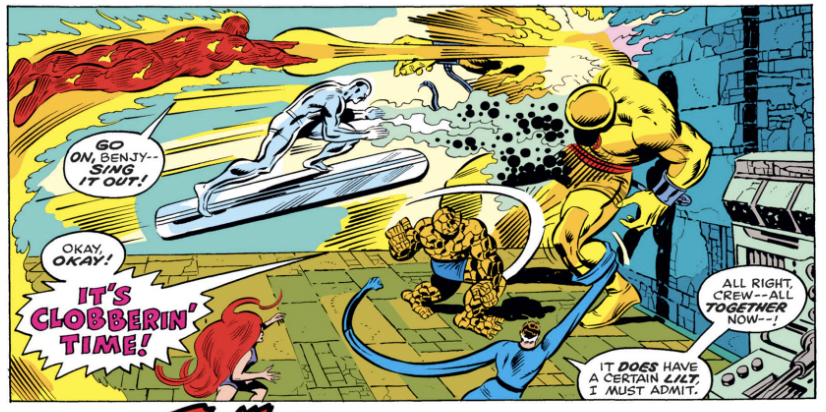
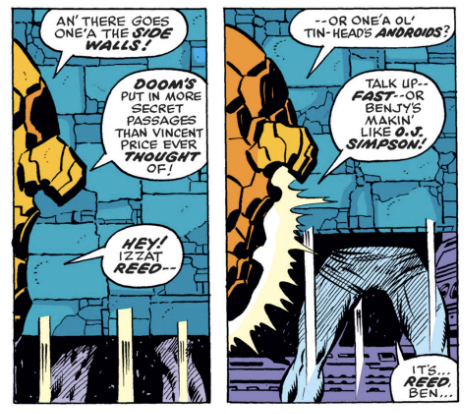
I also liked this byplay between Ben and Reed, revealing a more playful side to Mr. Fantastic.


What I didn’t like

Once again, there is no mention, much less an appearance, of Sue Richards or Franklin. And Medusa barely factors into the story at all.

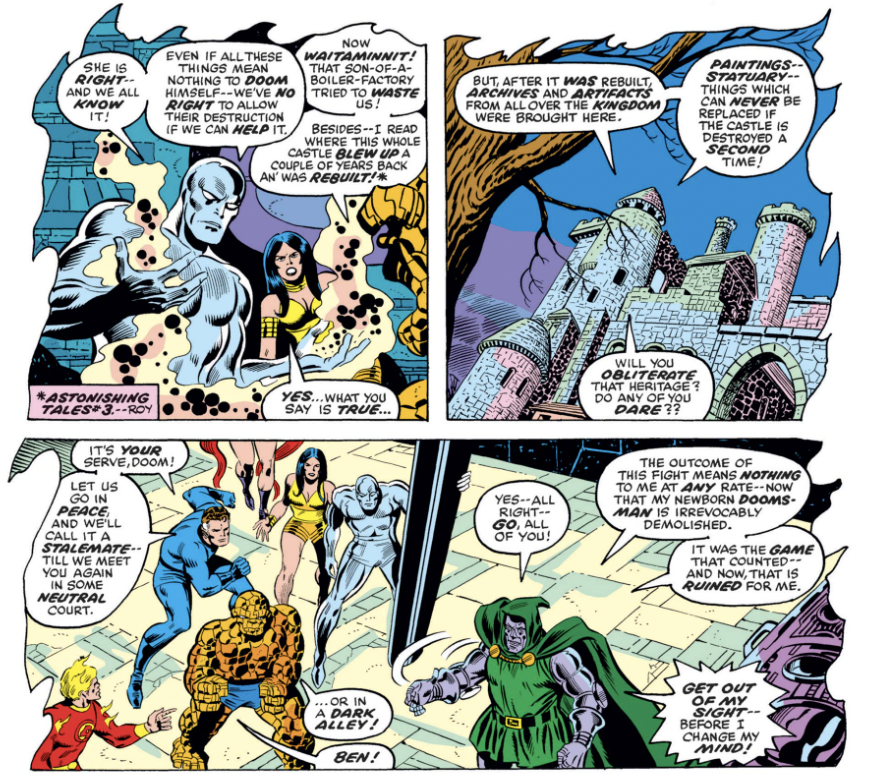
The initial ending is painfully anticlimactic and hard to swallow. The FF and Doom agree not to battle to preserve the Royal Latverian treasures? This in a comic where wide swathes of New York are frequently destroyed in the FF’s battles?


The disappointment is somewhat blunted by the strange Mephisto coda, but his appearance is such a non sequitur it’s hard to know what to make of it. Again, if readers weren’t paying attention to the Surfer’s title, it would be utterly confusing.


Anything else?

This reference didn’t age well.


Overall

A Thomasian rollercoaster

“The World’s Greatest Comic Magazine!” Fantastic Four No. 156

01 Wednesday Jan 2025

Posted by percivalhenry in The World's Greatest Comic Magazine

≈ Leave a comment

Tags

1974, Dr. Doom, Fantastic Four, Fantastic Four 156, Marvel comics, Roy Thomas, Silver Surfer

Fantastic Four 156
“Middle Game!”
Published December 1974
Writers: Len Wein and Roy Thomas
Pencils: Rich Buckler
Inks: Joe Sinnott
Letters: John Costanza
Colors: Janice Cohen
Editors: Wein and Thomas
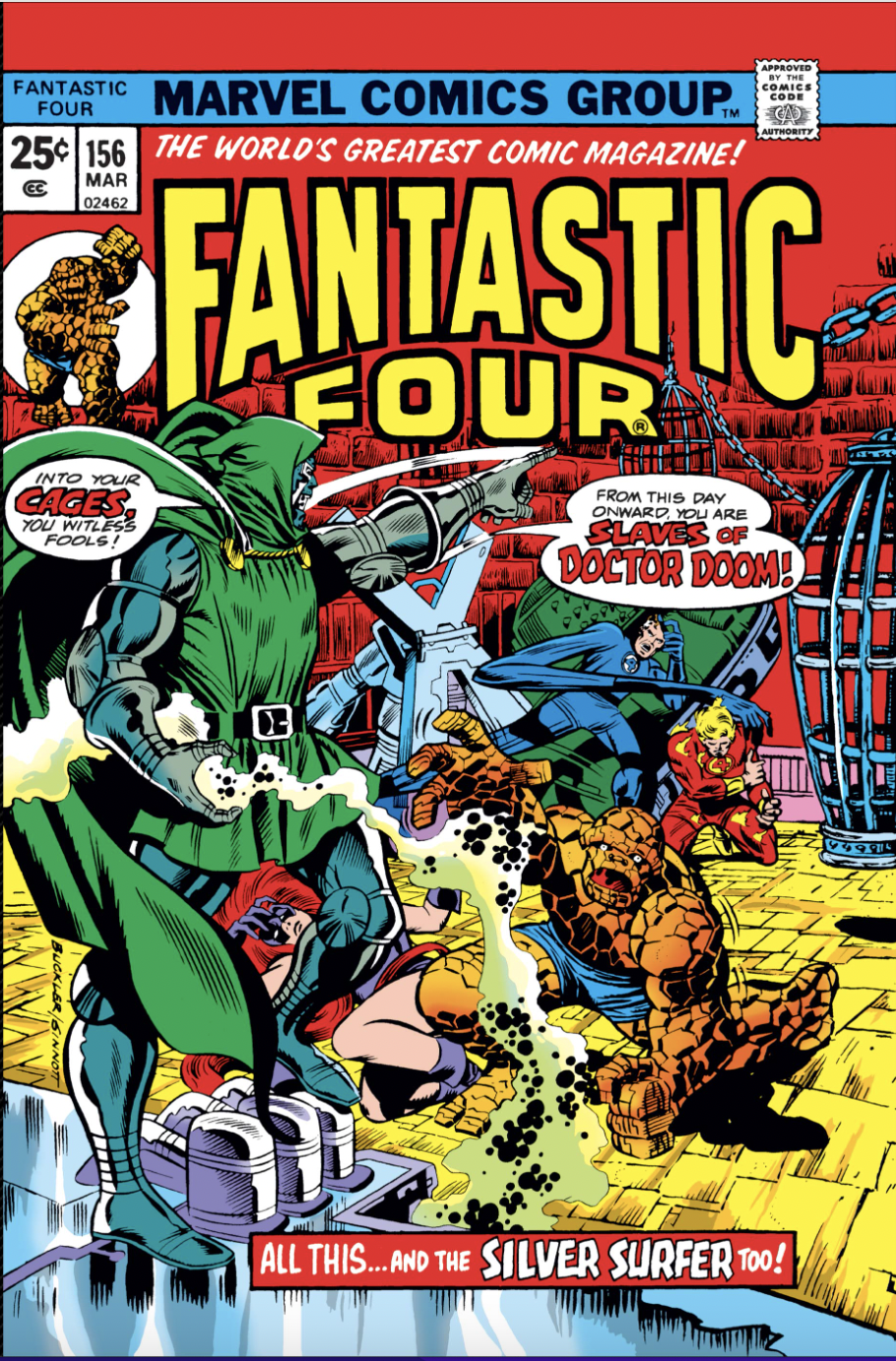
Cover: Bucker and Sinnott

Synopsis

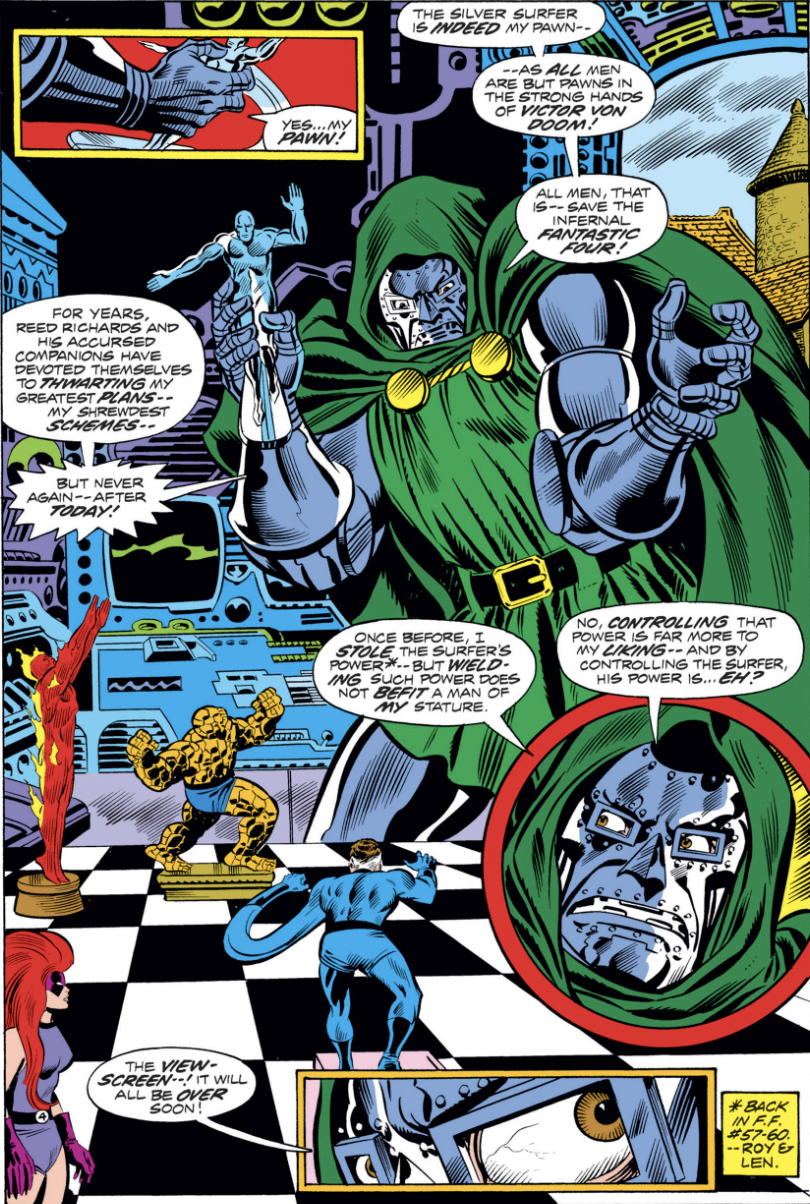
To rescue his beloved Shalla-Bal, the Silver Surfer hypnotizes the Fantastic Four and delivers them to Dr. Doom, who further humiliates him. The FF, who submitted to the Surfer’s hypnotism to infiltrate Doom’s castle, break free of their confinement and defeat an army of Doom’s androids while Doom plans his next move.


What’s going on here?

This is the second of three comics in this arc (hence the story’s title) and a big improvement over the first one. It’s not great: there’s still a lot of purple prose, Doom’s ranting begins to get repetitive, and the FF-are-trapped-in-individual-cages plot device has become a cliché at this point. But the story is suspenseful — we really don’t know what Doom’s intentions are — and the action sequences are a lot of fun. Hopefully the conclusion of the story maintains the momentum of this one.

The credits for this issue are a bit odd, with Len Wein and Roy Thomas both credited as both writers and editors, but a note in the letters page explains that Wein intended to write the entire arc but stepped down to replace Thomas as editor. Thomas, slated to become the new regular writer, picked up the story halfway through. The Bullpen Bulletins further explains that Thomas is now “editor emeritus” (a lofty title for someone who just turned 34) while Wein is now running the show. This begins a chaotic period where Marvel went through five editor-in-chiefs in four years: Wein (1974-75), Marv Wolfman (1975-76), Gerry Conway (1976), Archie Goodwin (1976-78)and finally Jim Shooter, who took over in 1978 and restored some stability to the company.

What I liked

There’s some big, bold art from Rich Buckler, who seems to have gotten his mojo back, at least for this comic. This is a classic Doom splash page:


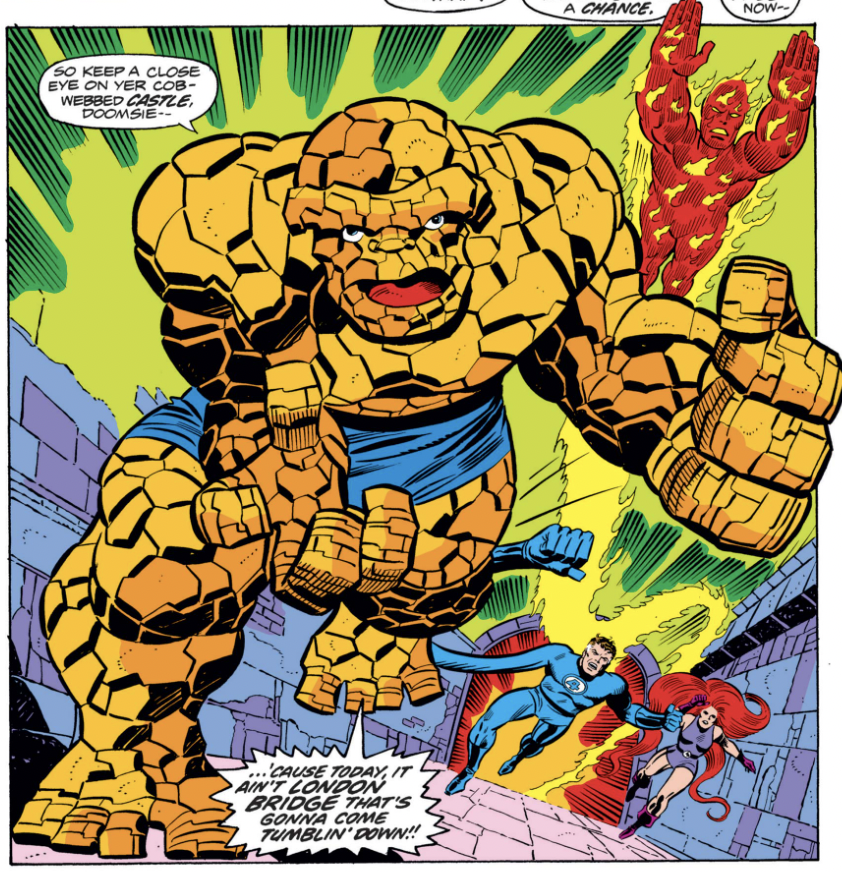
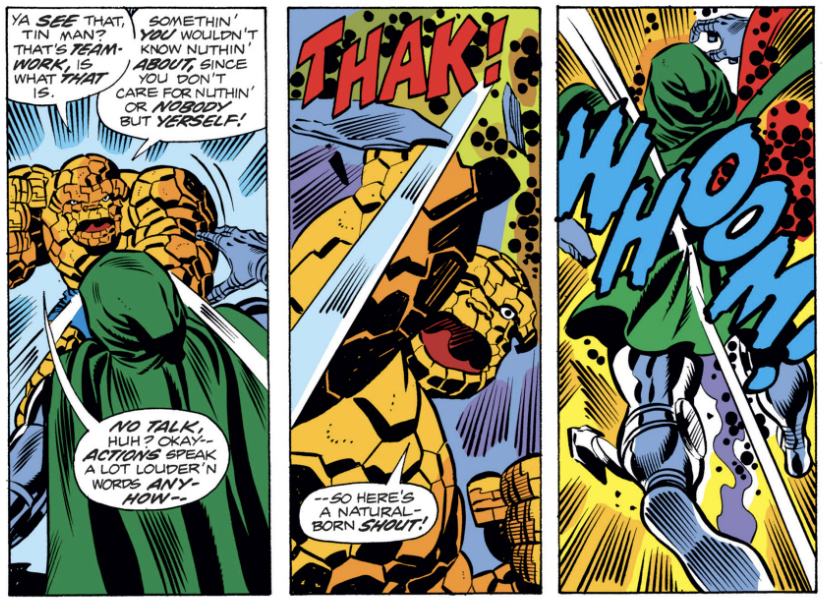
And I liked this action sequence:


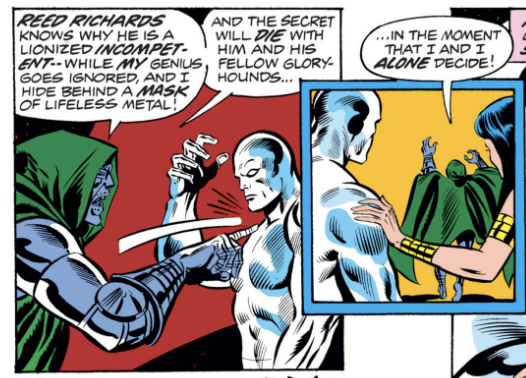
Hidden in all of Doom’s scenery chewing, there was also this intriguing nugget of backstory, hinting at some unknown motivation for his hatred of Reed. I don’t know what he’s referring to, and I hope it’s revealed in the next issue:


What I didn’t like

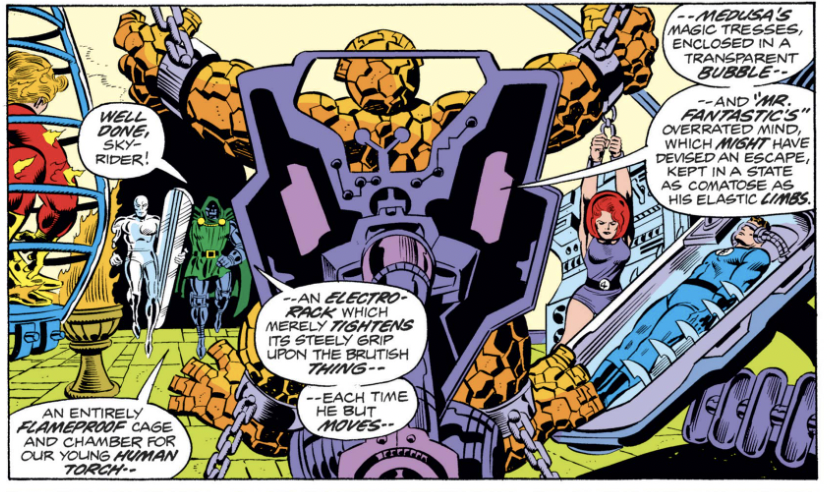
As mentioned above, confining the FF in cages designed to counter their powers has probably been employed in half a dozen issues by now. At least in this one Ben and Johnny note how easy it was to escape.


Anything else?

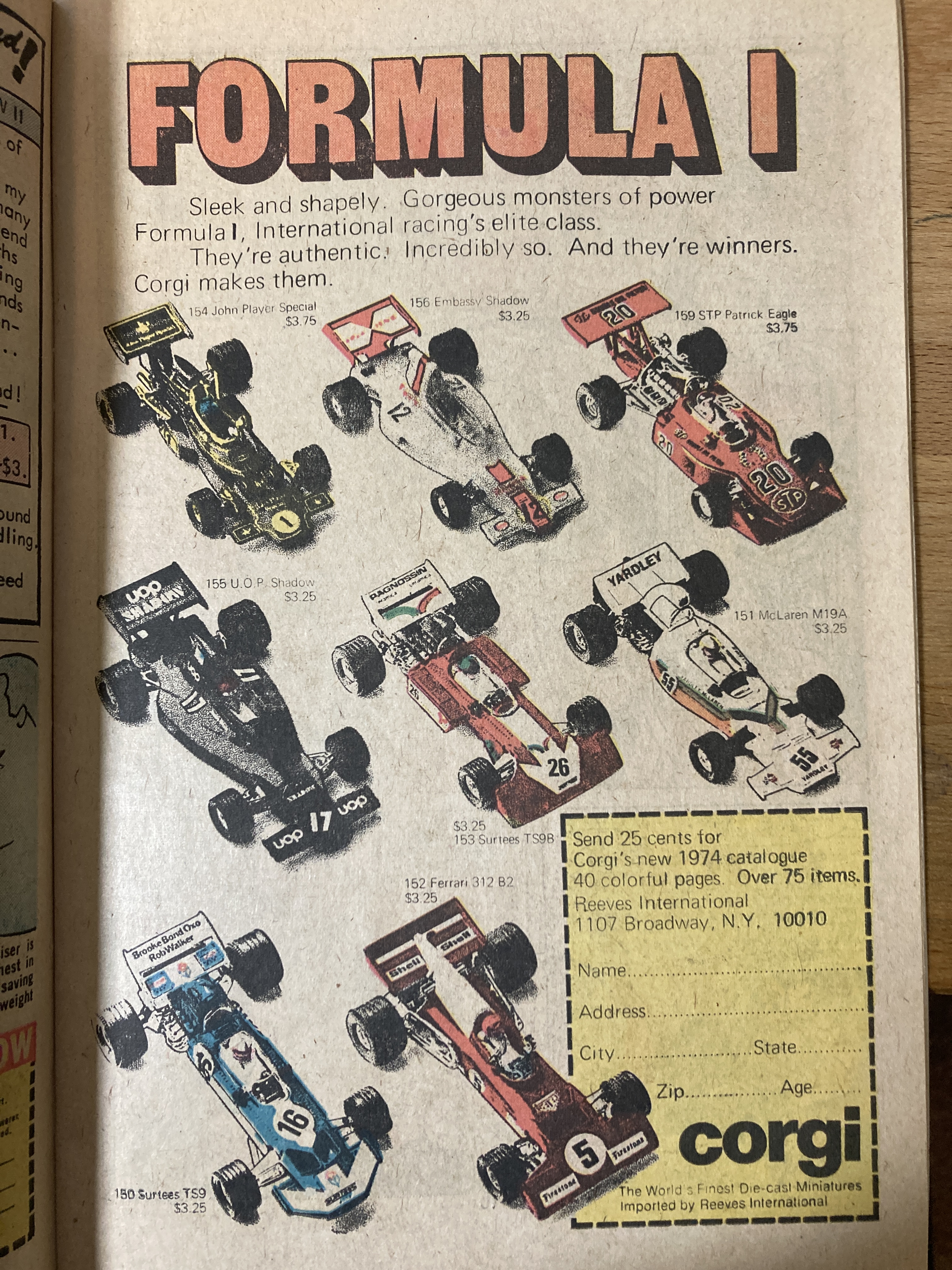
This ad was cool. I wonder if I can still get these cars?


Overall

A marked improvement from last issue

“The World’s Greatest Comic Magazine!” Fantastic Four No. 155

22 Sunday Dec 2024

Posted by percivalhenry in The World's Greatest Comic Magazine

≈ Leave a comment

Tags

1974, Dr. Doom, Fantastic Four, Fantastic Four 155, Marvel comics, Silver Surfer

Fantastic Four 155
“Battle Royal!”
Published November 1974
Writer: Len Wein
Pencils: Rich Buckler
Inks: Joe Sinnott
Letters: John Costanza
Colors: Glynis Wein
Editor: Roy Thomas
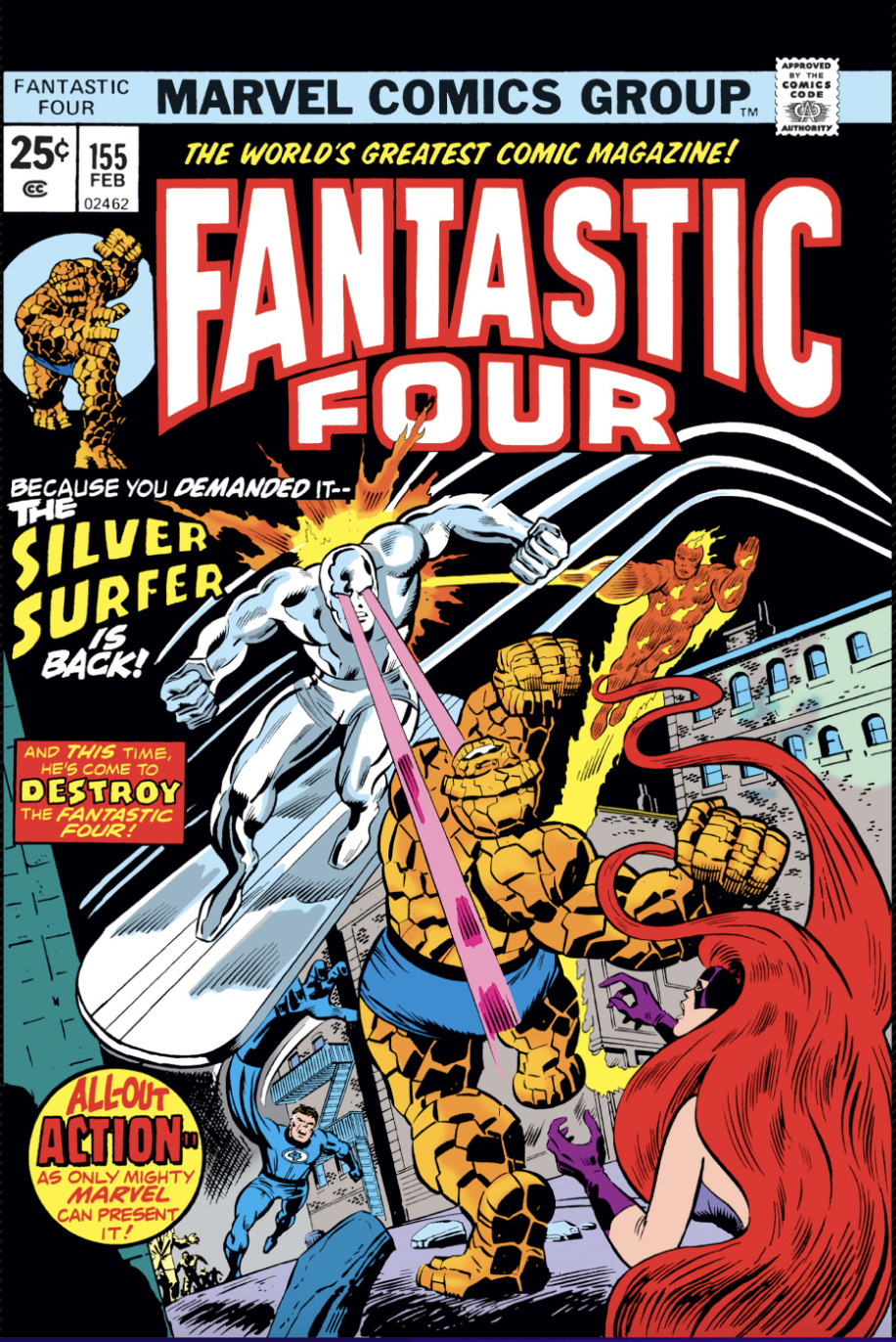
Cover: Buckler and Sinnott

Synopsis

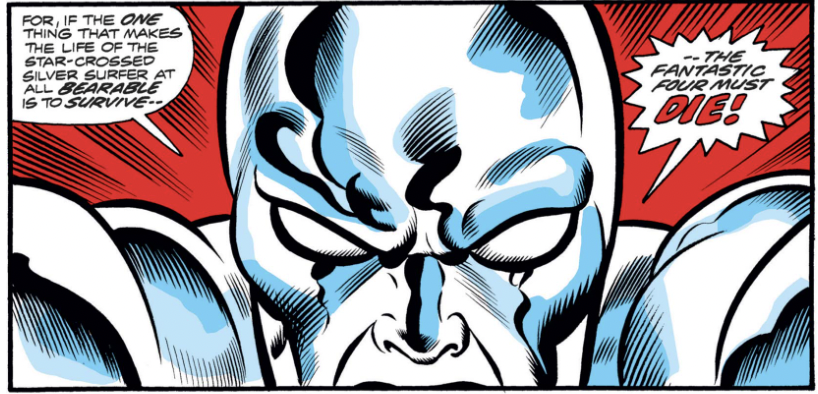
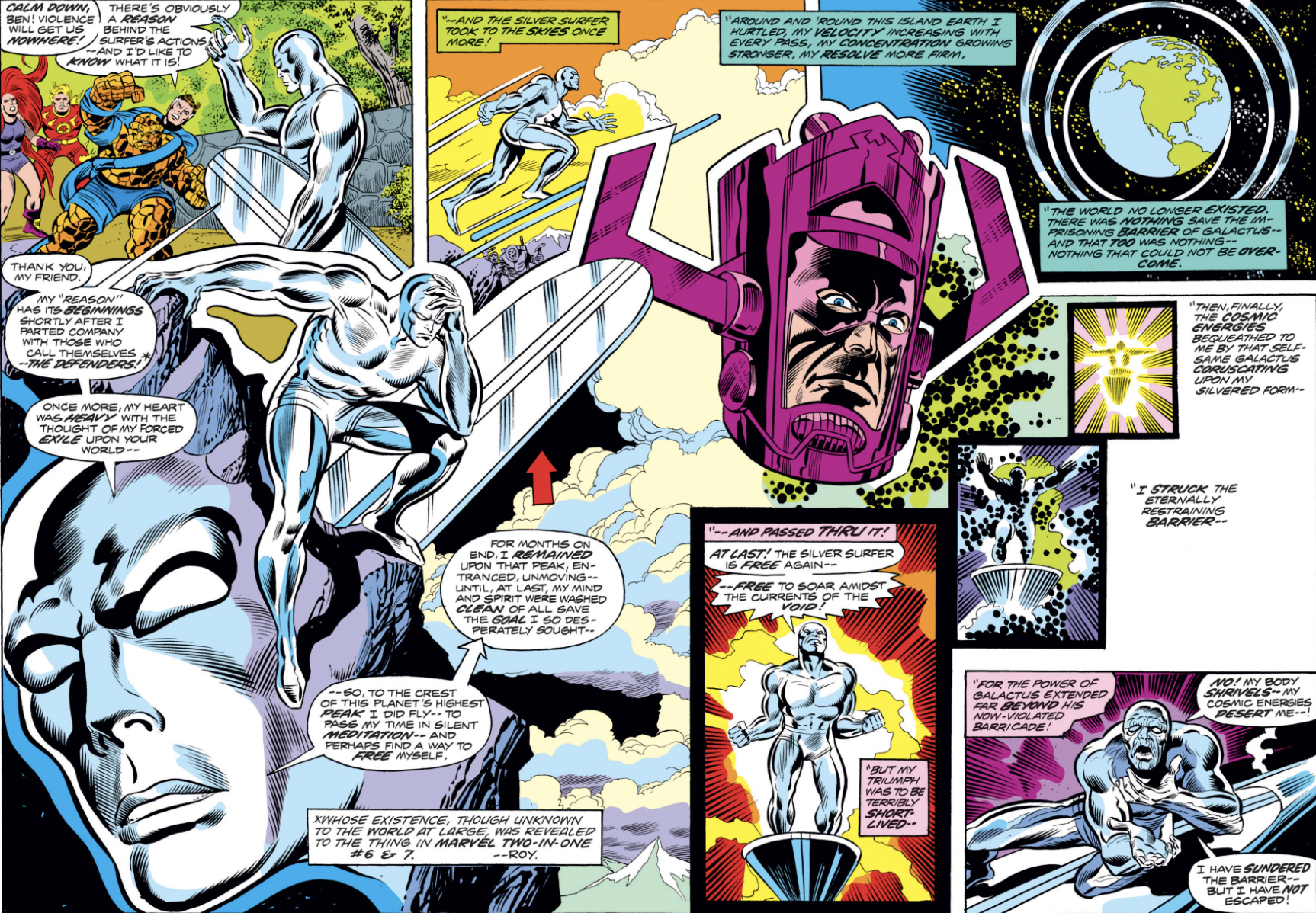
The Silver Surfer attacks the Fantastic Four in Central Park, but rather than kill them, he explains in a lengthy flashback how he discovered his beloved Shalla Bal was the captive of Dr. Doom. To save her, Doom demanded that he destroy the Fantastic Four.


What’s going on here?

This is Len Wein’s first full issue was writer of the Fantastic Four and I wish I could say it was a promising debut. It’s not. The entire issue hangs on a tired comic-book cliché — one hero must battle another because of reasons — which in this case makes even less sense than normal. The Silver Surfer, with all his cosmic power and wisdom, is really so smitten by Shalla Bal than he sees no other way to save her but killing his friends? That at no point does he think it might make more sense to enlist the aid of the Fantastic Four and the world’s smartest man, Reed Richards? I’m fairly sure that’s what will happen in the next issue, but it doesn’t make this comic any less tedious. It doesn’t help that much of it is narrated by the Surfer, who, as scripted by Wein, speaks in ornate, purple prose. “So, to the crest of this planet’s highest peak I did fly.” Seriously, why does he talk like that?


What I liked

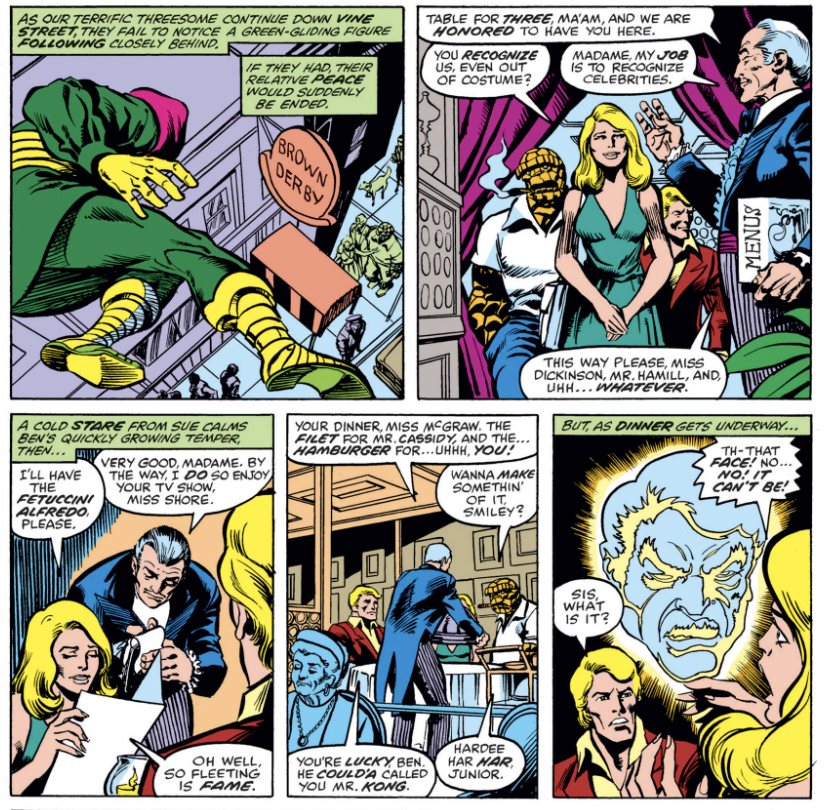
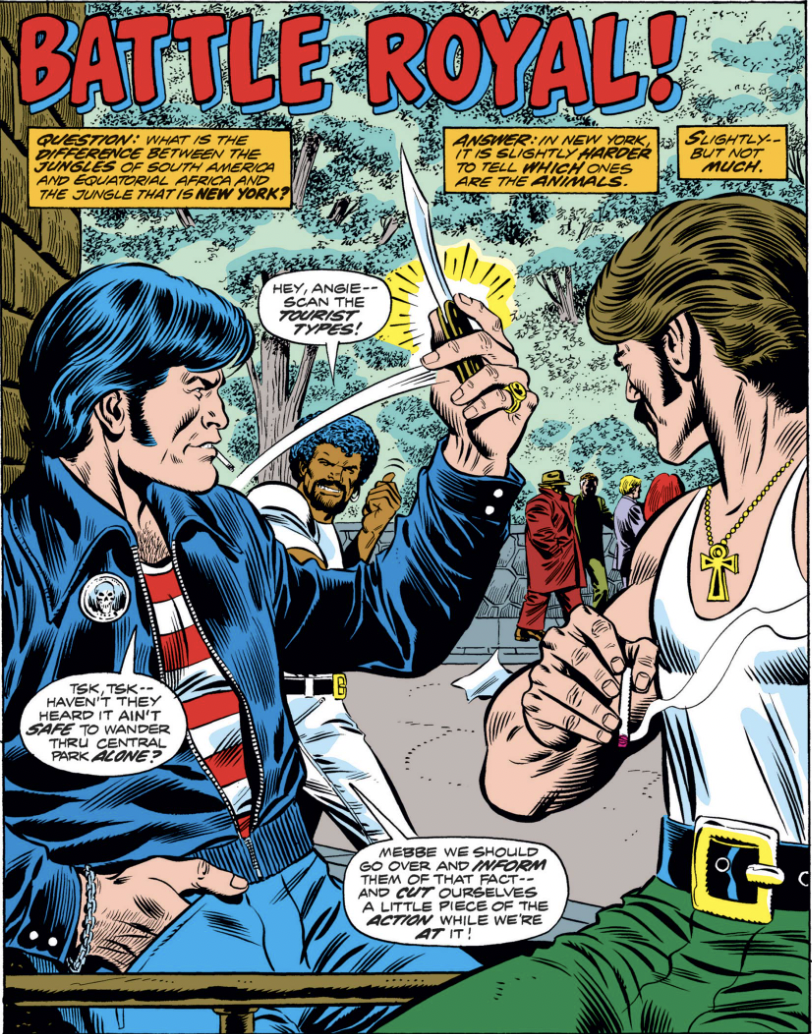
The opening sequence, where the FF is mugged in Central Park, has a fun, gritty-New York-in-the-70s cinematic quality to it. The muggers look like extras in “Warriors.”


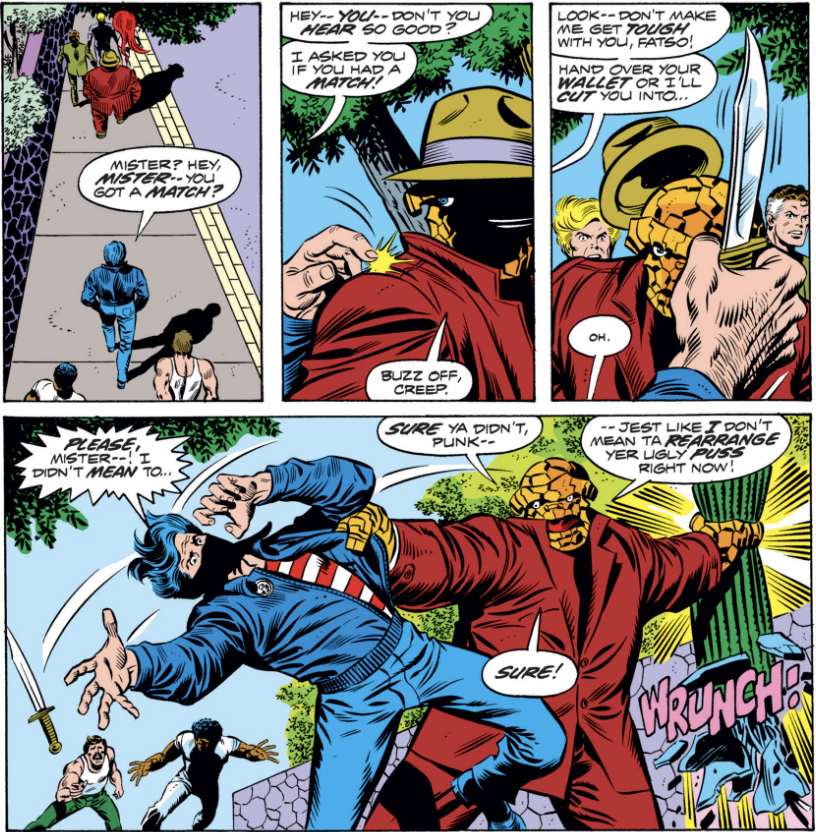
And while we know what’s coming, it’s satisfying to see them get their comeuppance when they attack the Thing:


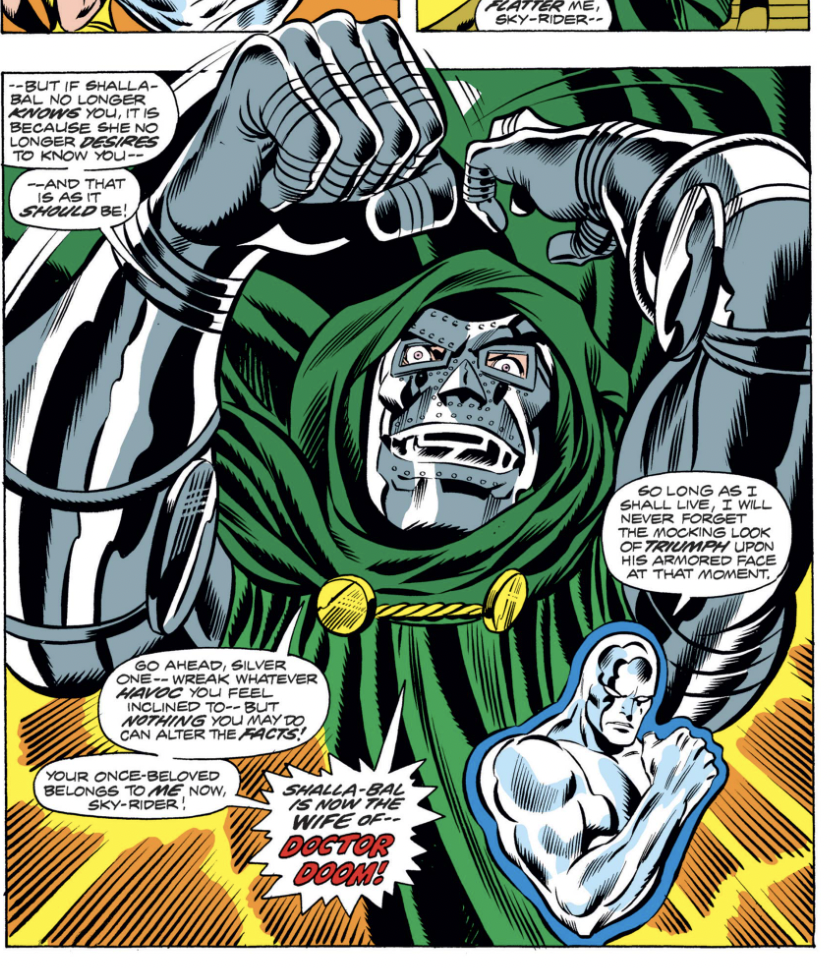
I liked the Doom reveal at the end, although it was pretty obvious the Surfer was in Latveria:

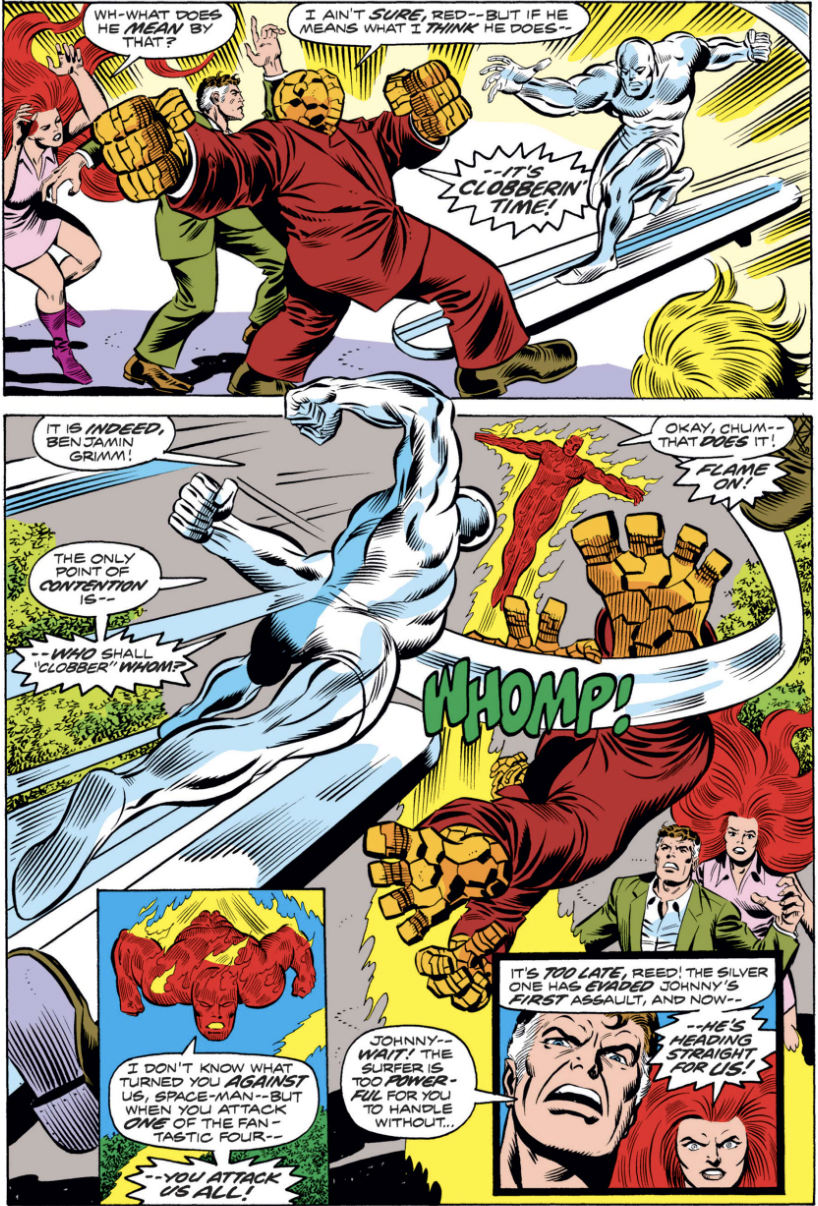
And this was fun: The Surfer hit Ben so hard he knocked off his shoes

What I didn’t like

For the umpteenth issue in the row, the Invisible Girl plays no meaningful role. In fact, she’s not even mentioned or seen in the comic.

As mentioned above, much of the issue is consumed with the Surfer lengthy and convoluted explanation of why he’s attacking the FF. After he unknowingly arrives in Latveria, he then stumbles across the FF battling robots. They are later revealed to be robots themselves, and the whole sequence ultimately has no bearing on the story at all, but simply serves as padding and a way to squeeze in another action sequence.


Anything else?

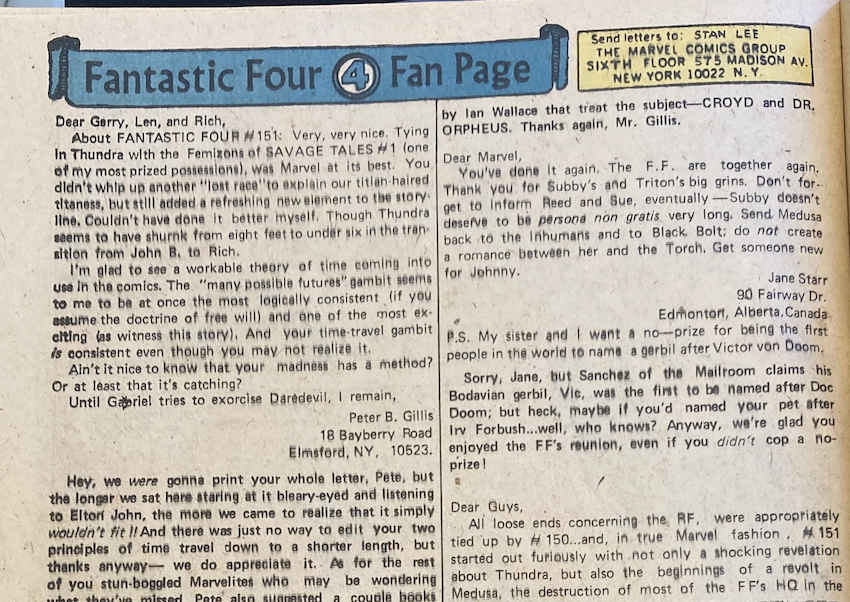
There’s a letter to the editor from future comics writer Peter B. Gillis. Also, Jane Starr wants a no-prize for naming her hamster Victor Von Doom.


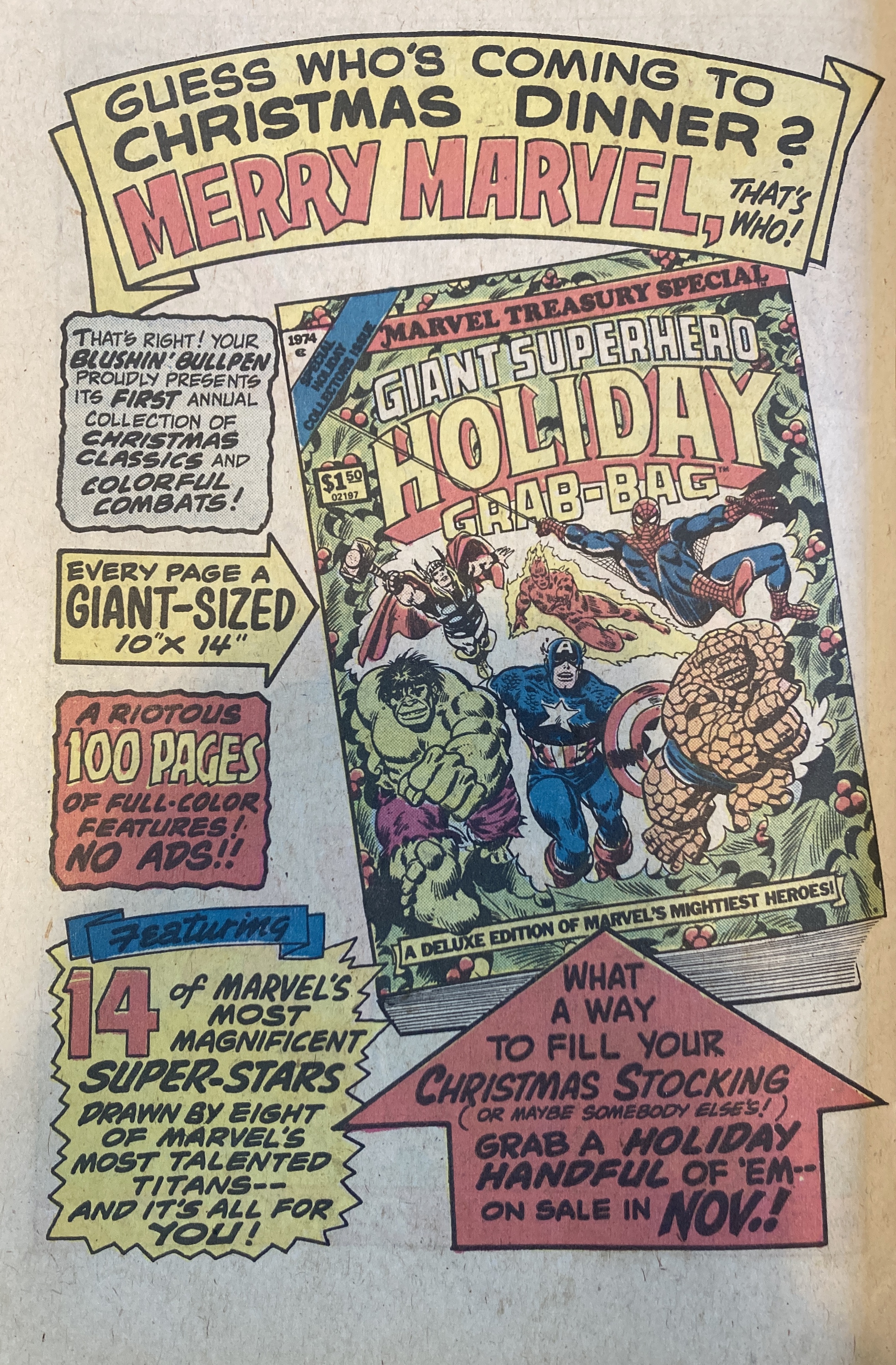
I kind of want this Holiday Grab-Bag:


Overall

A boring slog

“The World’s Greatest Comic Magazine!” Fantastic Four No. 144

31 Saturday Aug 2024

Posted by percivalhenry in The World's Greatest Comic Magazine

≈ 1 Comment

Tags

1973, Dr. Doom, Fantastic Four, Fantastic Four 144, Gerry Conway, Marvel comics, Rich Buckler

Fantastic Four 144
“Attack!”
Published: Dec. 1973
Writer: Gerry Conway
Pencils: Rich Buckler
Inks: Joe Sinnott
Letters: Artie Simek
Colors: George Roussos
Editor: Roy Thomas
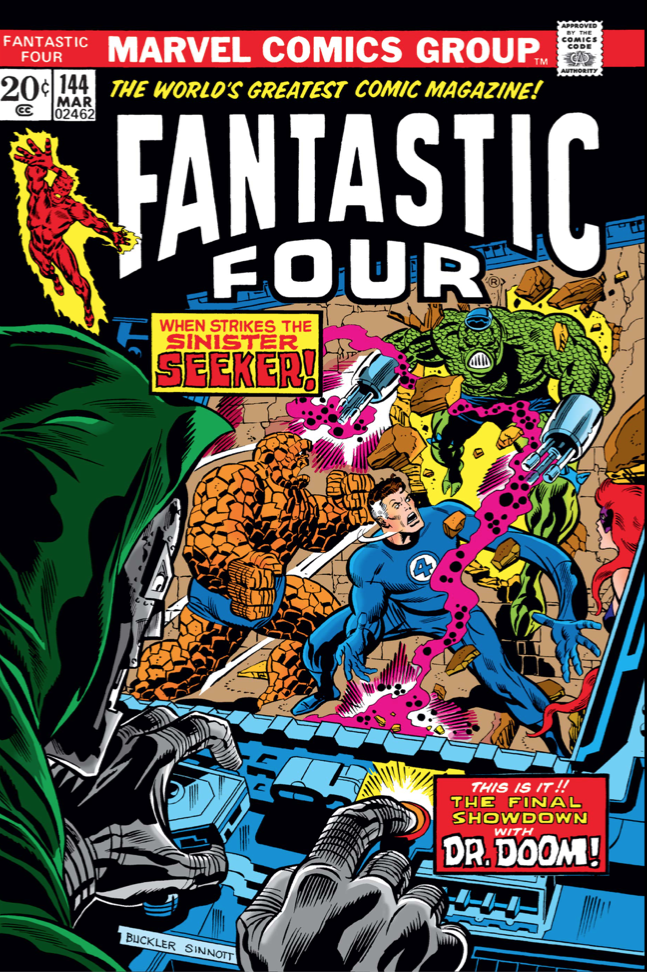
Cover: Bucker and Sinnott

Synopsis

Aided by Darkoth, Mr. Fantastic, the Thing and Medusa escape Dr. Doom’s subterranean New York lair, only to be attacked by the android Seeker. Reed reprograms the Seeker to free the Human Torch, and while Doom flees into space, he is attacked and apparently destroyed by Darkoth.


What’s going on here?

This is a fun, if not entirely coherent, issue. Bucker’s art is big and bold, as we will see, and Conway has crafted a rollicking story that hits a lot of the notes of later Lee / Kirby issues, but probably tries to stuff too much into the comic. This issue feels like the clearest example of how Conway and Bucker’s Fantastic Four differs from the Roy Thomas / John Buscema era. It’s less wordy, less concerned with intricacies of plot, while more exuberant and grandiose.

The issue wraps up a three-part arc that featured the return of Doom and introduced Darkoth. Both appear to die in the final pages, which feels like a classic way to wrap up a big story, but I assume most comic fans knew better than to think it was conclusive.


What I liked

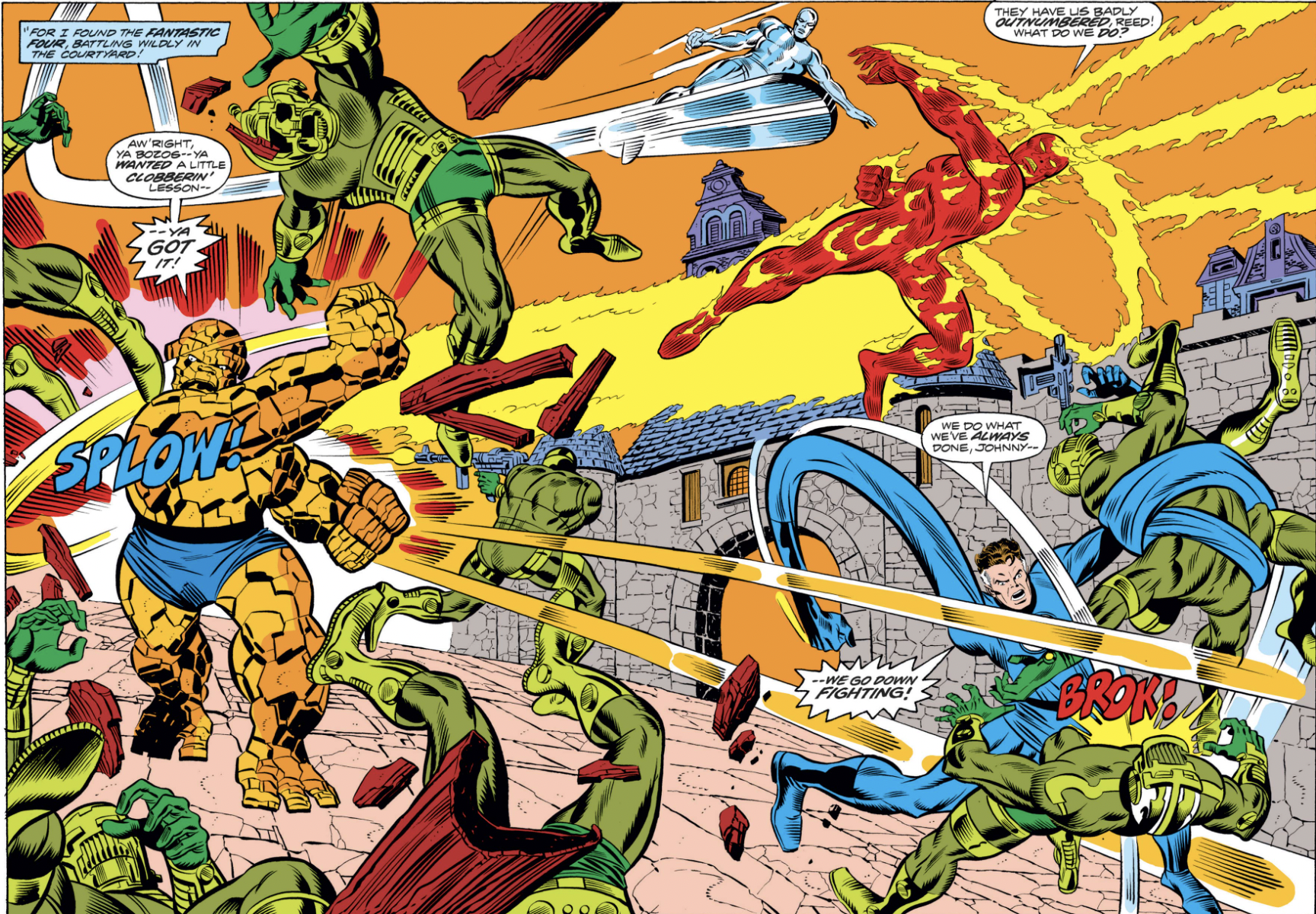
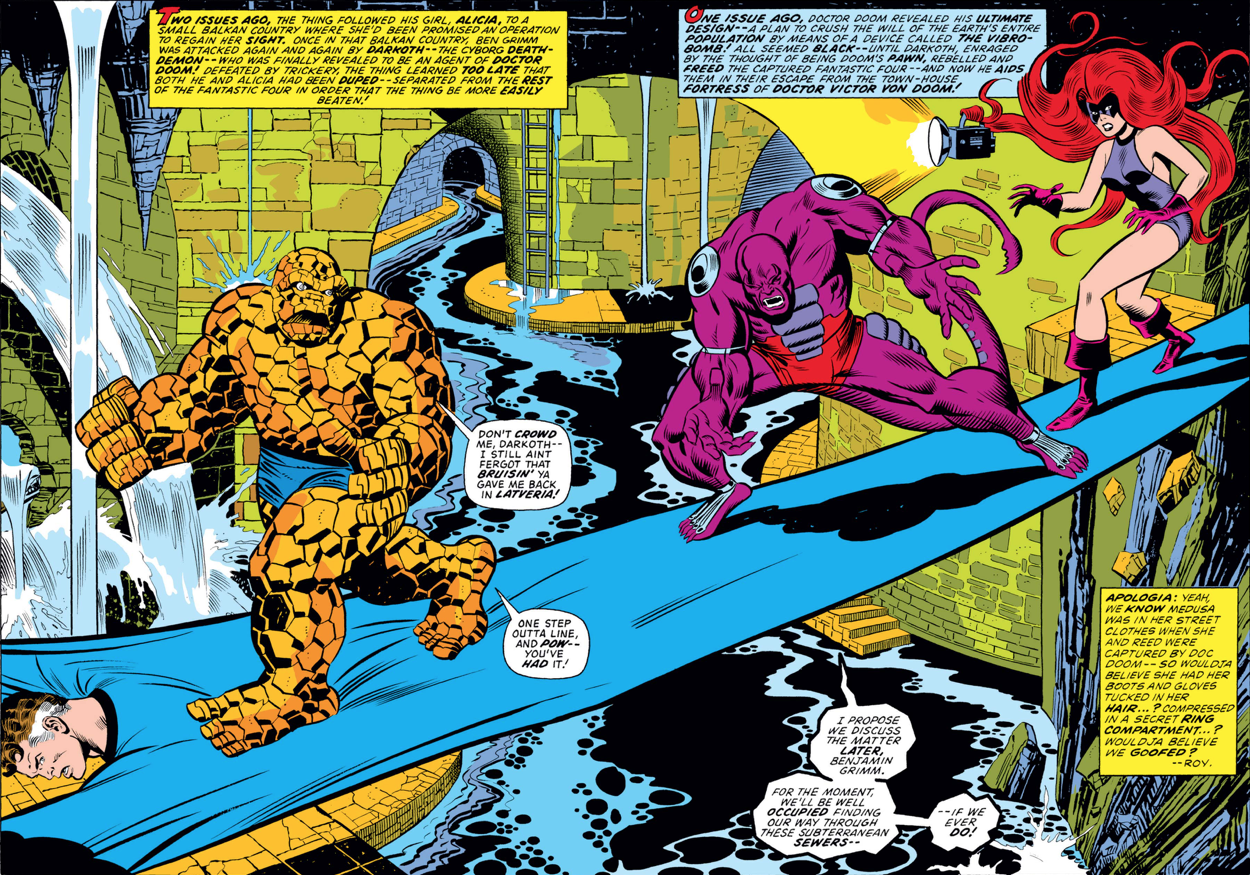
As mentioned, Bucker’s art is dynamic and the double-page spread above is a great example. I’m not sure the FF have had a double-page spread since the Kirby era (and they were pretty rare then) so this was a an exciting surprise when I found this across pages 2 and 3. The panel is big enough to serve up recaps from the last few issues, give a great visual image of the FF’s plight (who knew the New York sewers had stalactites?) and even include an apology about Medusa’s outfit.

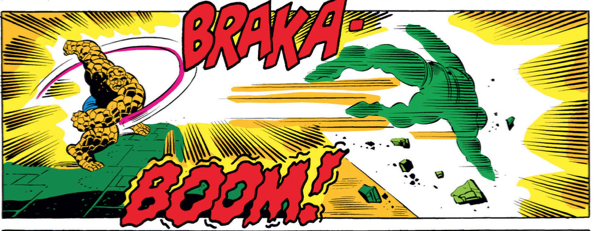
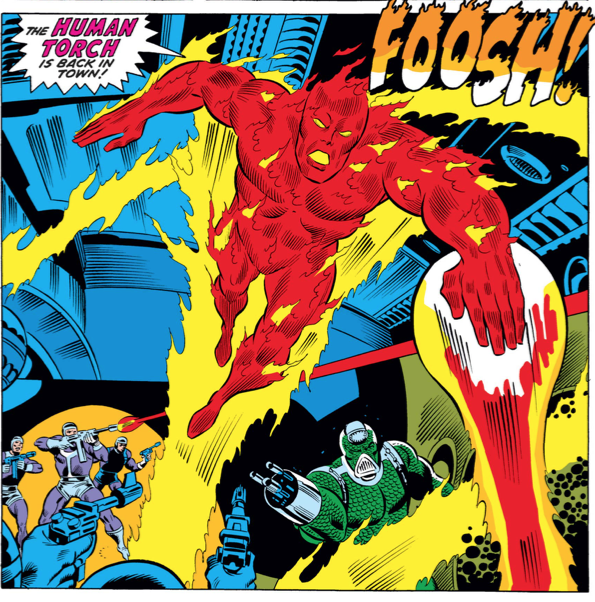
Here’s another great Buckler image:

I love the way the Torch pops off the page. It’s like a 3-D comic.

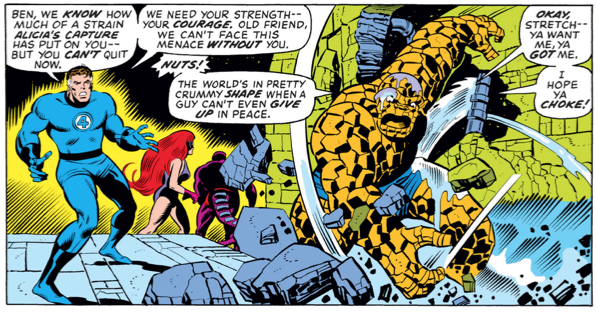
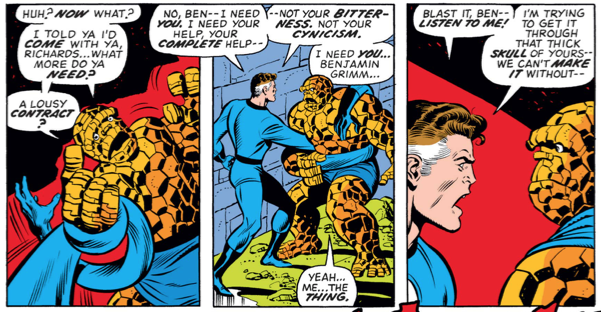
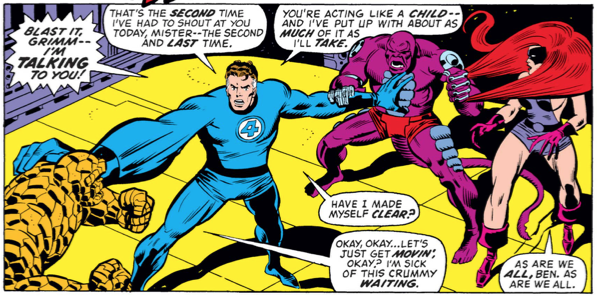
This issue also had a lot of by-play between Reed and Ben, who is distraught and irritable about Alicia being held prisoner by Doom. Reed is at his best as a leader and friend here.

And a bit later:

Conway strikes the right balance here with Reed, who can be a pushy and domineering jerk, but also knows how to motivate his team to get the job done.

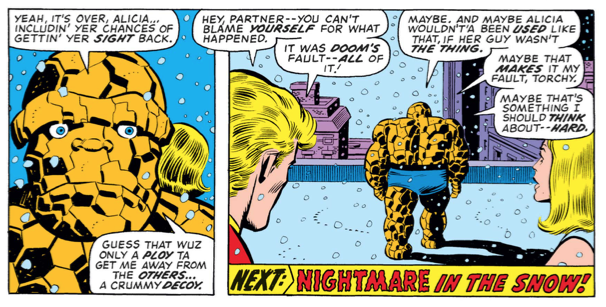
The comic had a bittersweet ending, with Ben once again reminded of his monstrosity.

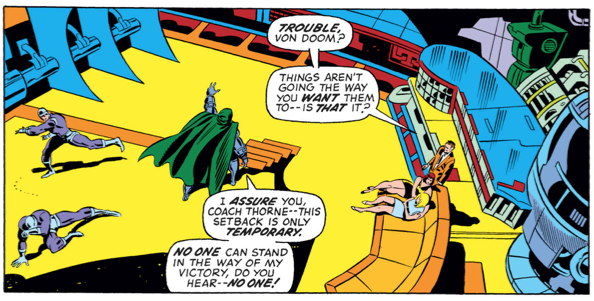
And I liked how Doom refers to his prisoner as “Coach Thorne.” Just like me, he has trouble referring to old teachers by their first names.


What I didn’t like

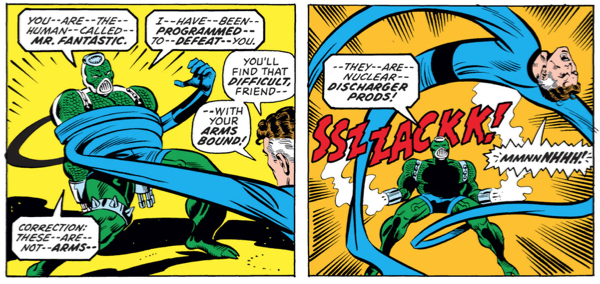
Overall, the story felt thin and not full developed. Darkoth’s backstory is confusing — is he a demon? is he a cyborg? — and it’s not clear how or where Doom found him. Doom’s plot for world domination, utilizing the mass-hypnotizing vibro-bomb, never feels like more than a McGuffin, while the Seeker shows up out of nowhere and makes little sense. It’s easily defeated, and serves as Doom’s undoing. I’ve written before about how the villain’s androids in the Fantastic Four rarely seem like androids, and have oddly human characteristics for machines. This is another example. Why does an android have muscles? Why does it need to talk? (And what are “nuclear-discharger rods,” anyway?)

Once again, Medusa is barely in the story — I think she only speaks in two panels — and Sue and Franklin are not only not seen, but never referenced. In all, there’s a “let’s throw it against the wall and see what sticks” quality to the story that leaves it unsatisfying.

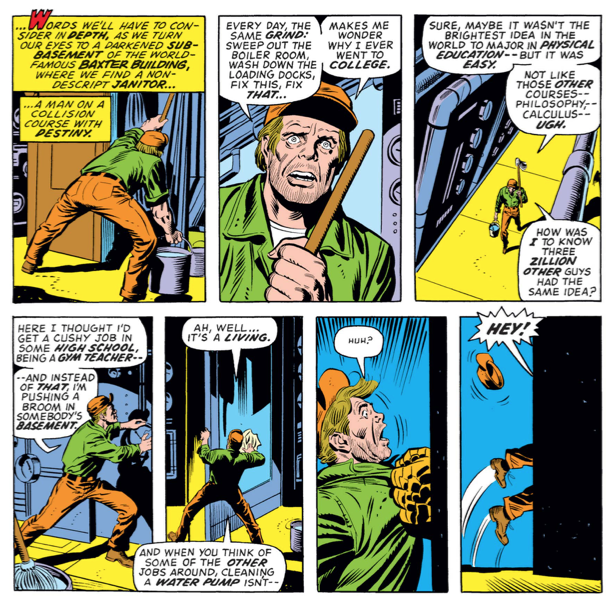
There’s also this weird interlude, which feels like Conway getting back at the jocks in his high school.


Anything else?

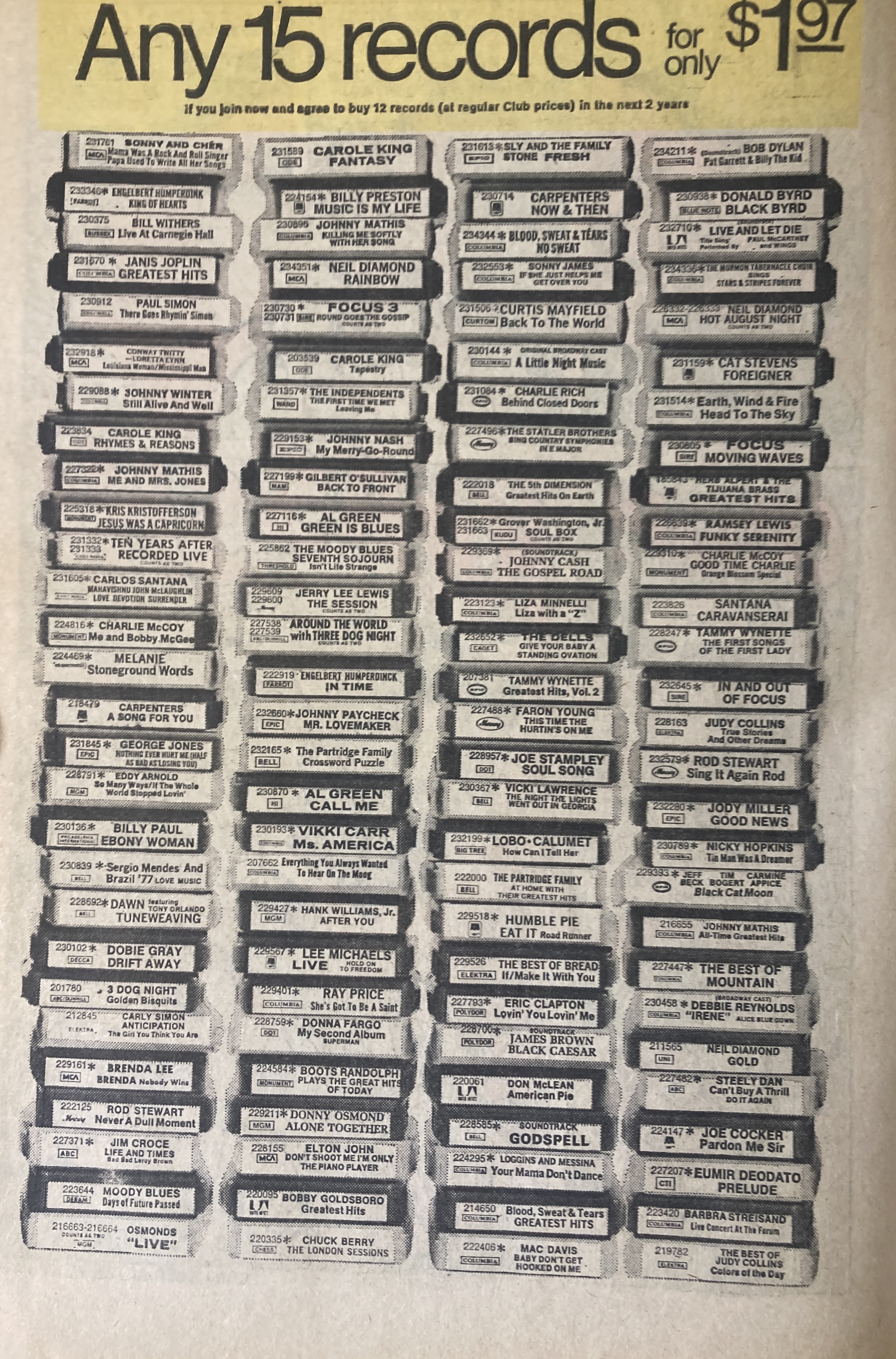
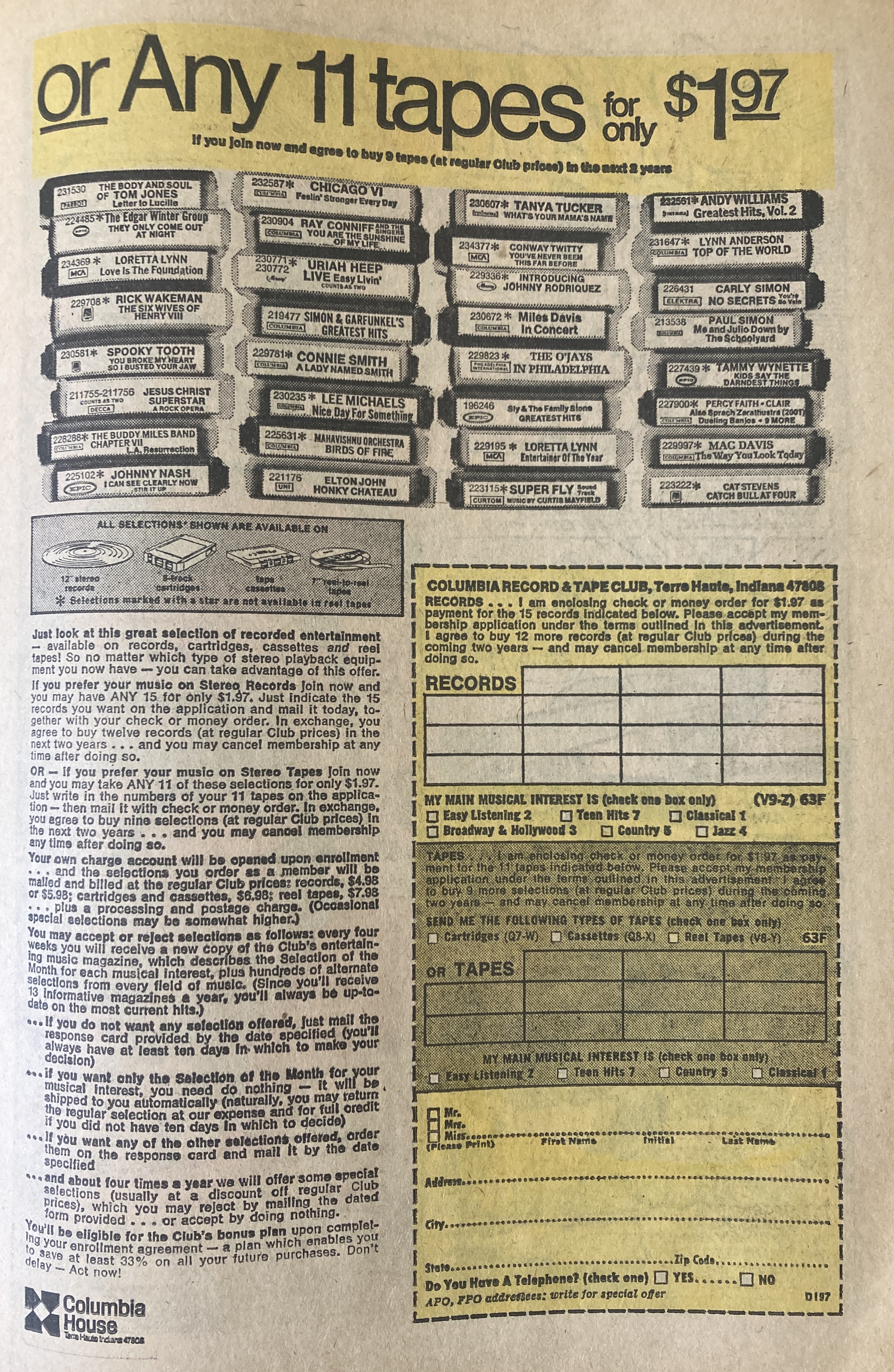
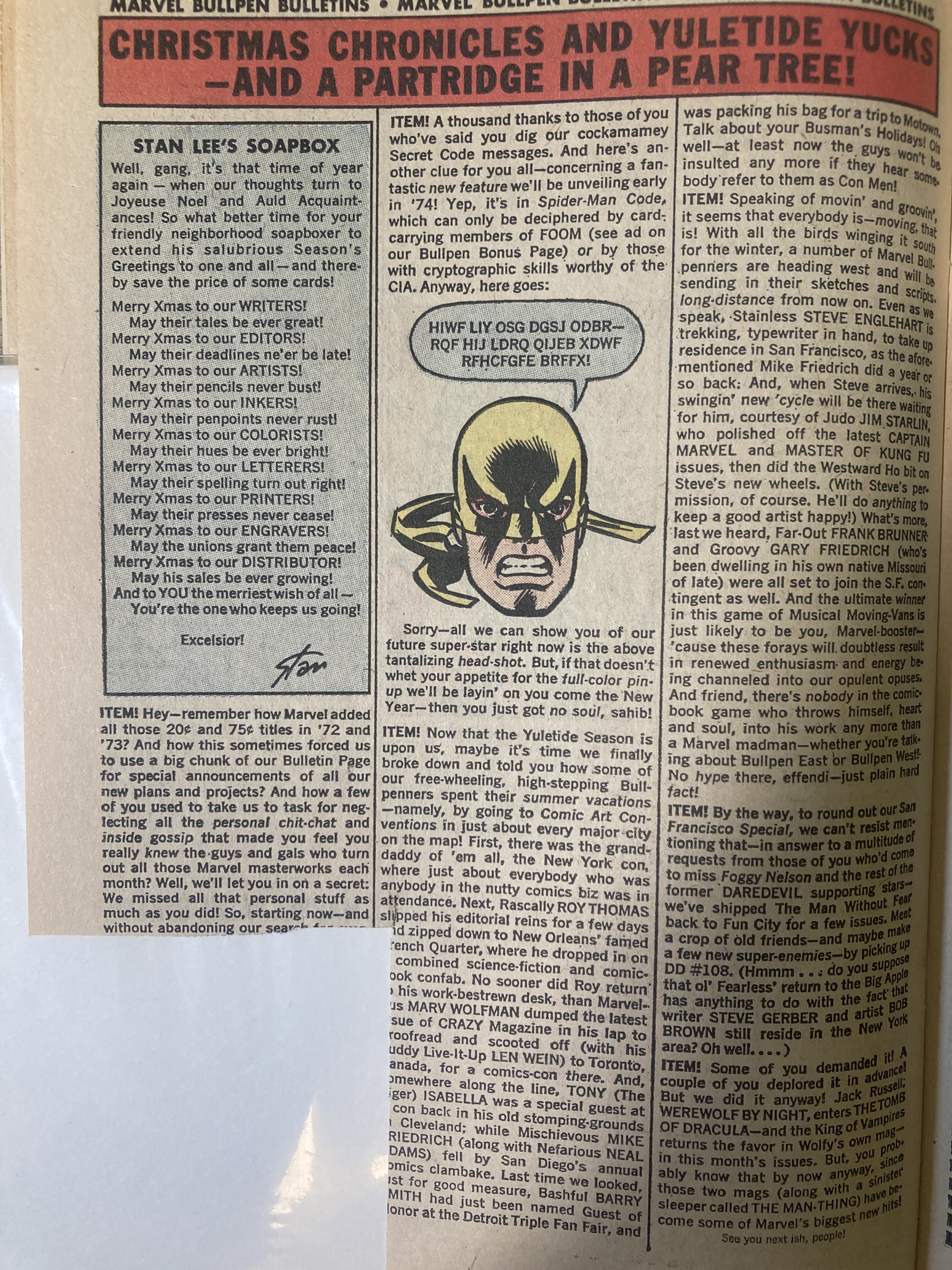
Lots of interesting advertising in this issue. I love these ads for record clubs. It’s reminder of what we think of music from the 1970s wasn’t all that people listened to. Englebert Humperdink, anyone?


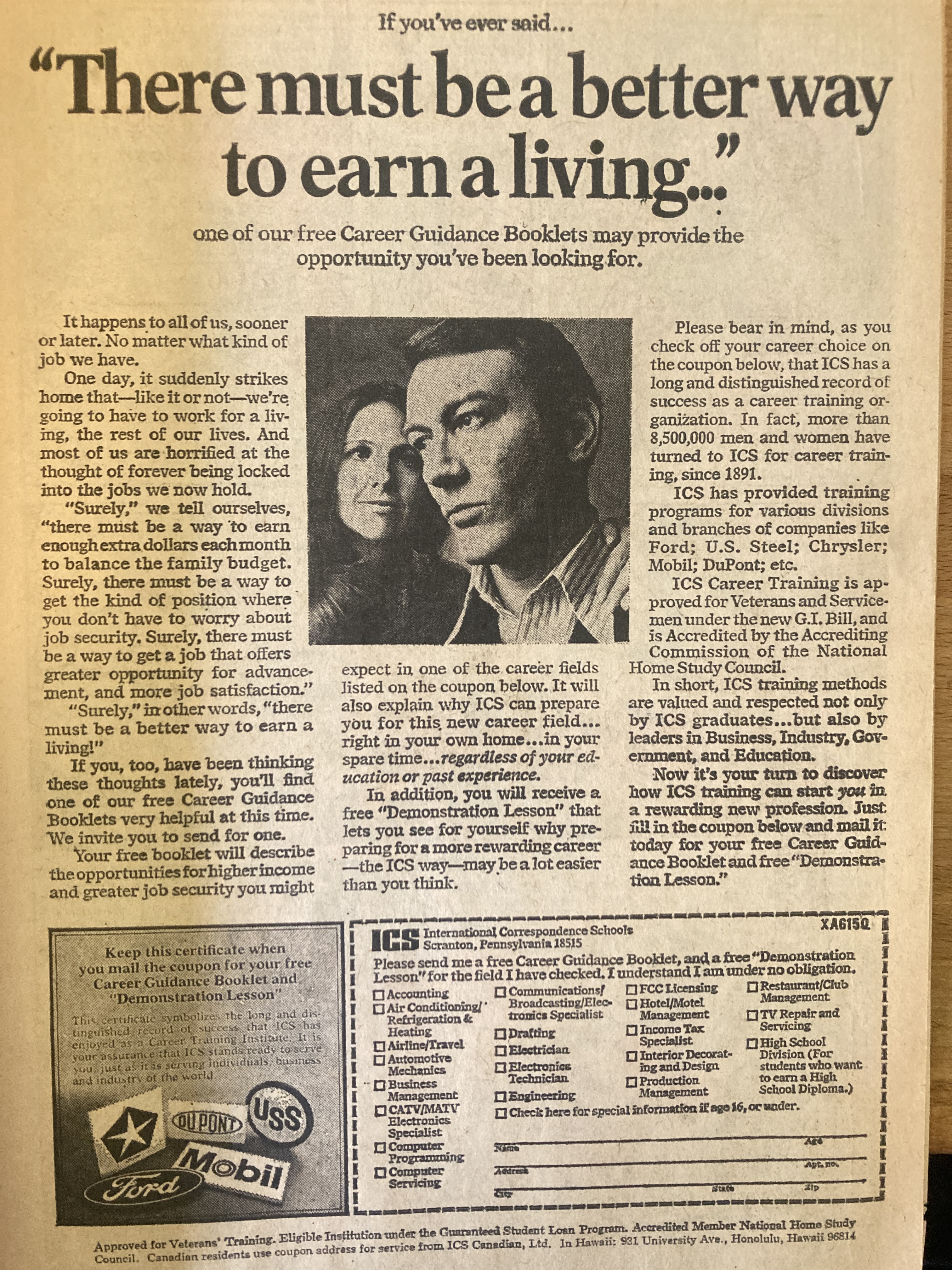
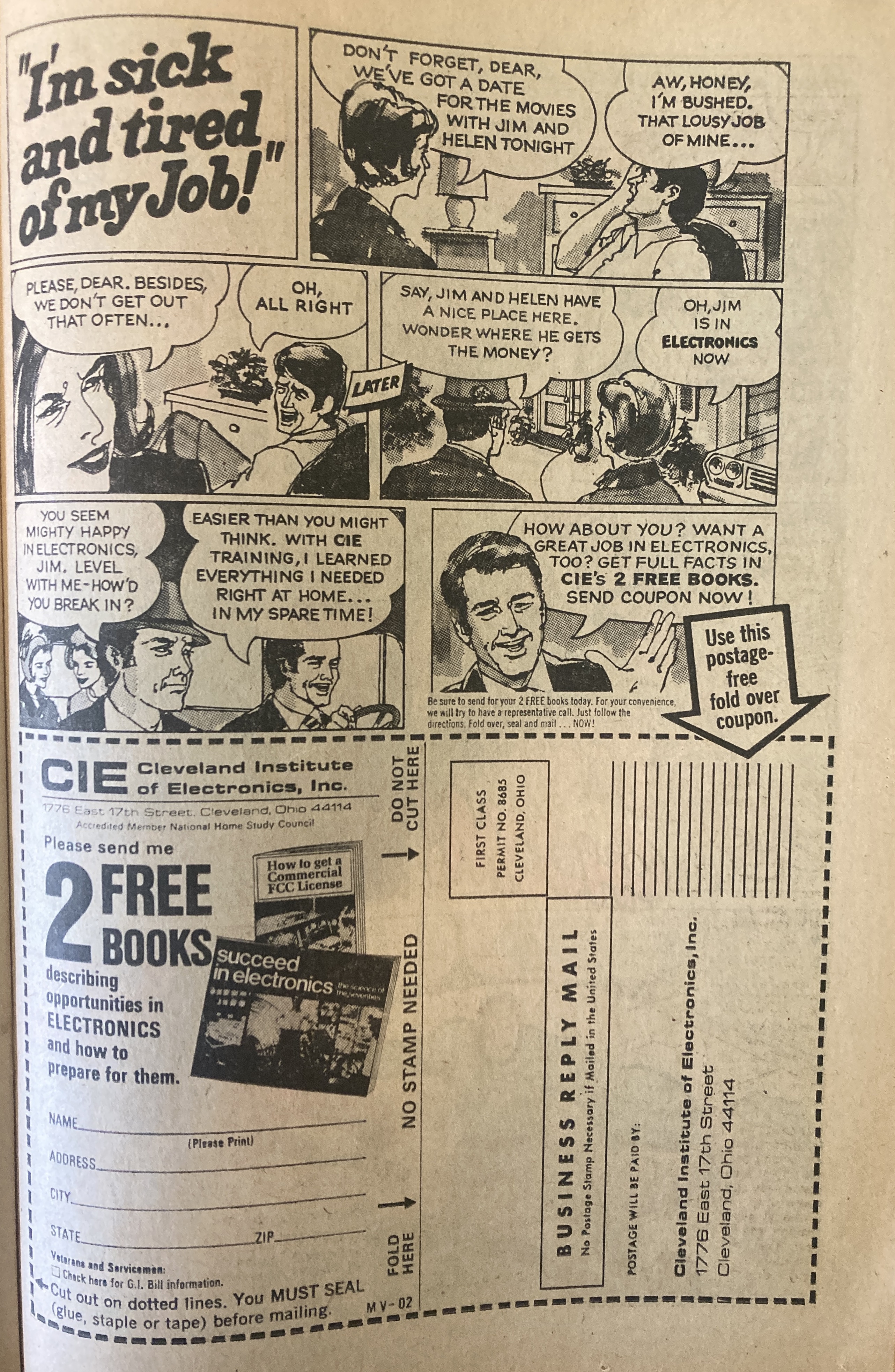
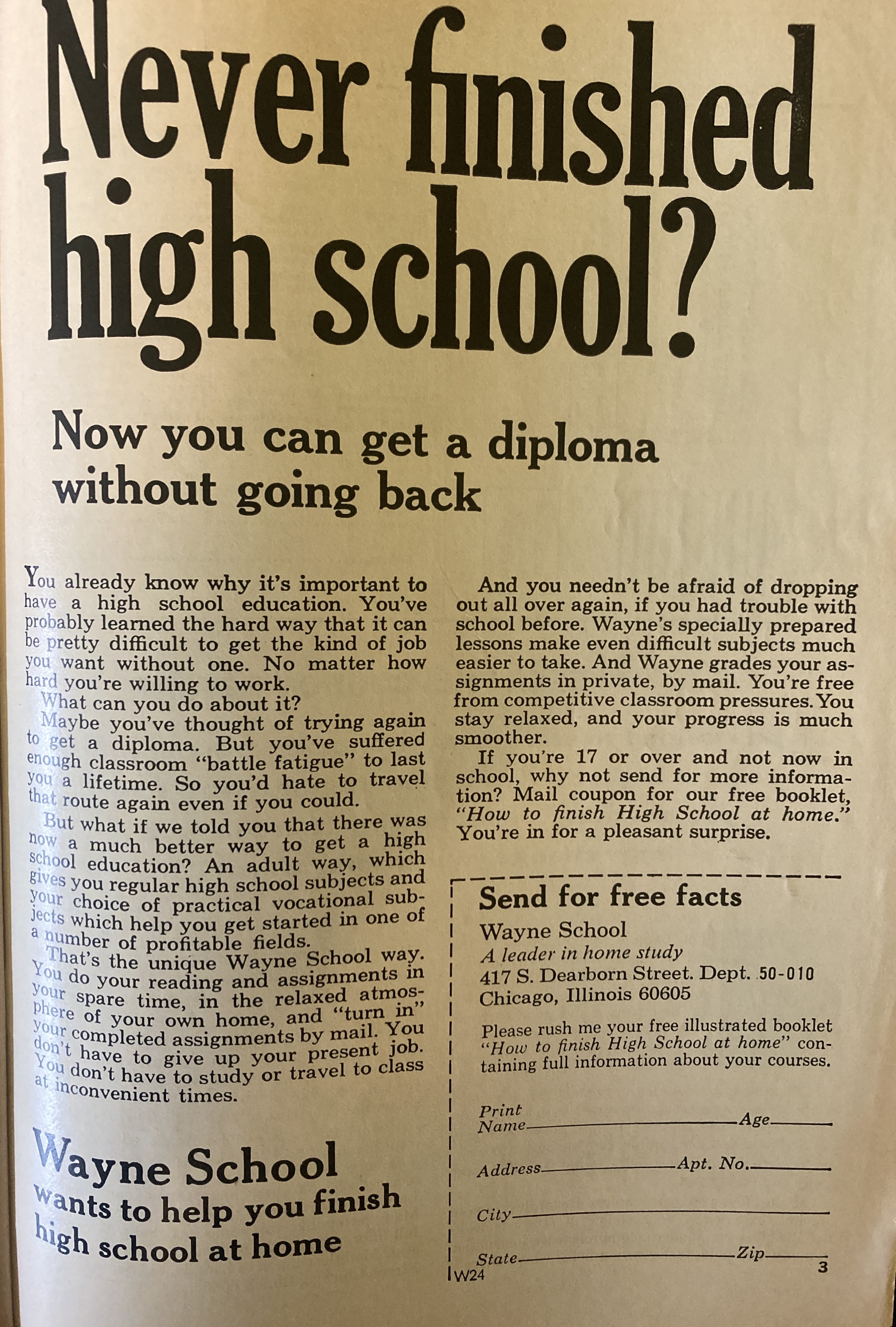
Also lots of ads for job training. The economy was not great in 1973.


Lastly, I hate when this happens. Luckily the kid who owned it didn’t cut to cut out any of the story.


Overall

Fun but flawed (like most of ’em)

← Older posts
  • “The World’s Greatest Comic Magazine!” Fantastic Four Annual No. 15
  • “The World’s Greatest Comic Magazine!” Fantastic Four No. 223
  • “The World’s Greatest Comic Magazine!” Fantastic Four No. 222
  • “The World’s Greatest Comic Magazine!” Fantastic Four No. 221
  • “The World’s Greatest Comic Magazine!” Fantastic Four No. 220
  • July 2026
  • June 2026
  • May 2026
  • April 2026
  • March 2026
  • February 2026
  • January 2026
  • December 2025
  • November 2025
  • October 2025
  • September 2025
  • August 2025
  • July 2025
  • June 2025
  • May 2025
  • April 2025
  • March 2025
  • February 2025
  • January 2025
  • December 2024
  • November 2024
  • October 2024
  • September 2024
  • August 2024
  • July 2024
  • June 2024
  • May 2024
  • April 2024
  • March 2024
  • February 2024
  • January 2024
  • December 2023
  • November 2023
  • September 2023
  • July 2023
  • June 2023
  • May 2023
  • April 2023
  • March 2023
  • February 2023
  • January 2023
  • December 2022
  • November 2022
  • October 2022
  • September 2022
  • August 2022
  • July 2022
  • June 2022
  • May 2022
  • April 2022
  • March 2022
  • February 2022
  • January 2022
  • December 2021
  • November 2021
  • October 2021
  • September 2021
  • August 2021
  • July 2021
  • June 2021
  • May 2021
  • April 2021
  • March 2021
  • February 2021
  • January 2021
  • December 2020
  • February 2018
  • May 2016
  • February 2016
  • January 2016
  • December 2015
  • November 2015
  • October 2015
  • September 2015
  • August 2015
  • July 2015
  • April 2015
  • March 2015
  • January 2015
  • December 2014
  • November 2014
  • October 2014
  • September 2014
  • August 2014
  • June 2014
  • May 2014
  • April 2014
  • March 2014
  • February 2014
  • July 2026
  • June 2026
  • May 2026
  • April 2026
  • March 2026
  • February 2026
  • January 2026
  • December 2025
  • November 2025
  • October 2025
  • September 2025
  • August 2025
  • July 2025
  • June 2025
  • May 2025
  • April 2025
  • March 2025
  • February 2025
  • January 2025
  • December 2024
  • November 2024
  • October 2024
  • September 2024
  • August 2024
  • July 2024
  • June 2024
  • May 2024
  • April 2024
  • March 2024
  • February 2024
  • January 2024
  • December 2023
  • November 2023
  • September 2023
  • July 2023
  • June 2023
  • May 2023
  • April 2023
  • March 2023
  • February 2023
  • January 2023
  • December 2022
  • November 2022
  • October 2022
  • September 2022
  • August 2022
  • July 2022
  • June 2022
  • May 2022
  • April 2022
  • March 2022
  • February 2022
  • January 2022
  • December 2021
  • November 2021
  • October 2021
  • September 2021
  • August 2021
  • July 2021
  • June 2021
  • May 2021
  • April 2021
  • March 2021
  • February 2021
  • January 2021
  • December 2020
  • February 2018
  • May 2016
  • February 2016
  • January 2016
  • December 2015
  • November 2015
  • October 2015
  • September 2015
  • August 2015
  • July 2015
  • April 2015
  • March 2015
  • January 2015
  • December 2014
  • November 2014
  • October 2014
  • September 2014
  • August 2014
  • June 2014
  • May 2014
  • April 2014
  • March 2014
  • February 2014
“The World’s Greatest Comic Magazine!” Fantastic Four Annual No. 15

“The World’s Greatest Comic Magazine!” Fantastic Four Annual No. 15

percivalhenry's avatar by percivalhenry July 18, 2026
“The World’s Greatest Comic Magazine!” Fantastic Four No. 223

“The World’s Greatest Comic Magazine!” Fantastic Four No. 223

percivalhenry's avatar by percivalhenry July 14, 2026
“The World’s Greatest Comic Magazine!” Fantastic Four No. 222

“The World’s Greatest Comic Magazine!” Fantastic Four No. 222

percivalhenry's avatar by percivalhenry July 5, 2026
“The World’s Greatest Comic Magazine!” Fantastic Four No. 221

“The World’s Greatest Comic Magazine!” Fantastic Four No. 221

percivalhenry's avatar by percivalhenry June 25, 2026
“The World’s Greatest Comic Magazine!” Fantastic Four No. 220

“The World’s Greatest Comic Magazine!” Fantastic Four No. 220

percivalhenry's avatar by percivalhenry June 15, 2026
“The World’s Greatest Comic Magazine!” Fantastic Four No. 219

“The World’s Greatest Comic Magazine!” Fantastic Four No. 219

percivalhenry's avatar by percivalhenry June 7, 2026

Blog at WordPress.com.

  • Subscribe Subscribed
    • Percival Henry: The Fantastic Four and more
    • Join 74 other subscribers
    • Already have a WordPress.com account? Log in now.
    • Percival Henry: The Fantastic Four and more
    • Subscribe Subscribed
    • Sign up
    • Log in
    • Report this content
    • View site in Reader
    • Manage subscriptions
    • Collapse this bar
Loading Comments...