Tags
1981, Bill Sienkiewicz, Doug Moench, Fantastic Four, Fantastic Four 131, Joe Sinnott, Marvel, Marvel comics, negative Zone
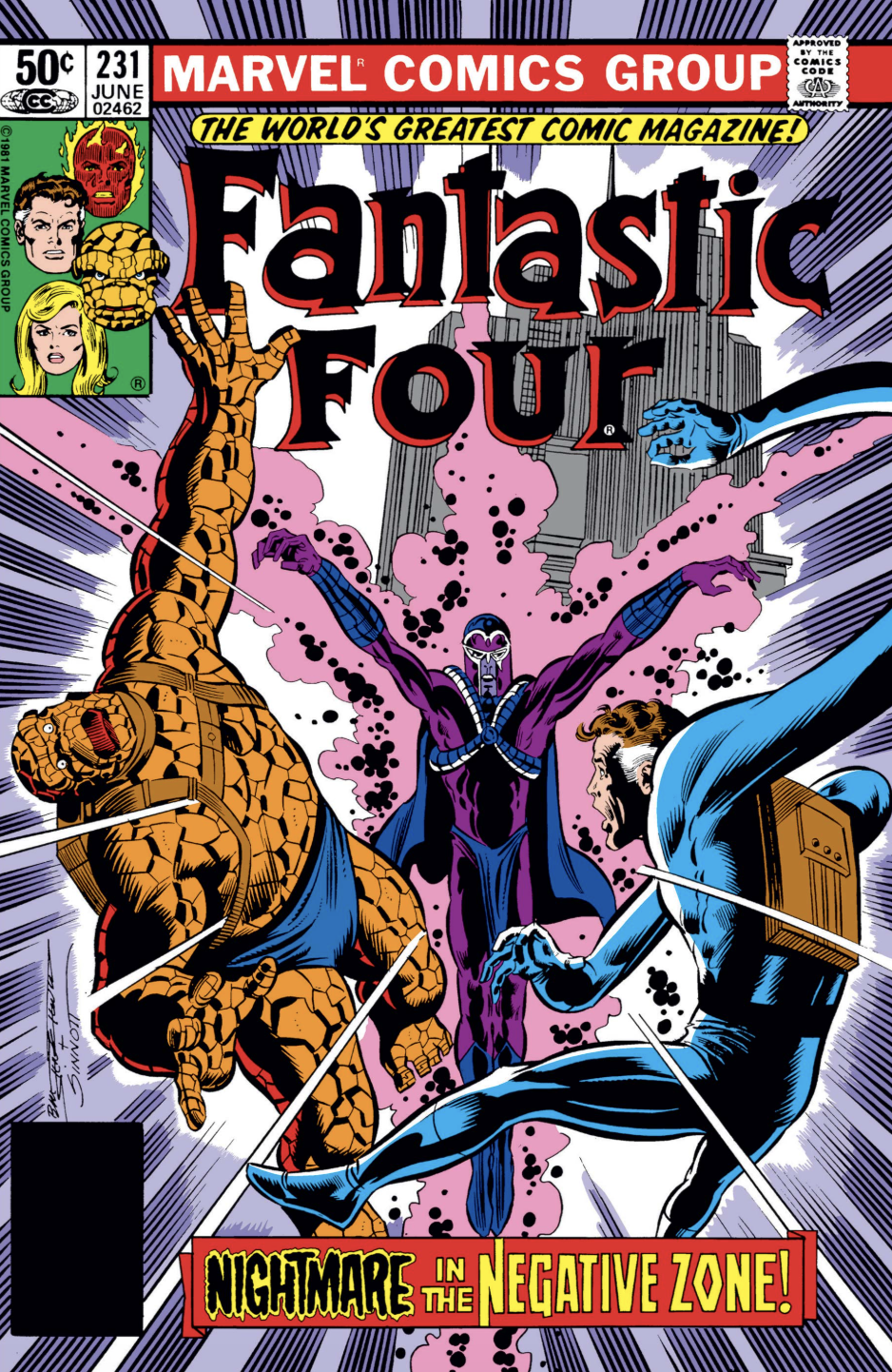
Fantastic Four 231
“In All The Gathered Gloom!”
Published March 1981
Writers: Doug Moench and Roger Stern (credited as “Gurland”)
Pencils: Bill Sienkiewicz and Al Milgrom (credited as “Moore”)
Inks: Joe Sinnott, Sienkiewicz and Frank Giacoia (uncredited)
Letters: Jim Novak
Colors: George Roussos
Editor: Stern (credited to Jim Salicrup)
Cover: Sienkiewicz and Sinnott
Synopsis
The Baxter Building is trapped in the Negative Zone with a small slice of Manhattan, whose residents blame the Fantastic Four for their predicament. As the FF try to steer their way back, they are attacked by Stygorr, a Negative Zone warlord. Meanwhile, Lew Shiner, a real estate developer stuck in the Negative Zone, rallies a mob to attack the Baxter Building. Mr. Fantastic devises a plan that both defeats Stygorr and Shiner and returns the missing piece of New York back to its own reality.
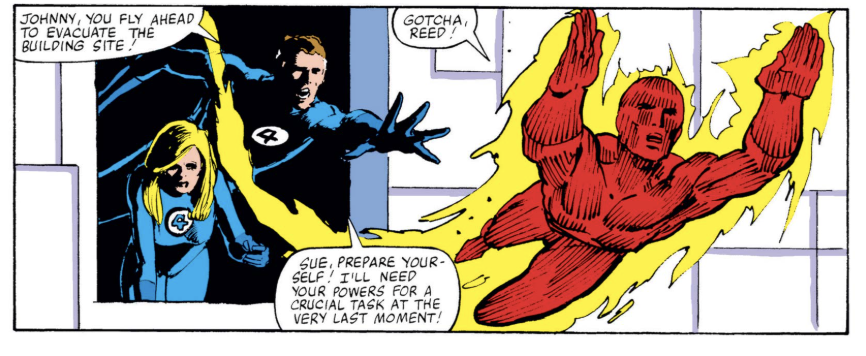
What’s going on here?
This is an interesting issue, for a number of reasons. I picked it up expecting the worst: The Doug Moench/ Bill Sienkiewicz run has been a disappointment and given this is their last issue the book, I expected them to mail it. And yet it’s a pretty good comic, with a crazy amount of plots and subplots that generate some real suspense and excitement. I was prepared to give Moench credit where credit was due until, researching this issue, I discovered it was both co-written and edited by Roger Stern (apparently Jim Salicrup was sick so Stern filled in as editor and rewrote some of the comic). It’s impossible to know from this distance who did what, but I’m going to guess the more enjoyable aspects were probably from Stern.
The comic’s art is similarly muddled. Most of the comic is laid out by Sienkiewicz, but only the first 21 pages are inked by Joe Sinnott. The next seven were finished by Sienkiewicz, and the last page, strangely, was penciled by Al Milgrom and inked by Frank Giacoia, neither of whom are credited (apparently, the credits were supposed to read (“& more” but it was rendered as just “Moore.”) The Milgrom/Giacoia art looks very out of place:
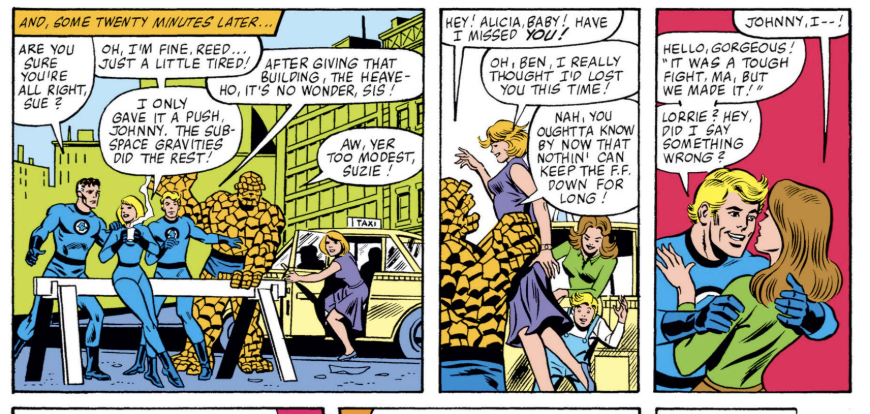
But the real story here is the unfettered Sienkiewicz. I’ve discussed before how Sienkiewicz said he appreciated Sinnott’s tutelage, but it’s pretty obvious how hemmed in he was by Sinnott’s conservative style. The pages that are all Sienkiewicz have a freedom and loose energy that foreshadows his work on the New Mutants. Here are a few examples:
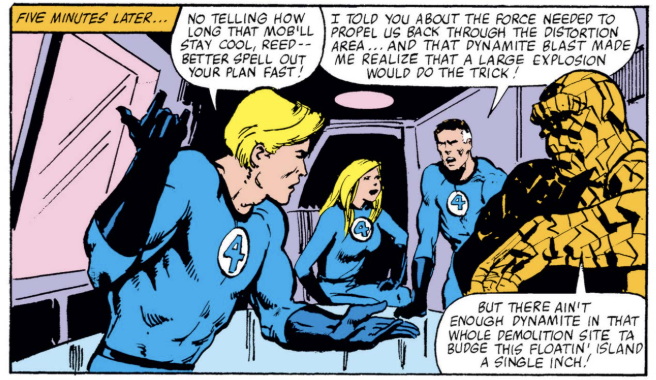
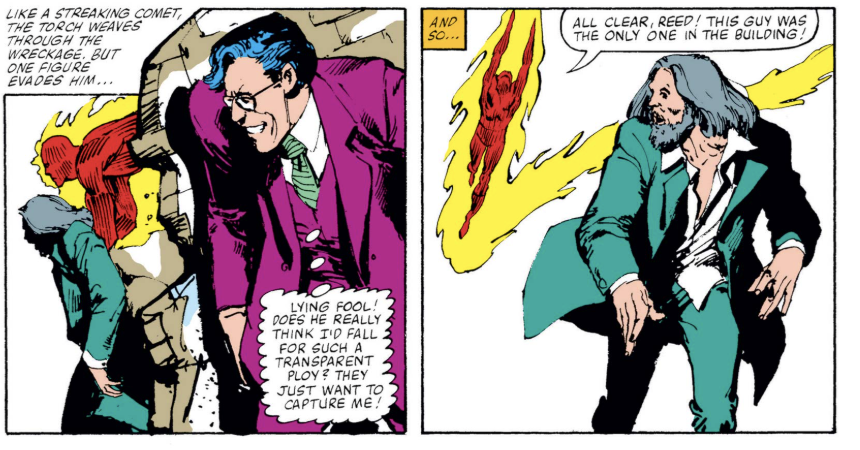
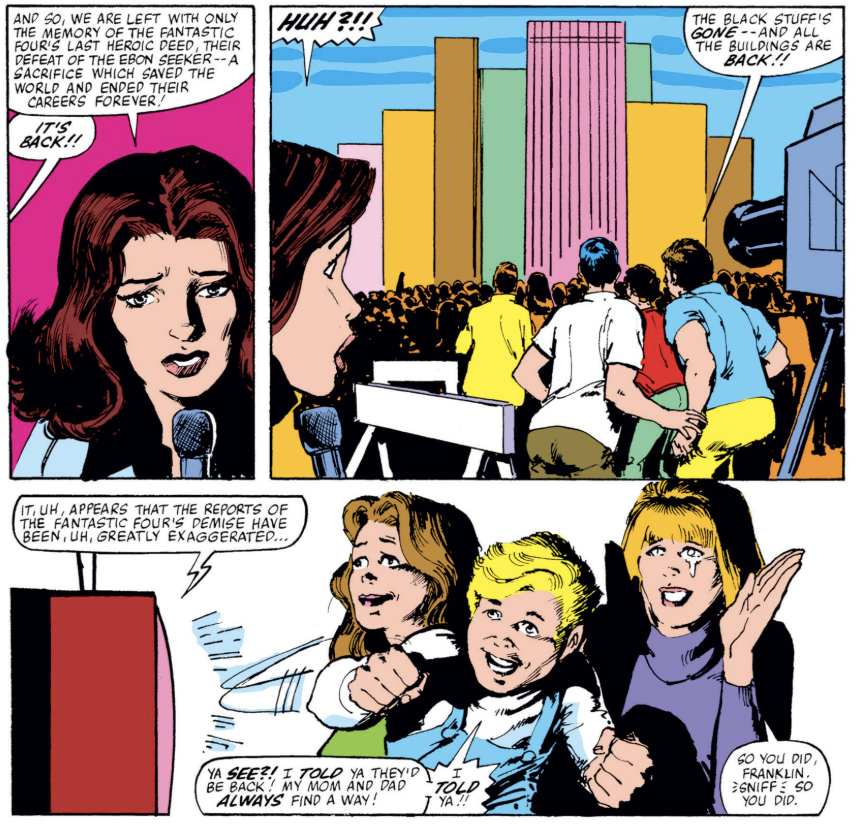
The shame of it is we didn’t get to see Sienkiewicz unleashed until the last few pages of his run. With all due respect to Joe Sinnott, a Hall of Fame inker, his conservative style did Sienkiewicz no favors. As it happens, this is Sinnott’s last issue for some time.
What I liked
Along with the above-mentioned art, the story was better than most in recent months. Moench (or Stern) puts several stories in motion: The FF’s desperate struggle to return their slice of NYC to Earth, the menace and attack of Stygorr, the unhinged Shiner and his bloodlust, and lastly, Alicia, Franklin and Lorrie waiting at home for the FF’s return. It’s a lot, particularly because the main storyline involves some complicated (and mostly bogus) science, and it would have benefited from more space to tell the story properly instead of cramming it all into one issue. But the storylines come together nicely and it’s a pretty satisfying comic.
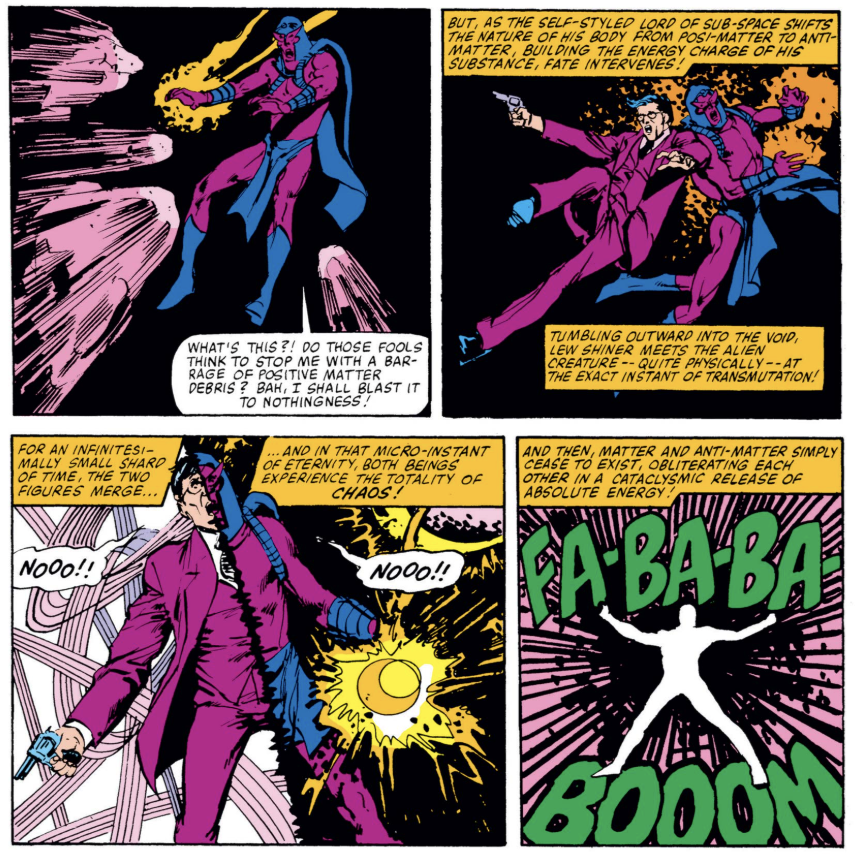
I thought this sequence, where the matter of Lew Shiner intersects the antimatter of Stygorr, was impressively dramatic:
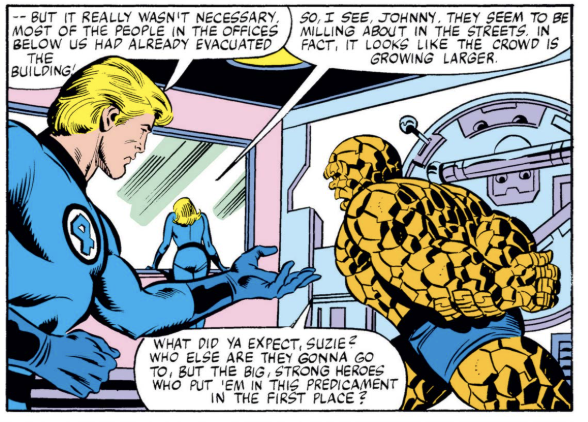
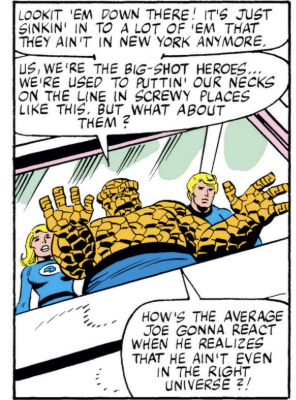
I thought this was smart and revealing sequence, where Ben demonstrates his empathy for ordinary people:
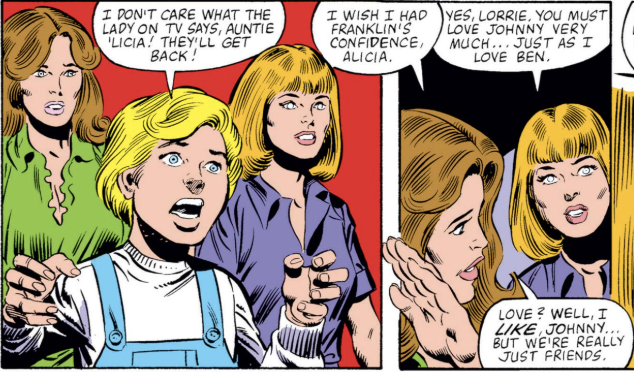
And I liked how Lorrie, Johnny’s girlfriend of the moment, just isn’t that in to him:
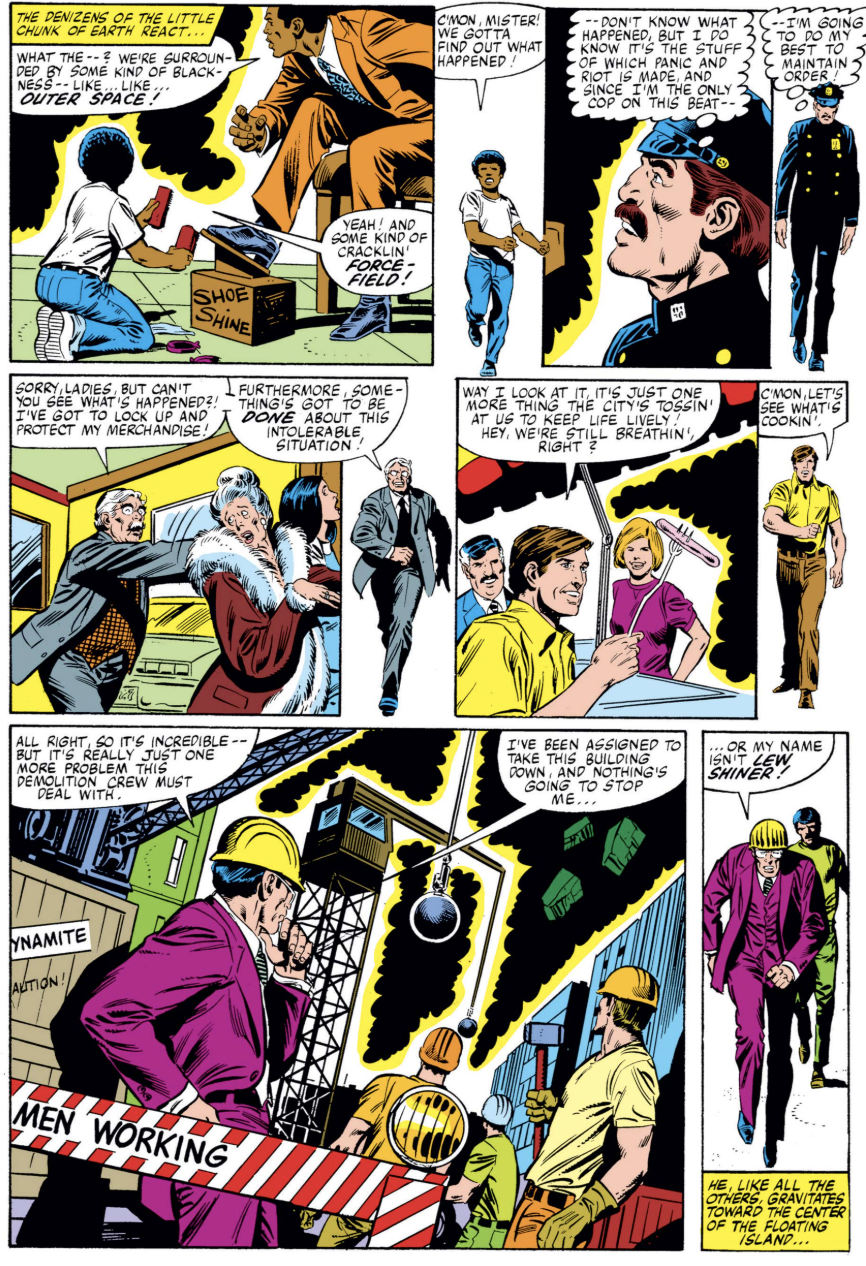
Lastly, this was a cool idea from Sienkiewicz, as the various types of New Yorkers set out to discover what happened to them:
What I didn’t like
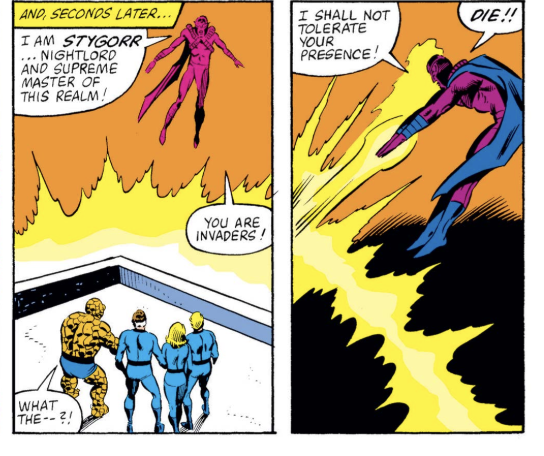
Stygorr is a pretty silly character. By rights the role of Negative Zone baddie should be played by Annihilus, but since the villain is killed at the end, I suspect he was off limits and so Moench/Stern concocted this Stygorr. Like many villains, including Shiner above, he wears purple, and he speaks like a parody of a comic book bad guy.
The whole comic revolves around very complicated distinctions between matter and antimatter, the Negative Zone distortion field, the FF’s containment field and something called sub-space. It’s mostly gobbledegook and Moench/Stern lays it on heavy:
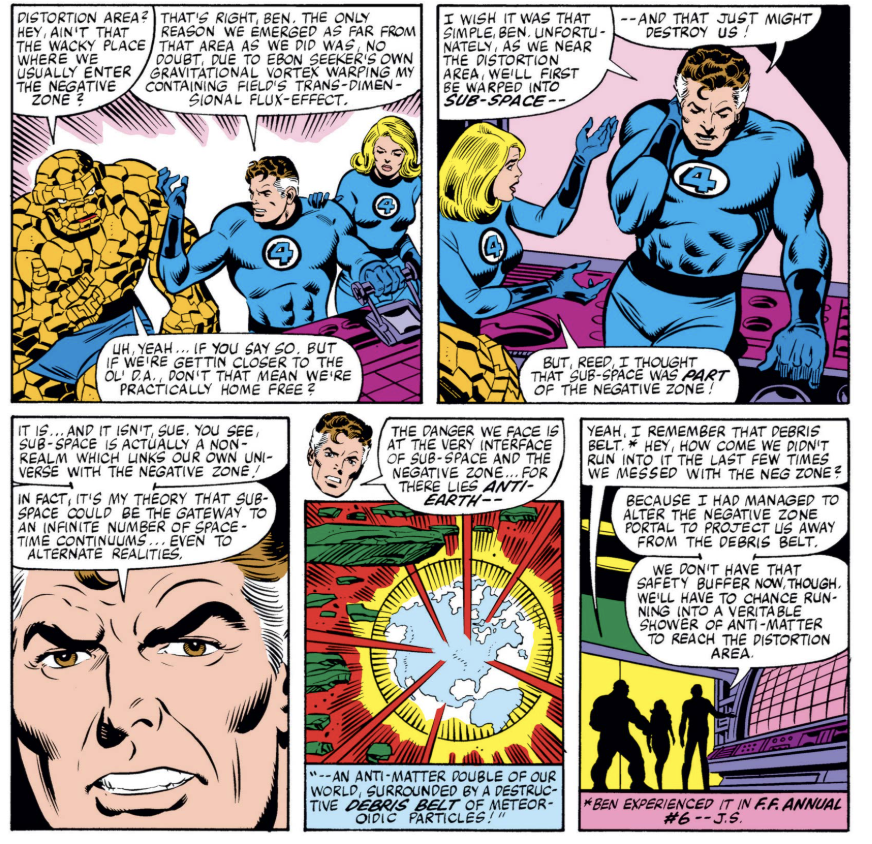
Like a lot of the so-called science in comics, it’s best ignored.
Overall
Better than it had any right to be.
But wait, there’s more!
As I’ve said before, my initial goal for this blog was A, to read the entire Lee/Kirby run, B, re-read the Byrne run, and C, somehow survive the issues in between. I can now tick the last item off the list. The 129 comics (plus a few annuals) between Lee/Kirby and Byrne was a decided mixed bag, with some surprisingly enjoyable comics and an unfortunate about off crud.
Here’s how I rank the various main runs over that span (this doesn’t account for fill-in issues by other creators):
1, Len Wein/ George Perez / Joe Sinnott (issues 184 -192). A disappointingly brief run but features an early Perez firing on all cylinders and solid storytelling from Wein.
2, Archie Goodwin /John Buscema / Joe Sinnott (115 -118) Another too-short run. Goodwin is a great writer and you can’t go wrong with Big John Buscema.
3, Roy Thomas / John Buscema / Joe Sinnott (119, 126 – 132) Thomas had a number of runs with different artists over this span but these were his best stories.
4, Marv Wolfman / Bill Mantlo / John Byrne / Joe Sinnott (210-218) Wolfman’s stories didn’t always soar but it was a treat seeing Byrne’s layouts.
5, Stan Lee / John Romita / Joe Sinnott (103 – 107). Two words: John Romita
6, Roy Thomas / George Perez / Joe Sinnott (164 -167, 170, 172) An uneven stretch but some Perez gems in there. Plus it’s fun seeing Luke Cage in the FF.
7, Len Wein / Marv Wolfman / Keith Pollard / Sal Buscema / Joe Sinnott / Pablo Marcos (193 – 209) Consistent but unremarkable comics. Pollard occasionally shines.
8, Stan Lee /John Buscema / Joe Sinnott. A run that reminds you just how creative was Jack Kirby. (107 -114, 120 – 125)
9, Doug Moench / Bill Sienkiewicz / Joe Sinnott (219, 222-231) Less than the sum of its parts.
10, Gerry Conway / John Buscema / Rich Buckler / Ross Andru / Joe Sinnott (134 -152) Some real stinkers in here.
 Percival Henry: The Fantastic Four and more