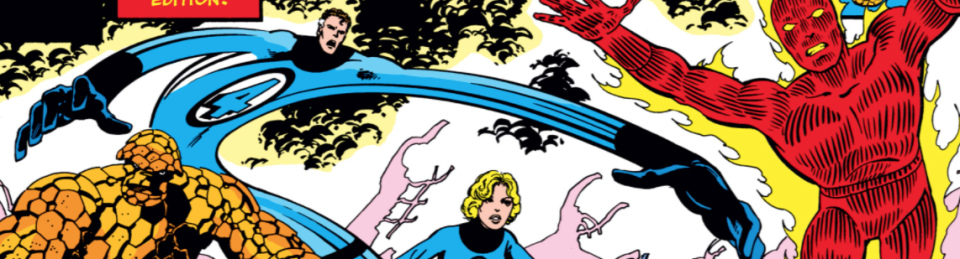
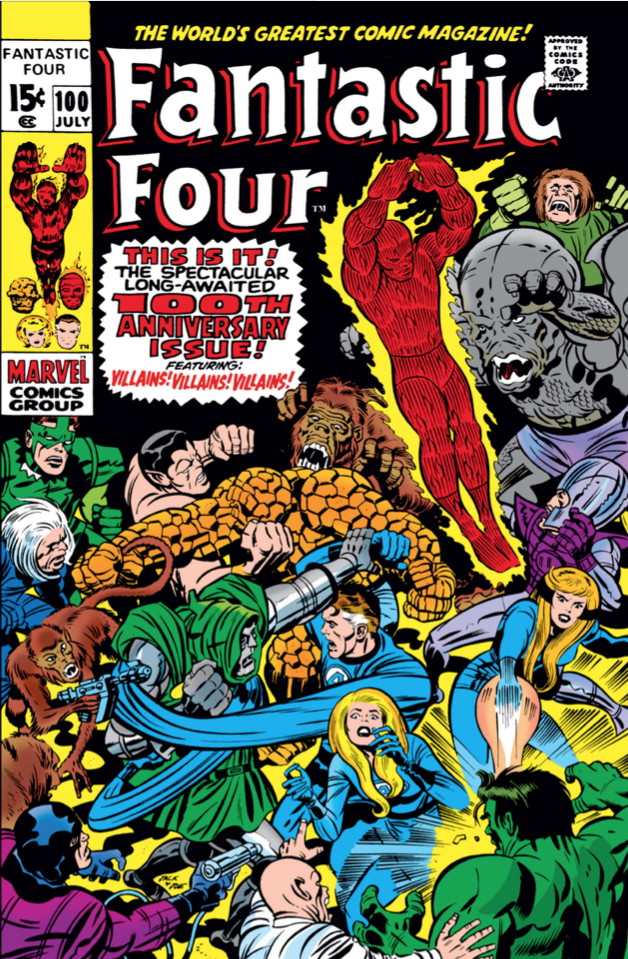
Fantastic Four 100
“The Long Journey Home”
Published: April 1970
Story: Stan Lee and Jack Kirby
Script: Lee
Pencils: Kirby
Inks: Joe Sinnott
Letters: Sam Rosen
Cover: Kirby and Sinnott
Synopsis
As they return from Attilan following the events of last issue, the Fantastic Four—plus Crystal, who has rejoined them—are attacked by Kang and Doctor Doom, who shoot down the FF’s flying saucer (again, the saucer’s origin is never explained). It quickly becomes clear these are not the real Kang and Doom, but androids, and that the Puppet Master and Mad Thinker are behind them.
The FF are then attacked by a wave of androids in the form of virtually ever villain the FF has faced in its first 100 issues: The Kree Sentry, Namor, the Red Ghost and his apes, Diablo, Dragon Man, the Hate Monger, the Frightful Four, the Super Skrull, etc. The only obvious omission is Galactus. The FF scramble to escape, via camels, boat and eventually a car in what appears to be Egypt, and eventually make it to a NATO air field when the Puppet Master accidentally destroys the Thinker’s command center.
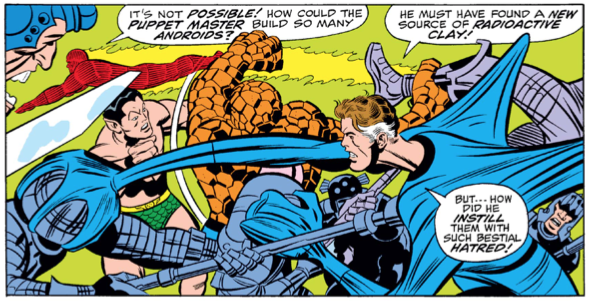
What’s going on here?
One hundred issues (plus some annuals) is a lot of comics, and it’s obviously an occasion worth memorializing with a big issue. Fantastic Four 100 is the first comic of the modern Marvel era to reach that milestone (other titles with higher issue counts, like Thor and Captain America, were renamed from older titles). Among super hero comics, only old DC stalwarts like Action Comics (issue 389 at this point) and Batman (200) had published more issues.
But despite the big anniversary, FF 100 is still a standard-sized comic with just 20 pages of story. Double-sized anniversary issues didn’t come along until years later (FF 200 in 1978 is a double sized issued) and the big, blow-out issues with extra-long stories, back-up features and pinups were still reserved for annuals at this point. It’s possible FF 100 was originally intended to be a double-sized issue or an annual, because there is a lot of story jammed into relatively few pages and Jack has to resort to a handful of nine-panel pages to fit it all in, something he rarely does at this point in the FF. Needless to say, there are no interior splash pages and overall the art looks pretty cramped in this comic.
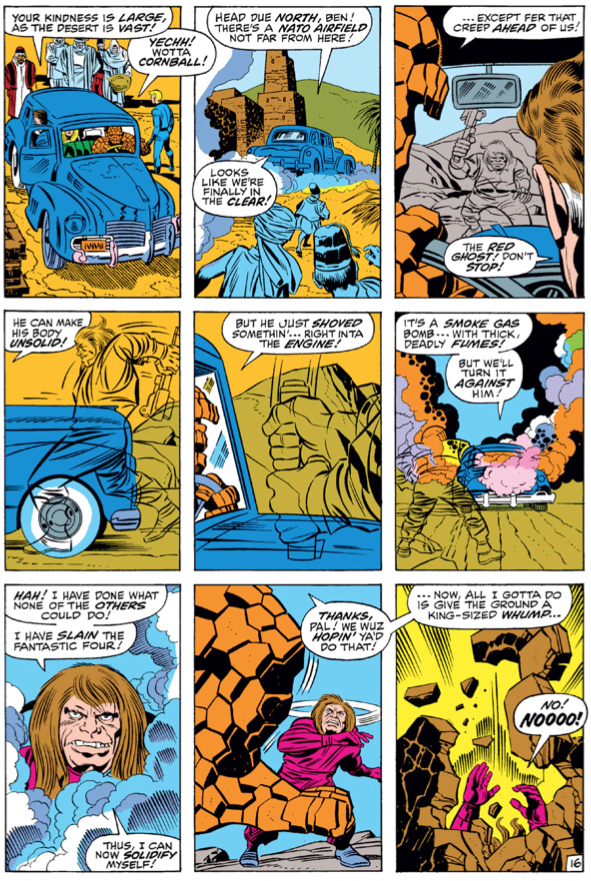
Structurally, FF 100 reads a lot like FF Annual 3, which featured just about every villain attack the FF during Reed and Sue’s wedding. Unlike that story, this one tries to have its cake and eat it too; instead of coming up with an explanation of how all these villains would coordinate with other, Stan and Jack just turn them into androids. As Reed explains, they are androids with the memories and power of the villains they are modeled on, which is somehow a result of the Puppet Master’s radioactive clay. It’s not exactly clear how that works, or why the Puppet Master’s clay seems to work differently in every appearance to date, but no matter, it serves to move he story along. (As we have discussed earlier, Stan and Jack often blur the lines between human and machine when they use androids).
Unfortunately, for such a big occasion, the story falls flat. There’s no real tension or drama, all the action feels rushed, and ultimately it seems like a bit of a gimmick. Great cover though.
Happy anniversary!
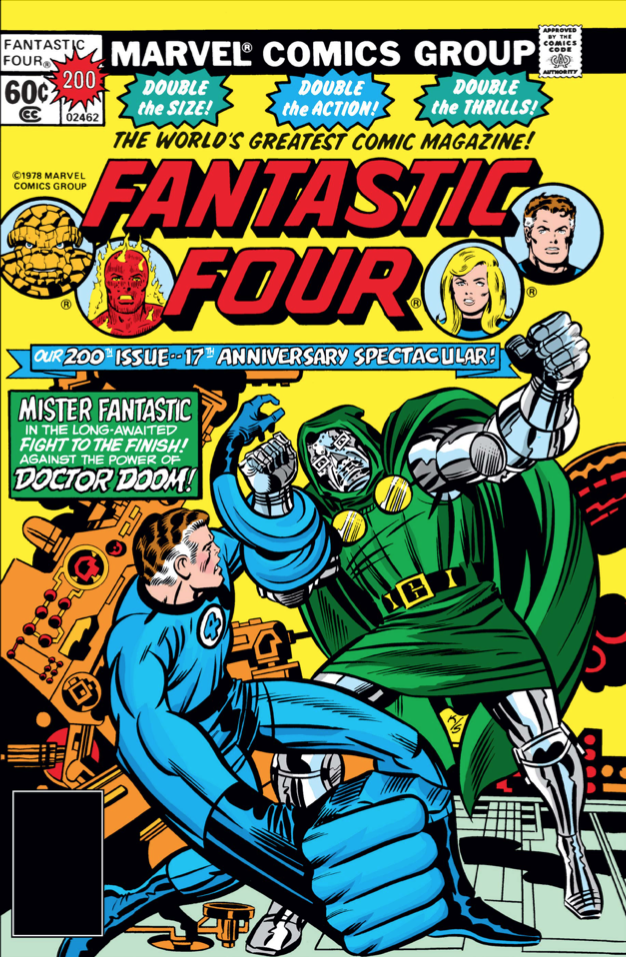
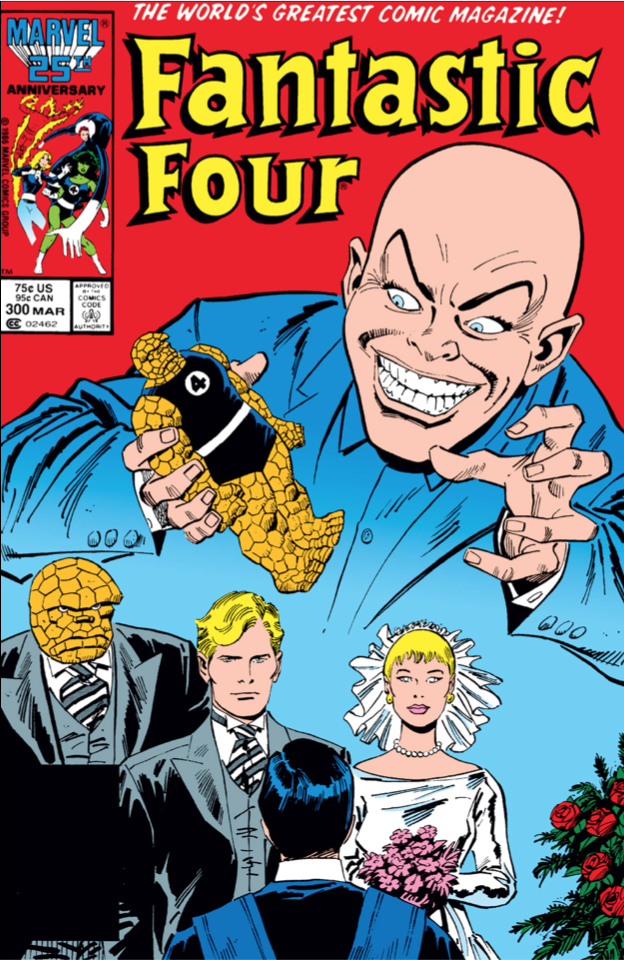
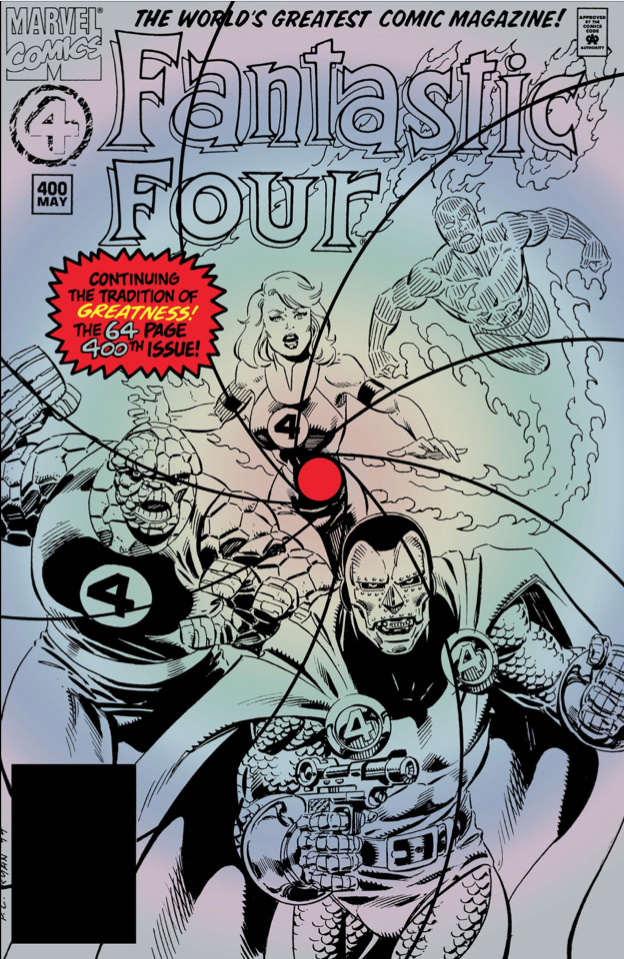
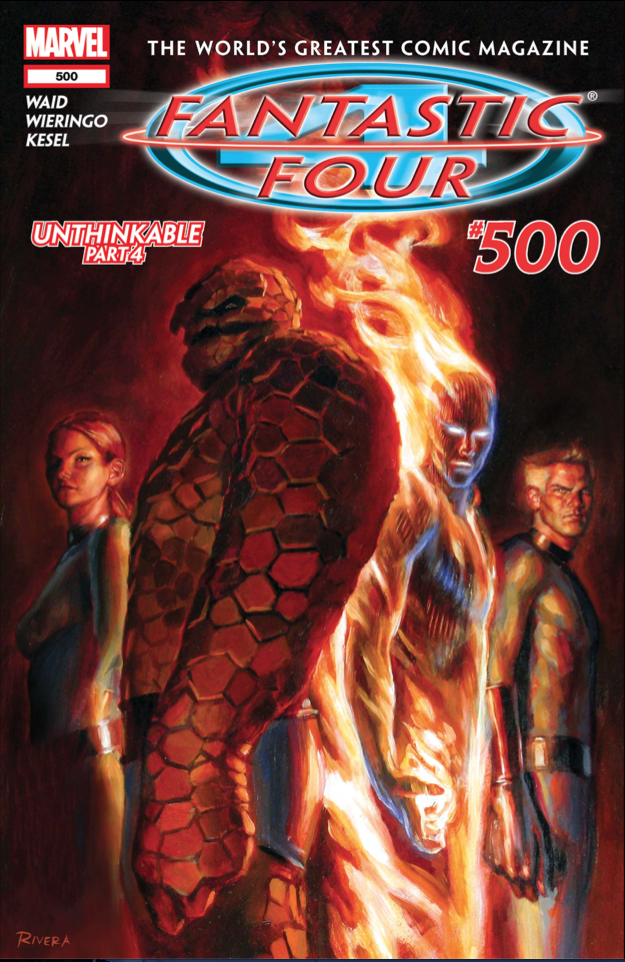
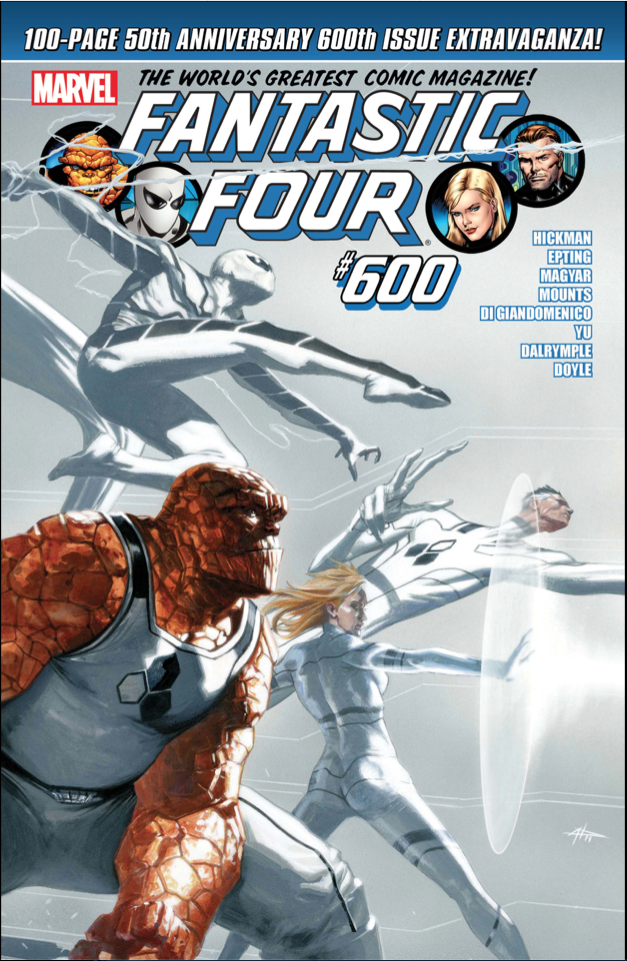
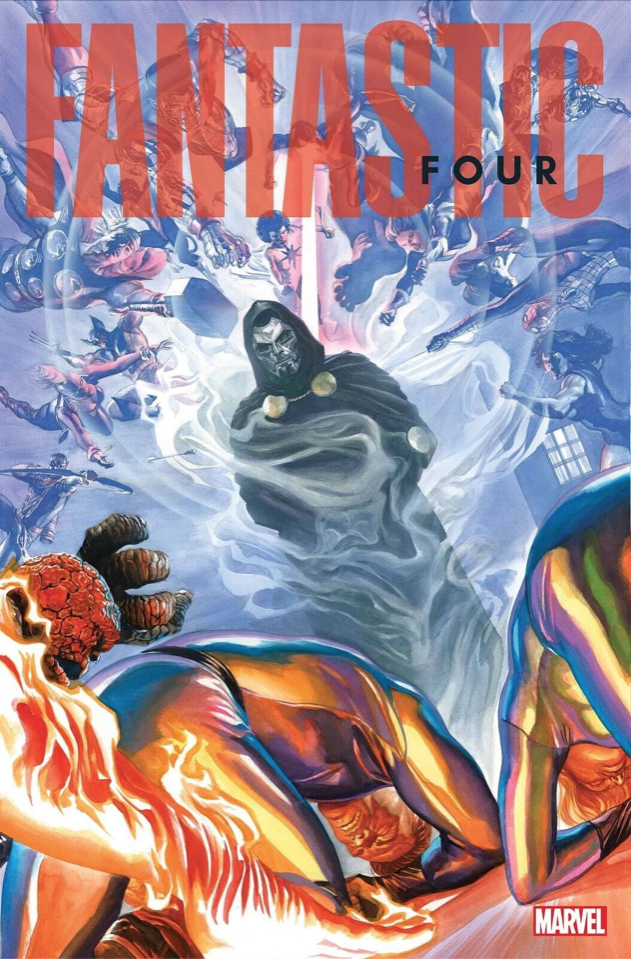
Here are the covers from the other FF comics ending in “hundred.” Unfortunately they’re not all great comics, and some of the best FF creators didn’t get a chance to write one. Note that issue issue 400 had a holographic foil cover (it was the 90s!) and issue 700 is due out in about 10 days of this writing.
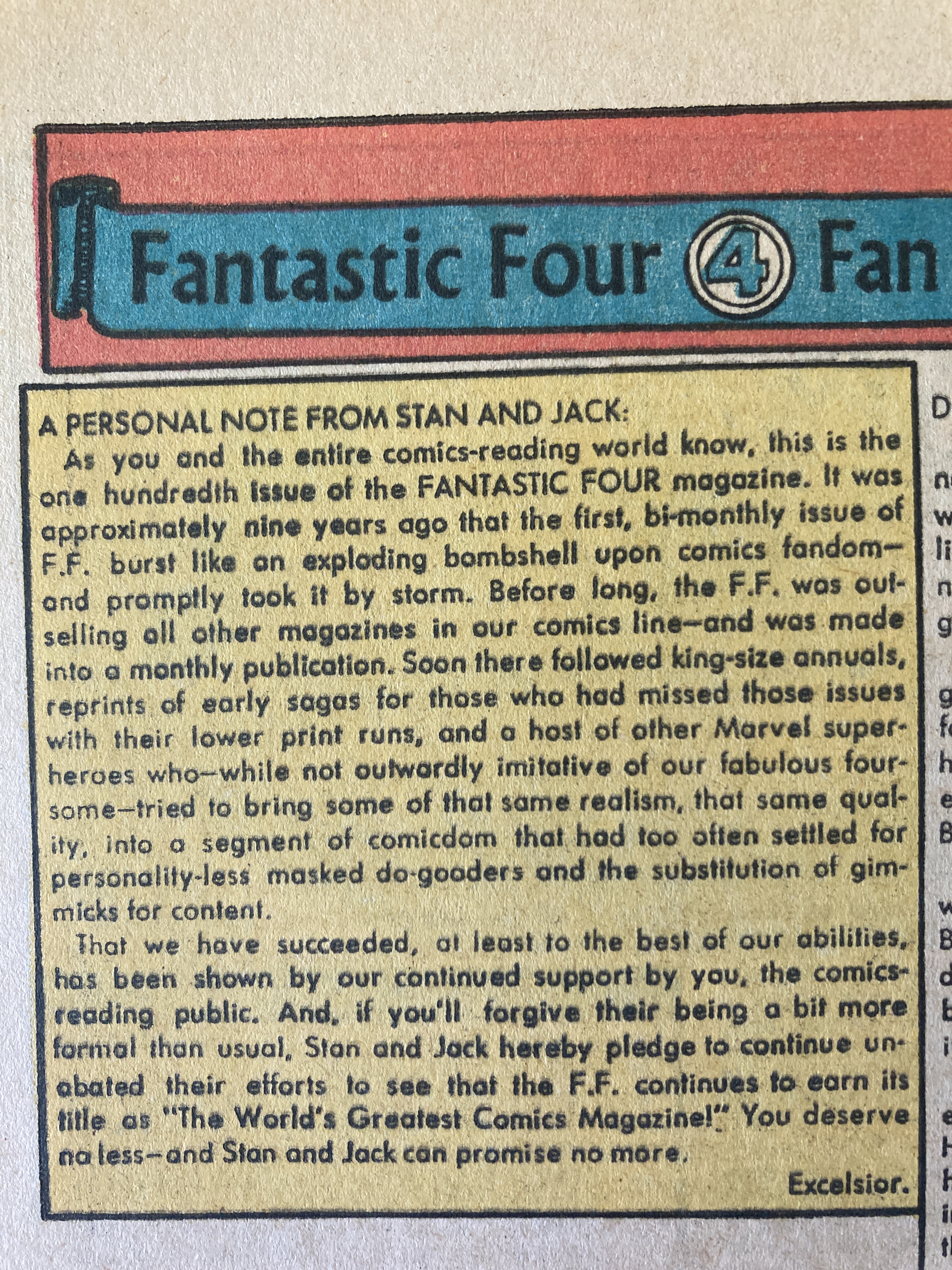
A message from Stan and Jack
The pledge to continue their efforts “unabated” will last another three issues.
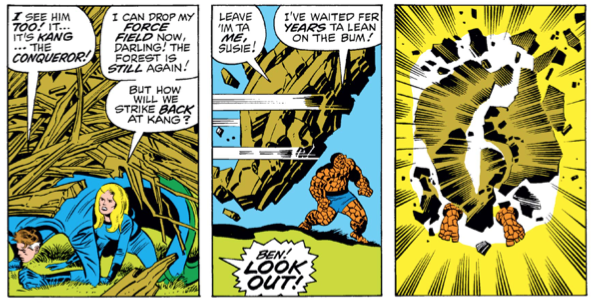
Kang who?
Kang’s appearance here is an odd one. He’s the first bad guy to attack the FF, yet he’s never really faced them in the FF’s own book to this point, with only the briefest of appearances in FF Annual 3. He has of course fought them as Rama-Tut, but it’s not clear that the FF knows they are the same person. He did face the Thing and the Human Torch in Strange Tales 134, which explains Ben’s comments about waiting years to fight him (and a reminder that I really should read those Torch stories in Strange Tales).
There’s also this odd reference from the Doom android, suggesting Kang is a future version of himself, something that came with Rama-Tut in FF Annual 2. In later comics it’s explained that Kang may be a descendent of Doom ( and how an android would know all this is not clear).
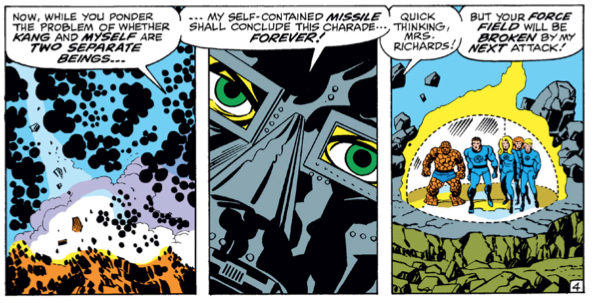
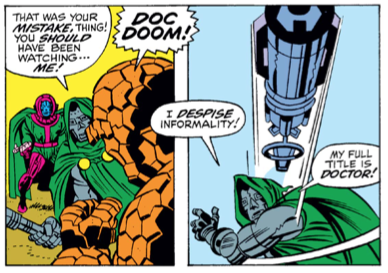
Speaking of Doom, I love this line:
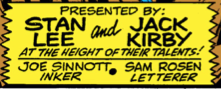
Crazy credits
If only this were true …
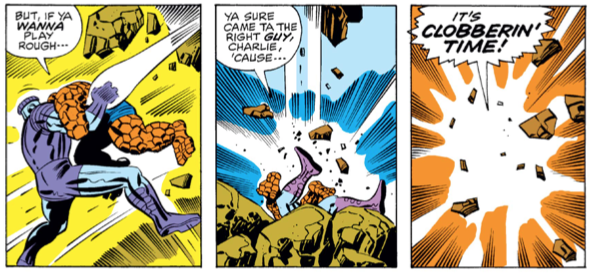
Clobberin’ time
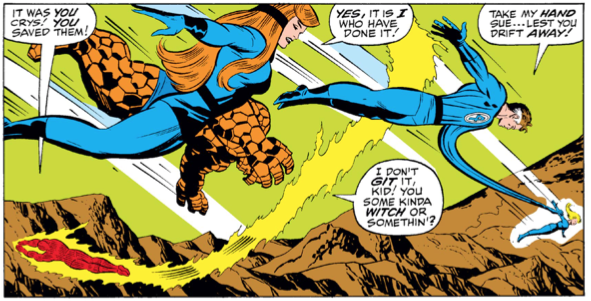
Say what?
Crystal appears to be taking syntax lesson from Yoda
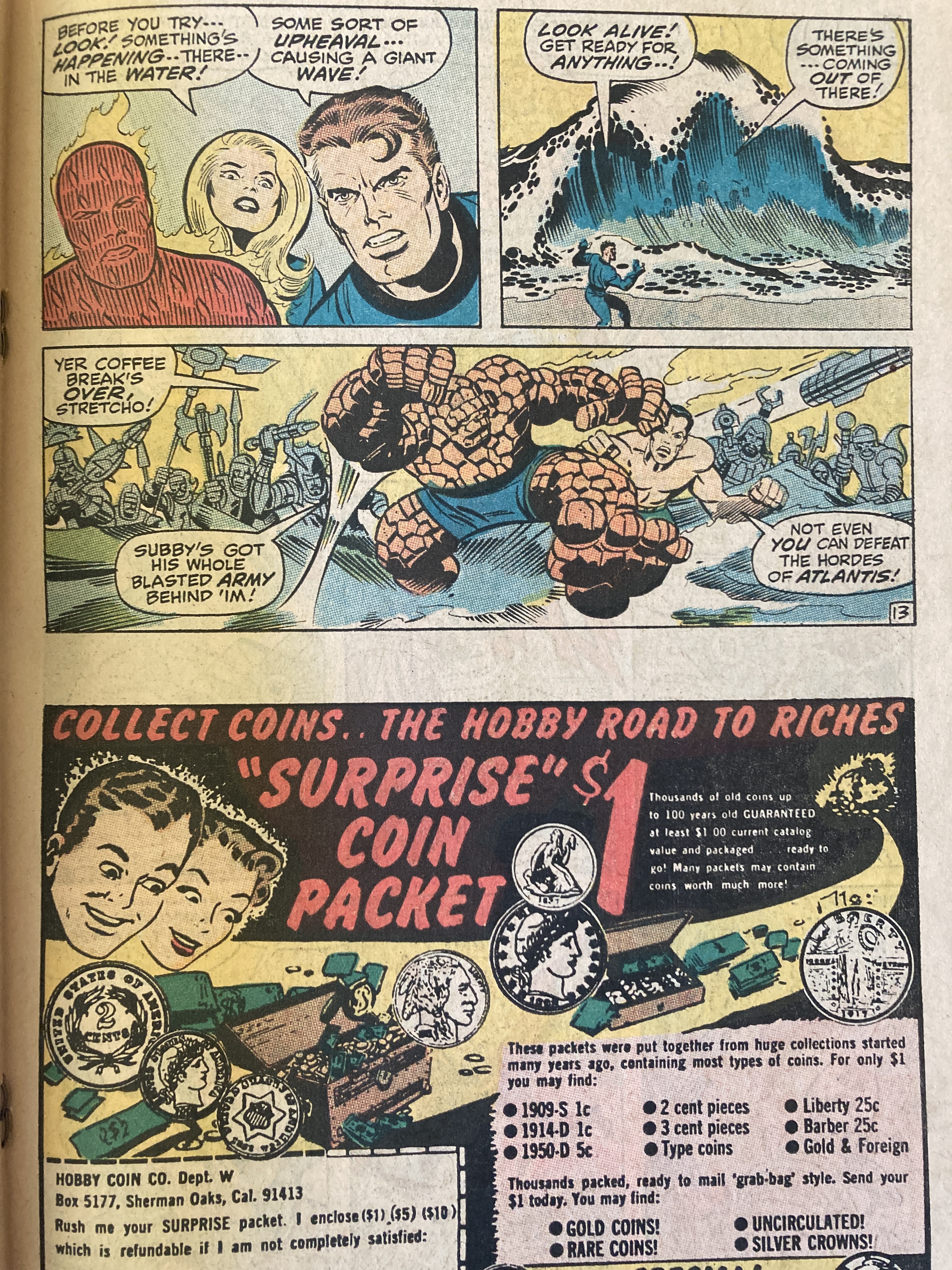
Half and half
There are two of these atrocious half pages in the comic. Neither are included in the digital version on Marvel.com that I use to all these images.
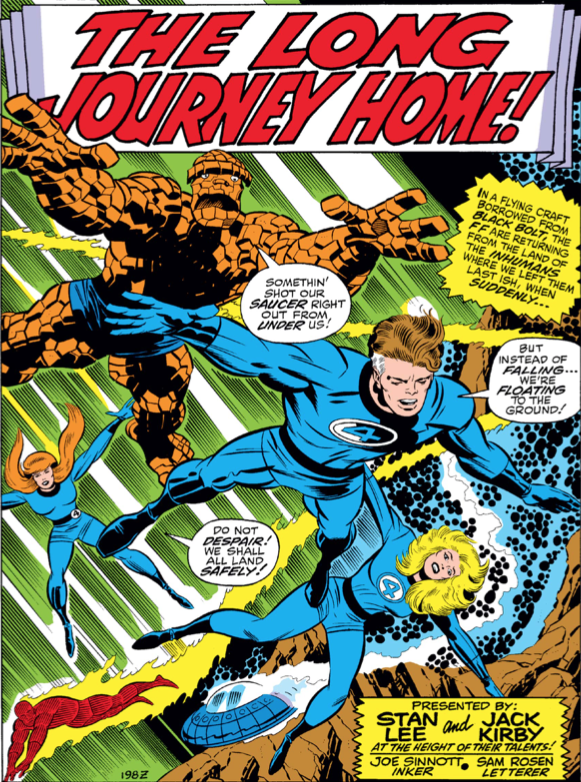
Dig that Kirby Krackle
This is the first installment of “The World’s Greatest Comic Magazine!” where I had to actually search for great Kirby panels. As mentioned above, the art feels cramped and workmanlike, and there are not a lot of examples of Kirby’s genius. But there are a few notable panels, particularly the splash:
Also this sequence:
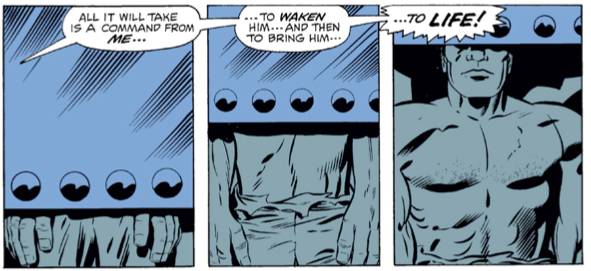
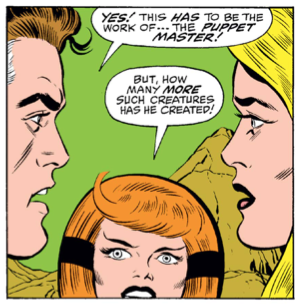
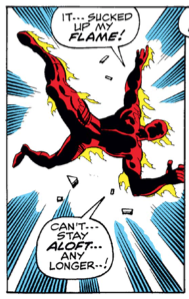
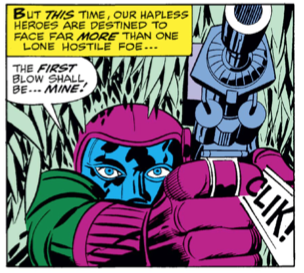
And these (tiny) panels:
Also on newsstands
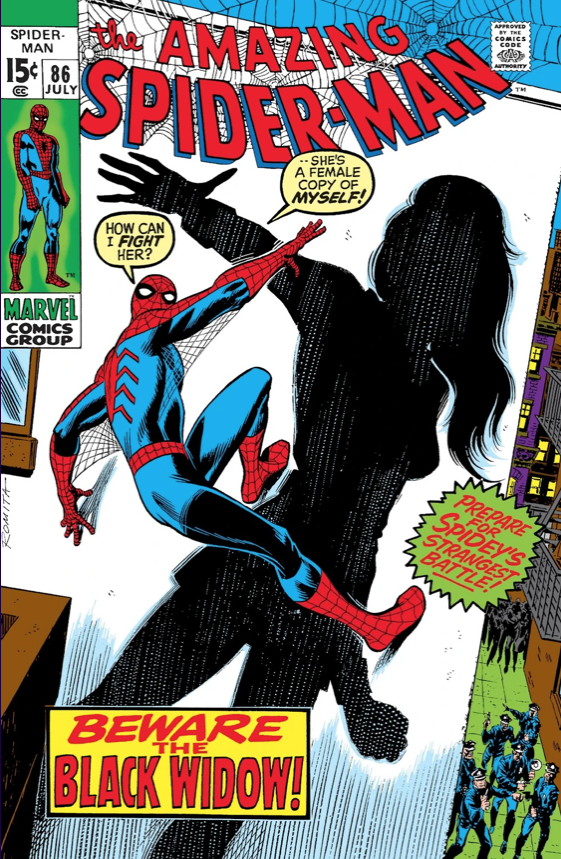
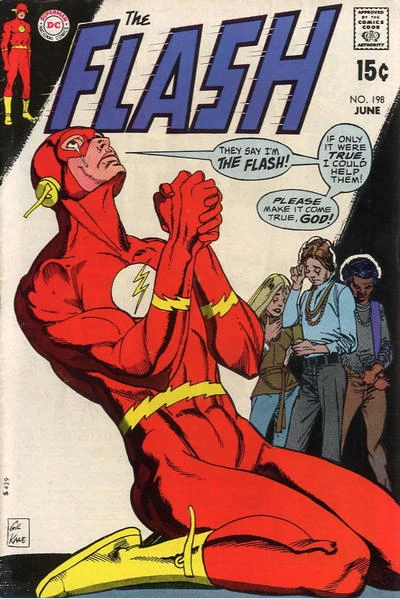
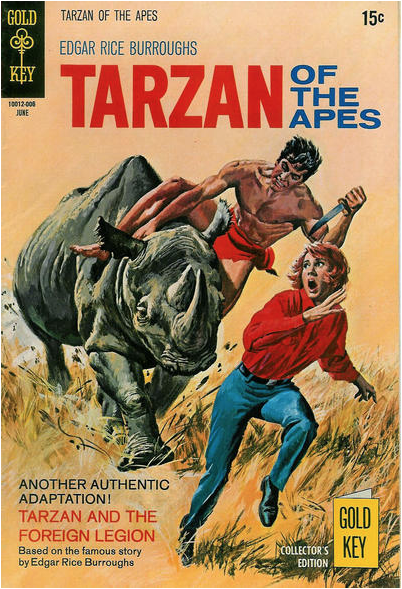
What other comics were for sale in April 1970?
Next issue: The FF face the mafia maggia!
 Percival Henry: The Fantastic Four and more