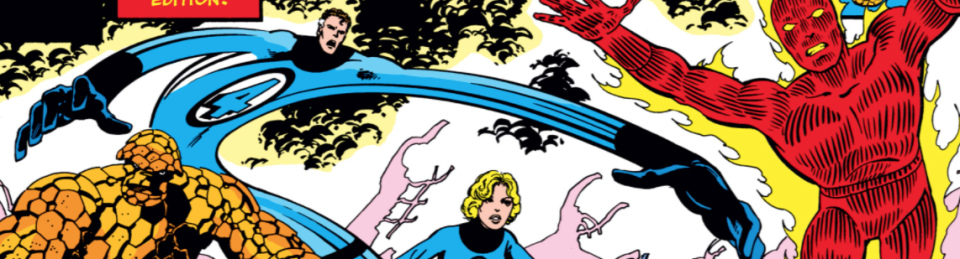
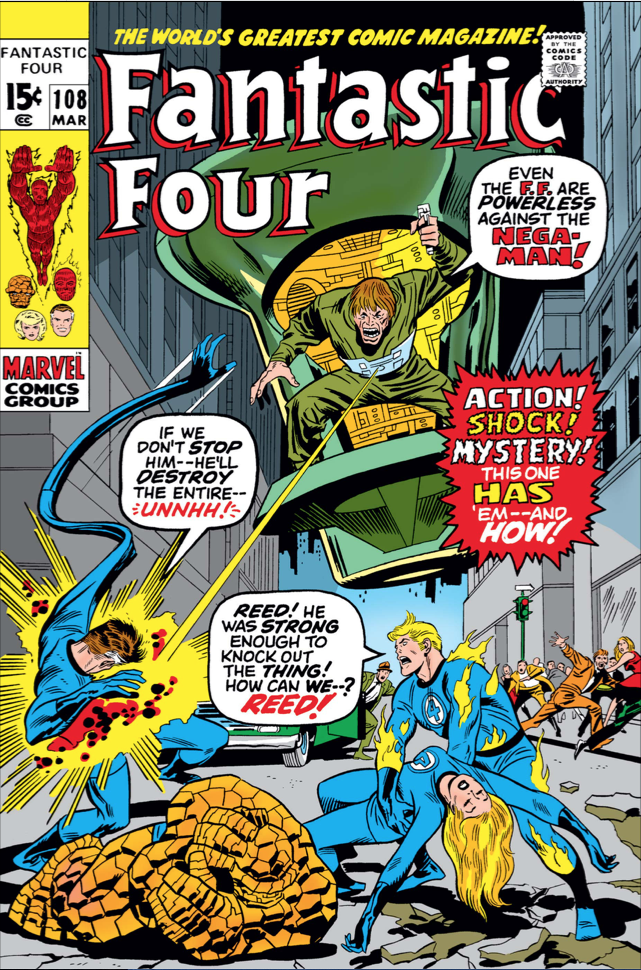
Fantastic Four 108 “The Monstrous Mystery of the Nega-Man!” Published: Dec. 1970 Story: Stan Lee Pencils: Jack Kirby, John Buscema and John Romita Inks: Joe Sinnott Letters: Sam Rosen Cover: Buscema and John Verpoorten
Synopsis
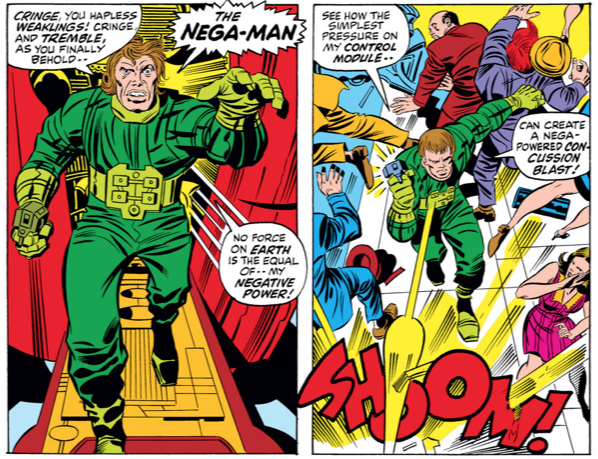
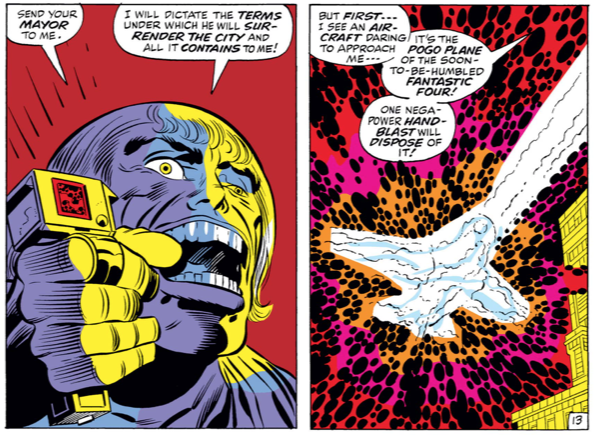
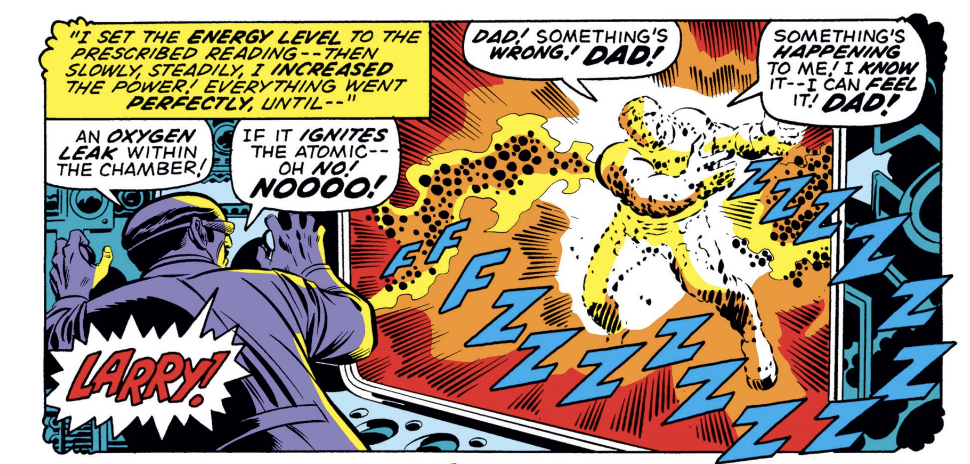
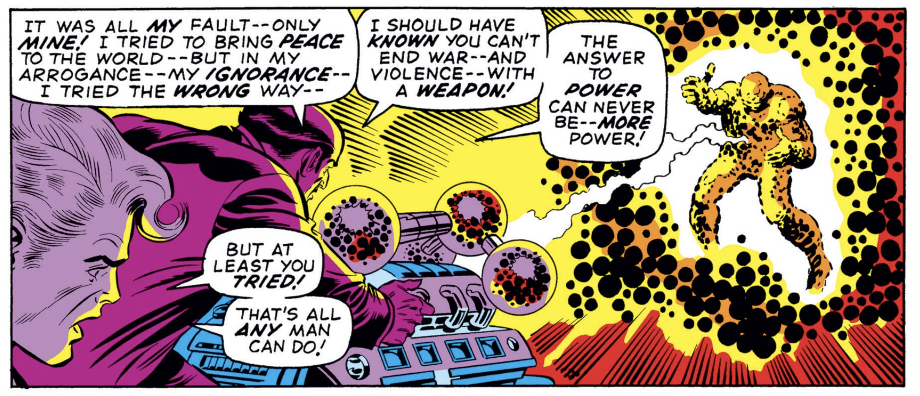
In a lengthy flashback, Reed reveals the origin of Janus, the Nega-Man, a former colleague who tapped the power of the Negative Zone to heal an injury only to divide into good and evil versions of himself.
What’s going on here?
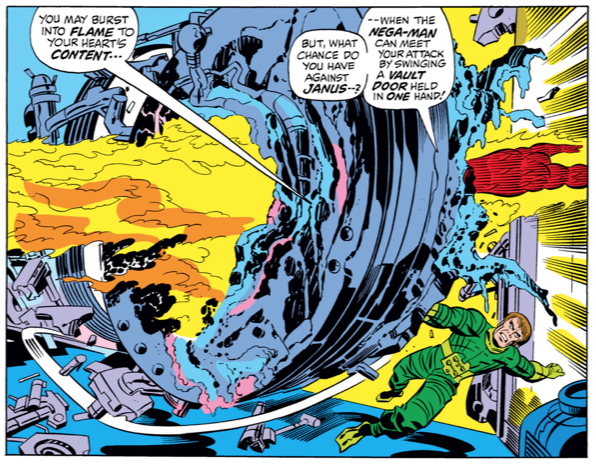
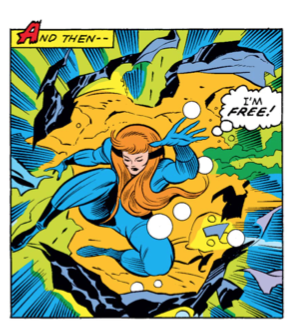
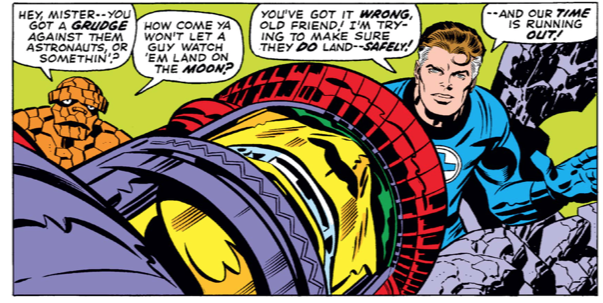
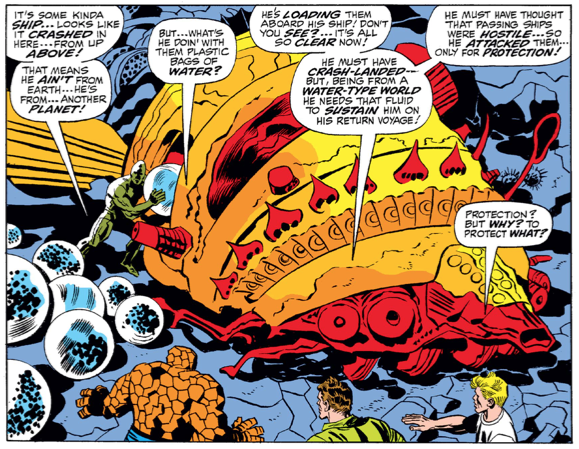
Jack’s back! Well, sort of. The comic’s pencils are credited to Jack Kirby, and quite a bit of the comic is drawn by him. But there’s a lot of John Buscema in here, too. It’s pretty clear from reading the story that Marvel decided to salvage some unpublished artwork by Kirby, using it in a flashback device to explain the origin of the new villain, Janus. In his blog, longtime Marvel editor Tom Brevoort confirms as much, explaining the Kirby sequences were intended for FF 102, but Stan Lee, unsatisfied with the story, set them aside. This was taking place in the weeks prior to Jack’s departure for DC, so there may have been some bad blood involved as well. It makes sense the ever-parsimonious Stan would find a way to reuse those Kirby pages, even if they are shoe-horned into a story that makes little sense.
What I liked
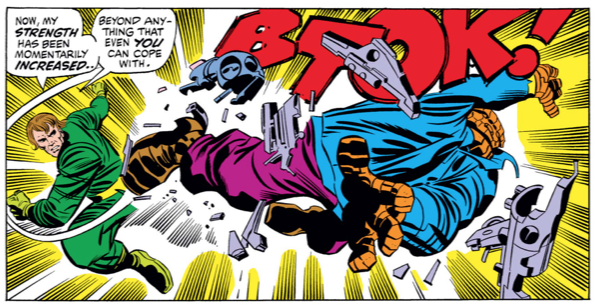
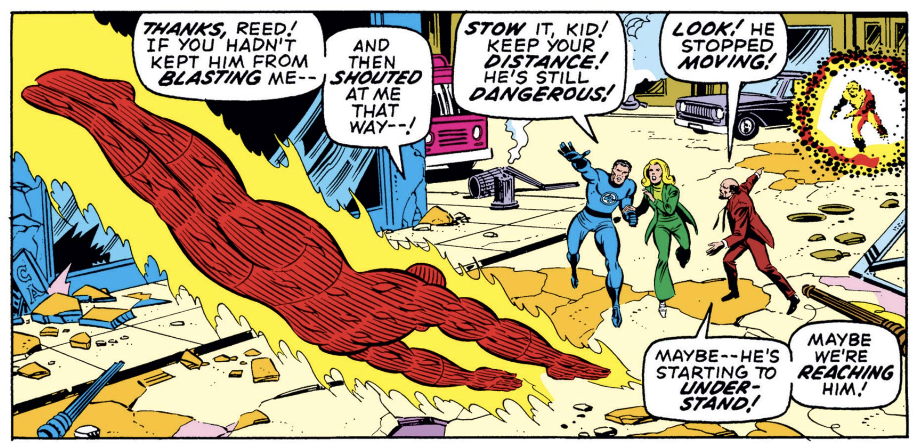
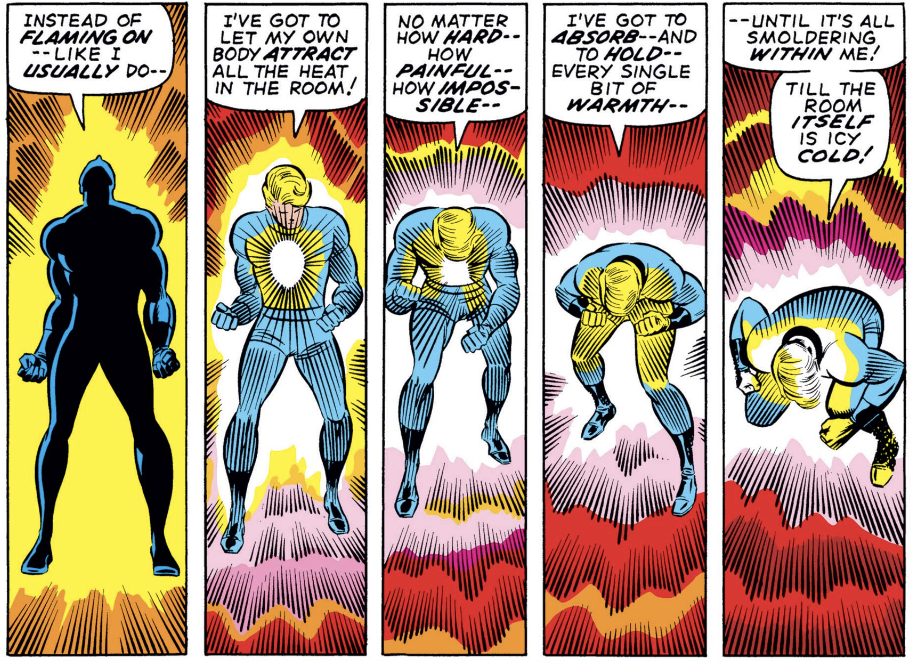
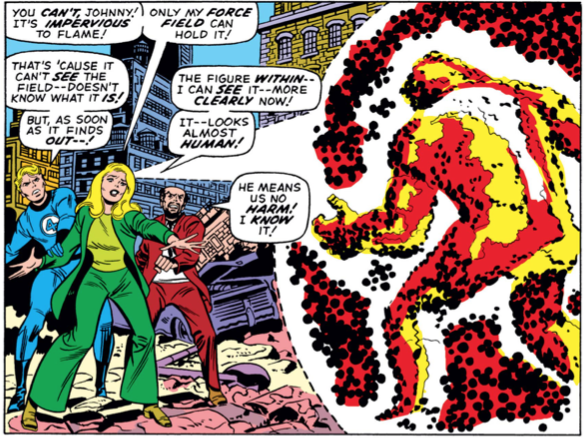
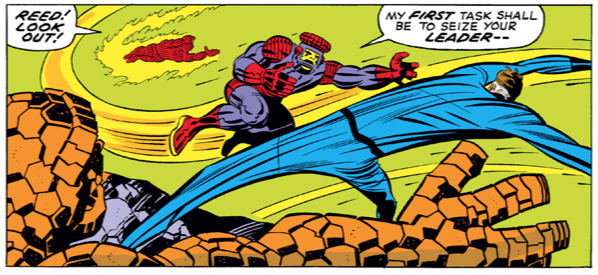
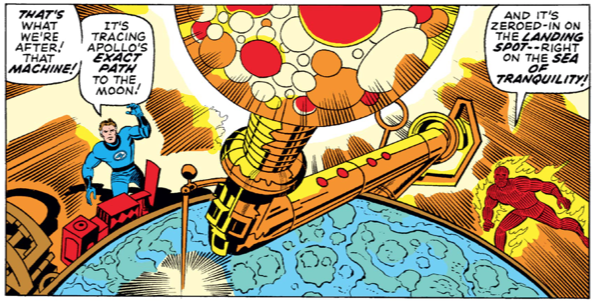
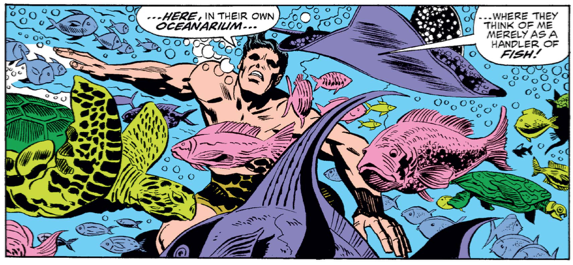
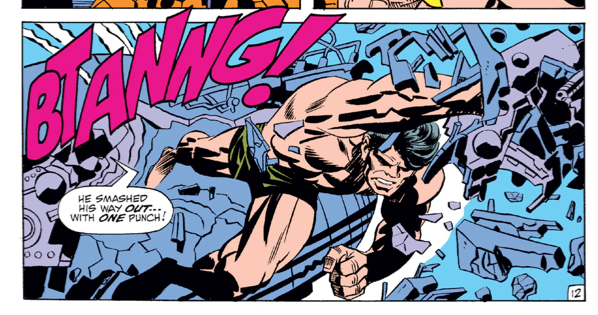
The Kirby art! Duh. This may not be peak Kirby, but it’s a reminder of what we lost when Jack decamped for DC. Check out this awesome panel:
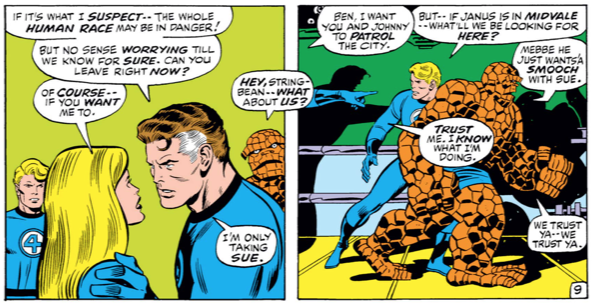
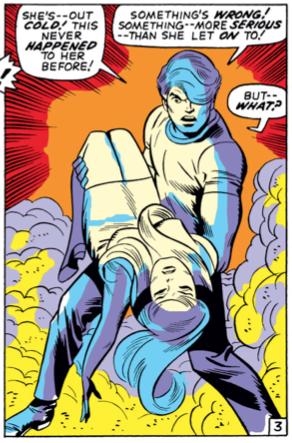
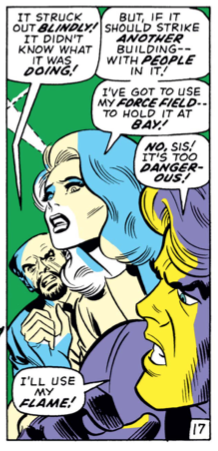
Also, after years of cataloging all the times Sue is slighted by Reed, here’s a rare example of Reed actually taking her on a mission (not that she gets to do much, but baby steps):
What I didn’t like
The story is unfortunately incoherent. The flashback structure doesn’t help, adding a layer of complexity to an convoluted story, but the way the ploy unfolds is just a mess to begin with. The story does end with a tease of an appearance of Annihilus in the next issue, so here’s hoping things get back on track.
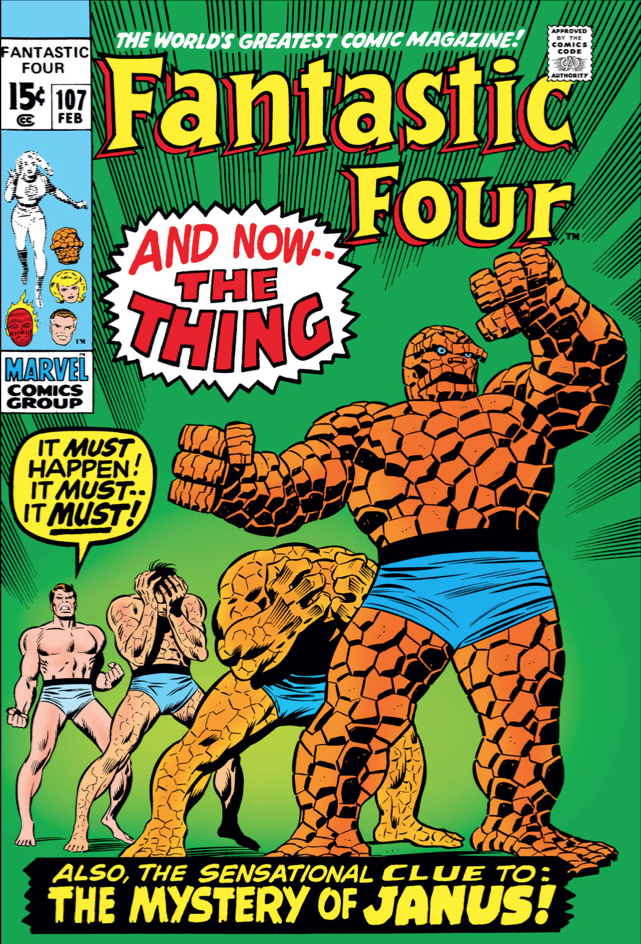
Fantastic Four 107 “And Now … the Thing!” Published: Nov. 1970 Writer: Stan Lee Pencils: John Buscema Inks: Joe Sinnott Letters: Artie Simek Cover: Buscema and Sinnott
Synopsis
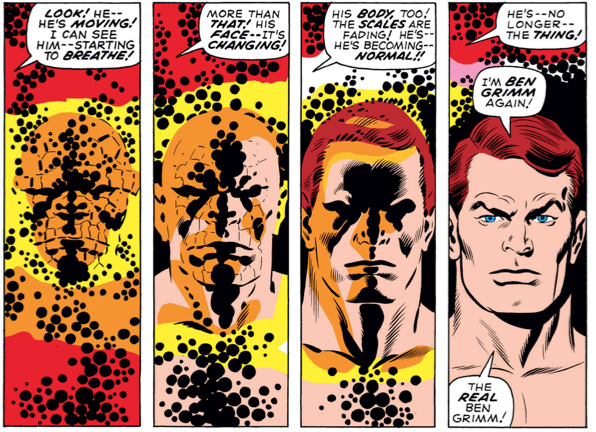
Reed finally succeeds at returning Ben to human form, and this time with the ability o revert back and forth to the Thing. But as Alicia suspects something is not quite right with Ben, a new villain, Janus, breaks into the Negative Zone.
What’s going on here?
The big news here is that this is the debut Fantastic Four issue for Big John Buscema. Buscema had been drawing comics since the 1940s, but only started doing Marvel superhero comics in the late 60s. He’ll be the regular FF artist for the next 30 issues or so and I think of him as the defining Bronze Age Fantastic Four artist. Of course, Sinnott is still inking, so the art has the same consistent feel. In a lot of ways, the ’70s is actually the Sinnott age.
This is also the debut of the villain, Janus, who is a pretty minor figure, only showing again much later in 2001, when Carlos Pacheco was writing the comic, and much later again in Alex Ross’s Full Circle graphic novel, which came out last year.
What I liked
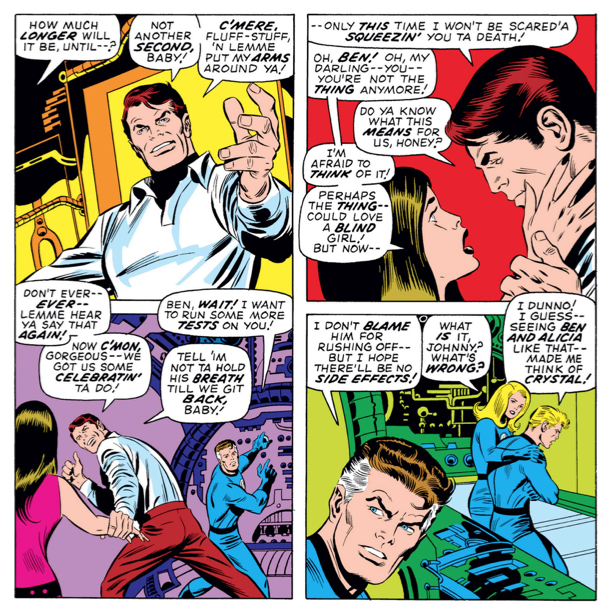
The comic itself is excellent. Along with the drama of Ben reverting back to human—and with it, the unspoken question of how long will it be before he returns to being the Thing permanently—there’s some character development with Johnny, Sue and even baby Franklin, who seems to be manifesting signs of his powers. It’s been a while since the FF had what is sometimes called a “quiet issue,” and this one was very satisfying.
What I didn’t like
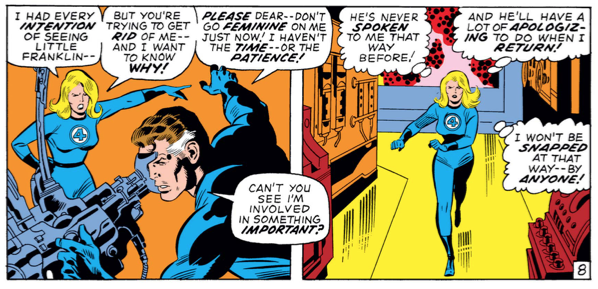
More jerk-like behavior from Reed. “He’s never spoken to that way before?” Lady, I can find a dozen issues where he has, and worse.
Also, the title makes no sense. “And Now .. the Thing!” What does that even mean? It’s not like he hasn’t been in every issue for the last nine years. If anything, it should be “And Now … Ben Grimm.”
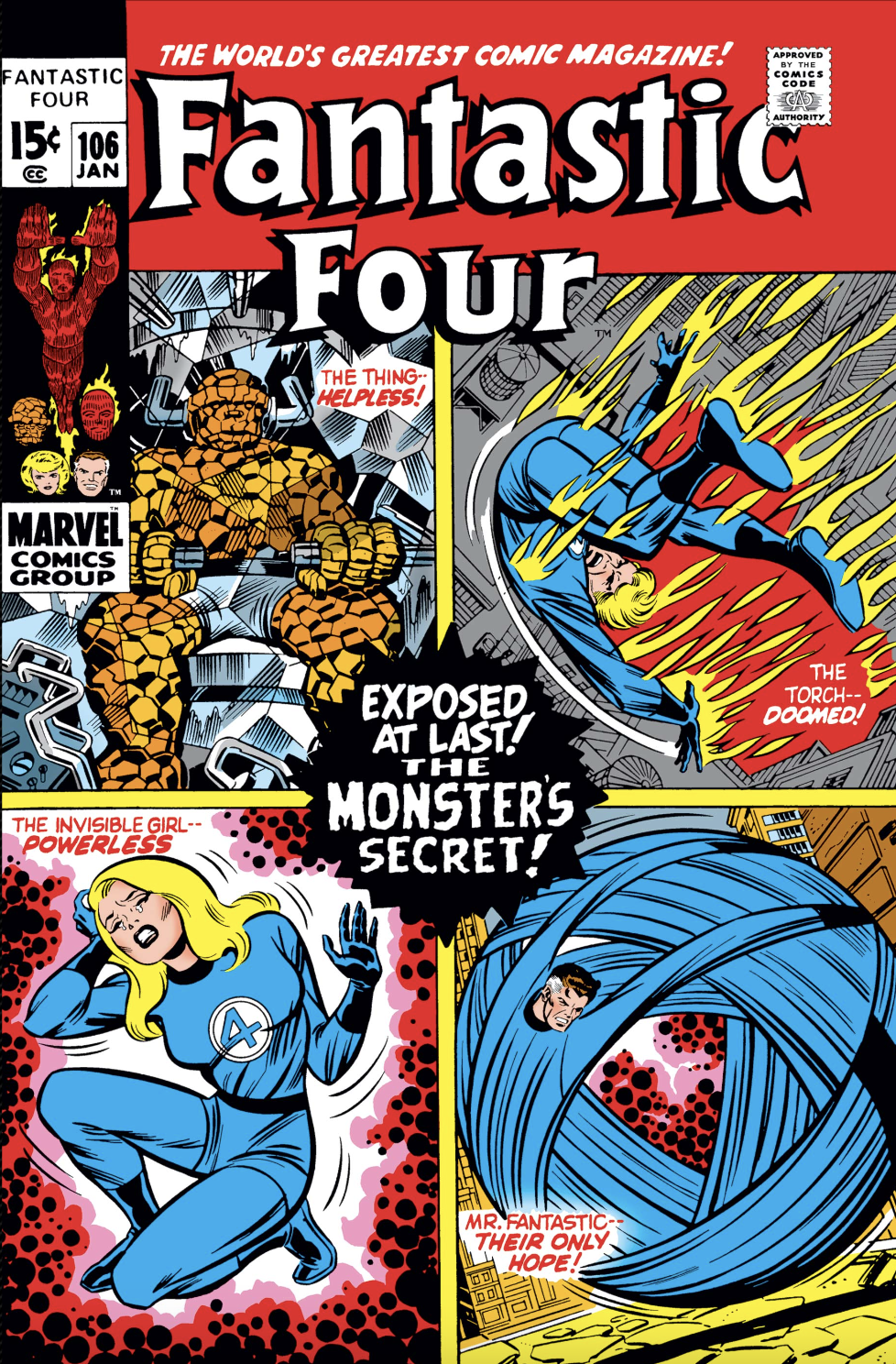
Fantastic Four 106 “The Monster’s Secret” Published: Oct. 1970 Writer: Stan Lee Pencils: John Romita Inks: Joe Sinnott Letters: Artie Simek Cover: Romita and Sinnott
Note: Apologies for the long delay since my last post. I have been dealing with some personal business. I’m hoping to get back to regular, weekly posts.
Synopsis
To save Sue and the city from a rampaging energy monster, Reed leaves Johnny to ice down Ben, who is mid-way through a process that could return him to human form. The energy monster turns out to be the son of a scientist and former colleague of Reed’s, part of an experiment gone awry, and with Reed’s help he is restored to normal.
What’s going on here?
This is a much more satisfying comic that last issue, which was notably disjointed. There are still plenty of plot holes—why, exactly, does Johnny need to put Ben in a deep freeze?—but the story is pretty straightforward and the reveal, that the monster is Dr. Rambow’s son, adds a poignant (if predictable) note.
The issue is also notable for the return of Joe Sinnott, who missed the last three issues. John Verpoorten did a credible job in his absence, but under Sinnott the comic looks and feels more like Kirby hadn’t left. That includes a panel like this:
Dig that Kirby Sinnott Krackle!
What I liked
The Romita / Sinnott combination is pretty effective, and the art hits some high notes. I particularly liked this sequence:
There’s also one of Stan’s moral lessons, about Dr. Rambow’s hubris. These maxims can be a bit corny, but I like how Stan is reaching for an elevated purpose in his stories. (Also: more Krackle)
What I didn’t like
The story feels like a bit of a throwback to one-and one plots of early issues, where the FF tangles with some bad guys and Reed whips up some gizmo to save the day. Outside of the twist about Rambow’s son, it’s all very obvious and linear. There’s no way of knowing for sure, but the lack of originality in the storiy may be a result of Kirby’s departure, with a distracted Stan cooking up plots on his own and resorting to old, clichéd story lines.
Anything else?
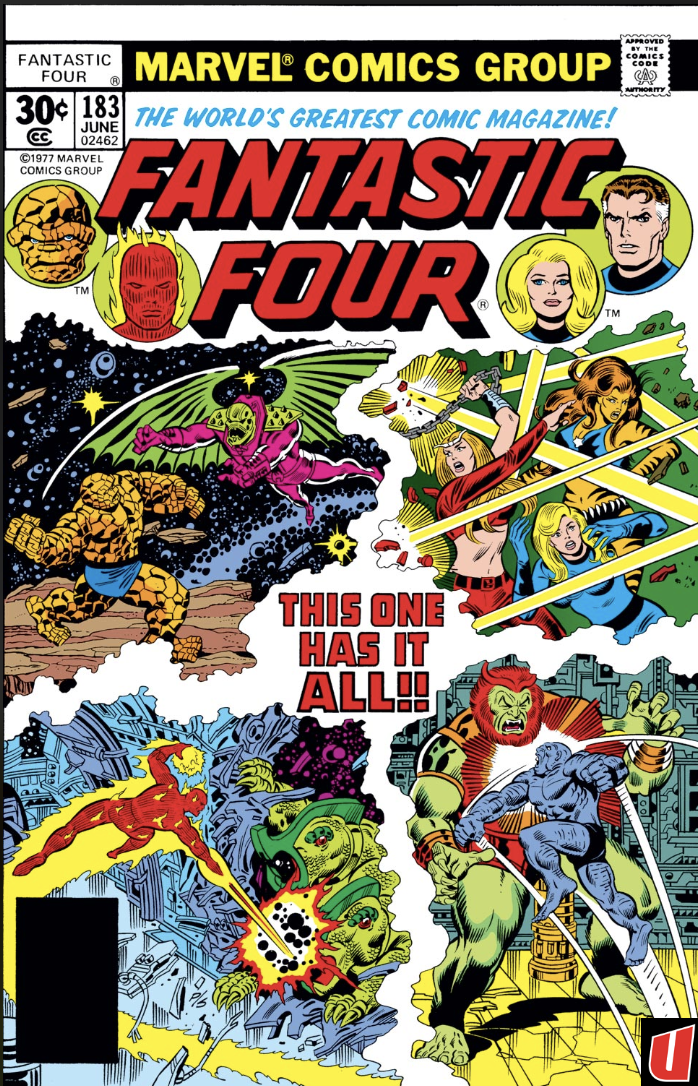
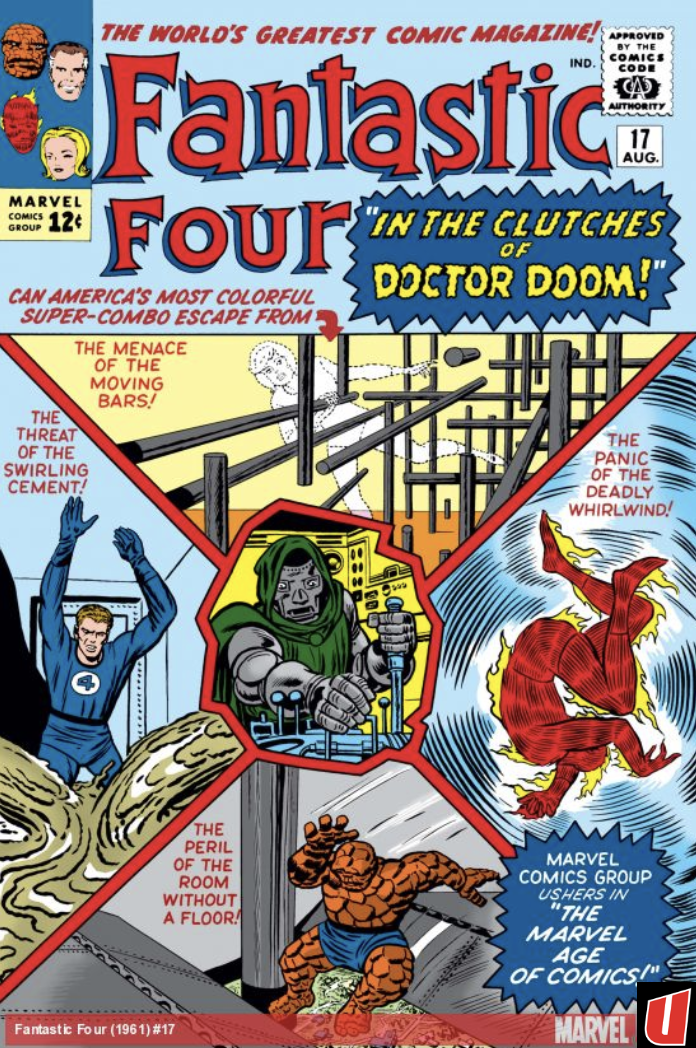
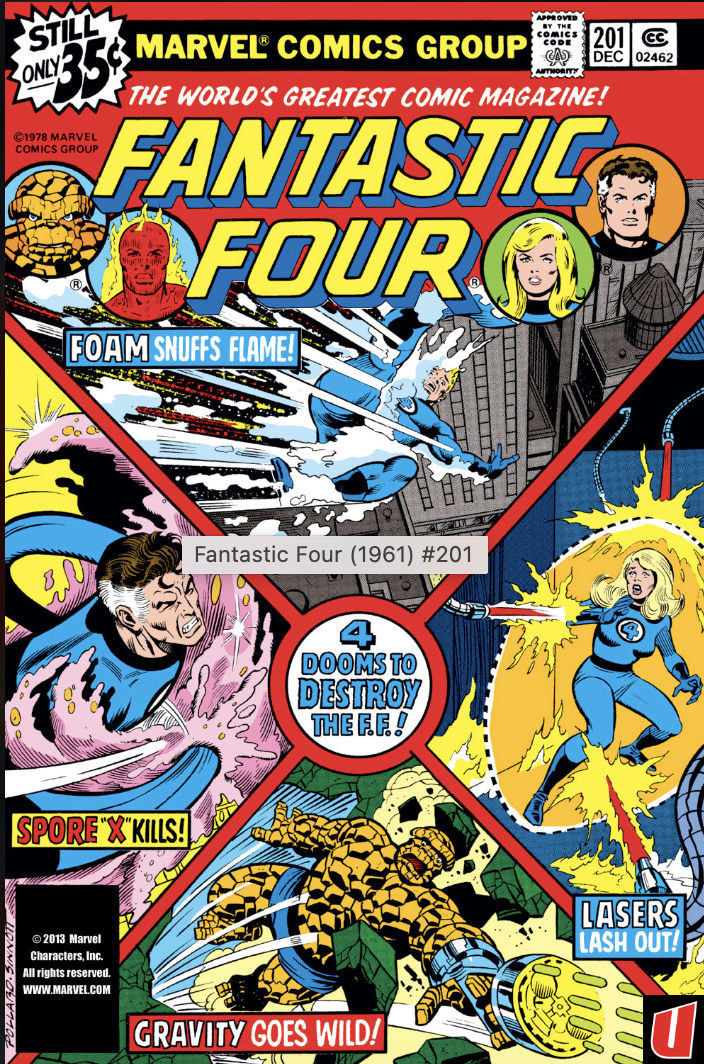
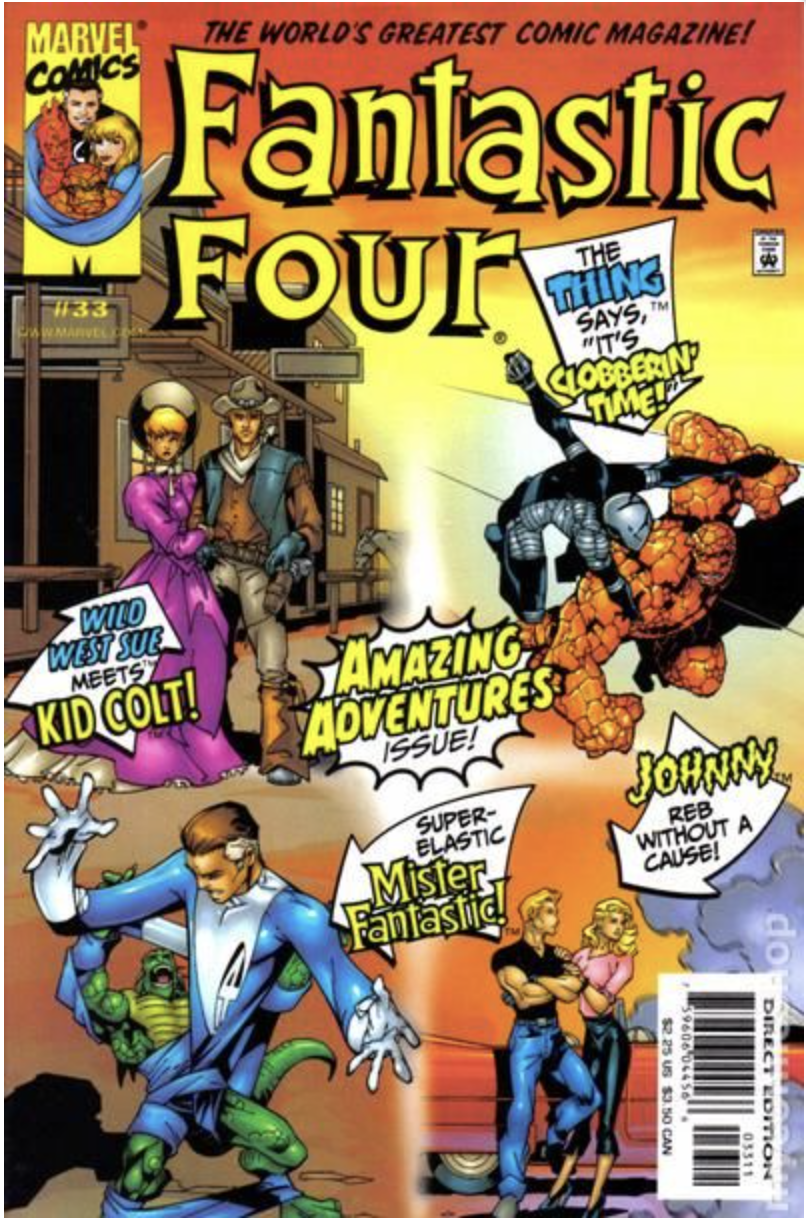
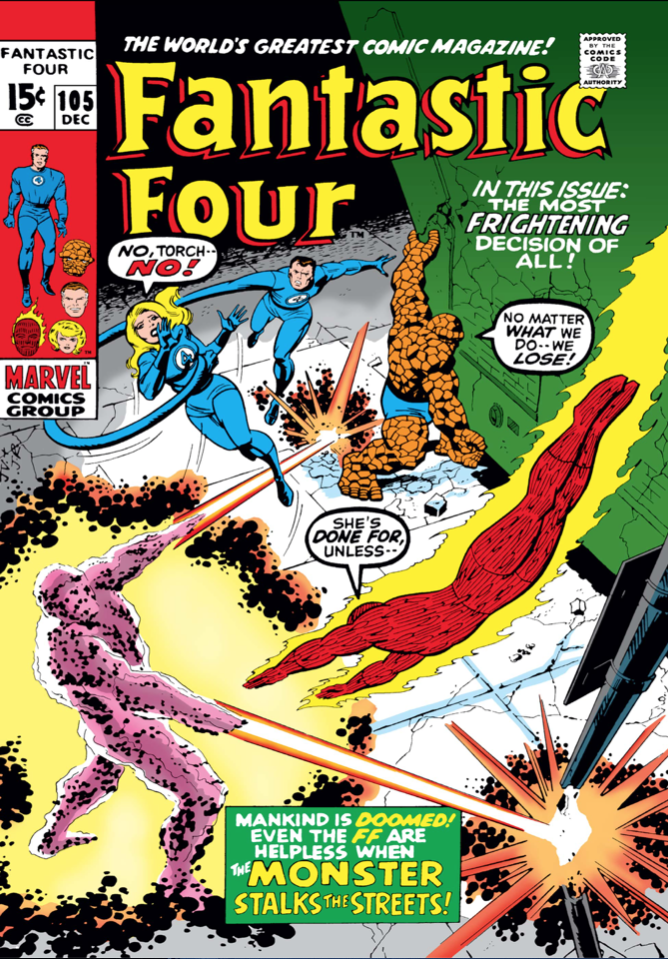
The cover is another in a line of “quad” covers that dates back all the way to issue 17 and extends far into the future. Here are a handful:
Fantastic Four 105 “The Monster in the Streets” Published Sept. 1970 Story: Stan Lee Pencils: John Romita Inks: John Verpoorten Letters: Artie Simek Cover: Romita and Verpoorten
Synopsis
While a mysterious energy creature roams the streets of Manhattan, Crystal falls ill and must return immediately to the Inhuman city of Attilan. Then, as Reed prepares to return Ben back to human, Johnny urges him to help save Sue from the creature.
What’s going on here
This is a bit of an odd issue, with a bunch of different threads that don’t really weave together. There’s Crystal’s illness, which initially seems tied to the energy monster, but not really. There’s her need to return to Attilan, which distracts Johnny, but mostly seems to be a device to get back to a team of four. There’s Reed once again trying to transform Ben, which is loosely tied to Crystal’s illness—Reed saw something Crystal’s blood that he could use to cure Ben—but isn’t really impacted by Crystal. Then there’s Sue battling the energy monster, which is strangely removed from the rest of the action until the end.
What I liked
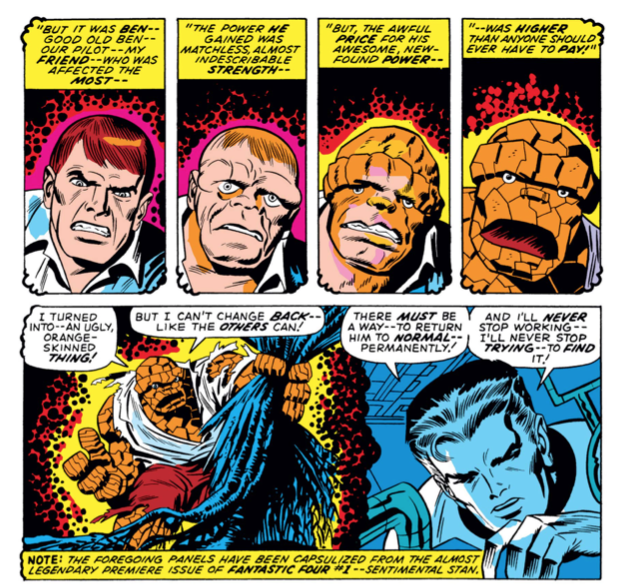
There’s a brief re-cap of the origin of the FF, which I we haven’t seen for a while, and it gives us a chance to see John Romita’s rendition of these iconic events. After an uneven issue the previous month, Romita and John Verpoorten seem to be hitting their stride, and the art overall seems more polished and dynamic. They are aided by the uncredited colorist, who creates some dramatic effects, like these:
What I didn’t like
As mentioned above, the story is disjointed, and seems engineered to A) create an emotional separation between Crystal and Johnny and B) force Reed to choose between transforming Ben and saving Sue. Both of these basic plot points have been use before, and cramming them into one story just seems to ramp up the melodrama at the expense of a coherent plot.
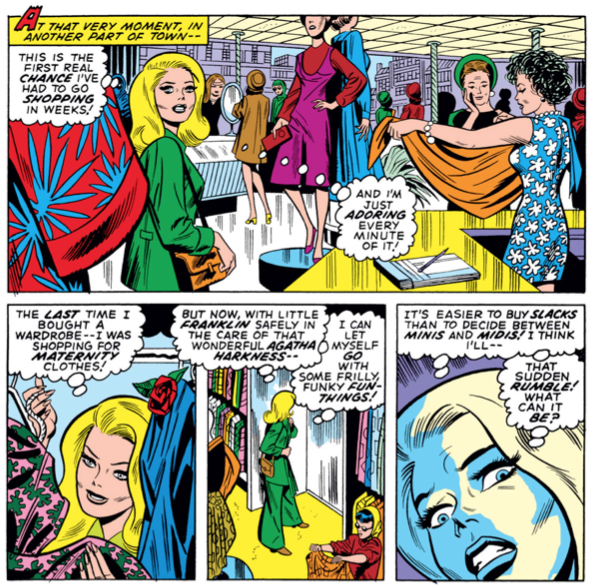
Also, we have an unfortunate flashback to the Sexist Sixties when Sue, in a free moment, is depicted shopping.
Anything else?
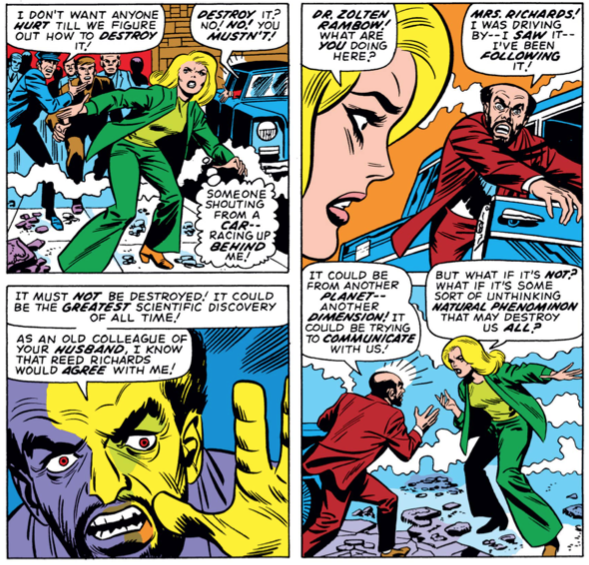
This issue features the introduction Dr. Zolten Rambow, about as obscure an FF character as exists. Savor him, because he will gone soon.
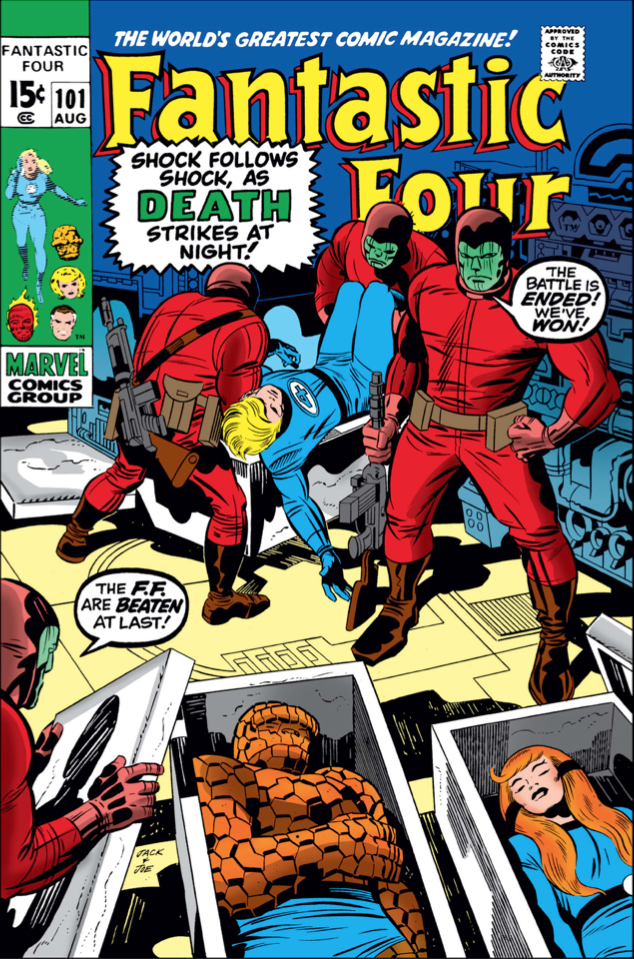
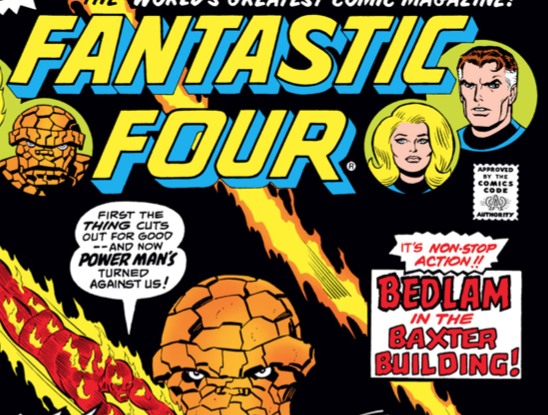
Fantastic Four 101 “Bedlam In The Baxter Building!” Published May 1970 Story: Stan Lee and Jack Kirby Pencils: Kirby Inks: Joe Sinnott Letters: Artie Simek Cover: Kirby and Sinnott
Synopsis
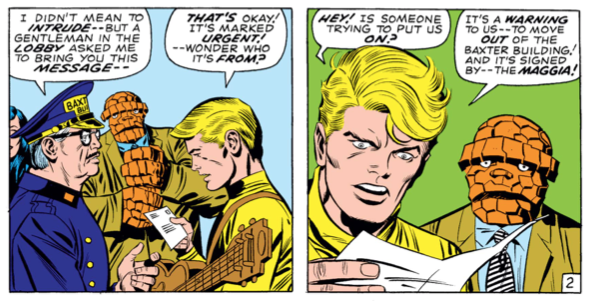
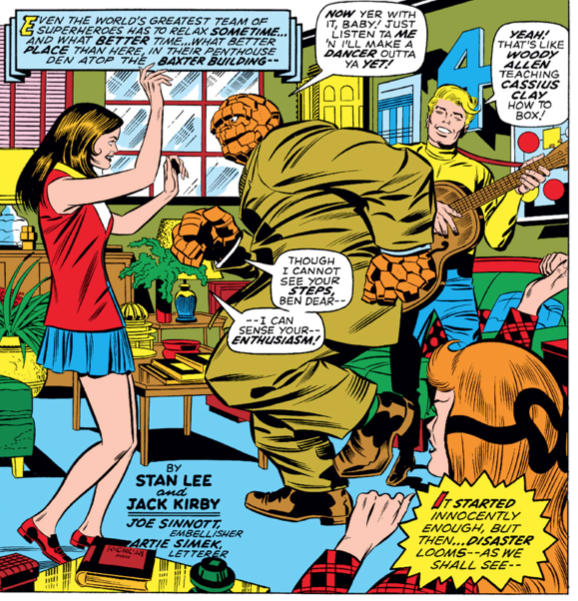
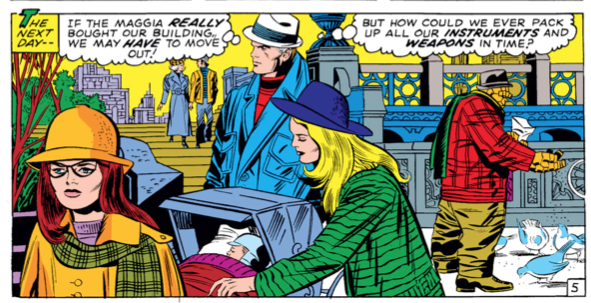
The Fantastic Four, plus Crystal and Alicia Masters, are relaxing at the Baxter Building when they receive a notice from their doorman they need to vacate the building as it has been purchased by “the maggia,” Marvel’s versions of the mafia. The action cuts to a meeting of a crime family, led by “the top man” discussing how they plan to legally evict the FF to seize their weapons and inventions.
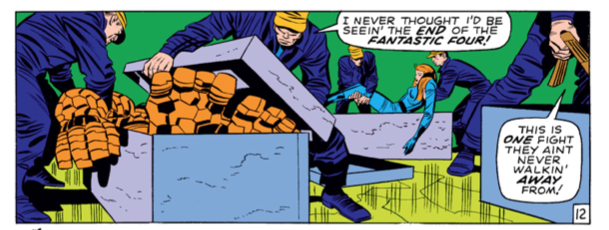
While in the park, the FF see helicopters approaching the Baxter Building. As the team investigates, first the Human Torch, then Mr. Fantastic, the Thing and Crystal are captured by maggia henchmen. The four are placed in caskets and dumped into the ocean, but escape after Crystal breaks free.
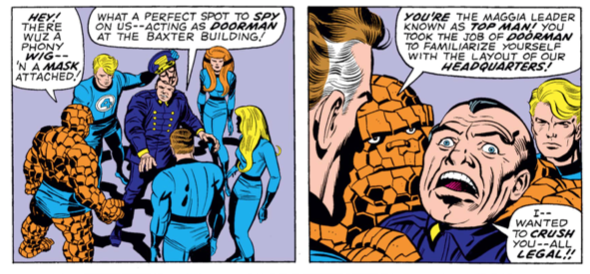
Meanwhile, the Invisible Girl resists capture and battles the thugs until the rest of the team arrives. The leader of the maggia is then shot by the Baxter Building doorman, who is revealed to be the “top man” in disguise.
What’s going on here?
Sadly, this is another lackluster issue of the FF as we count down the few issues remaining in the Lee/ Kirby partnership. While the structure of the comics is sturdy enough—Stan and Jack have used this basic formula and pacing for one-and-done stories many times—the plot is ridiculous. The mob buys the Baxter Building (signing a note announcing that’s who they are?) and the team has to vacate immediately, leaving all their stuff behind? Even the average 12 year-old reader has a better sense of real estate law than that. Then there is the problem of mobsters taking down four of the most powerful heroes in the marvel universe. None of it makes much sense.
By this point Marvel had been using “maggia” instead of mafia for years (it dates back to Avengers 13) but it never stops sounding odd to me. I’ve never read why Stan felt he couldn’t use “mafia” – was he really worried the real-life mob would object? Given how often they are portrayed in TV and movies, it seems overly sensitive.
Stan and Jack attempt to give the story a bit of a twist with the reveal at the end that the doorman was the mob boss, but it falls flat. We don’t have anything invested in either the doorman or the mafioso, and his infiltration of the Baxter Building hardly seemed worth the trouble.
It’s bedlam, I tell you
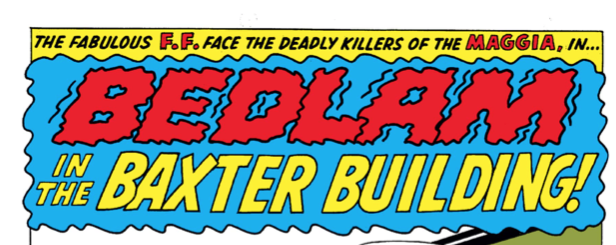
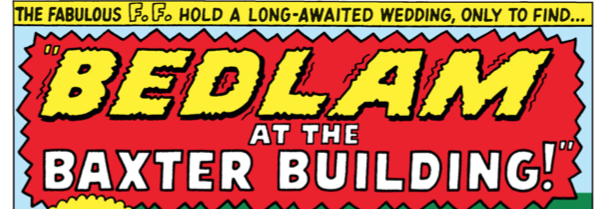
This is the second of at least three FF comics that use Bedlam in or at the Baxter Building. (For those curious, the term “bedlam” derives from the name of a mental hospital in London).
The first instance was in FF Annual 3:
And it appears again on the cover of FF 169 (although that’s not the name of the story)
The sexist seventies
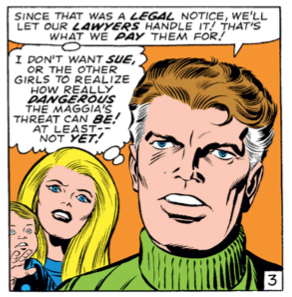
Reed once again wants to protect Sue and the other “girls” from bad news.
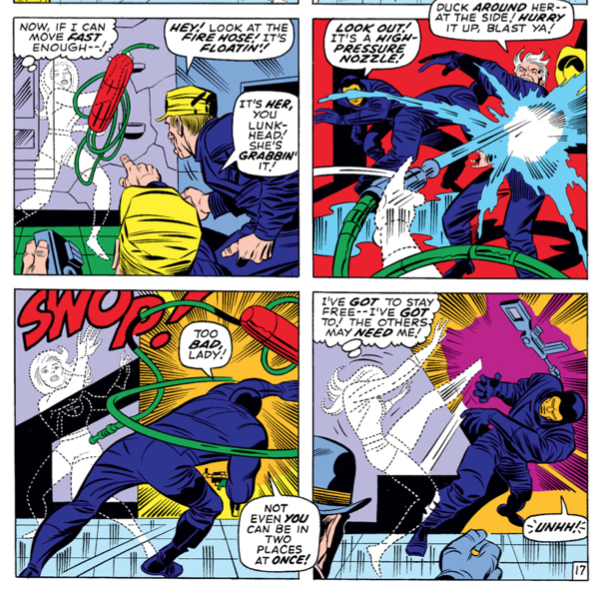
Later in the comic Sue does hold her own against the maggia thugs and kicks some ass. Silly Reed.
Half bad
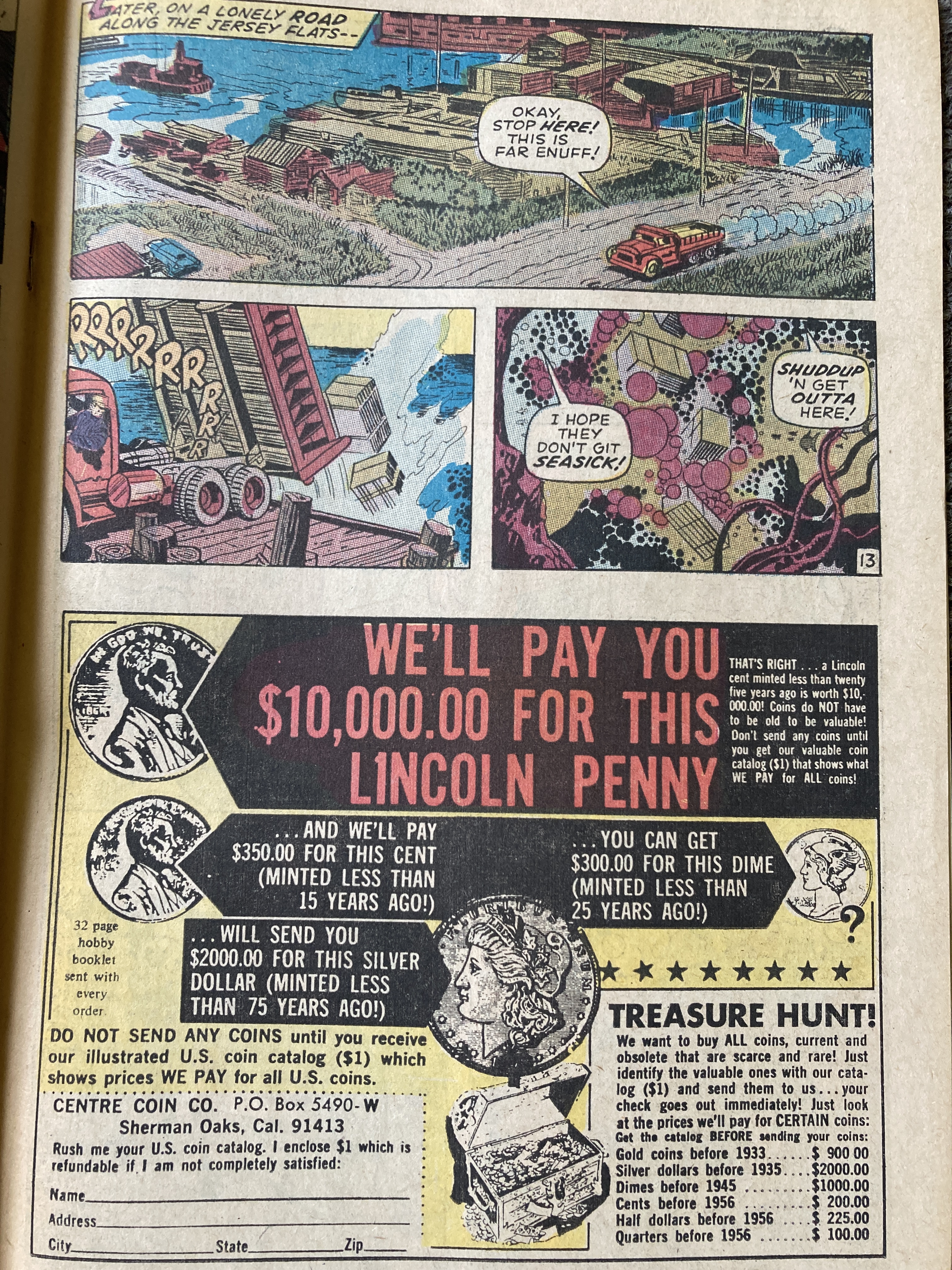
This issue has another one of these awful half pages (thankfully they are consolidated into one in the digital comic).
We get letters
Longtime comic writer Alan Kupperberg has a letter in this issue (at least I assume it’s the same guy). He had his first published story, in Hulk 172, just two years later.
Dig that Kirby Krackle
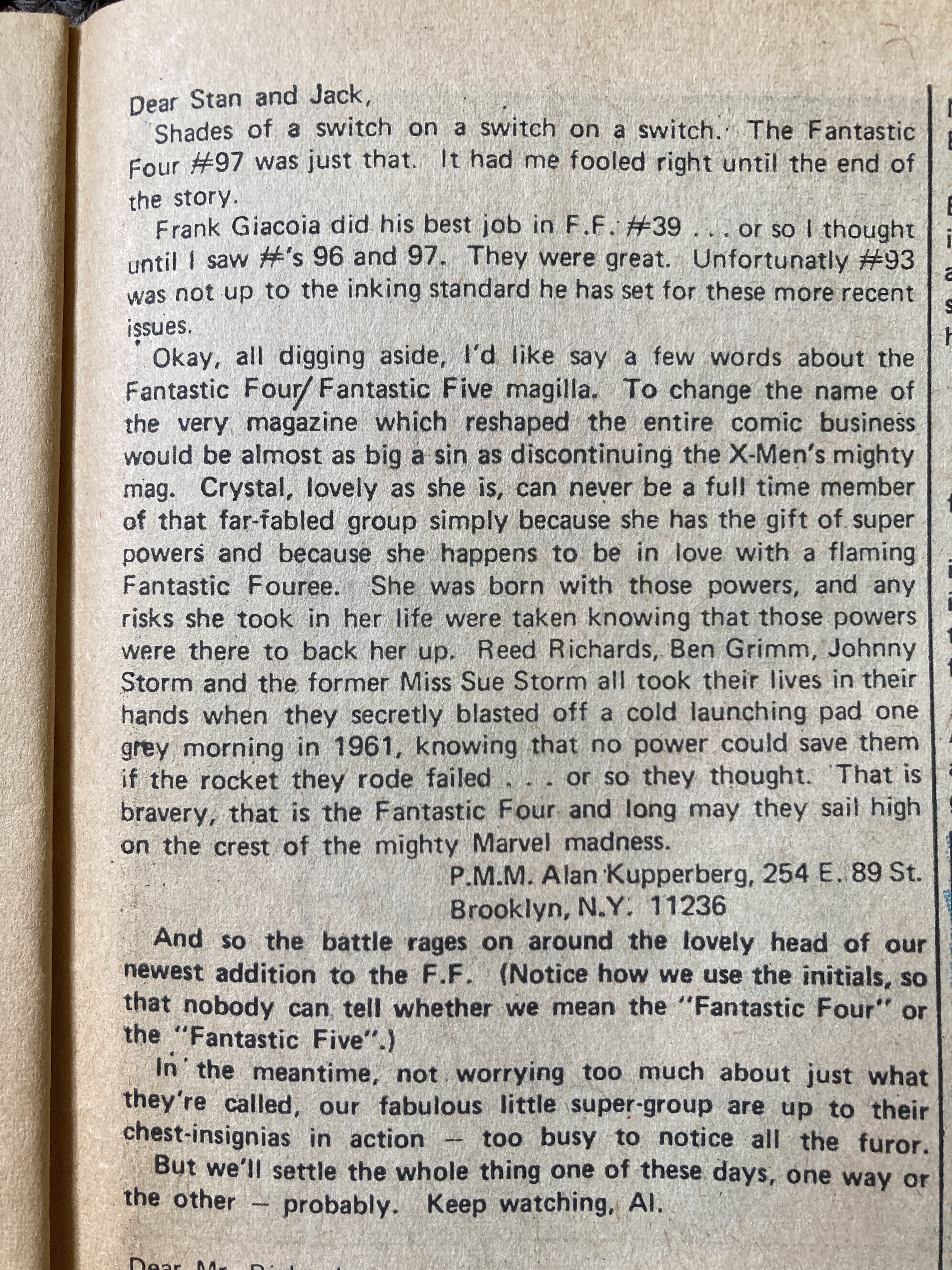
Another subdued issue from the great Mr. K. There’s no interior splash pages, although the lead one is very fun.
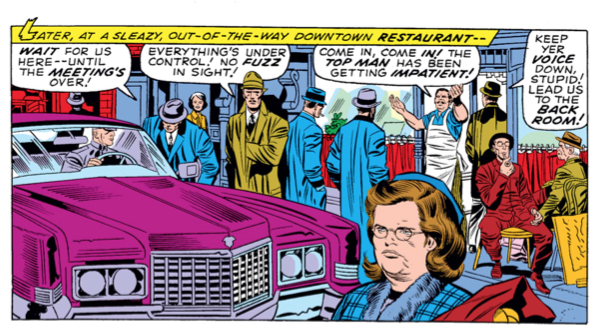
As befitting the nature of this issue, we don’t have much gee-whiz images, but lots of Jack’s city scenes, which can be just as good (note how the mob restaurant is called “sleazy.”)
Fantastic Four 100 “The Long Journey Home” Published: April 1970 Story: Stan Lee and Jack Kirby Script: Lee Pencils: Kirby Inks: Joe Sinnott Letters: Sam Rosen Cover: Kirby and Sinnott
Synopsis
As they return from Attilan following the events of last issue, the Fantastic Four—plus Crystal, who has rejoined them—are attacked by Kang and Doctor Doom, who shoot down the FF’s flying saucer (again, the saucer’s origin is never explained). It quickly becomes clear these are not the real Kang and Doom, but androids, and that the Puppet Master and Mad Thinker are behind them.
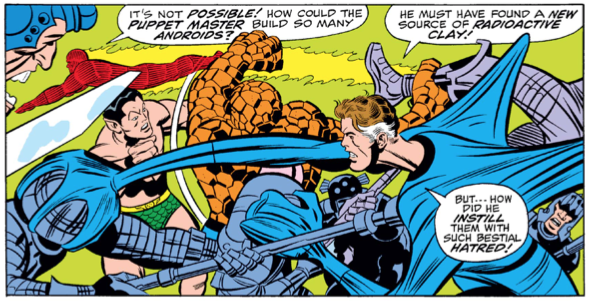
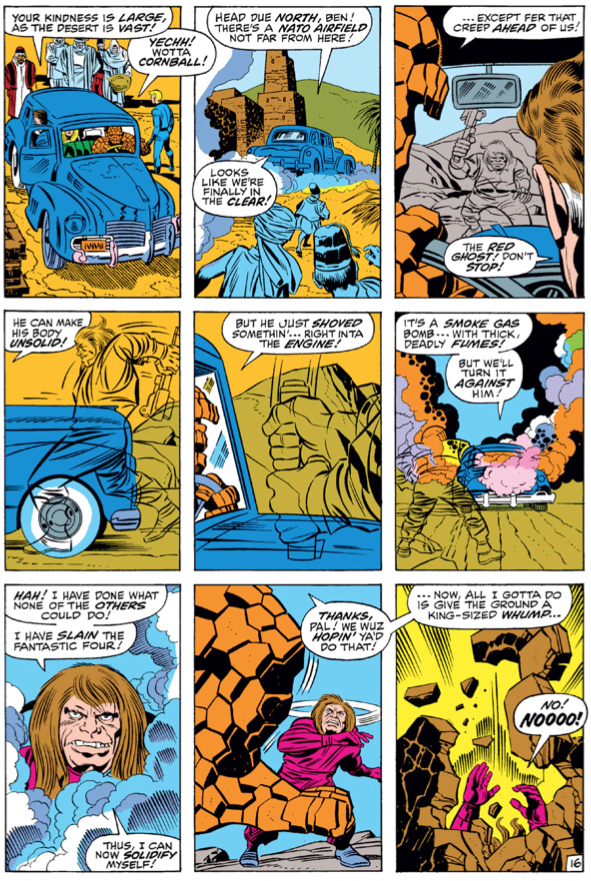
The FF are then attacked by a wave of androids in the form of virtually ever villain the FF has faced in its first 100 issues: The Kree Sentry, Namor, the Red Ghost and his apes, Diablo, Dragon Man, the Hate Monger, the Frightful Four, the Super Skrull, etc. The only obvious omission is Galactus. The FF scramble to escape, via camels, boat and eventually a car in what appears to be Egypt, and eventually make it to a NATO air field when the Puppet Master accidentally destroys the Thinker’s command center.
What’s going on here?
One hundred issues (plus some annuals) is a lot of comics, and it’s obviously an occasion worth memorializing with a big issue. Fantastic Four 100 is the first comic of the modern Marvel era to reach that milestone (other titles with higher issue counts, like Thor and Captain America, were renamed from older titles). Among super hero comics, only old DC stalwarts like Action Comics (issue 389 at this point) and Batman (200) had published more issues.
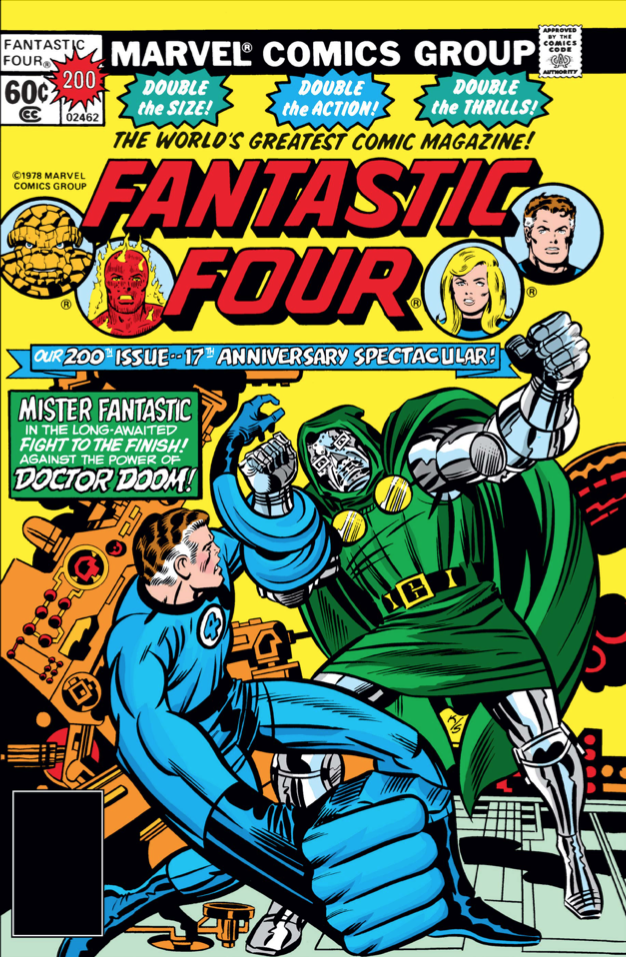
But despite the big anniversary, FF 100 is still a standard-sized comic with just 20 pages of story. Double-sized anniversary issues didn’t come along until years later (FF 200 in 1978 is a double sized issued) and the big, blow-out issues with extra-long stories, back-up features and pinups were still reserved for annuals at this point. It’s possible FF 100 was originally intended to be a double-sized issue or an annual, because there is a lot of story jammed into relatively few pages and Jack has to resort to a handful of nine-panel pages to fit it all in, something he rarely does at this point in the FF. Needless to say, there are no interior splash pages and overall the art looks pretty cramped in this comic.
Structurally, FF 100 reads a lot like FF Annual 3, which featured just about every villain attack the FF during Reed and Sue’s wedding. Unlike that story, this one tries to have its cake and eat it too; instead of coming up with an explanation of how all these villains would coordinate with other, Stan and Jack just turn them into androids. As Reed explains, they are androids with the memories and power of the villains they are modeled on, which is somehow a result of the Puppet Master’s radioactive clay. It’s not exactly clear how that works, or why the Puppet Master’s clay seems to work differently in every appearance to date, but no matter, it serves to move he story along. (As we have discussed earlier, Stan and Jack often blur the lines between human and machine when they use androids).
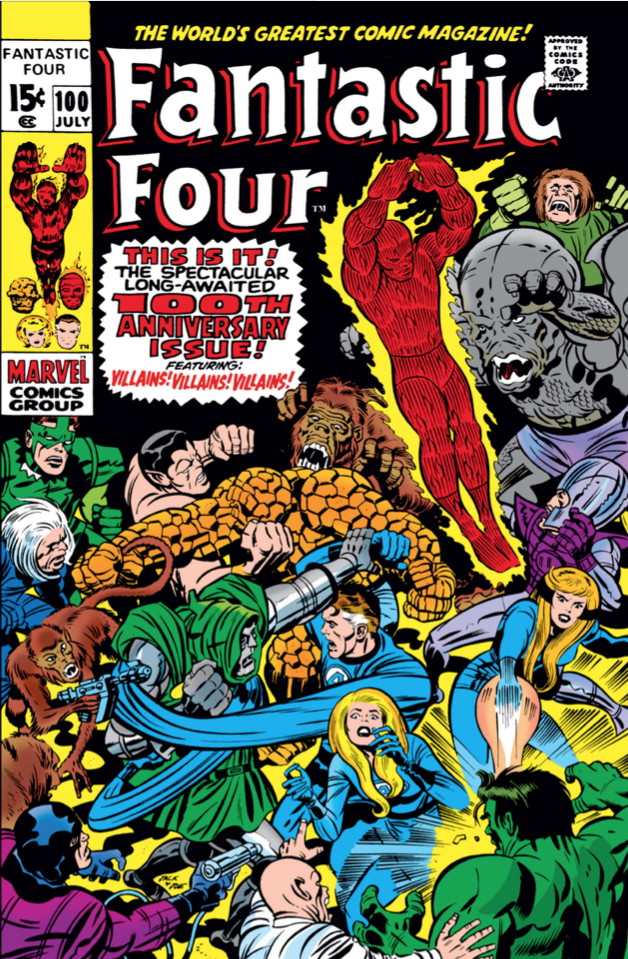
Unfortunately, for such a big occasion, the story falls flat. There’s no real tension or drama, all the action feels rushed, and ultimately it seems like a bit of a gimmick. Great cover though.
Happy anniversary!
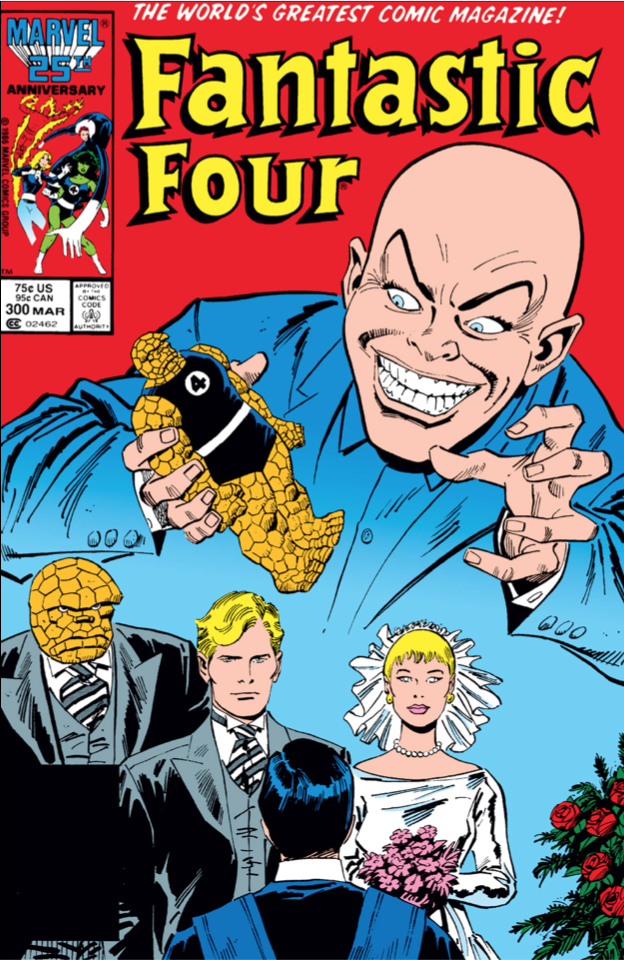
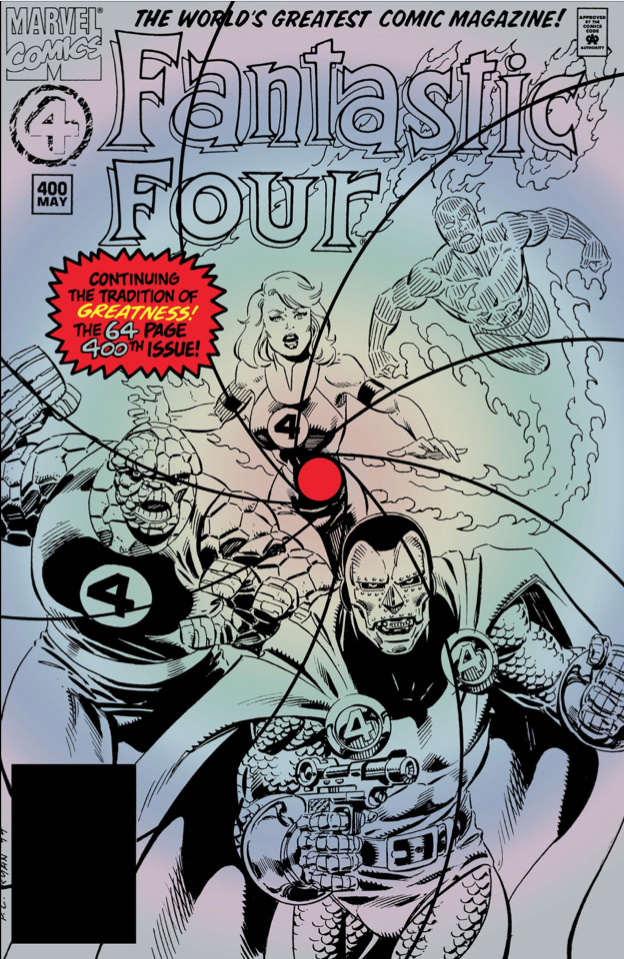
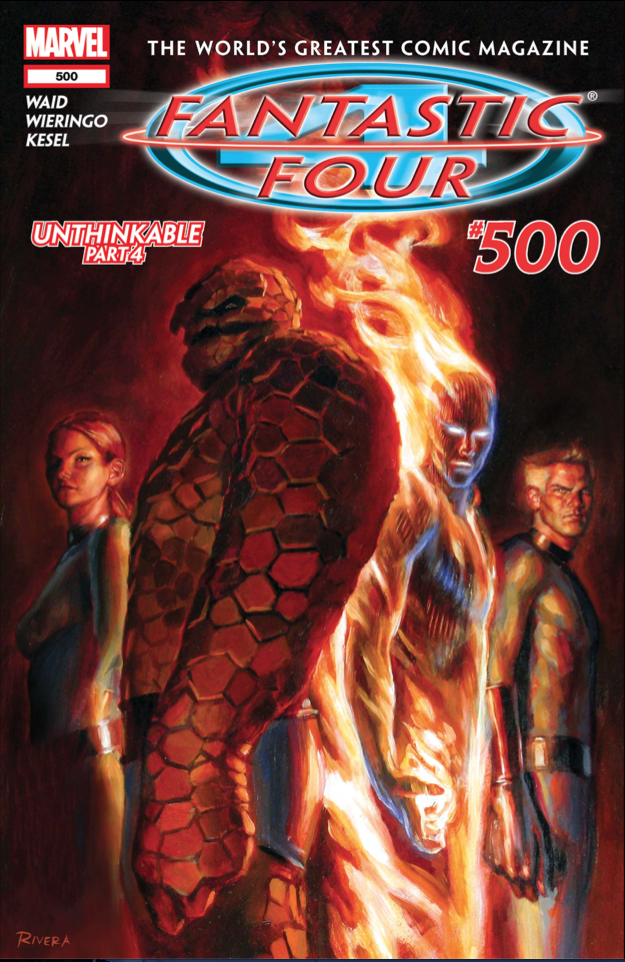
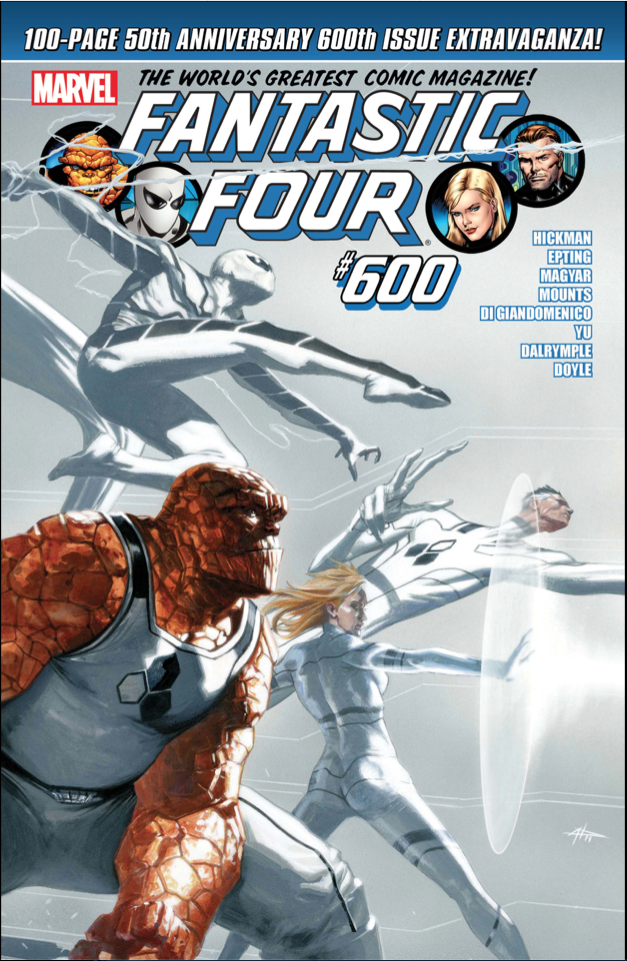
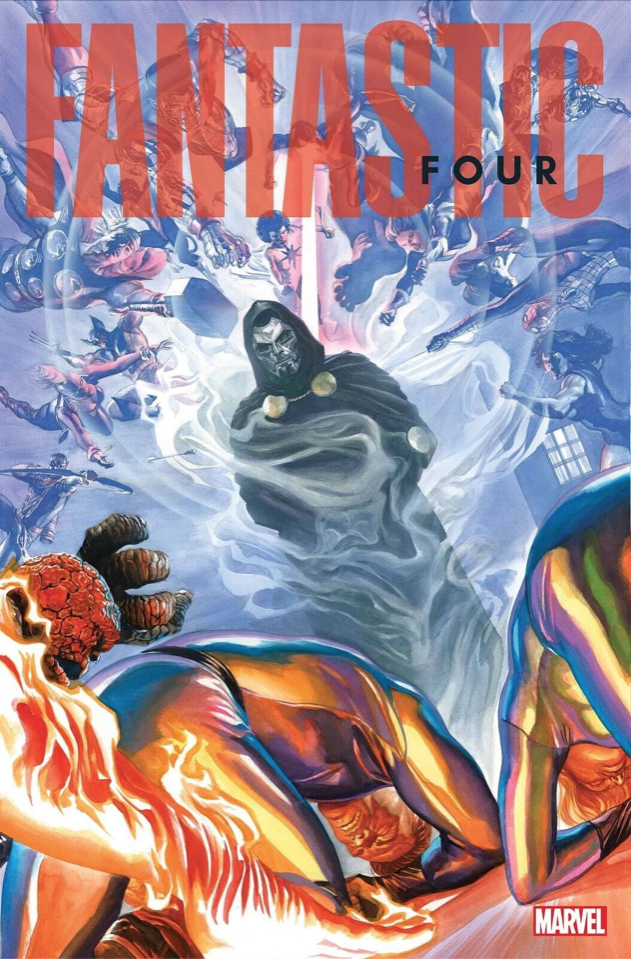
Here are the covers from the other FF comics ending in “hundred.” Unfortunately they’re not all great comics, and some of the best FF creators didn’t get a chance to write one. Note that issue issue 400 had a holographic foil cover (it was the 90s!) and issue 700 is due out in about 10 days of this writing.
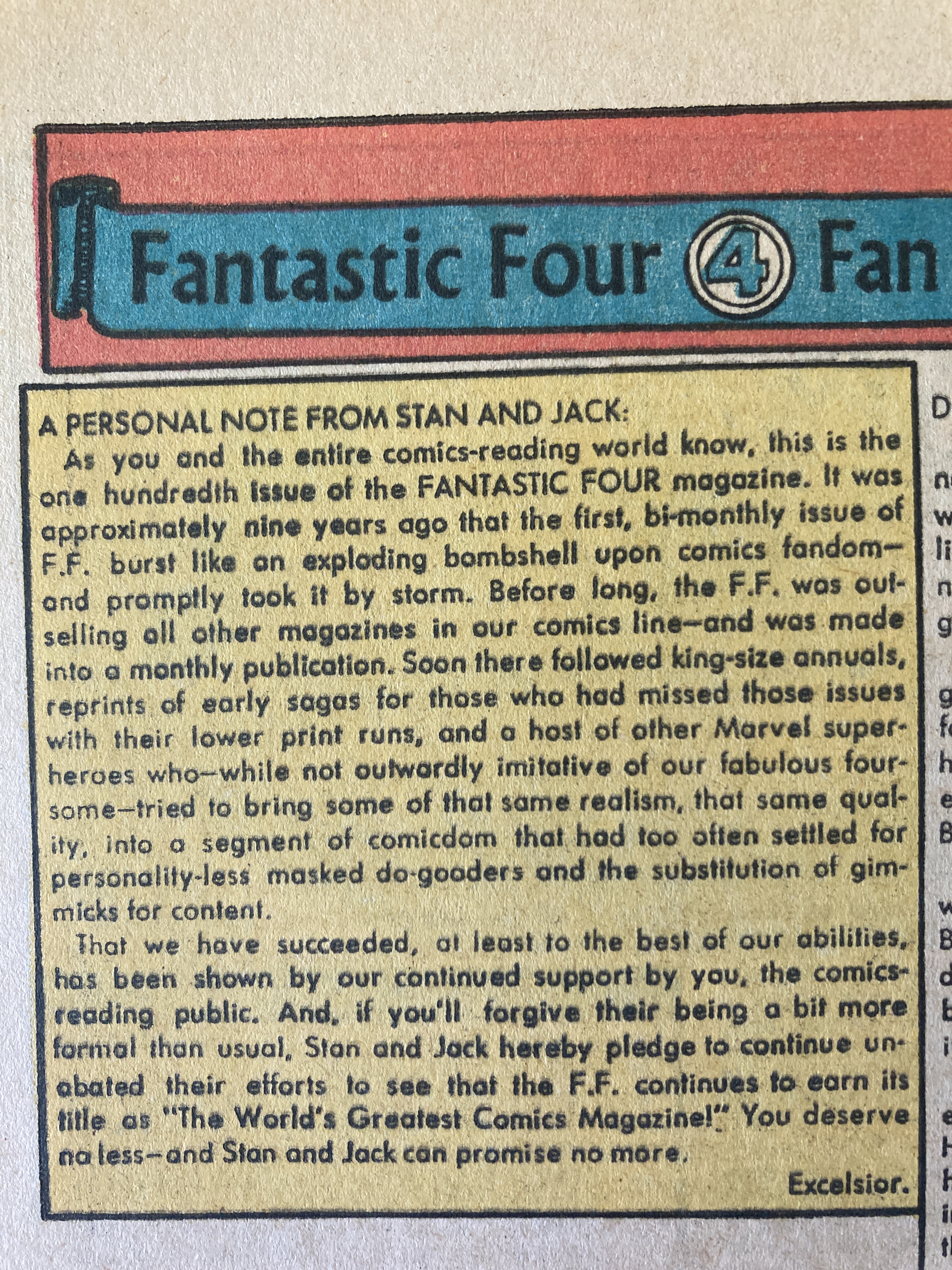
A message from Stan and Jack
The pledge to continue their efforts “unabated” will last another three issues.
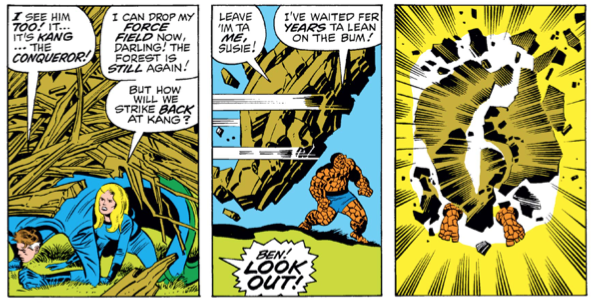
Kang who?
Kang’s appearance here is an odd one. He’s the first bad guy to attack the FF, yet he’s never really faced them in the FF’s own book to this point, with only the briefest of appearances in FF Annual 3. He has of course fought them as Rama-Tut, but it’s not clear that the FF knows they are the same person. He did face the Thing and the Human Torch in Strange Tales 134, which explains Ben’s comments about waiting years to fight him (and a reminder that I really should read those Torch stories in Strange Tales).
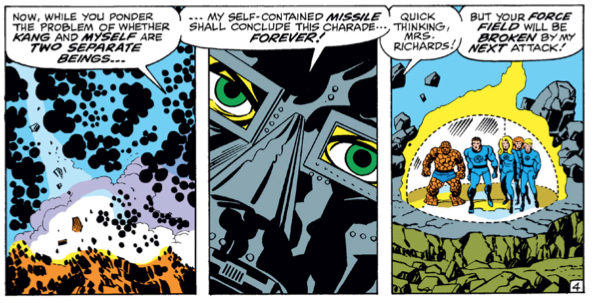
There’s also this odd reference from the Doom android, suggesting Kang is a future version of himself, something that came with Rama-Tut in FF Annual 2. In later comics it’s explained that Kang may be a descendent of Doom ( and how an android would know all this is not clear).
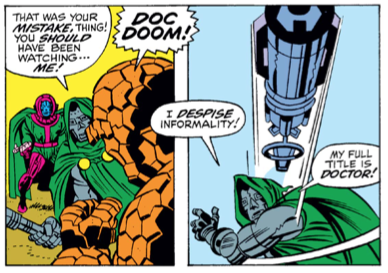
Speaking of Doom, I love this line:
Crazy credits
If only this were true …
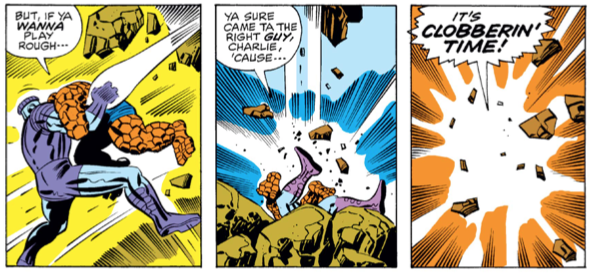
Clobberin’ time
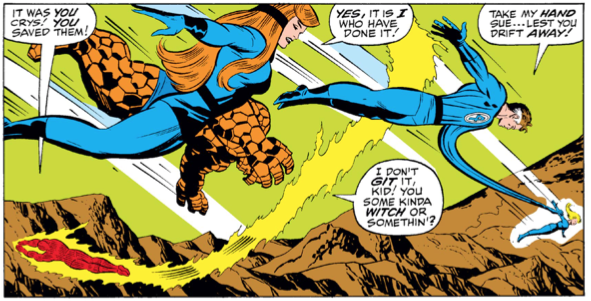
Say what?
Crystal appears to be taking syntax lesson from Yoda
Half and half
There are two of these atrocious half pages in the comic. Neither are included in the digital version on Marvel.com that I use to all these images.
Dig that Kirby Krackle
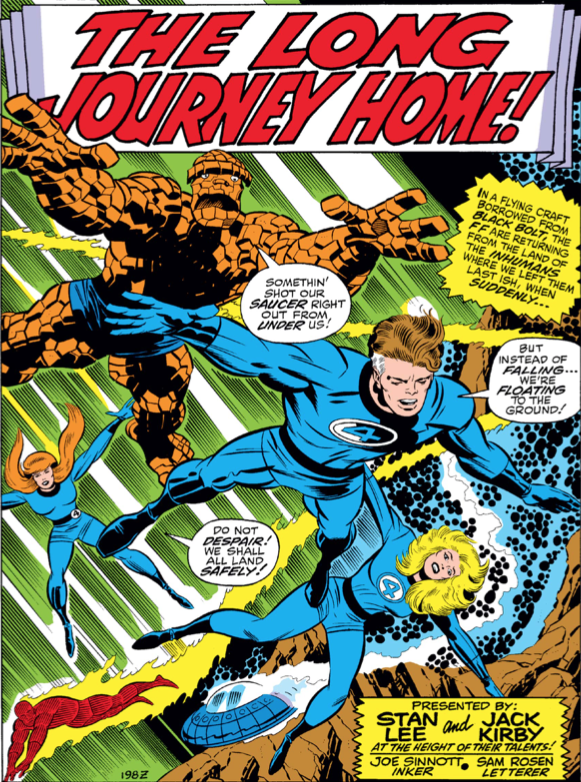
This is the first installment of “The World’s Greatest Comic Magazine!” where I had to actually search for great Kirby panels. As mentioned above, the art feels cramped and workmanlike, and there are not a lot of examples of Kirby’s genius. But there are a few notable panels, particularly the splash:
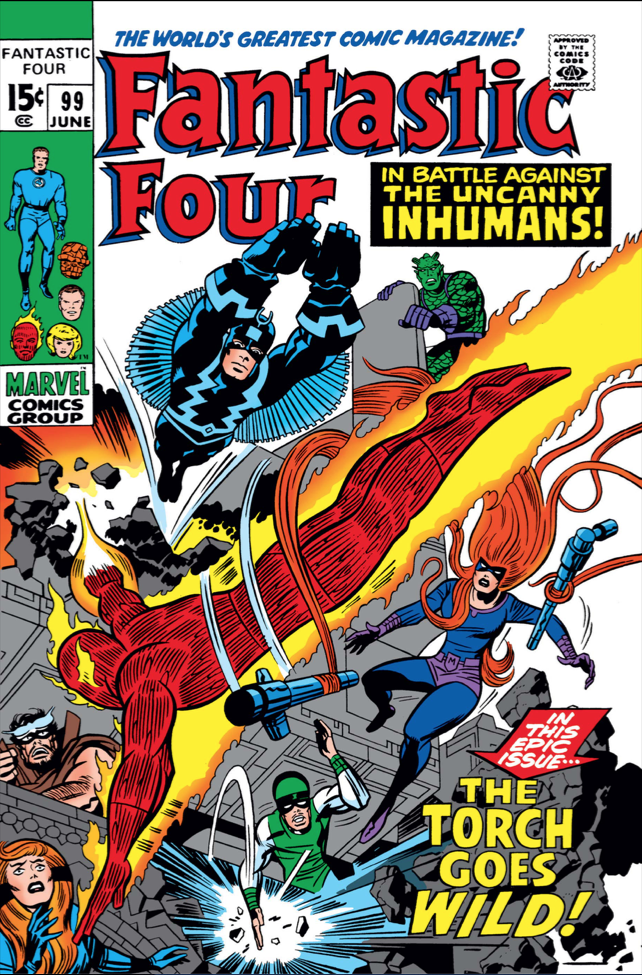
Fantastic Four 99 “The Torch Goes Wild!” Published: March 1970 Story: Stan Lee & Jack Kirby Script: Lee Pencils: Kirby Inks: Joe Sinnott Letters: Artie Simek Cover: Kirby and John Verpoorten
Synopsis
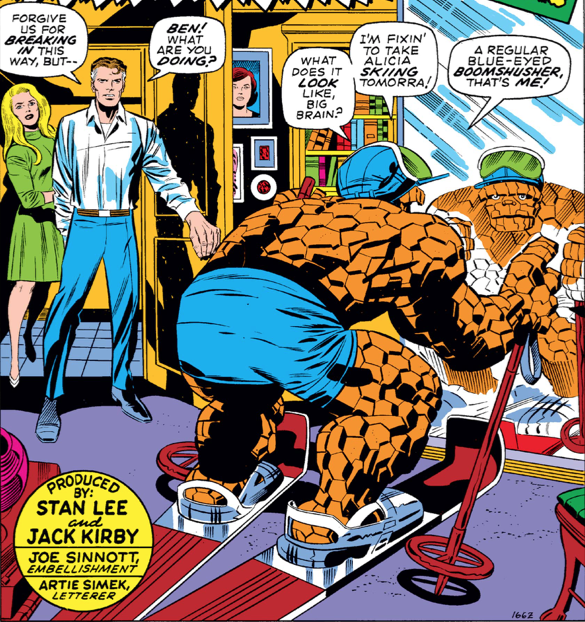
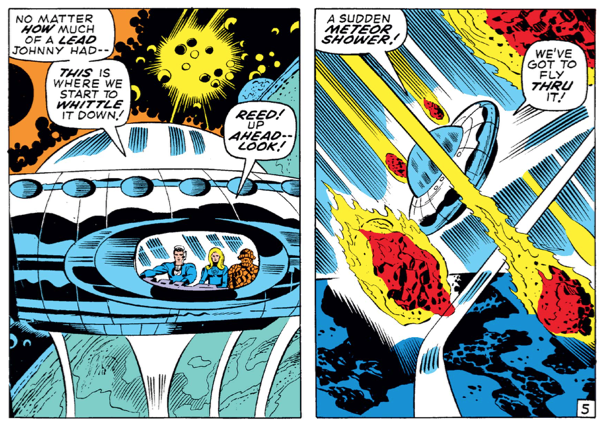
The Thing is preparing for a ski trip with Alicia when Mr. Fantastic and the Invisible Girl report the Human Torch is flying around the world to take on the Inumans and reclaim his girlfriend, Crystal. We cut to the Torch flying across Europe before he takes refuge in a cave in the Himalayas, where he is accosted by what appears to be a talking yeti. Meanwhile the rest of the team take off in a flying saucer, only to be grounded by a meteor strike in the Himalayas as well.
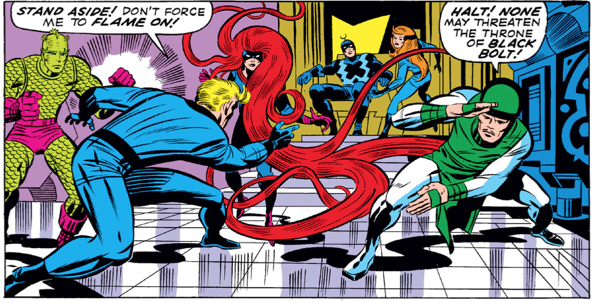
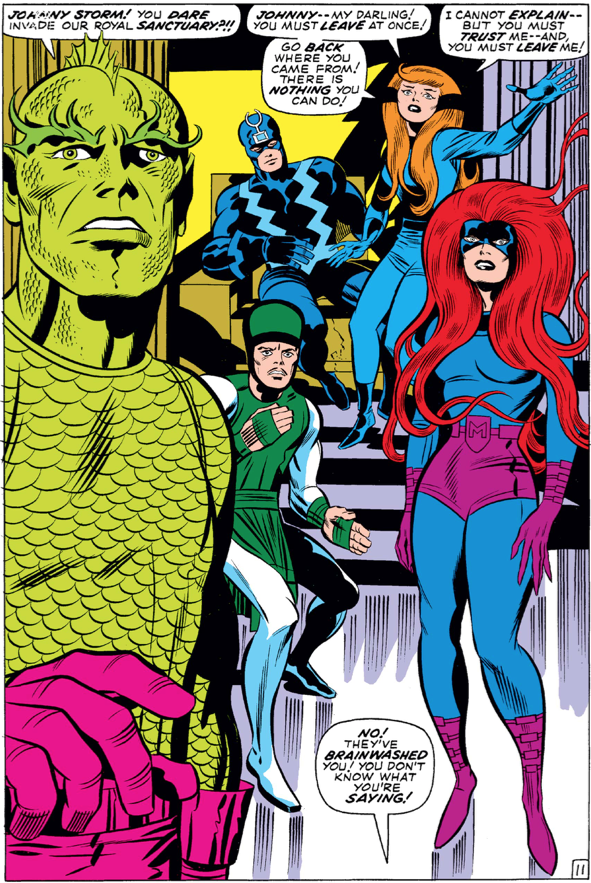
The yeti turns out to be an Inhuman and Johnny, realizing he has reached his destination, battles his way through Attillan, the city of the Inhumans, and confronts Crystal and the rest of the royal family. The Torch fights them, until Crystal, peeved at his immaturity turns against him. Johnny, feeling betrayed, threatens to destroy Attillan with a fireball when the rest of the FF show up and neutralize him. Eventually Crystal explains she was needed by her family because Black Bolt was sick. A chagrined Johnny learns his lesson and Ben is pleased he can still go skiing.
What’s going on here?
This is a pretty weak issue, and it’s hard not to connect it to the the upcoming end of the Lee/ Kirby run, which is coming in just four more issues. The plot is thin, the art feels rushed and the comic as a whole lacks much substance. At this point, we’ve had a number of stories about the Torch’s pursuit of Crystal, and this one didn’t add much to our understanding of them. If anything, it revealed Johnny to be as immature as ever.
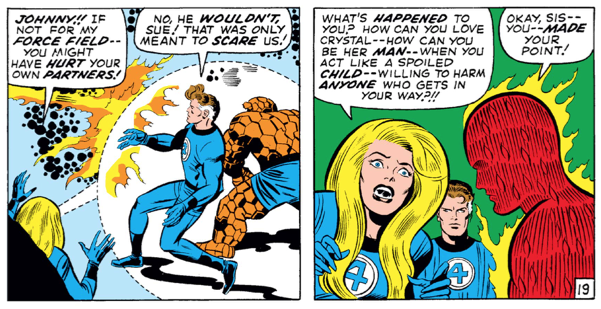
If there’s one redeeming quality, it’s that Sue not only joined the mission—after being sidelined for so many because of pregnancy or motherhood—but she’s the voice of maturity and reason, calling out Johnny for being a selfish jerk. So that’s progress.
Comic relief
At some point Ben’s character tipped from being a tragic figure who uses humor to cope, to being the team clown. It’s been evolving that way for many issues, but this silly splash page seems like a good example of how Stan and Jack are treating him lately.
Flying saucer
Yes, the FF have a flying saucer. No, they don’t explain how or why. If I had to create an in-continuity explanation, I would say it’s from the Skrull planet they visited in issue 93, but maybe Reed just decided to make one.
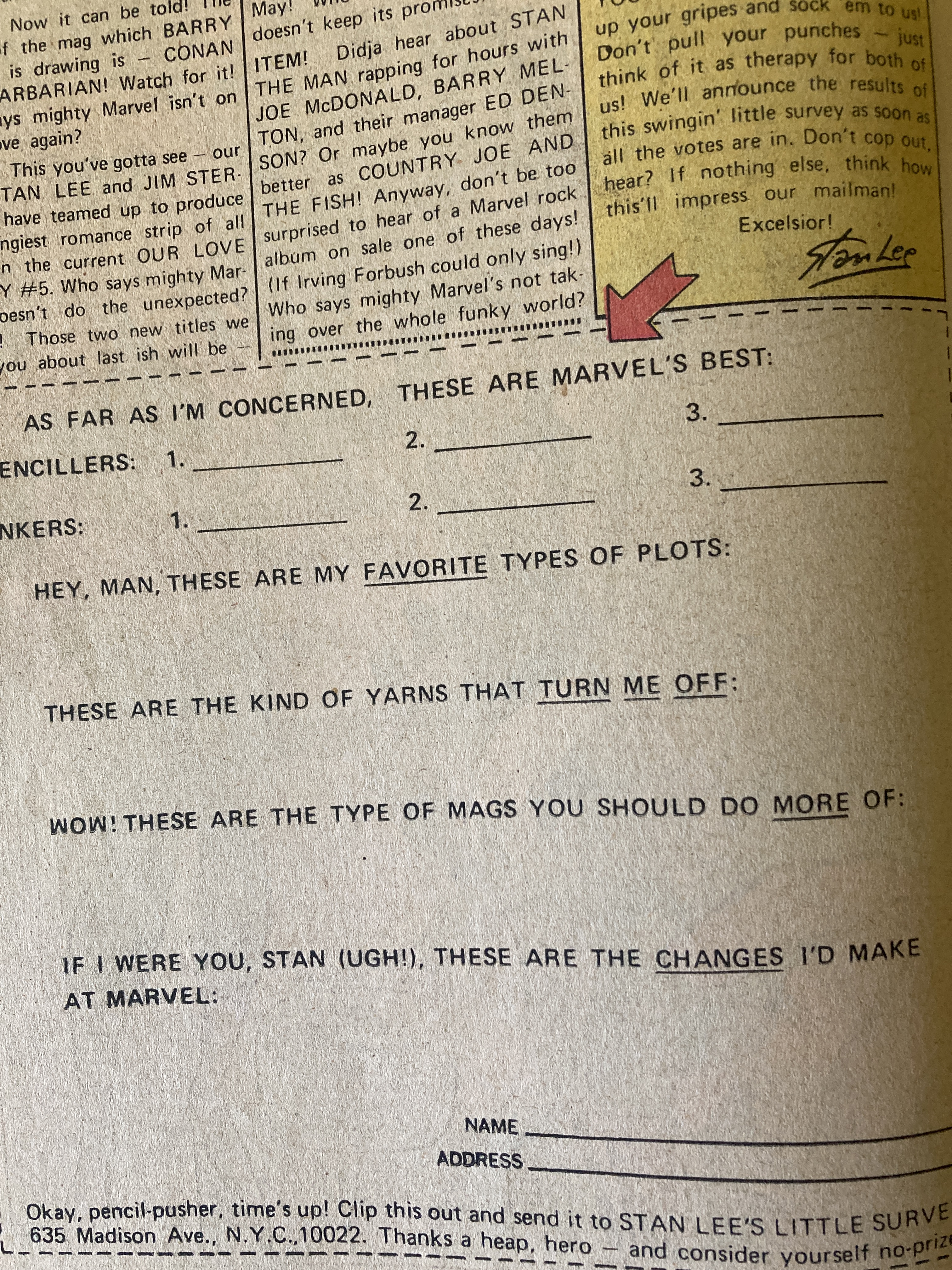
Stan’s survey
From the Bullpen Bulletins page. Note Stan didn’t ask who was the favorite writer. I would love to see the results of this.
Dig that Kirby Krackle
Only one interior splash in this issue, but it’s a fine one of the Inhumans:
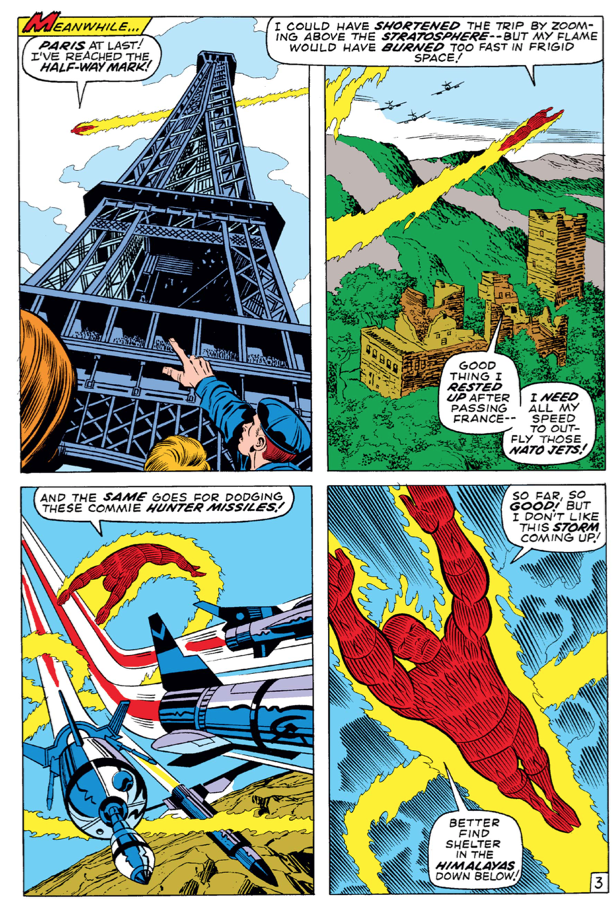
I like this sequence of the Torch’s world tour:
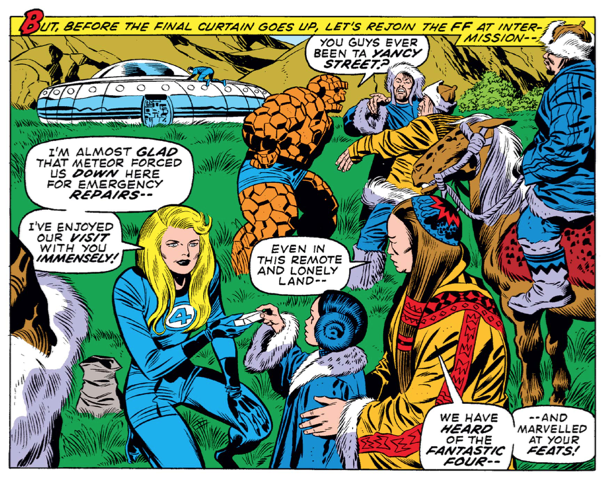
And here the rest of the FF meet some elegantly attired Tibetans:
Also on newsstands
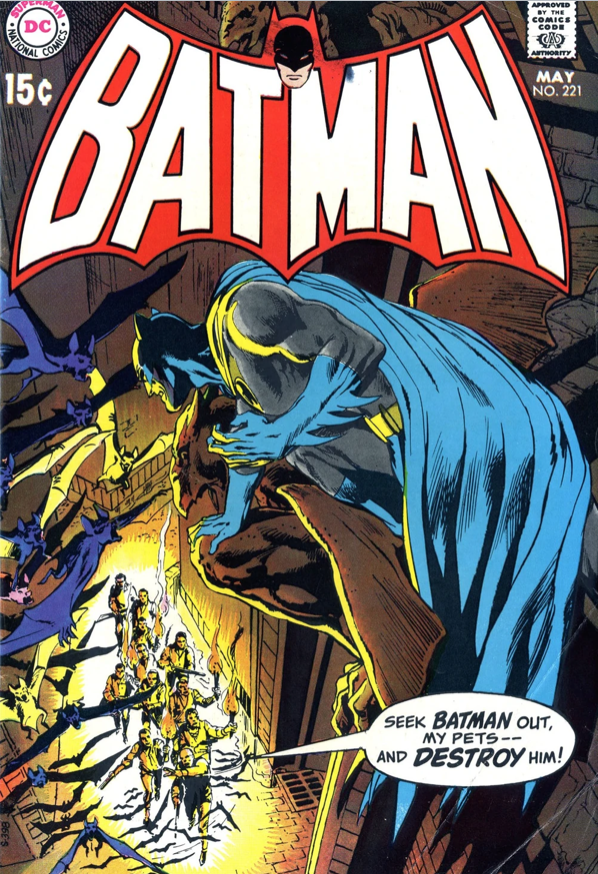
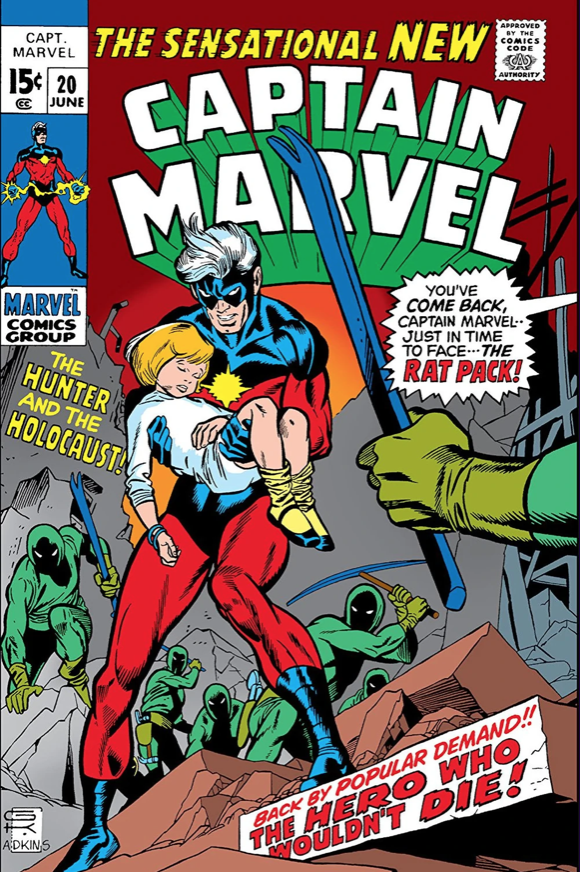
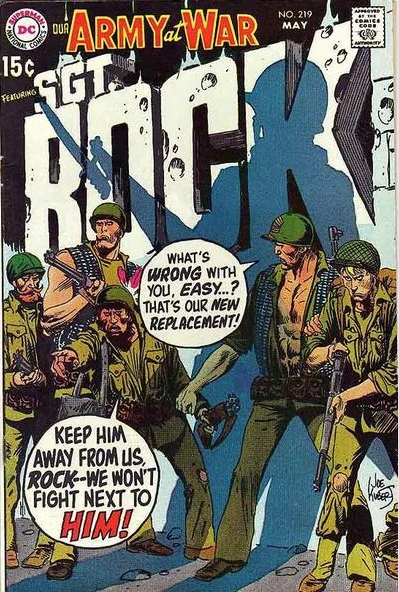
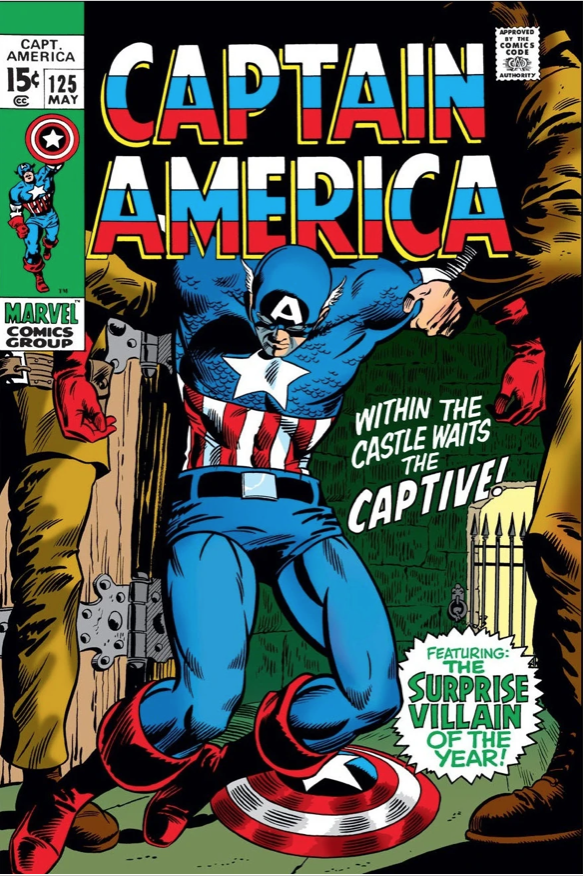
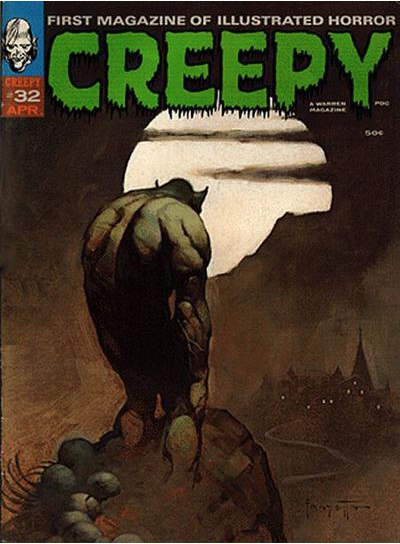
What else was on sale in March 1970? Covers by Adams, Kane and Franzetta
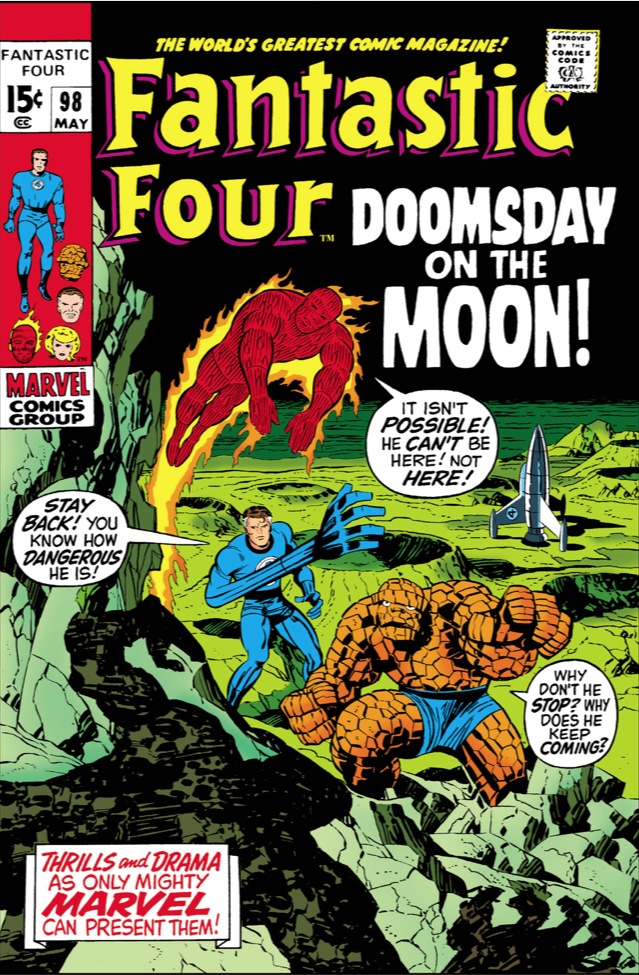
Fantastic Four 98 “Mystery on the Moon!” Published: Feb. 1970 Story: Stan Lee and Jack Kirby Script: Lee Pencils: Kirby Inks: Joe Sinnott Letters: Artie Simek Cover: Kirby and Sinnott
Apologies for skipping the last two weeks! I was on a family vacation without much time for blogging. We should be back on track now.
Synopsis
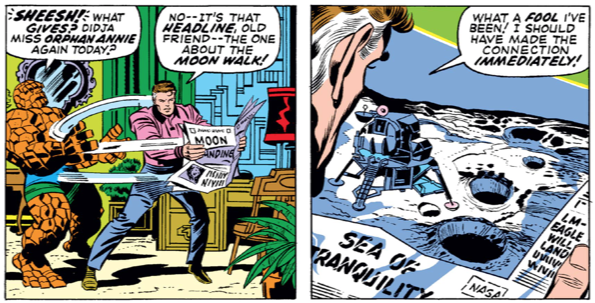
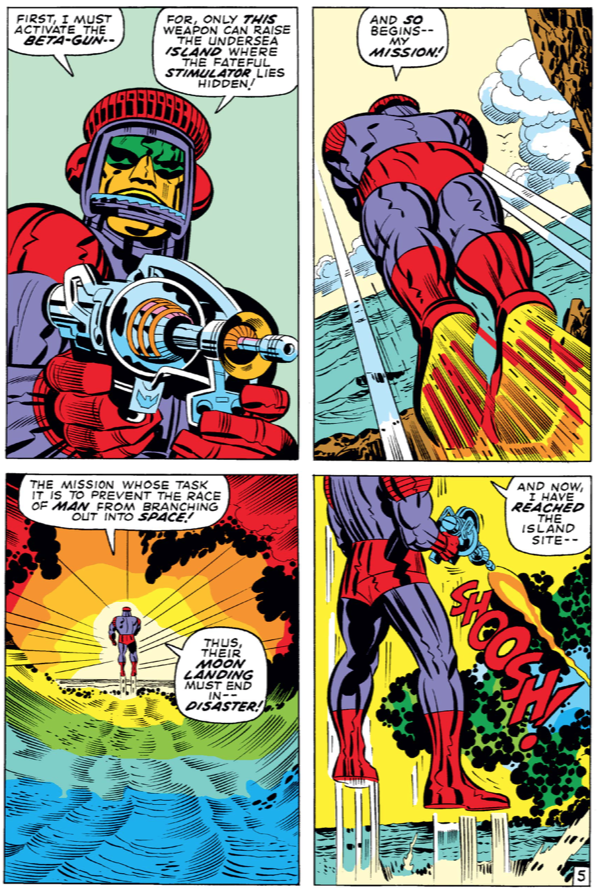
In his lab at the Baxter Building, Mr. Fantastic is deciphering a message from aliens, but can only make out the word “tranquility.” When he sees the Thing’s newspaper article about the upcoming moon landing, he realizes it refers to the Sea of Tranquility on the moon, and believes it’s an attempt disrupt the landing. Meanwhile, a Kree sentry declares it his mission to prevent humans from traveling to space, and uses his beta-gun to raise an island from the Pacific from which it will use a “stimulator” to awaken a “nameless mass” on the moon which will attack any living things that land there.
Leaving the Invisible Girl behind (yet again), the three male members of the FF take a missile they borrowed from NASA (why they don’t just take their own plane is not clear) to the island, from where Reed has detected the signals, and after a hazardous landing, battle the Sentry. After it’s defeated, Reed and the Human Torch descend into the depths of the island where they encounter the stimulator. The machine emanates rays which weaken them, however, and with his fading breath, Reed summons Ben, who destroys the stimulator—saving the Apollo 11 astronauts—and rescues his teammates.
What’s going on here?
This isn’t a bad issue, and there’s a lot to like about it, particularly Jack’s depictions of the sentry and the man-on-the street scenes he does so well. He is assisted by the inks of Joe Sinnott, who returns after missing the last two issues. The story is brisk and straightforward, and is a fun attempt to tie current events into an FF story.
That, however, is the story’s biggest weakness. The moon landing, while a big deal in the real world even six months later, would seem to be a pretty minor event in the Marvel universe, given how often our heroes have traveled to space. Remember, the Fantastic Four visited the moon as far back as issue 13, and since they, and many other Marvel heroes, have visited multiple planets outside the solar system. Even if the rest of humanity isn’t aware of this, it’s not clear why Ben—who is frustrated he’s missing the televised broadcast of the landing—or the Sentry should much care.
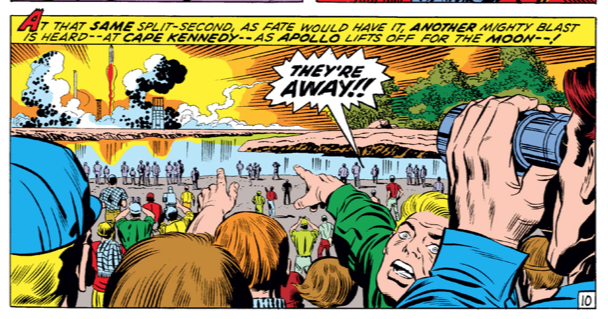
Clearly, this is a case of Stan and Jack embracing the zeitgeist and just running with it, regardless of the continuity or logic problems. And Jack has a lot of fun depicting both the launch of Apollo 11, and the excitement it generated.
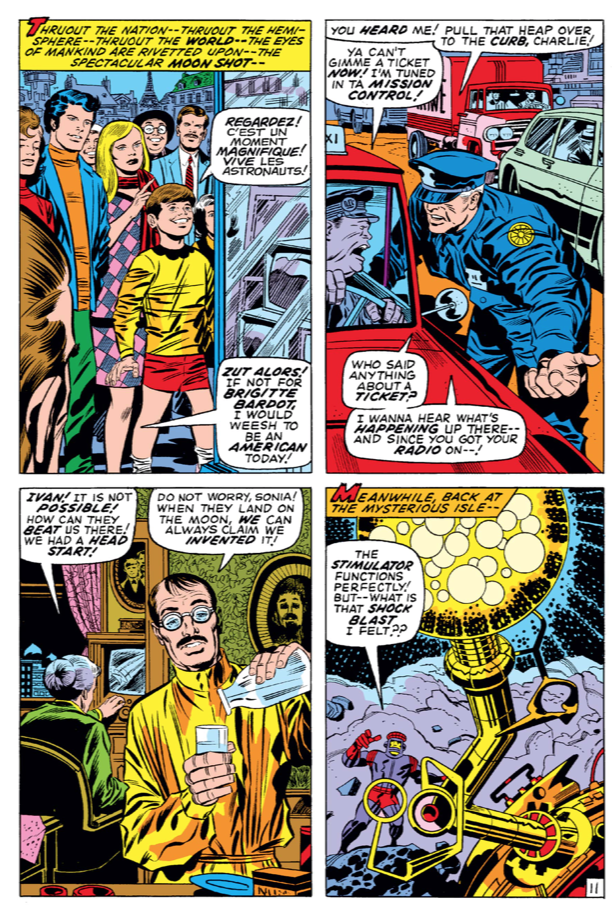
Again, Jack really excels at these crowd scenes. The Bridgette Bardot reference is a nice goofy touch.
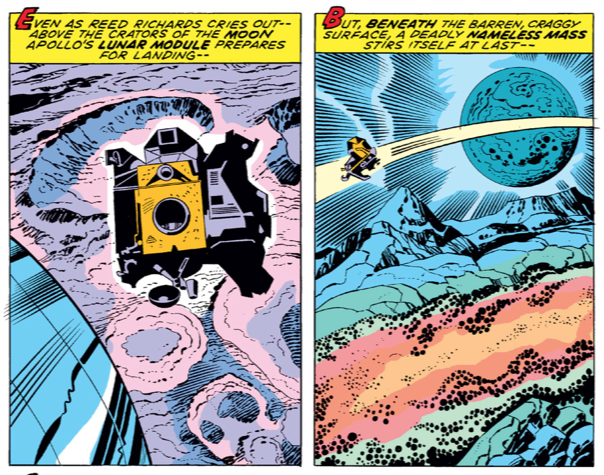
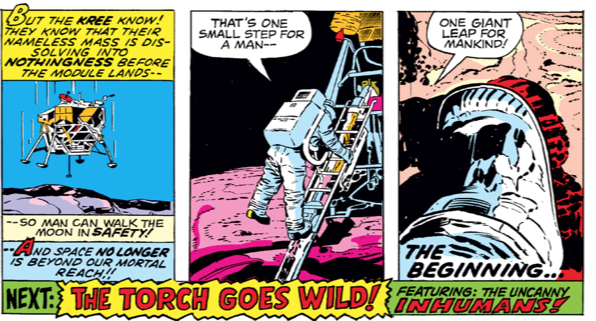
To close the loop, here’s the rest of the landing, as depicted throughout the issue (the nameless mass is never revealed – a McGuffin).
About that cover
There’s some slight of hand at work here, because the the cover sure implies the FF are on the moon, which obviously never happens in the comic (in this comic, anyway). And yet, it never explicitly says they’re on the moon, and the island in the comic is described as looking like the surface of the moon. So technically accurate, if a bit sneaky.
The sexist seventies
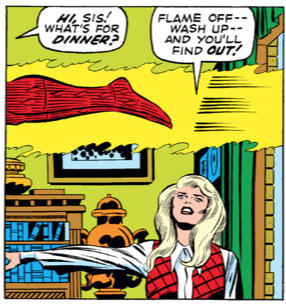
Not only is Sue shunted aside again, she’s reduced to playing a housewife whose role is to cook for the team:
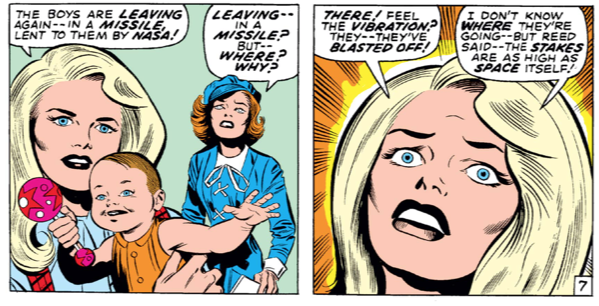
And when they leave her to take care of Franklin, Reed doesn’t even tell her where they are going:
Ooops
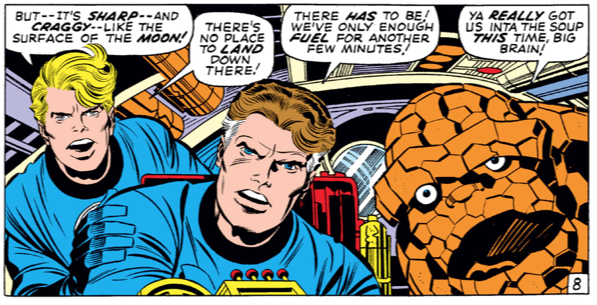
The team has to make a rushed landing because their missile (or is its plane?) is running out of fuel.
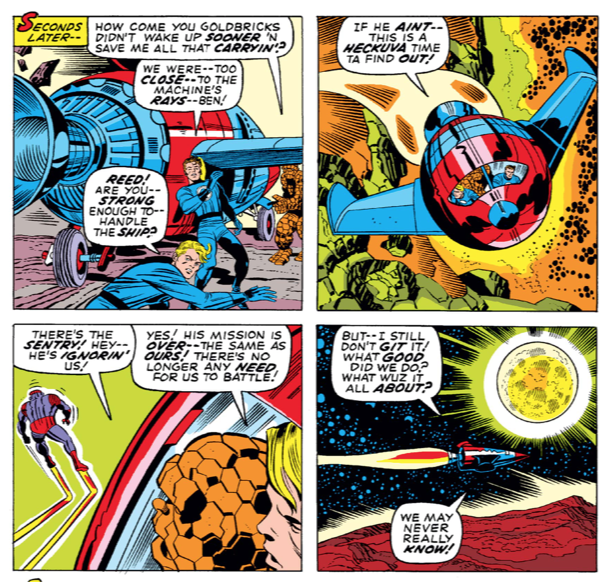
Yet at the end of the comic, there seems to be plenty of fuel to fly home:
It’s clobberin’ time
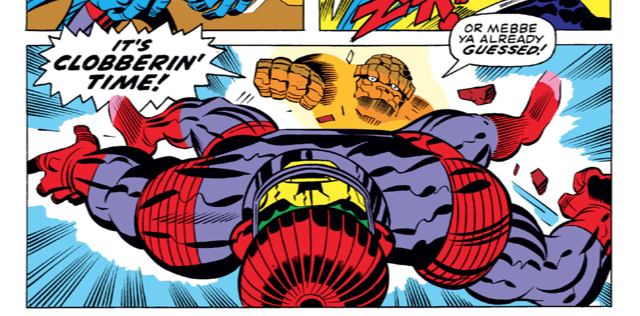
This is a good one:
Read all about it:
Once again, newspapers are the information-transmission technology of choice:
Dig that Kirby Krackle
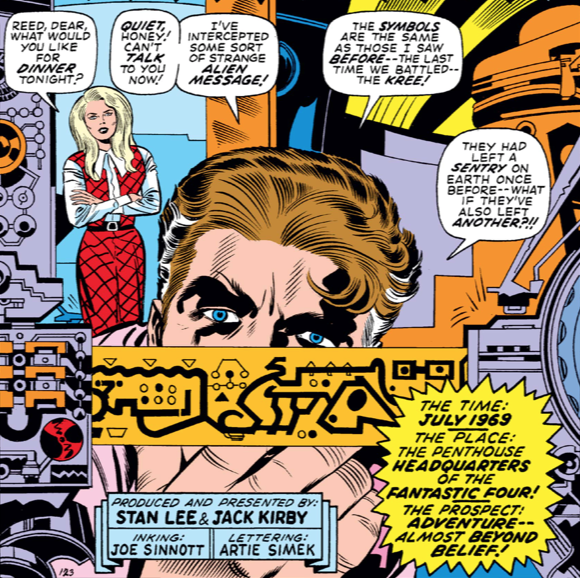
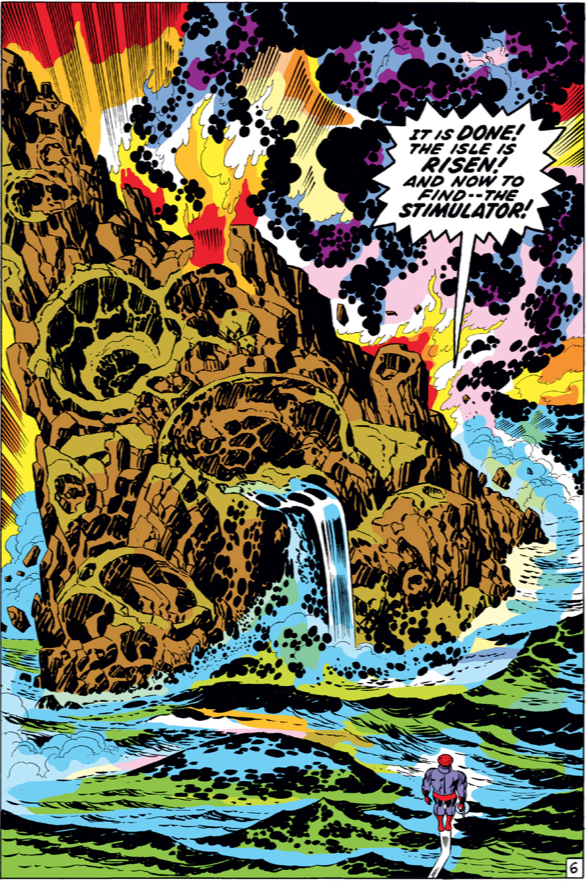
Jack pulls out the stops with this amazing splash page:
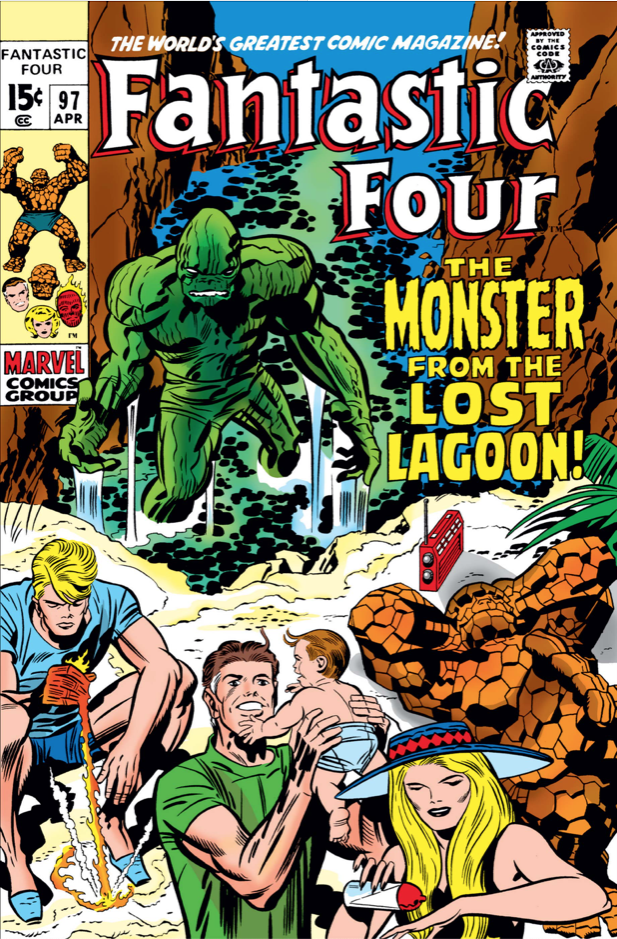
Fantastic Four 97 “The Monster From the Lost Lagoon!” Published Jan. 1970 Story: Stan Lee and Jack Kirby Script: Lee Pencils: Kirby Inks: Frank Giacoia Letters: Sam Rosen Cover: Kiby and John Verpoorten
Synopsis
Fantastic Four 97 opens with Mr. Fantastic, the Human Torch and the Thing in a small submarine, searching for a sea monster. In passing we learn the team was on a beach vacation (the actual location is never said), and the U.S. Navy has asked for the team’s assistance (and loaned them the sub). The trio encounters a killer whale that seems directed by a human form, but it disappears before they can learn more.
Back on the beach, the Invisible Girl is waiting with baby Franklin, and is soon joined by the rest of the team. Meanwhile, in an underwater cavern, the sea creature takes on a human form and journeys to the surface where he revealed to be the handler in a dolphin show attended by the Reed, Ben and Johnny. Reed begins to suspect the dolphin handler is somehow connected to the sea creature, and drafts the handler into showing the team the underwater caverns.
Once they are submerged in the submarine, the handler breaks out of the vessel, leaving the others to drown. They escape to the cavern, where the handler transforms back into the creature, and battles the team. Eventually he leads them to a space craft with other creatures, and the three realize he is an alien attempting to leave Earth. The comic ends with the space craft launching from beneath the ocean.
What’s going on here?
This is an odd but entertaining issue, a one-and-done story that feels like a pre-super hero monster mystery Marvel was knocking out in the 1950s. It obviously borrows its villain from the Creature From the Black Lagoon, a 1954 horror movie, and Stan and Jack don’t bother to disguise their swipe. But despite that lack of creativity, there are enough original elements to keep the story moving. The creature’s secret identity as a SeaWorld-esque dolphin handler is a fun twist, and while the misunderstood-alien trope is pretty familiar by now, it works in this context. The alien returns in a few years, in FF 124, and then once more decades later in a Power Pack story.
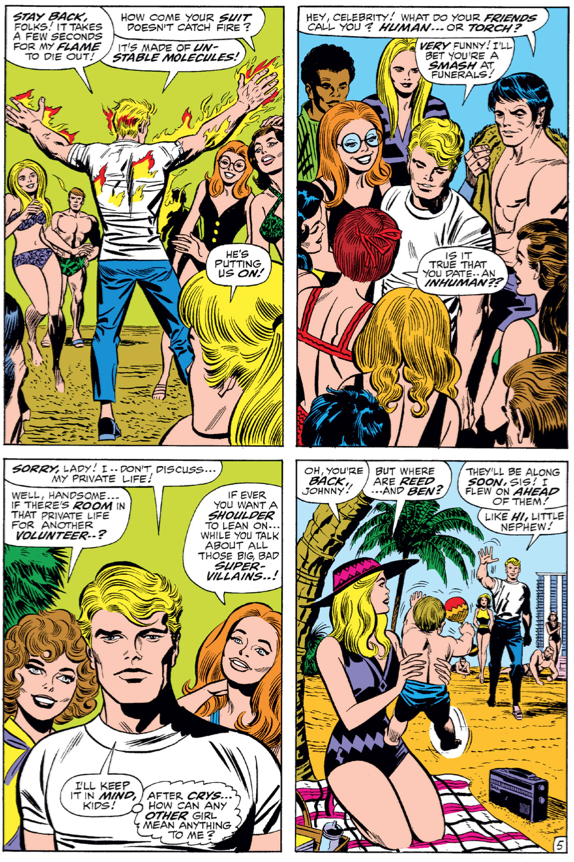
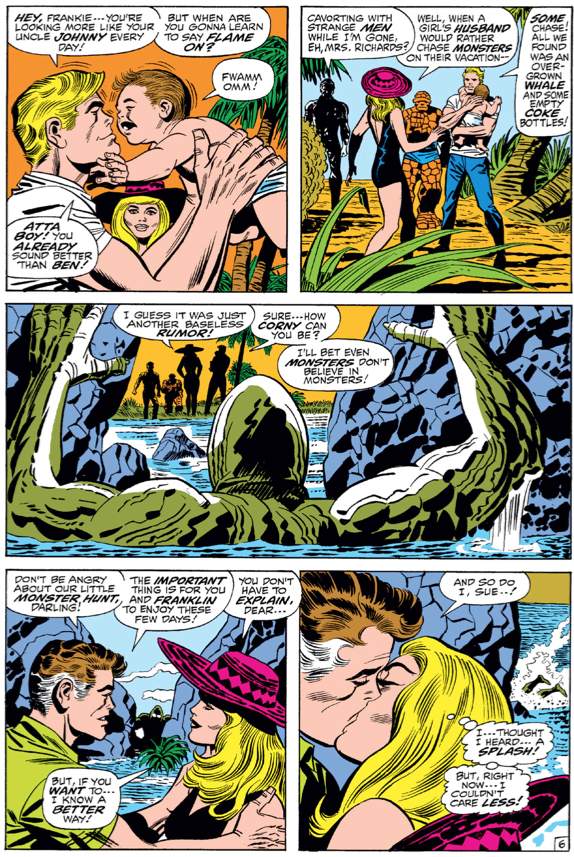
What elevates the story is the characterizations of the team members, both internally (Johnny is pining for Crystal, Ben is devoted to his teammates) and amongst each other. The team is on vacation, and for Stan and Jack, it’s an opportunity to slow things down and let them be family and friends with each other. These two pages convey a ton about the team, particularly Johnny, and their relationships with each other. They help invest us more in the the team then any number of action pages:
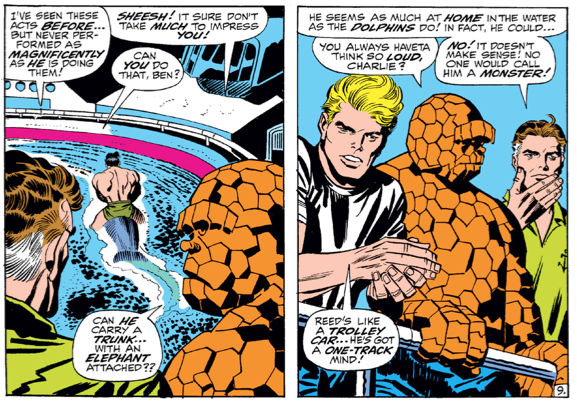
We get more of this as the characters banter later in the story:
About that cover
Speaking of character development, the cover is a great snapshot of the Fantastic Four on vacation. Johnny is bored, Ben is relaxed, Reed is doting on Franklin and Sue is checking the temperature of the milk in the baby’s bottle. All while a monster looms. Perfect.
Crazy Credits
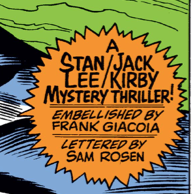
We are told explicitly what sort of story this is: ” mystery thriller.” Note Joe Sinnott is gone again. Fear not, he returns next issue.
The sexist sixties seventies
It’s a new decade but the same old treatment of Sue. She’s is basically not in this story except the scene on the beach shown above. Some vacation; Sue is stuck watching the baby while the boys have an adventure.
Dig that Kirby Krackle
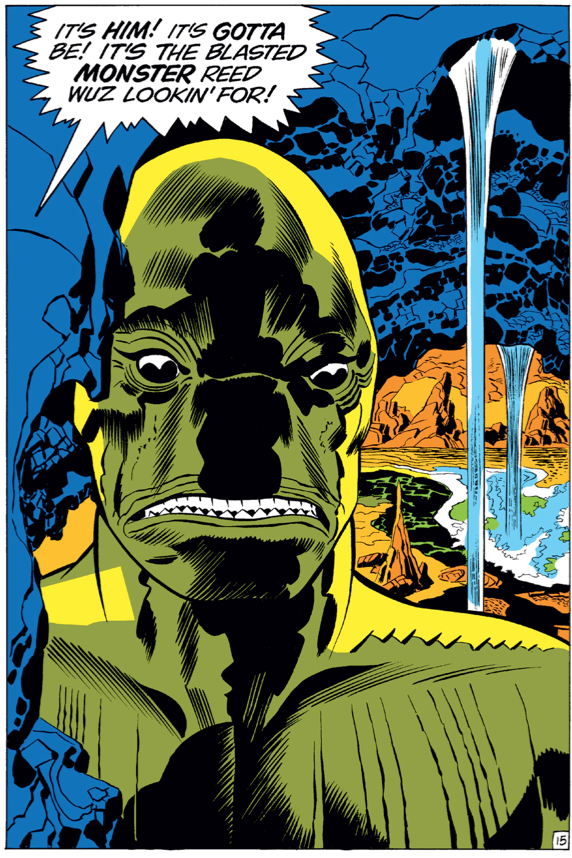
There’s one interior splash page in this issue, and it continues the series of portraits Jack has been turning out lately:
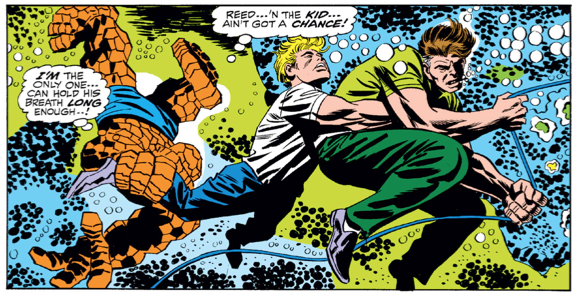
Some other great images:
Also on newsstands
What else was on sale in January 1970? Covers by Franzetta, Adams and Romita