• About Percival Henry

Percival Henry: The Fantastic Four and more

~ Blogging the Fantastic Four issue by issue (plus whatever else grabs my attention)

Percival Henry: The Fantastic Four and more

Category Archives: Nobody Asked Me But …

Nobody Asked Me But … Here’s how I’d fix the end of NBA games

14 Saturday May 2016

Posted by percivalhenry in Nobody Asked Me But ..., Sports

≈ Leave a comment

Tags

basketball, economics, NBA, rules, sports, strategy

This week, basketball fans witnessed the odd spectacle of a coach complaining that a foul was not called on his player.

In context, in sort of made sense. Spurs star Kawhi Leonard tried to foul the Thunder’s Russell Westbrook in the closing seconds of the fifth game of their playoff series. The Spurs trailed, and if they fouled Westbrook, they would regain possession and have a chance to tie the game. In this case, despite Leonard’s mugging of Westbrook, no foul was called (and Westbrook scored on the play). After the game, Spurs coach Gregg Popovich groused the call was “pretty obvious.”

Fouling for possession at the end of the game has become so routine that we don’t consider the strangeness of the ritual.

Consider the purpose of the foul in the structure of basketball. The game is, ostensibly, not a contact sport. Given human nature, play can get rough. Fouls are in place to regulate the violent impulses of players. And generally, defensive players try not to foul—or try not to be called for fouling, a difference—and complain when they are. The offensive player then goes on to take one, two or three free throws, depending on the game situation

But after the free throws, the offensive team surrenders the ball, whether they score or not. And that quirk of the rules is exploited at the end of games, when coaches hedge that regaining possession is worth more than the chance that the other team scores. As a result, the last minute of any close NBA game is gummed up by a procession of fouls, free throws, times outs and more fouls.

It’s not just an aesthetic problem, though, but a distortion of the game. It’s hard to imagine this was envisioned in 1924, when the rule establishing that the fouled player take the free throws was first established.

The exploitation of the rule follows the law of unintended consequences, an economics principle that holds that actions of people—and especially of government—always have effects that are unanticipated.

In the real world, my libertarian instincts are tempered by the knowledge that power is asymmetrical, and people and institutions that hold it will take advantage of those without it, unless their are rules to hold them in check.

In sports, however, where the playing field is (literally and figuratively) even, I’m much more laissez-faire. Sports should have as few rules as necessary to protect the integrity of the game and the safety of players, and they shouldn’t be tinkered with to correct some new wrinkle in strategy. I hated the illegal defense rule in basketball, think picks should be legal in the NFL and cringe at the idea of banning the shift in baseball.

In the case here, the losing team is relying on a loophole in the foul rule to do something they can’t through skill or defensive strategy: regain possession. By closing the loophole teams would be forced to steal the ball or get it back through a defensive rebound. In all likelihood, the team with the lead would keep it, just as they do now, but the games would end faster.

Fouls in basketball serve a necessary purpose, and getting rid of them all to restore sanity at the end of the game makes no sense. One option would be to give referees discretion about when they call them, and if the player is clearly fouling t regain possession, they could ignore it. But that puts even more control in the hands of the imperfect refs, and could give players incentive to commit rougher fouls in order to get them called.

Unfortunately, I think the solution is another rule: Any foul committed in the last minute of the game results in four free throws (or, if they’re not in the bonus, a two-and-one-and-one). By increasing the penalty for fouling, the calculus for coaches and players would shift. Fouling for possession would no longer be the default strategy, but one weighed against the cost.

I’m not fixed on the details. Maybe the number of free throws should be three, or five. Maybe it goes into effect with 90 seconds left, or 45. But it would be a clear improvement over the current end of game drudgery.

Nobody Asked Me But … Here’s How to Fix College Sports

12 Thursday Nov 2015

Posted by percivalhenry in Nobody Asked Me But ..., Sports

≈ Leave a comment

55f21740eef90.image(Inside the luxury suites at Texas A&M’s Kyle Field. Photo: Sam Craft, The Eagle)

College sports in America are broken.

Consider the recent events at the University of Missouri. As most people know by now, president resigned after protests from students over his administration’s handling of racial incidents on campus. The key event in his ouster was the decision of Missouri’s football players to join the protest and their threat to boycott Saturday’s game against Brigham Young University. It wasn’t their moral authority that forced the issue but their financial clout: A forfeit would have cost Missouri $1 million. Whatever you think about the Tim Wolfe’s resignation, he wasn’t brought down by the cause of racial justice.

Further evidence of the disconnect between college sports and the universities they are purportedly part of:

* Texas A&M spent $485 million to expand its football stadium to seat 102,733, according to the New York Times. The renovation was funded in part by boosters who collectively paid $125 million for the rights to rent 12 luxury suites for seven or eight home games a year.

* The University of Louisville is reeling from accusations that an assistant coach used prostitutes to recruit high school students to its men’s basketball team. “I knew they weren’t college girls,” one recruit told ESPN.

* Thousands of athletes, along with other students, at the University of North Carolina, took part in an 18-year academic fraud that allowed them to receive grades without attending class or complete course work. The scandal led to the resignation of Chancellor Holden Thorp, while Roy Williams, men’s basketball coach since 2003, received a contract extension through 2020.

All of this is further proof, if any was needed, of the influence and power college sports has over universities, and the perverse relationship between academics and athletics at its core. From criminals recruited to campus, local police turning a blind eye to athlete misdeeds, college exams that ask how many halves are in a basketball game and $100 million coaches, universities are beholden to the prestige and money of big-time sports. The tail is not wagging the dog; it’s killing it.

Fortunately, I have a solution. It’s radical, and radically simple. It preserves much of what there is to like about college sports – the pageantry, the traditions, the intense competition – while eliminating much of what is rotten.

Football and men’s basketball become professional franchises owned by the university, and the athletes become its employees.

Teams would continue to play in the facilities on college campuses, wear the same uniforms and school colors. Athletes would draw wages and be eligible for the same tuition benefits as other employees. Some will pursue degrees and others won’t. They can take jobs in the off season, and earn money in whatever legal way they see fit. The NCAA would no longer have jurisdiction over those sports; there would be no need for recruiting rules or for minimum academic standards. Misbehavior would be dealt with by law enforcement, not coaches.

Not all athletic departments could afford to pay their athletes wages. This plan would probably be limited to the “Power Five” football conferences and their basketball equivalents. Those that couldn’t pay would opt out, and step their programs down to FCS (Division I-AA). Since most athletic programs run at a deficit, that’s where they belong, anyway.

Athletes could unionize, a movement that’s already begun at Northwestern, and universities could sign collective bargaining agreements putting in place mechanisms like salary caps and drafts to maintain competitive parity.

Other sports would remain under the current system, although ideally athletic scholarships would be eliminated and replaced with four-year grants based on financial need. Eventually, other revenue-generating sports – women’s basketball, hockey etc. – might choose to professionalize.

Owning what would essentially be minor-league franchises would be a departure for universities, but it’s not unusual for colleges to run profit-oriented businesses. Dartmouth College owns a hotel, Stanford owns a driving range and North Carolina has formed a joint venture with a pharma company to develop an AIDS cure.

By making that change, much of what is odious about college sports disappears. It’s not perfect, but it addresses the four main points any solution must:

1, It keeps the money flowing. Any realistic proposal has to accept the world as it is; the calendar can’t be turned back to 1940, when the University of Chicago dropped football to pursue a purer course. The massive revenue streams – universities share $11 billion from selling the right to broadcast the men’s basketball tournament – will be preserved because the product would be the same.

2, It compensates athletes for their labor. One of college sports’ biggest injustices is the financial exploitation of the athletes, who earn millions for their institutions and receive scholarships in lieu of pay. As Taylor Branch puts it, saying scholarships are fair compensation is “like saying that any worker who gets medical coverage doesn’t need or deserve a salary.” Athletes should be able to freely negotiate the terms of their employment, a fundamental right of workers everywhere.

3, It doesn’t force everyone to be a student. Not everyone belongs in college, but, because of collusion with the NFL and NBA, the system forces anyone interested in a career in basketball or football into university courses. Many athletes have no interest in academics, and are ill prepared by their high schools for college work. To maintain their eligibility, universities funnel them into the easiest courses and invest million in tutors and study centers, yet subject “student-athletes” to punishing travel and training schedules.

4, Most importantly, it severs the athletic enterprise from the university, and eliminates the need for the pretense that football is just another extra-curricular activity, like the glee club.  When a football player spends four years at Oklahoma State without knowing how to read, it damages everyone associated with the school. When Rutgers shrinks it doctoral programs, yet pumps $27 million into sports, it tells faculty and students what’s important. Big-time sports are incompatible with the mission of a university, and it’s presence weakens the institutions, financially, pedagogically and morally.

I covered both college sports and higher education for years, so I think my reasoning is sound, but I wanted someone to check my math and I ran my plan past an expert on higher education. One flaw he identified is that gifts from boosters to athletics would no longer be tax-deductible, which could dry up a major source of income. Boosters could still, of course, contribute to the rest of the university, and it’s not clear that donating to build a university-owned stadium would run afoul of the IRS. It’s also not clear that athletics programs would need to spend as lavishly on facilities to woo recruits when they could attract them with better pay.

The professor’s other critique was that he couldn’t see universities giving up on the fantasy of the student-athlete; that professionalizing colleges sports would be admitting the hypocrisy inherent in the system. He may be right, and in the short term, this proposal is more of a thought experiment than an action plan. But the current path is unsustainable, and it may be courts or lawmakers that force a solution on universities if they fail to adopt one themselves.

Nobody Asked Me But … Here’s How to Fix Penalties in Football

01 Thursday Oct 2015

Posted by percivalhenry in Nobody Asked Me But ..., Sports

≈ 1 Comment

Tags

football, soccer

(Since I’m blogging in London I’m calling it football, not soccer. Sorry, ‘merica).

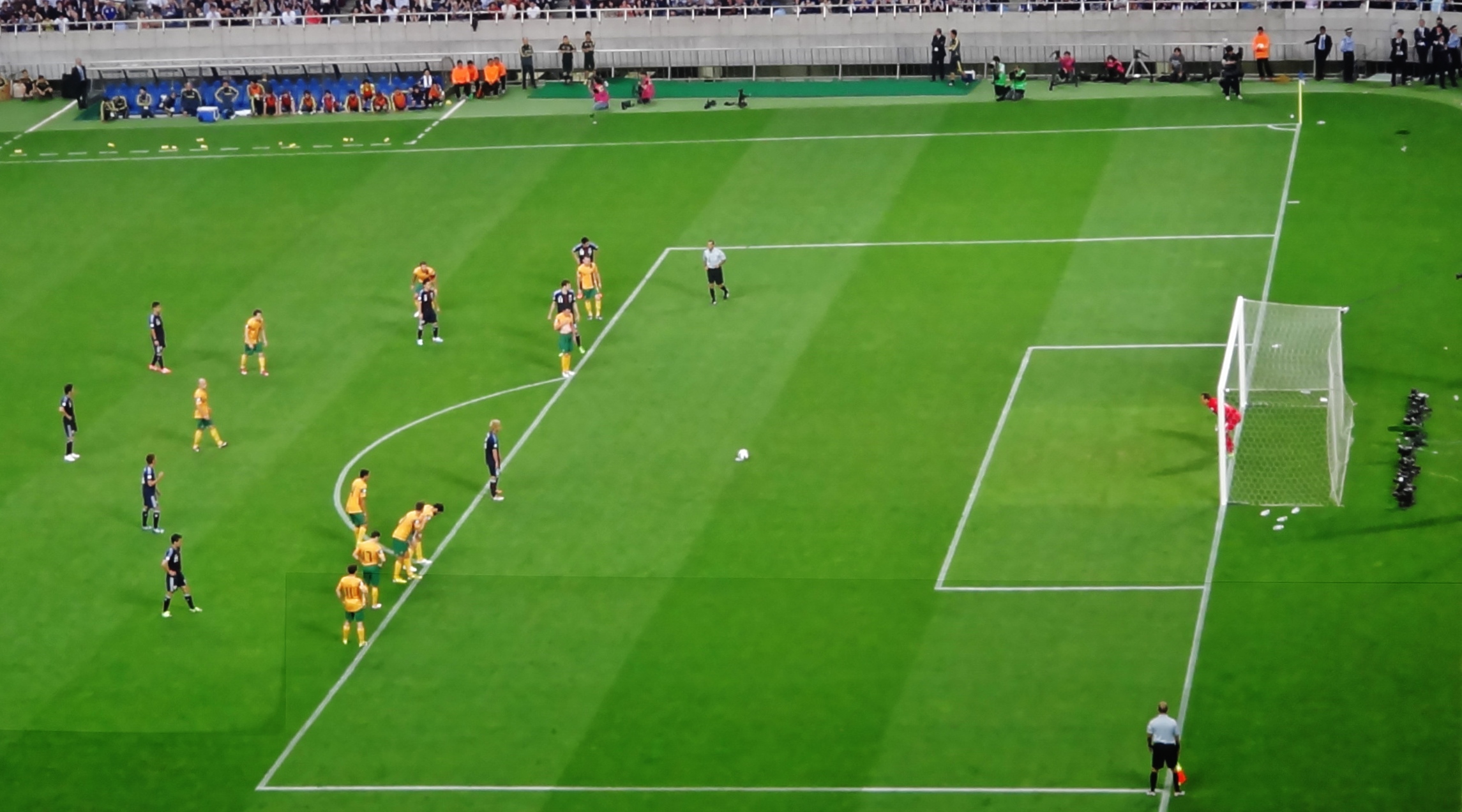
honda-penalty-kick-1

(photo courtesy Clark Parker/TheTokyoFiles.com)

I was a (very) casual football fan for years but since moving to the U.K. three years ago, I’ve paid much closer attention to the sport. And while most of it is just fine, I’m troubled by the role played by penalties.

Penalties are highly entertaining and, because they’re awarded by the referee, incredibly arbitrary. Many penalties that should be called are not, and many are called that shouldn’t be. Players flop and dive with abandon, hoping to win one. It is not one of the game’s more attractive aspects.

The problem is the disproportionate role penalties can play, given their capricious nature. While an NBA referee will blow some calls, costing a team one or two points, they tend to get evened out in a game where both teams are likely to score in the hundreds. In the English Premier League last year, teams averaged a 2.7 goals a game (that’s a combined 2.7 goals) and more than 60 percent of the matches were decided by one goal (or were draws). In that context, penalties can, and often will, decide the outcome.

Penalties aren’t automatic (just ask Jason Puncheon) but they’re close: players convert on 85 percent of them, on average. That’s better than the NBA’s average free-throw rate.

Here’s how to fix it:

1, Let the punishment fit the crime

Penalty takers are so successful in part because of who takes them: very often the team’s best scorer. There’s no rule specifying who takes the penalty, so naturally the most gifted shooter lines up. This both pads the scoring statistics for strikers (bizarrely, the records don’t distinguish between earned goals and penalties) and undermines the whole logic of the punishment. If the penalty is an attempt to compensate teams for lost scoring opportunity, then shouldn’t the player who lost the chance take the shot? In other words, shouldn’t the punishment fit the crime?

A minimum fix to the problem of penalties would be to require the fouled player to take the shot. If he’s too injured to take it – unlikely, given that he may not have been touched in the first place – then he should come off the field for a substitute. It wouldn’t make a big dent in the success rate, but at least justice will be served. (The same logic applies to free kicks, as well.)

2, Move the penalty mark back two yards

Sports need to adapt to changing conditions, and can’t be too rooted to traditions. If baseball can raise and lower the pitchers mound, football can tinker with the penalty mark. Another two yards will give the keeper a fraction of a second longer to block the shot, and help even the odds. If that doesn’t work, move it back four yards.

3, Stop counting penalties in the scoring statistics 

This is more of a philosophical point than remedy, but it would help remind fans (and the wildly celebrating players) that scoring a penalty kick isn’t the same as scoring a goal. A few weeks ago Wayne Rooney scored his 50th goal for England to become the nation’s all-time leader … on a penalty. It shouldn’t count. While the outcome of a walk is the same as a single (going back to baseball), they’re not the same and aren’t treated as such in the stats. Last year, Sergio Aguero of Manchester City won the Golden Boot with 26 goals. Only in the fine print does it say he scored five of them on penalties.

4, Institute retroactive red cards

This isn’t a new idea, but it’s a good one. To crack down on diving, football should institute a tribunal that examines video after the game. If a player is found faking a foul, he should be given a red card for his next match. (Some noble fans argue the game should be paused to assess the foul as they occur. You can sign their petition here). The NBA has a very mild version of this in place to clamp down on flopping. Stiff penalties for diving means there will be less of it, and referees, having more confidence that they’re making the right decisions, will be more likely to call the legitimate fouls. It may not reduce the number of penalties, but it will make them less arbitrary.

Nobody Asked Me But … Here are Three Ways to Improve the NFL

18 Friday Sep 2015

Posted by percivalhenry in Nobody Asked Me But ..., Sports

≈ Leave a comment

Tags

football, London, NFL

NFL-football-650x390

The National Football League is a sports and entertainment juggernaut, but it’s far from perfect. Here are three things it could do to improve the product.

1, Let quarterbacks deflate the ball.

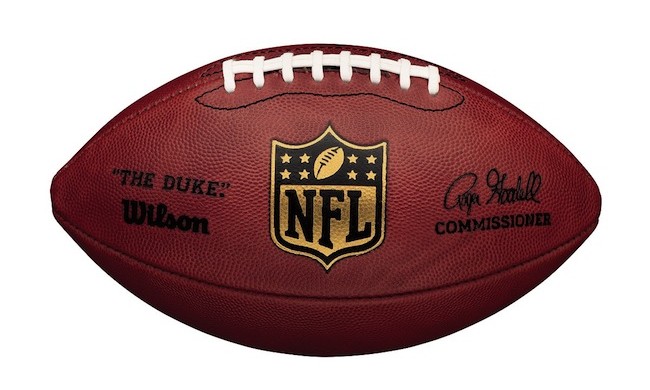
Let me be clear here: if Tom Brady and the Patriots knowingly broke the rules, they should be punished. But no one has explained to my satisfaction the purpose of the rule. What harm is there in letting a quarterback adjust the ball so it’s easier to throw? Why not let teams inflate it to their preferred level? If both teams can do it, is any team gaining an advantage? While basketball and soccer teams share possession of the ball and might differ on what the proper pressure should be, a football is overwhelmingly possessed by one team (and a deflated football is probably easier to catch, and therefore intercept, anyway).  And unlike other forms of tinkering with sports equipment, like corking bats and using stickum, deflating balls is self regulating: if you lower the pressure by too much, it’s harder to throw. So the amount of variance between balls will always be modest. In sports, the fewer rules, the better, and this one’s unnecessary. Here’s my proposal: let teams try it next preseason. I bet no one would notice a difference.

2, Expand the season to 18 games.

Here’s the catch: Make the season 18 games, but mandate that no player can play more than 16 games a season. To make this work, I’d eliminate the bye week, and expand the roster from 53 to 60. An 18-game season has all sorts of benefits. The NFL gets the two extra games it wants, giving it more product to sell to networks, and each team gets one more home game (which will pay for the additional players). Fans get more games, and they get a new wrinkle in strategy, as coaches must weigh which teams to sit their best players against. Coaches get to see backups play in meaningful situations. Players get more rest (and forced rest, so there can be no accusations of being soft for sitting out a game) and with expanded rosters, there are more jobs. The integrity of the 16-game season is preserved, so individual records are still meaningful. It’s a win-win-win-win. The only hitch: I can’t see teams carrying two kickers and punters, so I might waive the 16-game rule for those positions.

3, Move the Jaguars to London.

This is more of a prediction than recommendation, as it looks like it may happen, but it makes sense and the league should do it. (Disclosure: I live in London). The Jaguars have signed up to play one game in London every year from 2013 through 2017, and while the games are purportedly to build an international fan base (and somehow entice Londoners to games in northeast Florida) it’s clear that the league is laying the groundwork for moving the franchise. Jacksonville’s owner, Shad Khan, already has a foothold in the U.K., owning the Fulham soccer team. The NFL has eyed Europe hungrily for decades, even sponsoring the ill-fated World League of American Football (Amsterdam Admirals, anyone?). They want this to happen. Jacksonville isn’t the smallest NFL market (that would be Green Bay), nor are they worst at drawing fans. But the team is the third NFL franchise in its state, and arguably the sixth most popular football team (trailing the Dolphins, Bucs and three college programs). Weighed against being the sole team in a city of 8.6 million (10 times Jacksonville’s population) and on a continent of 400 million, it seems a no brainer.

There are obstacles. One is the Jaguars stadium lease with the city Jacksonville, which locks them in until 2027 (this article has the details). But if the team and the NFL wanted them to move, I suspect it would happen. Then there’s scheduling. While the flights from the East Coast of the U.S. to London are long (six to eight hours, depending on the direction), it’s similar to a flight Miami to Seattle. The bigger problem is the time zone difference, which is five hours between the East Coast of the U.S. and London, and eight from the West Coast. Making that adjustment eight times a season (or nine, if you adopt my first suggestion) would be brutal for the Jaguars and competitive disadvantage. But here’s how to make it palatable: schedule two road trips of four and five games long.  The team would spend the duration in the US, then come back for a four or five game home stand, minimizing the number of transatlantic flights. Visiting teams would only have to make the trip once a year, and it could be done to so it’s the week after a bye or before a Monday game.

Would fans in London turn out? I think so. The NFL is now selling out 90,000 seat Wembley three games a year. They would need to fill it five (or six) more times, which wouldn’t be hard once fans had a home town to support (and the team could eventually move into a smaller stadium of their own). A winning product would help, but the initial novelty would sustain it for a few years. Look at the support for NYC FC, a fledgling soccer team, in New York. It had a fan club before it played a game. I suspect the reaction would be similar for an American sports product going th other way.

But they may not need to sell out to be a success for the league. The NFL last year experimented with a 2:30 p.m. London kickoff, meaning fans on the East Coast could watch the games at 9:30. a.m. Ratings were good, and this year all three games will have the early kick off. Having a full slate of morning games would give the NFL more inventory, which could be sold as a separate TV package (as suggested by ProFootballTalk here).

Ultimately, I think this will happen, even if the Jaguars have to wait until 2027, and a London franchise may be the first of four teams in Europe, enough to create another division and ease some of the travel burden. And the Super Bowl winners can finally claim to be world champions.

  • “The World’s Greatest Comic Magazine!” Fantastic Four Annual No. 15
  • “The World’s Greatest Comic Magazine!” Fantastic Four No. 223
  • “The World’s Greatest Comic Magazine!” Fantastic Four No. 222
  • “The World’s Greatest Comic Magazine!” Fantastic Four No. 221
  • “The World’s Greatest Comic Magazine!” Fantastic Four No. 220
  • July 2026
  • June 2026
  • May 2026
  • April 2026
  • March 2026
  • February 2026
  • January 2026
  • December 2025
  • November 2025
  • October 2025
  • September 2025
  • August 2025
  • July 2025
  • June 2025
  • May 2025
  • April 2025
  • March 2025
  • February 2025
  • January 2025
  • December 2024
  • November 2024
  • October 2024
  • September 2024
  • August 2024
  • July 2024
  • June 2024
  • May 2024
  • April 2024
  • March 2024
  • February 2024
  • January 2024
  • December 2023
  • November 2023
  • September 2023
  • July 2023
  • June 2023
  • May 2023
  • April 2023
  • March 2023
  • February 2023
  • January 2023
  • December 2022
  • November 2022
  • October 2022
  • September 2022
  • August 2022
  • July 2022
  • June 2022
  • May 2022
  • April 2022
  • March 2022
  • February 2022
  • January 2022
  • December 2021
  • November 2021
  • October 2021
  • September 2021
  • August 2021
  • July 2021
  • June 2021
  • May 2021
  • April 2021
  • March 2021
  • February 2021
  • January 2021
  • December 2020
  • February 2018
  • May 2016
  • February 2016
  • January 2016
  • December 2015
  • November 2015
  • October 2015
  • September 2015
  • August 2015
  • July 2015
  • April 2015
  • March 2015
  • January 2015
  • December 2014
  • November 2014
  • October 2014
  • September 2014
  • August 2014
  • June 2014
  • May 2014
  • April 2014
  • March 2014
  • February 2014
  • July 2026
  • June 2026
  • May 2026
  • April 2026
  • March 2026
  • February 2026
  • January 2026
  • December 2025
  • November 2025
  • October 2025
  • September 2025
  • August 2025
  • July 2025
  • June 2025
  • May 2025
  • April 2025
  • March 2025
  • February 2025
  • January 2025
  • December 2024
  • November 2024
  • October 2024
  • September 2024
  • August 2024
  • July 2024
  • June 2024
  • May 2024
  • April 2024
  • March 2024
  • February 2024
  • January 2024
  • December 2023
  • November 2023
  • September 2023
  • July 2023
  • June 2023
  • May 2023
  • April 2023
  • March 2023
  • February 2023
  • January 2023
  • December 2022
  • November 2022
  • October 2022
  • September 2022
  • August 2022
  • July 2022
  • June 2022
  • May 2022
  • April 2022
  • March 2022
  • February 2022
  • January 2022
  • December 2021
  • November 2021
  • October 2021
  • September 2021
  • August 2021
  • July 2021
  • June 2021
  • May 2021
  • April 2021
  • March 2021
  • February 2021
  • January 2021
  • December 2020
  • February 2018
  • May 2016
  • February 2016
  • January 2016
  • December 2015
  • November 2015
  • October 2015
  • September 2015
  • August 2015
  • July 2015
  • April 2015
  • March 2015
  • January 2015
  • December 2014
  • November 2014
  • October 2014
  • September 2014
  • August 2014
  • June 2014
  • May 2014
  • April 2014
  • March 2014
  • February 2014
“The World’s Greatest Comic Magazine!” Fantastic Four Annual No. 15

“The World’s Greatest Comic Magazine!” Fantastic Four Annual No. 15

percivalhenry's avatar by percivalhenry July 18, 2026
“The World’s Greatest Comic Magazine!” Fantastic Four No. 223

“The World’s Greatest Comic Magazine!” Fantastic Four No. 223

percivalhenry's avatar by percivalhenry July 14, 2026
“The World’s Greatest Comic Magazine!” Fantastic Four No. 222

“The World’s Greatest Comic Magazine!” Fantastic Four No. 222

percivalhenry's avatar by percivalhenry July 5, 2026
“The World’s Greatest Comic Magazine!” Fantastic Four No. 221

“The World’s Greatest Comic Magazine!” Fantastic Four No. 221

percivalhenry's avatar by percivalhenry June 25, 2026
“The World’s Greatest Comic Magazine!” Fantastic Four No. 220

“The World’s Greatest Comic Magazine!” Fantastic Four No. 220

percivalhenry's avatar by percivalhenry June 15, 2026
“The World’s Greatest Comic Magazine!” Fantastic Four No. 219

“The World’s Greatest Comic Magazine!” Fantastic Four No. 219

percivalhenry's avatar by percivalhenry June 7, 2026

Blog at WordPress.com.

  • Subscribe Subscribed
    • Percival Henry: The Fantastic Four and more
    • Join 74 other subscribers
    • Already have a WordPress.com account? Log in now.
    • Percival Henry: The Fantastic Four and more
    • Subscribe Subscribed
    • Sign up
    • Log in
    • Report this content
    • View site in Reader
    • Manage subscriptions
    • Collapse this bar
Loading Comments...