Fantastic Four No. 3
“The Menace of the Miracle Man”
Published: Dec. 1961
Story: Stan Lee and Jack Kirby
Pencils: Jack Kirby
Script: Stan Lee
Inks: Sol Brodsky (uncredited)
Cover: Kirby and Brodsky
Synopisis:
The Fantastic Four attend a performance of the Miracle Man, who demonstrates amazing powers and appears more powerful than the Thing. A worried Fantastic Four return in the Fantasticar to their skyscraper headquarters , where they watch on television as a giant statue of a monster becomes animated and rampages through the city. A note from the Miracle Man claims responsibility as the FF fail to keep the monster from stealing first jewels, then the military’s new “atomic tank.”
As the Miracle Man drives off with the tank, the Invisible Girl stows away. She is discovered, and hypnotized into summoning the rest of the FF. After a confrontation and another chase that culminates with the Human Torch’s flame blinding the Miracle man , Mr. Fantastic reveals the Miracle Man has a hypnotist who is powerless without his sight. The story ends with a frustrated Human Torch quitting the team.
What’s going on here
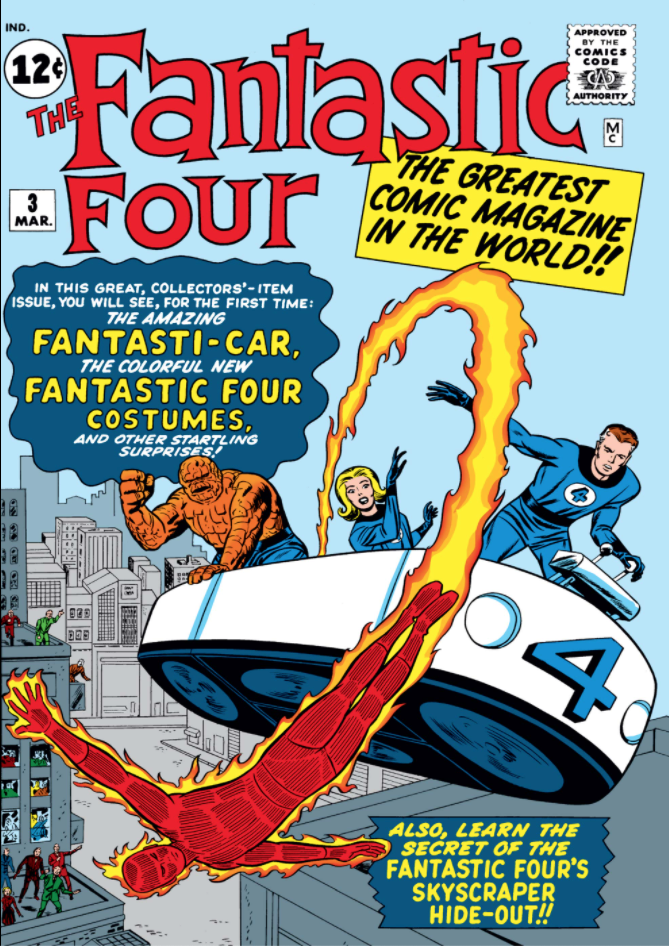
The Miracle Man story is pretty forgettable, and the big reveal—that his seeming powers were all an illusion—doesn’t hold up to much scrutiny (how did his power of illusion steal a tank?). The story is notable because it’s the first where the FF really starts to resemble the team of superheroes with which we’re familiar. The story introduces a number of elements that make up the FF brand: their blue-and-black costumes, the Baxter Building (although it’s not named in the story), and the”air-powered” Fantasticar, one of the many gizmos that become part of the FF’s identity.
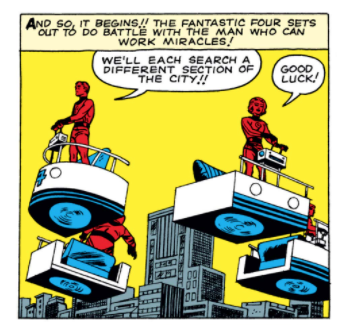
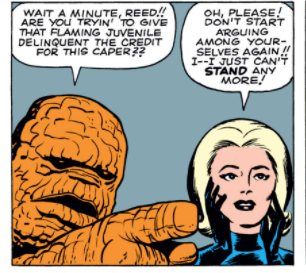
The story also further cements the fractious relationship between the members, with Ben flying off the handle, Johnny sulking, Reed trying to get them to behave and Sue cringing about it all.
The Miracle Man fades into obscurity after this issue and doesn’t reappear for more than a decade, in FF 138. He pops up a few more times over the years but never becomes a major villain.
About those costumes
After two issues of fighting bad guys dressed as civilians, Sue presents the team with their uniforms. Ben resists and eventually tears his off, but the basic concept of matching uniforms becomes a key visual element throughout the FF’s history. Note Sue’s high heels. Ben’s helmet doesn’t last the issue, but it does reappear decades later after Wolverine’s claws injure his face.
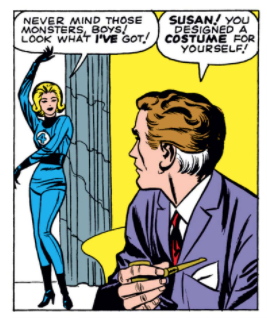
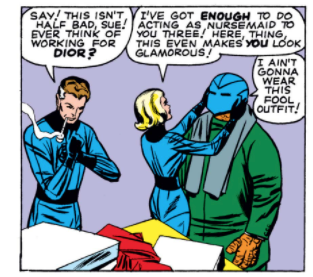
The FF aren’t the first supergroup to wear matching uniforms, and it seems to be another aspect Kirby borrowed from his design of the Challengers of the Unknown at DC a few years earlier. Unlike the Challs, however (I love that nickname), the FF wears a “4” insignia, and I recall reading somewhere—I wish I remember where, but it might have been by Grant Morrison—that the introduction of the insignia to costumes was the key break that separated the first superheroes like Superman and Batman from the pulp-era characters like the Shadow and the Phantom that preceded them. I don’t know if Stan and Jack were consciously using the logo to attach the FF to a superhero tradition, but it worked.
The “4” later gets added to their vehicles and even becomes part of the architecture of Four Freedoms Plaza, a building that replaced the Baxter Building for a while. The deliberate branding of the FF as public and flashy colorful, as if they were a consumer product like Pepsi, is later ret-conned into their history by writer Mark Waid in 2002. As Waid writes it, going public is an effort by Reed to help make up for the damage he caused his friends by arrogantly insisting his spaceship was ready to fly through the cosmic rays. As retcons go, it’s a pretty good one, since it attempts to solve a few of the big apparent inconsistencies in the FF’s origin: What was Reed thinking, and why are they so public?
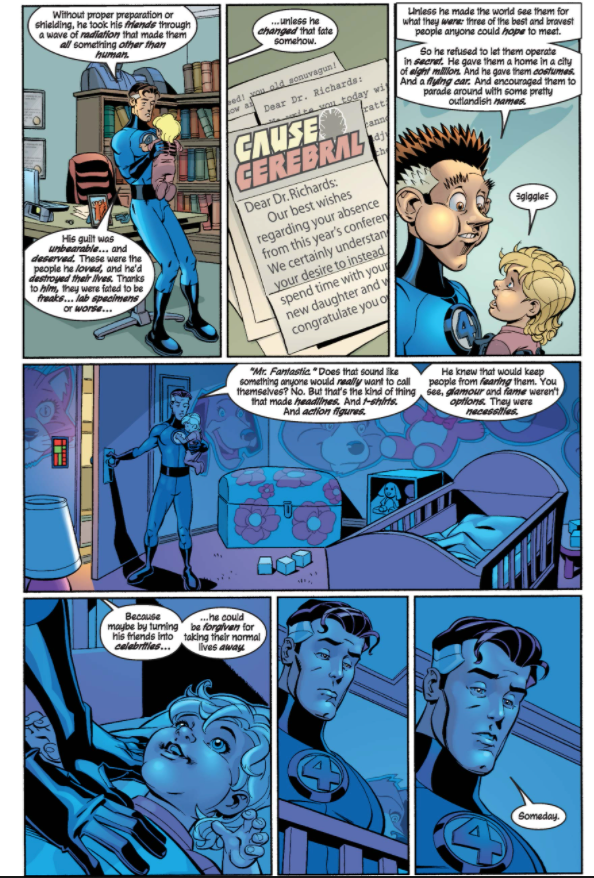
(That run by Waid, with art mostly by Mike Wieringo, is one of the best in recent FF history).
About that headquarters
The Baxter Building won’t get its name for a few more issues, but it’s clearly established as the same team headquarters which will remain more or less intact until it’s destruction in the 1980s.
This issue features the first of many cut-away drawings that will appear over the years (and includes instructions to “save this for future reference”):
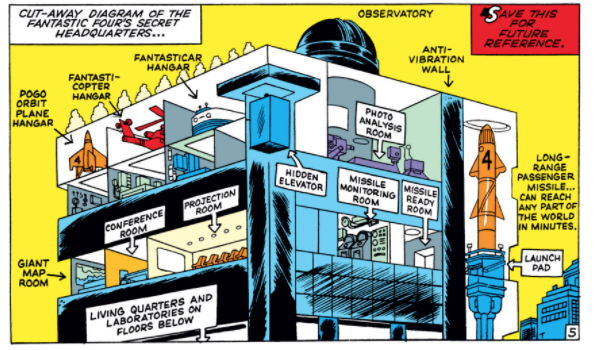
The schematic introduces the FF’s Pogo Plane and their passenger ICBM, neither of which appear again in this issue but are used in subsequent stories.
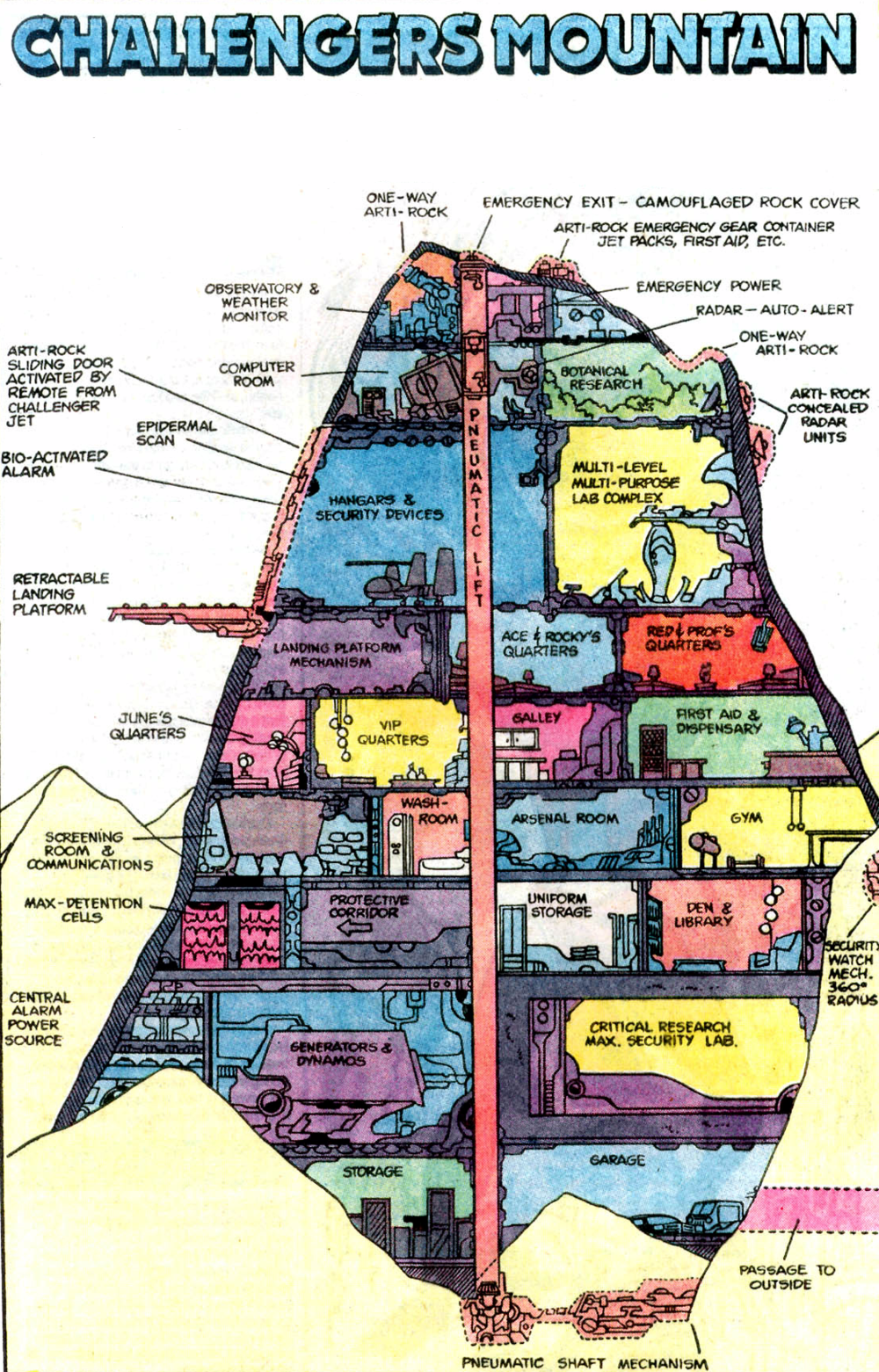
The similarity to the Challs’ mountain headquarters is noteworthy:
What’s up with Johnny?
The Human Torch is particularly sulky and grumpy in this issue, perhaps an effort by Stan and Jack to clearly distinguish him as a the team’s moody teenager. At one point he goes off with his friends, who seem more like irritating hanger-ons:
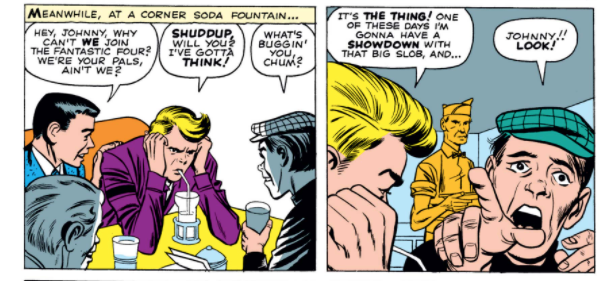
Then, at the end of the issue and without much build up, he take off (literally and figuratively), setting up a bit of a cliff hanger:
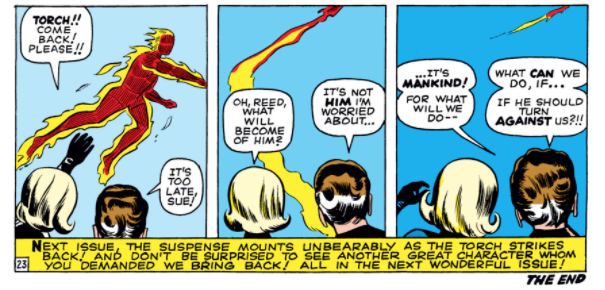
By this point Johnny no longer looks like a human-shaped flame, but is much closer to the red-briquette form we’re familiar with.
We’re No. 1
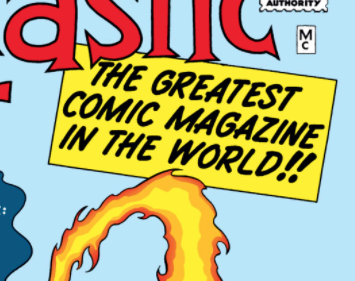
For the first time, a version of the “World’s Greatest Comic” appears on the cover. I’m not sure what the FF did in the first two issues to earn the honor, but it sticks.
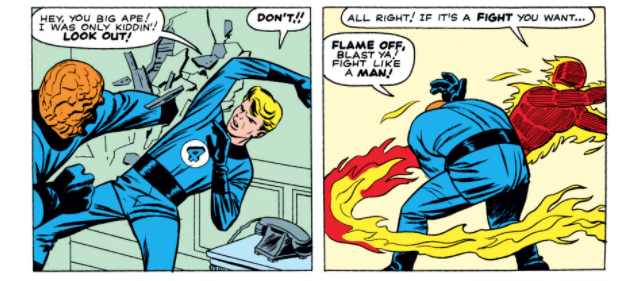
They’re fighting again!
The sexist sixties
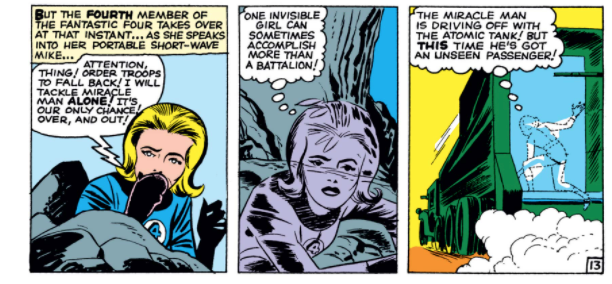
Sue gets a rare turn as hero, calling off the National Guard and turning invisible to pursue the Miracle Man:
But she’s back to wimpering by the end of the story
Dig that Kirby Krackle
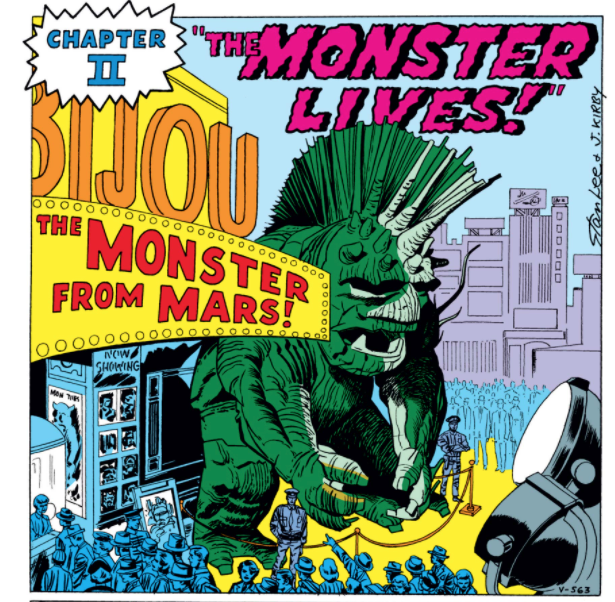
Jack knocks it out of the park with the movie monster, naturally
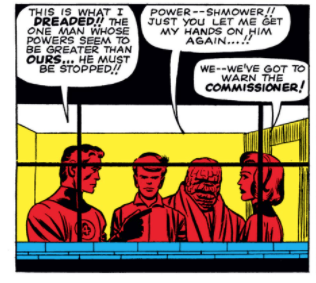
And this quieter panel, of the FF seen through a window, is pretty cool too:
Oops!
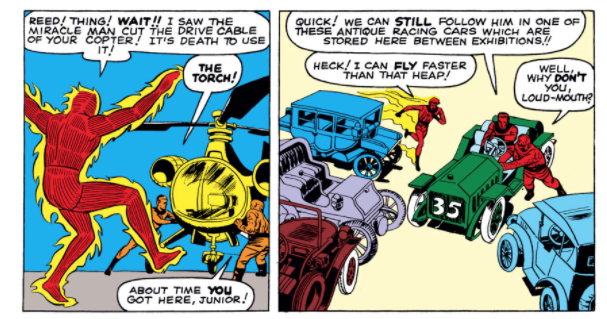
Did Stan have to write around a Jack continuity error here? It sure seems like it, since the action the Torch describes is never shown and has no real purpose in the story.
The incredible Mr. Fantastic.
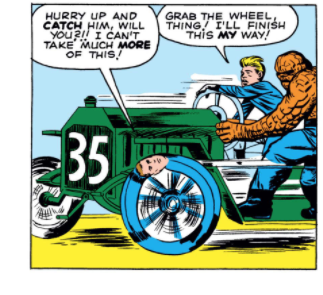
At various points Reed is stretched into a web, forms a bouncing ball, and here becomes a spare tire:
For sale
A mint (9.8) FF No. 3 is worth about $105,000.
Pin up
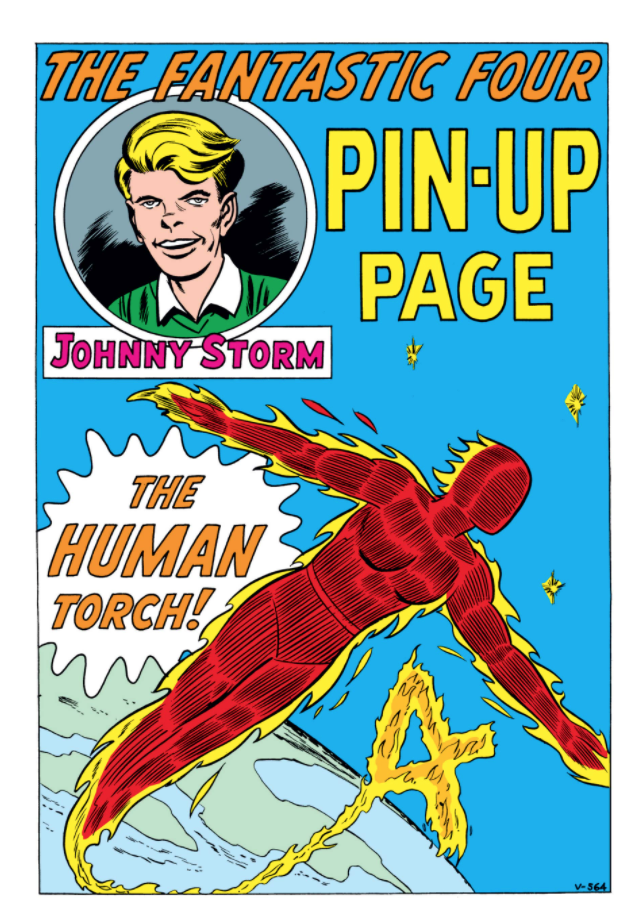
This month Johnny gets the pin-up treatment. Handsome devil, aint’t he?
Next issue: The Sub-Mariner!

