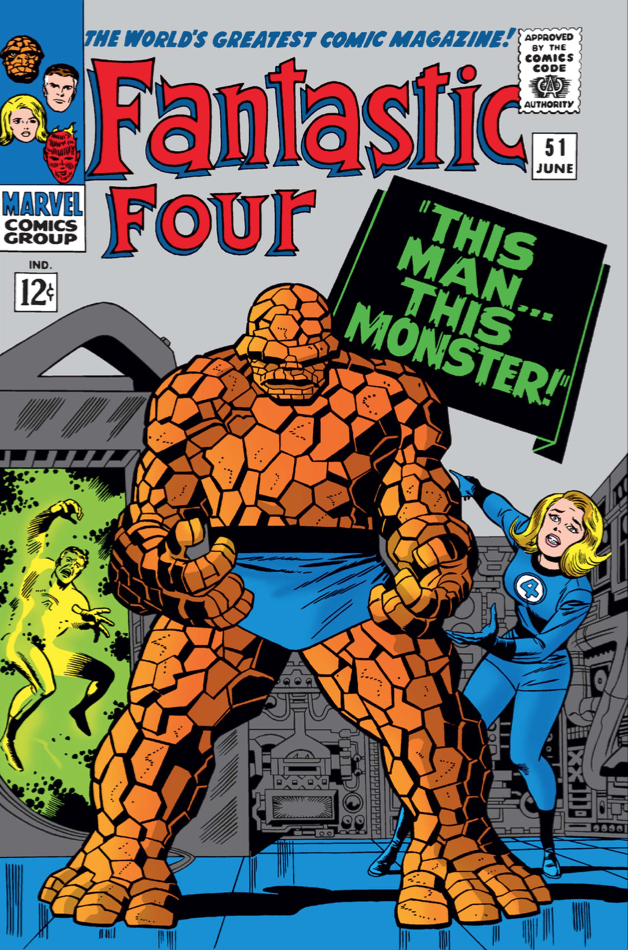
Fantastic Four 51
“The Man, This Monster”
Published: March 1966
Story: Stan Lee and Jack Kirby
Script: Lee
Pencils: Kirby
Inks: Joe Sinnott
Letters: Artie Simek
Cover: Kirby and Sinnott
Synopsis
The Thing, still morose after Alicia Masters’s apparent rejection last issue, continued to wander the streets of New York. He is taken in by the unnamed bald scientist, introduced last issue, who is determined to destroy the Fantastic Four and Reed Richards, who he sees as his rival. He drugs Ben’s coffee and after the Thing has passed out, subjects him to his “duplication apparatus” which transforms the scientist into a replica of the Thing while leaving Ben in his human form.
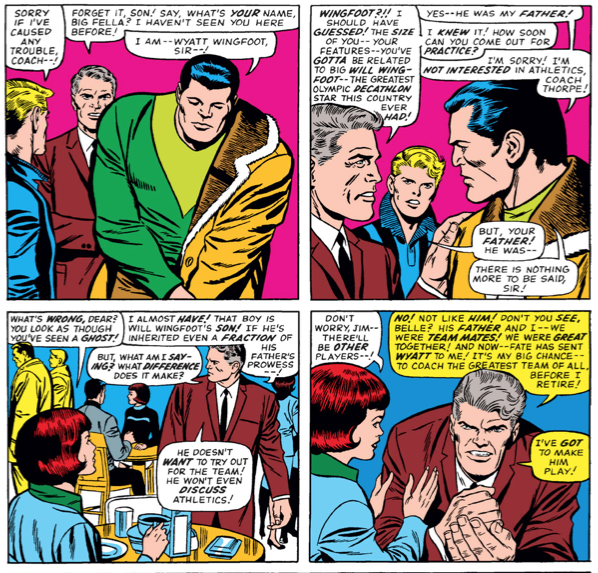
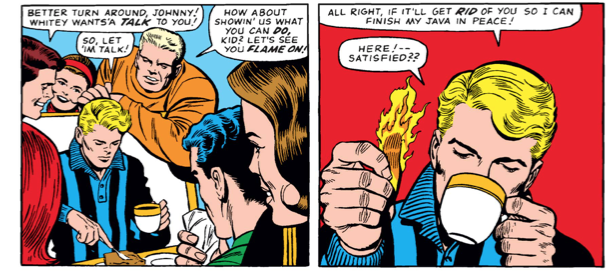
Meanwhile, the Human Torch is acclimating to life in college with his new friend, Wyatt Wingfoot, when they are confronted by the school’s quarterback/ bully Whitey Mullins. The team’s coach, who, like Mullins was introduced last issue, arrives to diffuse the situation and tries to recruit Wyatt, whose father is revealed to be a star athlete and former teammate of the coach.
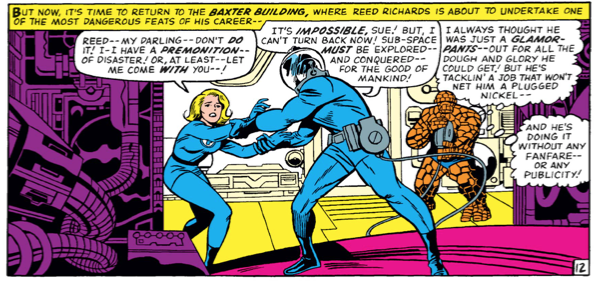
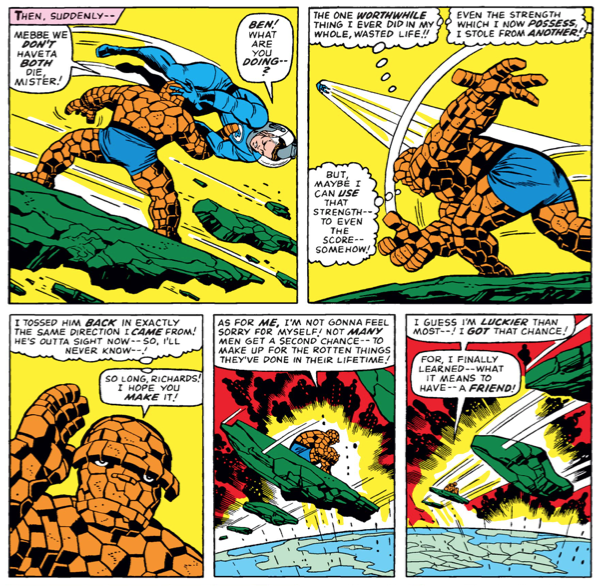
Back at the Baxter Building, the imposter Thing is enlisted by Mr. Fantastic to help with him a dangerous experiment that he hopes will unlock the secrets of faster-than-light travel and prevent incursions by threats such as Galactus. The real Ben Grimm shows up but the fake Thing convinces Reed and Sue that he’s the genuine Thing, leaving the real Ben to storm off. Reed then uses a device enters “sub-space”—which seems to be the Negative Zone—while fake Ben holds his tether. Fake Ben sees an opportunity to kill Reed, and when Reed signals to be pulled back, he hesitates. Too late, he realizes he misjudged Reed, and tries to save him. The tether snaps, so fake Ben plunges into sub-space himself then hurls Reed out. Satisfied he has redeemed himself, he goes to his death in peace. The real Ben is transformed back into the Thing, and the team is reunited.
What’s going on here?
Fantastic Four 51 is often singled out as one of the highlights of the Lee/Kirby FF run. It was voted No. 2 on a list of the top 60 FF stories, and No. 4 on a list of the top 100 Stan Lee stories, for example. Douglas Wolk began his book All of the Marvels— a literal reading of every Marvel comic—not with FF 1 but with issue 51.
Its reputation as a standout is interesting, since it’s such an odd story. After three multi-issue epics—the lengthy Frightful Four/ Doom story, the Inhumans saga and the Galactus trilogy—it’s a chance for a breather with a one-and-done story with a new and ultimately disposable villain (we never even learn his name!). In that sense, it reads a bit like earlier, sci-fi flavored FF issues.
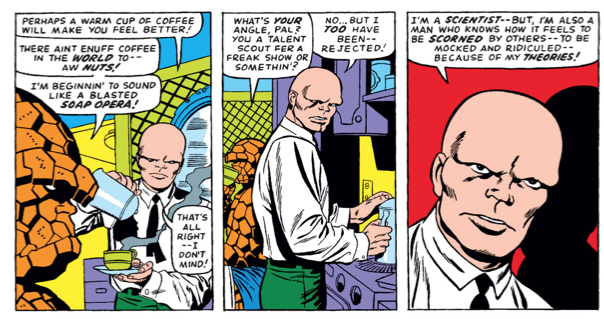
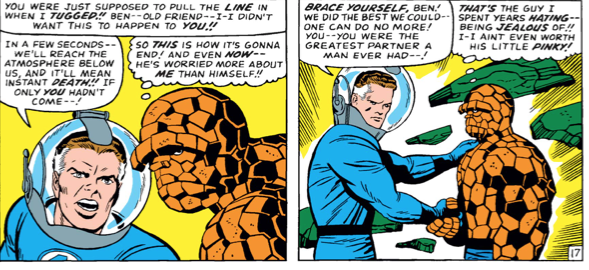
More strangely, the FF are really supporting characters in the narrative arc of the nameless villain, who begins the story scheming to destroy Reed and by the end is so impressed by his nobility and selflessness that he’s willing sacrifice himself to save Reed. In a sense, the villain serves as a window through which we see Reed with new eyes. The villain also gives as new appreciation for Ben in his absence: Reed calls Ben “the greatest partner a man ever had” and the villain, preparing to save Reed, believes he “can really be Ben Grimm,” ie. a true hero.
An unwritten—and maybe overly prosaic explanation—of his transformation from villain to hero is that the device that transformed the villain into the Thing transferred Ben’s character as well as his appearance. It would be a testament to Ben’s virtue, while explaining the radical shift in the villain’s motivations. That explanation would at least place Ben at the center of the story because despite its iconic cover, Ben is really absent for most of the issue.
FF 51’s renown is also deserved because of Kirby’s art, which is just jaw-dropping. I’ll highlight some pages later, but it features perhaps his greatest collage:
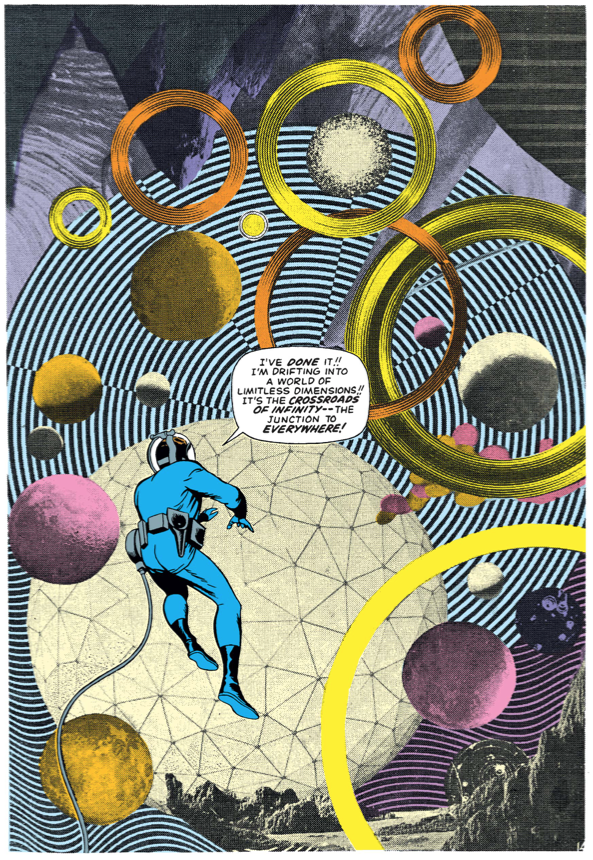
Jack’s fantastic, cosmic art is the necessary counterbalance to Stan’s pathos-driven story. In his New York Times review of Wolk’s book, Junot Diaz identifies the magical mix that made the Lee/ Kirby Fantastic Four—and by extension the larger Marvel Universe—so powerful:
But it was in Issue 51 that Kirby and Lee hit the mother lode; discovered the precise amount of human misery you need to inflict on a superhero in order to sell the galactic and fantastic, to make it real. The galactic fantastic without human anguish: kid stuff. Human anguish without the galactic: soap opera. But the two blended together in the right proportions equaled a new type of imaginative vibranium. Once Kirby and Lee cracked the Galactus Equation, Marvel never looked back.
Meanwhile
Unlike previous issues, FF 51 breaks away from the main action to build out a subplot; in this case, Johnny’s immersion into college life and the troubling dynamic between the Metro football coach and his jerk quarterback. It’s also becoming clear Wyatt Wingfoot is shaping into a significant supporting character and he get a bit of his backstory, including learning that his father was an Olympic decathlete (the parallel to Jim Thorpe is too obvious too miss).
Weird science
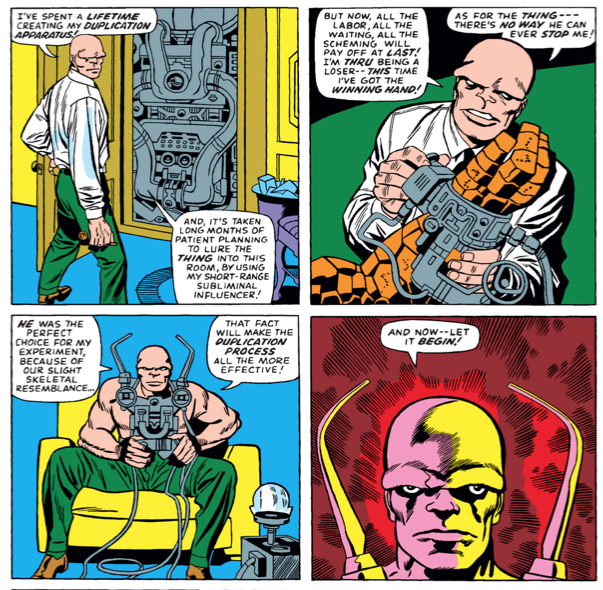
There’s a lot of it in this issue, starting with the “duplication apparatus.”
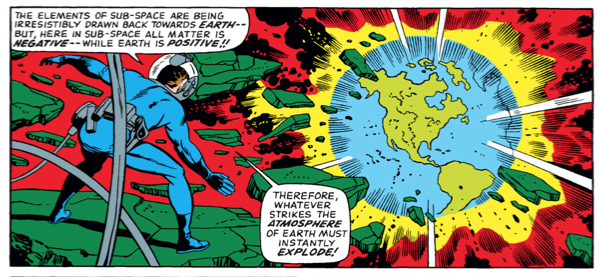
Then there’s this explanation of subspace, which sound a lot like later descriptions of the Negative Zone
Mail call
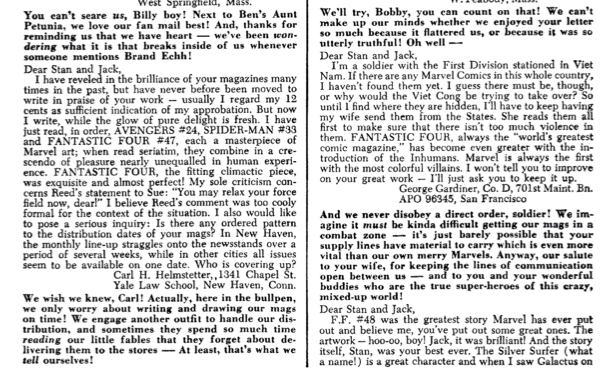
This issue features letters from a Yale Law student and a GI in Vietnam.
Dig that Kirby Krackle
This issue is packed!
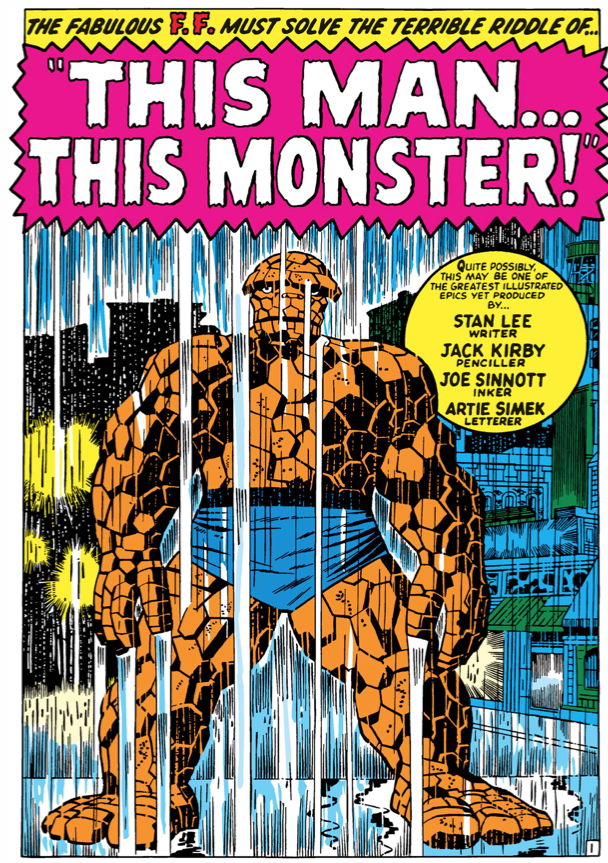
Starting with the splash page:
And this insane page:
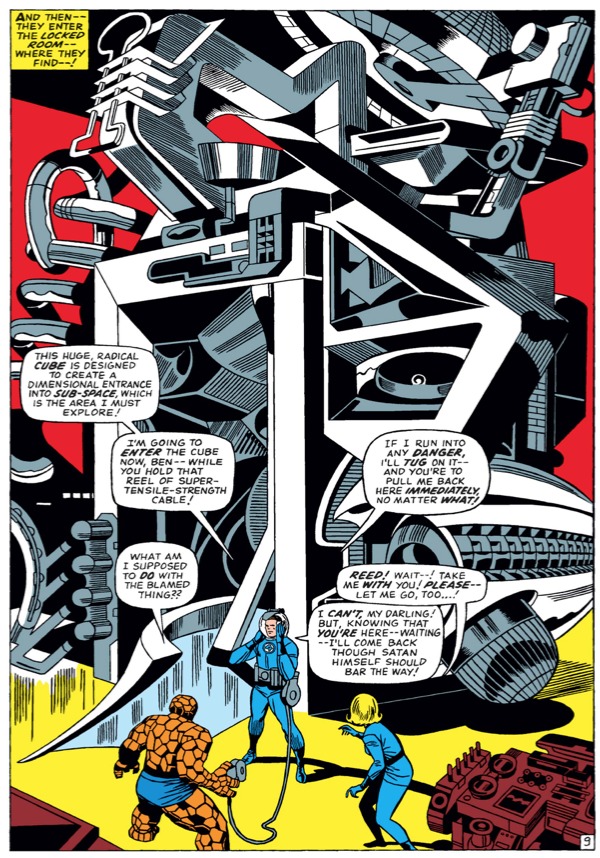
And this sequence:
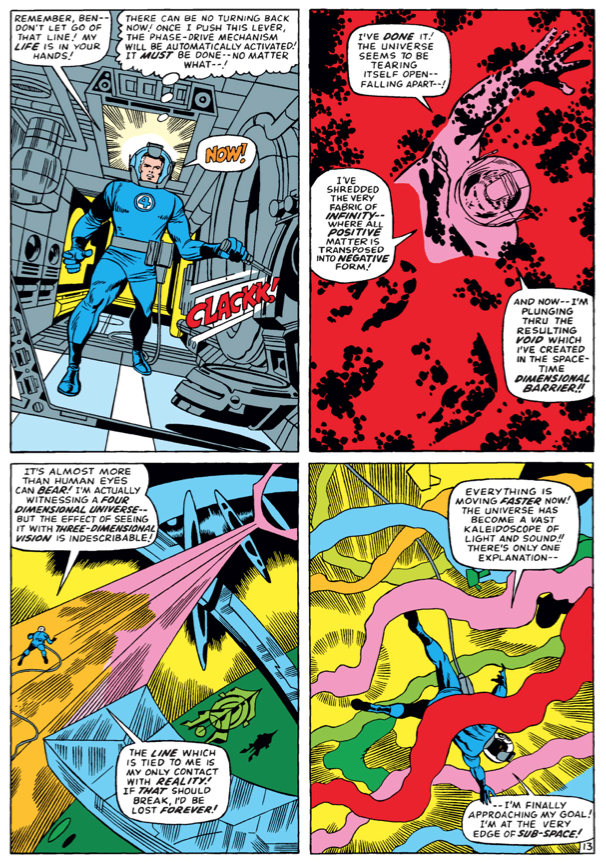
Even the quieter images are masterful:
Next issue: Introducing the Black Panther!


Pingback: “The World’s Greatest Comic Magazine!” Fantastic Four No. 183 | Percival Henry: The Fantastic Four and more