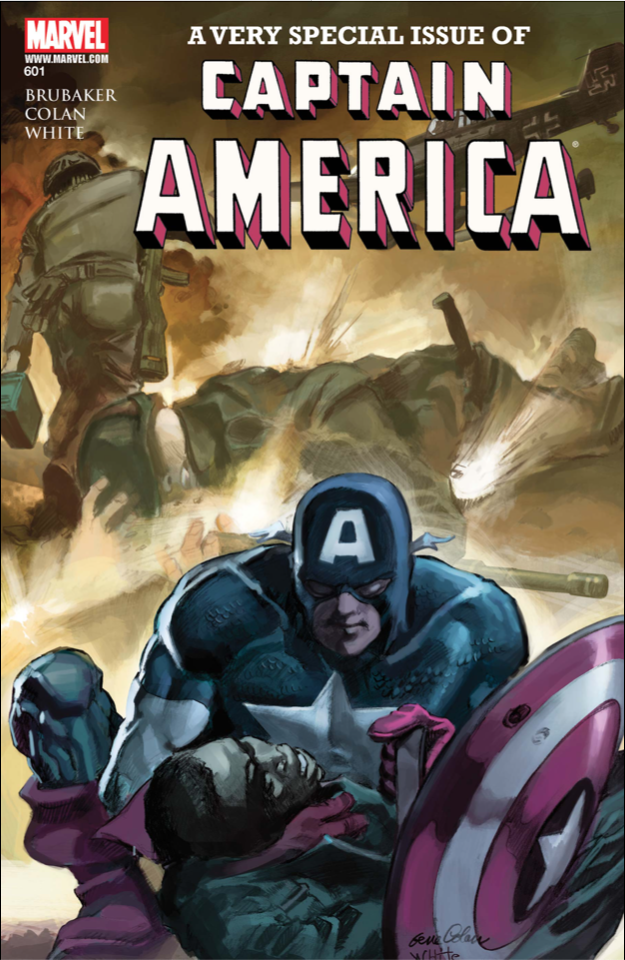
Captain America 601
“Red, White and Blue-Blood”
Publisher: Marvel
Published: July 2009
Writer: Ed Brubaker
Artist: Gene Colan
Colors: Dean White
Letters: Dave Lanphear
Cover: Colan
Synopsis
In a story that is mostly flashback, the Winter Soldier, aka Bucky Barnes, tells Nick Fury of the time he and Captain America confronted vampires in a Belgian village during World War II.
What’s going on here?
This story falls in the middle of Ed Brubaker’s long and acclaimed run on Captain America. I’m not sure if it was an inventory story or something scheduled, since it comes right after issue 600, making it a logical time for the creative team to take a break. But it has the classic signs of an inventory story, as it falls outside of continuity and features a guest artist.
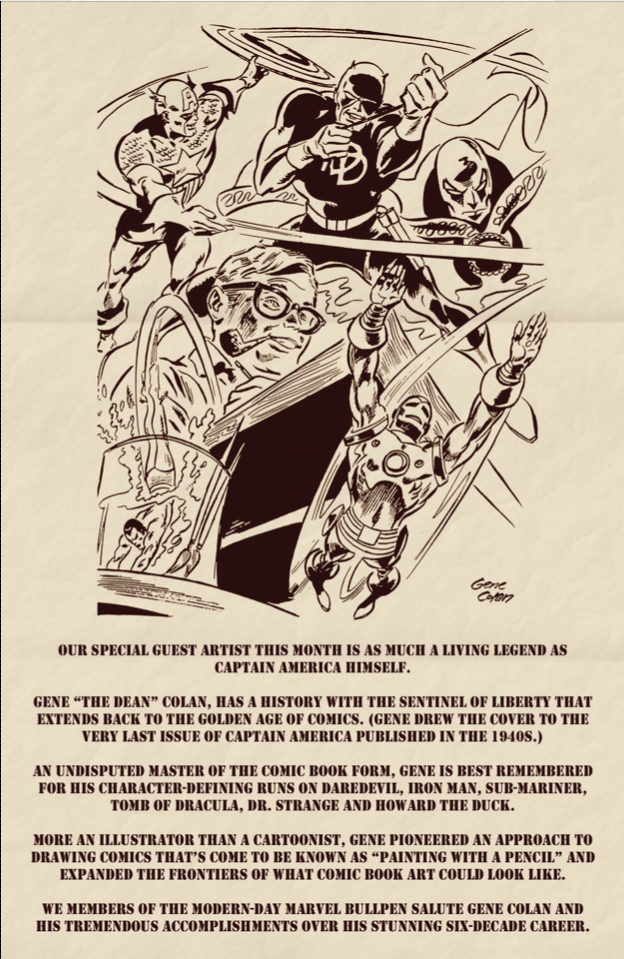
It’s notable for being the last story penciled by Gene Colan, a comics legend who was in his 80s by 2009 and had been drawing comics for 61 years, or since the end of the Golden Age. The story was either written with him in mind, or chosen for him, because of his lengthy association with vampire stories and particularly his Tomb of Dracula run from the 1970s. In some ways, the whole comic feels like a memorial to Colan, who died a few years after it was published, and it included this nice testimonial at the end.
What I liked
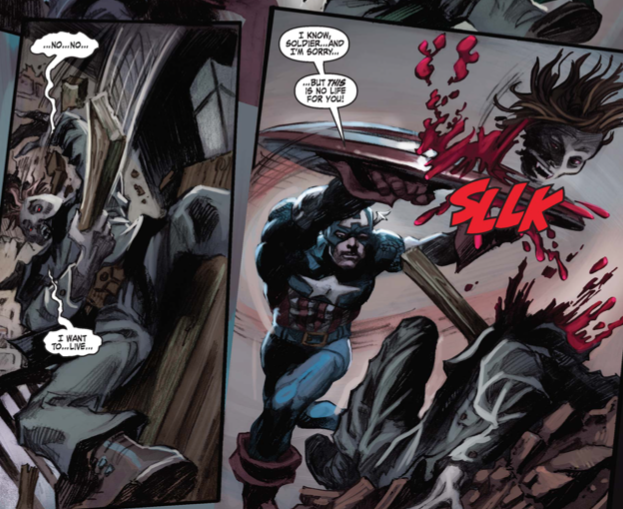
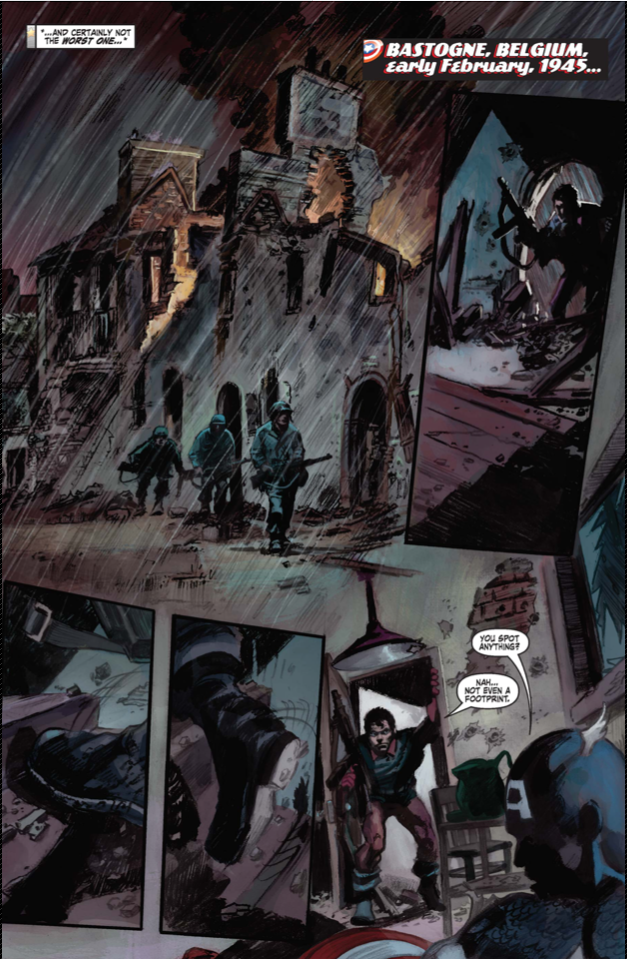
Despite some uneven art (more on that later), Colan still delivers a darkly atmospheric story. The Belgian village is gloomy and claustrophobic, and the action scenes are chaotic and violent, befitting the nature of the threat faced by Cap and Bucky. I’m not familiar with Colan’s war comics, if any existed, but he certainly seems at home with the genre. I also liked seeing Brubaker’s version of World War II-era Bucky, where he is less a sidekick and more of a partner to Cap.
What I didn’t like
As a horror story, it’s just OK, without a lot of suspense and a pretty obvious answer to the mystery of who was turning the US soldiers into vampires. The framing story, with Bucky and Nick Fury, also feels clumsy and unnecessary.
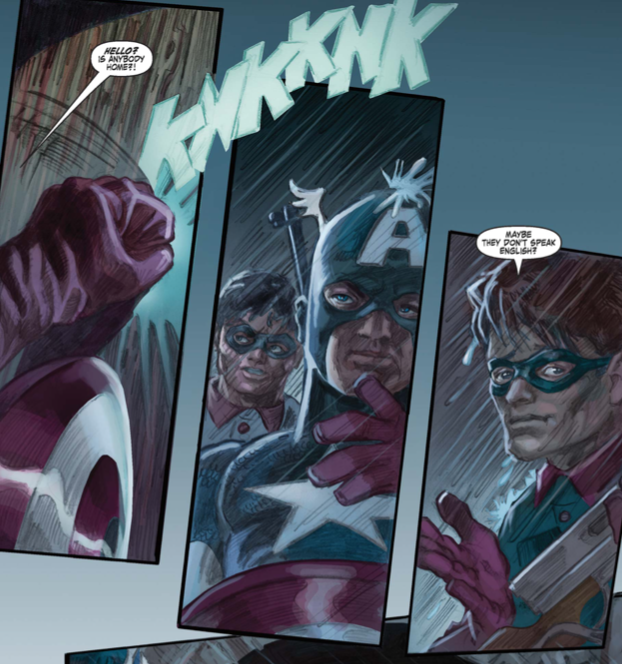
And sadly, Colan’s pencils at times are uneven, particularly when he is drawing the faces of Cap and Bucky. The layouts are at times confusing, and the story can be hard to follow from panel to panel. It feels churlish to point it out, but it’s clear that by this point Colan no longer had his A game.
Overall
A bittersweet tribute to one of the giants of comics.

