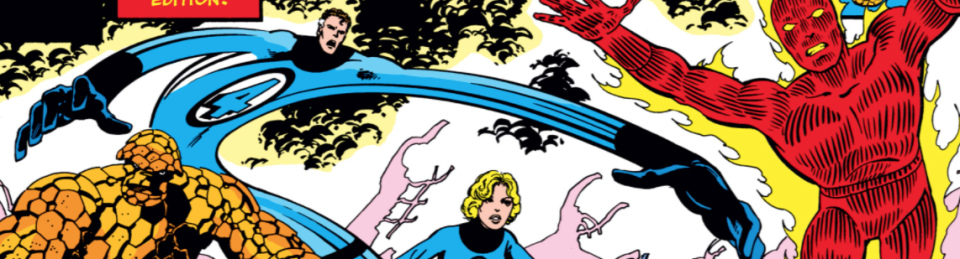
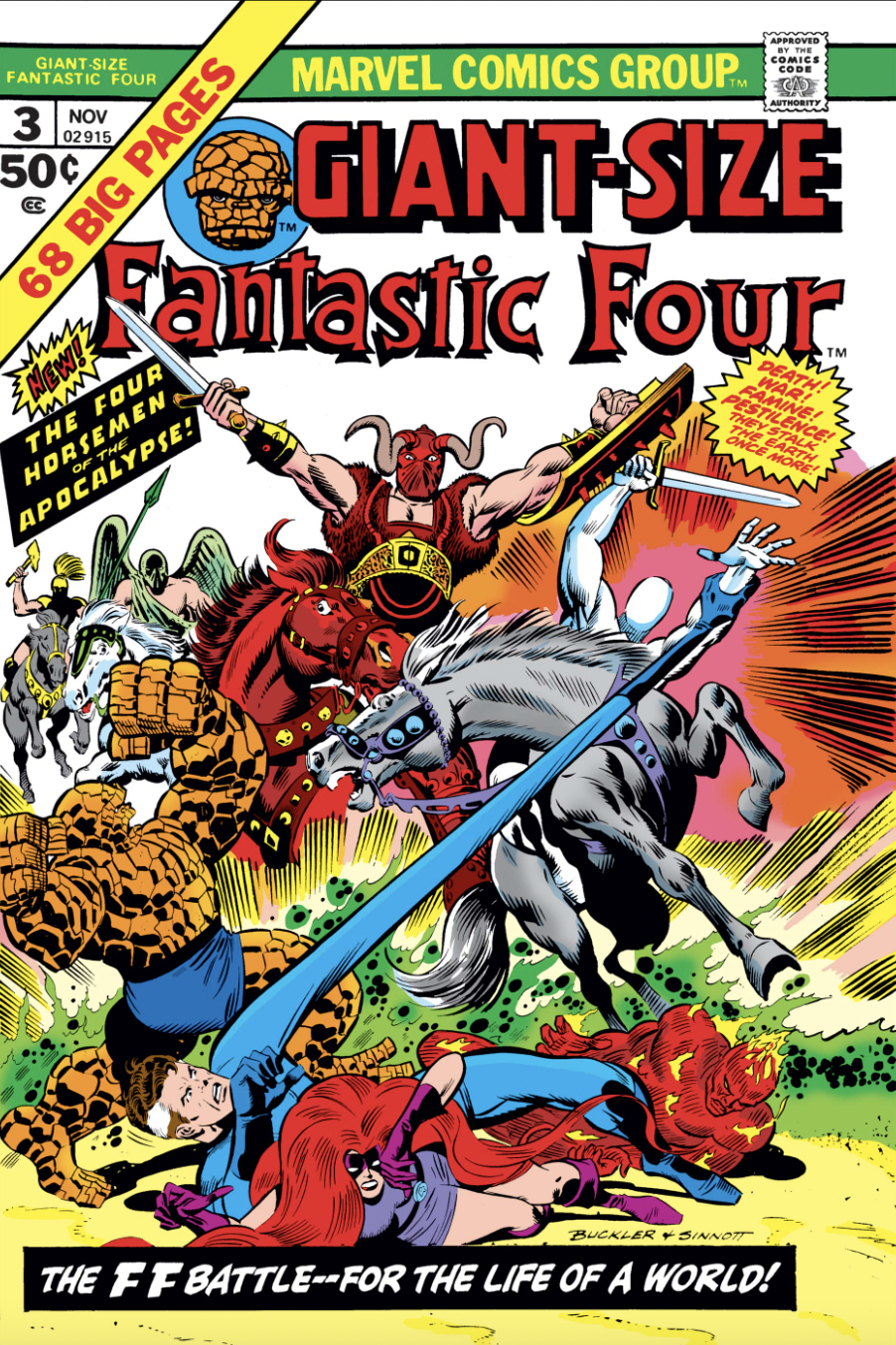
Giant-Size Fantastic Four 3
“Where Lurks Death … Ride the Four Horseman!”
Published August 1974
Plot: Gerry Conway
Script: Marv Wolfman
Pencils: Rich Buckler
Inks: Joe Sinnott
Colors: Stan Goldberg
Editor: Roy Thomas
Cover: Bucker and Sinnott
Editor’s note: As mentioned in my last few posts, I recently discovered four issues of Giant-Size Fantastic Four published in 1974 contained new material, and were not just reprints of back issues as I believed. I am belatedly going back and blogging about them, with this issue, which takes place between FF 150 and 151, being the last that is out of order. We’ll resume with Fantastic Four 154 with my next post.
Synopsis
The Four Horsemen of the Apocalypse, seemingly characters from the Book of Revelations but in actuality aliens, each appear on Earth. The Fantastic Four together defeat Pestilence, then split up to beat War and Famine, before coming together again to conquer Death, all accomplished by triggering a curse-like “protection device” that sends them back to their home world.
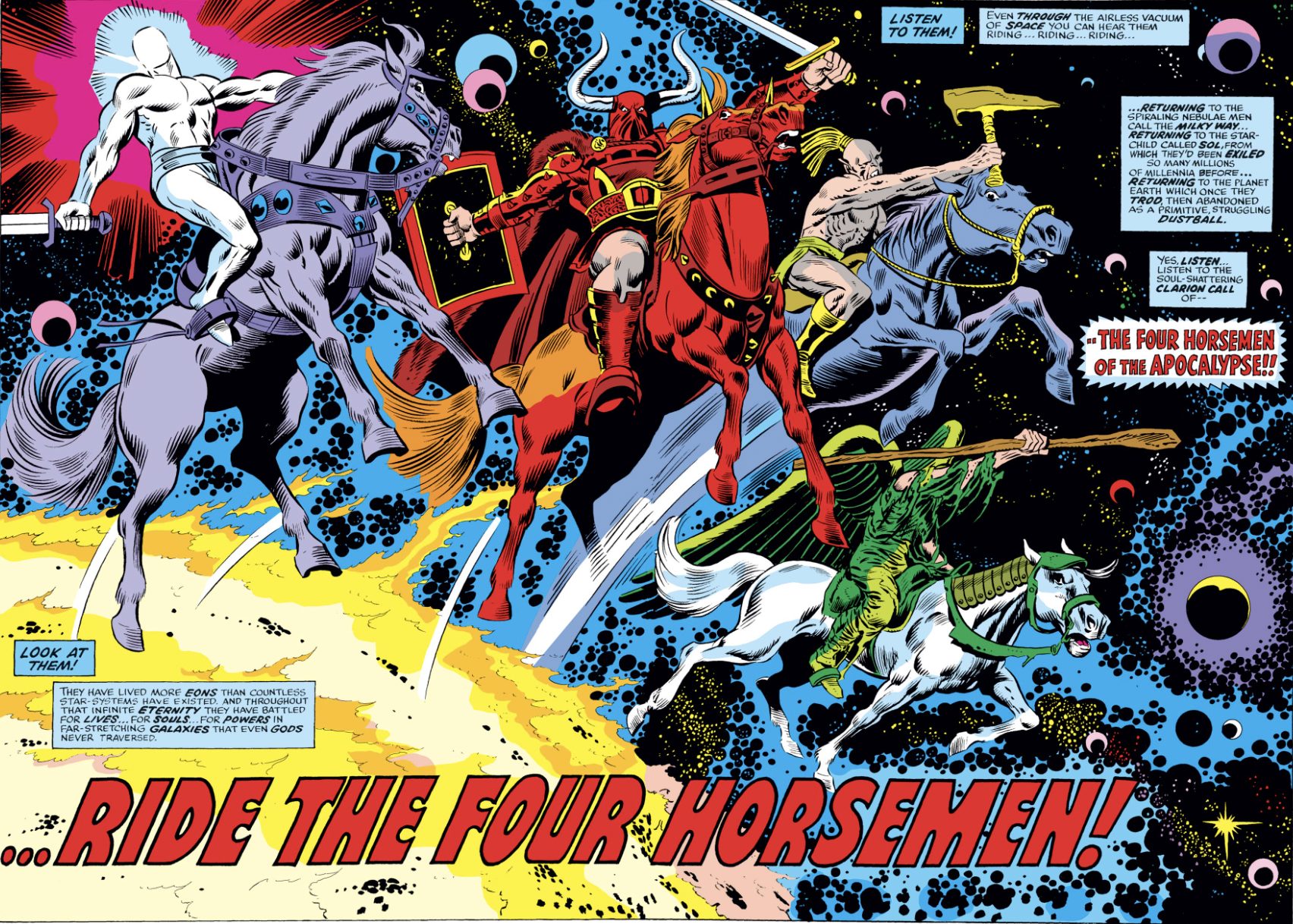
What’s going on here?
This is a big, ambitious comic that feels like a classic annual story, and takes 30 pages to tell across four “chapters.” Unfortunately, it’s not that good, with an incoherent plot that tries hard to be profound but ultimately just fizzles out. Structurally it’s similar to the last Giant-Size FF, with the team facing some larger, metaphysical foe and splitting up before reuniting to triumph in the end. But while last issue’s time-travel to colonial New York and gangland Chicago had a goofy charm, there’s nothing much fun about war and famine, and the story can’t bridge the gap between the metaphorical challenges represented by the Four Horsemen and the comic-book realities of needing bad guys to punch.
The script is by Marv Wolfman, who at this point had been in comics for about six years at Marvel and DC, but primarily writing horror comics. This is his first work on the Fantastic Four and he would come back in a few years to have a longish run from FF 194 to 215 before returning to DC and taking on the New Teen Titans.
Giant-Size Fantastic Four also reprints FF 21, an important early story with distinctive inks by George Roussos. Read all about it here.
What I liked
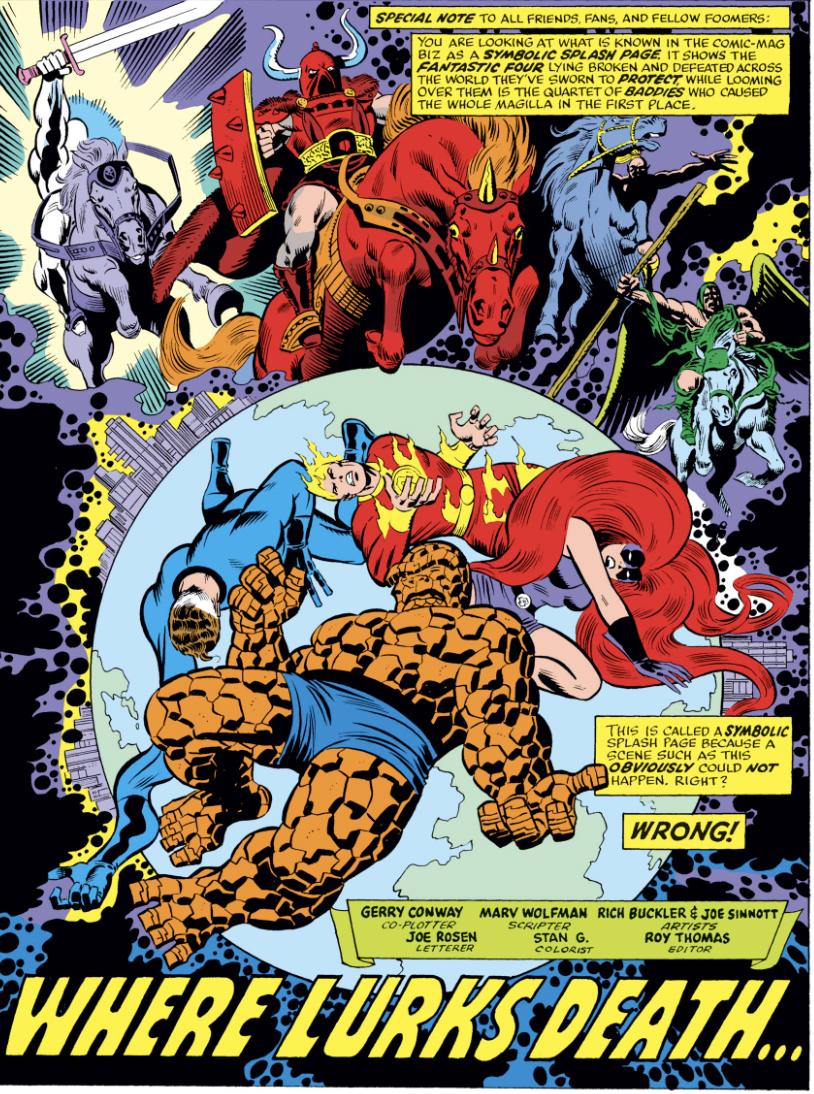
I really did want to like this comic, because I loved the swinging-for-the-fences ambition of it. The Four Horsemen of the Apocalypse is a great concept (thanks, John of Patmos, the exiled ancient Christian who wrote Revelations) and in a comic book world populated with characters like Thor and Hercules, as well as Death and Eternity, they are obvious subjects for comic writers to take on. It’s a great idea for a big, annual-type story. But as discussed, Conway and Wolfman bit off more than they could chew here.
Rich Buckler rises to the occasion here, at least initially, with some of his best FF work, including the great splash page above, and a staggering, double-page splash that follows (pictured above). Unfortunately, his work falters was the book goes on.
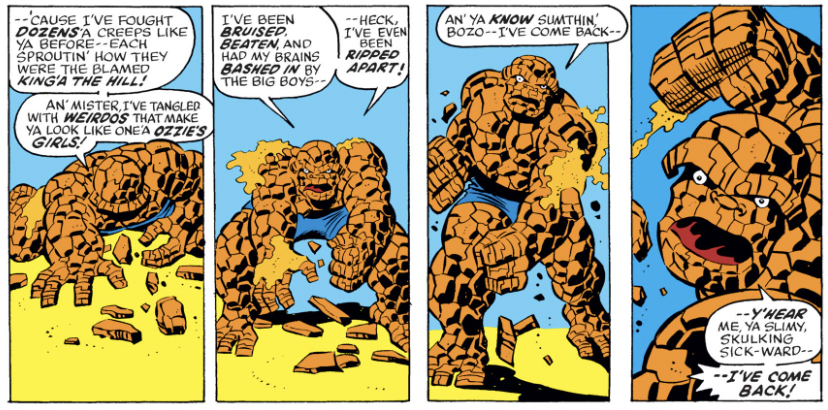
I liked this sequence of Ben, in classic never-say-die mode:
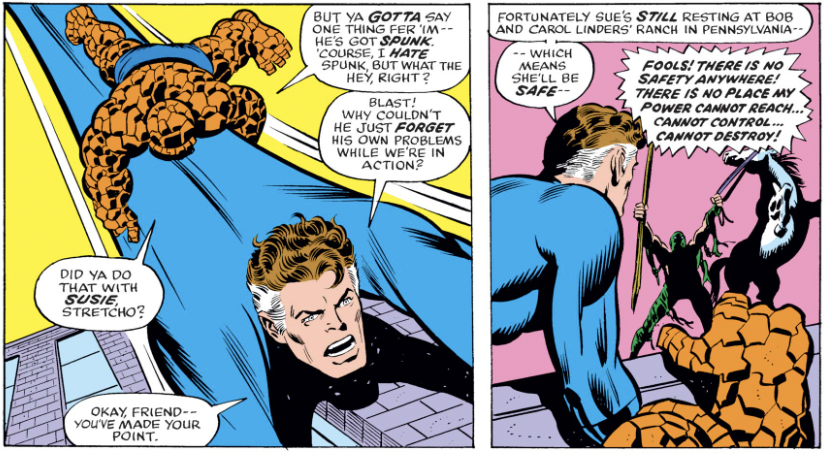
There were some nice character interaction, including this one which offers some insight into Reed and Ben’s relationship (the sequence also at least acknowledges Sue’s existence, although she never appears or is referenced again):
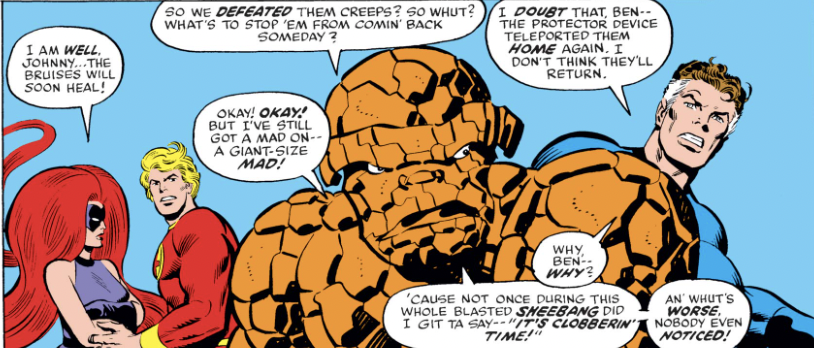
Lastly, this was a fun way to end the comic:
What I didn’t like
Rather than simply let the Four Horsemen exist as mystical entities, Conway and Wolfman construct a very complicated backstory for them, which needlessly tangles up the plot. And despite their bluster about rending galaxies, they were very easy for the FF to defeat, leading to a highly anticlimactic ending.
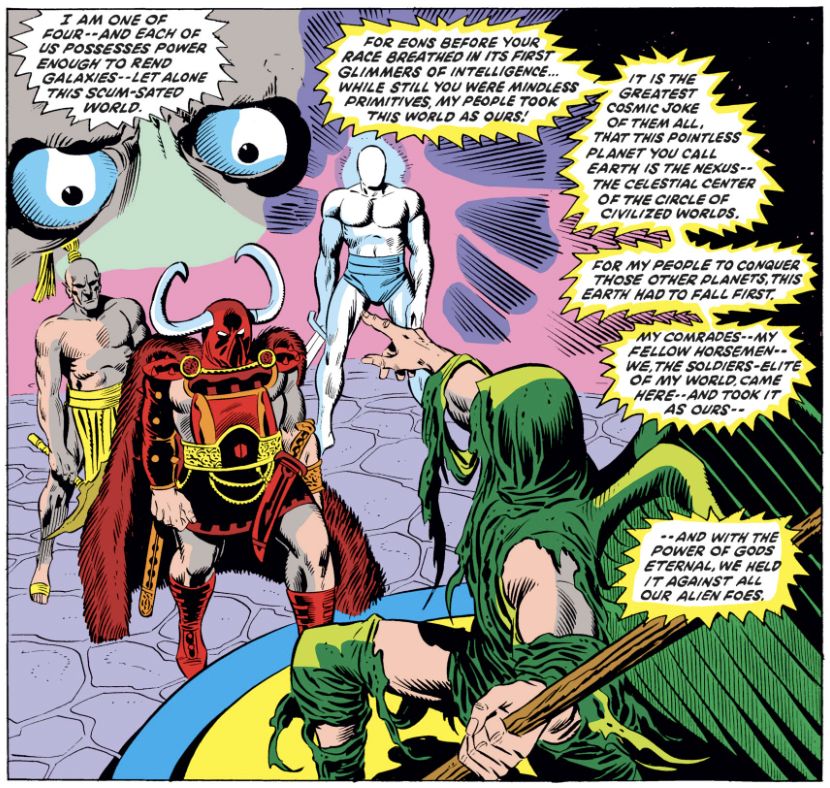
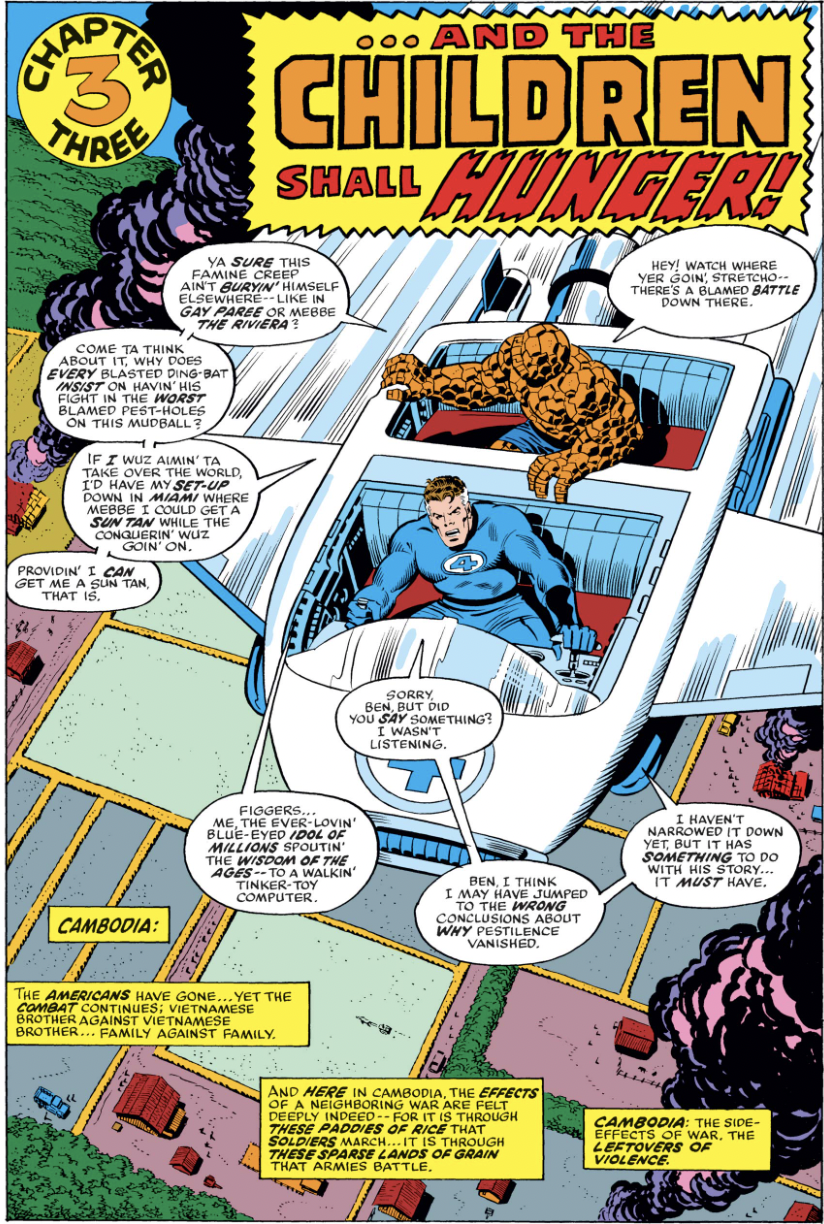
The attempts to use the Horsemen to make some bigger points consistently fell flat and are, once again, a reminder that social commentary in a super hero comics is very rarely successful. For example, here is the introduction to a chapter set in Cambodia, site of a destructive civil are in 1974.
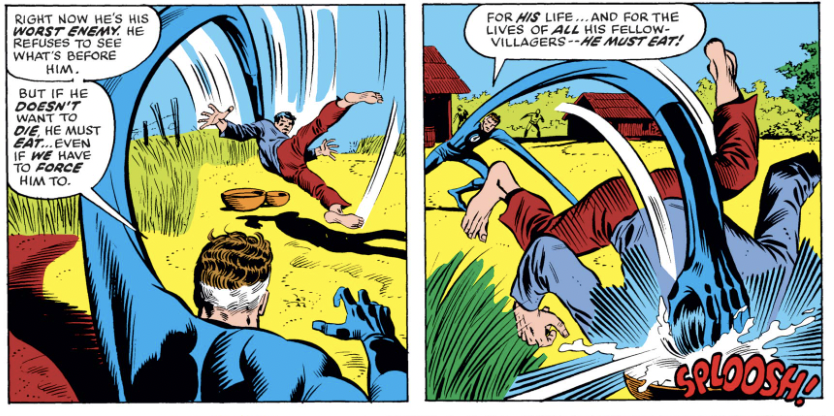
Reed’s subsequent attempts to force a Cambodian boy to eat are almost painful to read (the boy was under famine’s main control):
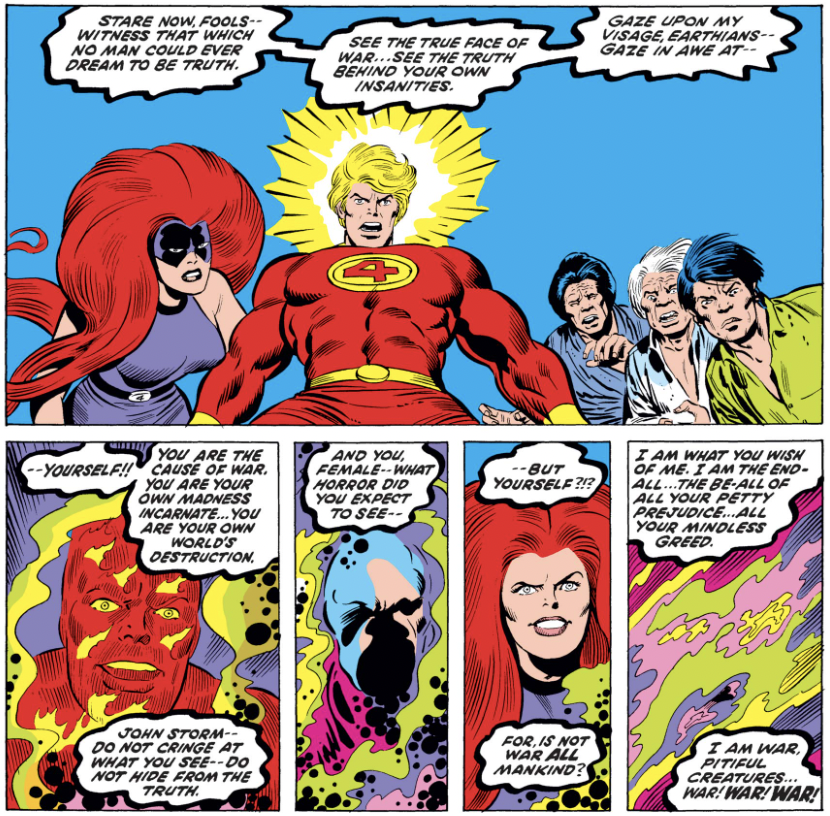
Johnny and Medusa’s encounters with War are similarly hard to read:
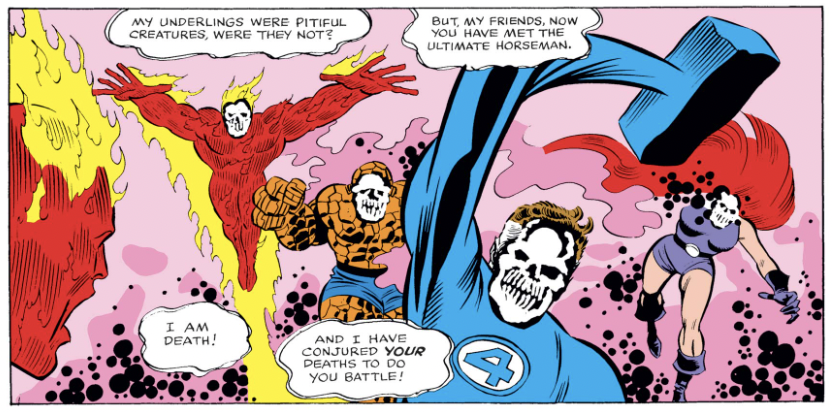
And the FF’s battle with their evil doppelgängers, conjured up by Death, feels pointless and like padding. The concept was done much more successfully in FF 75.
Overall
An unfortunate mis-fire

