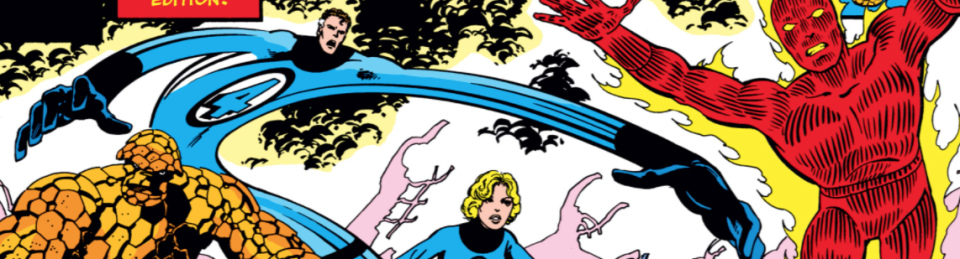
Fantastic Four 151
“Thundra and Lighting!”
Published July 1974
Writer: Gerry Conway
Pencils: Rick Buckler
Inks: Joe Sinnott
Letters: Artie Simek
Colors: Petra Scotese
Editor: Roy Thomas
Cover: Buckler
Synopsis
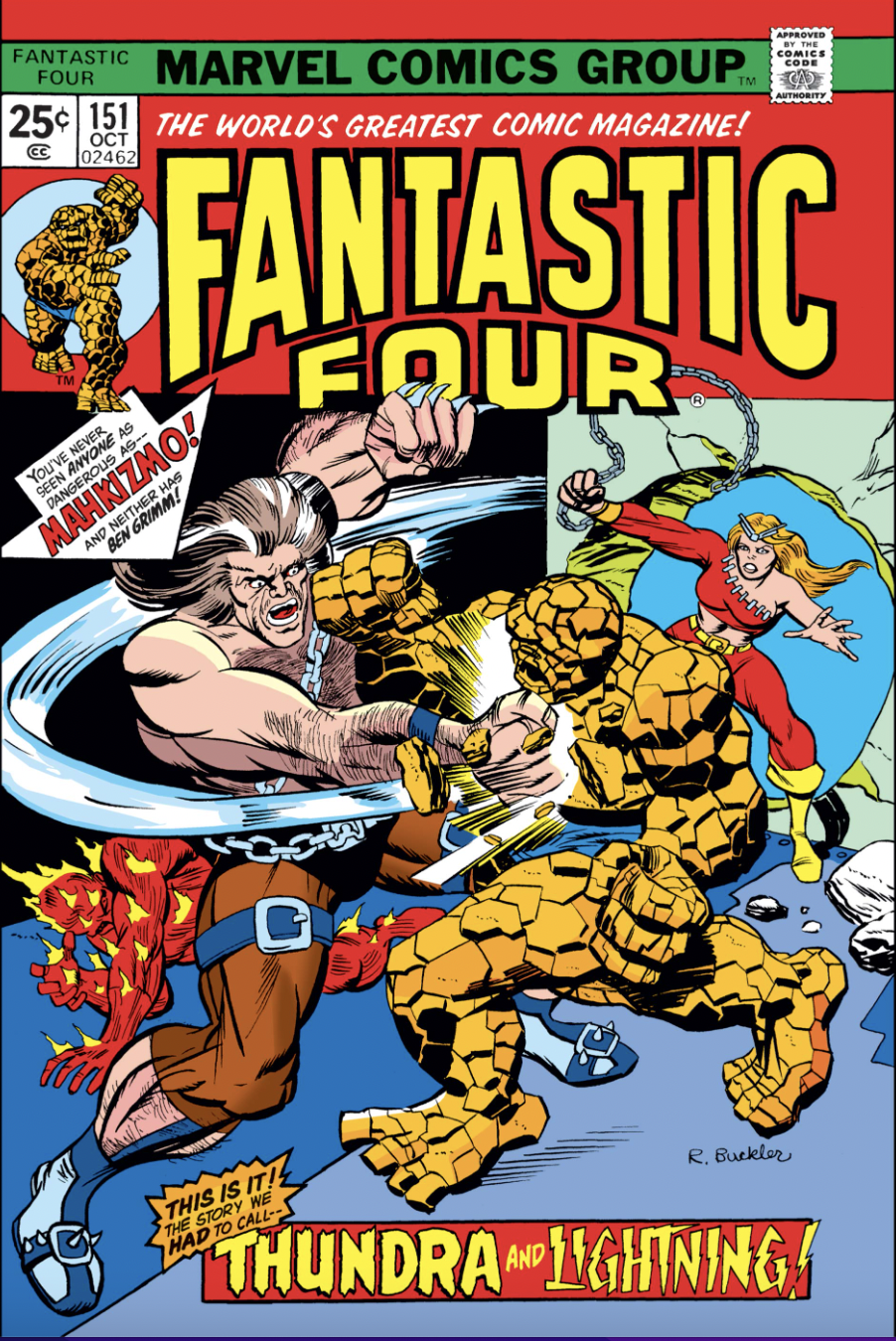
The Thing and Human Torch’s clothes shopping is interrupted when an interdimensional warrior, Mahkizmo, invades the Baxter Building, demanding the whereabouts of Thundra. As he battles the FF (minus the Invisible Girl), Thundra explains to Medusa that Mahkizmo comes from a male-dominated planet parallel to her’s.
What’s going on here
Frequent readers of this blog know I regard this era of the Fantastic Four as a fairly uninspired one. While there are a few high points, mostly it’s a pretty dreary stretch between the end of Lee / Kirby and the beginning of the Byrne run. If anything , the period is notable for its silly plots and goofy villains, and while we’ve yet to get to the goofiest (Gaard, anyone?) I was bracing myself for this issue and the absurdly named Mahkizmo. Surely if any character embodied the lazy crutch of seizing on the news of the day and making it a comic story, it would be Mahkizmo, who—in his inevitable clash with the Femizon, Thundra—would caricature the mid 1970s, anti-ERA strain of American politics.
And yet, the issue wasn’t all that bad. There’s some fun characterizations, the plot is more nuanced than I expected and, despite the awful name and weird character design, Mahkizmo is a servicable villain. So much for judging a comic book by its cover.
What I liked
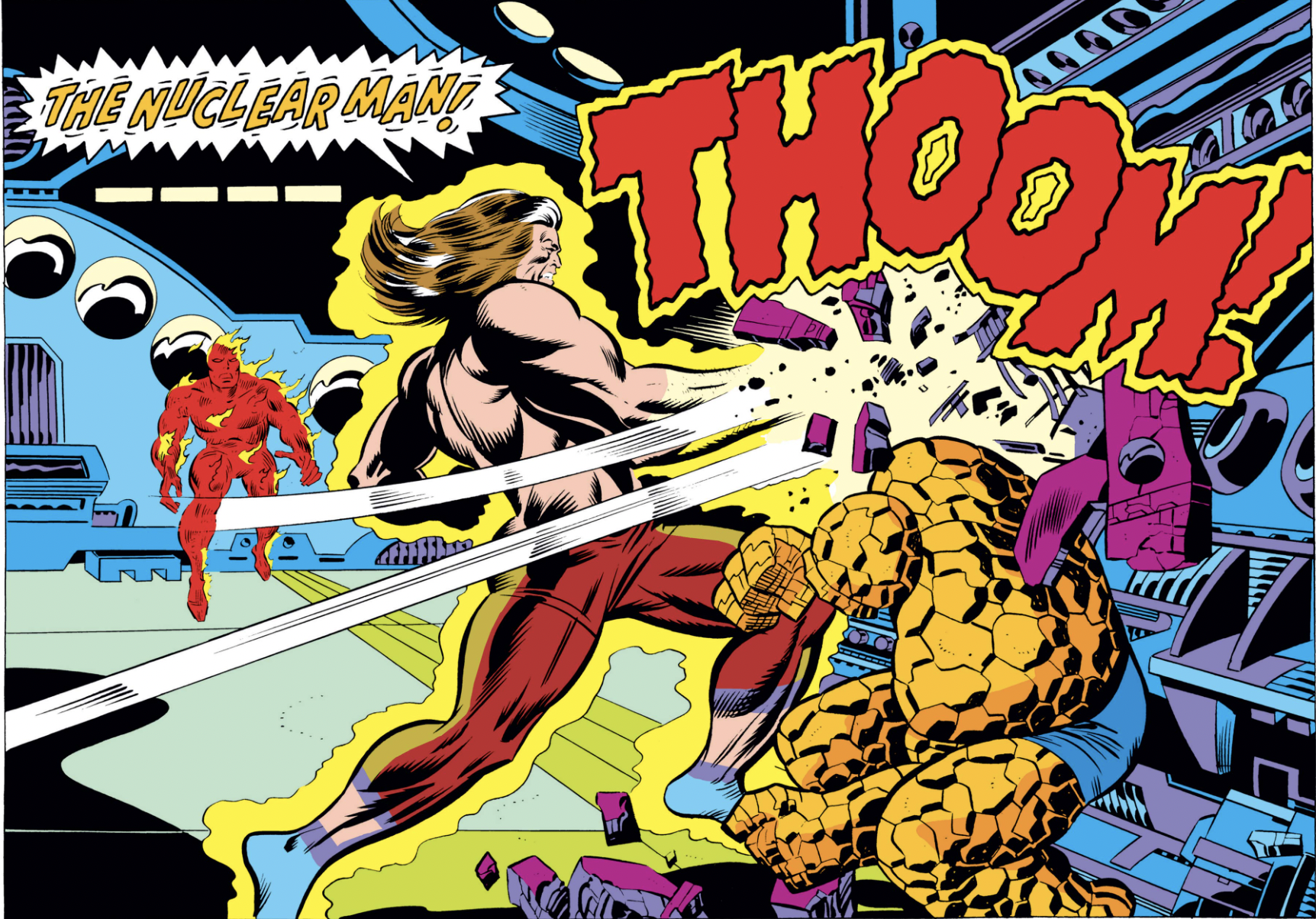
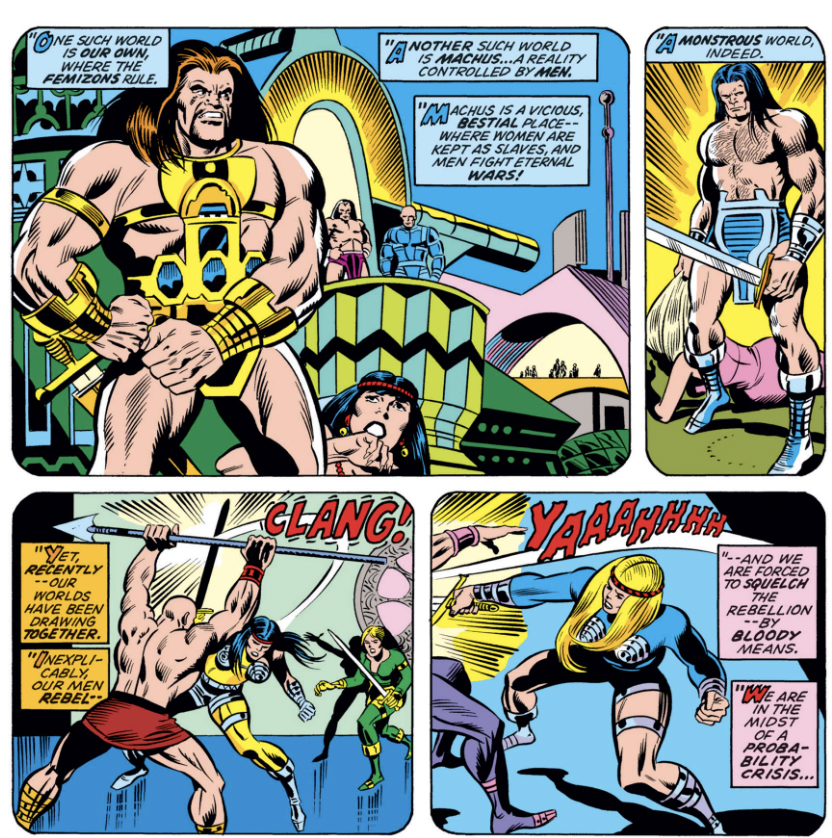
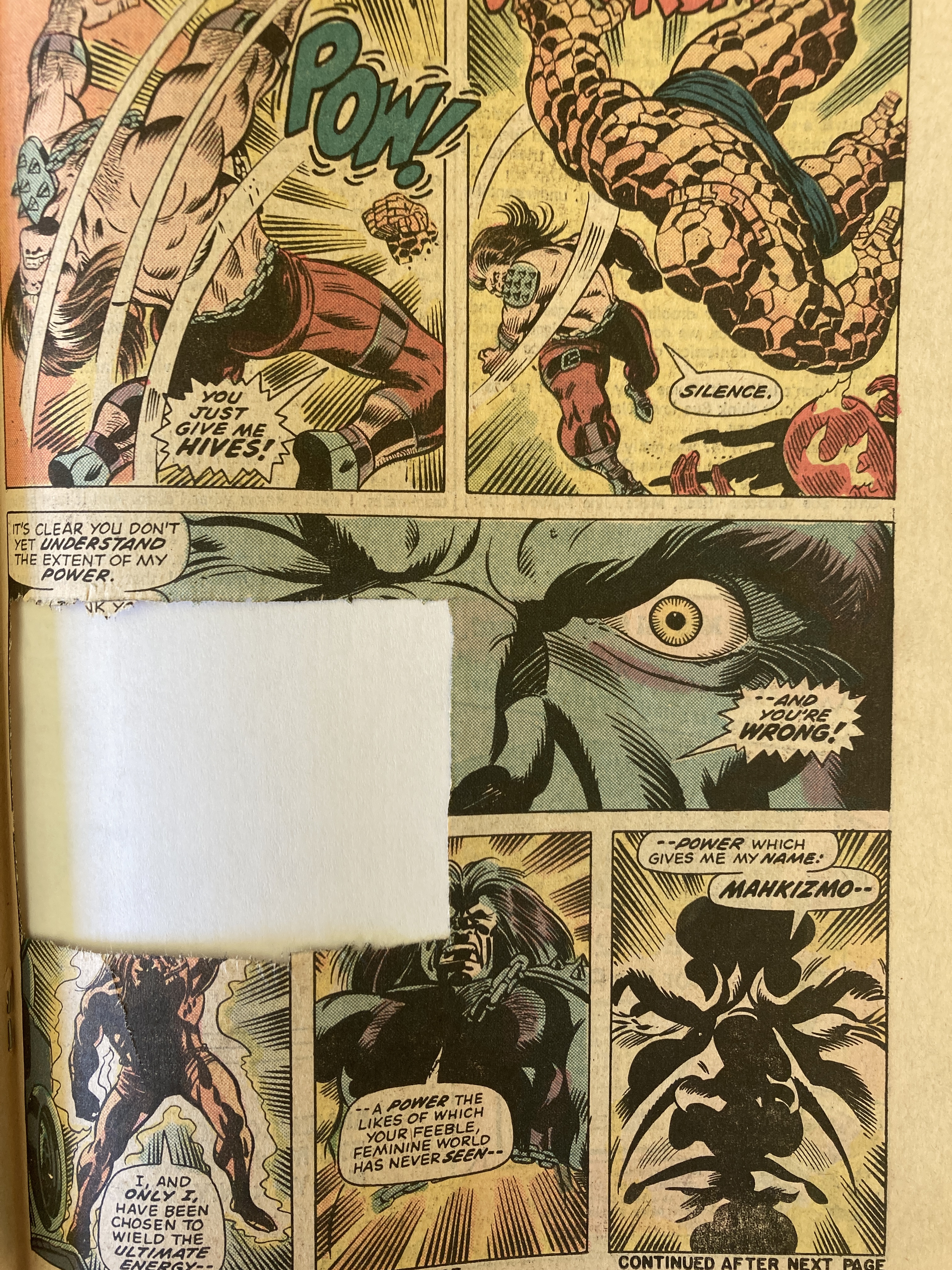
What redeems Mahkizmo is his absolutely savagery. As written by Gerry Conway, he just pummels the male members of the FF. There’s been other brutal characters, of course, but it’s hard to recall one that so completely overwhelms the FF.
His costume is a bit odd, and with all its straps, seems to foreshadow the 1990s look. Also, he appears to have taken off his shoes and is fighting in his socks in the double-page spread above.
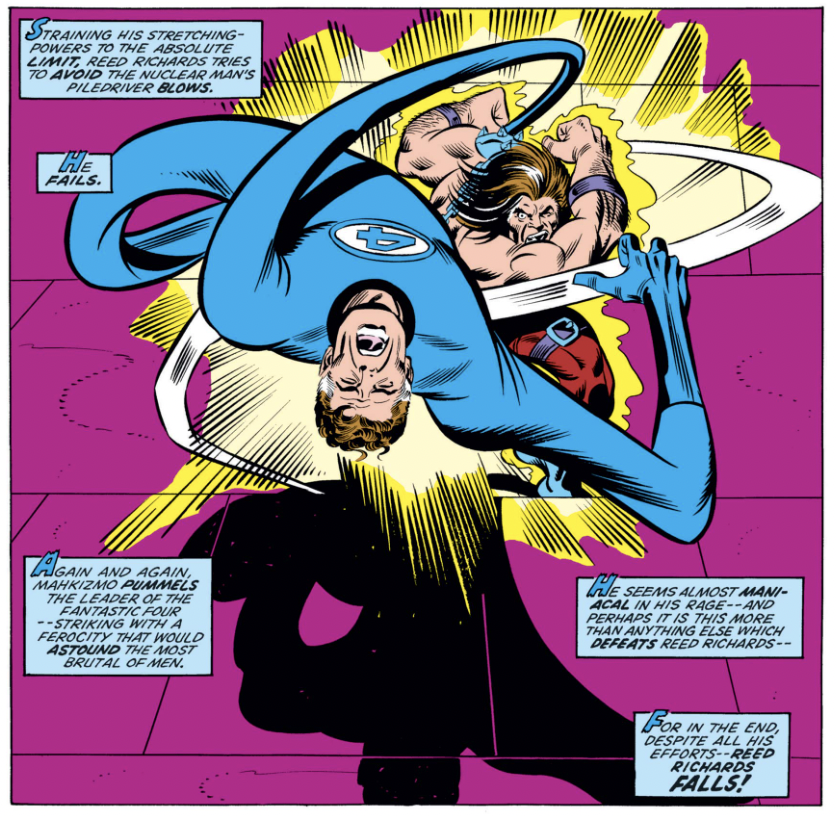
Mahkizmo is really good at insults that reflect his contempt for his sissy-like enemies. My favorite is “male-ling.”
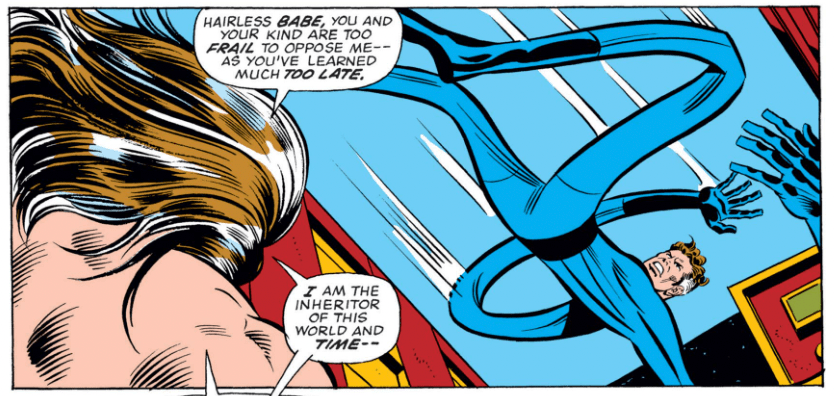
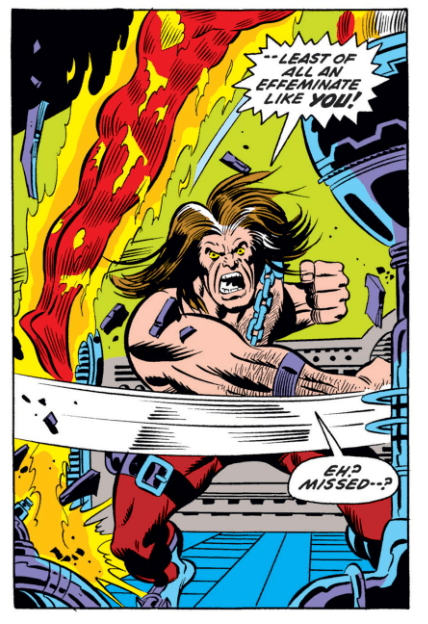
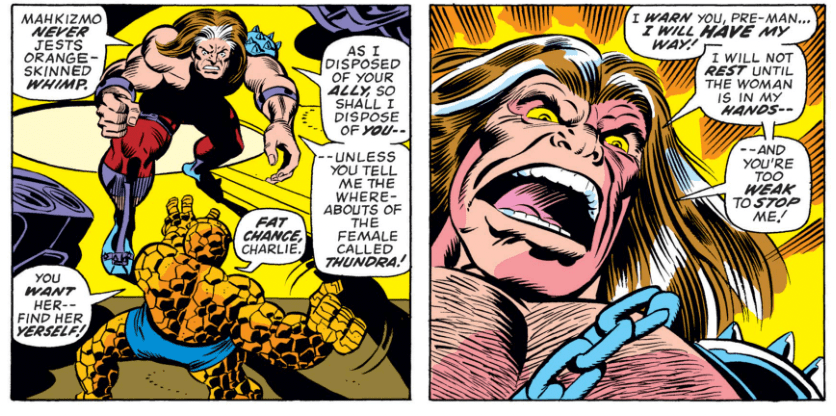
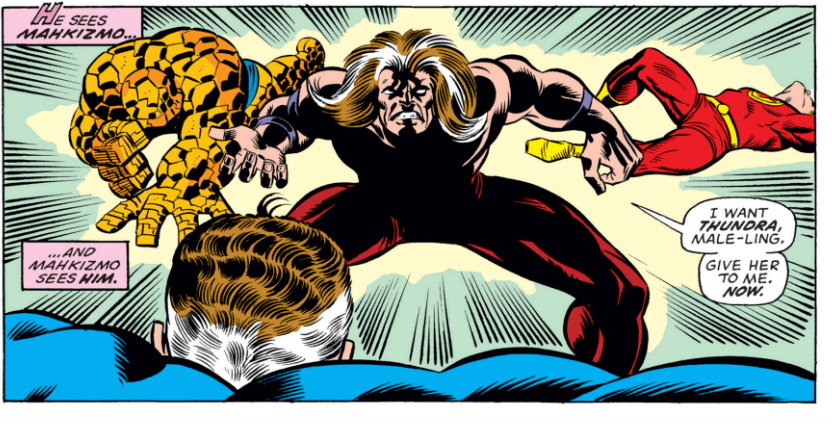
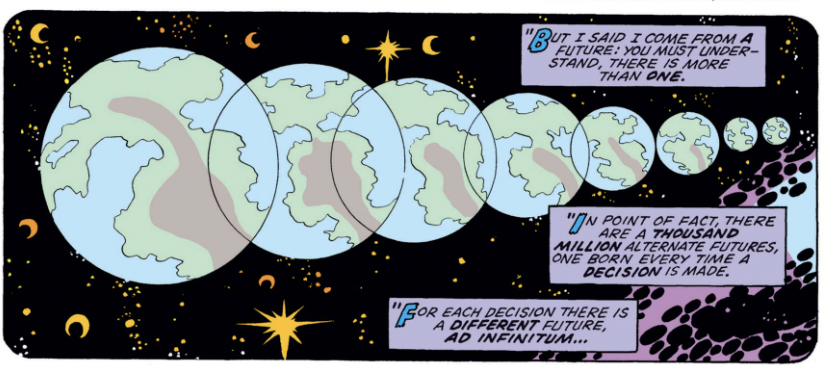
I liked the multi-verse explanation of Thundra and Mahkizmo’s origins, with their parallel universes being drawn together, which seem obviously inspired by the Fourth World stories Kirby was cranking out at DC. Some Kirby-esque character designs, too (no surprise there).
This is as cogent and concise and explanation for the multi-verse concept as I have seen (and this imagery will become familiar in about a decade):
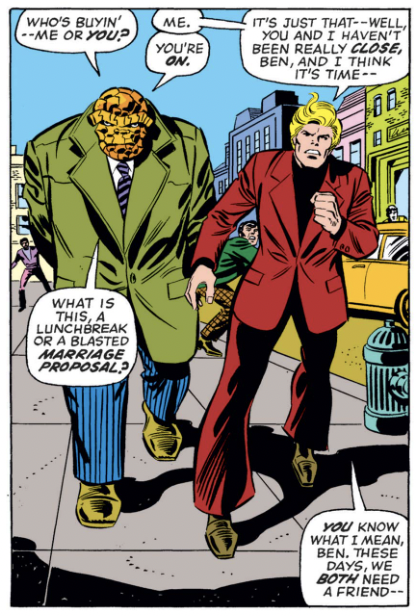
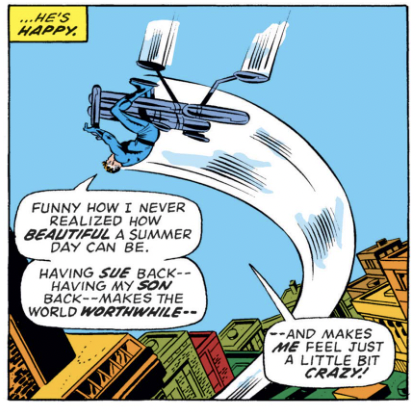
And lastly, I liked the small bits of character development, from Ben and Johnny bonding over clothes shopping to Reed’s happiness at being reunited with his son and daughter.
What I didn’t like
Speaking of Sue and Franklin, where are they? You might think the issue after Sue is reunited with her husband and Franklin is returned to health might merit an appearance, but you clearly don’t think like Conway. Despite all th events of last issue, they are, shockingly, absent.
And despite my prediction that Medusa would at last be shuffled out of the team, she’s back, although she again serves no real purpose but to be a confidante to Thundra.
Anything else?
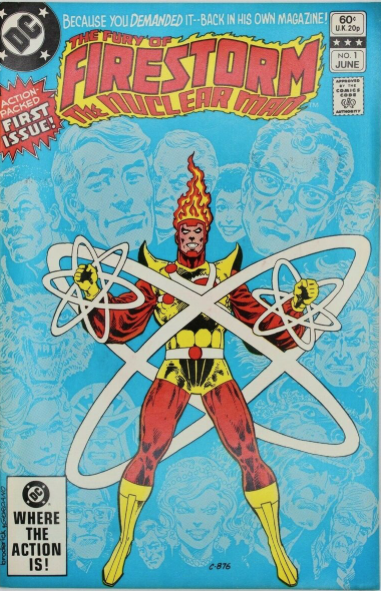
If you think the phrase “the Nuclear Man” is familar, you’re not wrong. Conway repurposed it for Firestorm, a hero he invented for DC a year years later.
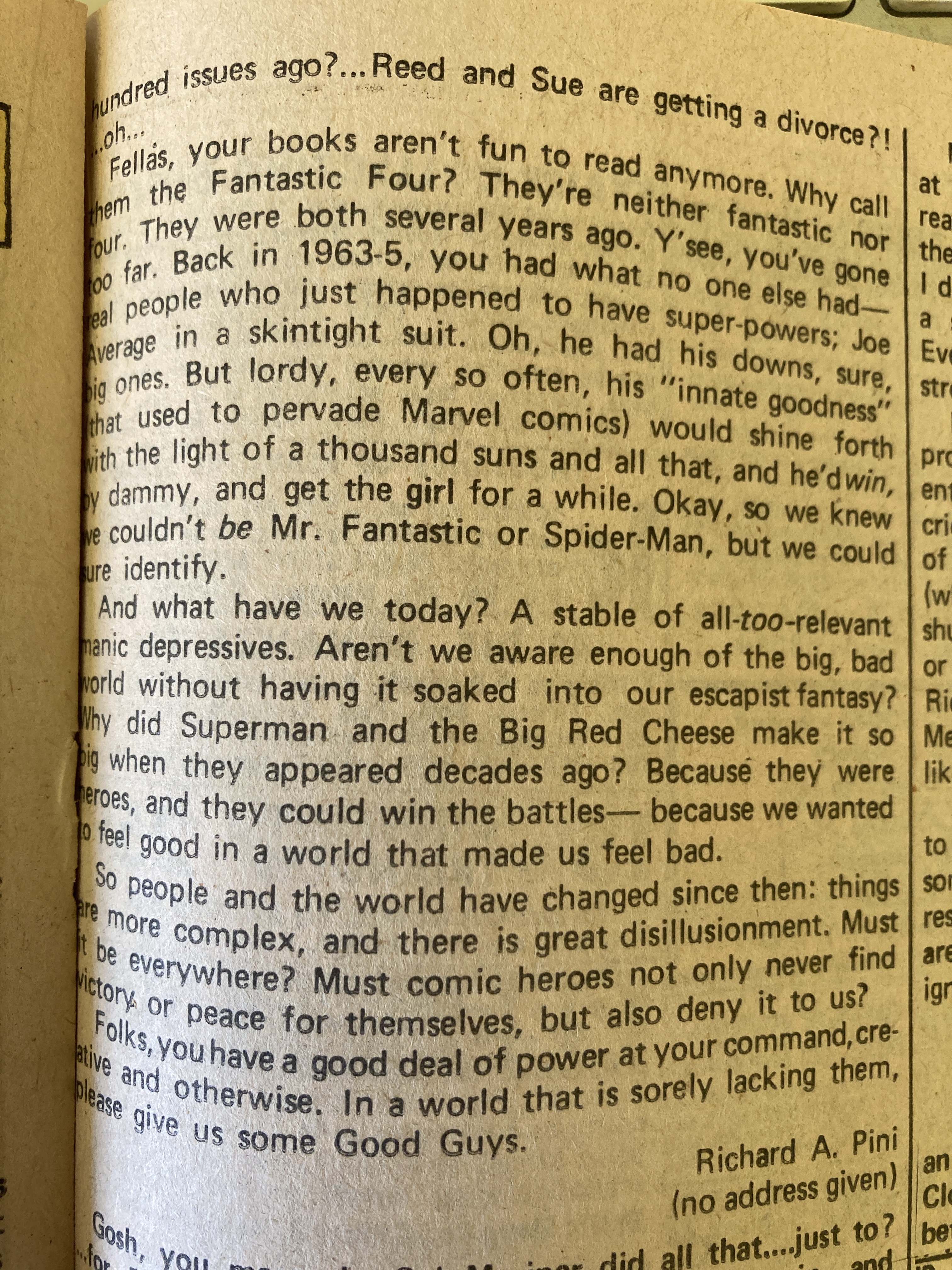
Richard Pini, who later became half of the team of creators behind the legendary indie comic ElfQuest, has a letter to the editor (he’s not too happy with the book’s current direction):
And lastly, I really hate when I buy a back issue only to find this inside (stupid coupons):
Overall
Much better than I had any right to expect

