Tags
1981, Dr. Doom, Fantastic Four, Fantastic Four 236, jack Kirby, John Byrne, Marvel, Marvel comics, Stan Lee
Fantastic Four 260
Published August 1981
Cover: John Byrne and Terry Austin
“Terror in a Tiny Town”
Writer: John Byrne
Pencils: Byrne
Inks: Byrne
Letters: Jim Novak
Editor: Jim Salicrup
“The Challenge of Dr. Doom!
Plot: Stan Lee and Jack Kirby
Script: Lee
Pencils: Kirby
Inks: too many to list
Letters: Novak
Colors: Roussos
Editor: Jim Salicrip
Synopsis
In the comic’s lead story, the members of the Fantastic Four are living ordinary lives in Liddleville, a small town, with no memory of their lives as super heroes. Reed is a college professor, Sue is a housewife, Johnny works in a garage and Ben, in human form, owns a tavern with his wife, Alicia. The four are tormented by nightmares related to their ill-fated rocket trip, and Reed eventually accesses his memories and discovers his consciousness has been transferred to a “synthe-clone” created by Phillip Masters, the Puppet Master, at the behest of Dr. Doom. Doom has imprisoned the four (plus Alicia and Franklin) in a miniature village, where he occasionally visits as “Prof. Vaughn” to torment Reed.
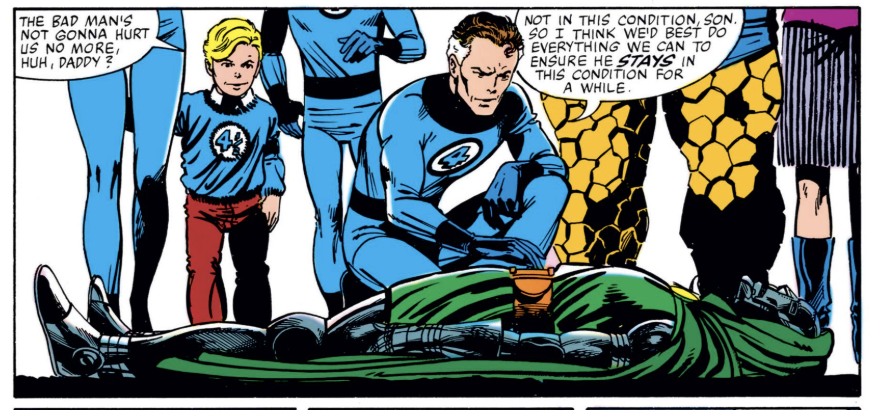
The team regains their powers and in their tiny forms, manage to use the power of Doom’s armor to reverse the clone process, reverting them back to their true bodies. Doom, however, is transferred into his Prof. Vaughn body where he is hounded by a mini-Phillip Masters and the tiny robots that inhabit the town.
The second story is a retelling of Fantastic Four 5, but with Herbie in place of the Human Torch. More on that later.
What’s going on here?
This is a big issue in more ways then one. It’s billed as the Fantastic Four’s 20th Anniversary issue, and contains both a 40-page-long original story by John Byrne, as well as an unpublished, and somewhat peculiar, 14-page Stan Lee / Jack Kirby story.
There’s a lot to discuss, so strap in!
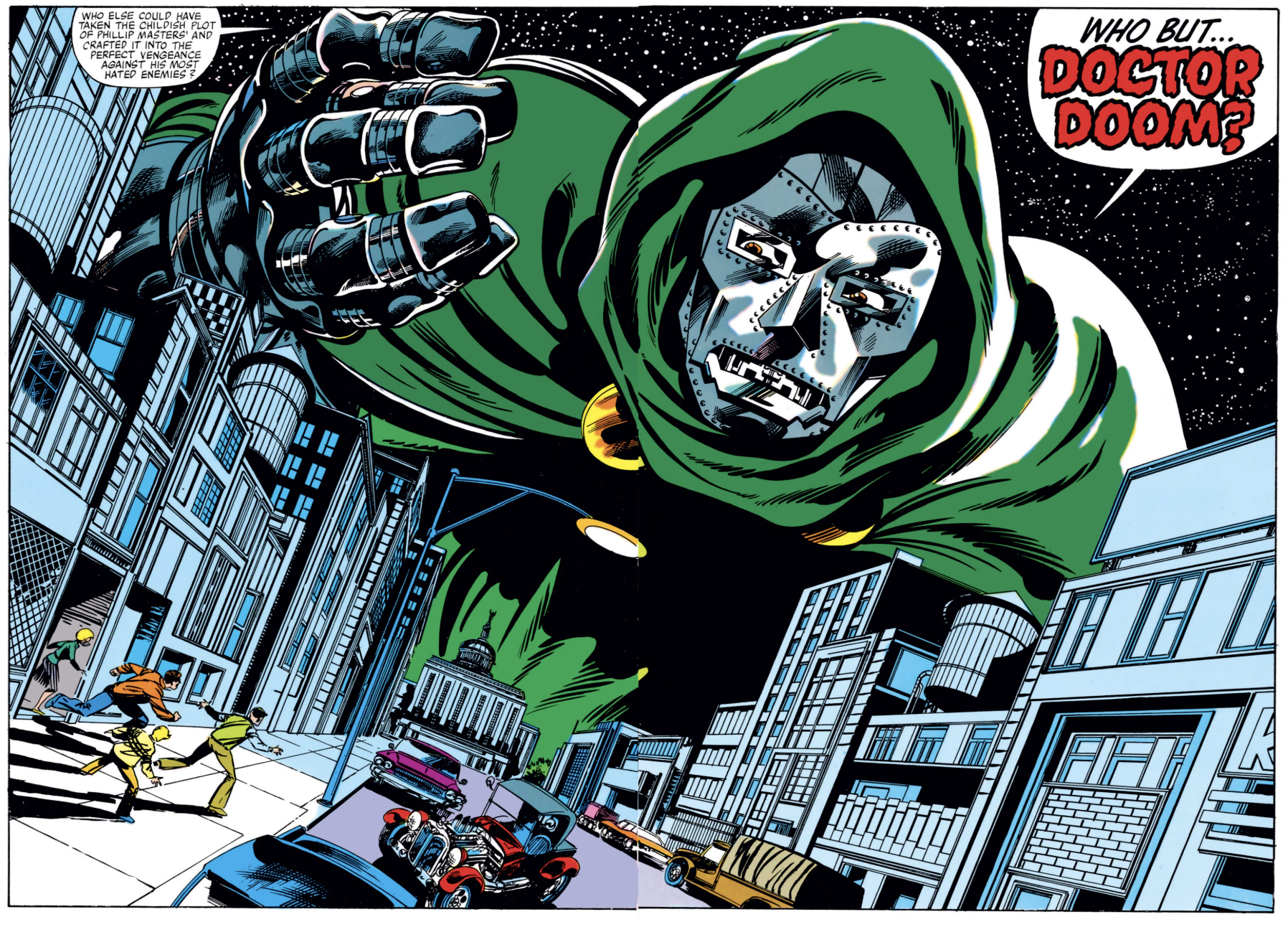
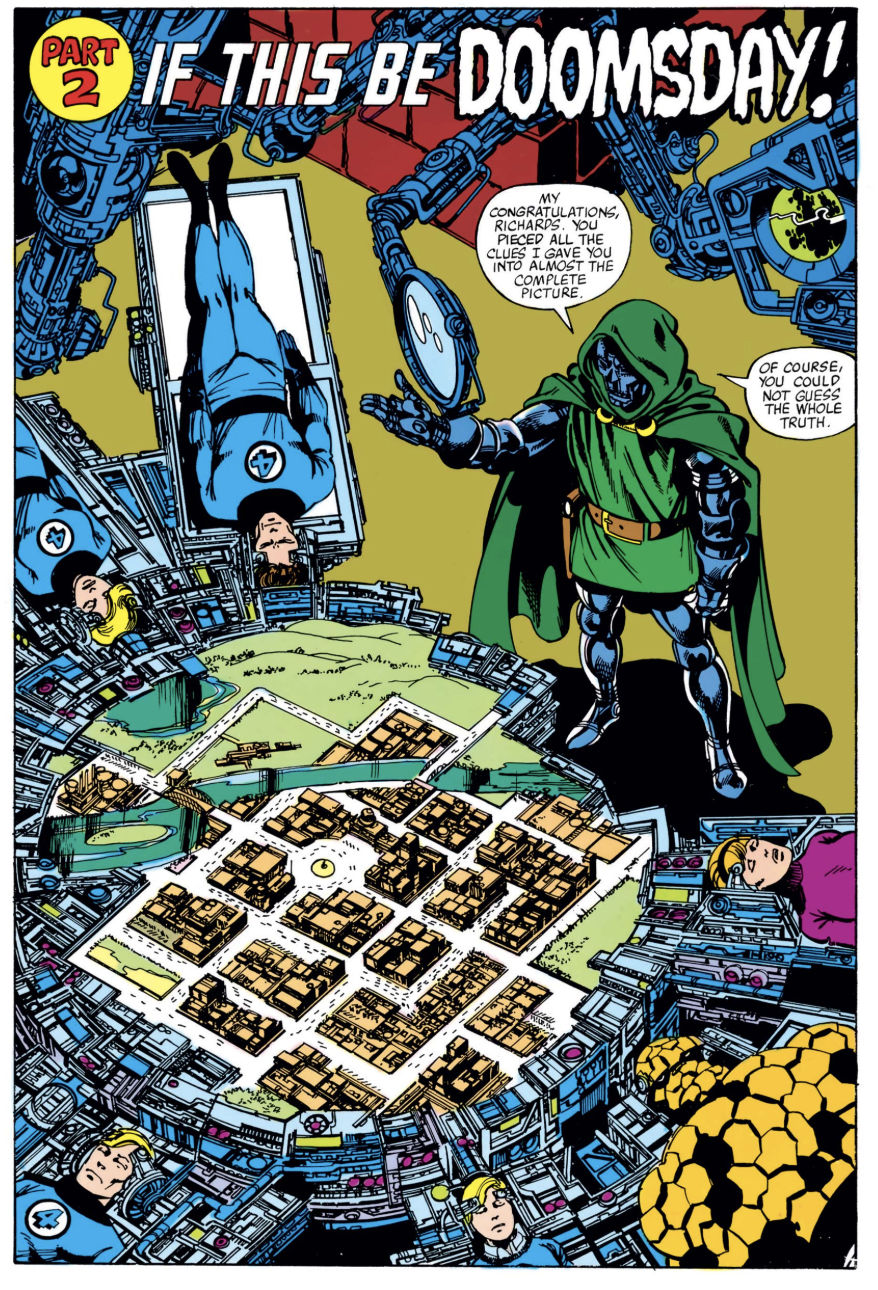
First up, we need to recognize that “Terror in a Tiny Town” may be the single-greatest one-and-done Fantastic Four story ever written. There are better multi-issue arcs (although not many), but I can think of only a handful of single-issue stories that might equal this one. It succeeds on many levels: It serves as an introduction to the Fantastic Four (and give Byrne a chance to tell their origin story, Rashomon style). It is a compelling exploration of the team’s interpersonal dynamics, particularly between Reed and Ben. It’s a triumphant return of Dr. Doom, who has been missing in the FF comic since issue 200 (although he did appear in the X-Men and Dazzler, of all places). And most importantly, it’s just a powerful story that holds our attention, from its beginning with a slow boil that build suspense to an all-time-great double-page-splash reveal, before pivoting to a fun, action comic. It then pays off with a solid ending and amusing denouement. It’s not a perfect comic, but it’s pretty close.
Unfortunately, the shadow of Jack Kirby’s dispute with Marvel also hangs over this issue. By the early 1980s, Kirby was basically out of the comics business, and busy creating television cartoons in Hollywood. His anger with Marvel — particularly over the company’s refusal to return to him his original art — hadn’t boiled over into the public yet, but he was frustrated in 1981 enough to pencil Steve Gerber’s Destroyer Duck, a project skewering Marvel that Gerber created to fund his own lawsuit against Marvel.
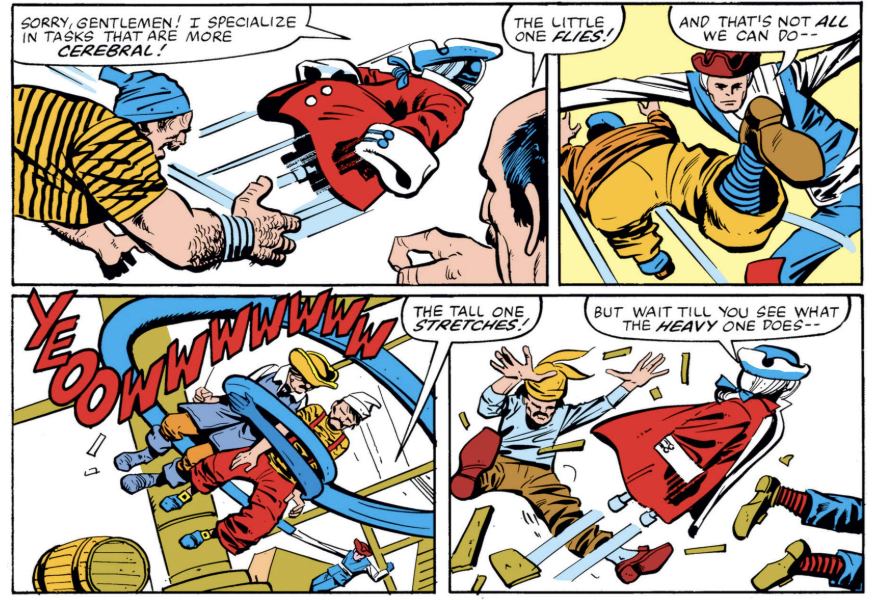
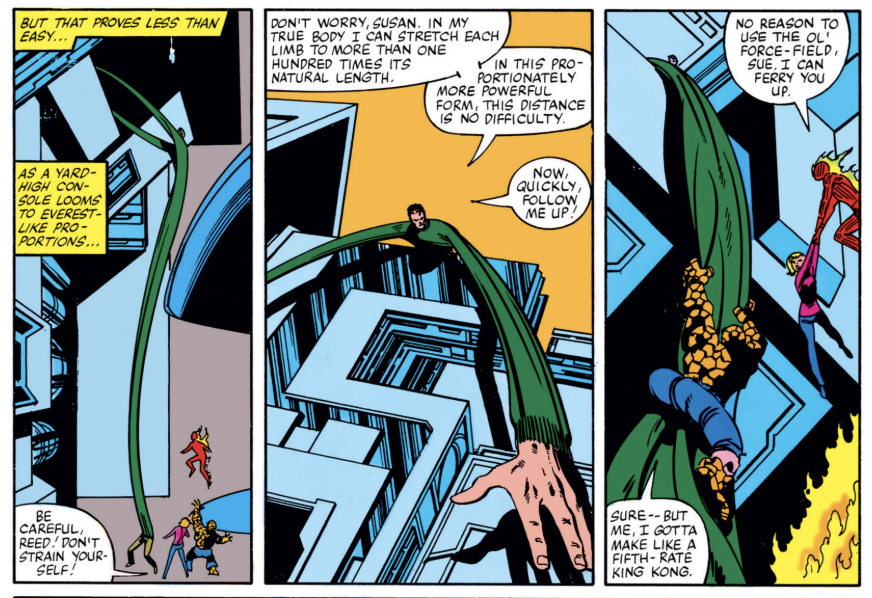
The second story in FF 236 is a strange retelling of Fantastic Four 5 that Kirby apparently drew for the 1978 FF cartoon, and so it substitutes Herbie for the Human Torch (since the rights to a Human Torch cartoon had been sold previously). FF 5 is significant mainly because of the debut of Dr. Doom; as a story it’s otherwise pretty silly. The story is inked by a panoply of former FF inkers who worked with Kirby, notably minus Steve Ditko. It’s fun to see the inkers’ different styles, but beyond that, the story is really just a curiosity.
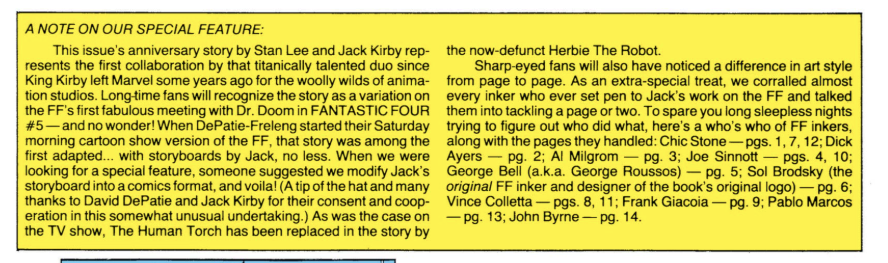
An editor’s note thanks Kirby for his “consent and cooperation,” while Kirby said he was never consulted or compensated. Here is the editorial note:
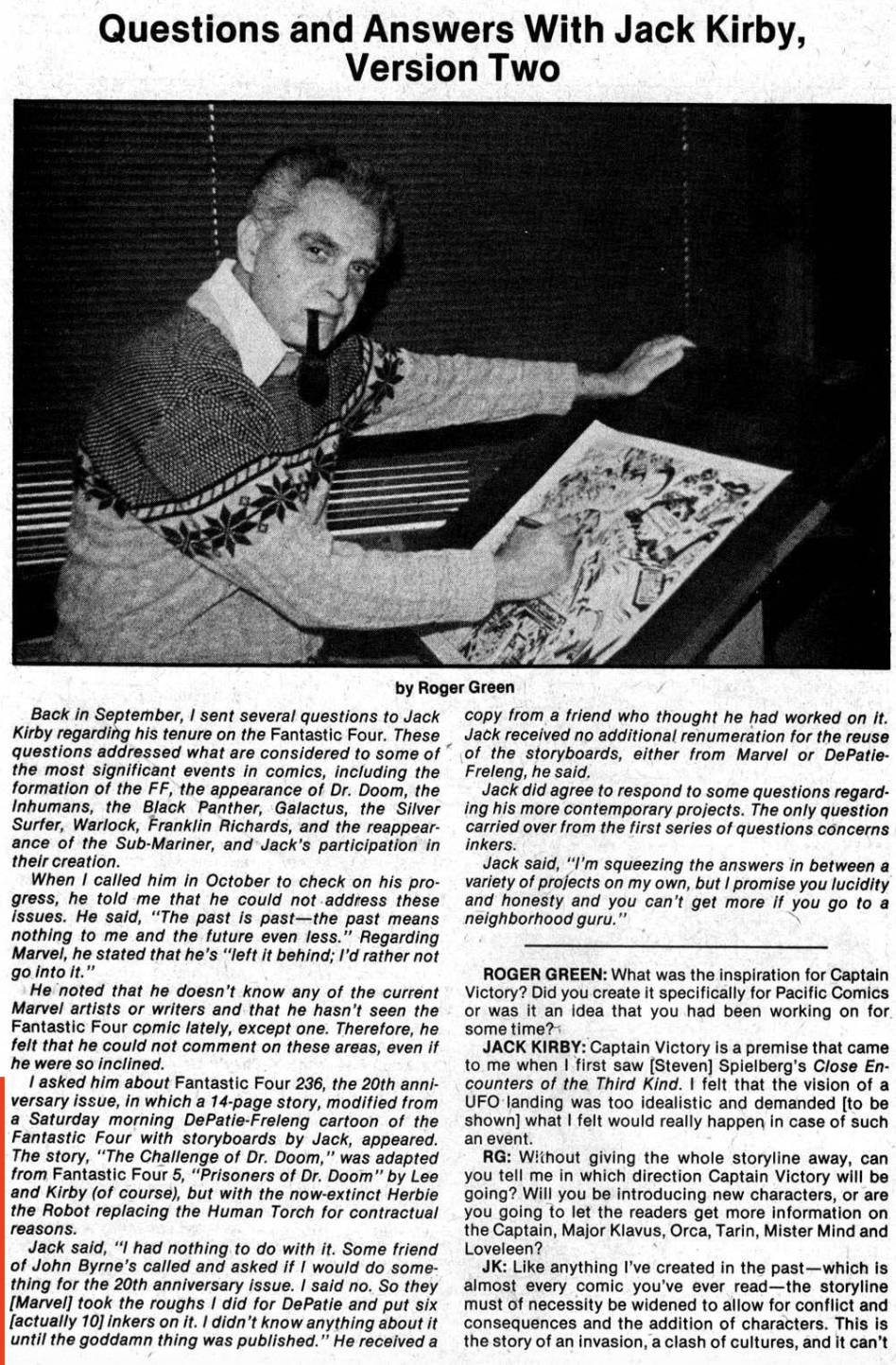
And here is an interview with Kirby (from FantaCo’s FF Chronicles, an independent publication) where he discusses FF 236:
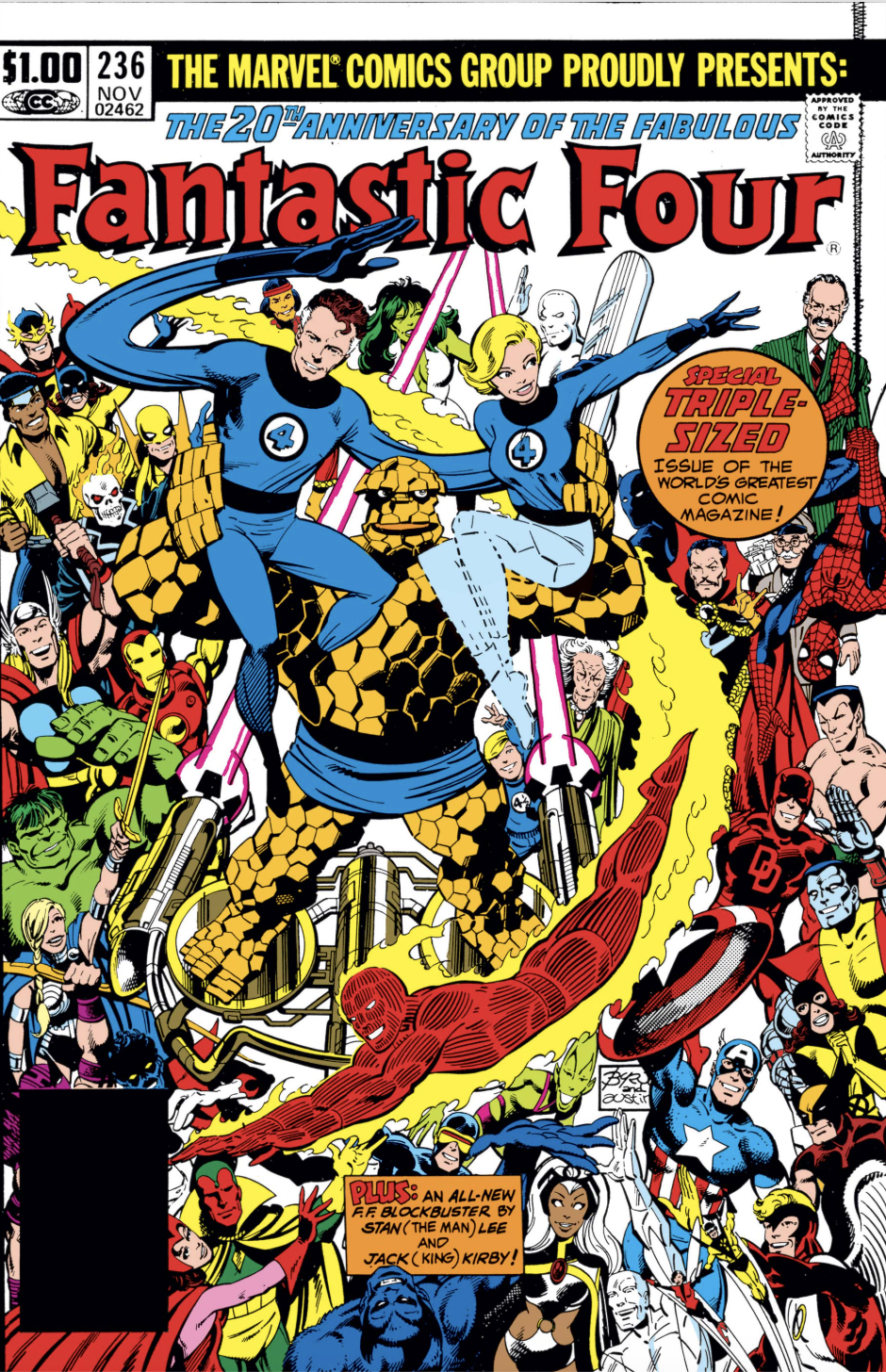
Then there’s the cover controversy. Stan Lee appears on the cover, in the upper right, wearing a green jacket (and his face was actually pencilled by Marie Severin). According to some tellings, Byrne intended Kirby to join him, but editor-in-chief Jim Shooter ordered him erased, and so he was replaced by the circular blurb. But other maintain there is no evidence of Kirby in Byrne’s original art, and therefore he was never going to be on the cover. I have no idea what to make of it, just that Marvel’s treatment of Kirby was a great stain on the company and its leadership.
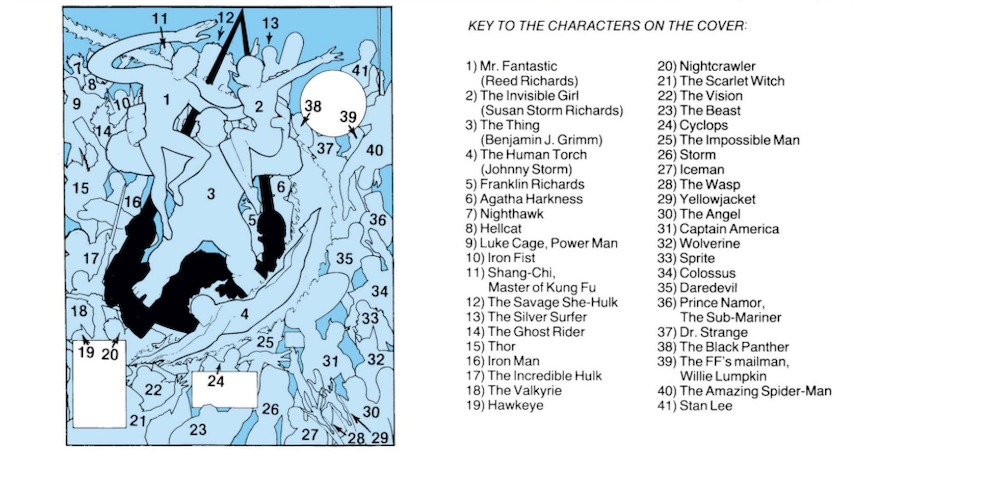
About that cover: Byrne apparently loved to draw this sort of group shot, and there’s a number of them by him that appeared over the years. This is one is particularly fun, and also includes some characters that today seem mighty obscure. (Nighthawk? Hellcat?) The editor’s included a reference guide, although any real comic reader in 1981 wouldn’t have needed one:
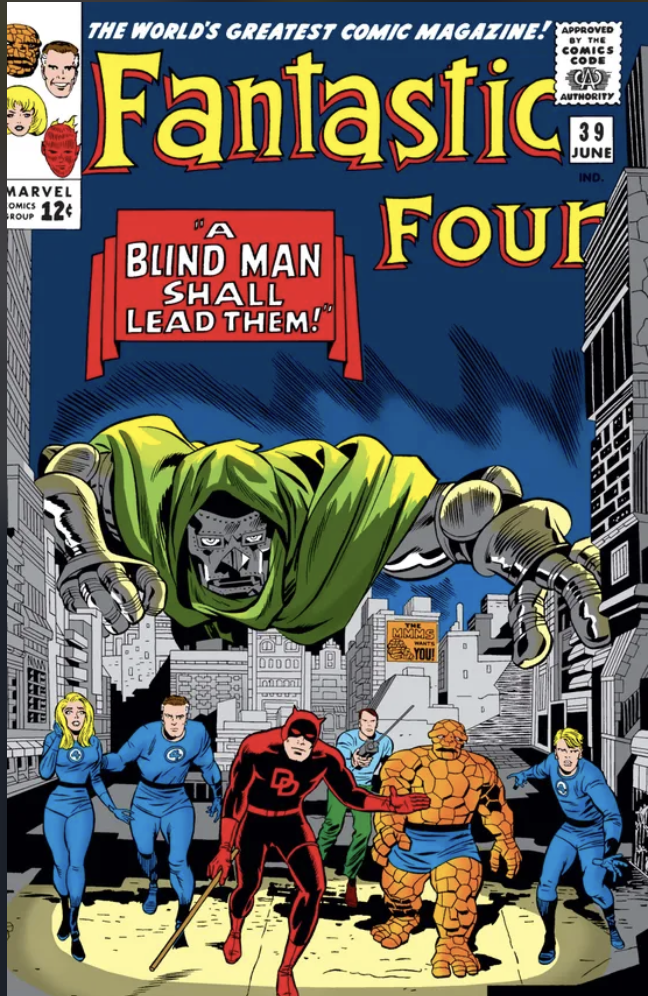
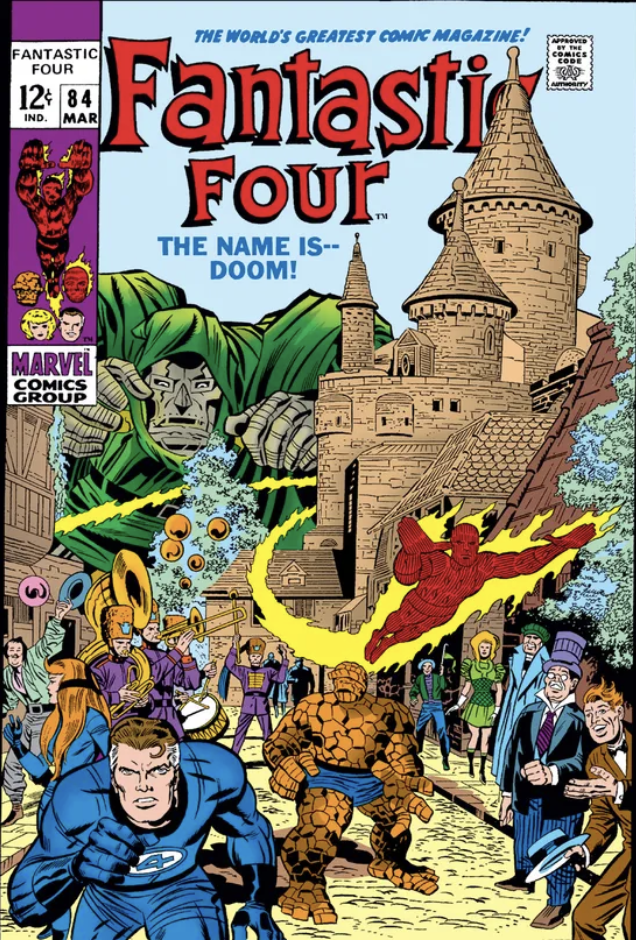
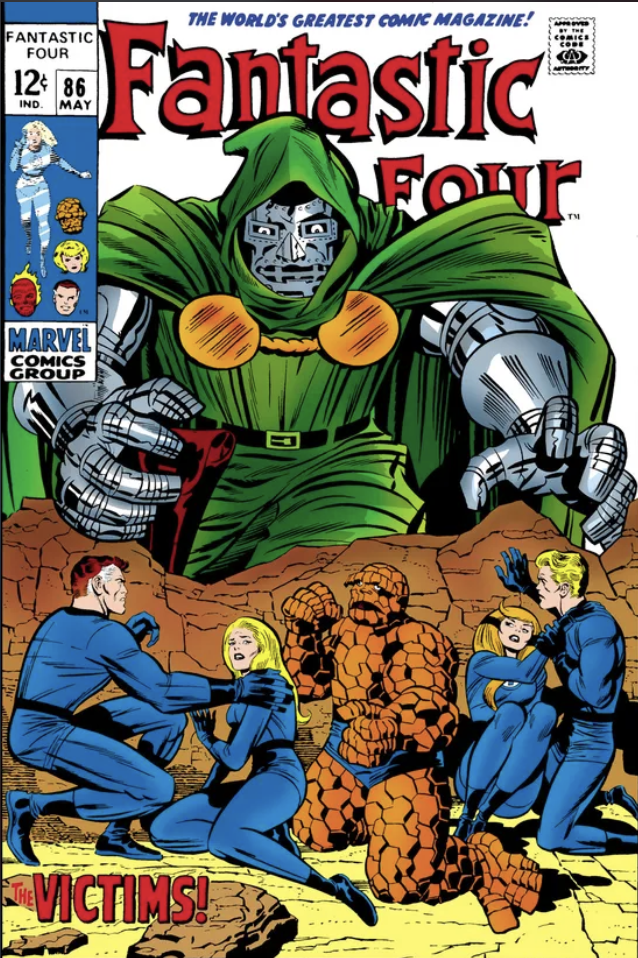
Lastly, the Doom double-page splash feels like both an homage and inside joke by Byrne. Kirby had drawn a handful of covers where a giant Doom loomed over the FF, illustrating a metaphor. Here, Byrne made the figurative literal.
What I liked
There are lots of little gems in Byrne’s imaginary Liddleville, such as the rocky orange motif outside Ben’s tavern.
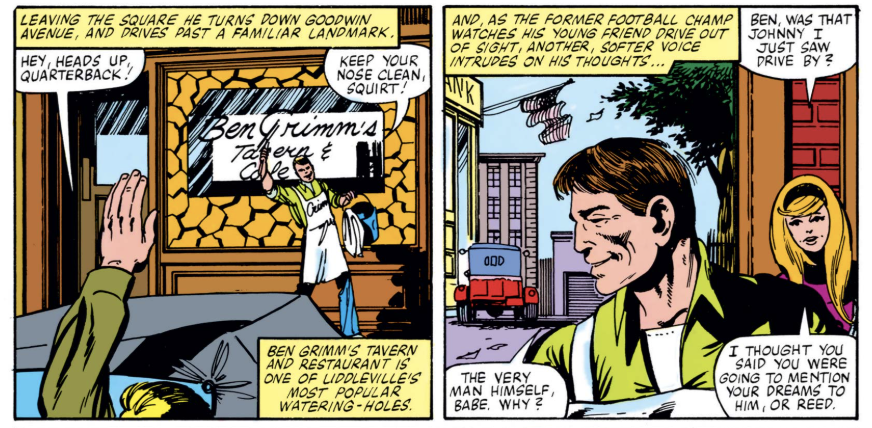
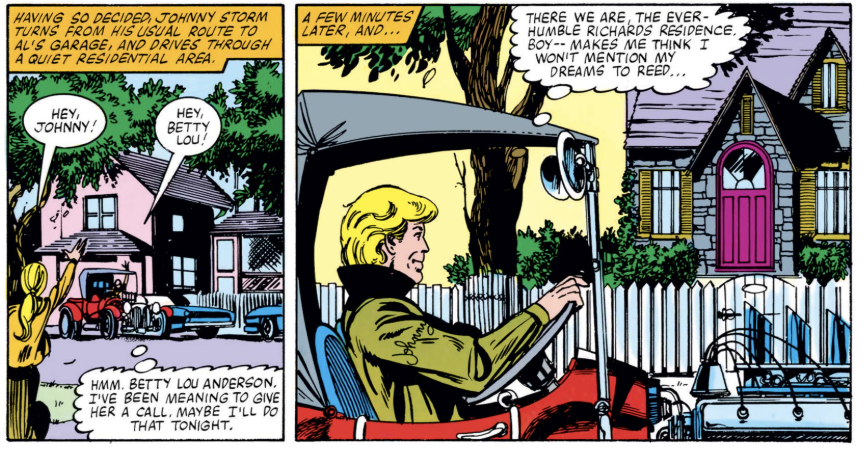
Or the scenes of Johnny tooling around in a hot rod.
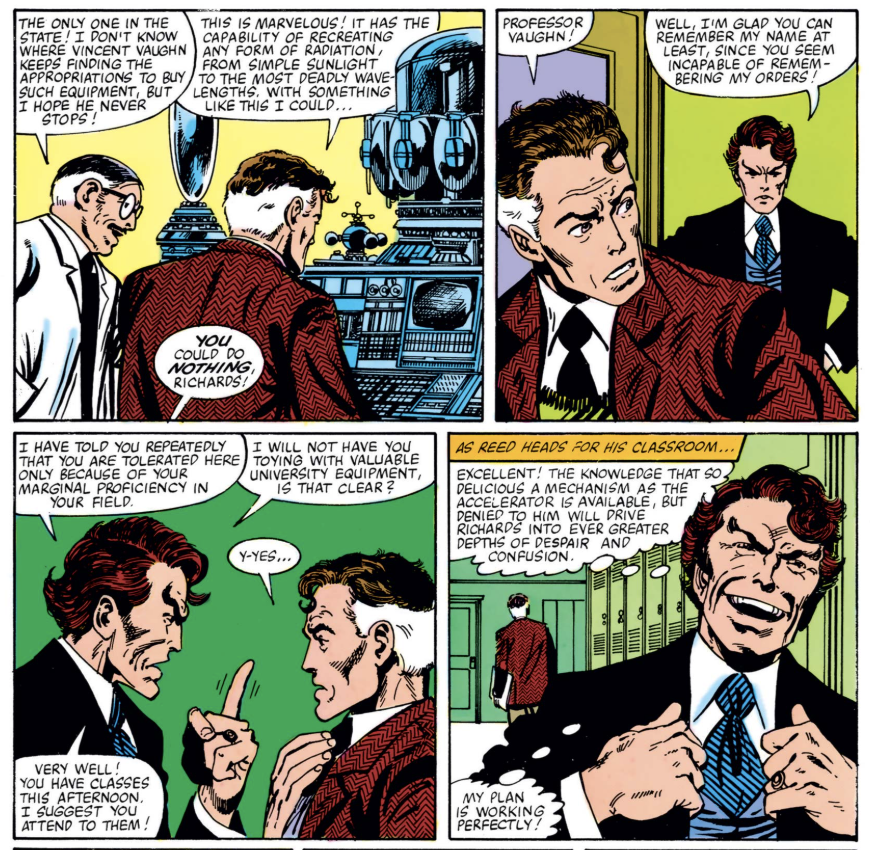
Or Doom tormenting Reed as Vaughn.
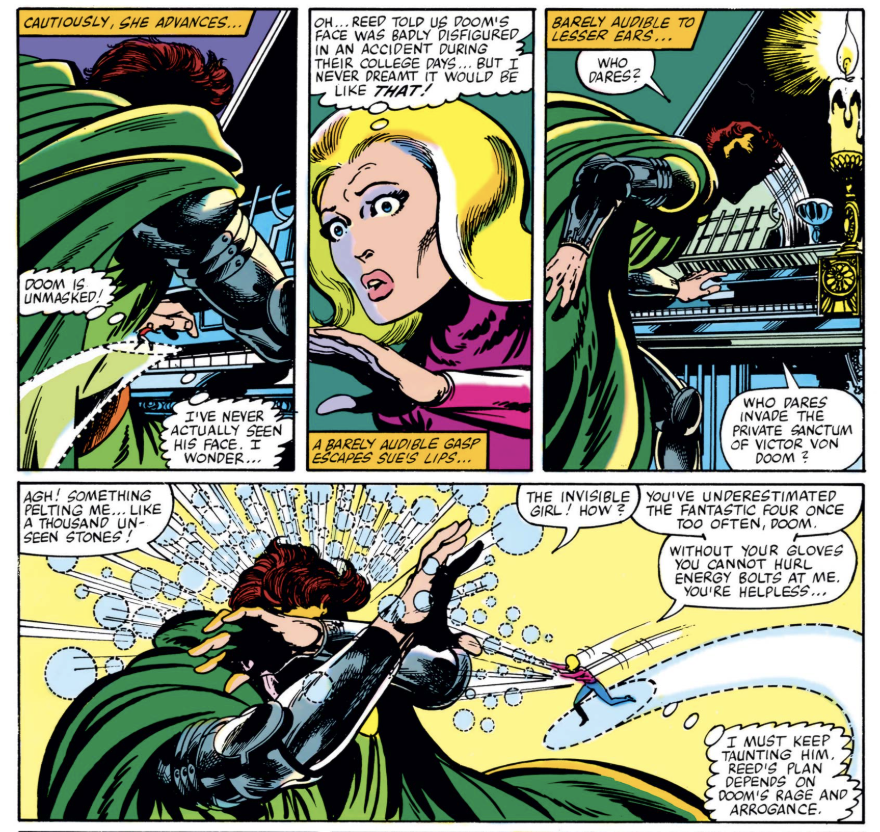
There’s also some powerful moments, too, like this scene where Sue sneaks up on Doom:
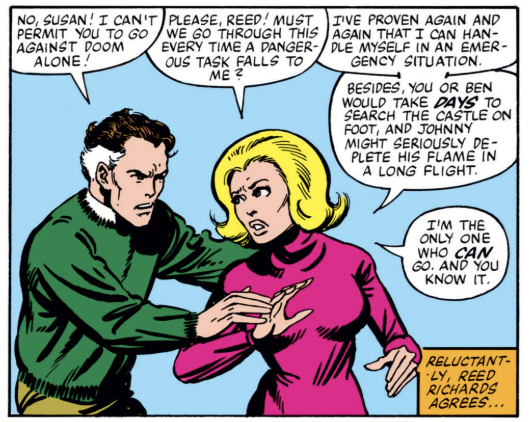
In a related development, I liked that Sue tells Reed to stuff it:
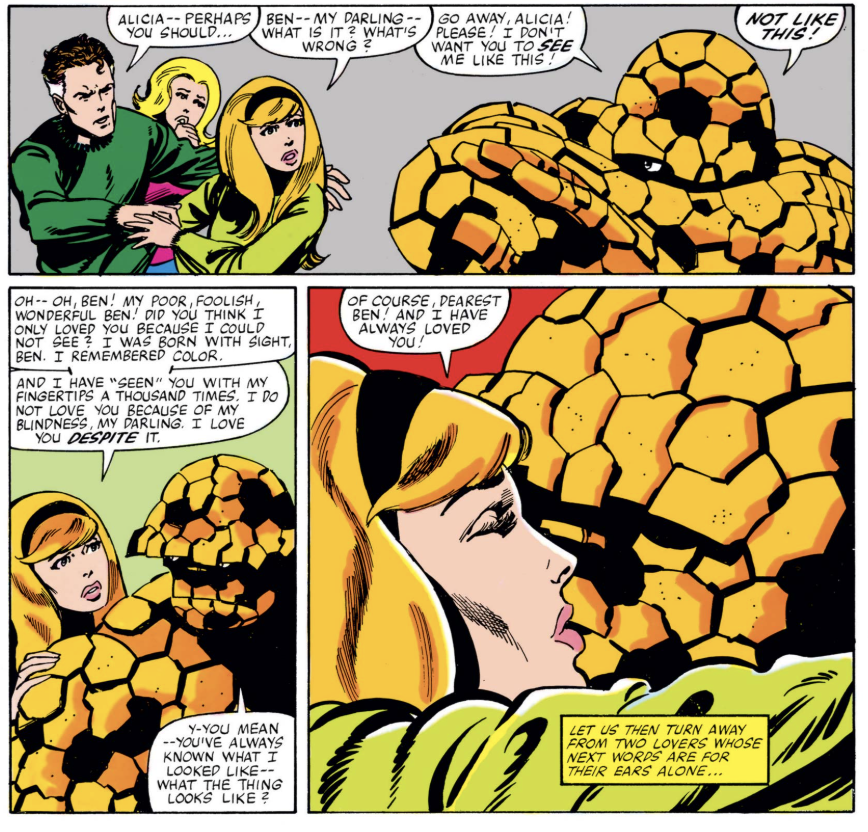
And this poignant scene with Ben and Alicia, touching on a theme Byrne will return to often:
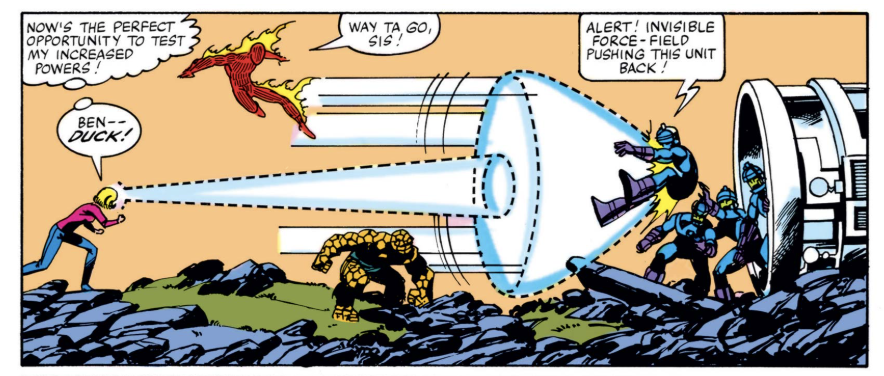
I liked how Byrne is expanding Sue’s powers, making her an offensive threat:
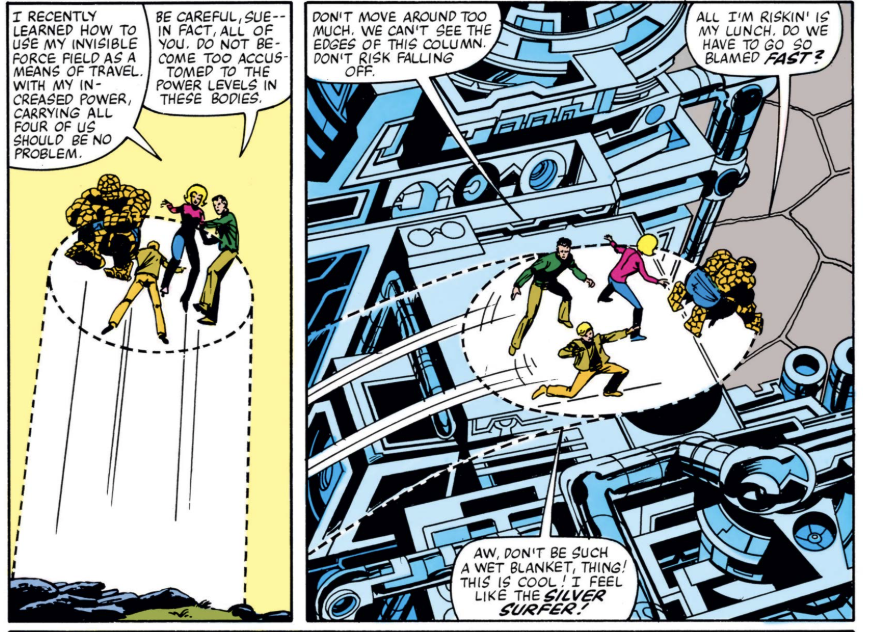
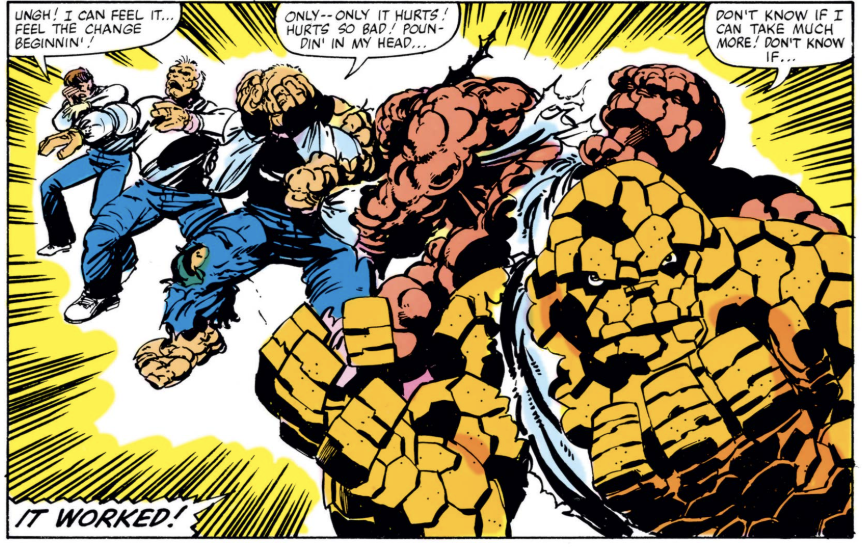
And I liked these Byrne panels (although the whole issue looks great):
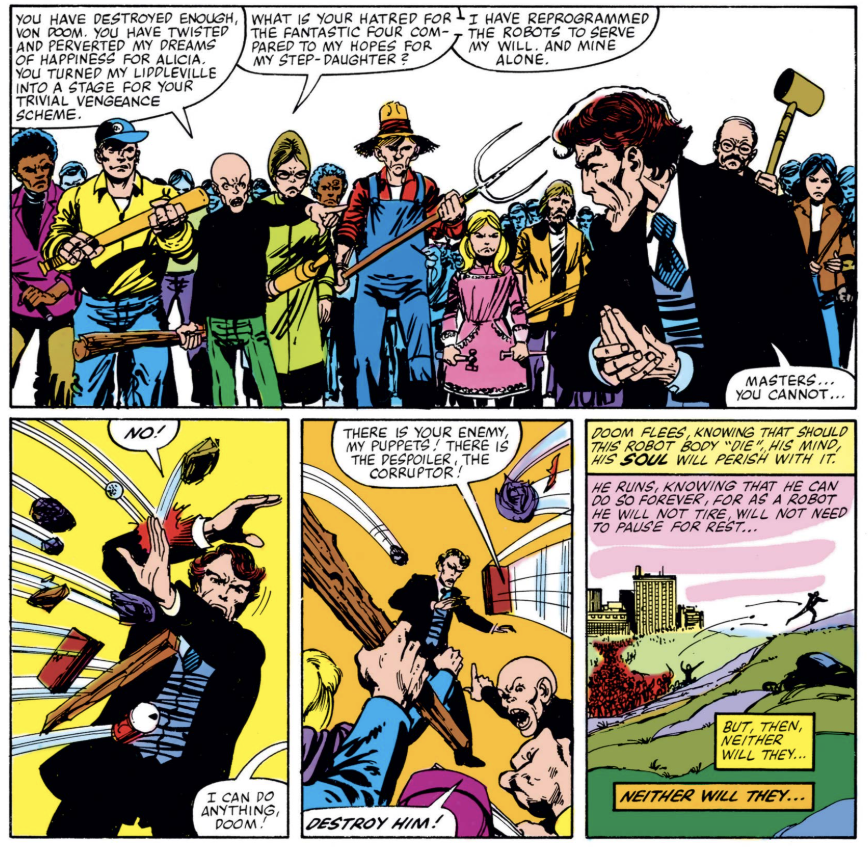
Lastly, I liked how Doom got his comeuppance from the Puppet Master:
What I didn’t like
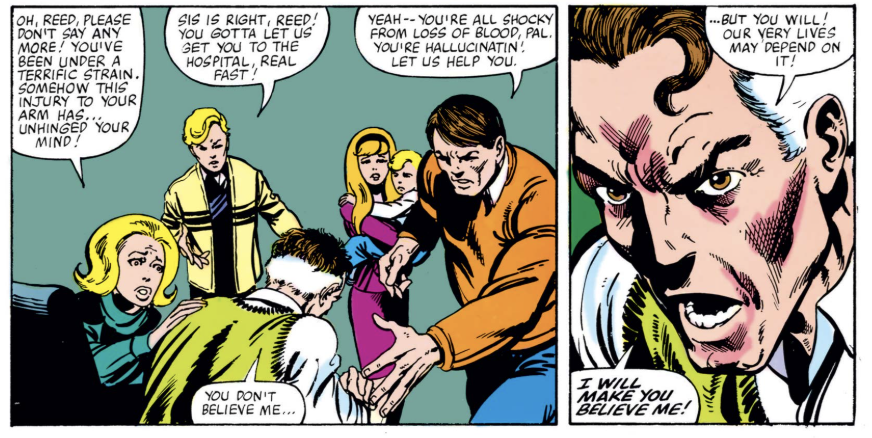
There are a few places where Byrne’s writing falters, or promises more than it delivers. This is a pretty dramatic build up for a scene we never see (by the next panel the FF believe him):
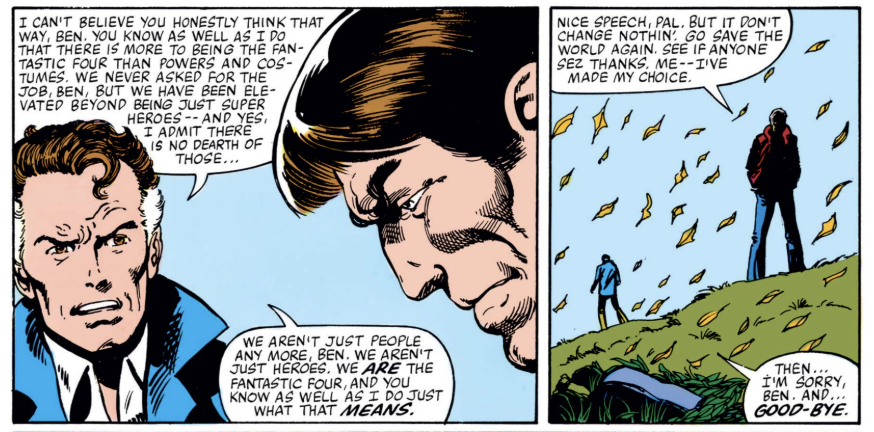
And in this sequence, where Ben is debating whether to leave Liddleville, Reed tells Ben he knows what being in the FF means, but he fails to tell us what it means.
Also I’m willing to accept Reed found some way to transfer the FF’s powers into these tiny robot versions of themselves, but that doesn’t explain why tiny-Reed’s clothes stretch as well.
Overall
A masterpiece

