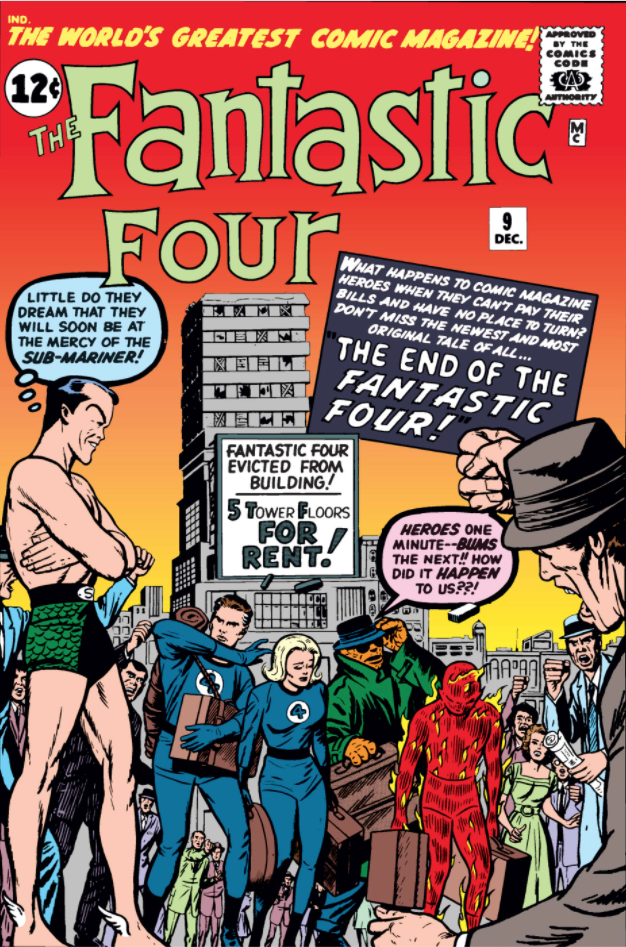
Fantastic Four 9
“The End of the Fantastic Four”
Published: Sept. 1962
Plot: Stan Lee and Jack Kirby
Script: Lee
Pencils: Kirby
Inks: Dick Ayers
Lettering: Artie Simek
Cover: Kirby & Ayers
Synopsis
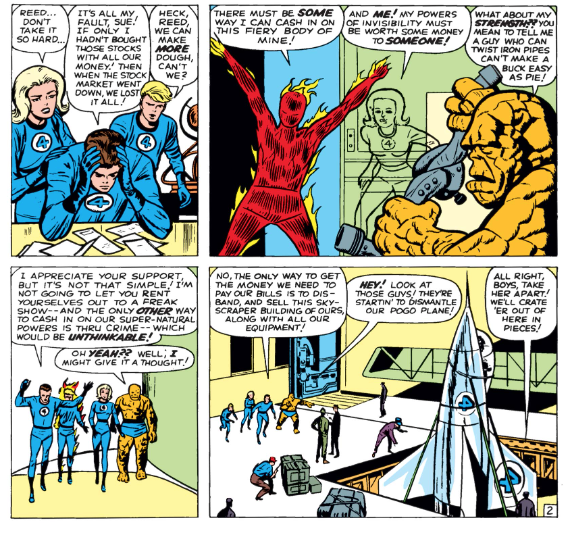
The Fantastic Four are broke, a result of Reed’s poor stock market investments, and are selling their (not-yet-named) headquarters and equipment. The Sub-Mariner gets wind of their plight and launches a plan. The team is offered $1 million to appear in a movie, which they eagerly accept only to later discover is being bankrolled by Namor.
After dining with the Invisible Girl, Namor escorts the team’s male members to their “scenes” which are actually ambushes. Mr. Fantastic fights the mythical Cyclops, the Human Torch must escape a fire-proof African tribe (really) and the Thing battles Namor himself. Finally, after Sue rejects Namor’s marriage proposal, they fight before the rest of the team arrives to save her. She brokers a peace that lets the Sub-Mariner leave unharmed in exchange for the team receiving their money and appearing in the movie.
This is the first issue with proper credits (previous issues were signed by Stan and Jack), so inker Dick Ayers and letterer Artie Simek finally get their names in print.
What’s going on here?
This bizarre story strains credulity at every turn. From Reed losing everything in the stock market to Namor financing a movie studio (“SM Studios”) to the ridiculous traps he sets for the team, the comic feels more like an absurdist Julie Schwartz-era Superman that the science-fiction infused Fantastic Four. There’s very little here that advances the characters and their story, save for a brief reappearance of Alicia Masters and her deepening friendship with Ben. The issue is otherwise a madcap lark, or a waste of time, depending on your appetite for this sort of thing.
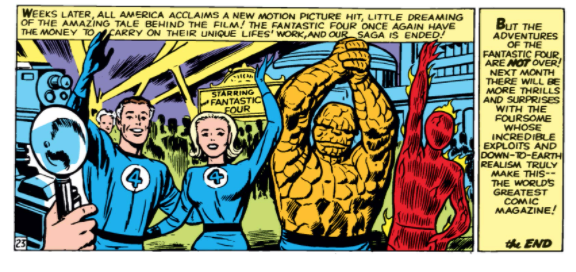
Without any indication of irony, the issue ends with the FF as movie stars and Stan boasting about the FF’s “down-to-earth realism.”
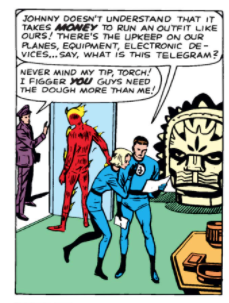
About the Fantastic Four’s money troubles
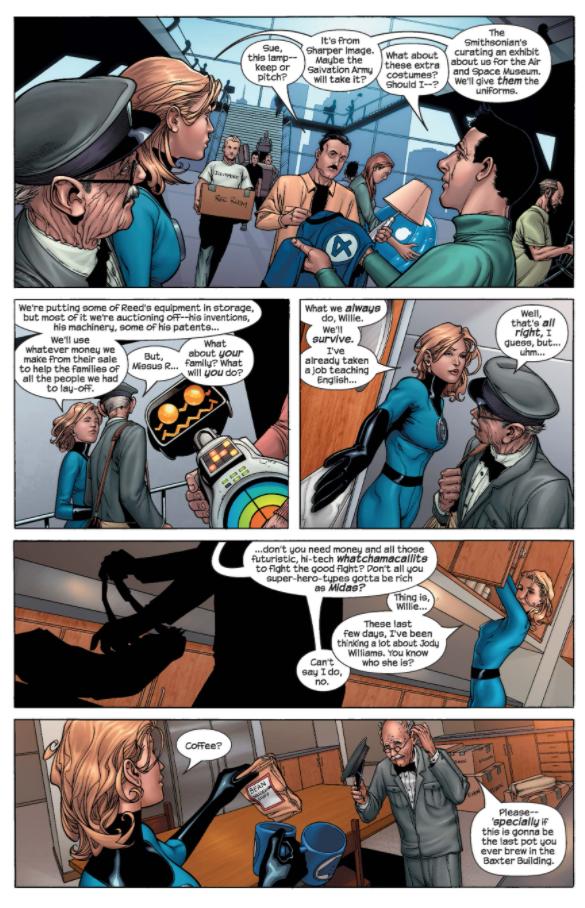
This is the first time a FF story hinges on the Fantastic Four’s financial woes or business dealings, but it won’t be the last. Over the years the FF have either owned their building and had trouble with their tenants, or been tenants and had issues with their landlord. They are also evicted again, the plot device in 2004’s Marvel Knights 4 (an FF book aimed at older readers). In that story, the City of New York refuses to indemnify the team for damages caused by their battles, and demands the Baxter Building as compensation. The FF then find “real” jobs: Sue teaches high school english, Reed performs IT support at a law firm, Johnny tries to become a firefighter and Ben works construction. The premise was as far-fetched in 2004 as it was in 1962.
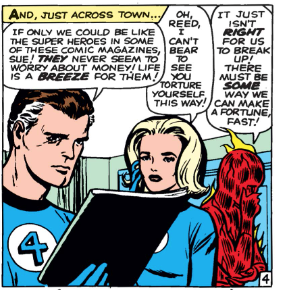
To move the plot of FF 9 along, Stan and Jack suggest that Reed is both a terrible and reckless investor, but also that he has no capacity to imagine jobs for the FF outside of freak shows and crime. Again, none of this makes much sense if we are to accept Reed is one of the world’s smartest men.
Hooray for Hollywood
Jack includes some movie stars cameos as the FF go show biz.
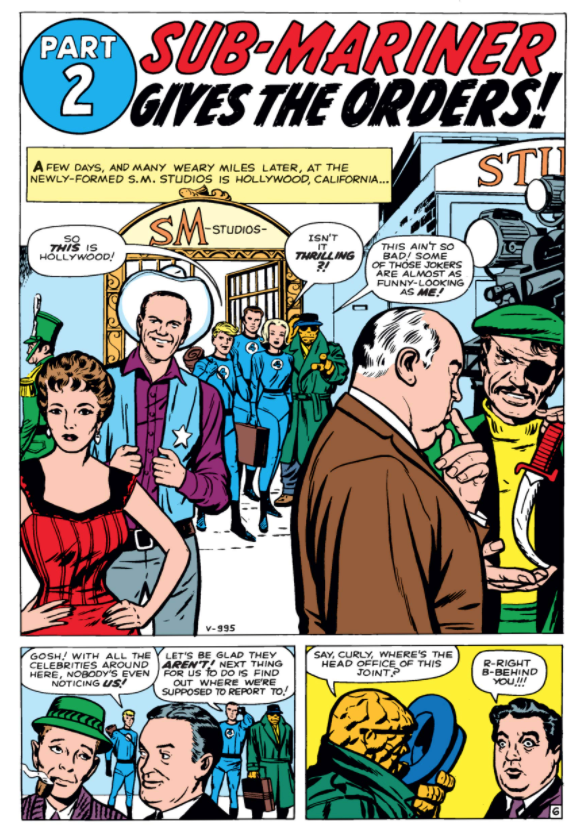
I recognized Bing Crosby, Bob Hope and Alfred Hitchcock. The internet tells me John Wayne, Amanda Blake, Charles Bronson and Jack Benny are also there. Dean Martin appears in another panel.
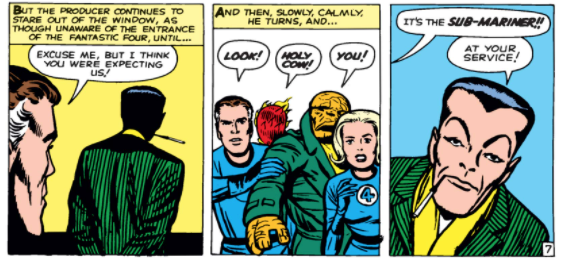
The Sub-Mariner goes all-in as a movie mogul, which includes dressing like Noel Coward. Namor hangs on to his movie studio and it shows up years later, renamed Imperial Pictures.
That escalated quickly
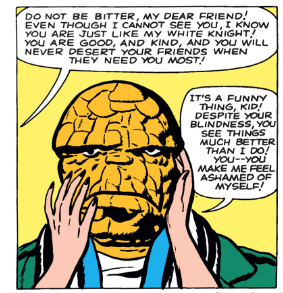
After her introduction last issue, Alicia Masters is now established as Ben’s “dear friend.” Expect to see a lot more panels like this one:
Speaking of Ben
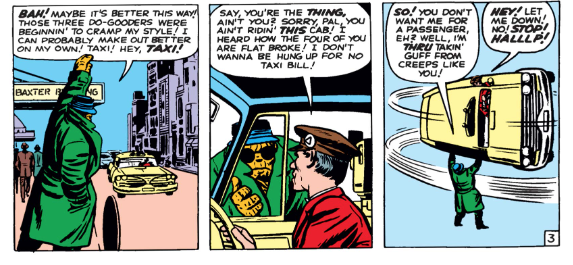
Ben has trouble catching a cab, not because he’s an orange monster but because the cabbie thinks he’ll stiff him on the fare.
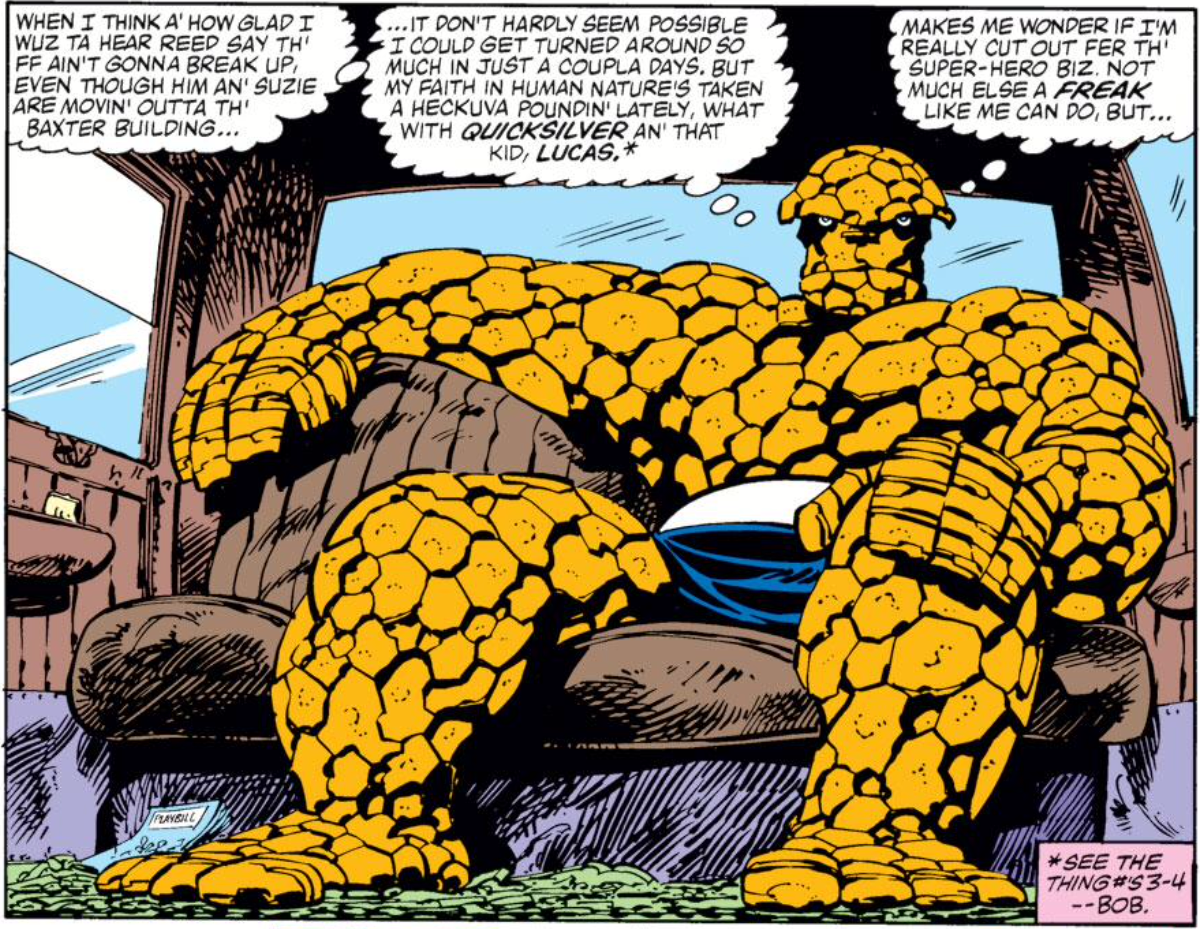
Which is as a good an excuse as any to drop in this panel of Ben taking a cab by John Byrne, one of my favorite drawings of the Thing (and which also echoes the Ben’s concern about getting a job in the real world).
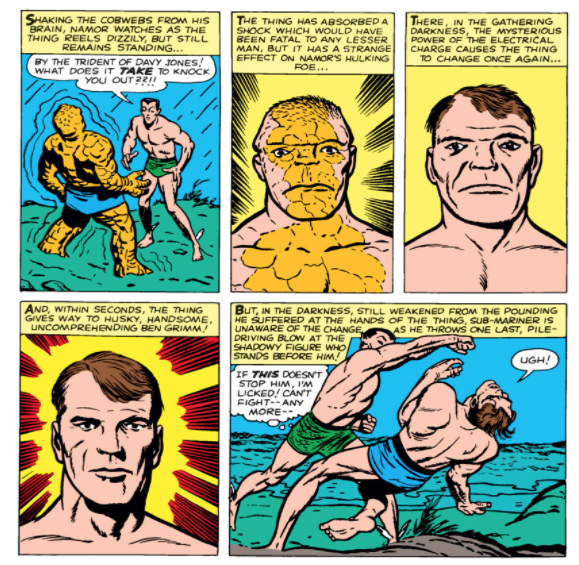
Also in issue 9, Ben also transforms to human form after being struck by lightning while fighting Namor (it’s a sign of how bananas this issue is that it’s the first time I’ve mentioned this totally random event). This marks at least the third time the Thing has reverted to human form in the first nine issues.
And now for my next trick
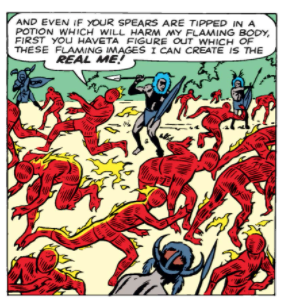
The Human Torch creates flame duplicates, I think for the first time
Call my decorator
Another interesting interior design choice for the FF.
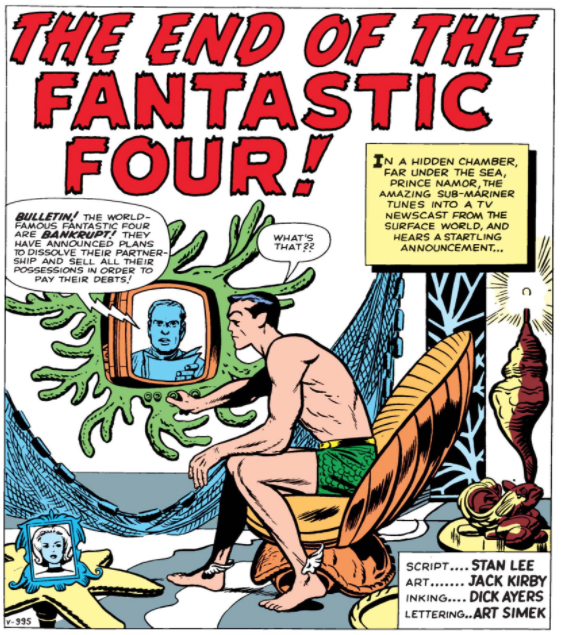
Meanwhile, Namor enjoys the latest in underwater TV technology. Note the photo of Sue.
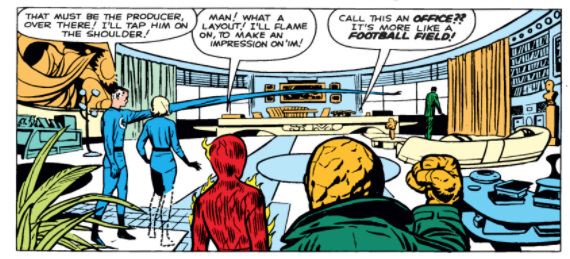
Namor’s Hollywood office is pretty groovy, too
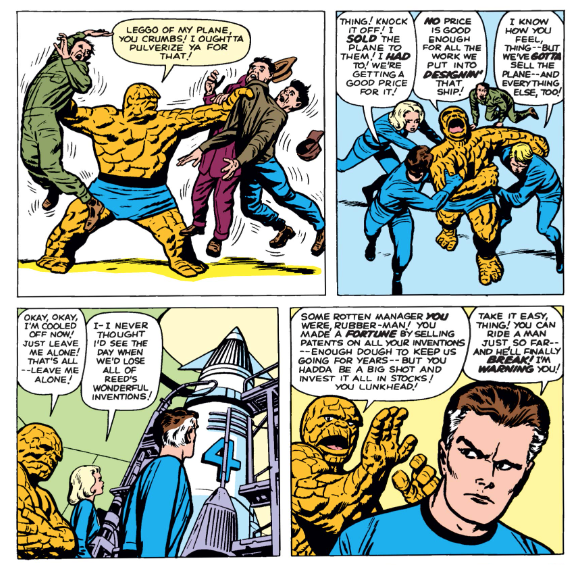
They’re fighting again
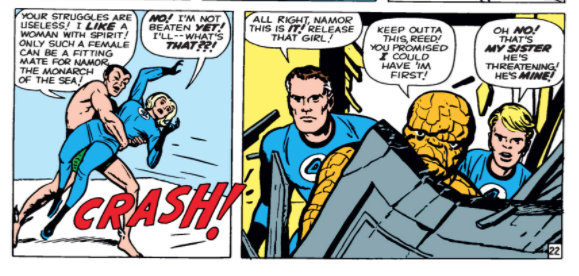
The sexist sixties
Sue needs to be rescued, because of course she does.
Kirby Krackle
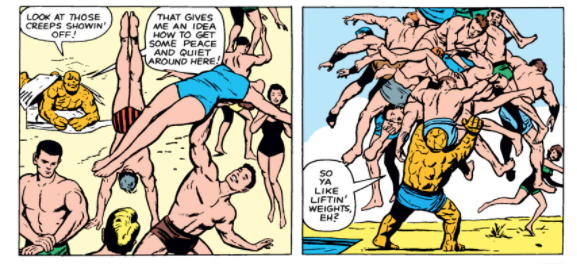
More good stuff from the King as the Thing fights some beach bullies, a la Charles Atlas
Let’s talk about us
Reed is reading comics, and takes a meta-swipe at the lack of such prosaic concerns as money in (presumably) DC’s comics
For sale
A mint (9.8) copy of FF 9 is worth $14,000, quite a bit less than the previous issue.
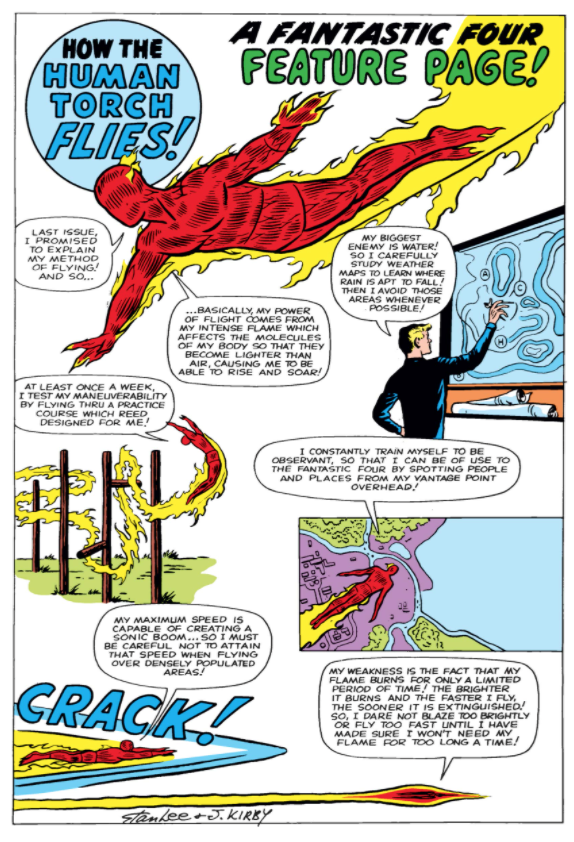
Pin up
Part 2 of the Human Torch’s explainer pin ups. He seems lot more level headed here than in actual stories.
Next issue: The return of Dr. Doom!


Pingback: “The World’s Greatest Comic Magazine” Fantastic Four No. 27 | Percival Henry
Pingback: “The World’s Greatest Comic Magazine!” Fantastic Four No. 195 | Percival Henry: The Fantastic Four and more