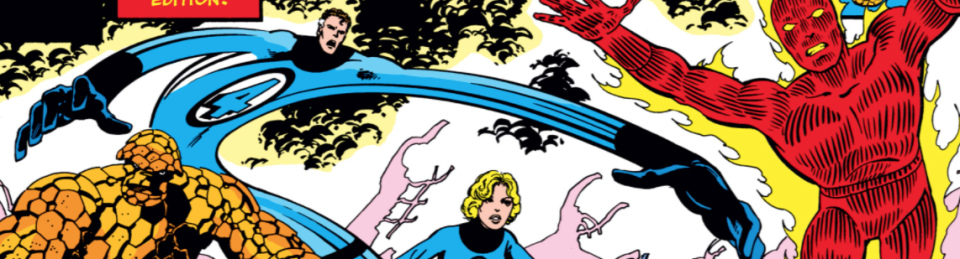
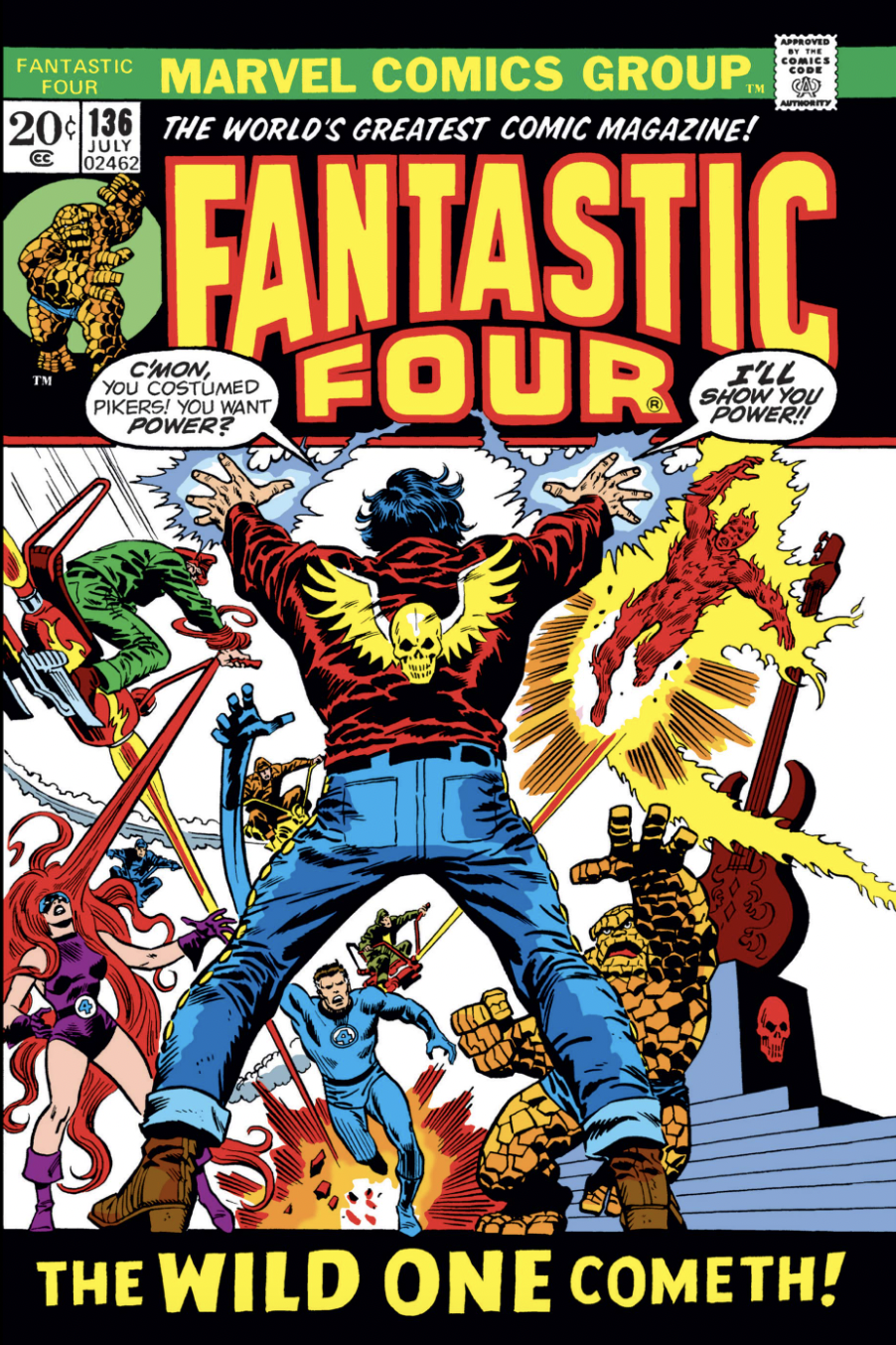
Fantastic Four 136
“Rock Around the Cosmos!”
Published April 1973
Plot: Roy Thomas
Script: Gerry Conway
Breakdowns: John Buscema
Finishes: Joe Sinnott
Letters: Artie Simek
Colors: Stan Goldberg
Editor: Thomas
Cover: Buscema and Frank Giacoia
Synopsis
In the aftermath of last issue’s battle, Slugger Johnson, a henchman of Gregory Godfrey who mourns for his lost youth in the 1950s, is imbued with atomic powers and identified by the Shaper of Worlds as a vehicle for its reality-bending visions. The Fantastic Four are then thrust into what appears to be a parallel universe oriented around 1950s culture, where youths battle elders, with Mr. Fantastic and the Thing on side and Medusa and the Human Torch on the other. Both pairs are brainwashed by rival camps and dispatched to retrieve a weapon from a mysterious figure called The Brain.
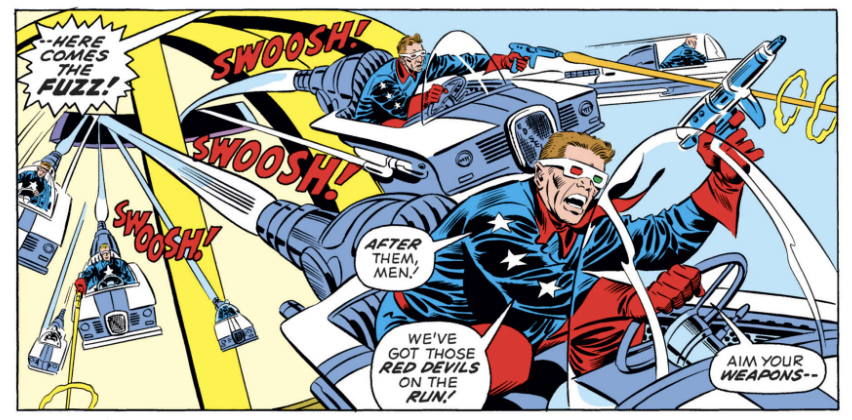
What’s going on here?
Where to begin? If there was proof that this was now Roy Thomas’s comic, look no further. A cynic might say this is what happens when a comic’s writer is also the editor, because this issue desperately needed editing.
At its core, FF 136 is a multiverse story, a speciality of Thomas’s, who gave us the Squadron Supreme in the Avengers two years earlier, and who later would spin DC’s Earth 2 Justice Society into a multi-generational epic. Here, the alternate earth aspect isn’t mentioned explicitly, but it’s pretty obvious what’s going on, and the tag line previewing the next issue makes it clear.
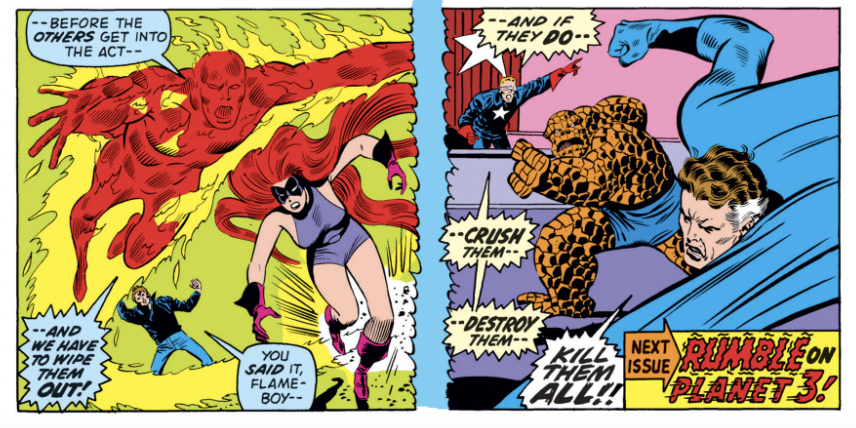
The defining nature of this alternate earth is that it is rooted in a caricatured vision of the 1950s, one drawn from the psyche for Slugger Johnson by the Shaper of Worlds. As we learn early on, Slugger really loved the 50s:
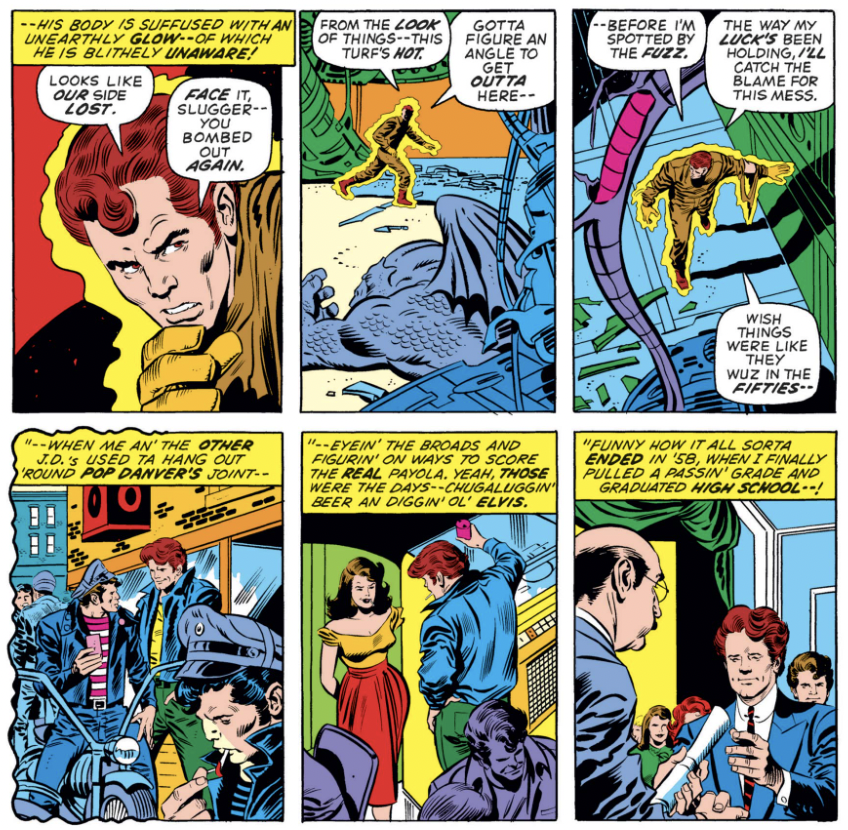
This painful 50s slang permeates the issue, and it seems clear that scripter Gerry Conway, who was born in 1952, learned it from watching B-movies on TV. What’s less clear is what lesson Thomas, who plotted the comics, wants us to draw from this extremely clumsy story. Is Thomas, born in 1940 and raised in the 50s, nostalgic for the era and its romanticized narratives of bikers rebellion and the birth of rock n’ roll? Or is he poking fun of that nostalgia? Is he using the excesses of the 50s youth culture to critique 60s youth culture? Is he hip? or is he square? Unfortunately, the story is so muddled it’s hard to know.
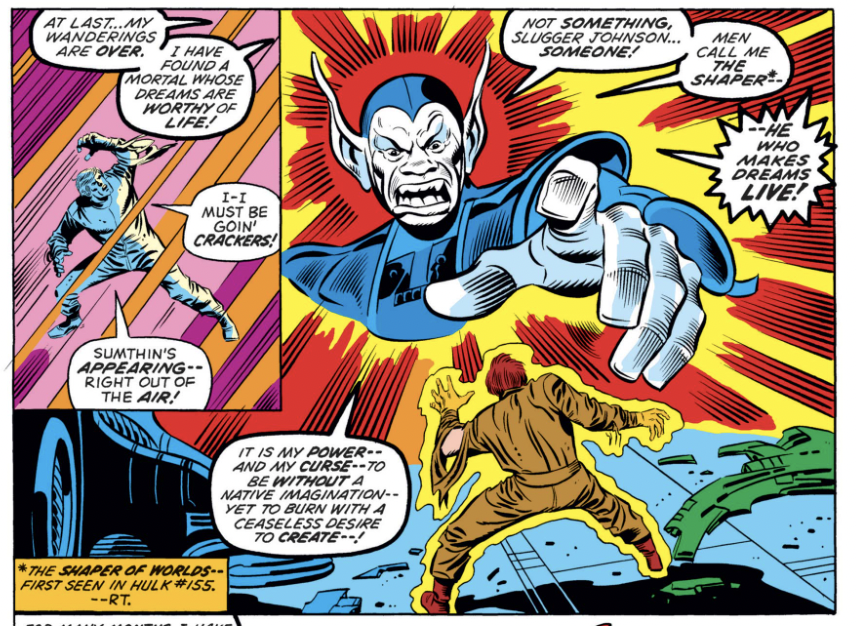
The presence of the Shaper of World’s is further evidence of the Thomasian drift of the Fantastic Four. Initially a Hulk villain created by Archie Goodwin the previous year, the Shaper is a Cosmic Cube brought to life by the Skrulls, and a character I know almost nothing about prior to this issue. But Thomas loves to play with characters from other comics, the more obscure the better, and a reality-bending cosmic creature is right up his alley. It’s fair to say Stan never would have dreamt of using it.
What I liked
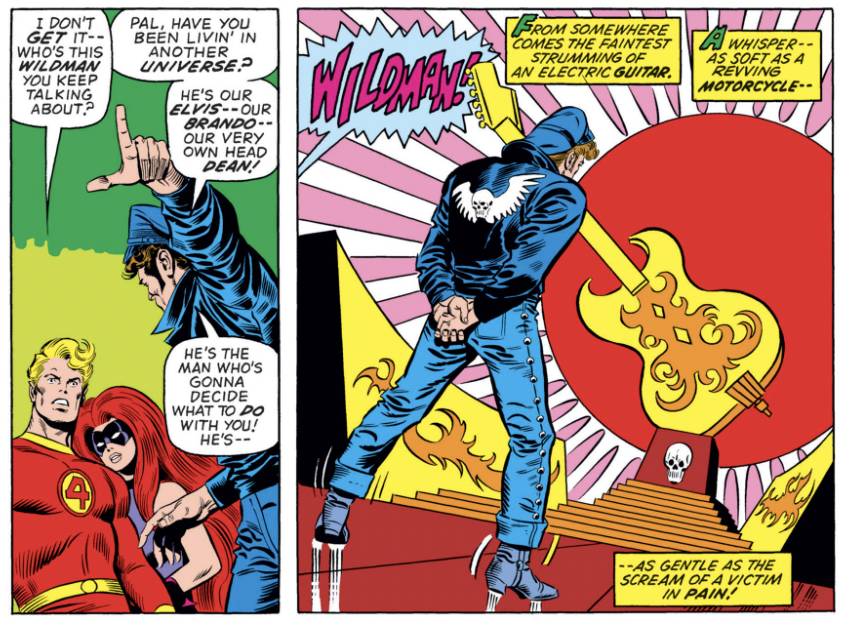
Despite its extreme goofiness, I admired how hard Thomas and Conway lean into the 50s conceit. Here is Slugger Johnson reintroduced as Wildman:
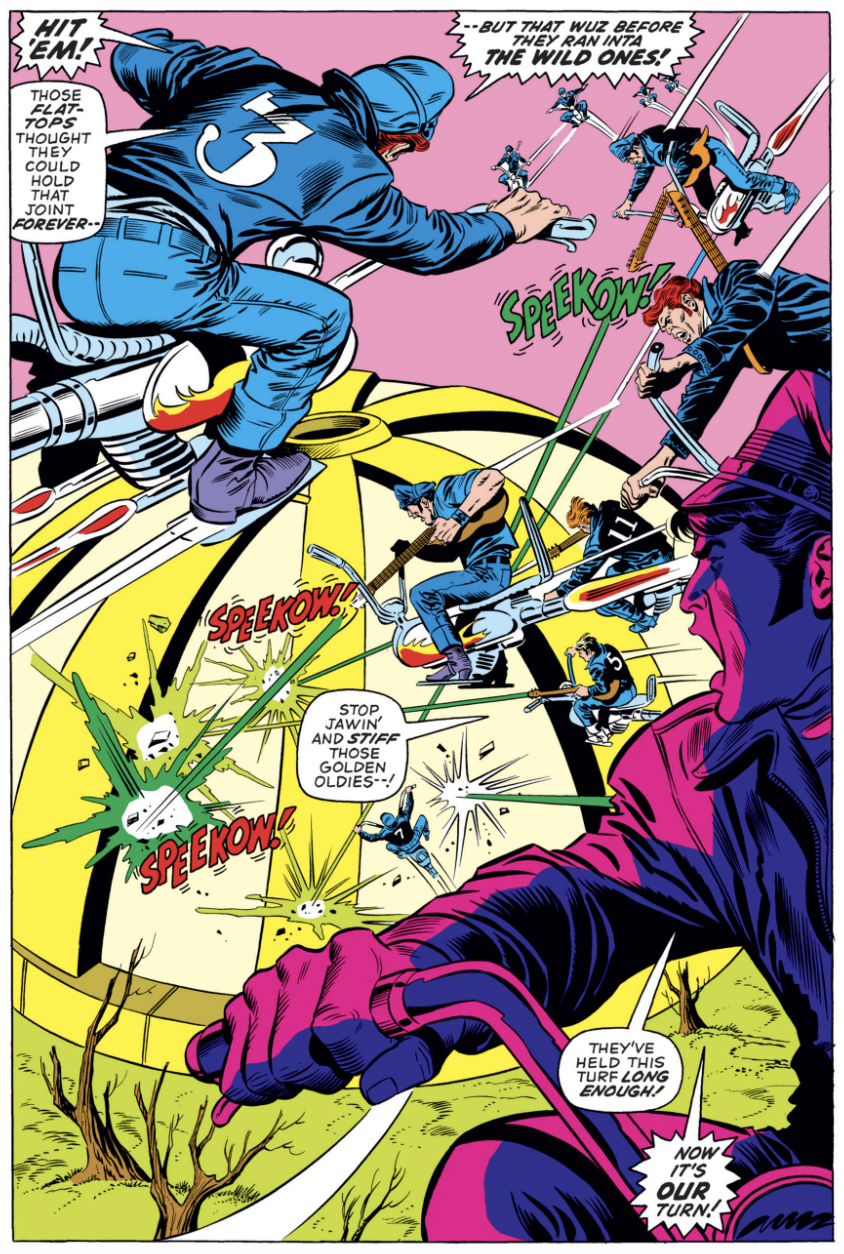
Buscema and Sinnott also deliver a socko splash page that introduces the 50s gangsters:
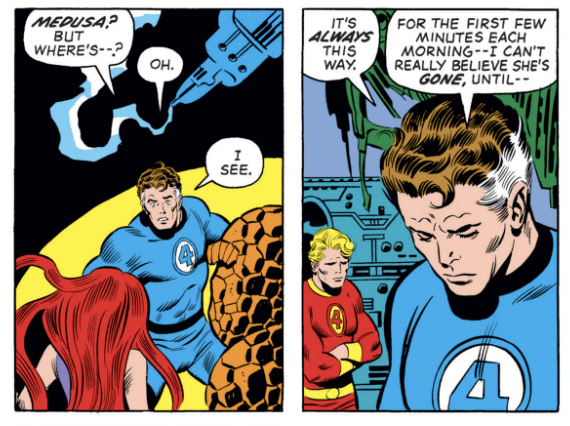
And before the silliness started, there was a touching sequence where Reed awakens from unconsciousness and imagines Medusa is Sue:
What I didn’t like
If it wasn’t obvious, this comic is an incoherent mess. The alternate earth plot is confusing and it’s never clear if Johnny and Medusa are in their right minds or not, since they attack Ben and Reed, then seem their normal selves. (And why is Medusa on the side of the youths? She’s a married Inhuman queen, hardly a teenager.)
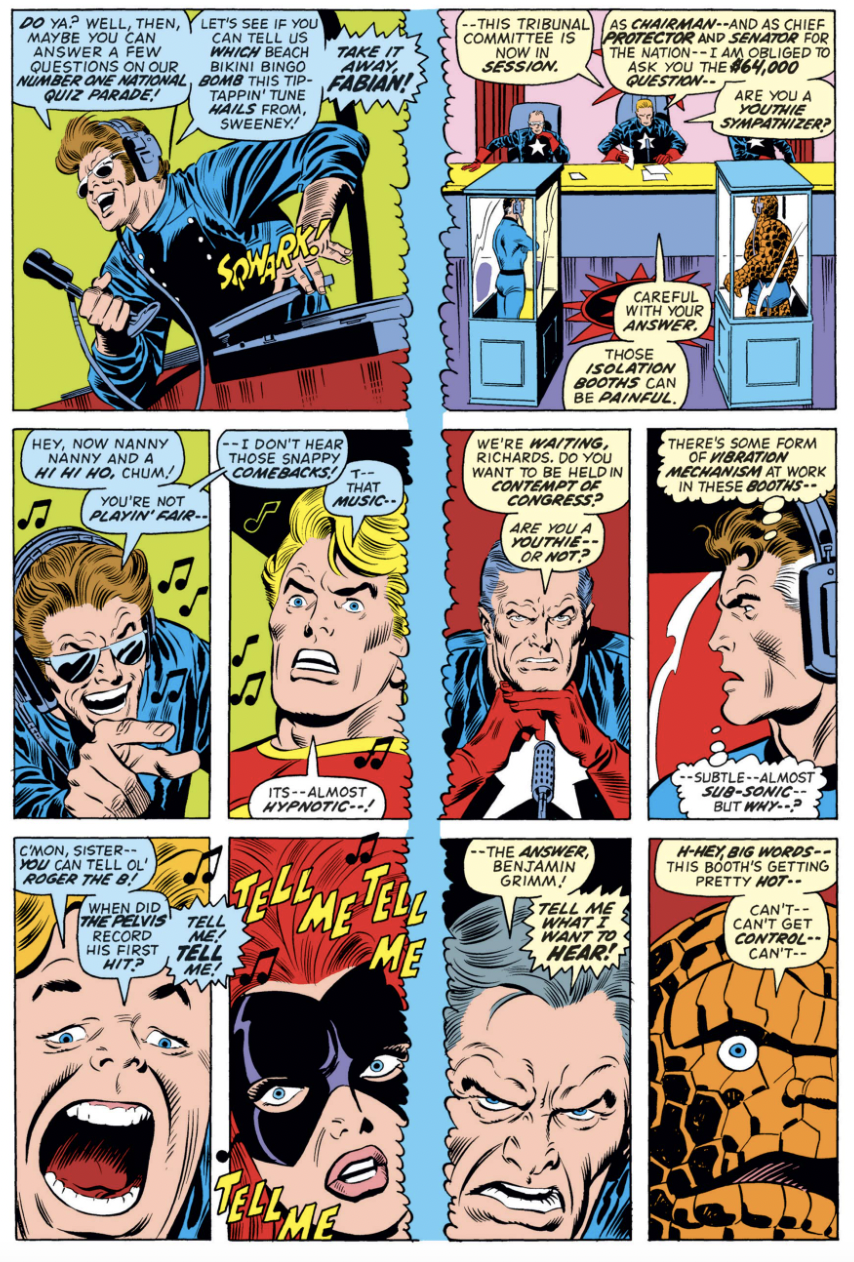
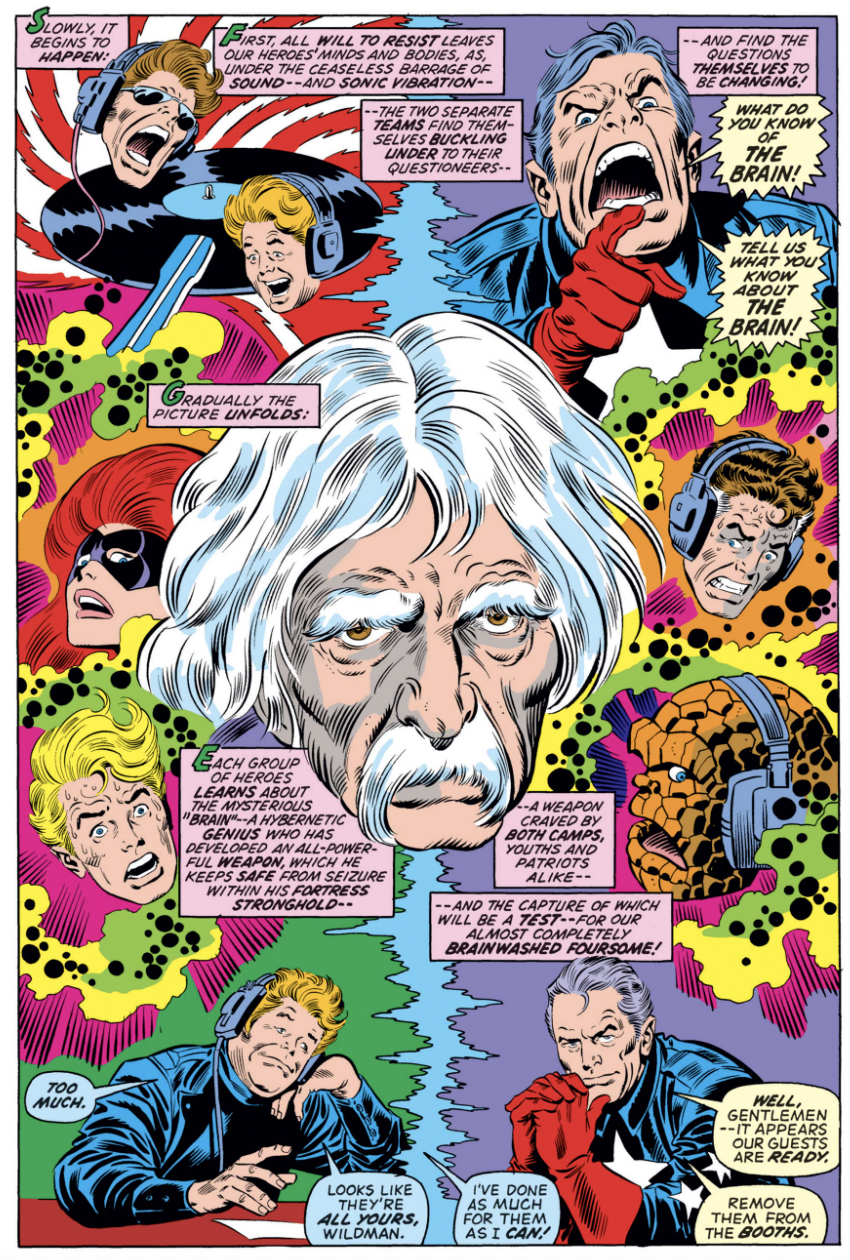
Then, instead of letting the jumbled story gel, Thomas and Conway shake it up again by introducing another character, The Brain, who we meet in this kaleidoscopic sequence:
I can’t imagine a kid picking up this comic as his or her first issue of the FF and making heads or tails of it.
Anything else?
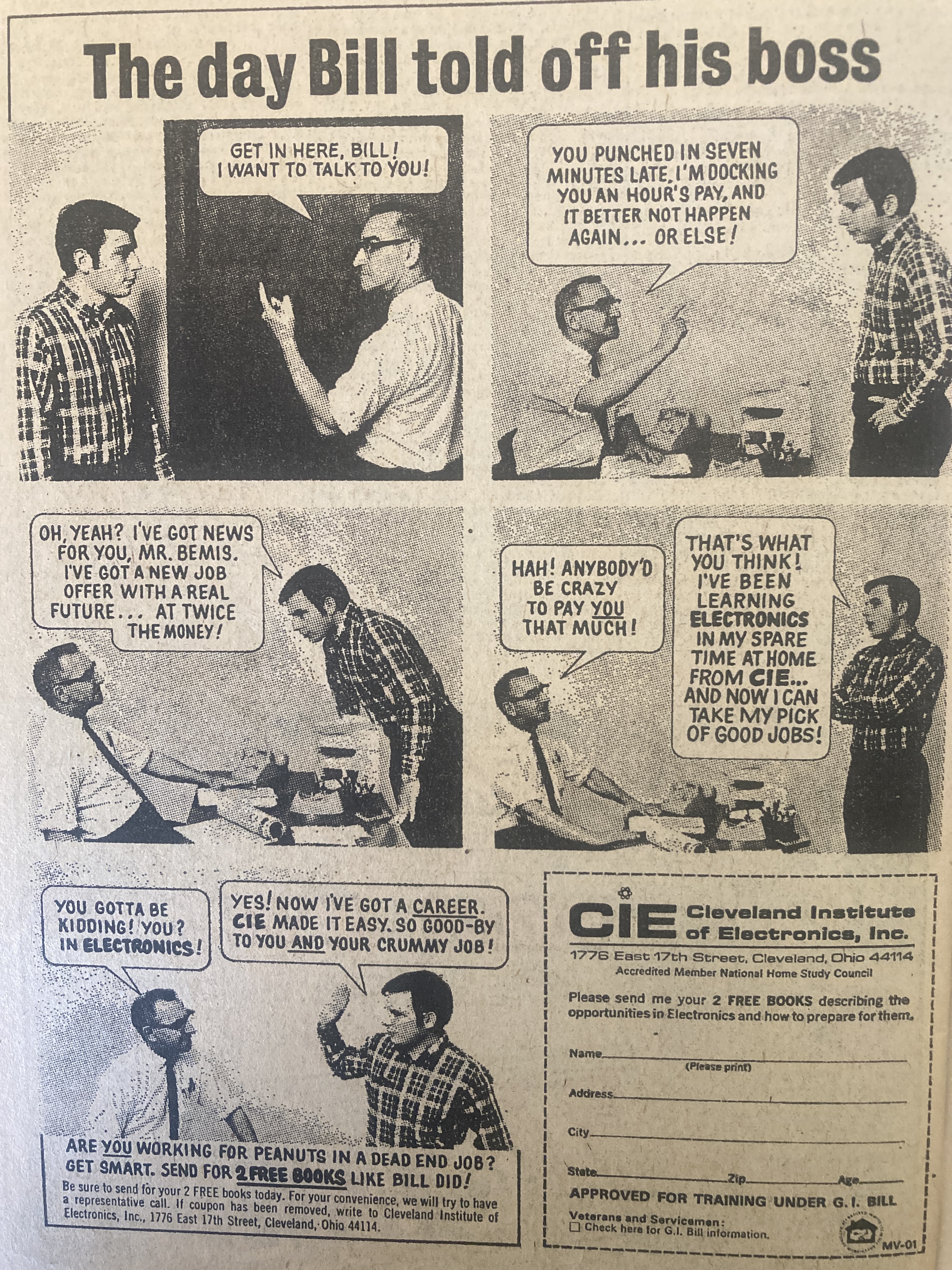
Some interesting ads in this issue. A fumetti-style ad for an anti-authoritarian trade school, and a pretty cool looking role playing magazine.
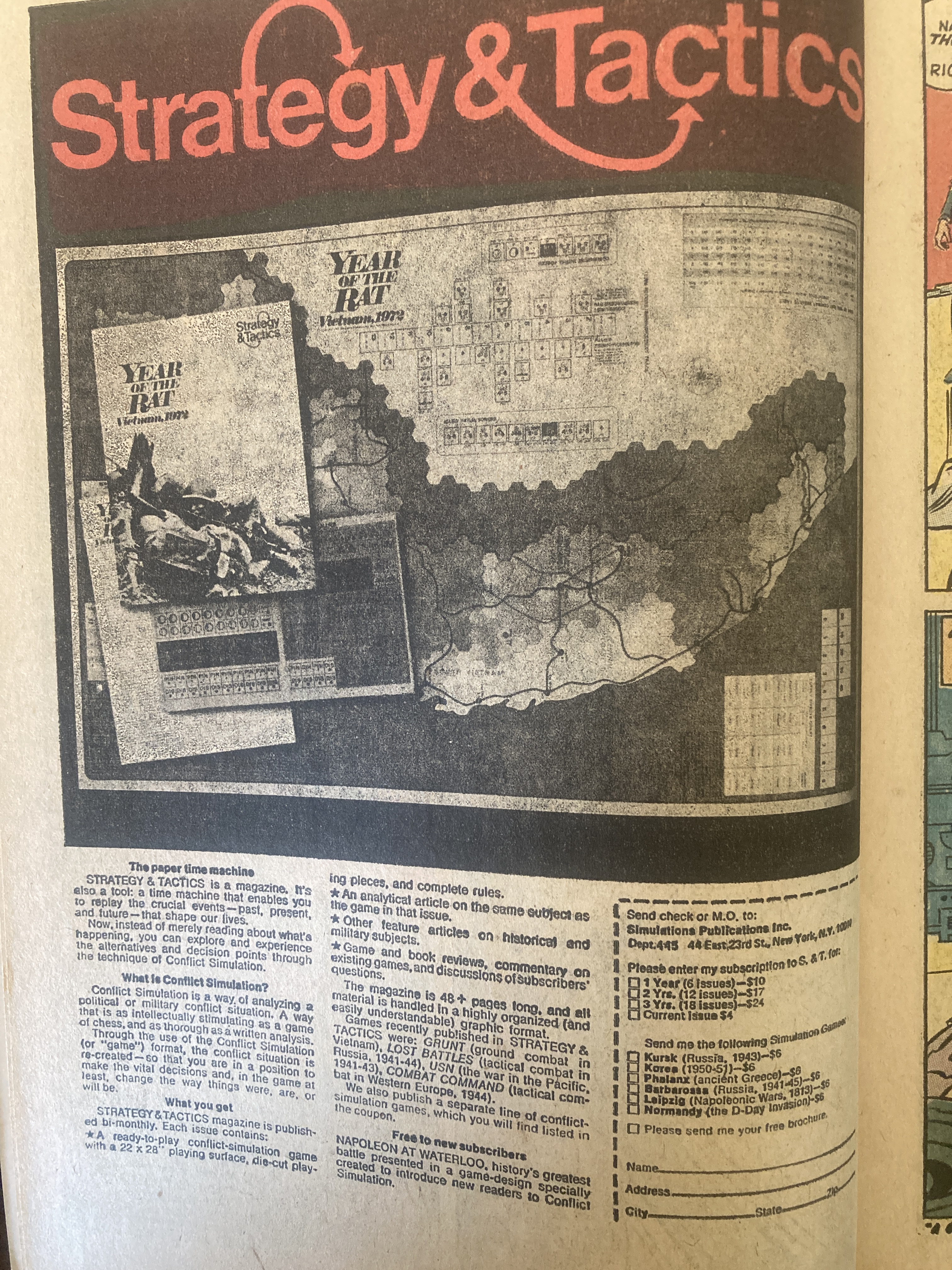
Overall
For Fantastic Four or Roy Thomas completionists only


Actually, this was my fourth Fantastic Four issue. At 12 years of age, it made little sense to me. I somehow missed the next issue and initially when I read #138 if they’d just given up on that story. It made more sense when I read #137 a few months later, but yeah. Definitely a confusing mess.