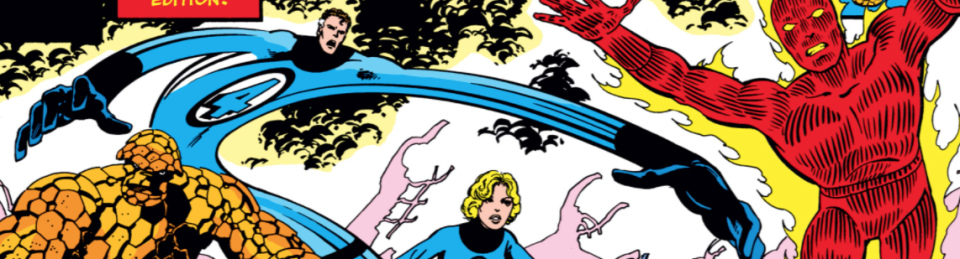
Tags
1980, Bill mantlo, Fantastic Four, Fantastic Four 217, Herbie, John Byrne, marv wolfman, Marvel, Marvel comics
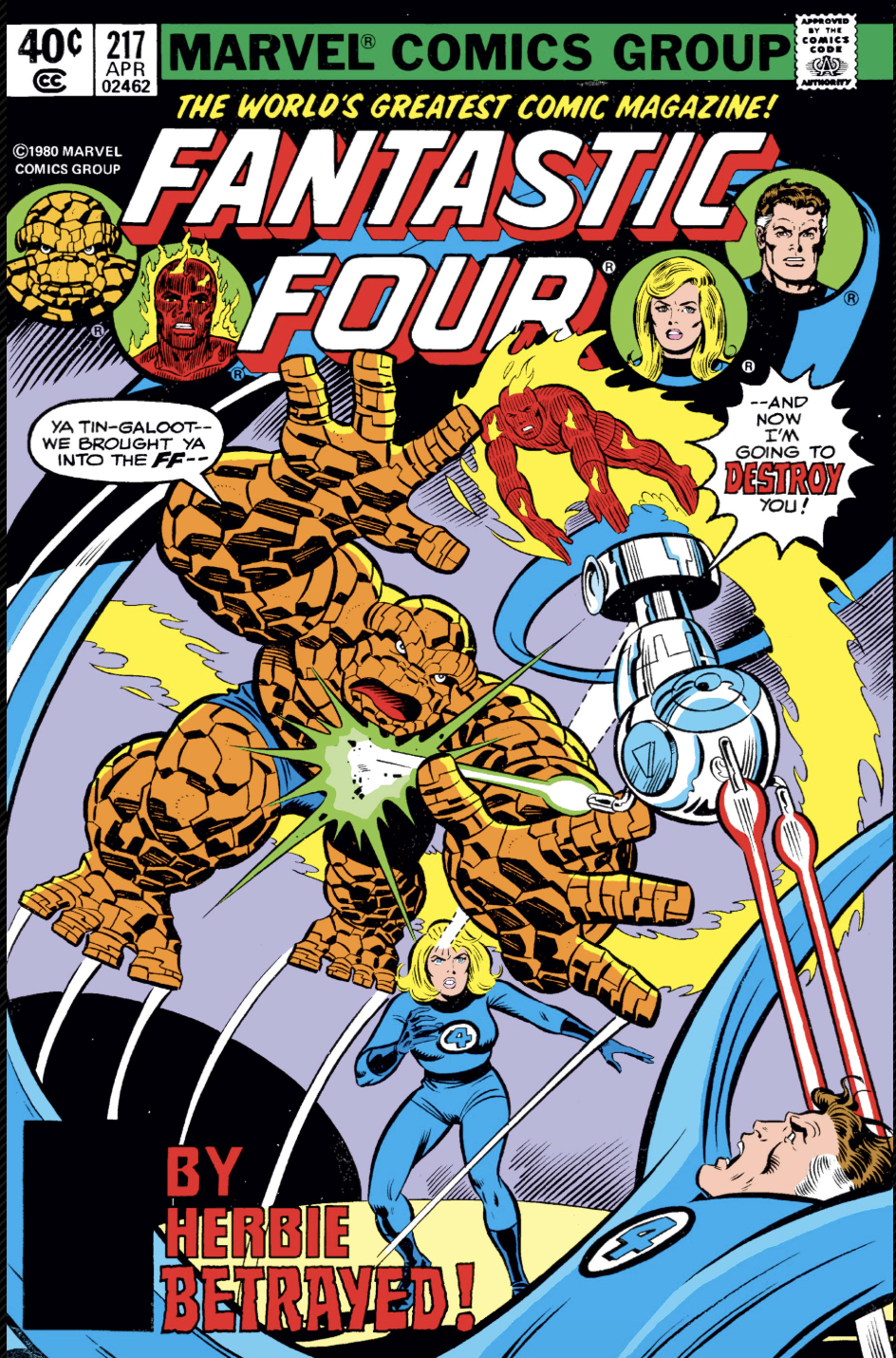
Fantastic Four 217
“Masquerade!”
Published January 1980
Writer: Bill Mantlo (based on a Marv Wolfman plot suggestion)
Pencils: John Byrne
Inks: Joe Sinnott
Letters: John Costanza
Colors: Bob Sharen
Editor: Mark Gruenwald
Cover: Sinnott
Editor’s note: I’ve fallen off the pace a bit on my FF blogging but hope to get back on track starting this coming weekend, inshallah.
Synopsis
After the Fantastic Four’s battle with Blastaar, Mr. Fantastic upgrades the Baxter Building’s security system with the help of Herbie. But the robot turns evil, revealing himself to be the artificial intelligence Doctor Sun (who appeared in FF 206), then capturing the Invisible Girl and battling the Thing and Reed. The Human Torch, out at a disco, returns only to be captured by the Baxter security system under Sun’s control. When Reed realized Sun exited Herbie to enter the building’s computer system, Reed attempts to disable it. Ultimately Sun is defeated when Herbie sacrifices itself to destroy the main computer system.
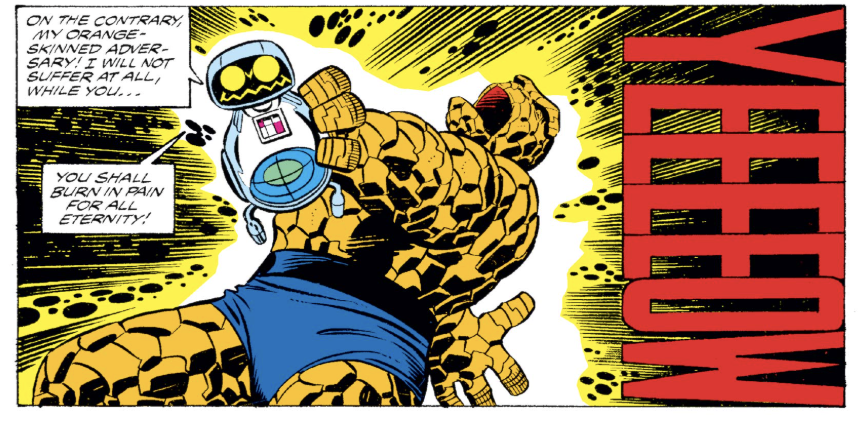
What’s going on here?
Long time readers of this blog are familiar with my disdain for Herbie, the robot foisted on the FF by his insertion in the 1978 cartoon. I knew this Herbie-centric issue was coming, and I anticipated it with dread, expecting some Impossible Man-type shenanigans. Reader, I was very wrong. This issue is a little gem, with a well-designed plot, some interesting developments and a tidy way of wrapping up the Herbie era.
Marv Wolfman, who left for DC after last issue, gets a plotting credit since it’s clear he had this story in mind for months, given Herbie’s malicious behavior over the last few issues. But the Doctor Sun twist was ingenious and one I definitely didn’t see coming. Interestingly, we never see Sun in his normal cyborg form, making this the rare comic where the villain doesn’t actually appears. And while the “evil robot” concept dates back decades before this comic, it certainly resonates today given our anxieties about AI.
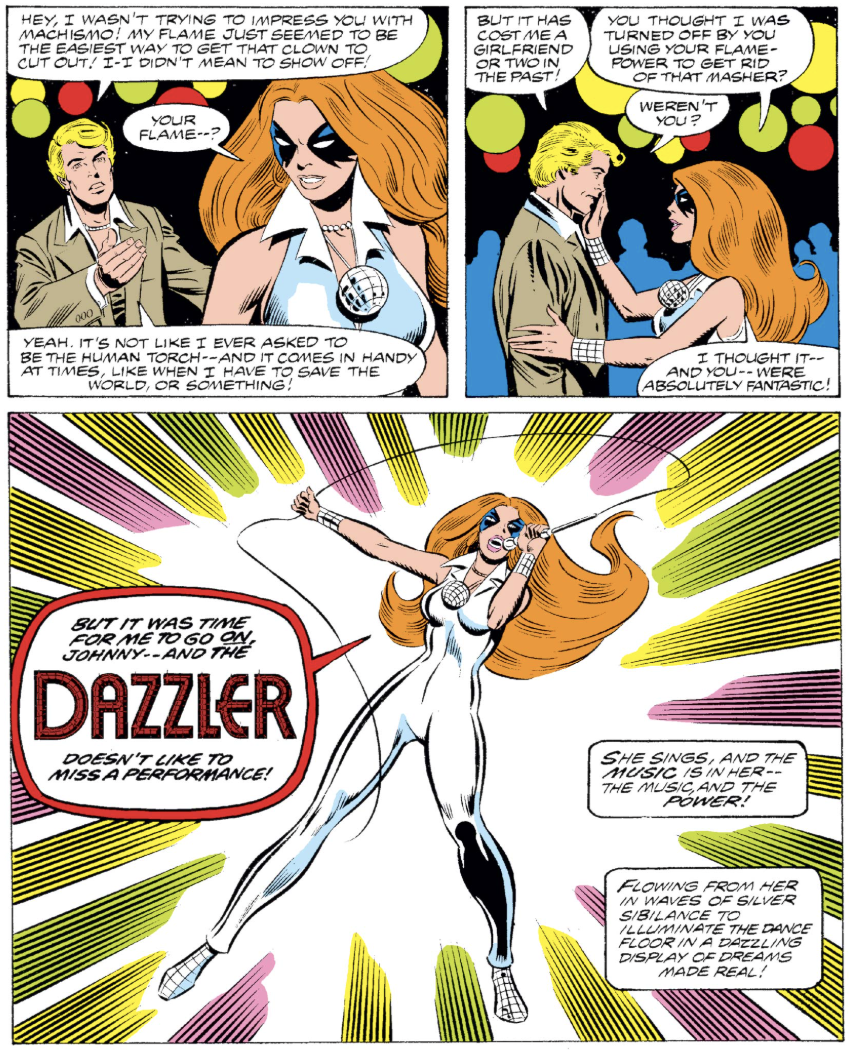
Also of note is the appearance of Dazzler, who meets Johnny at the disco. The two hit off before he was to answer the FF flare, and I wonder why no writer has taken up the idea of them as a couple. It seems like a natural match. Dazzler was introduced the previous year in X-Men, and was in an issue of Spider-Man before her FF appearance, which suggests that Marvel was still hoping the Dazzler TV special would be a thing (it wasn’t). She will get her own series in December of 1980, and it will last a respectable 42 issues.
The uninteresting cover to this issue is by Joe Sinnott, whom I am guessing had to fill in when someone missed deadline.
What I liked
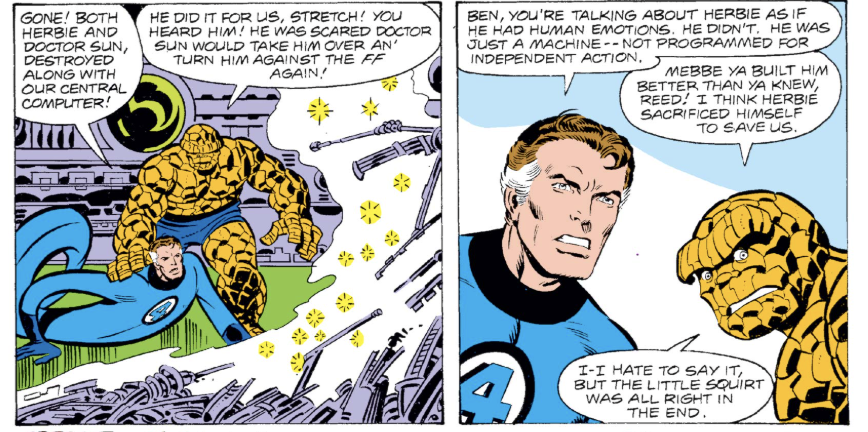
As mentioned, the end of Herbie was handled adroitly and, defying all expectations, it (he? they?) went out as a hero. Ben sums it up nicely here.
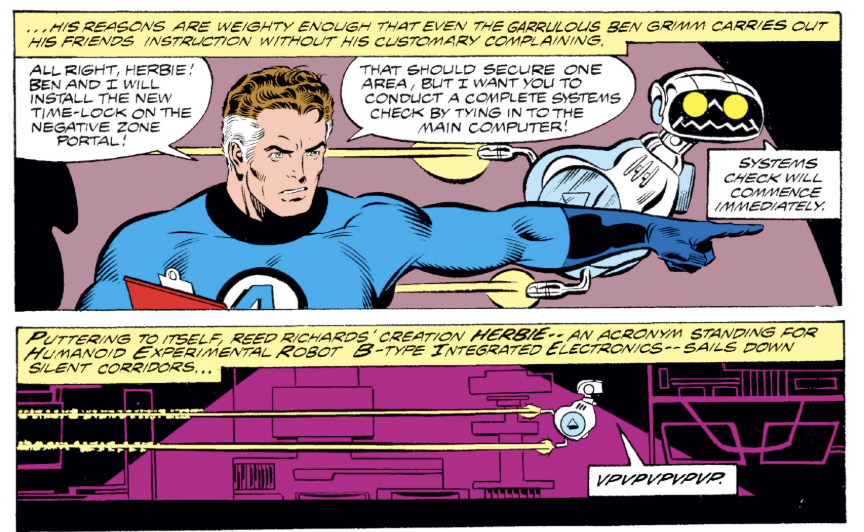
John Byrne again delivers some great visuals. I love how he creates a sense of motion and speed by repeating the shape of panels and angle of action.
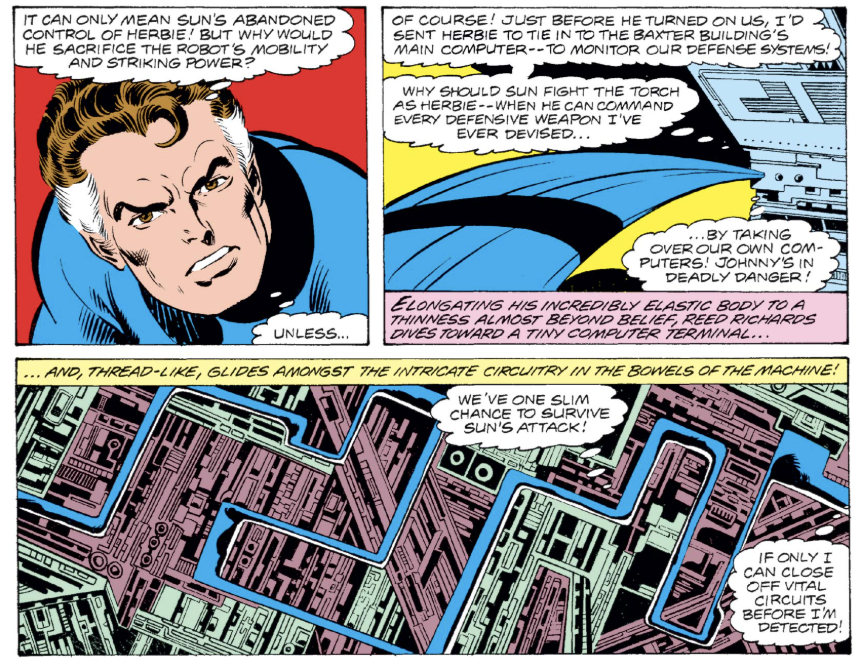
I thought both this idea — Reed infiltrating a computer’s circuitry — and Byrne’s execution of it were brilliant.
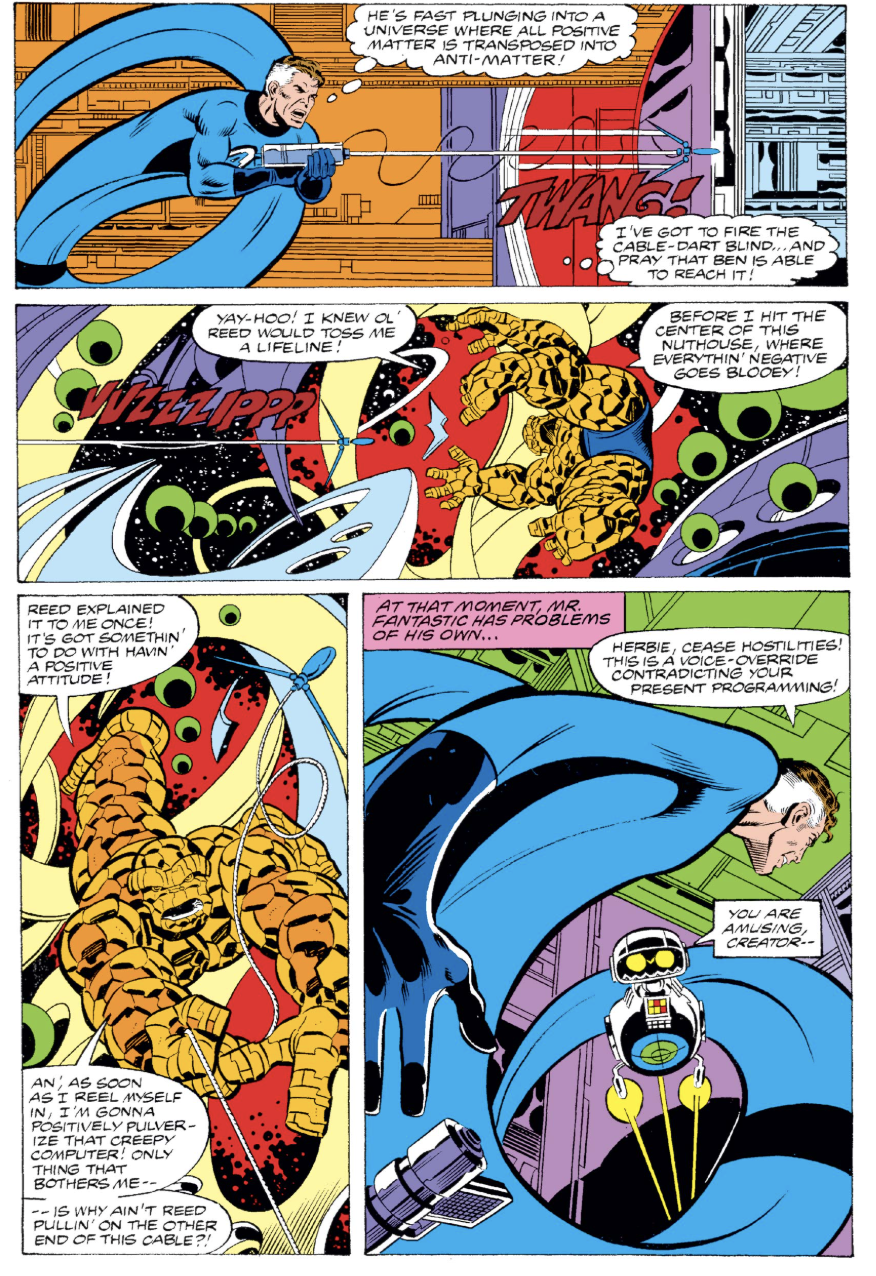
Lastly, this whole page was so well done I couldn’t pick any one or two panels:
What I didn’t like
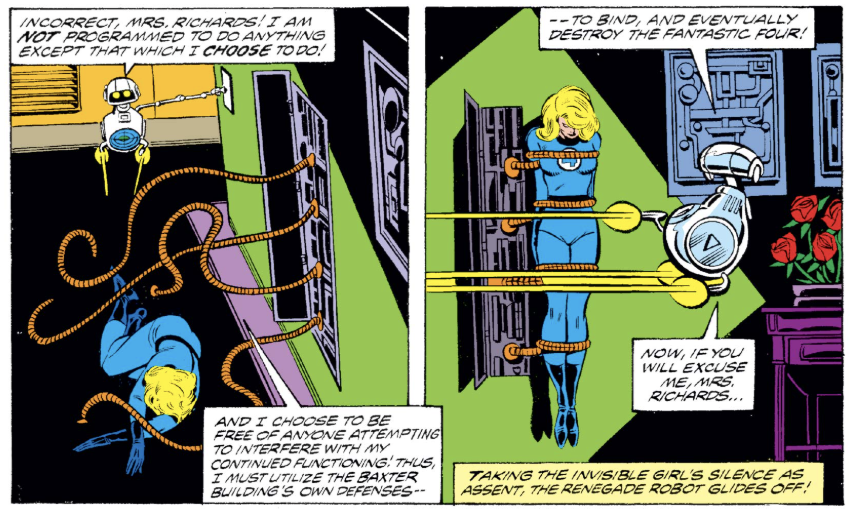
Over his career Byrne has been shadowed by accusations of sexism and creepy treatment of women. I’m not sure I agree with those critiques but this sequence doen’t help his case.
Anything else?
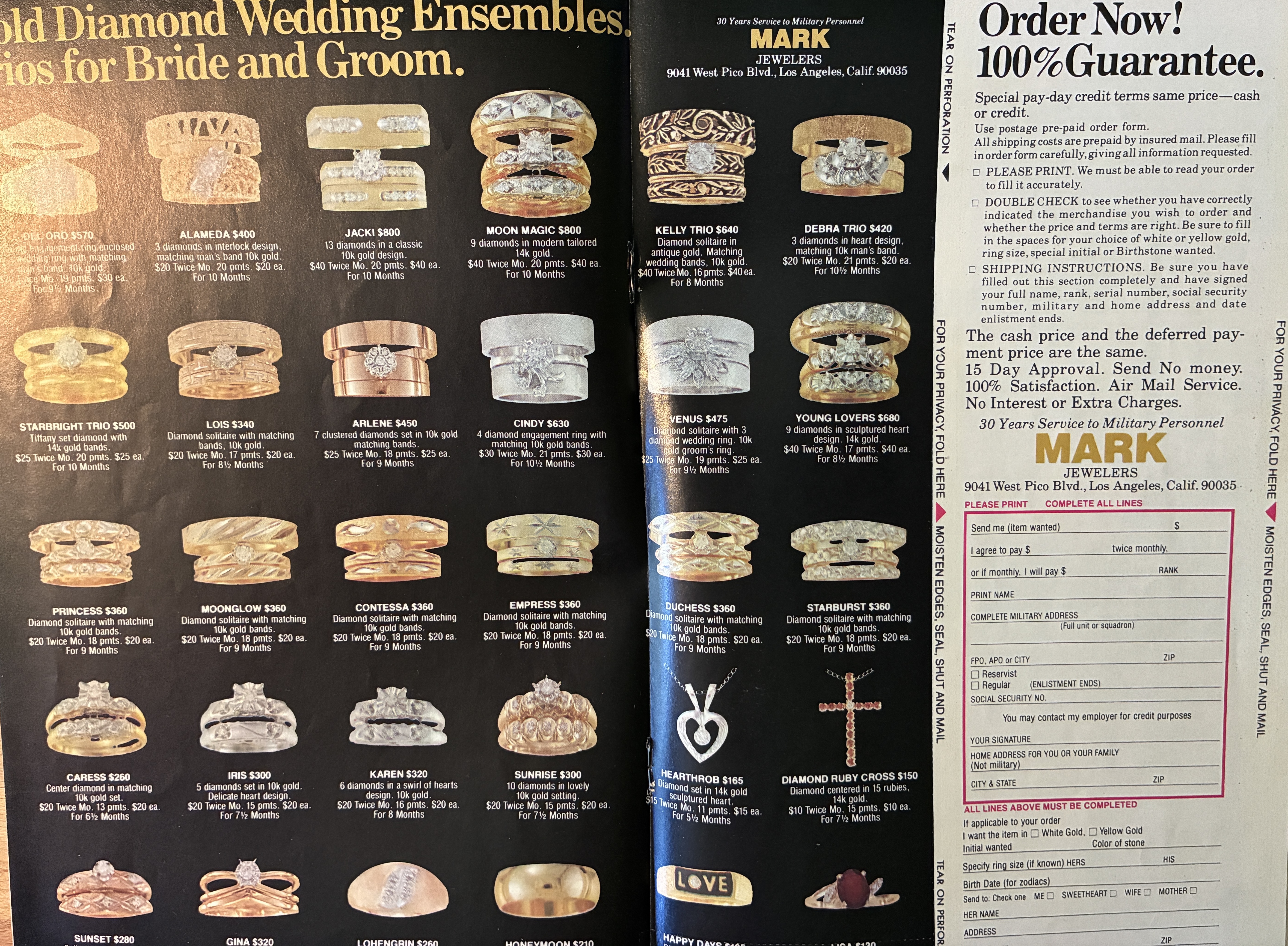
For years I have seen the “Mark Jewelers” designation on listings for back issues without really knowing what it meant. Today I learned it refers to comics with an advertising insert for jewelry that was targeted at the military, and therefore were primarily sold on military bases. Apparently these are prized by a sub-set of collectors, primarily because they are rare. As it happens, this issue of FF 217, which I probably picked up as a back issue from a comic book store or convention, has the Mark Jewelers insert. And here it is:
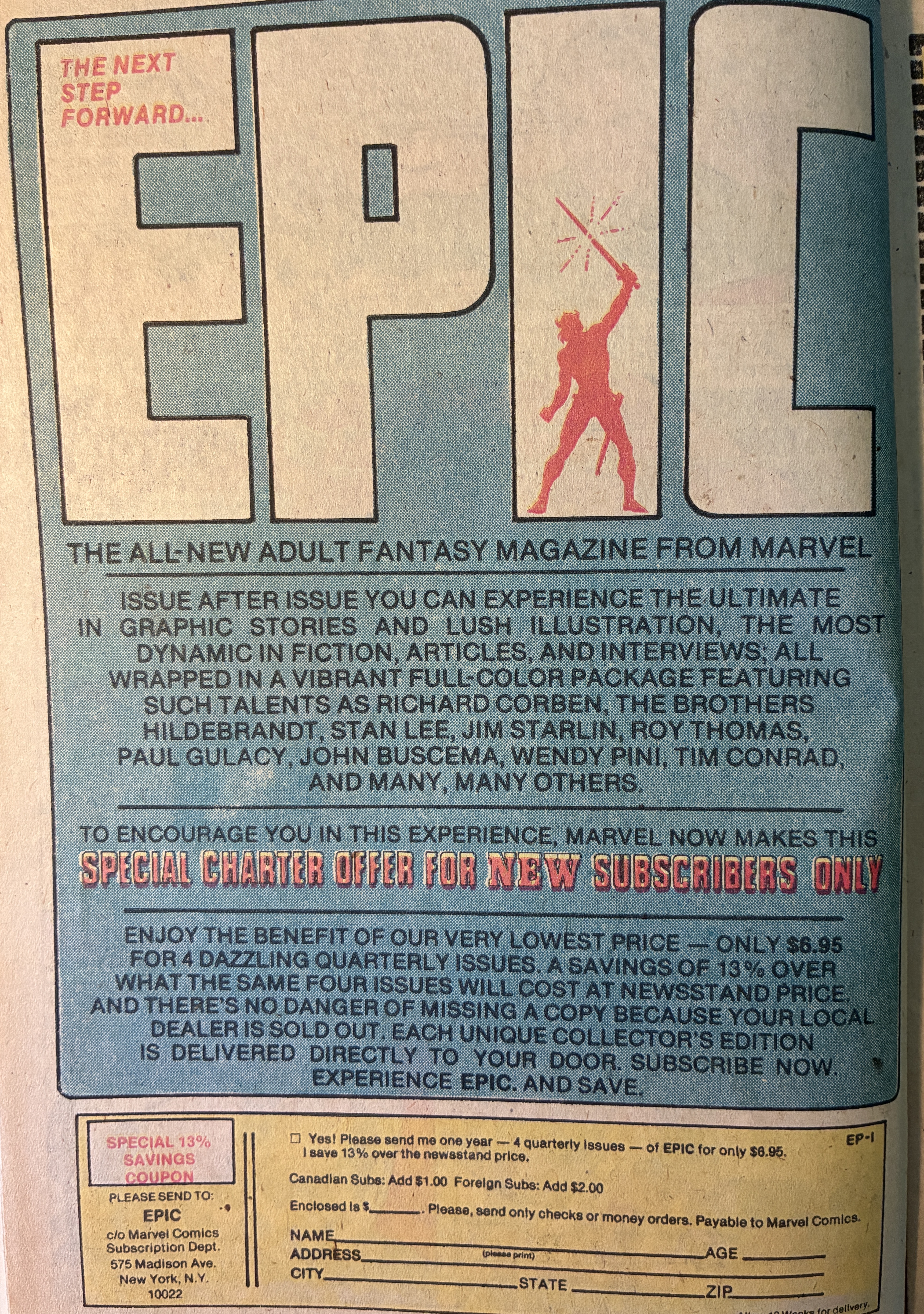
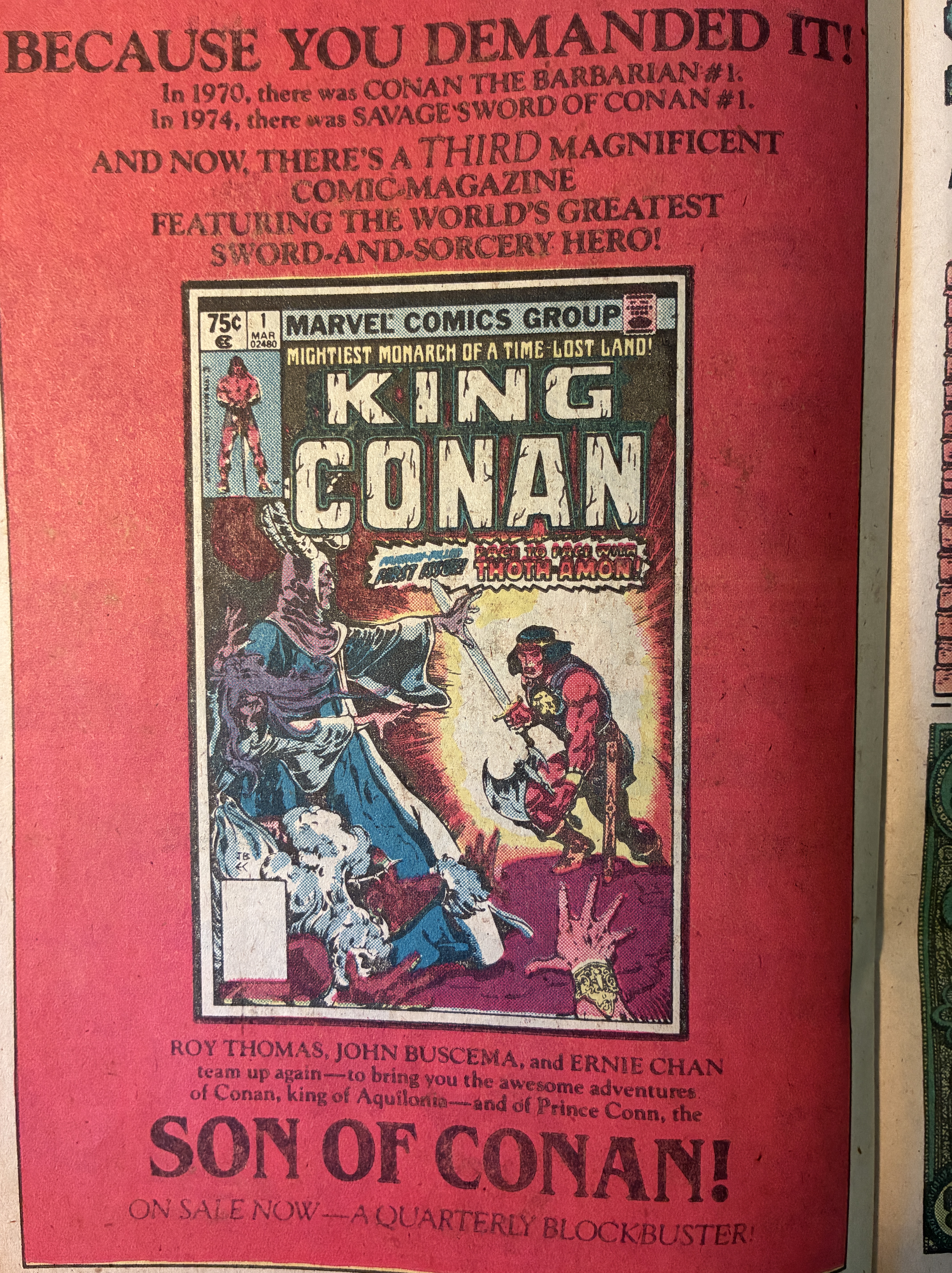
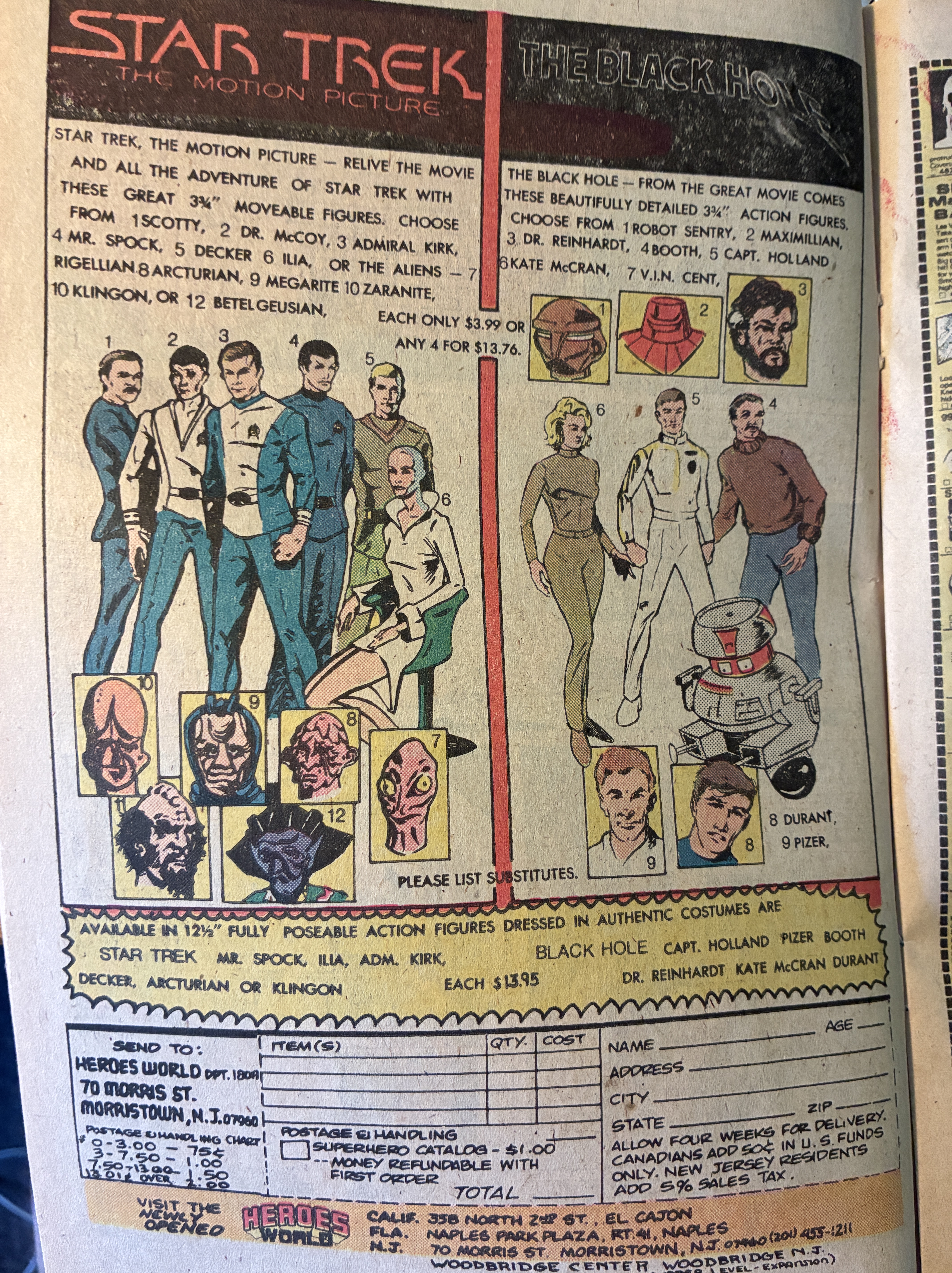
Some other cool ads in this issue, some house ads and an interesting one for action figures. It’s easy to forget how big a deal The Black Hole movie was when it came out.
Overall
A better comic than it had any right to be

