• About Percival Henry

Percival Henry: The Fantastic Four and more

~ Blogging the Fantastic Four issue by issue (plus whatever else grabs my attention)

Percival Henry: The Fantastic Four and more

Tag Archives: 1980

“The World’s Greatest Comic Magazine!” Fantastic Four No. 227

16 Sunday Aug 2026

Posted by percivalhenry in The World's Greatest Comic Magazine

≈ 2 Comments

Tags

1980, Bill Sienkiewicz, Bruce Patterson, Doug Moench, Fantastic Four, Fantastic Four 227, Marvel, Marvel comics
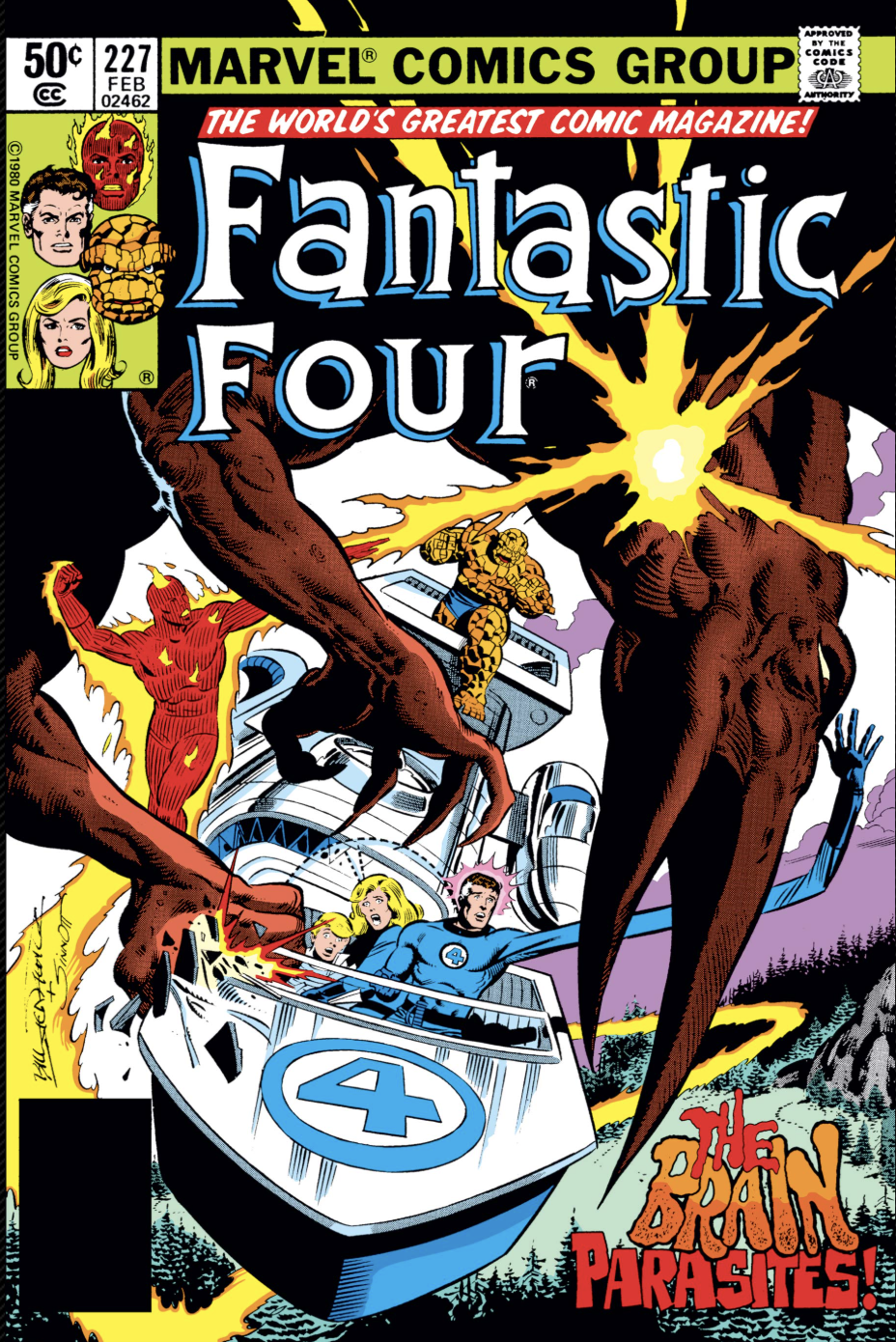
Fantastic Four 227
“The Brain Parasites!”
Published November 1980
Writer: Doug Moench
Pencils: Bill Sienkiewicz
Inks: Bruce Patterson
Letters: Jim Novak
Colors: George Roussos
Editor: Jim Salicrup
Cover: Sienkiewicz and Joe Sinnott


Synopsis

An old colleague asks for Mr. Fantastic’s help investigating a meteor that landed in a Florida lake and the team plus Franklin embark on a working vacation to assist Dr. Carruthers. Once there, they discover ordinary animals are dramatically transformed into dangerous monsters by parasites that were carried by the meteor. The parasites also transform Carruthers and the Invisible Girl but are saved when the parasites are removed. It is then revealed that Franklin used his powers to destroy the monsters and parasites.

What’s going on here?

This is another old-timey science fiction story from Doug Moench that has echoes of Invasion of the Body Snatchers and Robert Heinlein’s The Puppet Masters. Moench used the mysterious-meteor-with-strange-effects just a few issues ago — it’s how Korgon the giant Viking got his powers — and the FF-encounter-strange-underwater-monsters-on-a-Florida-vacation plot was previously used by Stan and Jack in FF 97.

We’re now seven issues into the Moench run and it seems pretty clear he’s most comfortable with a certain type of story that hews closely to traditional horror and sci-fi tropes. There is a place for those stories, and they can be done quite effectively in the Fantastic Four as we shall see, but telling only those stories wastes the potential of the FF. The Fantastic Four is at its best with big, sweeping epics where the villains are truly menacing and the stakes are high. I had lots of quibbles with Marv Wolfman’s run but he at least understood the importance of big stories. (This is also my main critique of the FF’s current writer, Ryan North, who prefers to deliver monthly science lessons rather than invest in multi-issue arcs.) There are four more issues of Moench; hopefully things pick up.

Joe Sinnott is again MIA (although he did ink the cover), with Bruce Patterson handling the inking. Patterson seems like a jack-of-all-comic-trades — with credits as inker, letterer and colorist — and worked steadily for both Marvel and DC from the mid 70s to the late 90s. His inks are heavy and brooding in this comic, and he gives on Reed and Johnny hollow cheeks that make them look haggard and gaunt.
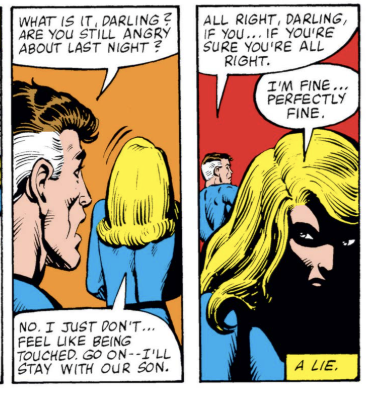
What I liked

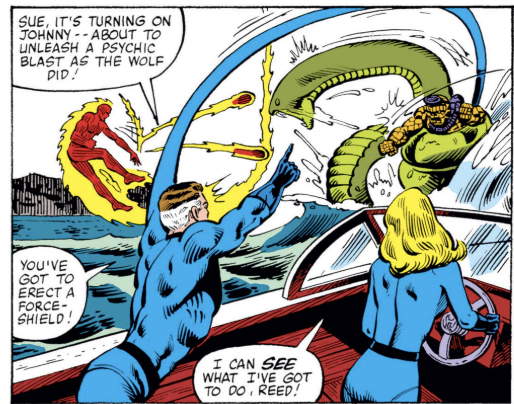
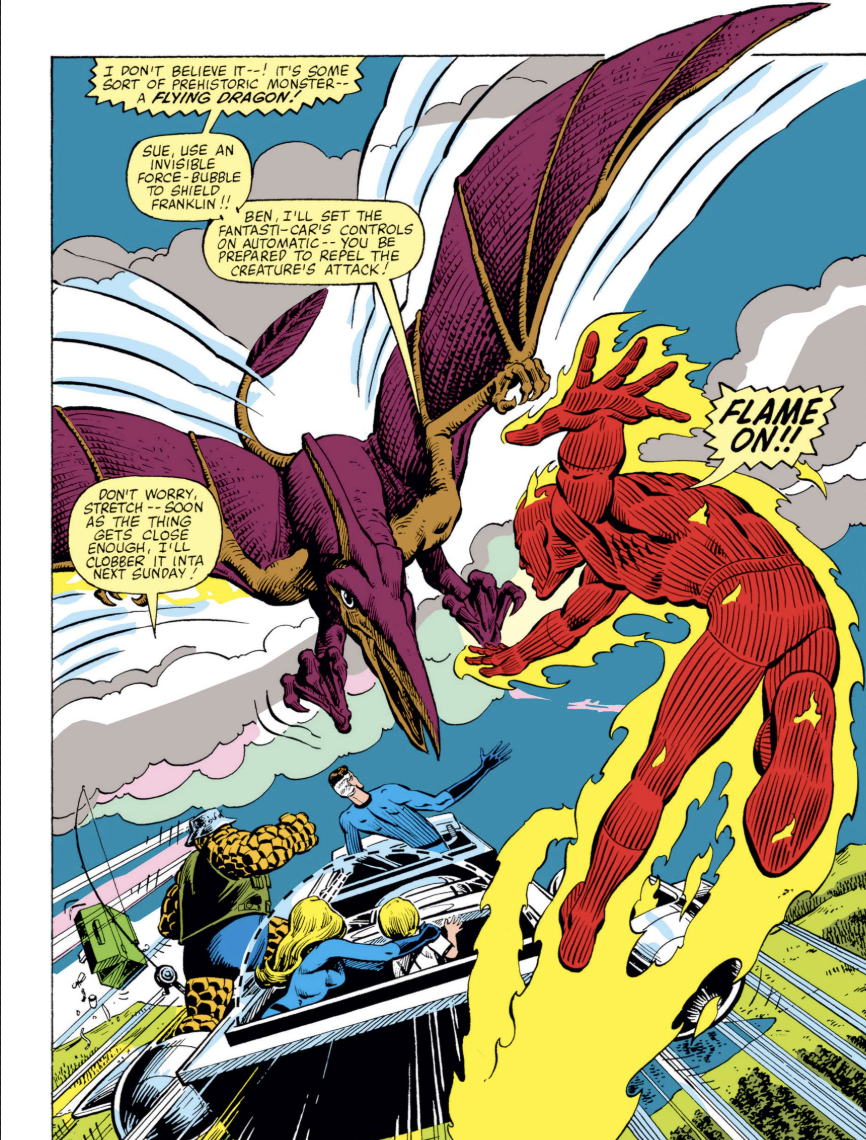
There were some fun action sequences, and Bill Sienkiewicz seems to have a blast with the monsters that attack the FF. As in this splash:

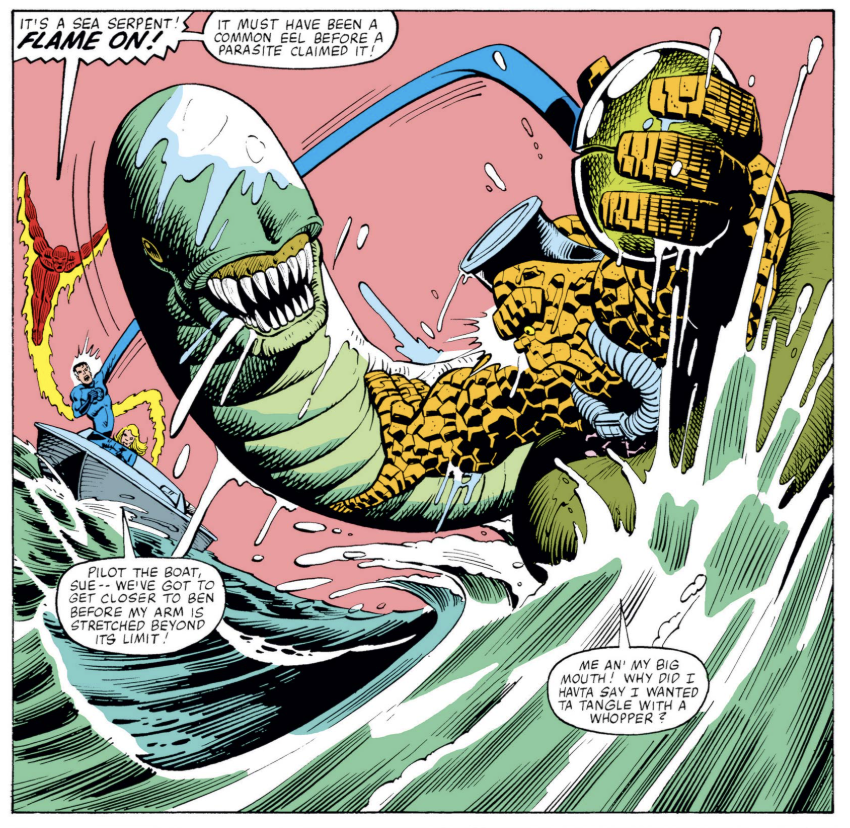
Or here:

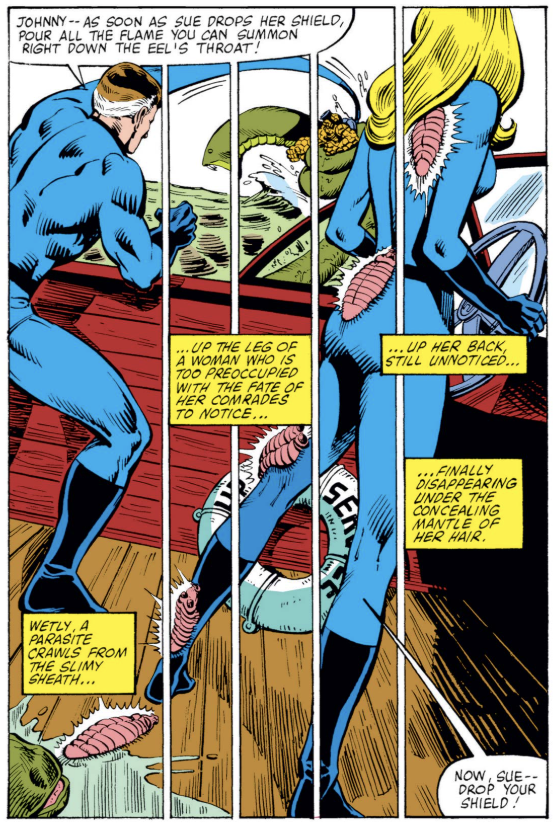
I’m not sure this time-lapse sequence of the parasite crawling up Sue is totally successful — initially I thought she was covered in multiple parasites — but it looks cool.

What I didn’t like

The “spontaneous vacation” idea is pretty tired by now. I guess Moench thought he needed a good reason to get Franklin on the trip, but it feels forced.

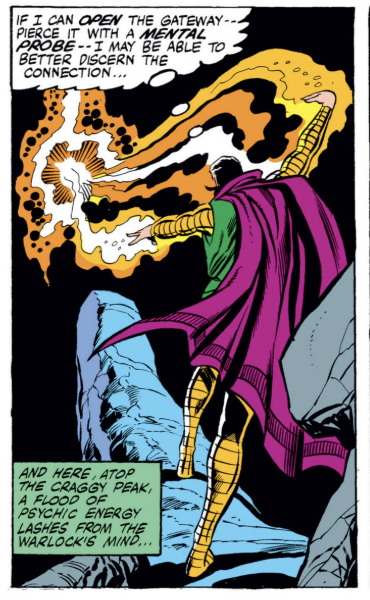
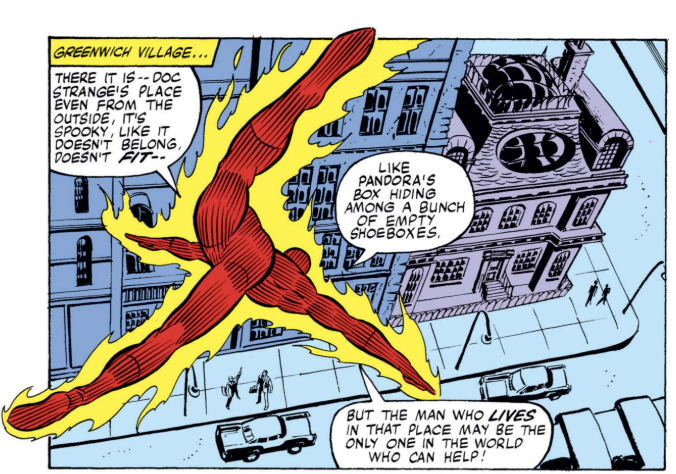
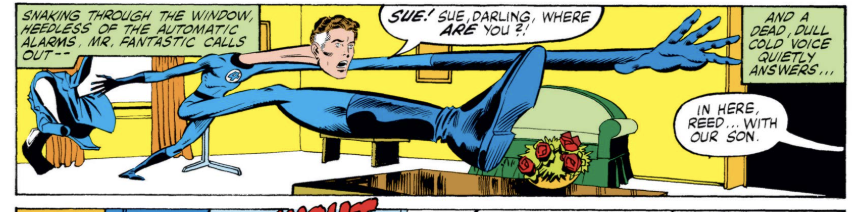
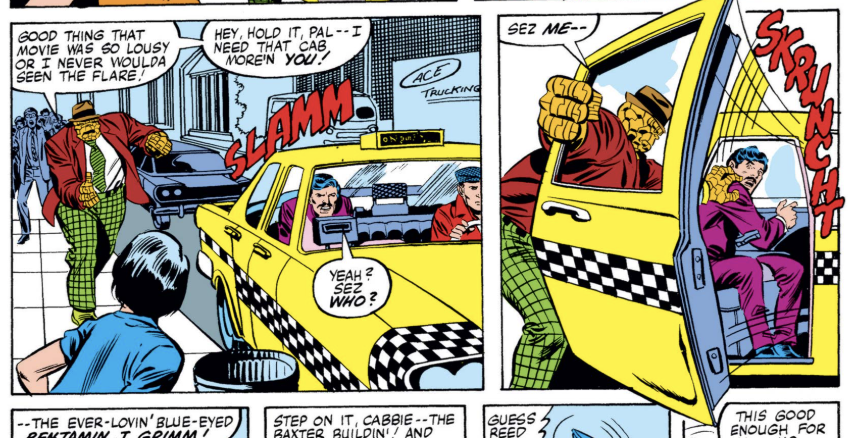
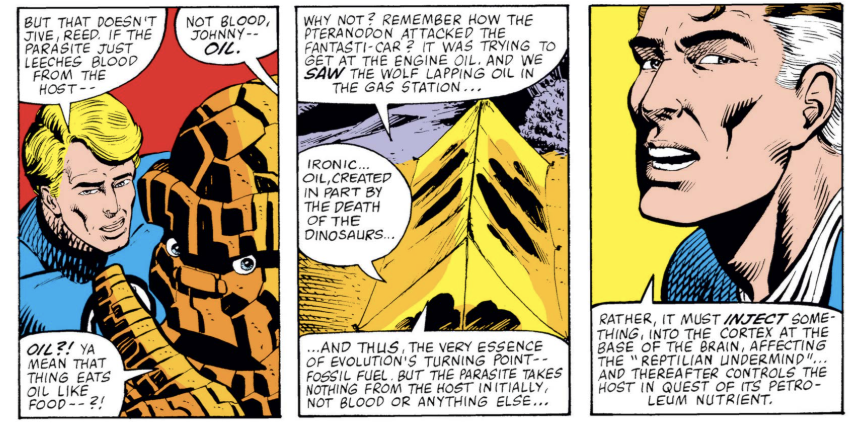
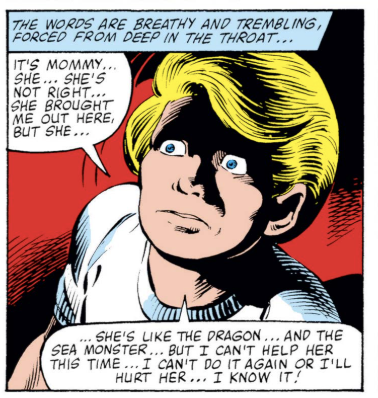
Also, these recent issues have sequences of panels that jump from scene to scene without any explanation. Like here:
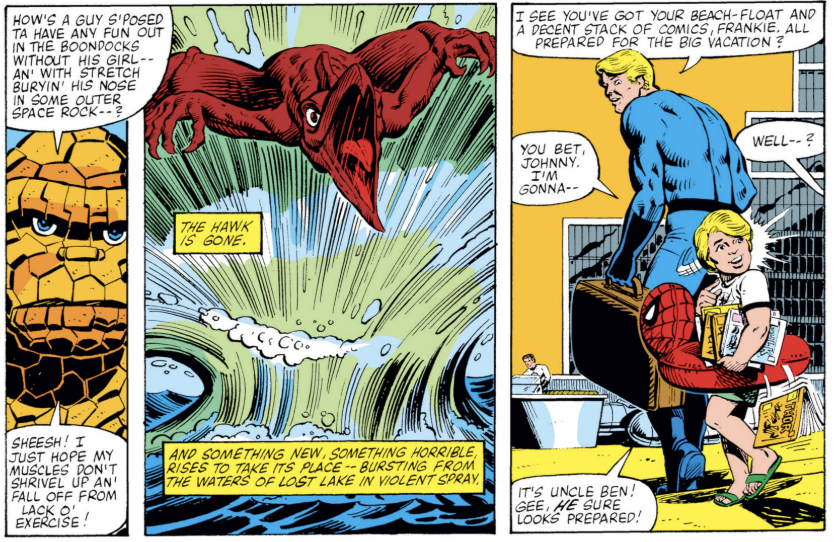
It’s not hard to follow the story, but I’m not sure what is accomplished by the cutting back and forth, either. I do like Franklin’s Spider-Man pool float.

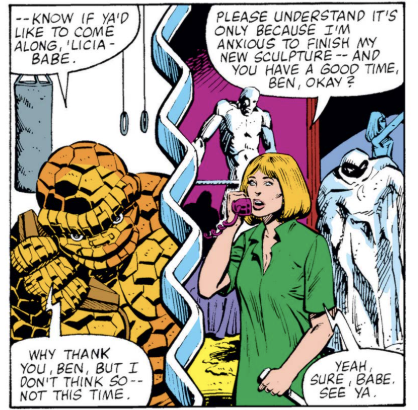
Wait, did Moench finds a way to drop in a cameo of a character from one of his other books? Who could have seen that coming?


Anything else?

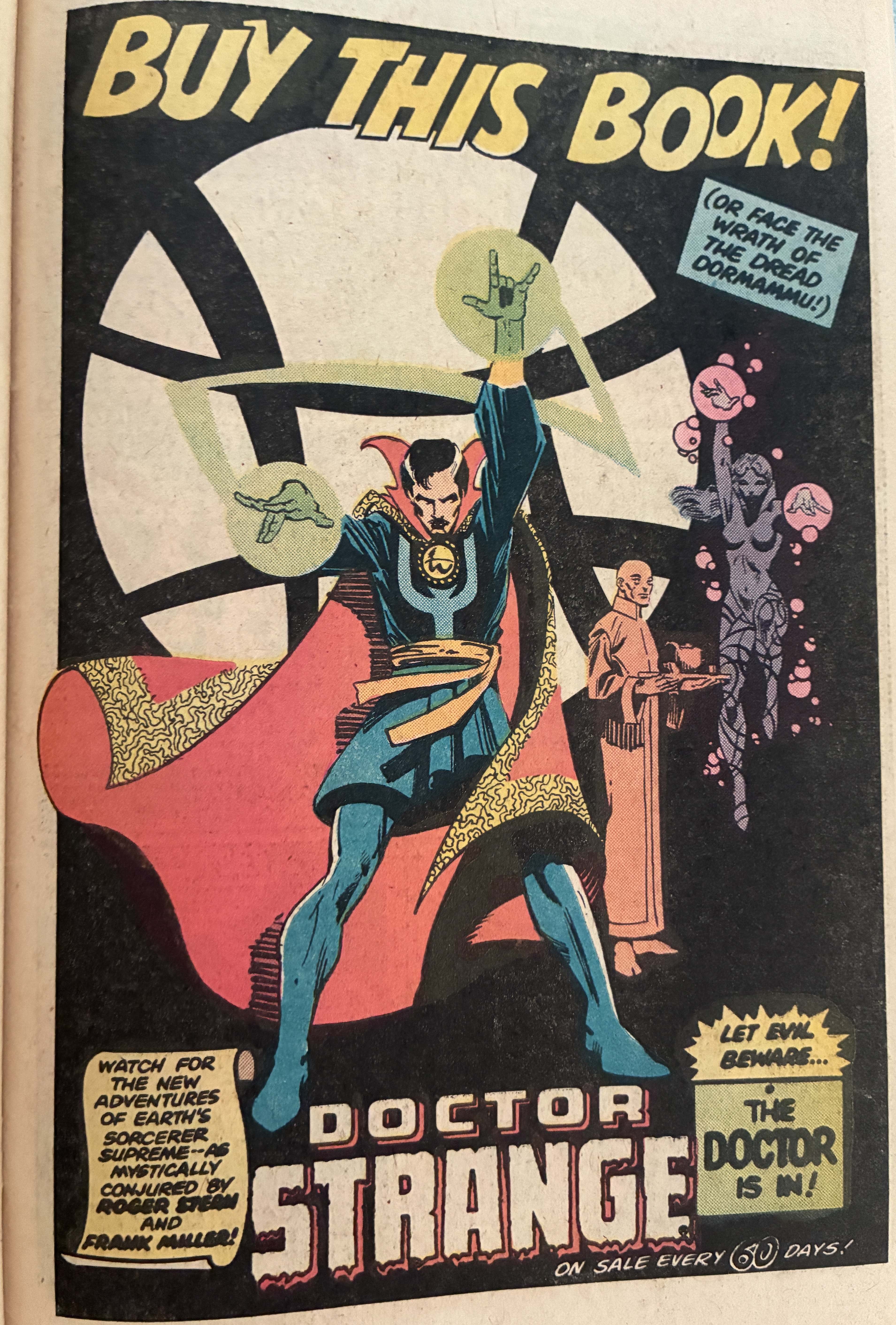
This is a cool house ad for a Roger Stern / Frank Miller Dr. Strange collaboration that never happened. You can read why here.

Overall

A heaping dose of me.

“The World’s Greatest Comic Magazine!” Fantastic Four No. 226

12 Wednesday Aug 2026

Posted by percivalhenry in The World's Greatest Comic Magazine

≈ 2 Comments

Tags

1980, Bill Sienkiewicz, Doug Moench, Fantastic Four, Fantastic Four 226, Marvel, Marvel comics, Shogun Warriors

Fantastic Four 226
“The Samurai Destroyer”
Published October 1980
Writer: Doug Moench
Pencils: Bill Sienkiewicz
Inks: Pablo Marcos and Bruce Patterson
Letters: Jim Novak
Colors: George Roussos
Editor: Jim Salicrup
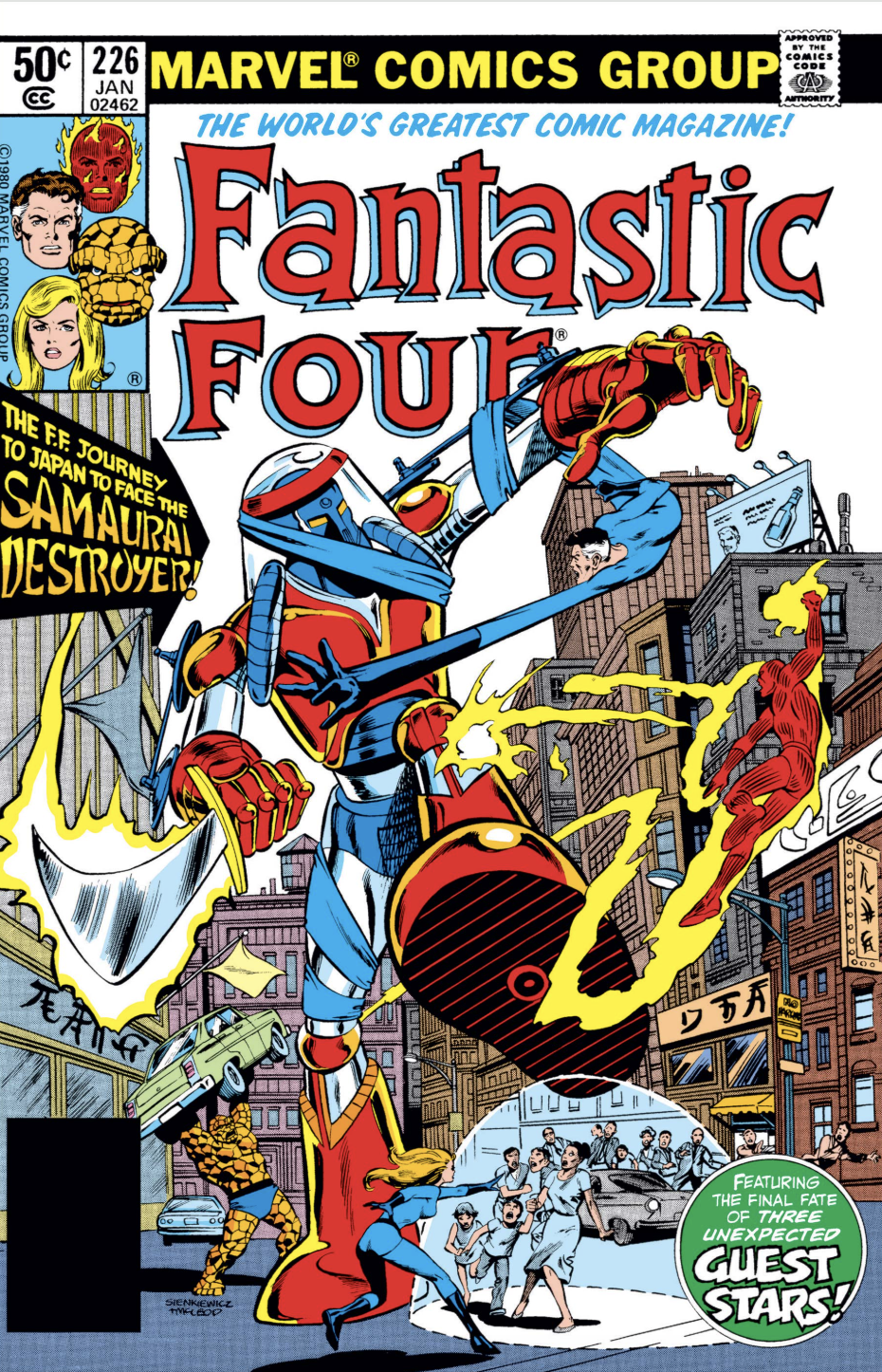
Cover: Sienkiewicz and Bob McLeod


Synopsis

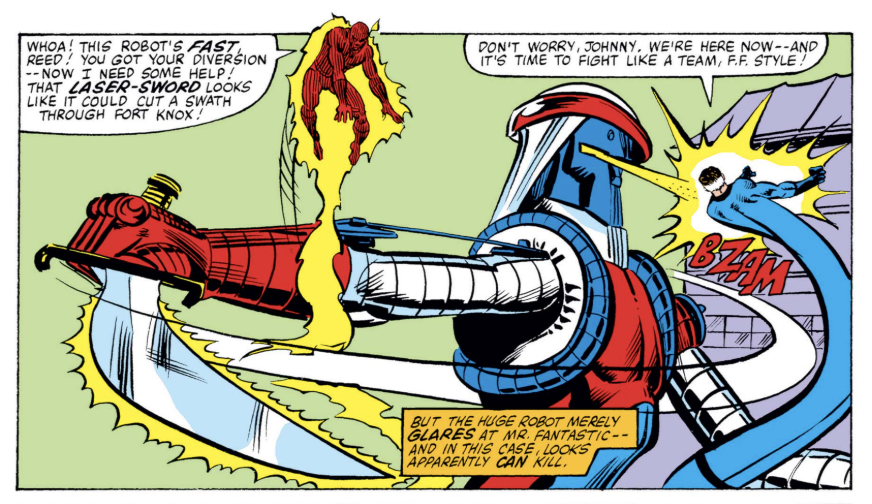
The Fantastic Four learn about a giant robot stealing a train carrying gold on the television news, then are met at the Baxter Building by the three former pilots of the Shogun Warrior robots, now destroyed. The FF and three pilots travel to Japan, where the new giant robot, the Samurai Destroyer, is robbing a bank. While the FF attempt (and fail) to stop it, the pilots travel to the sanctuary where the Shogun Warriors were built. There, they are confronted by the Samurai Destroyer and its pilot who explains he destroyed their robots. The FF catch up with him and eventually defeat him, but not before he self-destructs the Samurai Destroyer.

What’s going on here?

A guest appearance in a Doug Moench-written comic? What are the odds they feature in another Moench-written book? If you guessed 100%, you’d be right. For the third story in a row, Moench has slipped in characters from a former, current or future comic he’s writing (following Moon Knight and Thor). This time, of course, the Shogun Warriors make more than a token appearance, but are central to the whole dismal comic.

The Shogun Warriors were a toy tie-in that had their own comic for 20 issues, all but one written by Moench. I confess I’ve never read them, but they look pretty forgettable. Apparently while Moench was able to wrap up their story (in an issue guest starring the FF, or course), he or someone at Marvel decided they needed to tie up the loose end of three enormous robots that could be commandeered by a villain. Hence this issue, in which the robots are destroyed.
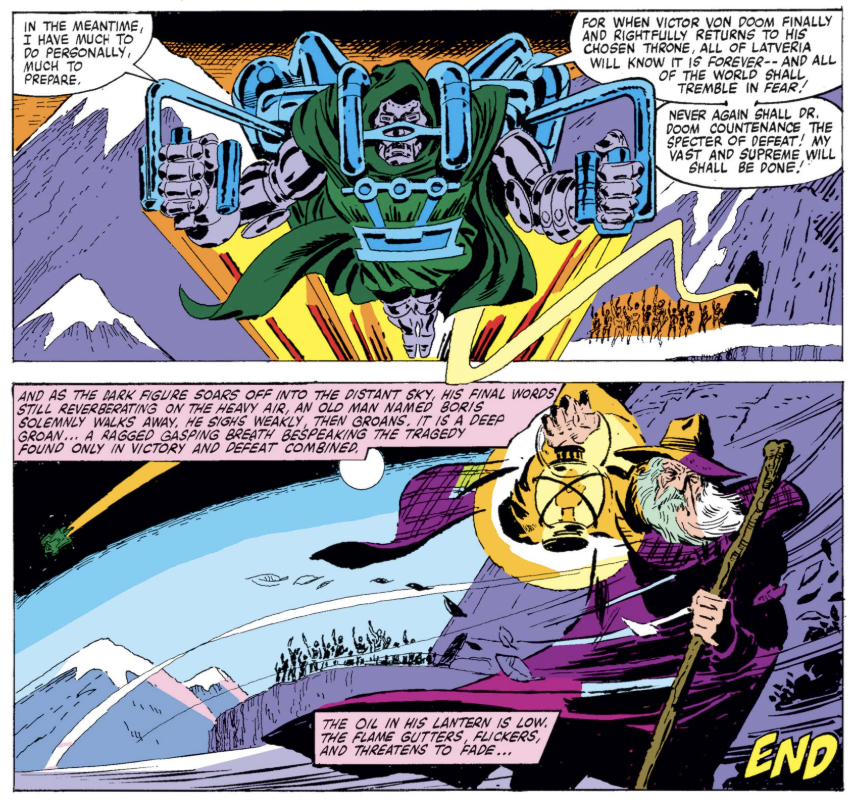
While I sort of respect the desire to address the big robot problem, I wish it hadn’t been at the expense of a decent Fantastic Four comic. This story is forced and clunky, with a cheesy lesson in parenting for Reed and way too much energy devoted to the fates of three characters most readers had never heard of. This is probably Moench’s worst issue, and Bill Sienkiewicz, aside from a few bright spots, doesn’t do much to salvage this dreck.

A few side notes: Joe Sinnott is again MIA, with Pablo Marcos and Bruce Patterson inking. And the cover is inked by Bob McLeod, making his FF debut.


What I liked

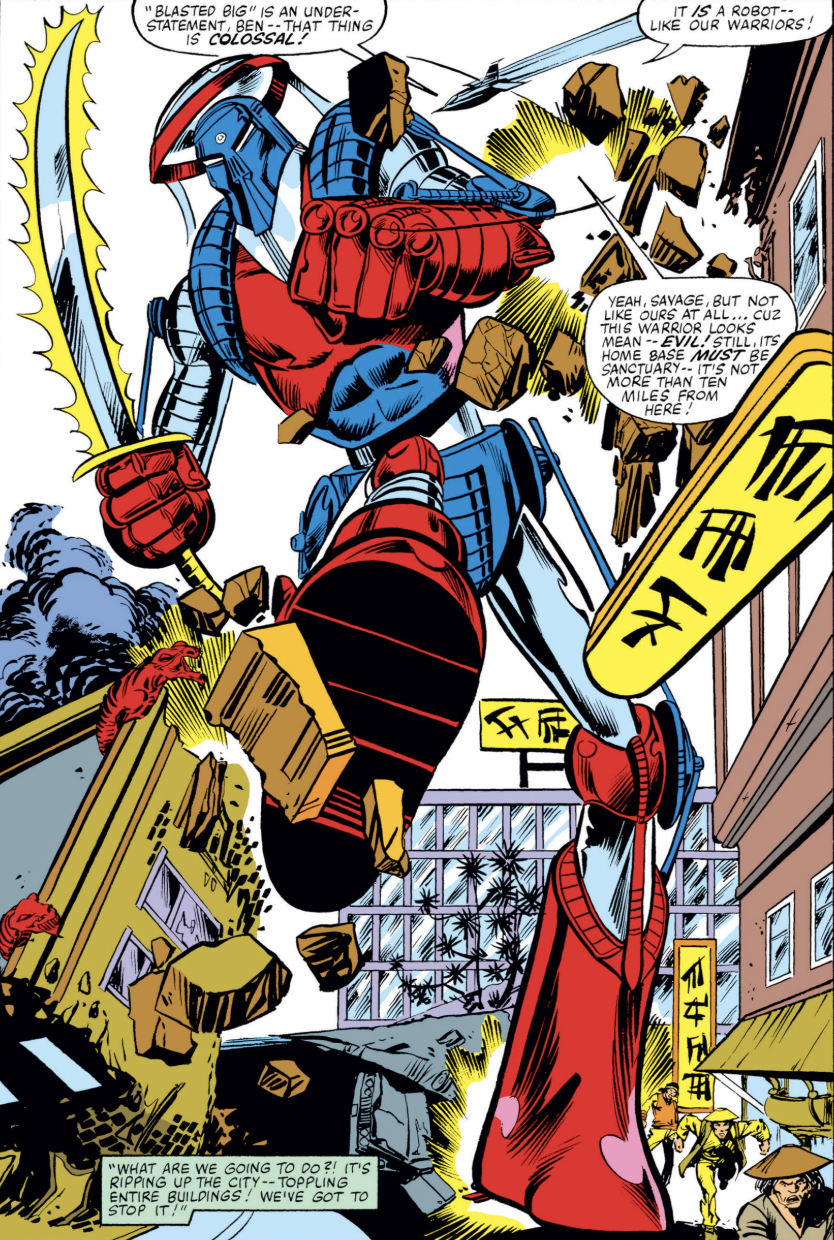
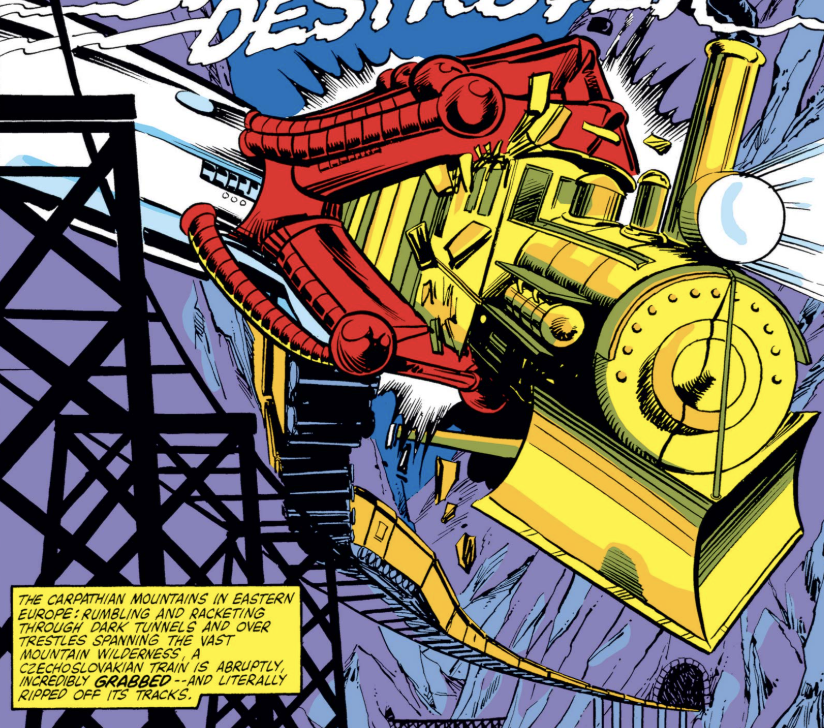
It’s hard to go wrong with a giant robot splash page:


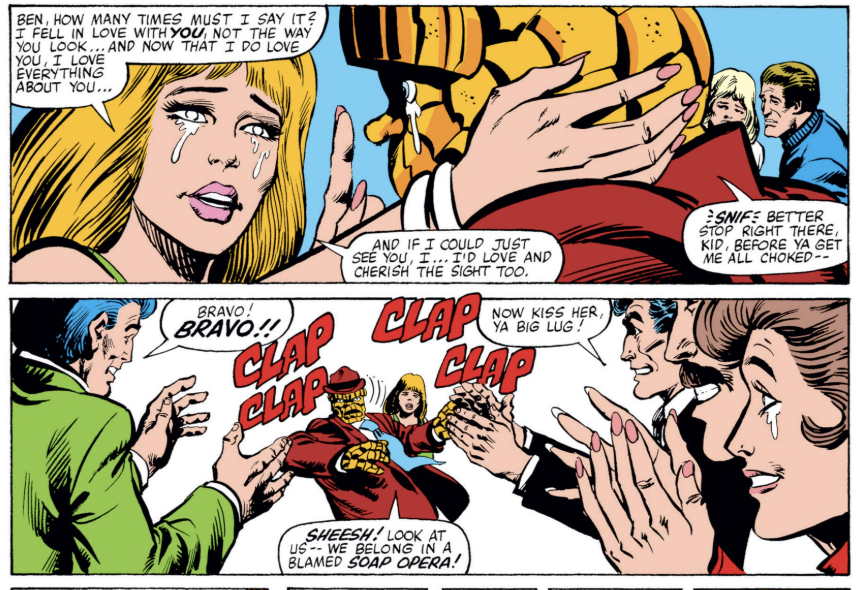
I liked this fun scene with Ben and Alicia:


What I didn’t like

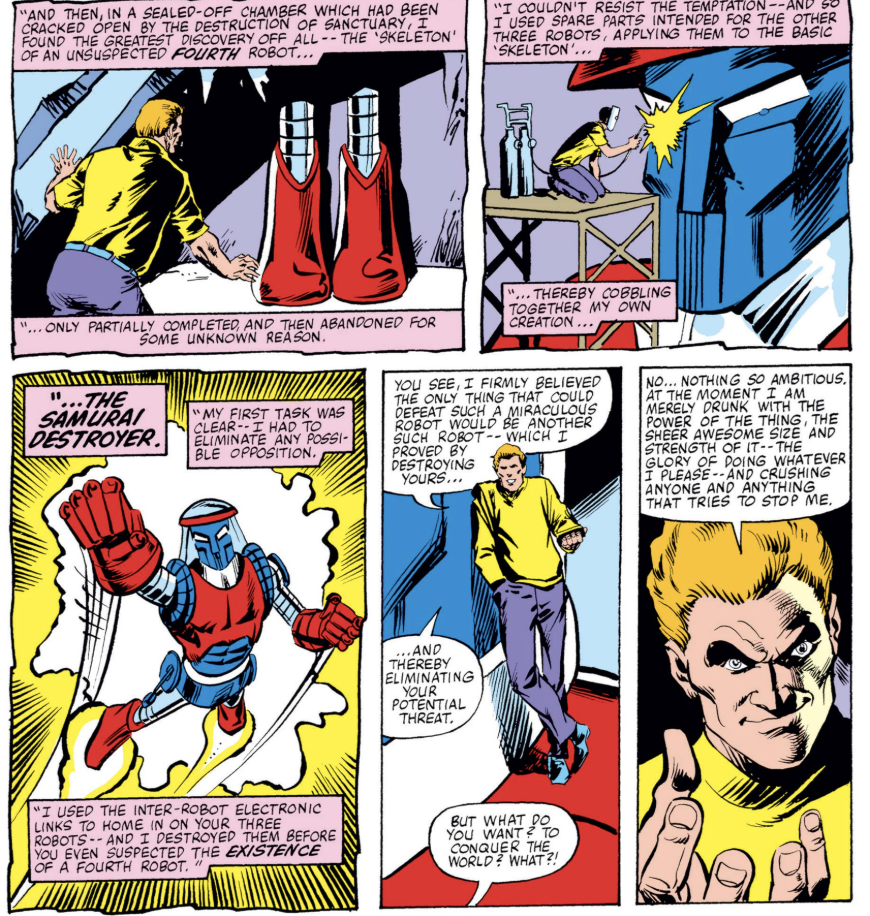
As ever, Moench is the master of unnecessary exposition. In this case, the villains’s origin is so lame he shouldn’t have bothered with a back story.


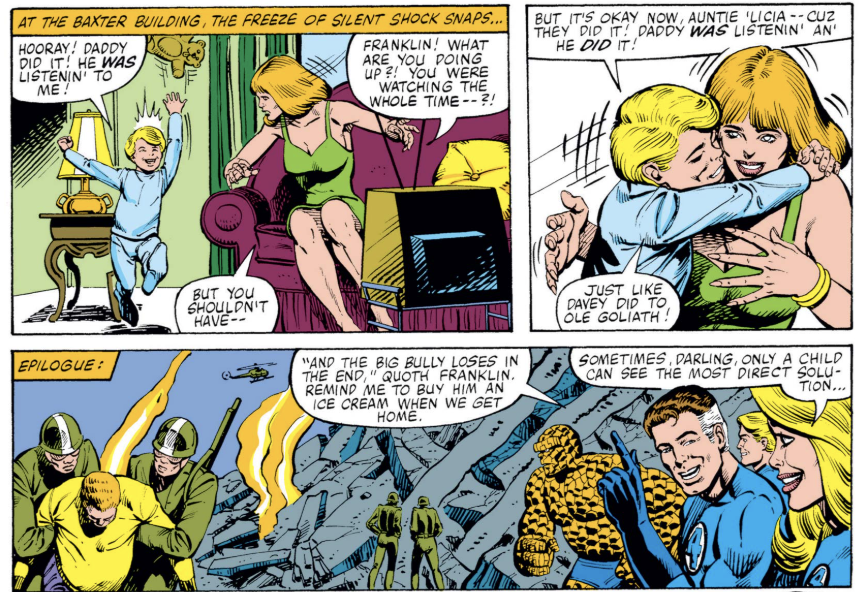
So early in the comic Reed patronizes Franklin, then later uses his story of David and Goliath to defeat the Samurai Destroyer, redeeming him in his son’s eyes. It’s as lame as it sounds.


Were they really still using steam trains in Czechoslovakia in 1980?


Overall

The less said about this, the better

“The World’s Greatest Comic Magazine!” Fantastic Four No. 225

03 Monday Aug 2026

Posted by percivalhenry in The World's Greatest Comic Magazine

≈ 4 Comments

Tags

Marvel, Fantastic Four, Thor, Marvel comics, 1980, Doug Moench, Bill Sienkiewicz, Fantastic Four 225, Odin

Fantastic Four 225
“The Blind God’s Tears”
Published September 1980
Writer: Doug Moench
Pencils: Bill Sienkiewicz
Inks: Pablo Marcos
Letters: Jim Novak
Inks: George Roussos
Editor: Jim Salicrup
Cover: Sienkiewicz and Joe Sinnott

Synopsis

Under the threat of death, the Fantastic Four labor to restore the powers of Korgon, the Norseman who was granted immortality and strange powers by a meteor millennia ago. They succeed, and after Korgon uses his power to recharge the battery of his civilization’s ice dome, he asks Mr. Fantastic to restore his humanity. To prevent this, one of Korgon’s henchmen sabotages the machine, flooding Korgon with power. He attacks the FF, who are joined in battle by Thor, dispatched by Odin who seems to be keeping an eye on these former Vikings. Driven mad, Korgon begins destroying the ice dome. Odin then appears and restores Korgon’s sanity, and a humbled Korgon allows the FF to depart.


What’s going on here?


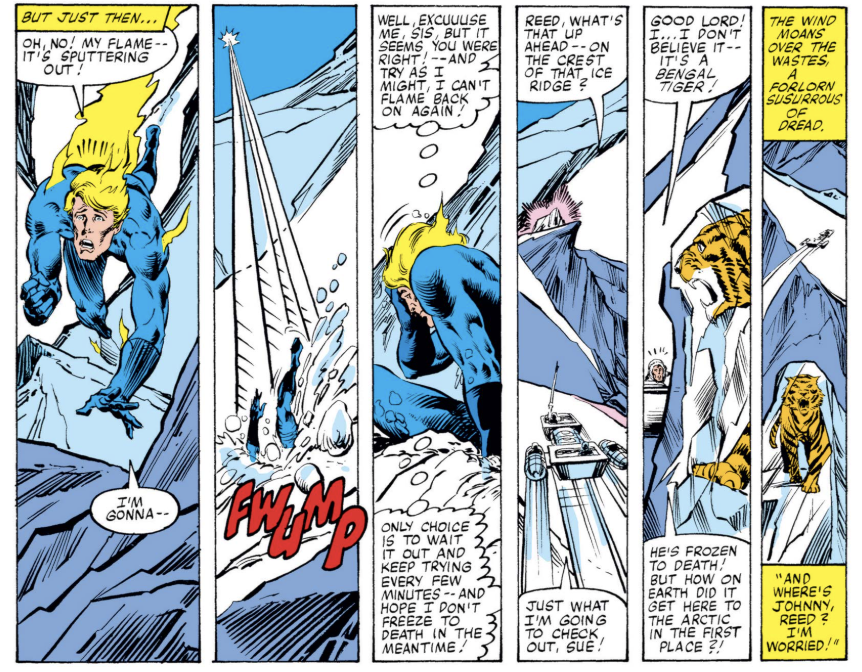
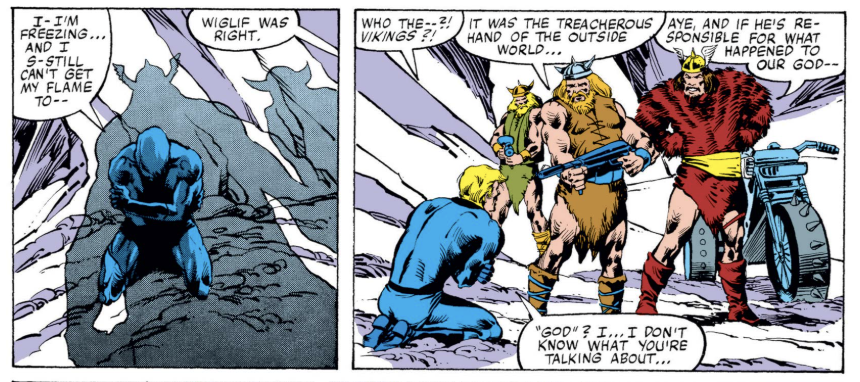
This is another clunky issue, with lots of exposition, a not-terribly-well explained appearance from Thor and Odin and a lackluster ending. There’s a throw-everything-against-the-wall quality to this story, with its lions and tigers in the arctic and Vikings with motorcycles, that leads to clumsy explanations that do little to further the story. The appearance of Thor makes more sense when you realize Doug Moench began writing Thor the next month, and as with last issue’s reference to Moon Knight, he apparently is happy to cross promote his books to goose their sales. FWIW, the appearance of Odin appearing to make everything better occurs again in FF 262 during the Trial of Reed Richards, although it’s handled much more adroitly by John Byrne.

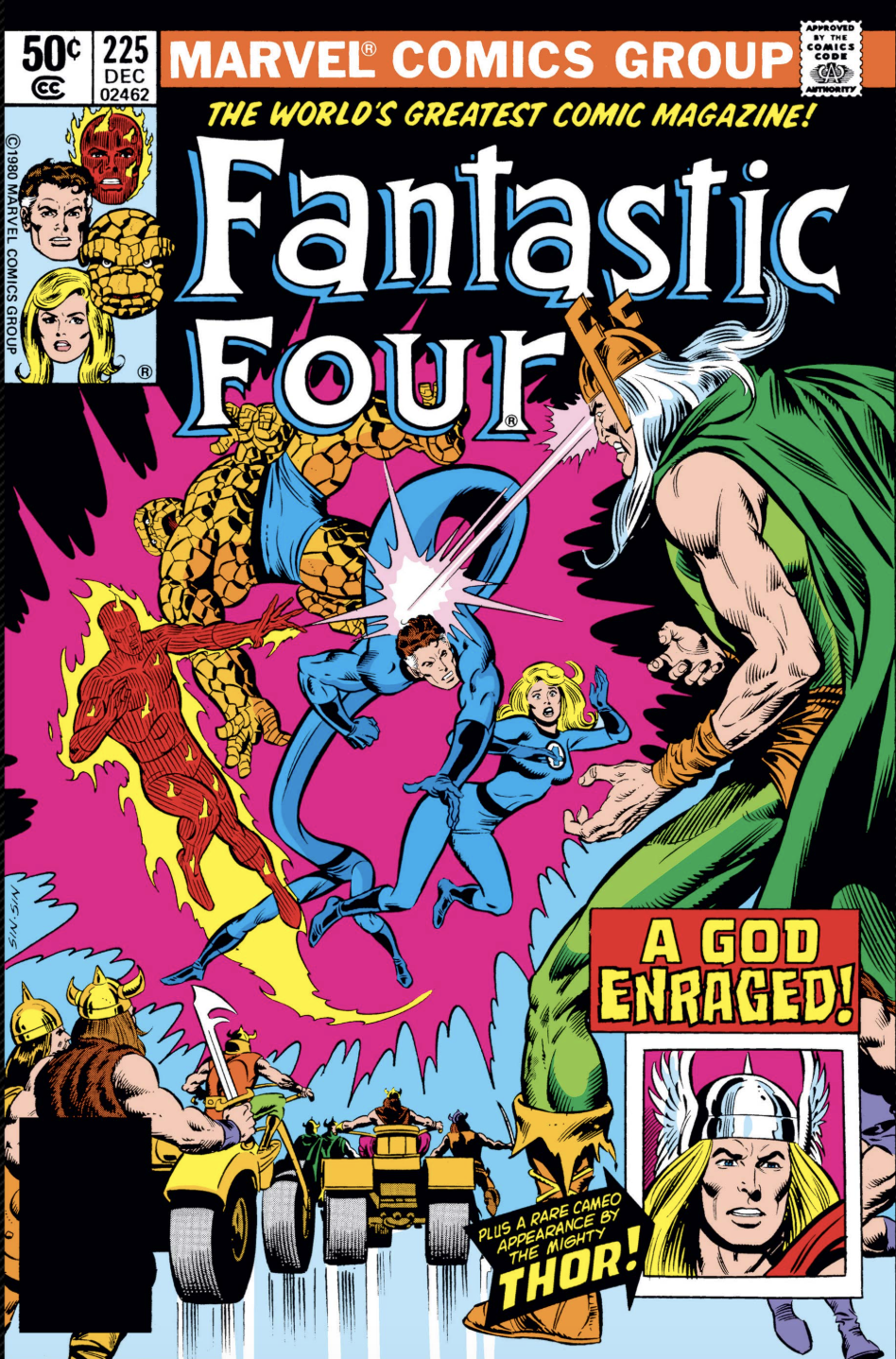
Pablo Marcos handles the inks again, although Joe Sinnott inked Sienkiewicz’s cover.

One oddity: Despite Korgon and his enclave surviving, this is apparently their first and only appearance. Given Marvel’s propensity for mining its back catalog for characters and concepts, their disappearance might say something about how future writers viewed this particular story.


What I Liked

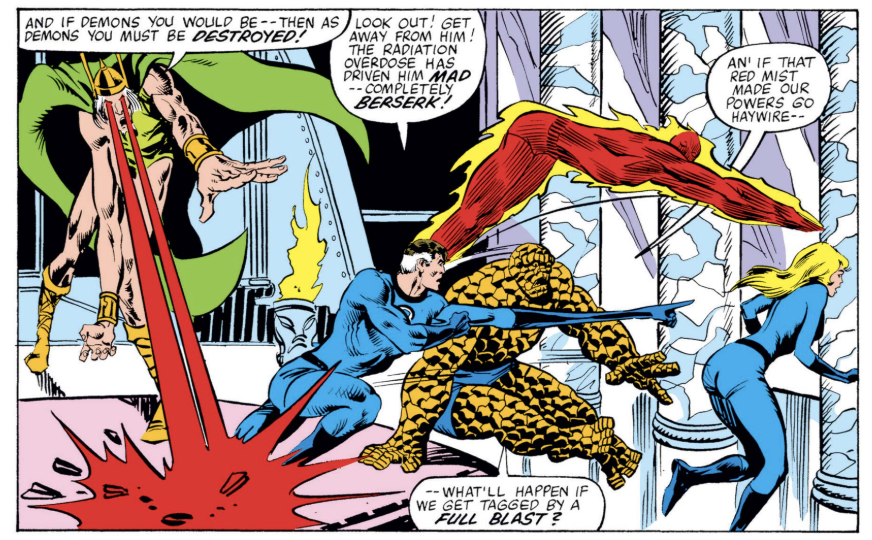
Bill Sienkiewicz’s pencils are again uneven, but he does hit some high notes. This long vertical panel of Korgon going nuts is great:


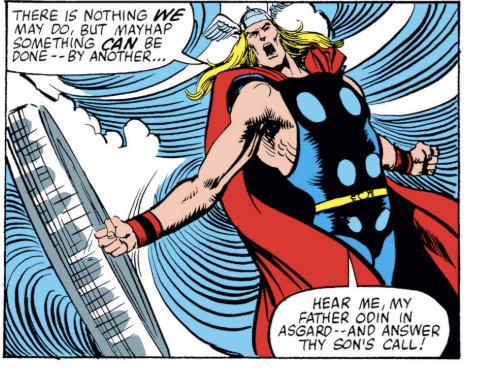
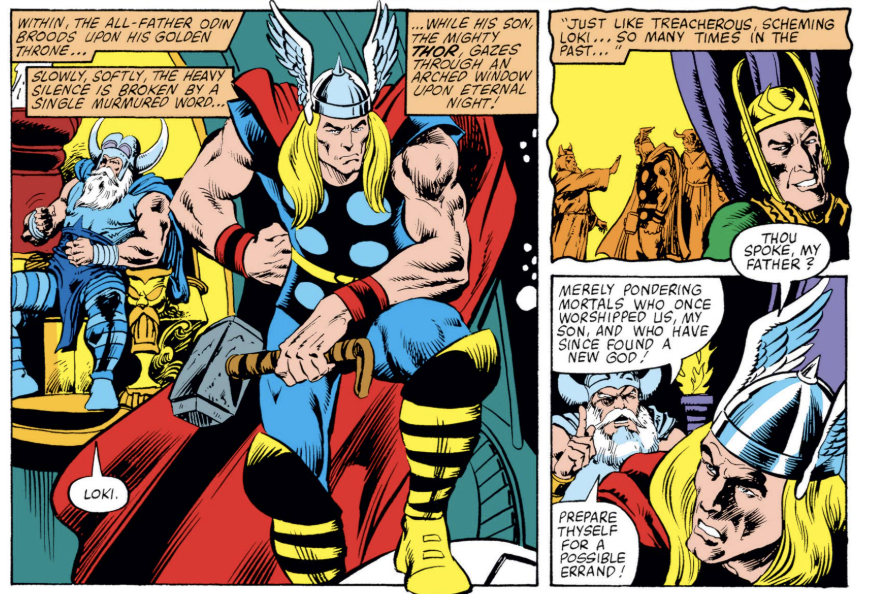
So is this panel of Thor


This may not be the best drawn panel but I enjoyed watching the FF cut loose a bit:


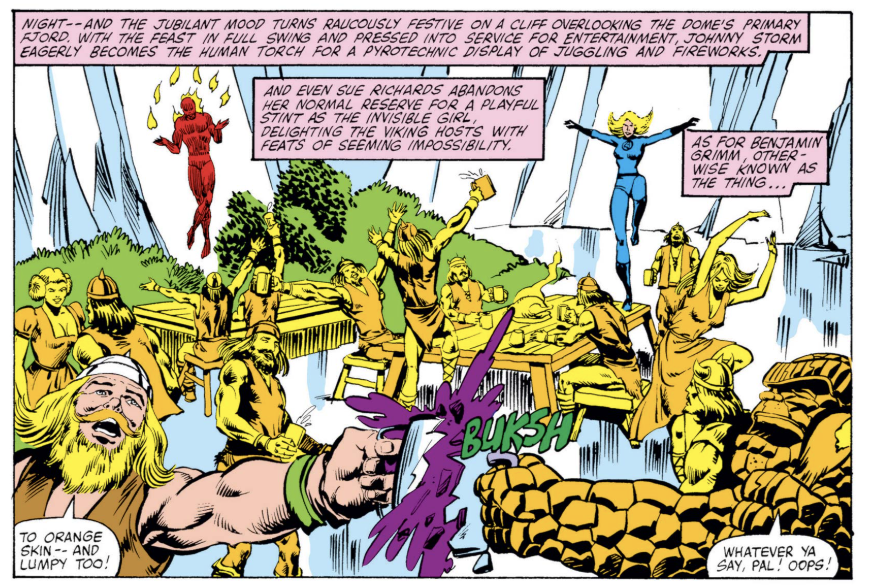
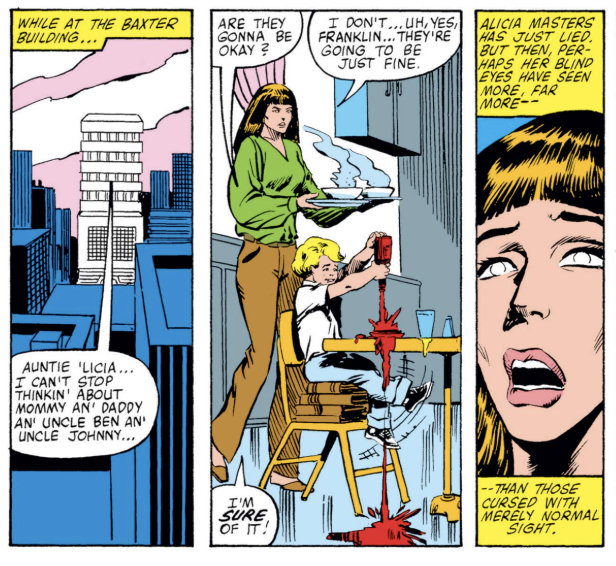
And I appreciated a few panels of Alicia and Franklin. On too many of the FF’s adventures that are completely absent.


What I didn’t like

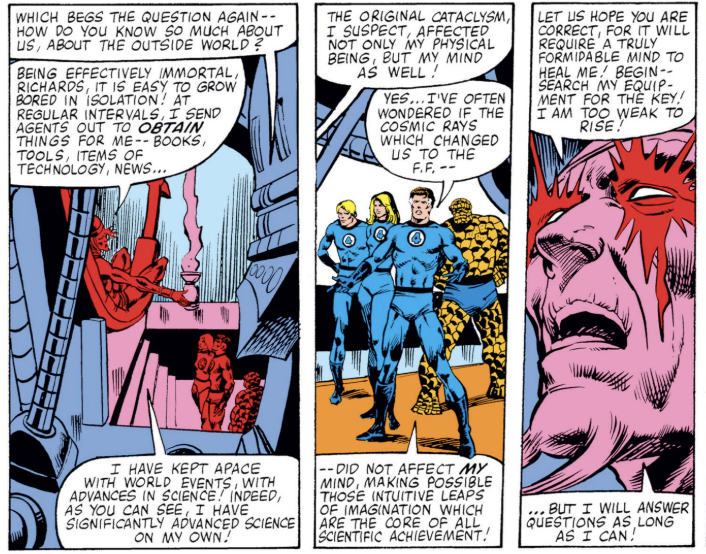
If you read the middle panel, you’ll see Reed is attributing his mental agility to the cosmic radiation that gave him his powers. This has been raised a few times in more recent years, but it seems like a pretty big revelation to drop in the middle of an unrelated story.


As mentioned, the appearance of Thor and Odin feels forced and is a bit of literal deus ex machina. It doesn’t help that Odin mentions Loki, suggesting he has something to do with the story (he doesn’t)


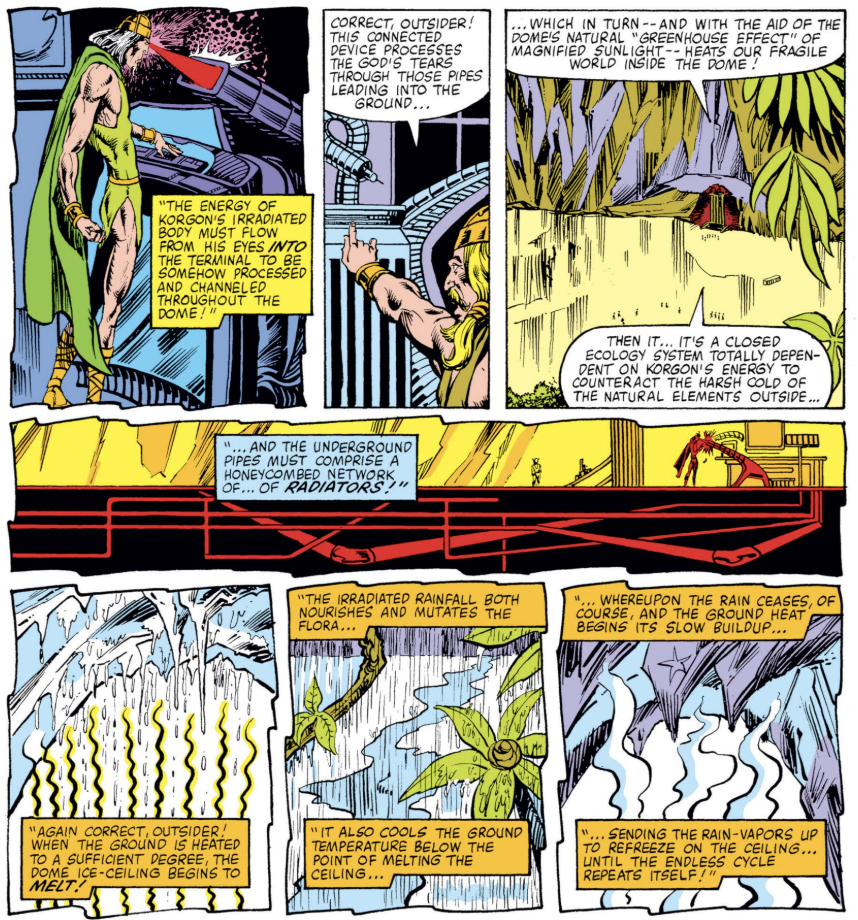
Also as mentioned, there are pages of exposition in this comic that feel totally unnecessary. I really did not need to know the secret of the Vikings’ irrigation system.


Anything else?

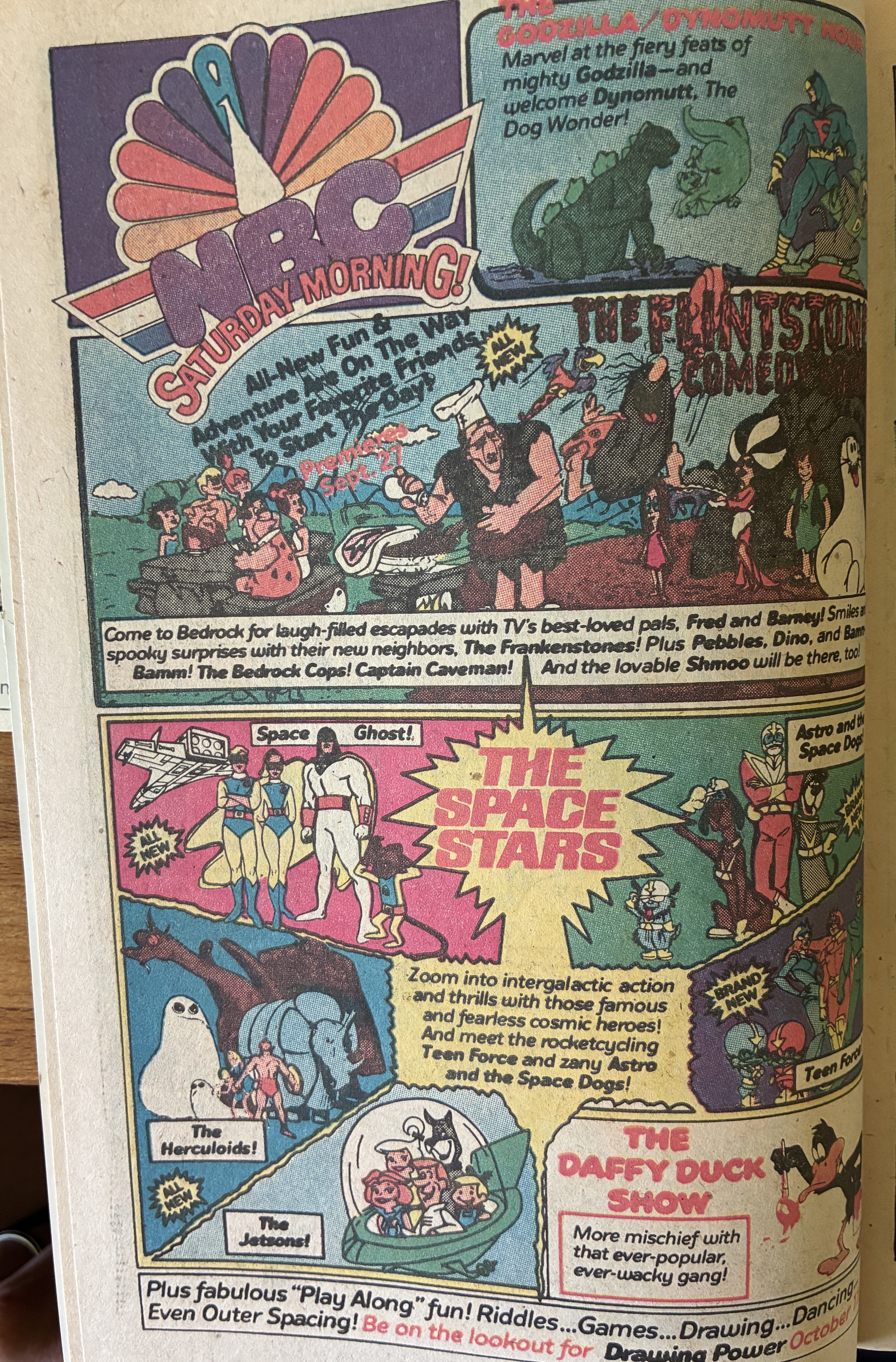
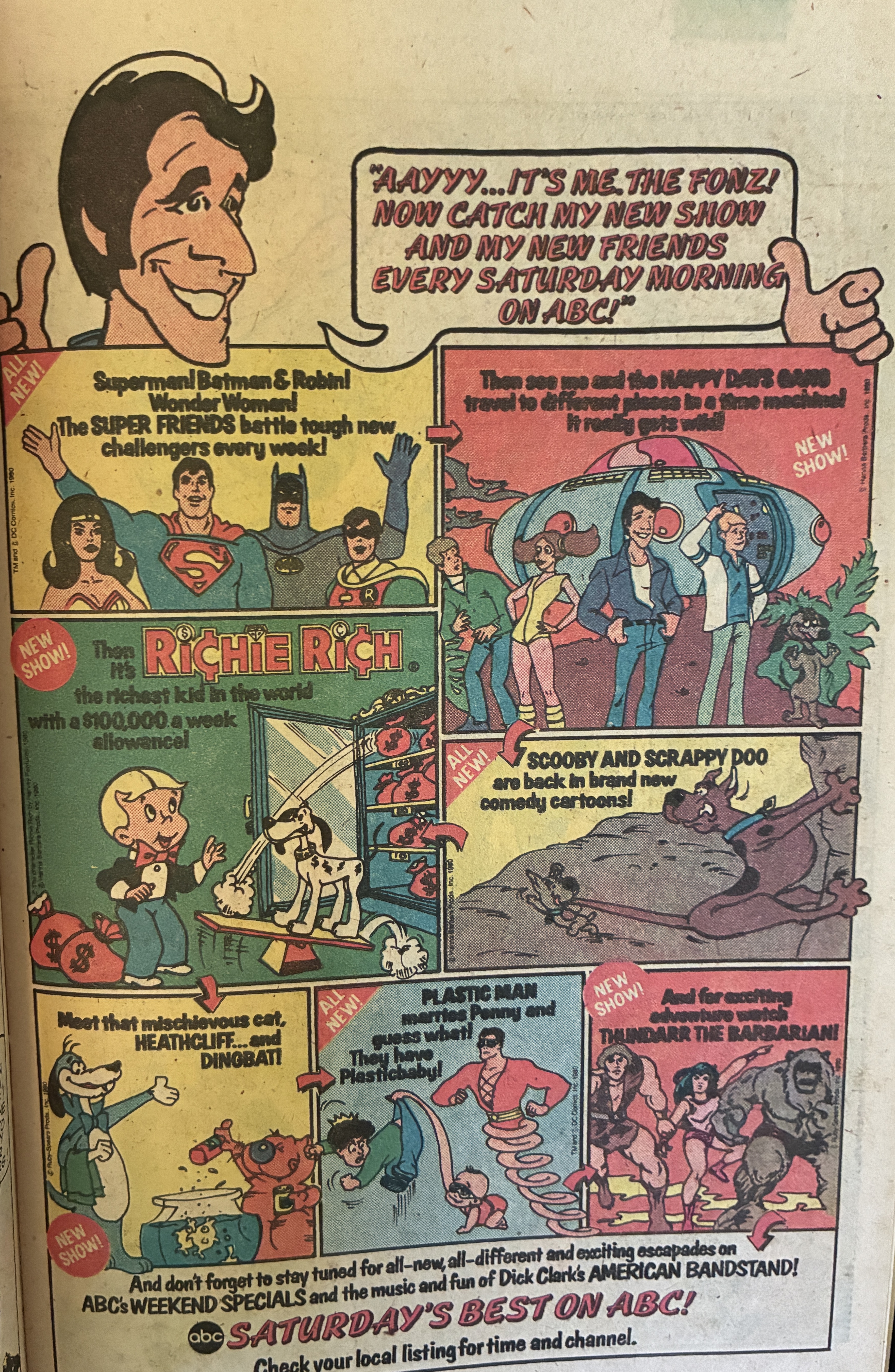
It’s that time of year again when the TV networks announce their Saturday morning schedules. Here are ads for NBC and ABC’s (CBS’s ran last month). Of note is Thundarr the Barbarian, a show created by Steve Gerber with character designs by comics legends Alex Toth and Jack Kirby, and the Herculoids, a personal favorite designed by Toth. Also, I have no recollection of the Fonz in space.


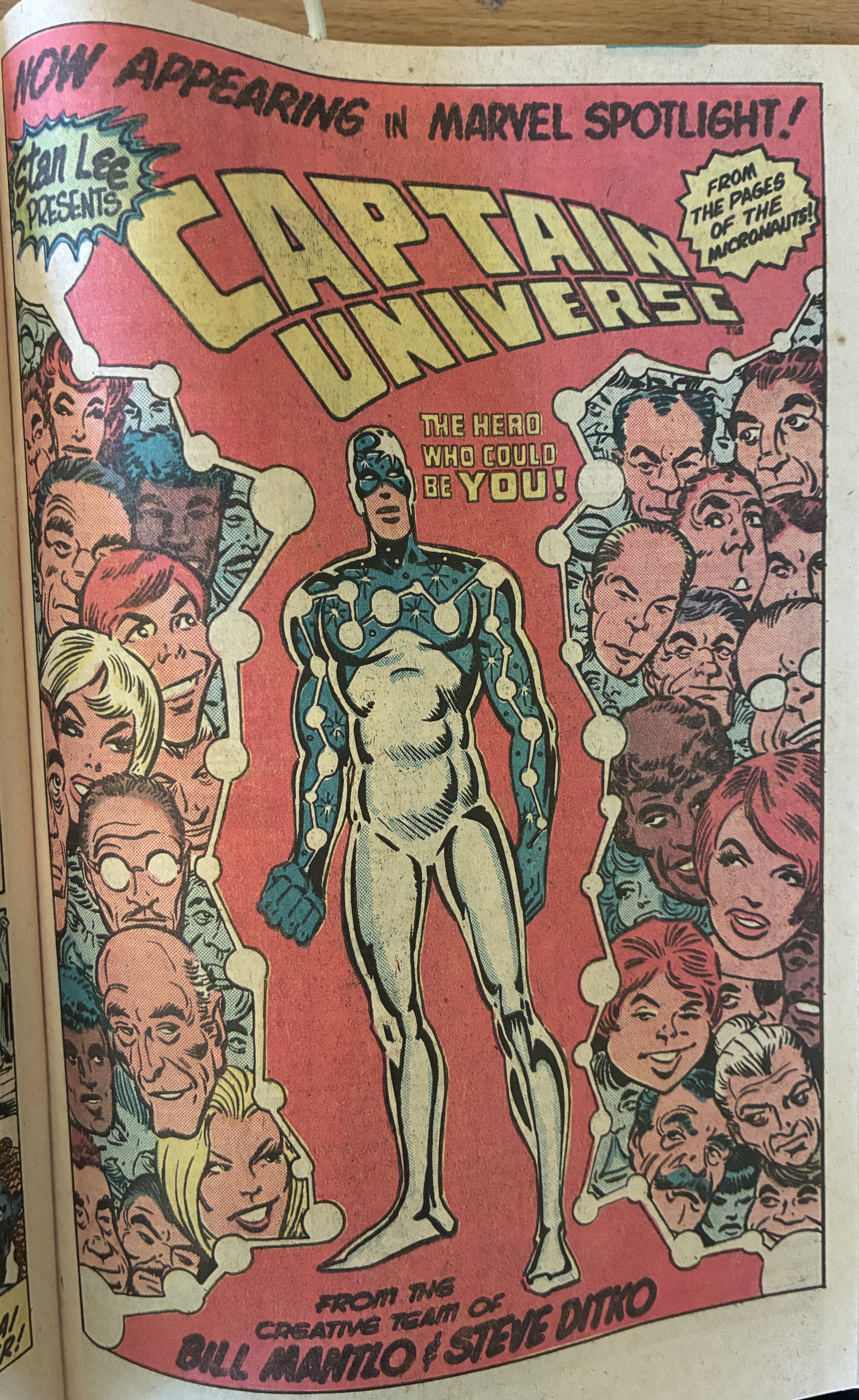
Also, a great house ad by Steve Ditko (this would be an amazing piece of original art to own).


Overall

Good riddance

“The World’s Greatest Comic Magazine!” Fantastic Four No. 224

27 Monday Jul 2026

Posted by percivalhenry in The World's Greatest Comic Magazine

≈ Leave a comment

Tags

1980, Bill Sienkiewicz, Doug Moench, Fantastic Four, Fantatstic Four 224, Marvel, Marvel comics

Fantastic Four 224
“The Darkfield Illumination”
Published August 1980
Writer: Doug Moench
Pencils: Bill Sienkiewicz
Inks: Pablo Marcos
Letters: Jim Novak
Colors: George Roussos
Editor: Jim Salicrup
Cover: Sienkiewicz and Joe Sinnott


Synopsis

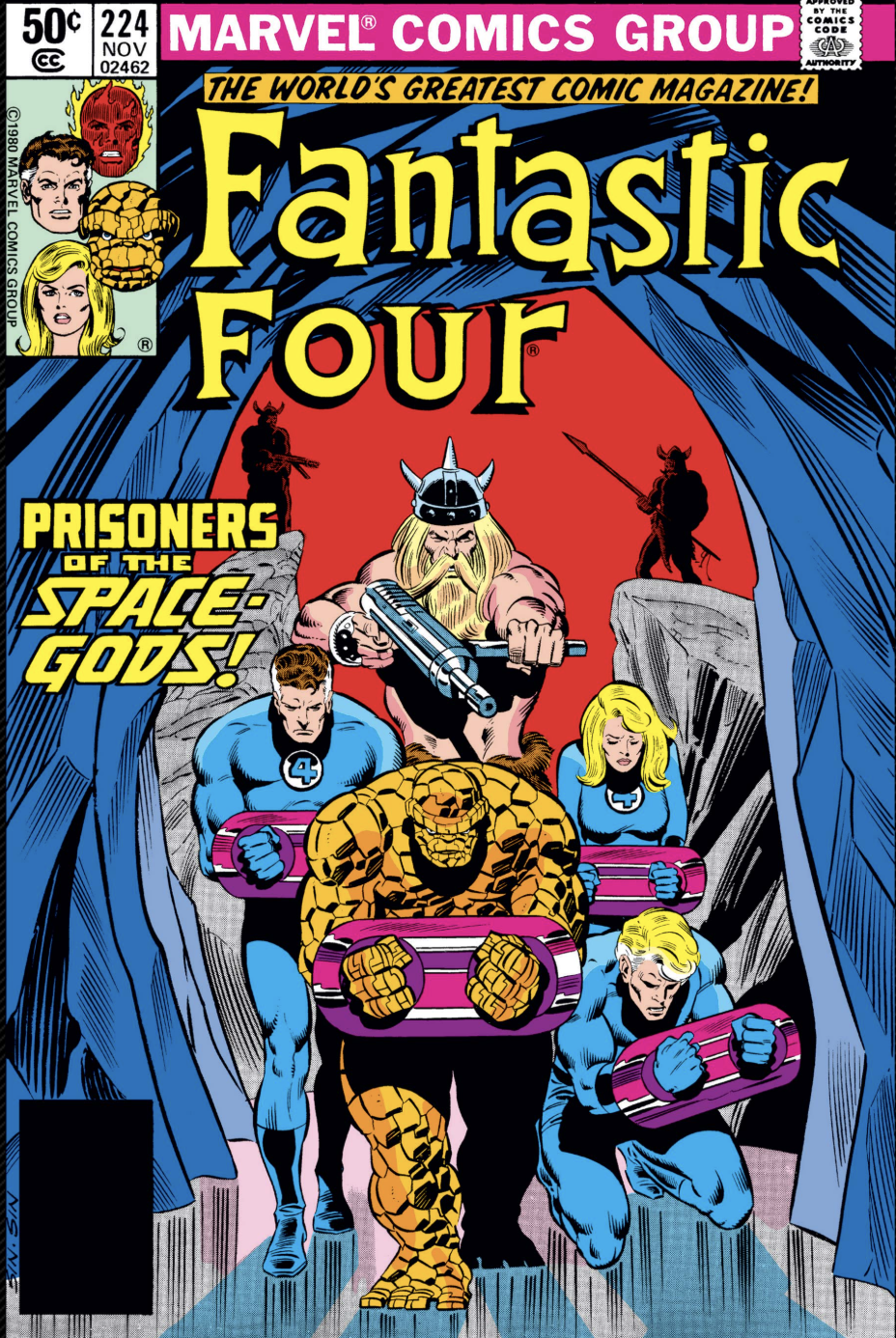
The Fantastic Four, home at the Baxter Building, discover that a strange red mist over New York makes their powers erratic. They trace the source of the mist to the Arctic, and depart in their Pogo Plane. While making a reconnaissance, the Human Torch loses power and is captured by what appear to be Vikings with high-tech weapons. Eventually the rest of the team is confronted by the Vikings, and after a skirmish, decide to become prisoners in order to find Johnny and uncover the mystery behind their failing powers. The source is revealed to be Korgon, a Norseman who encountered a meteor-like object that granted him powers and (apparently) very long life. Exiled from his village, he gathered a following and founded a settlement under an ice dome in the far north. He tells the FF he is now dying and demands they help him or lose their lives.


What’s going on here?


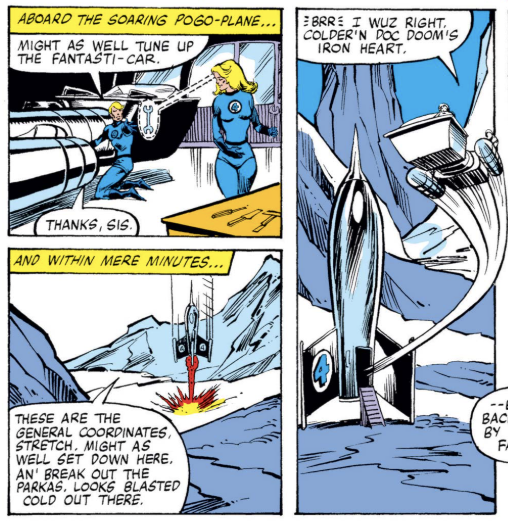
This is a clunky, old-school adventure that feels like it came from golden age of science fiction. It’s probably the kind of story Doug Moench was very comfortable spinning, given the dozens of similar stories he wrote for Warren books like Eerie and Creepy. Unfortunately, the set-up of this story — the FF must investigate a strange presence on the Arctic — reads very similarly to the John Byrne-written story in issues 220 and 221, and it’s odd that editor Jim Salicrup didn’t object. And like a lot of those early sci-fi stories, this one is full of plot holes and unexplained inconsistencies that end up distracting from what could be a fun story.

The pencils from Bill Sienkiewicz are generally solid and the comic is inked by Pablo Marcos, filling in for Joe Sinnott, who we are told is busy working on the Superman / Spider-Man crossover (Sinnott does ink the cover). Instead of a letters page or Bullpen Bulletins, the comic includes a number of pinup pages, some recycled and some new (which we will see later).


What I liked

Sienkiewicz has some strong images, here, like this parallel structure of Johnny in the same basic pose in consecutive panels.


I liked this sequence too:


What I didn’t like

Sienkiewicz also has some ill-conceived sequences with no transition from one scene to another, like here:

And here:


One of the unexplained oddities in the story is the Vikings speaking the same language as the FF:


How does the Fantasticar fit inside the Pogo Plane?


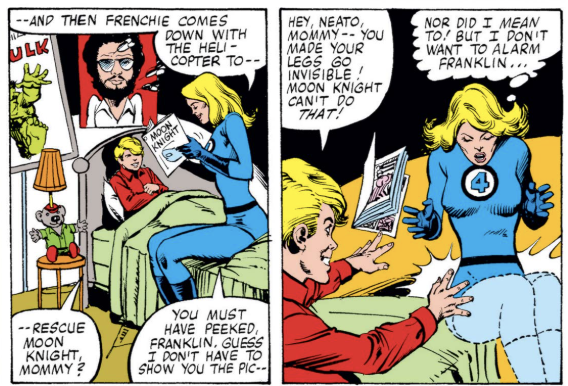
Lastly, while I respect the Marvel tradition of inserting its own comics into its stories, having Sue reading Franklin an issue of Moon Knight — the same month Moench’s Moon Knight No. 1 debuted — feels a bit much (and is that a poster of Jeff Lynne on the wall?).


Anything else?

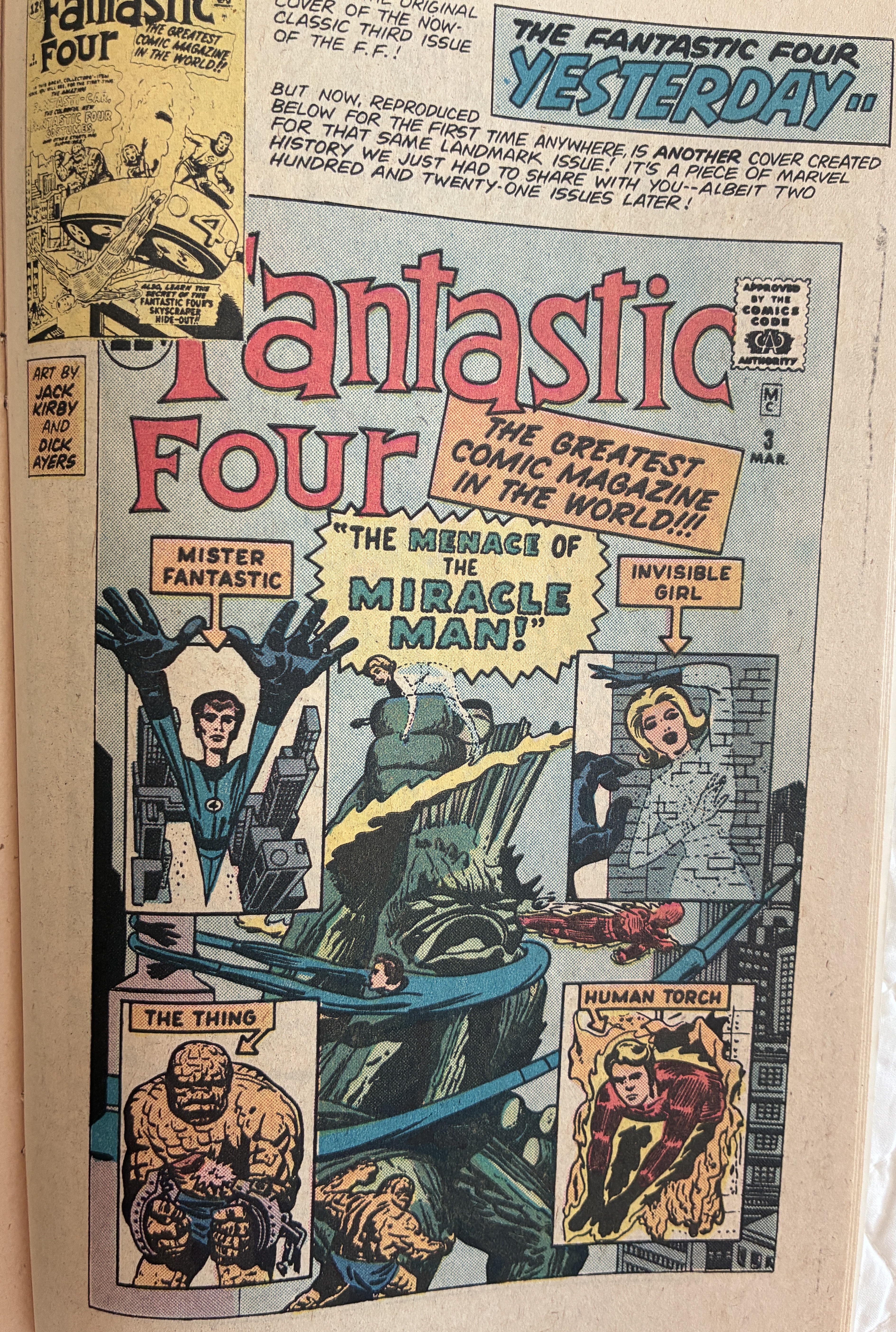
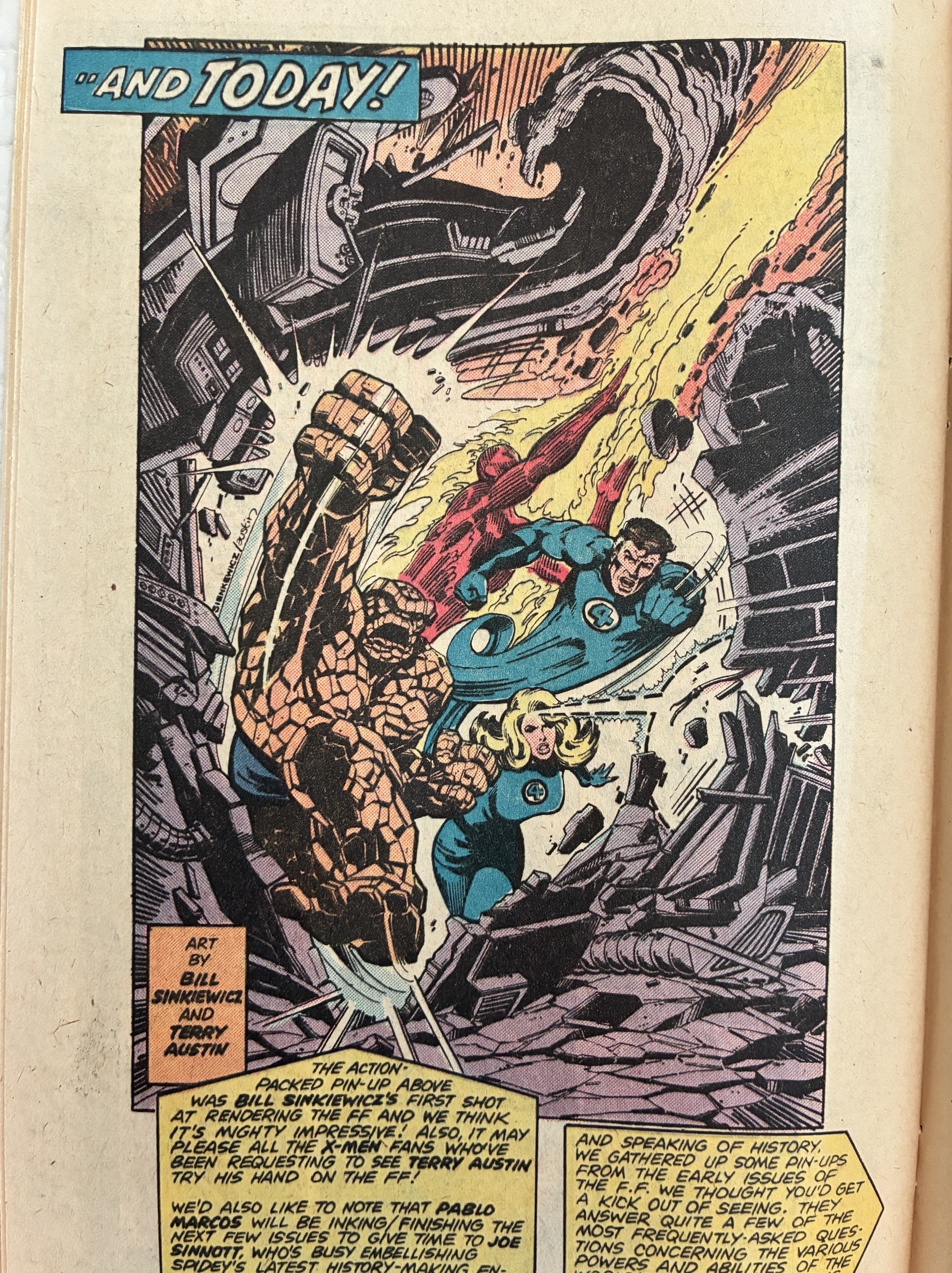
For unexplained reasons, this issue has an alternate version of the cover of FF 3 by Jack Kirby and Dick Ayers, as well as a new FF pinup (probably a unused cover) from Sienkiewicz and Terry Austin, which looks pretty snazzy.


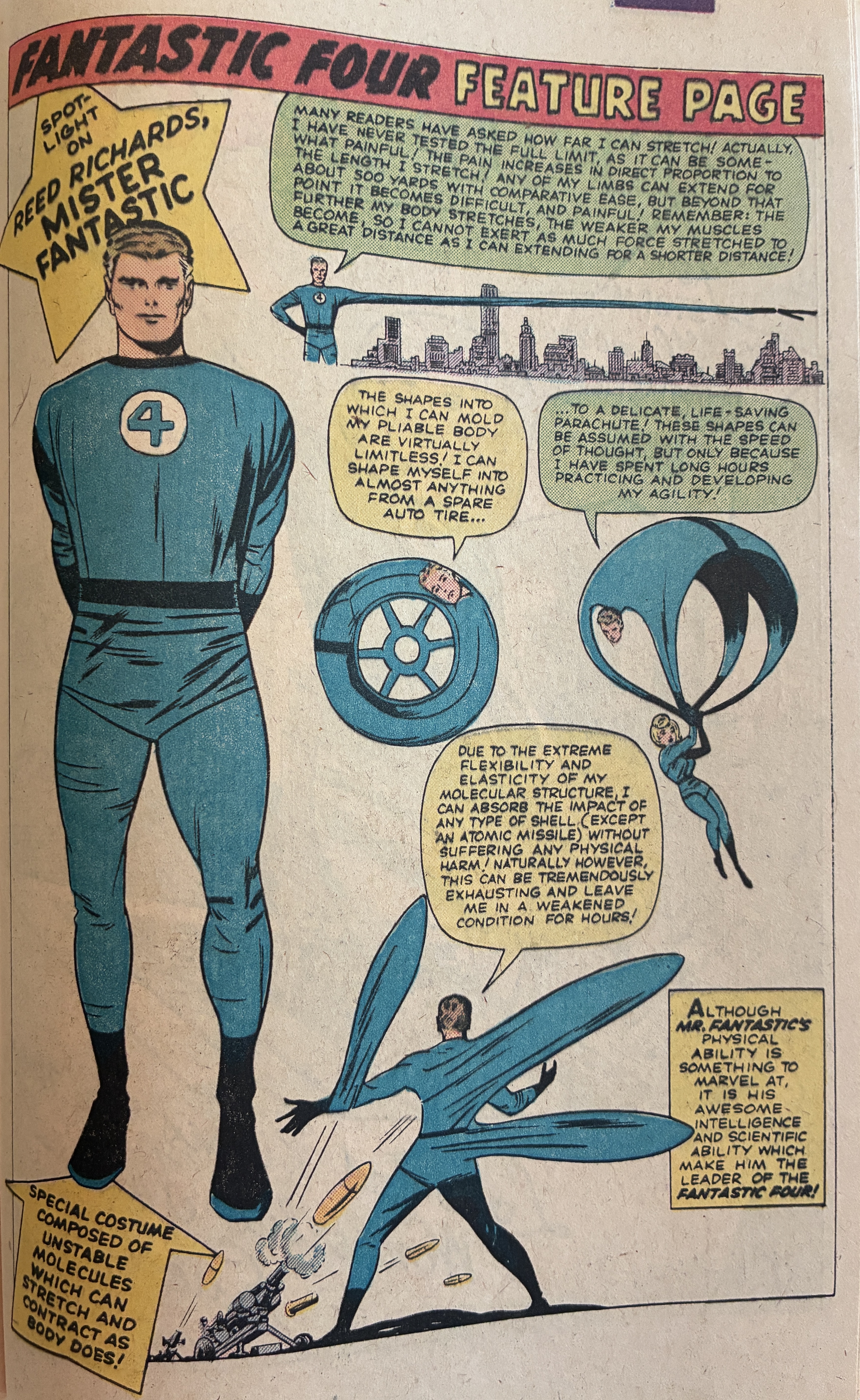
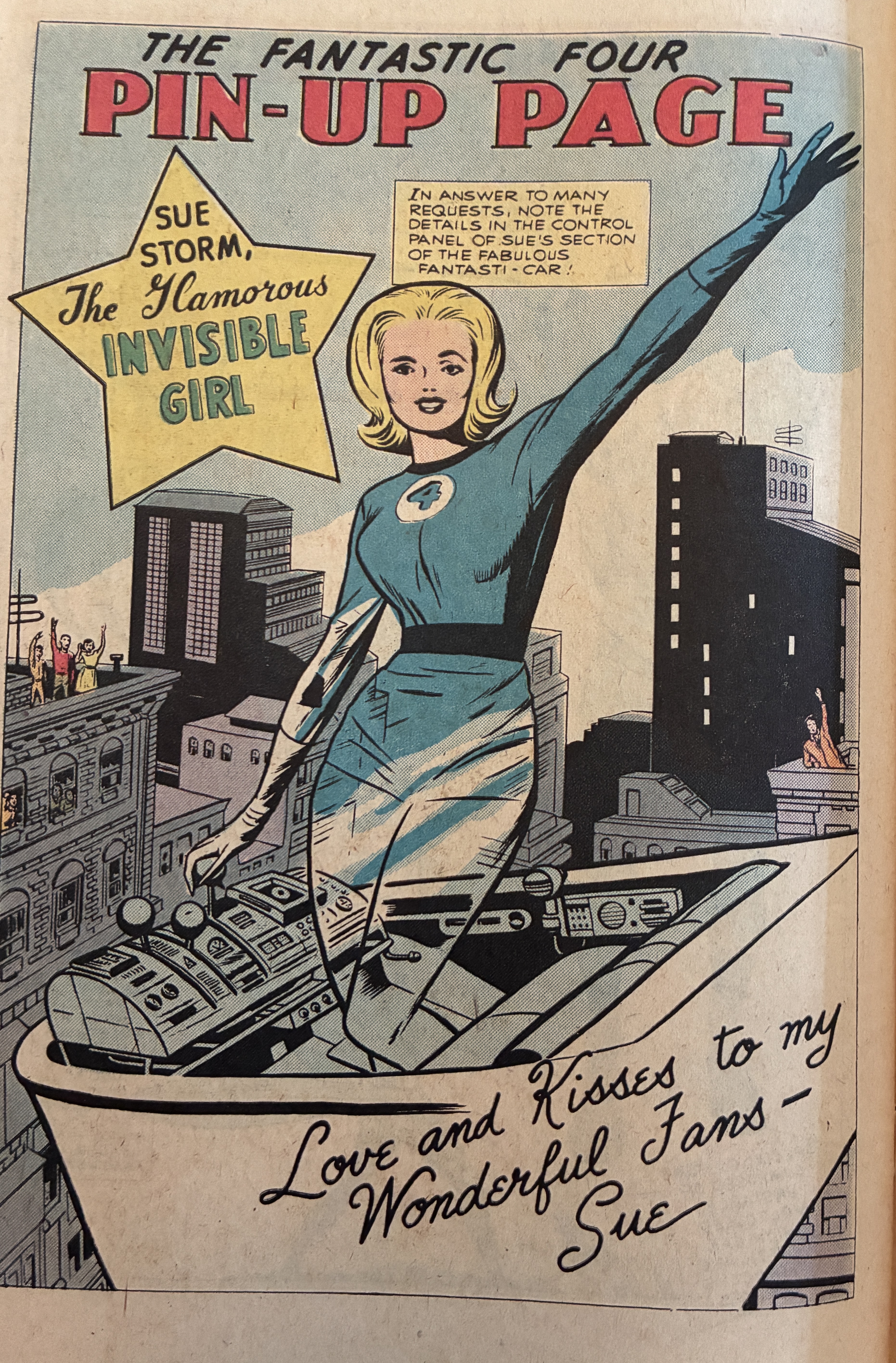
Additionally, there are four pages of vintage Kirby pinups (oddly, there were two of Johnny and none of Ben). Here are three of them:


Overall

Pretty forgettable

“The World’s Greatest Comic Magazine!” Fantastic Four Annual No. 15

18 Saturday Jul 2026

Posted by percivalhenry in The World's Greatest Comic Magazine

≈ Leave a comment

Tags

1980, Captain Marvel, Doug Moench, Dr. Doom, Fantastic Four, Fantastic Four Annual 15, George Perez, Marvel, Marvel comics

Fantastic Four Annual 15
Published July 1980
Cover: George Perez & Joe Sinnott
Editor: Jim Salicrup

“Time for the Prime Ten!”
Writer: Doug Moench
Pencils: Perez
Inks: Chic Stone, John D’Agostino and Mike Esposito
Letters: Jim Novak
Colors: George Roussos and Ben Sean

“The Power of the People!”
Writer: Moench
Pencils: Thomas Sutton
Inks: Sutton
Letters: Novak
Colors: Sean


Synopsis

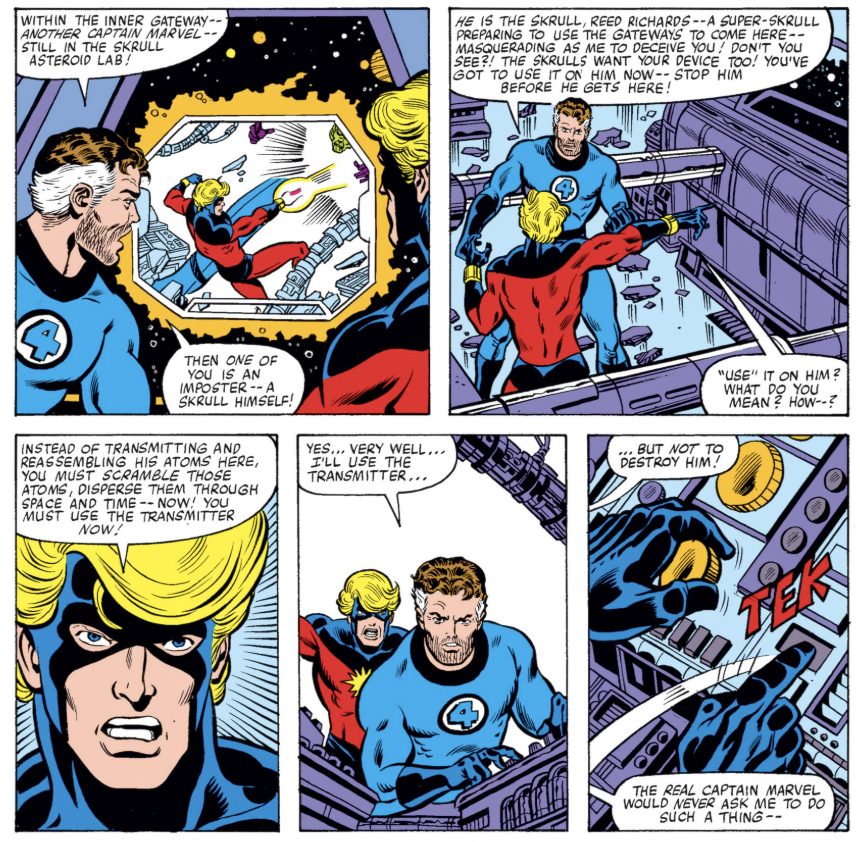
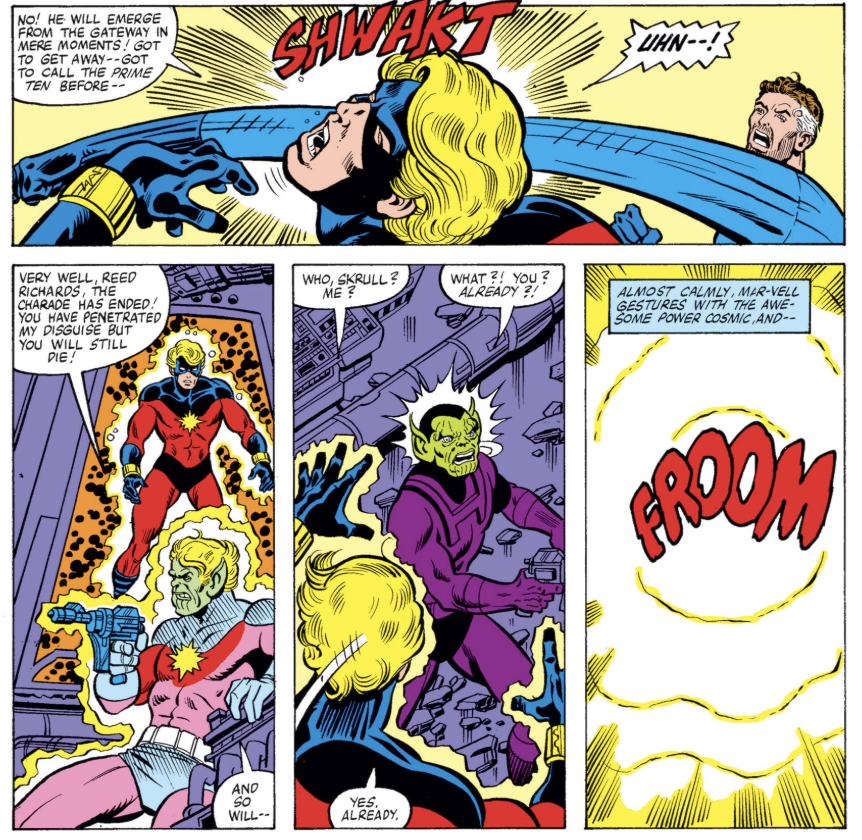
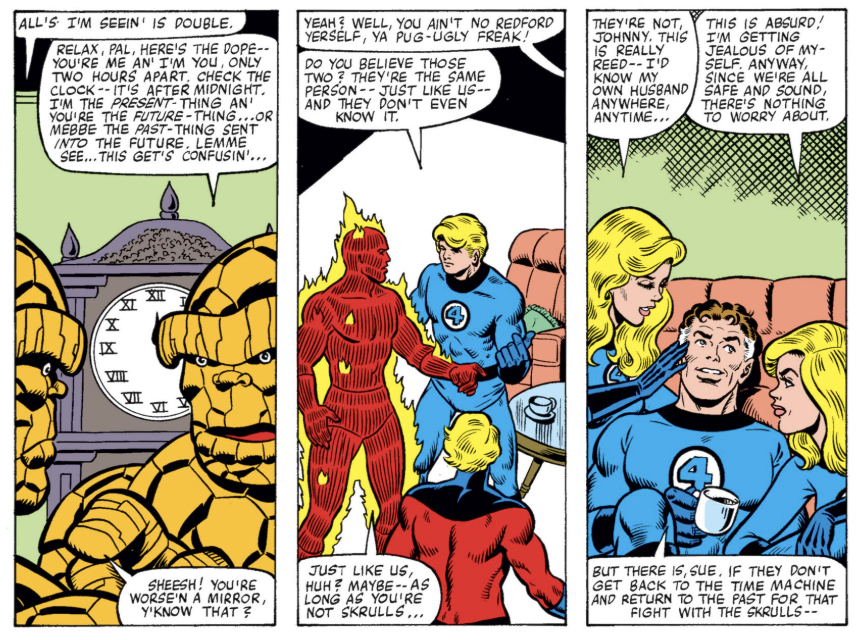
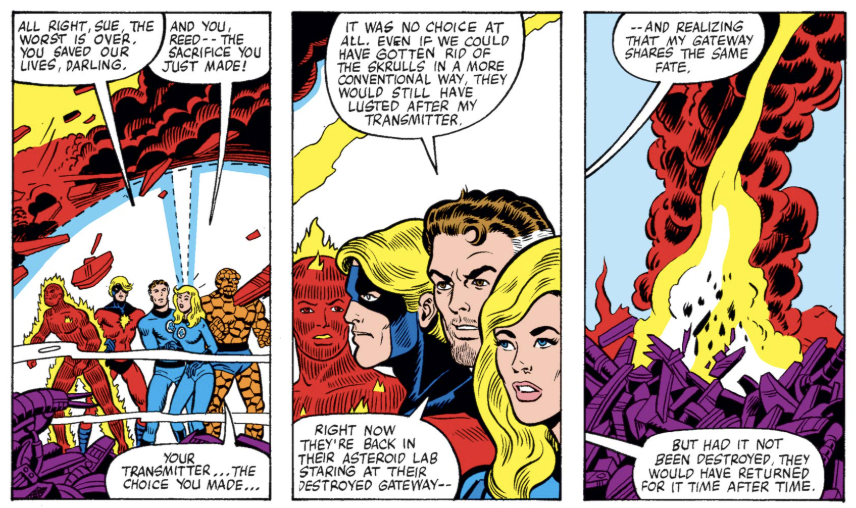
In the first story, Mr. Fantastic — after toiling for weeks in his lab — makes a breakthrough discovery that allows him to transmit energy through the air. But unexpectedly, Reed realized it has opened a portal into space, where he witnesses Captain Marvel, and discovers solid objects can also be transmitted. Meanwhile, the FF gets an unexpected visitor, their former mailman Willie Lumpkin, who soon reveals himself to be a Skrull. The Skrull confronts Reed, telling him he has captured the rest of the team and demanding he turn over his new energy transmitter. Suddenly, Captain Marvel appears, traveling through the energy transmitter, and asks Reed to hand it over so he can defeat the Skrulls. Reed deduces Marvel is also a Skrull at the same time the real Marvel appears. More Skrulls arrive, but with the rest of the FF, they are defeated and sent them back to space, destroying the transmitter at the same time. An epilogue reveals Sue, Ben and Johnny were never captured but were shunted two hours into the future by the Skrull.


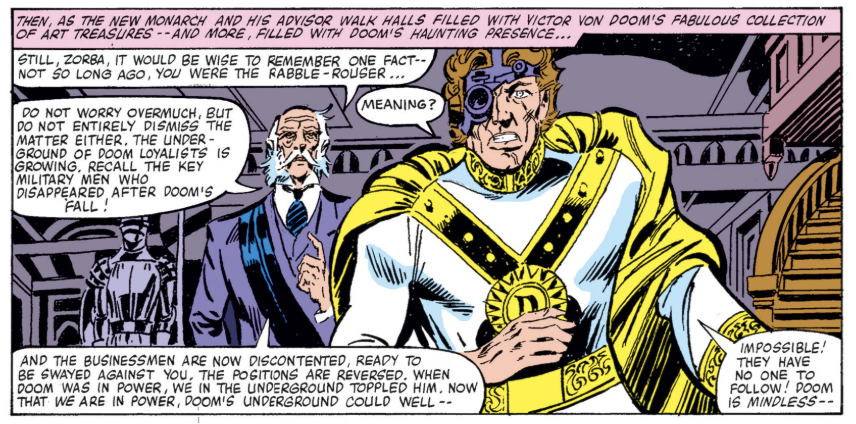
The second story takes place in Latveria, where its new leader Zorba, who has introduced democracy after the defeat of Dr. Doom in FF 200, is confronted by protests. Anxious, Zorba checks on the catatonic Doom only to discover he is a robot replaced by Doom loyalists. They then steal Doom’s armor, and through some science, use the armor’s energy to restore Doom to consciousness. Doom then drives out Zorba and makes plans to regain control of Latveria.


What’s going on here?


This is a pretty satisfying pair of stories and as a young reader I would have been pretty pleased with 75 cent investment in this annual. The Skrulls and Doom are not only among the FF’s oldest enemies (first appearing in issues 2 and 5) but some of their best, and put together these stories feel like a bit of a reset, returning the FF to core principles.

In some ways, the shorter Doom story is the better of the two. The FF don’t appear, but it’s a tightly plotted tale that further develops Latveria as a character in its own right, and gives more dimension of Doom’s henchmen and lackeys like Boris and Hauptman. It also serves the important role of returning Doom to the status quo ante and restoring a major part of the FF’s universe.

My sense is Moench — who spent a decade writing mostly horror, kung-fu and science-fiction comics — is more comfortable with a story of palace intrigue than the classic super hero adventures he’s tasked with writing for the Fantastic Four. The artist, Thomas Sutton, who is making his FF debut, had a very long career, starting in 1967 mostly at Marvel and Warren before working at DC and on independent comics in the 80s and 90s. He and Moench appear to have worked on many titles together.


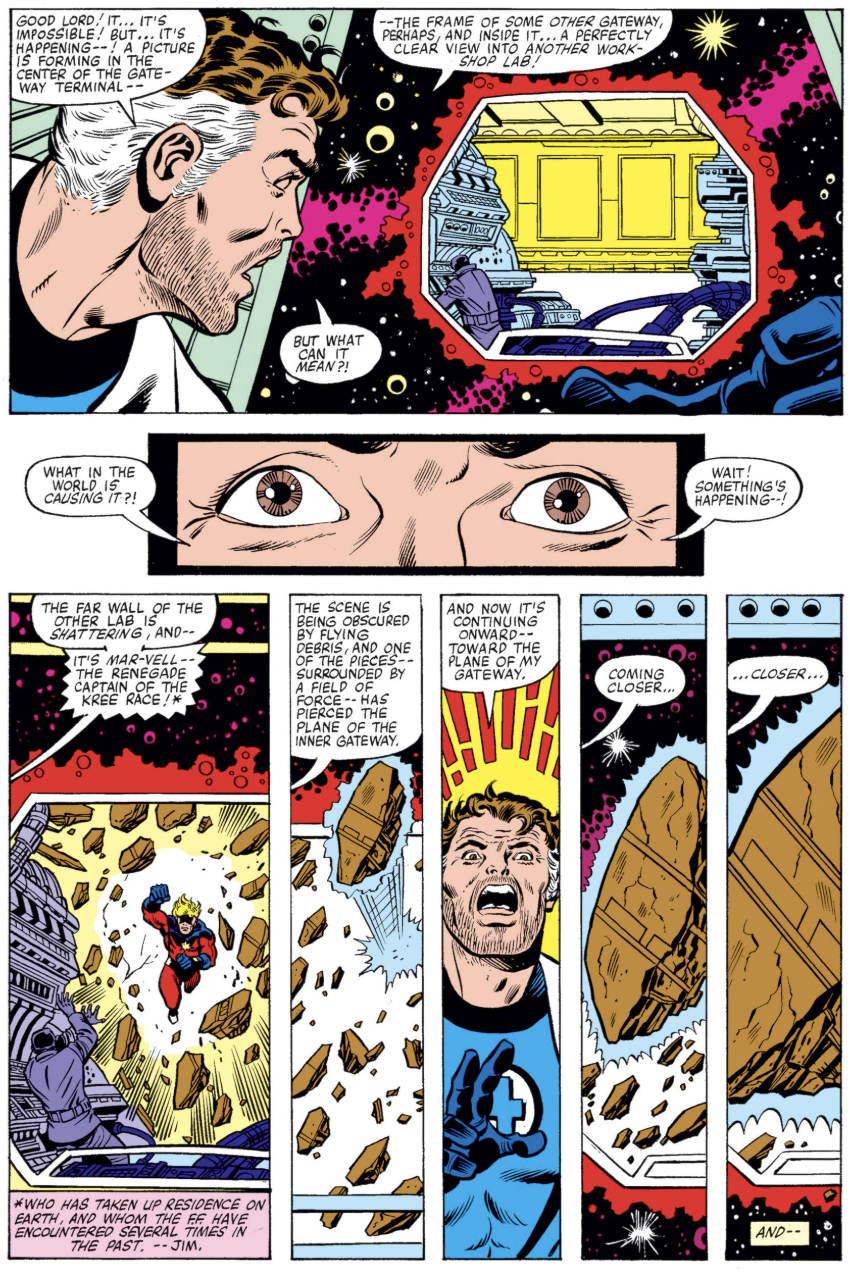
The other, main story is a bit more uneven, although still solid. The appearance of Captain Marvel, or Mar-Vell, is an interesting one. His own comic, last written by Moench, was just canceled, and I suspect Marvel was under pressure to use him in order to preserve the copyright, which was the subject of a long and tangled legal battle. Marvel was killed off by Jim Starlin right before I began reading comics, and unlike virtually every other deceased hero, he has managed to stay dead. Because I never made the effort to read his back issues, he’s always been a bit of a mystery. I’m not sure his appearance here was particularly illuminating, but it’s fun to see a new guest star.

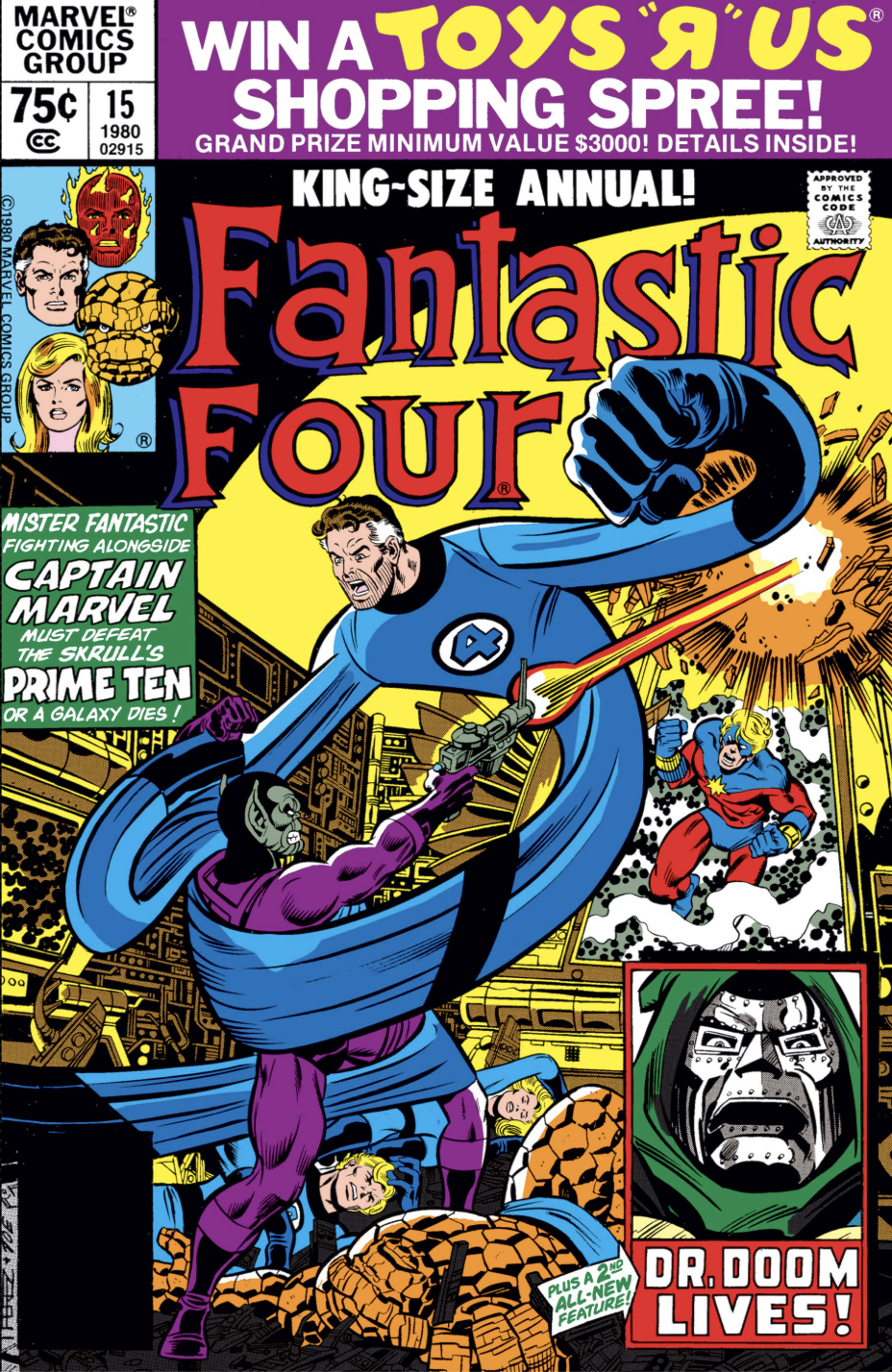
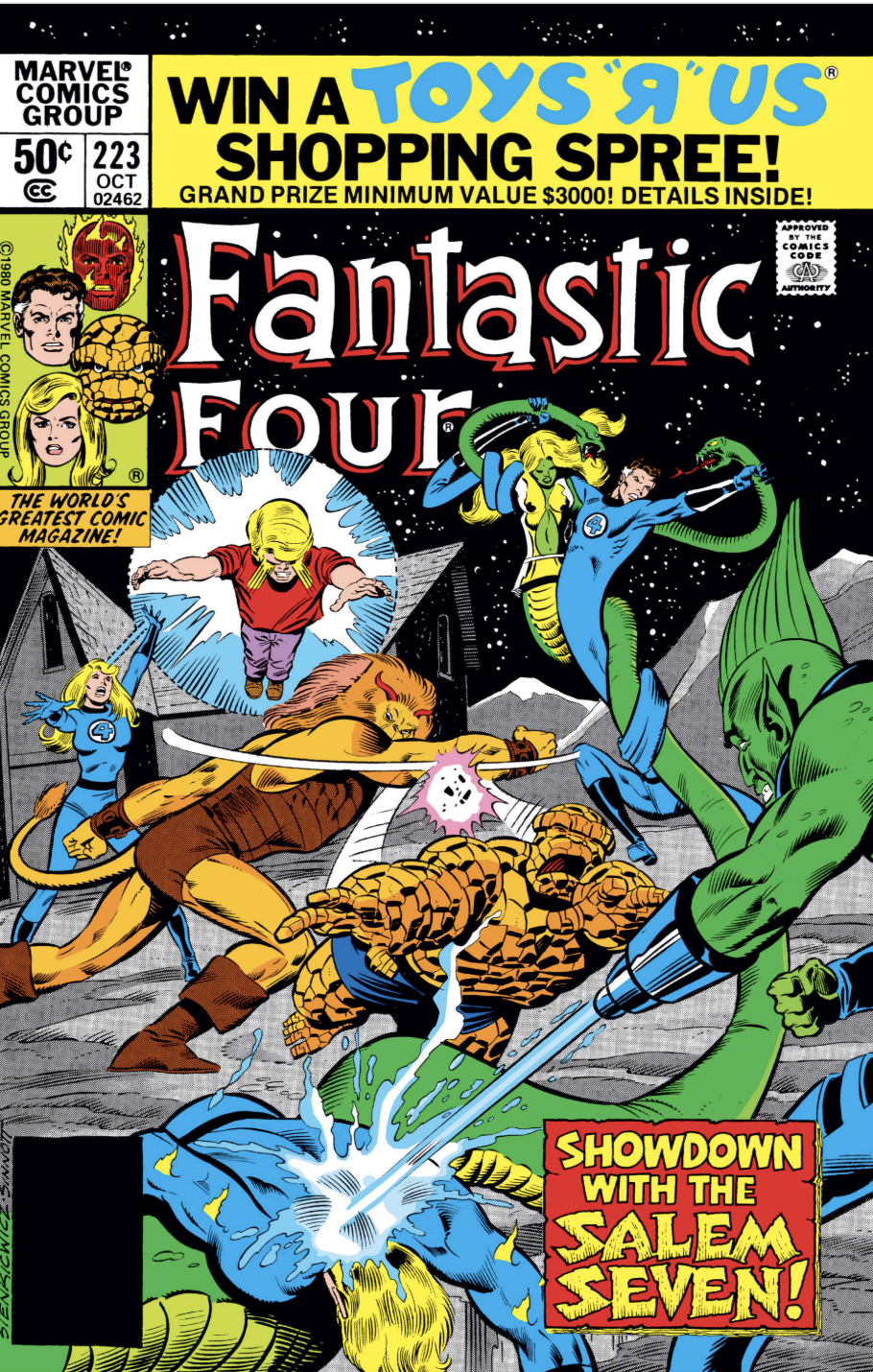
George Perez returns to pencil the story, although he is credited only with breakdowns. Three inkers (Chic Stone, John D’Agostino and Mike Esposito) finished the art, although I’m not skilled enough to identify what pages were inked by what artists. Despite all that, Perez’s stamp on this comic is pretty clear, particularly in his dynamic layouts. Perez’s cover, inked by Joe Sinnott, is also excellent (although marred by that dumb Toys R Us ad)


What I liked

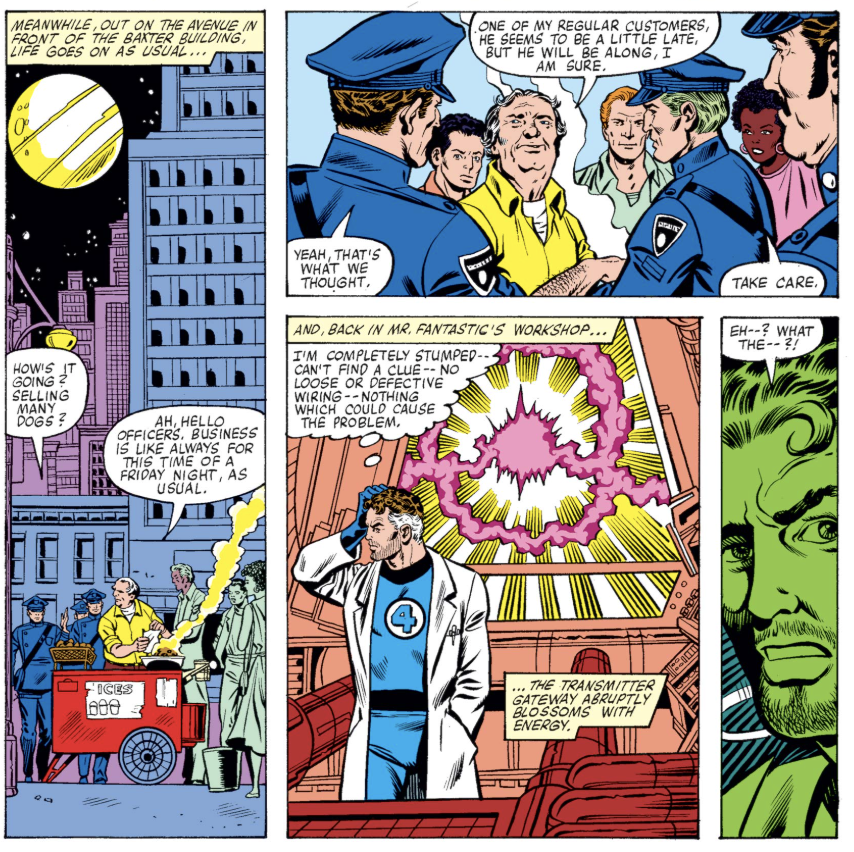
Moench does a good job of keeping us guessing throughout the story, particularly with some odd cutaways to ordinary people on the streets of Manhattan who have nothing to do with the story.

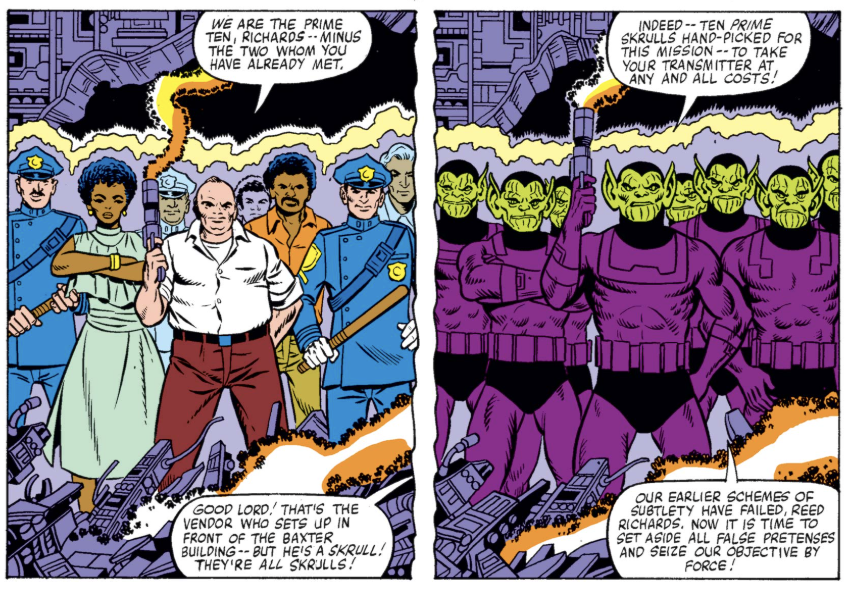
Only later are they revealed to be the Prime Ten Skrulls.

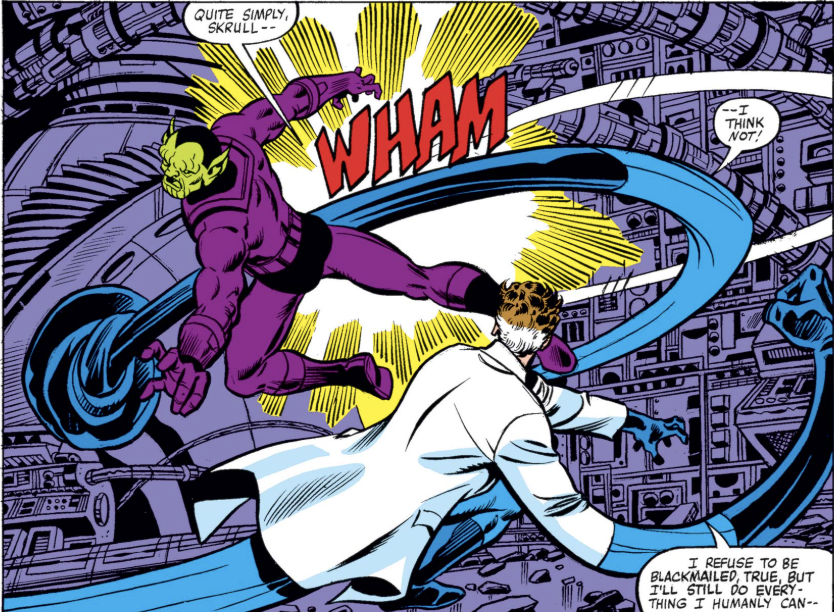
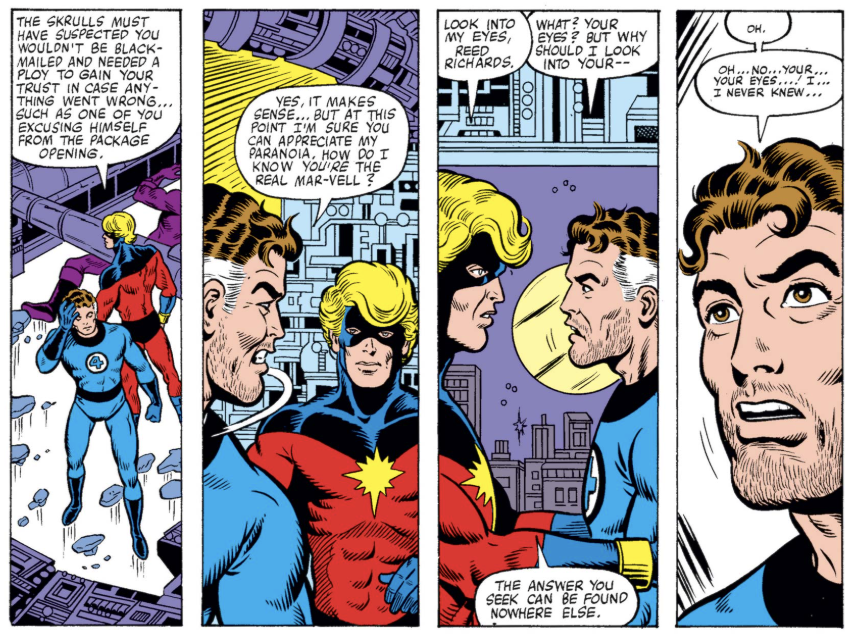
I also liked this interaction between Marvel and Reed, who is understandably a bit skeptical that he is who he says he is.

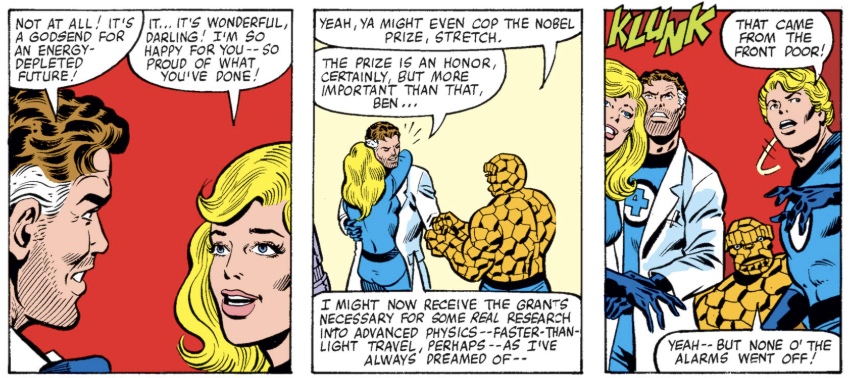
This is a notable exchange. Reed accepts congratulations for his new invention, the first (and maybe last) time I’ve read an actual discussion of the realities of science research funding in the FF (also, in that first panel you can see the limits of Perez’s breakdowns)


What I didn’t like

Despite all the dramatic potential of having two Captain Marvel’s face off — one ersatz, one real — it never comes to pass. First Reed suspects the Skrull of being a fake, then the real Marvel shows up. It seems like a huge missed opportunity from Moench.


Also, the story’s time traveling twist serves no real purpose, and the epilogue just adds unnecessary confusion

I’m not sure why Reed is so broken up about losing his energy transmitter. Surely he wrote down the plans, right?


And lastly, are they really packing off Franklin for the weekend just so Reed can concentrate? Another dubious parenting decision from the Richards.


Overall

A lot of bang for the buck

“The World’s Greatest Comic Magazine!” Fantastic Four No. 223

14 Tuesday Jul 2026

Posted by percivalhenry in The World's Greatest Comic Magazine, Uncategorized

≈ 2 Comments

Tags

1980, Bill Sienkiewicz, Doug Moench, Fantastic Four, Fantastic Four 223, Joe Sinnott, Marvel, marvel-comics, Nicholas Scratch, Salem's Seven

Fantastic Four 223
“That A Child May Live …”
Writer: Doug Moench
Pencils: Bill Sienkiewicz
Inks: Joe Sinnott
Letters: Jim Novak
Colors: George Roussos
Editor: Jim Salicrup
Cover: Sienkiewicz and Sinnott


Synopsis

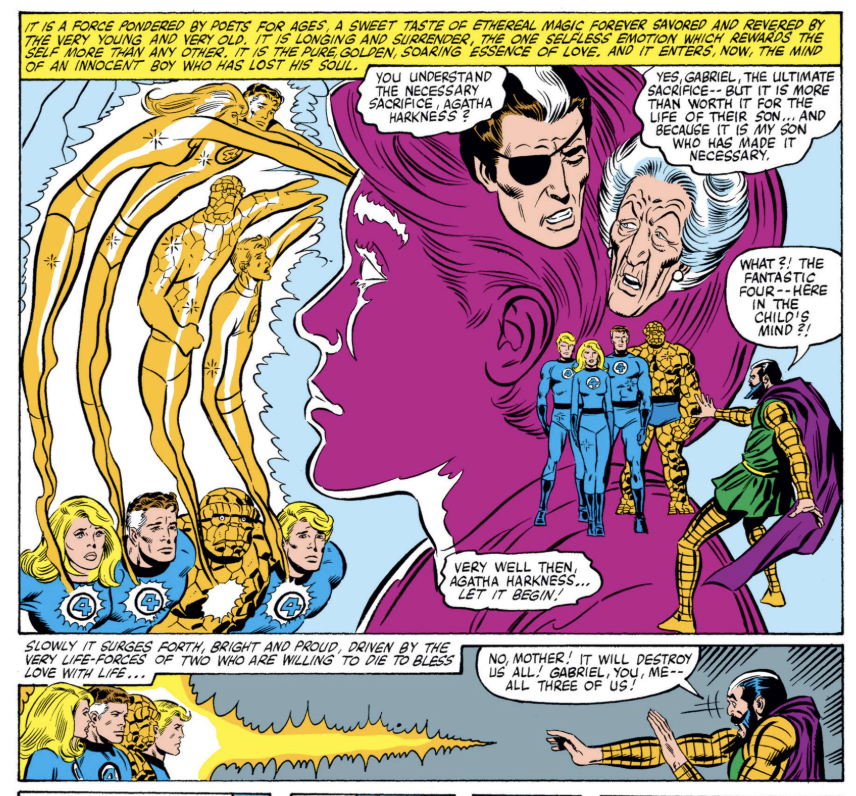
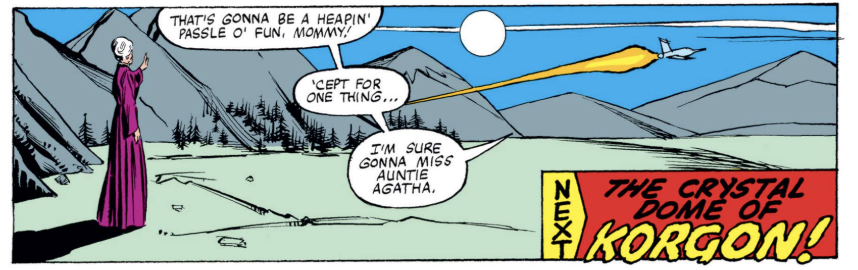
As the Fantastic Four — plus Agatha Harkness and Gabriel — race to New Salem to save Franklin from possession by Nicholas Scratch, Scratch works from the Dark Realm to free Salem’s Seven from captivity. When the FF arrive, they are defeated and captured by the Seven, and Scratch announces his intentions to use Franklin’s power to spread darkness over Earth. But Gabriel and Harkness harness the Fantastic Four’s love of Franklin into a psychic weapon that eventually drives out Scratch. The issue ends with Harkness rendering Scratch an ordinary human and pledging to remain in New Salem to keep an eye on him.


What’s going on here?

This is a pretty uninspiring issue. It resolves the immediate two-part Franklin / Scratch arc, and seems to finally end Scratch as an ongoing threat (he’ll make only a handful more appearances over the next 46 years). But as a story it’s pretty lackluster and a big chunk of the comic seems devoted to exposition. The fight with Salem’s Seven feels abbreviated and Gabriel, a potentially interesting wildcard, disappears for most of the comic. And the finale was just, well, lame. Even the art feels mailed-in, as if Joe Sinnott had to take over for a distracted Bill Sienkiewicz.

What I liked

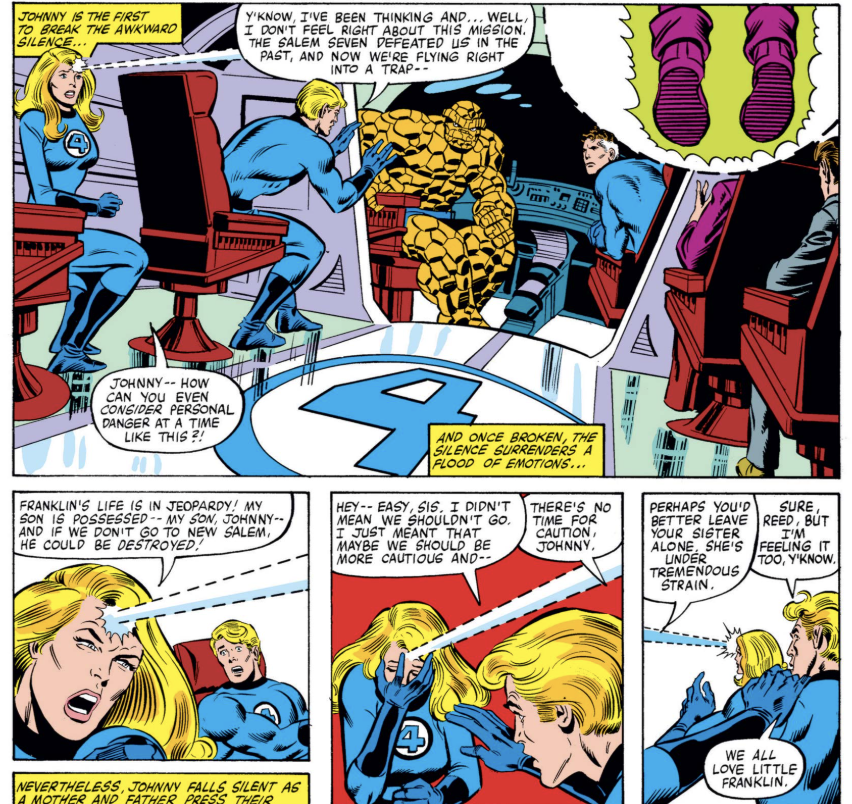
There were a few nice moments of character development. This sequence between Sue and Johnny felt pretty authentic (and Johnny was totally right, Salem’s Seven again defeated the FF).


I also liked this interaction:


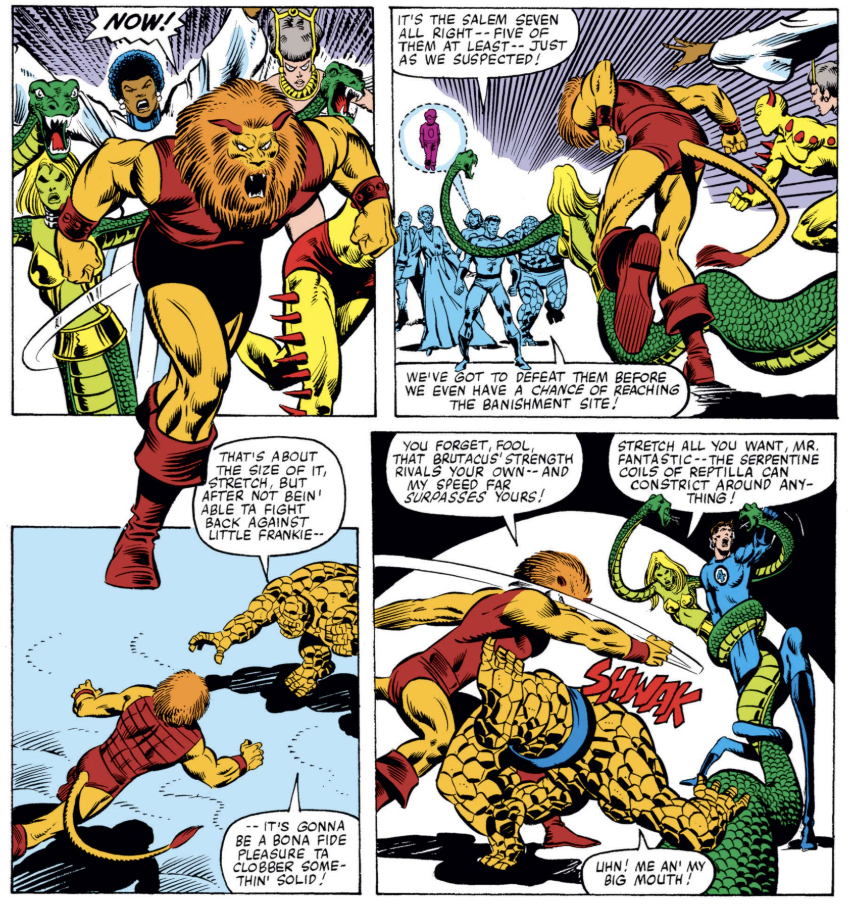
This wasn’t Sienkiewicz’s strongest effort, but a few panels stood out, like this action sequence of Brutacus:

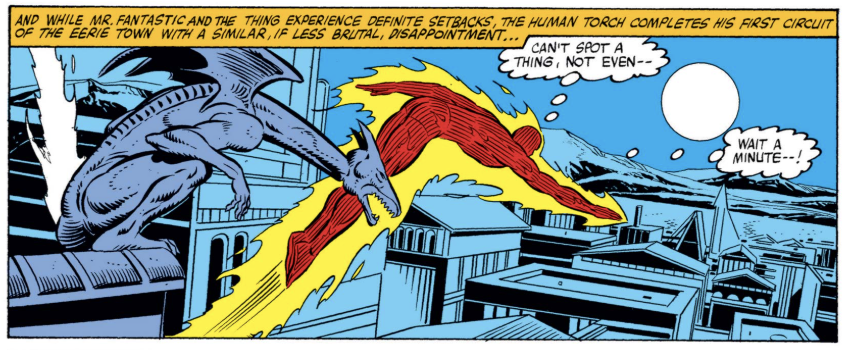
And this one of Vertigo:


What I didn’t like

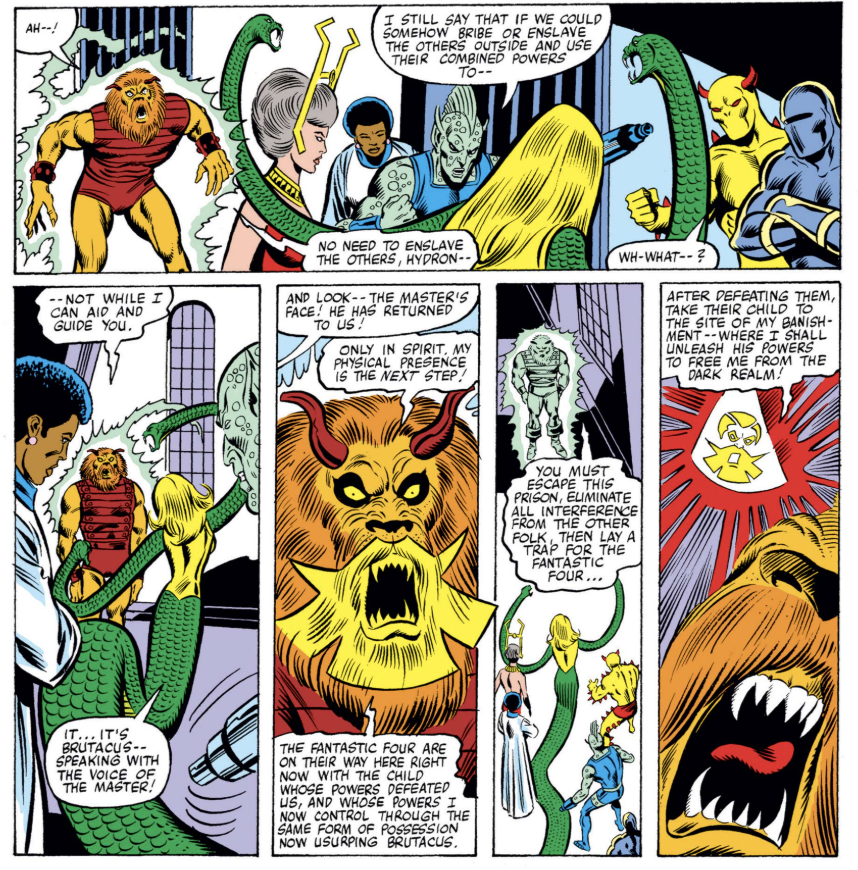
As mentioned, a lot of this comic felt overly didactic. Here’s an example of a lot of unnecessary explaining:


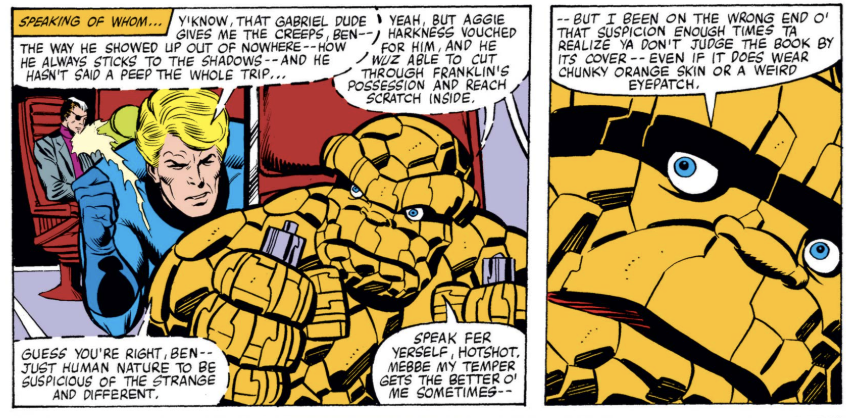
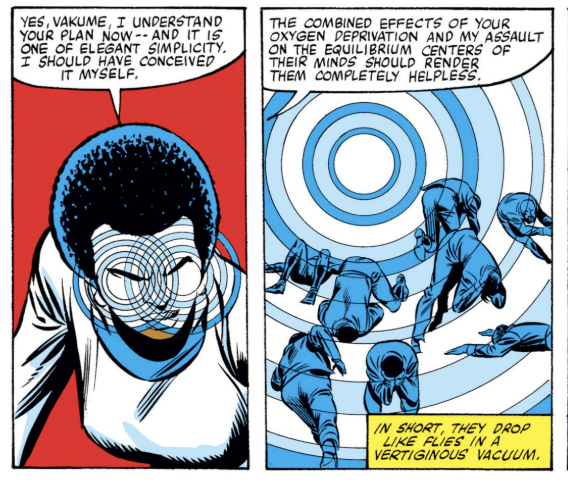
And this declaration of the power of love just felt cheesy, and a bit like Doug Moench discovering an easy way to wrap up his story:


Lastly, what kid talks like this?


Anything else?

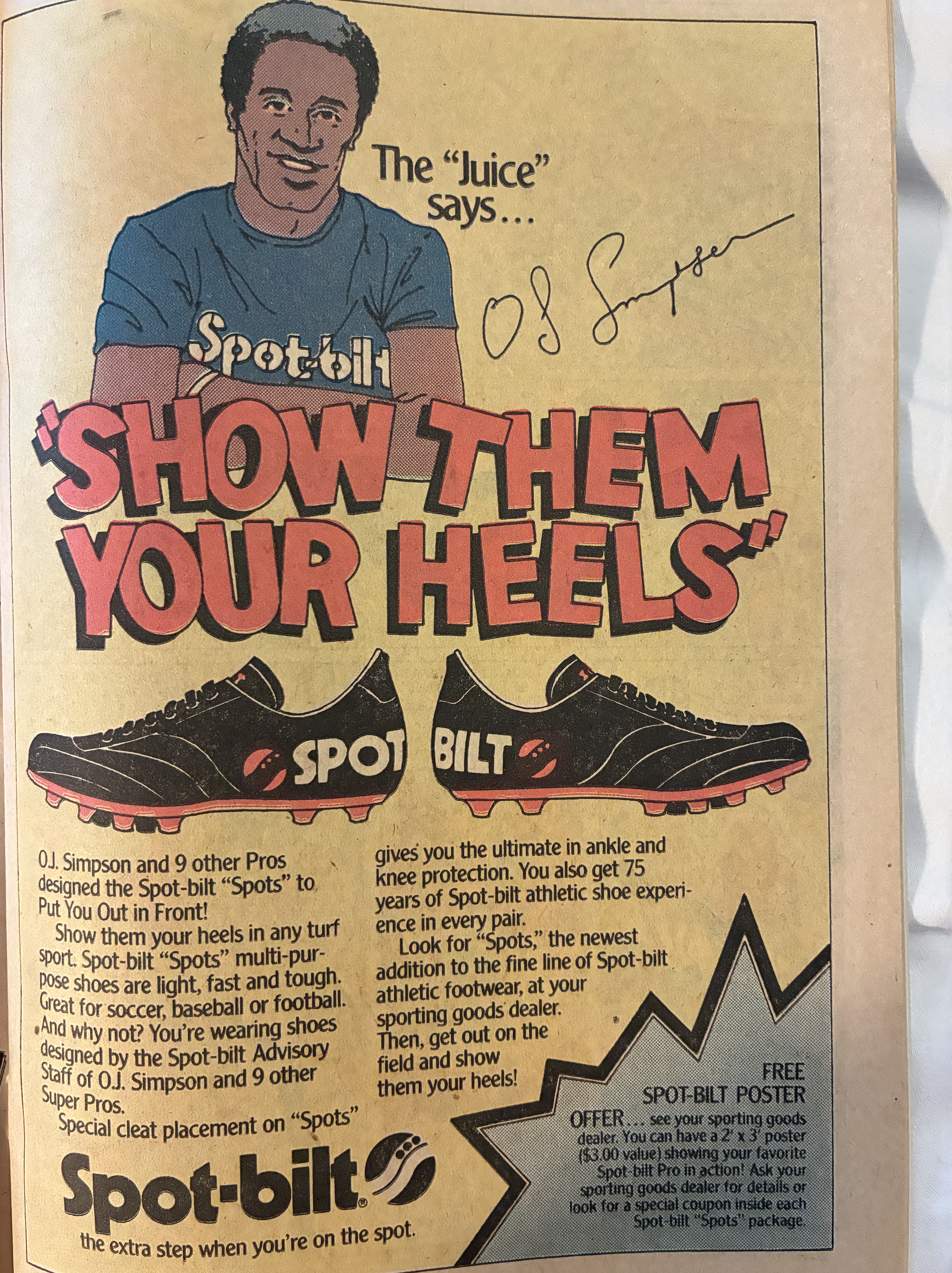
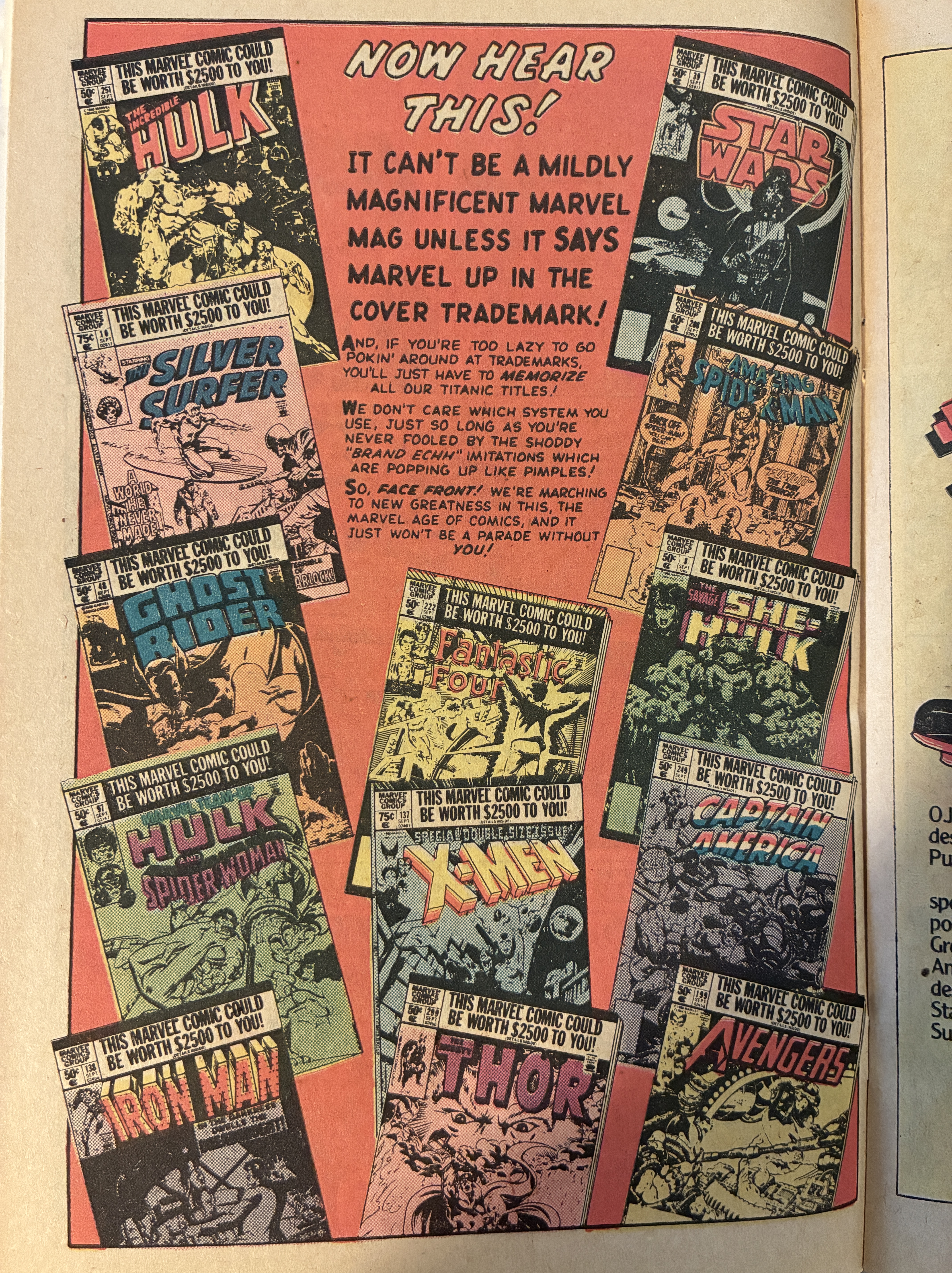
Some notable ads in this issue. In honor of Norm MacDonald, I will never stop posting OJ ads when they appear. And the trademark house ad is weird: what counterfeit comics was Marvel worried about? Aside from DC, no one else was really publishing superhero comics by 1980, and the other publishers of horror, like Warren, and humor, like Harvey, were well established. Comics were just entering the direct-sales era, but was Marvel really worried about indy start-ups like Cerebus the Aardvark? Odd.


Overall

meh

“The World’s Greatest Comic Magazine!” Fantastic Four No. 222

05 Sunday Jul 2026

Posted by percivalhenry in The World's Greatest Comic Magazine

≈ 4 Comments

Tags

1980, Bill Sienkiewicz, Doug Moench, Fantastic Four, Fantastic Four 222, Franklin Richards, Joe Sinnott, Marvel, Marvel comics, Nicholas Scratch

Fantastic Four 222
“The Possession of Franklin Richards!”
Published June 1980
Writer: Doug Moench
Pencils: Bill Sienkiewicz
Inks: Joe Sinnott
Letters: Jim Novak
Colors: George Roussos
Editor: Jim Salicrup
Cover: Sienkiewicz and Sinnott


Synopsis

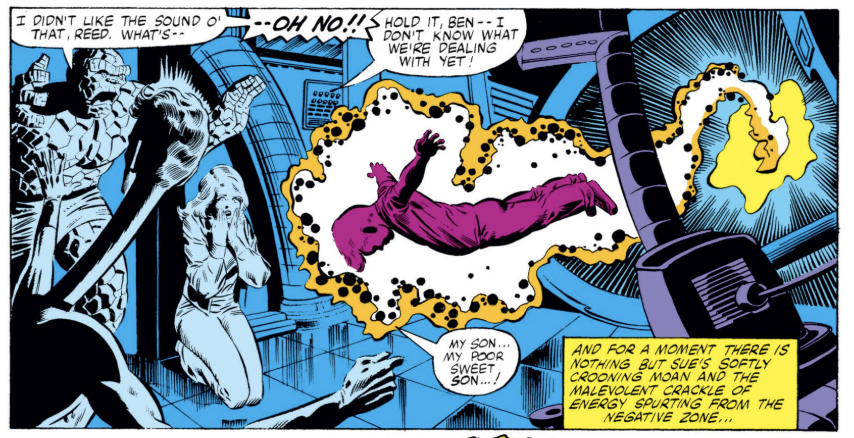
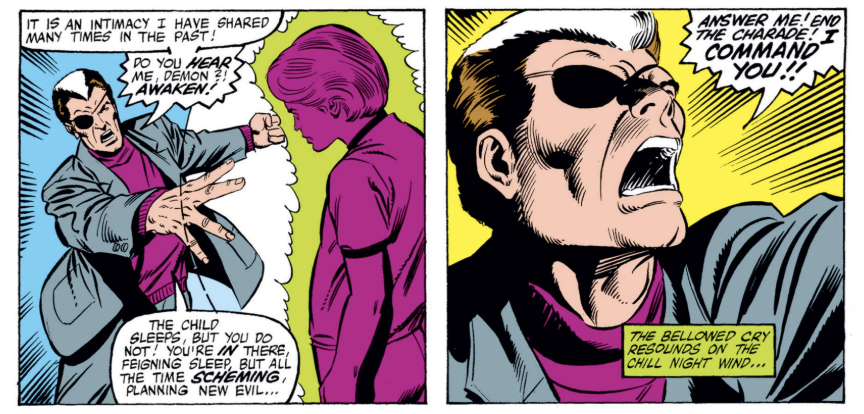
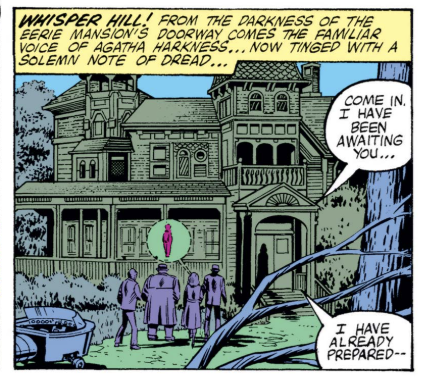
As the Fantastic Four relax in the city, Nicholas Scratch — previously exiled to another dimension by his mother, Agatha Harkness — discovers a portal to the Baxter Building. Scratch uses it possess Franklin and attack the Fantastic Four, who answer’s Sue’s flare-gun summons. After failing to find Dr. Strange, the team brings Franklin to Harkness’s home on Whisper Hill, where their seance is interrupted by a mystic called Gabriel, who summons Scratch. Scratch then tells the FF if they want to save Franklin, they must return to New Salem.


What’s going on here?

After two issues written and penciled by John Byrne, we’re now back to the previously scheduled Doug Moench / Bill Sienkiewicz run (Joe Sinnott continues to provide inks, of course). That’s a mixed blessing, as we shall see.

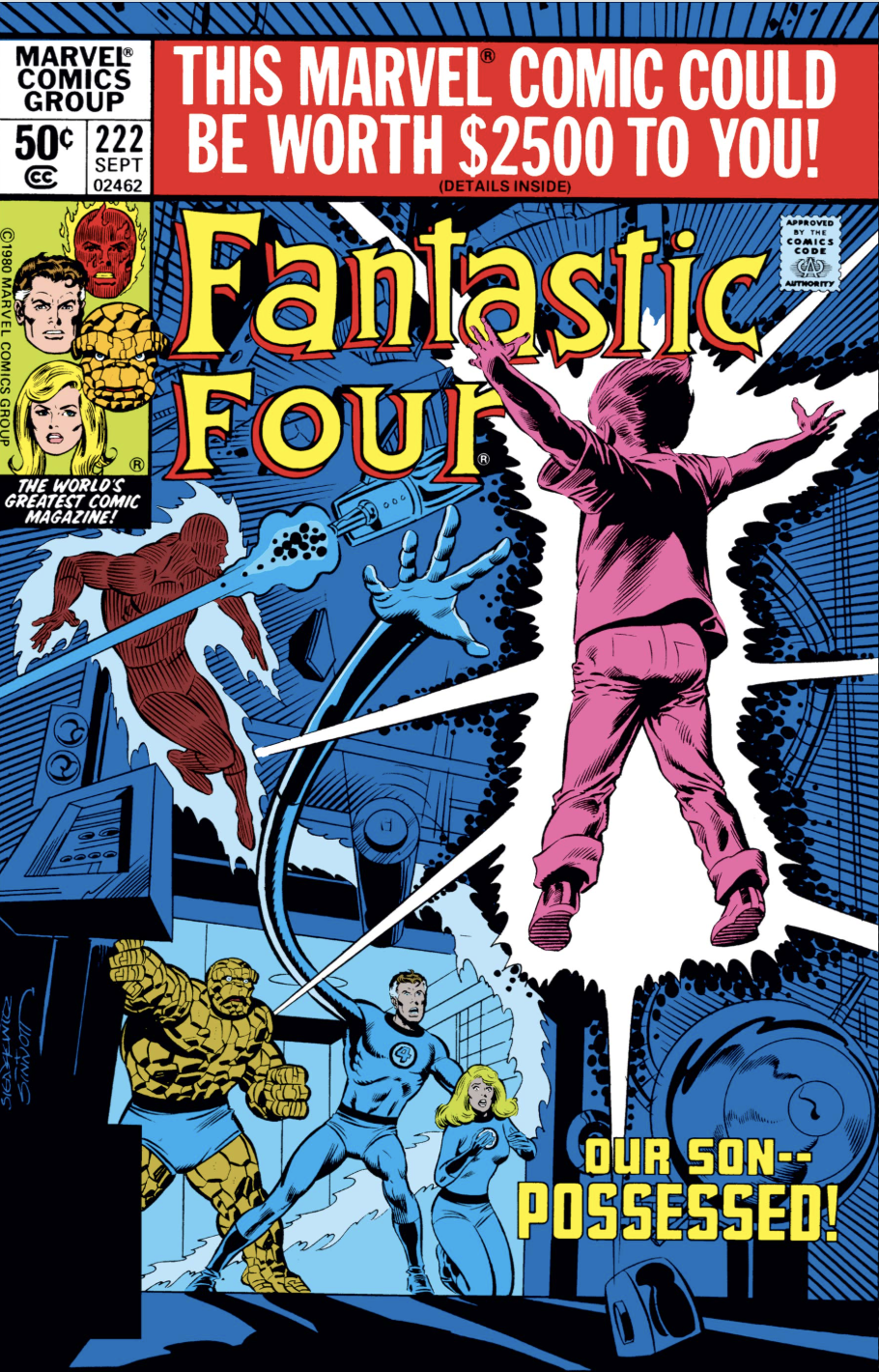
The comic, once again, concerns the possession of Franklin Richards by Nicholas Scratch, picking up a story that began in FF 184 and continued through FF Annual 14. In a vacuum, there’s nothing wrong with these stories, and as we shall see next issue, they all include Salem’s Seven, a fun and underused group of super villains. But these stories are part of a long line of comics where Franklin is in Danger, which basically started with his birth in FF Annual 6 (arguably the single greatest Stan and Jack issue) and really becomes a theme in FF 141, where the extent of Franklin’s powers are revealed. Byrne devotes a number of issues to Franklin’s powers and their risk to himself and others, and he’s put in harm’s way in various ways in comics ranging from Power Pack to the Fantastic Four Vs. X-Men limited series. Together, all these stories featuring a young child in danger inevitably send the message that Reed and Sue are bad parents. I don’t want to think that; I like these characters and what they represent, but it’s very hard not to draw that conclusion given how often Franklin is put in harms way by their careers and lifestyle. The solution is not that Reed and Sue should not have had children, nor is that Franklin should be sent away to be raised by Agatha or put in a foster home. It’s that writers should just leave him alone. Unfortunately, as we will discover over the next several hundred issues, they can’t resist the temptation.

This story also features the Fantastic Four (and maybe Marvel universe) debut of Gabriel, aka Devil Hunter, who Moench created in a monster magazine, Haunt of Horror. He fits in a long tradition of FF writers importing various random characters from their other books, from Roy Thomas’s Arkon to Marv Wolfman’s Dr. Sun et al., but doesn’t stick around for long. He will go on to appear in a 1990s Hellstorm comic. There, he is called Gabriel Rosetti, a clear reference to Dante Gabriel Rosetti, a name that will be familiar to fans of mid-19th century British painting.


What I liked

We are starting to see more of Sienkiewicz’s individual style emerge from beneath Sinnott’s inks, particularly in his character poses. Here are some fun examples:


Sienkiewicz also does this fun thing where he breaks the panel boundaries to emphasize the action, as with Johnny’s foot above, and with the taxi door, below:


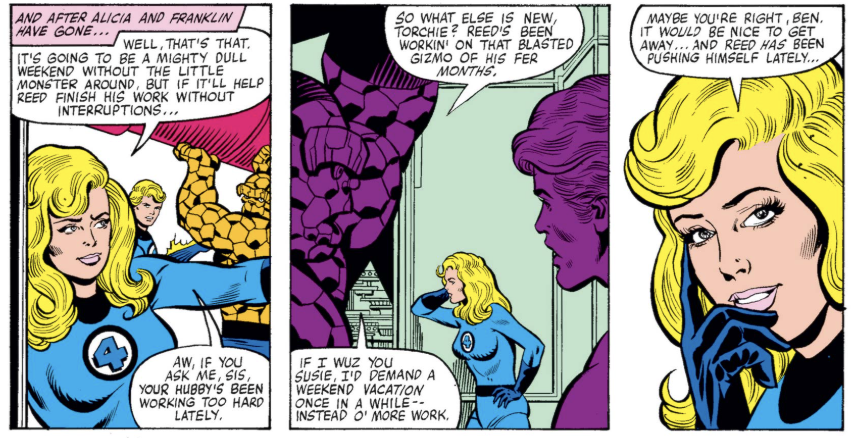
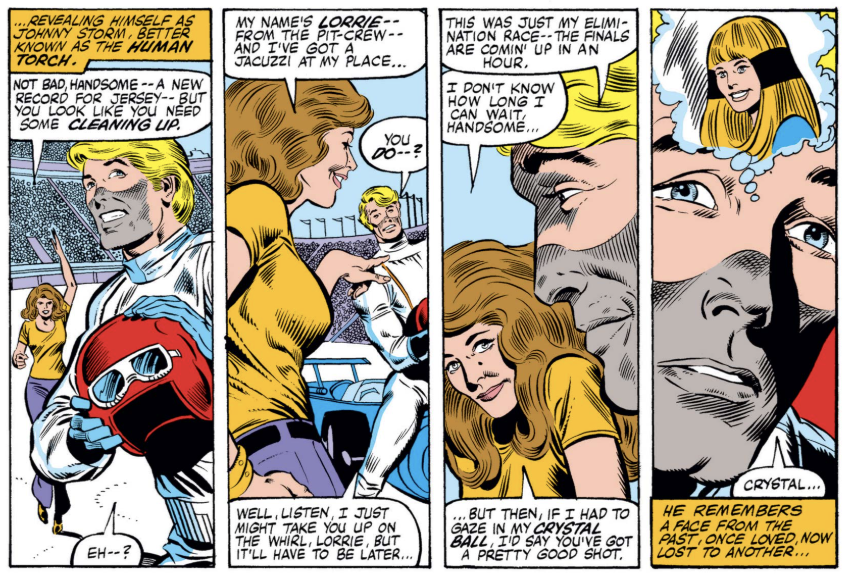
There was some panels devoted to character development, some better done that others. But I liked this bit, and particularly the lure of a jacuzzi.


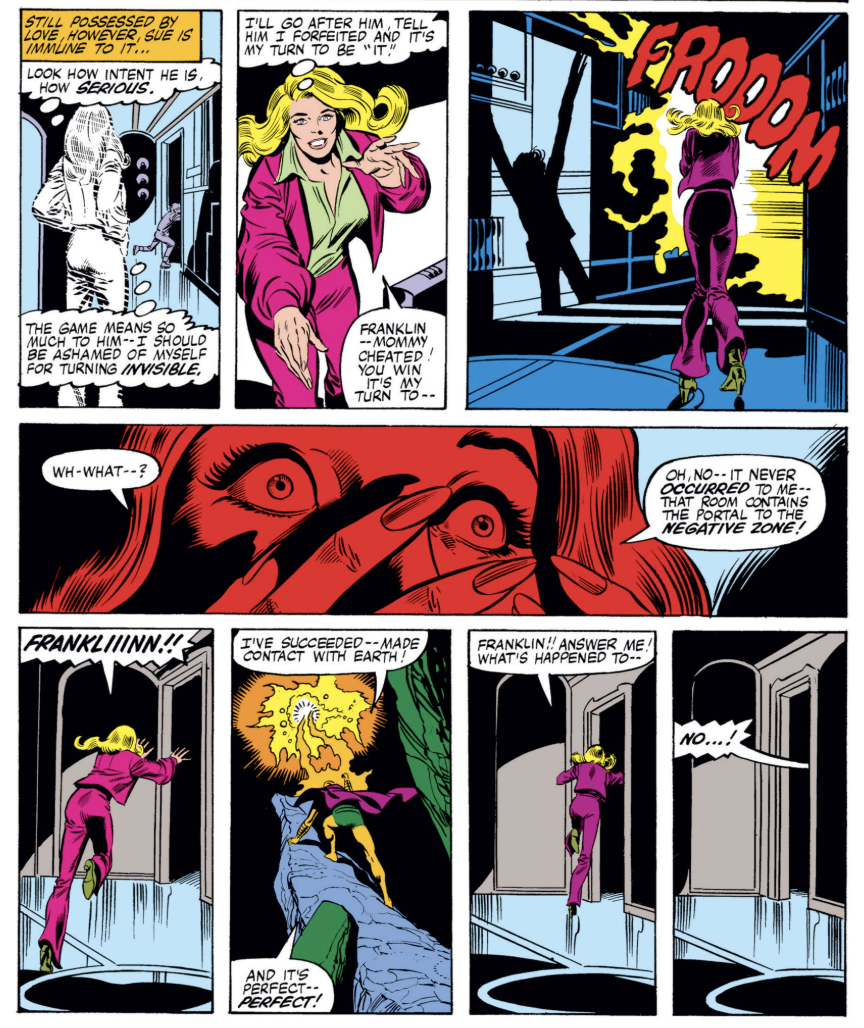
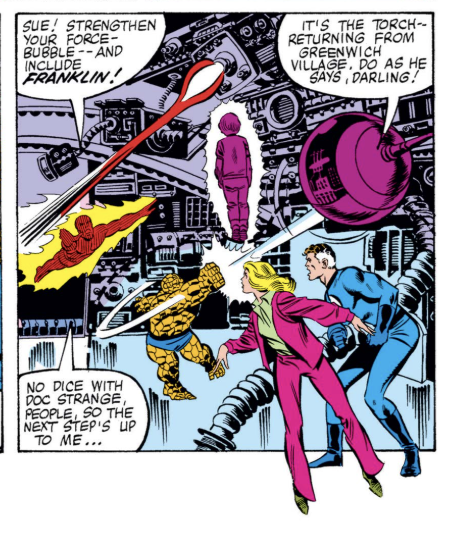
And this sequence was genuinely menacing:


What I didn’t like

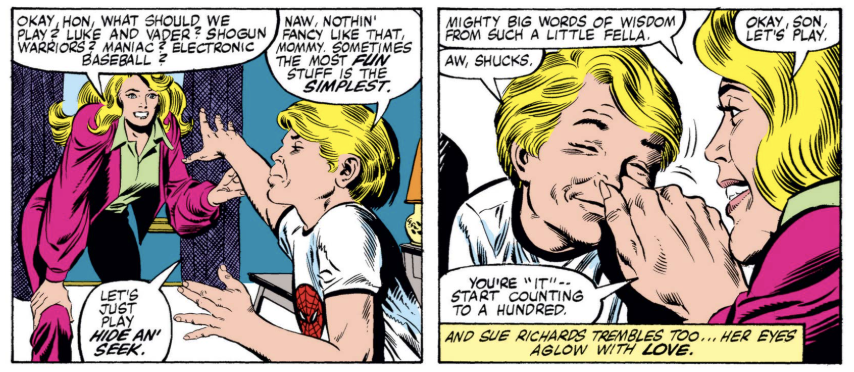
I don’t think Moench has a handle on how to write Franklin. Maybe he never spent much time with a 3 or 4 year old, but they don’t talk like this:

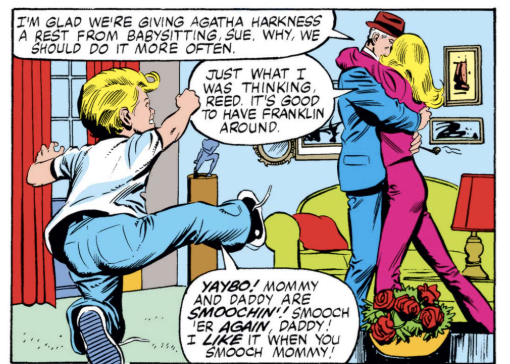
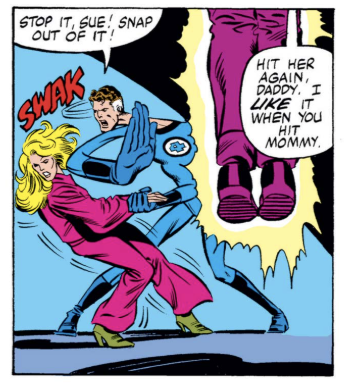
There’s also this weird panel of Franklin cheering on his parents making out. It’s there to set up another panel after he’s possessed, but it’s pretty creepy:


For all of Sienkiewicz’a abilities, he struggles at times with layout designs, resulting in panels that are way too small for what they are trying to depict:


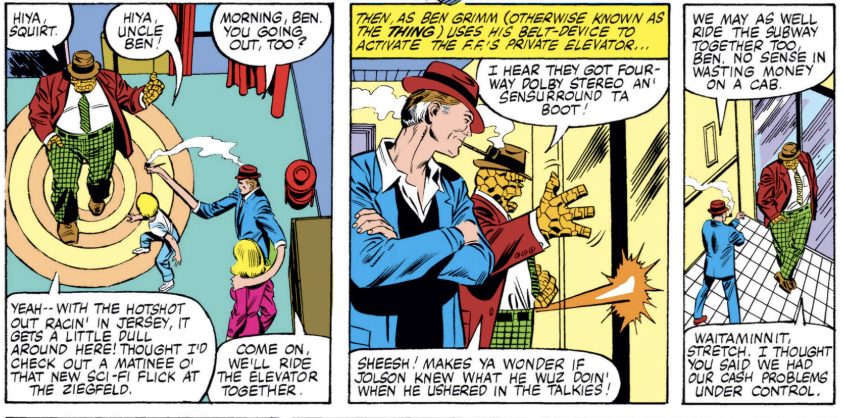
Lastly, are Ben and Reed the last two men in New York to wear hats? And Ben is wearing a tie to the movies? And what is with Reed’s pipe? Is he the one scientist that doesn’t know about lung cancer?


Anything else?

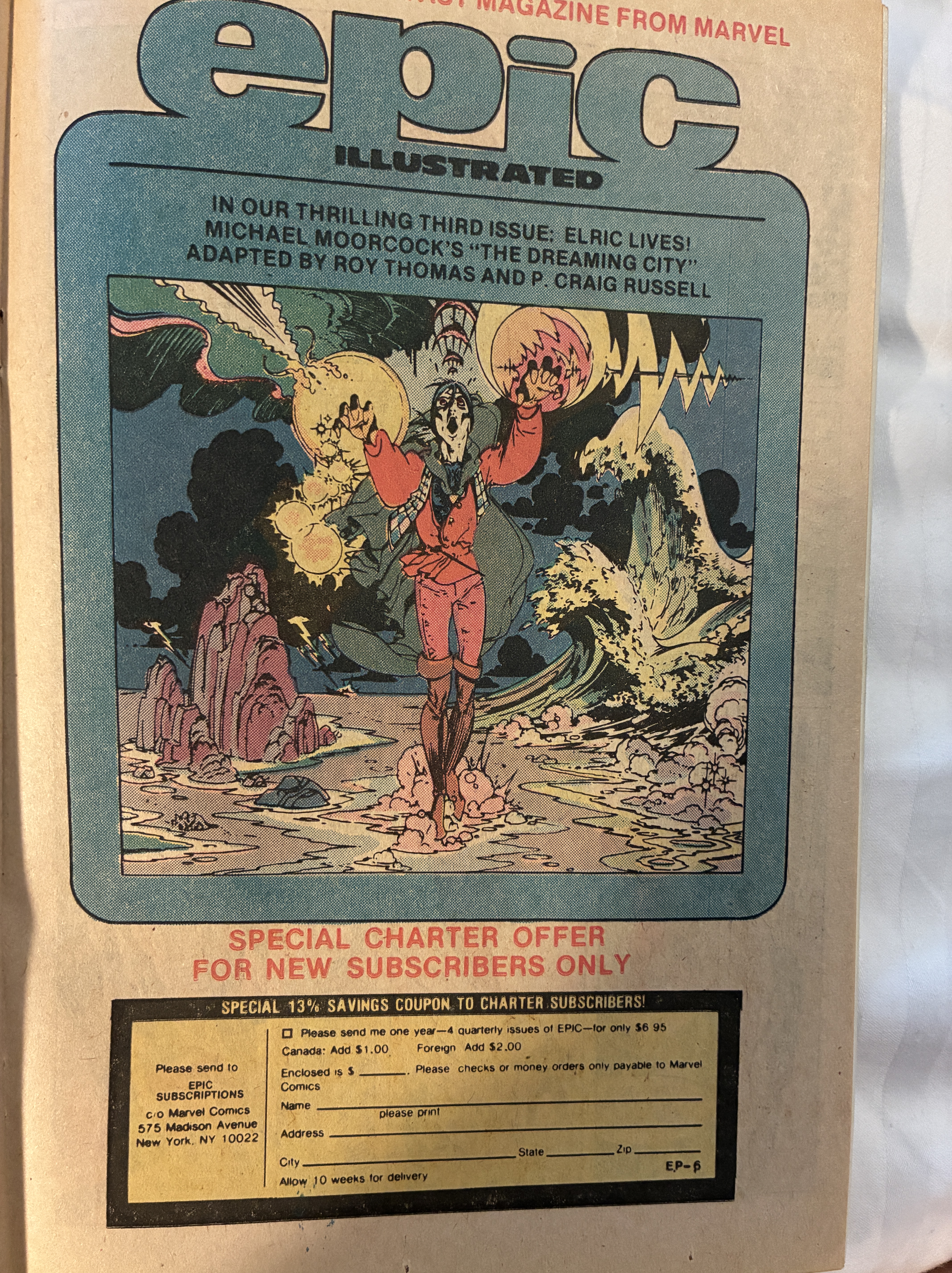
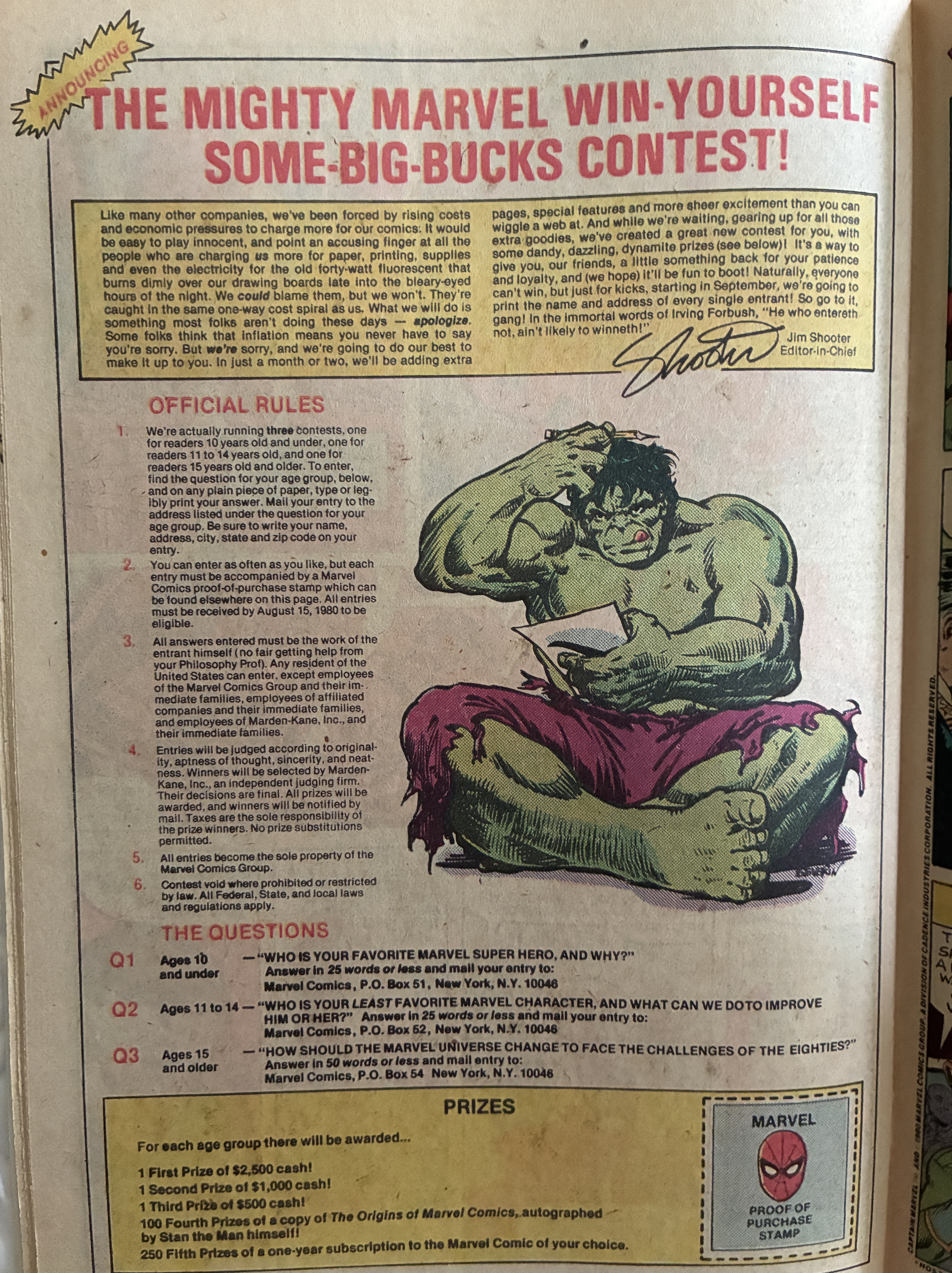
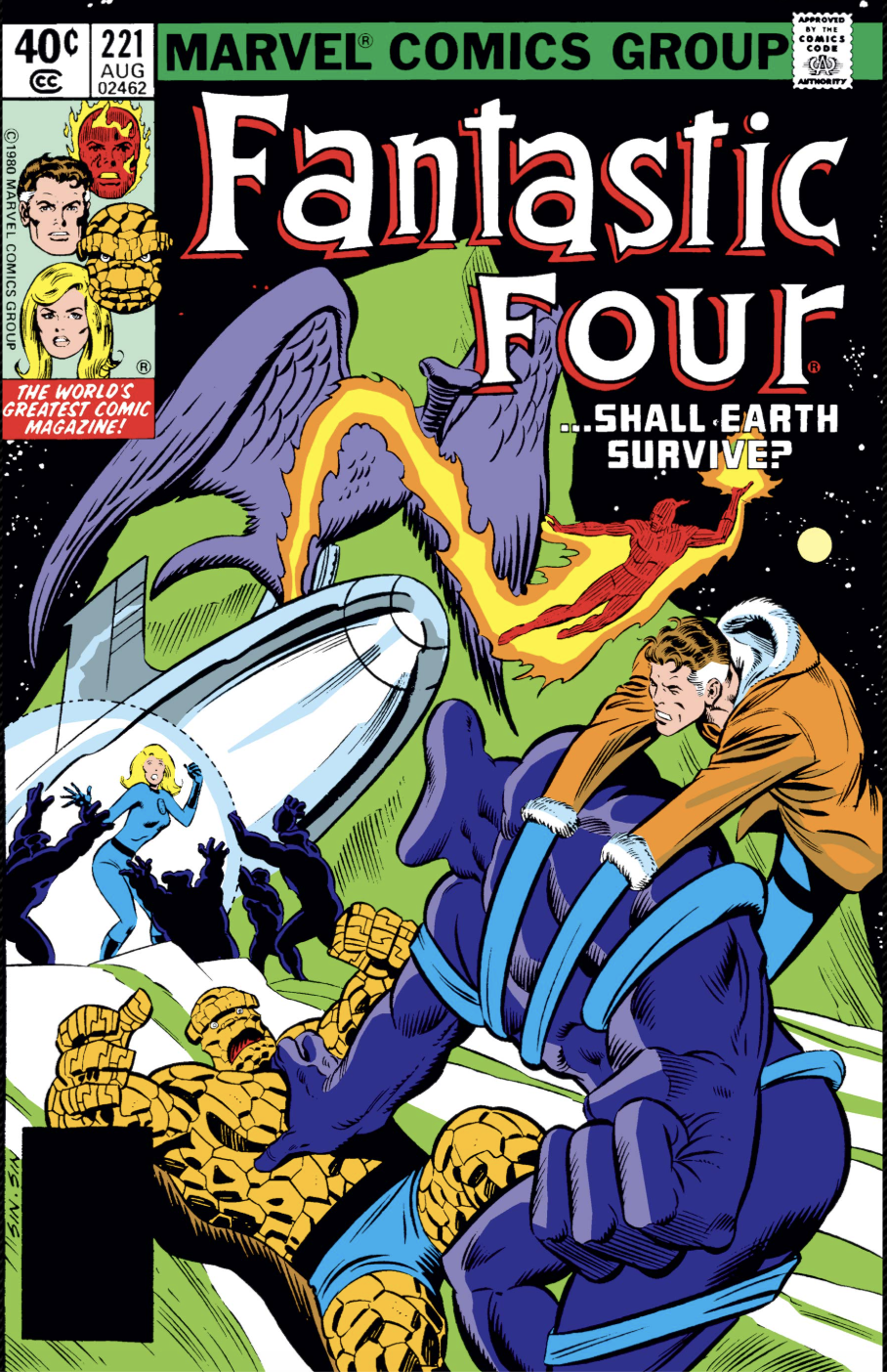
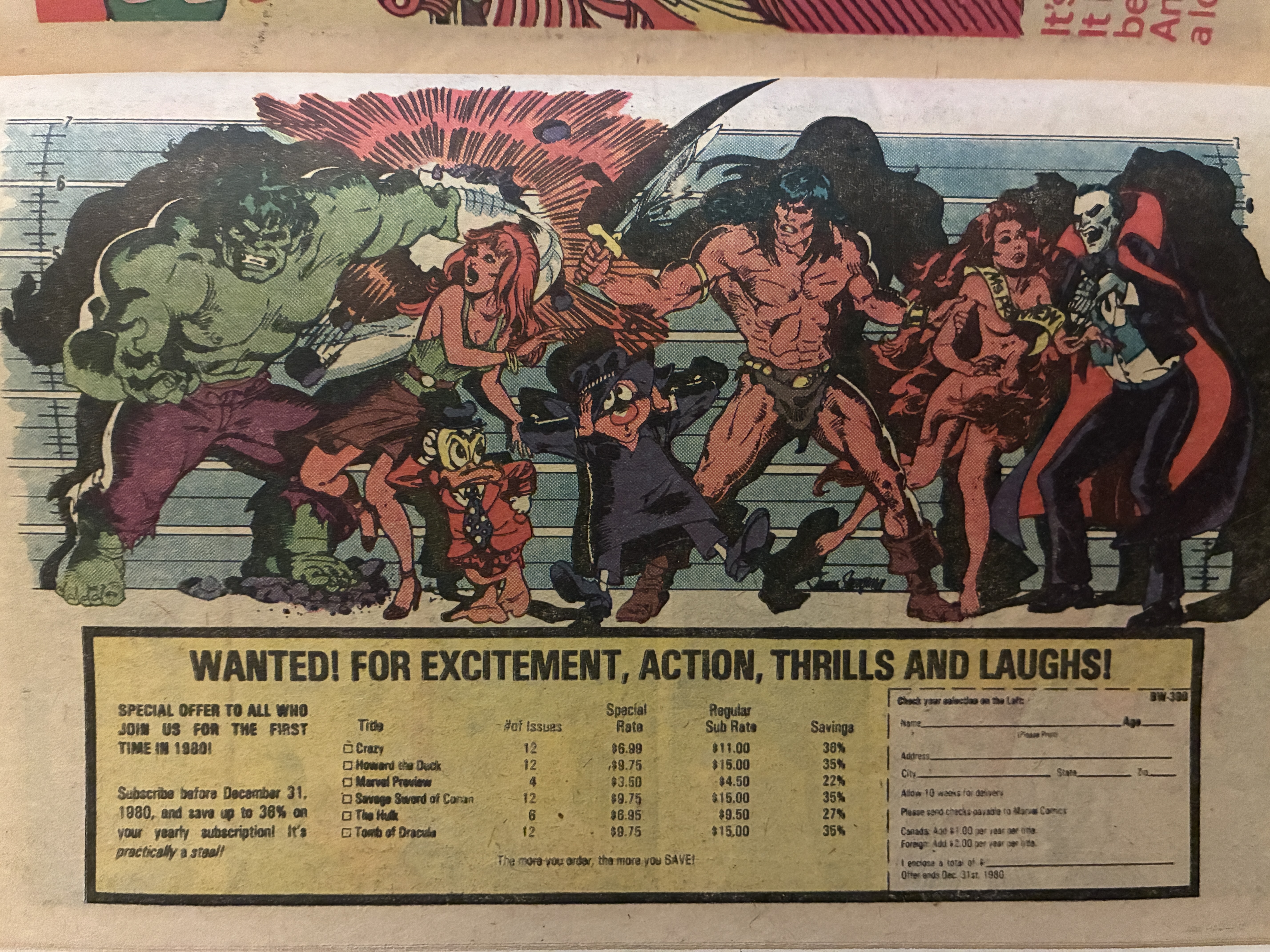
Some house ads, including one for the $2500 contest that mars the cover. It looks like Marvel was using the contest to do some market research.


Overall

A mixed bag

“The World’s Greatest Comic Magazine!” Fantastic Four No. 221

25 Thursday Jun 2026

Posted by percivalhenry in The World's Greatest Comic Magazine

≈ 2 Comments

Tags

1980, Fantastic Four, Fantastic Four 221, Joe Sinnott, John Byrne, Marvel, Marvel comics

Fantastic Four 221
“Tower of Crystal … Dreams of Glass!”
Published: May 1980
Writer: John Byrne
Pencils: Byrne
Inks: Joe Sinnott
Letters: Jim Novak
Colors: Carl Gafford
Editor: Jim Salicrup
Cover: Bill Sienkiewicz and Joe Sinnott


Synopsis

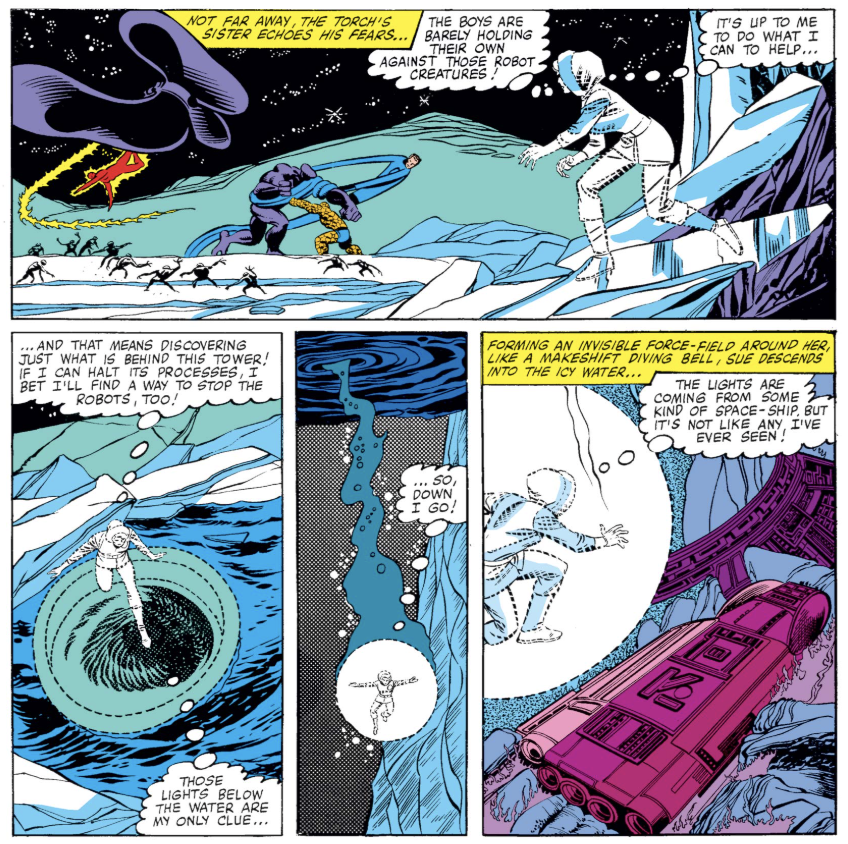
Last issue, the FF rushed to the North Pole to examine an alien ship that threatened the Earth by reversing its magnetic polarity. As the Invisible Girl investigates, the rest of the team is attacked by strange alien robots that can change form. Sue reaches the aliens and discovers they simply want to return to their home planet. The aliens call off their robots and Reed fixes their ship so they can leave.


What’s going on here?

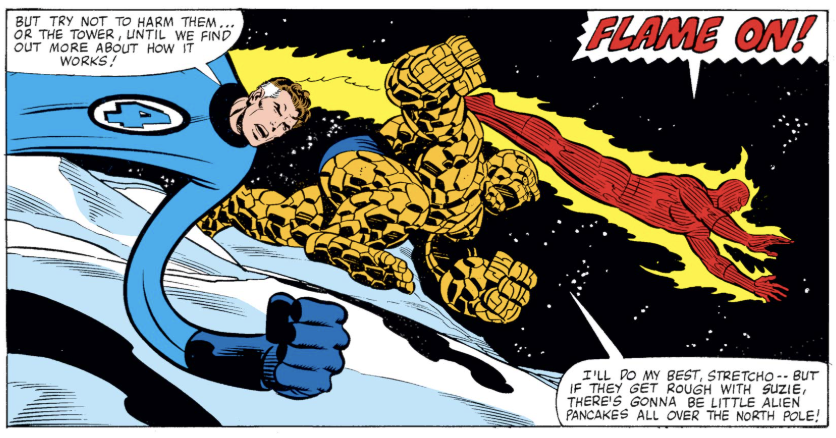
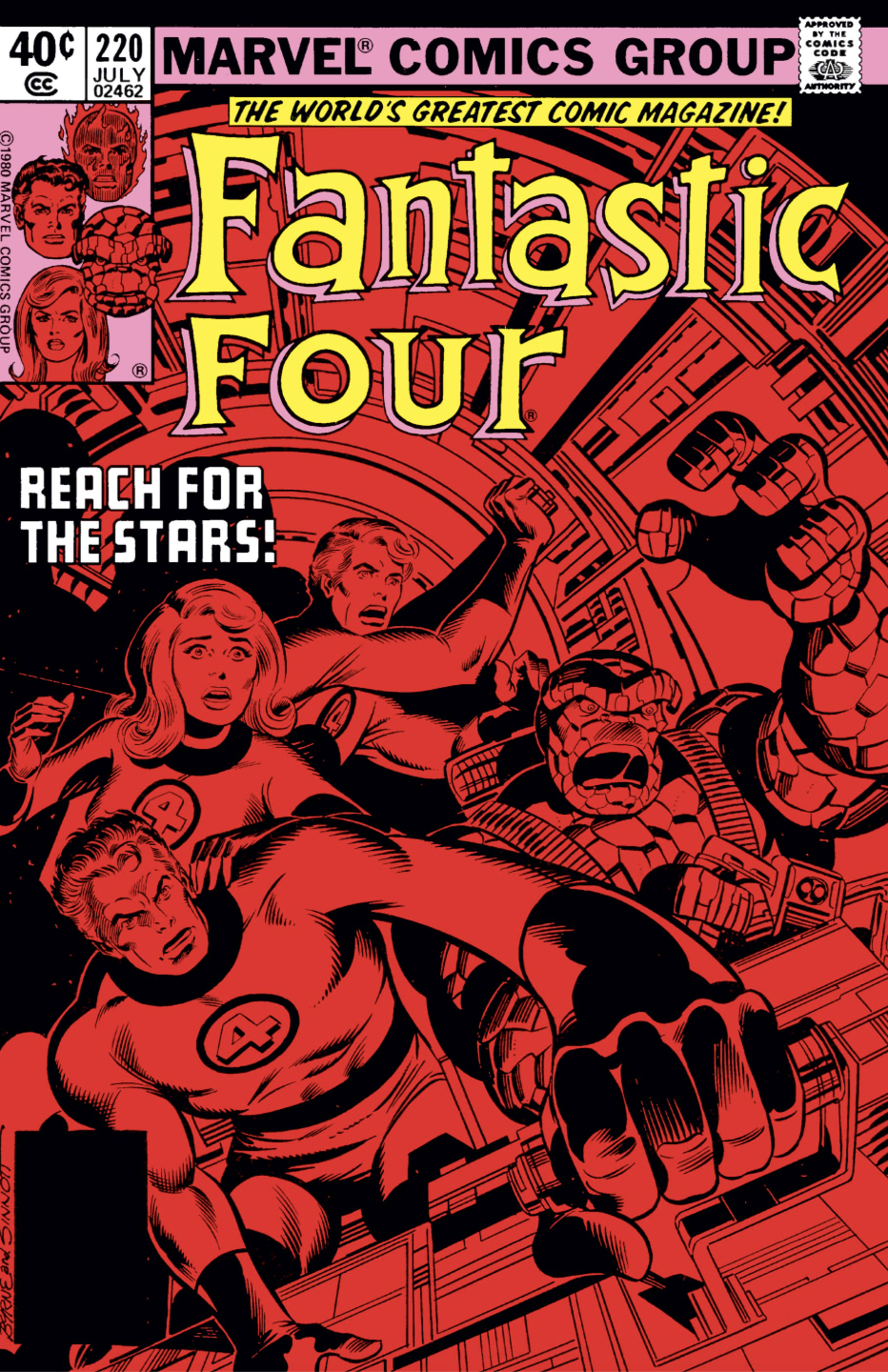
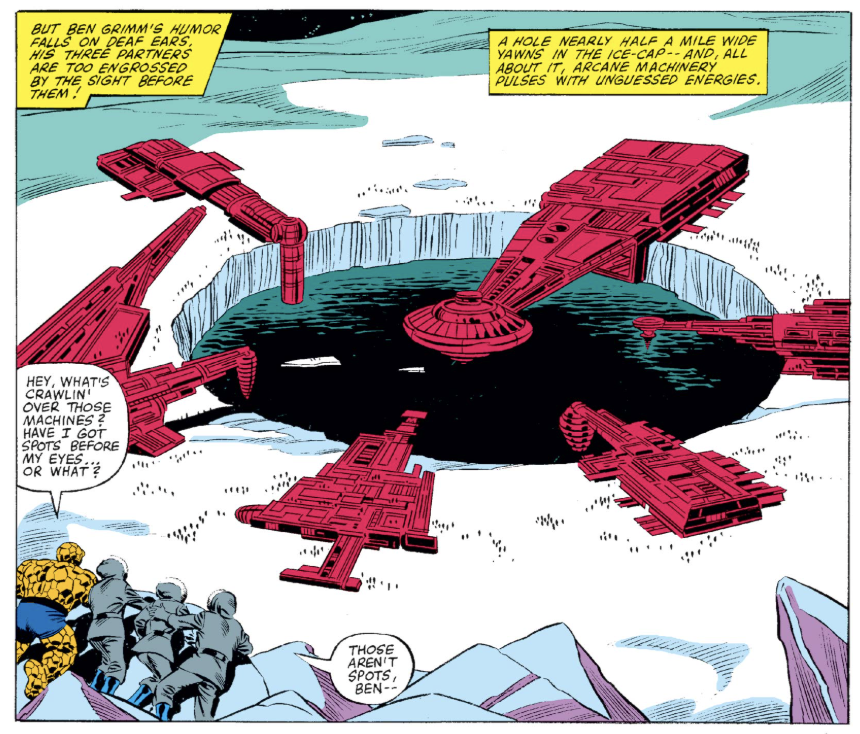
Thanks to reader and comic blogger Ben Herman (you can check out his comics reviews here), I’ve learned I was basically correct in my hypothesis that issues 220 and 221 were one story split in two. As John Byrne wrote on his Byrne Robotics forum, the story was written as a single issue to be a giveaway as a part of a promotion for Coca-Cola. According to Byrne (who should always be taken with a grain of salt), after approving the story’s plot, Coke rejected it as “too violent.” Marvel decided to salvage it by turning it into these two issues, which required Byrne adding a few pages, likely last issues’ flashback. And as predicted, all the fighting takes place in this issue.

Overall, it’s a solid and satisfying story that feels a bit like a throwback to the golden age of science fiction. If I had to guess, Byrne read somewhere about the earth’s magnetic polarity reversing half a million years ago and saw the kernel of a fun story. The issue does re-introduce to the Fantastic Four the trope of misunderstand aliens that first appeared in FF 24 and reoccurs several times over Byrne’s later FF run.

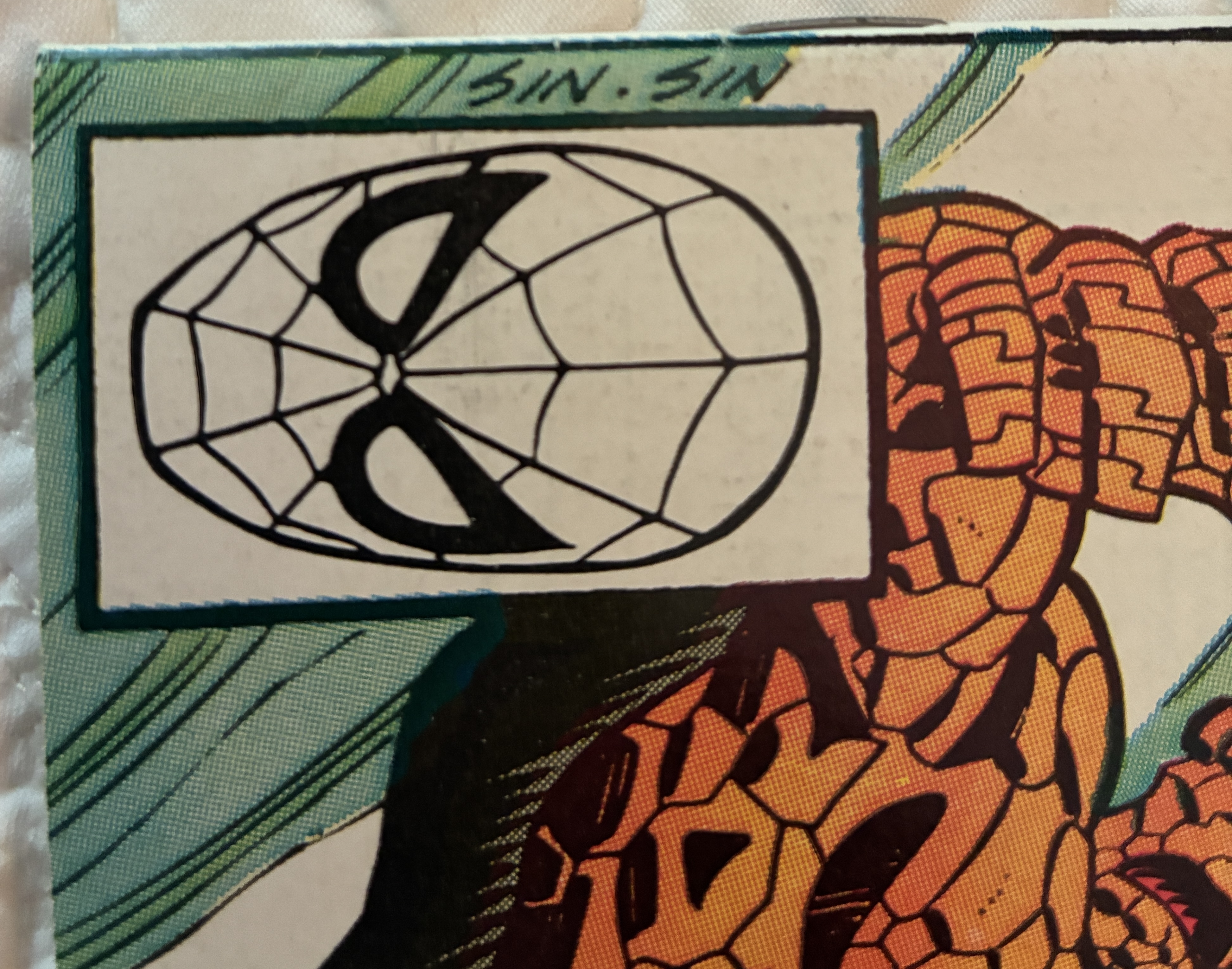
The ho-hum cover is by Bill Sienkiewicz and Joe Sinnott, leading to this fun signature:


What I liked

As we shall see, empowering Sue becomes one of Byrne’s projects during his run (picking up on the work begun by Len Wein and Marv Wolfman) and we get the first glimpses of it here. There is still too much hand-wringing from Sue for my tastes but in this issue she is the level-headed driver of the narrative and the one who resolves the conflict.


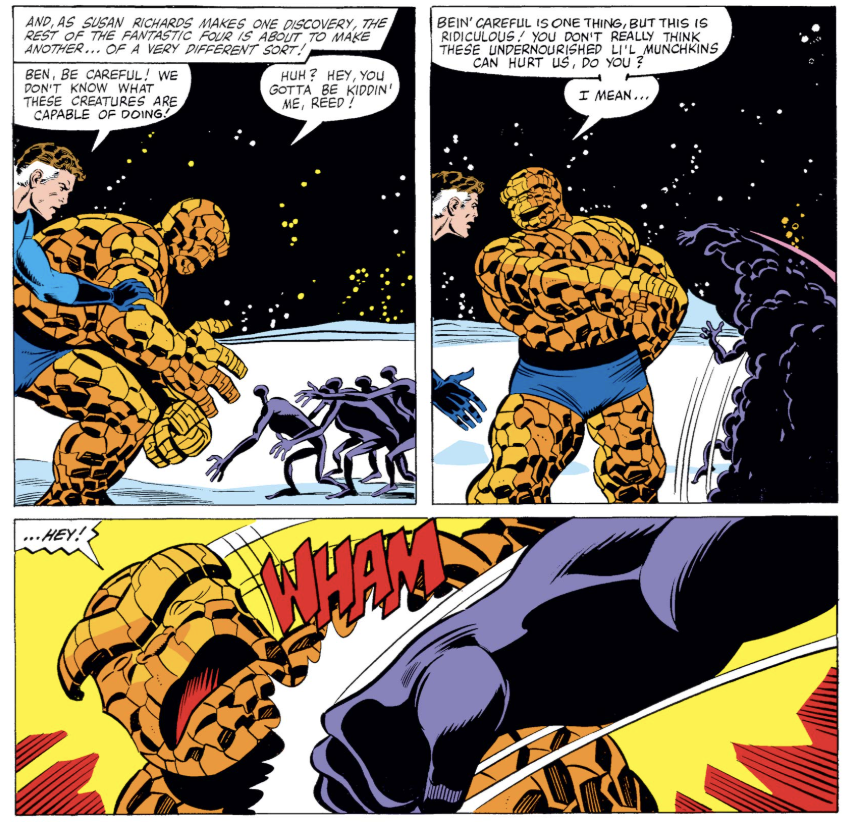
There are some nice touches throughout the comic. I liked this bit of comedy with Ben and the alien robots:


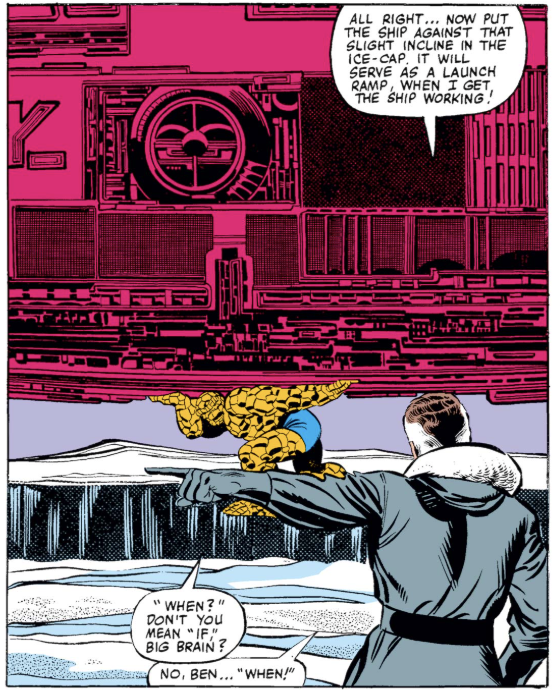
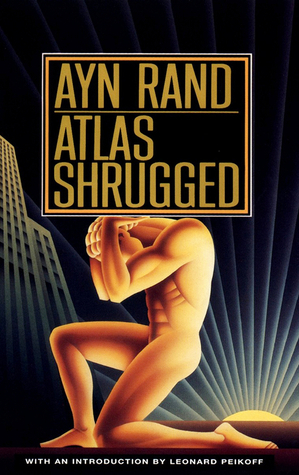
This was a very cool panel from Byrne and Sinnott which reminded me of the cover of Atlas Shrugged:


I always like it when we get fun credits (and note Jim Shooter is now appearing regularly in them, the first editor-in-chief to do so):


What I didn’t like

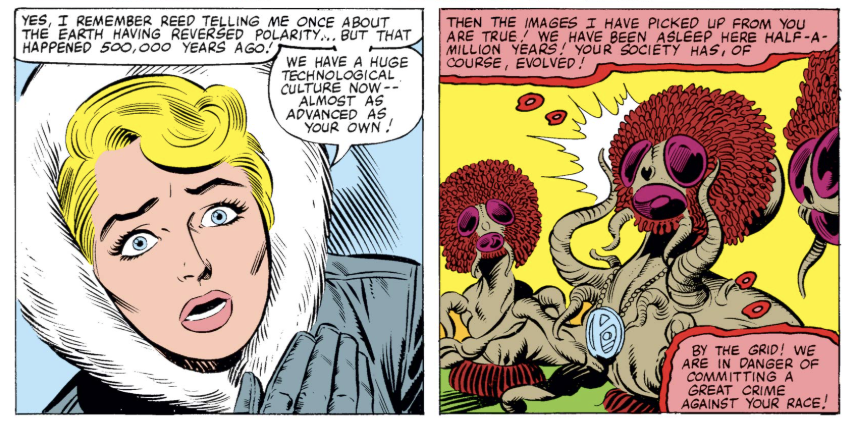
The aliens’ “oopsie” seems a bit too pat an answer to explain their actions. Over 500,000 years transpire and they didn’t think a civilization might have evolved in that time?


And unfortunately another Byrne-ism makes its FF debut here: really pretentious titles for his stories.

Anything else?

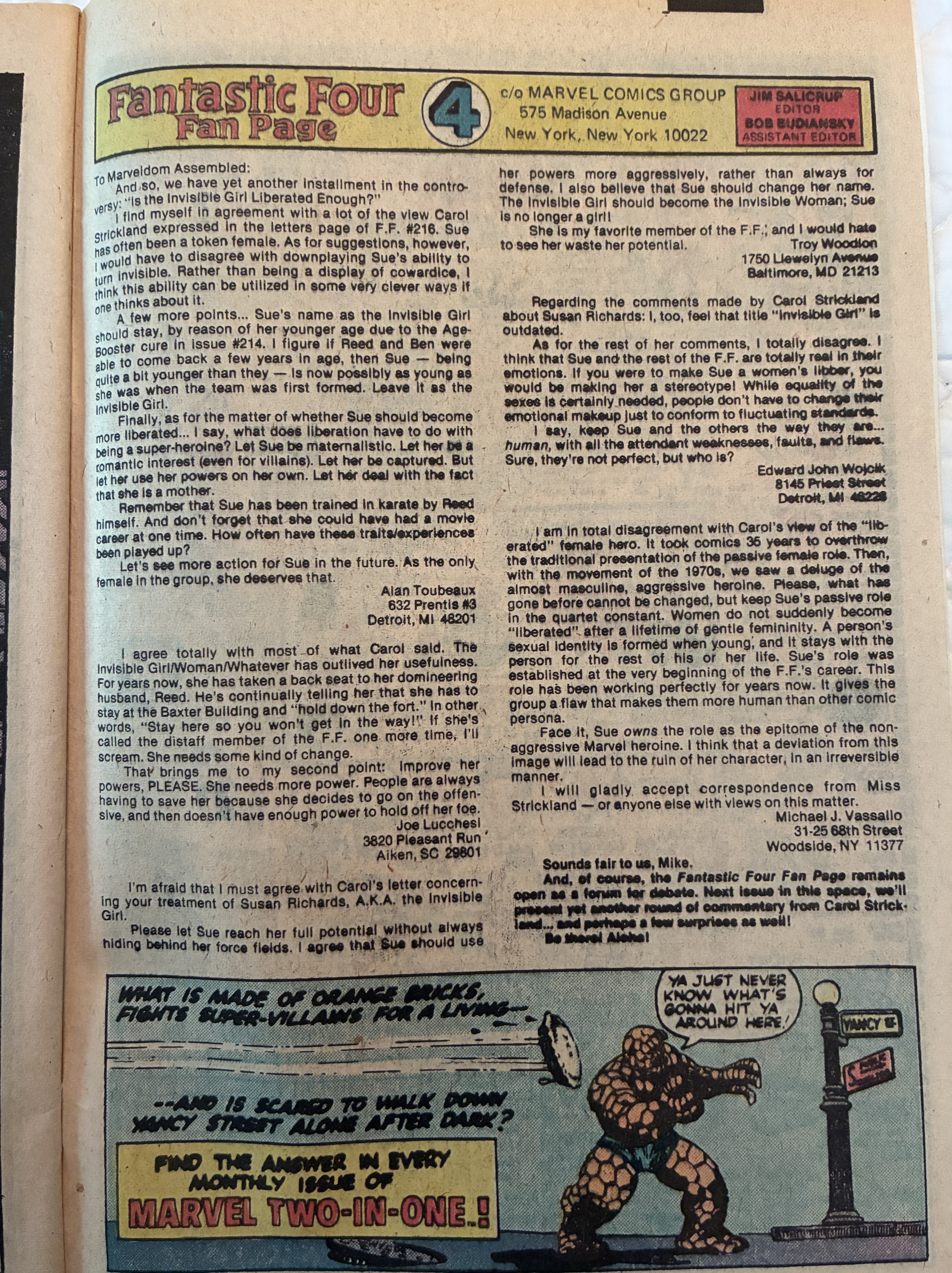
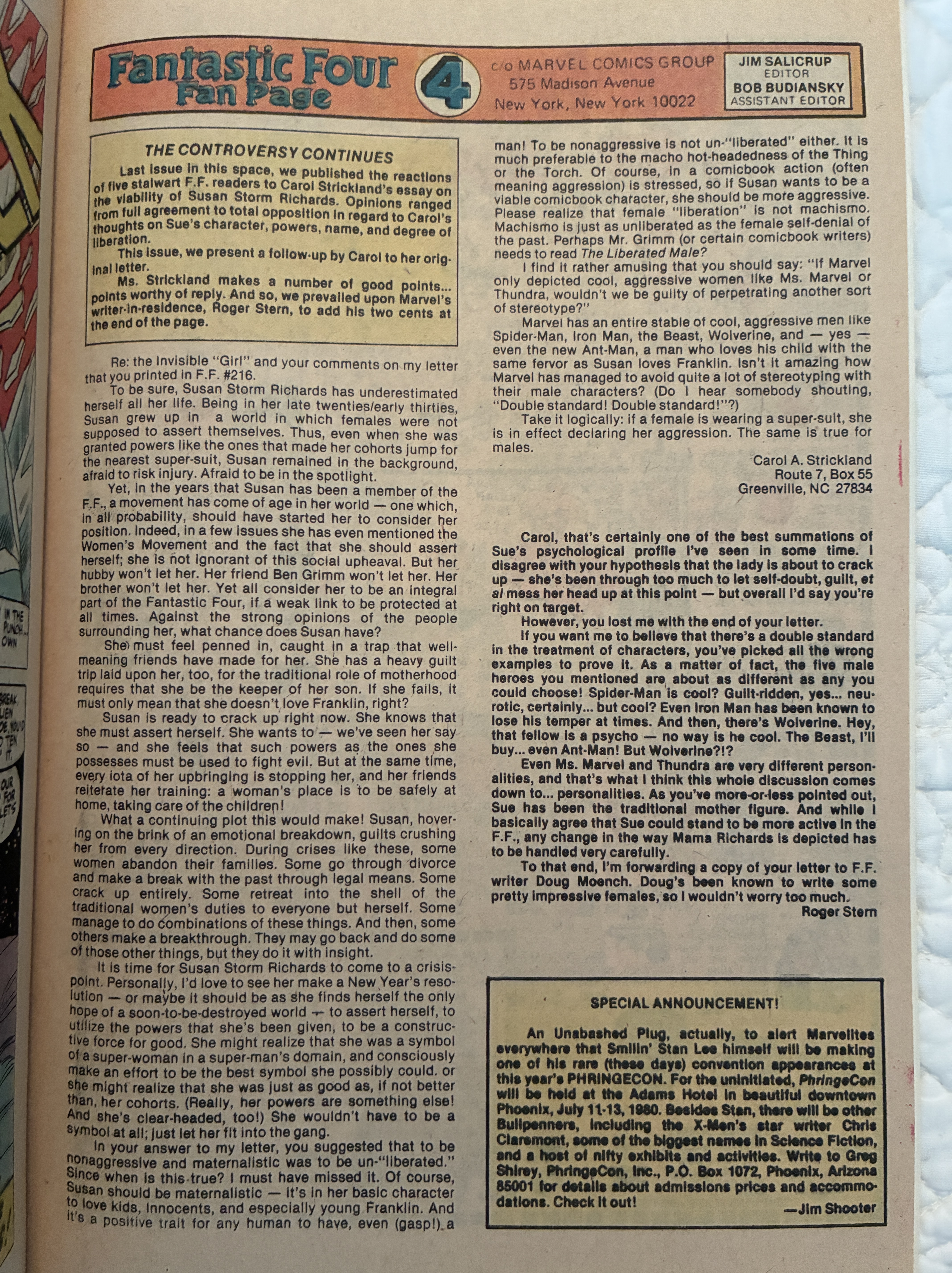
The letters pages of these two issues included a lively discussion of Sue and her direction as a character. The letters page of issue 220 consisted of five letters in response to a longer letter by Carol Strickland published in issue 216. Issue 221 had another long letter from Strickland and a response from Roger Stern (for some reason). It’s a reminder of how central letters pages were to comic book fandom. Back then every letter had the writer’s full name and complete address so they could correspond with each other. Today we have anonymous message boards and fans trading insults on social media. Also of note, a message from Jim Shooter about a Stan Lee appearance at a comic con. He advises fans to write the organizer for more info. Life before the internet, kids! (OK, I’ll now stop yelling at clouds).


Overall

Another solid proto-Byrne issue

“The World’s Greatest Comic Magazine!” Fantastic Four No. 220

15 Monday Jun 2026

Posted by percivalhenry in The World's Greatest Comic Magazine

≈ 4 Comments

Tags

1980, Fantastic Four, Fantastic Four 220, John Byrne, Marvel, Marvel comics

Fantastic Four 220
“…And the Lights Went Out All Over the World!”
Published April 1980
Writer: John Byrne
Pencils: Byrne
Inks: Sinnott
Letters: Jim Novak and Irving Watanabe
Colors: Bob Sharen
Editor: Jim Salicrup
Cover: Byrne and Sinnott

Synopsis

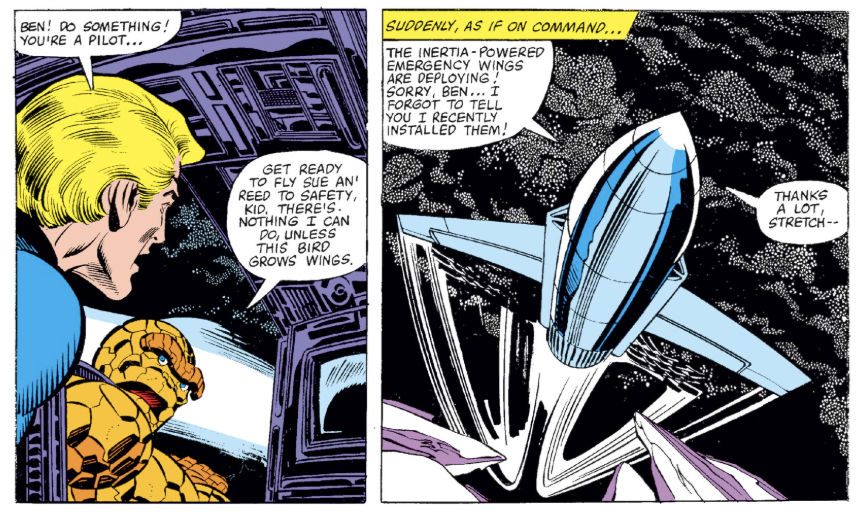
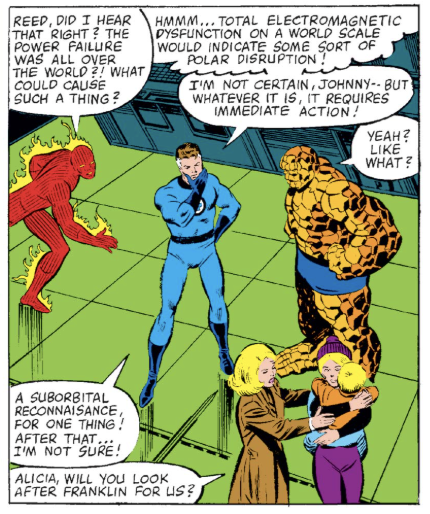
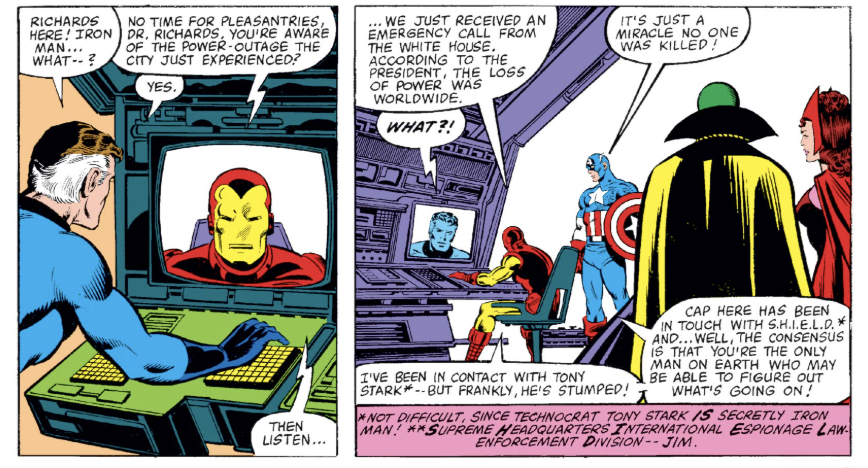
Members of the Fantastic Four are scattered around New York when all mechanical devices shut down. After saving lives, the team regroups at the Baxter Building, where they learn from the Avengers that it was a world-wide phenomenon. To investigate, the team boards its ICMB and heads to the North Pole. After a crash landing, they discover a huge alien presence.


What’s going on here?

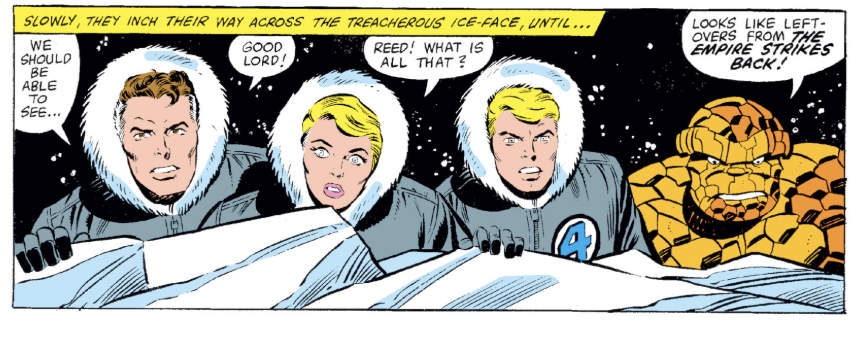
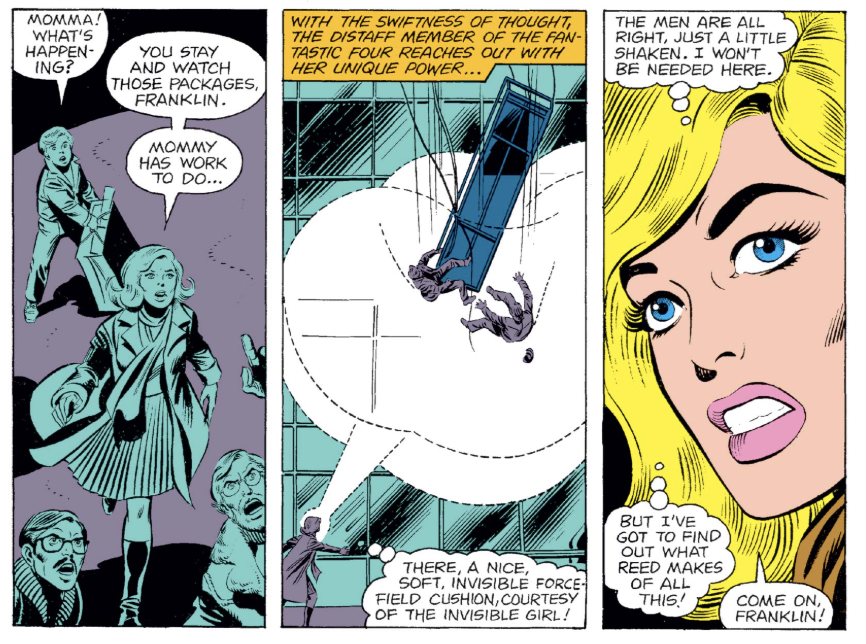
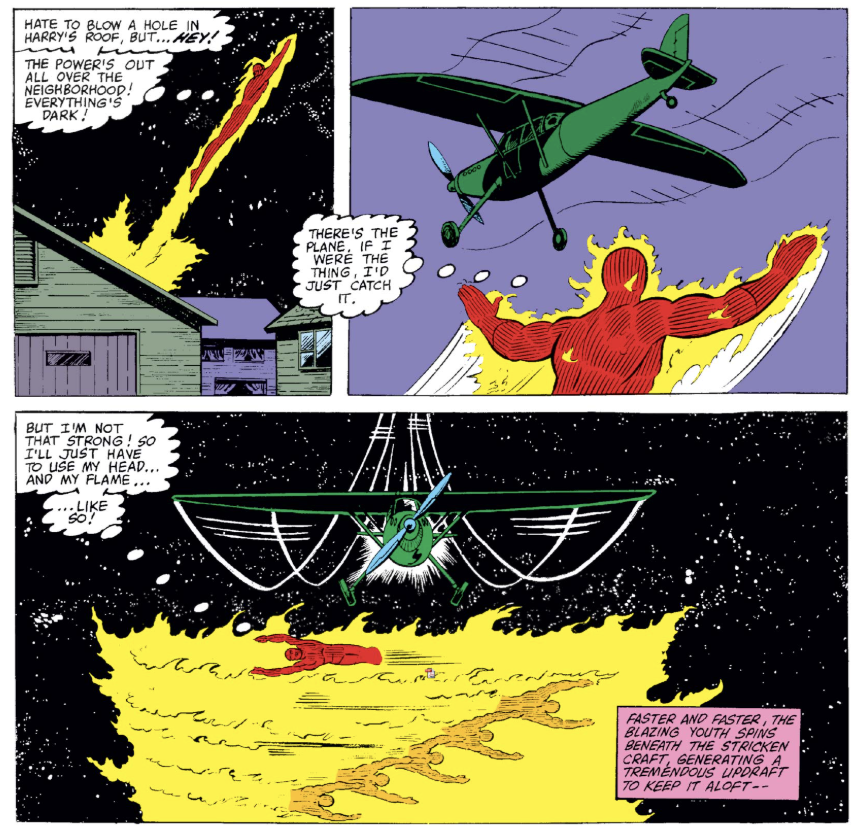
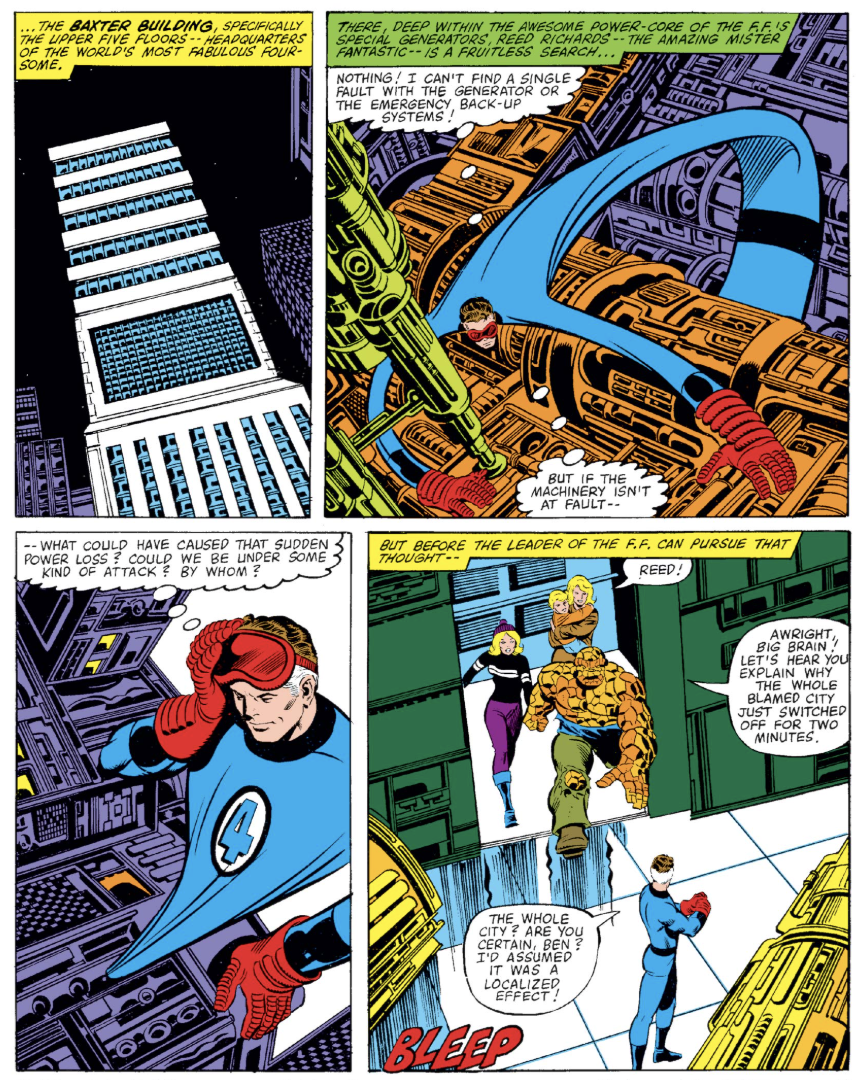
So remember in my last post where I said FF 219 was the first issue of a Doug Moench / Bill Sienkiewicz run that would take us up to the first John Byrne written issue? That wasn’t entirely true. This comic is the first John Byrne-written issue (he writes the next issue as well), and it’s a pretty good one.

I don’t know the story behind why Byrne wrote and drew these two issues (Joe Sinnott inked), and why they appear after the first Moench / Sienkiewicz issue. My guess is the Byrne stories were once intended to be one longer story, likely an annual, and it was broken in two and used as inventory issues due to some deadline problems. Notably, there isn’t a single fight scene in this issue, which is almost unheard of for a standard Marvel comic of this era and which suggests it was a longer story chopped in two (assuming the fighting happens in part two). The issue also recaps the team’s origin at length, more evidence it was intended as a stand-alone comic that might be picked up by new readers. And there’s a pin-up at the end, which indicates the page count didn’t come out evenly when they cut the story in two.

Byrne has a long history of co-plotting the X-Men with Chris Claremont, and had written comics for Charlton, but this is just his second Marvel writing credit (following Marvel Two-In-One 50). Yet it has many of Byrne’s familiar fingerprints, including cameos of other Marvel heroes (the Avengers, Vindicator), something Canadian, callbacks to the Lee/Kirby run and cool alien stuff. In all, an auspicious Fantastic Four debut for Byrne.


What I liked

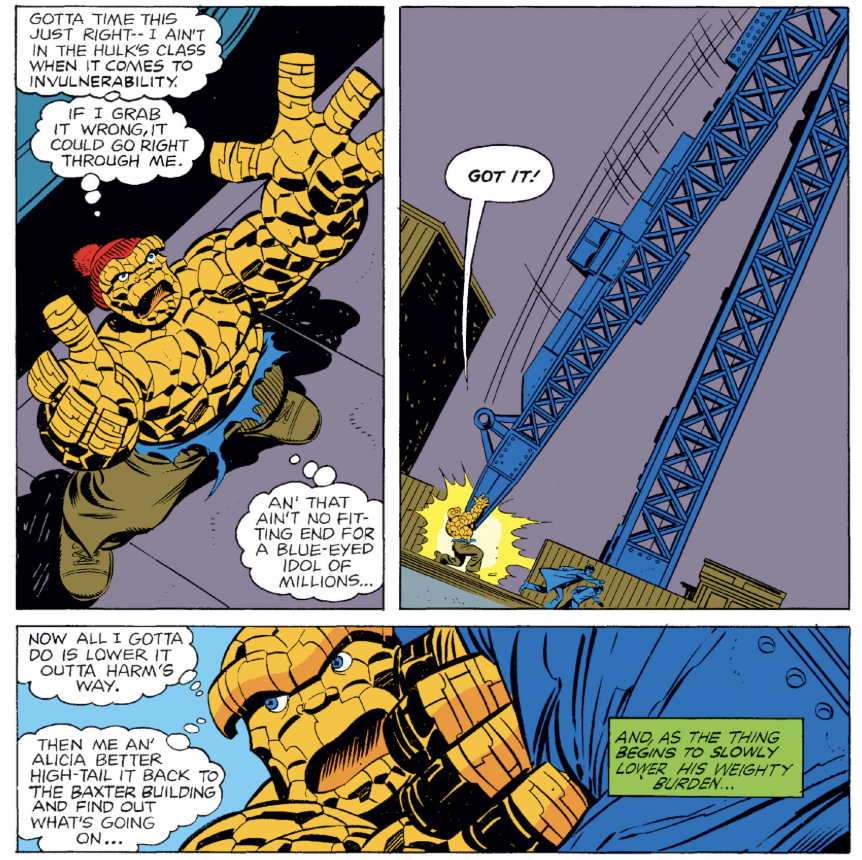
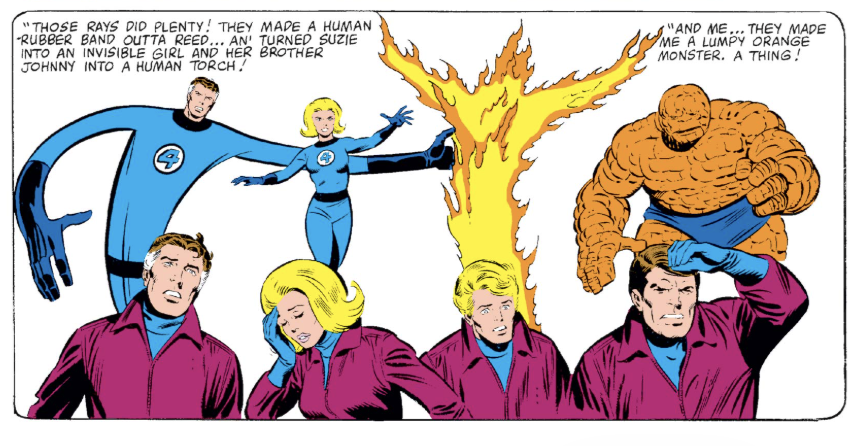
Furthering the case that this story was intended for new readers, Byrne introduces each of the FF members in turn, and gives them a chance to show off their powers. First up is Ben (who helpfully tells new readers he’s not as invulnerable as the Hulk):

Then comes Sue:

… Johnny …


and finally Reed.


All of these vignettes are elegant little snapshots into the four, and I suspect not a little influenced by a similar sequence in Fantastic Four No. 1.


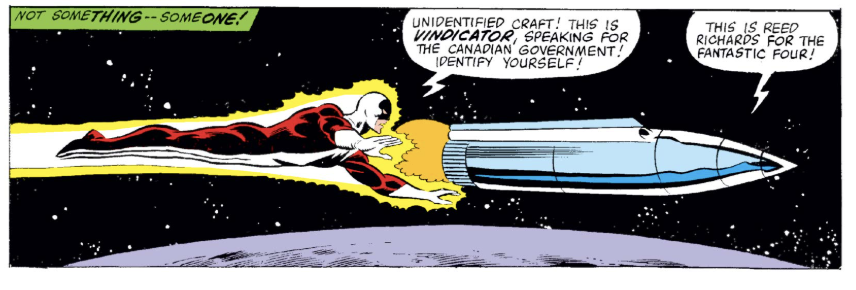
I liked the inclusion of the Avengers and especially Vindicator (this is before he changed his name to Guardian), which weren’t really necessary for story-telling purposes but serve to weave the FF into the rest of the Marvel universe:


Some fun Ben/Reed banter:


The alien installation at the North Pole looks impressive, and reminded me a lot of the Master of the World story in Alpha Flight 3-4 (also by Byrne).


What I didn’t like

Despite taking up two pages, the retelling of the FF’s origin looked pretty lackluster and wan.


Reed’s plan for investigating a world-wide power outage is … just go up in a spaceship and hope you see something suspicious? Some scientist.


Also, every car, plane and mechanical device around the world suddenly switches off and no one dies?


Anything else?


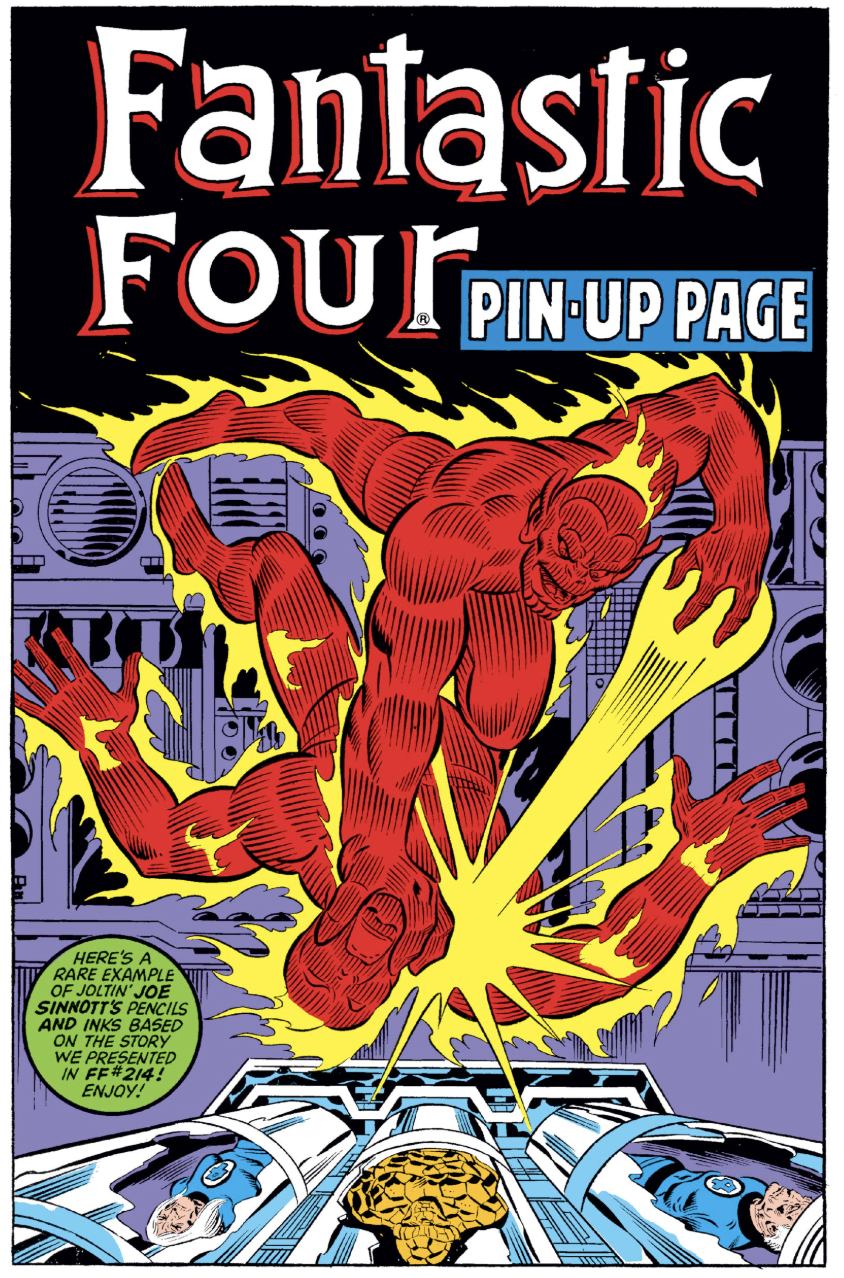
This pin-up by Joe Sinnott seems pretty obviously an unused cover for FF 214. I think the design is more dynamic than the Byrne cover they used, but you can judge for yourself here.

A cool house ad. I can’t identify the artist and the signature is hard to read, but maybe it’s James Sherman, who was active around that time.


Overall

A fun surprise

“The World’s Greatest Comic Magazine!” Fantastic Four No. 219

07 Sunday Jun 2026

Posted by percivalhenry in The World's Greatest Comic Magazine

≈ 2 Comments

Tags

1980, Bill Sienkiewicz, Doug Moench, Fantastic Four, Fantastic Four 219, Joe Sinnott, Marvel, Marvel comics, Sub-mariner

Fantastic Four 219
“Leviathans!”
Published March 1980
Writer: Doug Moench
Pencils: Bill Sienkiewicz
Inks: Joe Sinnott
Letters; Jim Novak
Colors: George Roussos
Editor: Jim Salicrup


Synopsis

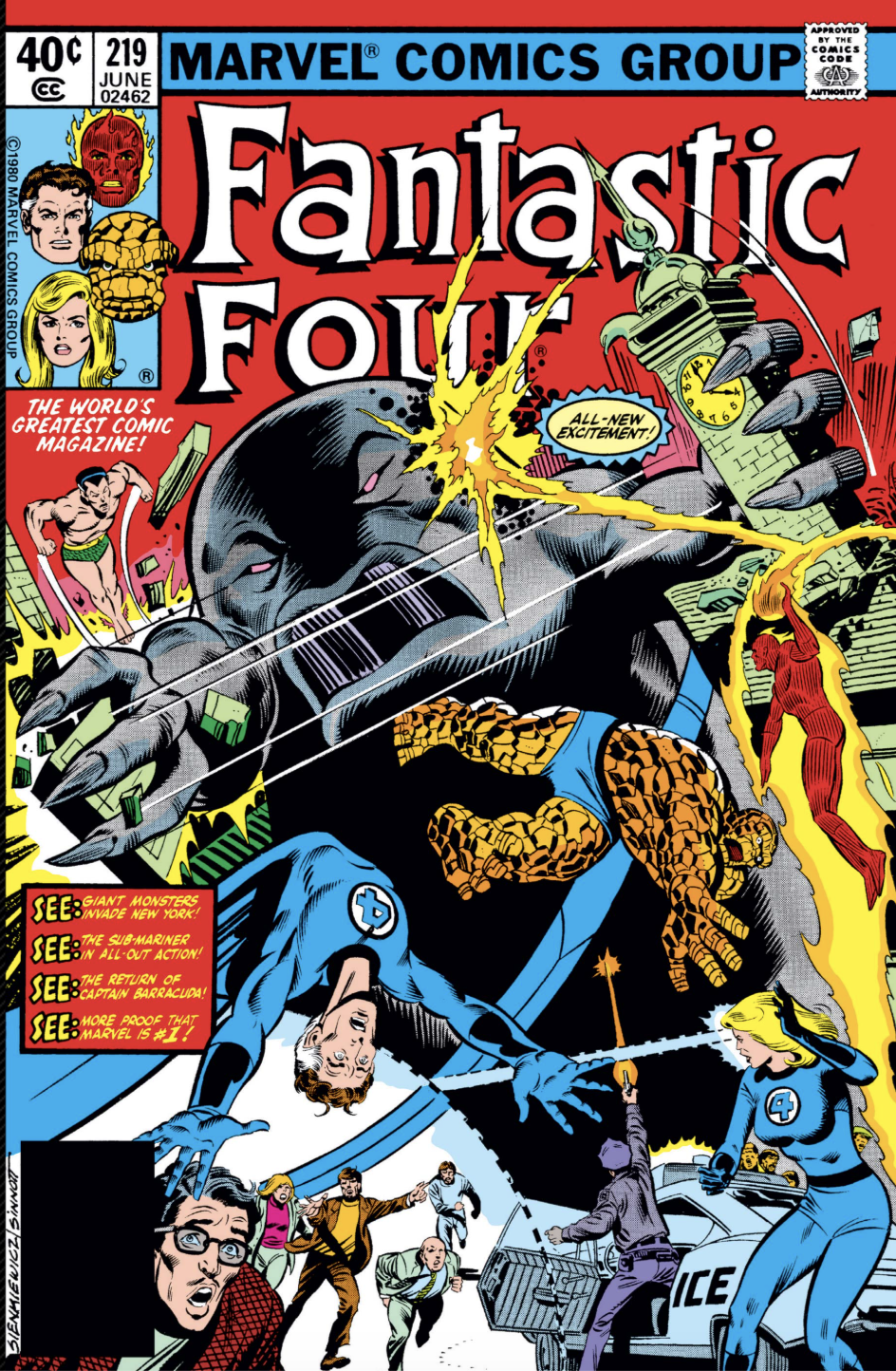
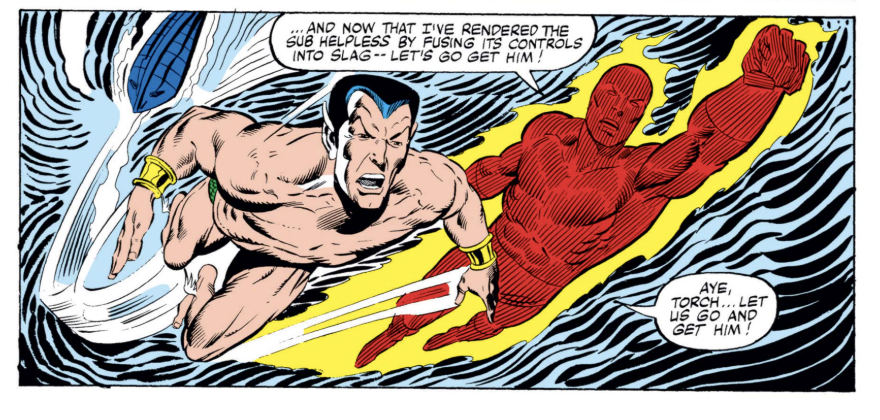
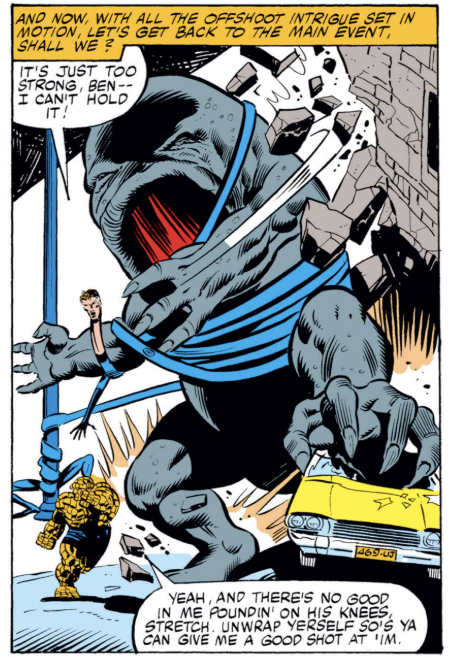
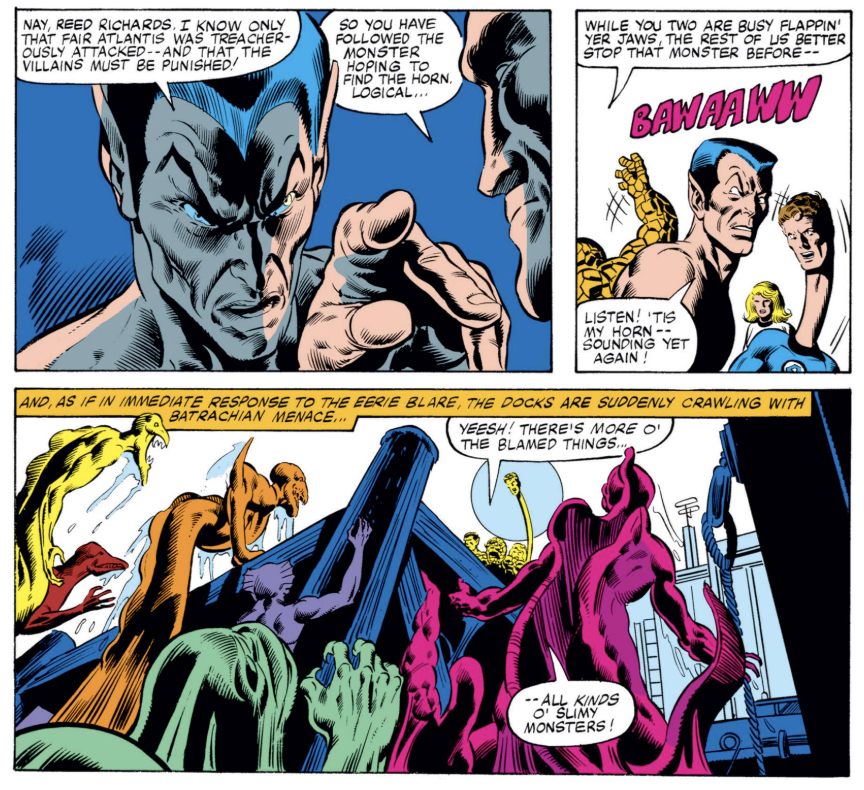
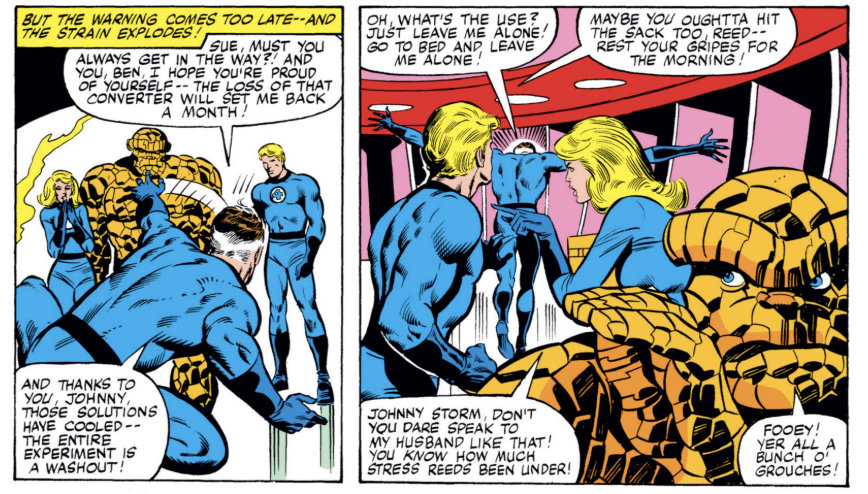
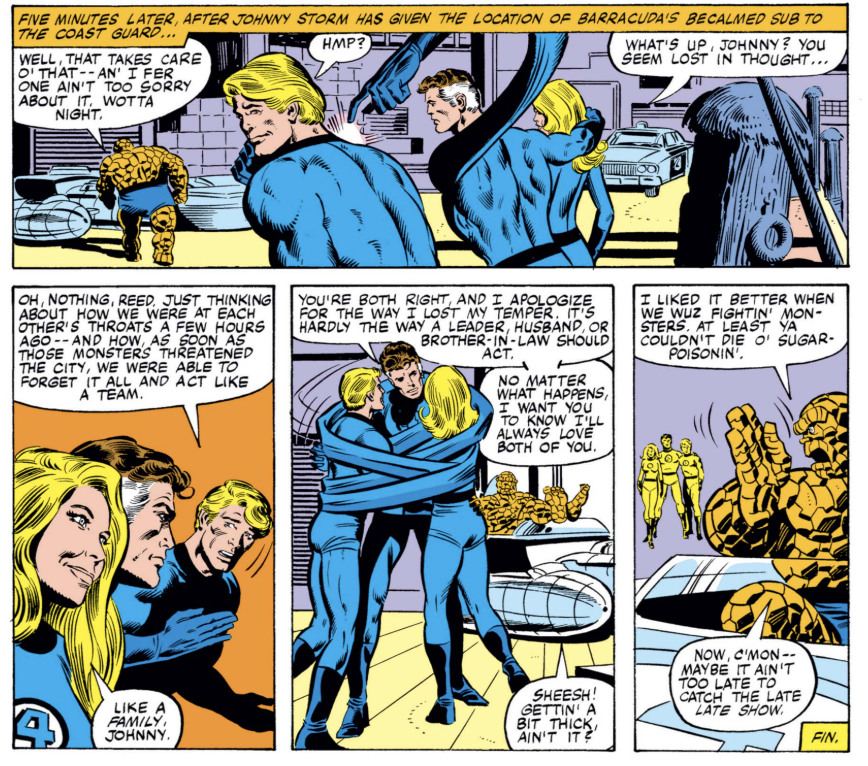
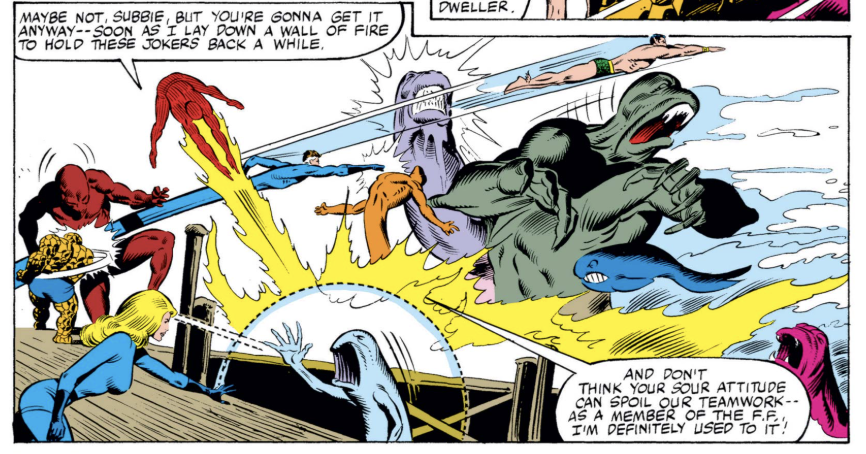
As the Fantastic Four squabble in the Baxter Building, the Sub-Mariner is attacked in Atlantis by Barracuda, a flamboyant pirate who steals the horn Namor uses to command sea creatures. Back on the surface, Barracuda summons sea monsters to attack Manhattan so he can rob a bank. The Fantastic Four battle them while Namor and Johnny take the fight to Barracuda’s submarine. Eventually Sue uses her force field to separate the horn from Barracuda, who is knocked out by Namor and spared from worse by Sue’s entreaties.


What’s going on here?

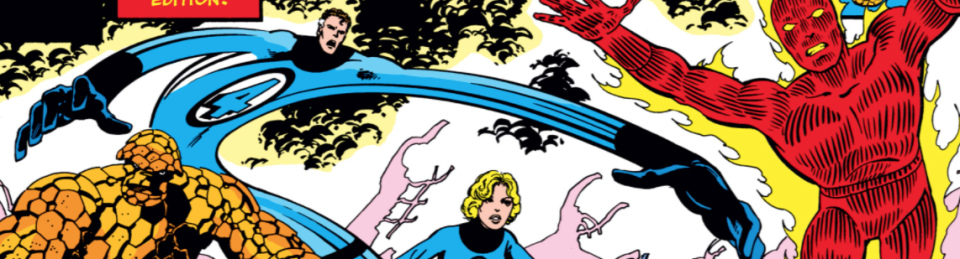
Fantastic Four 219 marks the debut of the new creative team of Doug Moench and Bill Sienkiewicz, with Joe Sinnott remaining on board as inker. Fittingly for a new start, this comic is very much a back-to-the-basics story, with deliberate echoes of the first FF issues and a relatively simple premise. These days, this issue would probably start another volume as a new No. 1, and be billed as a starting point for new readers.

Moench is probably best known for his runs on Batman and Master of Kung Fu, but by 1980 he had almost a decade of writing experience with dozens of credits on various horror comics. Moench and Sienkiewicz has previously worked together, mostly on Moon Knight stories that appeared in The Hulk magazine, but Moench had far more experience. Astonishingly, FF 219 was just Sienkiewicz’s 10th comic credit, and by far the most high-profile assignment for the then 22-year old. It was clear the powers that be at Marvel recognized his talent, and they would be richly rewarded in the years to come by some of the most innovative and ambitious comic art ever published in mainstream comics.

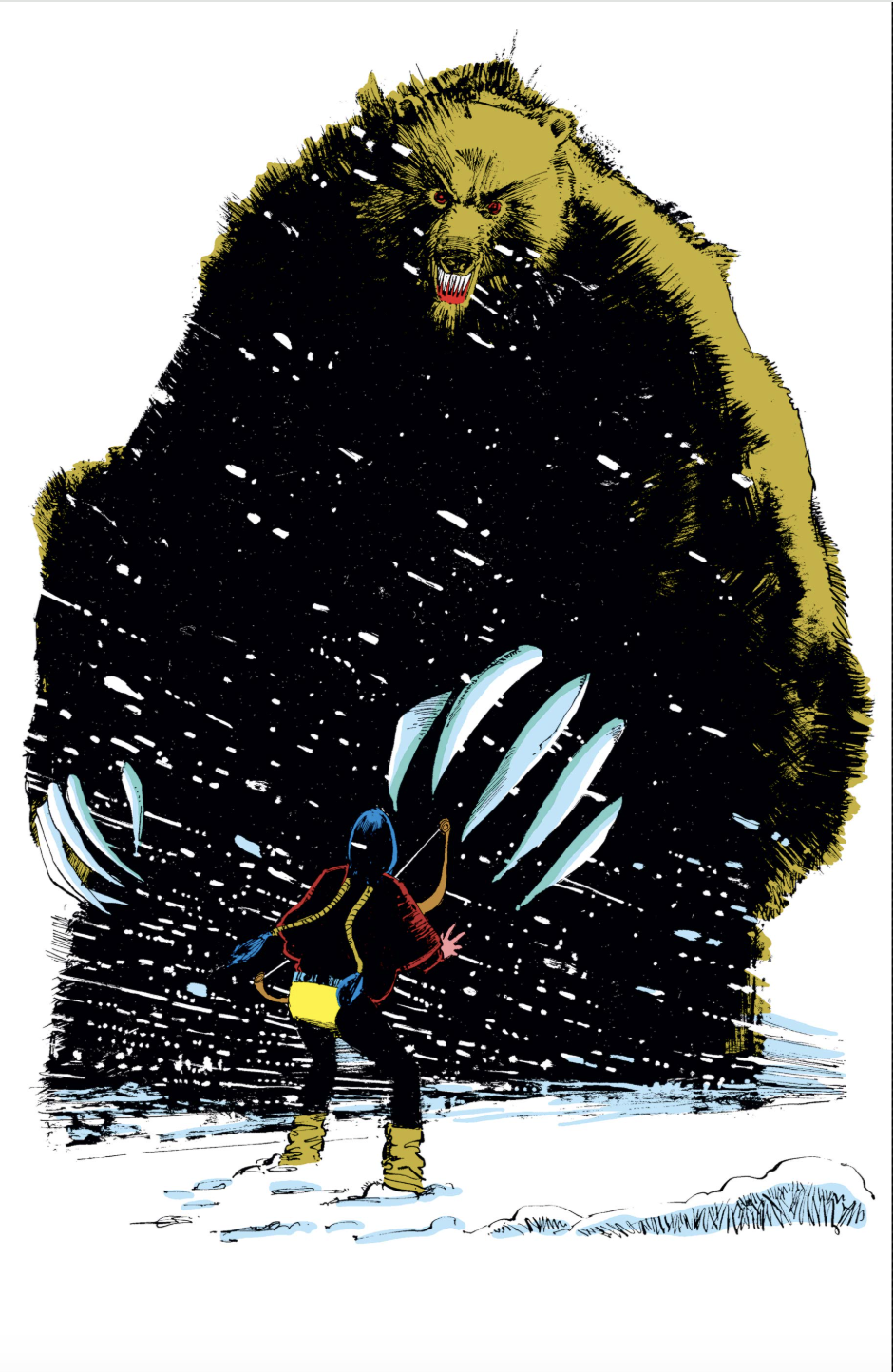
My first exposure to Sienkiewicz — and to be clear, it’s pronounced sin-kev-itch —was his groundbreaking New Mutants 18 from 1984, which shattered what I knew about comics. He quickly became one of my favorite artists, and many times I was crushed to find that a comic he provided the cover for was penciled by some lesser artist. In retrospect, it’s remarkable that in just four years Sienkiewicz went from this:


To this:


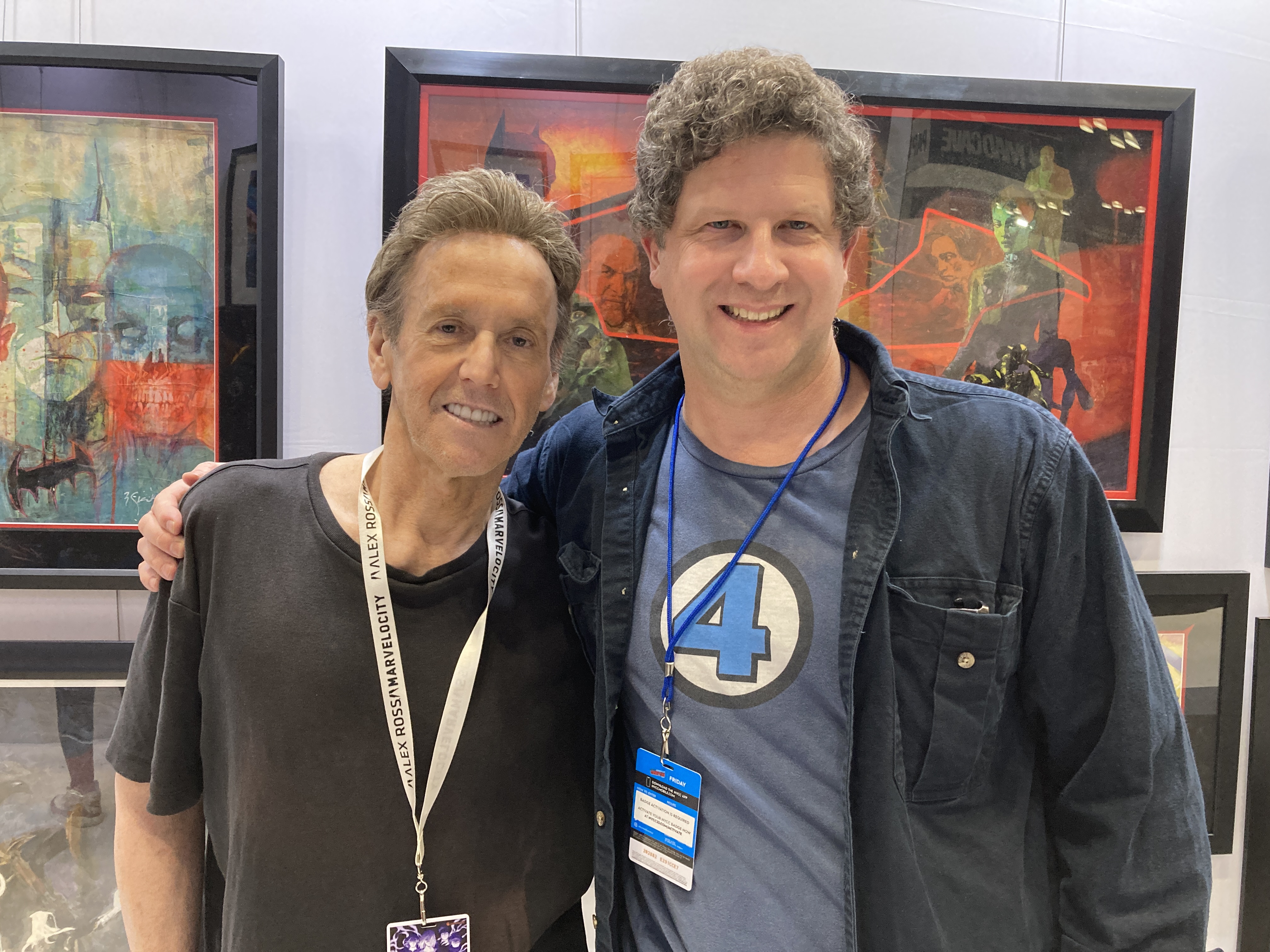
I had the pleasure of talking to Sienkiewicz at New York Comic Con a few years ago and I asked him if he felt hemmed in or cramped by Joe Sinnott’s inks on his FF run. I had assumed Sinnott was somehow holding him back, but he surprised be my saying that as a rookie artist, it was a great comfort in being inked by a legend like Sinnott, and he viewed his time on the FF as a valuable learning experience. Here’s a photo of the two of us (I’ll let you guess who is who):


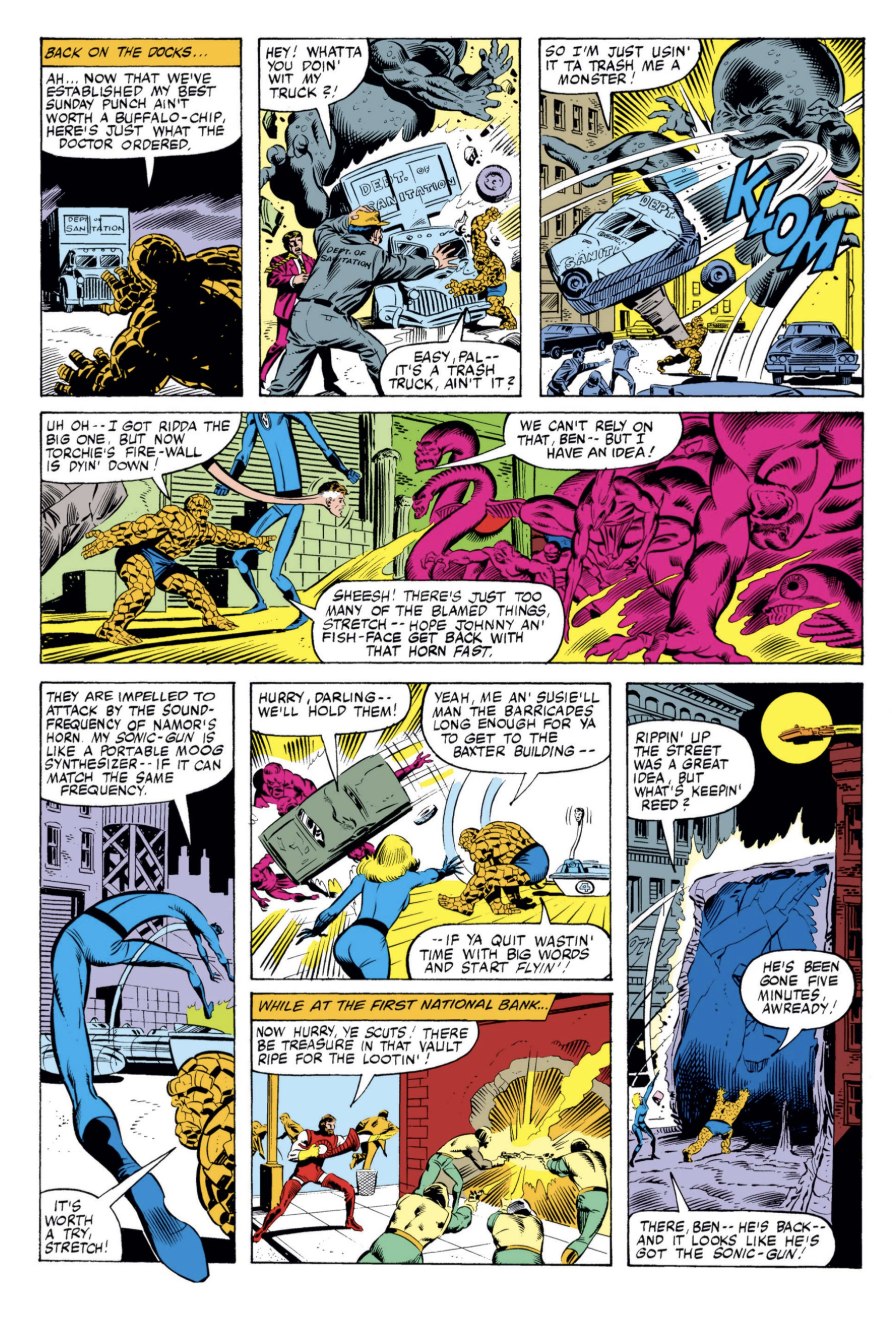
To be clear, Sienkiewicz’s skills with his pencils and layouts are still embryonic, and on many pages, it looks like he’s trying to stuff to much on the page, making everything look small and cramped. Here’s an eight-panel page, which, to be fair, few artists besides George Perez can pull off:

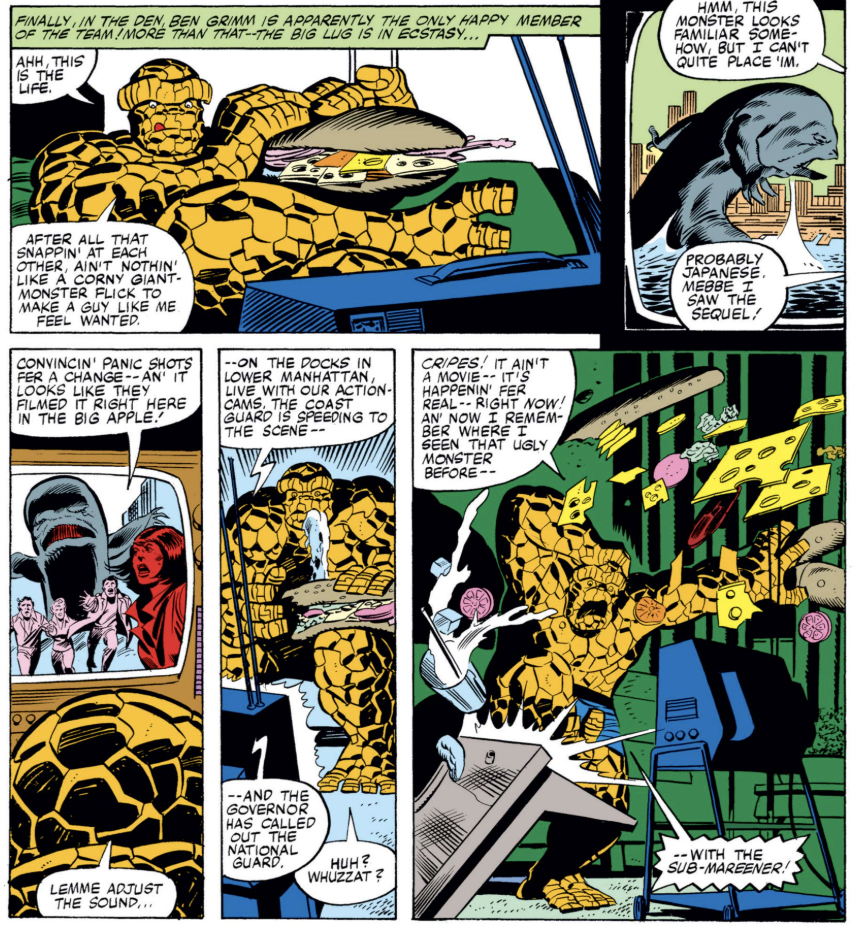
But Sienkiewicz’s considerable abilities are also on display, such as in this quasi-comedic sequence:

Or in these dramatic panels:

What I liked

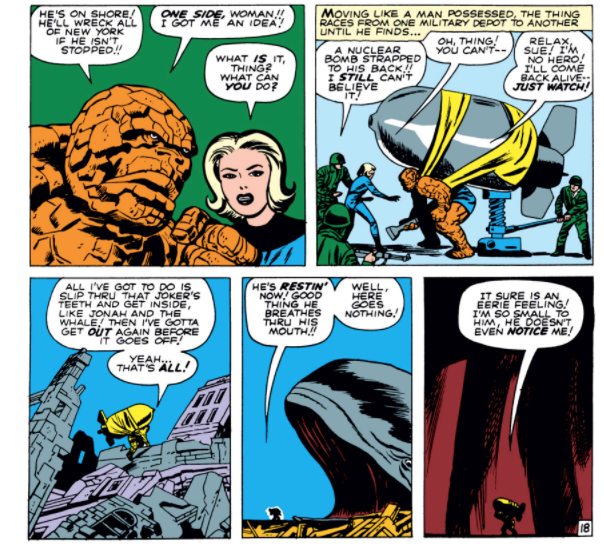
This issue featured a fun call-back to Fantastic Four 4, in which Namor summoned Giganto (a monstrous whale with arms and legs) to attack New York. The FF was able to defeat it when Ben carried a nuclear bomb into its gullet (art below by Jack Kirby and Sol Brodsky).


In FF 219, Ben wonders if the new monster is Giganto’s son.

Moench does a nice job drawing an arc from the FF squabbling in the Baxter Building (a classic Lee / Kirby opening), with first-rate Reed as Jerk material …

… to a warm, feel-good resolution.


I also liked this quip from Johnny:


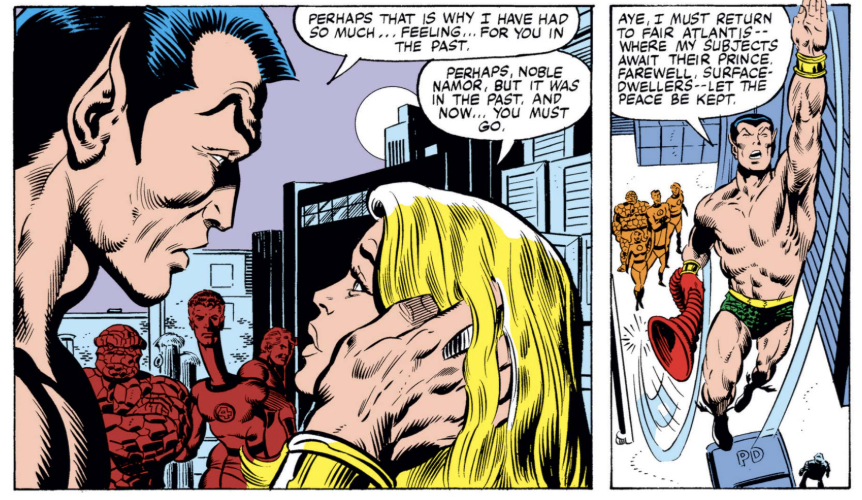
And this reminder of the never quite resolved Namor-Sue dynamic:


What I didn’t like

Not much. I was prepared to be annoyed at Reed’s behavior but Moench played it off skillfully.

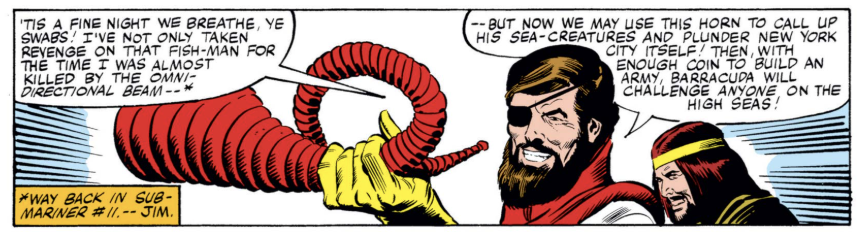
Barracuda’s pirate lingo is a bit much:


Overall


A promising start

← Older posts
  • “The World’s Greatest Comic Magazine!” Fantastic Four No. 229
  • “The World’s Greatest Comic Magazine!” Fantastic Four No. 228
  • “The World’s Greatest Comic Magazine!” Fantastic Four No. 227
  • “The World’s Greatest Comic Magazine!” Fantastic Four No. 226
  • “The World’s Greatest Comic Magazine!” Fantastic Four No. 225
  • August 2026
  • July 2026
  • June 2026
  • May 2026
  • April 2026
  • March 2026
  • February 2026
  • January 2026
  • December 2025
  • November 2025
  • October 2025
  • September 2025
  • August 2025
  • July 2025
  • June 2025
  • May 2025
  • April 2025
  • March 2025
  • February 2025
  • January 2025
  • December 2024
  • November 2024
  • October 2024
  • September 2024
  • August 2024
  • July 2024
  • June 2024
  • May 2024
  • April 2024
  • March 2024
  • February 2024
  • January 2024
  • December 2023
  • November 2023
  • September 2023
  • July 2023
  • June 2023
  • May 2023
  • April 2023
  • March 2023
  • February 2023
  • January 2023
  • December 2022
  • November 2022
  • October 2022
  • September 2022
  • August 2022
  • July 2022
  • June 2022
  • May 2022
  • April 2022
  • March 2022
  • February 2022
  • January 2022
  • December 2021
  • November 2021
  • October 2021
  • September 2021
  • August 2021
  • July 2021
  • June 2021
  • May 2021
  • April 2021
  • March 2021
  • February 2021
  • January 2021
  • December 2020
  • February 2018
  • May 2016
  • February 2016
  • January 2016
  • December 2015
  • November 2015
  • October 2015
  • September 2015
  • August 2015
  • July 2015
  • April 2015
  • March 2015
  • January 2015
  • December 2014
  • November 2014
  • October 2014
  • September 2014
  • August 2014
  • June 2014
  • May 2014
  • April 2014
  • March 2014
  • February 2014
  • August 2026
  • July 2026
  • June 2026
  • May 2026
  • April 2026
  • March 2026
  • February 2026
  • January 2026
  • December 2025
  • November 2025
  • October 2025
  • September 2025
  • August 2025
  • July 2025
  • June 2025
  • May 2025
  • April 2025
  • March 2025
  • February 2025
  • January 2025
  • December 2024
  • November 2024
  • October 2024
  • September 2024
  • August 2024
  • July 2024
  • June 2024
  • May 2024
  • April 2024
  • March 2024
  • February 2024
  • January 2024
  • December 2023
  • November 2023
  • September 2023
  • July 2023
  • June 2023
  • May 2023
  • April 2023
  • March 2023
  • February 2023
  • January 2023
  • December 2022
  • November 2022
  • October 2022
  • September 2022
  • August 2022
  • July 2022
  • June 2022
  • May 2022
  • April 2022
  • March 2022
  • February 2022
  • January 2022
  • December 2021
  • November 2021
  • October 2021
  • September 2021
  • August 2021
  • July 2021
  • June 2021
  • May 2021
  • April 2021
  • March 2021
  • February 2021
  • January 2021
  • December 2020
  • February 2018
  • May 2016
  • February 2016
  • January 2016
  • December 2015
  • November 2015
  • October 2015
  • September 2015
  • August 2015
  • July 2015
  • April 2015
  • March 2015
  • January 2015
  • December 2014
  • November 2014
  • October 2014
  • September 2014
  • August 2014
  • June 2014
  • May 2014
  • April 2014
  • March 2014
  • February 2014
“The World’s Greatest Comic Magazine!” Fantastic Four No. 229

“The World’s Greatest Comic Magazine!” Fantastic Four No. 229

percivalhenry's avatar by percivalhenry August 30, 2026
“The World’s Greatest Comic Magazine!” Fantastic Four No. 228

“The World’s Greatest Comic Magazine!” Fantastic Four No. 228

percivalhenry's avatar by percivalhenry August 23, 2026
“The World’s Greatest Comic Magazine!” Fantastic Four No. 227

“The World’s Greatest Comic Magazine!” Fantastic Four No. 227

percivalhenry's avatar by percivalhenry August 16, 2026
“The World’s Greatest Comic Magazine!” Fantastic Four No. 226

“The World’s Greatest Comic Magazine!” Fantastic Four No. 226

percivalhenry's avatar by percivalhenry August 12, 2026
“The World’s Greatest Comic Magazine!” Fantastic Four No. 225

“The World’s Greatest Comic Magazine!” Fantastic Four No. 225

percivalhenry's avatar by percivalhenry August 3, 2026
“The World’s Greatest Comic Magazine!” Fantastic Four No. 224

“The World’s Greatest Comic Magazine!” Fantastic Four No. 224

percivalhenry's avatar by percivalhenry July 27, 2026

Blog at WordPress.com.

  • Subscribe Subscribed
    • Percival Henry: The Fantastic Four and more
    • Join 74 other subscribers
    • Already have a WordPress.com account? Log in now.
    • Percival Henry: The Fantastic Four and more
    • Subscribe Subscribed
    • Sign up
    • Log in
    • Report this content
    • View site in Reader
    • Manage subscriptions
    • Collapse this bar
Loading Comments...