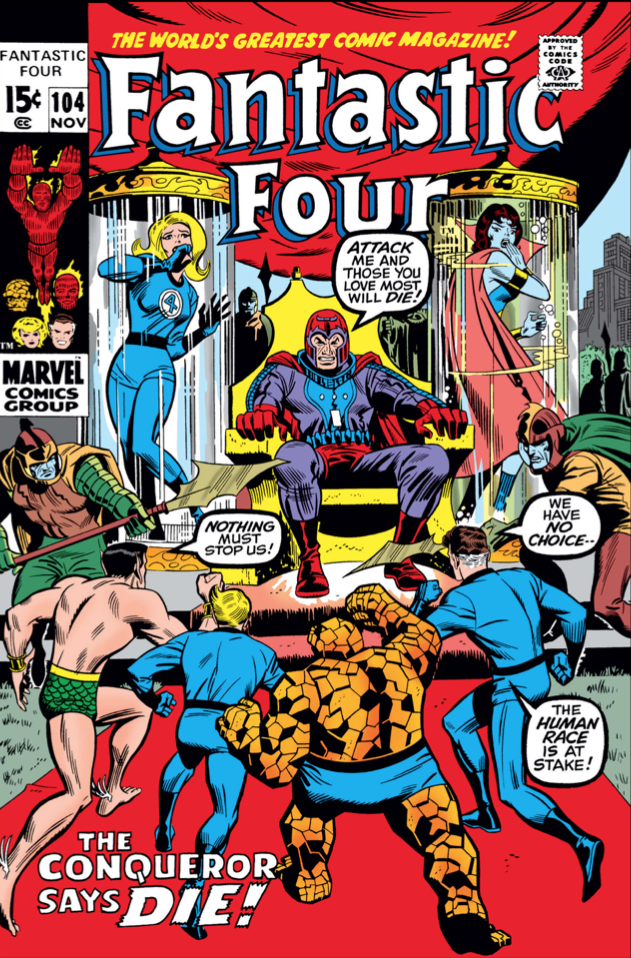
Fantastic Four 104 “Our World –Enslaved!” Published: Aug. 1970 Writer: Stan Lee Art: John Romita and John Verpoorten Letters: Artie Simek Cover: Romita and Verpoorten
Synopsis
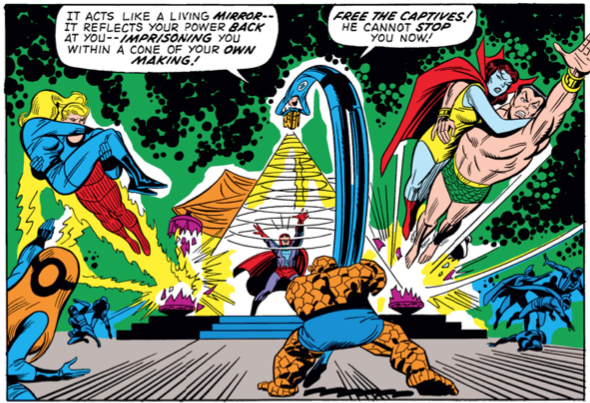
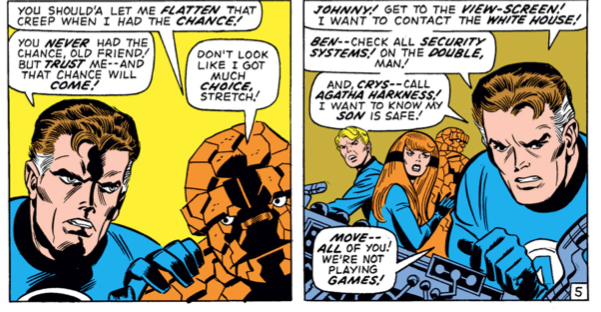
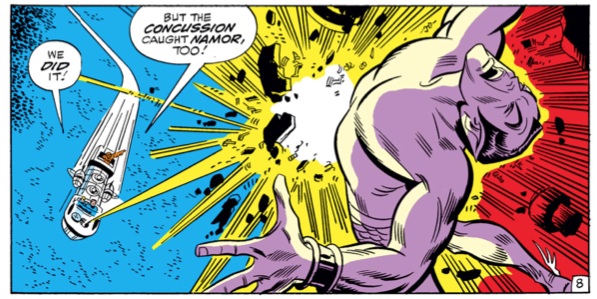
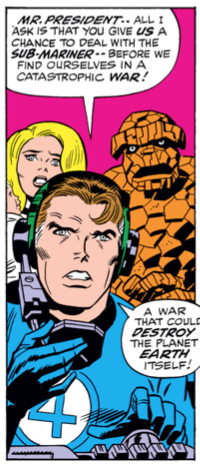
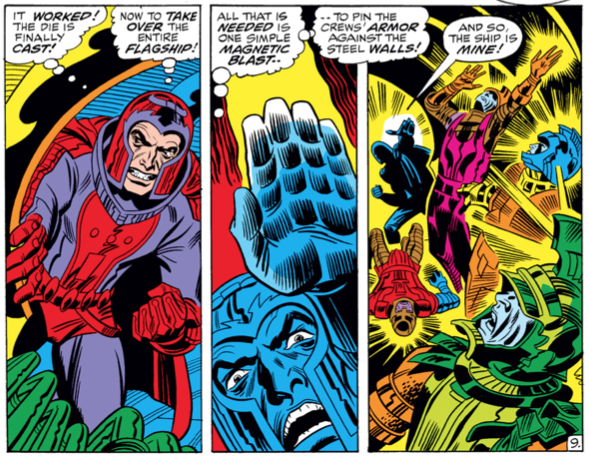
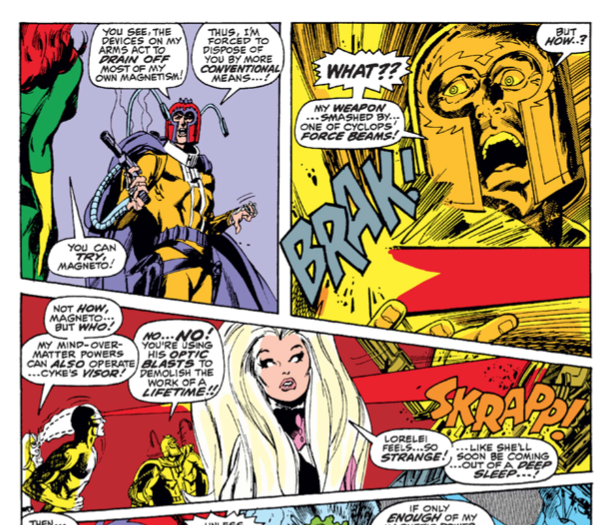
To thwart Magneto’s plans and free his hostages, Mr. Fantastic convinces the Sub-Mariner to return to the evil mutant’s side. Then, with the Earth on the brink of defeat, Reed deploys a weapon that turns Magento’s powers against him, saving the day.
What’s going on here
We are now in the second issue of the post-Kirby era and unfortunately this one has a formulaic, paint-by- numbers feel. This is not the first time Earth has been brought to the brink by invading Atlanteans, nor the first time Reed has saved the day by whipping up a gizmo. In all, the plot reads a lot like FF stories from the first two dozen issues.
What I liked
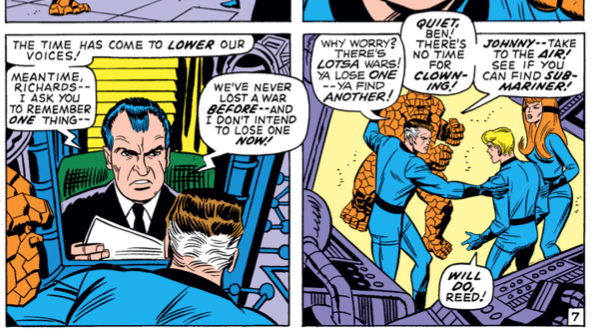
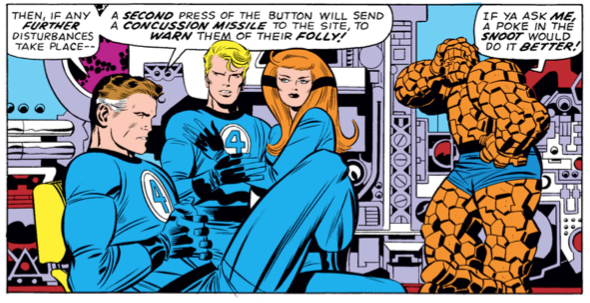
There are some more fun nods to Nixonian geo-politics, including an ironic comment about the US never losing wars. And I loved the design in the climactic panel above.
What I didn’t like
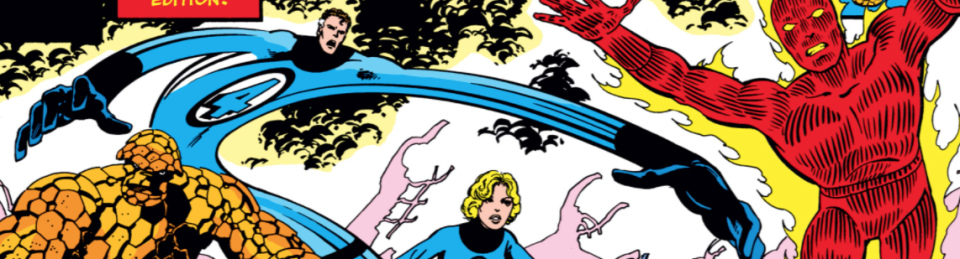
Along with the dull story, the art felt rushed and un-Romita like, making me suspect he only did breakdowns and Verpoorten did the finished work.
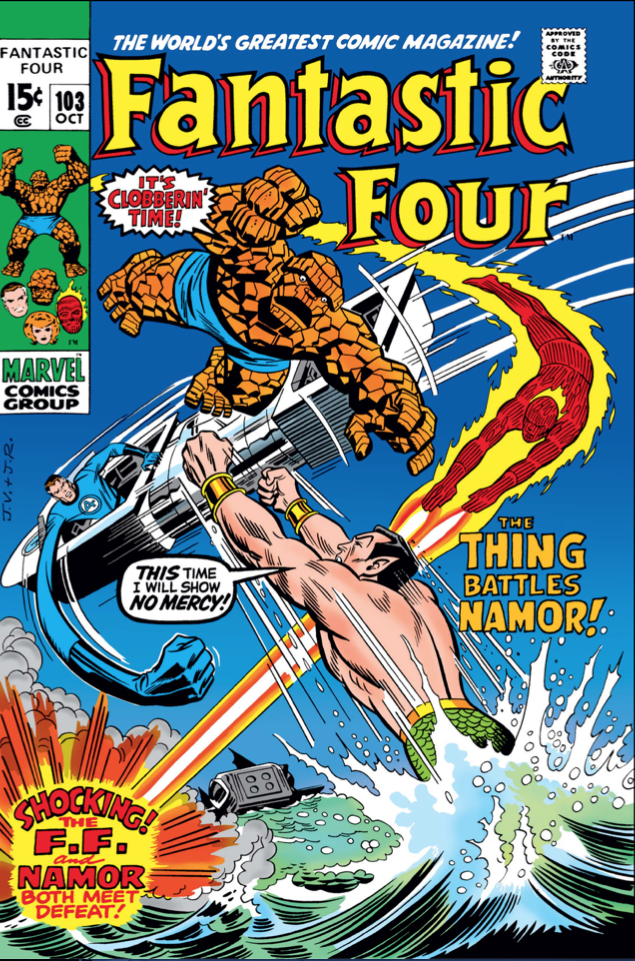
Fantastic Four 103 “At War With Atlantis!” Published: July 1970 Story: Stan Lee and John Romita Script: Lee Pencils: Romita Inks: John Verpoorten Letters: Sam Rosen
Note: I’m back! After taking the summer to mourn Jack Kirby’s departure from the Fantastic Four, I plan to resume regular weekly blog service. You may notice some changes in the format; basically I’m trying to streamline the writing process and make it more efficient so I can continue doing this. But hopefully nothing will be too jarring. As always, let me know if you have ideas or suggestions. Onward!
Synopsis
Magneto goads Namor into war against the surface world, then takes the Invisible Girl hostage.
What’s going on here?
This is obviously the first issue without Jack Kirby—and notably, also without Joe Sinnott—but Stan and the two Johns do a credible job of covering for them. In part, that’s because Romita and Veroorten seem to be deliberately copying Jack’s style. There are places where it’s obviously not Jack, such as close ups of the characters faces, but overall it’s a successful effort. Romita takes a back seat to no one in the comic-art business, so there will be no nitpicking of him here.
What I liked
It’s always fun when a villain crosses over from one book to another. This is the first time the FF tangle with Magneto, as far as I am aware, and he’s definitely in his early, raving megalomaniac mode here (vs. his more statesman-like megalomaniac mode of more recent years).
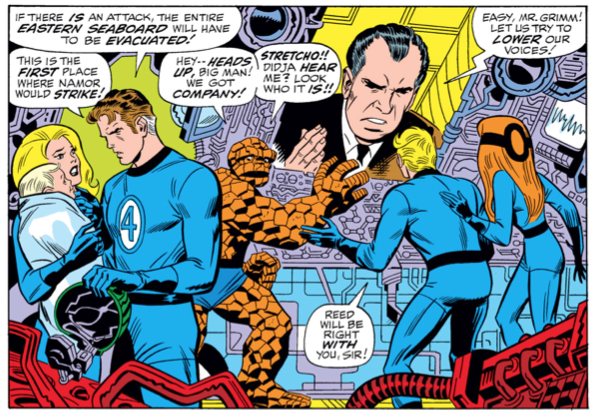
There’s also a very overt depiction of Richard Nixon as president (and Ben even makes a Spiro Agnew reference). While the president often shows up in comics, he’s often more generic, and not always this recognizable as an actual person.
What I didn’t like
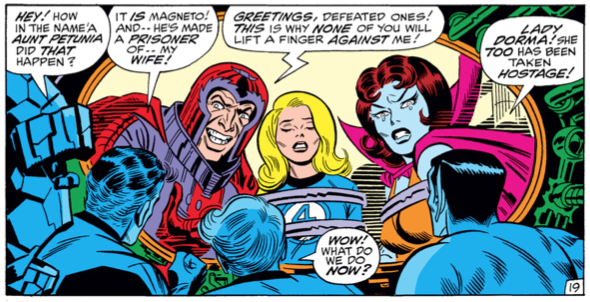
One of the oldest and most tedious cliches in the early FF plots was how often Sue was taken hostage. By my count it was like a dozen times in the first 40 issues. Now, despite it being a new decade and with a new art team, Sue is once again taken hostage (along with Lady Dorma, for good measure).
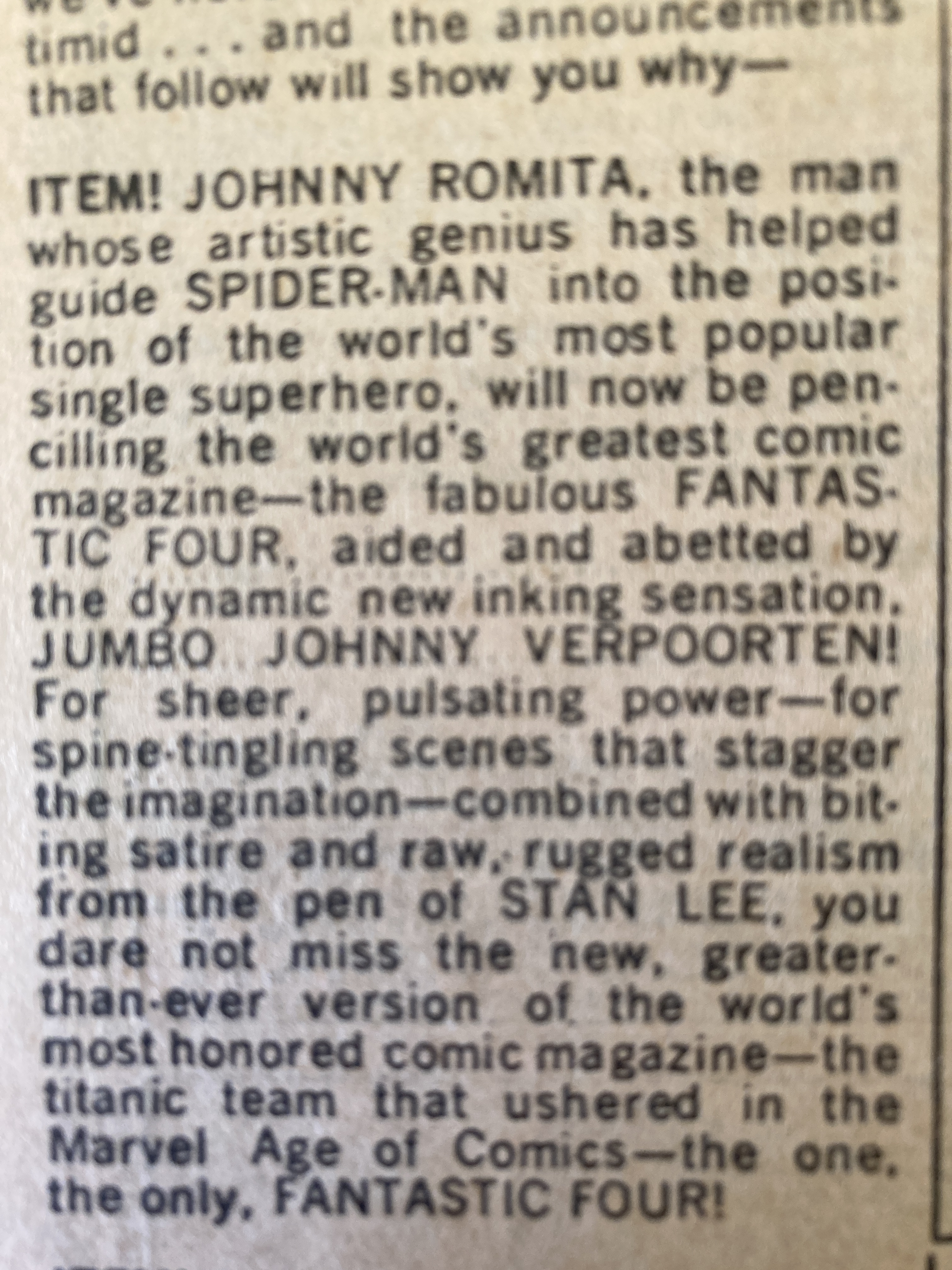
Also, the Bullpen Bulletin item welcoming Romita as the FF’s new penciler fails to acknowledge jack or his accomplishments, which seems a bit bush league.
Fantastic Four 102 “The Strength of the Sub-Mariner!” Published June 1970 Story: Stan Lee and Jack Kirby Script: Lee Pencils: Kirby Inks: Joe Sinnott Letters: Artie Simek Cover: John Romita and John Verpoorten
Note: This is a milestone issue of the Fantastic Four, the last issue penciled by Jack Kirby. It’s also a fitting place for me to take a break from blogging duties. After nearly two-and-half-years of writing (almost) weekly posts about the world’s greatest comic magazine, I’m a bit burned out and going to take a short hiatus. I’ll still write occasional entries like So Random!, but I’ll leave the FF alone for a while. I’m not sure how long I’ll be gone, but when I return, I will be looking forward to diving back into the post-Kirby era.
Synopsis
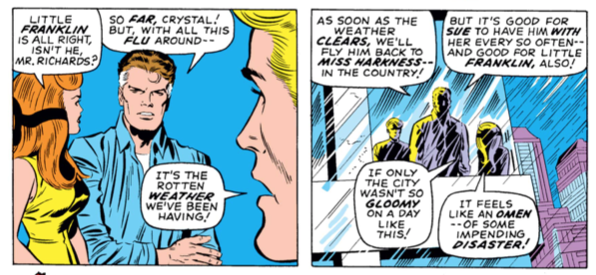
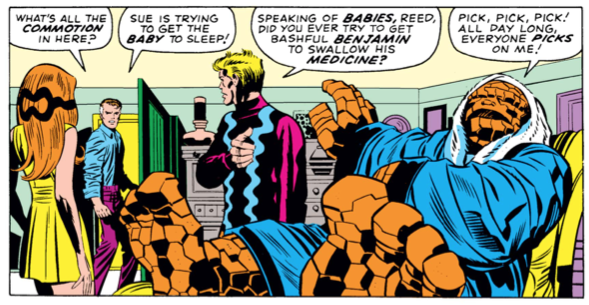
As per usual, the issue opens with Thing and the Human Torch—plus Crystal—hanging out in the Baxter Building. This time, Ben has a cold and is being a baby about it. The action then shifts beneath the ocean, where the Sub-Mariner, investigating a disturbance, discovers Magneto unconscious on a tropical island. He takes him back to Atlantis to recuperate, and there Magneto tries to convince Namor to join him in his fight against humans.
Meanwhile, back in New York, metal objects start to fly out of control, including the machinery in Mr. Fantastic’s lab. Reed uses a “magna-tracer” to track magnetic waves to Atlantis, and as a warning, sends a “sonic probe” which creates tremors under the sea. When the magnetic attacks against New York don’t stop, Ben sends a torpedo to Atlantis, against the protests of Reed, and the provocation leads Namor to declare war on the surface world, with Magneto behind him.
What’s going on here?
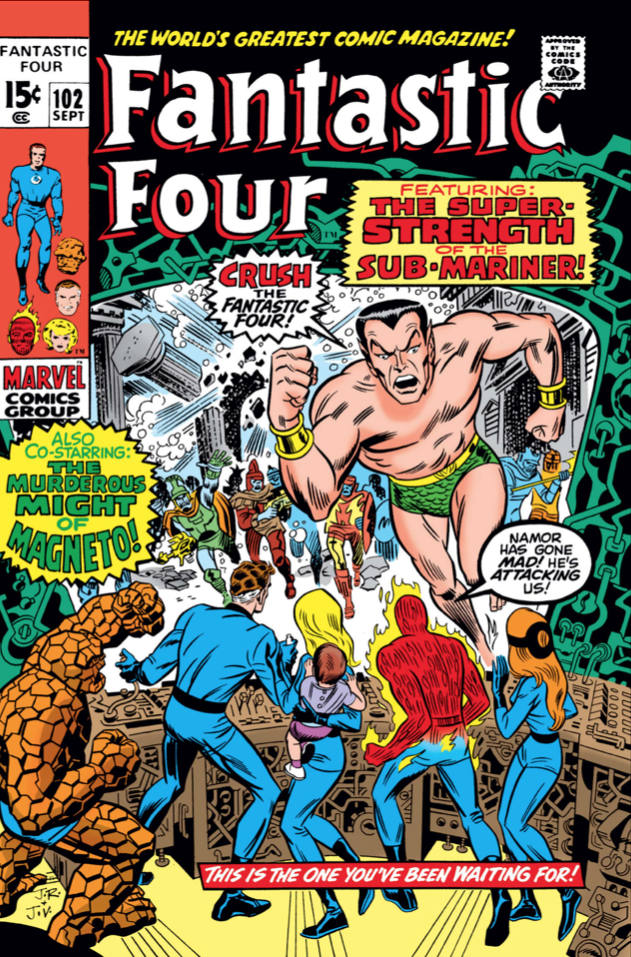
This, of course, is Jack Kirby’s last issue of the Fantastic Four and one of his final stories for Marvel before he decamped for rival DC. He didn’t even stick around to draw the cover, which was handled by John Romta.
Kirby’s frustrations with Stan Lee and Marvel had been brewing for years, and ranged from creative—such as seeing his character, the Silver Surfer, taken from him and given to John Buscema to draw—to financial. According to author Sean Howe, Marvel was by then licensing its characters to an entrepreneur who sold posters and other merchandise using Kirby’s images, but Kirby wasn’t compensated. Nor did he receive his share of a settlement in a dispute about the ownership of Captain America. After previously rejecting overtures from DC’s Carmine Infantino to jump ship, in March of 1970 a fed up Kirby finally signed a three-year contract with DC.
There’s no easy way to sum up the significance of the Lee / Kirby run on the Fantastic Four and I’m not sure I’ll be able to do so adequately here. There have been longer sustained runs (Dave Sims wrote and drew 300 issues of Cerebus!) and shorter runs with more recent acclaim (Neil Gaiman’s 75-issue Sandman run is often at the top of fans polls). But when combining quality, creativity, longevity and influence, I don’t think there’s really any comparison.
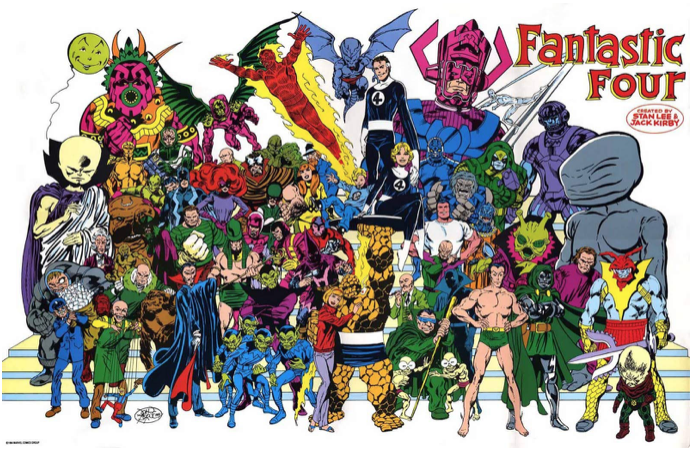
The Lee/ Kirby FF run seeded the Marvel universe, and the concepts and characters they created became the foundations on which a multi-billion-dollar entertainment empire has been built. Even a short list of characters introduced or reintroduced in their run is breathtaking: The Skrulls, Dr. Doom, Latveria, Namor, Atlantis, Rama Tut aka Kang, the Watcher, the Negative Zone, Annihilus, Galactus, the Silver Surfer, the Inhumans, the Black Panther, Wakanda, Agatha Harkness, Ronan the Accuser, the Kree, the Molecule Man, Him aka Adam Warlock and the Microverse. All of them have been recycled dozens, if not hundreds, of times across thousands of comics, TV shows and movies.
When I was a kid I had a Fantastic Four poster by John Byrne, in which the FF are surrounded by dozens of other characters. All I knew at the times that they were cool characters; what I didn’t realize is that they all had debuted in the Lee / Kirby run.
Back to issue 102
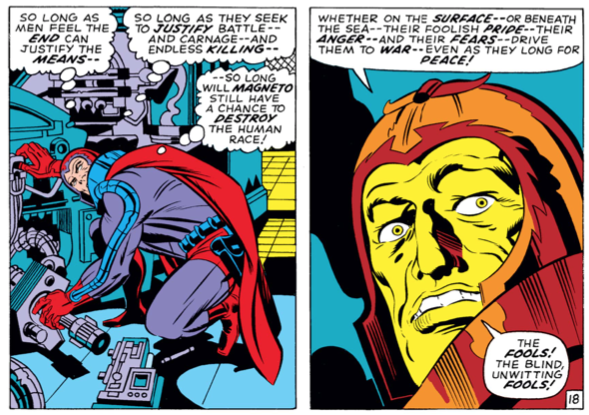
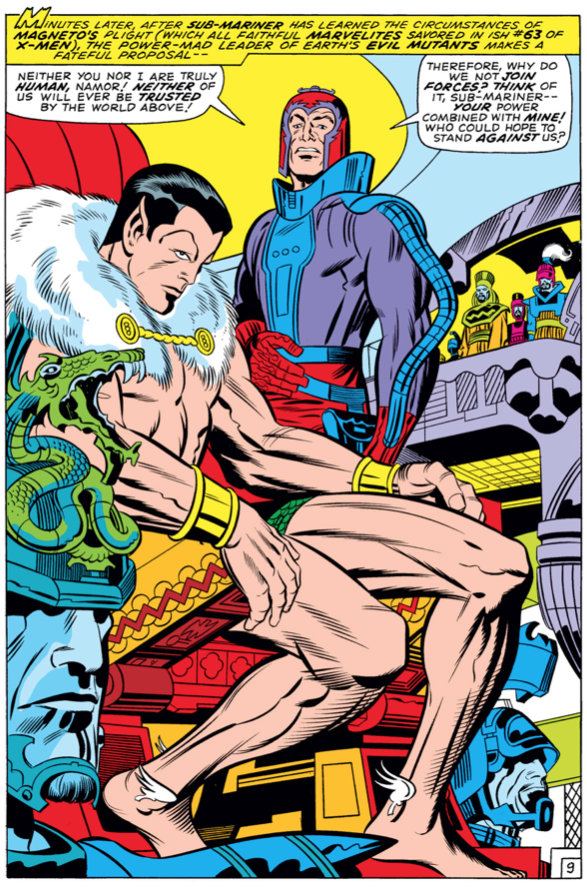
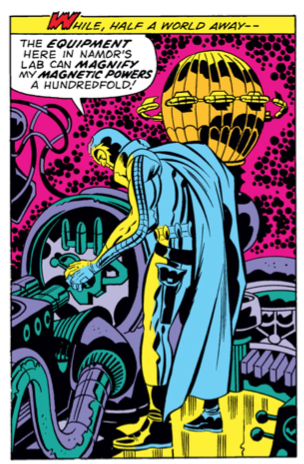
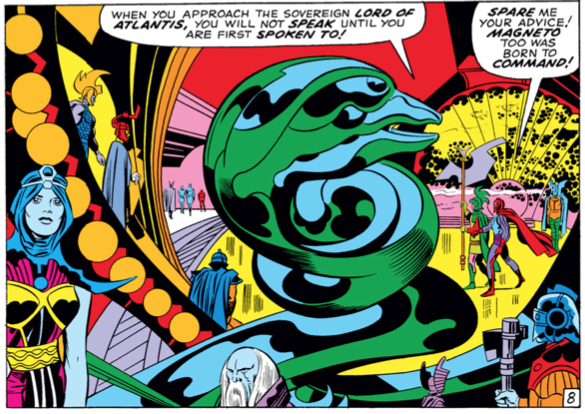
After about eight or 10 uninspired issues, Stan and Jack at least go out on a high note. Fantastic Four 102 isn’t a classic, but it it’s a reminder of how good the book could be when the elements combined into something greater than the whole. We have the Ben and Johnny hijinks, the noble-yet-misguided Namor, a dastardly villain in Magneto, and some amped-up stakes as Atlantis is on the brink of war with the surface world. Jack also leaves us with some great images, his best in a while.
Magneto’s presence is an interesting choice. It’s the first time he’s appeared in the FF’s own book, and according to a footnote, it follows his appearance in X-Men 63, a classic Roy Thomas / Neal Adams comic that features Ka-zar and the Savage Land mutates. In that issues, he’s last seen in a burning compound in Antartica that is collapsing above him. How he winds up on an island and in a differently colored costume is not explained.
Jack’s Magneto isn’t a mad genius like Adams’s, or the hero he later becomes in later X-Men comics. Here, he’s a conniving sneak in a helmet that barely fits him.
The sexist seventies
The Invisible Girl doesn’t appear in this comic, and the only time Sue is mentioned is in a passing mention by Reed.
The latest in men’s fashion
Johnny’s sweater looks a bit like Black Bolt’s costume
Dig that Kirby Krackle
In our last installment of DTKK (sob), some great work from the Kirby, including this splash).
More from the King
Also on newsstands
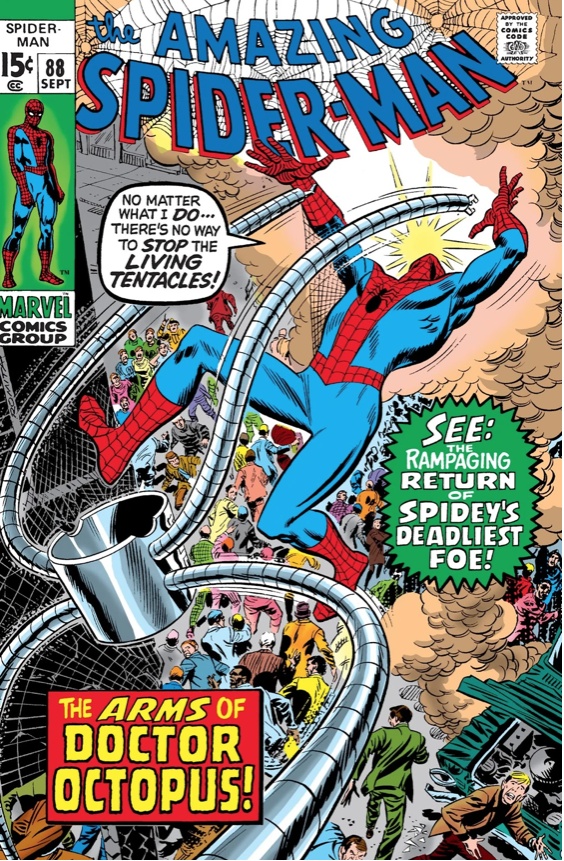
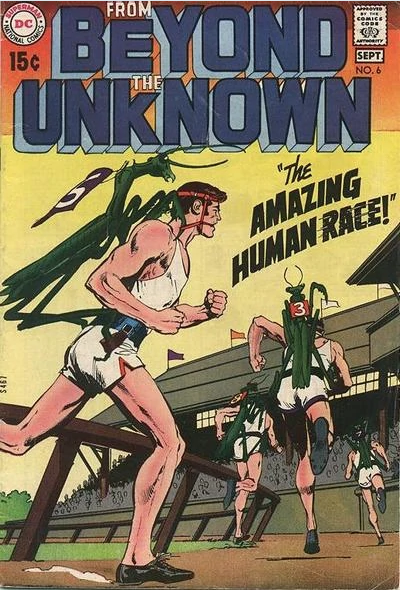
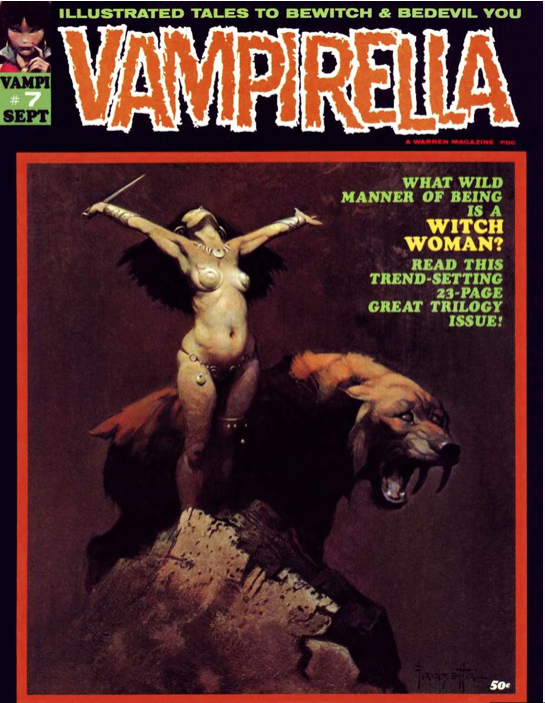
What other comics were on sale in June 1970? Covers by Romita, Adams and Franzetta.