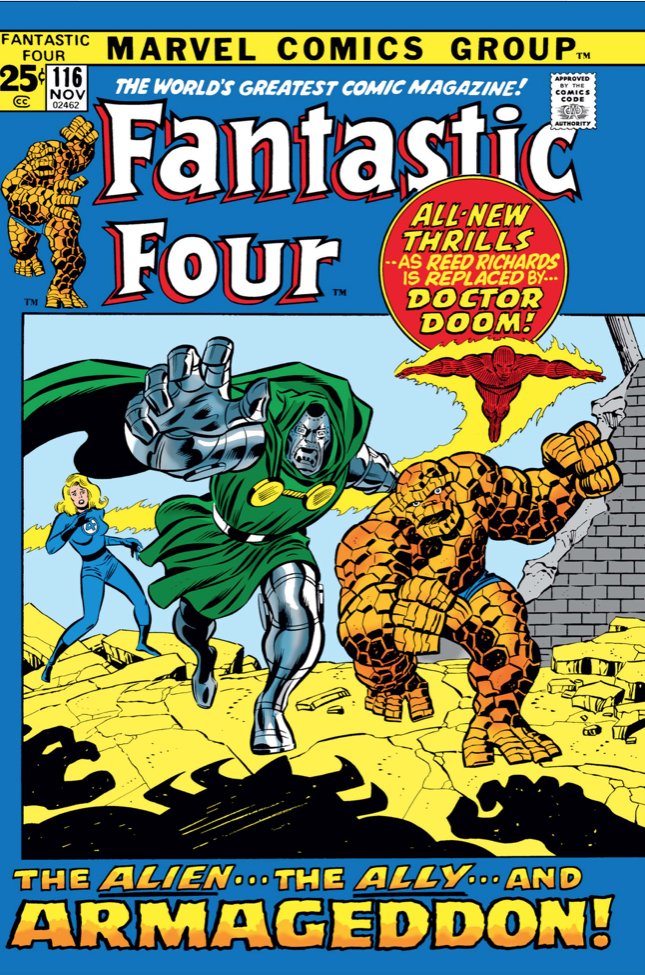
Fantastic Four 116
“The Alien, the Ally and .. Armageddon!”
Published: Aug. 1971
Writer: Archie Goodwin
Pencils: John Buscema
Inks: Joe Sinnott
Letters: Artie Simek
Editor: Stan Lee
Cover Buscema and Sinnott
Synopsis
After the Thing and Human Torch are defeated by the Over-Mind, the Invisible Girl recruits Dr. Doom to the fight. They are overmatched, but when all seems lost, the Stranger appears to save the day.
What’s going on here?
This is a big issue, so let’s get to it!
First, this is literally a big comic: it’s 48 pages long, the first issue of the FF that’s longer than normal (not counting annuals). According to the Bullpen Bulletins, this is in honor of the 10th anniversary of the creation of the Marvel Universe (marked by the 1961 publication of Fantastic Four 1) and all Marvel comics this month are extra-sized (a quick scan confirms this to be true). The price is also bumped up, to 25 cents from 15 cents, and while the comics return to normal size after this month, the price stays elevated, at 20 cents. Sneaky!
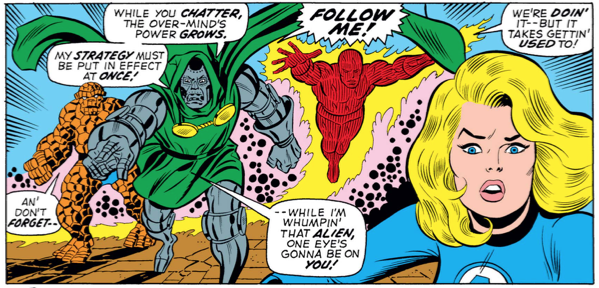
Second, this a very good comic. It’s not great, for reasons I will get to, but it definitely justifies it’s extra length. Yes, the story wraps up the Over-Mind arc, which has been perculating for four issues now, but story-wise, the biggest development is Sue’s recruitment of Doom as an ally. In so doing, it fundamentally changed the FF’s relationship with Doom.
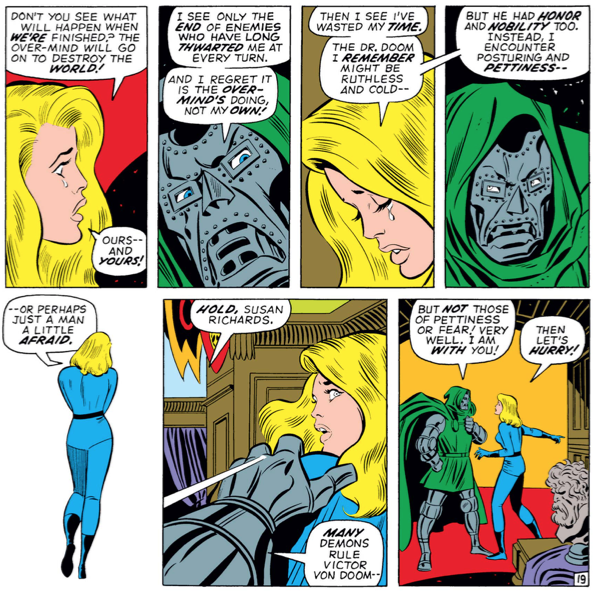
Readers of the Fantastic Four today are accustomed to Doom as a frenemy of the FF. In recent years he’s become a de facto uncle to Reed and Sue’s daughter, Valeria (after serving as her midwife), he came to their aid to help repulse an attack of Mad celestials, and the FF were invited to Doom’s wedding. Doom also had a run of trying to be a good guy. But for readers in 1972, who only knew Doom as a fiendish villain, this must have come as a shock. The depiction of Doom here reveals his courage and sense of honor, and provides a much richer, nuanced version of the character.
As written by Goodwin, Sue’s manipulation of Doom here is masterful, and I love Buscema’s shot of Sue turning her back. This whole sequence is perfect.
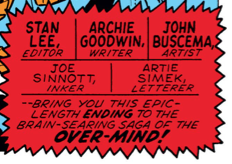
Lastly, it’s significant that Stan is credited here as “editor.” It’s the first time there has been an editor credit for the FF and to my reading it symbolizes Stan’s new, elevated status. Yes, he will come back to write, but adopting the title of editor implies a more detached, supervisory role.
What I liked
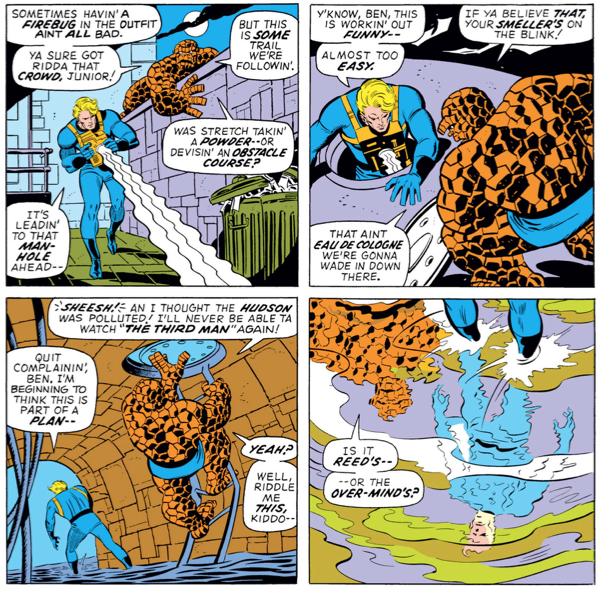
There’s a lot to like in this comic. Along with the aforementioned Doom plot, the story is well-paced and structured, with action sequences balanced by scenes of Sue’s agonizing and Ben and Johnny searching for Reed. Too often we see the two fighting or bickering; it’s refreshing to see them working as friends and teammates (plus, I love that last panel).
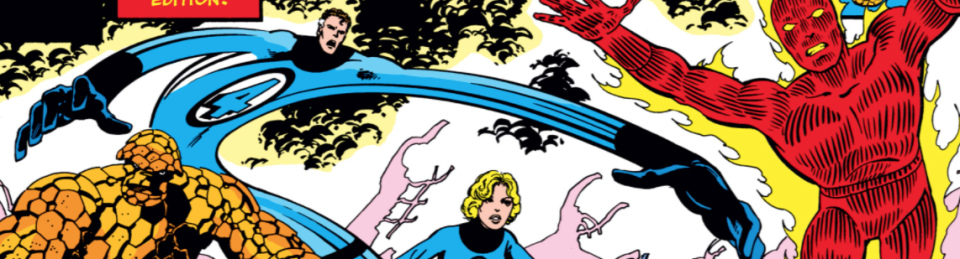
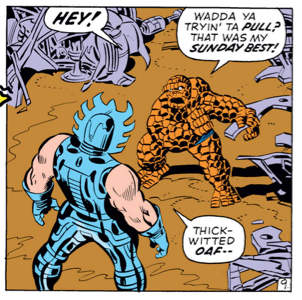
The comic’s extra length allows Buscema to stretch out, and we get some big panels and splash pages that befit the big action. Here’s a good one:
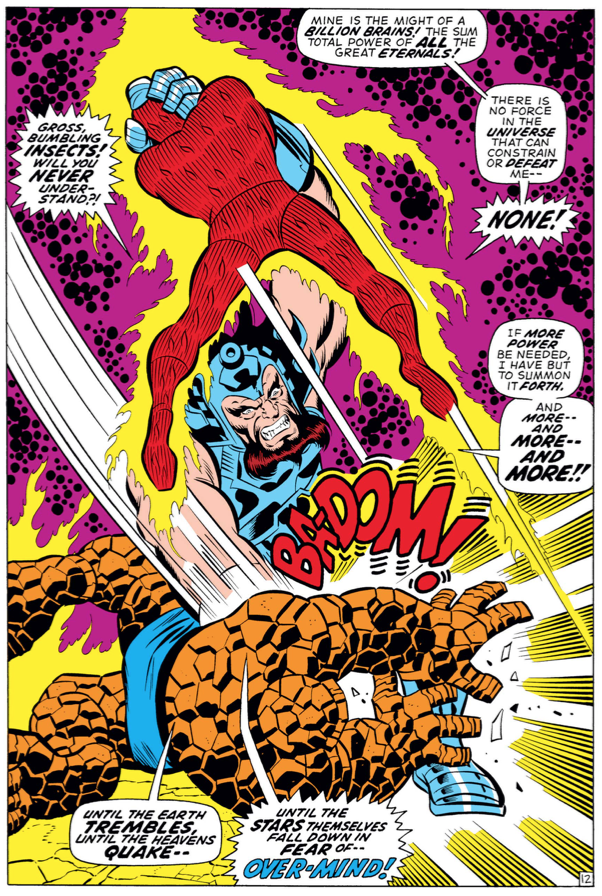
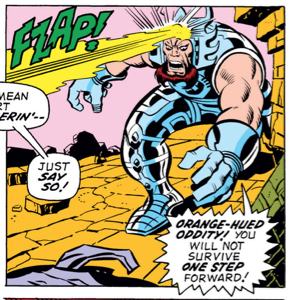
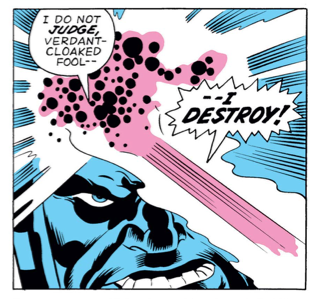
We also get some great insults from the Over-Mind, who’s superior intellect clearly gives him a way with words. Along with the above — “gross bumbling insects!” — check out the following:
What I didn’t like
The comic’s big flaw, and what make it ineligible to considered a great story, is the bizarre, deus ex machina appearance of the Stranger at the end to defeat the Over-Mind. While the character had been in a few other comics since his introduction in X-Men 11, this is his first time in a Fantastic Four comic, and readers could understandably be puzzled about who he was. Stan’s note doesn’t exactly help:
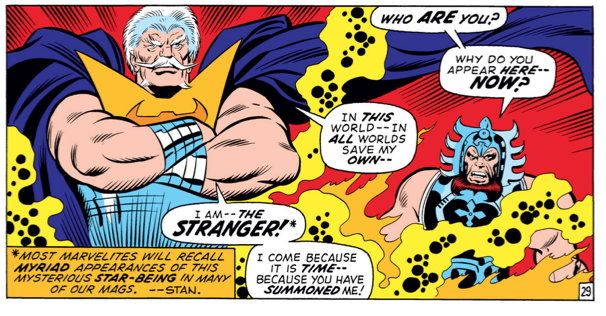
The Stranger explains that, just as the Over-Mind represents the sum of a billion minds from his planet, he is the collection of a billion minds from Gigantus, another, bigger planet, and is therefore more powerful. He reduces the Over-Mind to tiny size, in essence exiling him to the microverse.
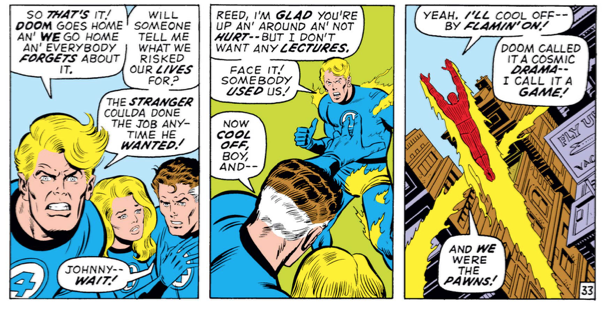
From a story-telling perspective, this denouement makes little sense, and readers no doubt felt cheated that in a story where the FF and Doom teamed up to defeat the ultimate threat, they had little to do with the outcome. Perhaps anticipating their frustration—or perhaps critiquing a plot handed to him by Stan—Goodwin lets the Torch vocalize how silly this all seems:
Also, this issue marks the beginning of a new cover format, where the art is reduced to about two-thirds of the cover. It looks terrible but fortunately only lasts about 20 issues.
Anything else?
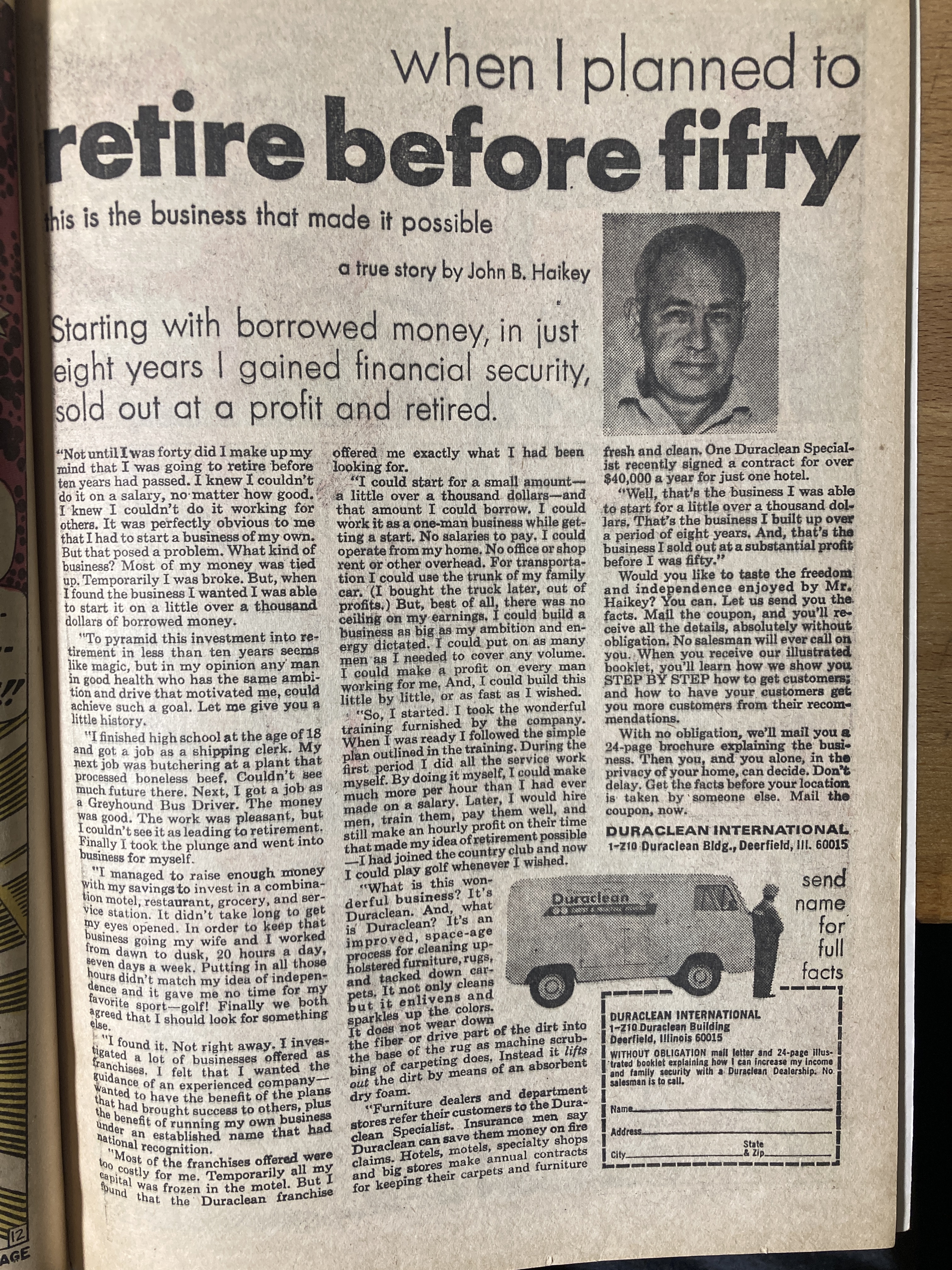
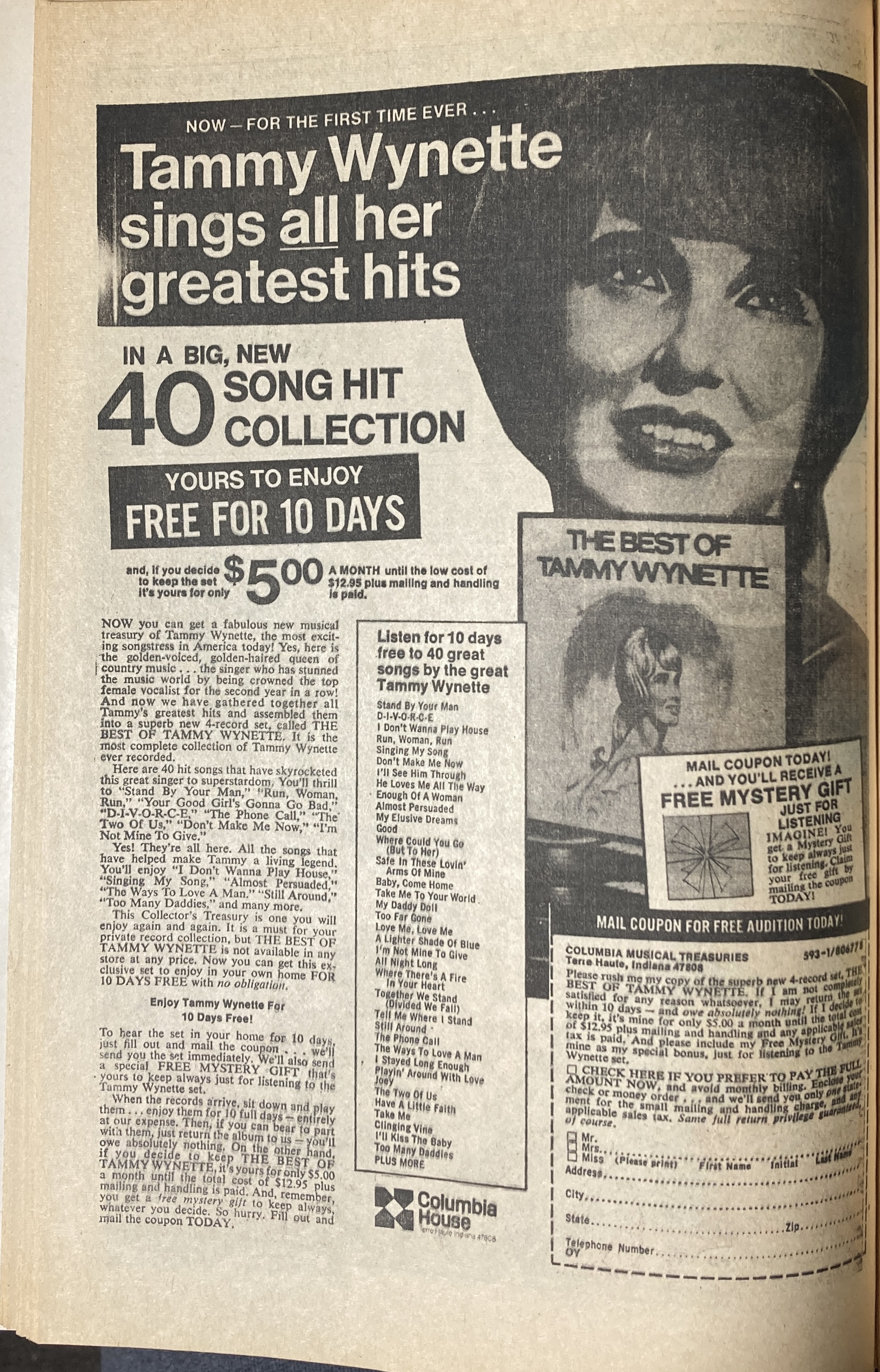
Some interesting ads, neither which seems aimed at young teenage comic readers.
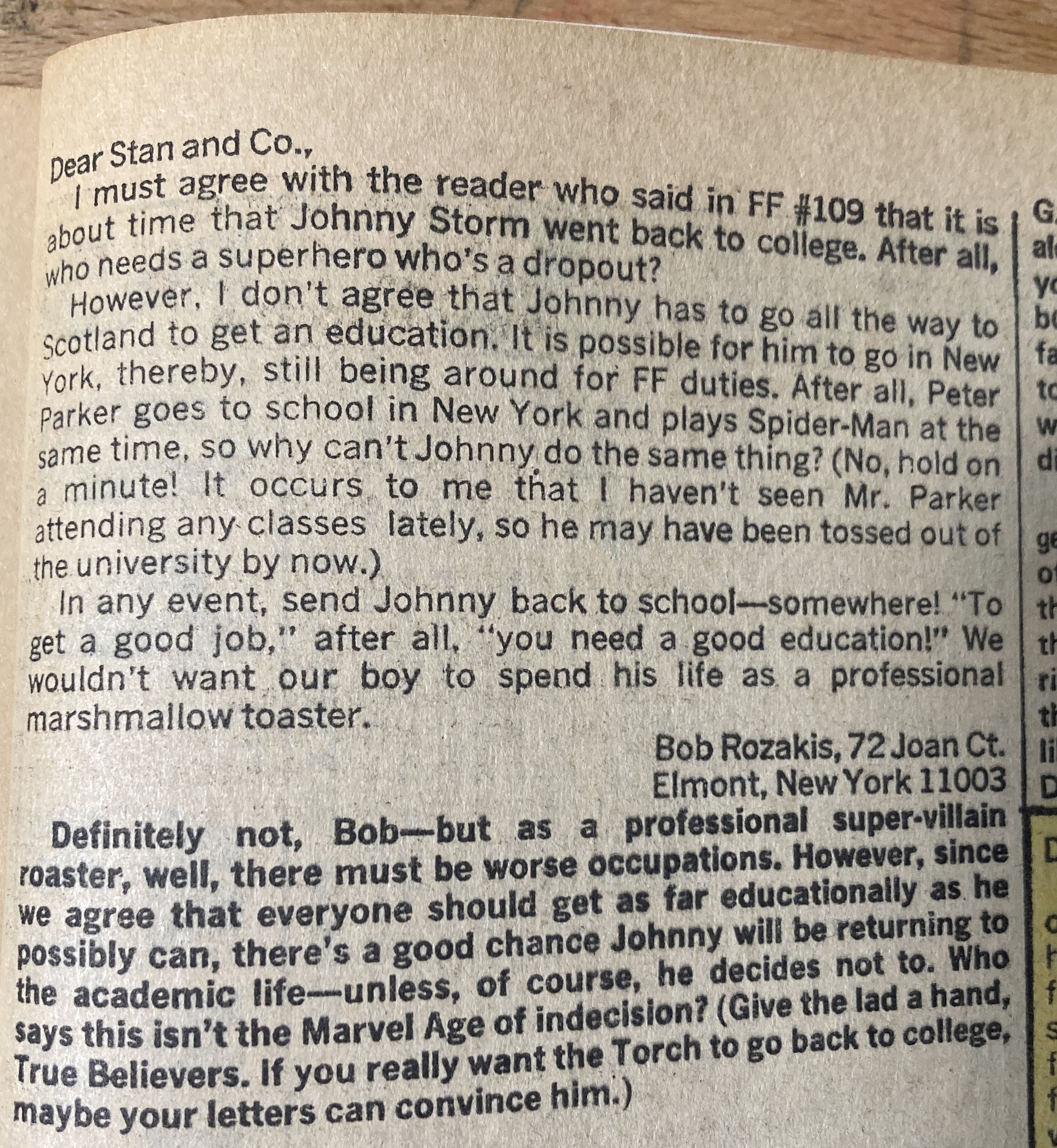
Also, a letter from Bob Rozakis, who would go to write about a million comics for DC, including the underrated ‘Mazing Man.
Overall
A fun comic. A shame about the ending.

