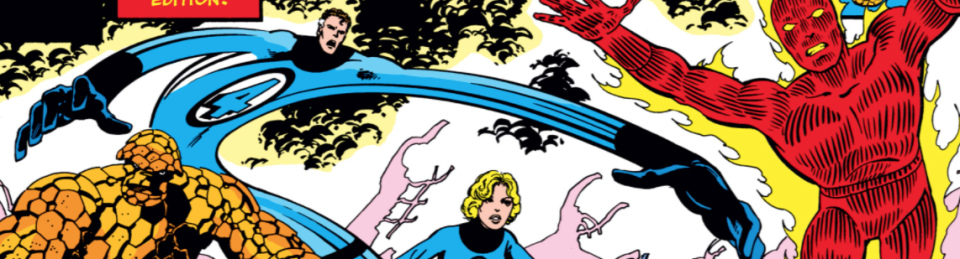
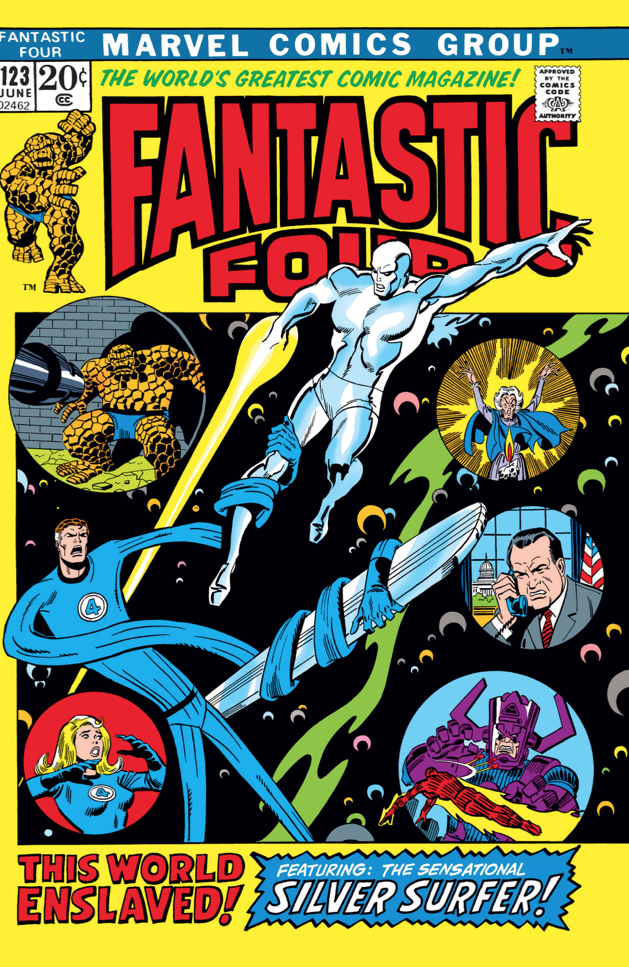
Fantastic Four 123
“This World Enslaved!”
Published March 1972
Story: Stan Lee
Pencils: John Buscema
Inks: Joe Sinnott
Letters: Jon Costanza (credited as Jon Costa)
Cover: Sal Buscema
Synopsis
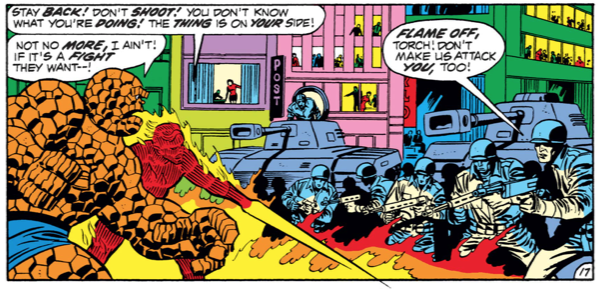
After Galactus delivers his ultimatum—either the Silver Surfer becomes his herald again or he will destroy the Earth—Mr. Fantastic counters with a threat to destroy Galactus’s spaceship, stranding him on Earth. Galactus calls his bluff and Reed returns Galactus’s ship, but when the Surfer attempts to follow him into space, Reed stops him, leading the U.S. military to intervene and almost fatally wounding Reed. While the Thing and Torch battle the army, Reed, with the help of Agatha Harkness, broadcasts a message around the world that he has has tricked Galactus, rigging his spaceship to send him to the Negative Zone, where his deal with the Surfer doesn’t apply.
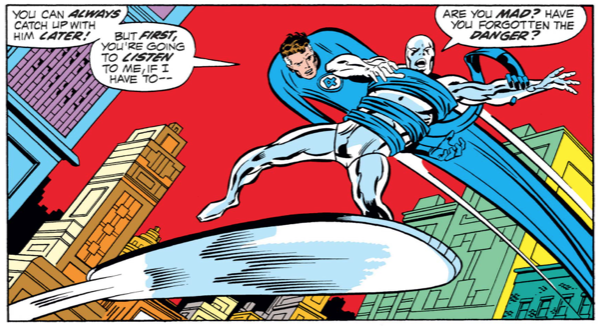
What’s going on here?
This issue wraps up the latest Galactus arc in a perhaps less-than-satisfying way (more on that later). As befitting a big, climactic issue, it includes a number of guest stars, like the Surfer and Agatha Harkness, and yet it feels, given all that’s at stake, that other heroes should appear. I’m not sure where the Avengers are at this point, but the potential end of the world seems like something that would interest them.
Perhaps the most intriguing guest appearance is that of Richard Nixon, who is unnamed but obviously himself, making references to John Mitchell, Henry Kissinger and his reelection.
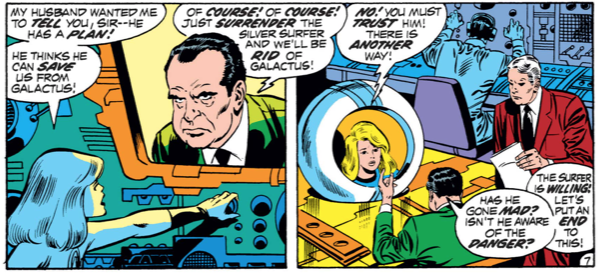
There’s a long history of U.S. presidents appearing in comics, and I could devote an entire blog post to tracking them down. Sometimes they are generic old white men, and sometimes they seem to resemble whomever is president at the time. Few, however, are as specific as this representation of Nixon.
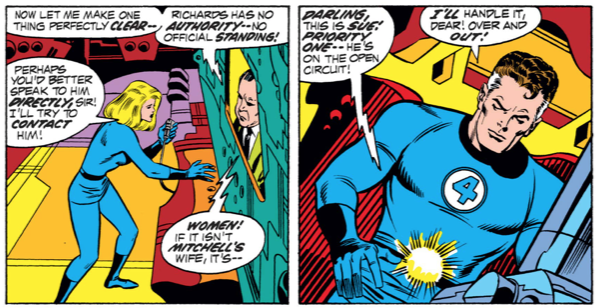
(One small detail of interest: in the second panel above, there’s a typo in the printed comic, and it reads “he on the open circuit” which is corrected in the digital comic, which I used here).
There are also some creators making their first contributions to the Fantastic Four. After a few years at DC, Jon Costanza joined Marvel in late 1971, and starting with this issue, becomes a semi-regular letterer of the FF. Probably more significantly, FF 123’s cover is drawn by Sal Buscema, Big John’s younger brother. Sal began working in comics in 1968, but this is first work on the Fantastic Four. He later does a few fill-in issues and will become the regular FF penciler for a brief stretch in 1986. While I’ve never loved Sal Buscema’s style, it’s hard not to admire his productivity and longevity. And I do like his extra-shiny version of the Surfer on what’s otherwise a very busy cover.
What I liked
This entire Air Walker / Galactus / Surfer arc has a fun, throw-back feel. An appearance of Galactus makes any comic feel important, and in this issue we get more insight into his psyche. He’s not just a villain intent on destruction, but a weary agent of the universe who can’t control his own destiny.
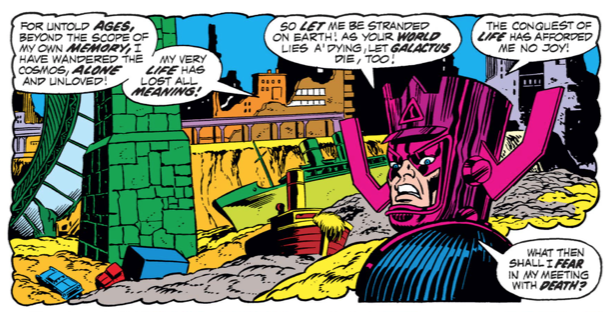
We’re also treated to some harrowing images of what Galactus’s consumption of Earth might look like.
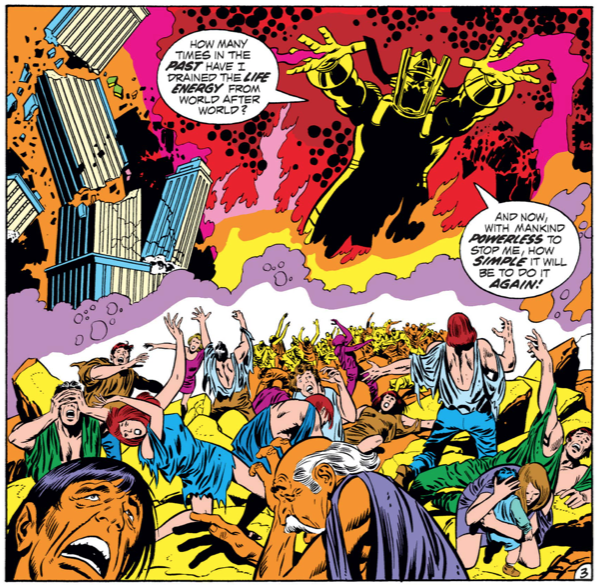
What I didn’t like
Like a lot of Fantastic Four epics, the climax to this story feels rushed, and this one feels particularly half-baked. Reed appears to have saved the Earth with a bit of legal trickery, based on the Surfer’s pledge to follow Galactus “in this universe,” creating a loophole so Reed can send Galactus to the Negative Zone, where he’s not bound by the agreement. Left unclear, of course, is why Galactus would feel obliged to honor a deal whose spirit is so obviously violated by Reed. Did we miss the panel where contracts were signed and notarized? Will some court enforce it? I suppose Reed (and Stan) could argue that since Galactus violated his pledge to leave the Surfer alone, then he’s just getting what he deserves, but it feels weak.
And all this leaves aside the issue of how Reed altered Galactus’s ship to enter the Negative Zone, something we previously thought could only be achieved through a portal in the Baxter Building.
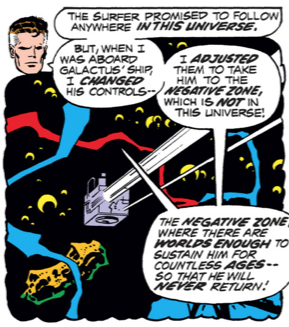
The comic also digresses into an off fight between the military and the Fantastic Four. It’s distracting and while it creates the opportunity for Reed to be shot by a panicky soldier, and then saved by the Surfer, none it feels very necessary or serves to advance the story.
Anything else?
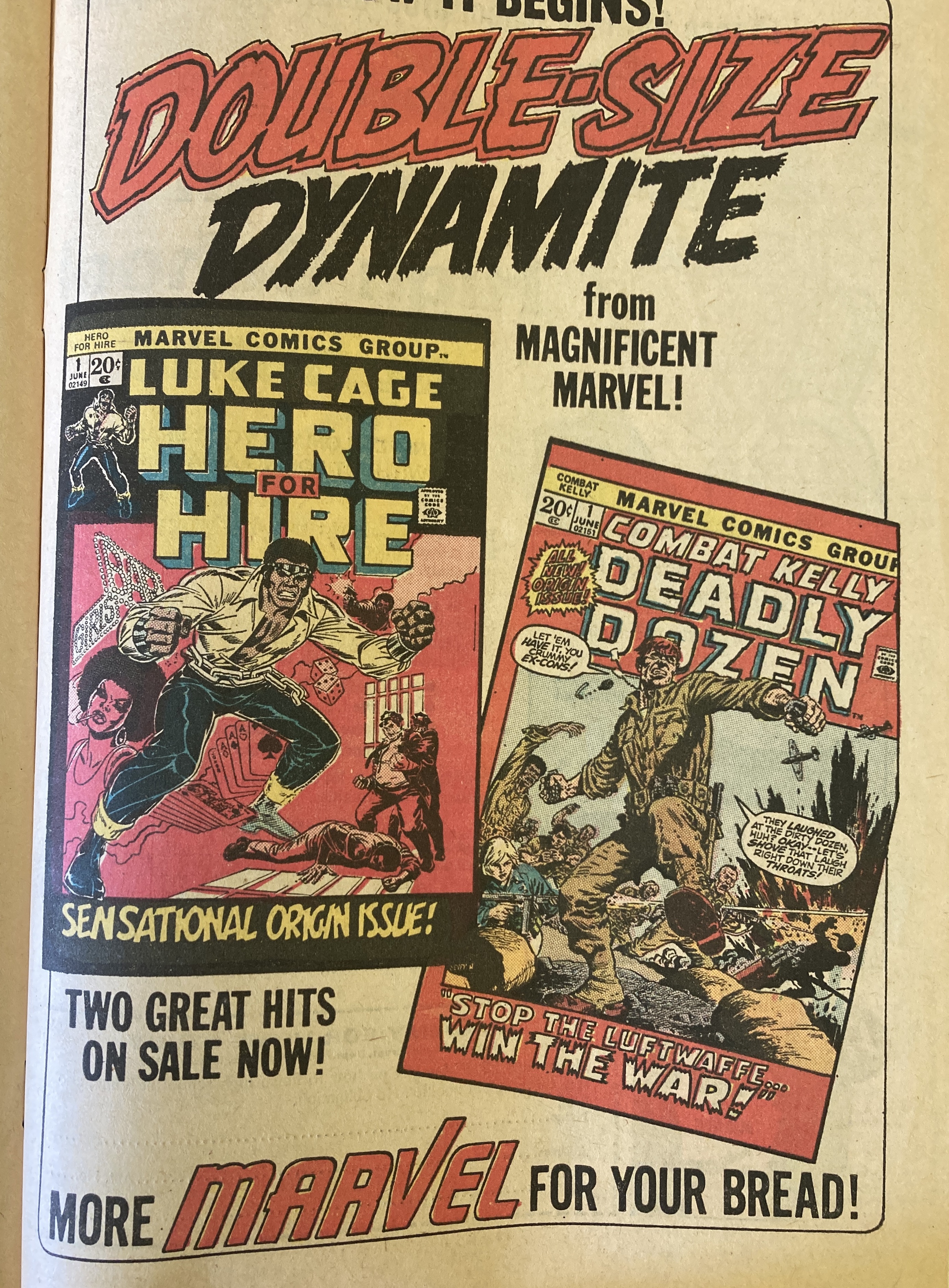
I liked this house ad: More Marvel for your Bread!
(I’d never heard of Combat Kelly and his Dirty Dozen before. Apparently it was a reboot of a 1950s war comic but it only lasted nine issues in its second incarnation). Luke Cage had a bit more success.
Overall
A bit of a let down.

