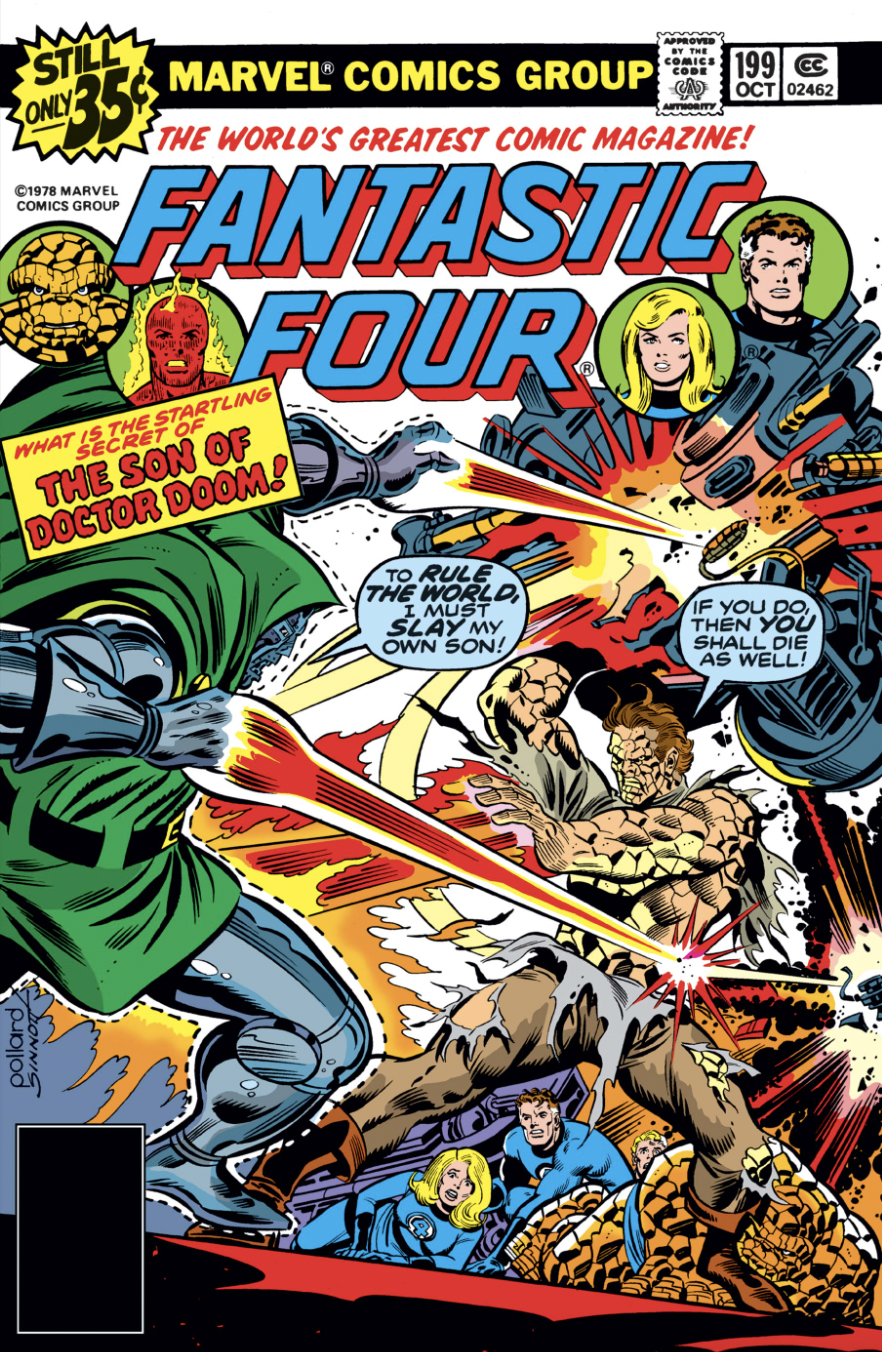
Fantastic Four 199
“The Son of Doctor Doom!”
Published July 1978
Writer: Marv Wolfman
Pencils: Keith Pollard
Inks: Joe Sinnott
Letters: John Costanza
Colors: Janice Cohen
Editor: Wolfman
Cover: Pollard and Sinnott
Editor’s note: Fantastic Four Annual 13 came out between FF 198 and 199, but it’s a stand alone story so I’m going to finish the Doom / Zorba story arc first and pick up the annual after issue 200.
Synopsis
Dr. Doom advances his scheme to transfer the powers of the Fantastic Four to his son — actually his clone — as part of a scheme to keep Latveria in the United Nations, but faces unrest from the rebels of Latveria. Meanwhile the FF escape captivity but are thwarted by Doom, who has taken Alicia hostage. Doom’s clone then battles Doom, who kills him, setting up a showdown between Doom and Reed in issue 200.
What’s going on here?
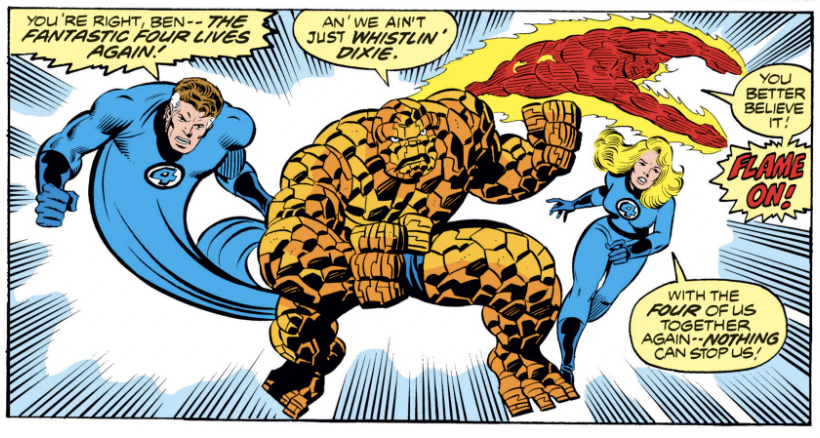
This is another uneven story. The basic outlines of the plot are interesting: There’s political intrigue, Doom’s Machiavellian plotting, the FF reunited and the ersatz son of Doom gaining the powers of the FF (although the concept was done better with the Super-Skrull). But it’s all jumbled and incoherent, with Doom’s stated motivation for setting all this in motion — a desire to keep Latveria in the U.N. — absurd on its face. And we never quite learn why he’s transferring his powers to the clone.
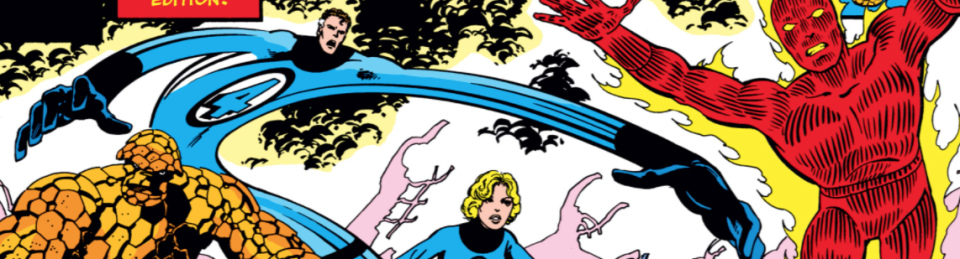
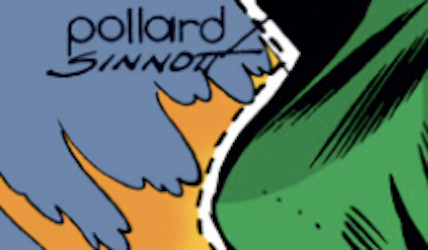
What salvages the comics are some excellent action sequences delivered by the steady team of Keith Pollard and Joe Sinnott. There’s nothing flashy about their art but it packs a punch (sometimes literally). And I believe this is the first issue of the FF were Pollard signs the cover with his distinct lower-case signature, one of the best in comics.
What I liked
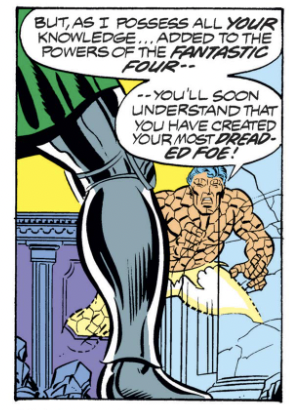
Here are a handful of the fun action panels in this comic:
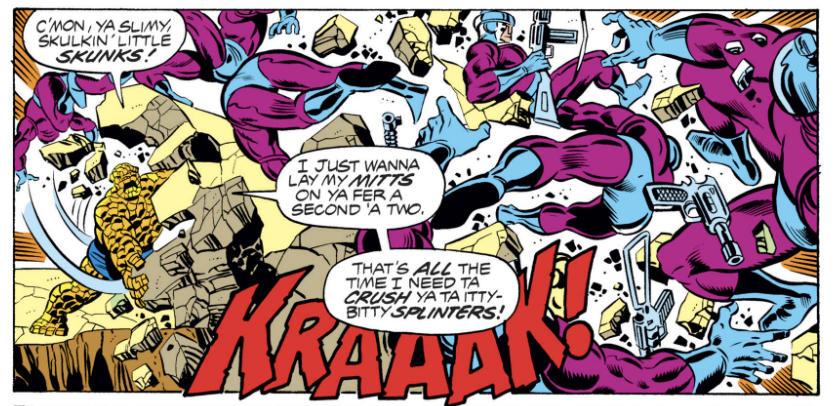
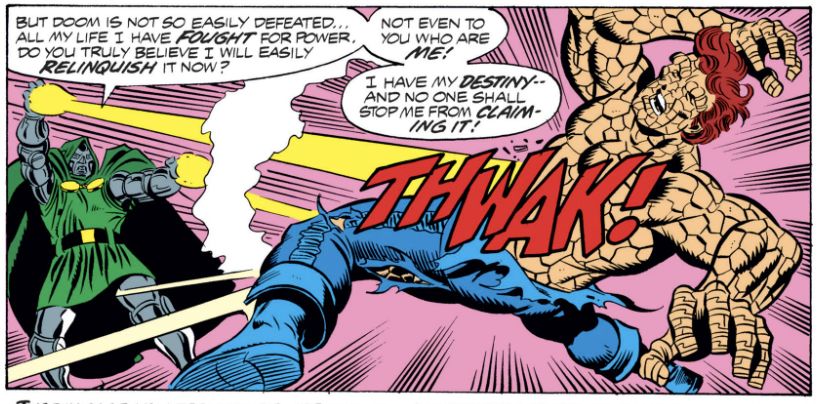
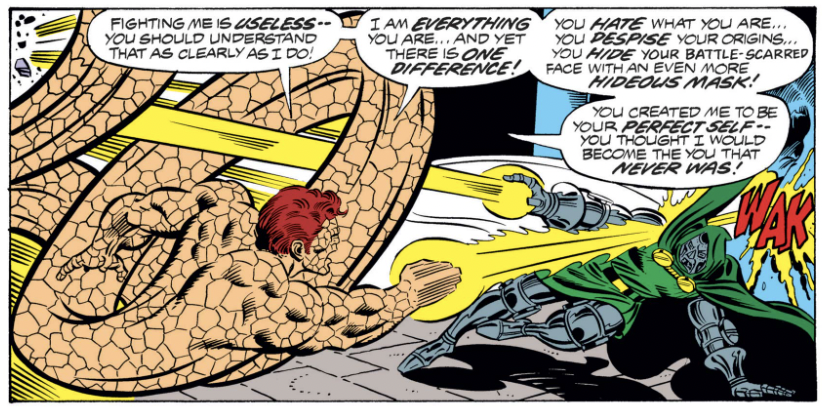
I also liked the keyboard- control device Doom uses to power up his clone.
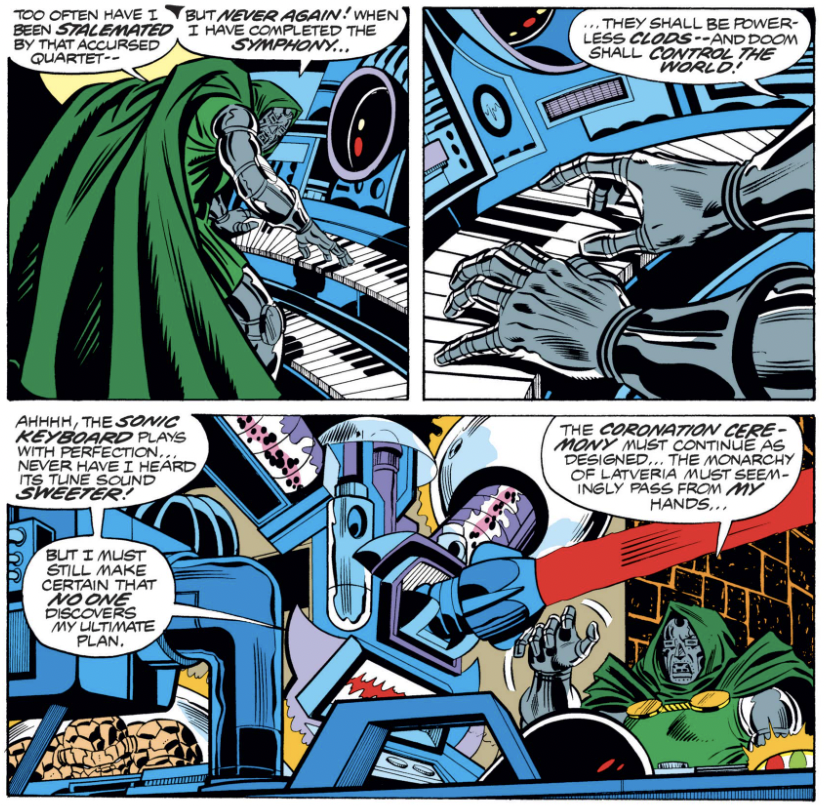
What I didn’t like
Most of the flaws in this comic seem to stem from Wolfman’s lack of understanding of Doom and his character. The Dr. Doom I’m familiar with could care less if Latveria was kicked out of the U.N. (hell, most of the U.S. would feel the same way) and would probably wear it as a badge of honor. I assume the hollow sculpture will house a bomb or some device but would Doom really offer a gift to the U.N.?
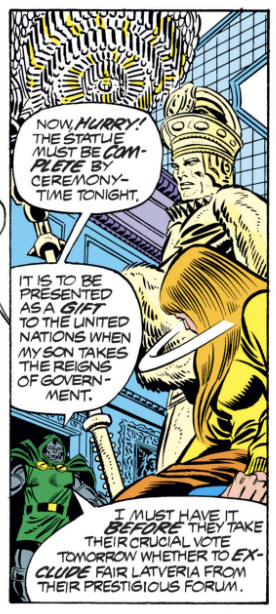
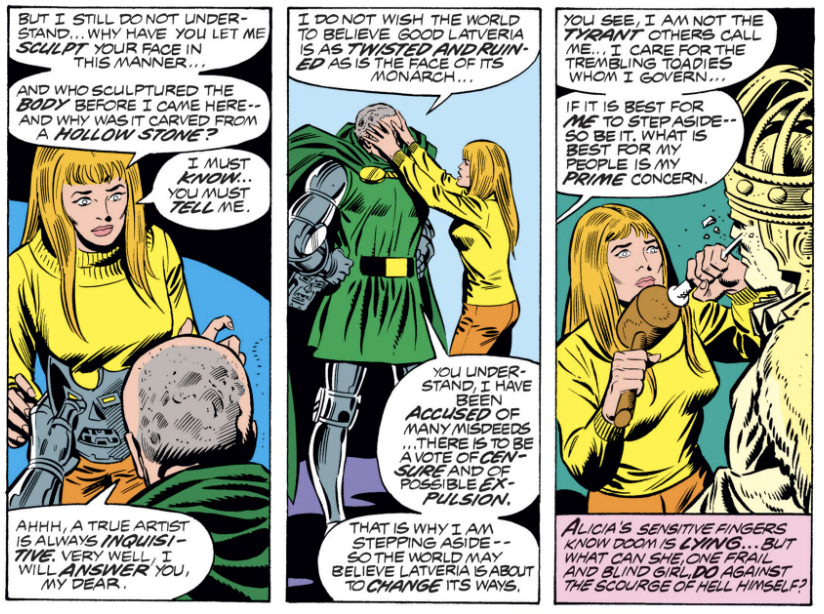
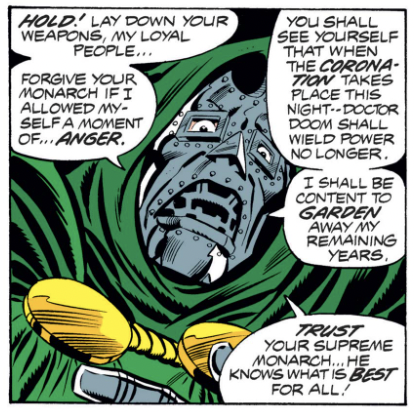
Nor would Doom feel the need to explain himself to his subjects, or rationalize his decision to abdicate the throne.
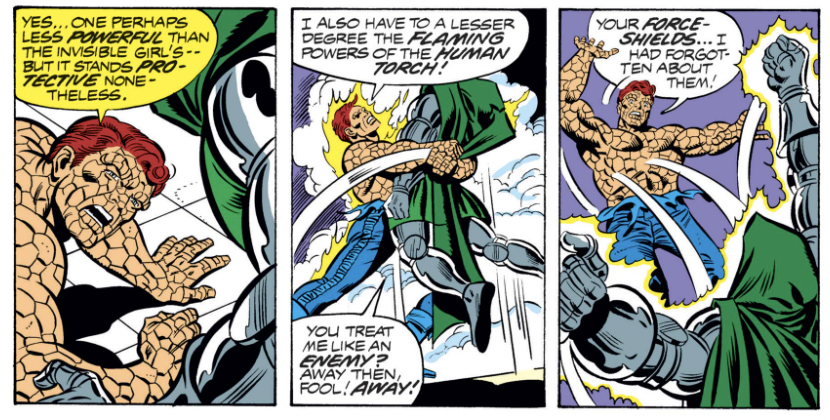
Doom’s clone also had odd moments. Here, he goes out of his way to explain he’s like the Fantastic Four but slightly less so. Then he says he forgot Doom had force shields, one panel before he claims to have all of Doom’s knowledge. Which is it, dude?
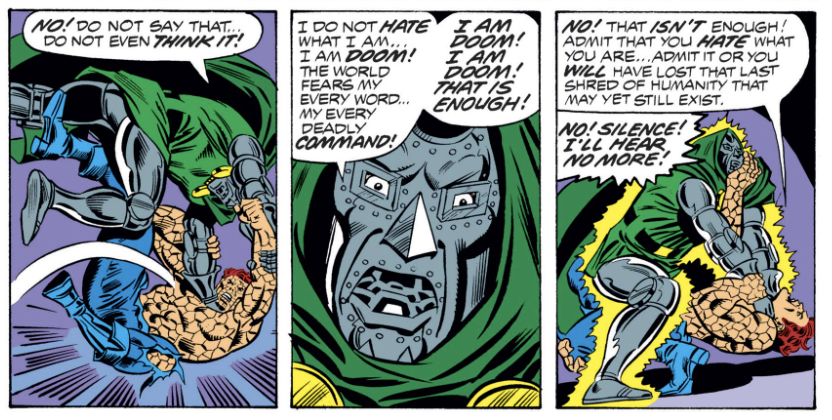
And the climax, where Doom’s clone faces Doom to acknowledge his self loathing should have been a powerful moment, but instead feels clumsy.
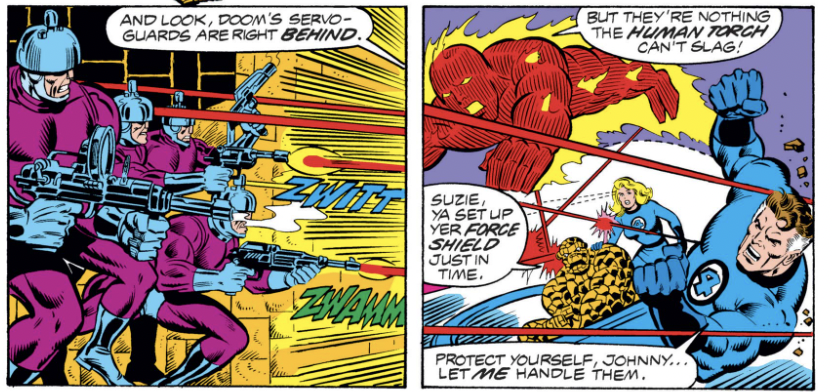
Lastly, longtime readers of this blog will recall that I was puzzled by how Stan Lee and Jack Kirby wrote and drew may of the robots and androids that populated the book. In their hands, they were often muscled like humans and seemed to speak like humans. We have the same problem here. In the last issue, Doom’s henchmen were discussing their children. But now they seem to have been turned into “servo-robots,” even if they still look pretty human.
Overall
Hit and miss

