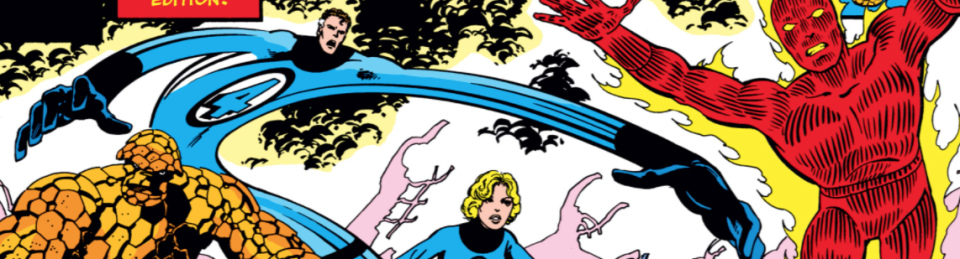
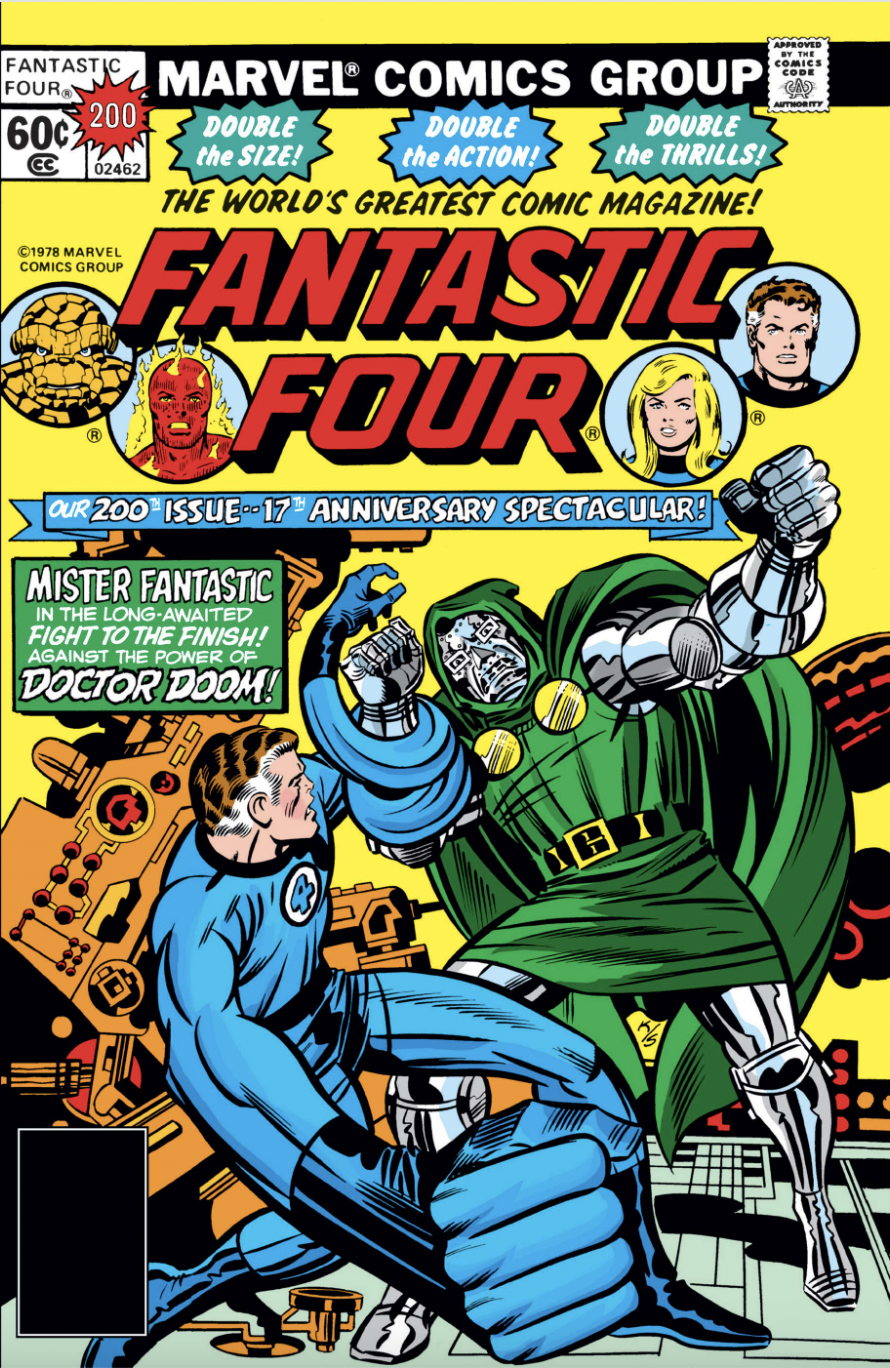
Fantastic Four 200
“When Titans Clash!
Published August 1978
Writer: Marv Wolfman
Pencils: Keith Pollard
Inks: Joe Sinnott
Letters: John Costanza
Colors: Francoise Mouly
Editor: Wolfman
Cover: Jack Kirby and Sinnott
Synopsis
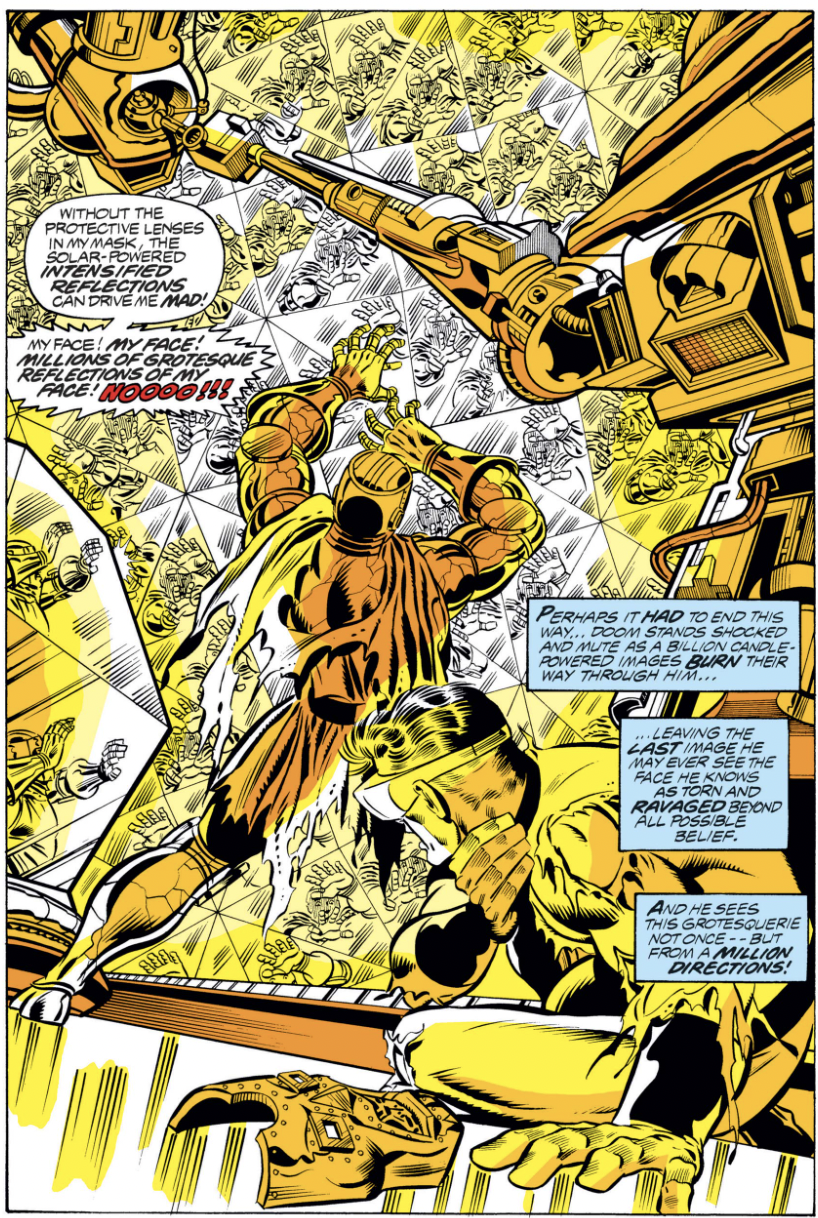
Reeling after the death of his son/clone, Dr. Doom traps the Fantastic Four in his Latverian castle and flies to New York to realize his plan of world domination. The FF escape, rescue Alicia and follow Doom, with Mr. Fantastic confronting Doom at his stronghold in the Adirondacks while the rest of the team flies to the United Nations to thwart Doom’s scheme. While Reed and Doom battle, Doom’s statue — sculpted by Alicia and intended as a gift to the UN — hypnotizes the delegates, who then attack Ben, Sue and Johnny. Reed eventually gets the better of Doom, and rips off his mask, where the image of his disfigured face reflected back at him hundreds of times in the facets of a giant crystal drive him into a catatonic state. Reed shuts down the UN device and with Doom in a mental institution, Zorba is installed as the leader of Latveria.
What’s going on here?
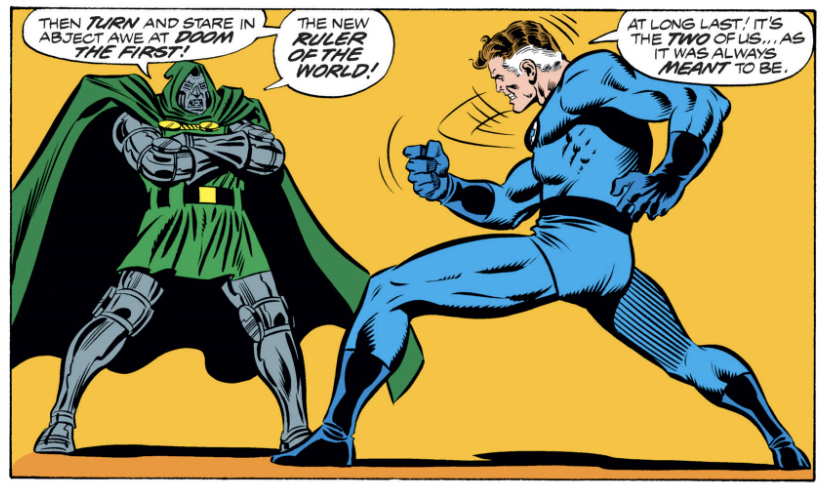
This is a big milestone issue and almost in spite of itself, the comic lives up to the occasion. It’s the conclusion of a five-part act that meandered unnecessarily — particularly with the clone-of-Doom subplot which fizzled out anti-climatically — but Marv Wolfman manages to stick the landing. He correctly recognizes the conflict between Reed and Doom is the central tension in the book and he gives the two the battle they deserve. Because it’s a double-sized anniversary issue, he has room to stretch out the confrontation, and includes a flashback to their time at university together that reminds us (and informs new readers) of the origin of Doom’s enmity toward Reed. The climax, where Doom goes mad at the sight of his own face reflected back at him, is clever story telling, and centers Doom’s defeat in his own vanity and insecurity. It feels like less of a triumph for Reed than a tragic downfall for Doom. (Although I would have preferred Doom not telling us he was going mad as he was going mad).
A lot of credit for this issue’s success goes to Keith Pollard and Joe Sinnott. Pollard, particularly, uses the extra pages in this issue to stretch out, particularly in the fight scenes, where there are often just four panels per page. There are also three full-page splashes (not including the opening one), a rarity in this era.
This is the most successful of the Fantastic Four’s big milestone issues to date. Issue 50, which included the conclusion of the Galactus saga, didn’t make note of it being a meaningful issue. Issue 100 was a dud, and came at the end of the Lee / Kirby partnership. Issue 150, featuring the marriage of Crystal and Quicksilver, felt more like an Avengers comic (and not a very good one, either). Looking into the future, issues 300 and 400 aren’t that impressive either. Issue 200 manages to deliver story that both feels big, satisfying and consequential.
Fantastic Four 200 also features one of the best covers in the history of the comic, by none other than Jack Kirby. Kirby’s FF covers over the last few years have been hit or miss, but this one has all the hallmarks of classic Kirby (although it’s is unfortunately cluttered with too many blurbs hyping the comic). Sadly, this is Kirby’s last original work on the Fantastic Four and one of his last at Marvel.
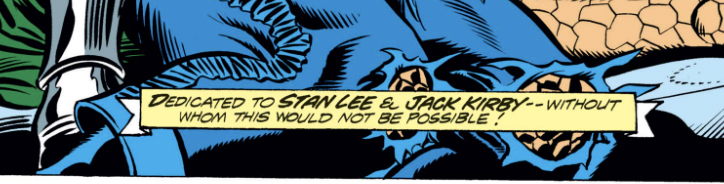
And in a nice touch, the comic is dedicated to Stan and Jack:
What I liked
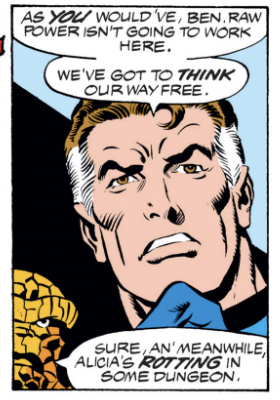
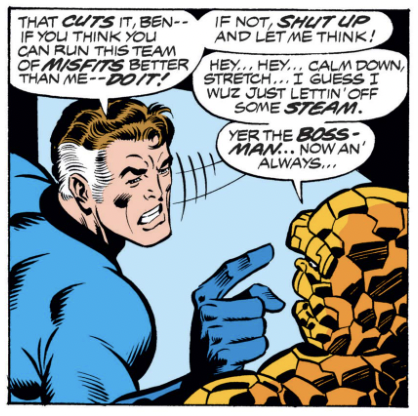
Despite its bombast, the issue also deliver some nice moments of character development. There is this testy exchange between Ben and Reed:
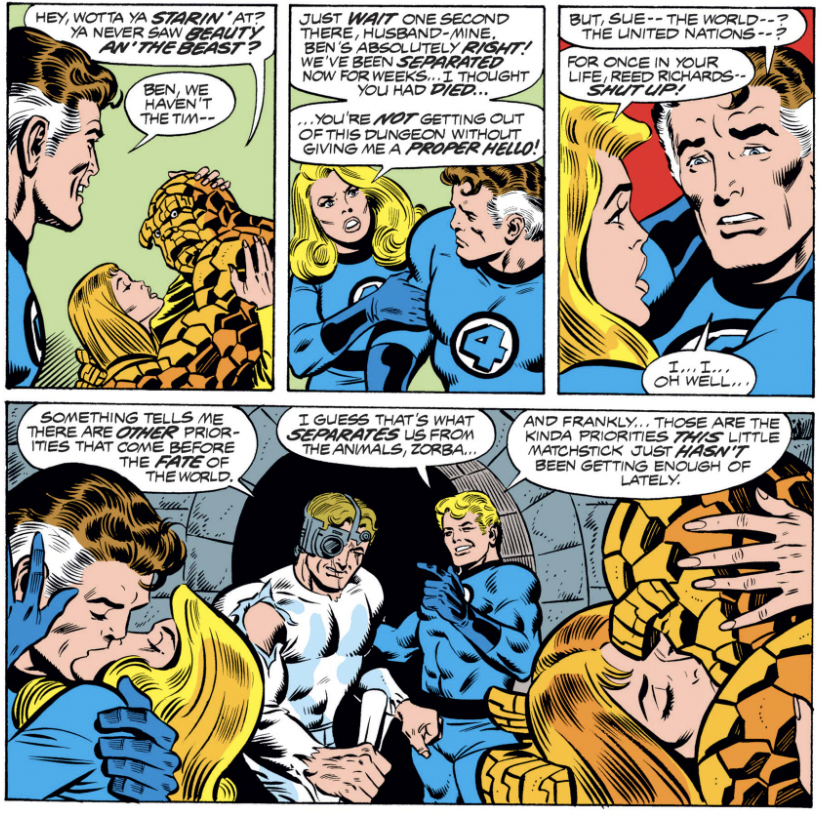
And this romantic interlude:
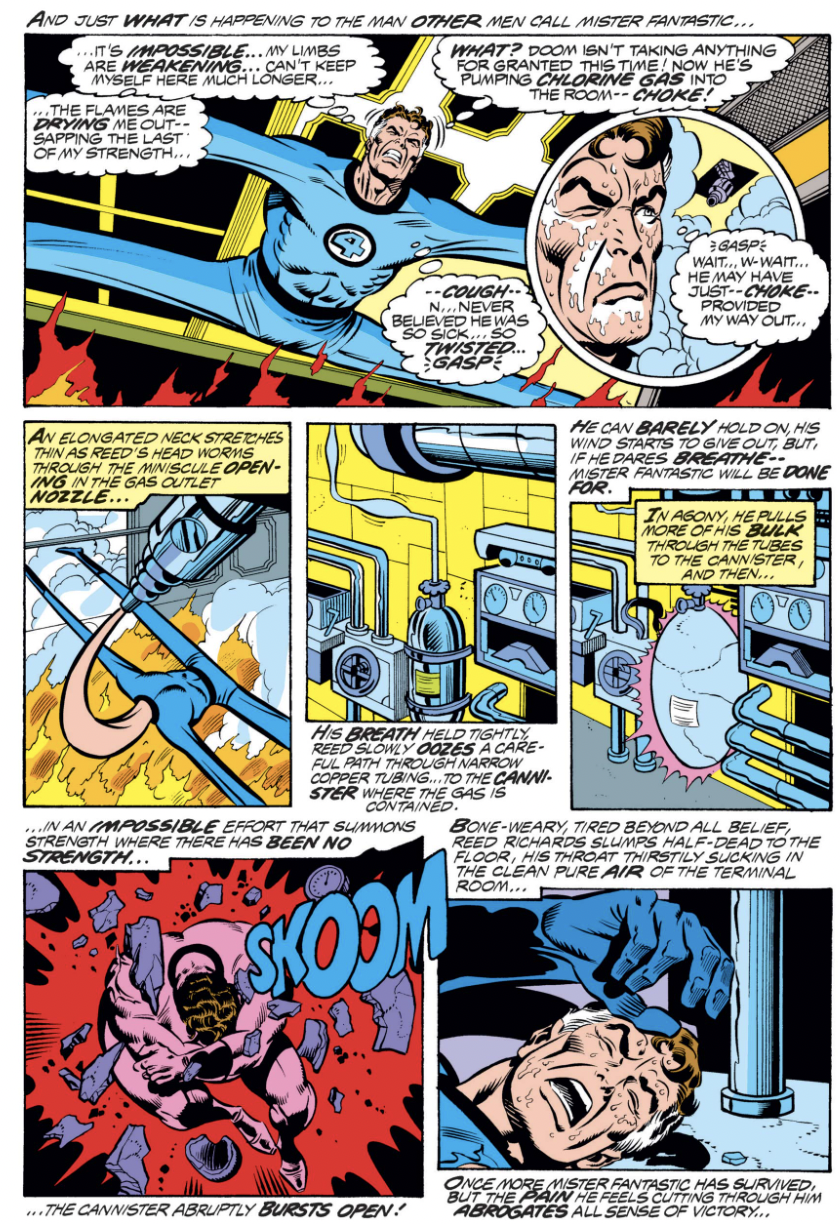
After restoring Reed’s powers, Wolfman seems serious about powering him up, and in two separate sequences Reed stretches himself into tiny apertures to escape confinement. This one is the most impressive:
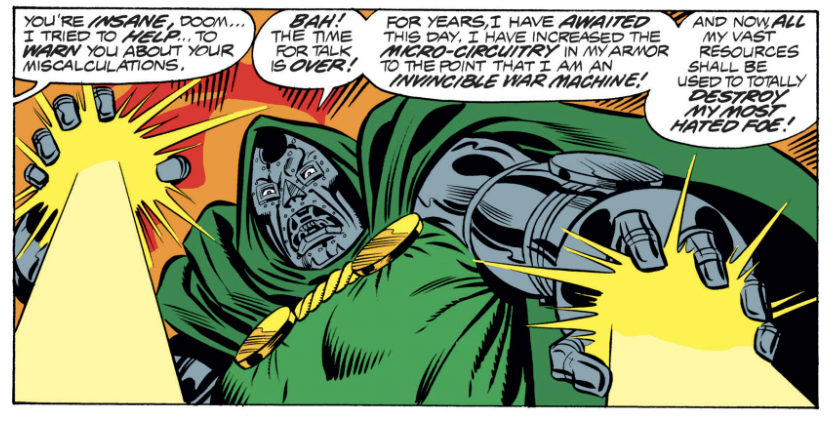
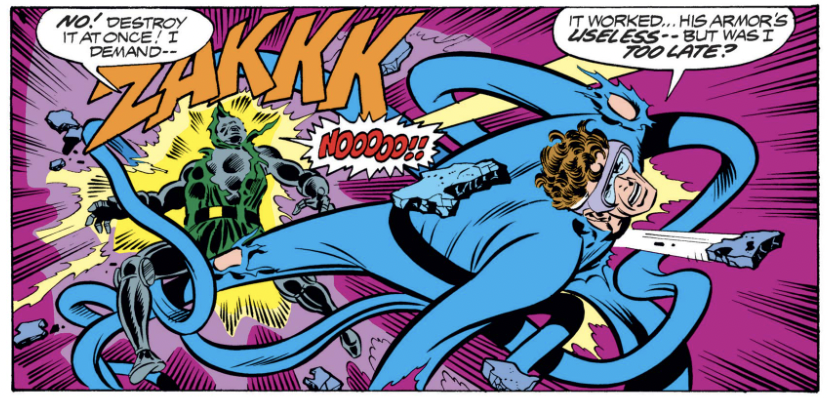
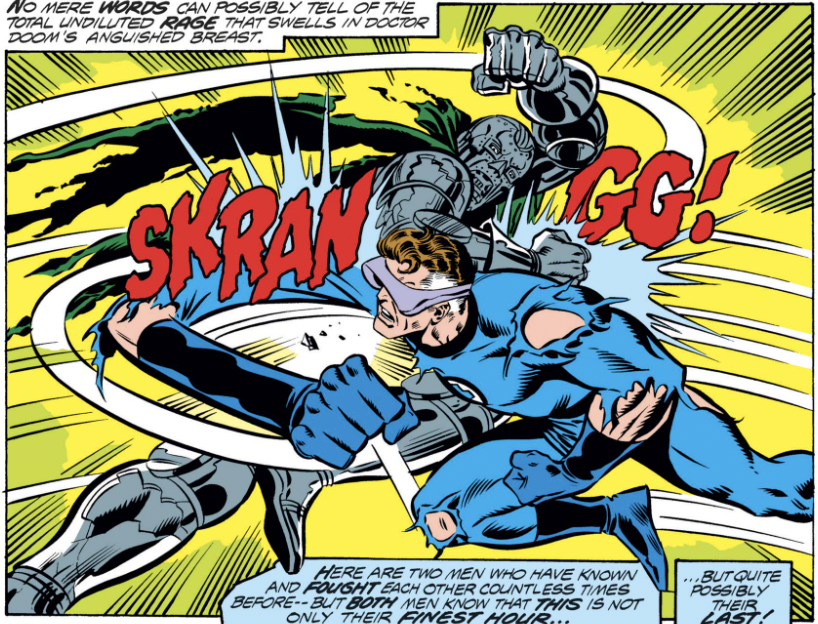
Pollard has a real knack for interesting action shots. Here are a few I liked:
What I didn’t like
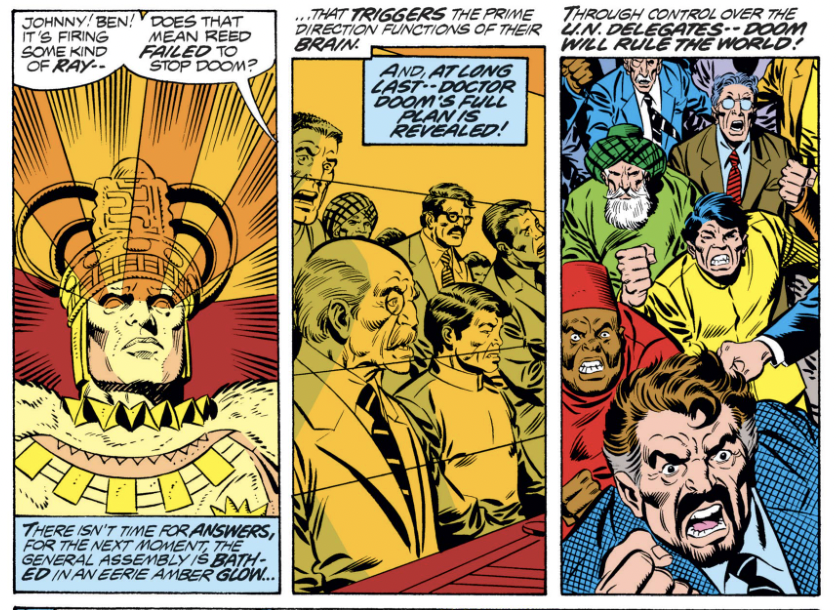
The plot device — the McGuffin, if you will —of this story never makes much sense. Doom somehow thinks he’s going to take over the world by hypnotizing United Nation’s delegates? If he spent more than a minute paying attention to the UN’s long history of ineptitude, he would realize how ridiculous an idea this was.
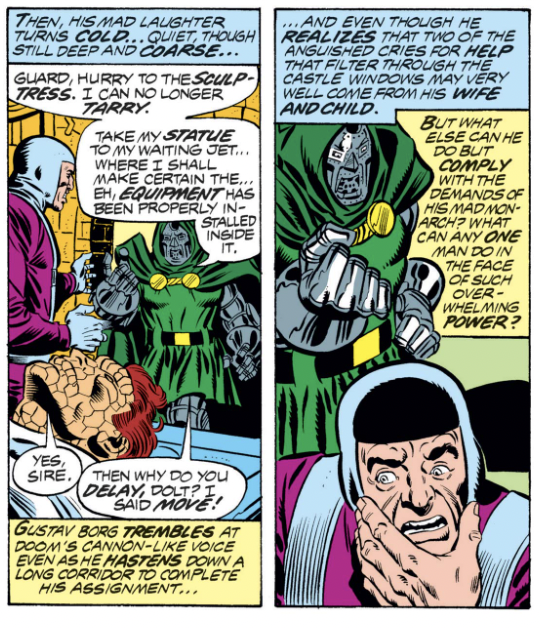
We also have the same problem of Doom’s lackeys as in last issue. Are they humans? Or robots? or both? Here one of them has a wife and child, further confusing things.
Anything else?
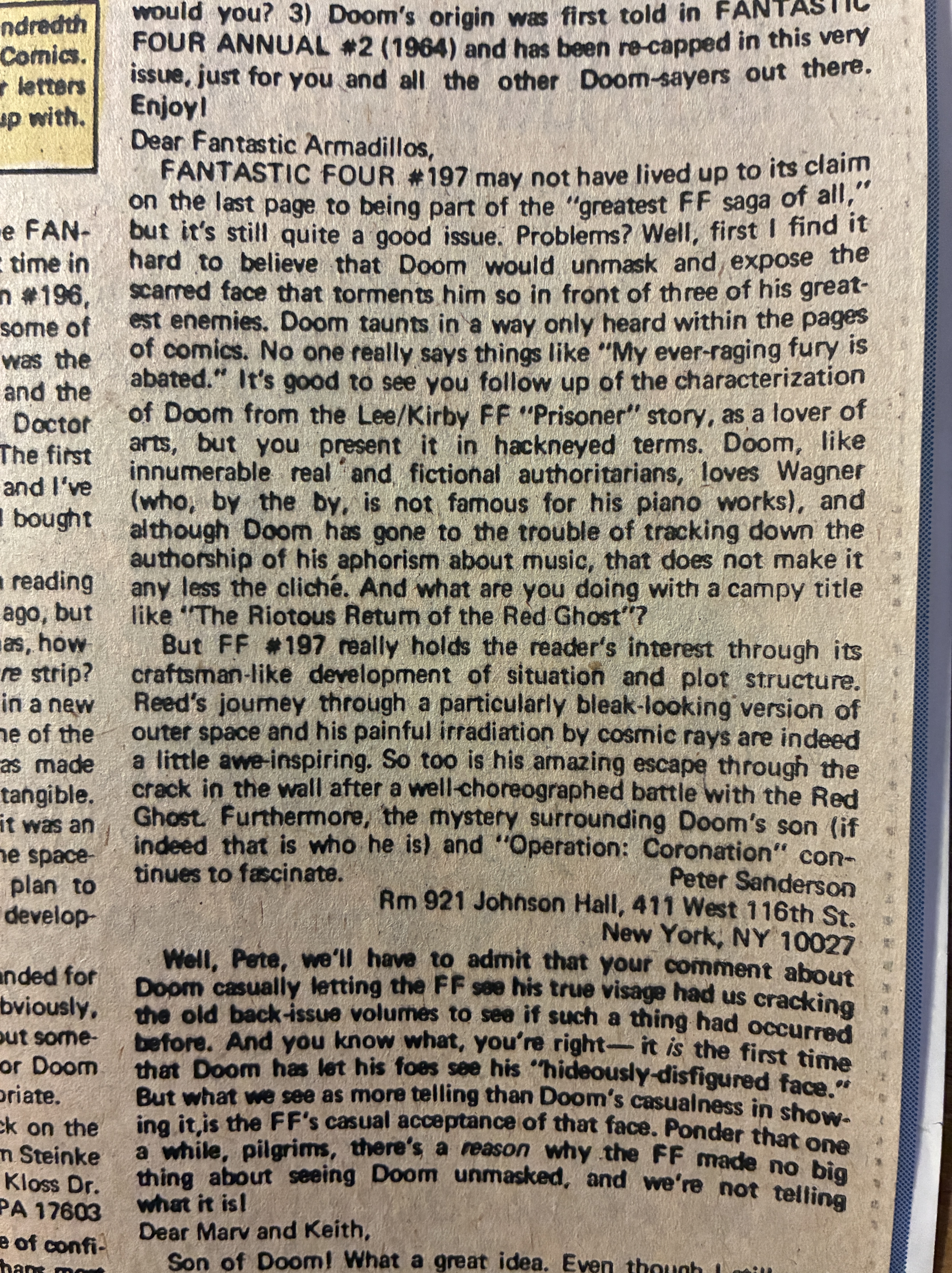
A letter to the editor from future writer/editor/comic historian Peter Sanderson, who appears to be writing from his Columbia University dorm room:
Overall
Good stuff!


Pingback: “The World’s Greatest Comic Magazine!” Fantastic Four Annual No. 15 | Percival Henry: The Fantastic Four and more