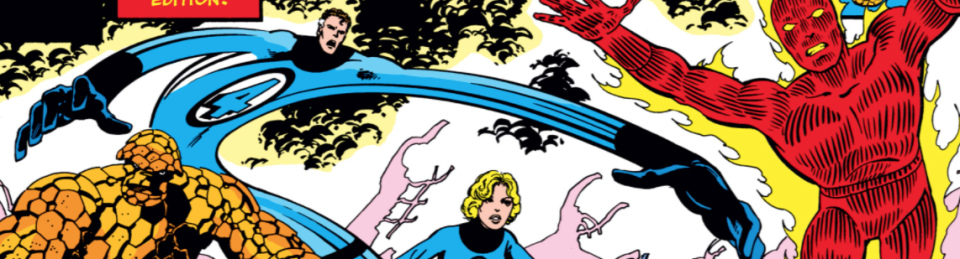
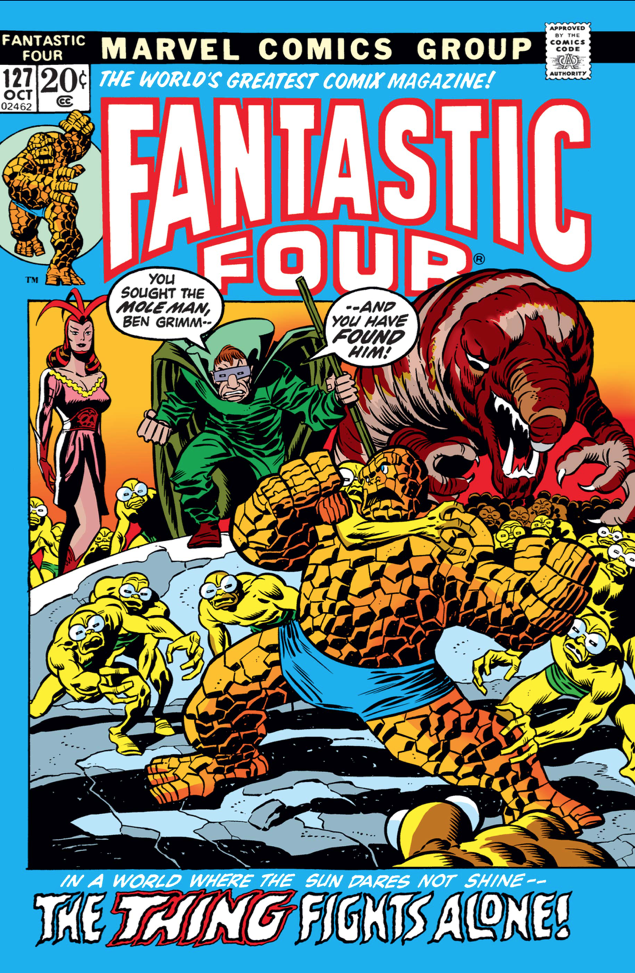
Fantastic Four 127
“Where the Sun Dares Not Shine!”
Published July 1972
Writer: Roy Thomas
Penciler: John Buscema
Inker: Joe Sinnott
Letterer: Artie Simek
Editor: Thomas
Cover: Buscema and Sinnott
Synopsis
In pursuit of a cure for Alicia Masters’s blindness, the Thing enters the subterranean world of the Mole Man, where he encounters Kala, an Atlantean princess and the Mole Man’s paramour. They capture Ben, and change his appearance into that of a hairy monster, leading the rest of the Fantastic Four to attack him.
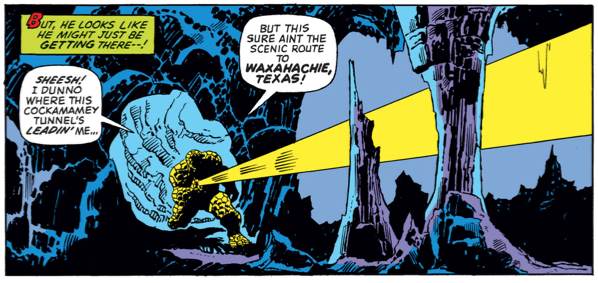
What’s going on here
Even though Fantastic Four 127 is technically Roy Thomas’s third as writer, it feels like the first issue where he really seizes the reins and makes it his own. It’s full of Thomas-ian flourishes—the purple prose with its highfalutin’ references to ancient Greece, the call-backs to obscure older comics (in this case, Tales of Suspense 43), the sometimes excruciating interior monologues.
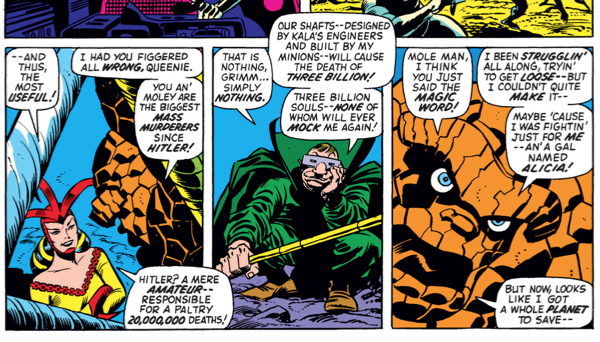
It’s also a pretty good story. On a mission to help Alicia, Ben is lured into complacency by the mysterious Kala, and is blindsided by her and the Mole Man. Thomas also ratchets up the stakes by having the Mole Man and Kala launch a plot against the surface world. His version of the Mole Man isn’t just a misunderstood outcast, but a truly evil villain who plans to kill 3 billion surface dwellers. The story is well paced, contains some fun surprises and ends with a satisfying cliff hanger.
What I liked
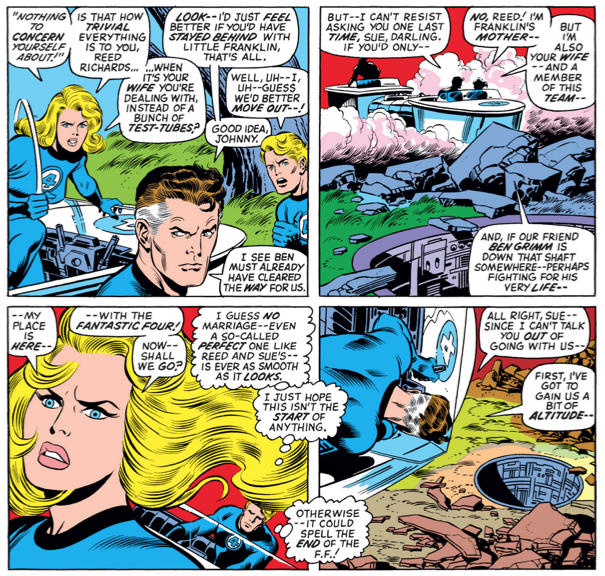
After showing some growth as a character over the past few years, Sue backslid into her whimpering helpmate status in Stan’s most recent run, as he (via Reed) sidelined her to protect Franklin. Here, Roy seems to be making a statement about Sue’s role on the team:
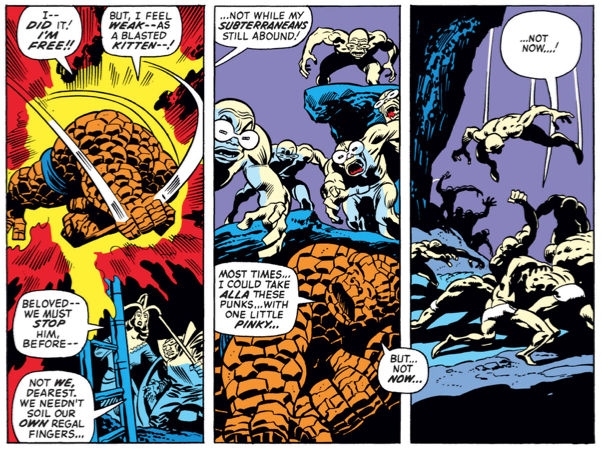
This is a great sequence from Big John:
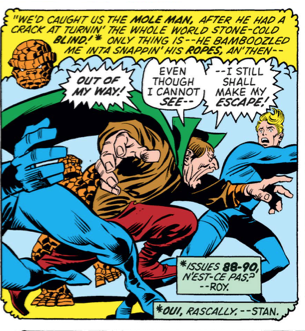
There are also a lot of fun touches throughout the comic, such as this byplay in the editor’s notes between Roy and Stan en français.
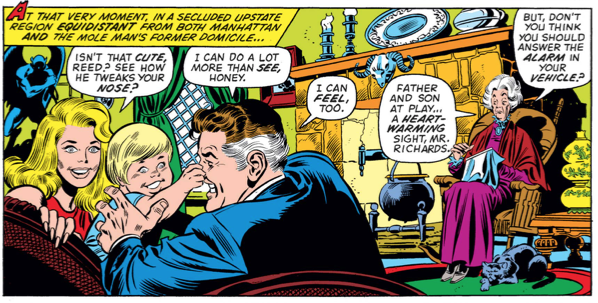
Along with a sweet scene of domestic bliss, there is some clever dialogue from Reed here:
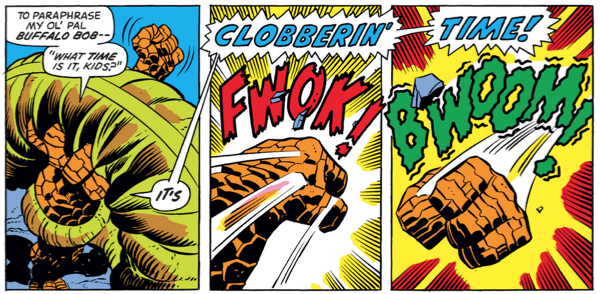
And it’s been while since we heard these magic words:
What I didn’t like
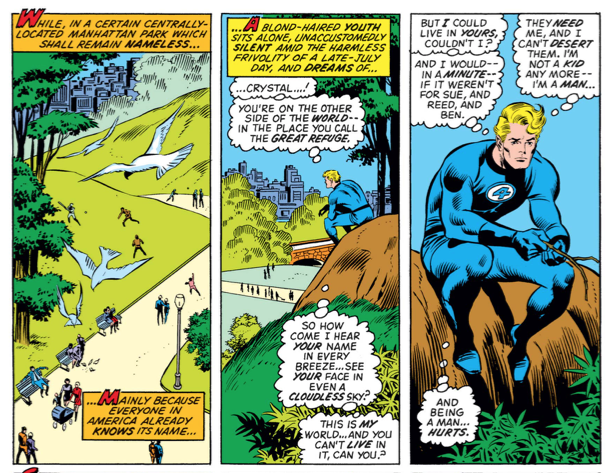
As mentioned above, Roy has a predilection toward pompous verbosity and anguished interior monologues. We get all of that and more here:
Overall
A promising start to the Thomas era.

