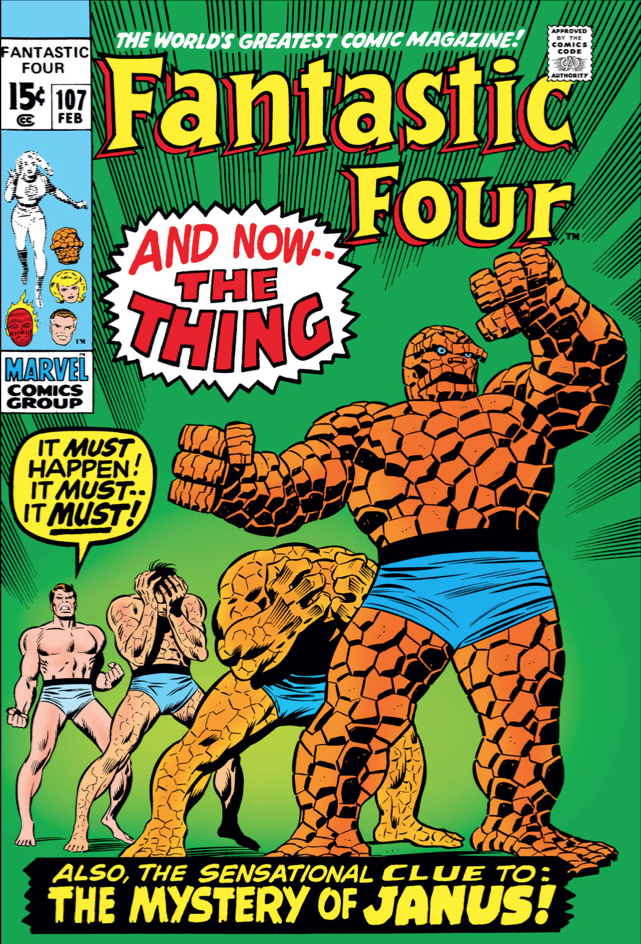
Fantastic Four 107 “And Now … the Thing!” Published: Nov. 1970 Writer: Stan Lee Pencils: John Buscema Inks: Joe Sinnott Letters: Artie Simek Cover: Buscema and Sinnott
Synopsis
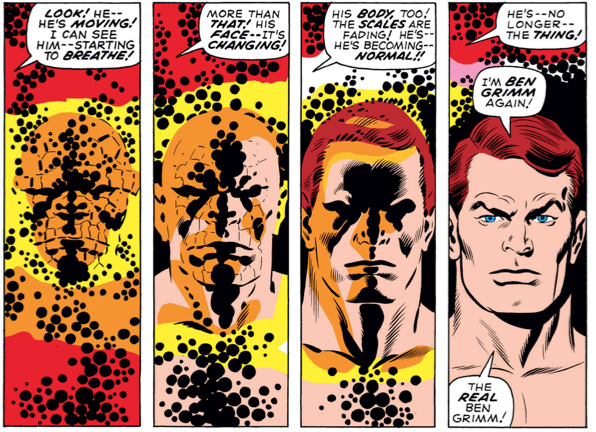
Reed finally succeeds at returning Ben to human form, and this time with the ability o revert back and forth to the Thing. But as Alicia suspects something is not quite right with Ben, a new villain, Janus, breaks into the Negative Zone.
What’s going on here?
The big news here is that this is the debut Fantastic Four issue for Big John Buscema. Buscema had been drawing comics since the 1940s, but only started doing Marvel superhero comics in the late 60s. He’ll be the regular FF artist for the next 30 issues or so and I think of him as the defining Bronze Age Fantastic Four artist. Of course, Sinnott is still inking, so the art has the same consistent feel. In a lot of ways, the ’70s is actually the Sinnott age.
This is also the debut of the villain, Janus, who is a pretty minor figure, only showing again much later in 2001, when Carlos Pacheco was writing the comic, and much later again in Alex Ross’s Full Circle graphic novel, which came out last year.
What I liked
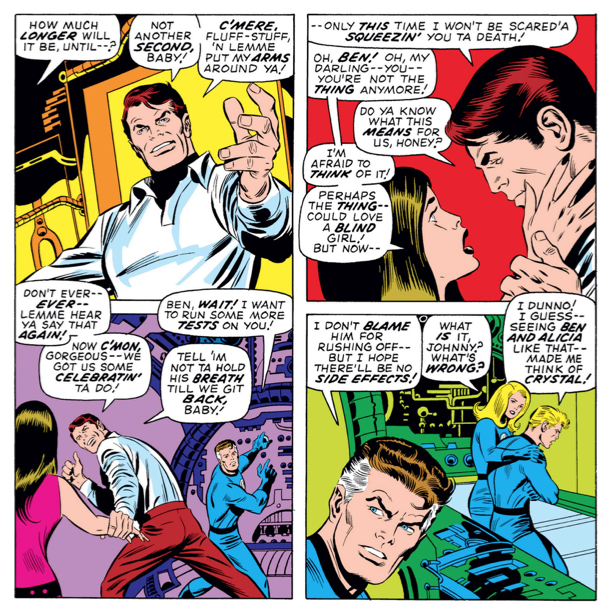
The comic itself is excellent. Along with the drama of Ben reverting back to human—and with it, the unspoken question of how long will it be before he returns to being the Thing permanently—there’s some character development with Johnny, Sue and even baby Franklin, who seems to be manifesting signs of his powers. It’s been a while since the FF had what is sometimes called a “quiet issue,” and this one was very satisfying.
What I didn’t like
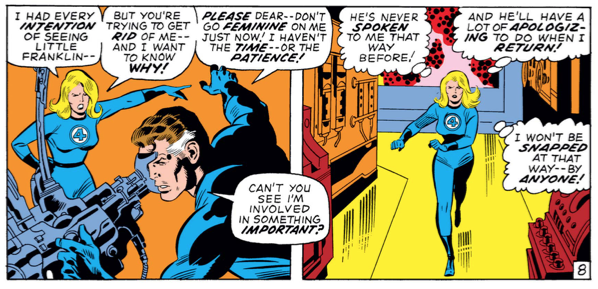
More jerk-like behavior from Reed. “He’s never spoken to that way before?” Lady, I can find a dozen issues where he has, and worse.
Also, the title makes no sense. “And Now .. the Thing!” What does that even mean? It’s not like he hasn’t been in every issue for the last nine years. If anything, it should be “And Now … Ben Grimm.”
Fantastic Four 106 “The Monster’s Secret” Published: Oct. 1970 Writer: Stan Lee Pencils: John Romita Inks: Joe Sinnott Letters: Artie Simek Cover: Romita and Sinnott
Note: Apologies for the long delay since my last post. I have been dealing with some personal business. I’m hoping to get back to regular, weekly posts.
Synopsis
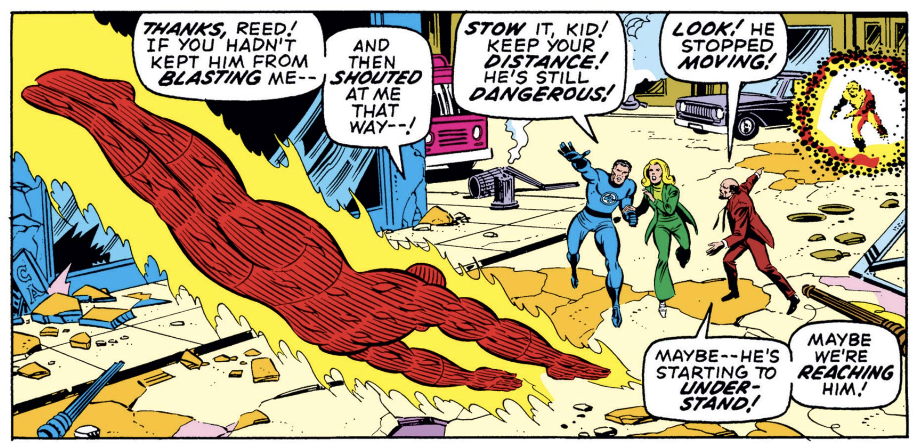
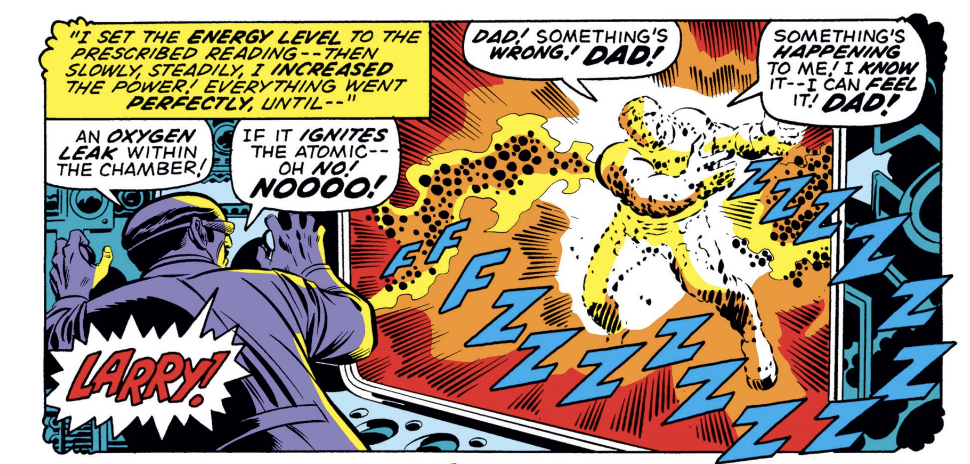
To save Sue and the city from a rampaging energy monster, Reed leaves Johnny to ice down Ben, who is mid-way through a process that could return him to human form. The energy monster turns out to be the son of a scientist and former colleague of Reed’s, part of an experiment gone awry, and with Reed’s help he is restored to normal.
What’s going on here?
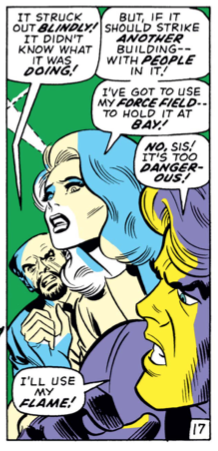
This is a much more satisfying comic that last issue, which was notably disjointed. There are still plenty of plot holes—why, exactly, does Johnny need to put Ben in a deep freeze?—but the story is pretty straightforward and the reveal, that the monster is Dr. Rambow’s son, adds a poignant (if predictable) note.
The issue is also notable for the return of Joe Sinnott, who missed the last three issues. John Verpoorten did a credible job in his absence, but under Sinnott the comic looks and feels more like Kirby hadn’t left. That includes a panel like this:
Dig that Kirby Sinnott Krackle!
What I liked
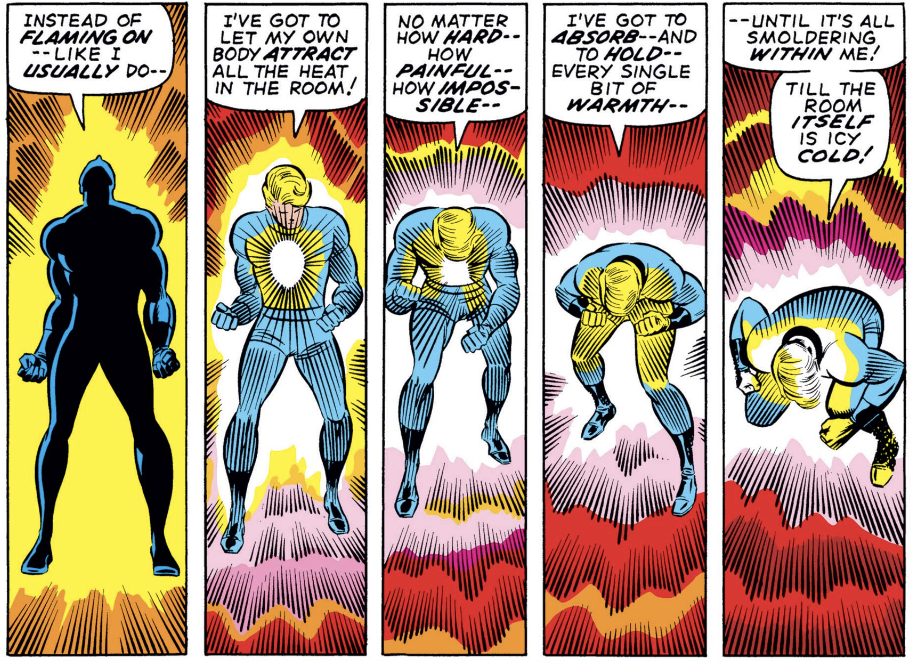
The Romita / Sinnott combination is pretty effective, and the art hits some high notes. I particularly liked this sequence:
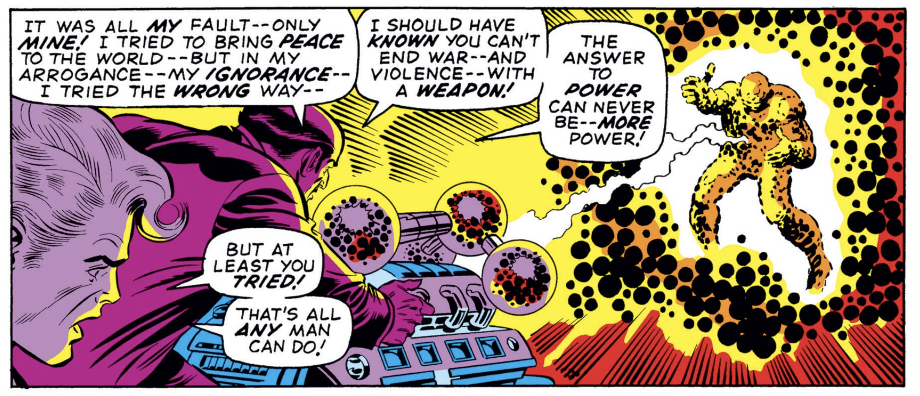
There’s also one of Stan’s moral lessons, about Dr. Rambow’s hubris. These maxims can be a bit corny, but I like how Stan is reaching for an elevated purpose in his stories. (Also: more Krackle)
What I didn’t like
The story feels like a bit of a throwback to one-and one plots of early issues, where the FF tangles with some bad guys and Reed whips up some gizmo to save the day. Outside of the twist about Rambow’s son, it’s all very obvious and linear. There’s no way of knowing for sure, but the lack of originality in the storiy may be a result of Kirby’s departure, with a distracted Stan cooking up plots on his own and resorting to old, clichéd story lines.
Anything else?
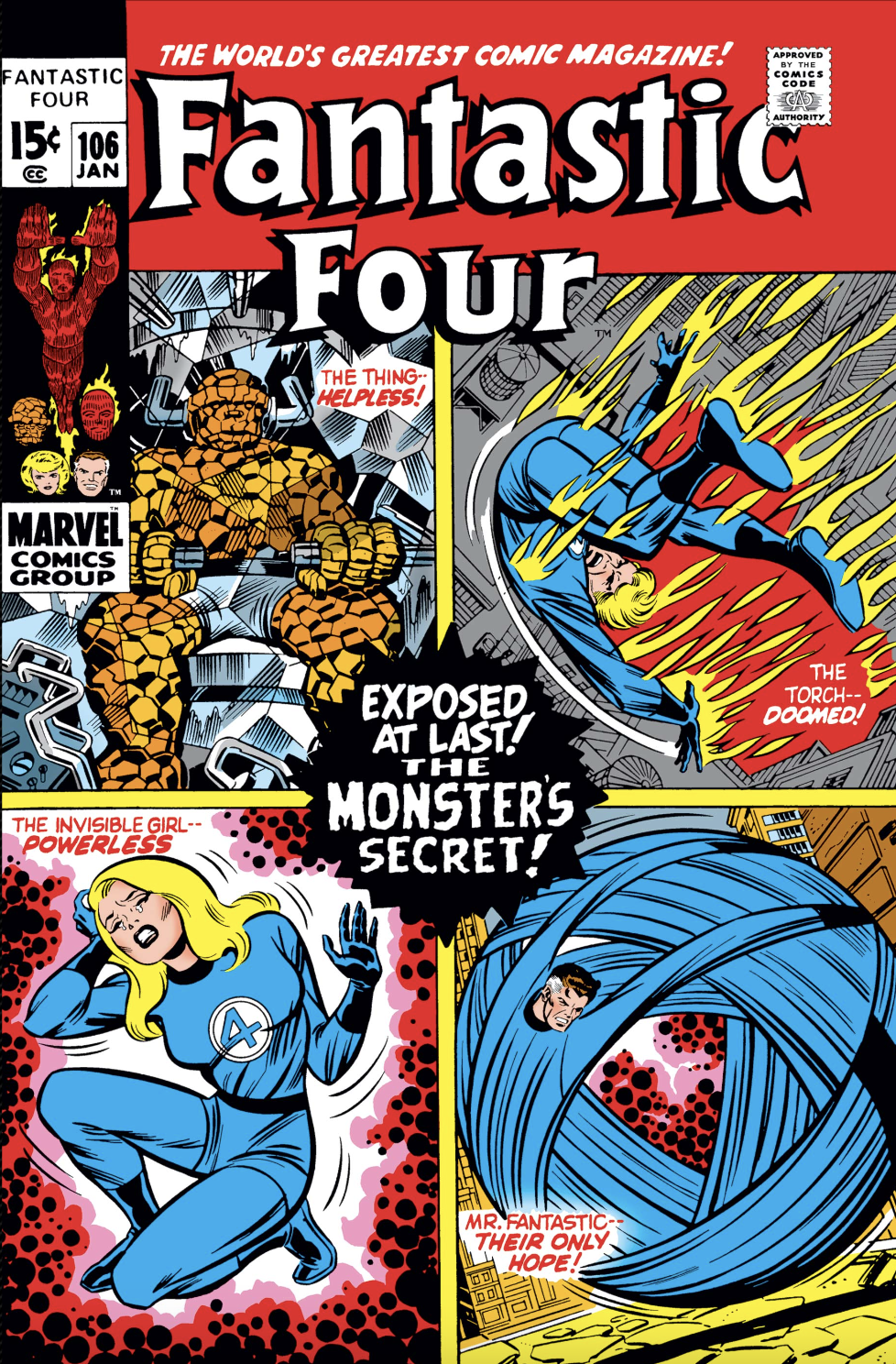
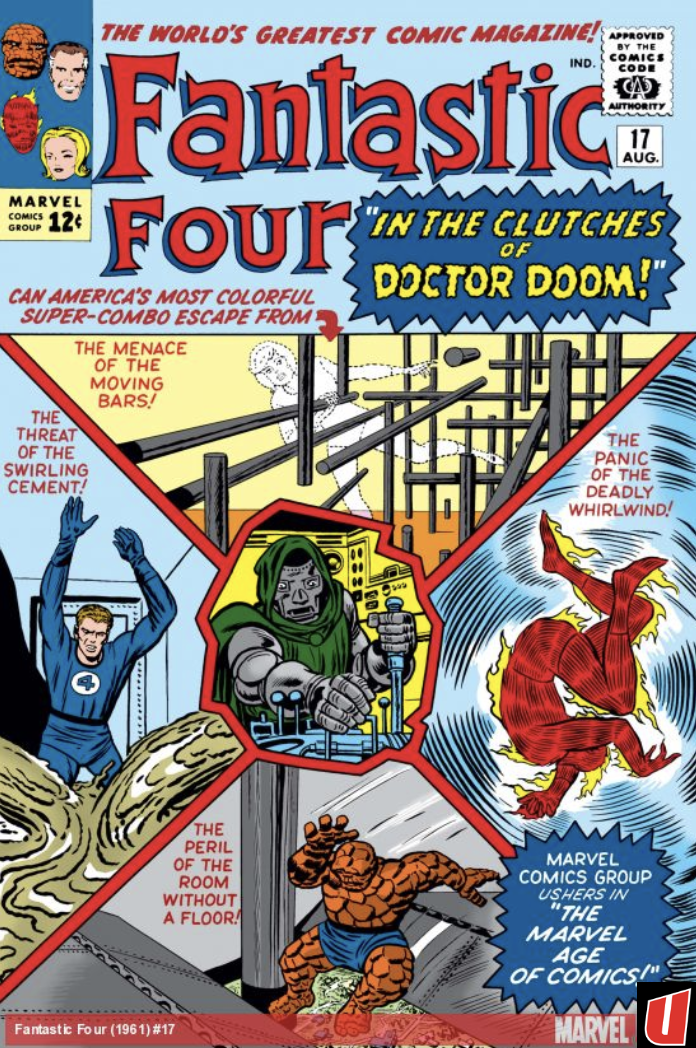
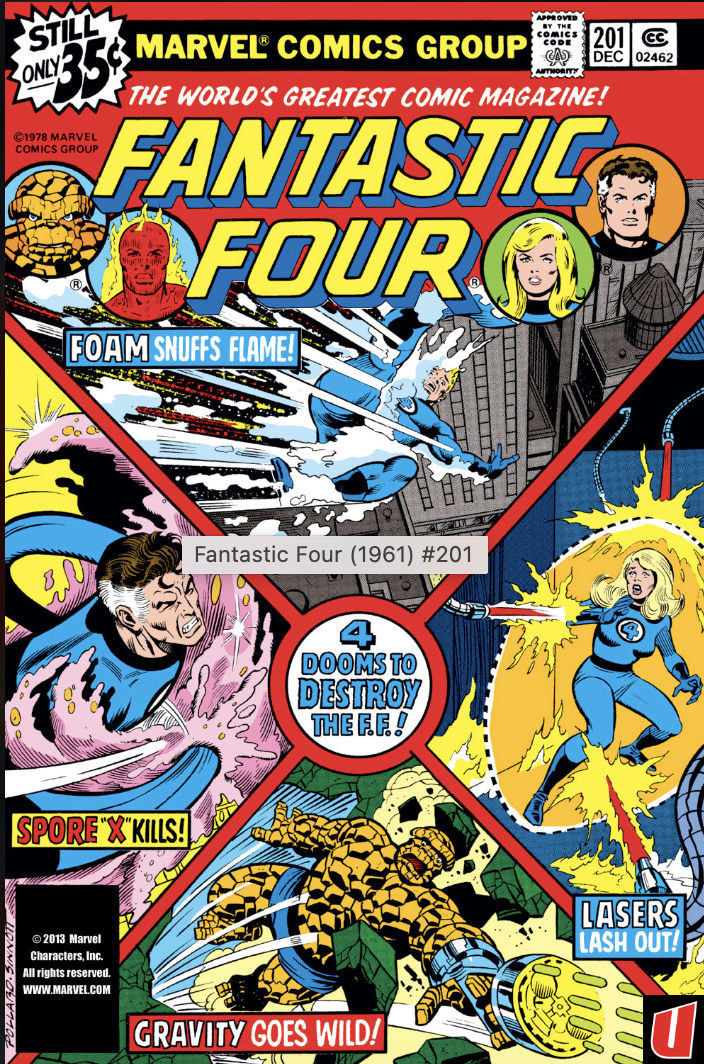
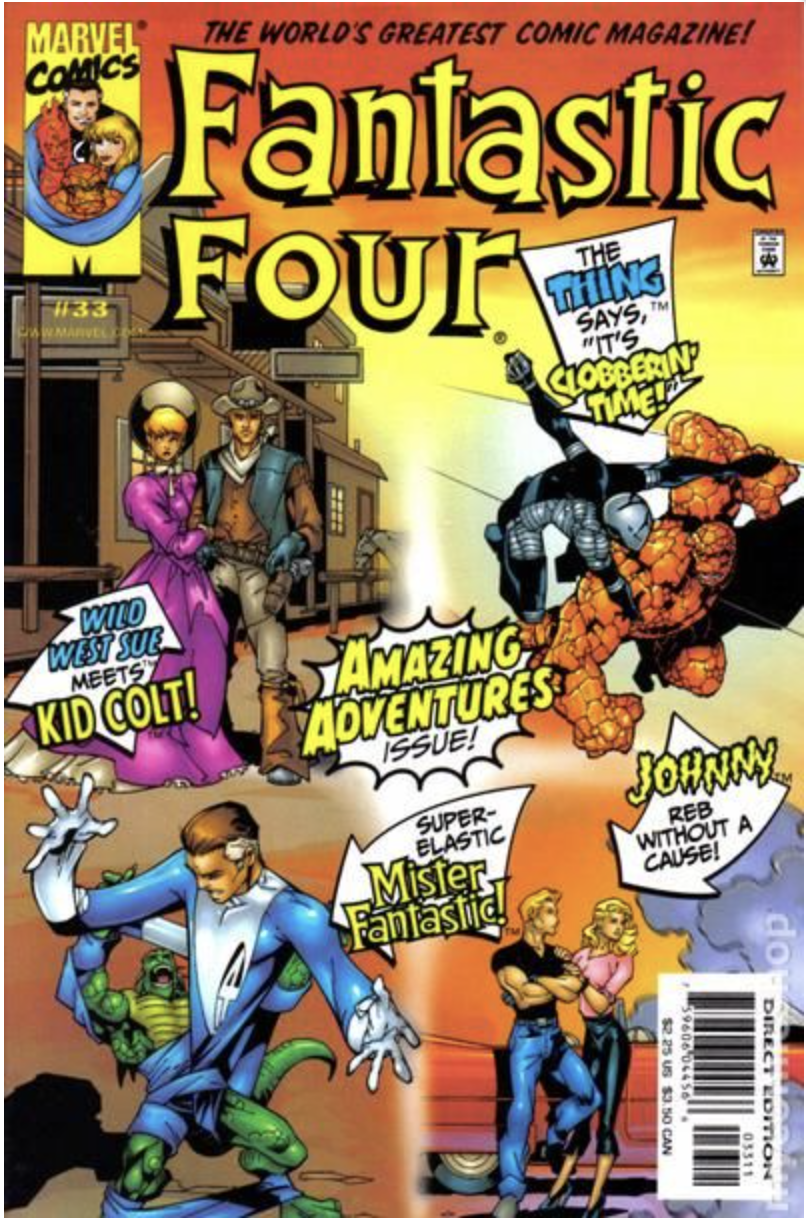
The cover is another in a line of “quad” covers that dates back all the way to issue 17 and extends far into the future. Here are a handful:
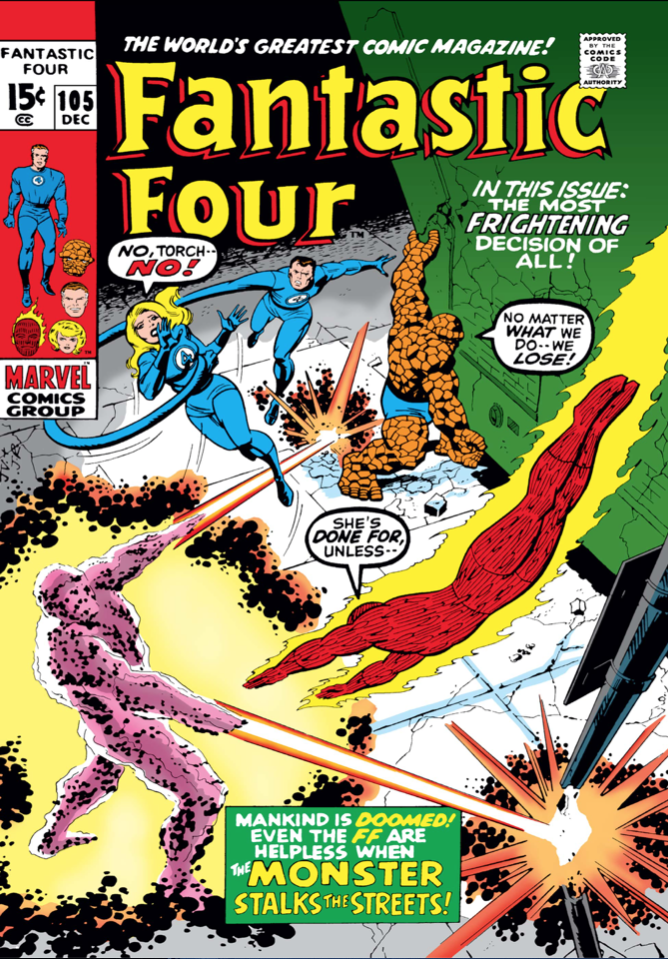
Fantastic Four 105 “The Monster in the Streets” Published Sept. 1970 Story: Stan Lee Pencils: John Romita Inks: John Verpoorten Letters: Artie Simek Cover: Romita and Verpoorten
Synopsis
While a mysterious energy creature roams the streets of Manhattan, Crystal falls ill and must return immediately to the Inhuman city of Attilan. Then, as Reed prepares to return Ben back to human, Johnny urges him to help save Sue from the creature.
What’s going on here
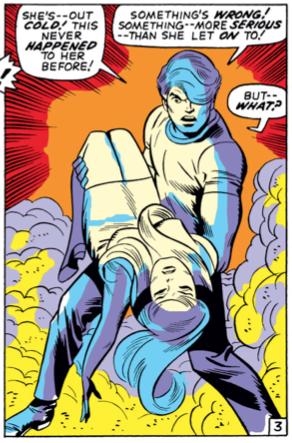
This is a bit of an odd issue, with a bunch of different threads that don’t really weave together. There’s Crystal’s illness, which initially seems tied to the energy monster, but not really. There’s her need to return to Attilan, which distracts Johnny, but mostly seems to be a device to get back to a team of four. There’s Reed once again trying to transform Ben, which is loosely tied to Crystal’s illness—Reed saw something Crystal’s blood that he could use to cure Ben—but isn’t really impacted by Crystal. Then there’s Sue battling the energy monster, which is strangely removed from the rest of the action until the end.
What I liked
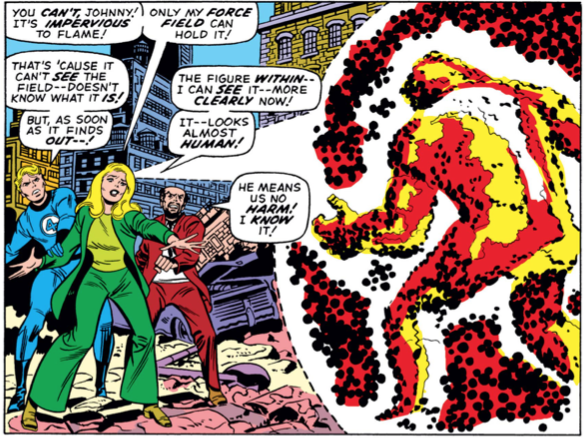
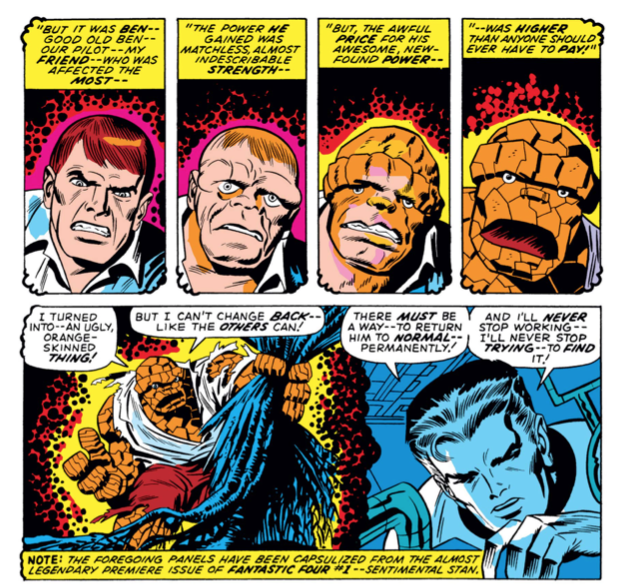
There’s a brief re-cap of the origin of the FF, which I we haven’t seen for a while, and it gives us a chance to see John Romita’s rendition of these iconic events. After an uneven issue the previous month, Romita and John Verpoorten seem to be hitting their stride, and the art overall seems more polished and dynamic. They are aided by the uncredited colorist, who creates some dramatic effects, like these:
What I didn’t like
As mentioned above, the story is disjointed, and seems engineered to A) create an emotional separation between Crystal and Johnny and B) force Reed to choose between transforming Ben and saving Sue. Both of these basic plot points have been use before, and cramming them into one story just seems to ramp up the melodrama at the expense of a coherent plot.
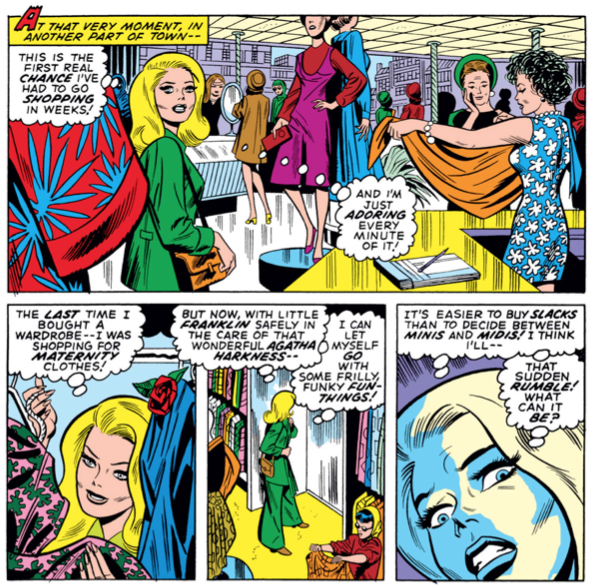
Also, we have an unfortunate flashback to the Sexist Sixties when Sue, in a free moment, is depicted shopping.
Anything else?
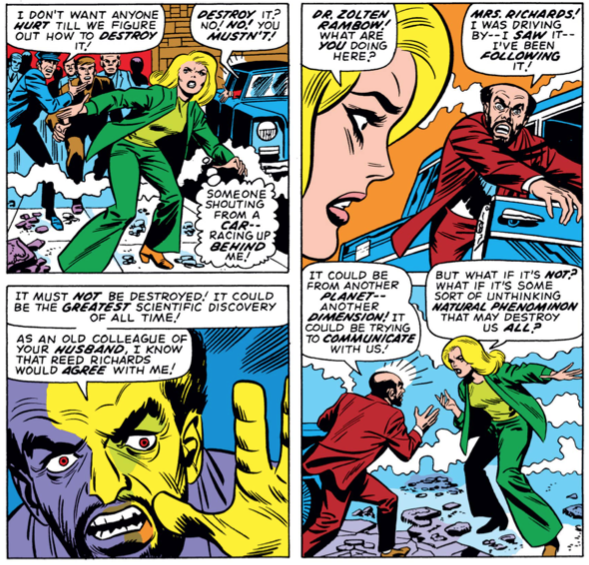
This issue features the introduction Dr. Zolten Rambow, about as obscure an FF character as exists. Savor him, because he will gone soon.
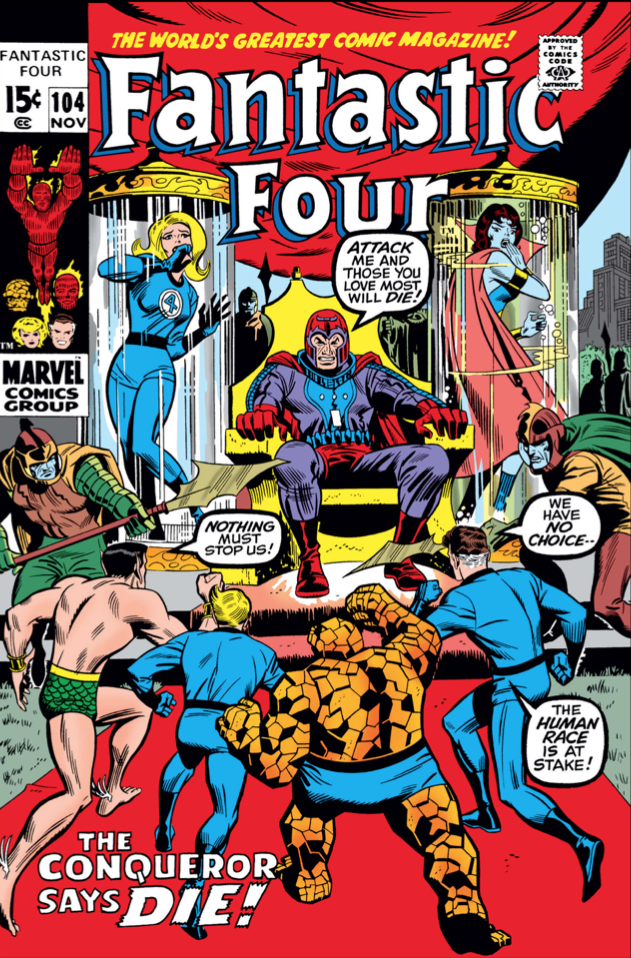
Fantastic Four 104 “Our World –Enslaved!” Published: Aug. 1970 Writer: Stan Lee Art: John Romita and John Verpoorten Letters: Artie Simek Cover: Romita and Verpoorten
Synopsis
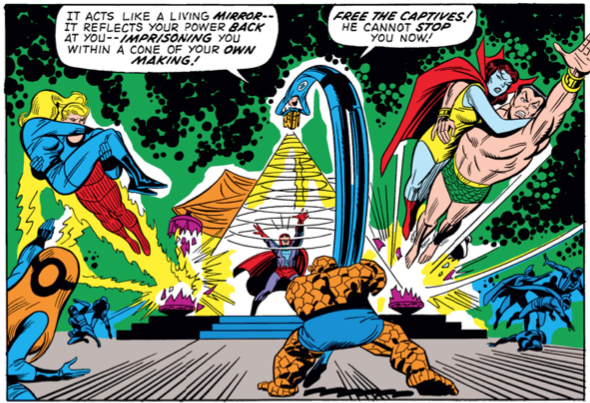
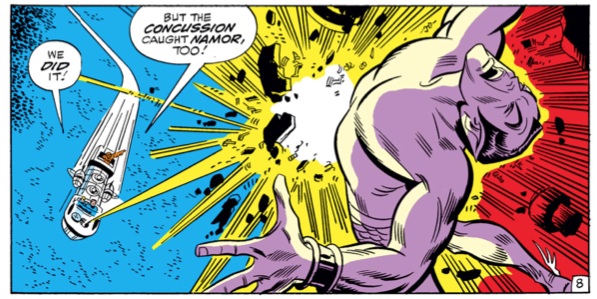
To thwart Magneto’s plans and free his hostages, Mr. Fantastic convinces the Sub-Mariner to return to the evil mutant’s side. Then, with the Earth on the brink of defeat, Reed deploys a weapon that turns Magento’s powers against him, saving the day.
What’s going on here
We are now in the second issue of the post-Kirby era and unfortunately this one has a formulaic, paint-by- numbers feel. This is not the first time Earth has been brought to the brink by invading Atlanteans, nor the first time Reed has saved the day by whipping up a gizmo. In all, the plot reads a lot like FF stories from the first two dozen issues.
What I liked
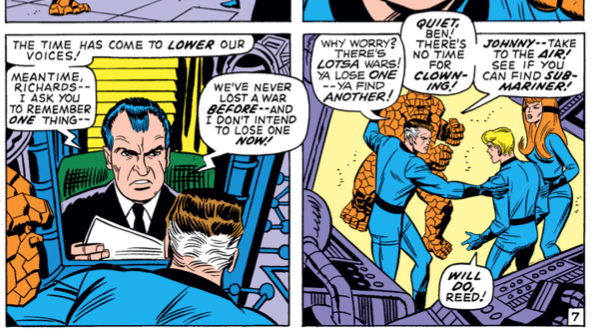
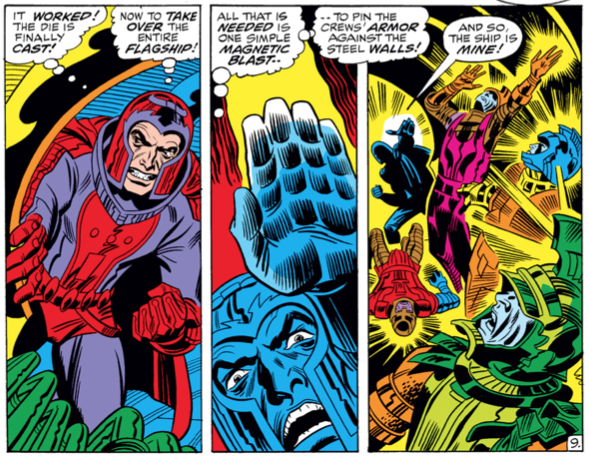
There are some more fun nods to Nixonian geo-politics, including an ironic comment about the US never losing wars. And I loved the design in the climactic panel above.
What I didn’t like
Along with the dull story, the art felt rushed and un-Romita like, making me suspect he only did breakdowns and Verpoorten did the finished work.
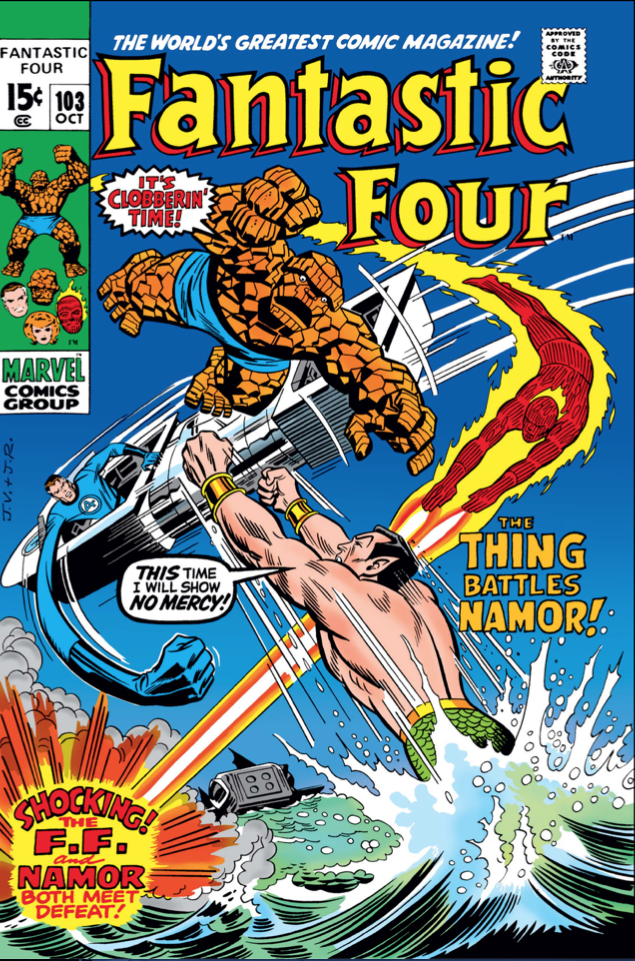
Fantastic Four 103 “At War With Atlantis!” Published: July 1970 Story: Stan Lee and John Romita Script: Lee Pencils: Romita Inks: John Verpoorten Letters: Sam Rosen
Note: I’m back! After taking the summer to mourn Jack Kirby’s departure from the Fantastic Four, I plan to resume regular weekly blog service. You may notice some changes in the format; basically I’m trying to streamline the writing process and make it more efficient so I can continue doing this. But hopefully nothing will be too jarring. As always, let me know if you have ideas or suggestions. Onward!
Synopsis
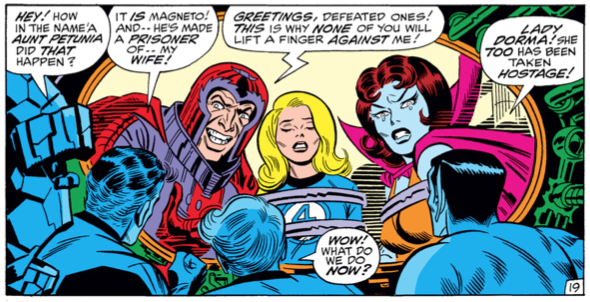
Magneto goads Namor into war against the surface world, then takes the Invisible Girl hostage.
What’s going on here?
This is obviously the first issue without Jack Kirby—and notably, also without Joe Sinnott—but Stan and the two Johns do a credible job of covering for them. In part, that’s because Romita and Veroorten seem to be deliberately copying Jack’s style. There are places where it’s obviously not Jack, such as close ups of the characters faces, but overall it’s a successful effort. Romita takes a back seat to no one in the comic-art business, so there will be no nitpicking of him here.
What I liked
It’s always fun when a villain crosses over from one book to another. This is the first time the FF tangle with Magneto, as far as I am aware, and he’s definitely in his early, raving megalomaniac mode here (vs. his more statesman-like megalomaniac mode of more recent years).
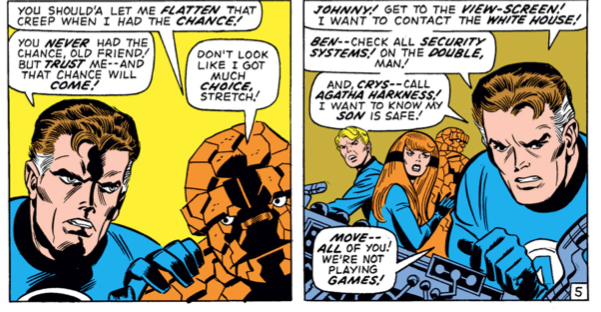
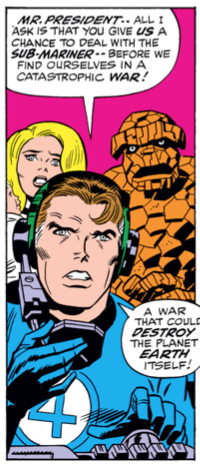
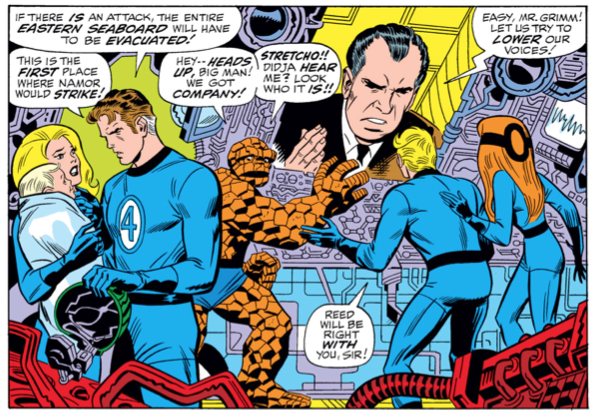
There’s also a very overt depiction of Richard Nixon as president (and Ben even makes a Spiro Agnew reference). While the president often shows up in comics, he’s often more generic, and not always this recognizable as an actual person.
What I didn’t like
One of the oldest and most tedious cliches in the early FF plots was how often Sue was taken hostage. By my count it was like a dozen times in the first 40 issues. Now, despite it being a new decade and with a new art team, Sue is once again taken hostage (along with Lady Dorma, for good measure).
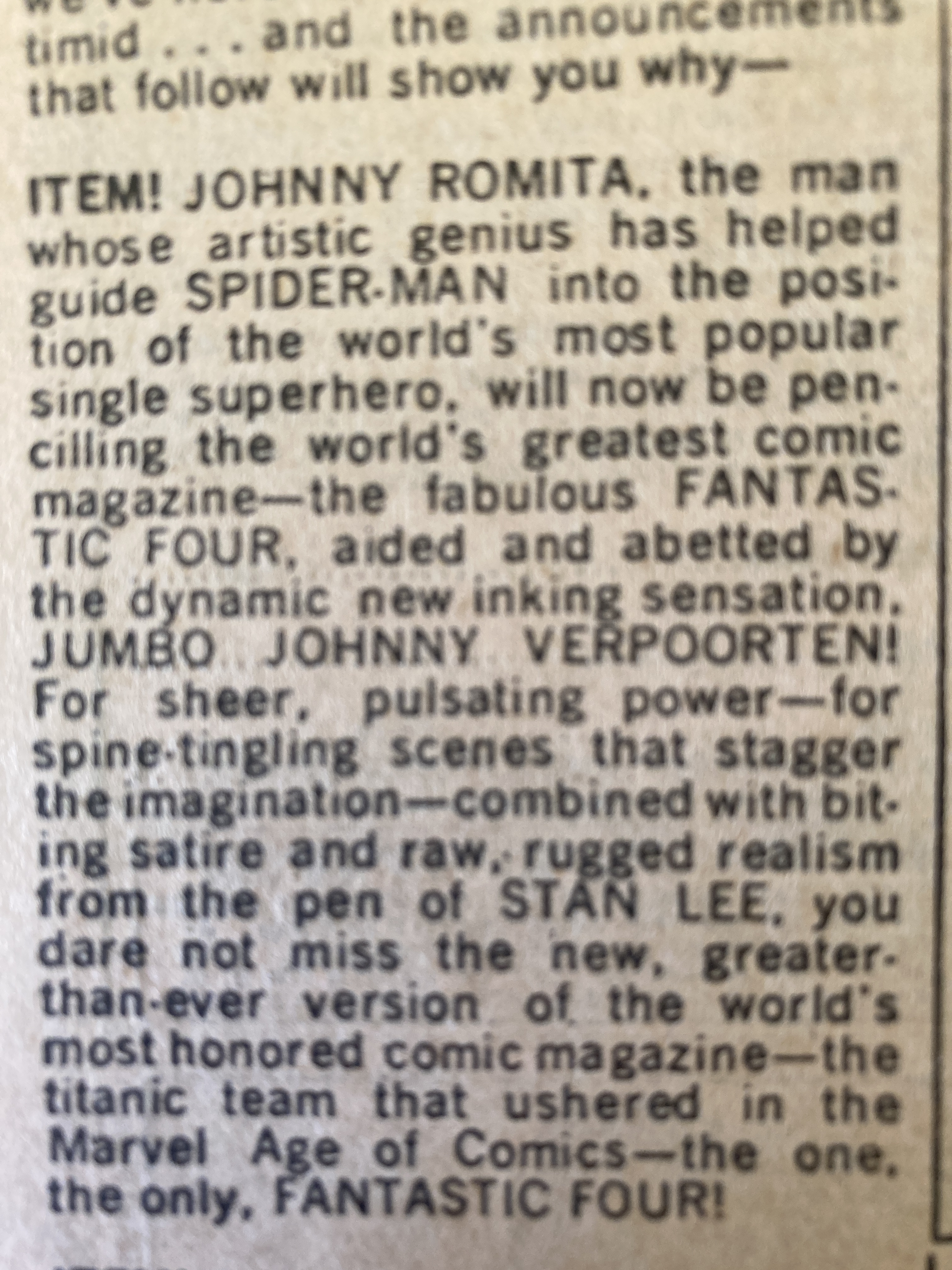
Also, the Bullpen Bulletin item welcoming Romita as the FF’s new penciler fails to acknowledge jack or his accomplishments, which seems a bit bush league.
Uncanny X-Men 489 “The Extremists, part 3” (main story) Publisher: Marvel Published: Aug. 2007 Writer: Ed Brubaker Artist: Salvador Larocca Letters: Joe Caramagna Colors: Jason Keith Cover: Larocca
Synopsis
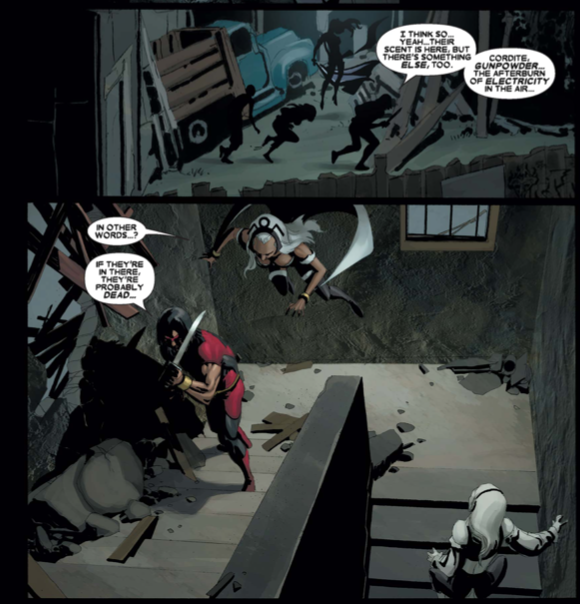
Storm leads a band of X-Men in pursuit of the morlock Masque, while Professor X and Nightcrawler search for Magneto.
What’s going here
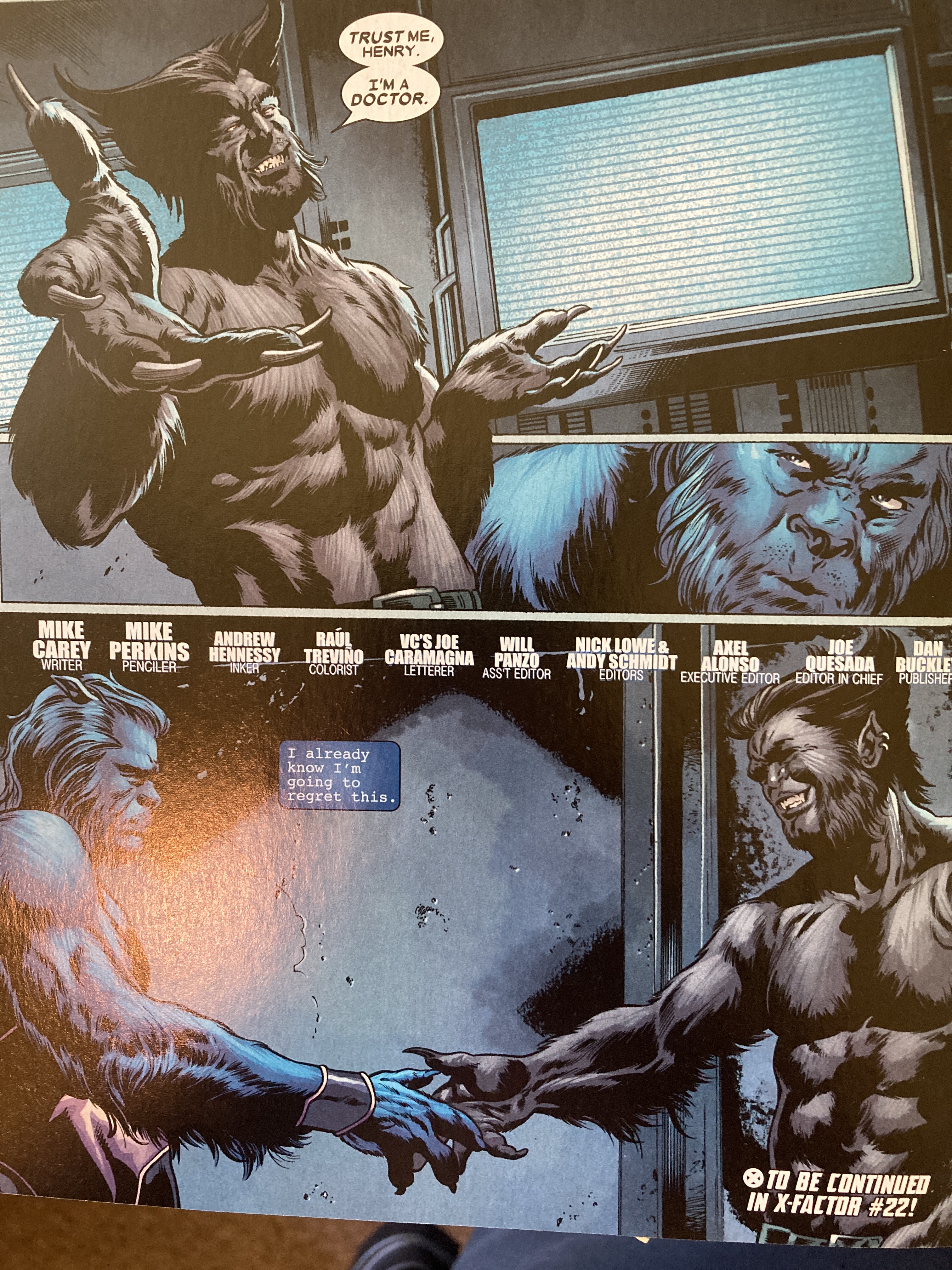
This issue is a bit of a jumble, and made more so by there being a back-up story featuring the Beast’s attempts to restore mutantdom in the wake of M-Day. It had been a long time since I read this issue, so definitely felt dropped in the middle of a few storylines I couldn’t quite grasp. Despite all that, I enjoyed the comic, in part because Ed Brubaker does a good job of setting the scenes, and deploying his noir sensibility to create an atmosphere of moody forboding. Brubaker isn’t an obvious choice for an X-Men writer, but when the action calls for paranoid creeping around sewers, he’s perfect.
What I liked
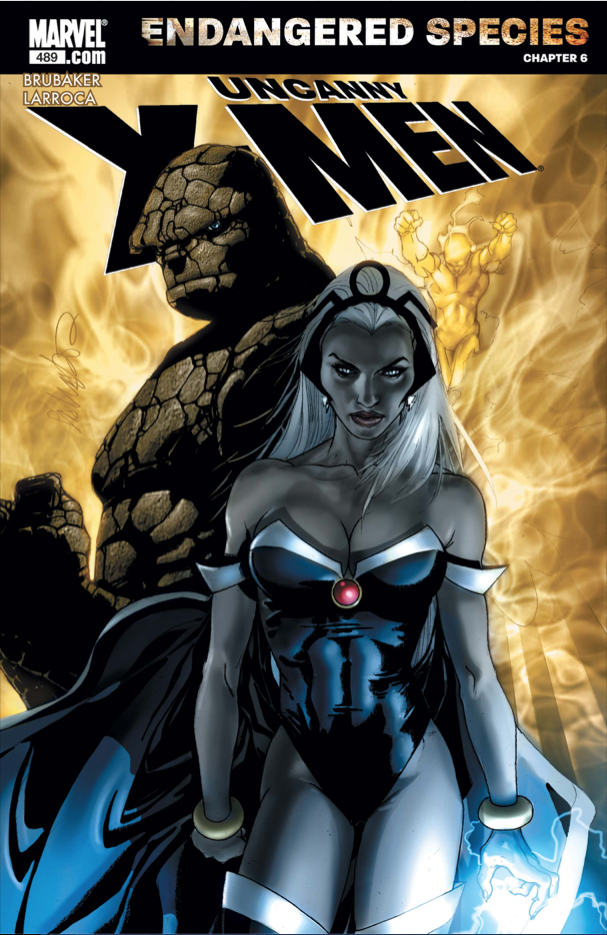
Larocca’s cover. I’ll even relax my normally strict stance against portraying Ben as a giant (he’s only about six feet tall, according to Kirby) to allow for this slightly gigantic Thing. Or I will assume Storm is standing in a hole.
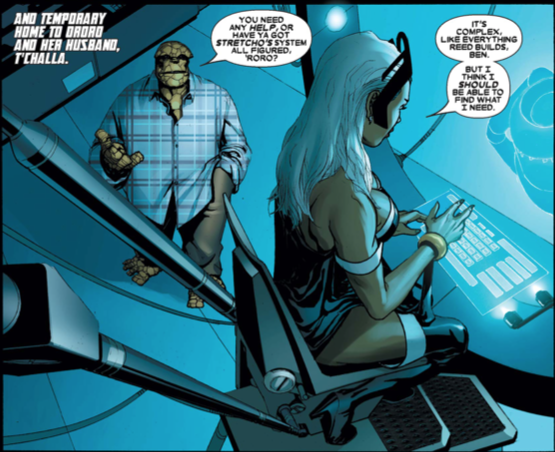
This issue takes place during the brief period when Storm and the Black Panther—who were then married—replaced Reed and Sue in the Fantastic Four, and there’s some fun interactions between Ben and Ororo, as seen above, and between Johnny and the other mutants, in this case Warpath, Caliban and Hepzibah (technically an alien and not a mutant, I think).
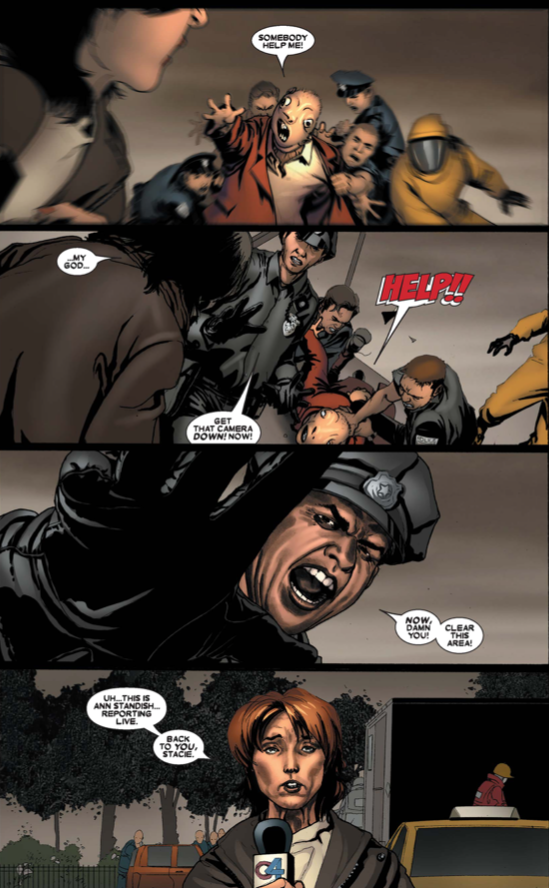
I also liked the undercurrent of menace surrounding Masque and his campaign to disfigure New Yorkers. It’s sinister and creepy and something Brubaker does very well.
What I didn’t like
The backup story, featuring Beast and I think Dark Beast (it’s never said explicitly) is talky and not very fulfilling. It’s the sixth installment in an 17-part (!) ongoing story running n the mutant books and as I recall it was hard to follow then and impossible now.
Overall
A fun, somewhat different X-Men story from a talented team.
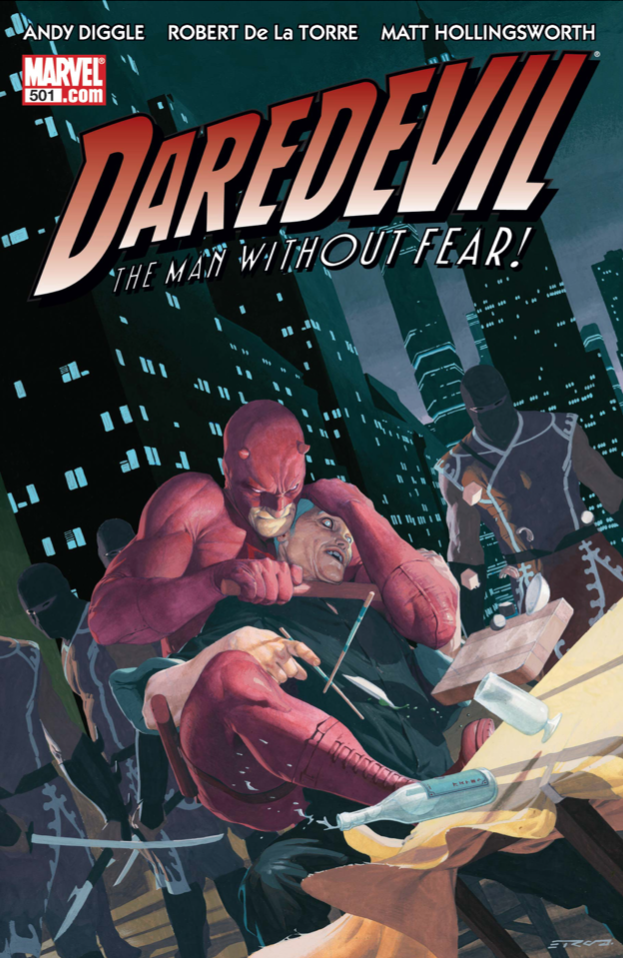
Daredevil 501 “The Devil’s Hand” Publisher: Marvel Published: Oct. 2009 Writer: Andy Diggle Art: Roberto De La Torre Colors: Matt Hollingsworth Letters: Joe Caramagna Cover: Esad Ribic
Synopsis
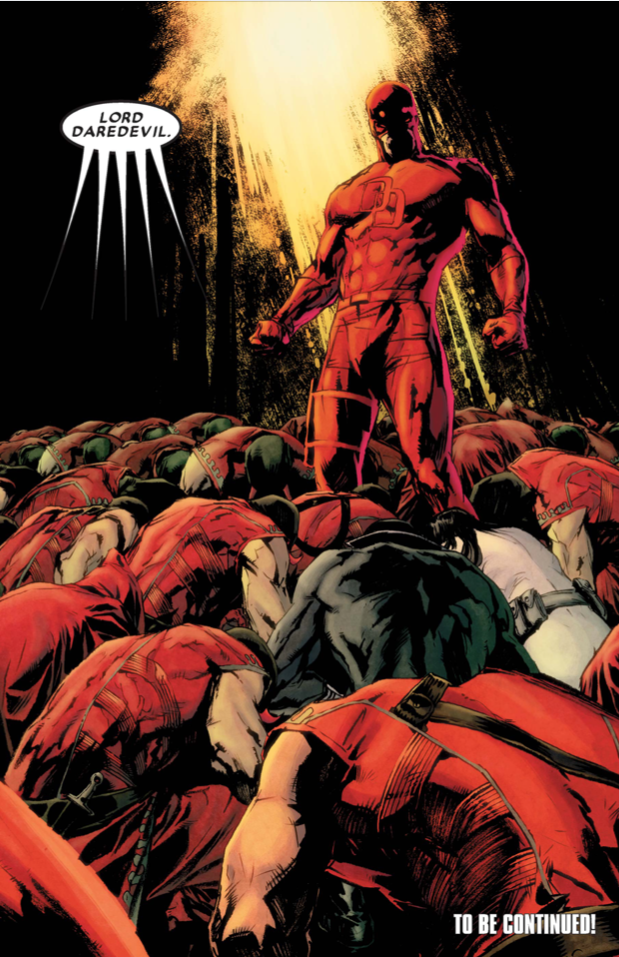
A guilt-wracked Daredevil takes control of the Hand, even while sacrificing his sensei Master Izo to do so.
What’s going on here?
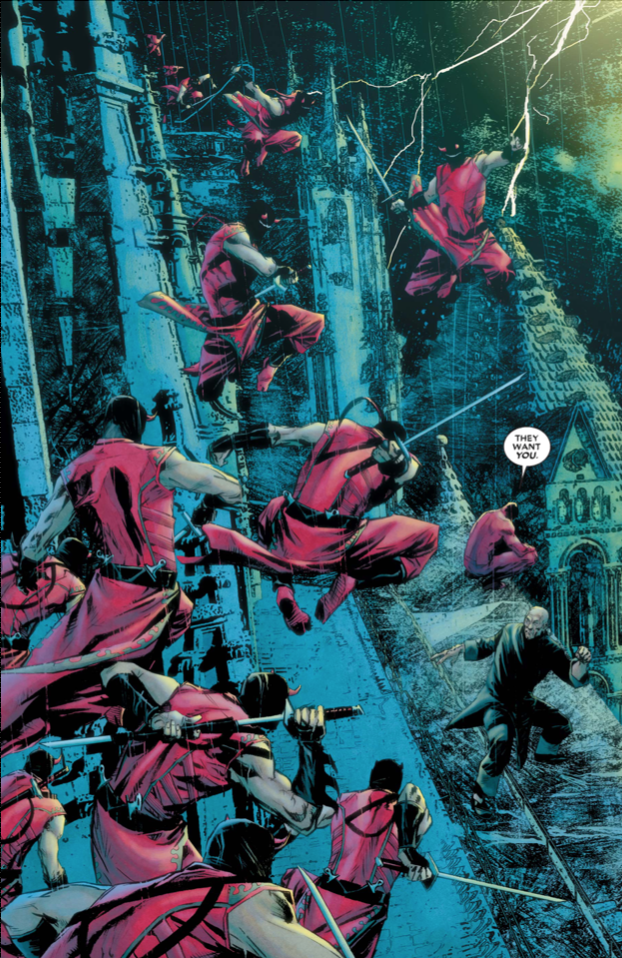
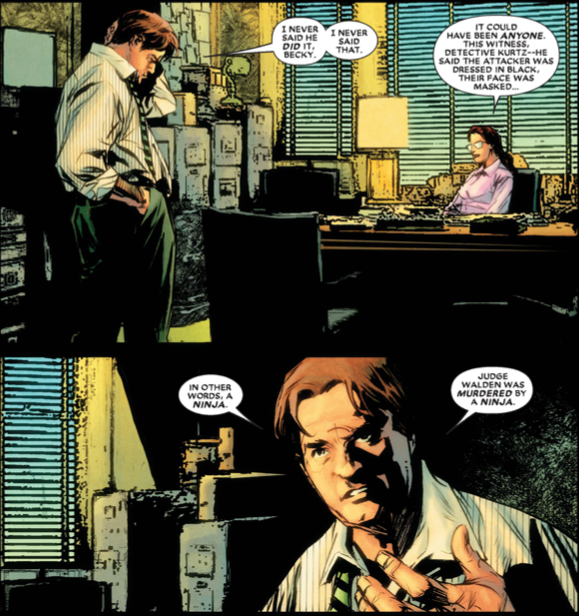
Daredevil 501 marks a new beginning of sorts for the book, with the new creative team of Diggle and De La Torre taking over after a long run by Ed Brubaker and Michael Lark. At this point, Matt Murdock has descended even further (or further than usual) into obsessive introspection and despair, and takes the radical step of assuming control of the Hand, a band of ninjas, to protect Hell’s Kitchen from his enemies.
What I liked
It’s a little hard to make too many judgments in the first issue for a new creative team. They are obviously leaning hard into many of Daredevil’s established elements, but having Matt take over the Hand is at least new twist. De La Torre’s art is stunning — reminiscent of Alex Maleev’s work on DD but with more dynamism.
What I didn’t like
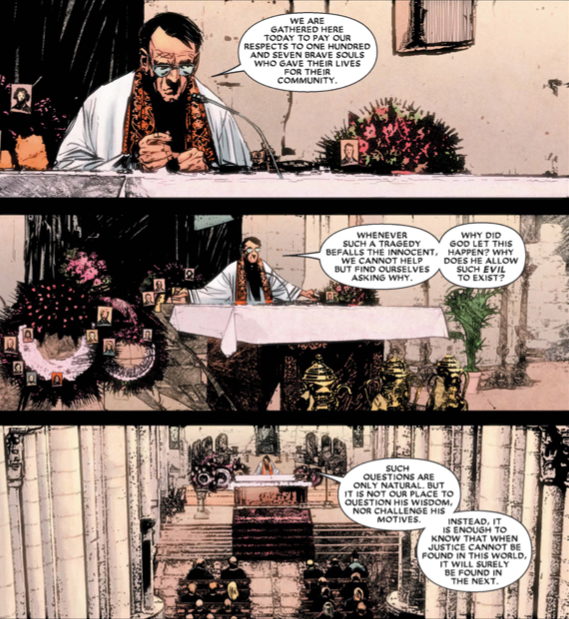
Frank Miller’s Daredevil run of the late 1970s and early 80s casts such a long shadow that for decades, DD writers and artists seemed unable to escape it. Diggle and De La Torre are no exception, and have have plundered the Miller toybox for all his plot devices. Ninjas? Check. Crusty old sensei? Check. Matt on the verge of a breakdown? Check. Catholic guilt? Check. Foggy, Becky, Kingpin and Turk? Check check, check and check. It’s like they’re playing Daredevil bingo and got the winning card.
Again, it’s the first issue of their run—and one I barely remember—so maybe I’m being hard but it feels awfully derivative of lots of other Daredevil runs. He’s such a great character and it’s unfortunate that so many creators seem trapped in the same story lines.
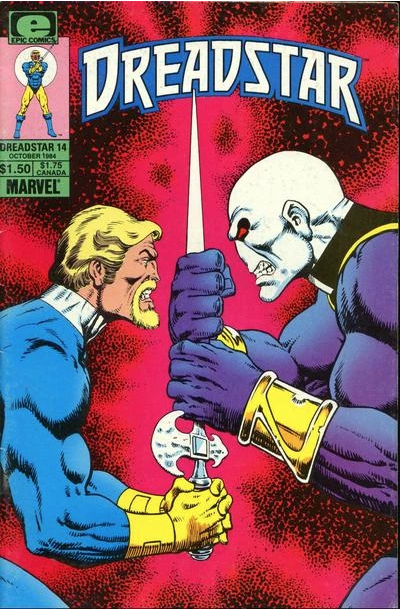
Dreadstar 14 “Resolution” Published: Aug. 1984 Publisher: Marvel (Epic) Story: Jim Starlin Pencils: Starlin Inks: Sam De La Rosa Letters: Jim Novak Colors: Christie Scheele Cover: Starlin
Note: I don’t have access to a digital copy of this comic, so I had to take photos. Apologies if it looks a bit wonky.
Synopsis
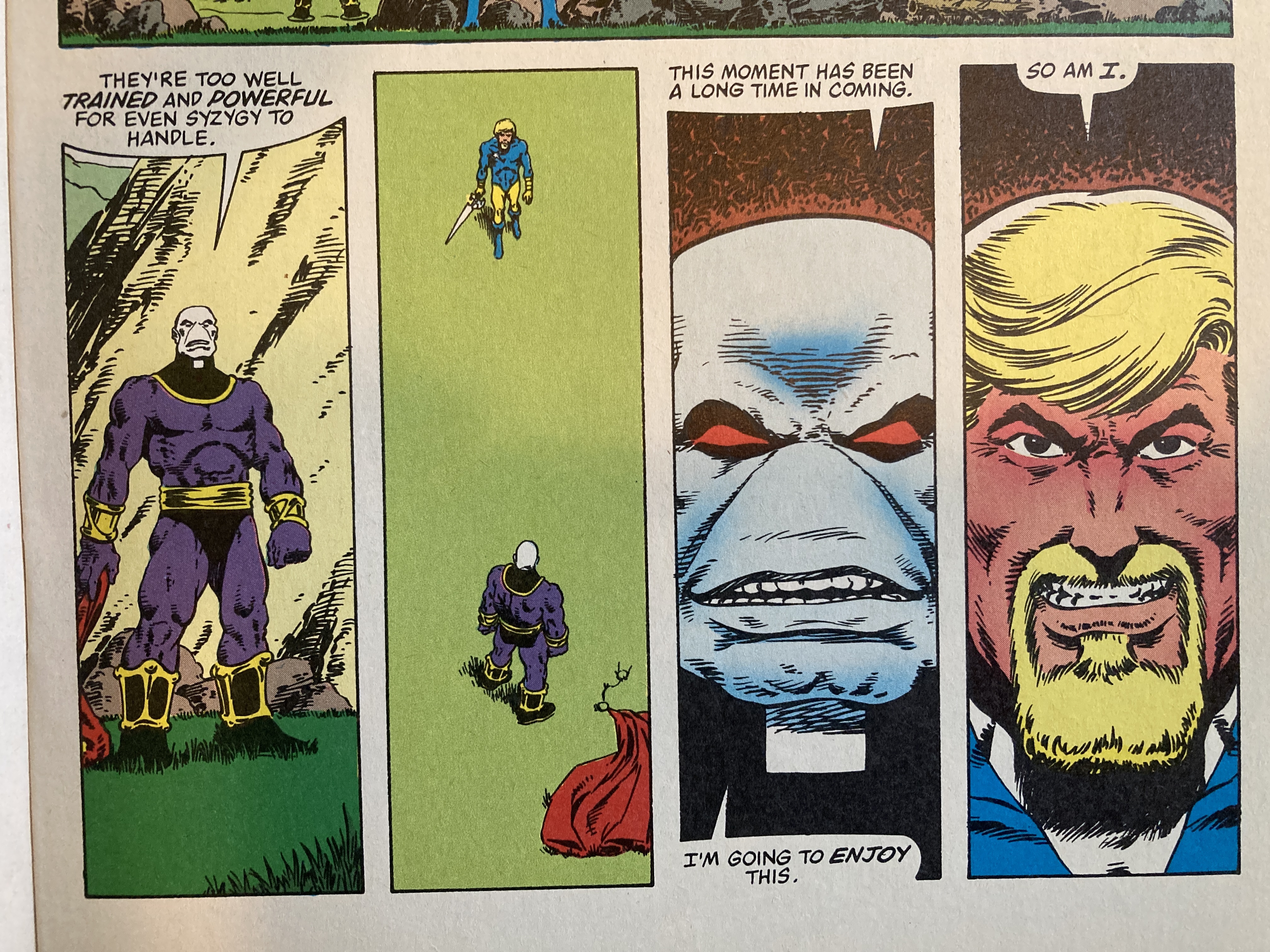
Lord Papal, along with minions Infra Red and Ultra Violet, confront Vanth Dreadstar and his companions. After a pitched battle, Papal destroys Dreadstar’s mystical sword, defeating him and causing him to rapidly age.
What’s going on here?
I came to Dreadstar a little late in its run, but once I discovered it, I was hooked (I’m pretty sure I bought this one as a back issue). In retrospect, many of its elements are derivative of other works of fantasy and space opera, but at the time I didn’t know it and I just loved the action, the characters, the ambitious scope of the story and Starlin’s art. I kept on collecting after Starlin stopped drawing it and the comic moved from Epic to First, but as with most comics, it peaked early. The high point is probably the first six issues of the Epic series (later re-printed as Dreadstar & Co.).
Issue 14 represents a turning point, a semi-final confrontation between Papal and Dreadstar that wraps up the first dozen or so issues of the series. In some ways it remind me of Nexus 75, which I looked at a few weeks ago, in they both conclude lengthy storylines with lots of pyrotechnics and not much nuance.
What I liked
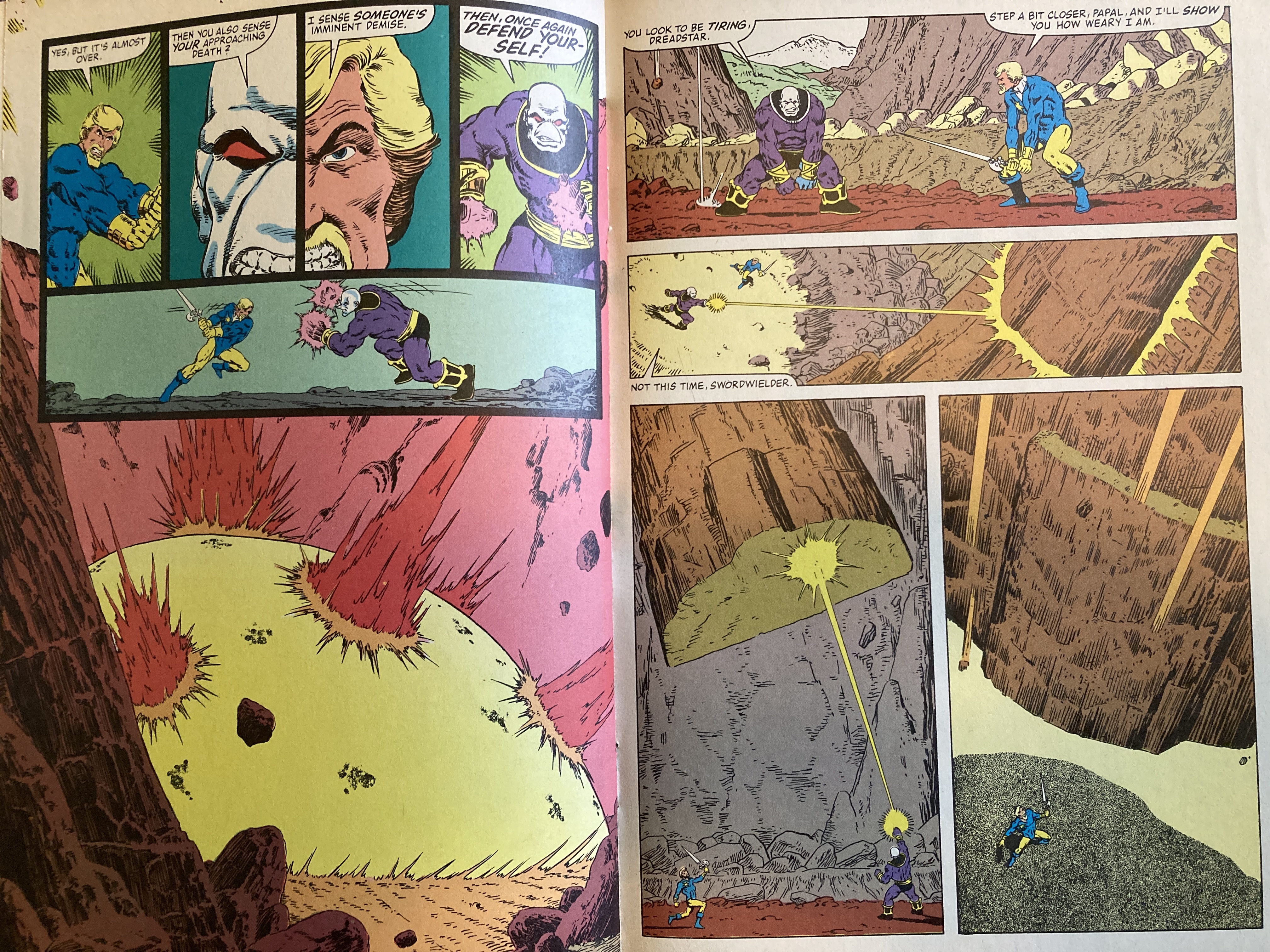
Most of it? It’s a fun comic, full of action and big panels and, believe it or not, no ads! The battle breaks down into two fights, between Papal and Dreadstar, and between Ultra Violet and Infra Red vs. Syzygy and the rest of Dreadstar’s crew. The Papal/ Dreadstar fight gets a bit repetitive, but the other skirmish has more twist and turns. The end is a genuine surprise, too, since we are so accustomed to the good guys winning. Here, they lose. Badly.
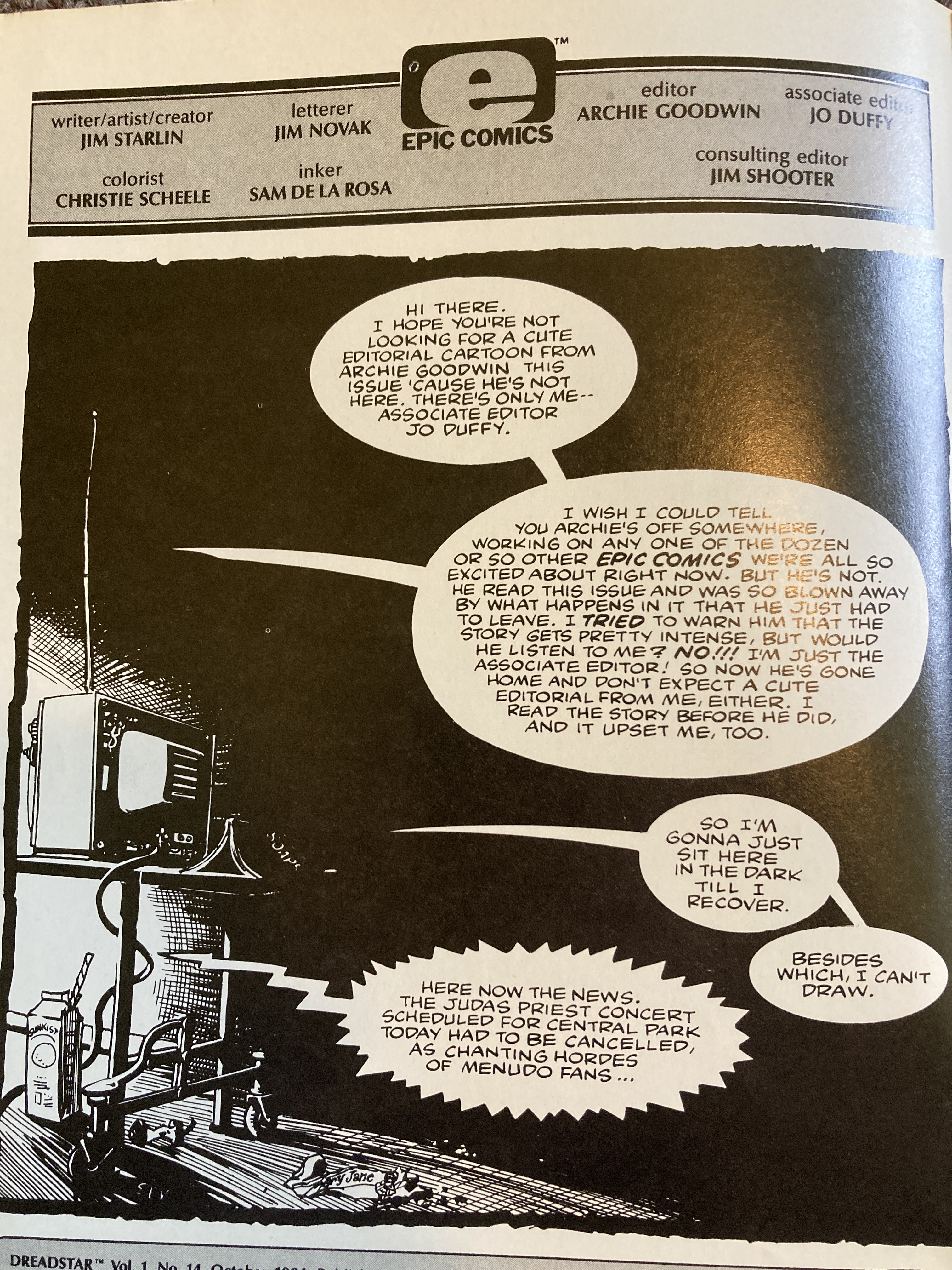
I also liked the little editorial sketch in the front of the book. Normally they were done by Archie Goodwin, Epic’s editor, and they’re a reminder of the little touches Marvel would include that kept fans engaged and feeling part of the club. (Note the extremely topical Menudo reference).
What I didn’t like
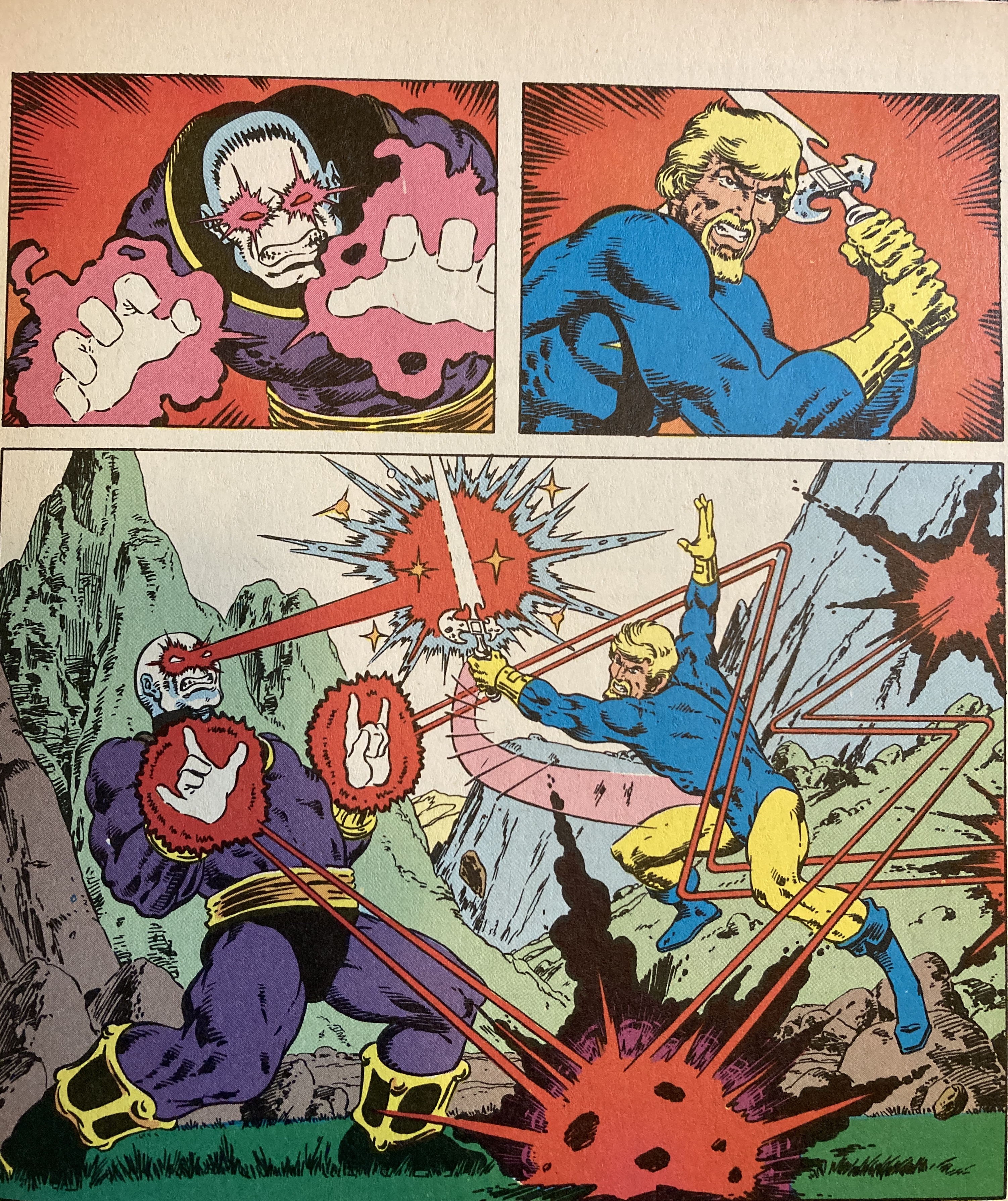
Not much? Really, the only thing worth mentioning is how obvious it is to me now that Papal is just a facsimile of Starlin’s Thanos, who in turn was a copy of Darkseid. In case there was any doubt, consider Papal’s version of Omega Effect in this panel:
Likewise, the stuff about Dreadstar’s sword prolonging his life feels a lot like Elric or other sword-and-sorcery books. But ultimately, so what? Most genre fiction borrows from predecessors, and it’s really about what the creator can do with the elements at their disposal.
Captain America 601 “Red, White and Blue-Blood” Publisher: Marvel Published: July 2009 Writer: Ed Brubaker Artist: Gene Colan Colors: Dean White Letters: Dave Lanphear Cover: Colan
Synopsis
In a story that is mostly flashback, the Winter Soldier, aka Bucky Barnes, tells Nick Fury of the time he and Captain America confronted vampires in a Belgian village during World War II.
What’s going on here?
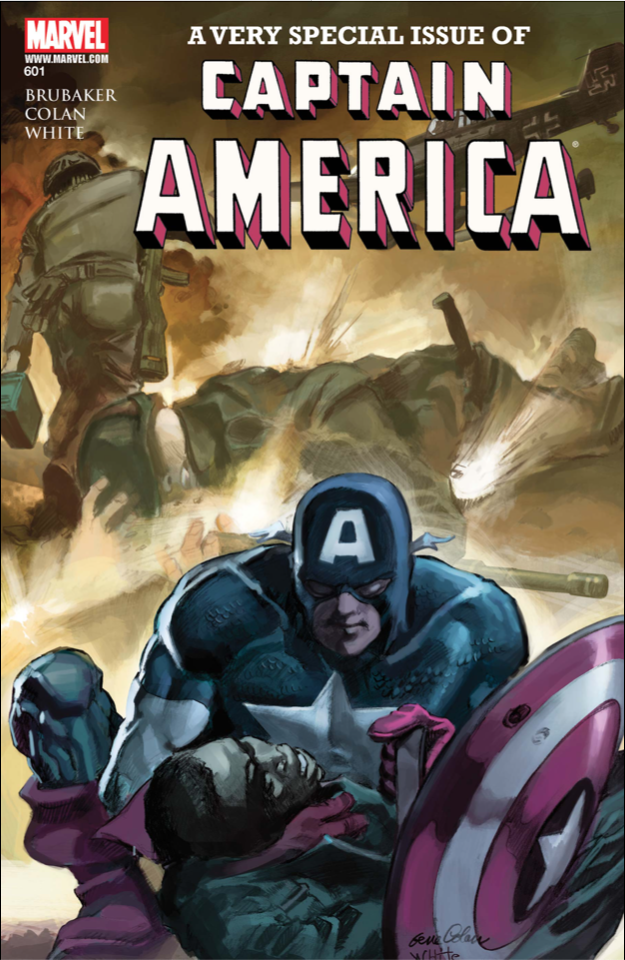
This story falls in the middle of Ed Brubaker’s long and acclaimed run on Captain America. I’m not sure if it was an inventory story or something scheduled, since it comes right after issue 600, making it a logical time for the creative team to take a break. But it has the classic signs of an inventory story, as it falls outside of continuity and features a guest artist.
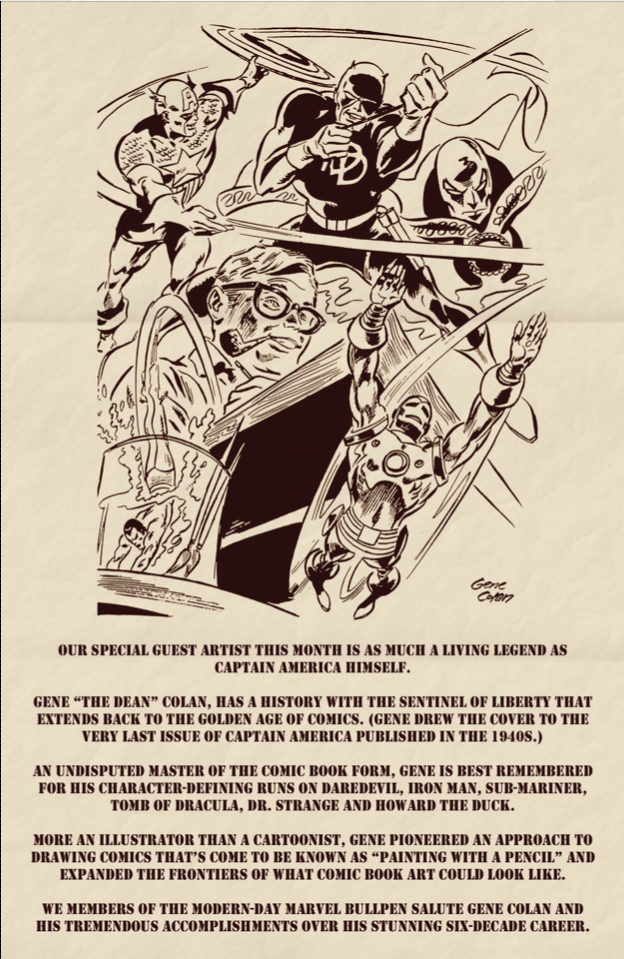
It’s notable for being the last story penciled by Gene Colan, a comics legend who was in his 80s by 2009 and had been drawing comics for 61 years, or since the end of the Golden Age. The story was either written with him in mind, or chosen for him, because of his lengthy association with vampire stories and particularly his Tomb of Dracula run from the 1970s. In some ways, the whole comic feels like a memorial to Colan, who died a few years after it was published, and it included this nice testimonial at the end.
What I liked
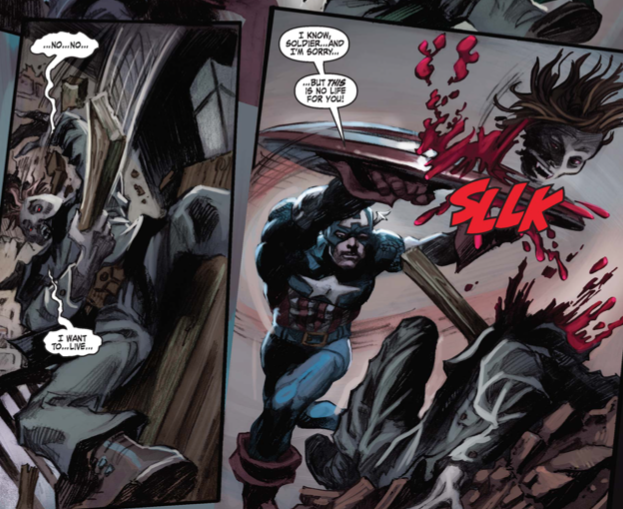
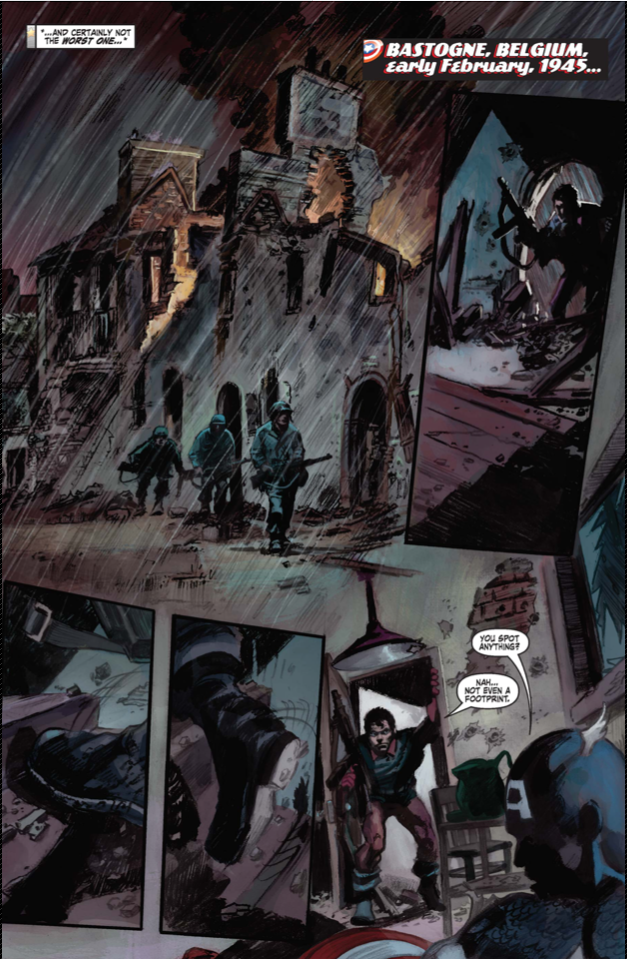
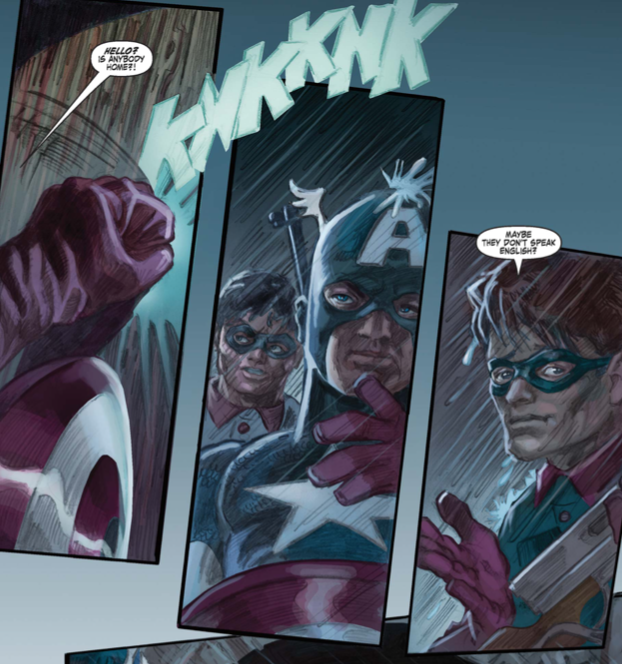
Despite some uneven art (more on that later), Colan still delivers a darkly atmospheric story. The Belgian village is gloomy and claustrophobic, and the action scenes are chaotic and violent, befitting the nature of the threat faced by Cap and Bucky. I’m not familiar with Colan’s war comics, if any existed, but he certainly seems at home with the genre. I also liked seeing Brubaker’s version of World War II-era Bucky, where he is less a sidekick and more of a partner to Cap.
What I didn’t like
As a horror story, it’s just OK, without a lot of suspense and a pretty obvious answer to the mystery of who was turning the US soldiers into vampires. The framing story, with Bucky and Nick Fury, also feels clumsy and unnecessary.
And sadly, Colan’s pencils at times are uneven, particularly when he is drawing the faces of Cap and Bucky. The layouts are at times confusing, and the story can be hard to follow from panel to panel. It feels churlish to point it out, but it’s clear that by this point Colan no longer had his A game.
Overall
A bittersweet tribute to one of the giants of comics.
Yes, I know I said I was taking a break from Fantastic Four blogging for a while. And I am. Really. But before I do, I thought I’d be remiss if I didn’t try to do a bit more to commemorate the 107 issues by Stan Lee and Jack Kirby, the greatest sustained run of creativity in the history of comics.
What follows is a run down of some of my favorite stories from Stan and Jack. It’s not a list of the best issues (whatever that means) and certainly not the most famous. But these are the stories I think of first when I think of their run, and the ones I most enjoyed reading. Could this list change? Yes! Do I feel strongly about the order? No! Are there great issues I left off? Of course! Do I hope you read some of these comics? Absolutely!
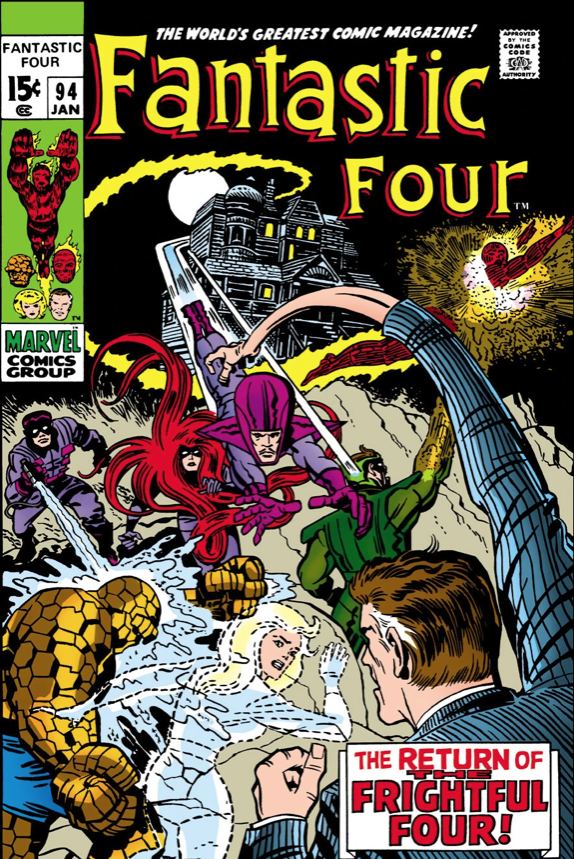
10) Fantastic Four 94
Fantastic Four 94 is a delightful comic. It comes very near the end of the Lee / Kirby run, and an indication there despite whatever disagreements the two had, there was still plenty of creative juice in the partnership.
In FF 94, the team travels to Whisper Hill to meet Agatha Harkness, a potential nanny for baby Franklin. Harkness appears to be a witch and her house seems haunted. But rather than tell a typical horror story, however, Stan and Jack upend our expectations by having Harkness become the hero, single-handedly defeating the Frightful Four and leaving the FF baffled. It’s a great story, told with lots of wit and humor.
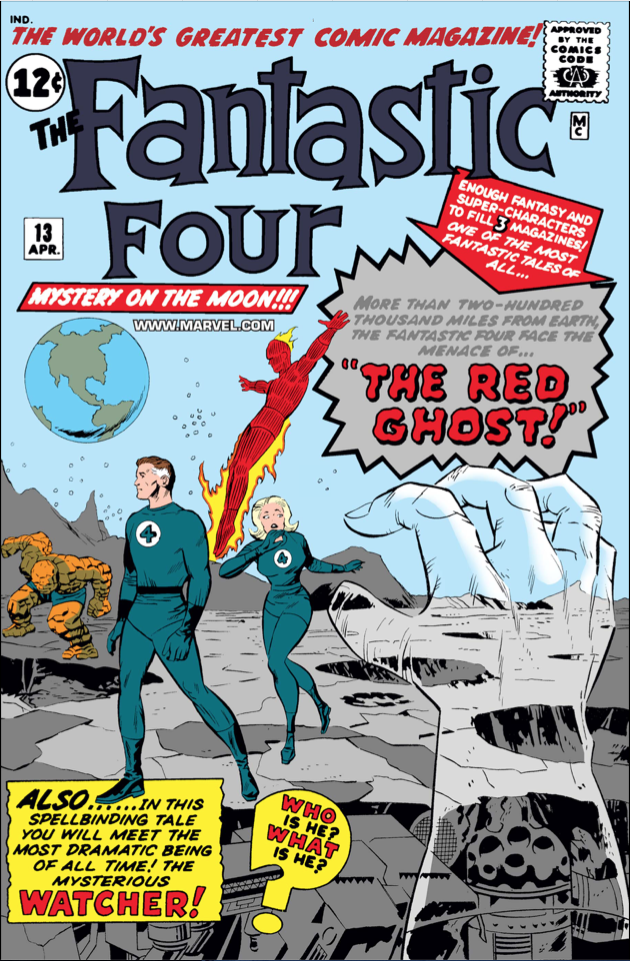
9) Fantastic Four 13
Fantastic Four 13 is a classic Silver Age story, full of Cold War symbolism, as the FF travel to the moon where they encounter the Russian Red Ghost and his Super Apes. Significantly, the story introduces the Watcher, and expands the horizons for this comic and, eventually, the whole Marvel universe. It’s fair to say that FF 13 initiated the Marvel cosmic tradition that eventually leads to not just Galactus and the Silver Surfer, but the Kree, the Shi’Ar, Adam Warlock, Mar-Vell, infinity stones, Thanos, Guardians of the Galaxy and so on. It’s also just a fun comic.
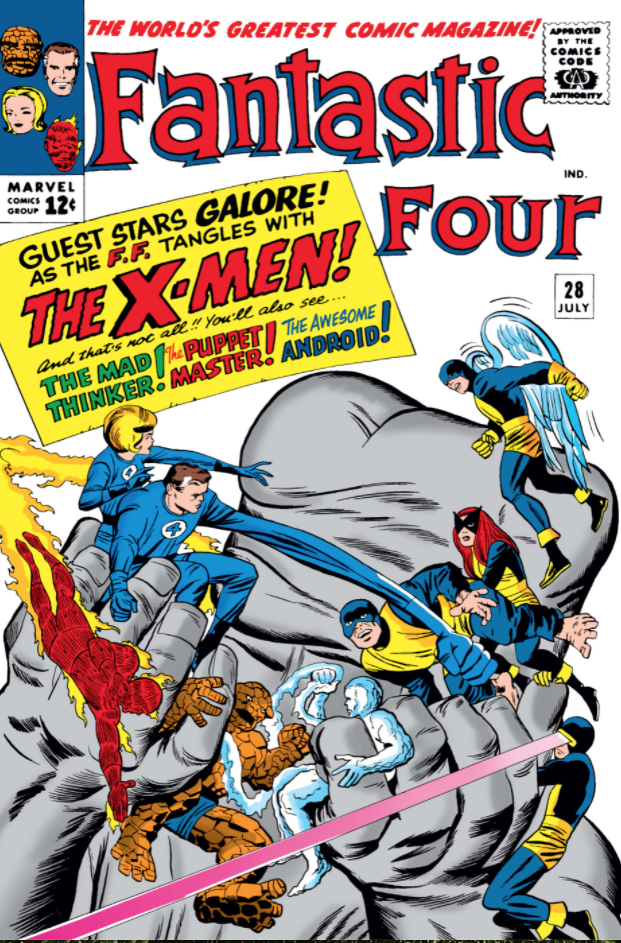
8) Fantastic Four 28
There was a roughly two year period when the FF teamed up with most of the nascent Marvel universe—the Hulk, the Avengers, Nick Fury, Ant-Man, Dr. Strange, Daredevil—but this story featuring the X-Men was the best. If the plot, featuring mind control and the team’s eventually joining forces to defeat the bad guys, feels familiar, it’s because it’s the template for hundreds of subsequent super-hero team ups. It’s also a great cover that has been referenced many, many times over the years.
7, Fantastic Four 91-93
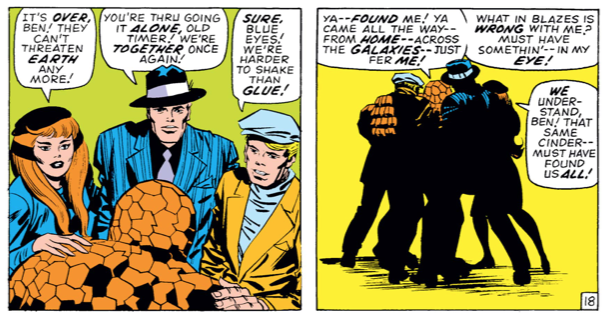
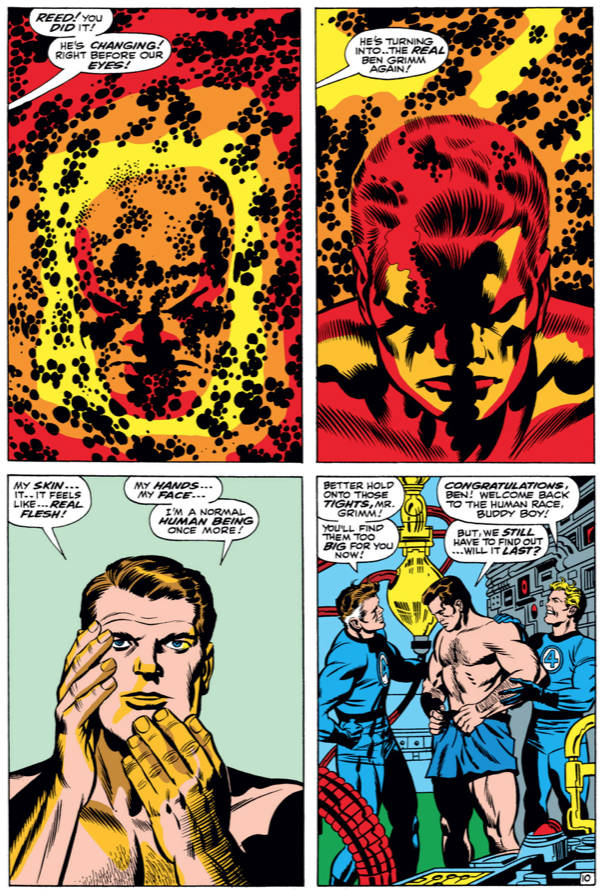
Another story from late in the Lee / Kirby run. Ben is abducted by Skrulls to fight as a gladiator on a planet where the natives have adopted the appearances and mannerisms of 1920’s gangsters. It’s a great adventure that lets Kirby draw both cool alien stuff AND cool urban New York scenes in the same story. And it has one of the most touching endings of any comic (see above).
6) Fantastic Four 54
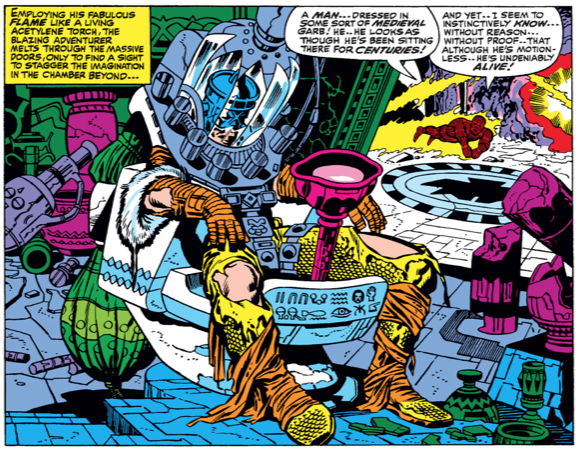
Fantastic Four 54 falls in the heart of the Lee / Kirby peak period (issues 44-60) so it’s understandable if it gets overlooked amid stories introducing Galactus, the Black Panther and the Inhumans. But it hold its own. Not only is there a fun and interesting adventure involving Johnny, Wyatt Wingfoot and the medeival knight Prester John, but there are loads of other subplots and supplemental story lines involving Wakanda and the Inhumans. This issue helps establish Wyatt as a major supporting character, and features some of Jack’s strongest work during this middle period (and that’s saying something).
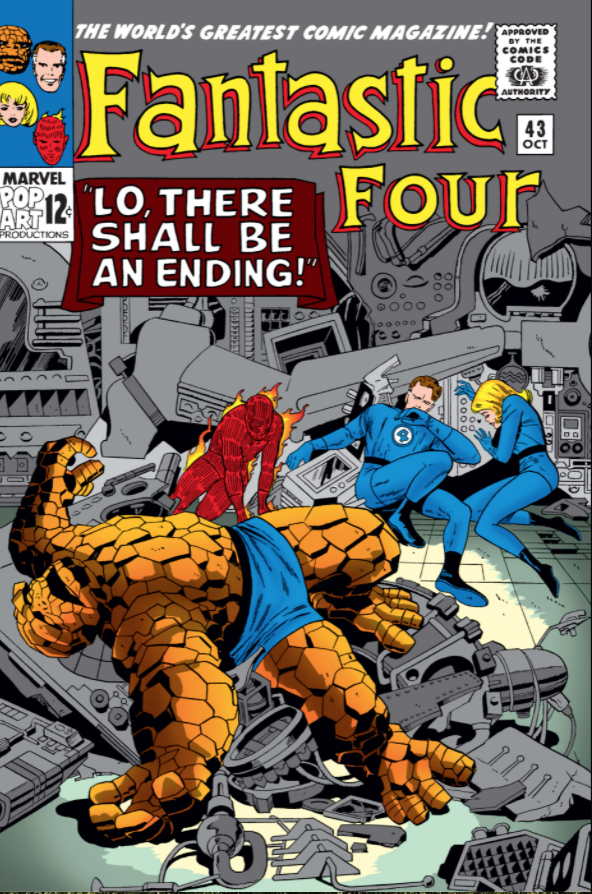
5) Fantastic Four 38-43
This is the first real multi-part Fantastic Four story (aside from issues 25-26, where they team up with the Avengers) and as if to make up for lost time, it’s a sprawling six-parter. It begins with the FF battling, and very clearly losing, to the Frightful Four (featuring the first appearance of Medusa), who render them powerless. Then, an un-powered FF teams with Daredevil to battle Dr. Doom, who has captured the Baxter Building. The team’s powers are returned and in the aftermath of that fight, Ben, who is now in his rocky form again, quits the team in disgust, and falls party to the Frightful Four (they’re back!), who hypnotize him and set him against his team. The Frightful Four captures the Fantastic Four, who then escape and reverse Ben’s mind control, freeing him to defeat the bad guys.
Whew!
It’s a lot, and arguably not one unified story, but I think of it as one epic with many twists and turns. It works in part because the FF keep getting beat, but they pick themselves up and keep fighting.
4) Fantastic Four 78-79
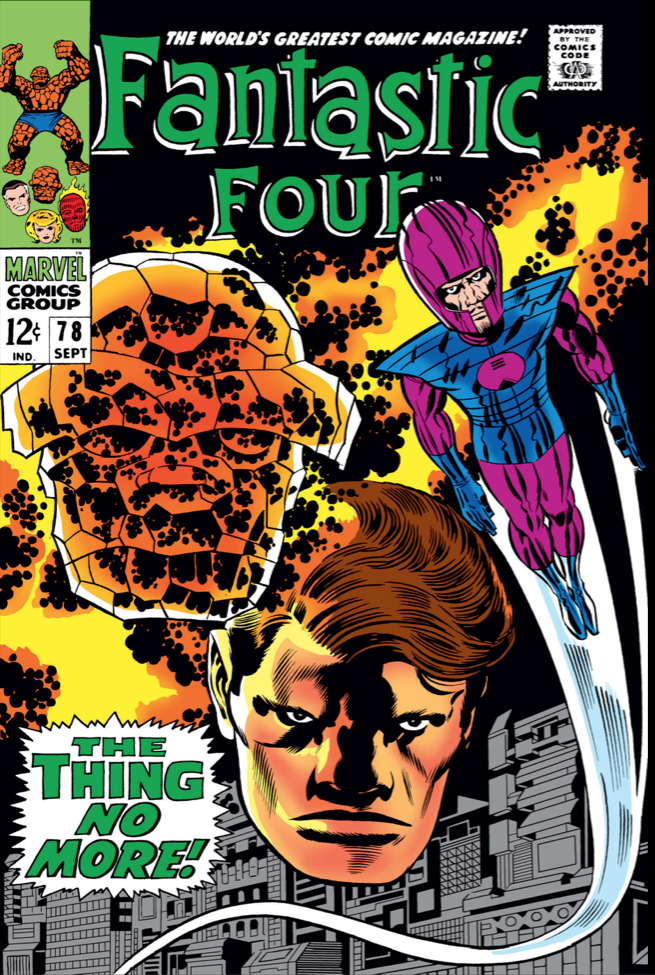
Another story that hinges on the transformation of the Thing back to his human form. Ben is the heart of the Fantastic Four, and his constant struggle with his monstrous appearance lies at the heart of his character. Here, he has to choose between his personal happiness and his duty to his adopted family in a story that is particularly well-crafted and poignant. When human-looking Ben and Alicia are having dinner at a restaurant, it’s so painfully awkward we’re almost relieved when the villain bursts into interrupt them.
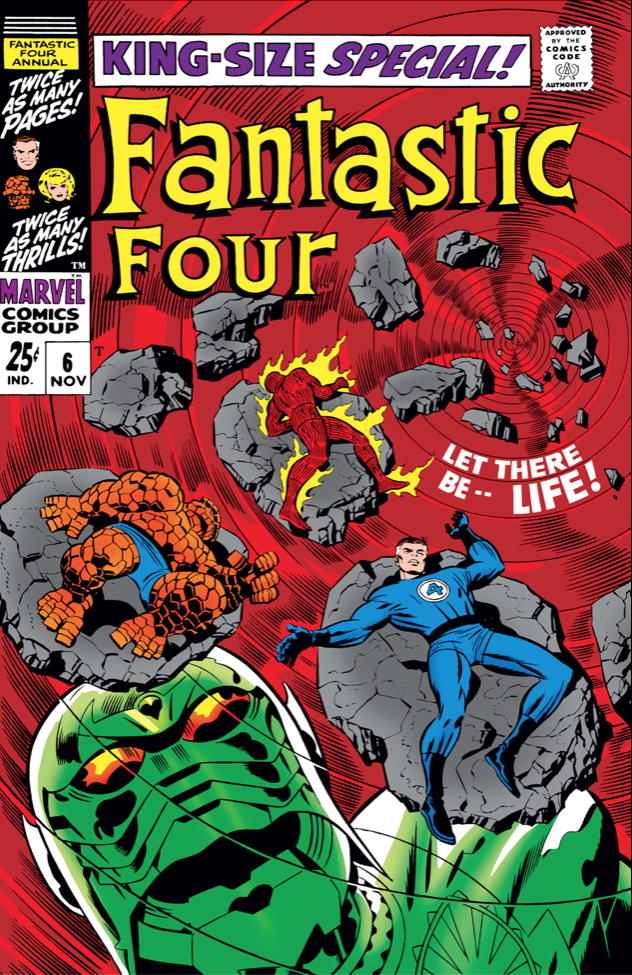
3) Fantastic Four Annual 6
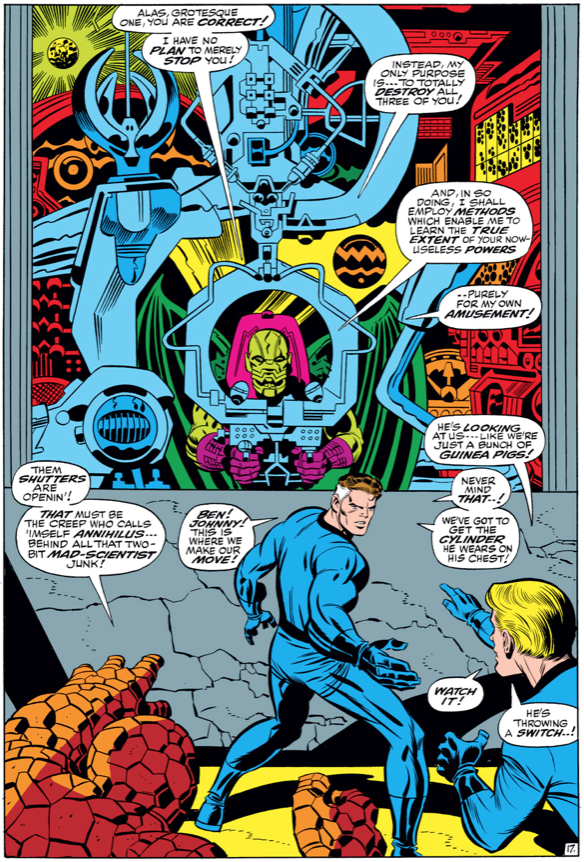
This comic is, simultaneously, a ripping Negative Zone adventure, a high-stakes quest to save the life of Sue and her unborn baby, the introduction of a top-tier villain in Annihilus and, arguably, Jack Kirby’s single best issue of the Fantastic Four. With the birth of Franklin at risk, the stakes are high and Stan and Jack rise to the occasion in one of the best Marvel annuals ever.
2, Fantastic Four 48-50
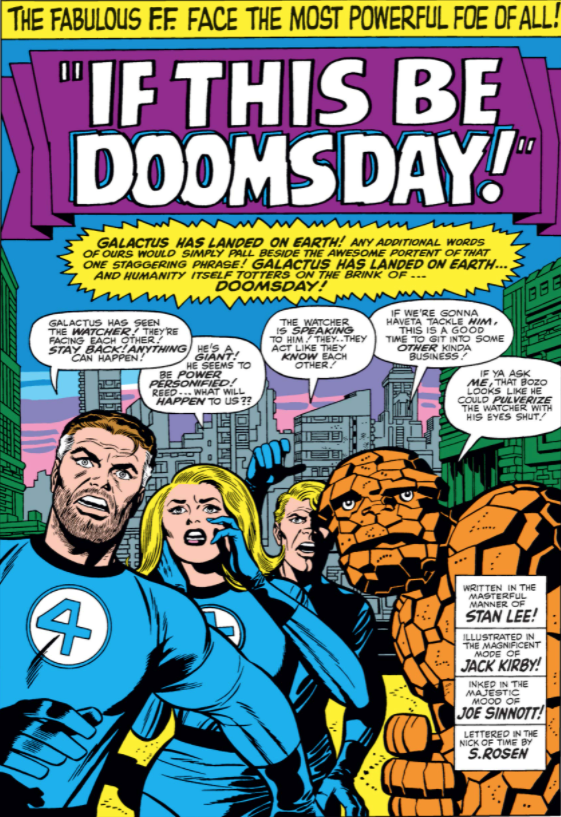
This is probably the most well-known and beloved story from the Lee / Kirby run (and maybe from the entire Silver Age), but its fame and popularity is no reason to exclude it. There are many, many reasons to love this story, from the introduction of Galactus and the Silver Surfer to the Torch’s journey across the universe, but ultimately what sets it apart is its ambition. Stan and Jack gave the FF a threat to the world that not just theoretical, but immediate and seemingly unsolvable. That they needed the help of both Watcher and the Silver Surfer doesn’t diminish the Fantastic Four, but raises the consequences of the threat and hence the story
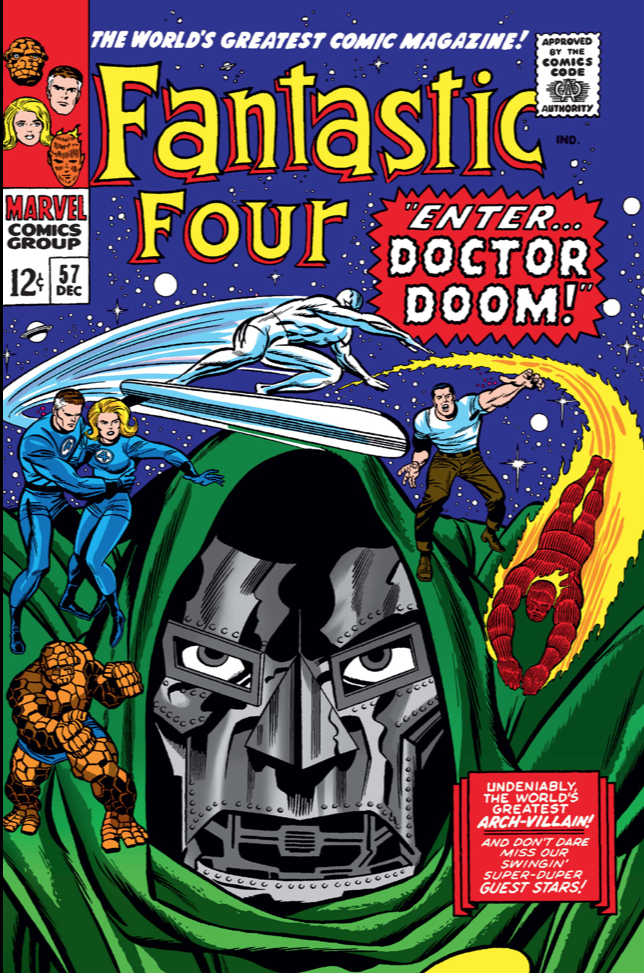
1) Fantastic Four 57-60
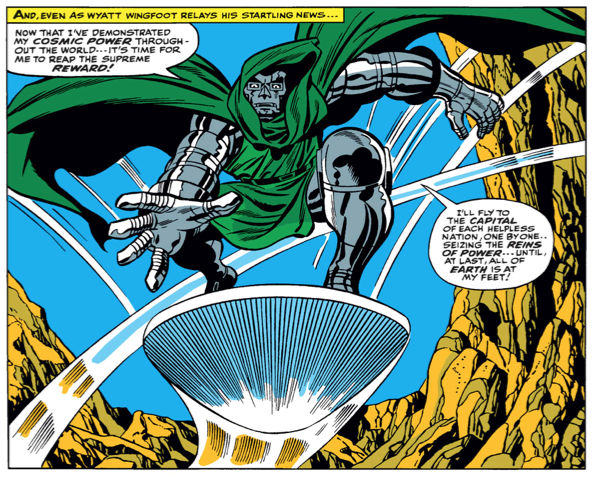
This story concludes the peak Lee / Kirby period and in my considered opinion, it’s the best of their entire run. It’s a gripping story, with Dr. Doom stealing the power of the Silver Surfer and using it to subdue the entire planet, and one that really cements Doom as a bad guy without equal. No one else in comics combines his genius, his ruthlessness and his arrogance with his twisted sense of nobility and purpose. He is a compelling villain and he’s at his best here.
Like all great FF stories, this one also features the Fantastic Four getting their asses kicked. It’s only when they are beaten do we understand how big a challenge they have to overcome. It’s well-paced as well, with the story building over four issues.
But what really sets this story apart is how it combines so many threads of the Fantastic Four up to this point. It’s as if Stan and Jack had been mixing ingredients for five years and they finally pulled the finished cake from the oven. Doom stealing the Surfer’s power, the appearance of Wyatt Wingfoot, the Inhumans sub-plot; they all adds up to be more than the sum of their parts.
That said, they story isn’t without its flaws, particularly the anti-climactic ending, which I have discussed previously. But there is no perfect FF story, even from Stan and Jack (and rushed ending are endemic in their run), and this one comes closer than most.
That’s it! That’s the list! Agree? Disagree? Let me know! And stay tuned for more installments of So Random!, where I analyze a comic picked from my collection at random.
 Percival Henry: The Fantastic Four and more