Tags
1965, Black Bolt, Fantastic Four, Fantastic Four 48, galactus, Inhumans, jack Kirby, Silver Surfer, Stan Lee, Watcher
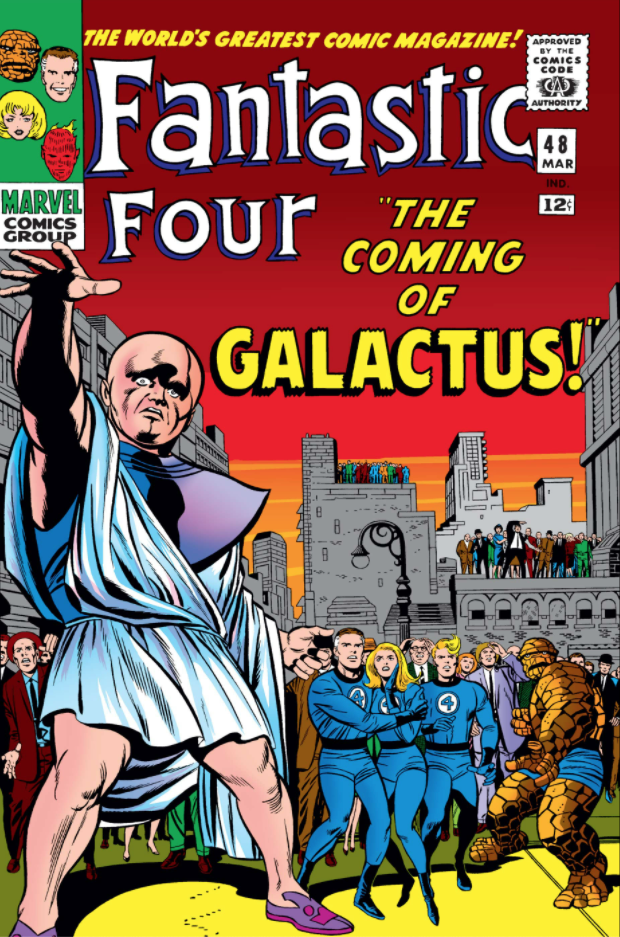
Fantastic Four 48
“The Coming of Galactus!”
Published: Dec. 1965
Story: Stan Lee and Jack Kirby
Script: Lee
Pencils: Kirby
Inks: Joe Sinnott
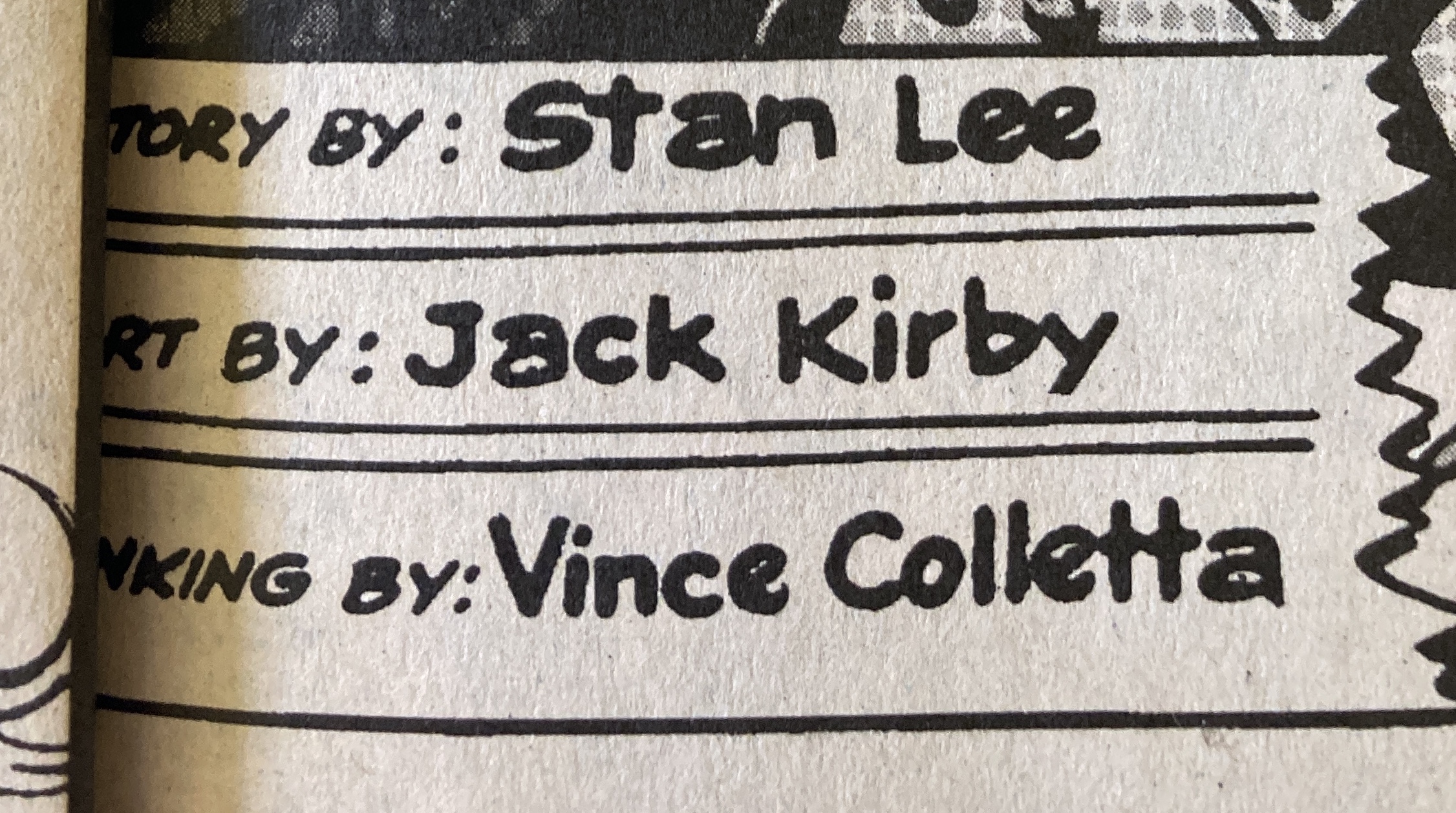
Letters: Artie Simek
Cover: Kirby and Sinnott
Synopsis
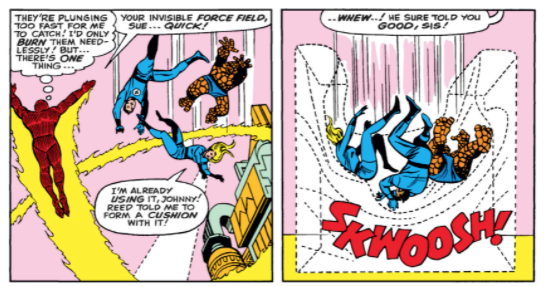
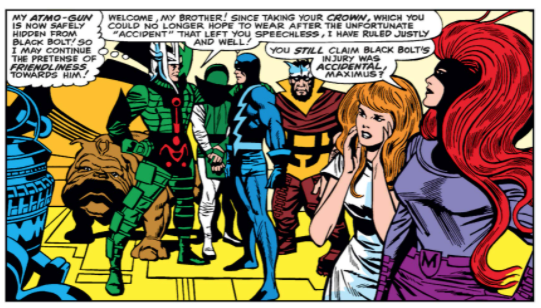
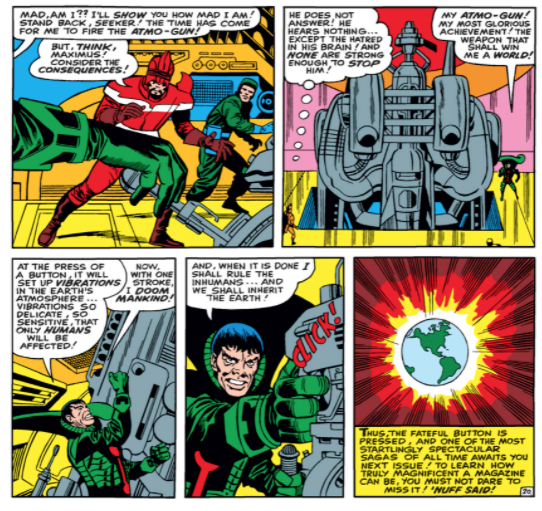
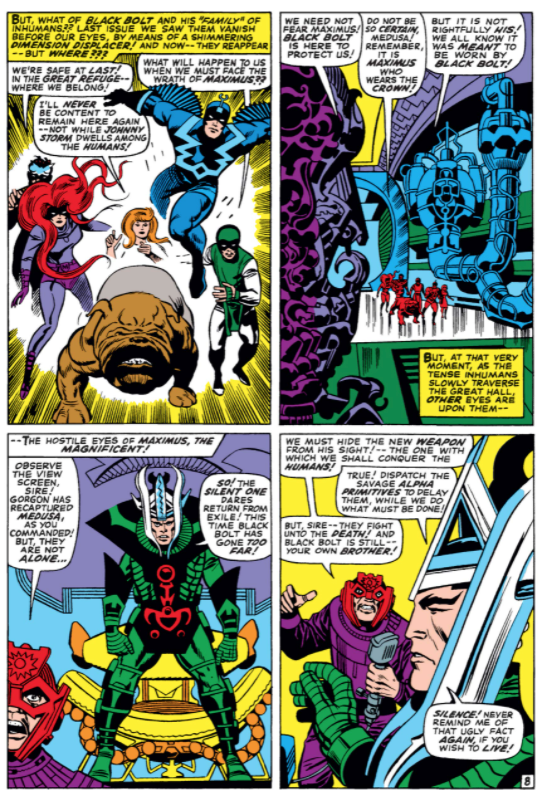
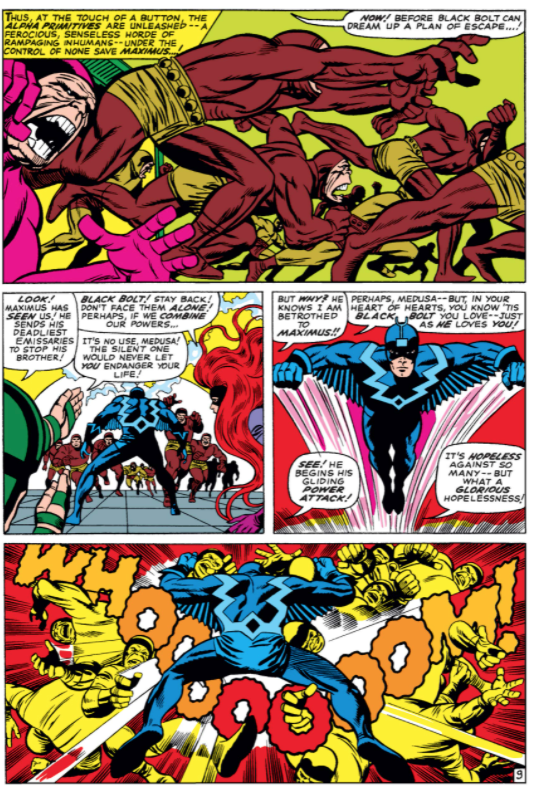
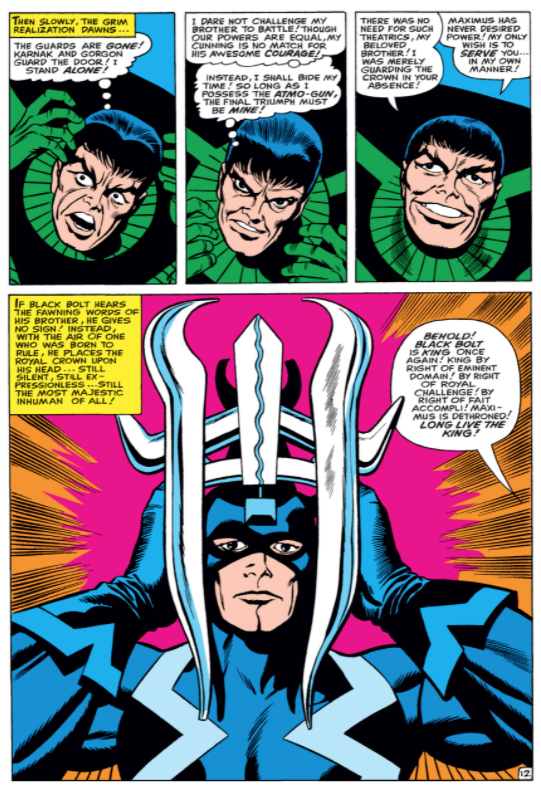
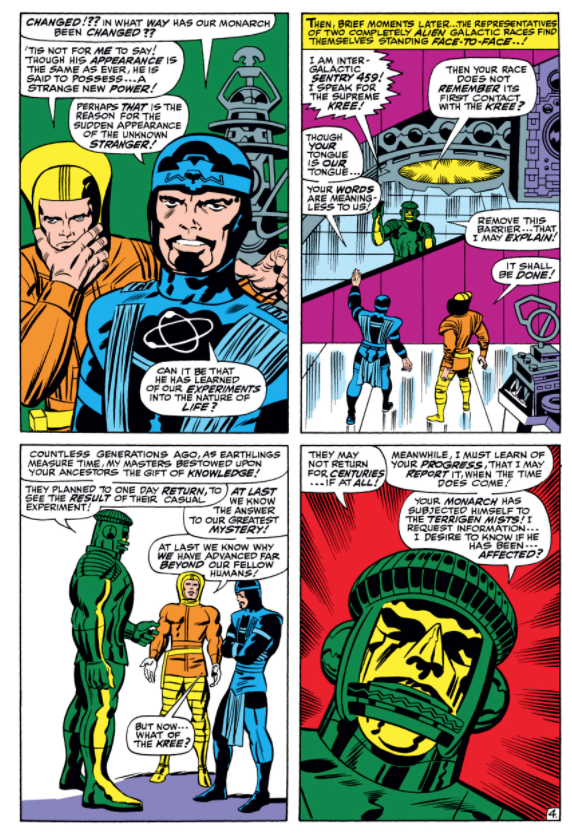
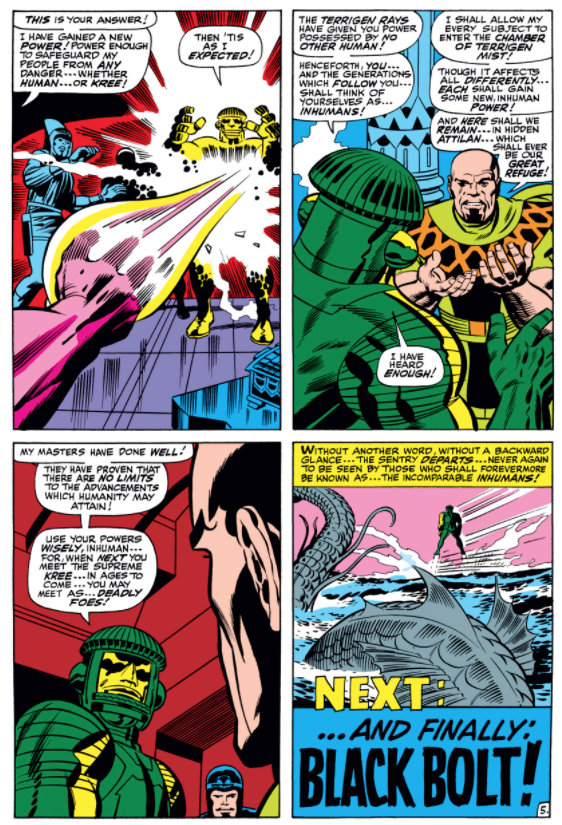
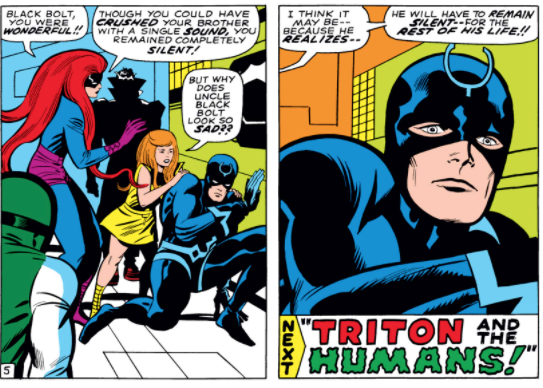
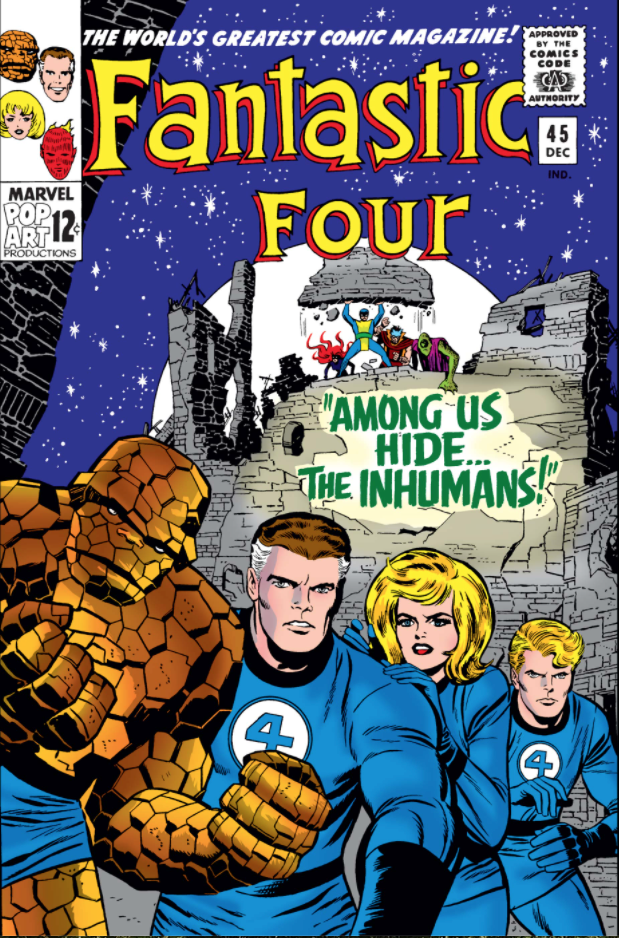
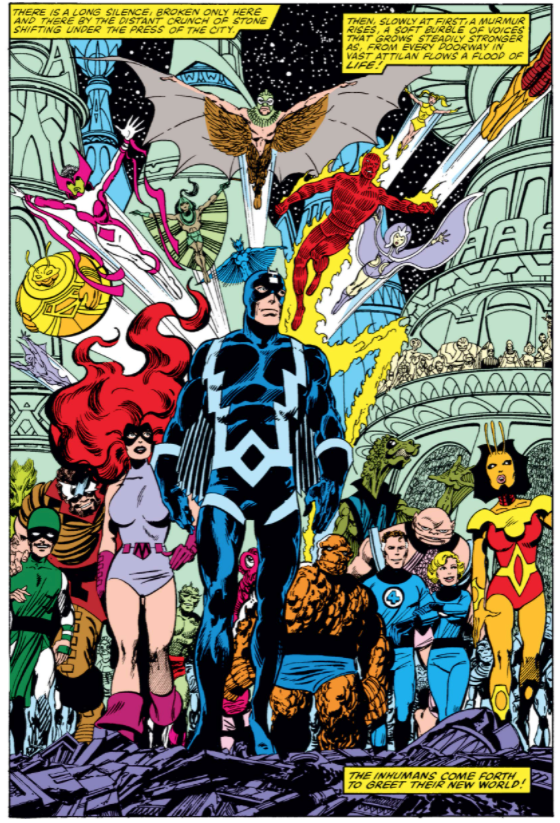
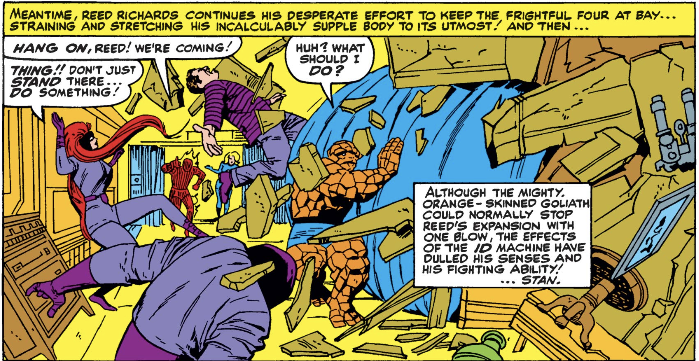
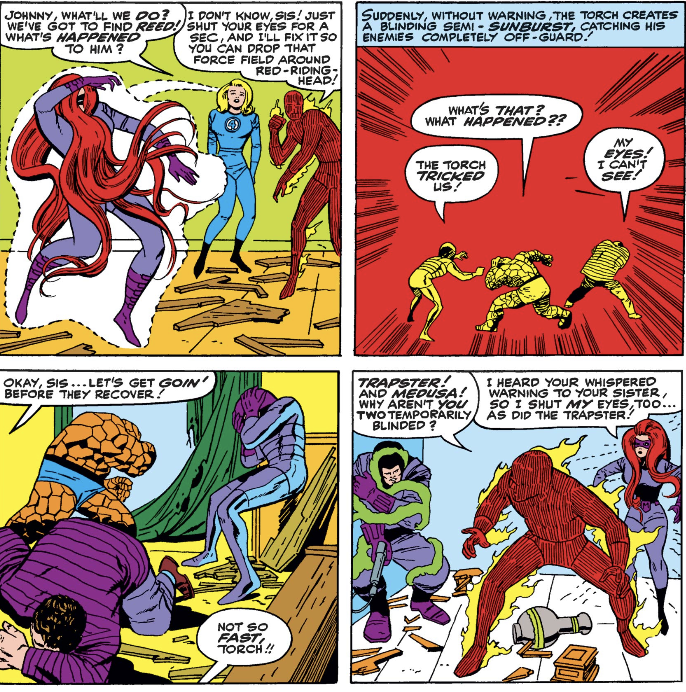
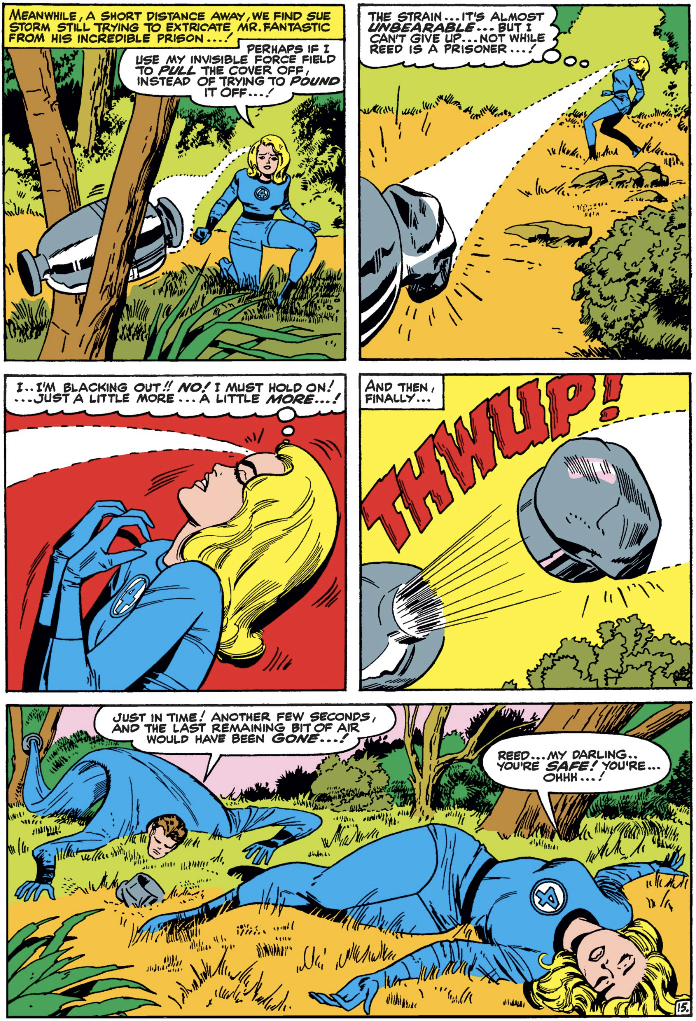
As has been the pattern or the last dozen issues, Fantastic Four 48 picks up where FF 47 left off. The team is in Attilan, the city of the Inhumans, and Maximus has set off his Atmo-Gun, intending to destroy humanity so the Inhumans can rule the earth. Black Bolt, who last issue wrested his crown back from his brother Maximus, confronts him and knocks him silly. Medusa explains to Maximus his plan was doomed because the Inhumans are still human despite their powers, and a device that spares Inhumans would also spare humans. In a last gasp, Maximus reverses the charge on his Atmo-Gun, generating a “negative zone” — a term that should sound familiar—around Attilan. The Invisible Girl creates a force field which allows the FF to pass through the zone and escape but the Inhumans are trapped behind it, leaving the Human Torch distraught when he is separated from Crystal.
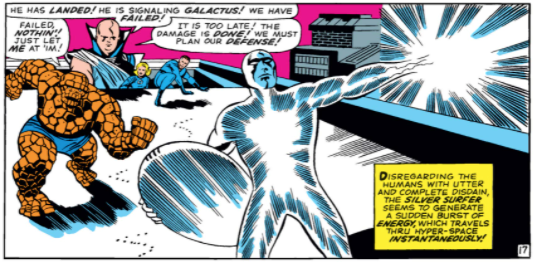
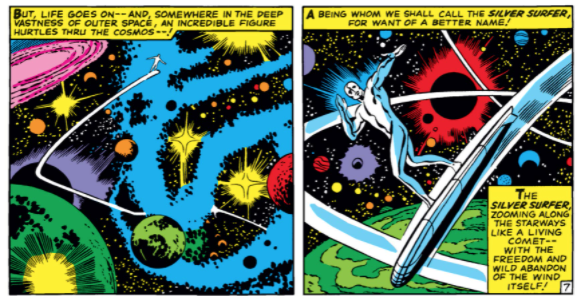
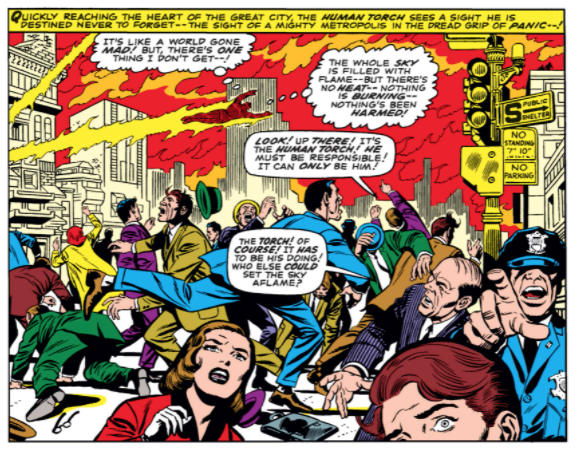
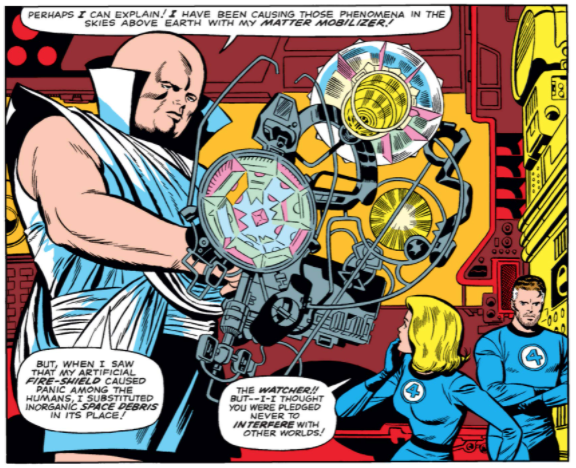
Meanwhile, as the FF return to New York, we are introduced to the Silver Surfer as he glides through space, and are warned that he is a harbinger of Galactus. Back in New York, the skies are aflame, and panicking New Yorkers blame the Human Torch. The flames disappear, only to be replaced by “space debris.” The Watcher appears, and explains these effects are his doing in order to disguise the earth from the Silver Surfer. The Surfer then arrives and sends a signal to space before The Thing clobbers him. The signal summons Galactus, who emerges from his ship and announces his intentions to drain the earth of “all elemental life.” The issue ends with the cliff hanger.
What’s going on here?
FF 48 marks the beginning of the Galactus trilogy, arguably the apex of the Lee and Kirby run on the Fantastic Four. But oddly, before we can start this epic story, we need to resolve the last story, the FF’s adventure with the Inhumans. I’m not sure why Stan and Jack constructed the comic this way, but it’s strange that it’s divided into two stories.
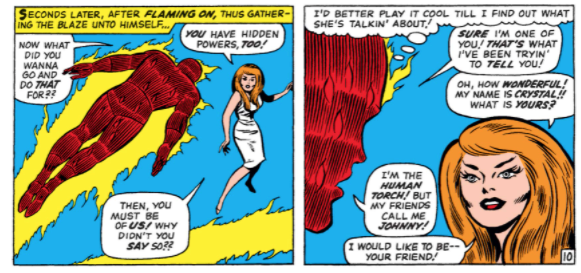
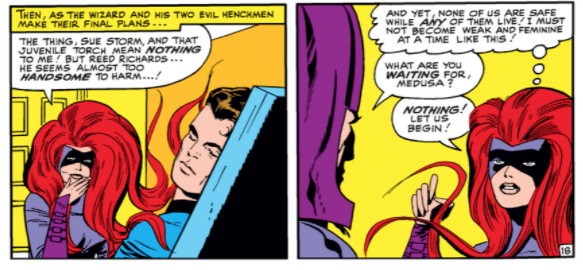
The Inhumans portion of the comic establishes Maximus as the royal family’s principle antagonist, creates a bit of romantic drama between Black Bolt and Medusa, and ramps up the star-crossed-lovers theme between Johnny and Crystal. All good stuff, but it’s sort of forgettable compared to the rest of the comic, which introduces two major Marvel figures: the Silver Surfer, and Galactus. We’ll deal with Galactus in our next post, because there’s a lot to say about the Surfer.
Who is this guy?
The Silver Surfer was one of Jack Kirby’s prized creations, and a source of major tension between him and Stan Lee, one which helped lead to Kirby’s departure from Marvel. According to Mark Evanier in his biography Kirby: King of Comics, Jack created him without any involvement from Stan Lee, who first encountered the Surfer when he saw the penciled pages of FF 48. Allegedly upon seeing him, Stan said “Jack, this time you’ve gone too far.” But Lee soon fell in love with the character, and it’s not hard to see why, given his penchant for grandiloquent soliloquies. Stan soon launched a Surfer solo book to be drawn by new Marvel star John Buscema, and gave the Surfer an origin very different from the one what Jack had in mind, leaving Jack frustrated and angry. According to Evanier “his idea had been taken from him in every possible sense.”
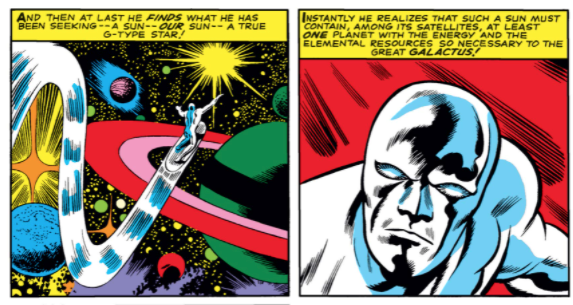
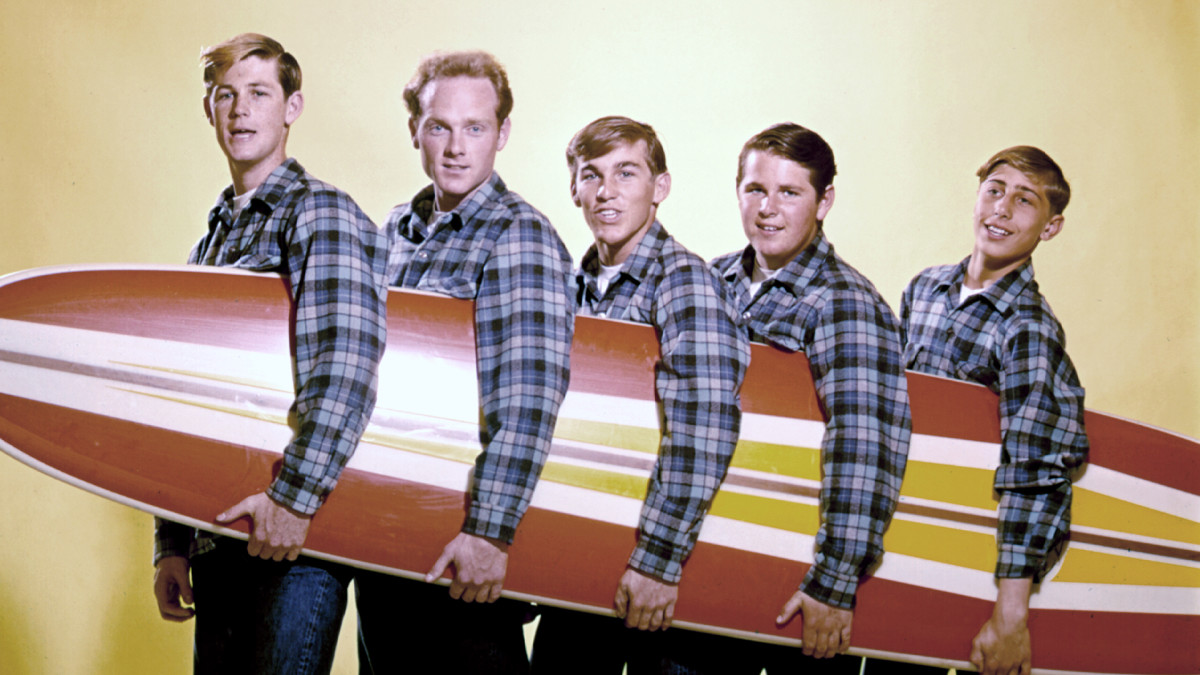
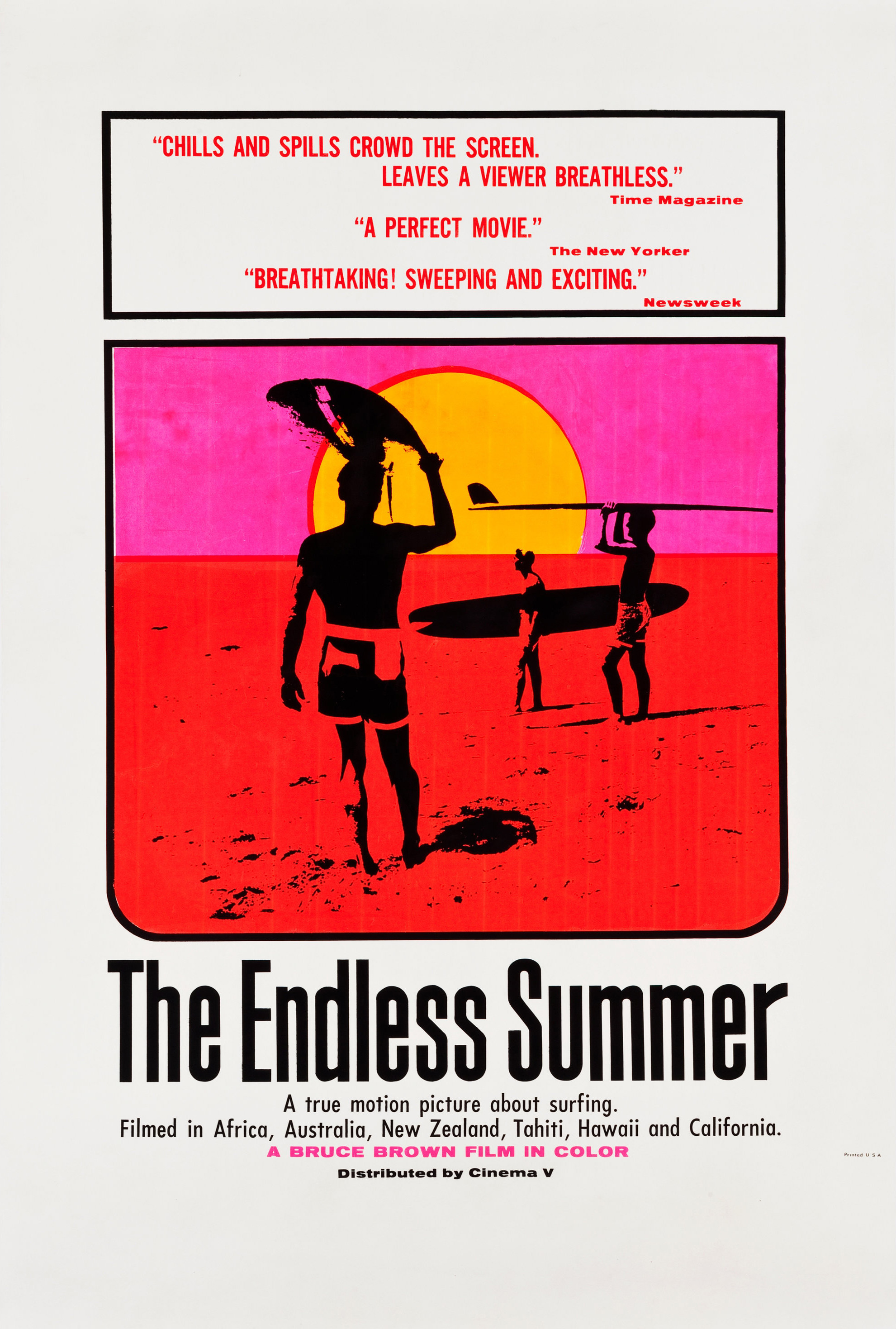
So why a surfer? Evanier doesn’t say what inspired Jack to put Galactus’s herald on a surfboard, but it probably has to with the general interest in surfing as a sport in the early to-mid 1960s. Surf music was charting, with the Beach Boys and Jan and Dean were churning out hits like “Surf City” and “Surfin’ USA,” and beach party movies, which often featured surfing, starring Frankie Avalon and Annette Funicello were in the theaters. The next year, The Endless Summer, a surfing documentary, would come out. Clearly surfing was in the zeitgeist.
Jack would reach into the same bag of tricks a few years later when he was at DC and created the Black Racer, a member of the New Gods who acts sort of like a herald of death. By then, ski racing was popular, after Jean-Claude Killy’s star turn in the 1968 Olympics and the release of 1969’s Downhill Racer, a movie starring Robert Redford.
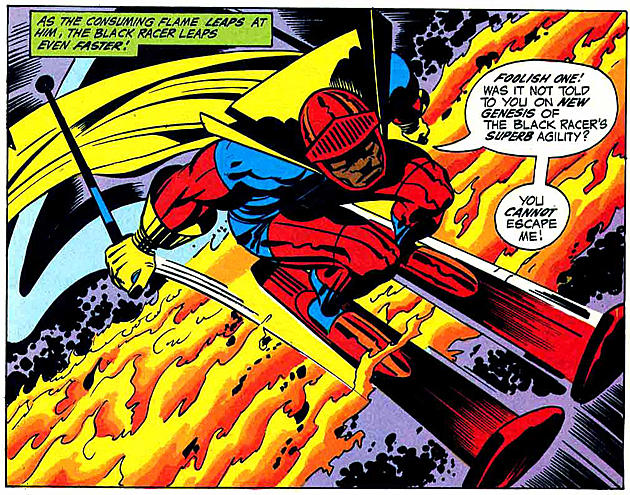
But while the design of the Surfer was abstract and elegant enough so that he only looked like he was surfing through space and not an actual surfer, Black Racer is far more literal and, I would argue, far less successful of a design.
About that origin
According to Evanier, Jack envisioned the Surfer as a being of pure energy who had never been human, and thus needs emotions like love explained to him. But in the origin Stan told in 1968’s Silver Surfer 1, the Surfer was once an (alien) man, Norrin Radd, who pledges himself to Galactus in order to spare his home world, Zenn-La, and his love, Shalla-Bal. The theme of the Surfer’s sacrifice and lost humanity is a powerful one and gives writers lots to chew on over the years. Here are the relevant pages from Silver Surfer 1. (And while John Buscema might be cast as a bad guy in Stan’s dispute with Jack, he probably had no say in it and there’s no denying how gorgeous his art is, here inked by Joe Sinnott).
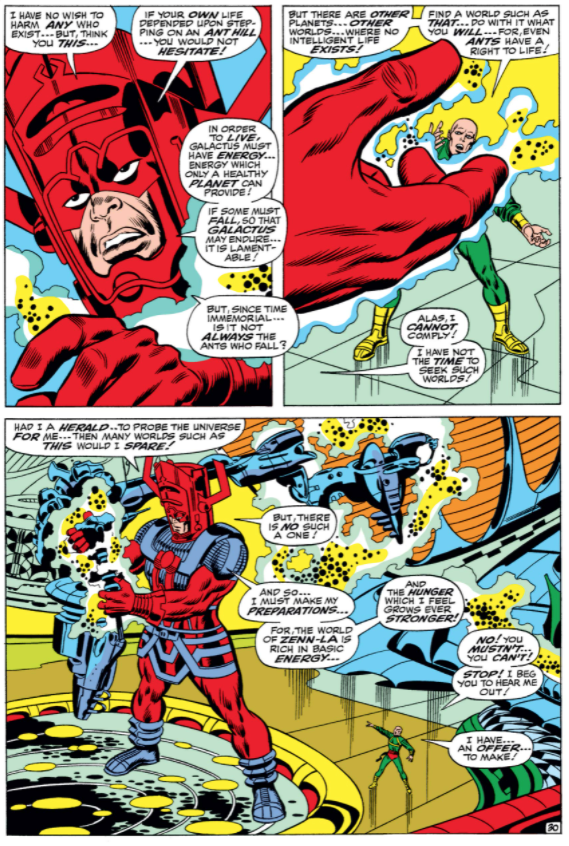
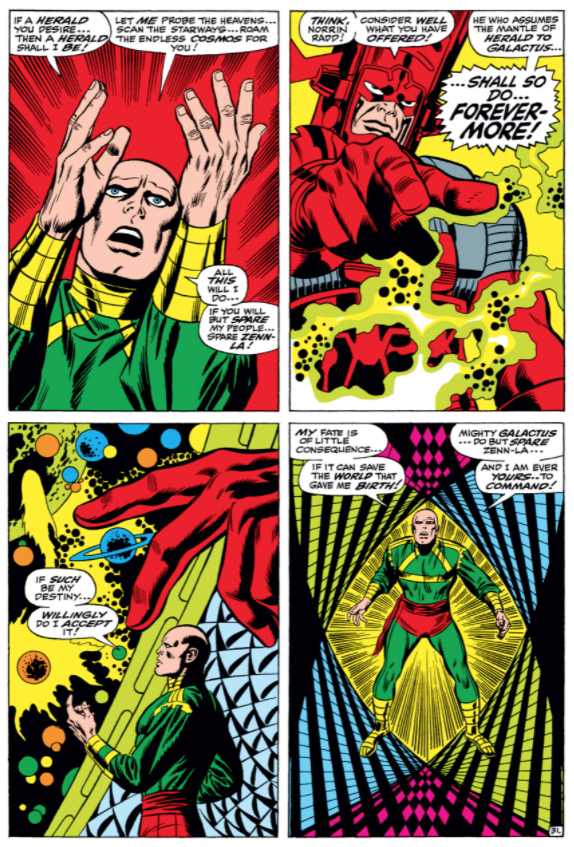
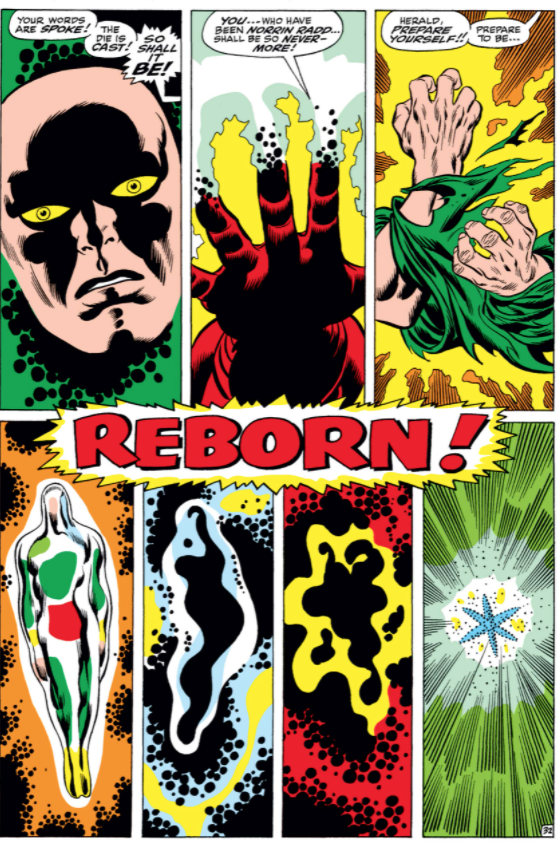
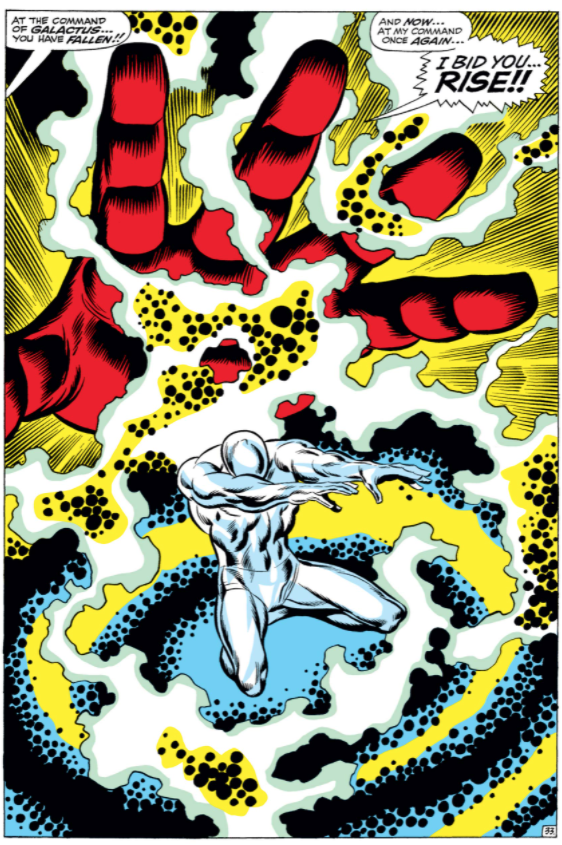
Over the years, the Silver Surfer has attracted some of the comic world’s best and brightest creators. Here he is drawn by Marshall Rogers and inked by Joe Rubenstein in his 1987 solo series:
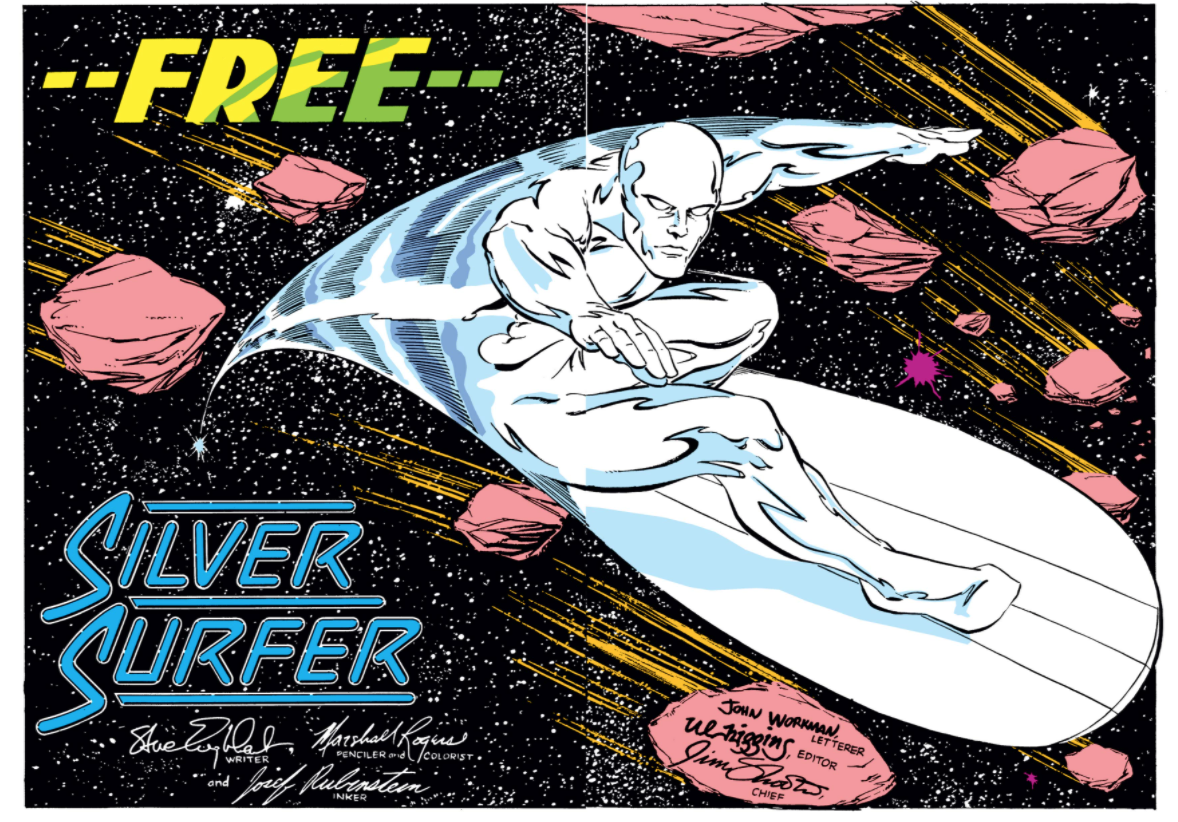
And drawn by Moebius, Esad Ribic, and Francesco Manna:
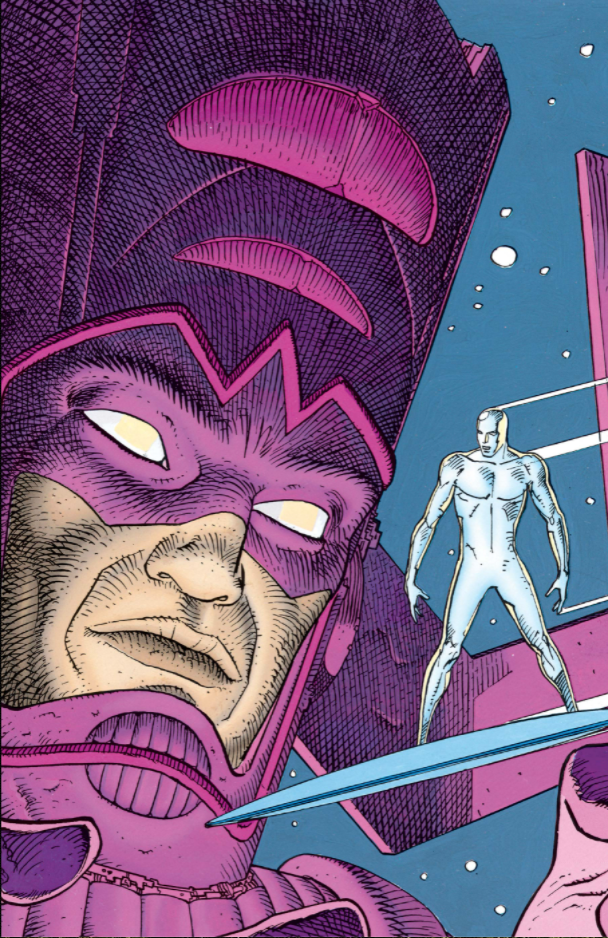
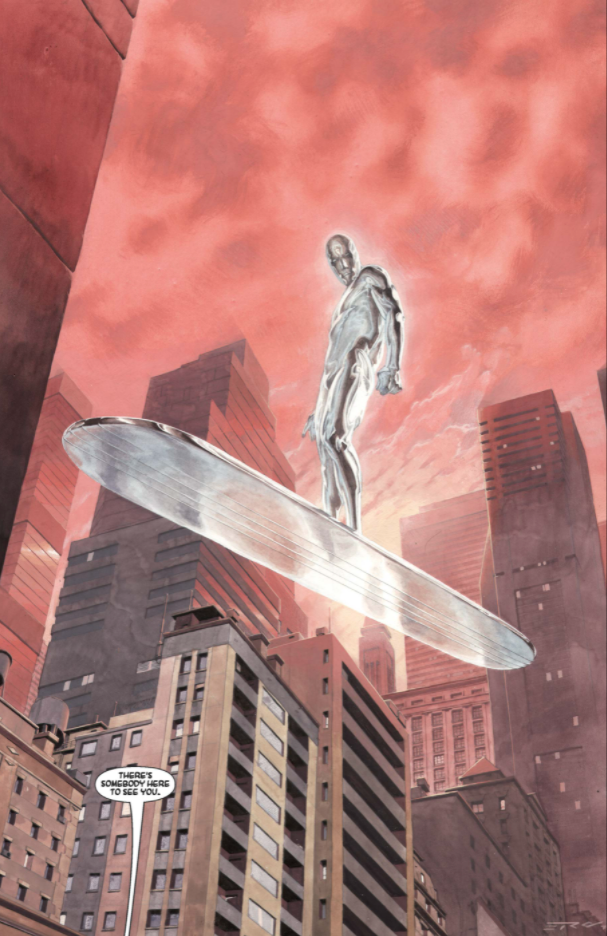
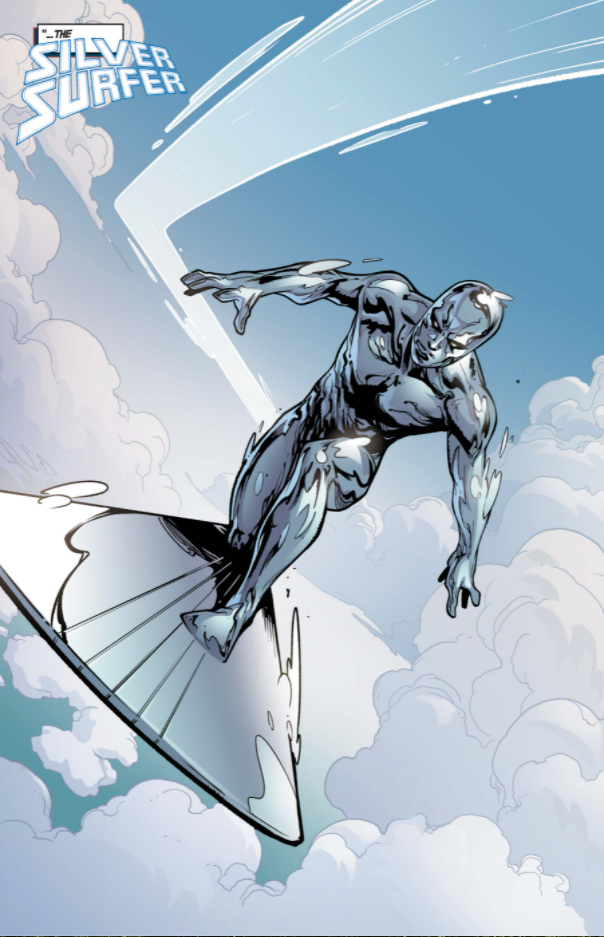
Along with starring in several of his own solo series, he also was an on-again-off-again member of the Defenders:
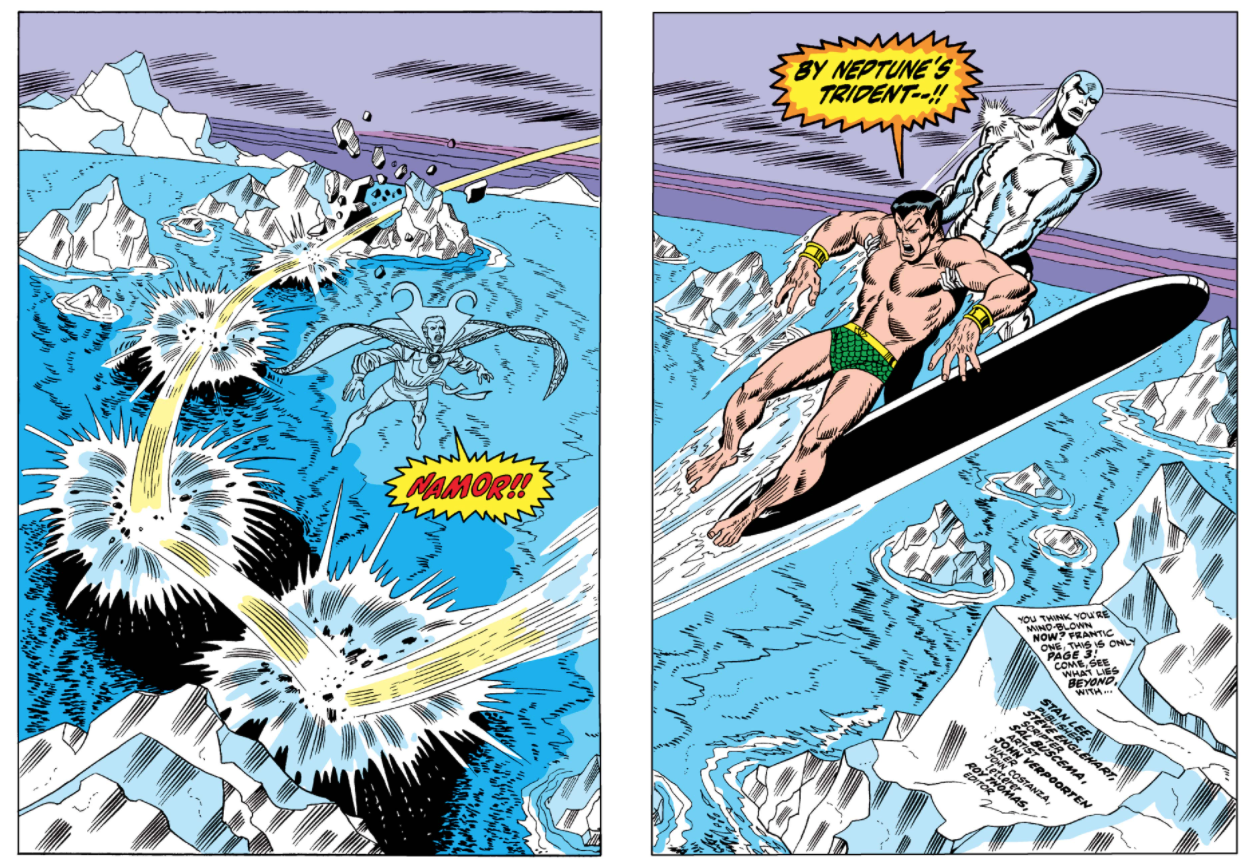
My first real encounter with the Silver Surfer came in John Byrne’s Fantastic Four 260, a comic I have discussed before as igniting my interest in comics in general and the Fantastic Four in particular. Here, he battles Terrax, another former herald of Galactus given new life by Dr. Doom. There was something incredibly cool about the Surfer, who is as unadorned and sleek as a hood ornament, and both bristling with power and noble in his restraint. Reader, I was hooked.
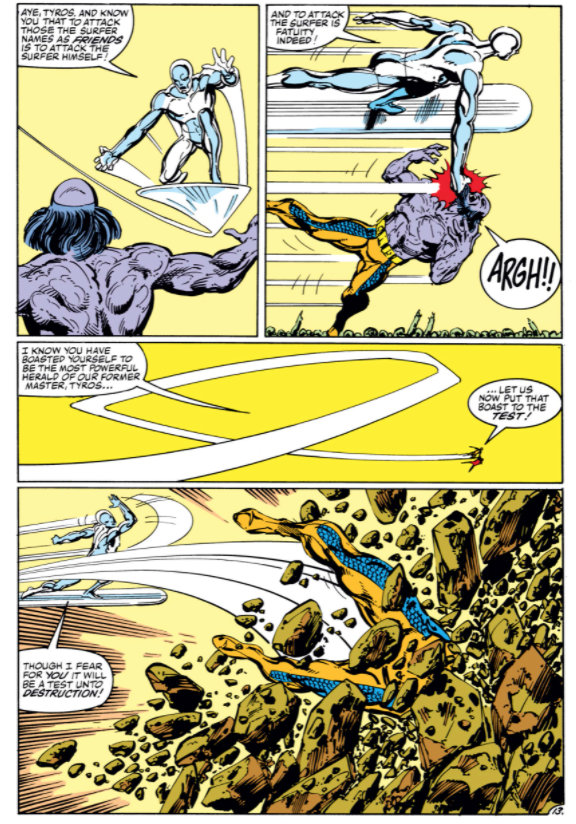
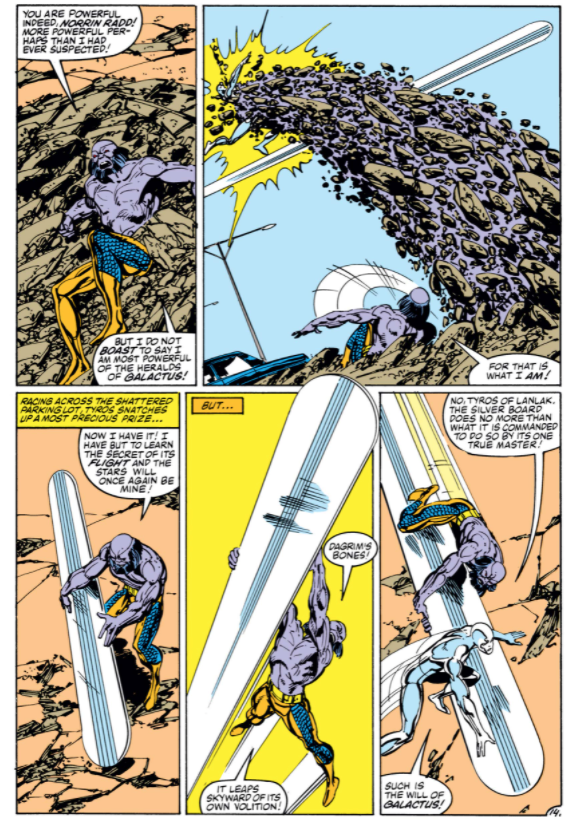
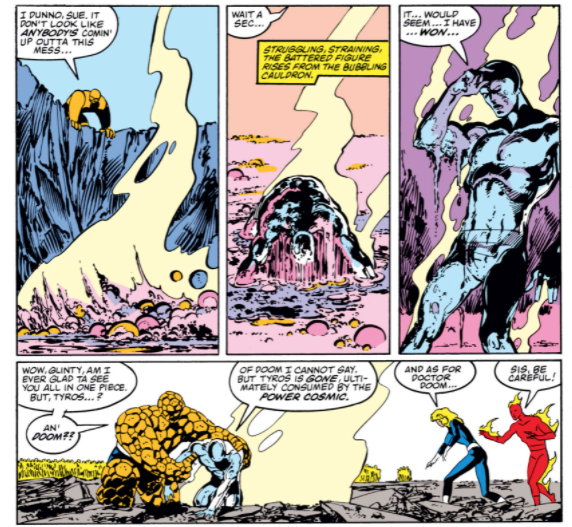
Keel hauled
One aspect of the Surfer’s design I’ve always been curious about is whether his surfboard should have a keel. According to Kirby and Rogers, it does:
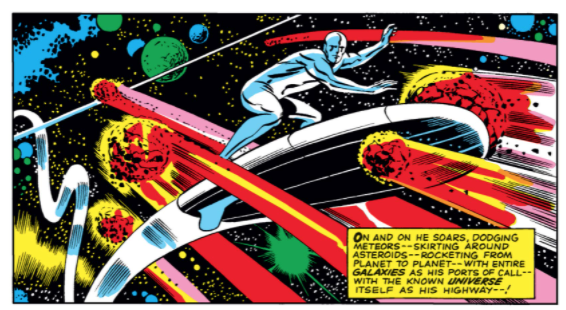
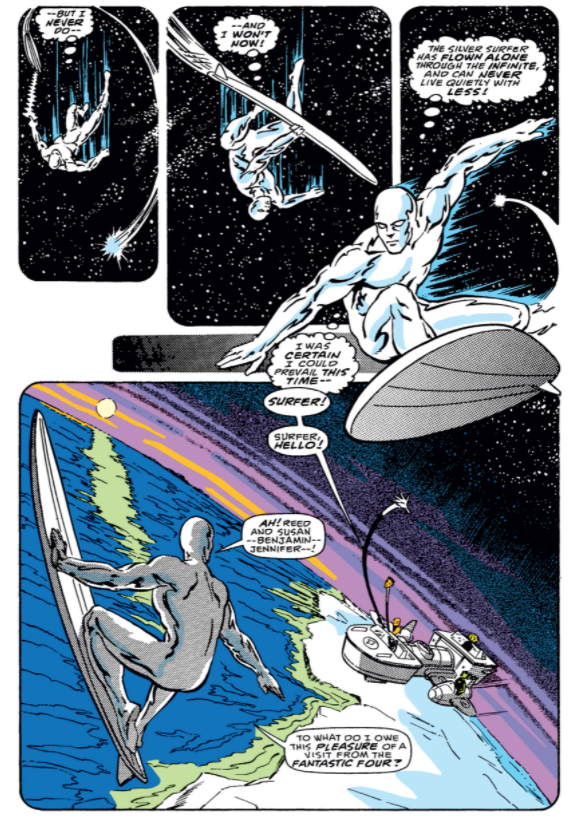
Byrne and Buscema are in the no-keel camp:
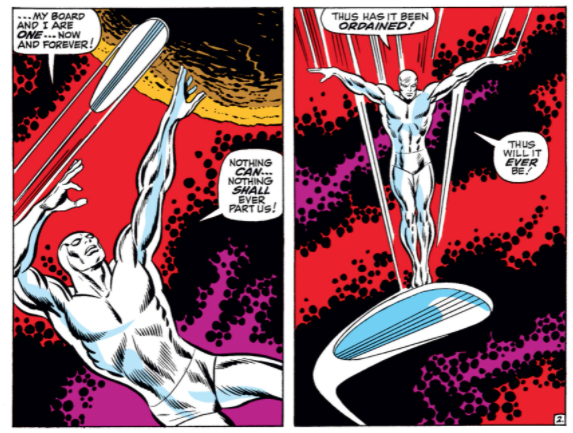
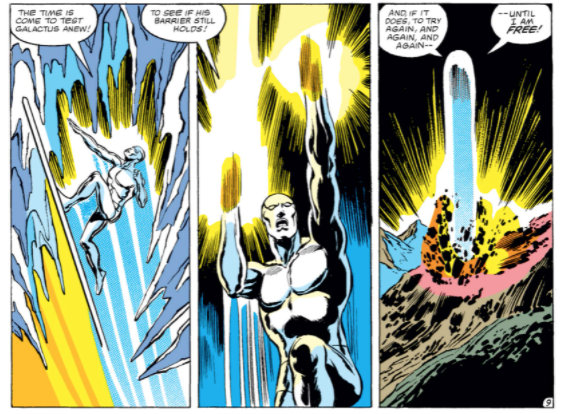
Personally, I prefer a no-keel look, since the keel makes it look too literally like a surf board. It’s not – there are no ocean waves in space.
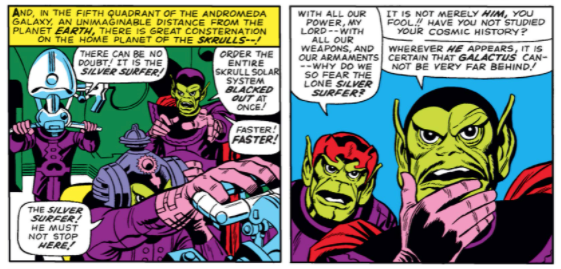
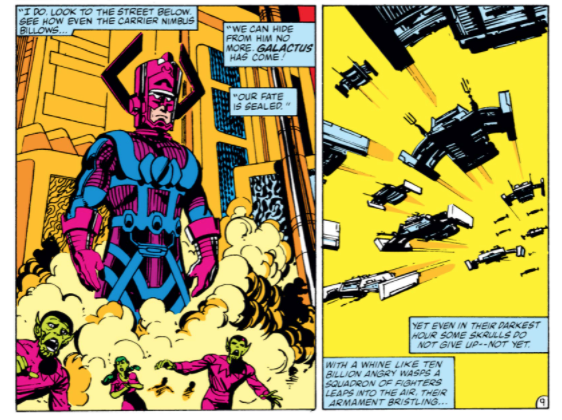
One last detail about the Surfer: He is introduced to readers by the Skrulls, who fear he might alert Galactus to their homeworld. Byrne, always a student of the Lee/Kirby issues, returns to that idea decades later when he has Galactus consume the Skrull’s planet.
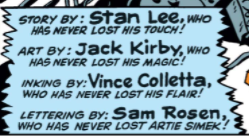
Crazy Credits

Young love
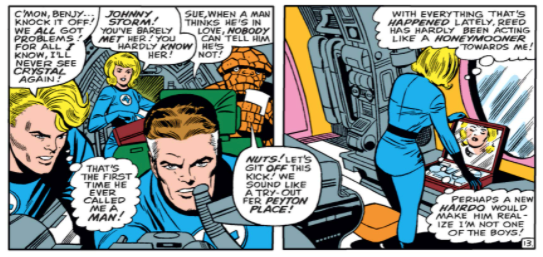
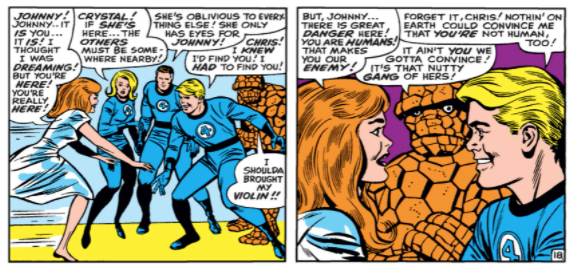
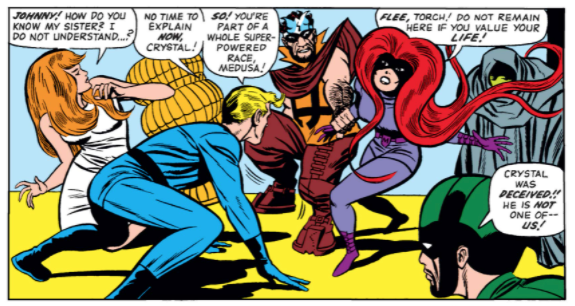
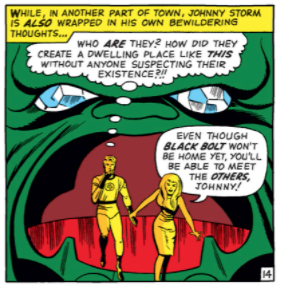
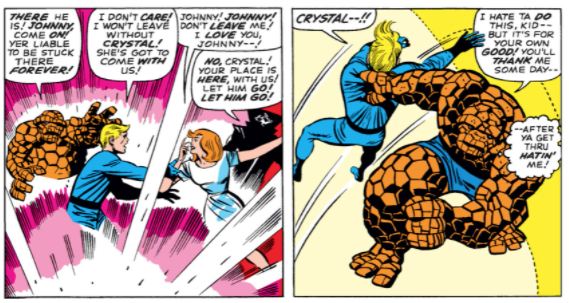
Johnny takes his separation from Crystal hard, which is weird since they barely know each other.
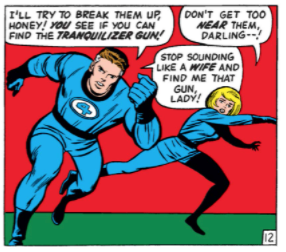
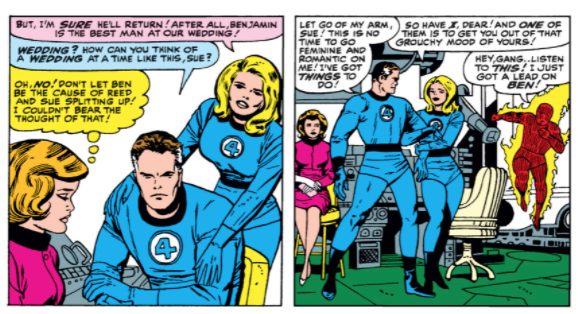
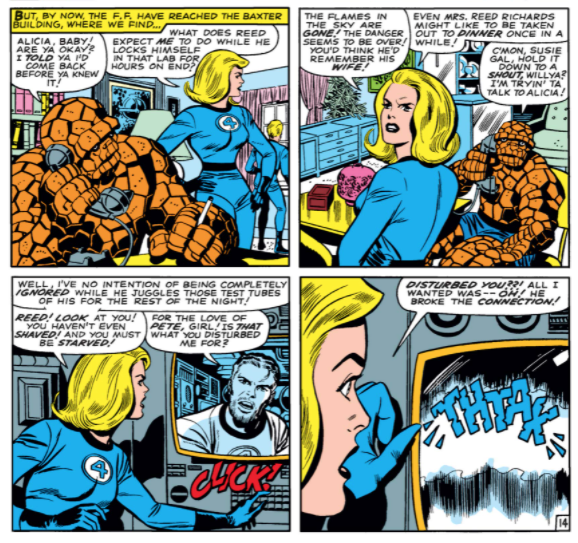
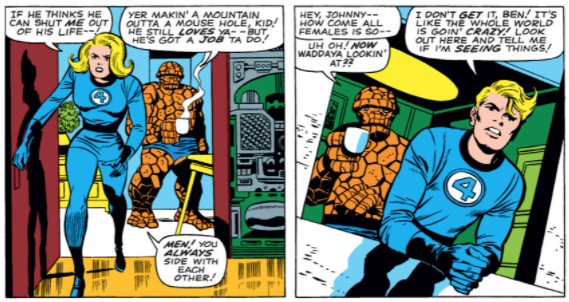
The sexist sixties
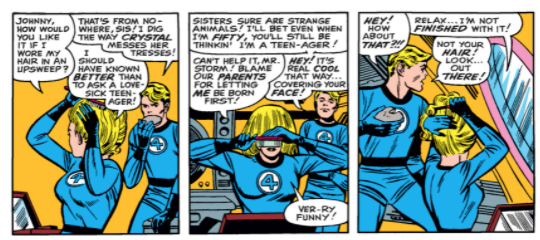
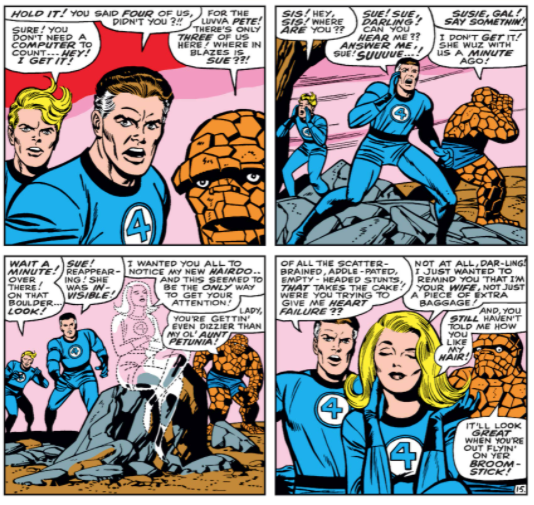
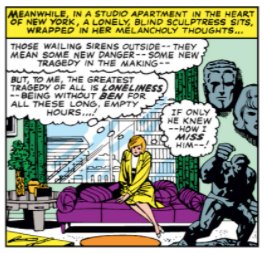
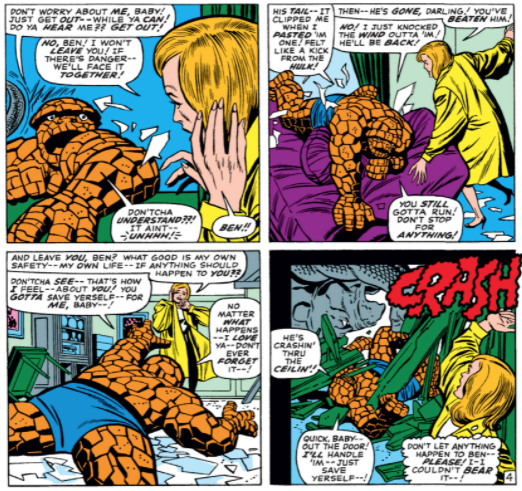
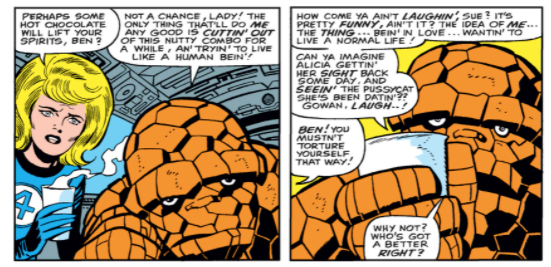
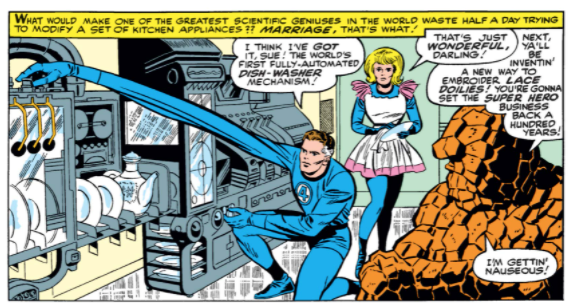
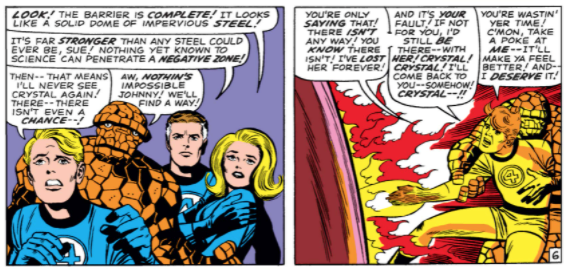
Sue’s pouting and histrionics aren’t quite as bad in tis issue as last, but it’s still pretty bad (and is Ben smoking a cigarette in the first panel?)
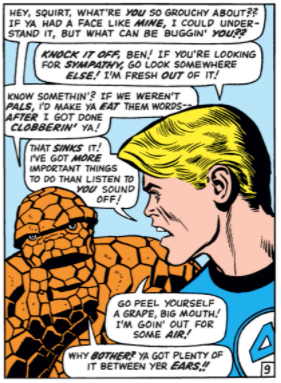
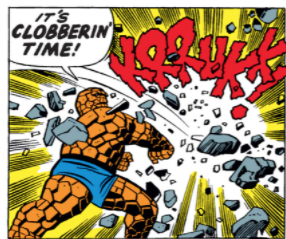
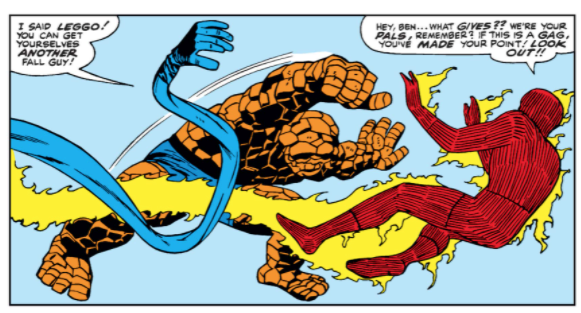
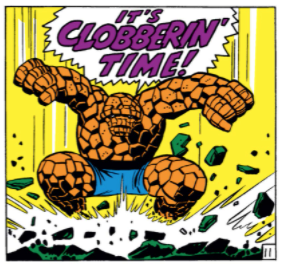
Clobberin’ Time
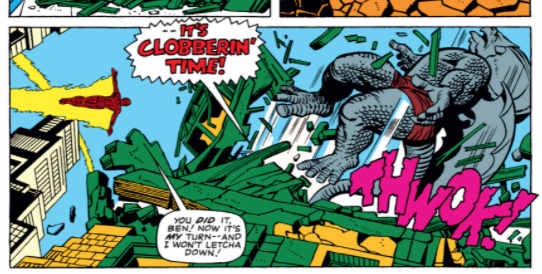
It’s starting to be a regular occurance now (this is No. 10 by my count).
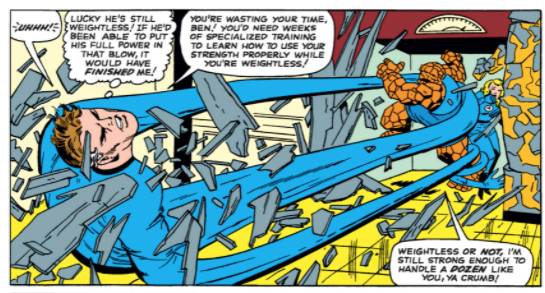
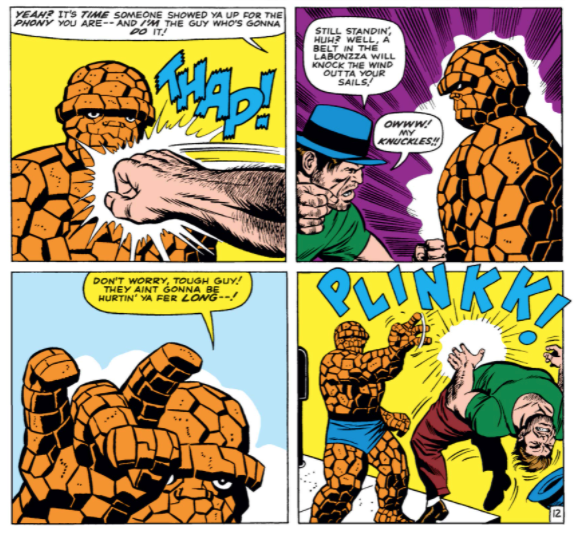
Feats of strength
It’s been long time since we’ve had one of these sequences of Ben showing off his strength. They used to be in almost every issue.
Dig that Kirby Krackle!
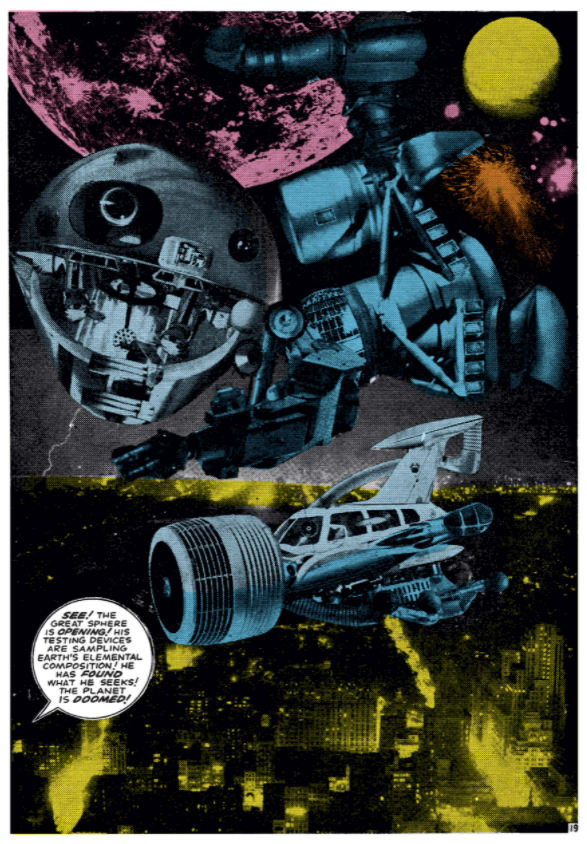
As if this issue didn’t have enough going on, we get a Kirby Kollage as Galactus arrives on earth:
Nu Yawk, Nu Yawk:
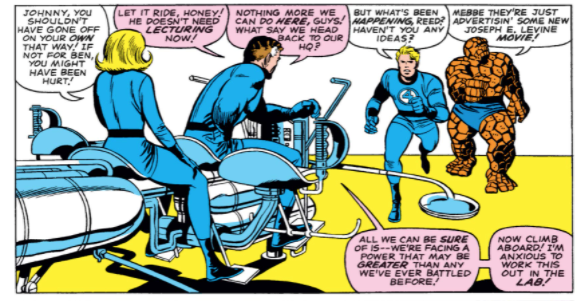
Another very cool panel (Joseph Levine was a Hollywood producer behind bombastic adventure movies like Hercules):
The Watcher, looking buff:
And oh yeah, this guy:
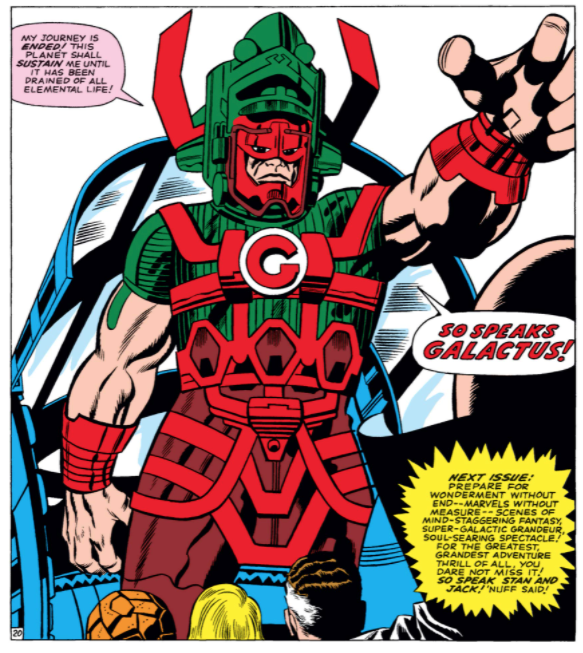
Next issue: Galactus! (duh)