Tags
1976, Annual, Bob Hall, Fantastic Four, Fantastic Four annual 12, Inhumans, Keith Pollard, marv wolfman, Sphinx
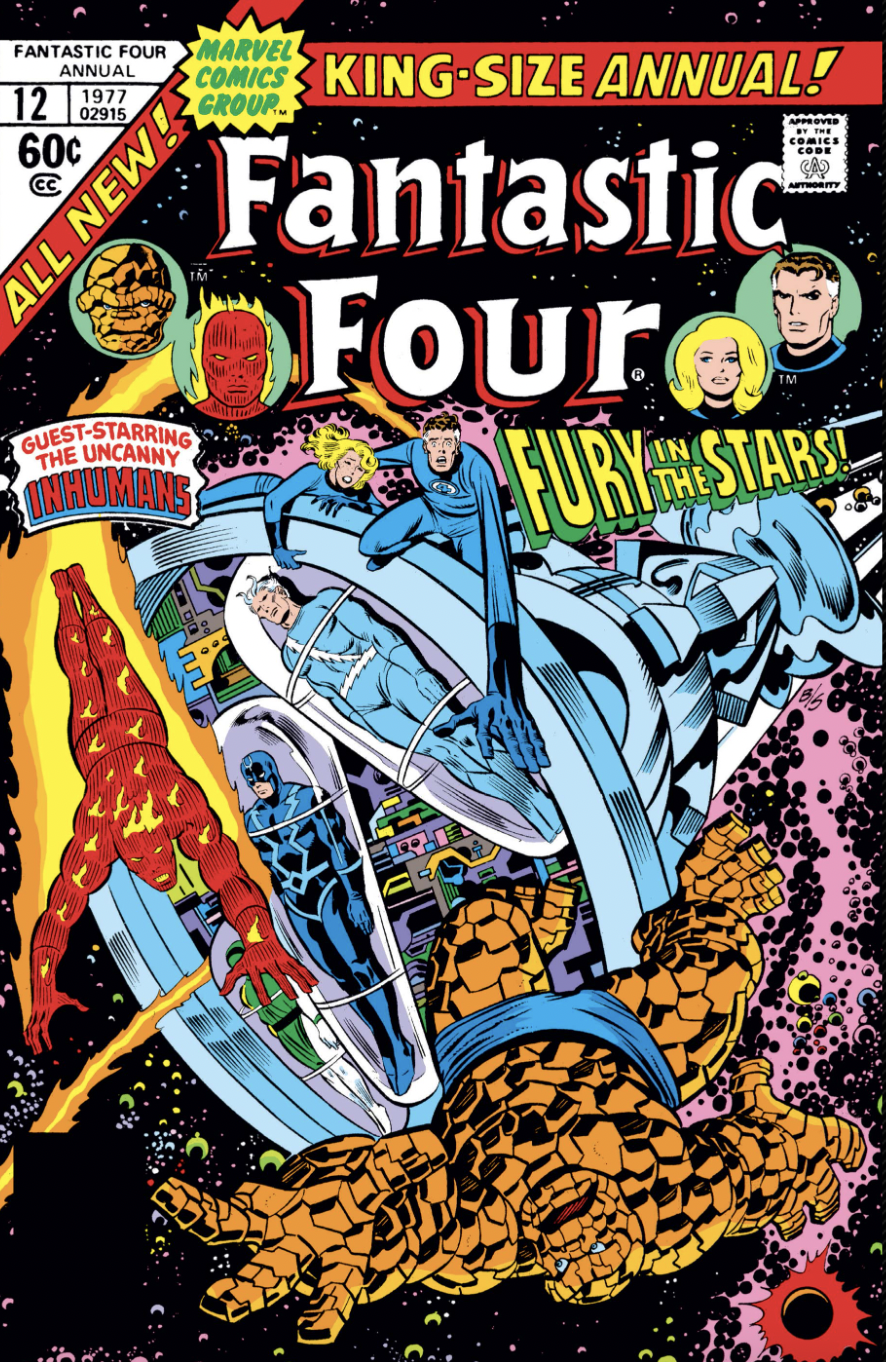
Fantastic Four Annual 12
“The End of the Inhumans … and the Fantastic Four!”
Published October 1976
Writer: Marv Wolfman
Pencils: Bob Hall and Keith Pollard
Inks: Bob Wiacek
Letters: John Costanza
Colors: Glynis Wein
Editor: Wolfman
Cover: John Buscema and Joe Sinnott
Synopsis
The Fantastic Four are summoned from their leisure activities — Johnny is racing a car, the rest are in Hollywood supervising a movie — by Crystal and Lockjaw, who report the rest of the Inhuman royal family have been captured and the Atillan has become a fortress. The FF eventually overcome the would-be ruler, Thraxon the Schemer (yes, that’s what he calls himself), only to discover he is a pawn of a much greater power, the Sphinx. The Sphinx, an ancient Egyptian wizard who is now immortal, requires Black Bolt’s powers to conquer Earth, and is holding the Inhumans aboard a spaceship. The FF travel to space and are helpless against the Sphinx, but in the melee, Lockjaw frees the Inhumans and Black Bolt defeats the villain in one-on-one combat.
What’s going on here?
This annual is very much a mixed bag. It contains some fun moments and characterizations, and the art is interesting, but the story is padded out with unnecessary fights and flashbacks and some truly painful attempts at topical humor. The story, written and edited by Marv Wolfman, comes in at 48 pages, yet somehow feels much longer. It’s a good example of why writers shouldn’t be their own editors.
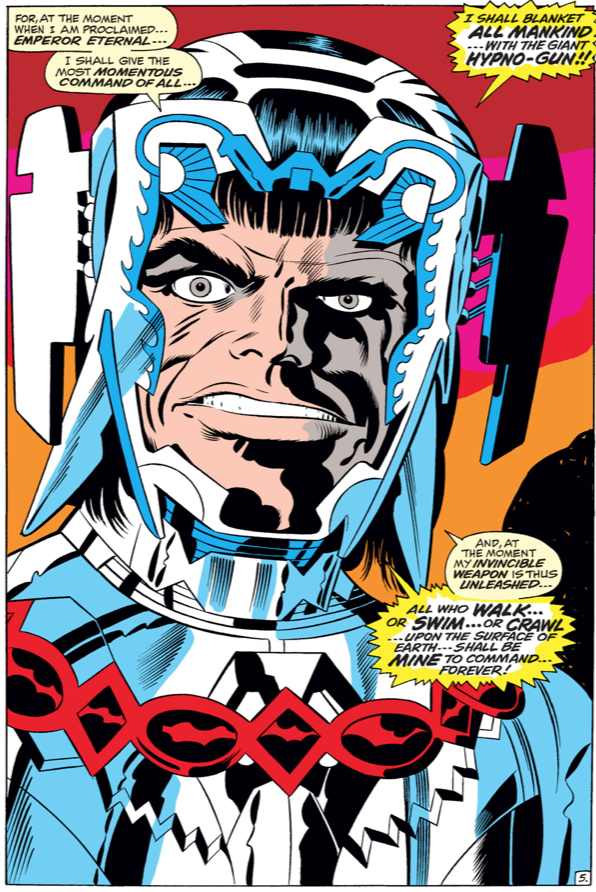
The story falls out of the FF’s current continuity, and since Reed can stretch without apparent issue, it probably takes place a good deal earlier than the events in the main title, where the FF have broken up due to Reed’s loss of his powers. The villain, the Sphinx, is an attempt at a new big bad guy but he’s not very convincing, in part because his name and costume are both pretty silly. He debuted in Nova 6, also written by Wolfman, and will pop up every once in a while. He never becomes a top tier FF villain, and frankly, his ancient Egyptian evil schtick was handled much better by Louie Simonson a decade later with Apocalypse.
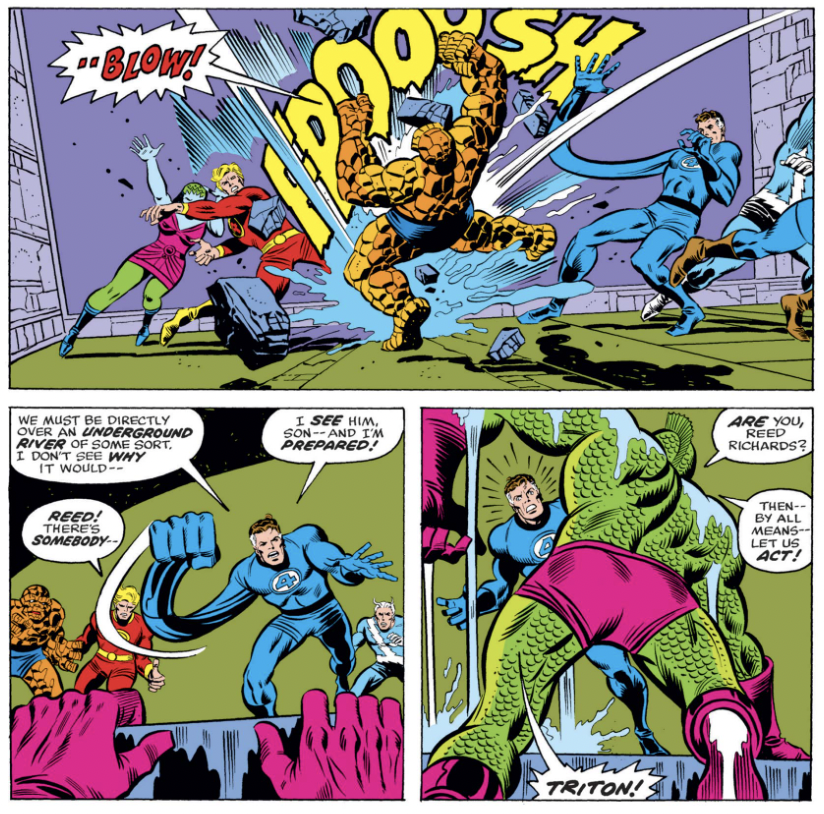
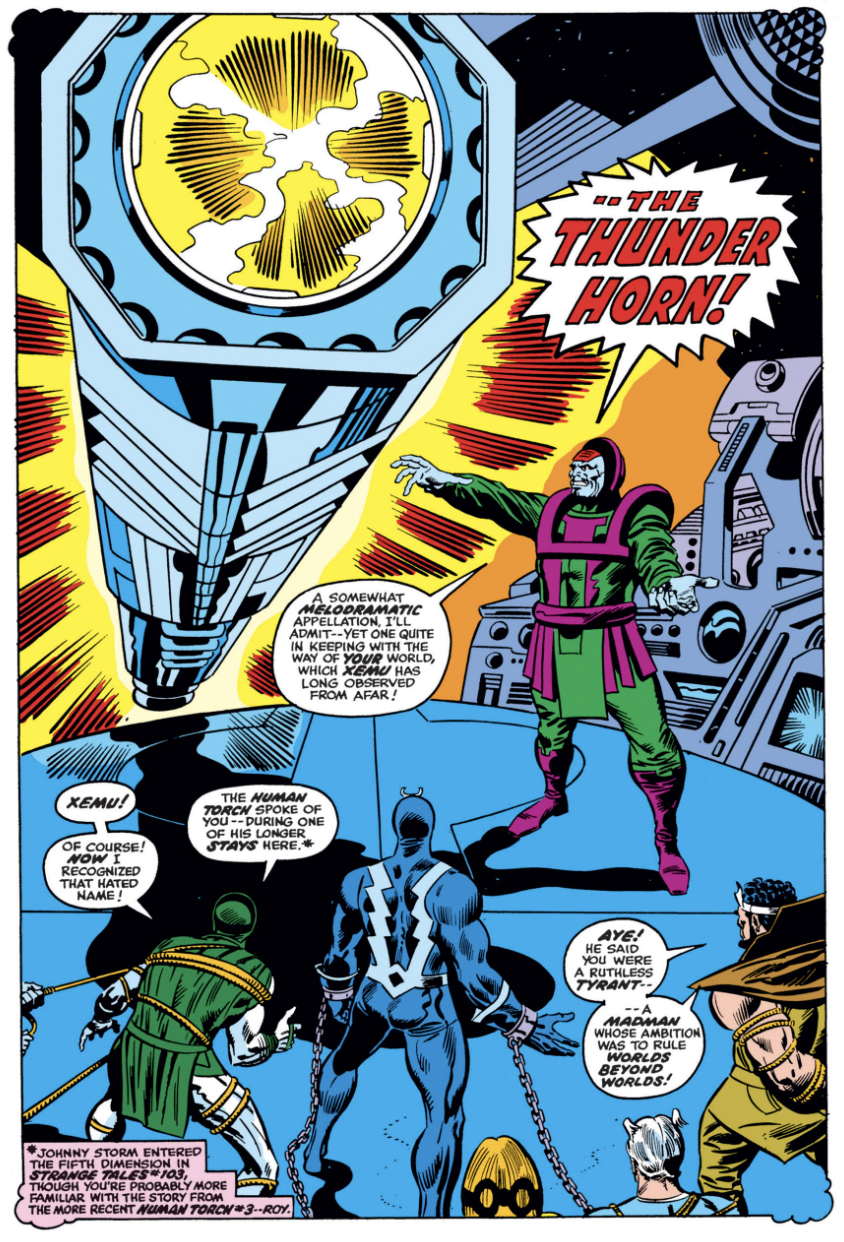
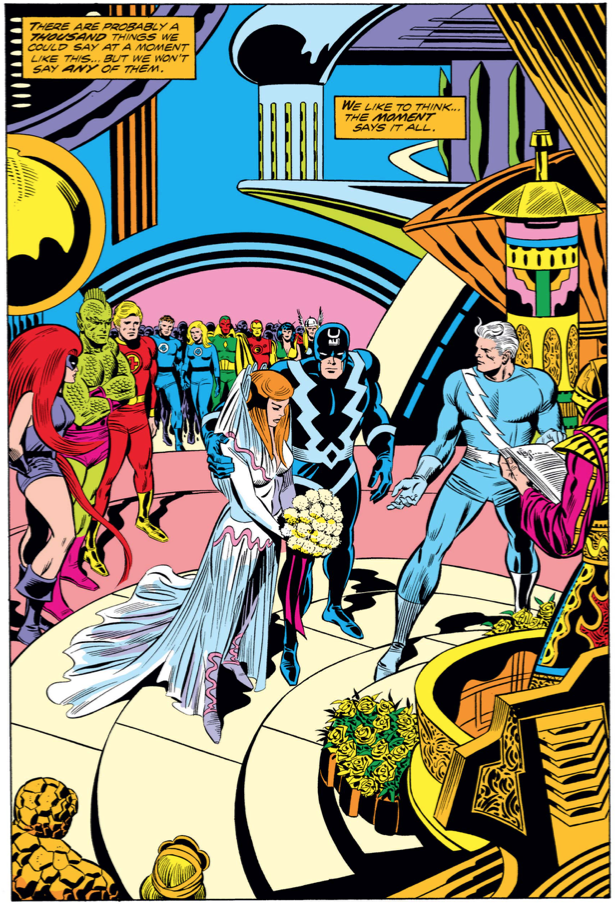
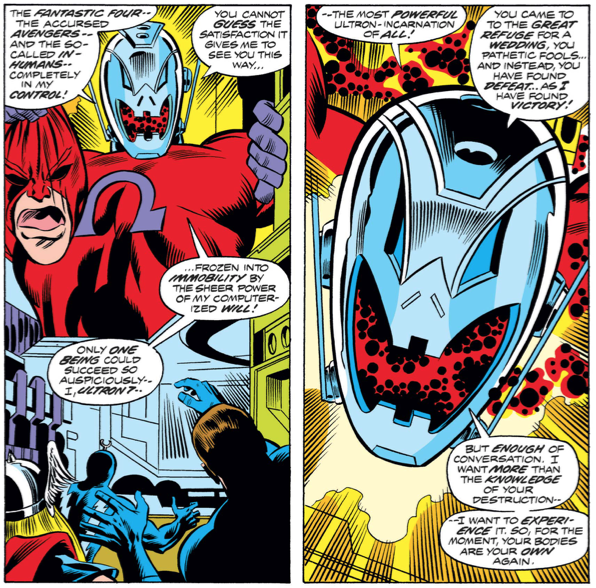
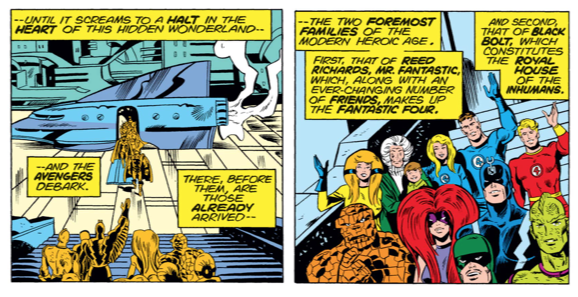
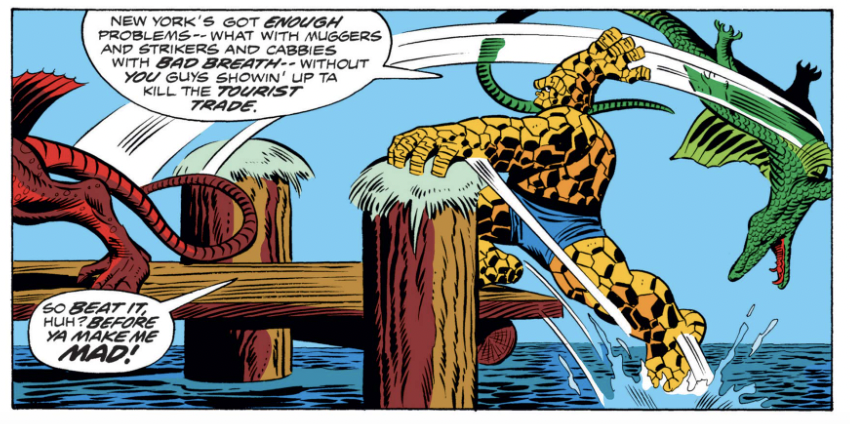
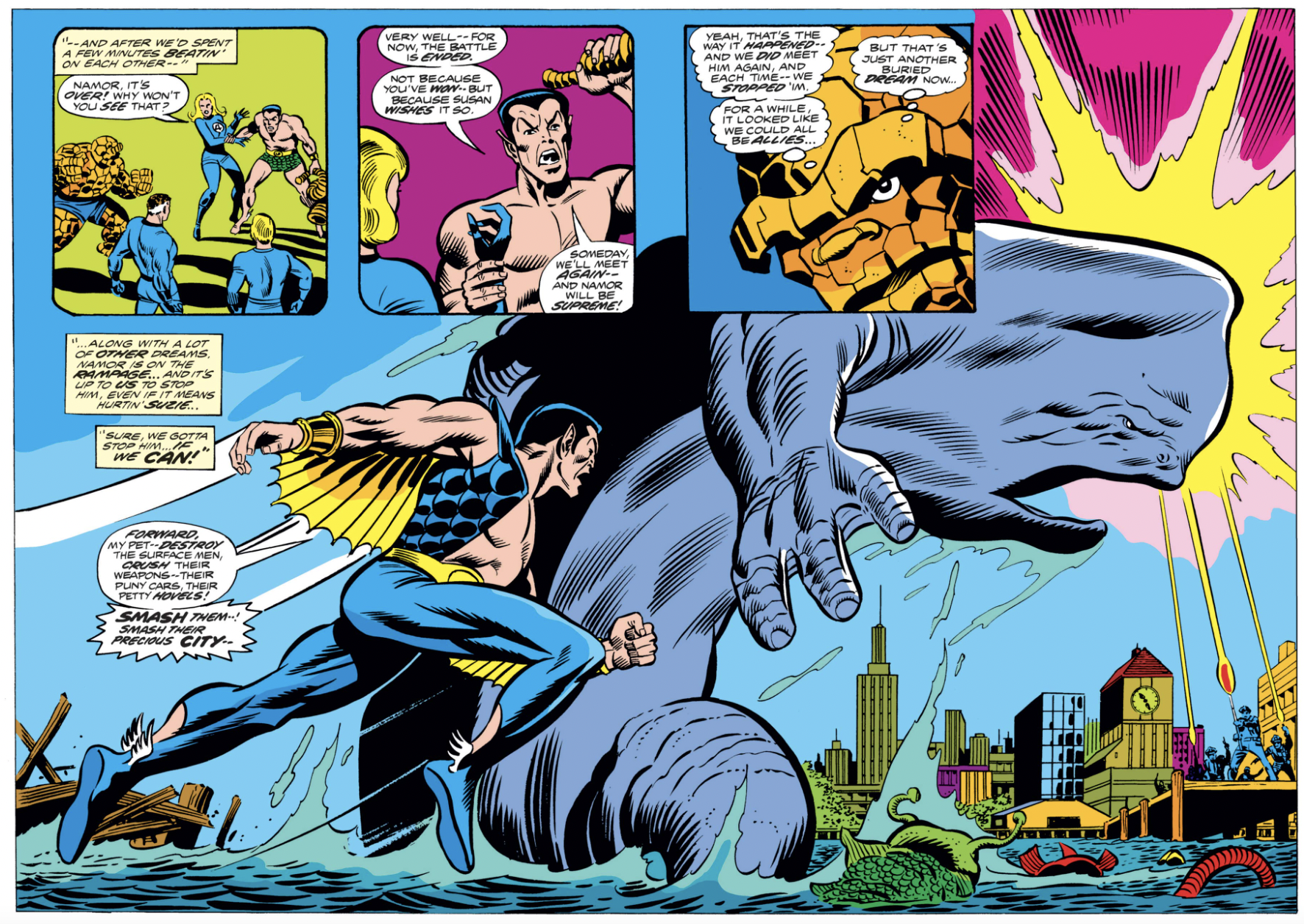
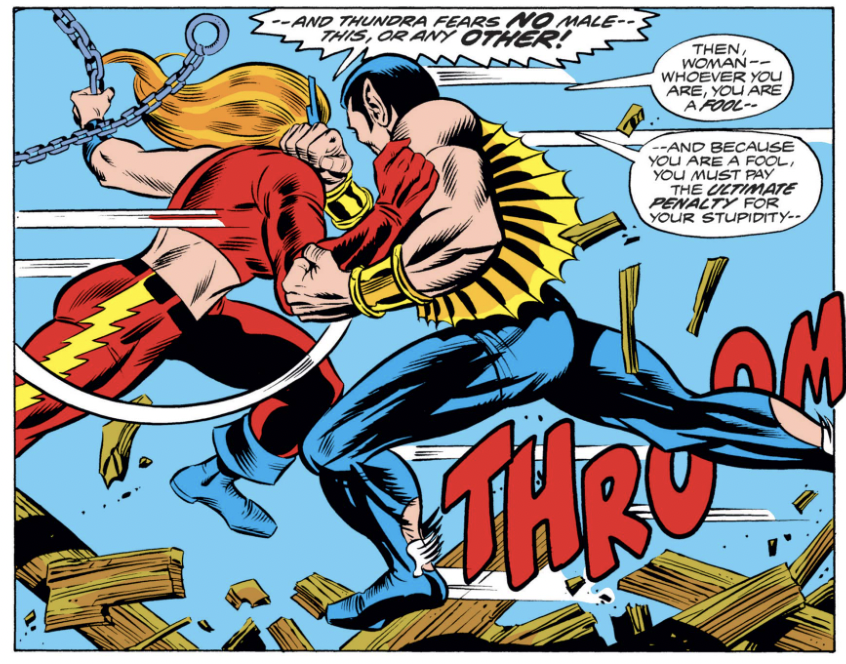
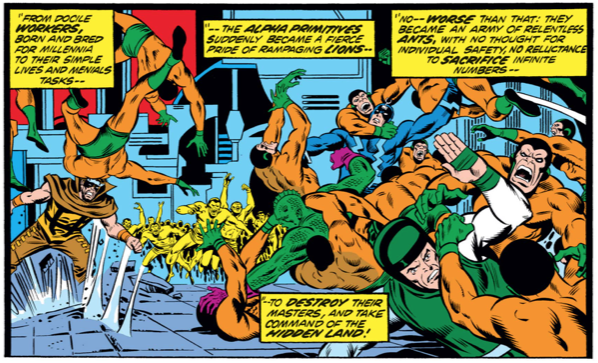
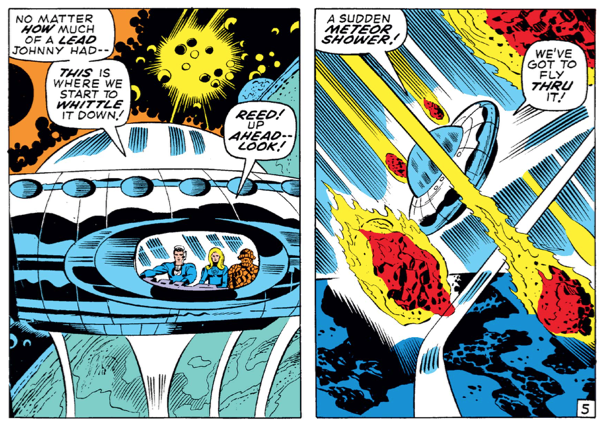
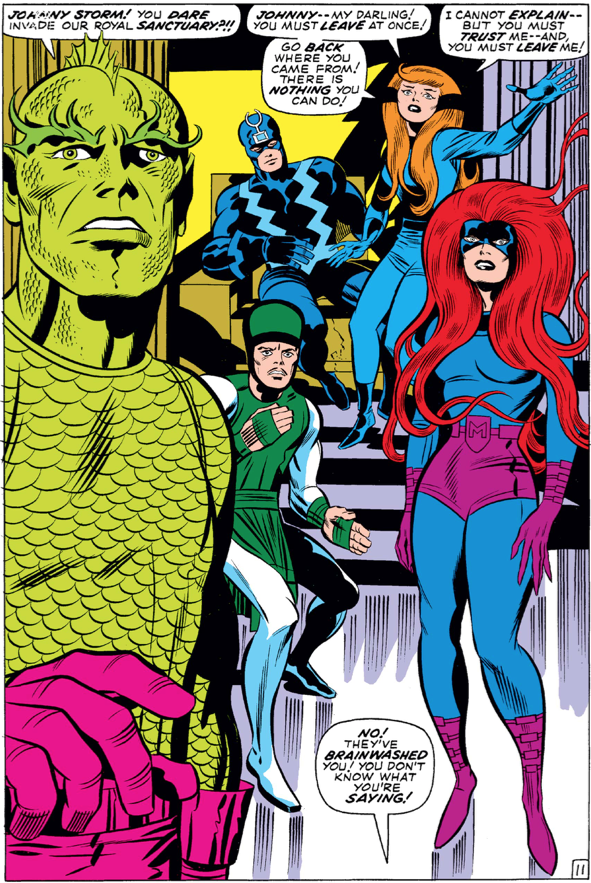
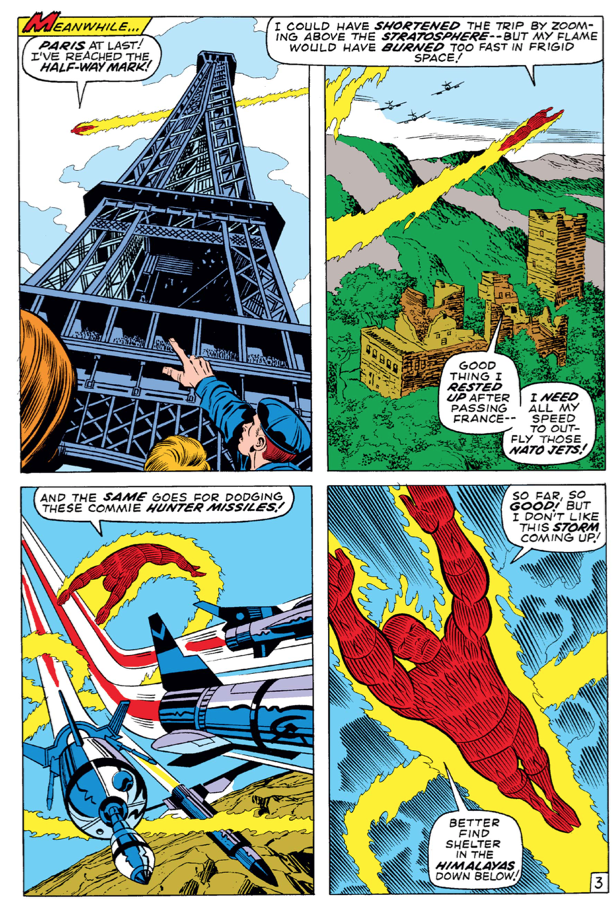
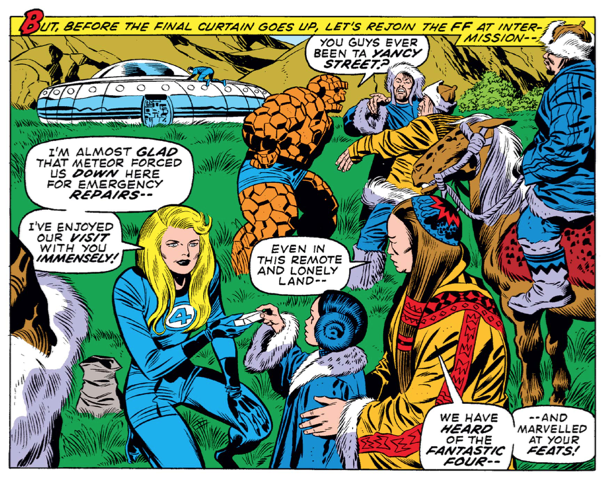
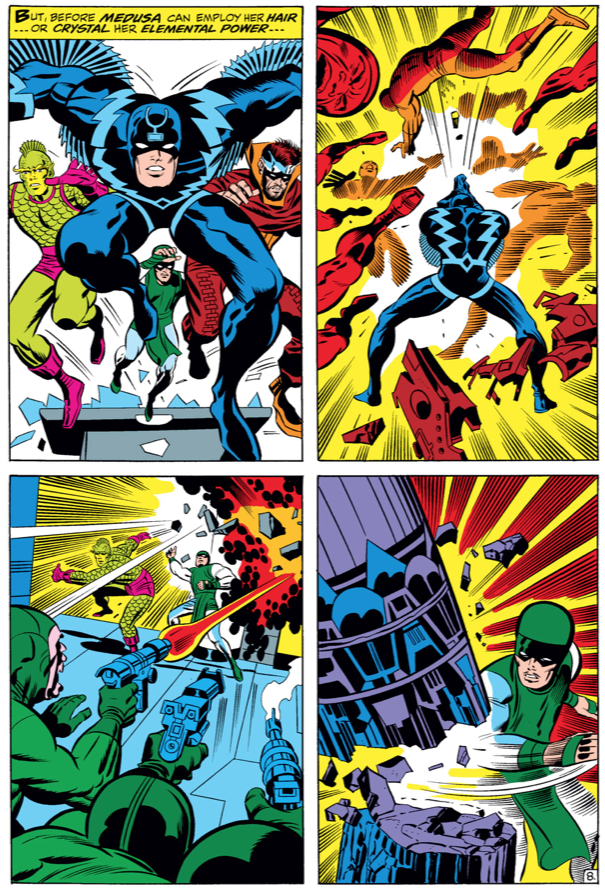
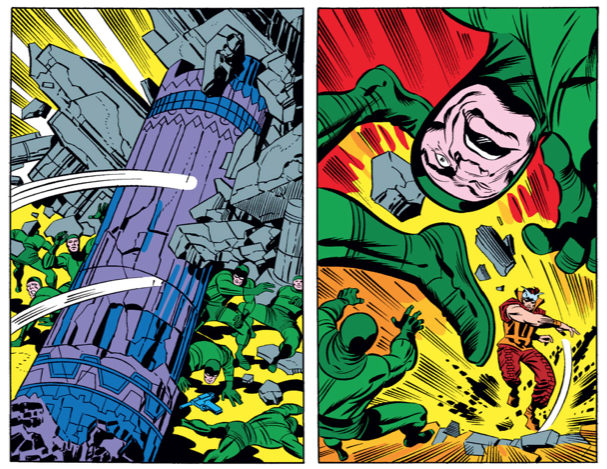
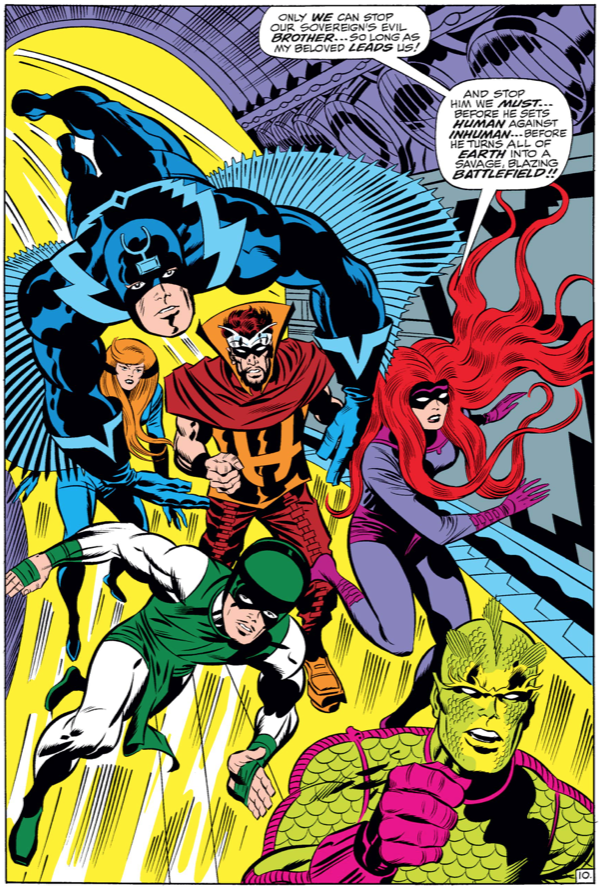
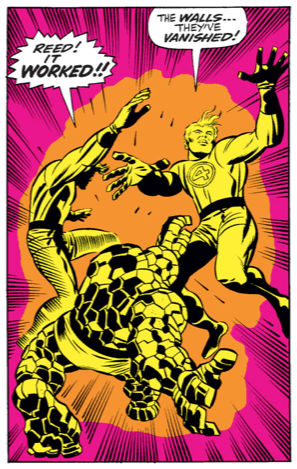
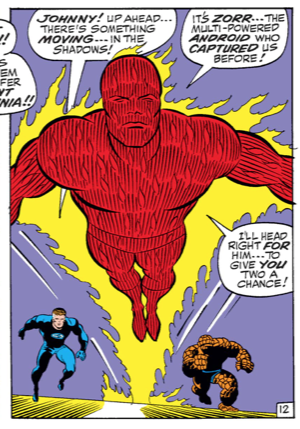
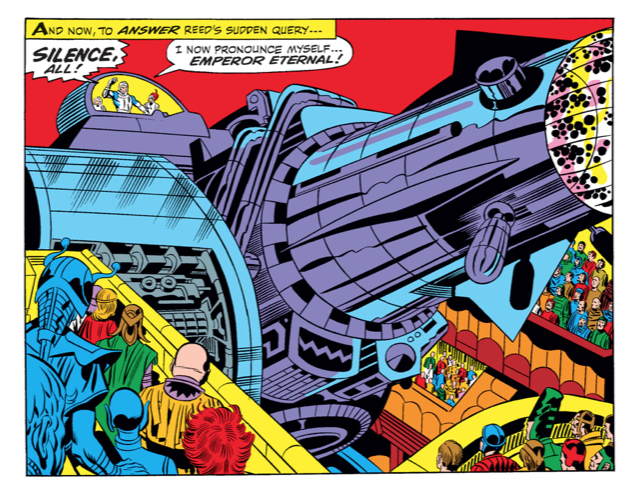
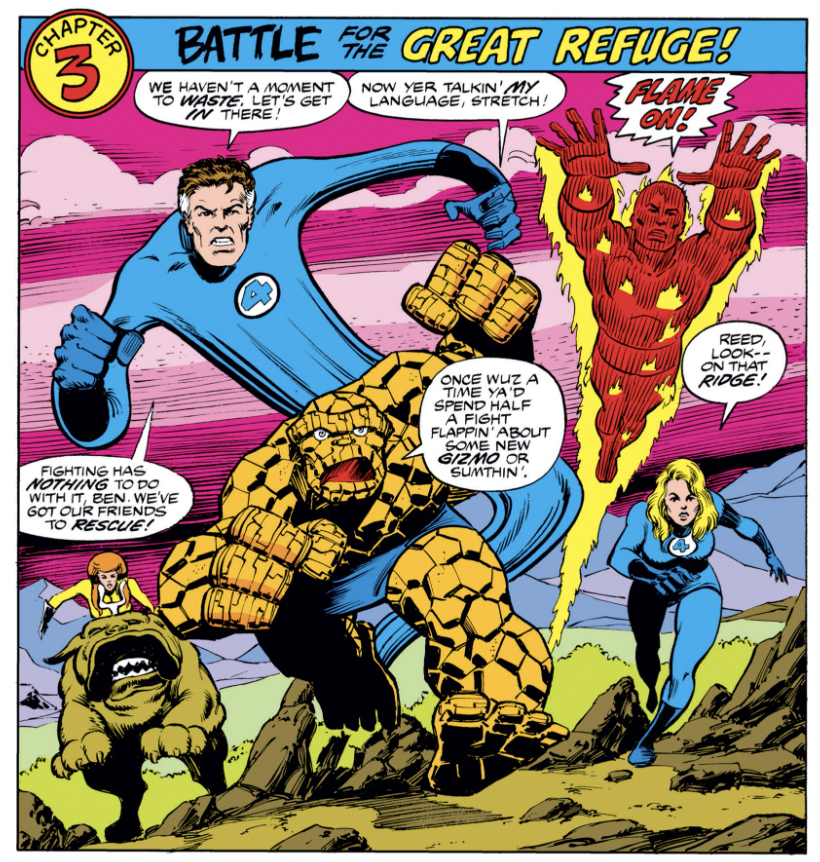
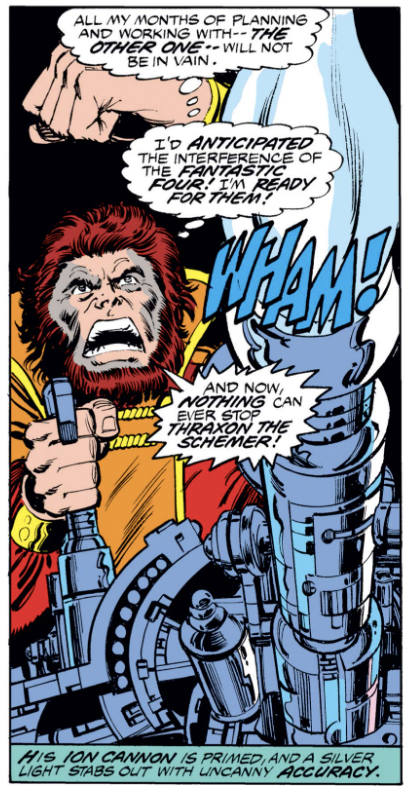
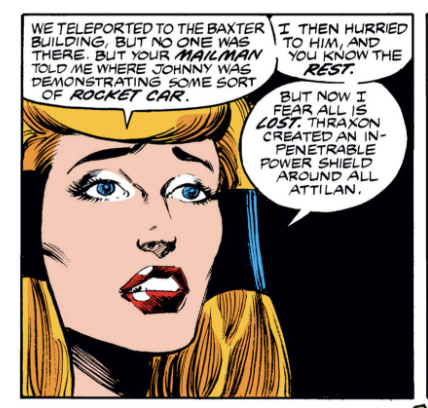
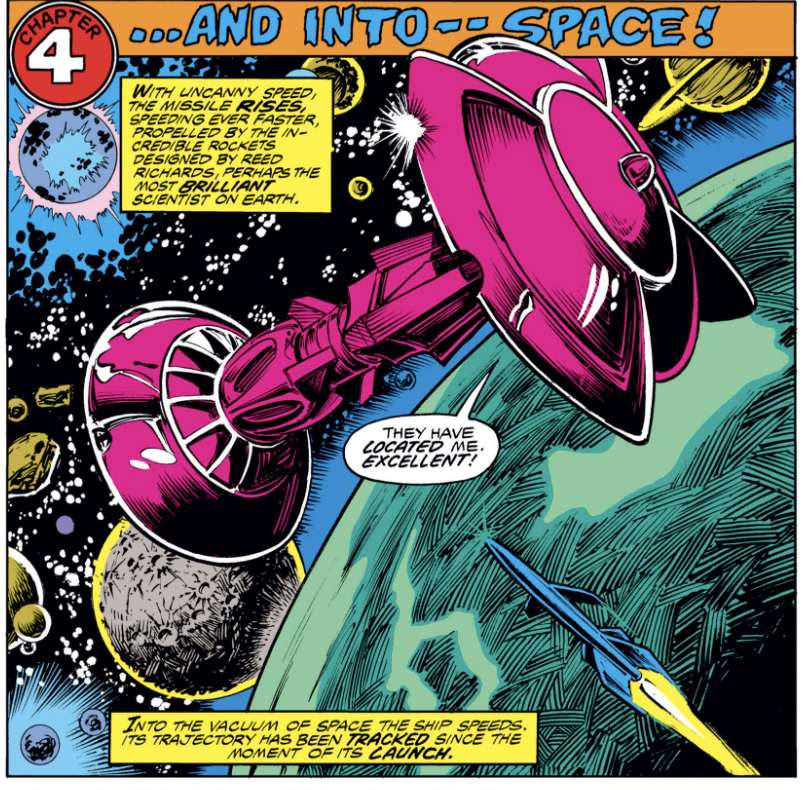
The pencils are credited to both Bob Hall and Keith Pollard, and it’s hard to tease out who did what (Incidentally, I’ve met Bob Hall at a few conventions and had him draw sketches for me. A very gracious man). Bob Wiacek handled the inks and they look much different — thicker and rougher —than the more refined lines I associate him with from his X-Men run. Still, the art has its moments and between the three artists I see echoes of Kirby and Gil Kane:
What I liked
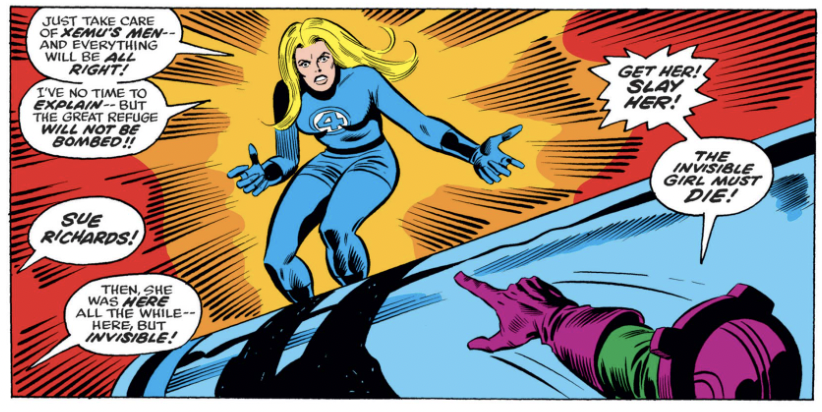
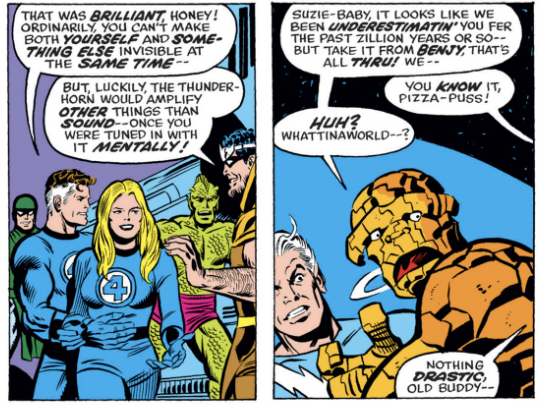
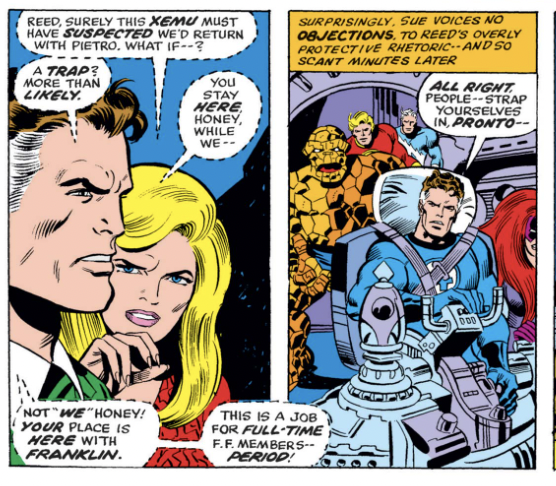
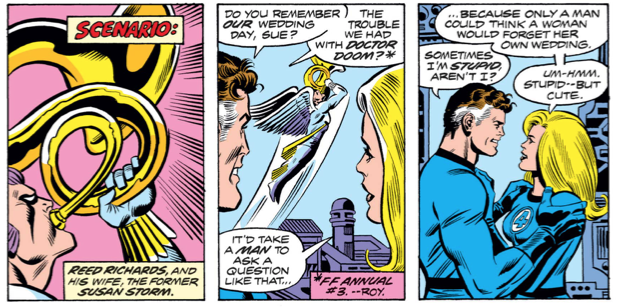
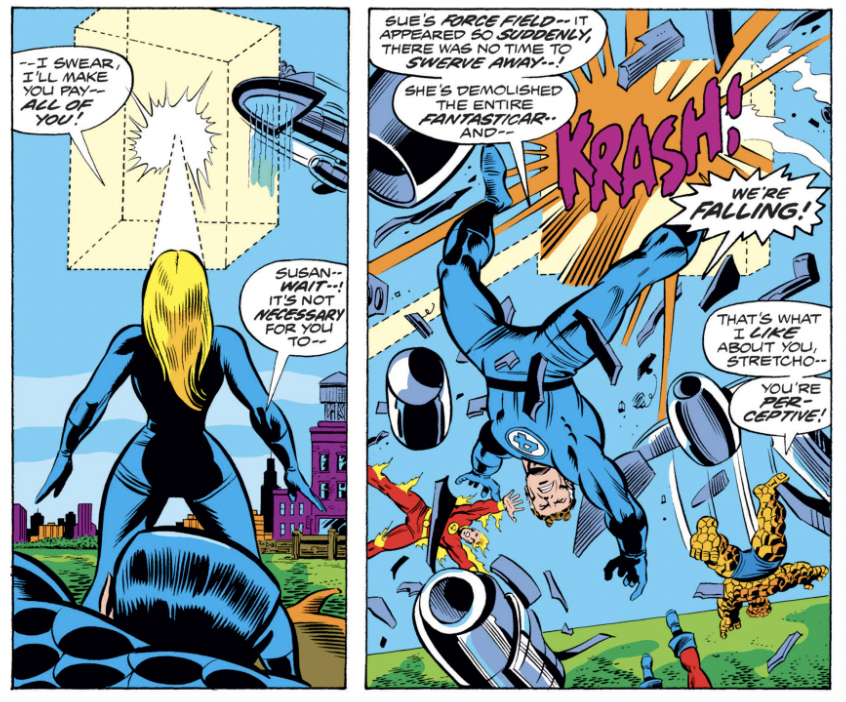
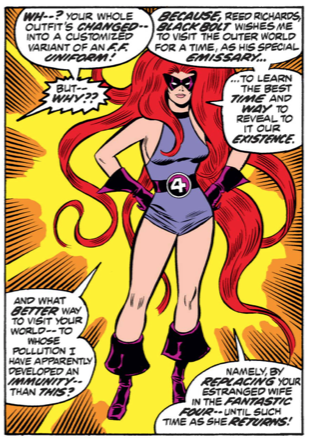
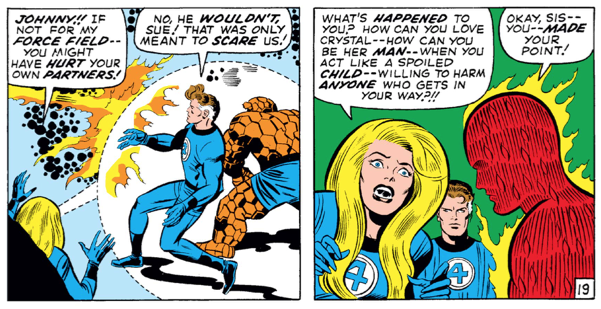
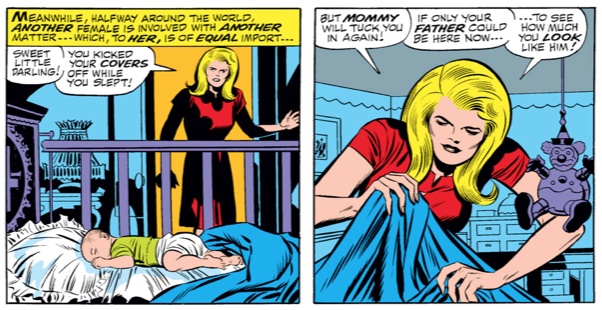
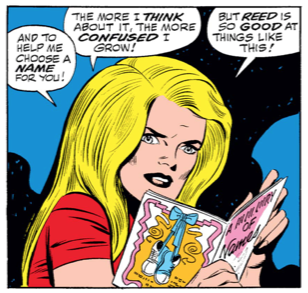
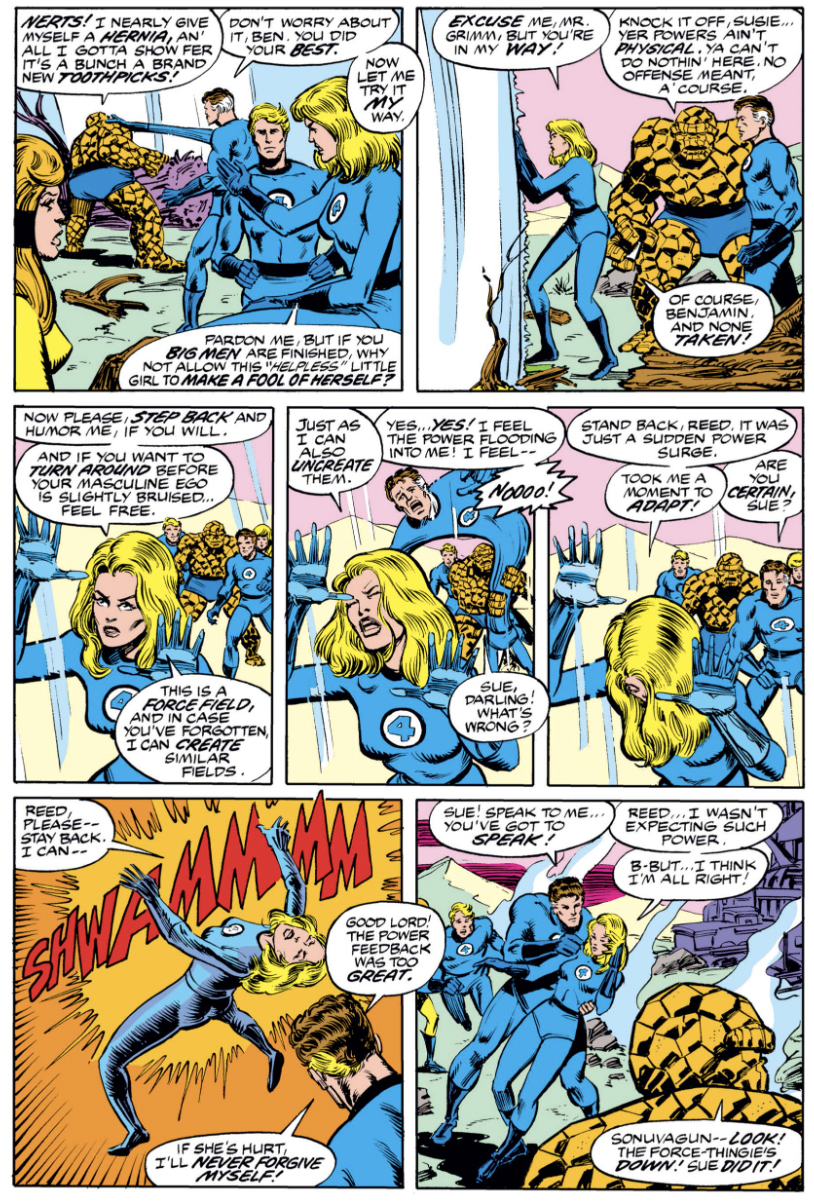
Like his close friend Len Wein, Wolfman seems determined to elevate Sue’s usage as a member of the Fantastic Four. This page is a pretty good demonstration of how she’s been upgraded, both in her attitude toward her teammates and in her powers:
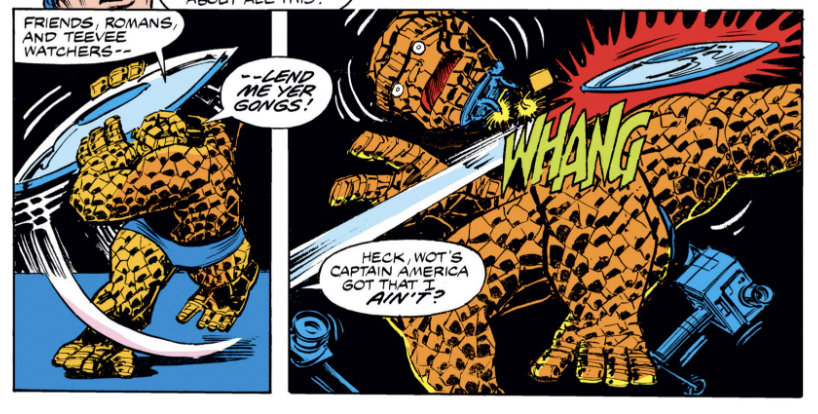
As I’ll get to later, the FF’s Hollywood sequence, where they fight a robot version of the Thing designed for a movie, is beyond tedious. But using the Gong Show’s gong as a weapon is a fun idea.
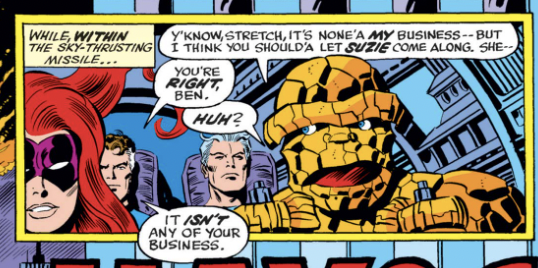
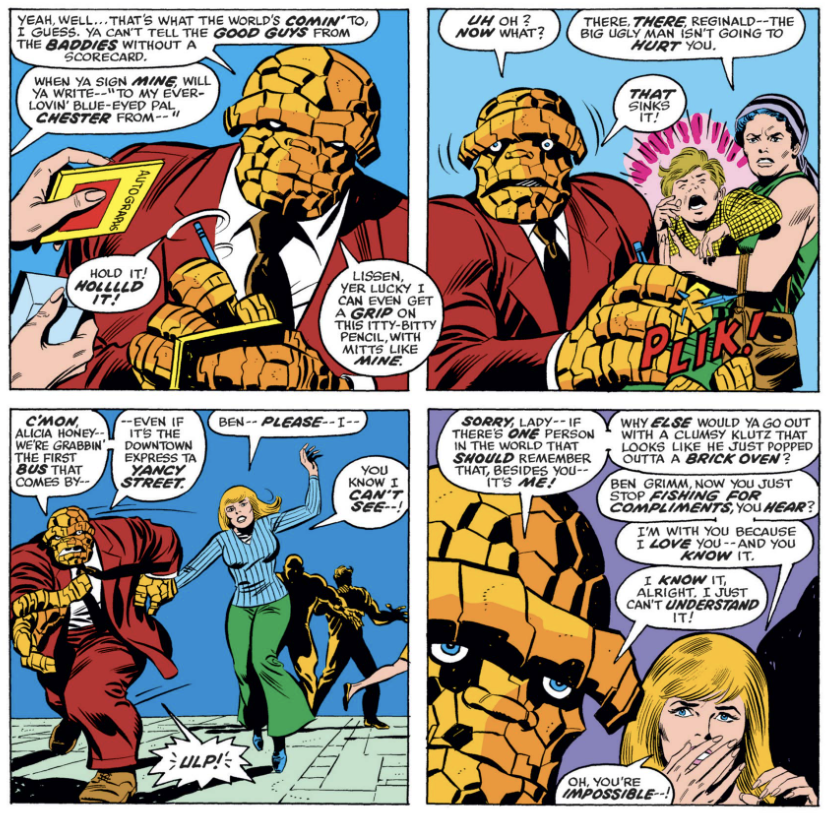
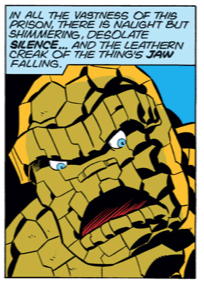
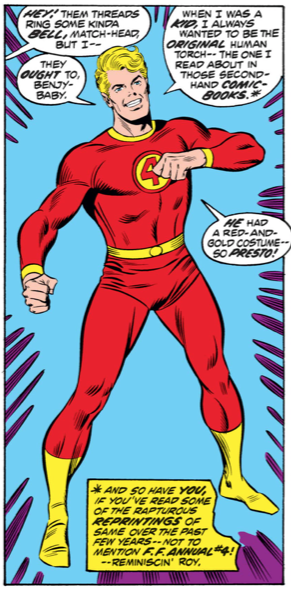
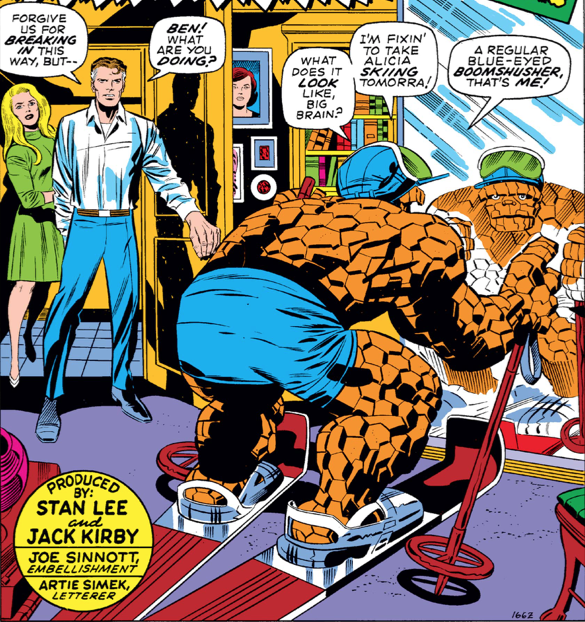
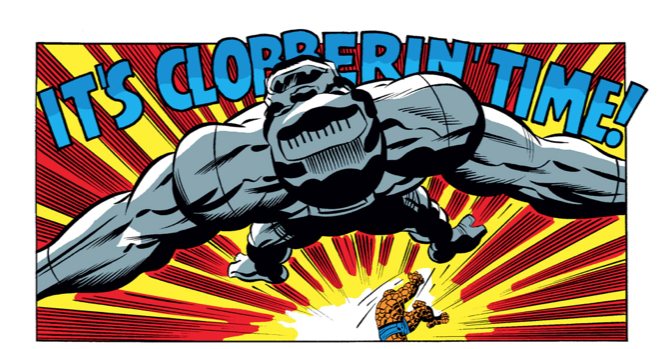
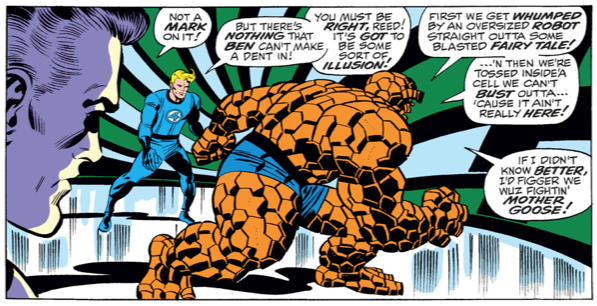
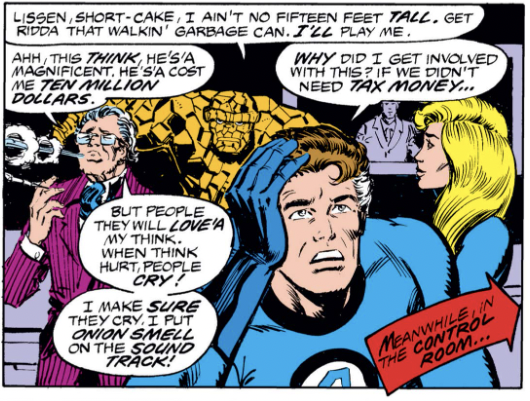
As anyone how follows this account on Twitter knows, I am perturbed by artists who draw the Thing as a giant. Here, Ben makes the same point:
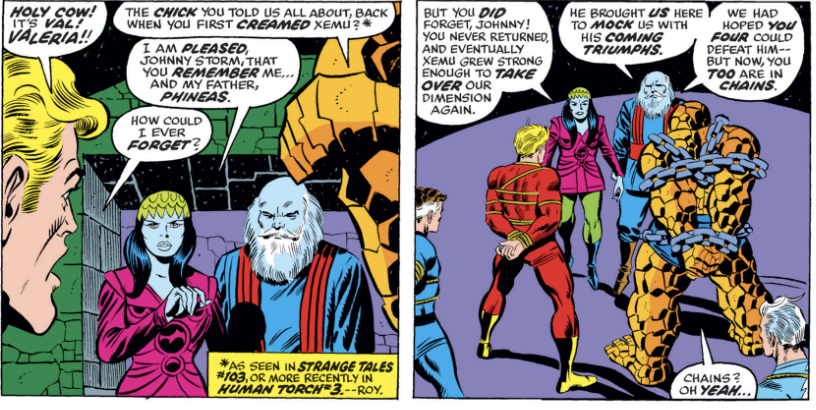
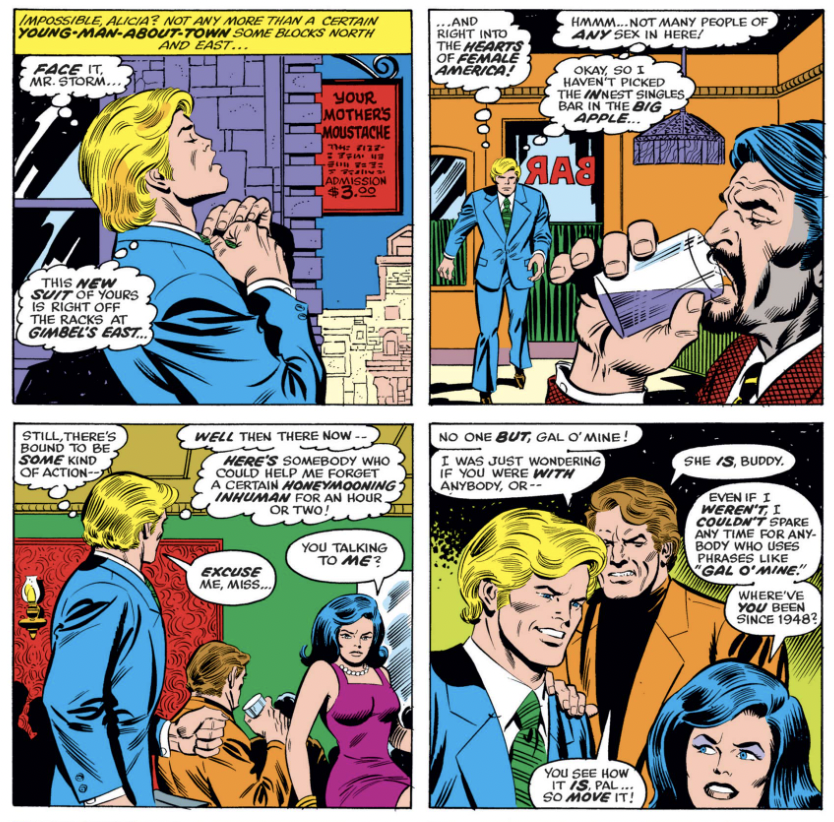
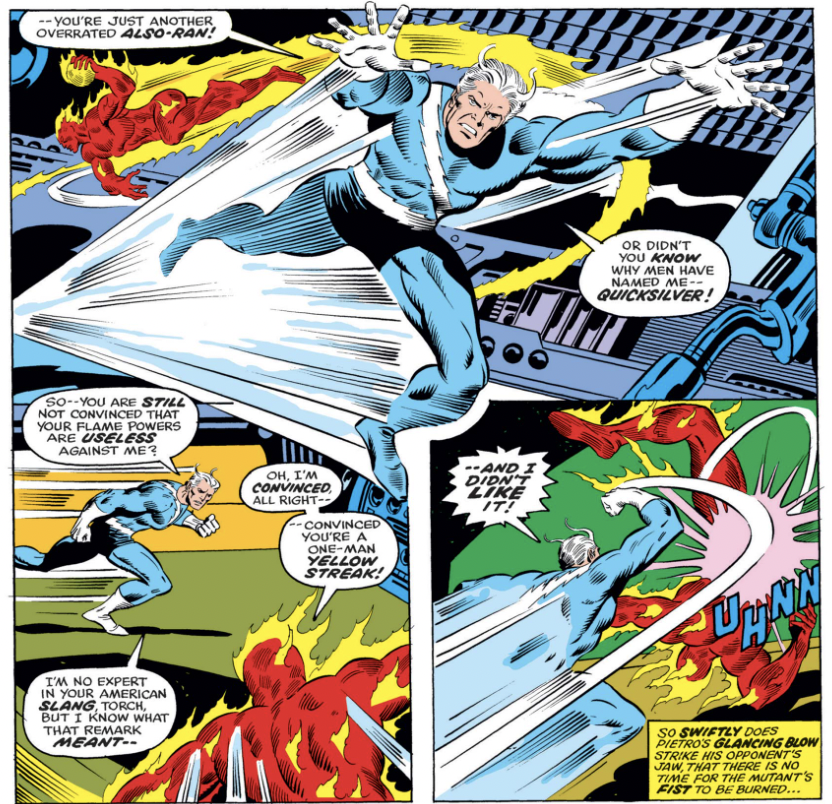
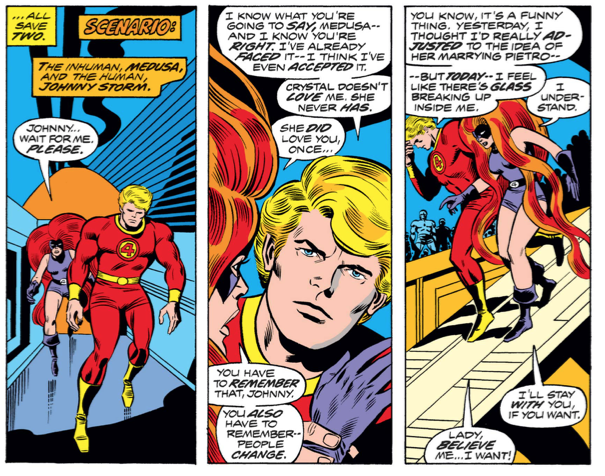
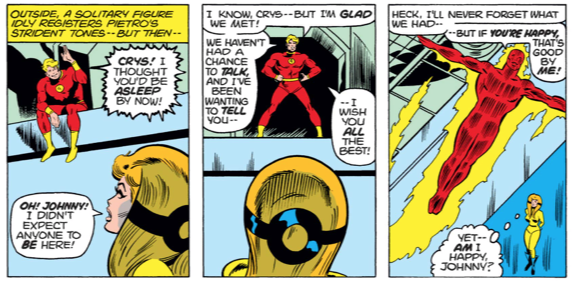
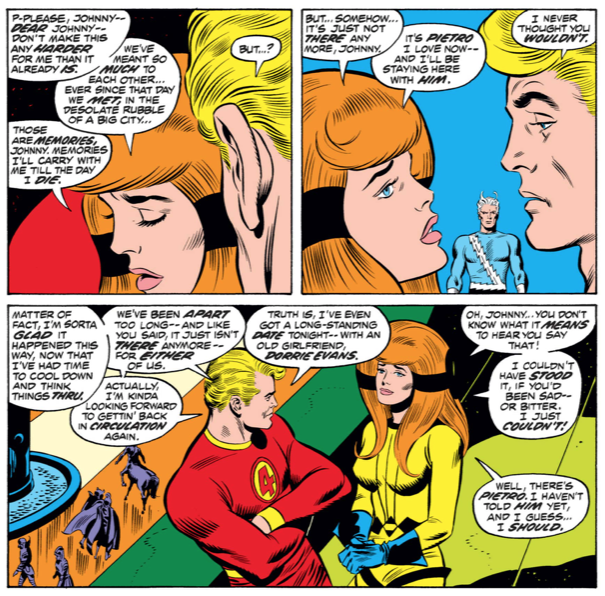
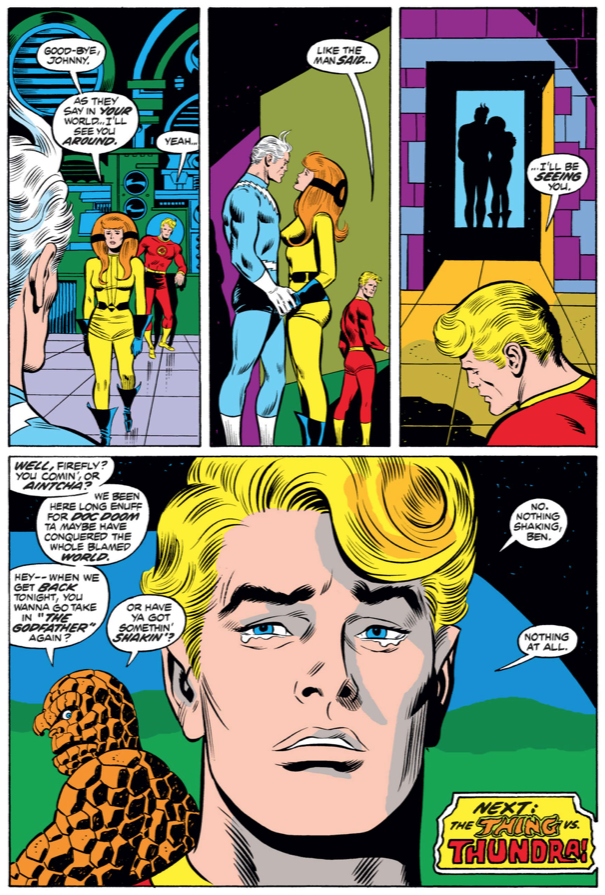
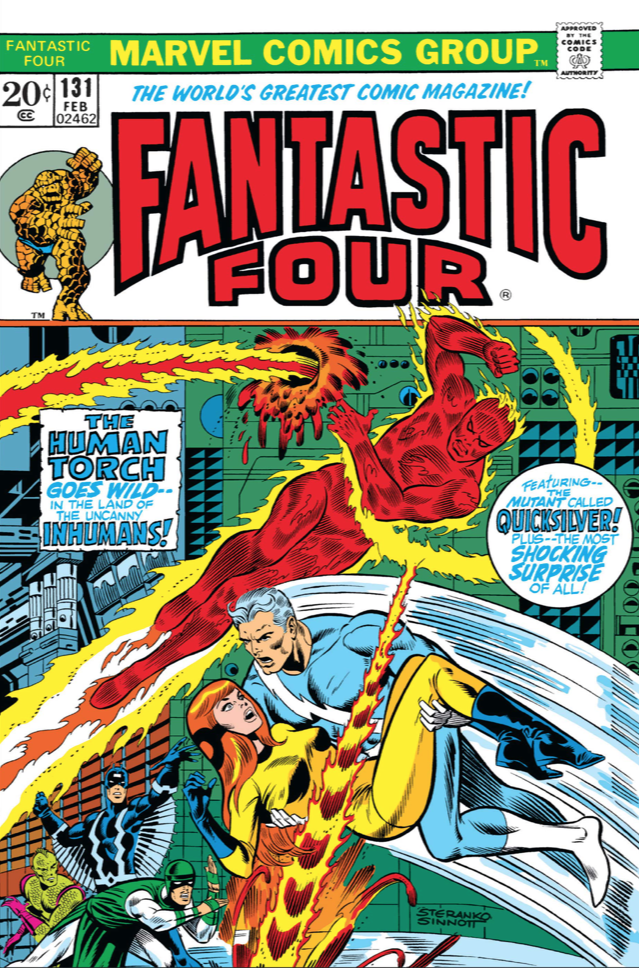
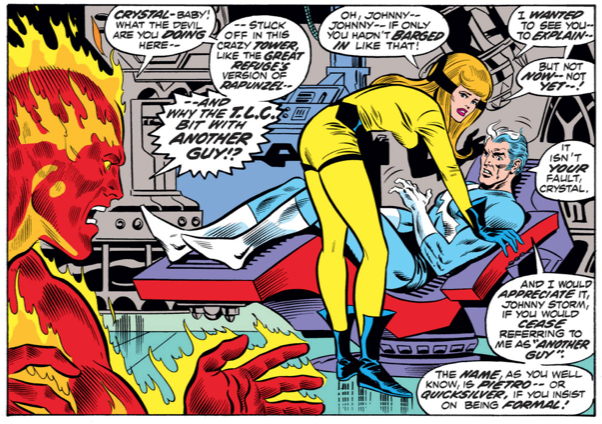
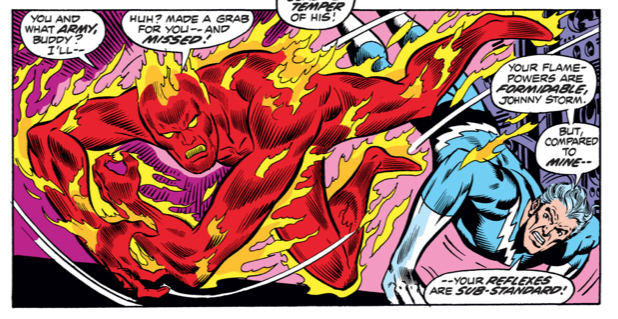
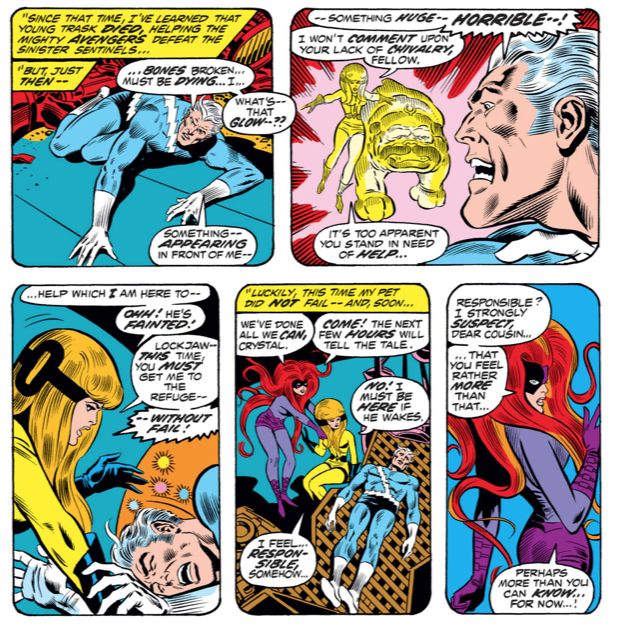
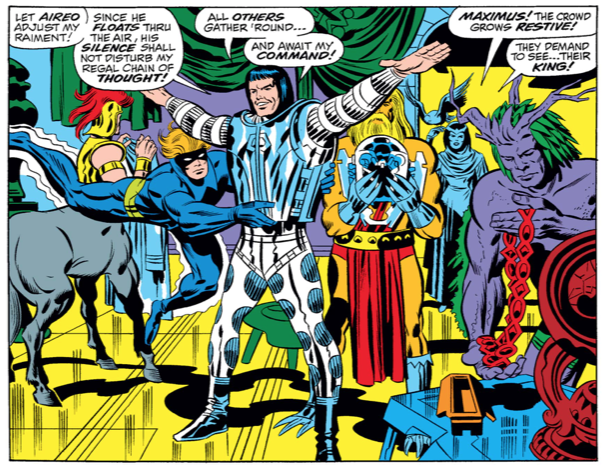
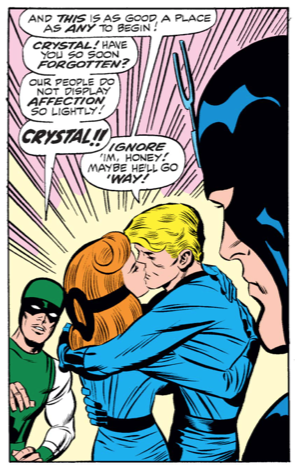
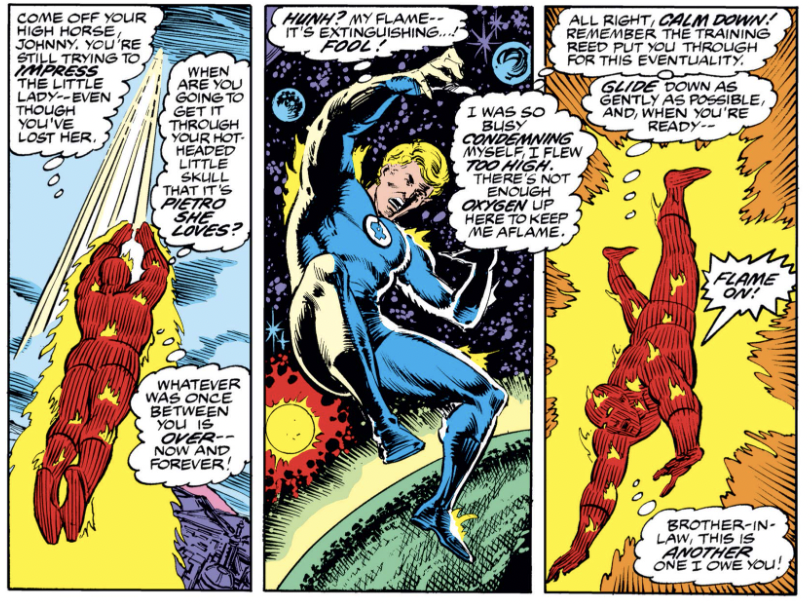
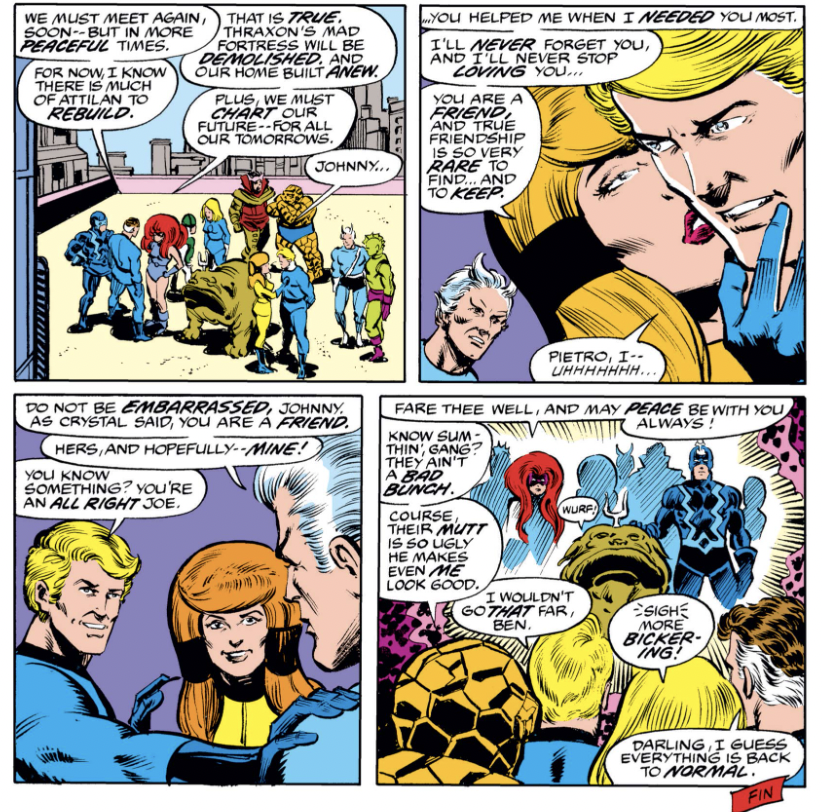
There were a few good sequences that featured a maturing Johnny reconciling with Crystal being married to Quicksilver. Here, he combines some introspection with commentary about his powers:
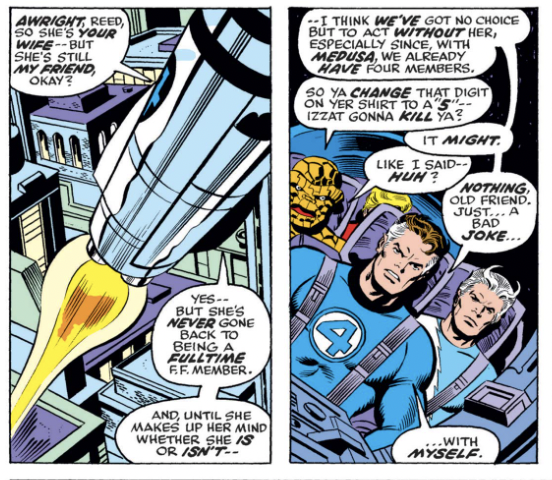
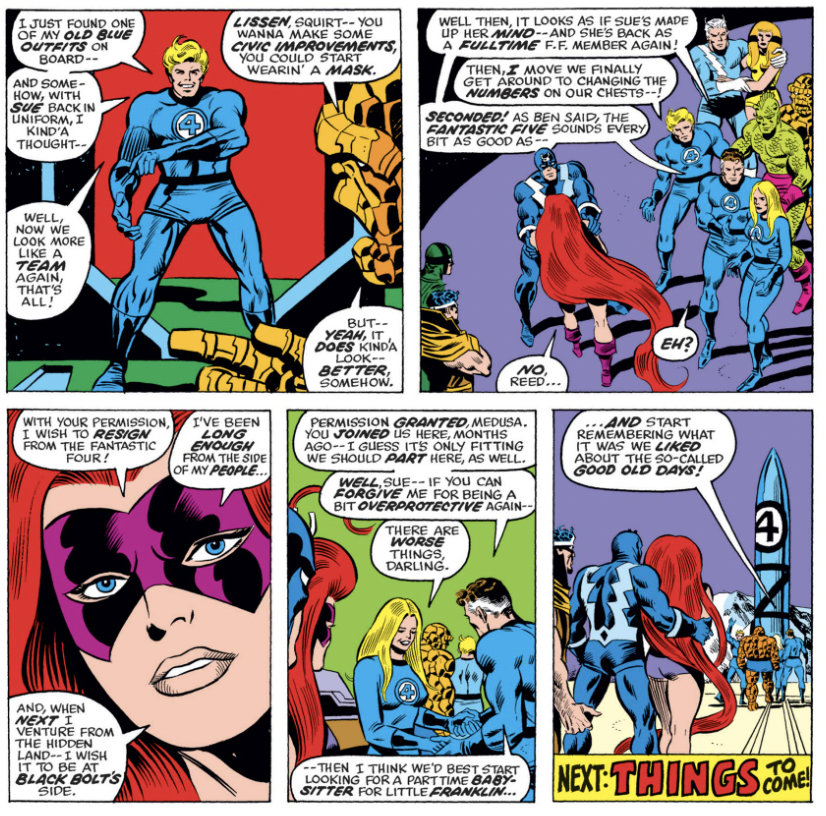
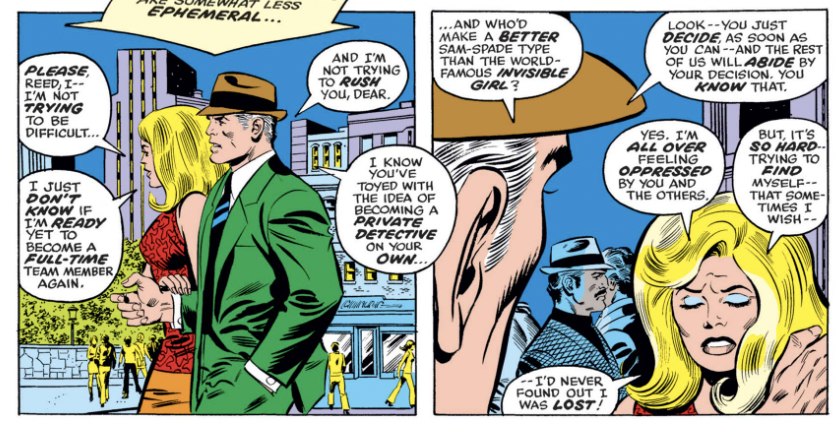
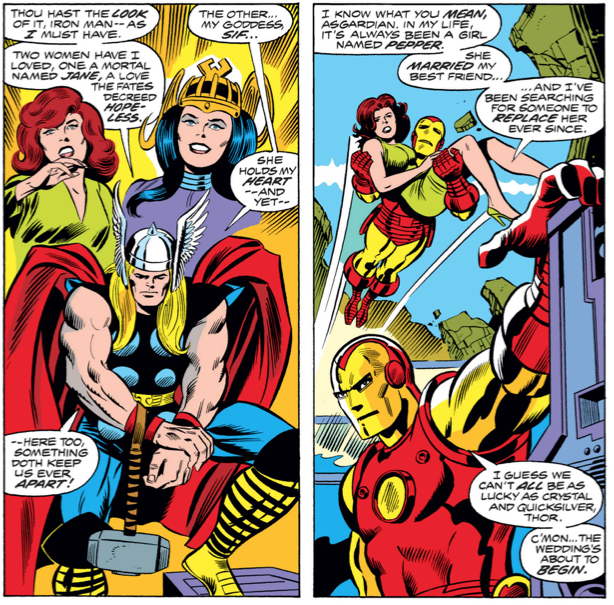
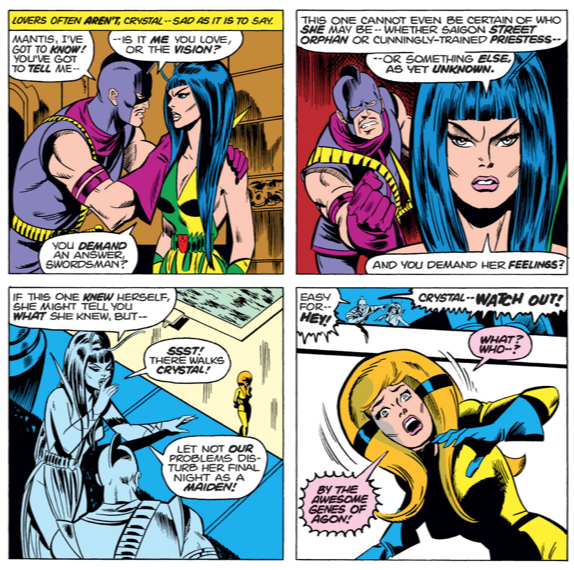
And here, we see three adults acting like adults (it won’t last):
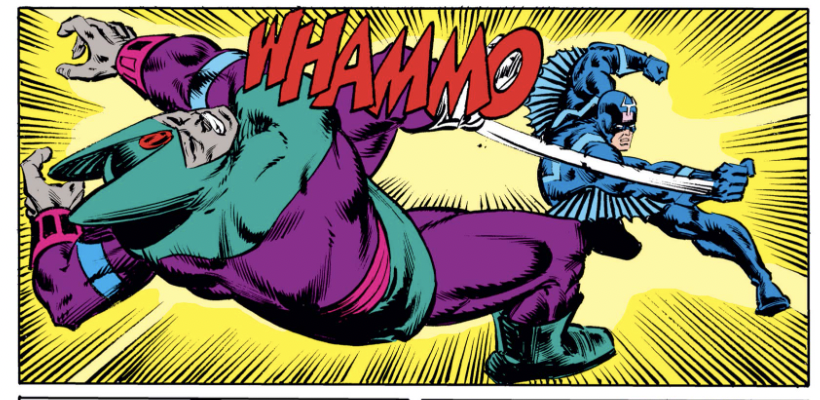
I did like the sequence of Black Bolt wailing on the Sphinx. It really establishes him as a true heavy weight, given that the four members of the FF could barely touch the Sphinx:
What I didn’t like
As mentioned, the Hollywood sequence is long, silly and feels engineered to pad the page count. The conceit is a heavily accented Italian producer — I assume a Dino DiLaurentis parody — is making a movie about the FF, which they agree to for “tax money.”
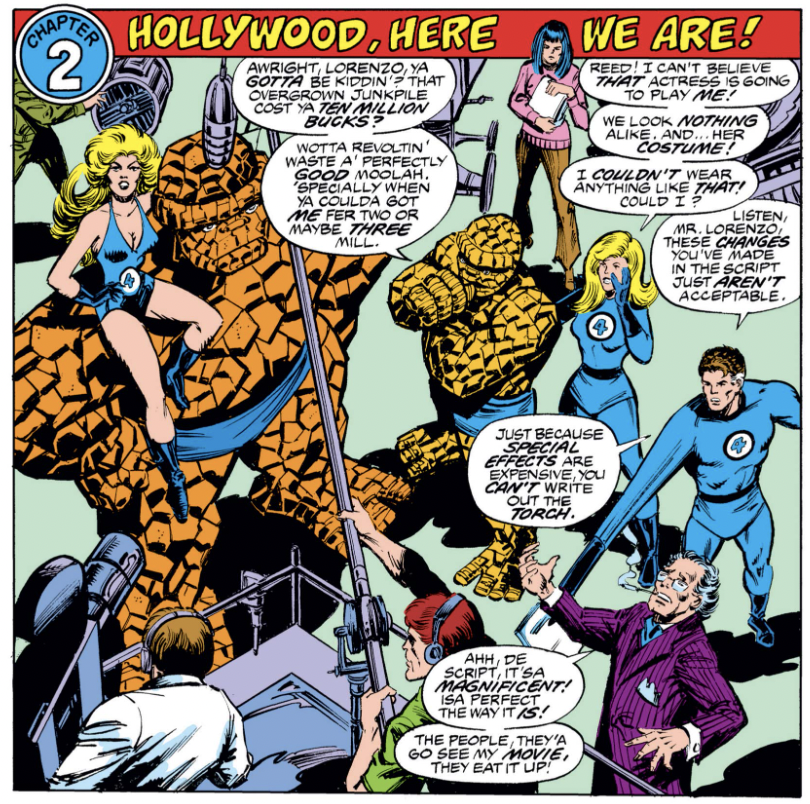
Sue’s comment about never wearing “anything like that” is sadly ironic, given what was to come.
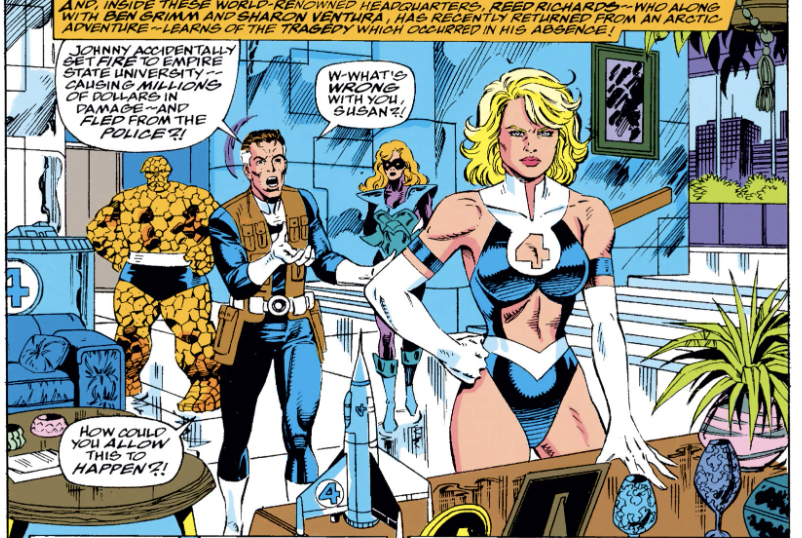
(FF 374, by Tom DeFalco, Paul Ryan and Danny Bulanadi)
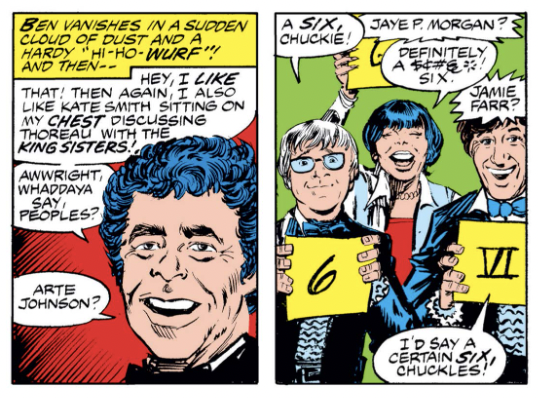
As if if couldn’t get more inane, the Thing’s fight with the robot Thing crashes into the set of the Gong Show, producing lots of unfunny jokes about a show that wasn’t particularly funny. The effect is a bit like an unsuccessful MAD magazine parody.
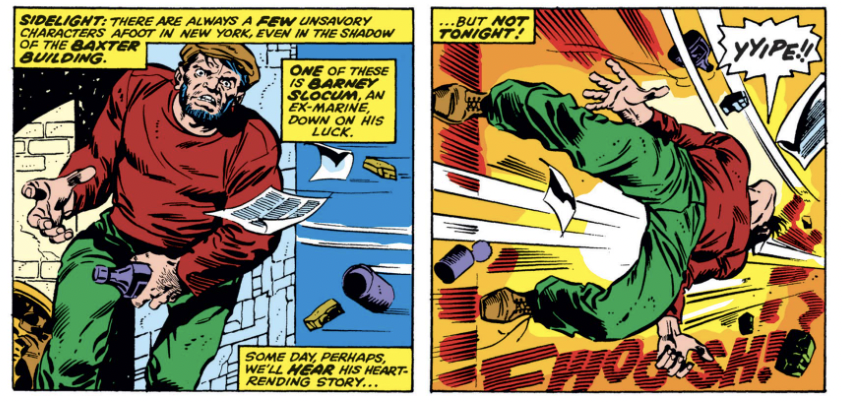
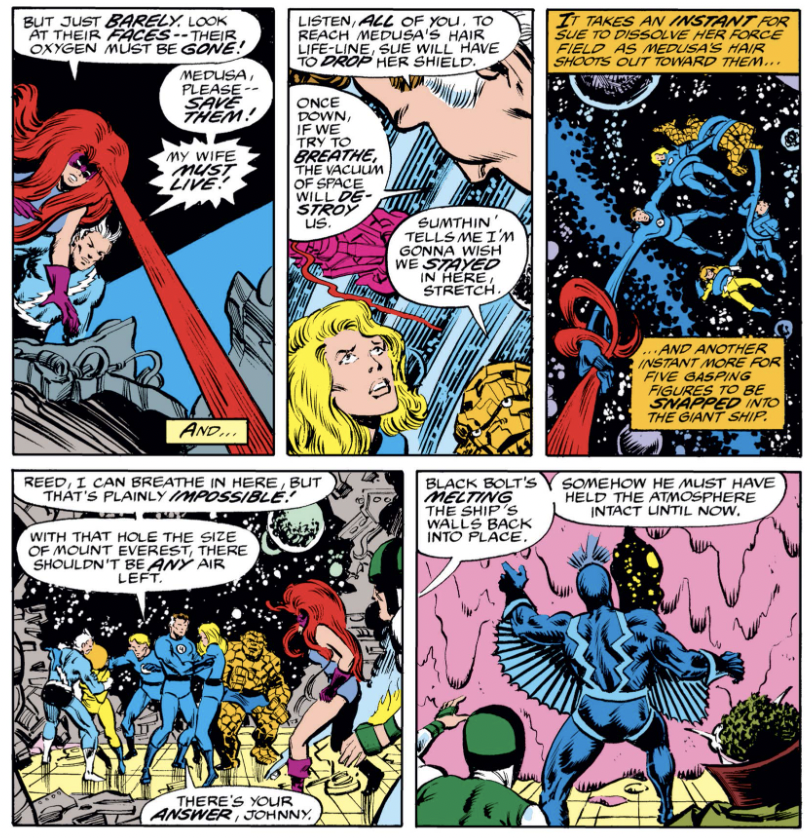
There are several instances in this comic of holes being blown through the walls of a space ship and people being sucked outside, and everyone surviving just fine. I’m sure Wolfman knew better, but didn’t want to take the effort to make it plausible.
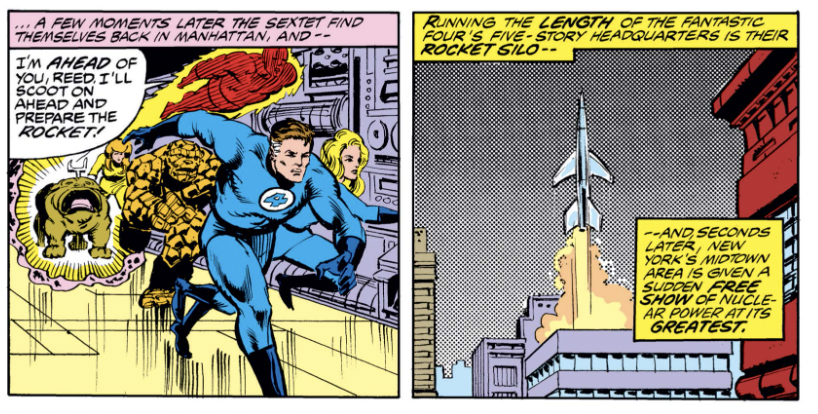
Lastly, the FF’s pogo plane is nuclear powered? In midtown Manhattan?
Anything else?
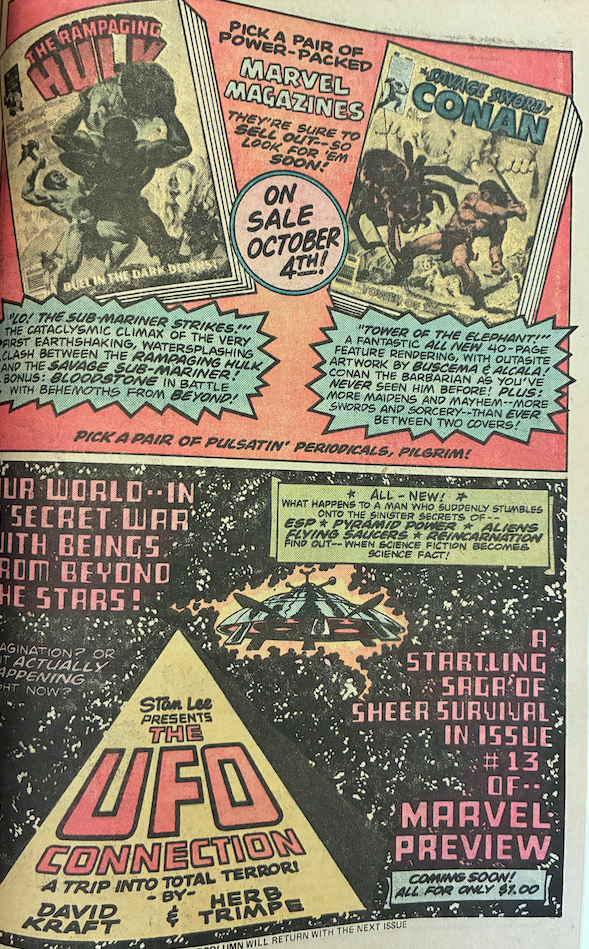
House ads. I’ve never heard of The UFO Connection.
Overall
Would have been just fine as a 22 page story.