• About Percival Henry

Percival Henry: The Fantastic Four and more

~ Blogging the Fantastic Four issue by issue (plus whatever else grabs my attention)

Percival Henry: The Fantastic Four and more

Tag Archives: Black Panther

“The World’s Greatest Comic Magazine!” Fantastic Four No. 119

03 Sunday Mar 2024

Posted by percivalhenry in The World's Greatest Comic Magazine

≈ Leave a comment

Tags

1971, Black Panther, Fantastic Four, Fantastic Four 119, Roy Thomas

Fantastic Four 119
“Three Stood Together!”
Published: November 1971
Writer: Roy Thomas
Pencils: John Buscema
Inks: Joe Sinnott
Letters: Artie Simek
Editor: Stan Lee
Cover: Buscema and Sinnott

Synopsis

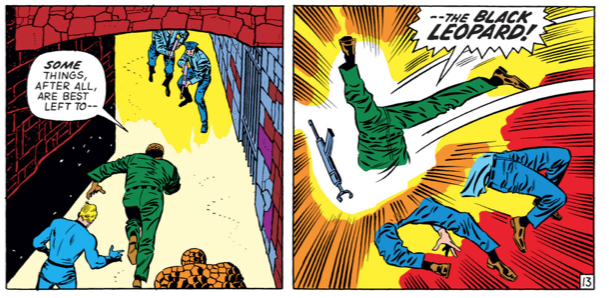
The Thing and Human Torch rescue the Black Panther from a white supremacist prison before all three tangle with Klaw.
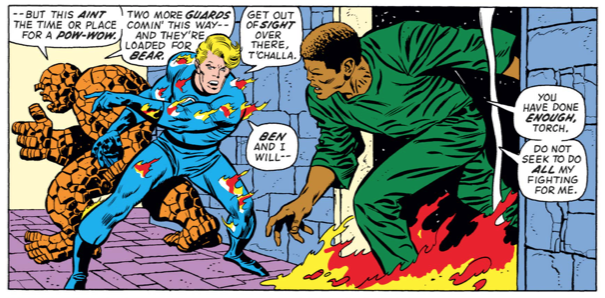

What’s going on here?

This is an interesting issue, for a few, interrelated reasons. The main development is that it’s Roy Thomas’s first time writing the FF. By this point in his career, Thomas had been writing a range of Marvel comics, including the X-Men and Avengers, and was Stan’s right-hand man in many ways. He goes on to have his own run on the Fantastic Four but this was a standalone issue for him.
Thomas’s story is surprisingly topical, as Ben and Johnny are summoned to “Rudyarda”—perhaps named after Rudyard Kipling?—a white-supremacist nation bordering Wakanda and clearly modeled after South Africa. Ben and Johnny are offended by the country’s official racism, and it’s brought up several times over the course of the story.
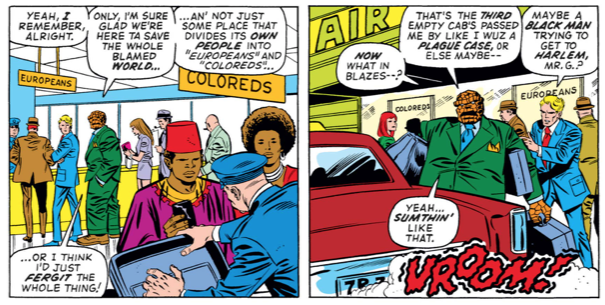
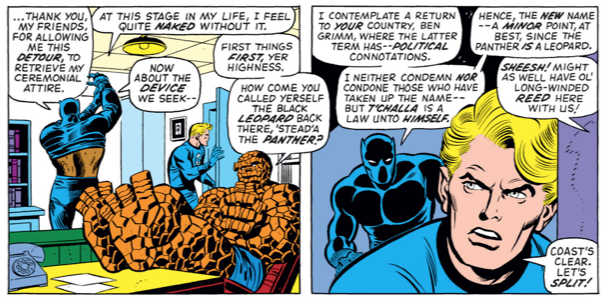
Speaking of current events, this issue also marks a name change for the Black Panther to “the Black Leopard,” specifically to avoid confusion with the activist group in the US. It didn’t last long.
What I liked

There’s a gritty, contemporary quality to the story that’s unusual in the FF, and it’s either to Stan’s credit that he allowed Thomas to take the comic in a new direction—much as he did with Archie Goodwin last issue—or he simply wasn’t paying attention. Either way, it’s feels fresh, which is a good thing after a decade of FF comics.

What I didn’t like

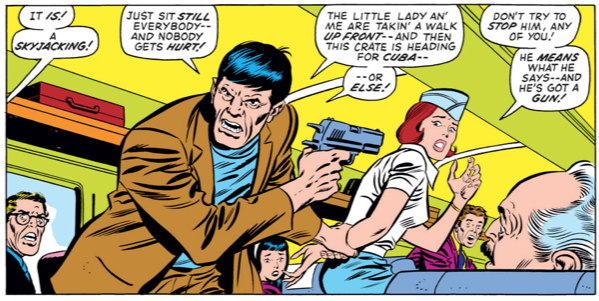
Ben and Johnny take a commercial jet to Rudyarda, which doesn’t make a lot of sense given the fleet at the FF’s disposal, except it sets up a skyjacking scene. The sequence doesn’t add anything to the story—although it allows Thomas to slip in another topical reference—and it takes up space that could be better used elsewhere.
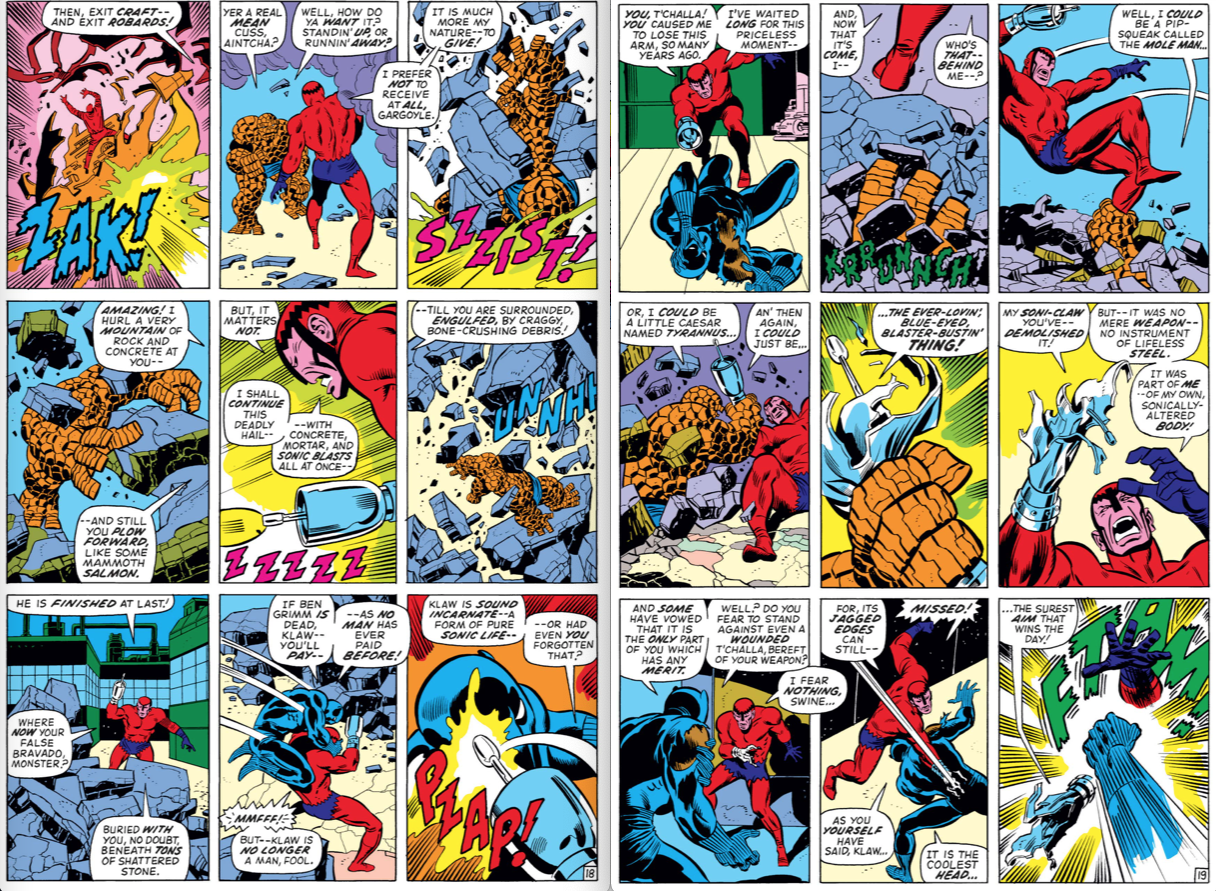
Those two pages could have been used, for example, to give the climactic fight with Klaw some breathing room. As printed, Buscema crammed 18 panels into two facing pages, creating a visual overload that is begging for more space.
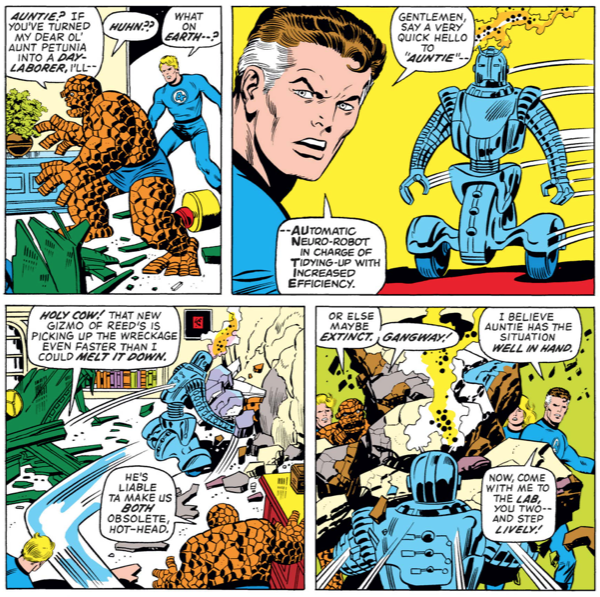
The story also opens with yet another silly fight between Ben and Johnny, and ends with the introduction of this monstrosity, which is clearly paving the way for the dreaded H.E.R.B.I.E. Thankfully, A.U.N.T.I.E. only appears in this one issue. I wish I could say the same about H.E.R.B.I.E.

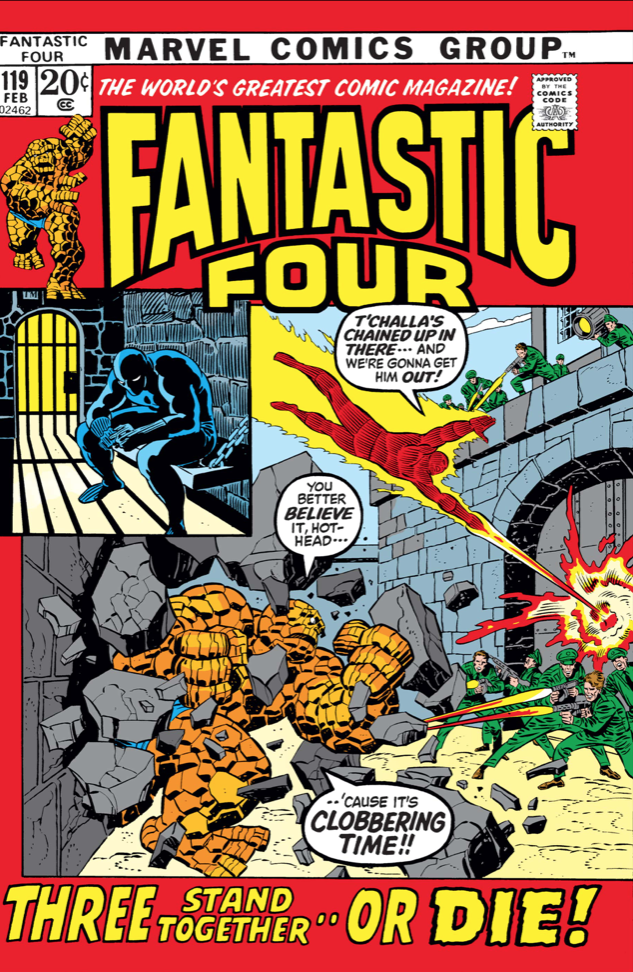
Also, that cover is terrible. Yuck.

Anything else?

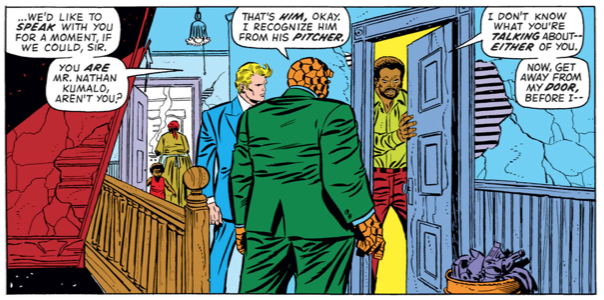
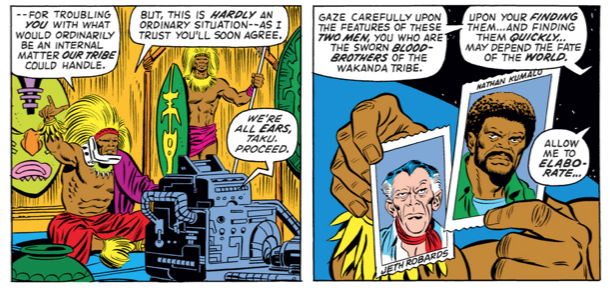
This seems to be a goof, either on the part of Thomas’s script or Simek’s lettering. But it’s pretty clear from the story these thugs are blood enemies of Wakanda, not blood brothers.

Overall

Definitely an interesting comic book.
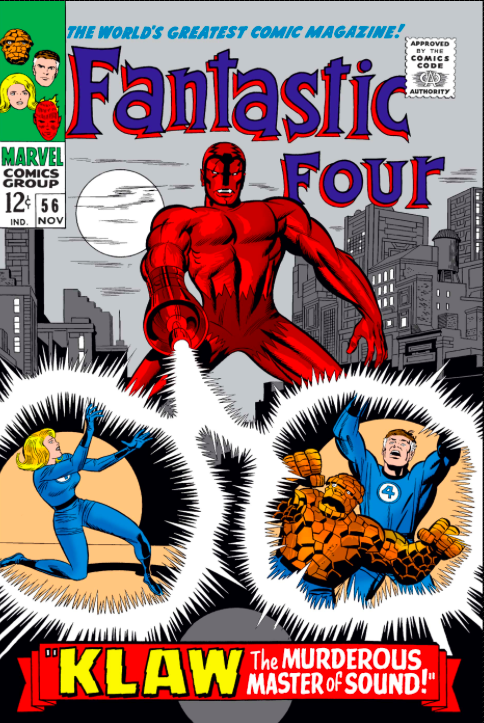
“The World’s Greatest Comic Magazine!” Fantastic Four No. 56

03 Sunday Apr 2022

Posted by percivalhenry in The World's Greatest Comic Magazine

≈ Leave a comment

Tags

1966, Black Panther, Fantastic Four, Fantastic Four 56, jack Kirby, Klaw, Stan Lee

Fantastic Four 56
“Klaw, the Murderous Master of Sound!”
Published: Nov. 1966
Story: Stan Lee and Jack Kirby
Script:Lee
Pencils: Kirby
Inks: Joe Sinnott
Letters: Artie Simek
Cover: Kirby and Sinnott

Synopsis

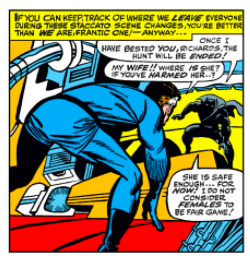
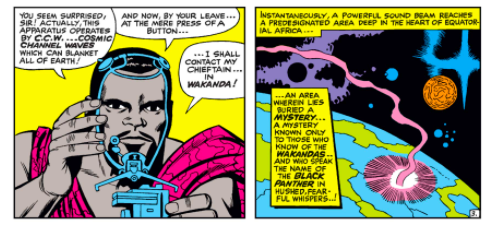
Like last issue, Fantastic Four 56 is split between the Human Torch and Wyatt Wingfoot’s quest to rescue the Inhumans, and the rest of the team in New York. In the second story, which makes up the bulk of the issue, Mr. Fantastic and the Thing are working a lab when Klaw, the villain from issue 53, reappears, now transformed into a creature of solid sound. After trapping Reed and Ben in the lab, he battles Sue, then Ben after he escapes the lab. Utilizing vibranium devices delivered from the Black Panther in Wakanda, Reed is able to absorb Klaw’s soil energy, rendering him unconscious.
In the other story line, Johnny and Wyatt try to coax Loackjaw into teleporting them back to Atillan and the Inhumans. In another arc, we check in with the Inhumans, last seen in issue 54, and learn that Black Bolt did not activate the absorb-bomb as intended because it would have destroyed the Inhumans. Medusa continues to despair. Issue 56 closes with a few panels of Dr. Doom spying on the Silver Surfer, teasing issue 57.


What’s going on here?

After a year of multiple-issue story arcs, FF 56 feels like a bit of a throwback to earlier, one-and-done issues. The story opens in the Baxter Building, with Reed and Ben kibitzing in a lab and Sue fretting about Reed’s inattentiveness. The fight with Klaw ends with the sort of deus-ex-machina reminiscent of earlier issues, too, with Reed cooking up some stratagem or device to defeat the bad guy. In this case, he calls on the Black Panther in Wakanda, signaling that he will be an ongoing part of the FF and Marvel universe into the future. In all, it’s a pretty satisfying story, and the Johnny/Wyatt/Medusa panels keeps that subplot moving as well.

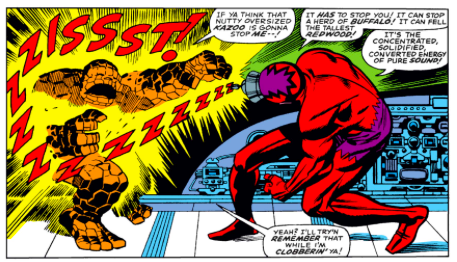
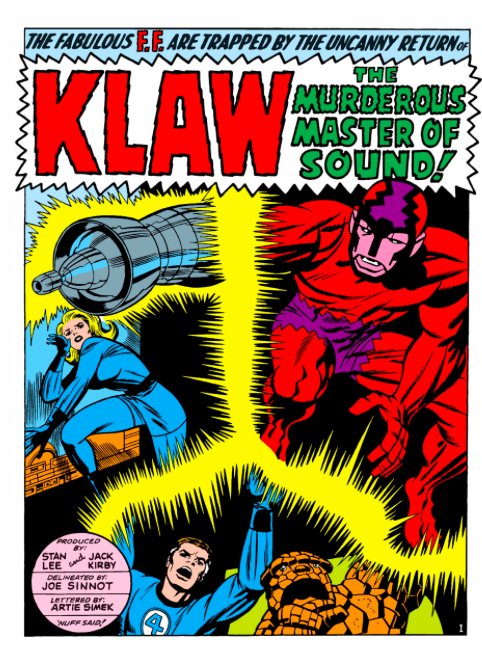
FF 56 also reintroduces Klaw as a super villain in the form we are more familiar with. It’s a great Kirby character design, and could easily have been one of the New Gods Kirby created five years later. One question is whether Stan and Jack had this transformation, and his sonic cannon in mind, when they named him Klaw in issue 53, or if his name inspired the character design. If anyone has the answer, I’d love to know.


The sexist sixties

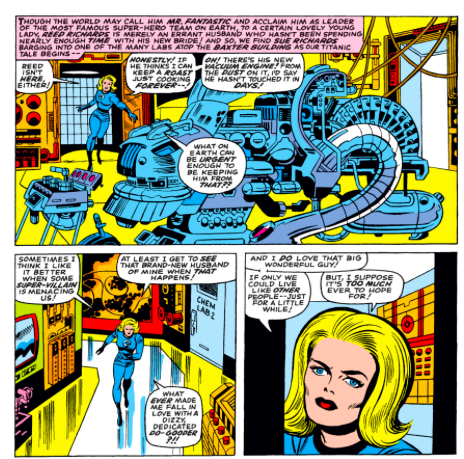
Sue is worried about her roast, and wonders why they can’t live like other people.

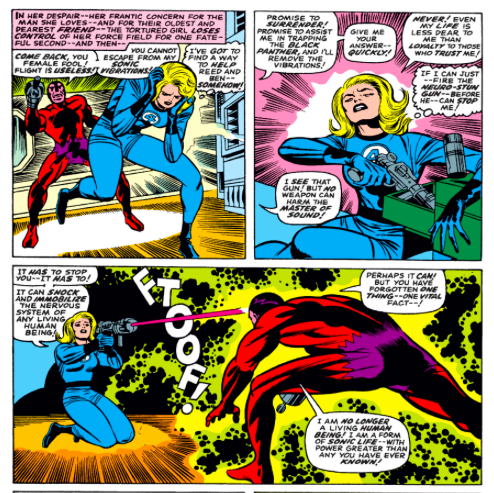
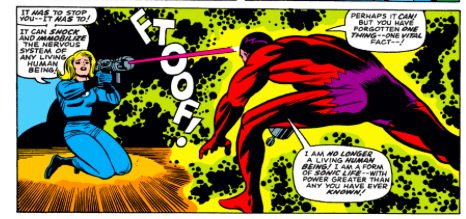
Sue does rise to the occasion later in the issue, taking on Klaw by herself.

Oops

Does Klaw have two hands here, instead of a sonic cannon where his right hand should be?


Medusa is back

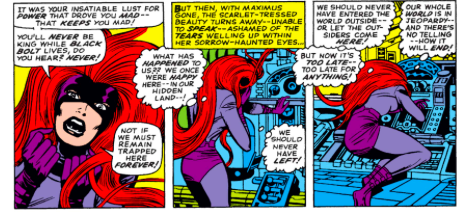
She gets a melodramatic star turn in this subplot, a reminder of her status among the Inhumans, and that Stan and Jack created her long before the others.

Weird Science

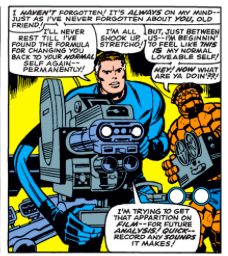
Reed and Ben appeared armed with with a movie camera and reel-to-reel tape recorder.

Comanche Blood

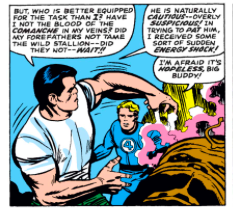
Up to now Stan and Jack have done a pretty good job of steering clear of Native American stereotypes in their treatment of Wyatt Wingfoot. Not so much here.


Dig that Kirby Krackle

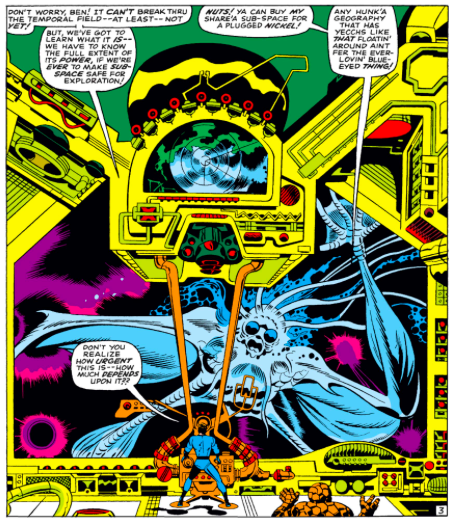
Just an amazing page here. I am pretty sure that creature makes a subsequent appearance, probably in a John Byrne FF, but I can’t place it. Anyone out there know if it reappears?

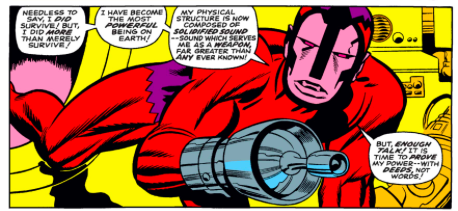
Klaw looks appropriately weird and menacing in this panel:


Some actual Krackle here:

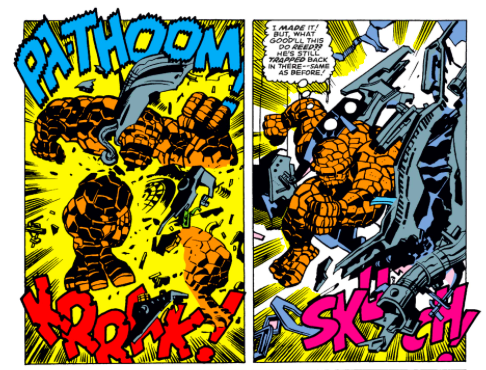
And some great energy here:


Next issue: The original Human Torch returns in Annual No. 4!

“The World’s Greatest Comic Magazine!” Fantastic Four No. 53

13 Sunday Mar 2022

Posted by percivalhenry in The World's Greatest Comic Magazine

≈ Leave a comment

Tags

1966, Black Panther, Fantastic Four, Fantastic Four 53, jack Kirby, Klaw, Stan Lee

Fantastic Four 53
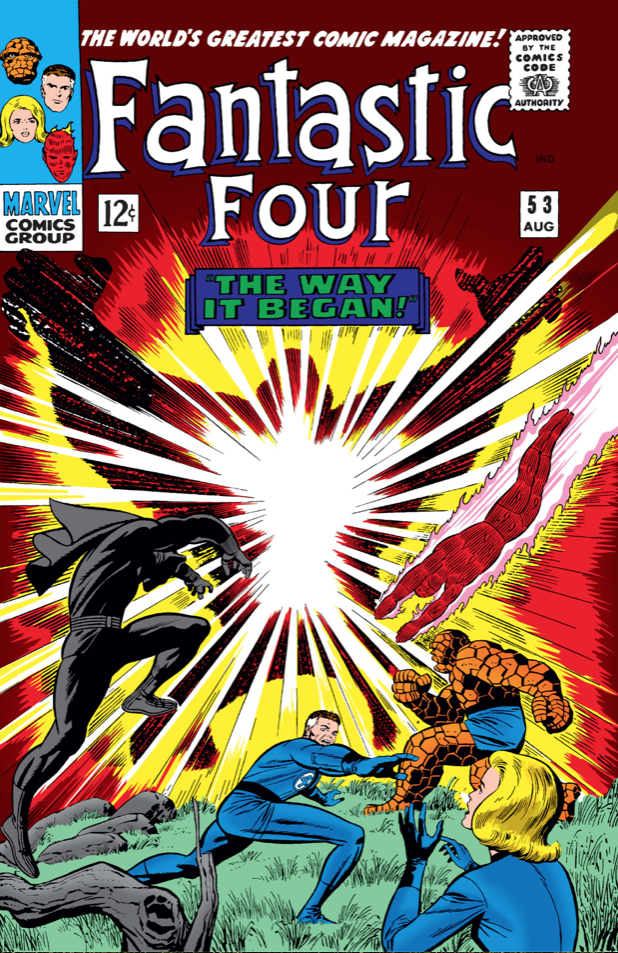
“The Way it Began!”
Published: May 1966
Story: Stan Lee and Jack Kirby
Script: Lee
Pencils: Kirby
Inks: Joe Sinnott
Letters: Artie Simek
Cover: Kirby and Sinnott

Synopsis

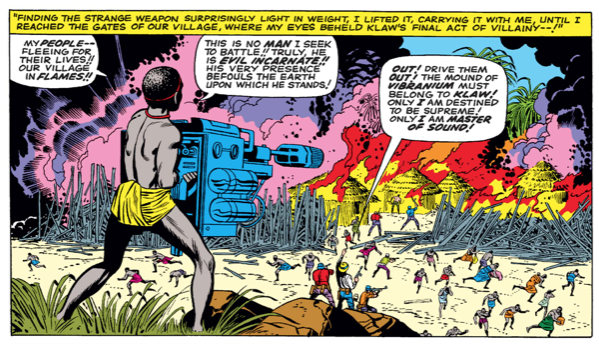
After defeating the Black Panther in the last issue, the Fantastic Four (plus Wyatt Wingfoot) are now his guests. T’Challa explains his kingdom’s wealth and technological prowess derives from vibranium, a rare mineral that can absorb vibrations. He then tells the FF his origin: His father, T’Chaka, was murdered by Klaw (later named Ulysses Klaw), a villainous scientist who attempted to steal Wakanda’s vibranium. A young T’Challa chased them off by seizing Klaw’s sound weapons, and maimed Klaw in the process. T’Challa then devoted himself to revenge by adopted the mantle of the Black Panther.

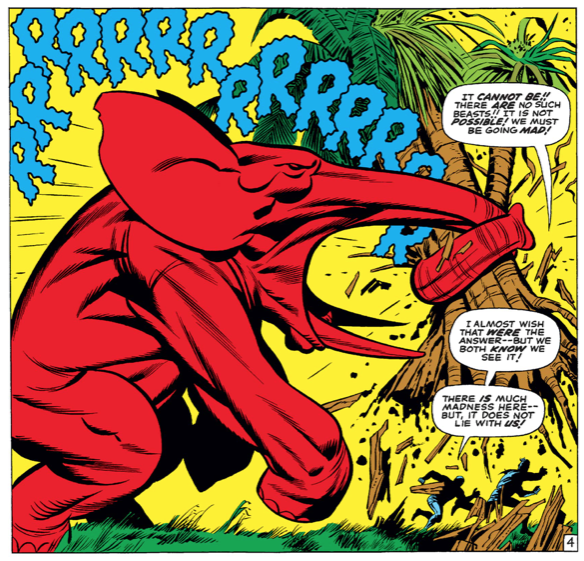
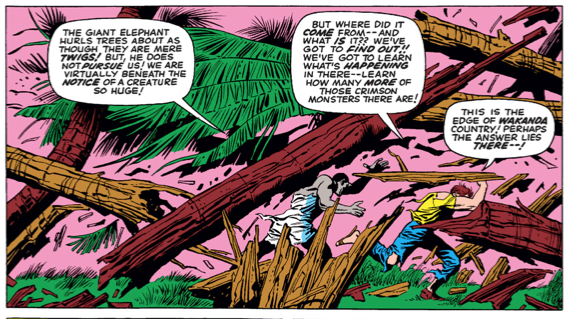
Meanwhile, strange red monsters are rampaging through the Wakanda. The FF join T’Challa to battle the creatures, which are revealed to be made of solid sound by Klaw. As the FF fight the monsters, T’Challa tracks Klaw to a cave, where they battle until the Black Panther overload’s Klaw’s machinery, causing the cave to collapse as T’Challa escapes. With the FF’s encouragement, T’Challa pledges to continue to fight injustice while a battered Klaw enters his “sound transformer” machine.

What’s going on here?

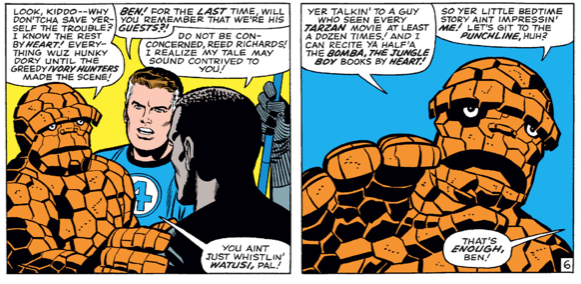
FF 53 unveils the origin of the Black Panther, a story expanded on in much greater length over the decades. The main elements remain the same: T’Challa is from a royal lineage that venerated the Black Panther totem, and he swore revenge after the murder of his father by a plundering European. Stan and Jack seem aware how cliched the story sounds, so they employ Ben to wink at the audience.

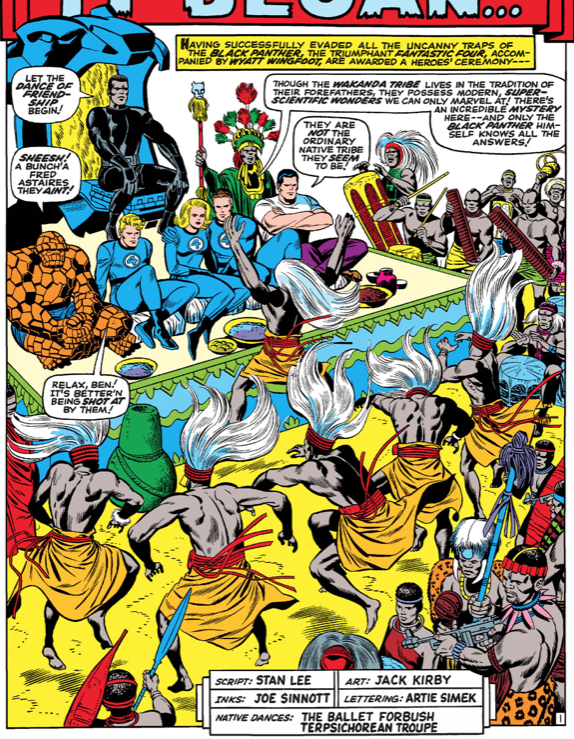
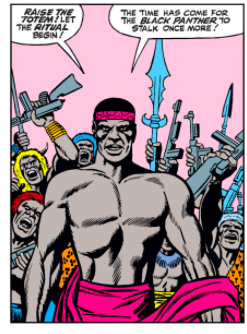
Despite the relative progressivism of the idea that Wakanda is a technologically advanced society hidden in the African jungle, it’s hard for Stan and Jack to escape the exoticism that feels inevitable when comic characters travel to Africa. The splash page, as wondrous as Kirby makes it, embodies the contradictions in the treatment of T’Challa and Wakanda.

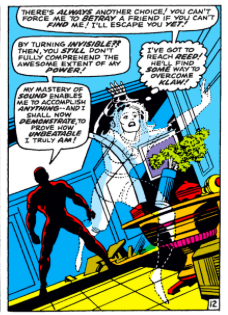
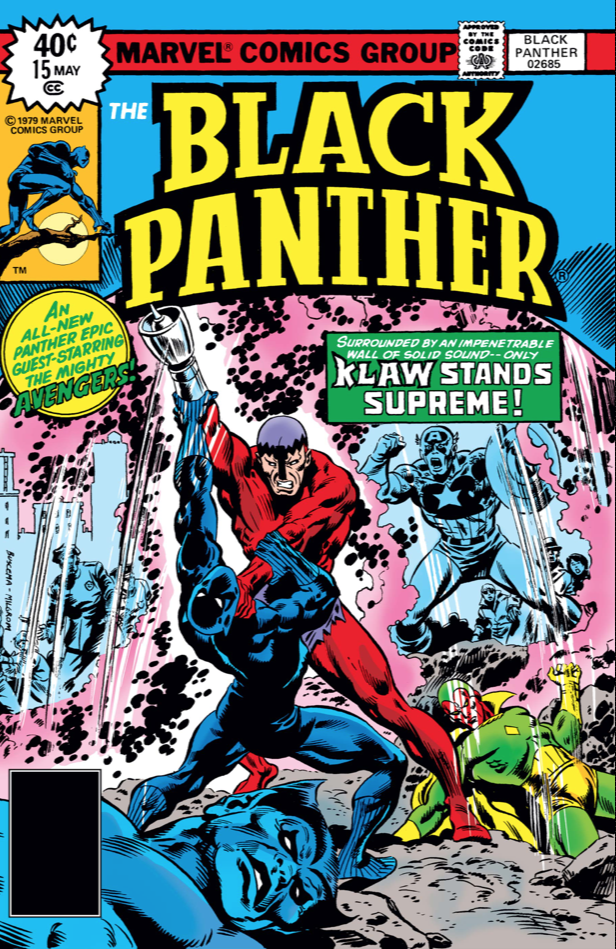
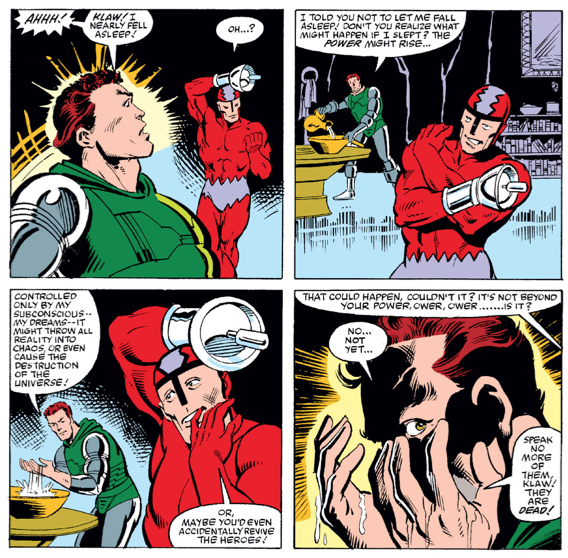
FF 53 is also the debut of Klaw, who goes on to become a major Marvel villain, who will debut a much different look in a few issues. He’s most associated with the Black Panther, but over the years battles the FF, Avengers and Daredevil, and plays a starring role in the first Secret Wars series (written as a loopy idiot by Jim Shooter).

Black Panther 15 (1979, J. Buscema/Milgrom)
Secret Wars 12 (1985, Shooter/Zeck/Beatty)


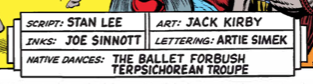
Crazy Credits

An Irving Forbush reference

Living in the future

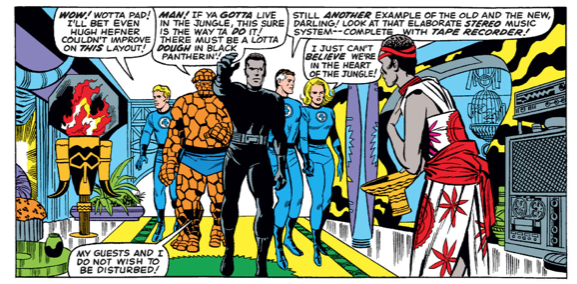
Reed is impressed by T’Challa’s hi-fi system, which includes … a tape recorder. And note the nod to Hugh Hefner.

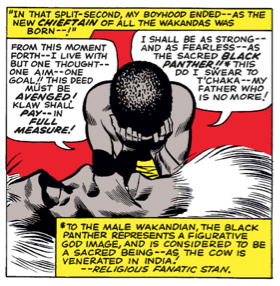
Comparative Religion 101

Stan educates the reader via footnote.

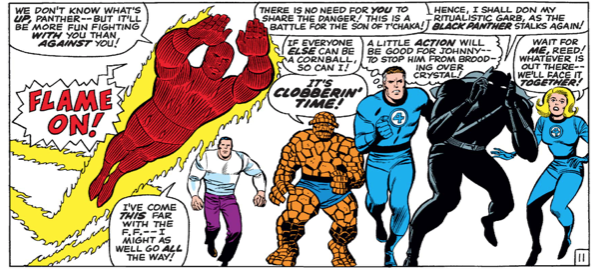
It’s Clobberin’ Time

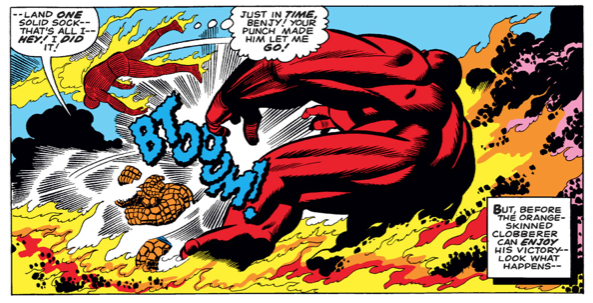
There’s something muted about its use in this panel, which is one of the first when Ben says it without simultaneously delivering a punch. This might mark it’s transition from an exclamation to an all-purpose catch phrase, as Ben even notes how “cornball” it sounds.

The sexist sixties

Only Sue is scared of the loud noises.


Dig that Kirby Krackle

Lots of cool stuff from Jack in this issue. Like this:

And this:

And this:

Next issue: The return of the Inhumans!

“The World’s Greatest Comic Magazine!” Fantastic Four 52

26 Saturday Feb 2022

Posted by percivalhenry in The World's Greatest Comic Magazine

≈ Leave a comment

Tags

1966, Black Panther, Fantastic Four, Fantastic Four 52, jack Kirby, Stan Lee, Wakanda, Wyatt Wingfoot

Fantastic Four 52
“The Black Panther”
Published: April 1966
Story: Stan Lee and Jack Kirby
Script: Lee
Pencils: Kirby
Inks: Joe Sinnott
Letters: Sam Rosen
Cover: Kirby and Sinnott

Synopsis

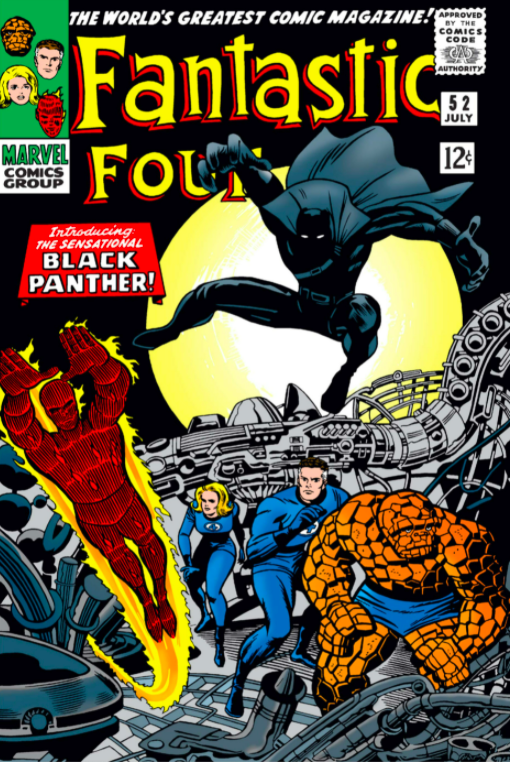
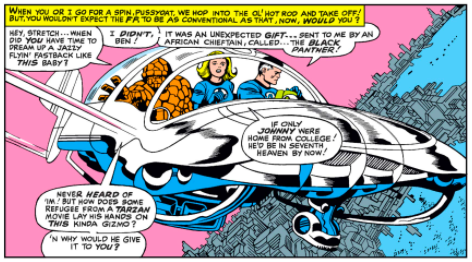
Fantastic Four 52 opens with Mr. Fantastic, the Invisible Girl and the Thing (the Human Torch is off at college) tooling around in a new flying car they received as a gift from “an African Chieftain” called the Black Panther. The Black Panther’s emissary offers the car to Reed permanently if the team accompanies him to Wakanda to take part in a hunt. Reed, saying the team needs a vacation, takes him up on the offer, first stopping to pick up Johnny and his roommate, Wyatt Wingfoot.

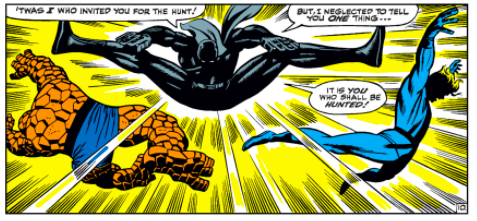
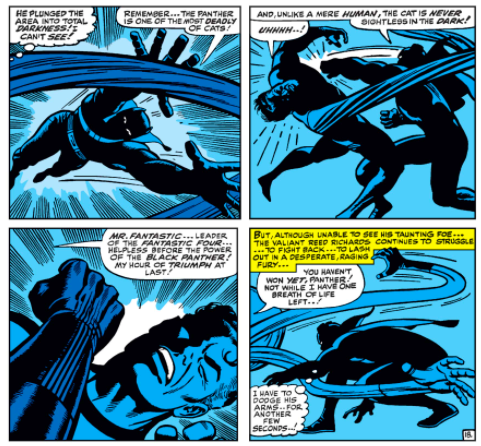
Wakanda is revealed to be technologically advanced, but when the team arrives, the emissary vanishes and the team is attacked by the Black Panther. He manages to subdue each member of the team but Wyatt manages to free them, ultimately foiling the Black Panther’s conquest. The issue ends with him beginning to explain his motives to the team.

FF 52 also cuts away from the main story to reveal the Inhumans are struggling to escape the Negative Zone that has imprisoned them, an indication that we will be seeing much more of them.

What’s going on here?

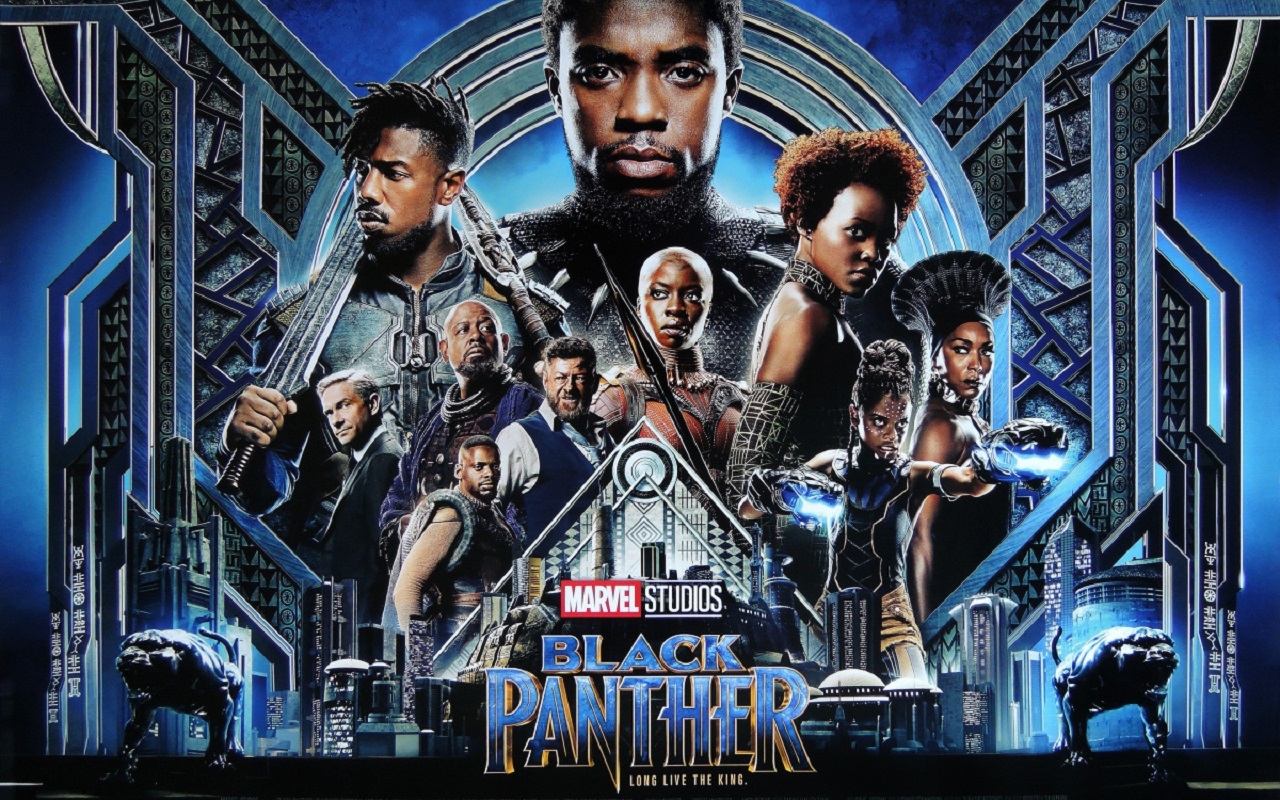
Obviously, the big development of FF 52 is the introduction of the Black Panther, a character who goes on to be a member of the Avengers (and a fill-in member of the FF for a time) and be the star of his own on-again, off-again solo title. With the success of the MCU Black Panther movie in 2018, he’s only become a bigger deal, moving in to the upper tier of Marvel characters.

The significance of the Black Panther isn’t just that he’s a black, or African, hero—although both were rarities at the time—but that he upends so many of the stereotypes of blacks and Africans that were (and to some extent still are) pervasive in comics. Wakanda, as created by Stan and Jack, isn’t a primitive backwater, but a sophisticated enclave. T’Challa isn’t a hot-blooded savage, but a calculating scientist. The Fantastic Four wasn’t lured to Africa by a villain, but by a hero. In a world where B’wana Beast was still waiting to debut, Black Panther is a remarkable creation.

Given the Black Panther’s impact, it’s easy to overlook the other big development in FF 52, which is the realization of Wyatt Wingfoot as a bona fide member of the FF’s supporting cast. Wyatt was introduced as Johnny’s college roommate in issue 50 and we learned a bit more about him last issue—his dad was a standout athlete but Wyatt had no interest in joining the college football team—but he really comes into his own here.

Like the Black Panther, Wingfoot, a Native American, refuses to conform to the comic book stereotype. He doesn’t wear a fringed jacket or a feather, he doesn’t talk like Tonto, and even if he does evince skill as a tracker, he’s more adept at thinking than fighting. Wyatt doesn’t have the same profile of the Black Panther—surprisingly, he never gains powers or becomes a real super hero—but remains a classic member of the FF’s supporting cast.

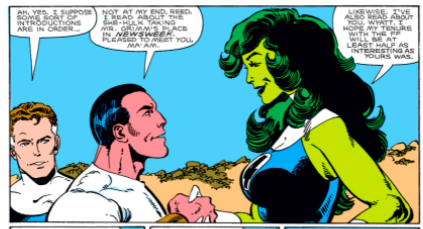
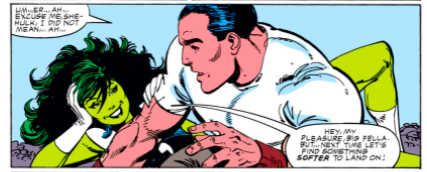
He later becomes She-Hulk’s love interest, adding a new dimension to his character (even if he is wearing the same T-shirt). They meet in FF 269-270 (written and illustrated by John Byrne).


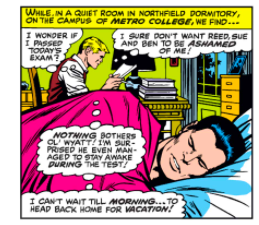
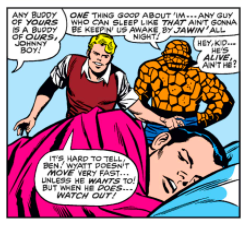
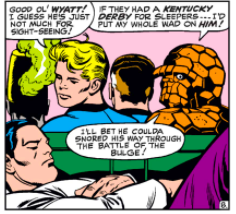
A fun running gag in FF 52 is Wyatt’s imperturbability. He seemingly can sleep through anything.

Crazy credits

The sexist sixties

The Black Panther may be technologically sophisticated, but he’s not exactly progressive.


Weird science

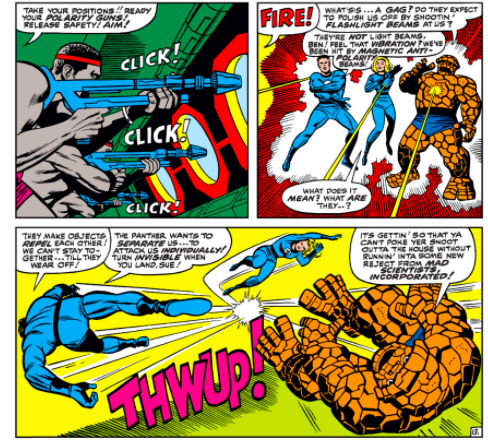
There’s a lot of dubious claims in this issue. Like these “cosmic channel waves”:

And these polarity guns:


The comic code was here

Shouldn’t T’challa have nipples?

Dig that Kirby Krackle

Some great stuff from the King:


These panels are amazing (Joe Sinnott deserves a lot of credit here, too):


Next issue: The FF and the Black Panther fight Klaw!

Very Short Review: Black Panther (2018)

21 Wednesday Feb 2018

Posted by percivalhenry in Very Short Review

≈ 1 Comment

Tags

Black Panther, Chadwick Boseman, entertainment, jack Kirby, Marvel, Michael B. Jordan, movies, Ryan Coogler, show business, Wakanda

For anyone paying attention, yes, it’s been a very long time since I posted on this blog. Sorry.

I was moved to pick it up again after seeing Black Panther, and leaving the multiplex with some thoughts that seemed bigger than just a Facebook post. Warning: there will be spoilers

It’s hard to separate Black Panther, the movie, from Black Panther, the cultural event. Much has rightly been made of its historic significance, a big-budget popcorn movie with a black director and mostly black cast. The New York Times had no less than 10 articles about the movie in the week before its opening, touching on everything from its hair styling decisions, to the appropriateness of white children donning Black Panther masks. When Marvel first announced the movie four years ago, it had no way of knowing it would land at such a fraught moment for race relations in the US, and for the US’s relations with the rest of the world (and particularly with “shit hole” countries). Timing in movie marketing, as in all things, is everything, and Black Panther—a declaration of African American creativity, political significance and, yes, buying power—has arrived just when we needed it most.

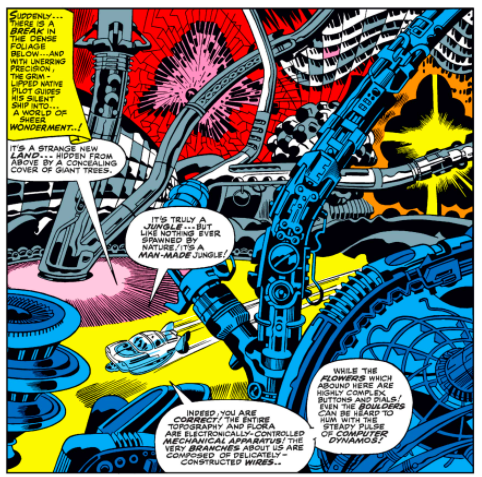
Also welcome is the movie’s African-ness, which makes it refreshingly distinct, and it’s one big reason to recommend the movie. Under director Ryan Coogler, fictional Wakanda isn’t merely the backdrop to the story, but virtually a leading character. Every scene reveals a new wonderment, from its interpretation of African tradition, such as T’Challa’s coronation beneath a waterfall festooned with hundreds of his countrymen in traditional attire, to a dizzying plunge into the nation’s African-influenced technological heart. Coogler’s vision of Wakanda is different from that of Jack Kirby’s, its inventor, who drew it as mechanical jungle in 1966, but it’s faithful to the spirit of Kirby’s vivid imagination. Others are more qualified than me to judge how much of its depiction of African culture is authentic and how much is Hollywood pastiche, but its world-building ambition is dazzling.

Black Panther’s challenge is presenting characters and a story to match the wonderment of Wakanda, and unfortunately that’s where it falls short. The plot hinges on the machinations of Killmonger, an exiled prince of Wakanda who returns to usurp the throne, but it takes far too long to build momentum. It’s almost derailed by a detour to Korea, and a pointless melee in a casino (maybe it’s a trend: The Last Jedi had a similarly unnecessary casino scene), before ending with a confusing and  implausible fight scene for the future of a nation that seems to involve only about two dozen combatants. There’s also a distracting and pointless plot point involving a CIA agent, played by Martin Freeman, shooting down cargo planes. Very little seems urgent, and it’s telling that one of the moments of real drama comes when Killmonger orders the burning of a few plants.

Killmonger is at least a compelling villain, with a backstory and motivations more complex and nuanced than those of 99% of comic book bad guys. As played by Michael B. Jordan, he’s easily the most charismatic character on the screen, and that’s a big part of the movie’s problem, because T’Challa, the Black Panther, never is. It’s strange for the protagonist of an action movie to fade into the background, and yet T’Challa never feels essential to his own movie. Part of the issue is the producers’ inclination to turn what should be a solo story into a team movie, and many of the qualities that make Black Panther a great comic book character are farmed off to the supporting cast: Killmonger is more assertive; his sister, Shuri, is more tech savvy; his mother, Ramonda, his more regal, Okoye, his general, is more skilled in battle; M’Baku, a rival king, is more powerful.

Chadwick Boseman plays T’Challa with a soft-spoken grace, but while that works when he’s in suit and tie, it fails him in superhero garb. He’s passive, almost indifferent, and recedes as other actors step forward. The story doesn’t serve him well, either, as it’s a catalog of his humiliations and defeats: He is tongue tied into incompetence around his love interest Nakia; he barely fends off M’baku’s challenge; he fails to capture Klaue on his ill-advised mission to Korea; he foolishly agree to fight Killmonger in ritual combat before he is soundly beaten and left for dead. He then disappears from his own movie, only to be rescued by his M’baku. And in the climactic battle, he is all but irrelevant before finally defeating Killmonger. With that record, it’s no wonder his council of elders challenges his authority at every turn.

It’s a shame T’Challa’s character is so under developed, because Black Panther has so much else going for it. The good news is, as with all superhero blockbusters, there will be a Black Panther sequel, and another chance to spin a story befitting a king.

  • “The World’s Greatest Comic Magazine!” Fantastic Four Annual No. 15
  • “The World’s Greatest Comic Magazine!” Fantastic Four No. 223
  • “The World’s Greatest Comic Magazine!” Fantastic Four No. 222
  • “The World’s Greatest Comic Magazine!” Fantastic Four No. 221
  • “The World’s Greatest Comic Magazine!” Fantastic Four No. 220
  • July 2026
  • June 2026
  • May 2026
  • April 2026
  • March 2026
  • February 2026
  • January 2026
  • December 2025
  • November 2025
  • October 2025
  • September 2025
  • August 2025
  • July 2025
  • June 2025
  • May 2025
  • April 2025
  • March 2025
  • February 2025
  • January 2025
  • December 2024
  • November 2024
  • October 2024
  • September 2024
  • August 2024
  • July 2024
  • June 2024
  • May 2024
  • April 2024
  • March 2024
  • February 2024
  • January 2024
  • December 2023
  • November 2023
  • September 2023
  • July 2023
  • June 2023
  • May 2023
  • April 2023
  • March 2023
  • February 2023
  • January 2023
  • December 2022
  • November 2022
  • October 2022
  • September 2022
  • August 2022
  • July 2022
  • June 2022
  • May 2022
  • April 2022
  • March 2022
  • February 2022
  • January 2022
  • December 2021
  • November 2021
  • October 2021
  • September 2021
  • August 2021
  • July 2021
  • June 2021
  • May 2021
  • April 2021
  • March 2021
  • February 2021
  • January 2021
  • December 2020
  • February 2018
  • May 2016
  • February 2016
  • January 2016
  • December 2015
  • November 2015
  • October 2015
  • September 2015
  • August 2015
  • July 2015
  • April 2015
  • March 2015
  • January 2015
  • December 2014
  • November 2014
  • October 2014
  • September 2014
  • August 2014
  • June 2014
  • May 2014
  • April 2014
  • March 2014
  • February 2014
  • July 2026
  • June 2026
  • May 2026
  • April 2026
  • March 2026
  • February 2026
  • January 2026
  • December 2025
  • November 2025
  • October 2025
  • September 2025
  • August 2025
  • July 2025
  • June 2025
  • May 2025
  • April 2025
  • March 2025
  • February 2025
  • January 2025
  • December 2024
  • November 2024
  • October 2024
  • September 2024
  • August 2024
  • July 2024
  • June 2024
  • May 2024
  • April 2024
  • March 2024
  • February 2024
  • January 2024
  • December 2023
  • November 2023
  • September 2023
  • July 2023
  • June 2023
  • May 2023
  • April 2023
  • March 2023
  • February 2023
  • January 2023
  • December 2022
  • November 2022
  • October 2022
  • September 2022
  • August 2022
  • July 2022
  • June 2022
  • May 2022
  • April 2022
  • March 2022
  • February 2022
  • January 2022
  • December 2021
  • November 2021
  • October 2021
  • September 2021
  • August 2021
  • July 2021
  • June 2021
  • May 2021
  • April 2021
  • March 2021
  • February 2021
  • January 2021
  • December 2020
  • February 2018
  • May 2016
  • February 2016
  • January 2016
  • December 2015
  • November 2015
  • October 2015
  • September 2015
  • August 2015
  • July 2015
  • April 2015
  • March 2015
  • January 2015
  • December 2014
  • November 2014
  • October 2014
  • September 2014
  • August 2014
  • June 2014
  • May 2014
  • April 2014
  • March 2014
  • February 2014
“The World’s Greatest Comic Magazine!” Fantastic Four Annual No. 15

“The World’s Greatest Comic Magazine!” Fantastic Four Annual No. 15

percivalhenry's avatar by percivalhenry July 18, 2026
“The World’s Greatest Comic Magazine!” Fantastic Four No. 223

“The World’s Greatest Comic Magazine!” Fantastic Four No. 223

percivalhenry's avatar by percivalhenry July 14, 2026
“The World’s Greatest Comic Magazine!” Fantastic Four No. 222

“The World’s Greatest Comic Magazine!” Fantastic Four No. 222

percivalhenry's avatar by percivalhenry July 5, 2026
“The World’s Greatest Comic Magazine!” Fantastic Four No. 221

“The World’s Greatest Comic Magazine!” Fantastic Four No. 221

percivalhenry's avatar by percivalhenry June 25, 2026
“The World’s Greatest Comic Magazine!” Fantastic Four No. 220

“The World’s Greatest Comic Magazine!” Fantastic Four No. 220

percivalhenry's avatar by percivalhenry June 15, 2026
“The World’s Greatest Comic Magazine!” Fantastic Four No. 219

“The World’s Greatest Comic Magazine!” Fantastic Four No. 219

percivalhenry's avatar by percivalhenry June 7, 2026

Blog at WordPress.com.

  • Subscribe Subscribed
    • Percival Henry: The Fantastic Four and more
    • Join 74 other subscribers
    • Already have a WordPress.com account? Log in now.
    • Percival Henry: The Fantastic Four and more
    • Subscribe Subscribed
    • Sign up
    • Log in
    • Report this content
    • View site in Reader
    • Manage subscriptions
    • Collapse this bar
Loading Comments...