Tags
1972, comics, Fantastic Four, Fantastic Four 130, John Buscema, Marvel, marvel-comics, Roy Thomas
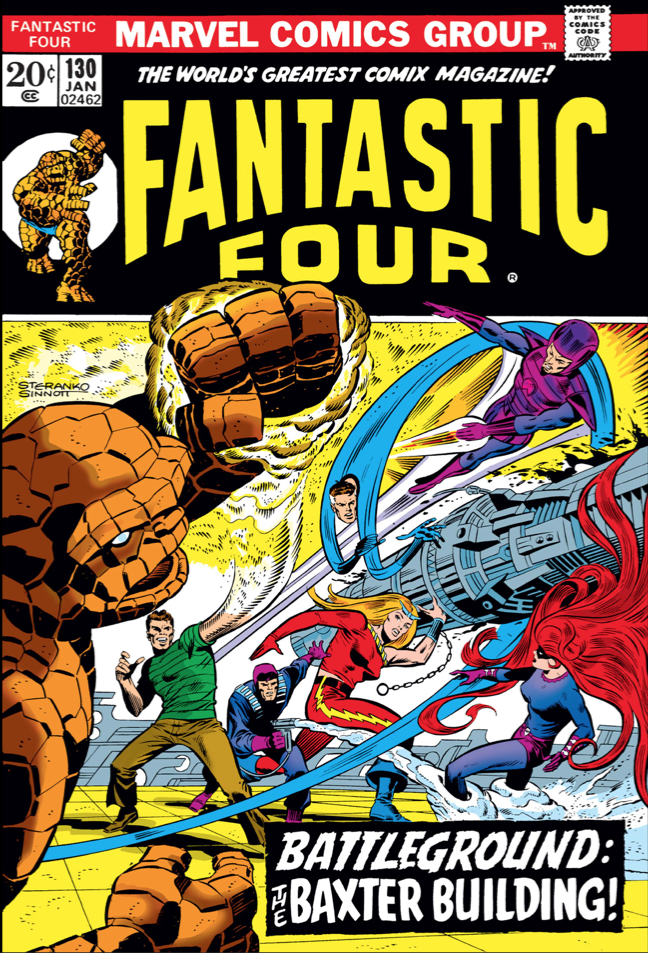
Fantastic Four 130
“Battleground: The Baxter Building!”
Published Oct. 1972
Writer: Roy Thomas
Pencils: John Buscema
Inks: Joe Sinnott
Letters: Artie Simek
Colors: Petra Goldberg
Editor: Thomas
Cover: Jim Steranko and Sinnott
Synopsis
After subduing the Thing and Meduasa, the Frightful Four—reconstituted with Thundra—take on the rest of the Fantastic Four, minus the Human Torch, in the Baxter Building and are saved only by the awakening of Franklin’s powers. In the aftermath, Sue declares she is leaving the team. Meanwhile, in the Himalayas, the Torch confronts the Inhumans, where a secret concerning Crystal is revealed to him.
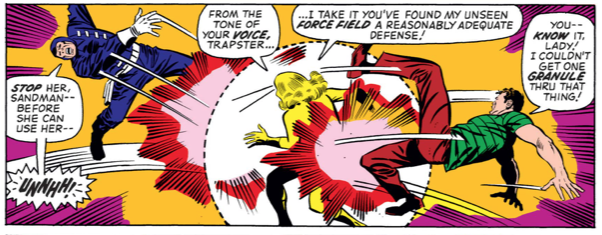
What’s going on here?
This is a jam-packed issue, with big developments in the story, and some smaller ones outside it. From an amateur-comic-historian’s perspective, it’s notable for being the first Fantastic Four issue to credit a colorist, in this case, Petra Goldberg.
The history of comic book coloring is complicated, and the technology evolves dramatically over time. But my understanding is that in the 60s, 70s and 80s, the colorist would identify what colors were needed (always a combination of cyan, magenta, yellow and black) and where they would go. They would make notes on the art (or actually color copies of the pages) that would then be used by a color separator at the printer as a guide. Because of the limitations of the process—at most, only 64 possible colors are available—and because the colorist didn’t directly work on the art like a penciler and inker, it seems they were viewed less like artists and more like technicians. Hence, they were not credited. (A pretty good explanation of all this can be found in this Comic Tropes video).
I don’t think it’s a coincidence that this changed soon after Roy Thomas became editor. Thomas also instituted an “editor” credit—here used for himself—and seemed more interested than Stan Lee in assigning proper credit where it was due (a longtime issue with Stan that we know came to haunt him).
Recall, the first issues of the Fantastic Four had no credits all, just the signatures of Stan Lee and Jack Kirby. And when credits first appeared, they were very scant and presented almost as an after thought (this is FF 10):

By FF 130, the credits for all the main creators were in place and they pretty much remained this way for decades. Note Stan Lee’s presenting credit is now his signature. That began with the previous month’s issues, and I neglected to mention it.

Also notable is that Jim Steranko penciled the cover for this issue (which is probably why the Sandman looks so much like Nick Fury). I’m not sure it’s a particularly great cover, but anything by Steranko is worth paying attention to. This is the first of three covers he did for the Fantastic Four, and are the only things he ever did with the FF during his short career.
What I liked
A big—but not the biggest—in-comic event in FF 130 is Sue’s decision to leave the team. This has been brewing for a few issues, and through Thomas’s writing she has voiced her displeasure with Reed and his constant demands that she be sidelined to look after Franklin.
Here, she again raises those objections and he again tries to shut her down:
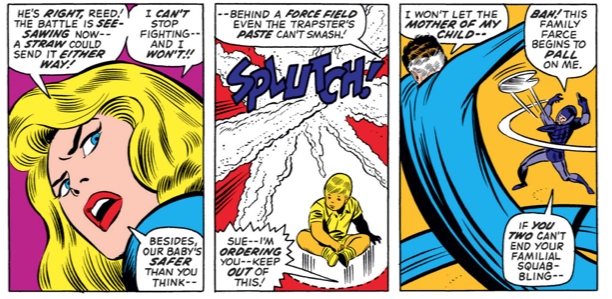
It finally boils over in the last page, featuring more jerk-like behavior from Reed:
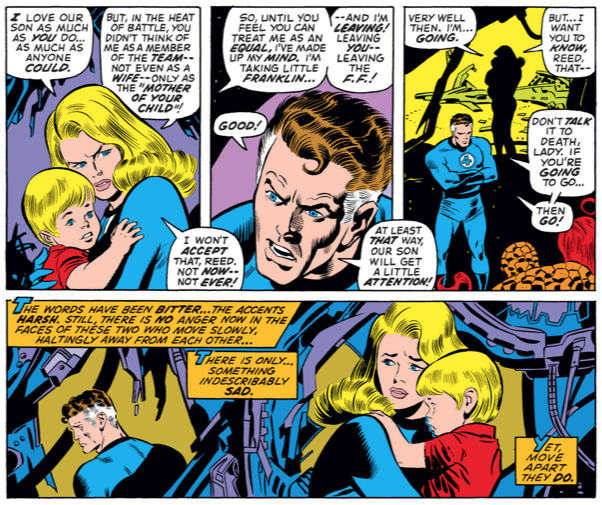
Obviously, this doesn’t stick and she eventually returns. But her departure feels like a significant milestone in the development of Sue’s character, and, perhaps, in Thomas’s repudiation of the status quo he inherited from Stan. Thomas has been writing Reed pretty much the same way Stan and Jack did for a decade, but only under Thomas did Sue finally say, enough.
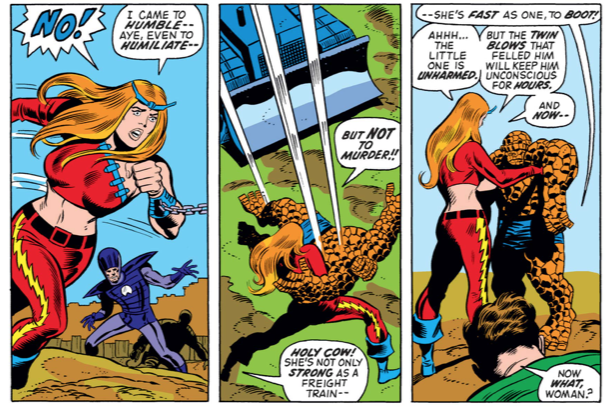
Speaking of gender dynamics, I also liked how Thomas played with cliches and stereotypes through Thundra, the Femizon from another dimension where women dominate men. Here, she picks up Ben like a doll:
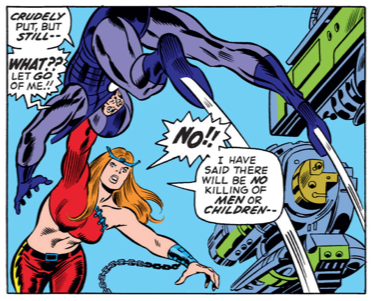
Or here, where she refers to “men and children:”
Thomas also created an interesting and suspenseful sidebar with the Human Torch and Crystal. I legitimately have no idea what he sees here (we have to wait until next issue):
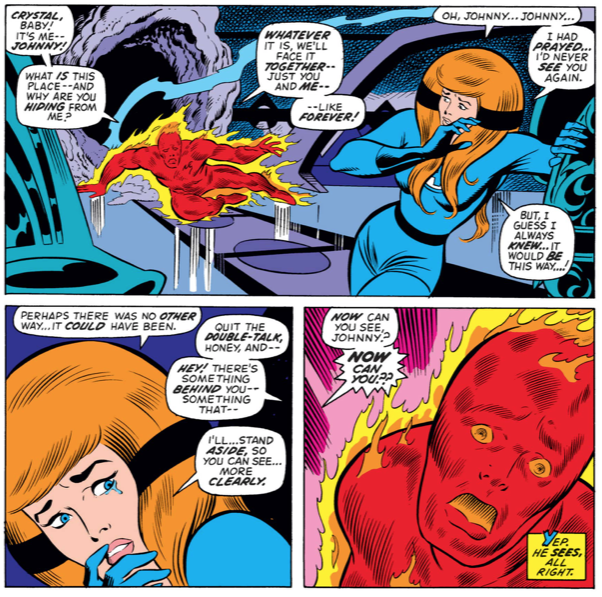
The Inhuman subplot is another example of Thomas’s skill as a storyteller. There’s an awful lot going in in the main plot, yet he’s able to jump out and devote a few meaningful pages to the Johnny/Crystal dynamic that builds character and sets up future arcs, all without distracting from the bigger story. Further evidence that the FF is in very good hands.
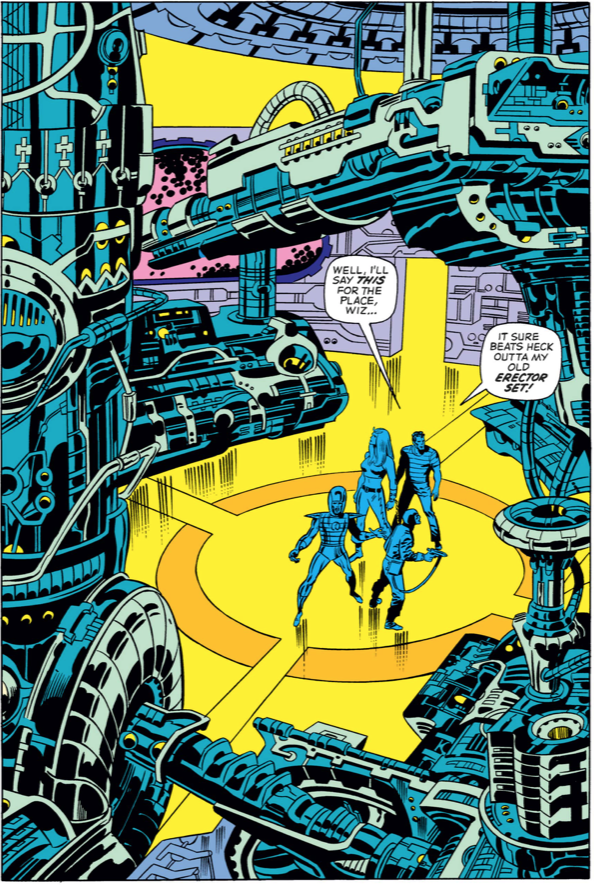
Oh, and I would remiss if I didn’t point out this jaw-dropping splash page from Big John. It doesn’t have a big impact on the plot, but it seems like it’s a fun opportunity for him to flex his Kirby muscles.
What I didn’t like
The biggest in-story development in FF 130 is the awakening of Franklin’s powers. Although hinted at a few issues ago, this is the first real manifestation of them.
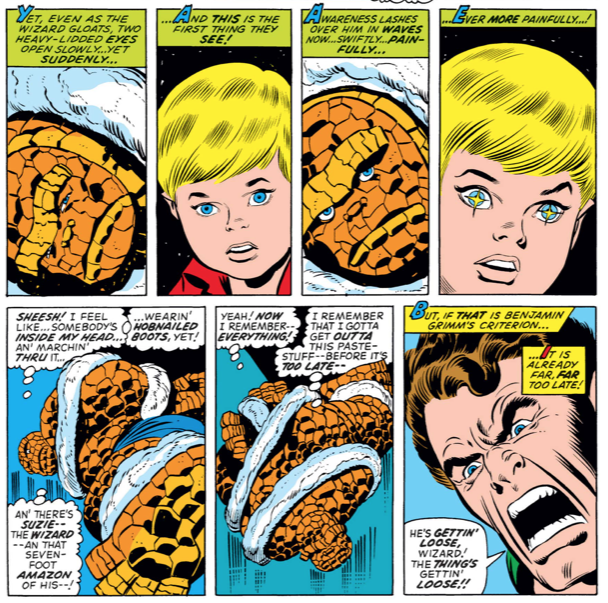
In the bounds of this issue, it’s fine and I imagine for readers at the time, it must have been pretty cool. But it opened the door for decades of stories about Franklin’s powers that, on the whole, have been unsatisfying, confusing and distracting. No two writers seem to agree what to do with Franklin, and while some have embraced him as a mutant with god-like powers—Jonathan Hickman had him creating whole universes—others would be happier if he was just a kid. Dan Slott depowered him and Ryan North has a goofy retcon that has him using his powers one day a year.
I am sure Thomas didn’t know the can of worms he was opening up here, but the does-he -or doesn’t-he nature of Franklin’s powers been a perennially frustrating aspect of the Fantastic Four
Also, thumbs down for the story title—”Battleground: Baxter Building”—a combination of words which has been used probably a dozen times.
Anything else?
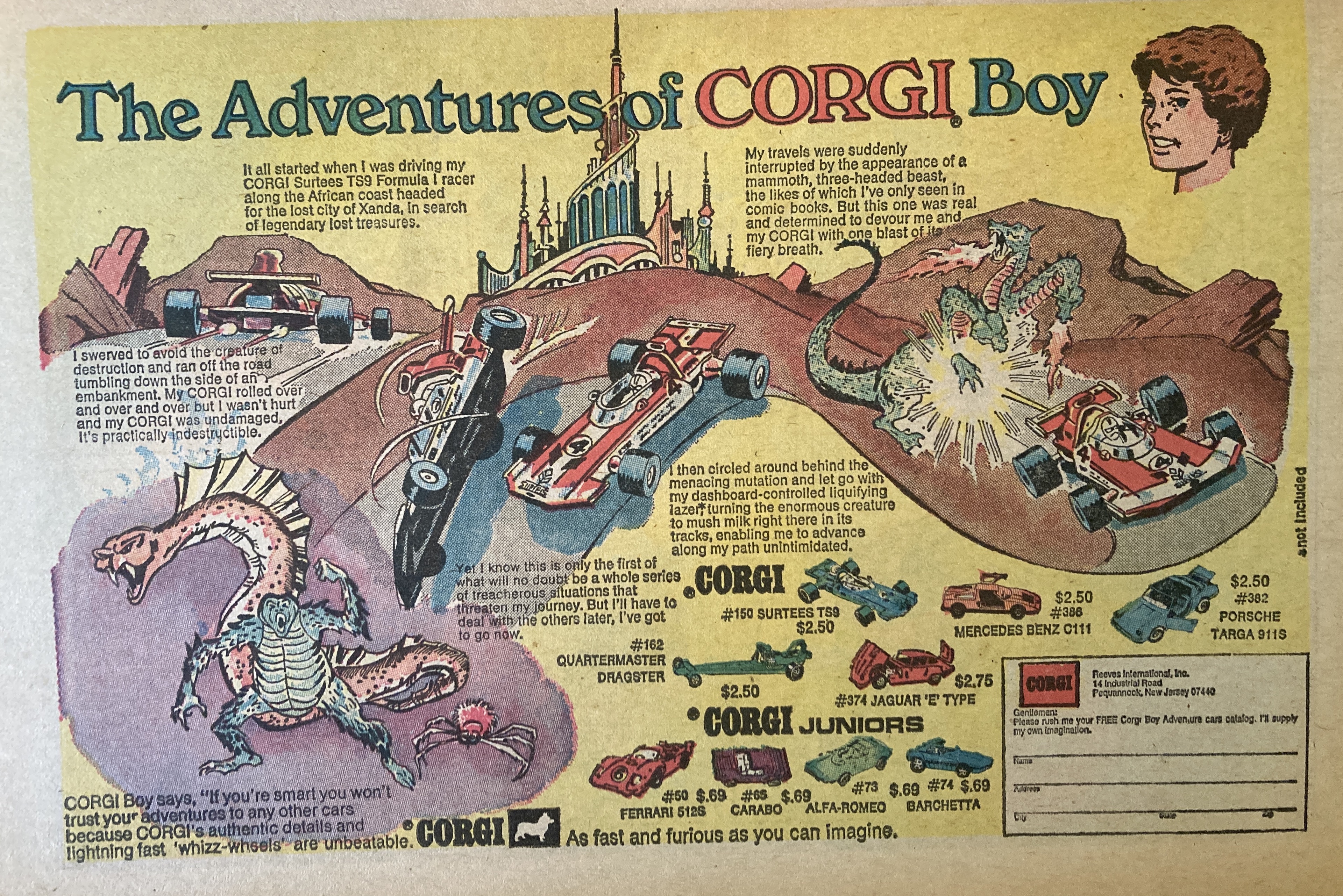
Some more ads for cool toys:

Overall
An excellent comic. Roy’s best to date.

