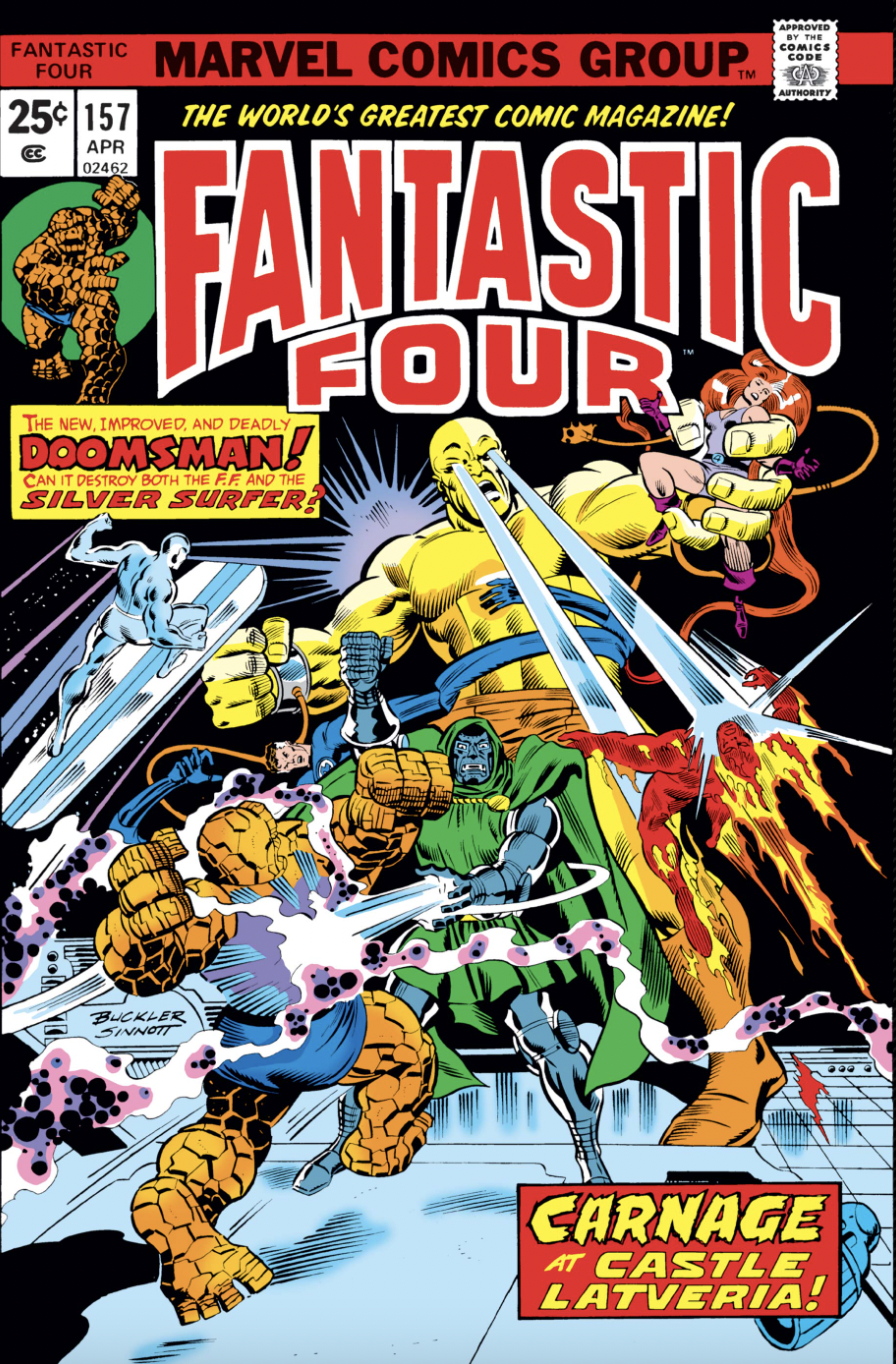
Fantastic Four 157
“The Endgame Cometh!”
Published January 1975
Writers: Roy Thomas and Len Wein
Pencils: Rich Buckler
Inks: Joe Sinnott
Letters: Joe Rosen
Colors: Petra Goldberg
Editor: Thomas
Cover: Bucker and Sinnott
Synopsis
Trapped in Dr. Doom’s castle, the Fantastic Four battle Doomsman II, an android imbued with the Silver Surfer’s power. Meanwhile, the Silver Surfer’s lost lover is revealed to be a Latverian peasant girl, Helena, brainwashed by Doom into believing she is Shalla-Bal. The Surfer then joins the FF to defeat Doomsman, and they are about to go to battle with Doom himself when Helena begs them to spare Doom’s castle from destruction. The issue ends with the demon Mephisto, the Surfer’s nemesis, revealing that Helena was Shalla-Bal all long, put on earth to torment the Surfer.
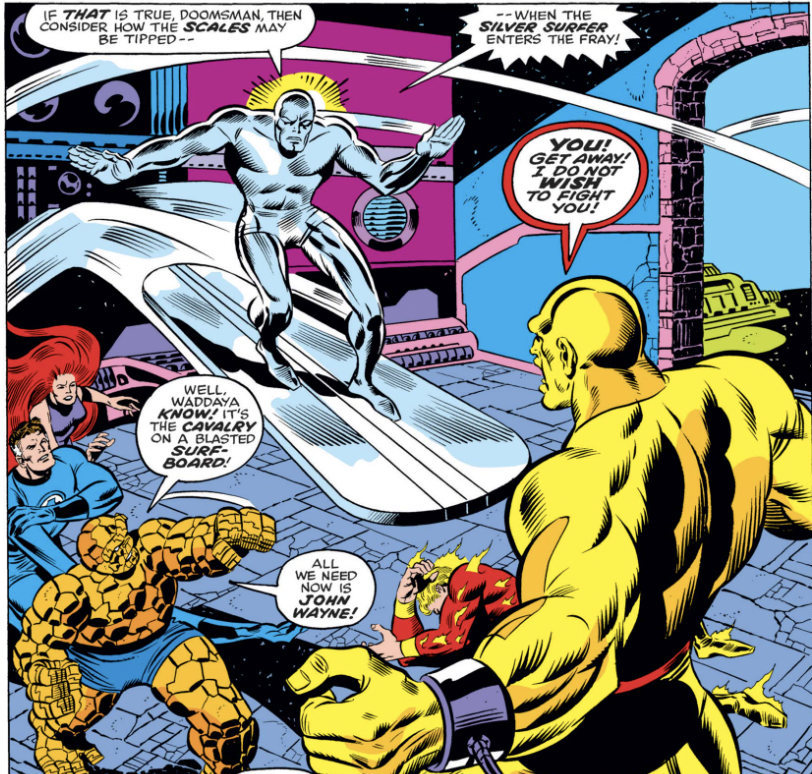
What’s going on here?
This is Roy Thomas’s first full issue in his return gig as the Fantastic Four’s writer, and as if to announce he’s back, he’s crafted a classically complicated Thomasian story, full of odd tangents, obscure references and callbacks to plot points from earlier comics.
A big chunk of this comic’s backstory was told in Astonishing Tales 1-3, a complicated story by Thomas from 1970 that explains how Doom created the first Doomsman using cosmic rays and his own brain waves and lost control of it (the art is by the legendary Wally Wood).
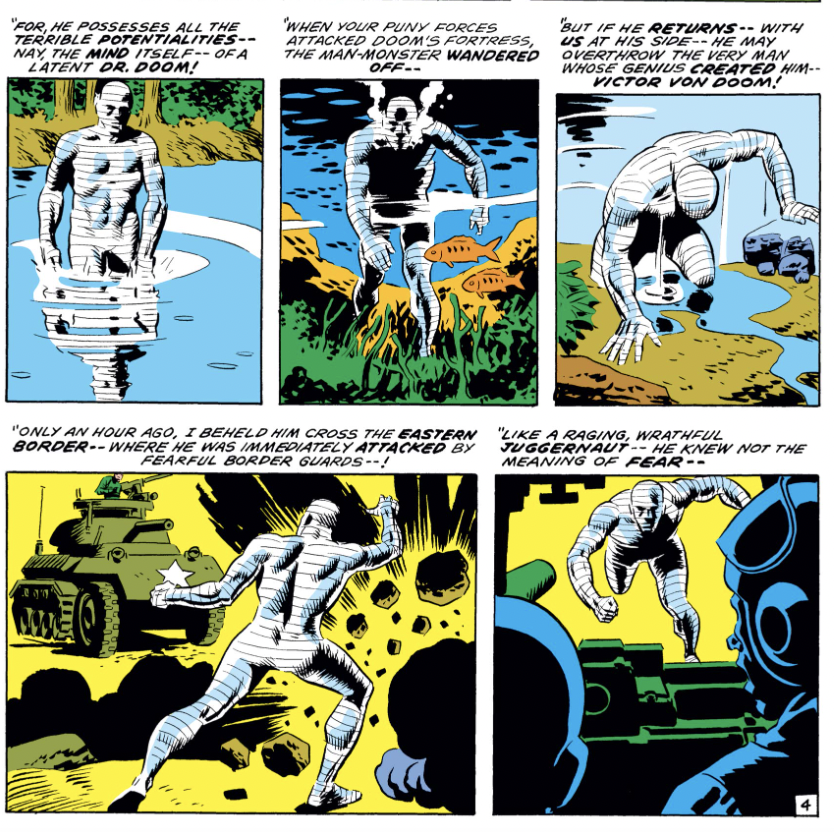
The story also references Giant-Size Super Villain Team-Up 1, a comic on sale at the same as FF 157 (also by Thomas), that among other things explains how Doom survived his seeming death in FF 144 (he crashed to the ocean and was rescued by the Sub-Mariner).
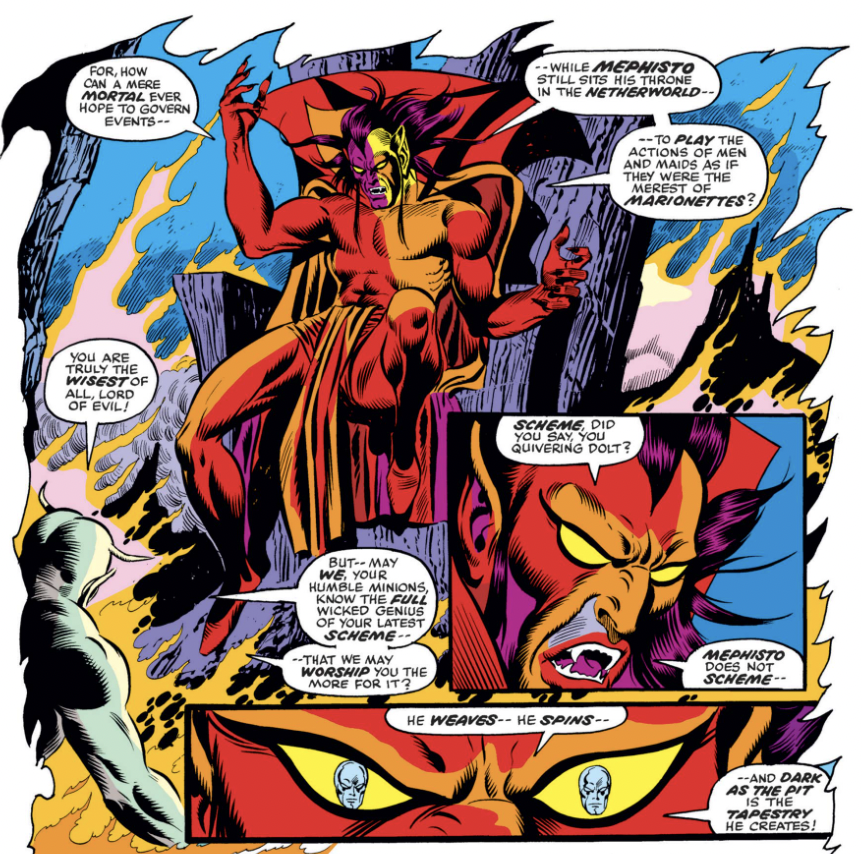
The last scene in FF 157, featuring Mephisto chewing the scenery, is basically pulled from the Silver Surfer’s own comic and I don’t recall him ever appearing in the FF prior to this comic.
There’s not a lot of explanation in FF 157 about any of these plot points, and the assumption is readers would have read these other comics. If all you read was the Fantastic Four, you’d be baffled by these goings on. It’s also reminder of how tightly woven Marvel stories were back then and how much emphasis Thomas placed on continuity. (It also makes me glad I have a subscription to Marvel Unlimited).
Lastly, another example of Thomas’s zany storytelling: titling a chapter of the comic “Zugzwang!” with no explanation. (It’s a German term used in chess, a play on the chess metaphor in the comic’s title). And self-referential footnotes mocking his own writing.
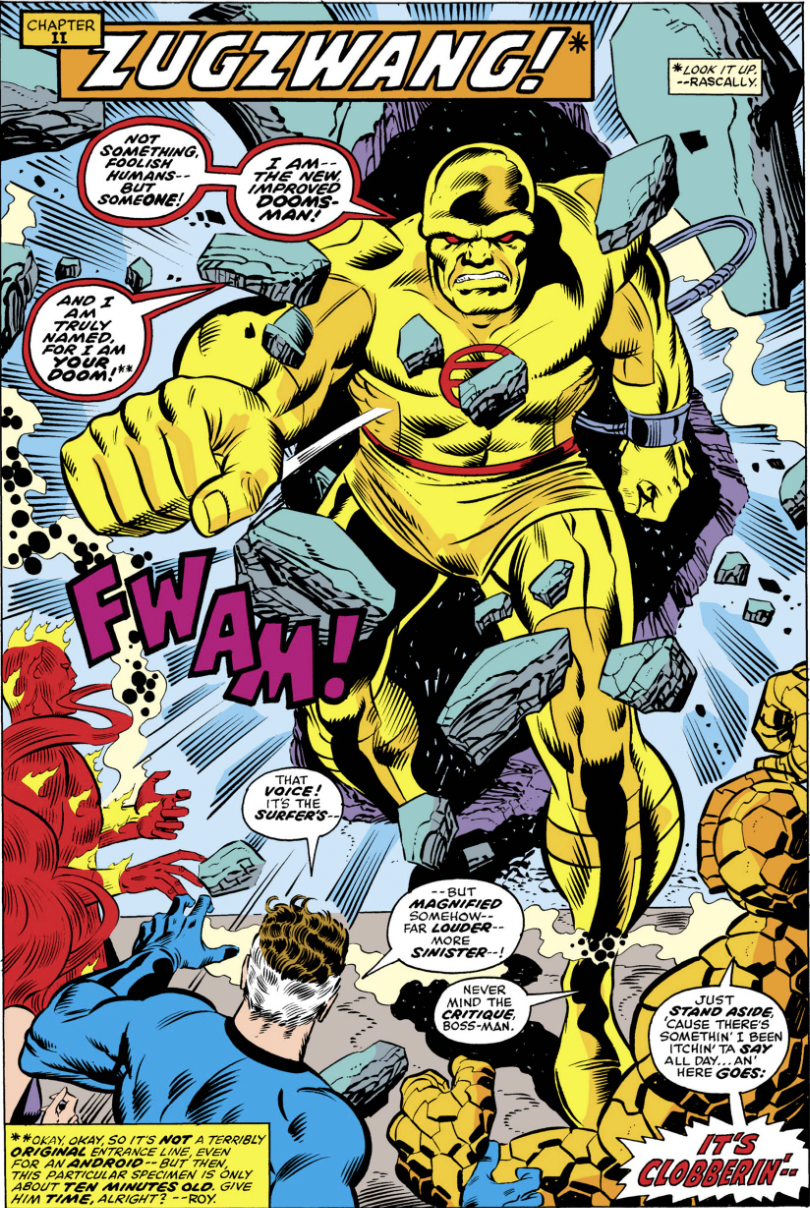
What I liked
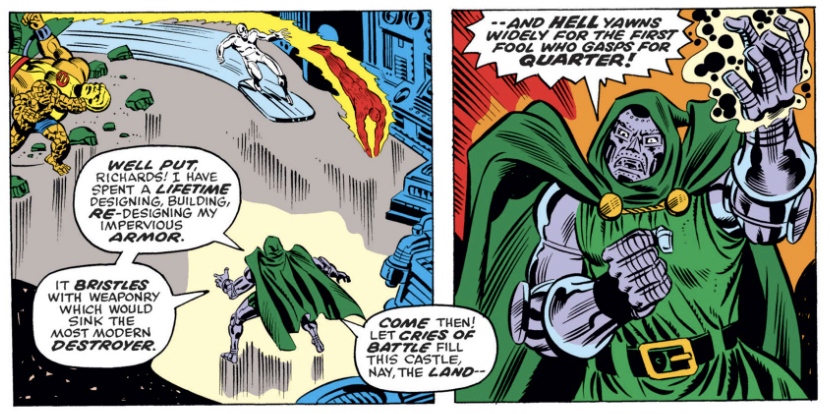
This was a fun comic, despite all its weird intricacies and jarring transitions. Thomas clearly loves writing Doom, and gives him some great, preposterous lines:
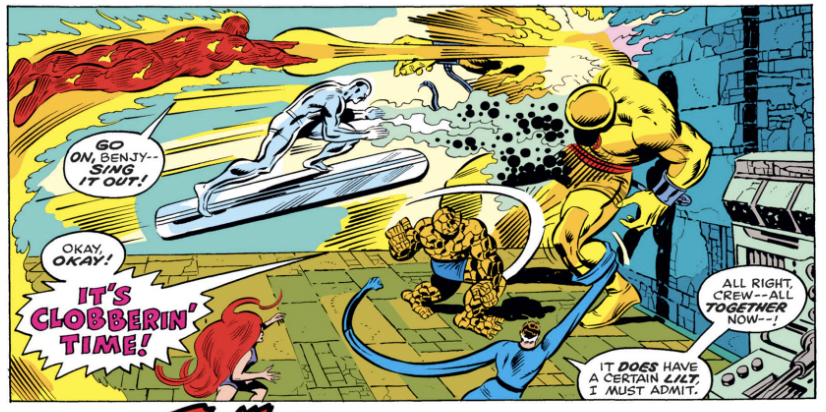
I also liked this byplay between Ben and Reed, revealing a more playful side to Mr. Fantastic.
What I didn’t like
Once again, there is no mention, much less an appearance, of Sue Richards or Franklin. And Medusa barely factors into the story at all.
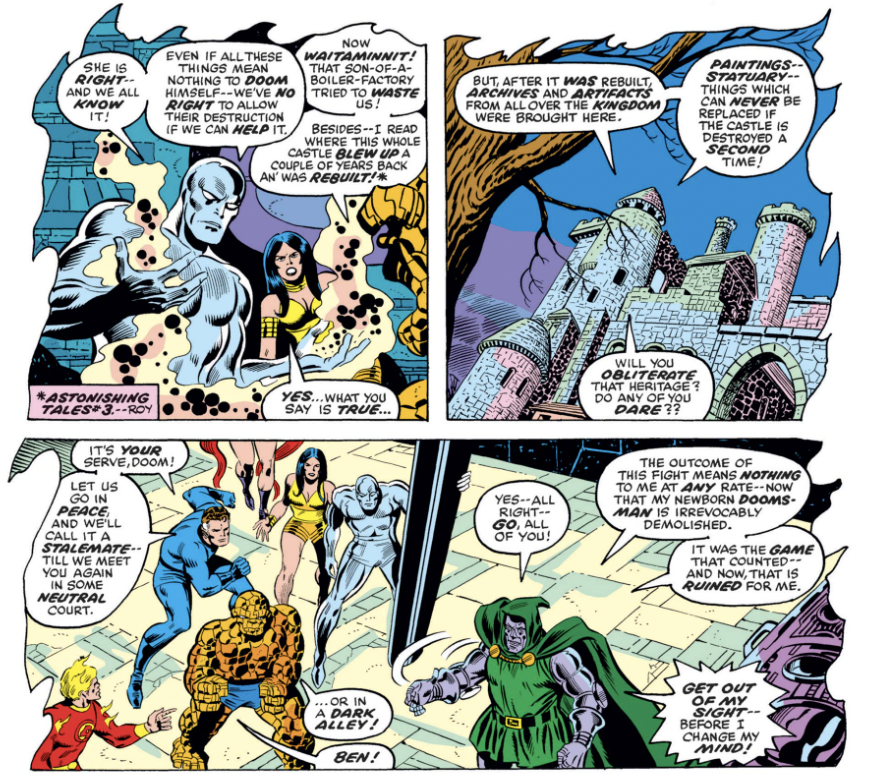
The initial ending is painfully anticlimactic and hard to swallow. The FF and Doom agree not to battle to preserve the Royal Latverian treasures? This in a comic where wide swathes of New York are frequently destroyed in the FF’s battles?
The disappointment is somewhat blunted by the strange Mephisto coda, but his appearance is such a non sequitur it’s hard to know what to make of it. Again, if readers weren’t paying attention to the Surfer’s title, it would be utterly confusing.
Anything else?
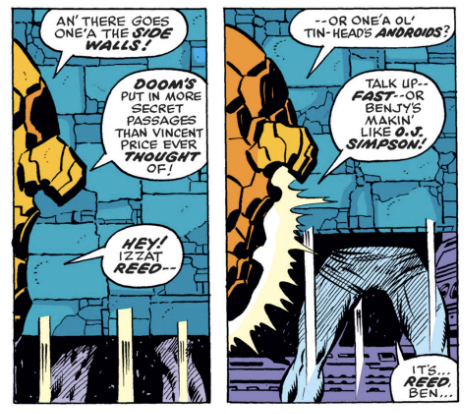
This reference didn’t age well.
Overall
A Thomasian rollercoaster

