Tags
Welcome to a very belated round up of the 15 books I read in 2021 (honestly, I meant to do this in January). I fell way short of my goal of reading 24 books, or two a month, but as will be clear, I read some monstrously long books that put 24 out of reach. As I do every year, I try to mix up my reading, between fiction and non-fiction, sci-fi and literary fiction, classics and lesser known stuff. And as in years past, my reading was divided between books I have had on my list for years and books I chanced upon, many at our local library’s book sale. Over the last few years I have tried to be more deliberate about the diversity of the authors I read, with mixed success.
1, Money: The True Story of a Made Up Thing, by Jason Goldstein (2020)
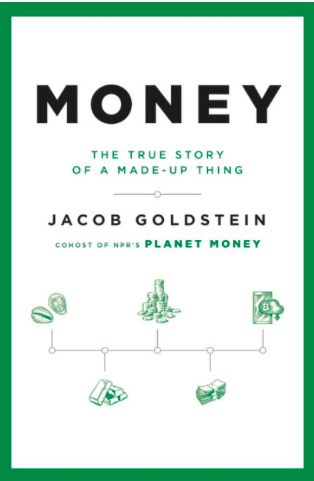
This is a fun and fast tour through the history of money and finance by a guy I’ve know for years. Jake finds a lot of quirky details and anecdotes to enliven the subject, and goes deep into some corners of the financial world —the invention of money market funds, for example—that are often overlooked in discussions about the history of capitalism. Given the rise of crytocurrencies, Jake’s essential question—why do we believe in money?—seems extremely relevant
2, The Moth and the Mountain, by Ed Caesar (2020)
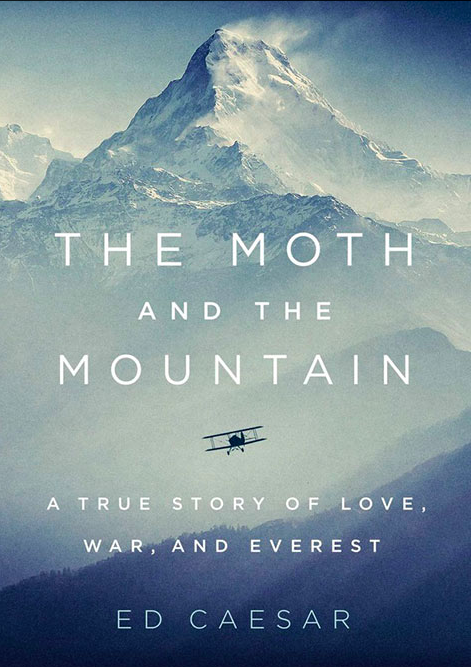
This was a Christmas present, and would appear to be just the sort of book I would go for, combining history, mountaineering and adventure. But the story, about Maurice Wilson, a World War I veteran fixated on flying to Nepal and climbing Everest, never is more than the sum of the parts. In part, it’s because Caesar struggles to pin down Wilson, an apparent flimflam man whose motivations always seem murky. And in part, because the most dramatic aspect of the story, the actual attempt to climb Everest, is basically undocumented, and so feels like a footnote to his story.
3, The Powerful and the Damned, by Lionel Barber (2020)
I realize now this is the third recent nonfiction release I read in a row, which is highly unusual for me. Usually there’s more variety in my choices, but I read this one for work, in preparation for an interview with Barber, which I wrote about for Quartz. It’s an engaging book, written by a professional name dropper who met and interviewed everyone from Donald Trump to Vladimir Putin and is happy to share his personal and sometimes snarky views about them all. Barber ran the Financial Times during the financial crisis and Brexit, but for media insiders, his accounts of the newspaper’s sale to Japan’s Nikkei might be of the most interest.
4, The Stand, by Stephen King (1978)
Reason one I didn’t reach 24 books last year was this 1,300 page monster. I am a late convert to King, and since I am more of a sci-fi guy then a horror fan, this was always high on my list to read. It didn’t disappoint, although it did ramble at times, and the King heroic archetype—the underestimated working-class white guy—feels a bit cliched at this point. Still, the rich character development, and the ambition and size of it all, made it an engrossing read.
5, Marvel Comics: The Untold Story, by Sean Howe (2013)
As a lifelong comic book collector, it was a only a matter of time before I read this. There weren’t a lot of surprises in it for me, but it did fill in a lot of gaps in my understanding. Interestingly, this book is a business history more than a cultural history, and the big takeaway is the consistent shortsightedness of Marvel’s management. Whatever were triumphs of its artists and writers, they were despite, not because, of their bosses.
6, Never Let Me Go, by Kazuo Ishigiro (2006)
After the previous year’s disappointment reading Ishigiro’s The Buried Giant, I wasn’t quite ready to write him off. It was a good call, because this is a powerful, heartbreaking story. A slow burn, it begins as a deep dive into the lives of children at an English boarding school before revealing itself as a dystopian parable. It’s sad, thought-provoking and one of the best books I read last year.
7, Beyond the 100th Meridian, by Wallace Stegner (1953)
I bought this in Flagstaff on a family vacation to the Grand Canyon, in part because it’s about the Colorado river and the western landscape, and because I’ve never read anything about Stegner and always wanted to. It’s a biography of 19th century explore and scientist John Wesley Powell, and it’s really two books on one. The first half is about Powell’s expedition to float the length of the Colorado, which no one had done previously. The second is about his later career as a a government official with the US Geologic Survey, and the politics and policies that shaped the settling of the American west. The first part of the book was thrilling, the second was a bit wonky but deeply interesting as it explains a lot about why the US west looks the way it does today.
8, The Fifth Season, by N.K. Jeminson (2015)
“World building” is a bit of a science fiction cliché but there sure is a lot of it in this book. Jemison’s trilogy got a lot of attention, and most of it is deserved, as she describes a world where geologic events play a central role, and the mutants that can shape them are shunned and feared. There are some obvious metaphors about race, and a plot twist that wasn’t that hard to see coming, but in all a pretty satisfying read. I didn’t, however, feel compelled to read the rest of the trilogy. Maybe some day.
9, Project Hail Mary, by Andy Weir (2021)
My teenage son and I listened to this as a book on tape (yes, I am counting audio books) during a long road trip across the midwest and it felt like a great choice. Like in Weir’s The Martian, there’s a lot of hard science, but it’s offered in such a palatable way that it’s never a struggle and instead makes the outlandish plot almost convincing. The story, about a scientist battling an alien menace, is told as a series of digressions, which seemed like an unnecessarily complicated structure but on the whole the book is fast-paced fun and by the time we reach the end, surprisingly moving.
10, Crazy Horse, by Larry McMurtry (1999)
I picked this up at Mt. Rushmore, near the Crazy Horse monument. Not a lot is known about Crazy Horse, the Sioux warrior and mystic, and McMurtry, author of massive books like Lonesome Dove, wisely doesn’t try to pad out the story. Instead, we have a slim, spare, well-told account of Crazy Horse’s life at the end of a Native culture and the beginning of a genocide.
11, The Path to Power, by Robert Caro (1982)
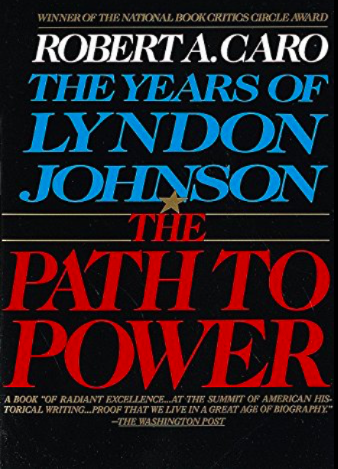
The other monster I read in 2021, and probably by proudest reading accomplishment of the year, was the first volume in Caro’s biography of Lyndon Johnson. At some point, maybe after reading excerpts of Caro’s most recent book in the New Yorker, I vowed to read his LBJ series, one a year, until I was done (I’m currently reading the second). This first volume, which takes us up to LBJ’s first senate campaign in 1941, when he was about 30, is an amazing achievement of reporting and writing. Caro not only carefully unfolds every detail of LBJ’s early years, but spends whole chapters explaining the geology, economy and history of the Texas Hill Country from whence he came. Calling it the Sistine Chapel of journalism doesn’t seem like an exaggeration. It can be hard to read at times, not out of any fault of Caro’s, but because LBJ is so vile, amoral and unlikeable.
12, The Magician’s Assistant, by Ann Patchett (1997)
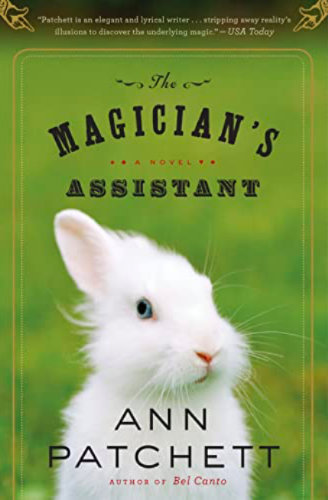
Ann Patchett wrote an amazing essay in the New Yorker about her three fathers (two are step-fathers) and after that I thought I would try her fiction. This books is unlike most books I read—it’s a quiet, contemporary story about a woman processing grief, in which most of the main characters are female—but I thoroughly enjoyed it. It took a little while to build up speed but the second half flies by.
13, A Memory Called Empire, by Arkady Martine (2019)
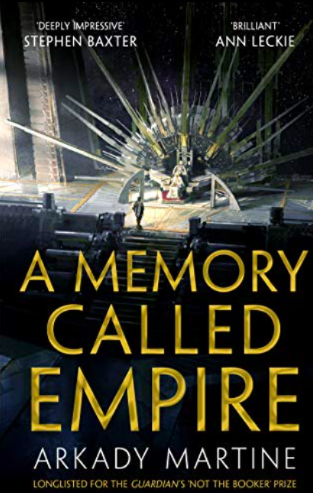
More science fiction. If I recall, I picked this up as a free review copy that made its way to Quartz. It’s structured like an old-fashioned space opera with an intriguing premise, about a civilization that takes on the memories of their predecessors, and where verse and poetry have enormous cultural capital. Unfortunately, Martine (a nom de plume for Anna Linden Weller, a US historian) never really achieves escape velocity, and the plot, about an out-of-her-depth provincial ambassador in the empire’s capital solving a murder, seems to be mostly series of meetings and conferences before an obligatory action sequence ending.
14, The Good Earth, by Pearl Buck (1931)
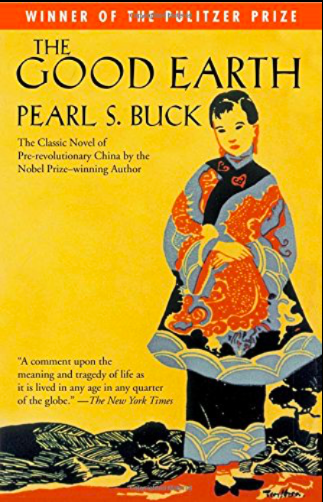
I picked this up at our local library’s book sale, mostly out of curiosity. It’s a book I knew mostly by reputation, but had never encountered it or had to read it in school (apparently that’s where many people encounter it). I thought it was fascinating. Written by the daughter of missionaries who grew up in rural China, it’s the story of a peasant who endures hardships and famine as he builds wealth and raises a family in an almost medieval society. Buck is sympathetic to Wang Lung but doesn’t romanticize him or his callous treatment of his wife and children. While dated in parts, the book still feels like a valuable window on an element of Chinese history and culture that seems relevant today.
15, The Dog Stars, by Peter Heller (2012)
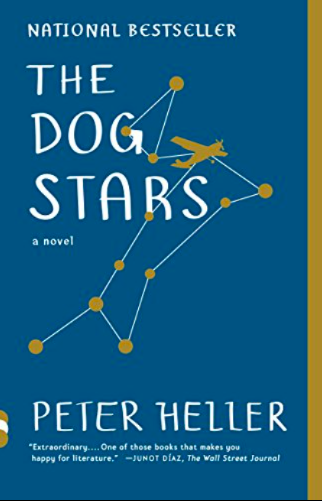
Another library-sale pick up. I would categorize this book as literary post-apocalyptic fiction, and include Station Eleven in the same category. This isn’t as good as Station Eleven, but it’s still pretty good, blending action and adventure with some beautiful nature writing and philosophizing about what it means to be alive. The plot concerns an amateur pilot who lost his wife and most everything else to a superflu, and now lives in a Colorado airport with his dog and a slightly terrifying survivalist. The story veers into cliches at times, and some plot developments are just too convenient, and at times the book made me wonder if I wasn’t really reading the treatment for a movie.