• About Percival Henry

Percival Henry: The Fantastic Four and more

~ Blogging the Fantastic Four issue by issue (plus whatever else grabs my attention)

Percival Henry: The Fantastic Four and more

Tag Archives: Fantastic Four

“The World’s Greatest Comic Magazine!” Fantastic Four No. 158

19 Sunday Jan 2025

Posted by percivalhenry in The World's Greatest Comic Magazine

≈ 2 Comments

Tags

Fantastic Four, Fantastic Four 158, Inhumans, Marvel comics, Rich Buckler, Roy Thomas

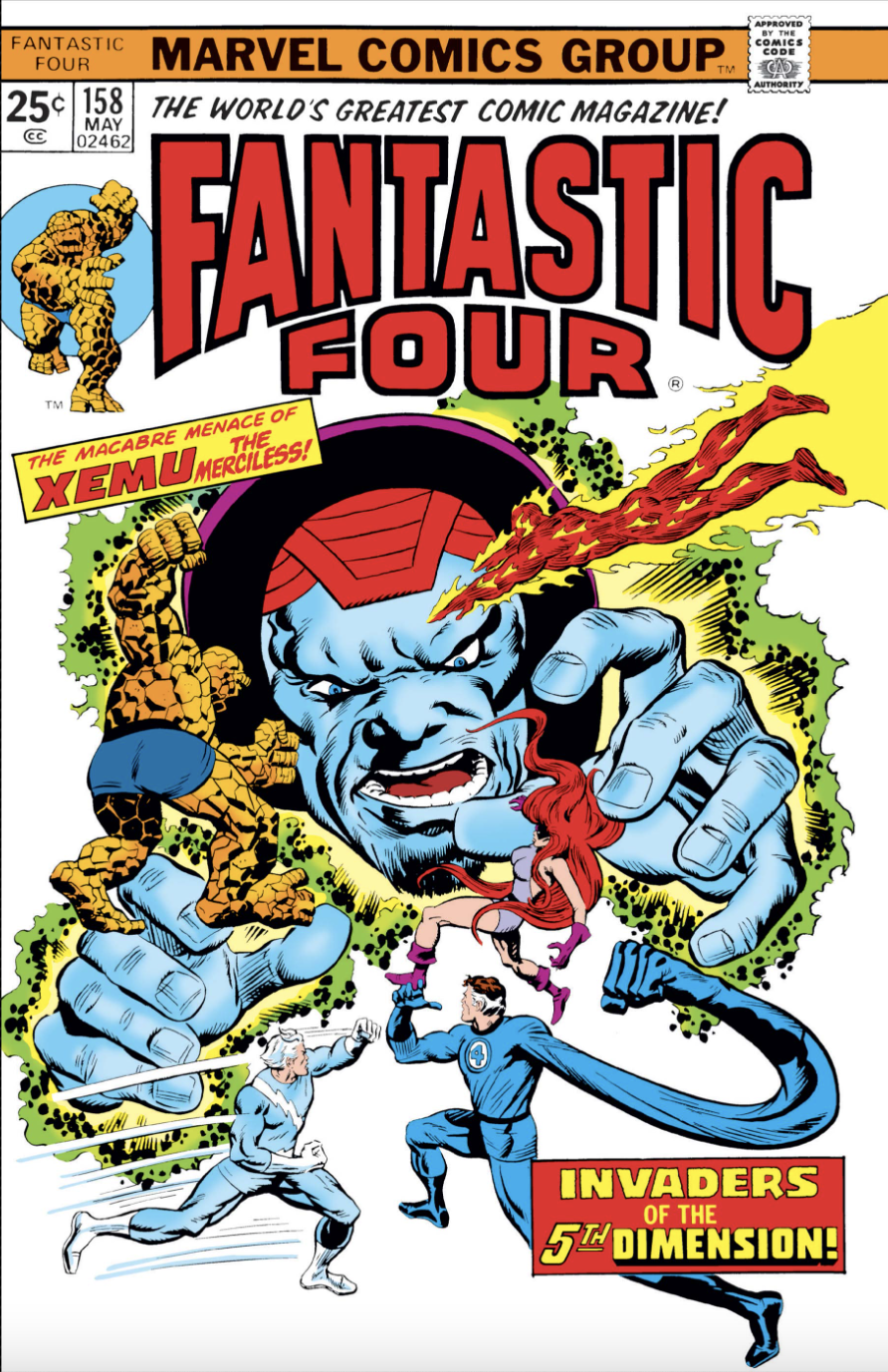
Fantastic Four 158
“Invasion From the 5th (count it, 5th!) Dimension!”
Published Feb. 1975
Writer: Roy Thomas
Pencils: Rich Buckler
Inks: Joe Sinnott
Letters: Joe Rosen
Colors: Janice Cohen
Editor: Thomas
Cover: Buckler and Al Milgrom

Synopsis

Quicksilver is teleported from Atillan, home of the Inhumans, to New York to summon Medusa home. After a brief scuffle with the Human Torch, he explains Atillan has been invaded by Xemu, a tyrant from the Fifth Dimension, and plans to use Black Bolt’s voice to power his Thunder Horn, thereby conquering Earth (Medusa is required to coerce Black But to use his powers thusly). The issue ends with the Fantastic Four vowing to end this menace and taking off in their ICBM for Atillan.
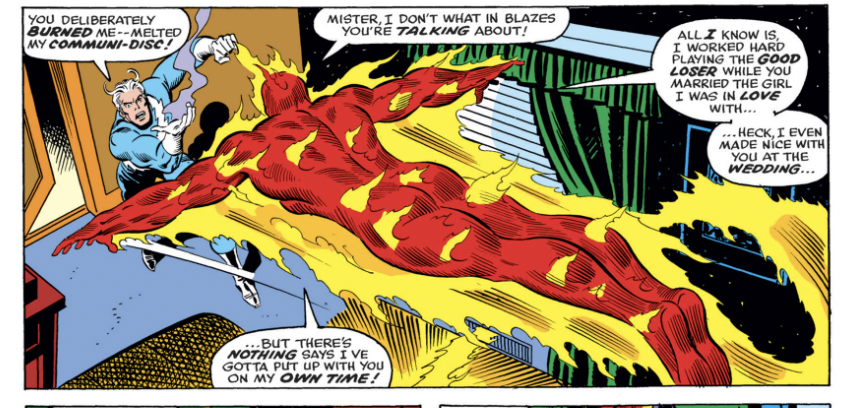

What’s going here

There’s a lot to like in this issue, one of the best in many years. It also has an interesting origin, which may or may not explain why it’s better than other recent issues: According to an answer to a letter in this issue, this story was originally created for Giant-Size Fantastic Four 5, but penciler Rich Buckler ran afoul of “personal problems” and was unable to complete the story slated for FF 158. As a result, they chopped this story in two, with the second half to run in FF 159 while Giant-Size FF 5 became a fill-in issue. Whew!

Fantastic Four FF 158 reads like Roy Thomas at the peak of his powers. The story has lots of fun touches and bits of characterization, there’s an obligatory call back to an obscure comic, and he gets to show off his erudition as Ben and Alicia discuss Puccini’s Madama Butterfly. More importantly, while the plot structure is a pretty familiar one to FF readers, it’s suspenseful, well-paced and moves along briskly.

As Thomas notes in an editor’s note, Xemu and his Fifth Dimension first appeared in Strange Tales 103 from 1962 (although he was called Zemu back then), and you couldn’t not imagine a more Silver-age-ish comic than this. It has wonderful pencils from Jack Kirby, and is inked by Dick Ayers
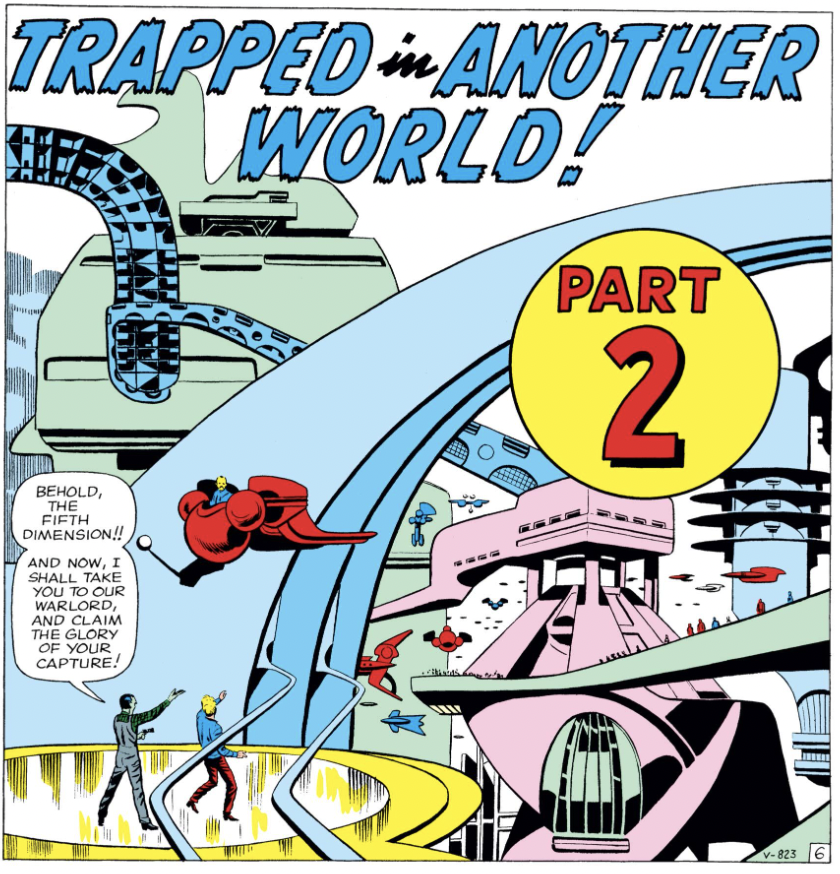

Teenage Johnny investigates houses sinking into the muck on Long Island, discovers it’s an alien plot, is abducted to the Fifth Dimension, is taken prisoner, escapes with the help of sympathetic locals, starts a war, leads an uprising that liberate the planet, and returns home — all in 14 pages!
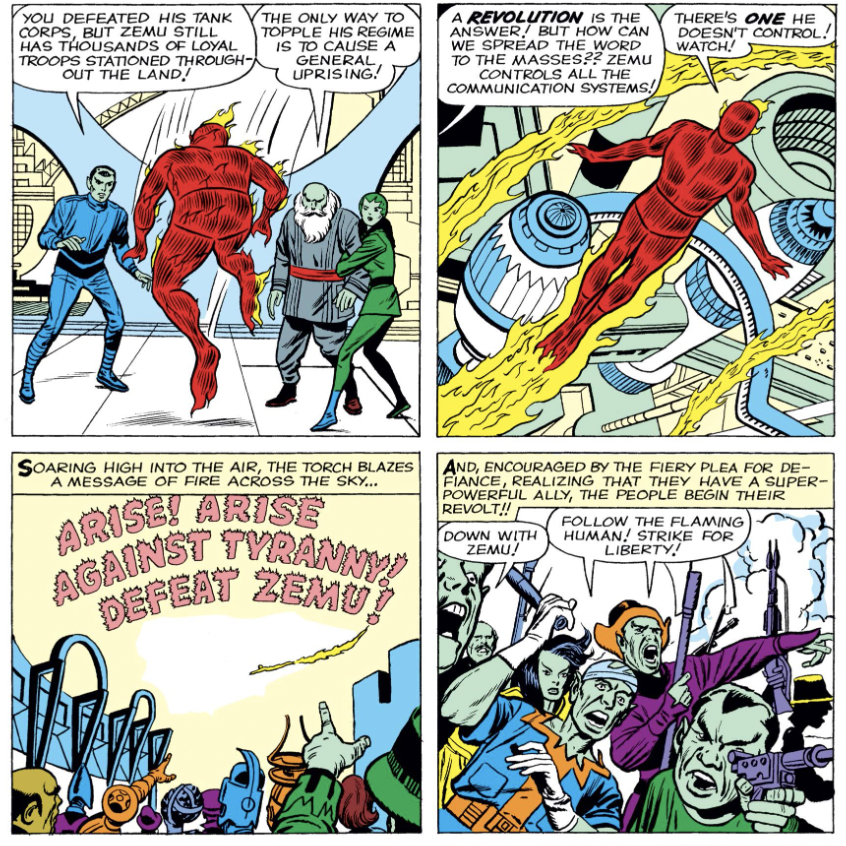
It’s clear Thomas has a lot of affection for this era of storytelling and he returns to it over and over throughout his career.


What I liked
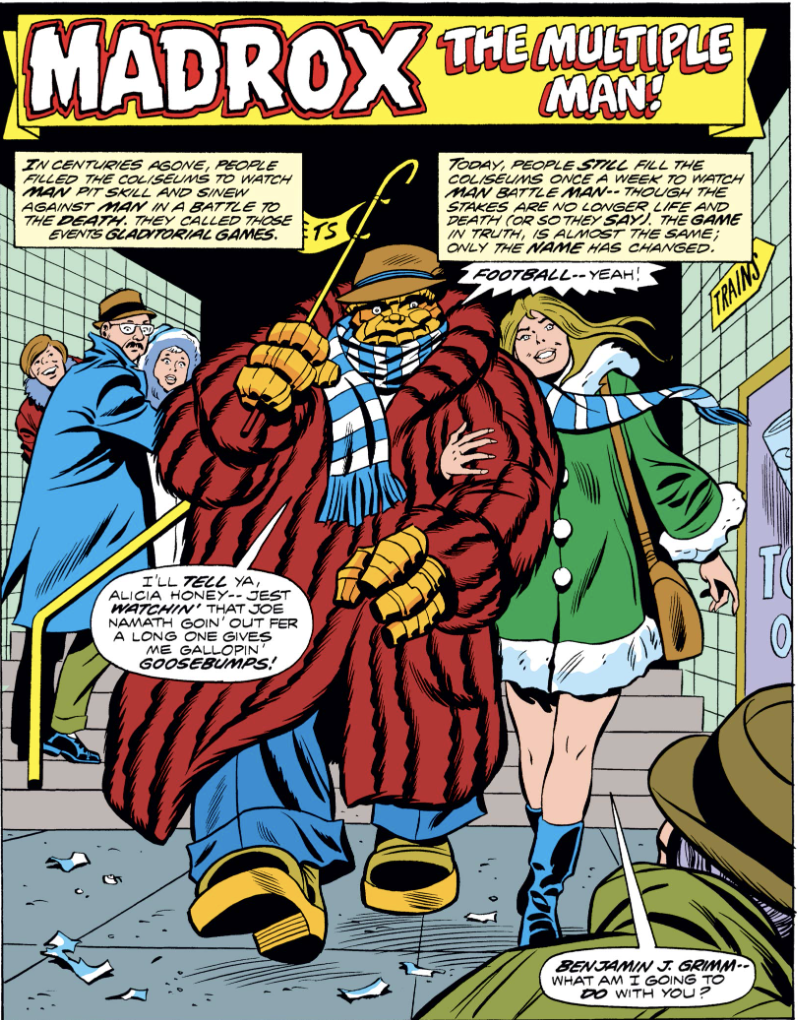
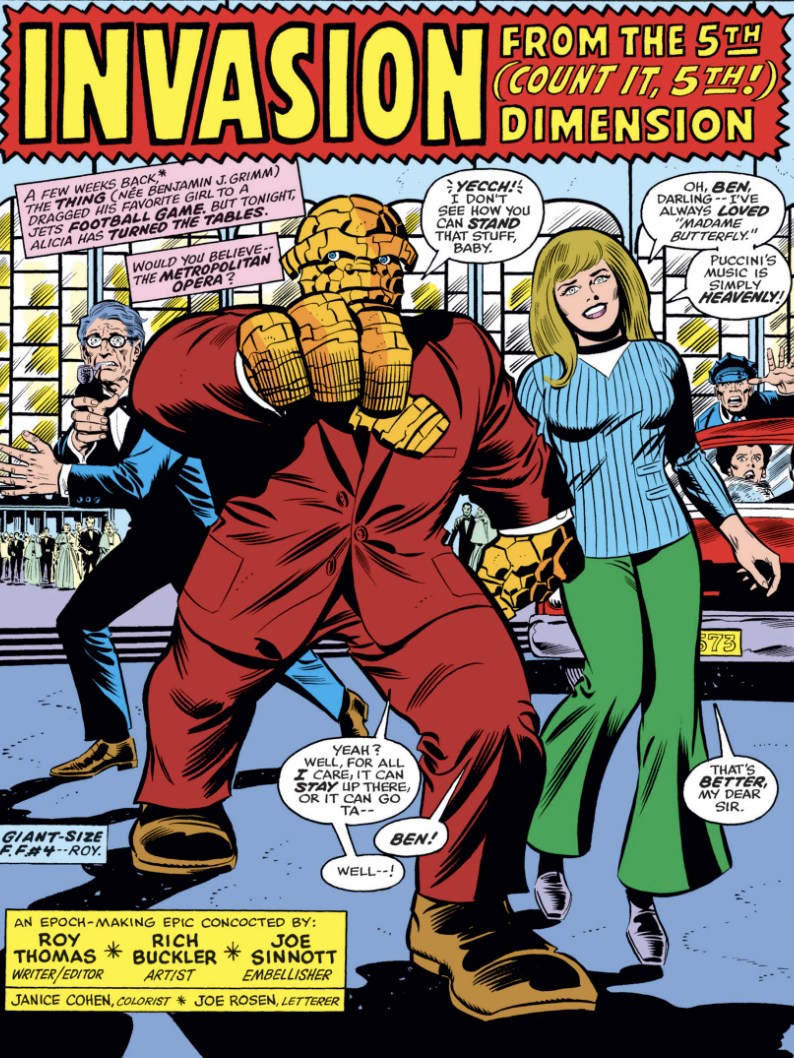
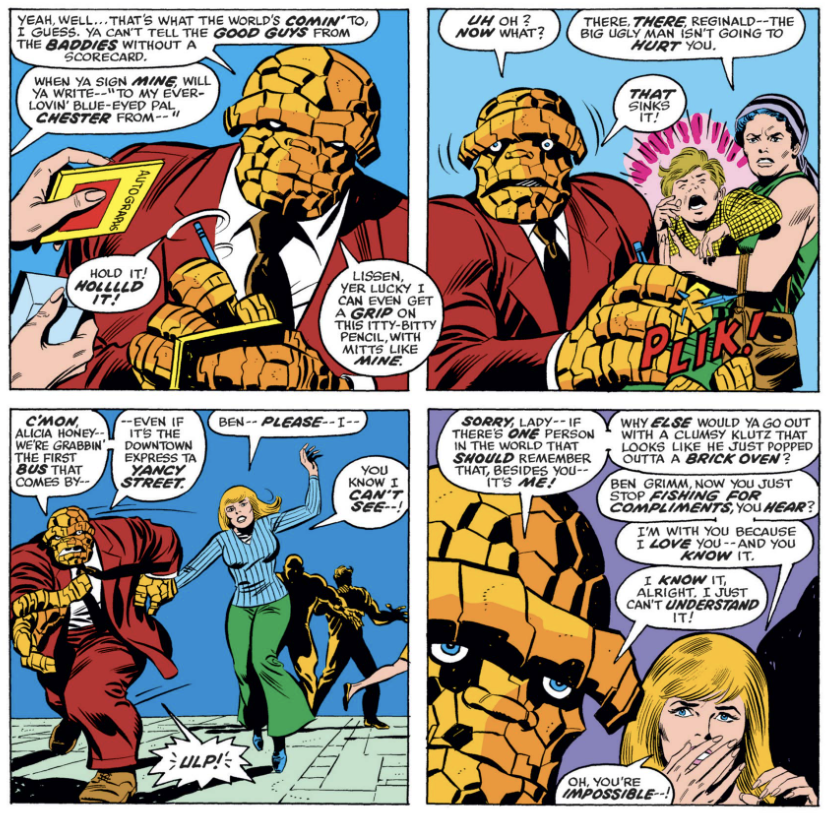
The opening sequence, when Ben and Alicia are leaving the opera, was well handled, with the right amount of humor and genuine affection between the two. I liked how the splash page was a riff on the splash page from Giant-Size FF 4 (and recall how this story was originally supposed to be in GSFF 5), with Alicia turning the tables on ben and taking him to the opera. I also liked how Thomas poked fun at the silliness of the Fifth Dimension conceit in the title.

The fun banter between Ben and Alicia continues, and when Ben falls into his familiar woe-is-me routine, Alicia harmlessly bats it aside, recognizing it’s Ben’s schtick.

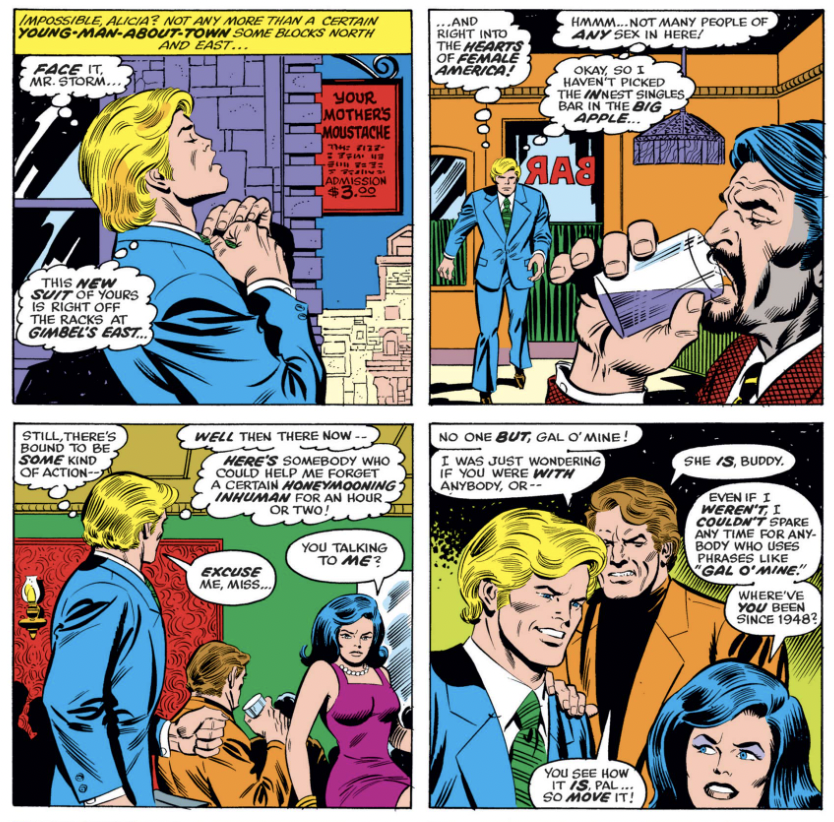
Thomas checks in on the rest of the FF as well. Johnny heads to a single bar, looking to, well, get laid. I love how the woman mocks his lingo, another subtle dig by Thomas at how dated Johnny’s slang was when written by Stan Lee.

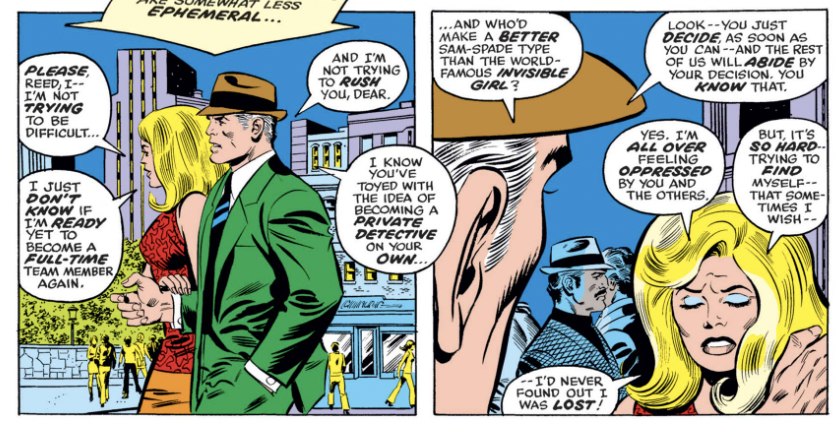
Then we have a brief interlude with Reed and Sue — Sue’s first appearance in many issues. This is the first I’ve heard of Sue becoming a private detective, and I don’t know if anything became of it but it’s a great idea for a comic (she was later retconned as a super-spy who does missions for Nick Fury in the 2019 Invisible Woman mini-series, which is sort of a similar idea).

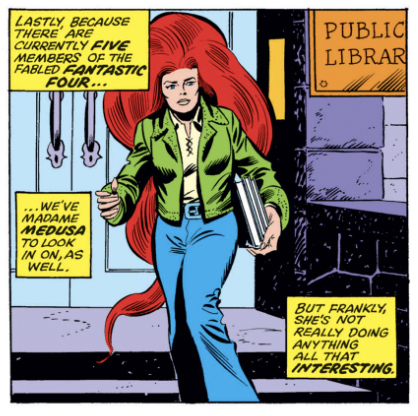
Lastly, we get a panel of Medusa, which seems to tell us what Thomas thinks of her as as story-telling material and which I suspect is a prelude to her leaving the FF.

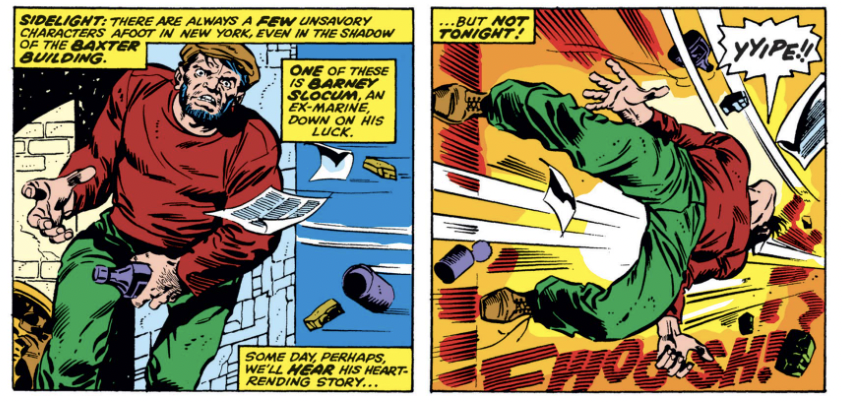
And, randomly, Thomas introduces Barney Slocum, who lasts all of two panels. (I would not be surprised if Thomas resurrected him decades in the future as a new villain).


What I didn’t like

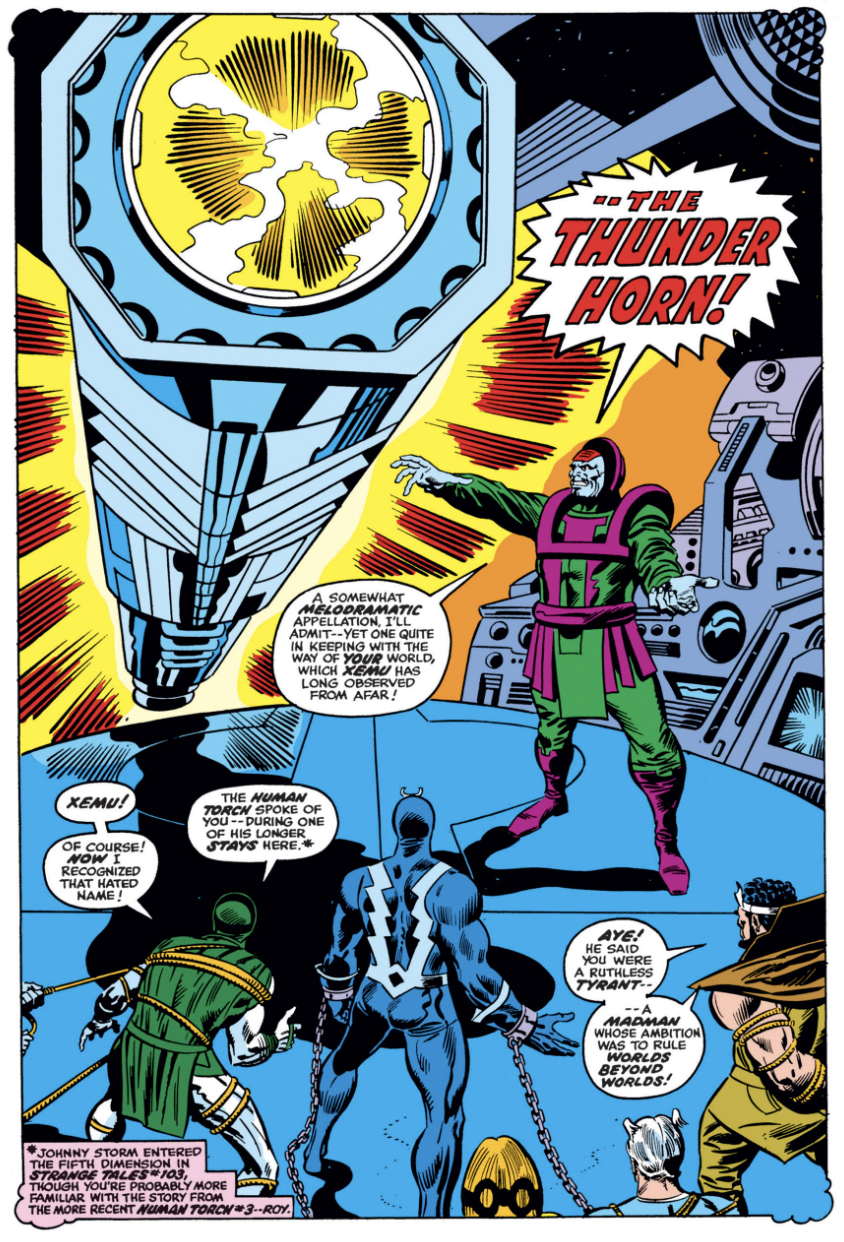
While Thomas seems to be having fun digging up Xemu, he’s a pretty tired concept, and he feels like a cross between Ming the Merciless and Xemnu, the Hulk villain. And his Thunder Horn seems lot like the Climate Cannon the evil Ternak planned to use to subjugate humanity in FF 145. (At least Xemu acknowledges it’s a silly name)

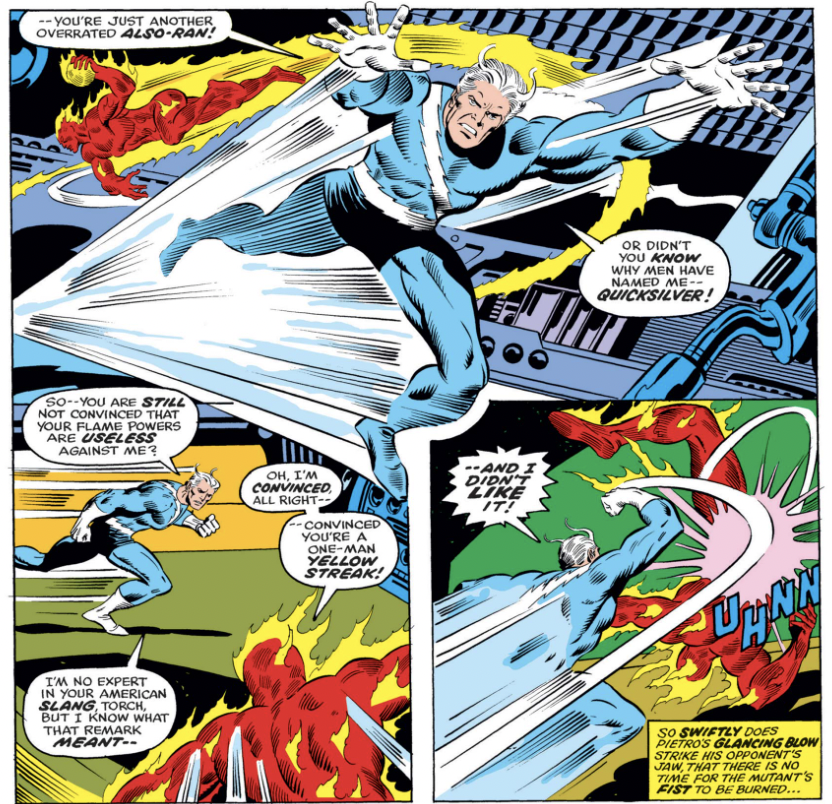
The fight between Johnny and Quicksilver felt pro forma and obligatory, but it was less forced since these two have real beef and it was over fast.

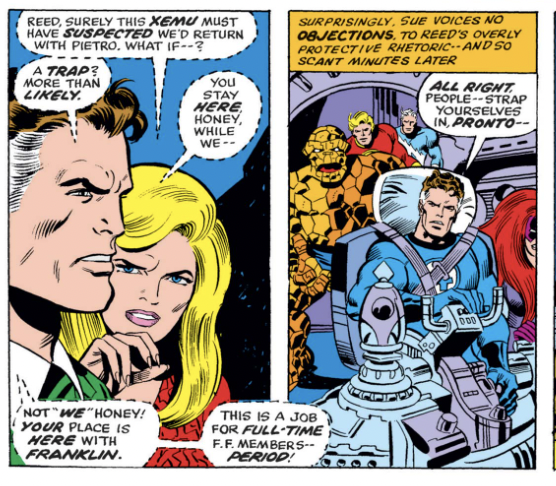
And just as Sue finally reappears, she is shunted aside one again:

Anything else?

Some letter writers suggested some new outfits for Sue:
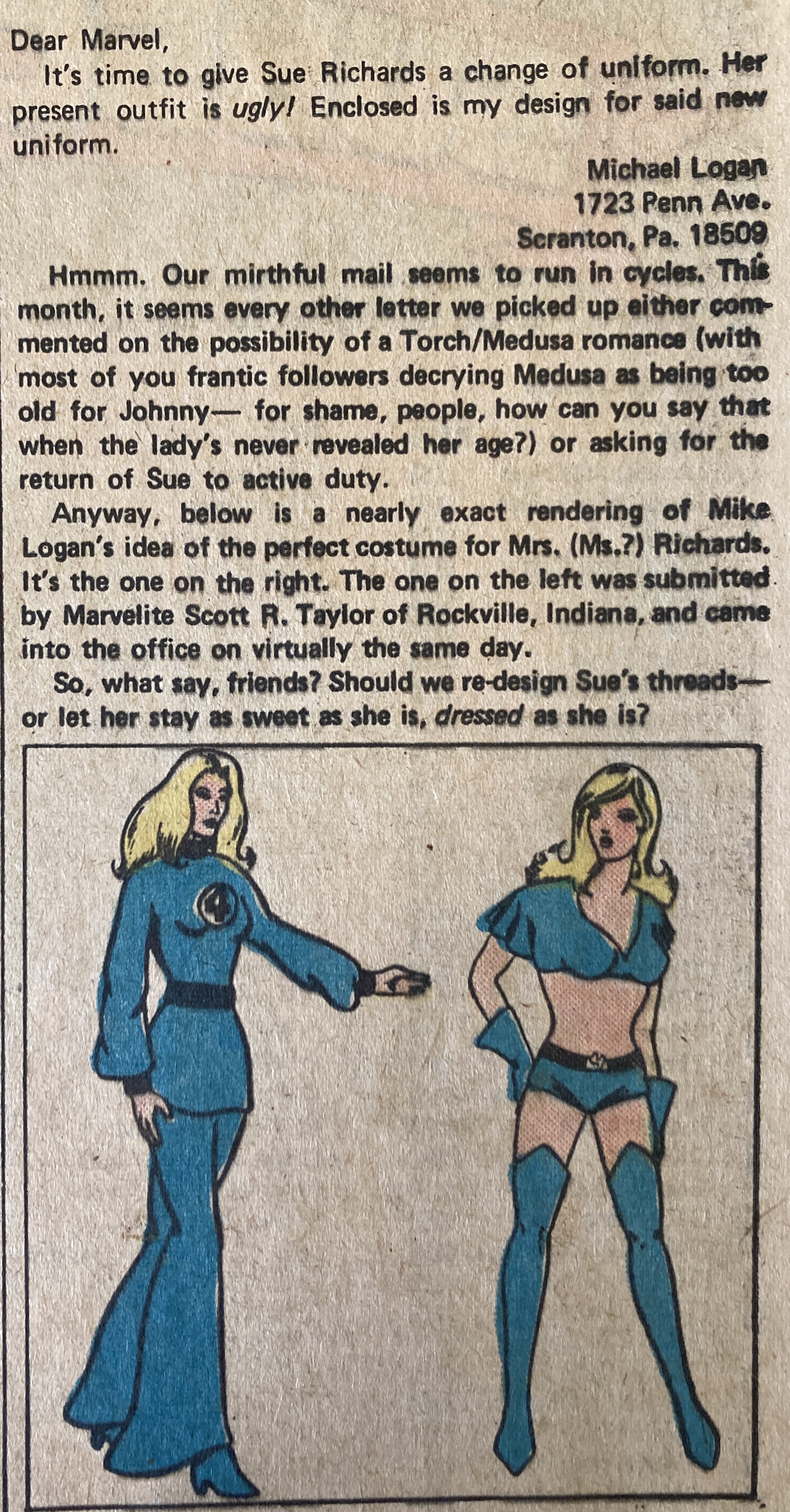

They wouldn’t be her worst look …



Overall

Fun!
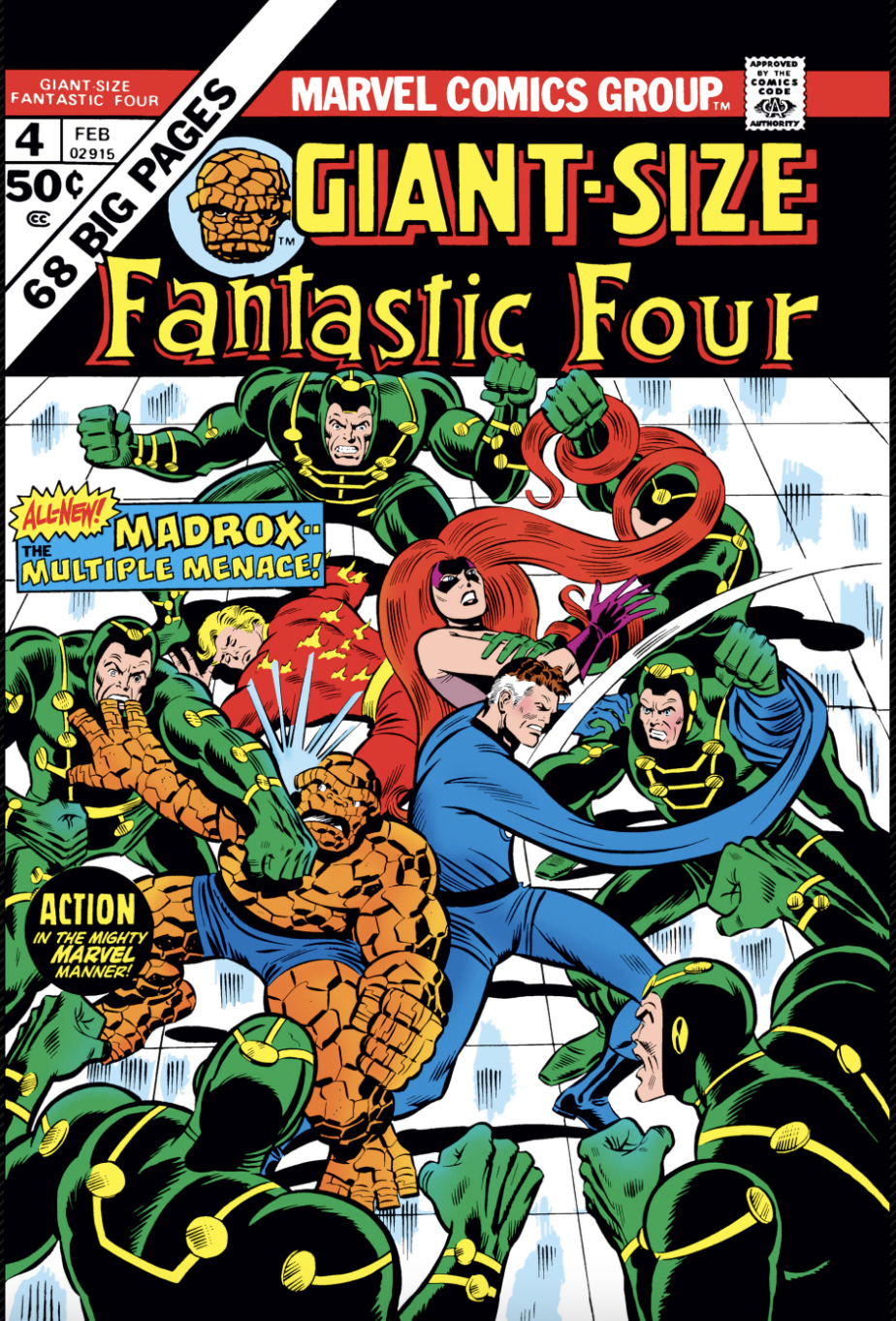
“The World’s Greatest Comic Magazine!” Giant-Size Fantastic Four No. 4

12 Sunday Jan 2025

Posted by percivalhenry in The World's Greatest Comic Magazine

≈ Leave a comment

Tags

Chris Claremont, Fantastic Four, Giant-Size Fantastic Four 1, John Buscema

Giant-Size Fantastic Four 4
“Madrox, the Multiple Man!”
Published November 1974
Writers: Len Wein and Chris Claremont
Pencils: John Buscema
Inkers: Chic Stone and Joe Sinnott
Letters: John Costanza
Colors: Glynis Wein
Editor: Len Wein
Cover: Rich Buckler and Joe Sinnott

Editor’s note: This comic was published prior to Fantastic Four 156 and 157 but I wanted to conclude the Doom/ Surfer story arc before tackling this issue

Synopsis

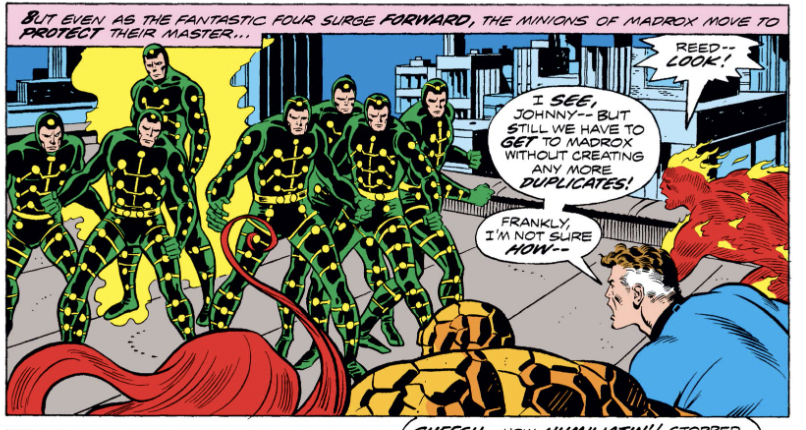
On his way to a Jets game with Alicia Masters, the Thing encounters and is defeated by Madrox, who has the power to create duplicates of himself. Ben is revived in the Baxter Building by Mr. Fantastic who says blackouts across the city are being caused by Madrox, who absorbs electricity. The team battles him, and is facing defeat when Professor X arrives, explains he knew Madrox as a child, and helps subdue him.


What’s going on here?

As discussed in previous posts, in 1974 Marvel began to publish giant-size editions of some its most popular titles. These usually included an original story and a reprint, and sort of operated as annuals, although they appeared quarterly. In this issue, the reprint is (appropriately enough) FF 28, guest starring the X-Men.

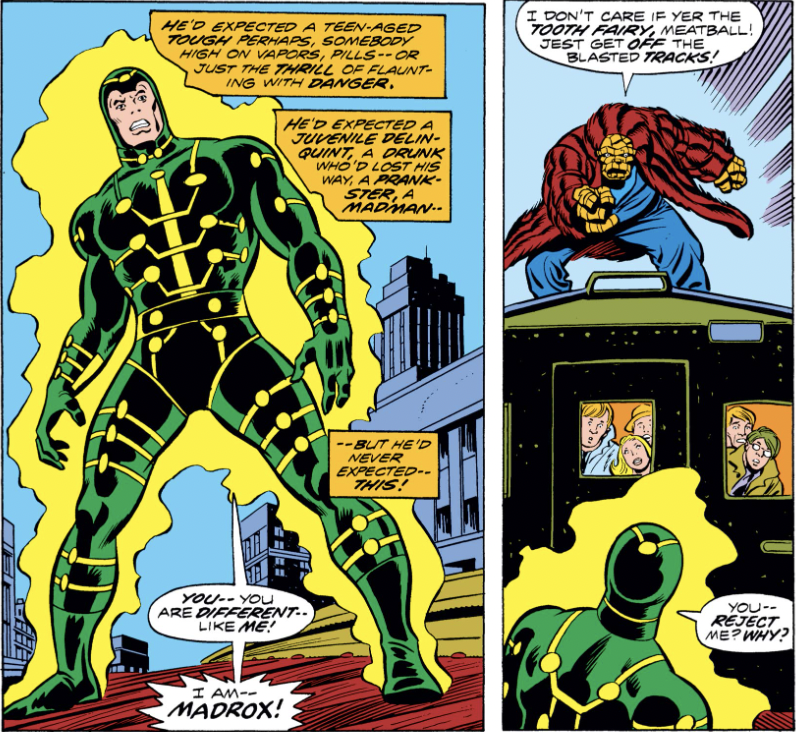
Giant-Size Fantastic Four 4 is notable for a few reasons. It marks the debut of the mutant Jamie Madrox the Multiple Man, who would go on to have a long career in X-Factor and other X books, and perhaps most significantly, it’s the first Fantastic Four issue written by Chris Claremont. In 1974, Claremont was brand new to Marvel, and this is listed as just his ninth Marvel writing credit. While he’s best known for his 15-year run on the X-Men and it’s many spinoffs, Claremont had a long run as the FF’s regular writer from 1998 to 2000. He also wrote the first Fantastic Four vs. X-Men mini-series in 1986 and frequently used FF members in his other comics.


What I liked

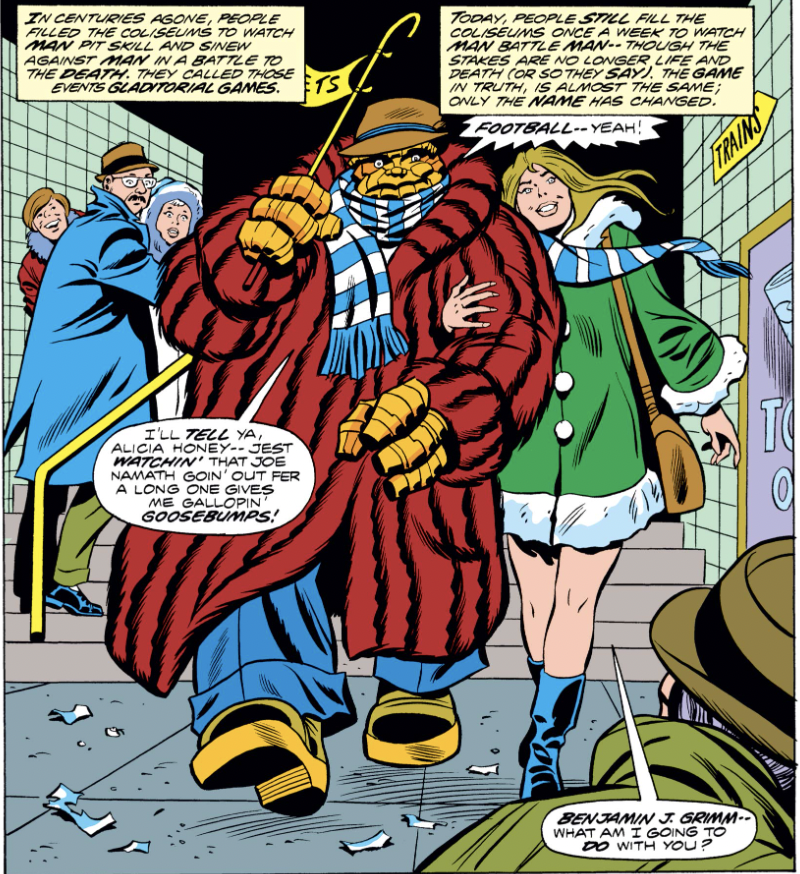
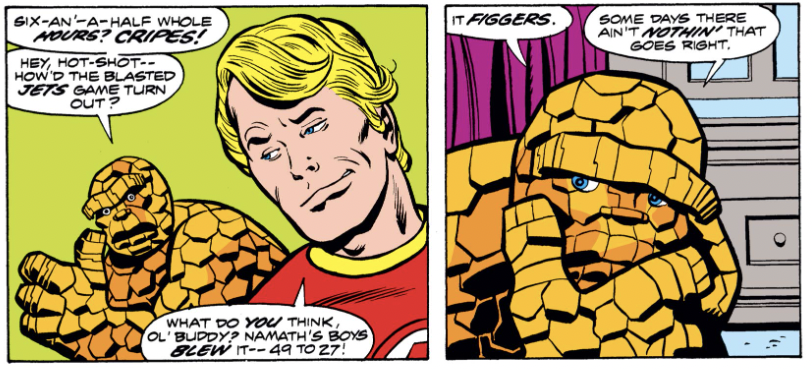
In many ways this is a pretty standard FF comic. The FF randomly encounter some menace, they tangle a few times, and it’s all wrapped up on the last page. That said, it’s a fun read, and the Wein / Claremont team does a good job with the opening sequence where Ben first confronts Madrox. Ben’s enthusiasm for the Jets game runs through the comic and is a nice touch. I loved his ridiculous outfit, as if he’s dressed for the Harvard-Yale game in 1922.


Later, he’s bummed that he missed the game (I checked and there’s no actual Jets game from that year that ended with that score).


What I didn’t like

Madrox is an enigma throughout the comic. His stilted speech in his first appearance suggests he’s some sort of alien, but it’s later revealed he grew up in Kansas watching TV. He seems incredibly powerful —single-handedly defeating the Thing — but it’s not clear what is powers actually are, other than multiplying himself. It’s also not really explained why he is draining the city of power – it has something to do with his suit, but what?

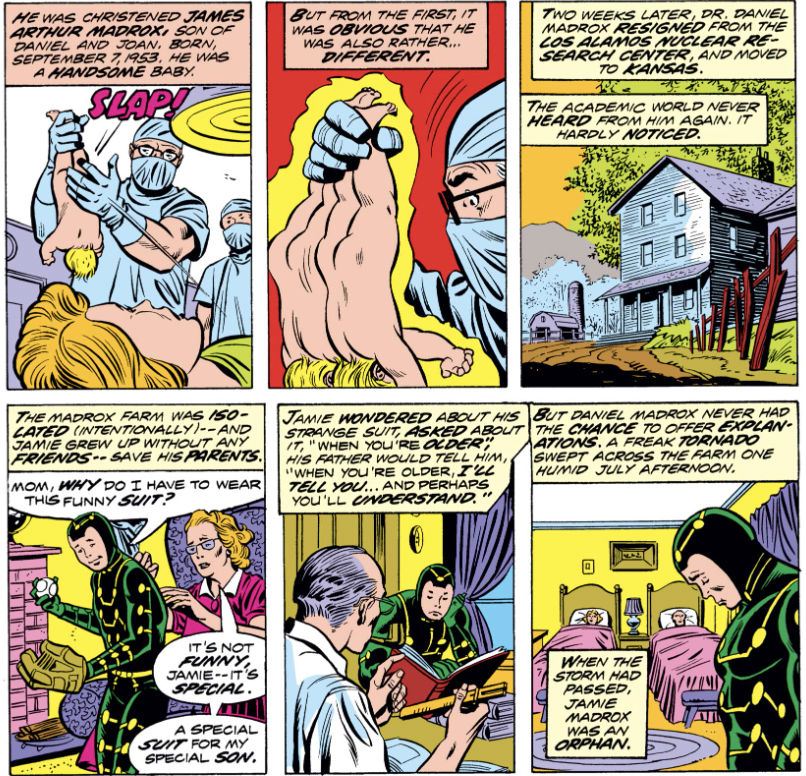
The appearance of Professor X reveals that Madrox is a mutant, although a flashback explains he developed his power as an infant, not at puberty as other mutants do (it’s later retconned to explain that he’s a “changeling,” a genetic predecessor of mutants).


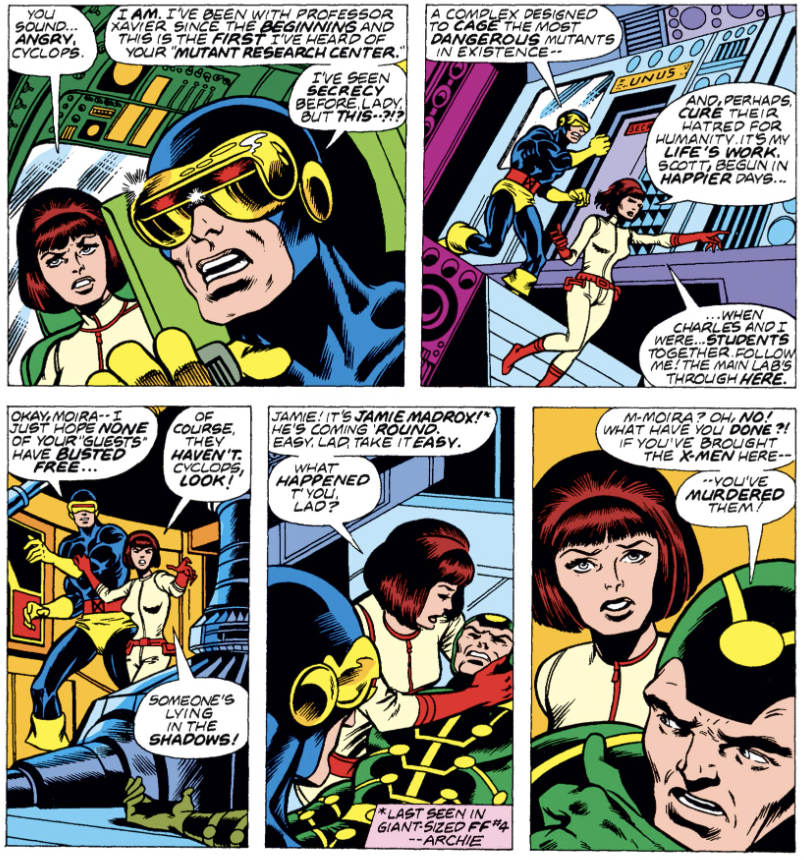
There’s a certain deus ex machina quality to Prof X’s sudden appearance, although he seems strangely under-powered here. He does make good on his promise to look after Madrox, who next appears on Muir Island, without much explanation, in Claremont’s Uncanny X-Men 104 (art by the great Dave Cockrum with inks by Sam Grainger).


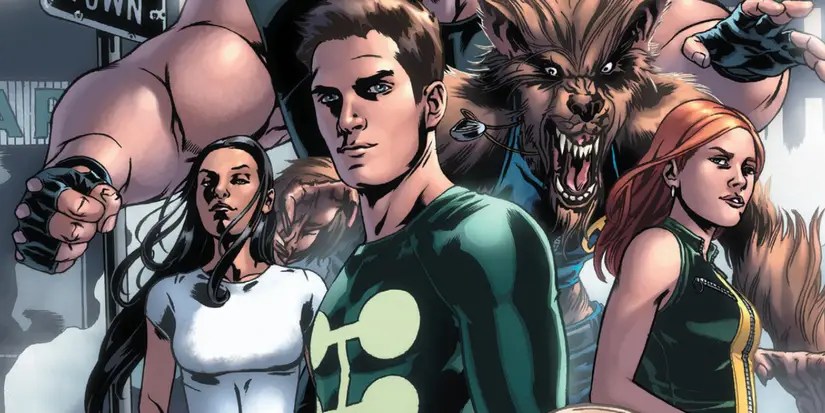
Years later he would become a significant player in X-Factor, and his “dupes” would become characters in their own right (I confess I’m not familiar with this era of the X-universe, so can’t really comment on how he was handled).


And at this point it perhaps goes without saying, but the Invisible Woman doesn’t appear in the comic, and Medusa is again a total non-factor.


Overall

A comic more interesting for its historical significance than its story.

“The World’s Greatest Comic Magazine!” Fantastic Four No. 157

05 Sunday Jan 2025

Posted by percivalhenry in The World's Greatest Comic Magazine

≈ Leave a comment

Tags

1975, Dr. Doom, Fantastic Four, Fantastic Four 157, John Buscema, Marvel comics, Roy Thomas

Fantastic Four 157
“The Endgame Cometh!”
Published January 1975
Writers: Roy Thomas and Len Wein
Pencils: Rich Buckler
Inks: Joe Sinnott
Letters: Joe Rosen
Colors: Petra Goldberg
Editor: Thomas
Cover: Bucker and Sinnott

Synopsis

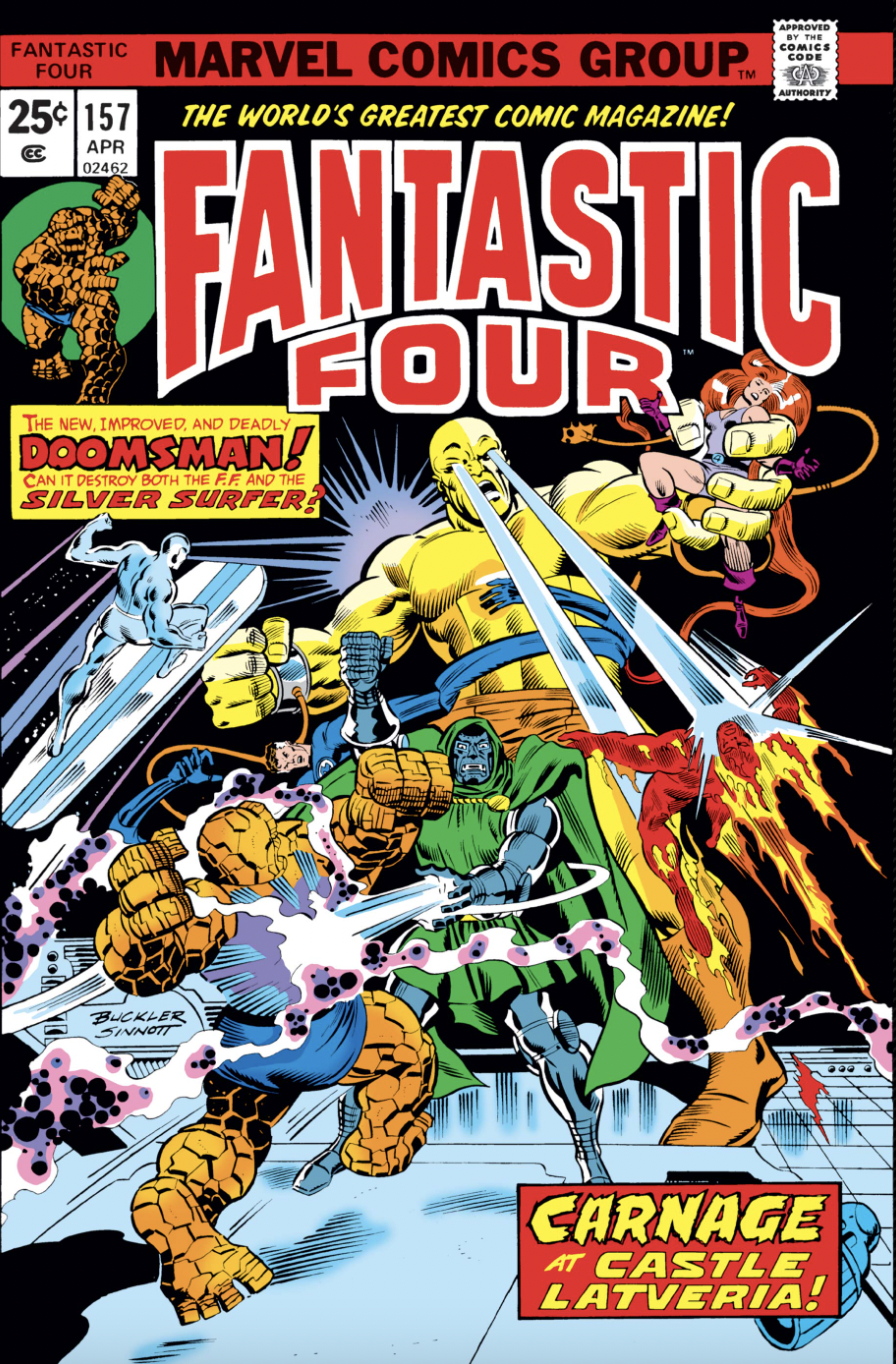
Trapped in Dr. Doom’s castle, the Fantastic Four battle Doomsman II, an android imbued with the Silver Surfer’s power. Meanwhile, the Silver Surfer’s lost lover is revealed to be a Latverian peasant girl, Helena, brainwashed by Doom into believing she is Shalla-Bal. The Surfer then joins the FF to defeat Doomsman, and they are about to go to battle with Doom himself when Helena begs them to spare Doom’s castle from destruction. The issue ends with the demon Mephisto, the Surfer’s nemesis, revealing that Helena was Shalla-Bal all long, put on earth to torment the Surfer.


What’s going on here?

This is Roy Thomas’s first full issue in his return gig as the Fantastic Four’s writer, and as if to announce he’s back, he’s crafted a classically complicated Thomasian story, full of odd tangents, obscure references and callbacks to plot points from earlier comics.

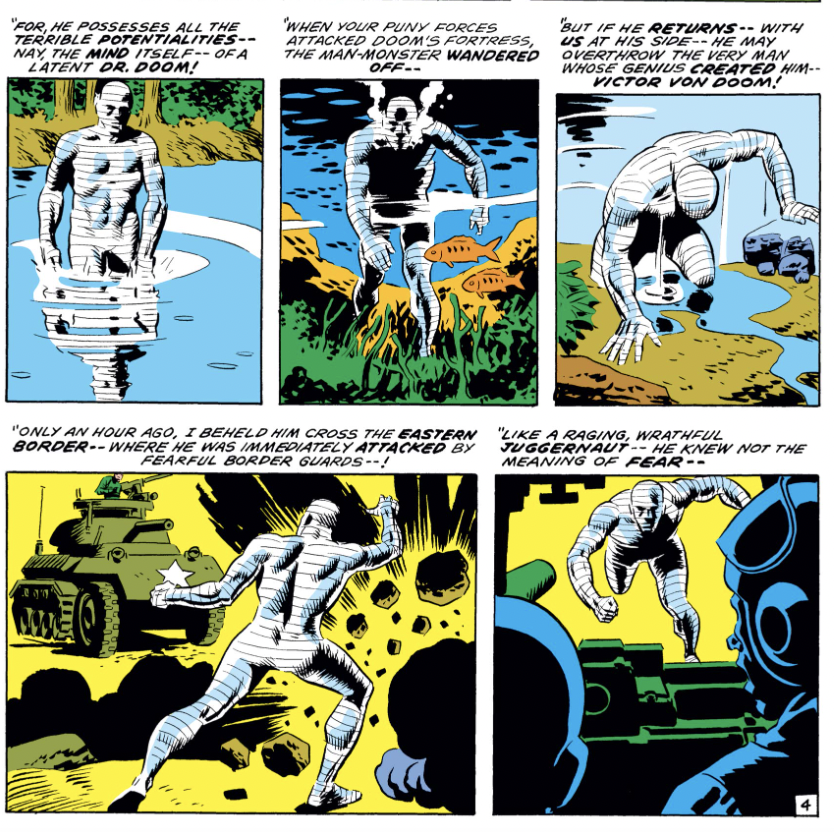
A big chunk of this comic’s backstory was told in Astonishing Tales 1-3, a complicated story by Thomas from 1970 that explains how Doom created the first Doomsman using cosmic rays and his own brain waves and lost control of it (the art is by the legendary Wally Wood).


The story also references Giant-Size Super Villain Team-Up 1, a comic on sale at the same as FF 157 (also by Thomas), that among other things explains how Doom survived his seeming death in FF 144 (he crashed to the ocean and was rescued by the Sub-Mariner).

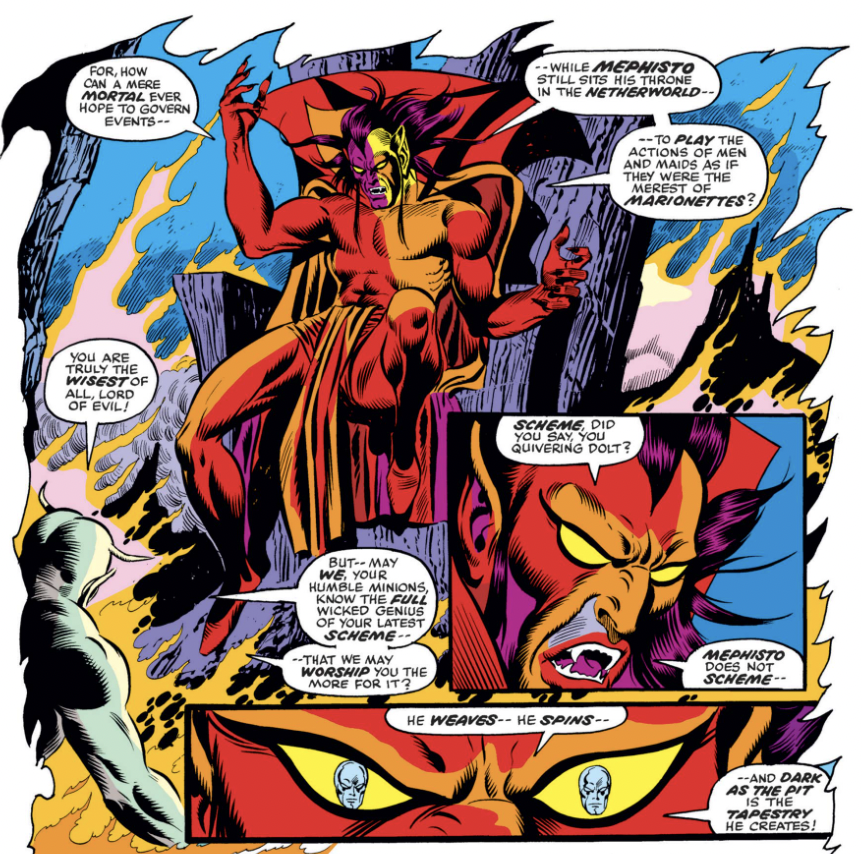
The last scene in FF 157, featuring Mephisto chewing the scenery, is basically pulled from the Silver Surfer’s own comic and I don’t recall him ever appearing in the FF prior to this comic.

There’s not a lot of explanation in FF 157 about any of these plot points, and the assumption is readers would have read these other comics. If all you read was the Fantastic Four, you’d be baffled by these goings on. It’s also reminder of how tightly woven Marvel stories were back then and how much emphasis Thomas placed on continuity. (It also makes me glad I have a subscription to Marvel Unlimited).

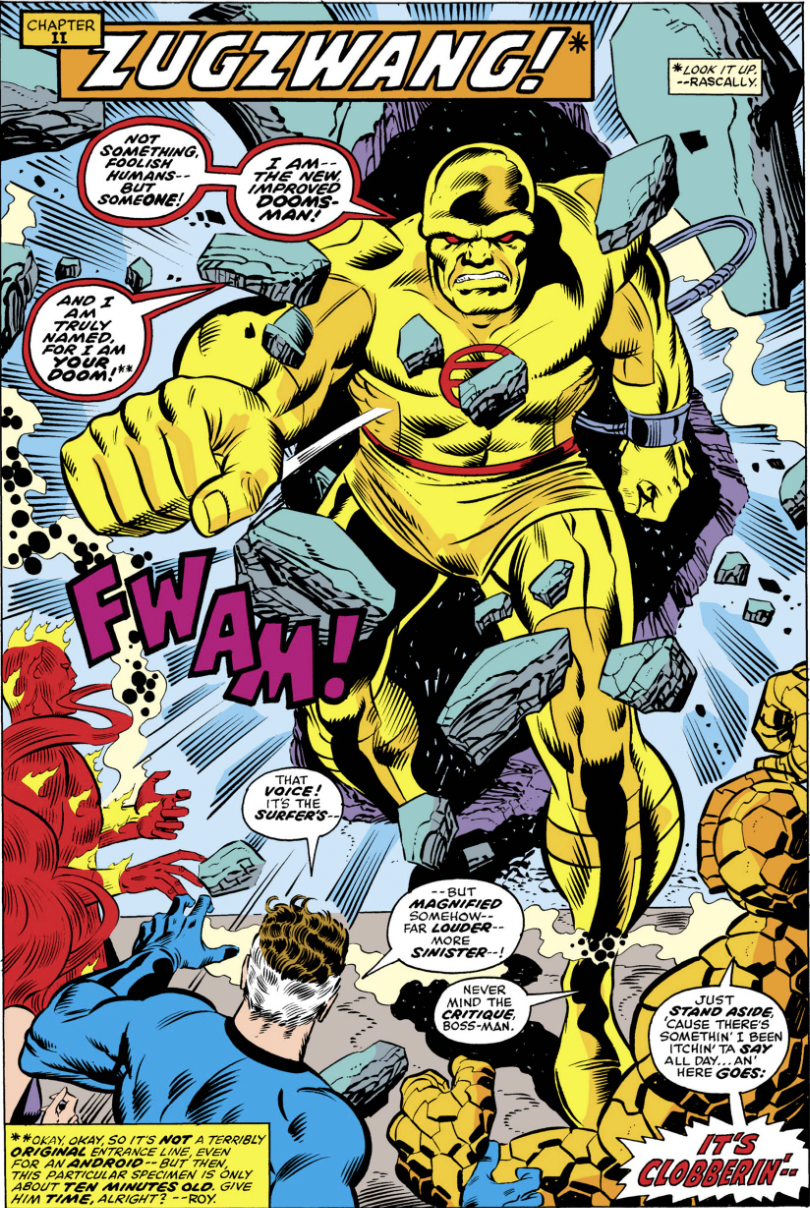
Lastly, another example of Thomas’s zany storytelling: titling a chapter of the comic “Zugzwang!” with no explanation. (It’s a German term used in chess, a play on the chess metaphor in the comic’s title). And self-referential footnotes mocking his own writing.


What I liked

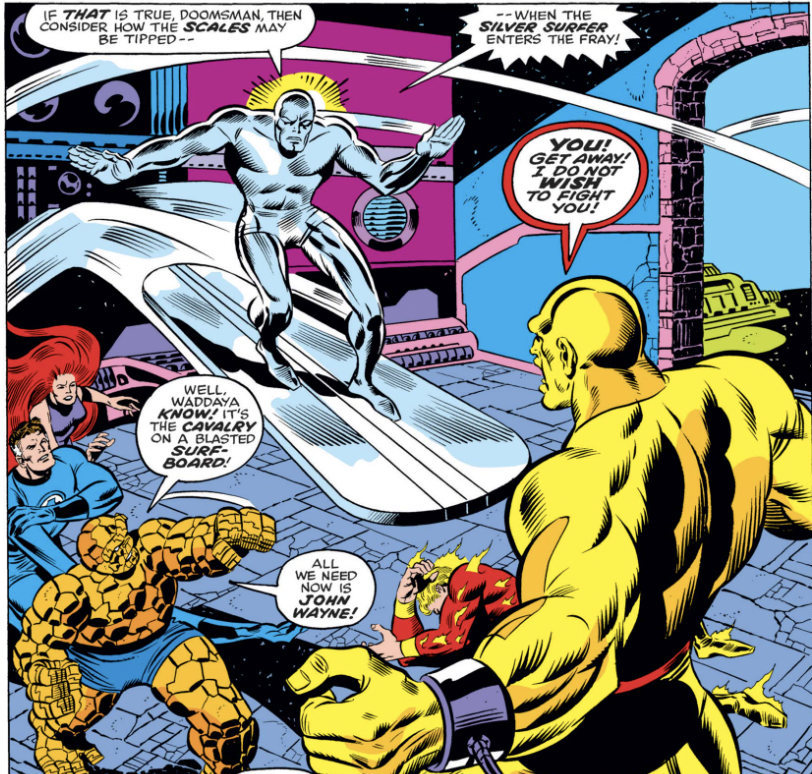
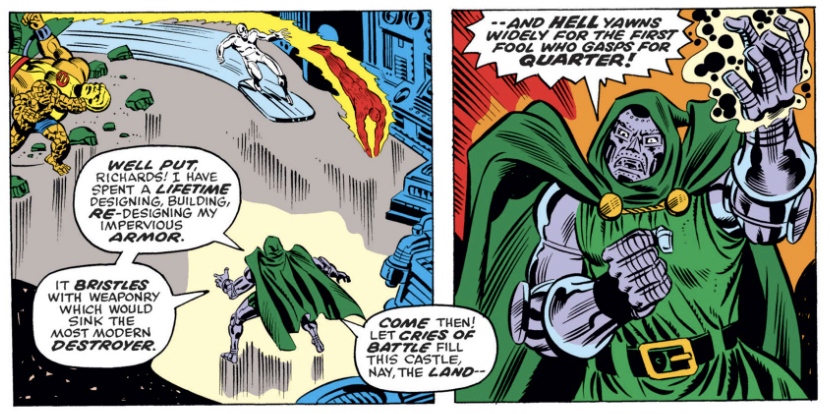
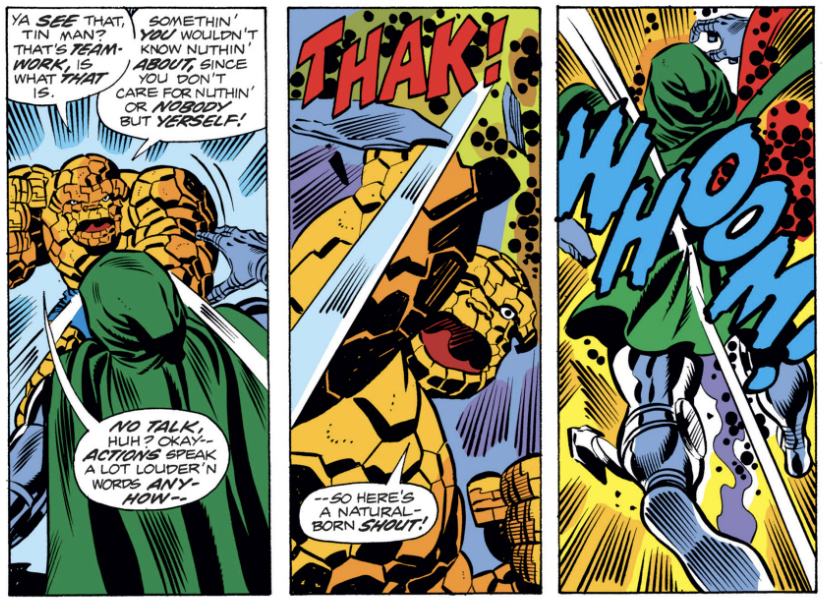
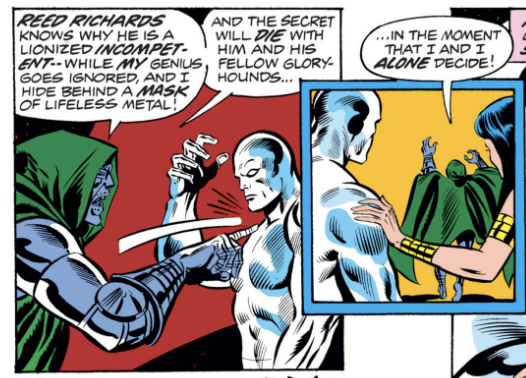
This was a fun comic, despite all its weird intricacies and jarring transitions. Thomas clearly loves writing Doom, and gives him some great, preposterous lines:


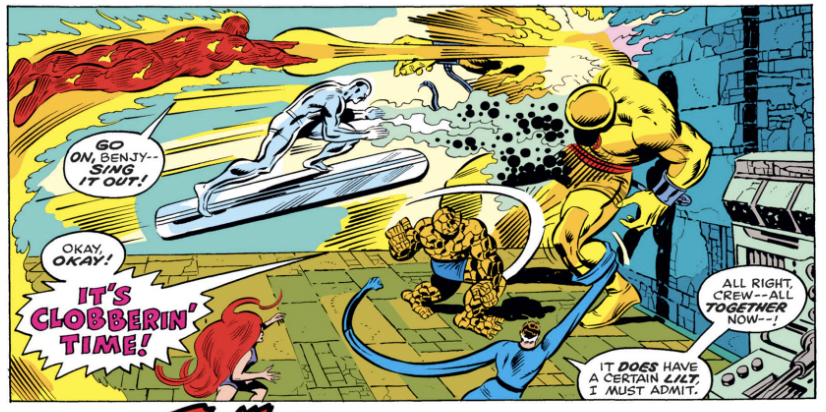
I also liked this byplay between Ben and Reed, revealing a more playful side to Mr. Fantastic.


What I didn’t like

Once again, there is no mention, much less an appearance, of Sue Richards or Franklin. And Medusa barely factors into the story at all.

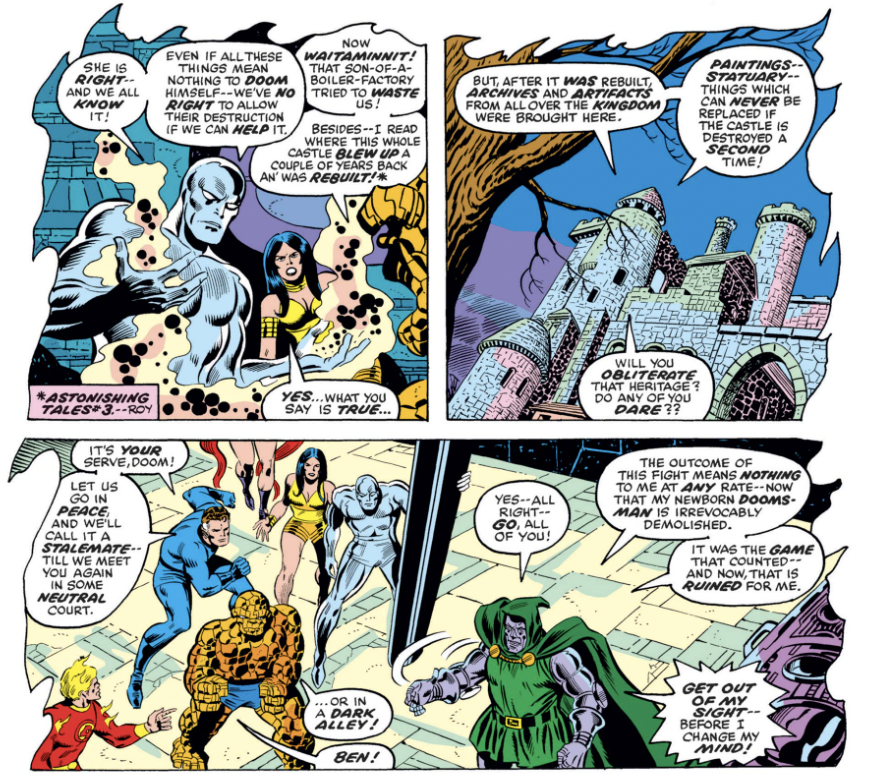
The initial ending is painfully anticlimactic and hard to swallow. The FF and Doom agree not to battle to preserve the Royal Latverian treasures? This in a comic where wide swathes of New York are frequently destroyed in the FF’s battles?


The disappointment is somewhat blunted by the strange Mephisto coda, but his appearance is such a non sequitur it’s hard to know what to make of it. Again, if readers weren’t paying attention to the Surfer’s title, it would be utterly confusing.


Anything else?

This reference didn’t age well.


Overall

A Thomasian rollercoaster

“The World’s Greatest Comic Magazine!” Fantastic Four No. 156

01 Wednesday Jan 2025

Posted by percivalhenry in The World's Greatest Comic Magazine

≈ Leave a comment

Tags

1974, Dr. Doom, Fantastic Four, Fantastic Four 156, Marvel comics, Roy Thomas, Silver Surfer

Fantastic Four 156
“Middle Game!”
Published December 1974
Writers: Len Wein and Roy Thomas
Pencils: Rich Buckler
Inks: Joe Sinnott
Letters: John Costanza
Colors: Janice Cohen
Editors: Wein and Thomas
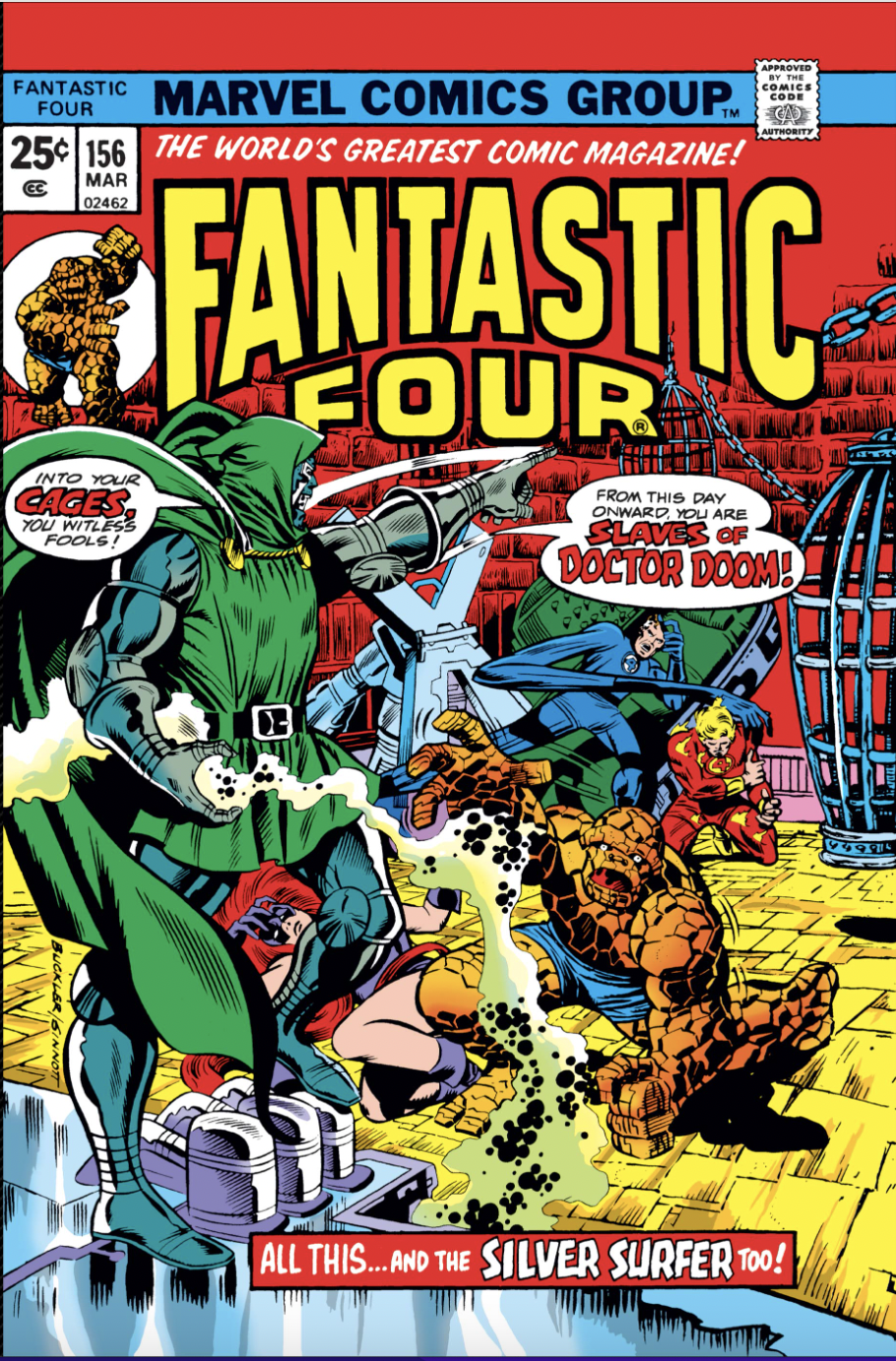
Cover: Bucker and Sinnott

Synopsis

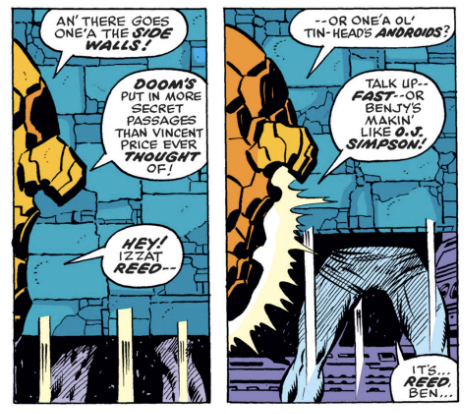
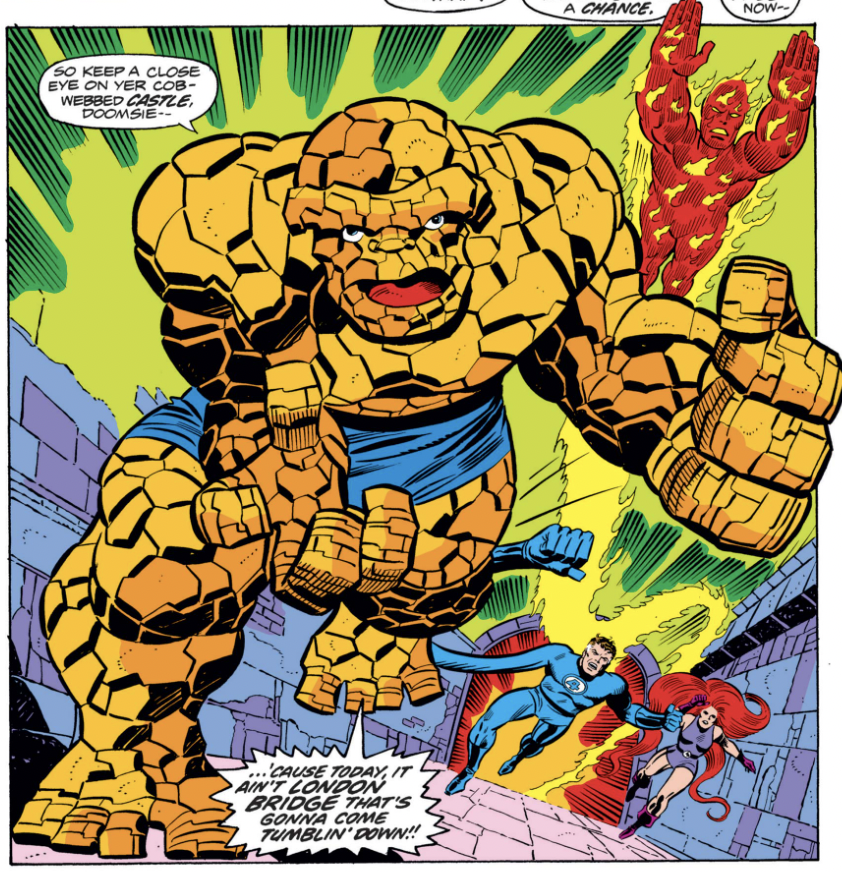
To rescue his beloved Shalla-Bal, the Silver Surfer hypnotizes the Fantastic Four and delivers them to Dr. Doom, who further humiliates him. The FF, who submitted to the Surfer’s hypnotism to infiltrate Doom’s castle, break free of their confinement and defeat an army of Doom’s androids while Doom plans his next move.


What’s going on here?

This is the second of three comics in this arc (hence the story’s title) and a big improvement over the first one. It’s not great: there’s still a lot of purple prose, Doom’s ranting begins to get repetitive, and the FF-are-trapped-in-individual-cages plot device has become a cliché at this point. But the story is suspenseful — we really don’t know what Doom’s intentions are — and the action sequences are a lot of fun. Hopefully the conclusion of the story maintains the momentum of this one.

The credits for this issue are a bit odd, with Len Wein and Roy Thomas both credited as both writers and editors, but a note in the letters page explains that Wein intended to write the entire arc but stepped down to replace Thomas as editor. Thomas, slated to become the new regular writer, picked up the story halfway through. The Bullpen Bulletins further explains that Thomas is now “editor emeritus” (a lofty title for someone who just turned 34) while Wein is now running the show. This begins a chaotic period where Marvel went through five editor-in-chiefs in four years: Wein (1974-75), Marv Wolfman (1975-76), Gerry Conway (1976), Archie Goodwin (1976-78)and finally Jim Shooter, who took over in 1978 and restored some stability to the company.

What I liked

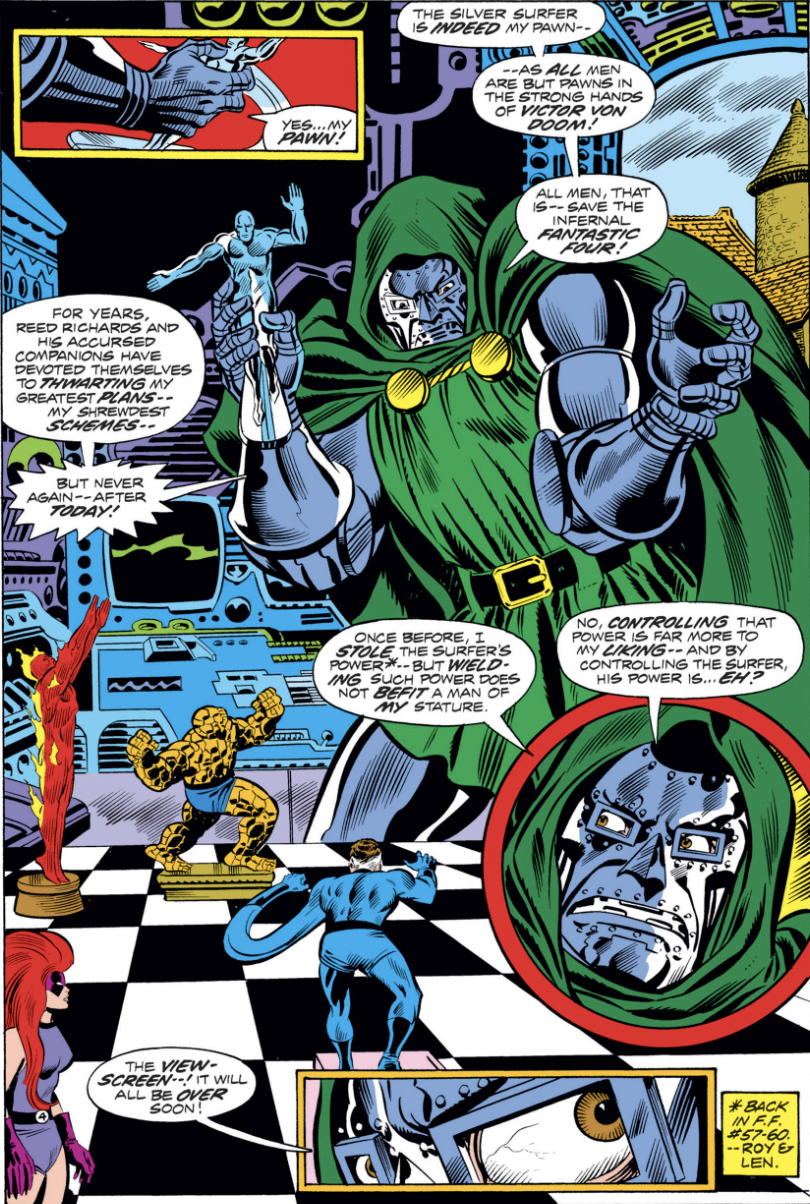
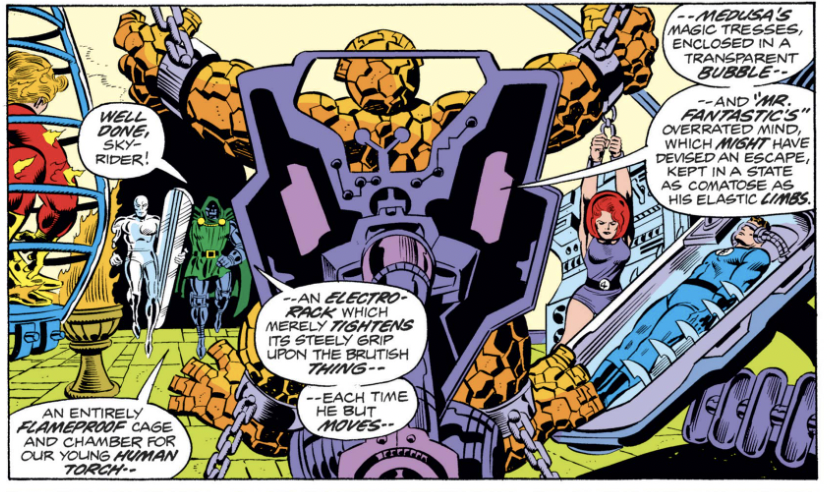
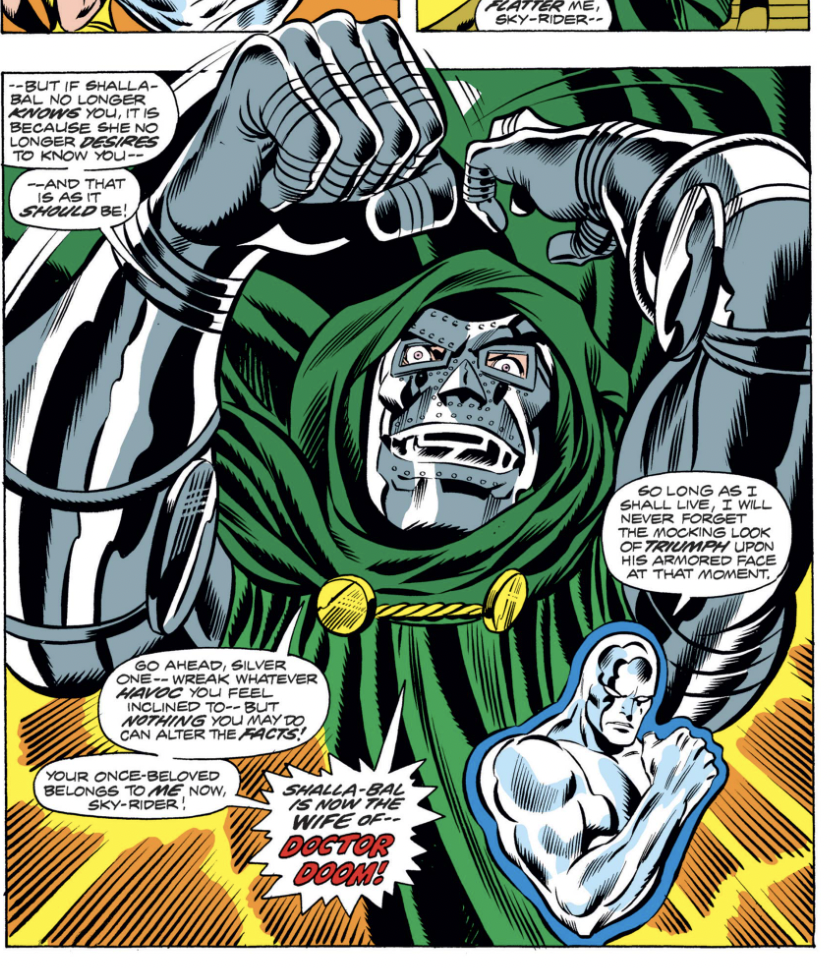
There’s some big, bold art from Rich Buckler, who seems to have gotten his mojo back, at least for this comic. This is a classic Doom splash page:


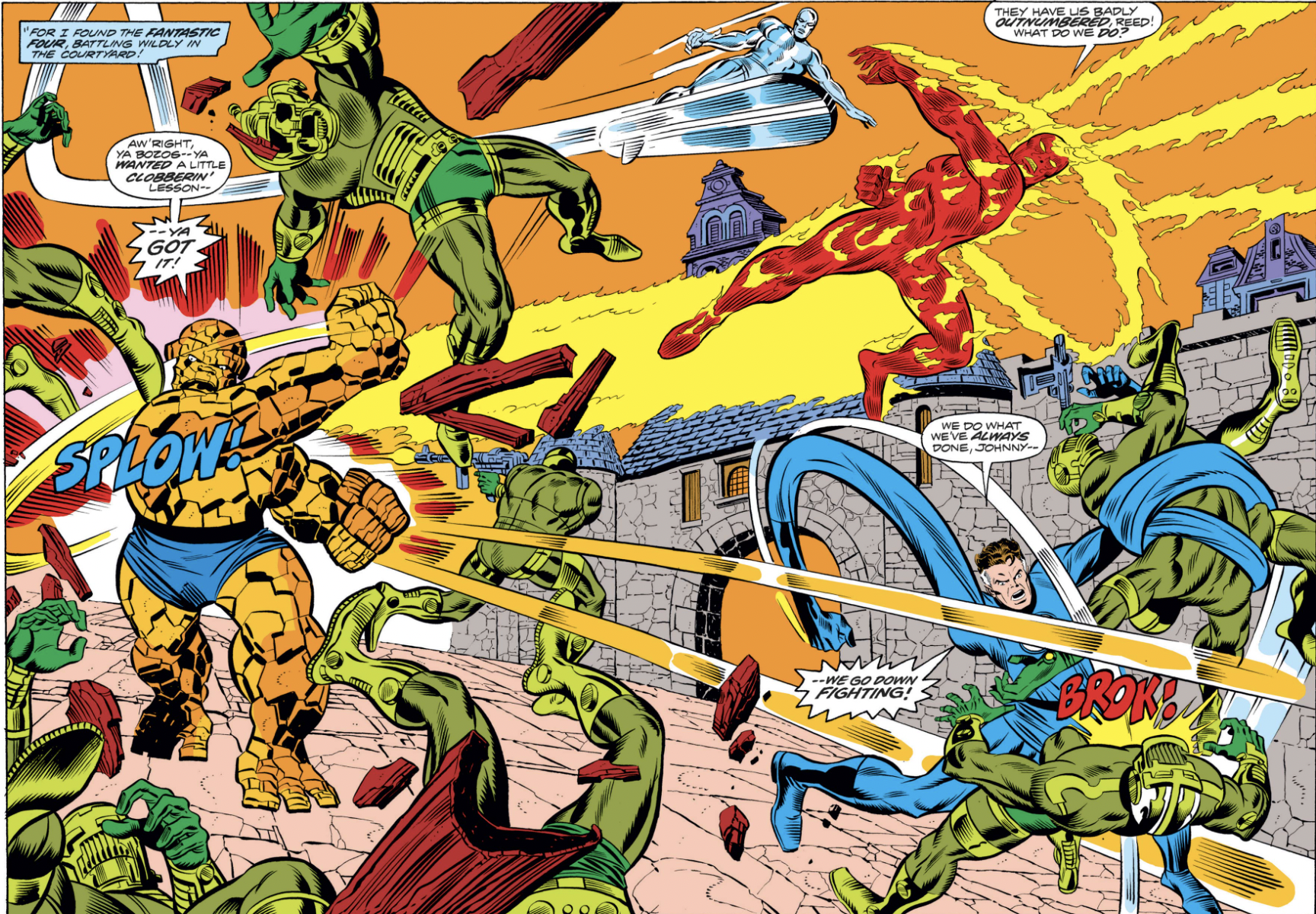
And I liked this action sequence:


Hidden in all of Doom’s scenery chewing, there was also this intriguing nugget of backstory, hinting at some unknown motivation for his hatred of Reed. I don’t know what he’s referring to, and I hope it’s revealed in the next issue:


What I didn’t like

As mentioned above, confining the FF in cages designed to counter their powers has probably been employed in half a dozen issues by now. At least in this one Ben and Johnny note how easy it was to escape.


Anything else?

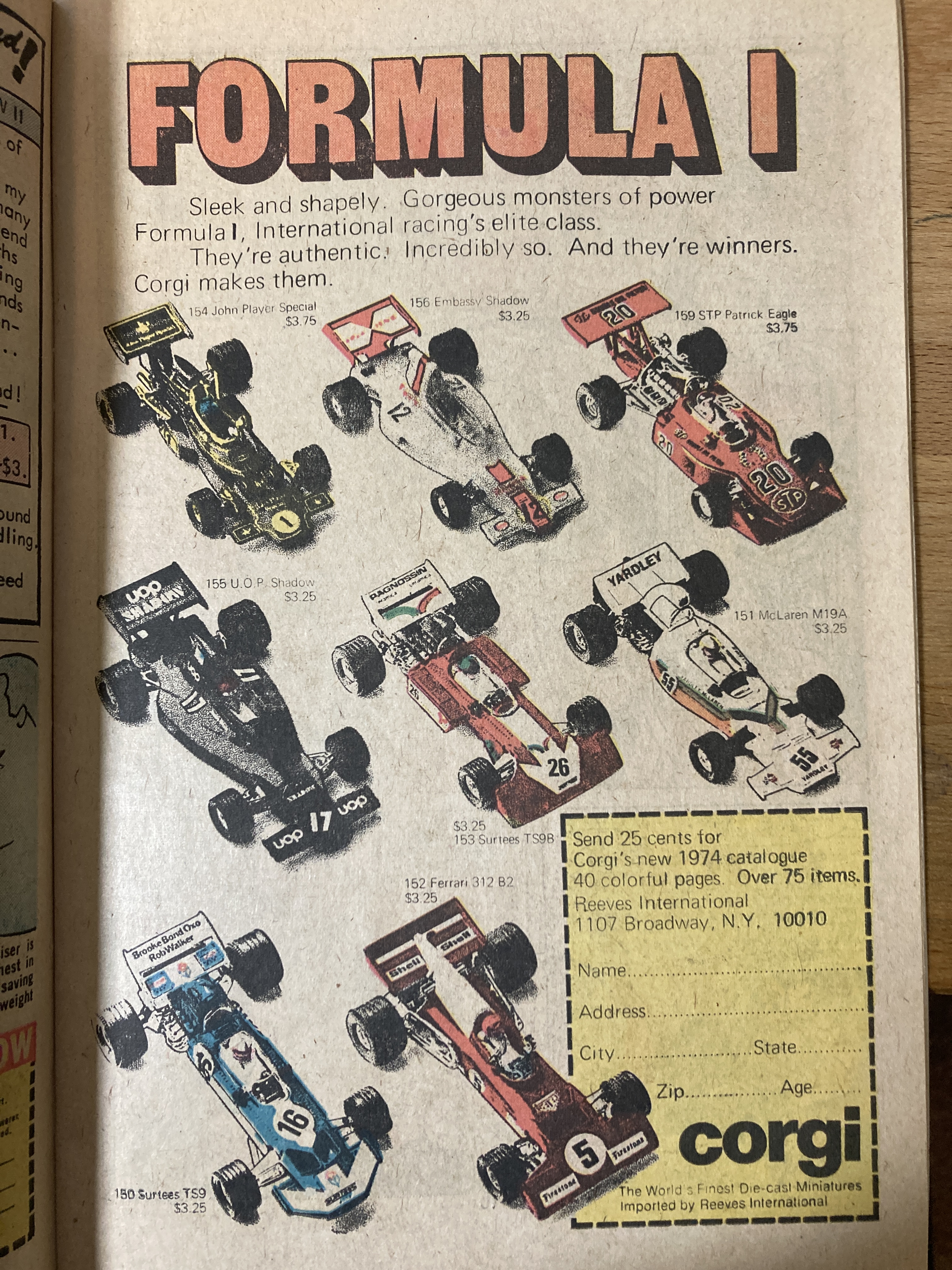
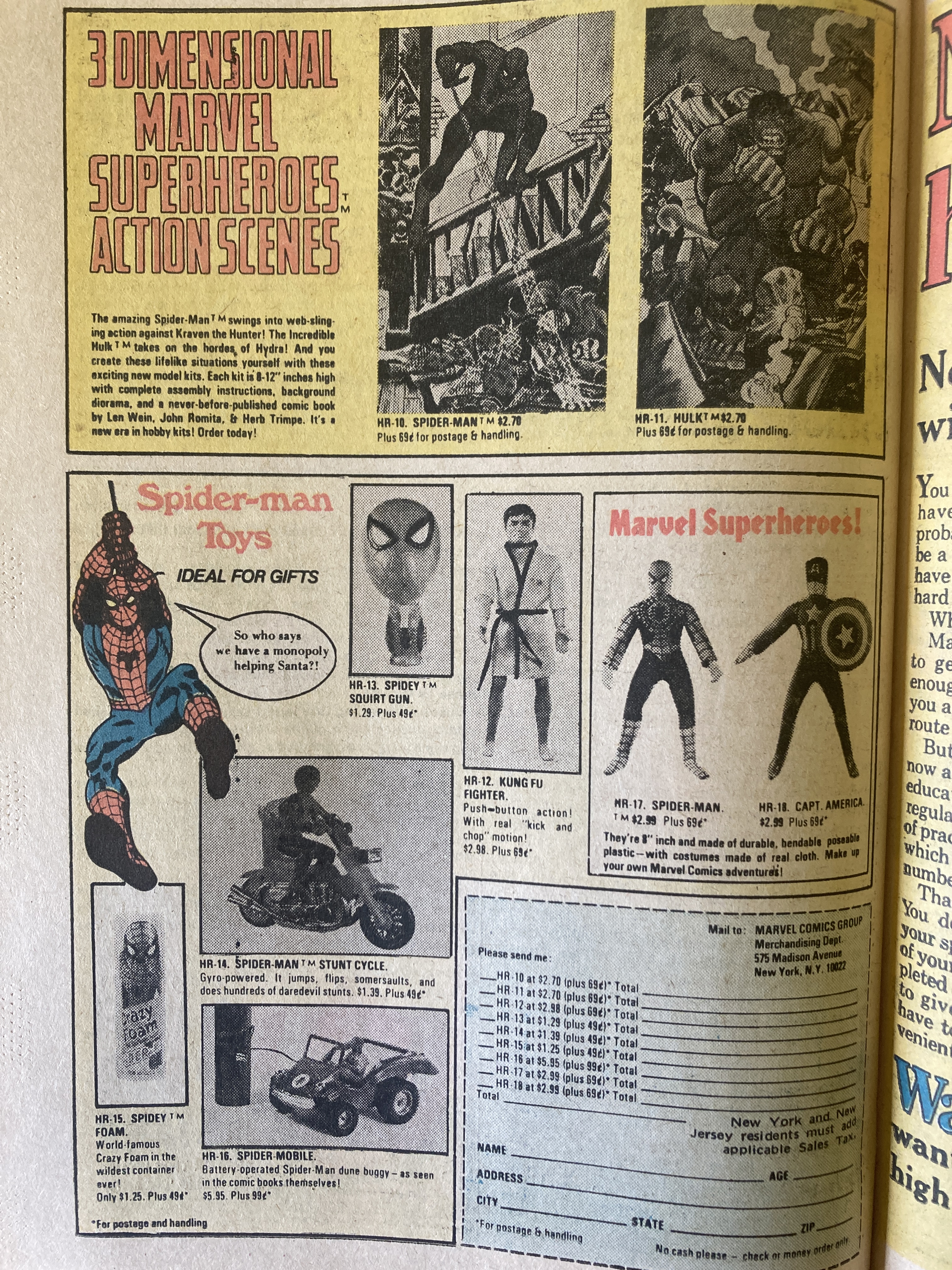
This ad was cool. I wonder if I can still get these cars?


Overall

A marked improvement from last issue

“The World’s Greatest Comic Magazine!” Fantastic Four No. 155

22 Sunday Dec 2024

Posted by percivalhenry in The World's Greatest Comic Magazine

≈ Leave a comment

Tags

1974, Dr. Doom, Fantastic Four, Fantastic Four 155, Marvel comics, Silver Surfer

Fantastic Four 155
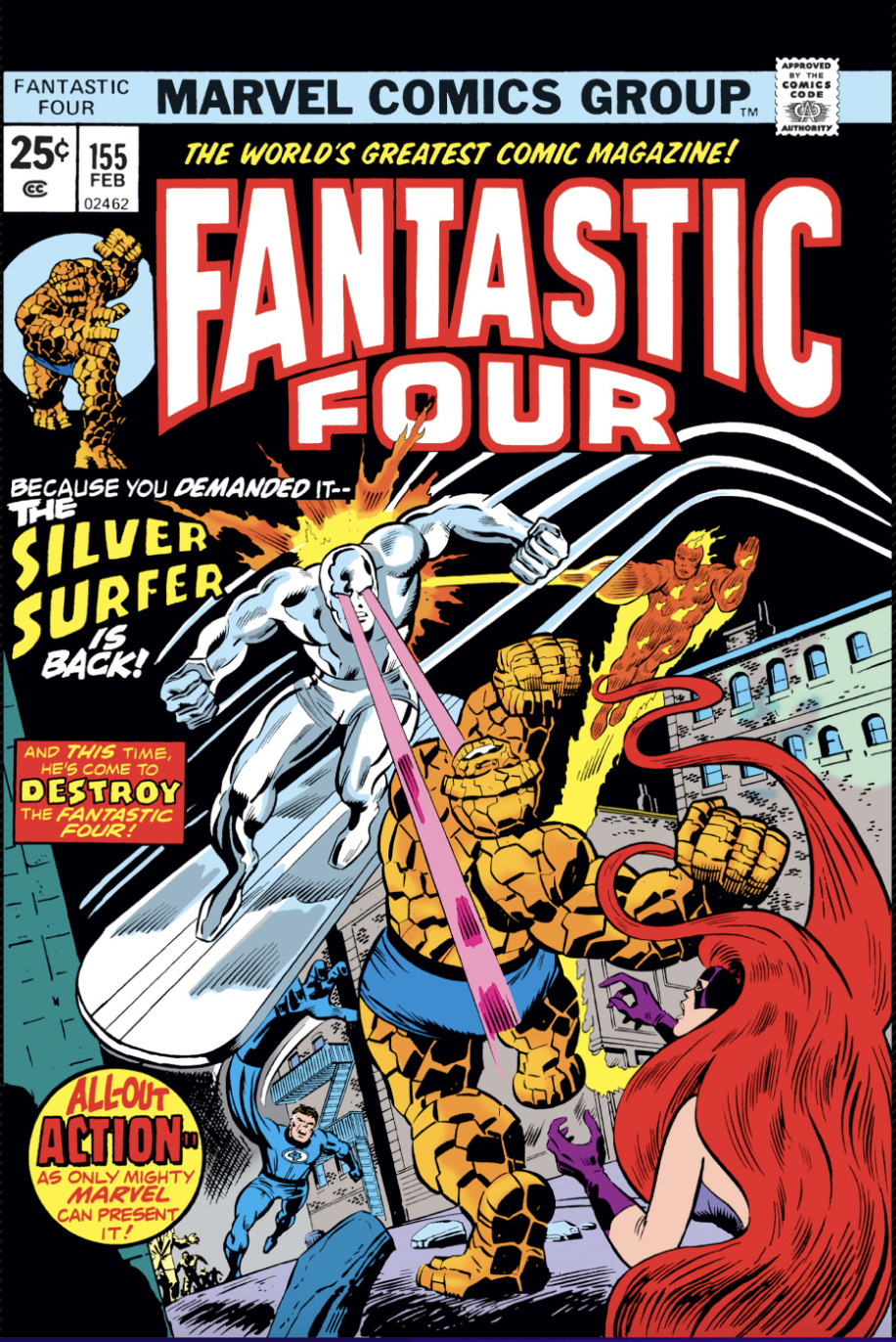
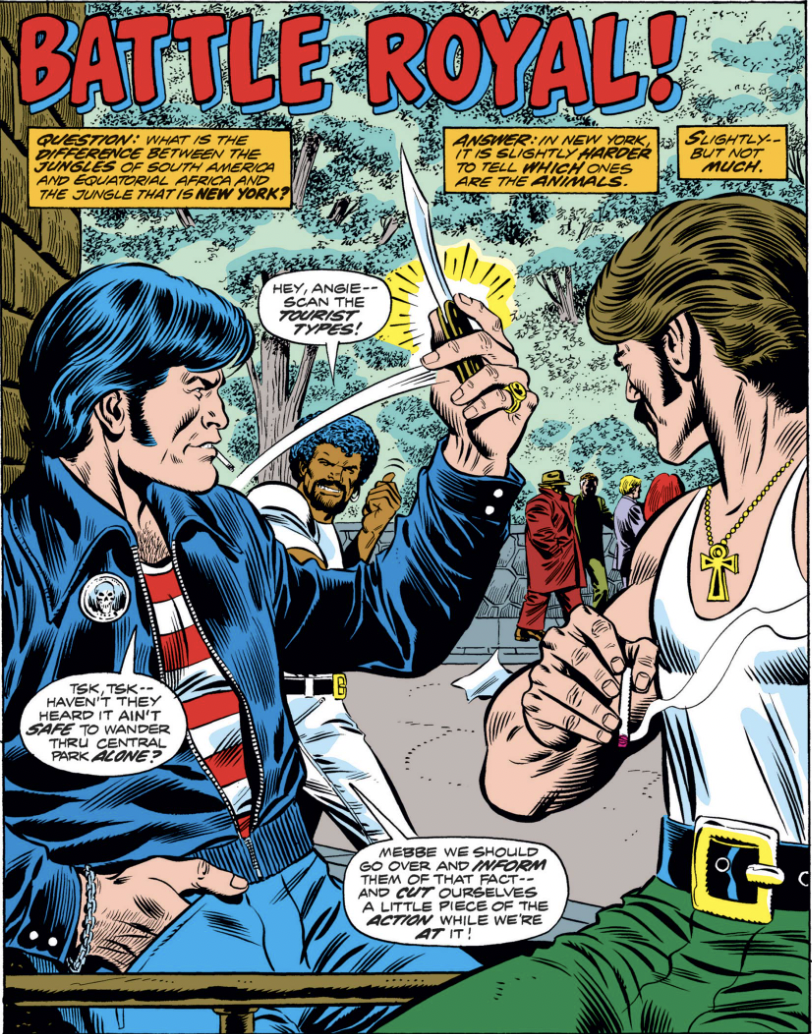
“Battle Royal!”
Published November 1974
Writer: Len Wein
Pencils: Rich Buckler
Inks: Joe Sinnott
Letters: John Costanza
Colors: Glynis Wein
Editor: Roy Thomas
Cover: Buckler and Sinnott

Synopsis

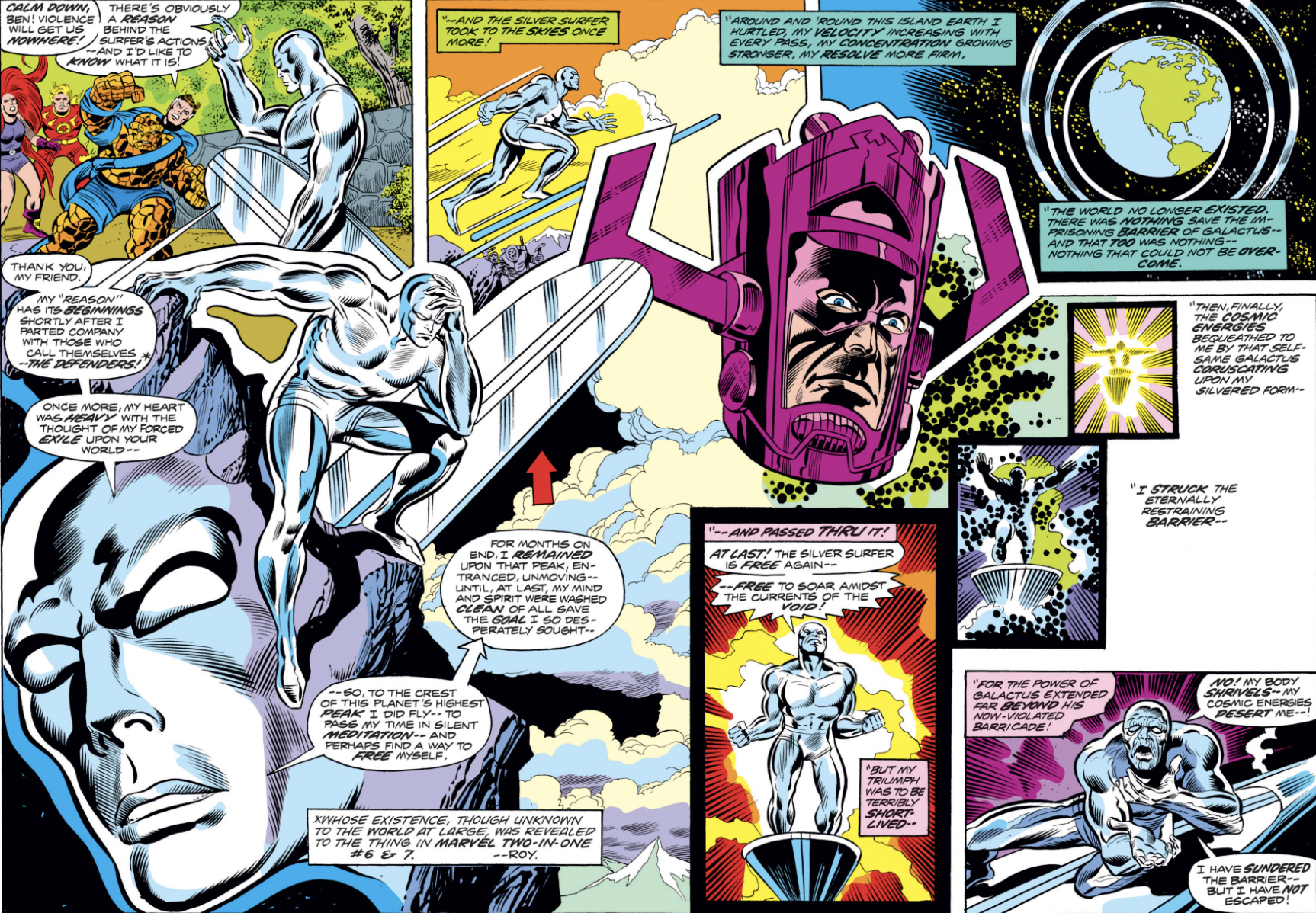
The Silver Surfer attacks the Fantastic Four in Central Park, but rather than kill them, he explains in a lengthy flashback how he discovered his beloved Shalla Bal was the captive of Dr. Doom. To save her, Doom demanded that he destroy the Fantastic Four.


What’s going on here?

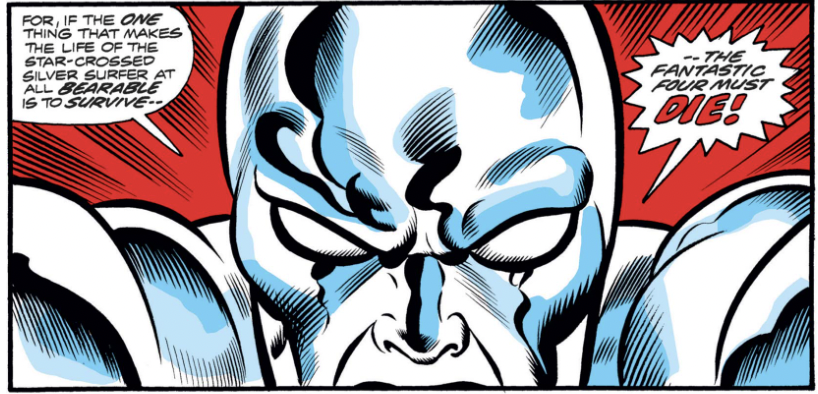
This is Len Wein’s first full issue was writer of the Fantastic Four and I wish I could say it was a promising debut. It’s not. The entire issue hangs on a tired comic-book cliché — one hero must battle another because of reasons — which in this case makes even less sense than normal. The Silver Surfer, with all his cosmic power and wisdom, is really so smitten by Shalla Bal than he sees no other way to save her but killing his friends? That at no point does he think it might make more sense to enlist the aid of the Fantastic Four and the world’s smartest man, Reed Richards? I’m fairly sure that’s what will happen in the next issue, but it doesn’t make this comic any less tedious. It doesn’t help that much of it is narrated by the Surfer, who, as scripted by Wein, speaks in ornate, purple prose. “So, to the crest of this planet’s highest peak I did fly.” Seriously, why does he talk like that?


What I liked

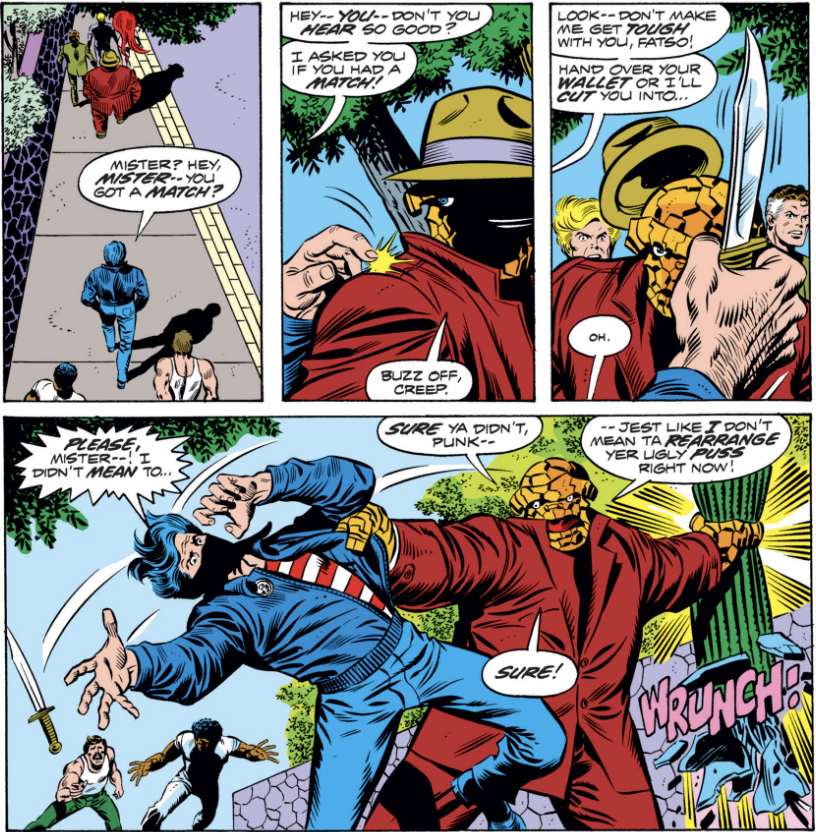
The opening sequence, where the FF is mugged in Central Park, has a fun, gritty-New York-in-the-70s cinematic quality to it. The muggers look like extras in “Warriors.”


And while we know what’s coming, it’s satisfying to see them get their comeuppance when they attack the Thing:


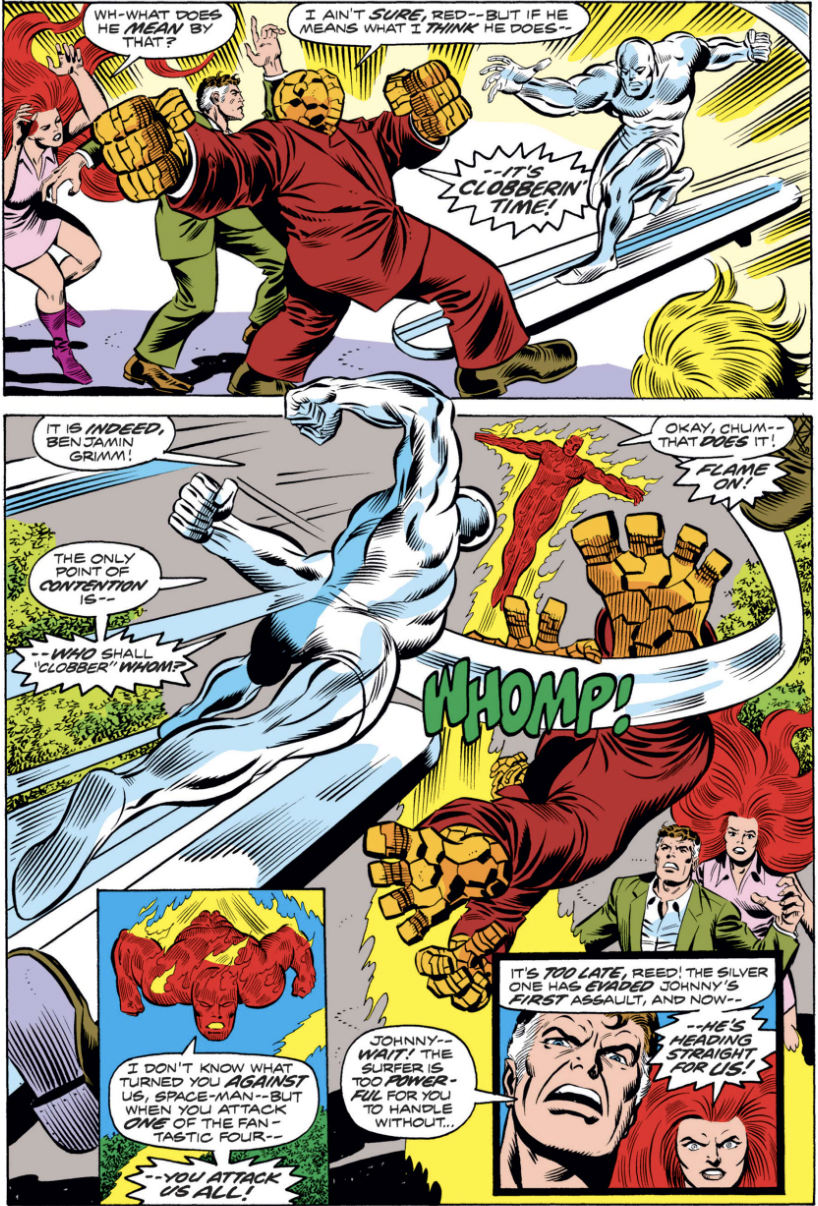
I liked the Doom reveal at the end, although it was pretty obvious the Surfer was in Latveria:

And this was fun: The Surfer hit Ben so hard he knocked off his shoes

What I didn’t like

For the umpteenth issue in the row, the Invisible Girl plays no meaningful role. In fact, she’s not even mentioned or seen in the comic.

As mentioned above, much of the issue is consumed with the Surfer lengthy and convoluted explanation of why he’s attacking the FF. After he unknowingly arrives in Latveria, he then stumbles across the FF battling robots. They are later revealed to be robots themselves, and the whole sequence ultimately has no bearing on the story at all, but simply serves as padding and a way to squeeze in another action sequence.


Anything else?

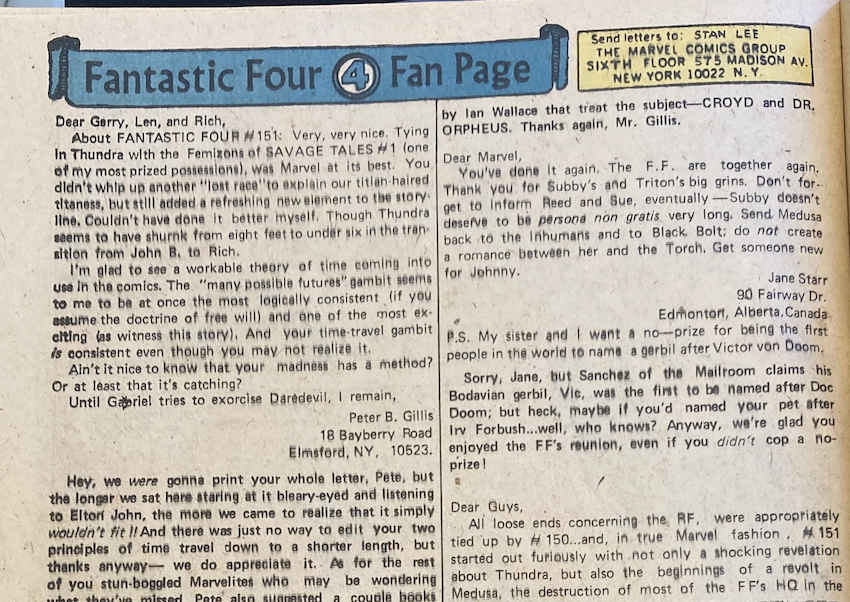
There’s a letter to the editor from future comics writer Peter B. Gillis. Also, Jane Starr wants a no-prize for naming her hamster Victor Von Doom.


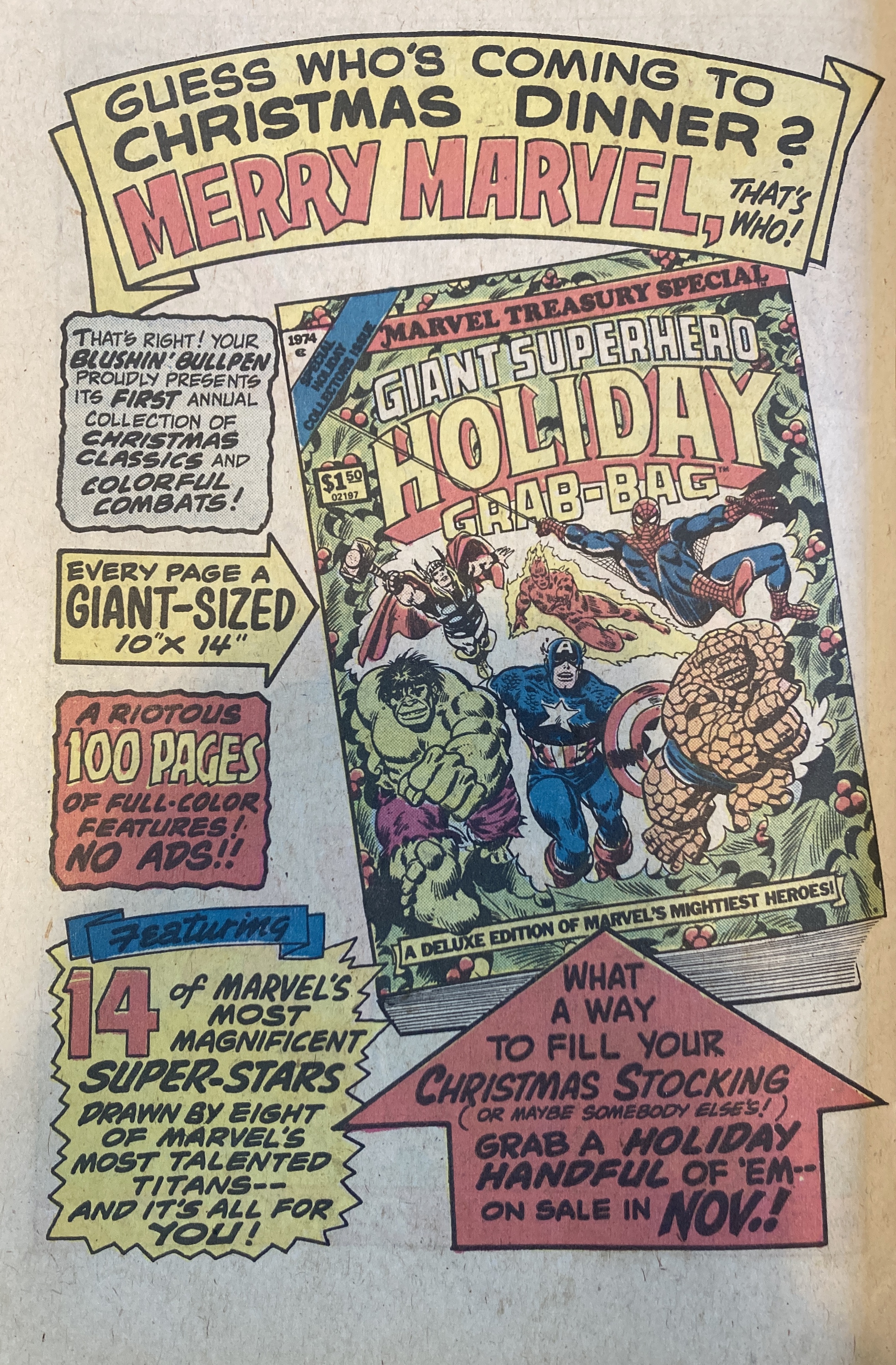
I kind of want this Holiday Grab-Bag:


Overall

A boring slog

“The World’s Greatest Comic Magazine!” Fantastic Four No. 154

15 Sunday Dec 2024

Posted by percivalhenry in The World's Greatest Comic Magazine

≈ Leave a comment

Tags

1974, Fantastic Four, Fantastic Four 154, Marvel comics, Stan Lee

Fantastic Four 154
“The Man in the Mystery Mask!”
Published October 1974
Writers: Len Wein and Stan Lee
Pencils: Bob Brown and Dick Ayers
Inks: Frank Giacoia, Michael Esposito and Paul Reinman
Letters: Artie Simek
Colors: Glynis Wein
Editor: Roy Thomas
Cover: Gil Kane and Giacoia

Synopsis

White returning from their battle with Mahkizmo, Mr. Fantastic, the Human Torch and the Thing are attacked by a mysterious villain, leading to a lengthy flashback from an incident when the Thing and Torch were lured by the same villain into a trap, only for it to be revealed to be Mr Fantastic trying to teach them a lesson. After battling the villain in the present, he is revealed to be Nick Fury testing SHIELD’s new weaponry on the Fantastic Four.


What’s going on here

This is an odd, interesting issue. Most of the comic is a reprint of 1964’s Strange Tales 127, from a run of stories that were nominally Human Torch solo adventures but in this case also included Ben and Reed. It’s a hugely silly story by Stan Lee and very much a Silver Age framing, where a hero tricks a colleague or friend to teach them a lesson (this plot was a staple of a great many Superman and Lois Lane comics from the era). The new framing device is almost as ridiculous, with the reveal that Nick Fury attacked the team over Manhattan to test some new gadgets.

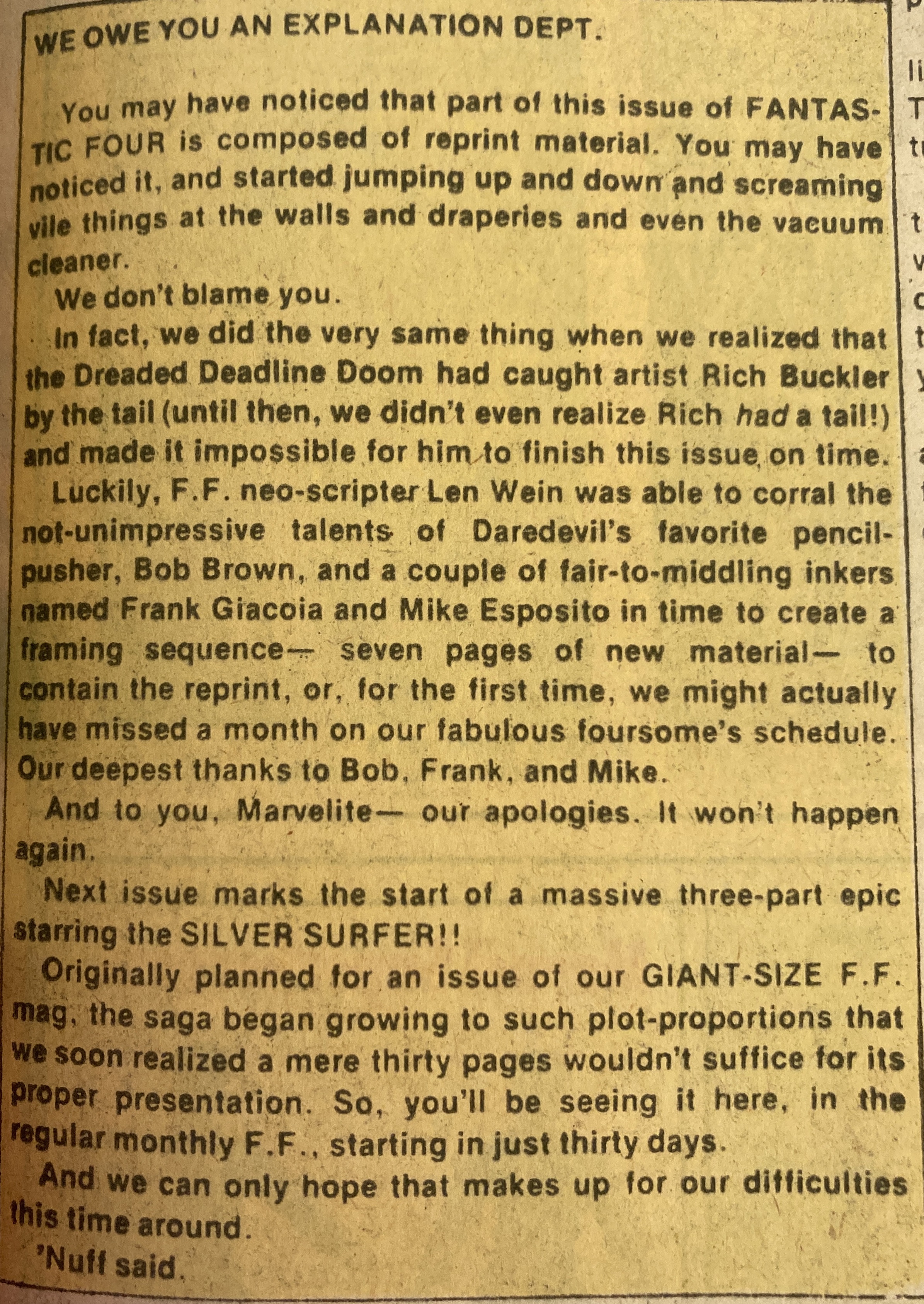
An editor’s note helpfully, and abashedly, explains that regular penciler Rick Buckler couldn’t make his deadline, so new writer Len Wein and penciler Bob Brown stepped into to save the day with the framing sequence. I would love to know whose idea it was to use Strange Tales 127 as the filler issue; I wonder if Stan suggested it.


As I’ve explained, I chose not to include the Torch stories in Strange Tales as part of this blog, mostly because doing so would slow down my advance through the main book (and with 700+ issues to blog, this is a project that is already ambitious enough). But reading this story for the first time makes me wonder if I’ve made a mistake; there’s a goofy charm to these early stories that I miss.

This is Len Wein’s first issue as the FF’s writer. The note suggests this is a regular gig but he only lasts a few issues before returning a few years later. Notably, this issue is colored by Glynis Wein, whom I believe at the time was married to Len, making this the first FF issue with a married couple in the credits.

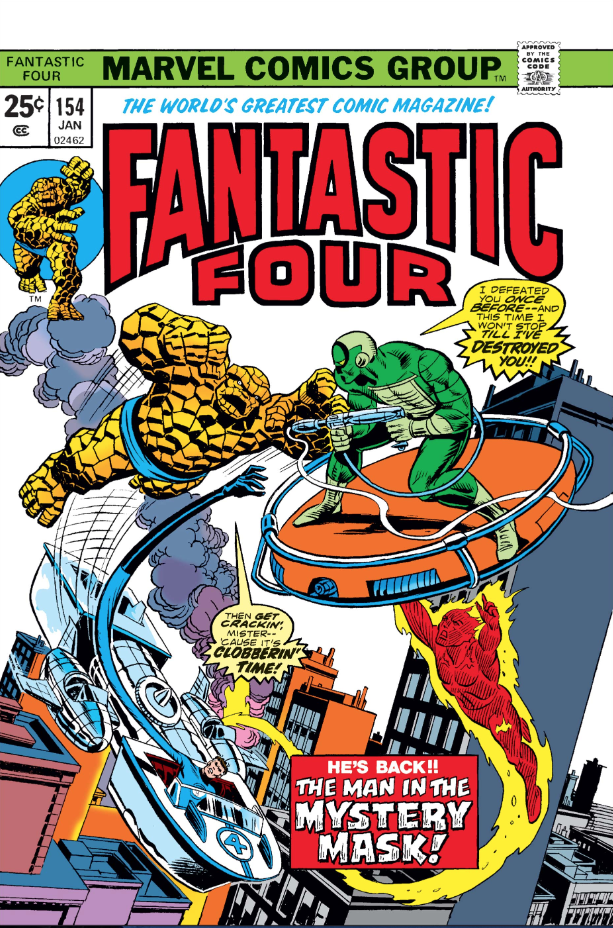
Gil Kane again did the cover, with inks by Frank Giacoia. One of his better FF covers, I think. The cockeyed angle of the city background adds to the action.

What I liked

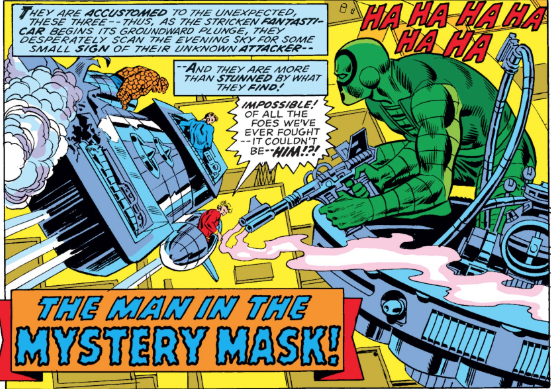
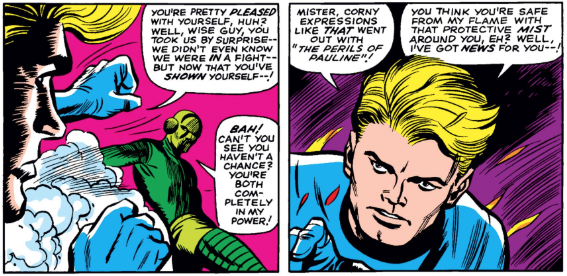
Dick Ayers pencils are rough but his layouts have flair, and Paul Reinman’s heavy inks add drama. This is a great panel:


I liked this sequence too:


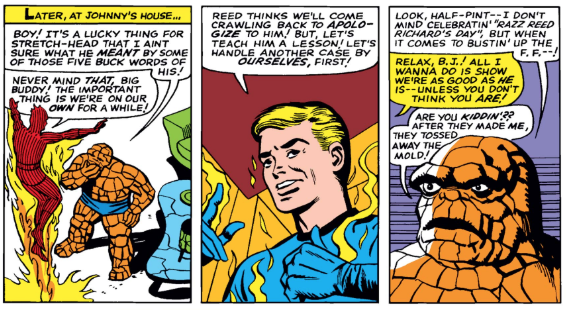
It’s worth remembering how early in the FF’s history this takes place, coming out around the same month as FF 33. Hence Ben’s appearance wasn’t locked down across Marvel:


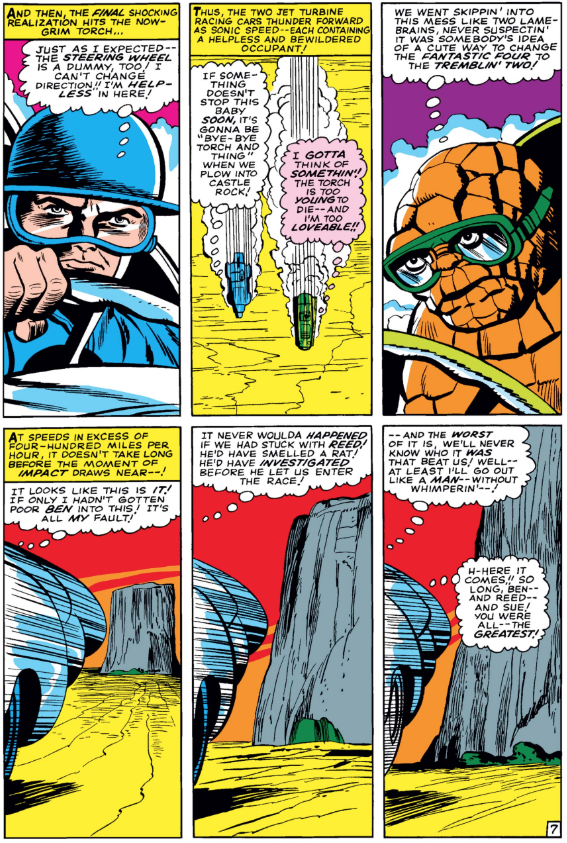
Stan’s script is also light and fun, and Ben’s quips are quick and clever. There’s also a nicely poignant sequence where Ben and Johnny thinks they’re about to die:


In an effort to celebrate Jack Kirby and restore him to his place as major contributor to Marvel’s success, there’s been an unfortunate backlash against Stan Lee, to the point where he’s been denigrated as a mere figurehead and flim-flam man who coasted on Jack’s labors. Issues like this, where Jack has no involvement, reveal how talented Stan was at scripting these characters. The first 102 issues of the Fantastic Four were a true partnership between two creative powerhouses. We don’t need to tear down Stan to build up Jack.


What I didn’t like

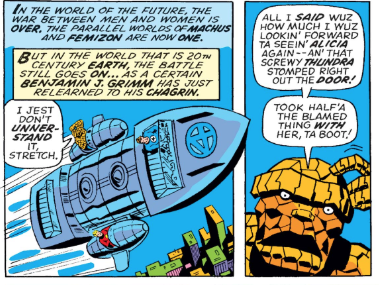
It should be churlish to point out the goofiness of the two plots in this comic, given one is a Silver Age relic and the other is reclamation job. I will instead note that once again Sue is not in this comic, and she and Medusa are only fleetingly mentioned. There is also this puzzling sequence, and I am legitimately confused by what Ben refers to as “half’a the blamed Thing”:


Anything else?

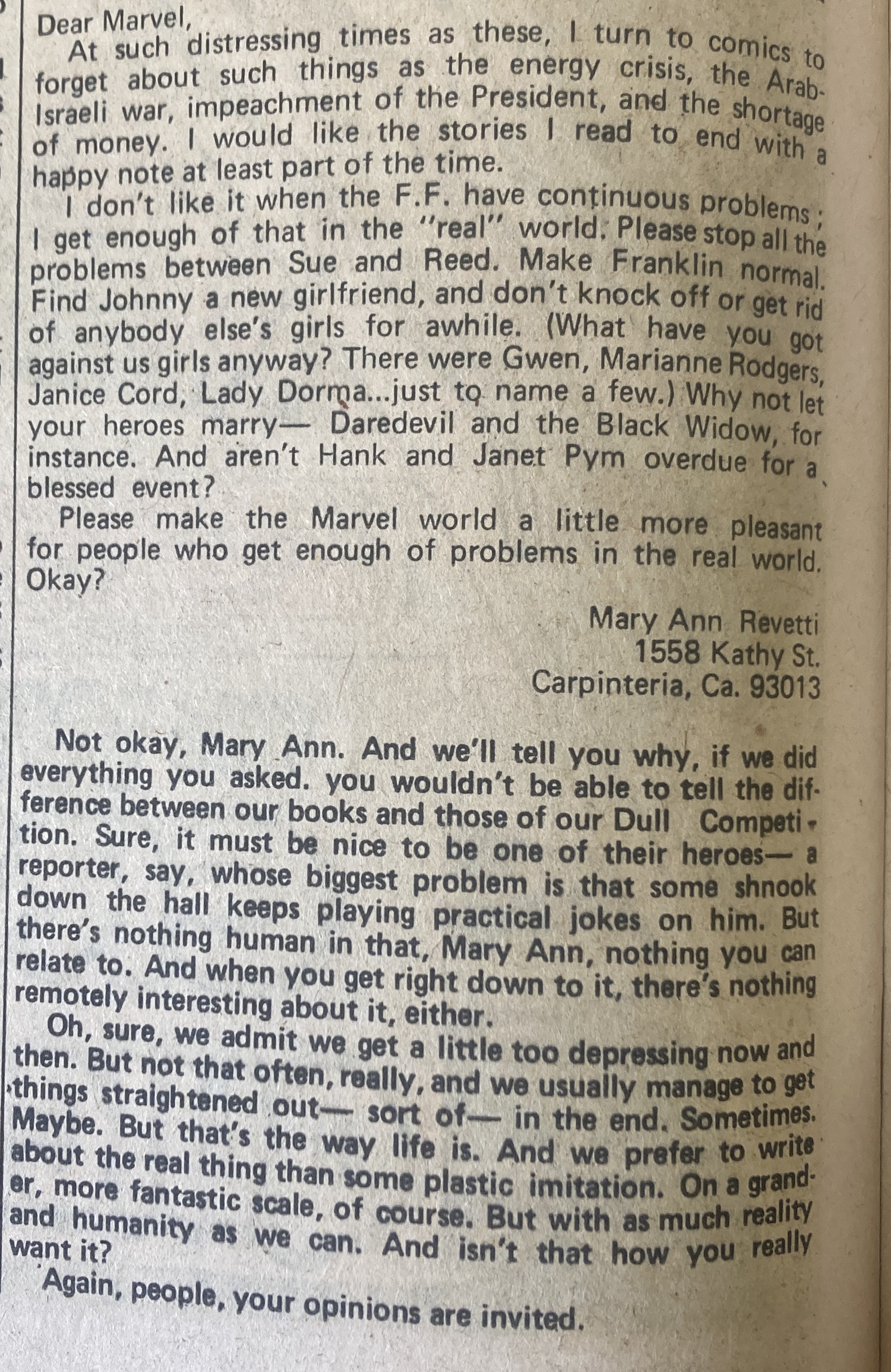
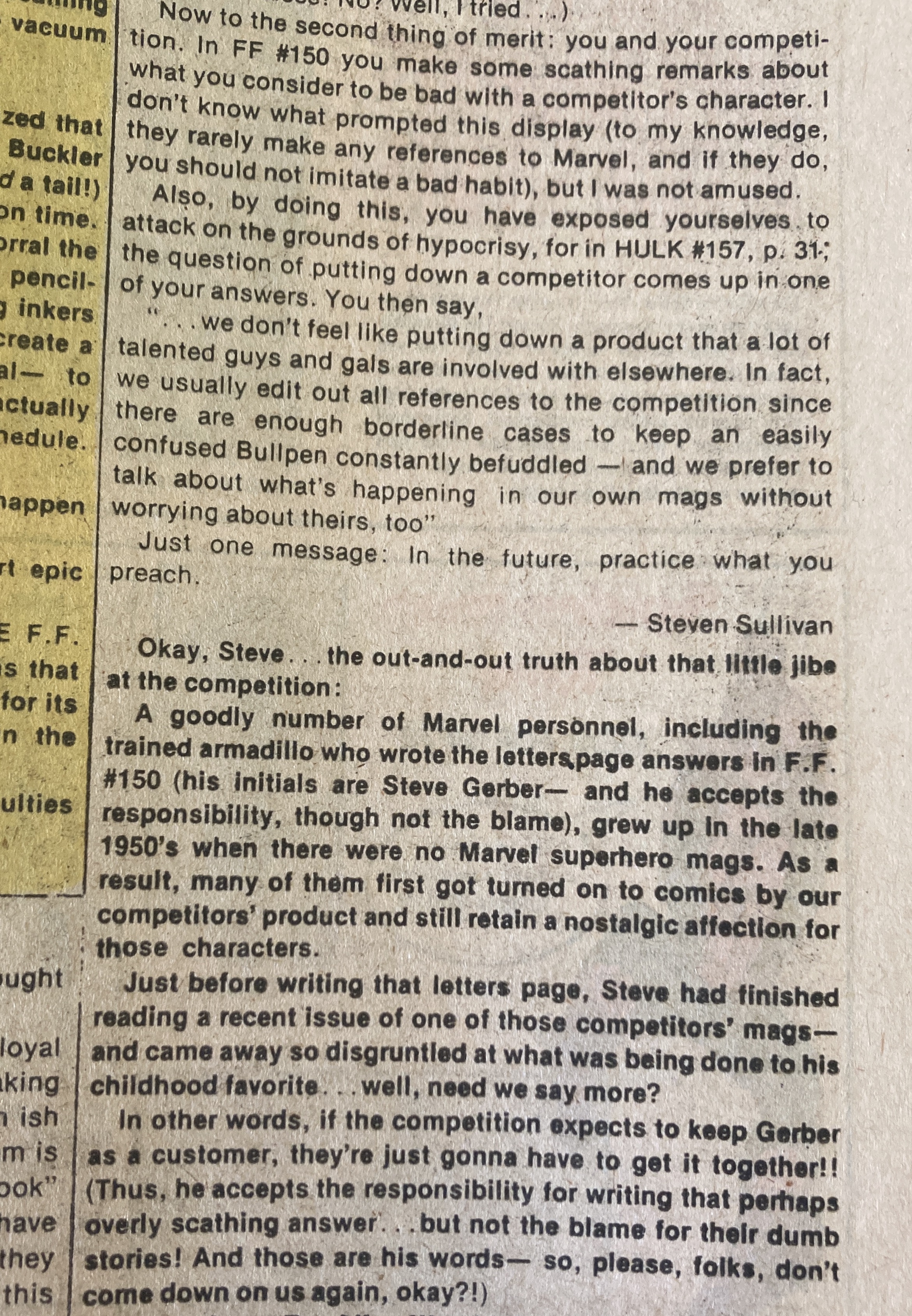
There is an interesting letter in this issue, calling out a response to another letter in FF 150, where the Dull Competition was mocked for comics that lacked drama and instead told stories about “a reporter, say, whose biggest problem is that some schnook down the hall keeps playing practical jokes on him” — a clear reference to Superman. The irony is that Strange Tales 127 is basically a story about an elaborate practical joke.

In the response in 154, presumably written by Roy Thomas, blame is laid at the feet of Steve Gerber, who would later go on to great heights at Marvel before becoming one of its biggest critics. The two letters are below and are an interesting glimpse behind the scenes at some inter- and intra comic drama:


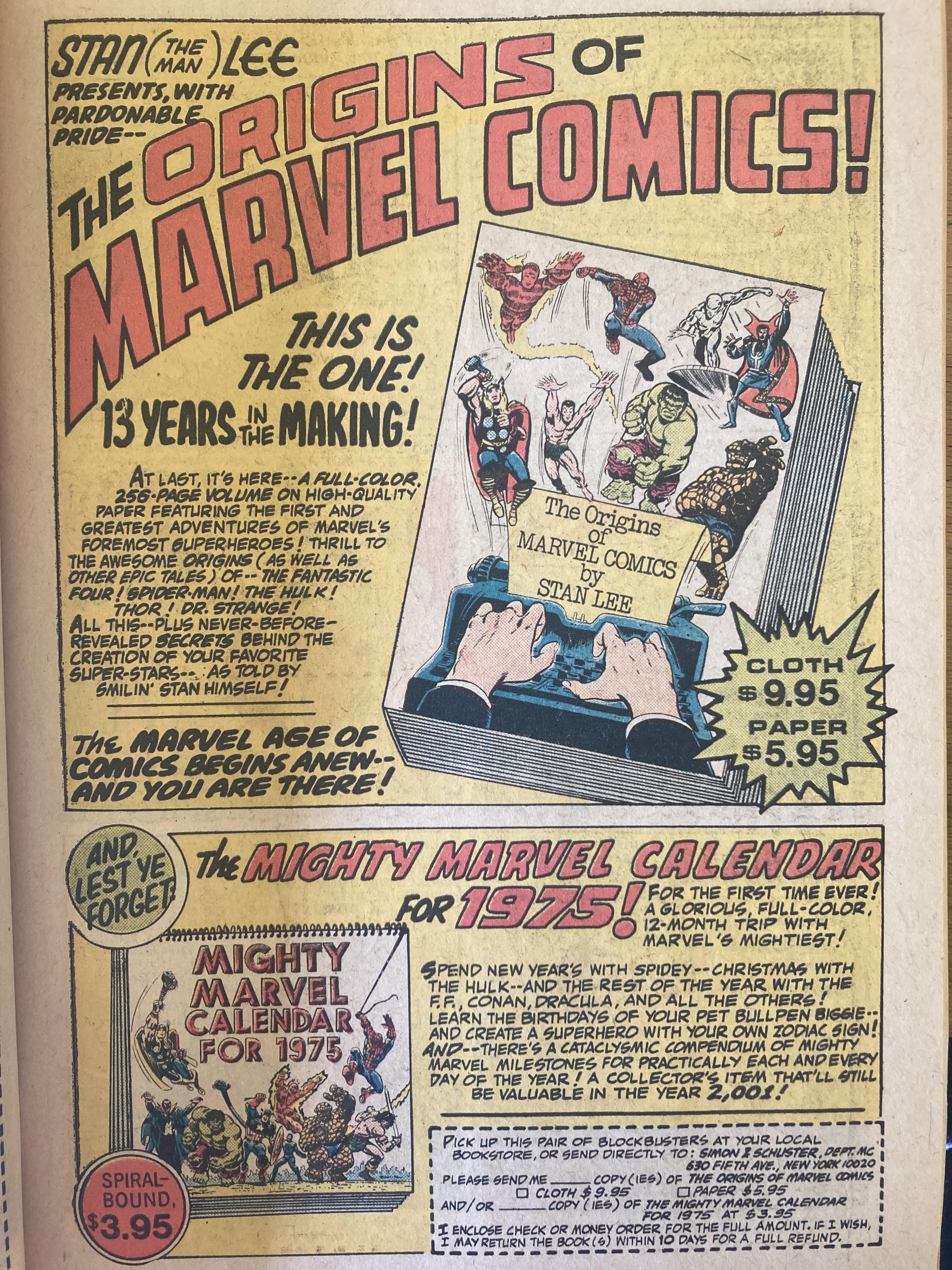
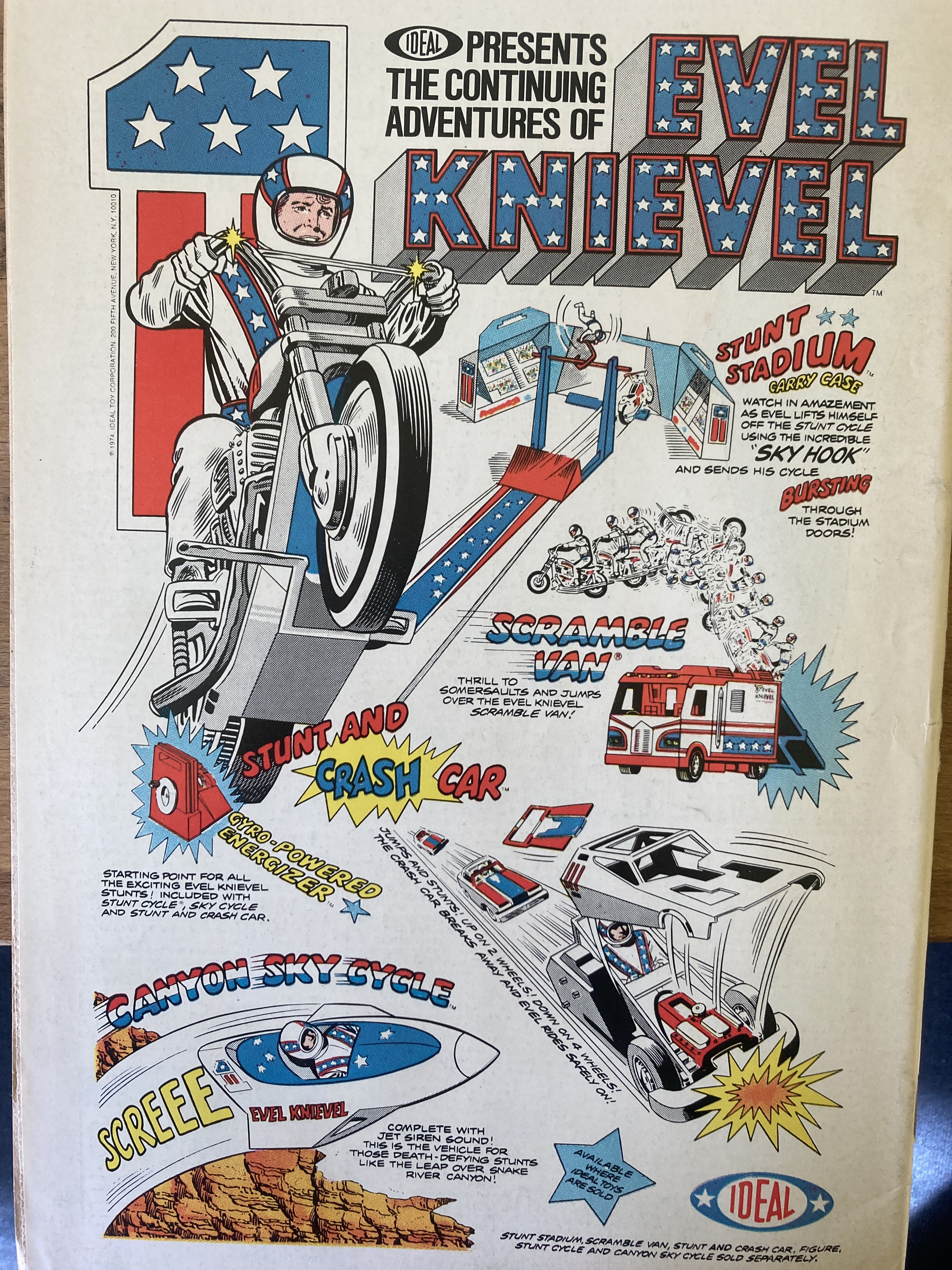
Also, there are some cool ads in this issue (I’m pretty sure I had that Evel Knievel toy motorcycle as a kid):


Overall

A curious artifact

“The World’s Greatest Comic Magazine!” Giant-Size Fantastic Four 3

08 Sunday Dec 2024

Posted by percivalhenry in The World's Greatest Comic Magazine

≈ Leave a comment

Tags

1974, Fantastic Four, Gerry Conway, Giant-Size Fantastic Four 3, Marvel comics, Rich Buckler

Giant-Size Fantastic Four 3
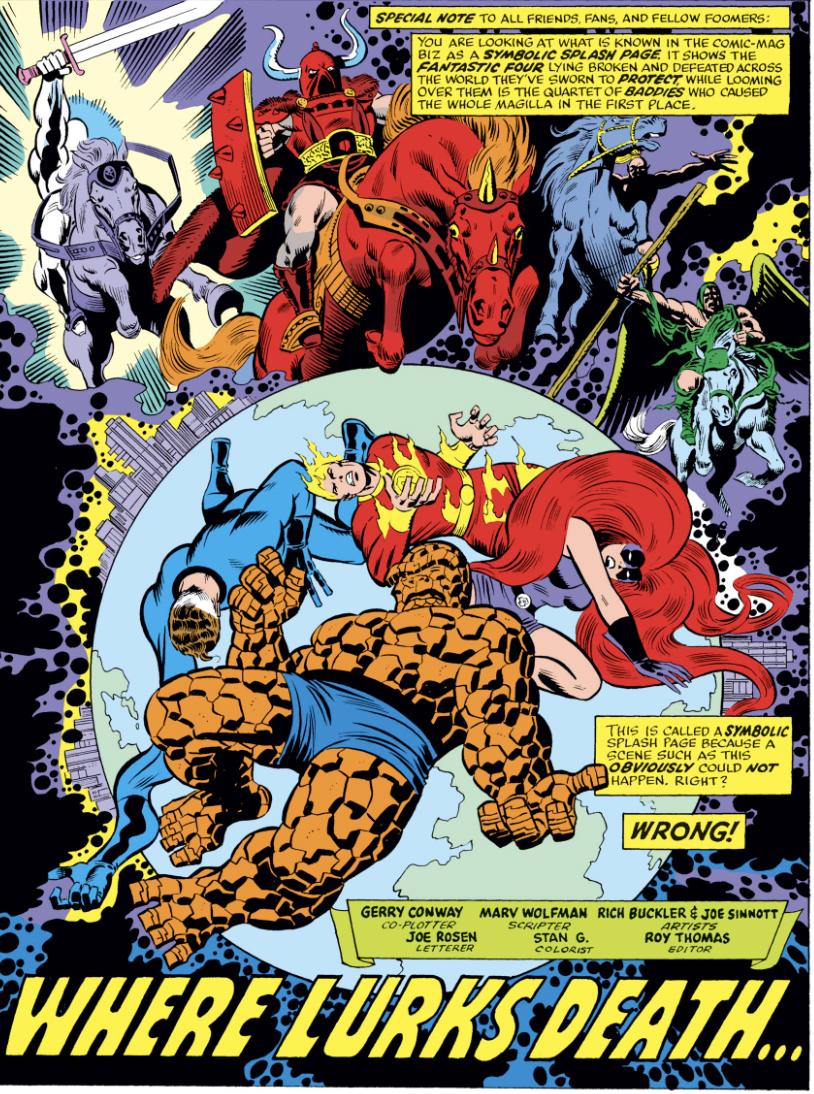
“Where Lurks Death … Ride the Four Horseman!”
Published August 1974
Plot: Gerry Conway
Script: Marv Wolfman
Pencils: Rich Buckler
Inks: Joe Sinnott
Colors: Stan Goldberg
Editor: Roy Thomas
Cover: Bucker and Sinnott

Editor’s note: As mentioned in my last few posts, I recently discovered four issues of Giant-Size Fantastic Four published in 1974 contained new material, and were not just reprints of back issues as I believed. I am belatedly going back and blogging about them, with this issue, which takes place between FF 150 and 151, being the last that is out of order. We’ll resume with Fantastic Four 154 with my next post.

Synopsis

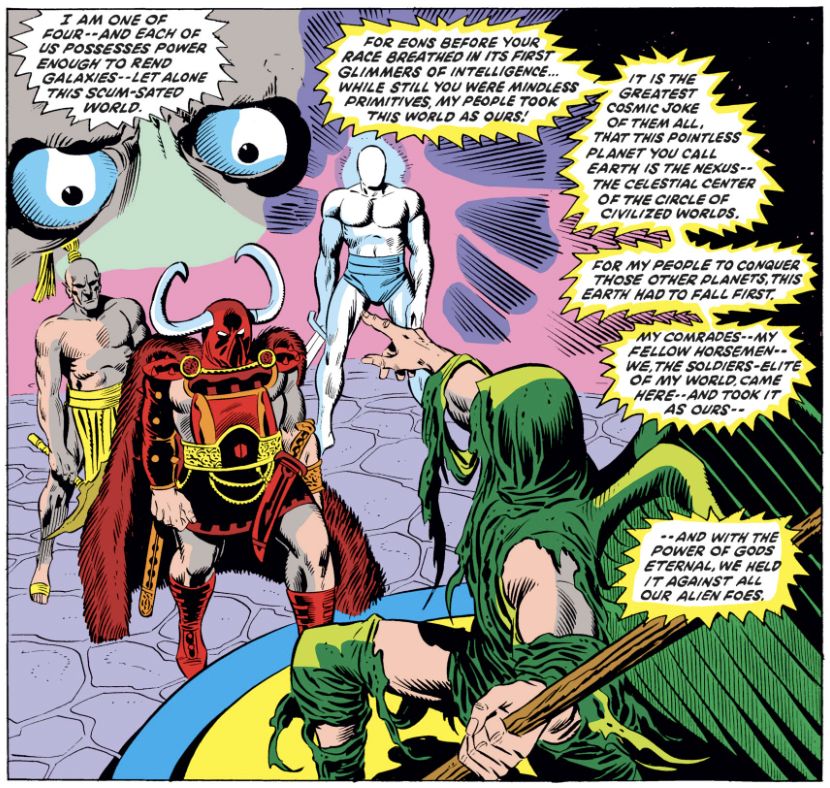
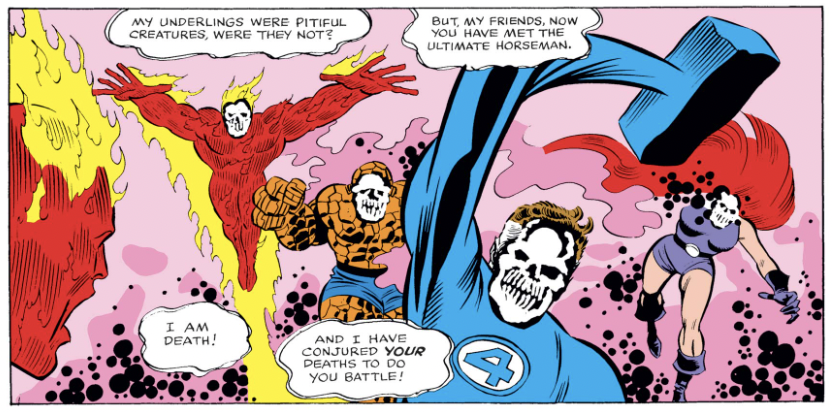
The Four Horsemen of the Apocalypse, seemingly characters from the Book of Revelations but in actuality aliens, each appear on Earth. The Fantastic Four together defeat Pestilence, then split up to beat War and Famine, before coming together again to conquer Death, all accomplished by triggering a curse-like “protection device” that sends them back to their home world.


What’s going on here?

This is a big, ambitious comic that feels like a classic annual story, and takes 30 pages to tell across four “chapters.” Unfortunately, it’s not that good, with an incoherent plot that tries hard to be profound but ultimately just fizzles out. Structurally it’s similar to the last Giant-Size FF, with the team facing some larger, metaphysical foe and splitting up before reuniting to triumph in the end. But while last issue’s time-travel to colonial New York and gangland Chicago had a goofy charm, there’s nothing much fun about war and famine, and the story can’t bridge the gap between the metaphorical challenges represented by the Four Horsemen and the comic-book realities of needing bad guys to punch.

The script is by Marv Wolfman, who at this point had been in comics for about six years at Marvel and DC, but primarily writing horror comics. This is his first work on the Fantastic Four and he would come back in a few years to have a longish run from FF 194 to 215 before returning to DC and taking on the New Teen Titans.

Giant-Size Fantastic Four also reprints FF 21, an important early story with distinctive inks by George Roussos. Read all about it here.


What I liked


I really did want to like this comic, because I loved the swinging-for-the-fences ambition of it. The Four Horsemen of the Apocalypse is a great concept (thanks, John of Patmos, the exiled ancient Christian who wrote Revelations) and in a comic book world populated with characters like Thor and Hercules, as well as Death and Eternity, they are obvious subjects for comic writers to take on. It’s a great idea for a big, annual-type story. But as discussed, Conway and Wolfman bit off more than they could chew here.

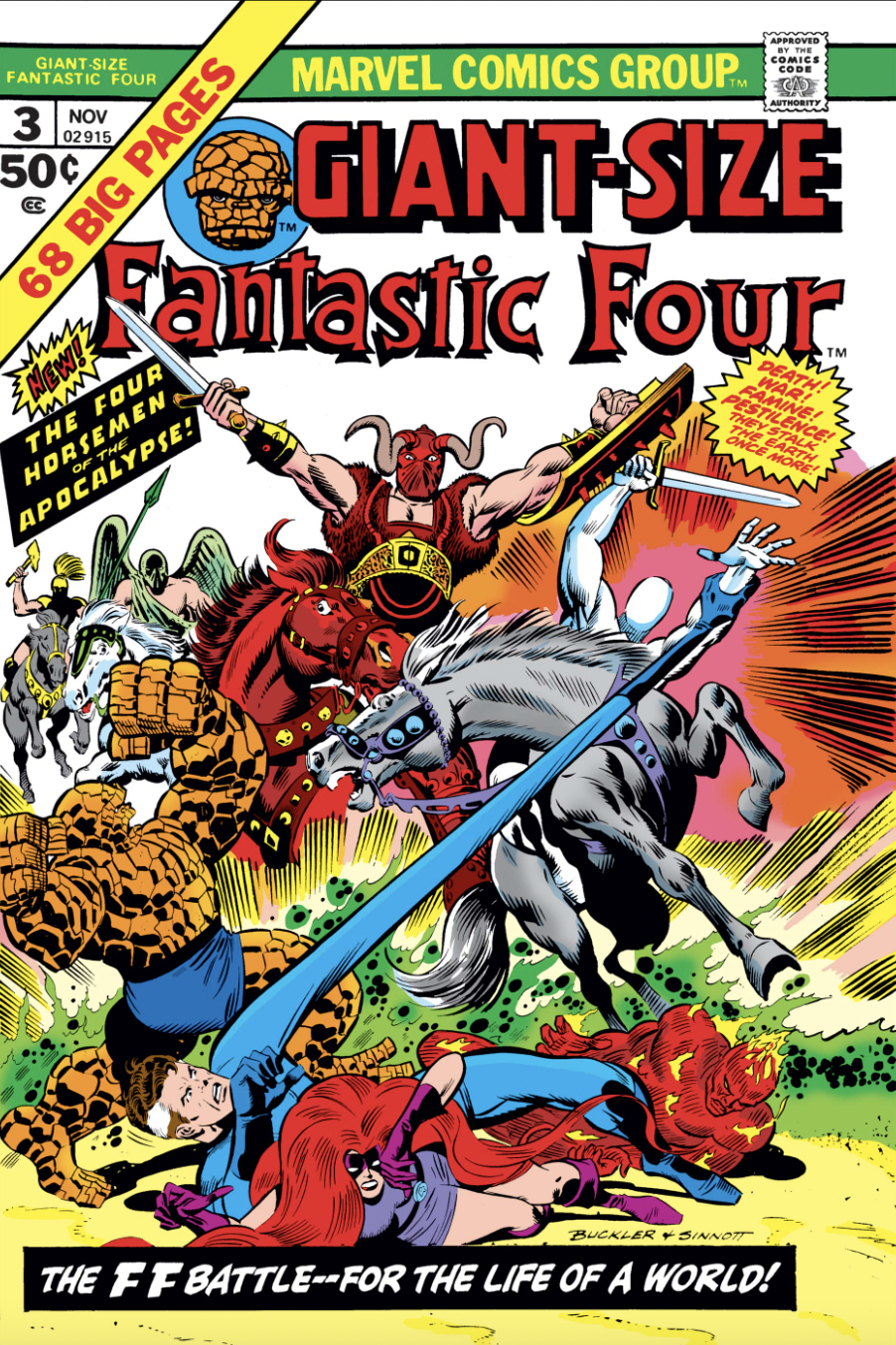
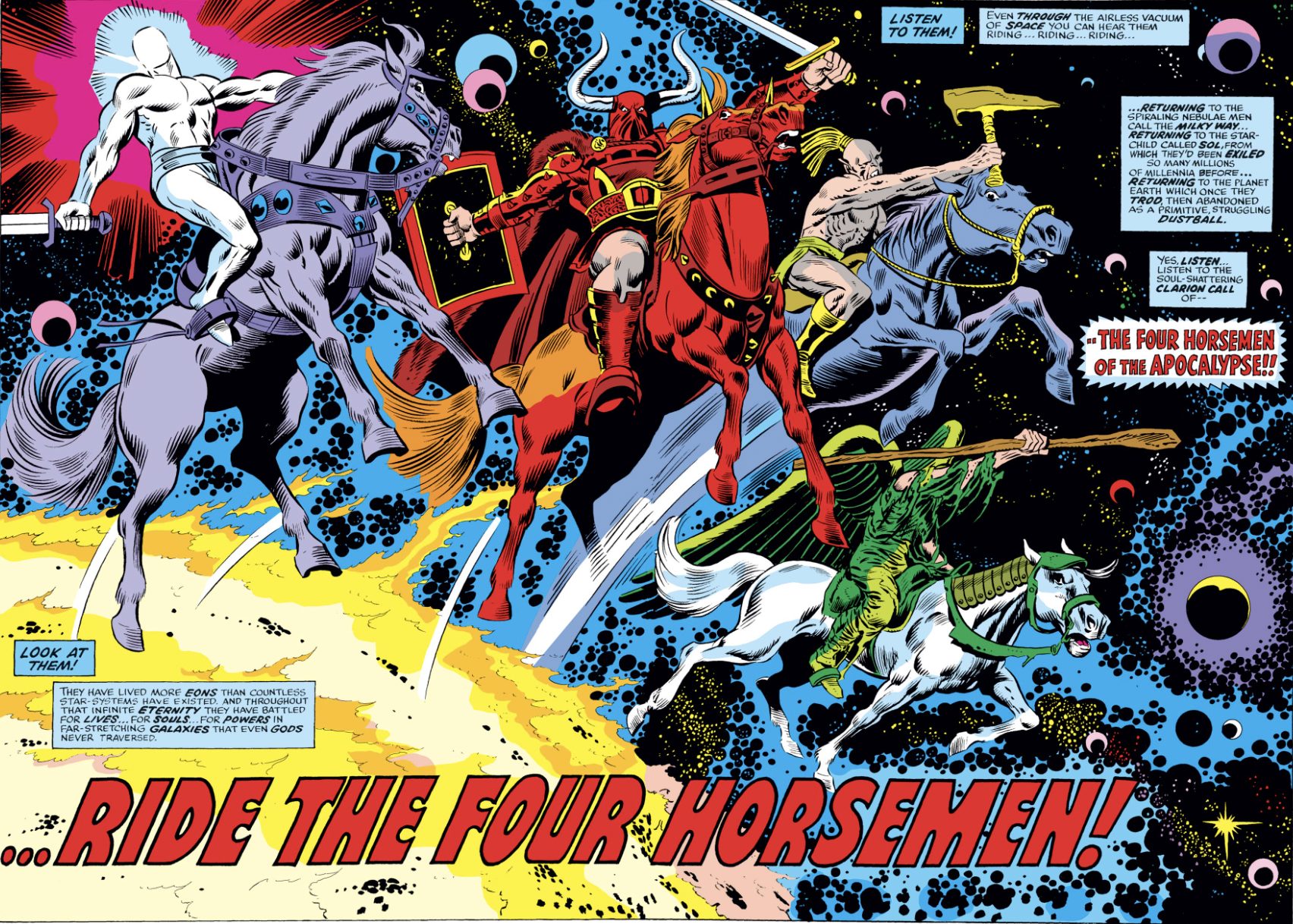
Rich Buckler rises to the occasion here, at least initially, with some of his best FF work, including the great splash page above, and a staggering, double-page splash that follows (pictured above). Unfortunately, his work falters was the book goes on.

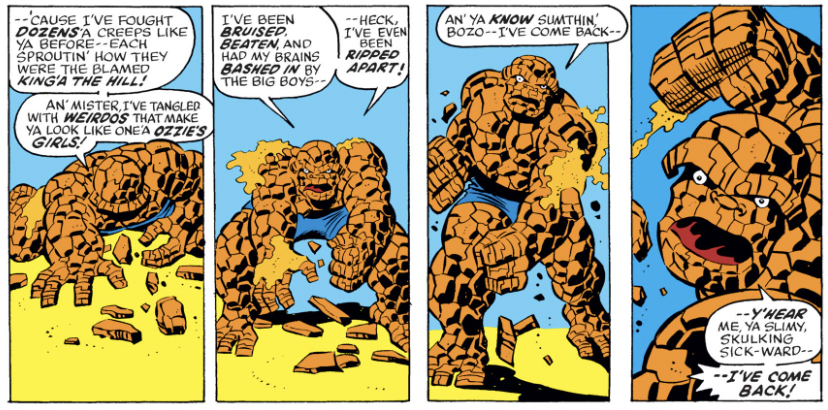
I liked this sequence of Ben, in classic never-say-die mode:


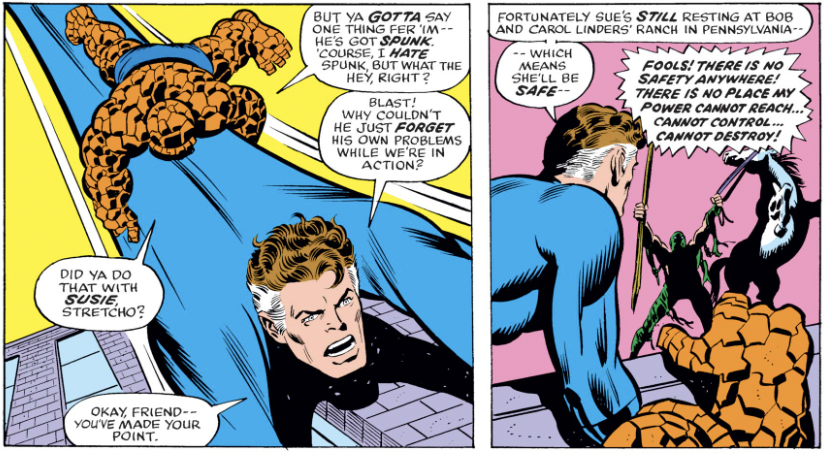
There were some nice character interaction, including this one which offers some insight into Reed and Ben’s relationship (the sequence also at least acknowledges Sue’s existence, although she never appears or is referenced again):


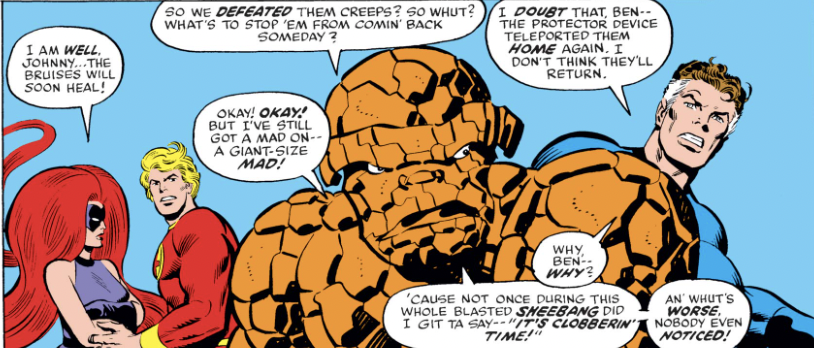
Lastly, this was a fun way to end the comic:


What I didn’t like

Rather than simply let the Four Horsemen exist as mystical entities, Conway and Wolfman construct a very complicated backstory for them, which needlessly tangles up the plot. And despite their bluster about rending galaxies, they were very easy for the FF to defeat, leading to a highly anticlimactic ending.


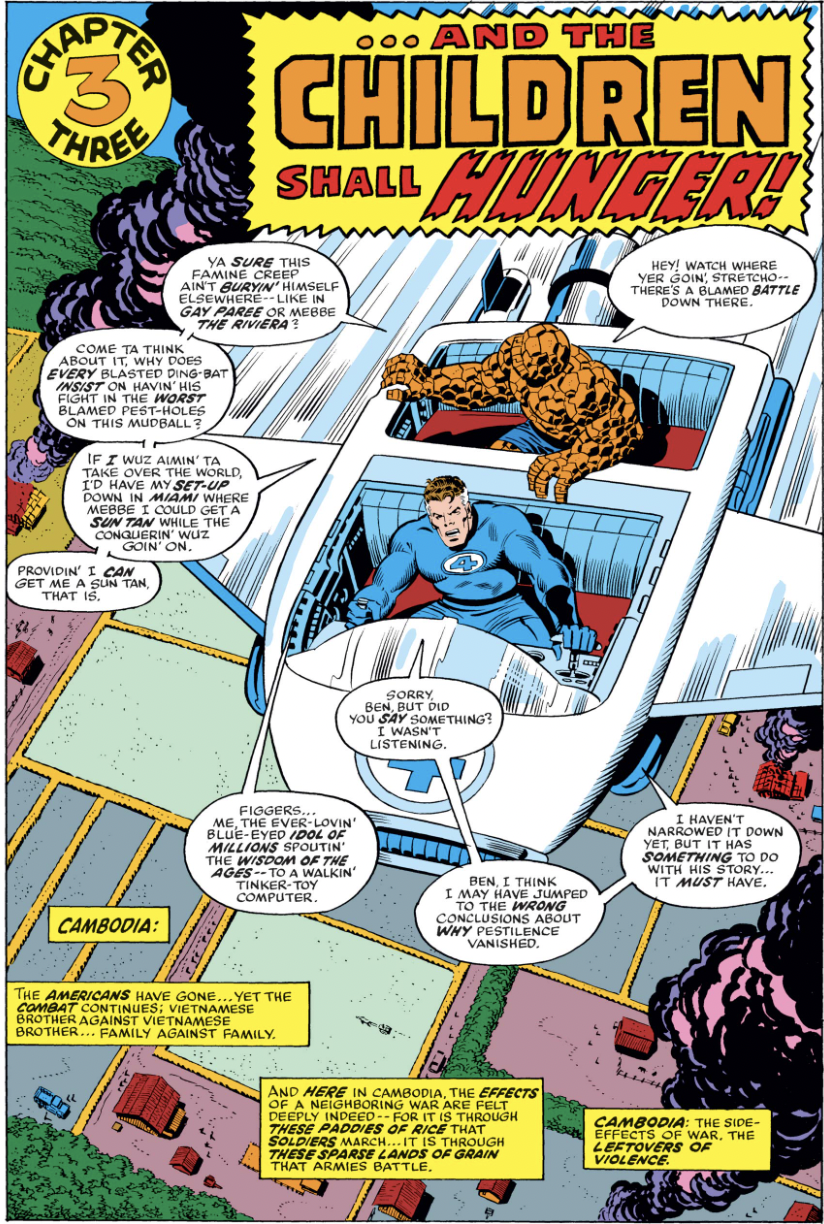
The attempts to use the Horsemen to make some bigger points consistently fell flat and are, once again, a reminder that social commentary in a super hero comics is very rarely successful. For example, here is the introduction to a chapter set in Cambodia, site of a destructive civil are in 1974.


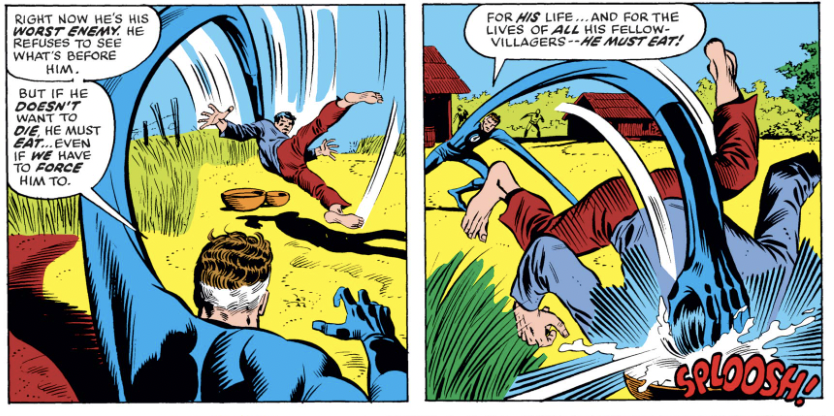
Reed’s subsequent attempts to force a Cambodian boy to eat are almost painful to read (the boy was under famine’s main control):


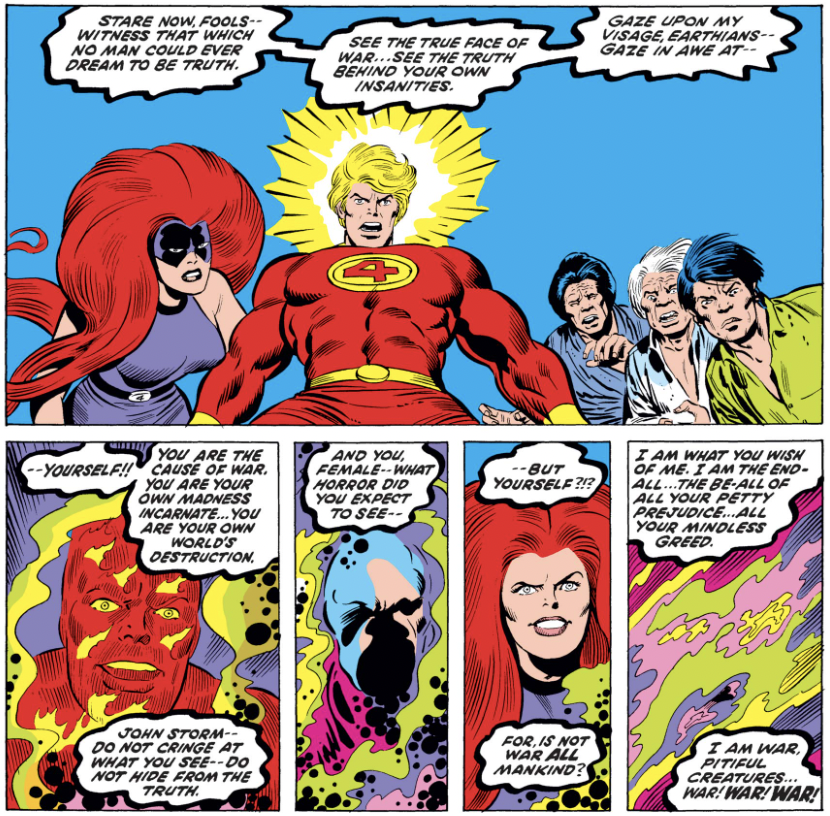
Johnny and Medusa’s encounters with War are similarly hard to read:


And the FF’s battle with their evil doppelgängers, conjured up by Death, feels pointless and like padding. The concept was done much more successfully in FF 75.


Overall

An unfortunate mis-fire

“The World’s Greatest Comic Magazine!” Giant-Size Fantastic Four No. 2

01 Sunday Dec 2024

Posted by percivalhenry in The World's Greatest Comic Magazine

≈ Leave a comment

Tags

1974, Fantastic Four, Giant-Size Fantastic Four 2, John Buscema, Marvel comics, Watcher

Giant-Size Fantastic Four 2
“Cataclysm!”
Published May 1974
Writer: Gerry Conway
Pencils: John Buscema
Inks: Chic Stone
Letters: Joe Rosen
Colors: Stan Goldberg
Editor: Roy Thomas
Cover: Gil Kane and Joe Sinnott

Editor’s Note: As discussed in my my last post, I belatedly discovered the four issues of Giant-Size Fantastic Four published in 1974 contained new stories worth blogging about here, so I am catching up over the next few posts. This issue takes place between the events of FF 149 and 150.


Synopsis

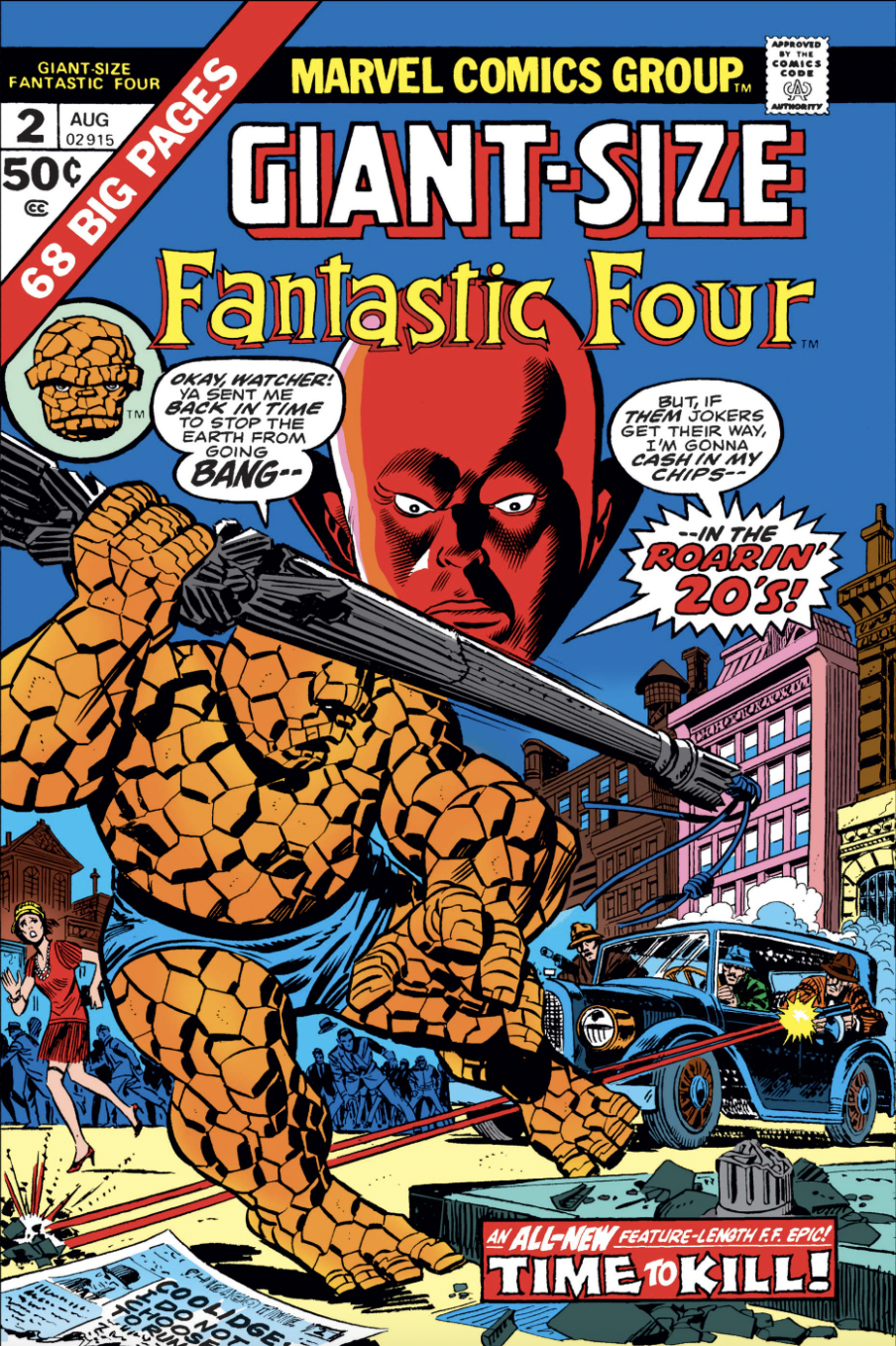
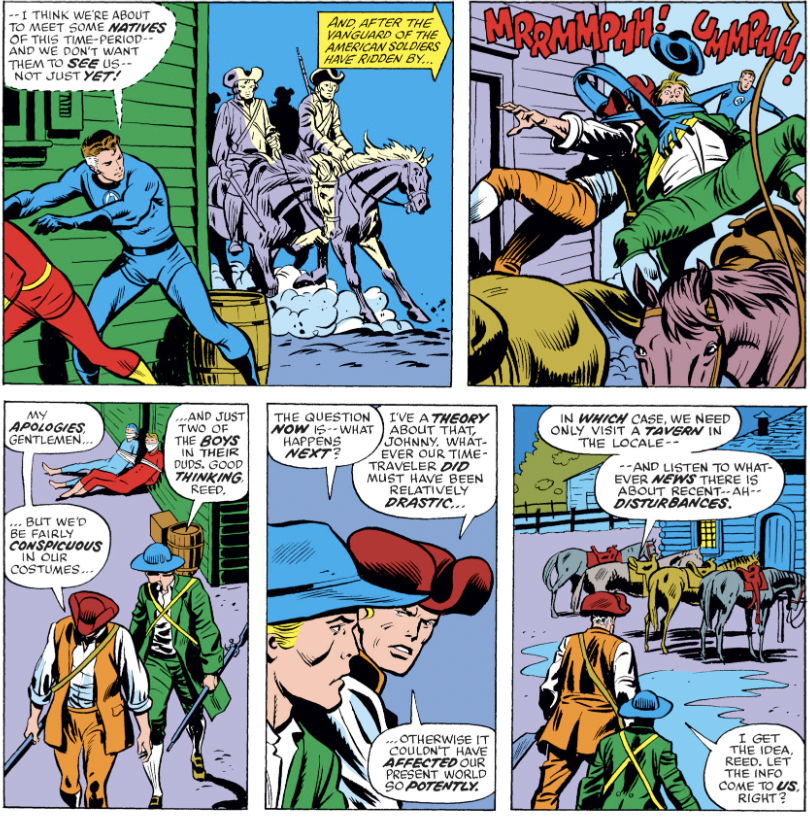
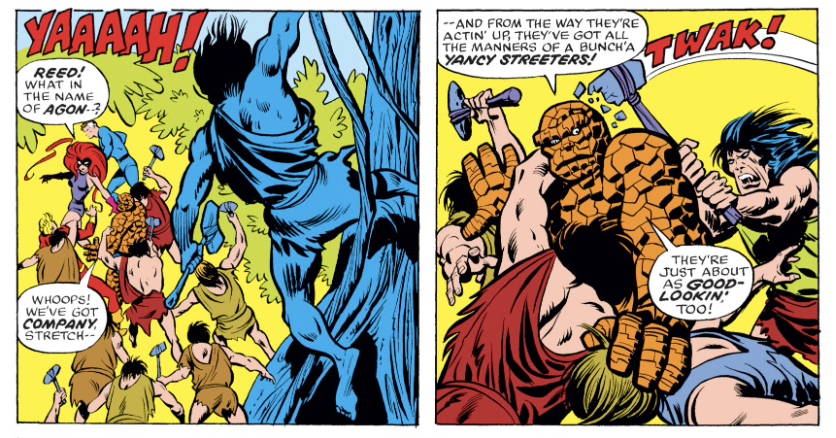
After completing a test flight in space for NASA, the Fantastic Four crash land in Florida and find the world is now inhabited by primitive ape-men. The Watcher appears and violates his oath (of course he does by) telling them someone invaded the Baxter Building and used Dr. Doom’s time machine to go back in history to disrupt events, changing the course of history (presumably, the FF were not affected because they were off-planet).

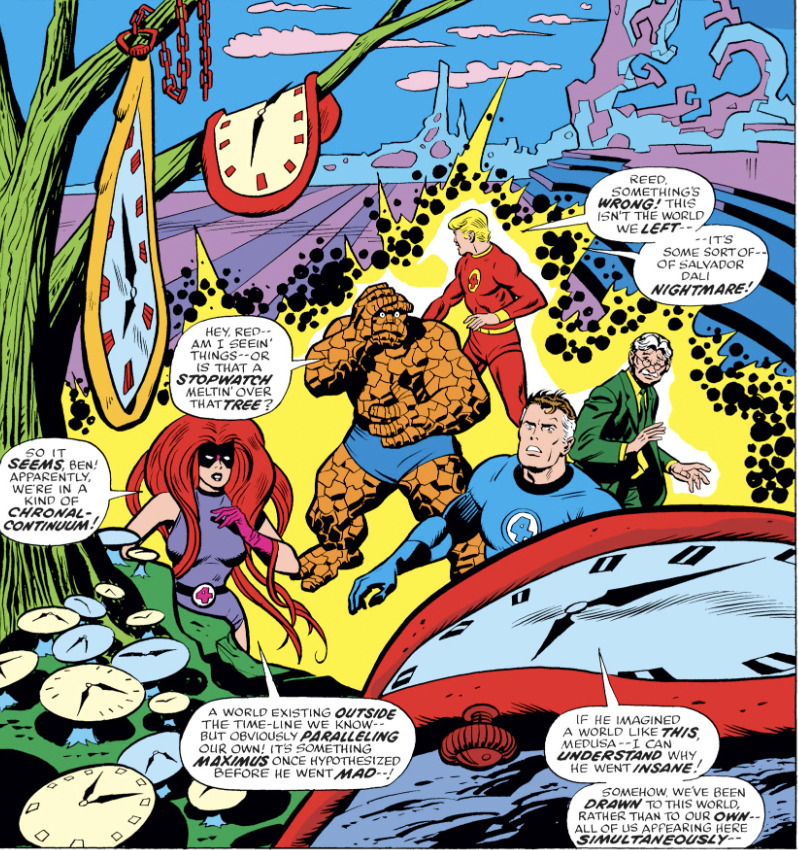
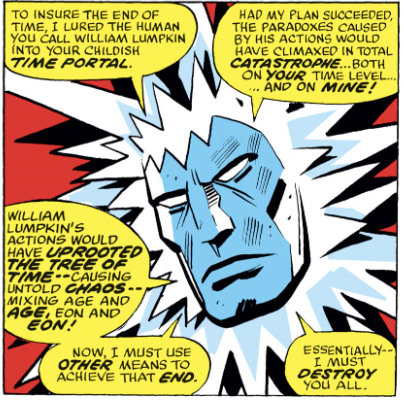
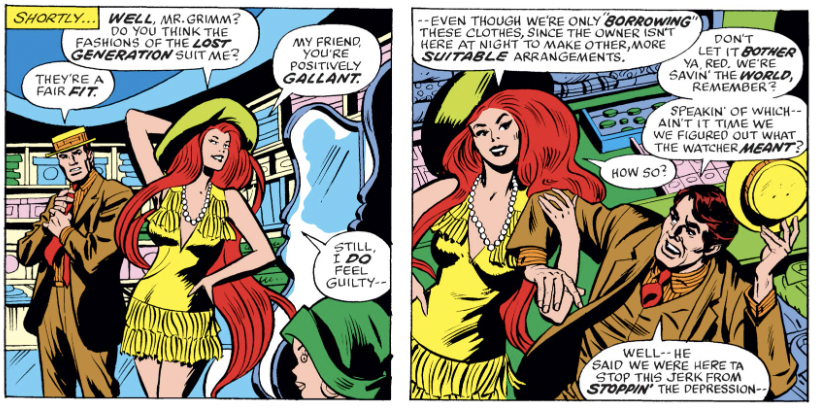
The Watcher sends Reed and Johnny back to the Revolutionary War, where they rescue George Washington from the British, and Ben and Medusa to Prohibition Era Chicago, where they stop gangsters from (somehow) preventing the Great Depression. Then, all four find themselves outside time, where they learn an immortal creature named Tempus engineered the events, using their mailman Willie Lumpkin as his agent, to bring about the end of time and cure his boredom. The FF defeat him and return to a restored Earth.

What’s going on here

There’s a lot to like in this comic. It has the fun, zany quality of old Lee / Kirby time-travel stories, and the chapters in revolutionary American and 1920s Chicago are well done. The story loses steam when the FF encounter Tempus, but it’s still an enjoyable read. More so than the last Giant-Size issue, this one captures the feel of an annual — a fun, meaty story outside the flow of the main comic.

Notably, the story also features the return of John Buscema, here inked by Chic Stone, and he does his normal excellent job. The cover is by Gil Kane, with Joe Sinnott’s inks.

What I liked

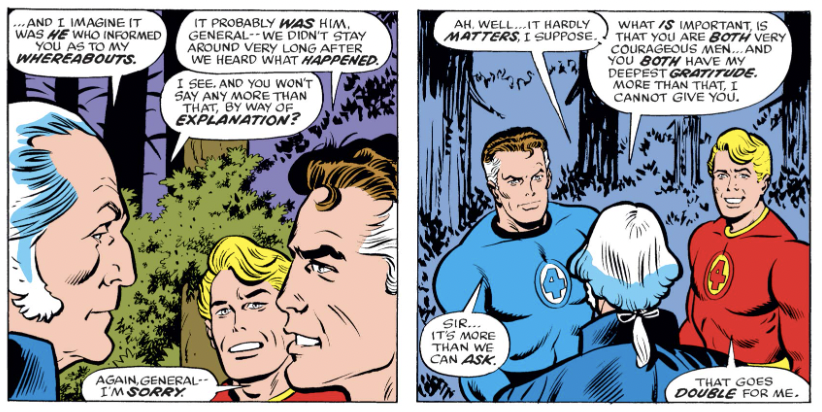
The sequence of Reed and Johnny rescuing George Washington was a lot of fun, and I particularly liked them sneaking around “a small town in upstate New York in the fall of 1777.”

The encounter with Washington is also satisfying.


Ben and Medusa’s trip to the 20s isn’t quite as interesting, maybe because the FF have been to the 1920s-themes Skrull planet, but it is an opportunity for Medusa to do, you know , something.

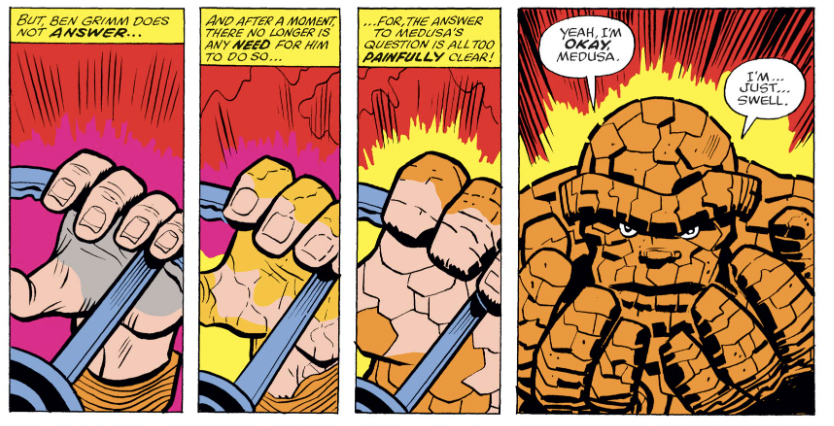
For some reason Ben was returned to human form in the 20s, and his reversion back is as tragic as always.


What I didn’t like

The sequence at the end felt forced, and as a villain, Tempus is not terribly impressive. He does show up a few times after this, most prominently in Avengers Forever, but he’s pretty forgettable and doesn’t pose that big a challenge to the FF, who basically beat him by knocking him over.


Also, the revamped timeline doesn’t make a lot of sense. It’s hard to see how the British winning the Revolutionary War and the Great depression being averted leads to sub-human creatures living in Florida. But hey, what do I know?


Also, not one mention of, much less an appearence by, Sue or Franklin.

Overall

A fun romp

“The World’s Greatest Comic Magazine!” Giant-Size Super-Stars Featuring the Fantastic Four No. 1

28 Thursday Nov 2024

Posted by percivalhenry in The World's Greatest Comic Magazine

≈ 1 Comment

Tags

1974, Fantastic Four, Gerry Conway, Giant-size, Giant-Size Super-Stars Featuring the Fantastic Four No. 1, Rich Buckler

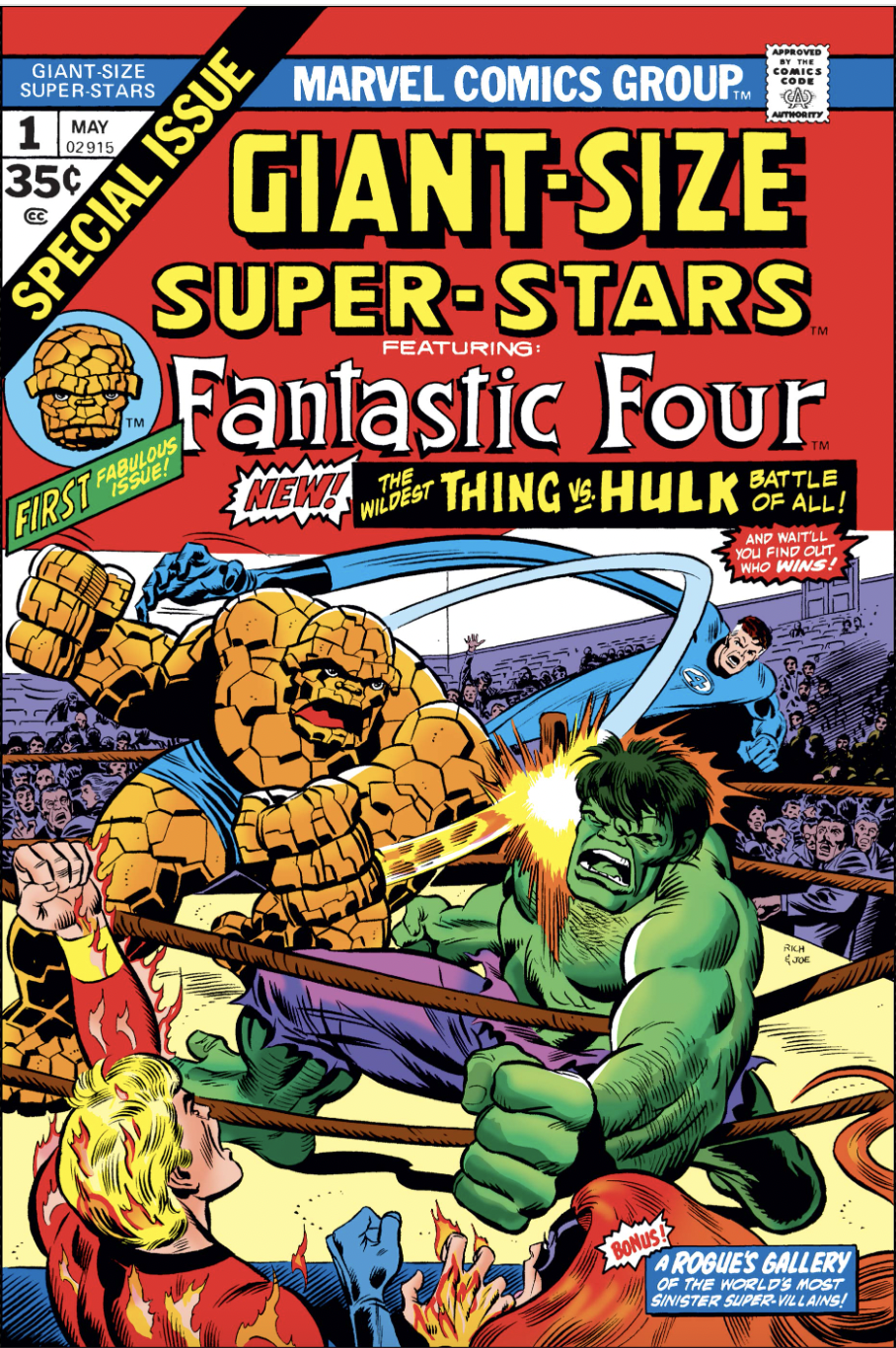
“The Mind of the Monster!”
Published Feb. 1974
Writer: Gerry Conway
Pencils: Rich Buckler
Inks: Joe Sinnott
Letters: Artie Simek
Colors: Petra Goldberg
Editor: Roy Thomas
Cover: Buckler and Sinnott

Editor’s Note: OK, this requires a little explanation. When I set out to blog every issue of the Fantastic Four, the idea was to limit it to the regular book and annuals just to make the project manageable. Thus, no Strange Tales issues with the Human Torch and I don’t plan to blog about Marvel Two-in-One featuring the Thing (I figure I will decide what to do with the FF-starring mini-series when I get to them). Because of this, I didn’t give much thought to the issues of Giant-Size Fantastic Four, in part because I believed them to be reprints, along the lines of recent annuals (notably, there were no annuals with new material printed between 1968 and 1976). Belatedly, it came to my attention that the five issues of Giant-Size published in 1974 included new Fantastic Four material, with the stories serving as sort of a cross between an annual and a second FF series (the issues also include reprints, making them “Giant Size”). The stories take place in FF continuity, but are unconnected to the main book. Since they seem to fall under the “regular book and annual” rule I made for myself, I’m going to blog about them here. Unfortunately, I discovered this a bit late, so the first few of these are going to be out of order. This issue, for example, falls between FF 146 and 147, when Reed and Sue are still separated.

Adding to the confusion, this first issue was called Giant-Size Super-Stars (which is one hyphen too many) because it was originally intended to be an anthology book. But it was later decided each of the comics would get their one Giant-Size editions (ie. Giant-Size Spider-Man), and this run was renamed to Giant-Size fantastic Four but it kept the numbering.

Synopsis

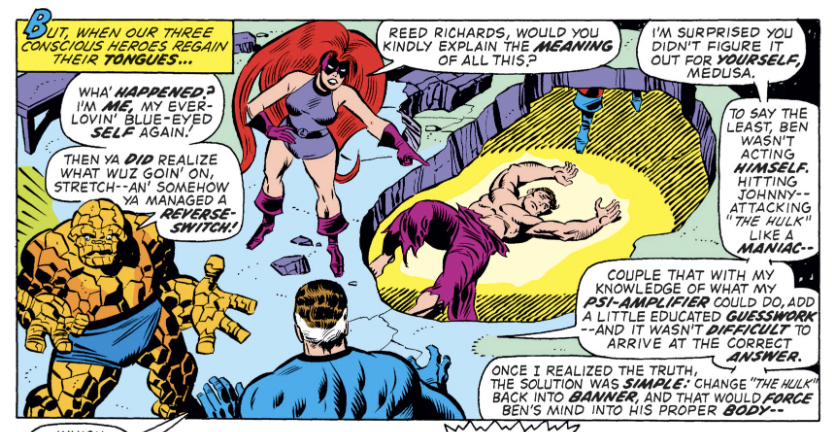
Finding himself in New York City, Bruce Banner seeks the help of Mr. Fantastic to prevent his transformations into the Hulk. Reed is absent, but with the Thing’s help, Banner uses the equipment in the Baxter Building to build a device to cure both he and Ben of their monstrous forms. Instead, the device switches their brains, and the now-enraged Hulk ends up in the Thing’s body and vice-versa. The two battle throughout the city, joined by Thundra, and are only stopped when Reed tranquilizes the Hulk’s body, returning him to Bruce Banner’s form


What’s going on here

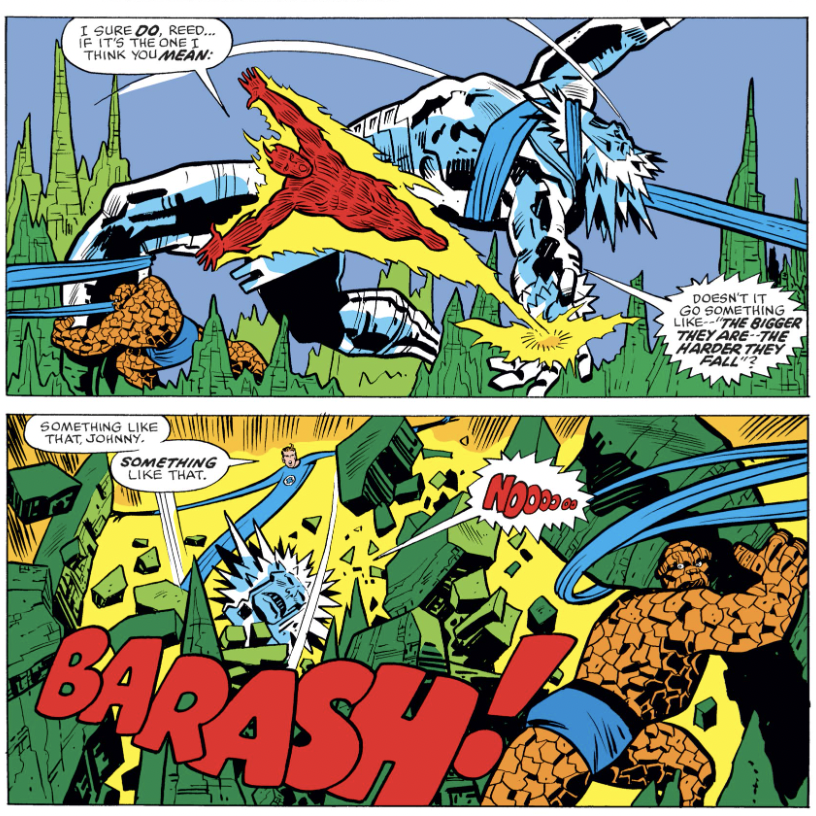
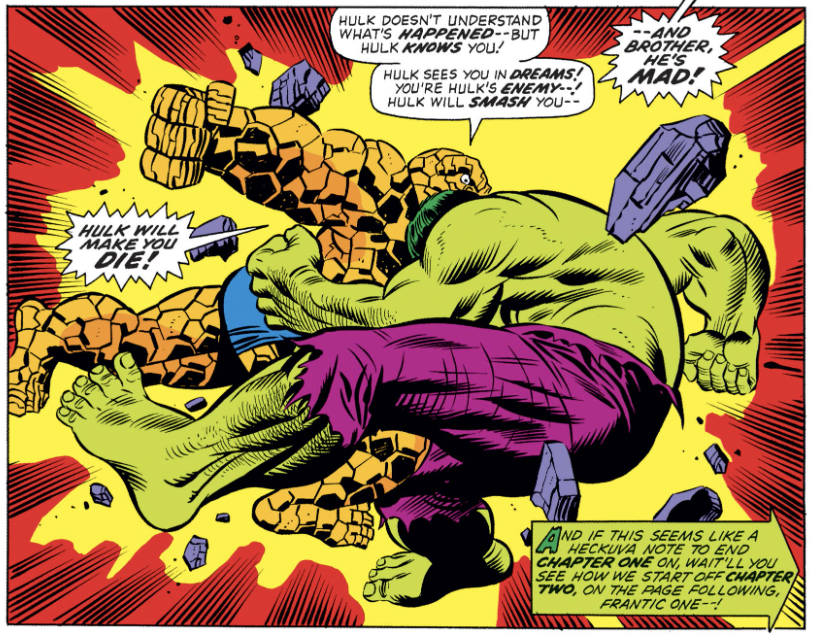
This is a truly nutty issue, but very fun in an unhinged way. Almost nothing in it makes sense — from Banner’s crazy idea of using the radiation in his and Bens’ bodies to cancel each other out, to their minds being switched to Thundra’s random appearance to Reed’s deduction of what happened. But the story moves along briskly, the scenario is novel enough to be interesting and the fight between the Hulk and Thing never gets boring (as it did in FF 112) in part because of the swapped identities.

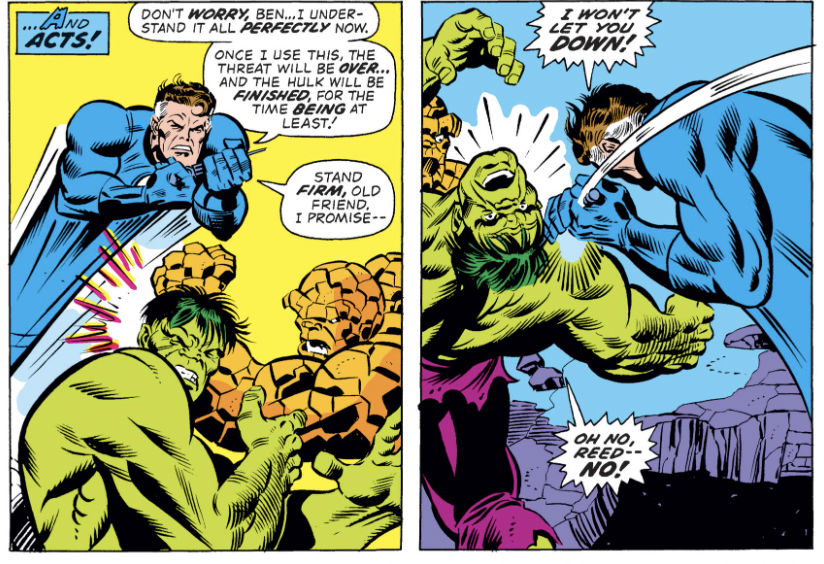
Hulk / Thing fights are a staple of Marvel comics and of the half dozen or so I can recall, this is one of the more enjoyable ones.

What I liked

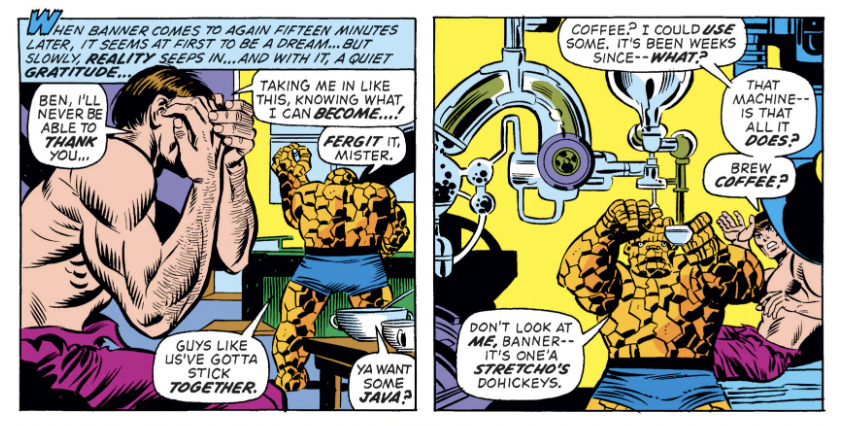
There are some fun touches throughout the issue, including this exchange between Ben and Banner about Reed’s coffee maker (although I found it odd that Ben can get him coffee but not a shirt):


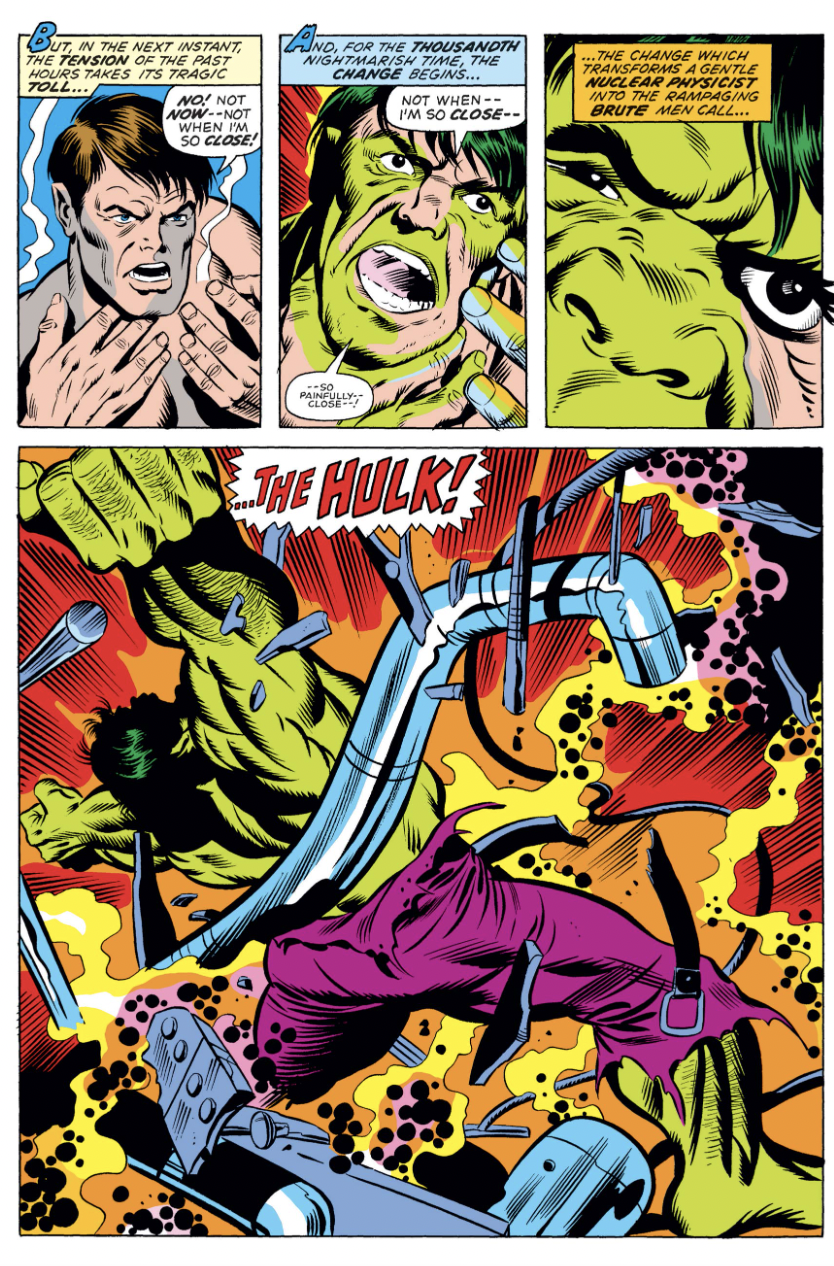
Buckler does a great job depicting the Hulk, including one of the best transformation sequences I’ve seen:


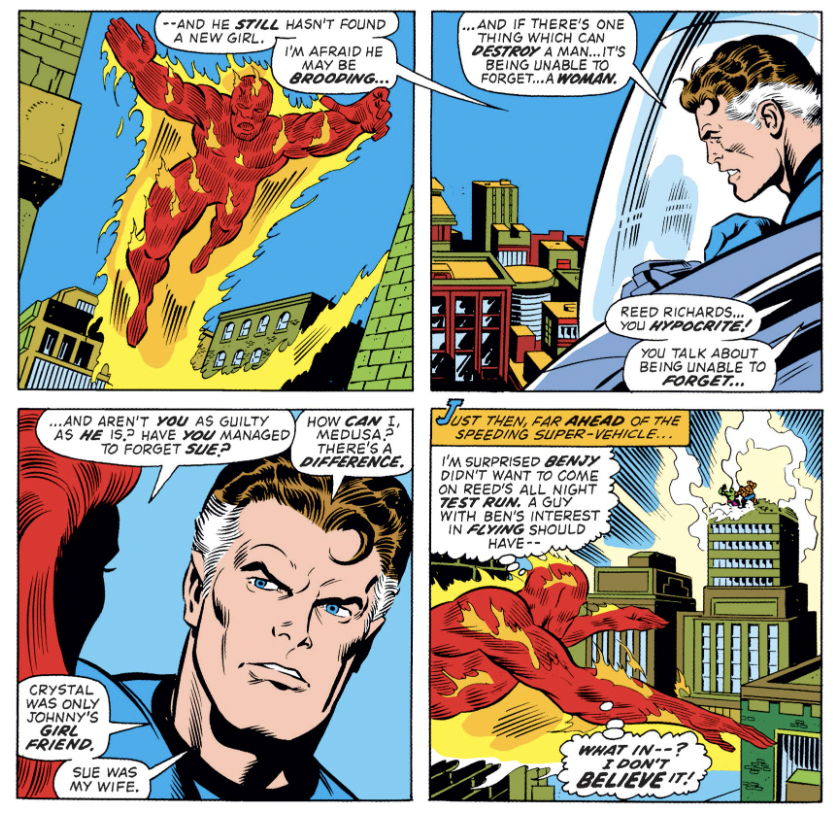
I also liked this exchange between Reed and Medusa (who, again, is otherwise basically sidelined in this issue):


What I didn’t like

I was willing to accept a lot of this issue’s goofiness, but the idea that Reed could plunge a needle into the Hulk — whose skin repels machine gun fire — was a bridge too far.


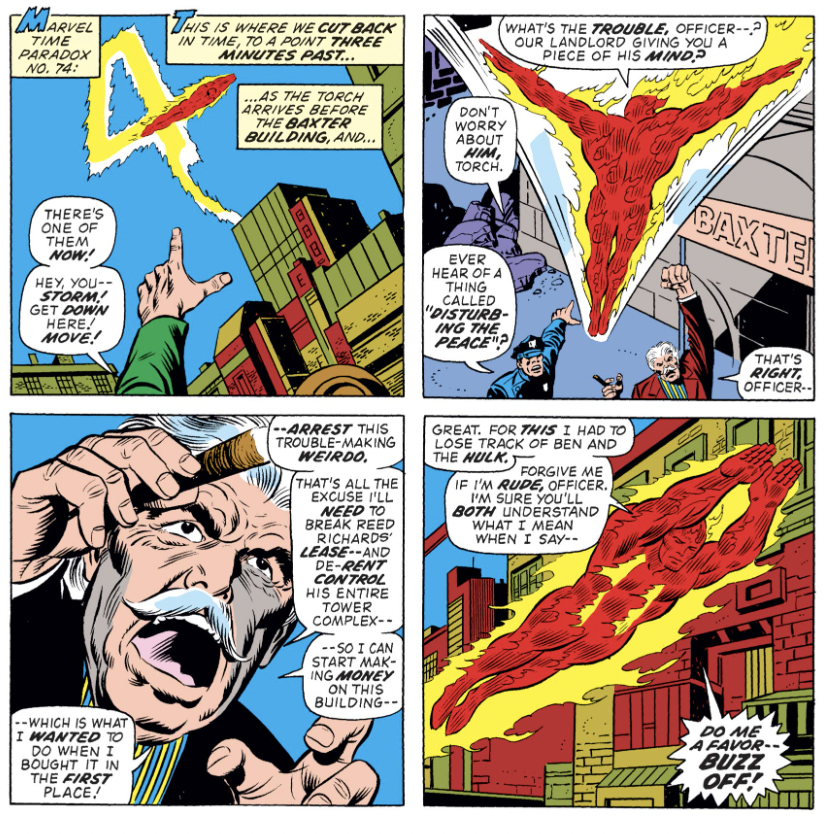
There’s also a lot of self-referential editor’s notes in this issue, like this mention of “Marvel Time Paradox No. 74.” They’re unnecessary and distracting.

This sequence also includes one of my pet peeves: the hopelessly confused treatment of New York City real estate. Are we really supposed to believe the FF are in a rent-controlled building?

Overall

This issue was a hoot!

“The World’s Greatest Comic Magazine!” Fantastic Four No. 153

24 Sunday Nov 2024

Posted by percivalhenry in The World's Greatest Comic Magazine

≈ Leave a comment

Tags

1974, Fantastic Four, Fantastic Four 153, Tony Isabella

Fantastic Four 153
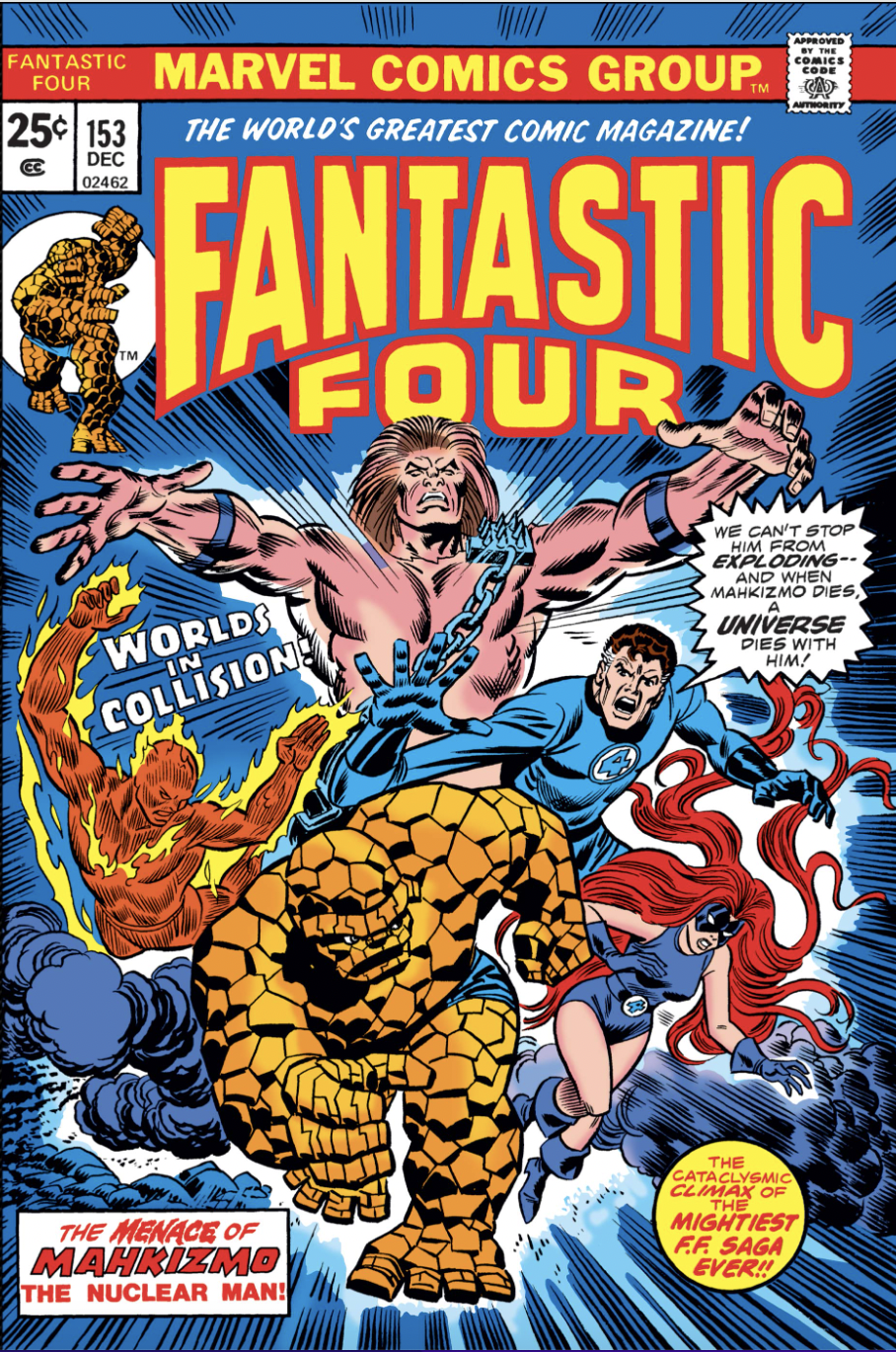
“Worlds in Collision!
Published Sept. 1974
Writer: Tony Isabella
Pencils: Rich Buckler
Inks: Joe Sinnott
Letters: Joe Rosen
Colors: Petra Goldberg
Editor: Roy Thomas
Cover: Gil Kane and Frank Giacoia


Synopsis

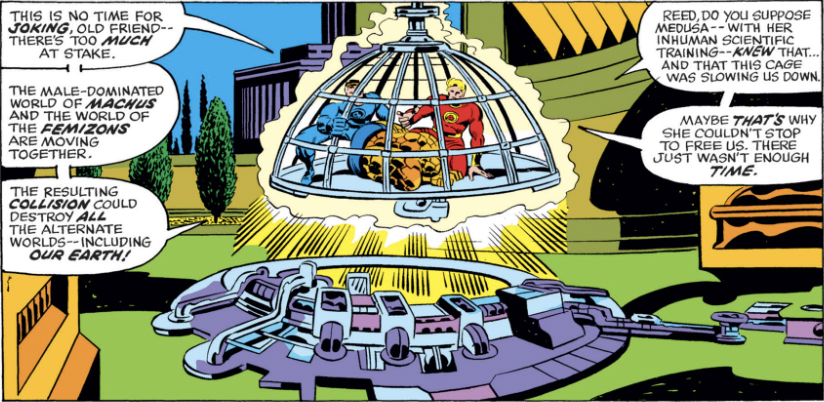
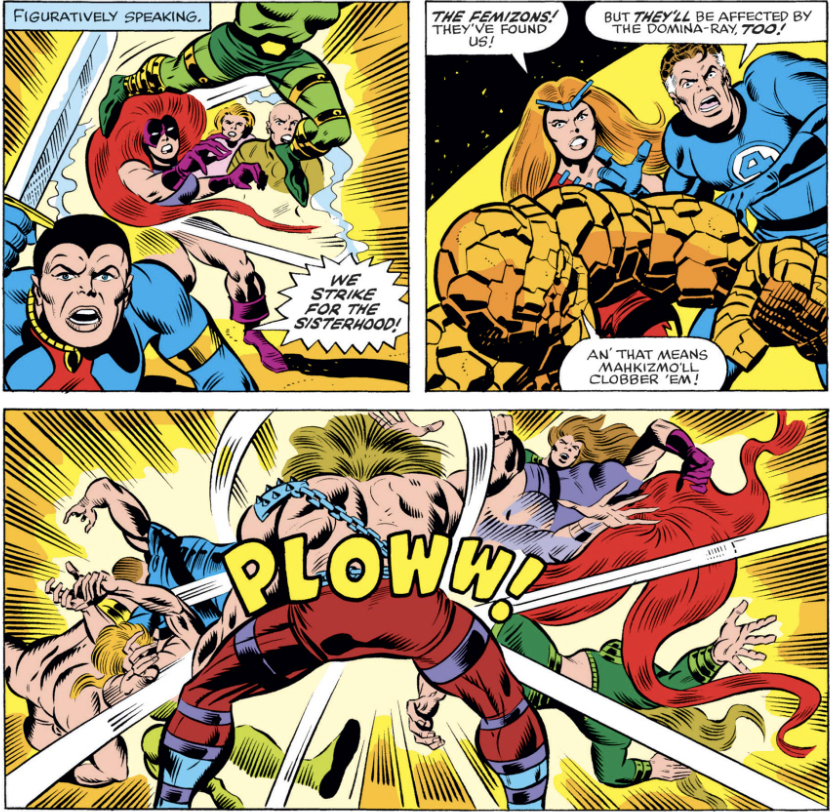
Mr. Fantastic, the Human Torch and the Thing manage to escape their confinement on Machus, the male-dominated world of Mahkizmo, only to be to sent to an arena, where they battle monsters alongside Thundra. Medusa arrives with Femizons from Thundra’s world, and the Thing and Thundra deal Mahkizmo a blow that detonates his nuclear power, and (somehow) merges Machus and the Femizon world, while returning the FF and Thundra to Earth.


What’s going on here?

There’s a lot to deal with here, but probably the most important development of FF 153 is that it was written by Tony Isabella, not Gerry Conway. The previous issue was Conway’s last on the FF, after a respectable 21 issue run (from 133 to 152) as either writer or scripter. His departure isn’t noted or addressed in the comic, and since it comes midway through a complicated arc, I suspect he didn’t leave on good terms. Conway was writing an insane seven or eight comics a month at this point, and maybe he just had enough. Isabella only lasts for one comic before Len Wein takes over for a handful of issues.

Isabella was a relatively new Marvel writer at this point — and he was enough of a fan that he had a letter to the editor printed in the FF only a year or two earlier — and unfortunately the handoff from Conway was not a smooth one. This issue is full of plot holes, clichés, and uses some awkward deus ex machina devices to reconcile a complicated story in a few pages. It’s unfortunate because, despite the clumsy Battle-of-the-Sexes framing, the multiverse concept Conway (and I’m guessing Roy Thomas) introduced here is a an intriguing one, and deserves more than the rushed treatment it gets here.

Also, it’s worth noting the cover is by Gil Kane, with inks by Frank Giacoia. Not their best work.


What I liked

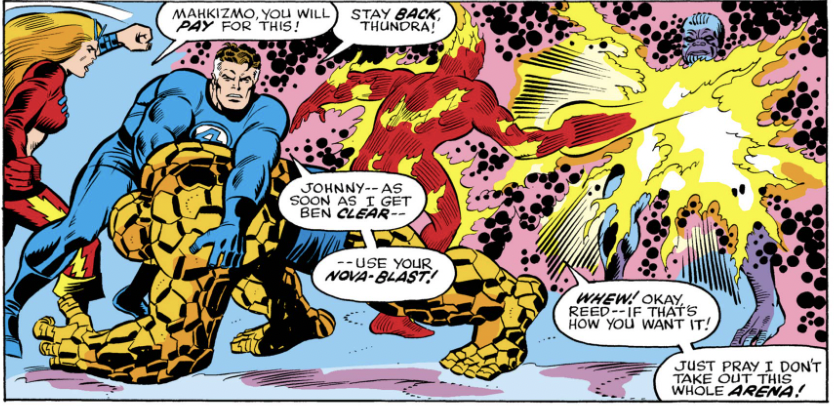
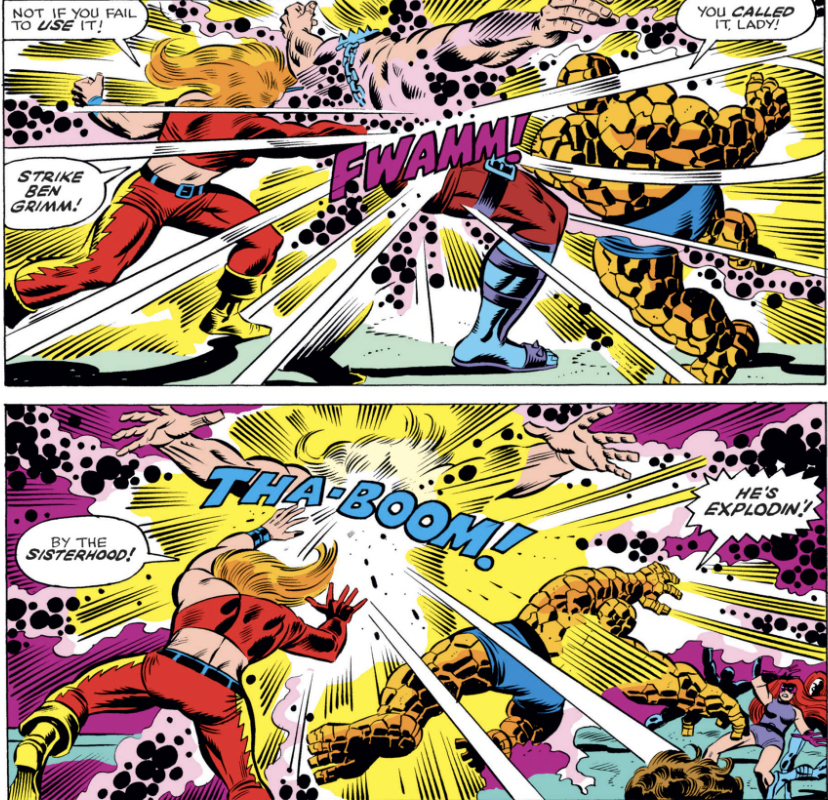
There’s not much in this comic to get excited about. Bucker’s art, usually sturdy, felt rushed, but I did like this Kirby Krackle filled sequence.


What I didn’t like

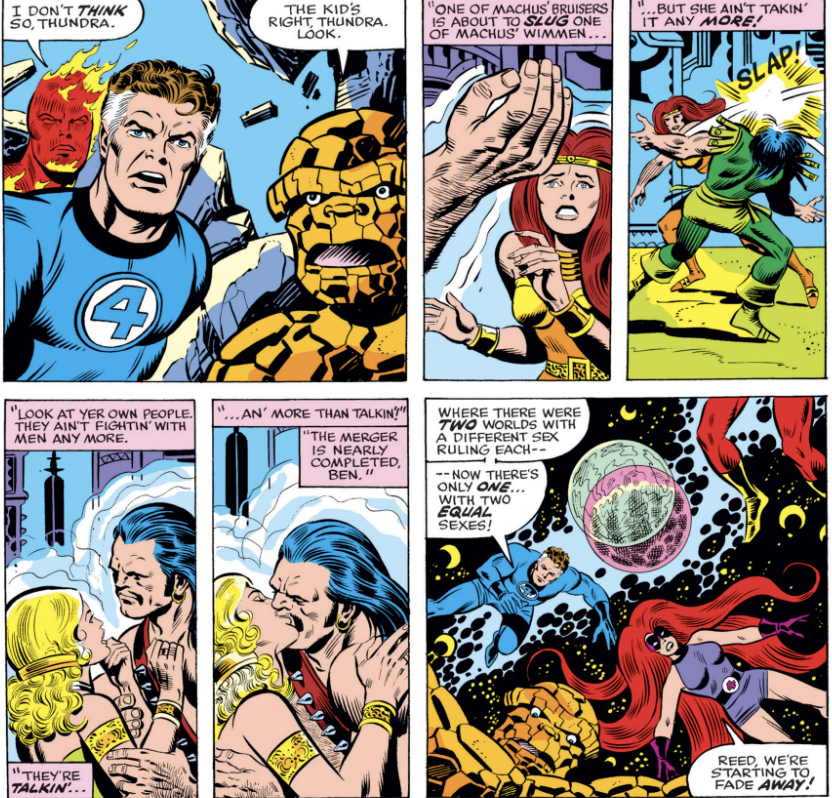
It’s a long list. Probably the most egregious flaw in the comic is Isabella’s attempt to solve how the brutes of Machus and the Femizons will coexist. Basically, they’ll resolve their conflict by making out. While Conway and Isabella thankfully don’t dwell too much on this male/female parallel-worlds construct, it’s as painful and silly as the World of the 1950s / 60s storyline from about a dozen issues earlier. I can understand the impulse for why these writers want to tackle meatier subjects, but please guys, don’t tackle social commentary unless you have the space and ability to do it properly.


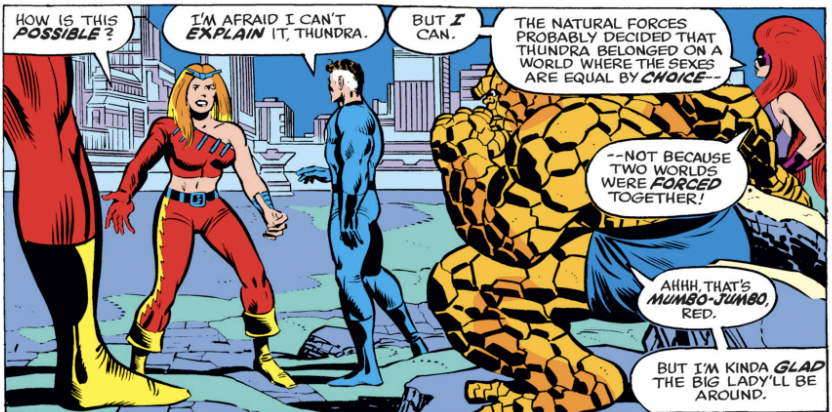
Equally maladroit was the explanation of why Thundra was returned to the FF’s dimension. Apparently “natural forces” wanted her there.


Also disappointing was the resolution of Medusa’s story arc and her mysterious disappearance. She traveled to Thundra’s world to recruit the Femizons, which would have been a cool way to defeat Mahkizmo, expect they last all of two panels.


There’s a lot of other goofy details, including various power- and will-sapping rays and cages, none of which are really necessary to the story and don’t make a ton of sense. There’s also the return of the FF-Must-Fight-For-Survival-In-The-Arena plot device, something we’ve seen at least twice so far in the Fantastic Four and will again many more times.

And, needless to say, Sue is nowhere to be seen in this issue, even after the heroes return to Earth.

Anything else?

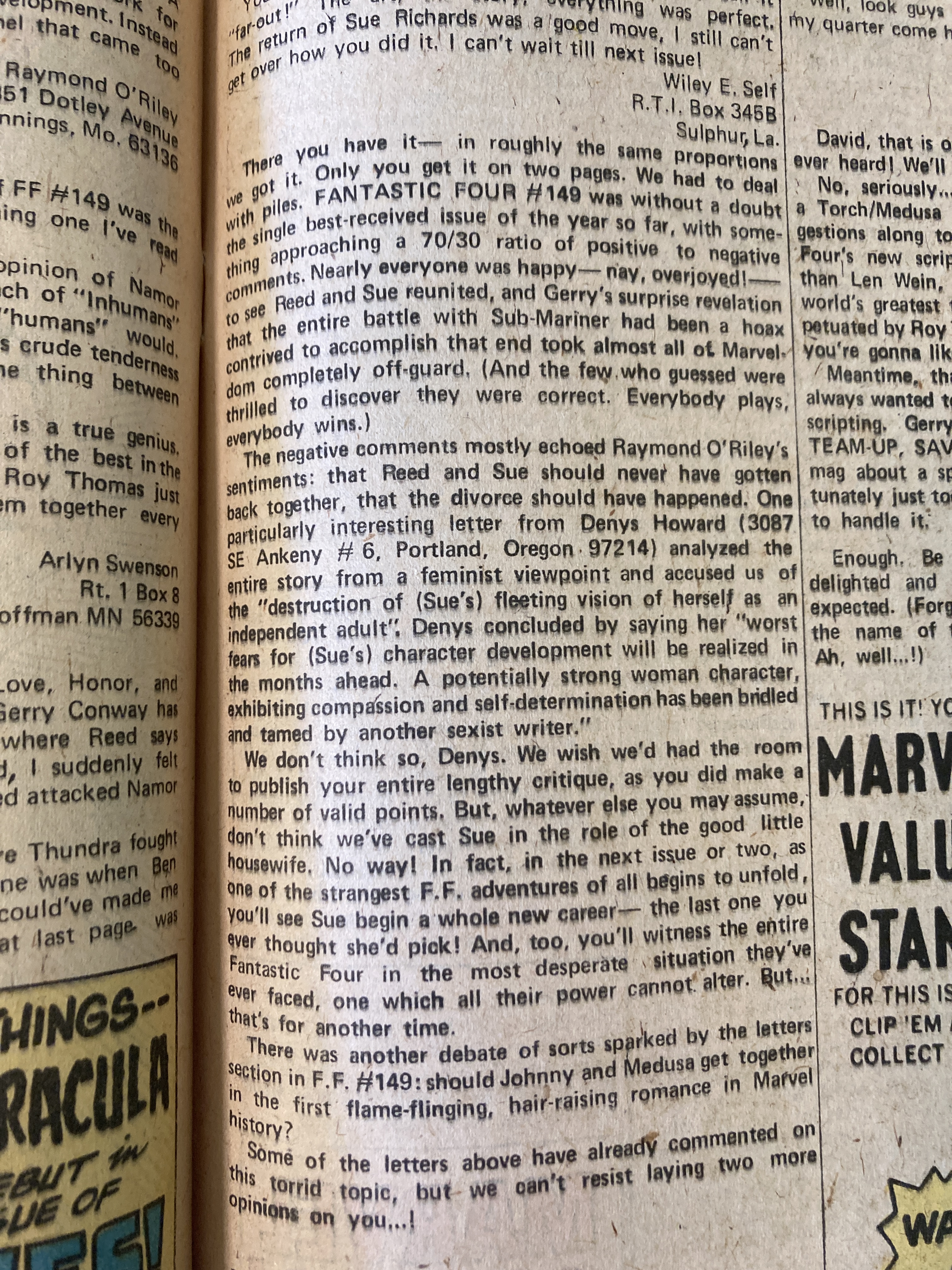
This response in the letters page, probably by Thomas, was interesting and addresses the implications of Sue returning to Reed after their separation. It’s too bad they didn’t print the letter from Denys Howard, which sounds more thoughtful than most of the what got printed. A quick Google search reveals Howard went on to be active in the fanzine world in the late 70s.


Overall

Blech

← Older posts
Newer posts →
  • “The World’s Greatest Comic Magazine!” Fantastic Four Annual No. 15
  • “The World’s Greatest Comic Magazine!” Fantastic Four No. 223
  • “The World’s Greatest Comic Magazine!” Fantastic Four No. 222
  • “The World’s Greatest Comic Magazine!” Fantastic Four No. 221
  • “The World’s Greatest Comic Magazine!” Fantastic Four No. 220
  • July 2026
  • June 2026
  • May 2026
  • April 2026
  • March 2026
  • February 2026
  • January 2026
  • December 2025
  • November 2025
  • October 2025
  • September 2025
  • August 2025
  • July 2025
  • June 2025
  • May 2025
  • April 2025
  • March 2025
  • February 2025
  • January 2025
  • December 2024
  • November 2024
  • October 2024
  • September 2024
  • August 2024
  • July 2024
  • June 2024
  • May 2024
  • April 2024
  • March 2024
  • February 2024
  • January 2024
  • December 2023
  • November 2023
  • September 2023
  • July 2023
  • June 2023
  • May 2023
  • April 2023
  • March 2023
  • February 2023
  • January 2023
  • December 2022
  • November 2022
  • October 2022
  • September 2022
  • August 2022
  • July 2022
  • June 2022
  • May 2022
  • April 2022
  • March 2022
  • February 2022
  • January 2022
  • December 2021
  • November 2021
  • October 2021
  • September 2021
  • August 2021
  • July 2021
  • June 2021
  • May 2021
  • April 2021
  • March 2021
  • February 2021
  • January 2021
  • December 2020
  • February 2018
  • May 2016
  • February 2016
  • January 2016
  • December 2015
  • November 2015
  • October 2015
  • September 2015
  • August 2015
  • July 2015
  • April 2015
  • March 2015
  • January 2015
  • December 2014
  • November 2014
  • October 2014
  • September 2014
  • August 2014
  • June 2014
  • May 2014
  • April 2014
  • March 2014
  • February 2014
  • July 2026
  • June 2026
  • May 2026
  • April 2026
  • March 2026
  • February 2026
  • January 2026
  • December 2025
  • November 2025
  • October 2025
  • September 2025
  • August 2025
  • July 2025
  • June 2025
  • May 2025
  • April 2025
  • March 2025
  • February 2025
  • January 2025
  • December 2024
  • November 2024
  • October 2024
  • September 2024
  • August 2024
  • July 2024
  • June 2024
  • May 2024
  • April 2024
  • March 2024
  • February 2024
  • January 2024
  • December 2023
  • November 2023
  • September 2023
  • July 2023
  • June 2023
  • May 2023
  • April 2023
  • March 2023
  • February 2023
  • January 2023
  • December 2022
  • November 2022
  • October 2022
  • September 2022
  • August 2022
  • July 2022
  • June 2022
  • May 2022
  • April 2022
  • March 2022
  • February 2022
  • January 2022
  • December 2021
  • November 2021
  • October 2021
  • September 2021
  • August 2021
  • July 2021
  • June 2021
  • May 2021
  • April 2021
  • March 2021
  • February 2021
  • January 2021
  • December 2020
  • February 2018
  • May 2016
  • February 2016
  • January 2016
  • December 2015
  • November 2015
  • October 2015
  • September 2015
  • August 2015
  • July 2015
  • April 2015
  • March 2015
  • January 2015
  • December 2014
  • November 2014
  • October 2014
  • September 2014
  • August 2014
  • June 2014
  • May 2014
  • April 2014
  • March 2014
  • February 2014
“The World’s Greatest Comic Magazine!” Fantastic Four Annual No. 15

“The World’s Greatest Comic Magazine!” Fantastic Four Annual No. 15

percivalhenry's avatar by percivalhenry July 18, 2026
“The World’s Greatest Comic Magazine!” Fantastic Four No. 223

“The World’s Greatest Comic Magazine!” Fantastic Four No. 223

percivalhenry's avatar by percivalhenry July 14, 2026
“The World’s Greatest Comic Magazine!” Fantastic Four No. 222

“The World’s Greatest Comic Magazine!” Fantastic Four No. 222

percivalhenry's avatar by percivalhenry July 5, 2026
“The World’s Greatest Comic Magazine!” Fantastic Four No. 221

“The World’s Greatest Comic Magazine!” Fantastic Four No. 221

percivalhenry's avatar by percivalhenry June 25, 2026
“The World’s Greatest Comic Magazine!” Fantastic Four No. 220

“The World’s Greatest Comic Magazine!” Fantastic Four No. 220

percivalhenry's avatar by percivalhenry June 15, 2026
“The World’s Greatest Comic Magazine!” Fantastic Four No. 219

“The World’s Greatest Comic Magazine!” Fantastic Four No. 219

percivalhenry's avatar by percivalhenry June 7, 2026

Blog at WordPress.com.

  • Subscribe Subscribed
    • Percival Henry: The Fantastic Four and more
    • Join 74 other subscribers
    • Already have a WordPress.com account? Log in now.
    • Percival Henry: The Fantastic Four and more
    • Subscribe Subscribed
    • Sign up
    • Log in
    • Report this content
    • View site in Reader
    • Manage subscriptions
    • Collapse this bar
Loading Comments...