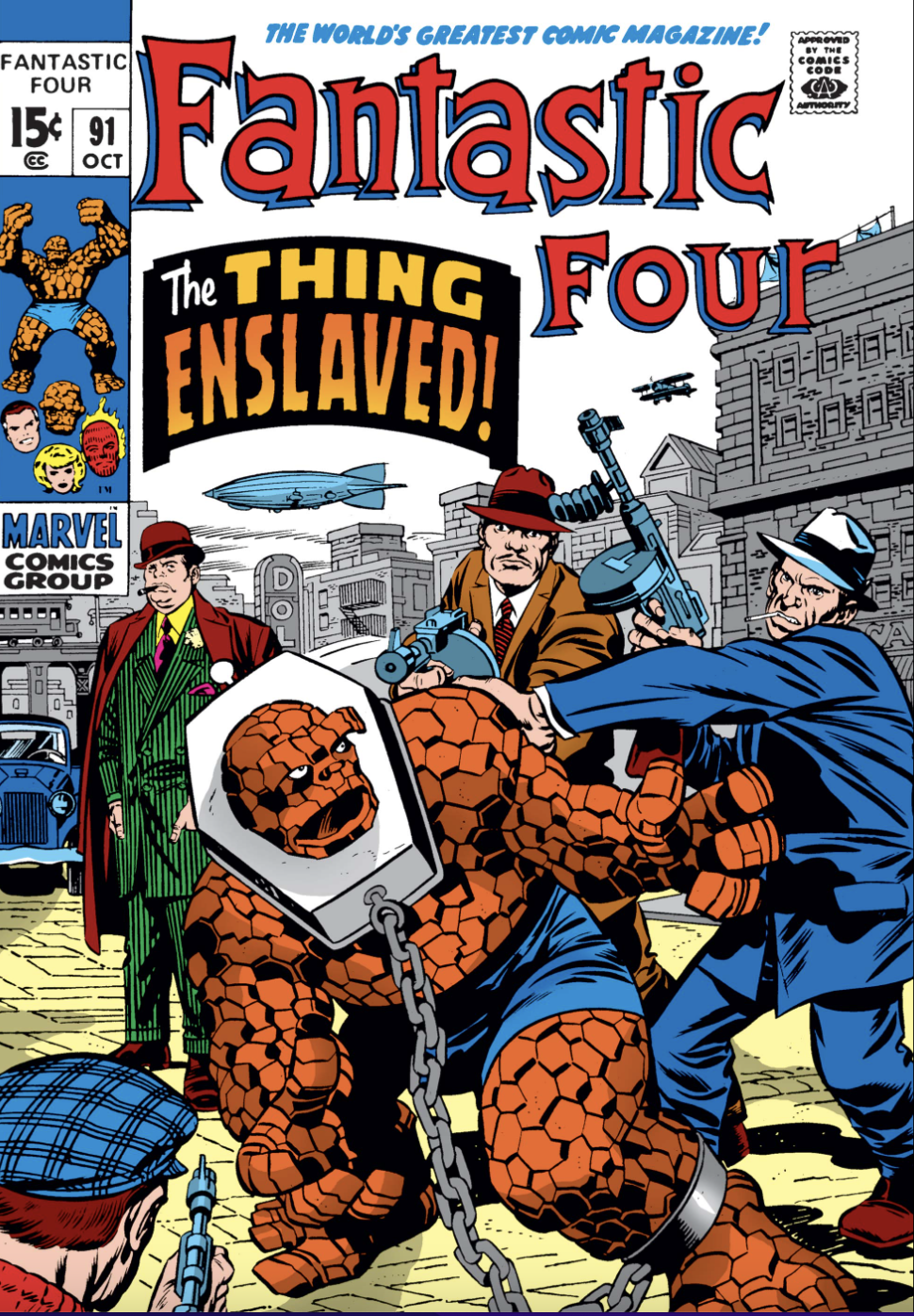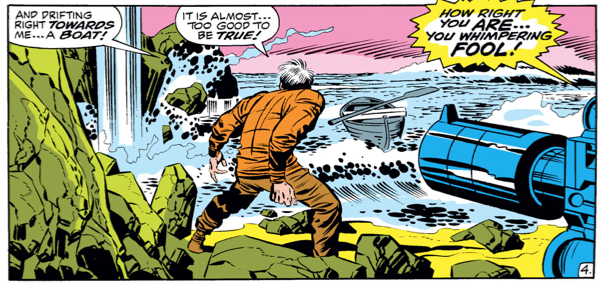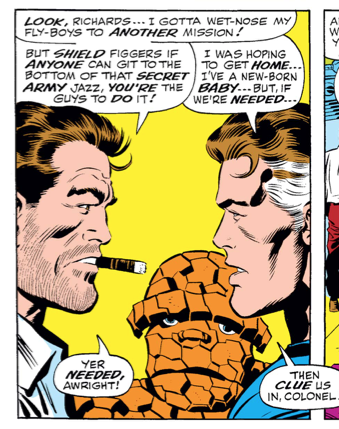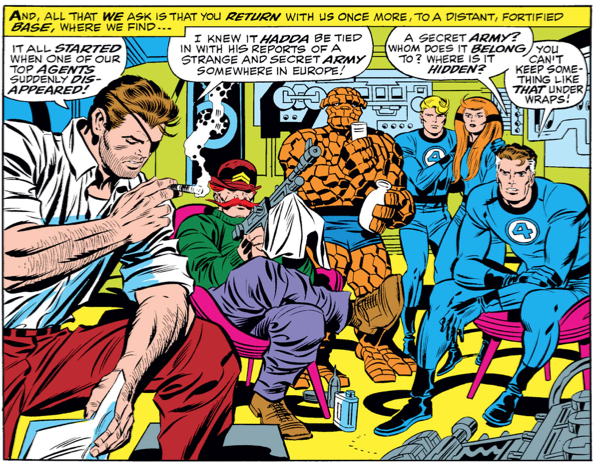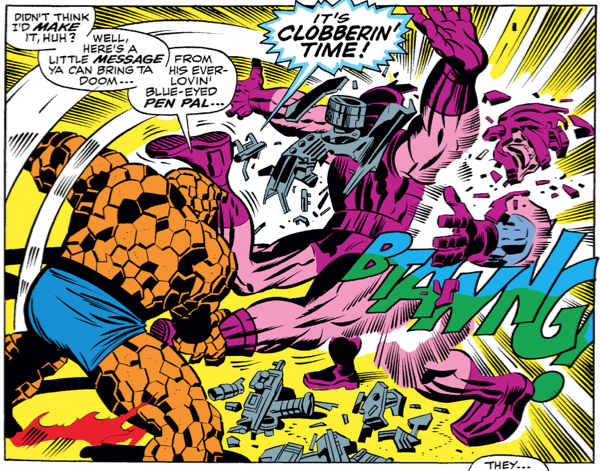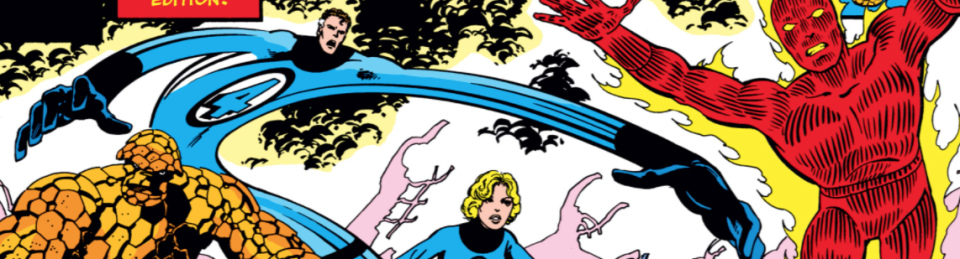
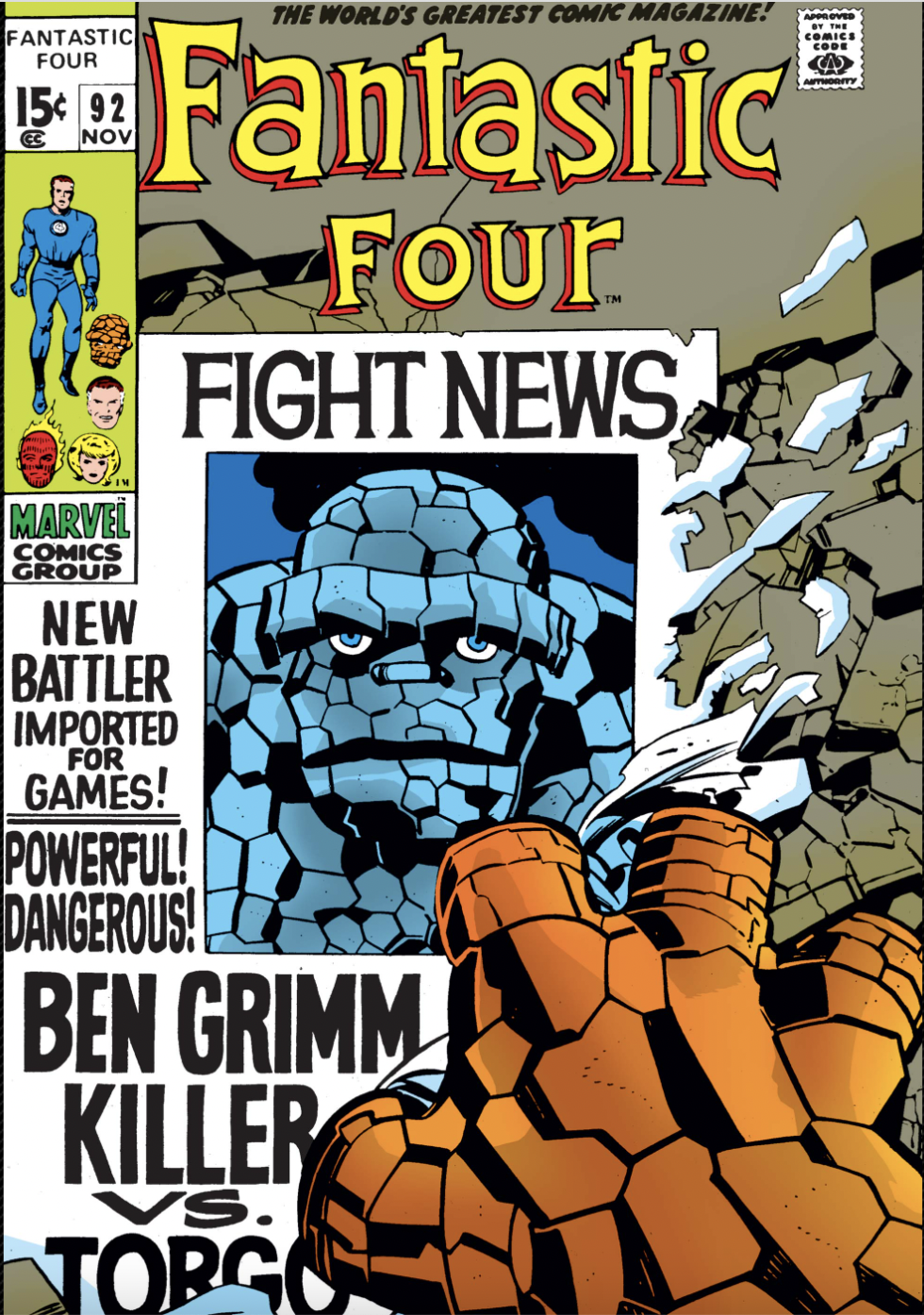
Fantastic Four 91 “The Thing .. Enslaved!” Published July 1969 Story: Stan Lee and Jack Kirby Script: Lee Pencils: Kirby Inks: Joe Sinnott Letters: Sam Rosen Cover: Kirby and Sinnott
Synopsis
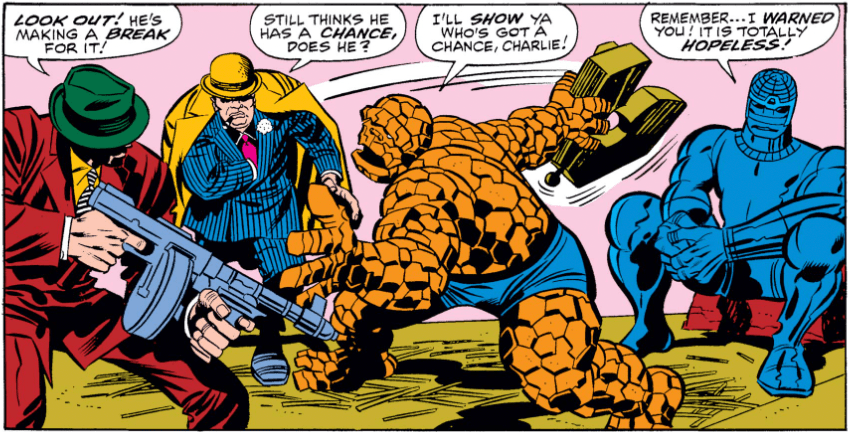
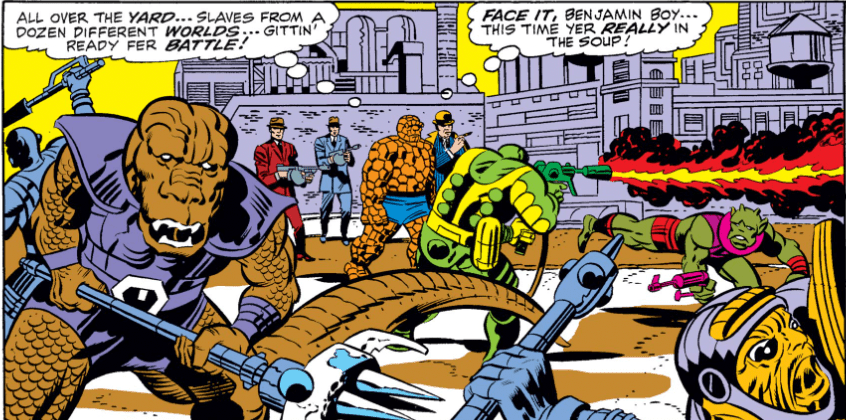
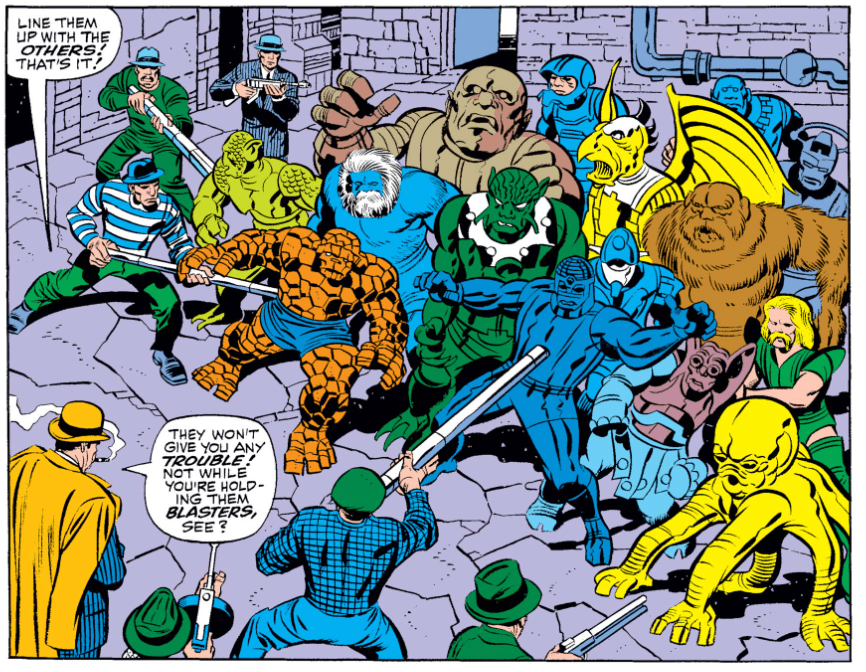
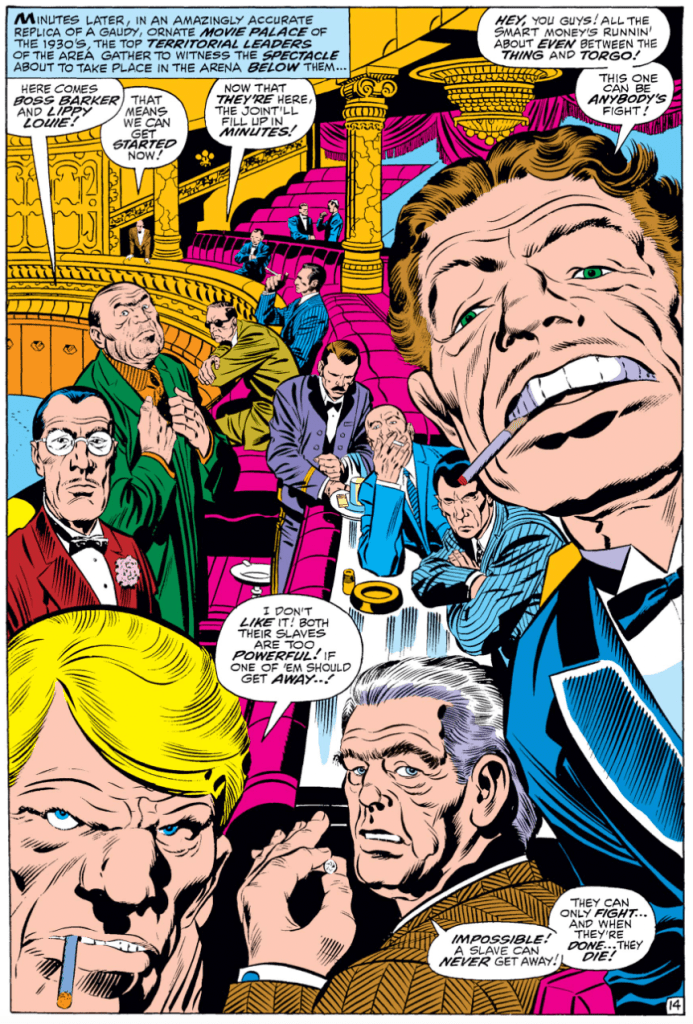
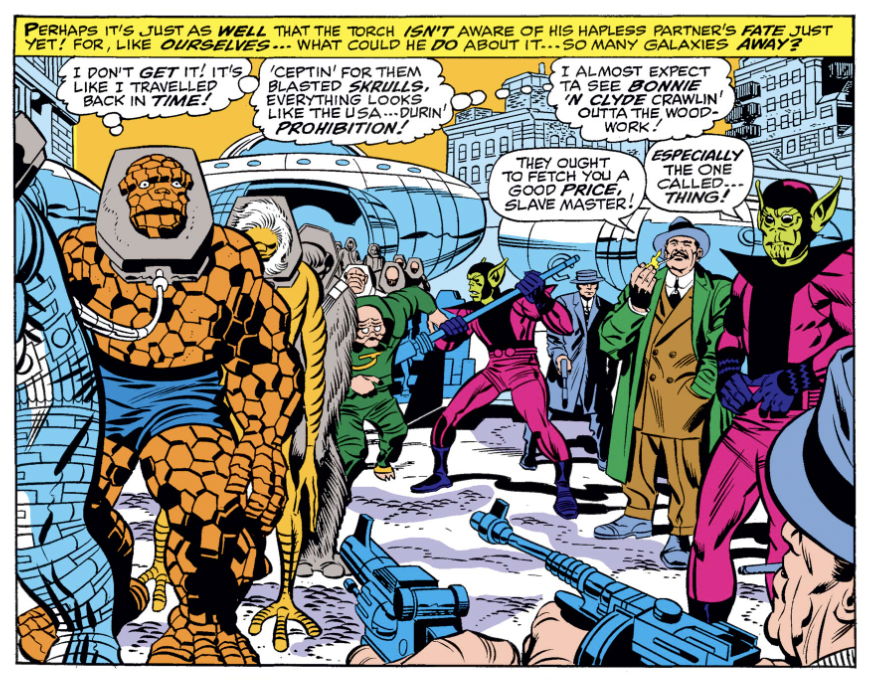
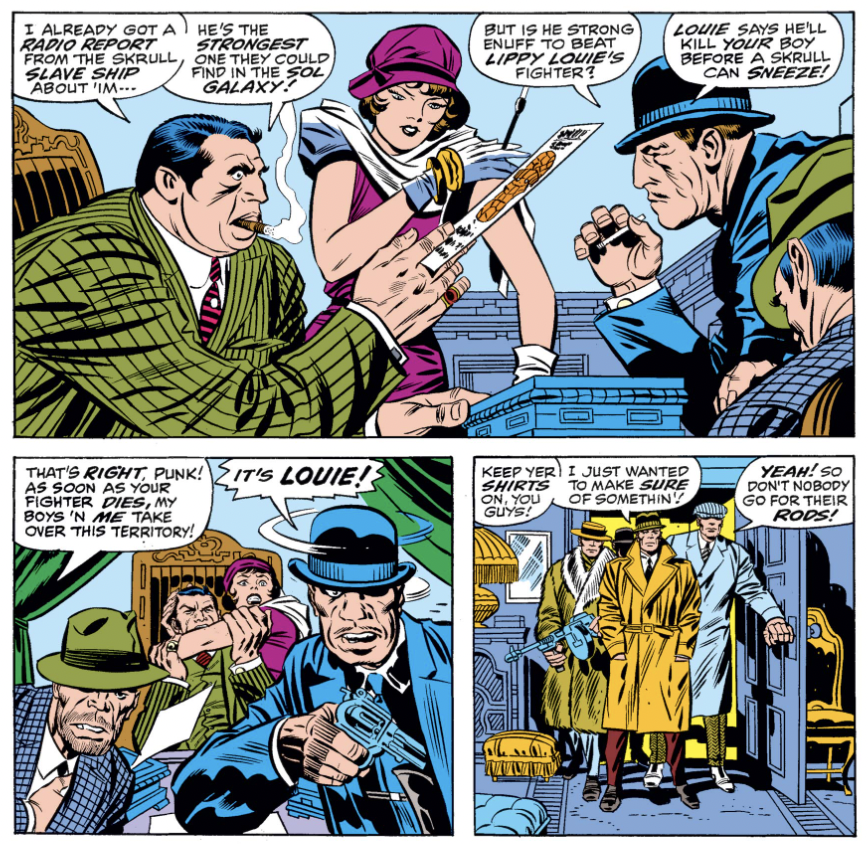
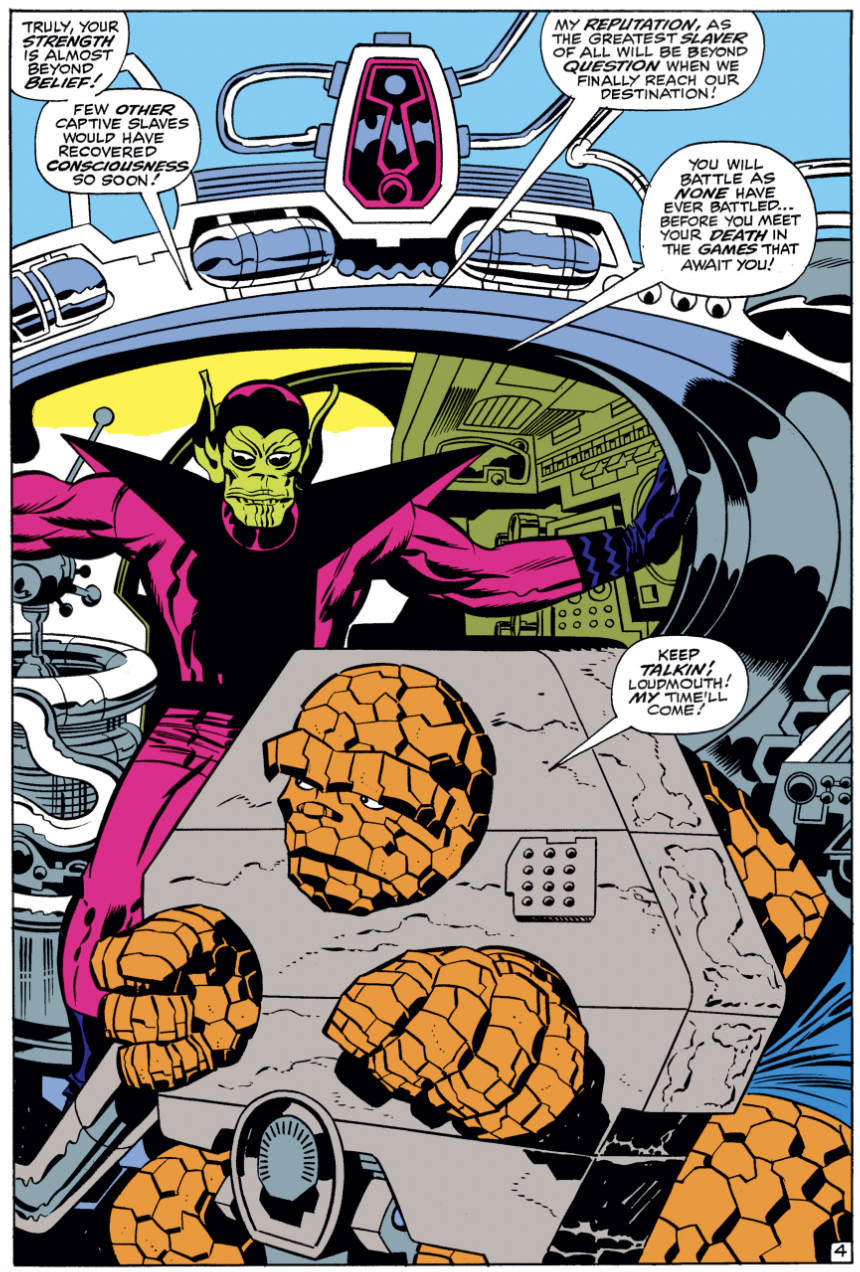
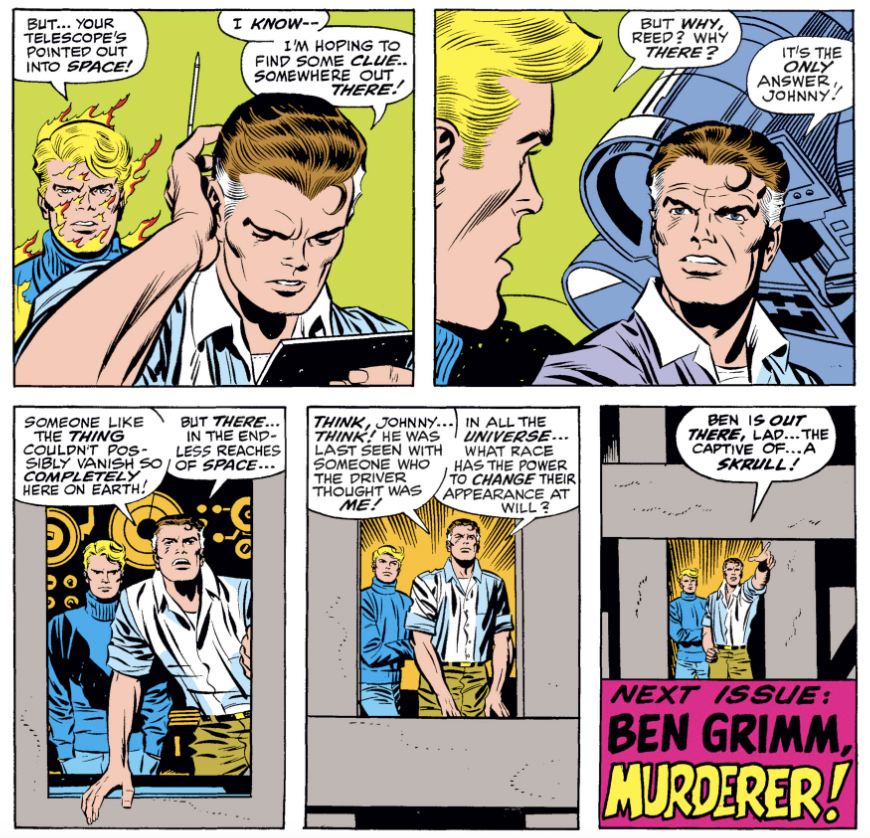
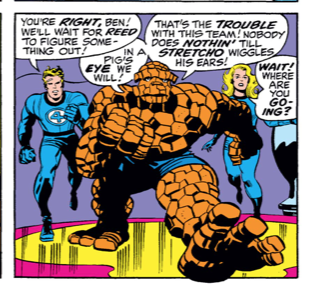
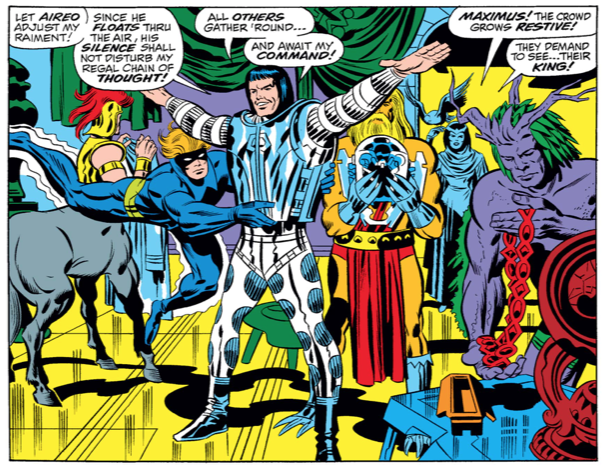
Fantastic Four 91 opens with rival 1930s gangsters—actually Skrulls—discussing an upcoming match between their enslaved fighters, Torgo and Ben Grimm, aka The Thing. We then cut to a Skrull spaceship with Ben in captivity and his strength sapped by a neutralizing collar following his kidnapping by a Skrull slaver last issue. Eventually he lands on a Skrull planet where everyone takes the form of humans from the 1930s, the result, he is told, of a human gangster who was abducted decades ago and became an object of fascination among the Skrulls.
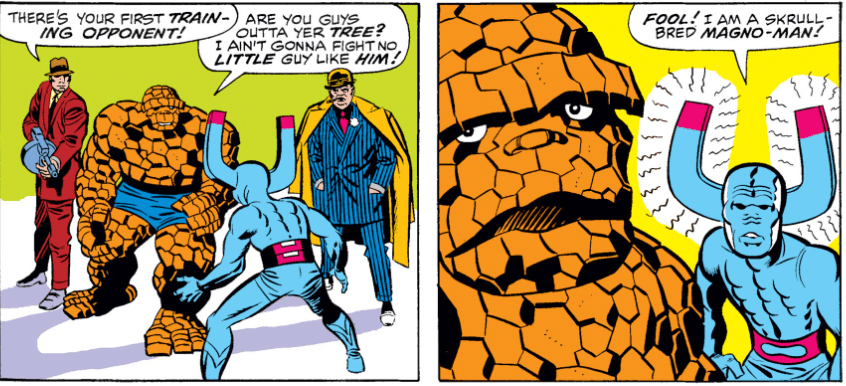
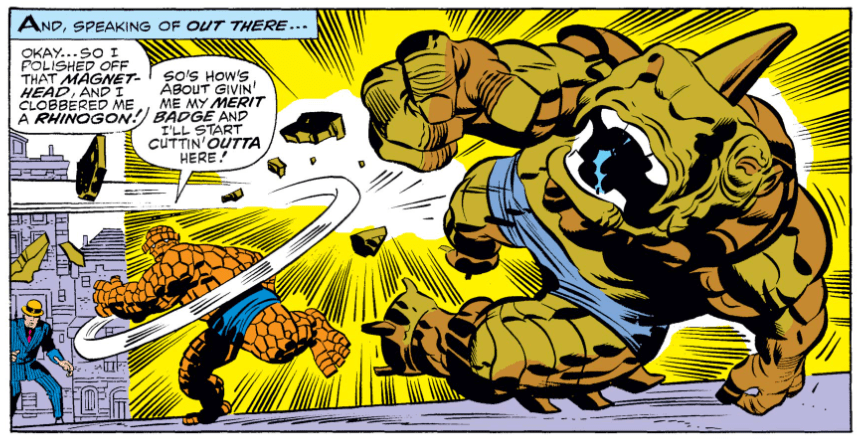
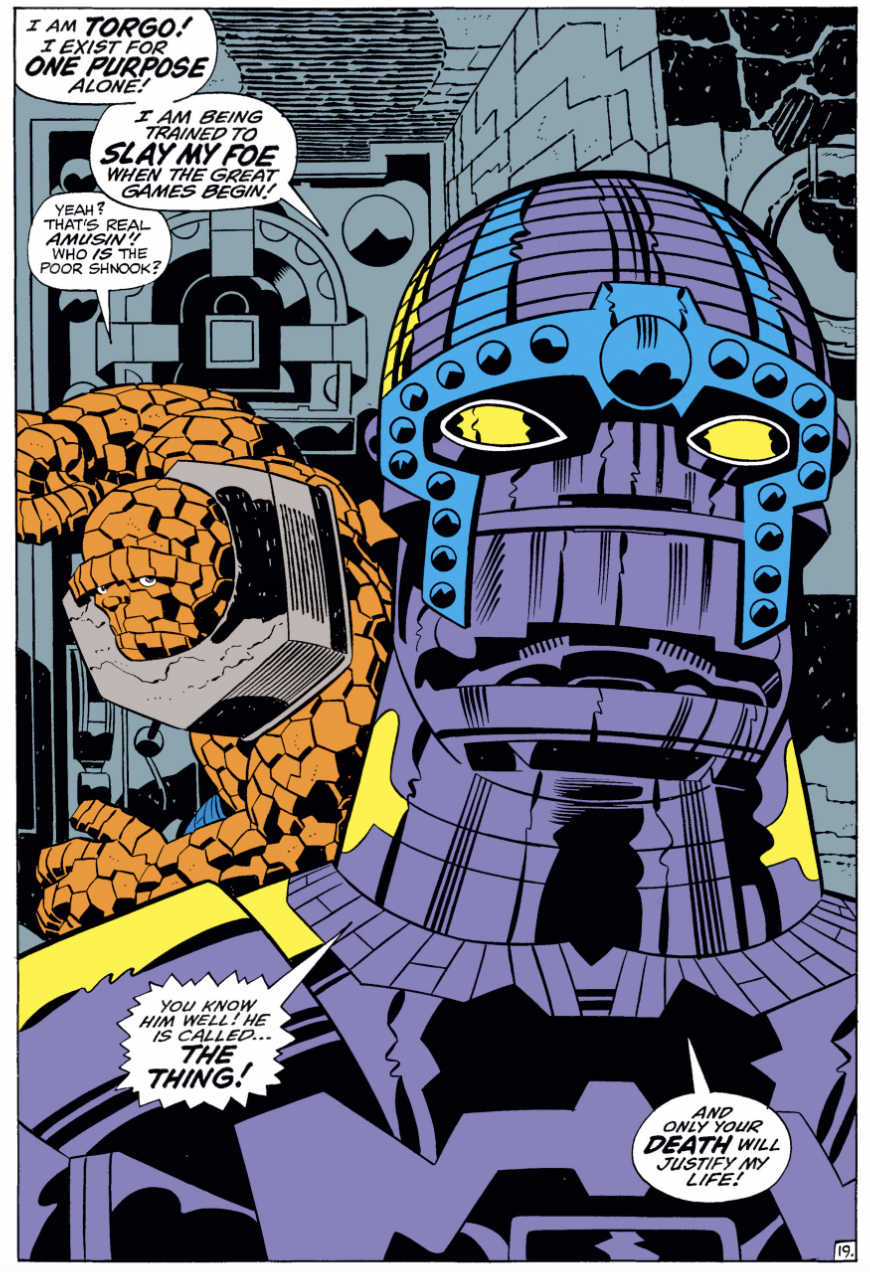
After an unsuccessful escape attempt and a thwarted attack on his life by another gangster, Ben is transferred into the custody of the slave keeper. To teach him a lesson he is attacked by another enslaved creature, Taxtor, before he is imprisoned in a cell with Torgo, whom he must battle in the arena.
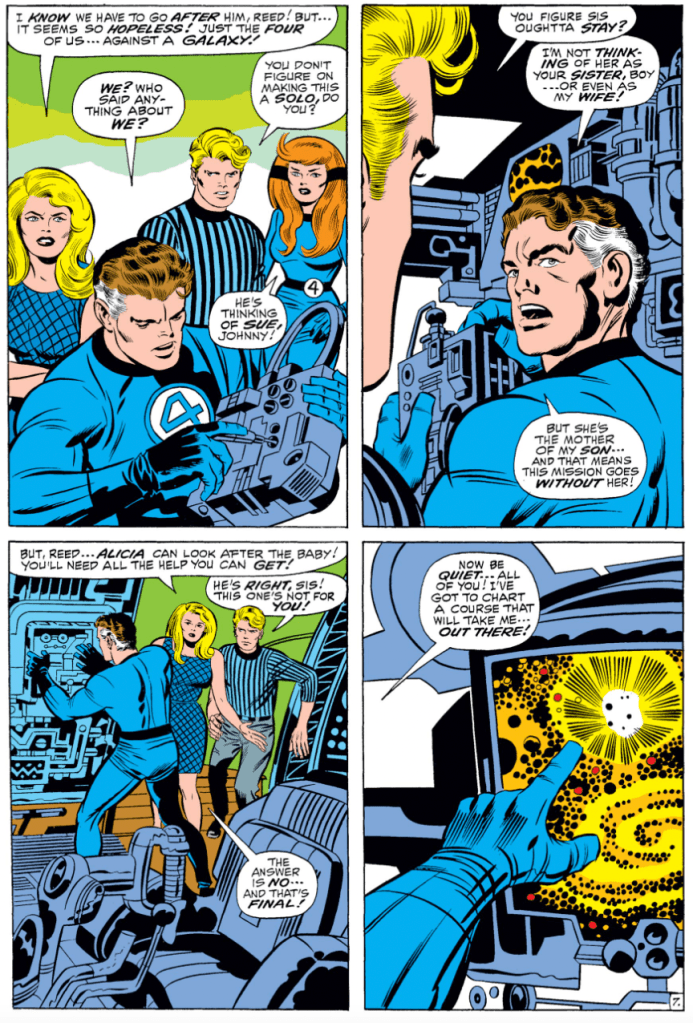
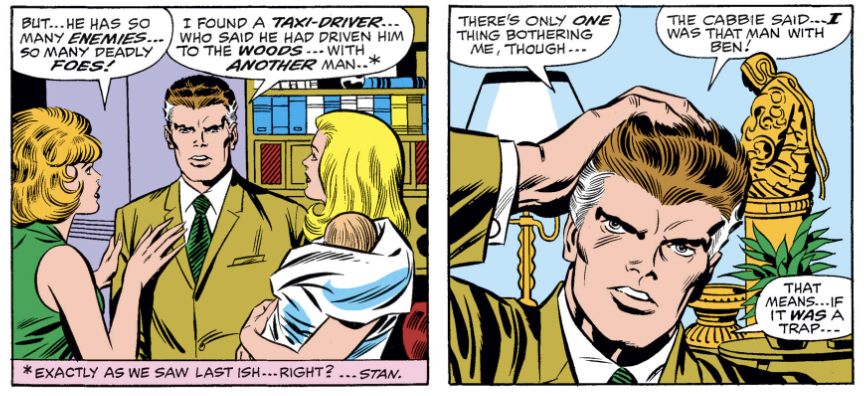
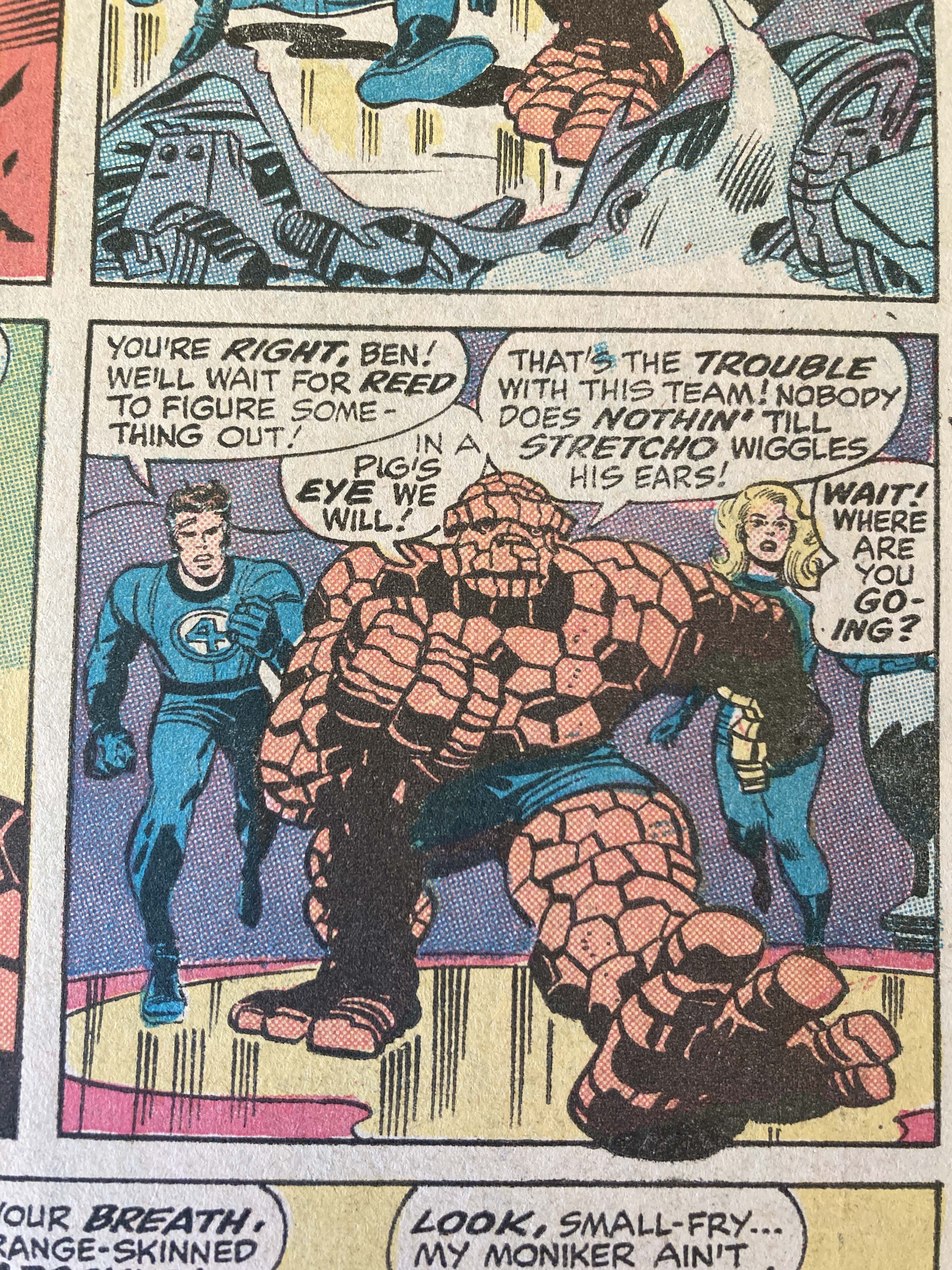
Meanwhile, on Earth, Alicia and the rest of the Fantastic Four grow increasingly anxious about Ben’s disappearance until Mr. Fantastic concludes he must have been captured by the Skrulls.
What’s going on here?
This is a fun and satisfying issue, and a big improvement over the last two. We are getting close to the end of Stan and Jack’s time together (sob!) and it’s clear their work is not as consistently excellent as earlier but on occasion they can still bring it. There’s not much character development or sub-plot here—we barely see the rest of the FF—but that’s fine; the main narrative is well-paced and compelling enough.
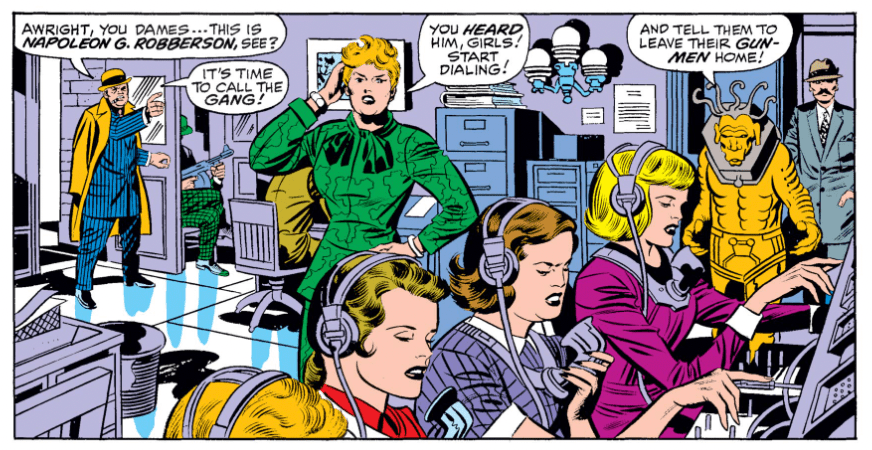
FF 91 has the added novelty of the 1930 gangster-Skrulls. I’m curious why Stan and Jack landed on that period, but it gives Jack the opportunity to draw everyone like they’re in Guys and Dolls.
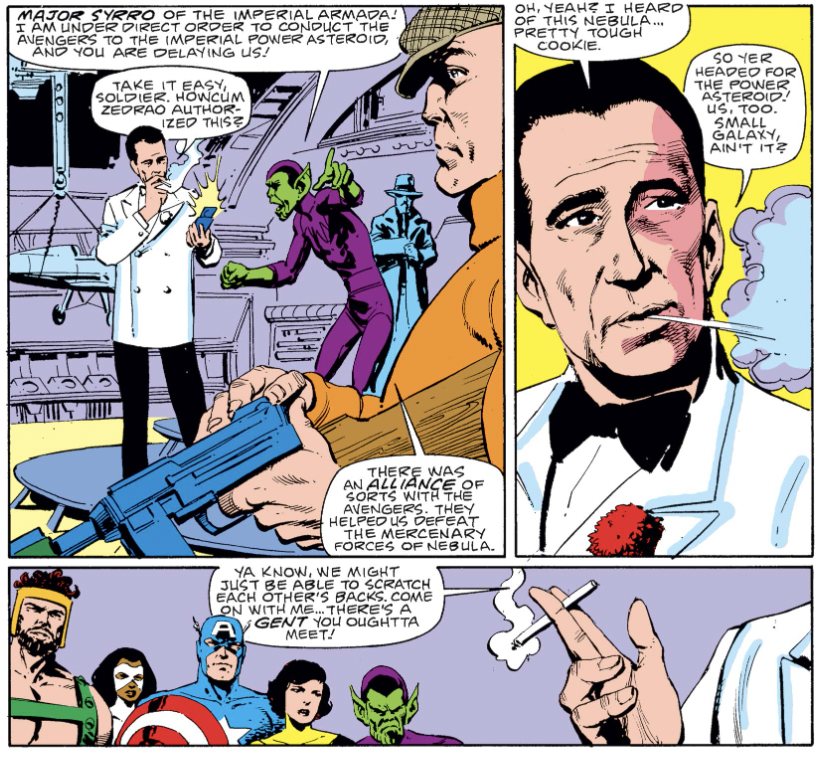
This ’30s-themed Skrull planet was revisited at least once more, in Avengers Annual 14, with a very Bogart-looking Skrull running a casino spaceship (somehow not called Rick’s Café Américain).
Avengers Annual 14 (1985, Roger Stern, John Byrne and Kyle Baker)
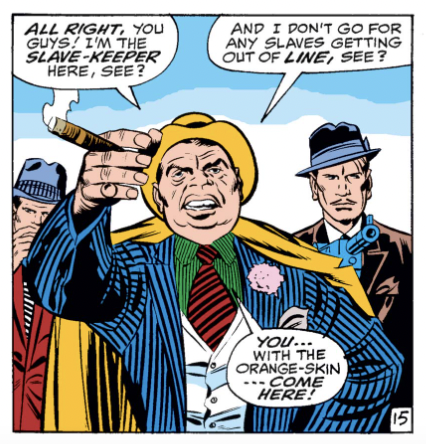
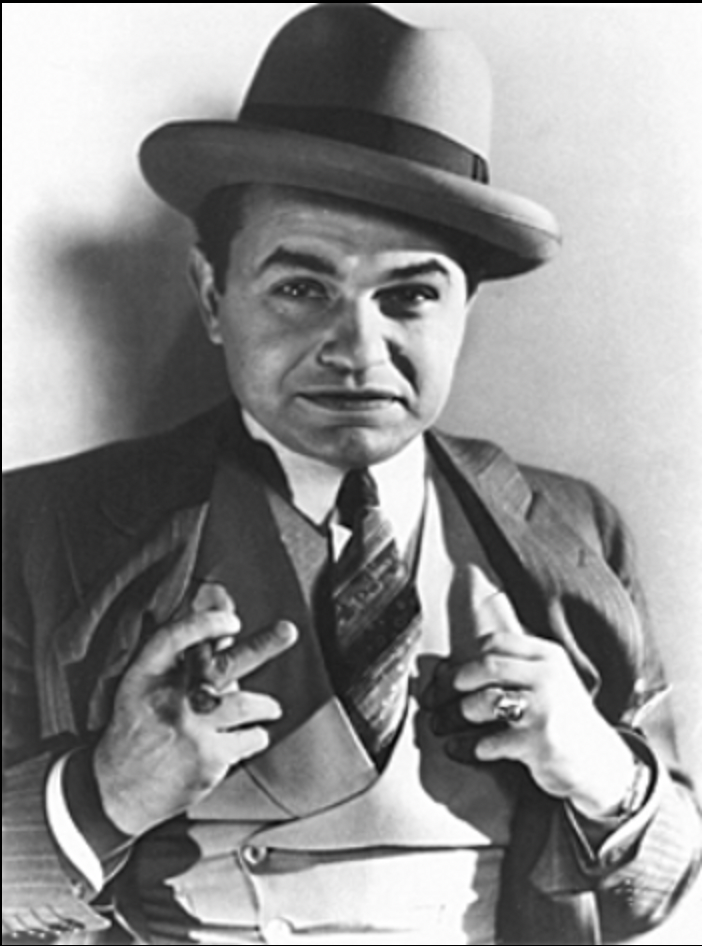
Speaking of lookalikes, the slave keeper Skrull looks an awful lot like Edward G. Robinson
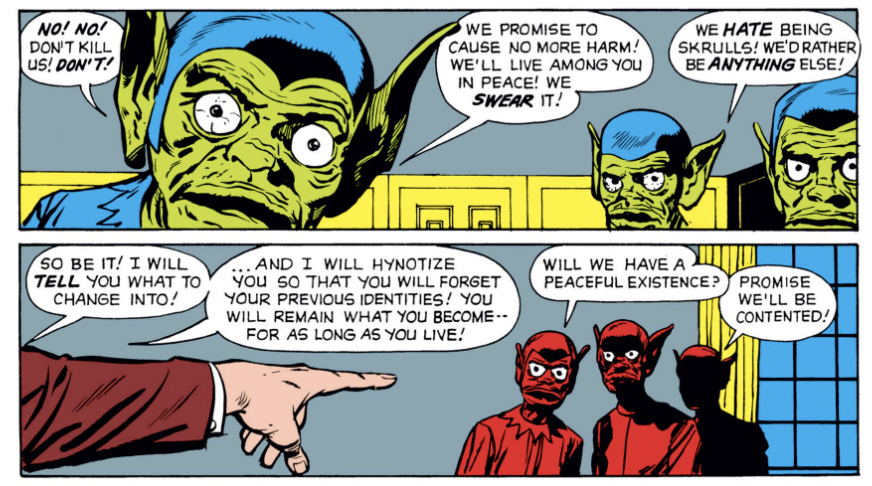
Shape changers
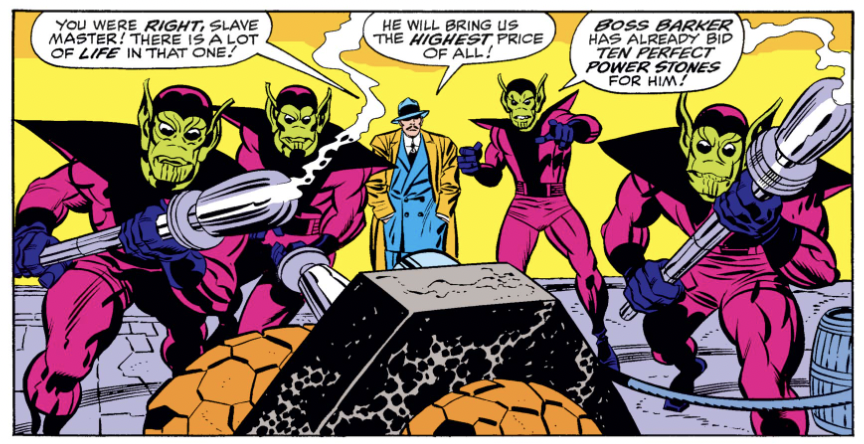
On the subject of changing appearances, Kirby’s design for the Skrulls has evolved pretty dramatically since their debut all the way back in FF 2.
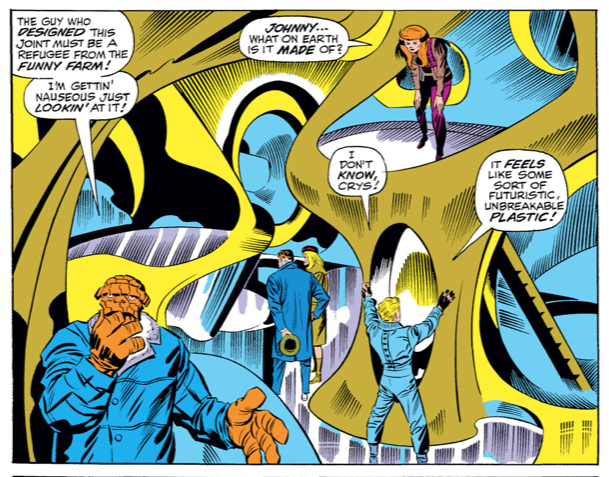
Mid-century modern
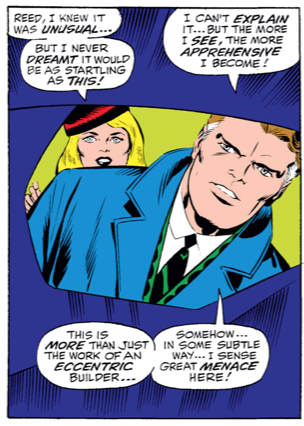
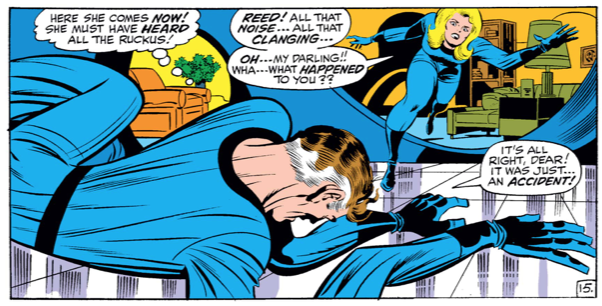
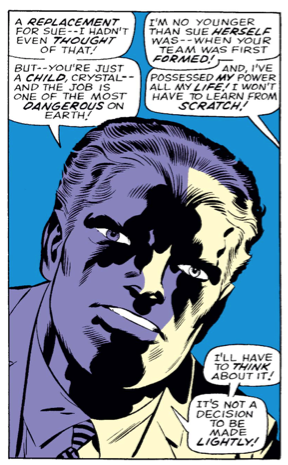
More interesting objét d’art in the Baxter Building. Also, why is Reed wearing a suit?
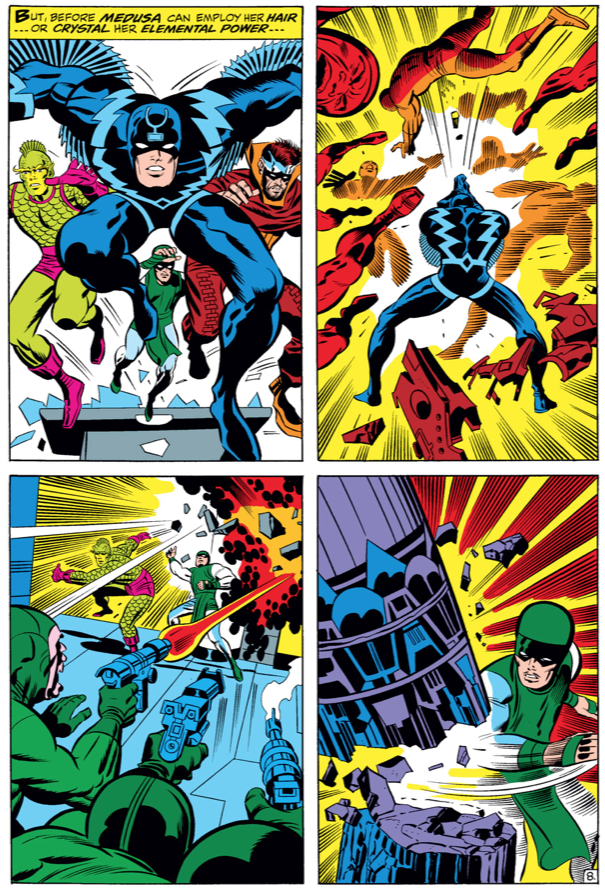
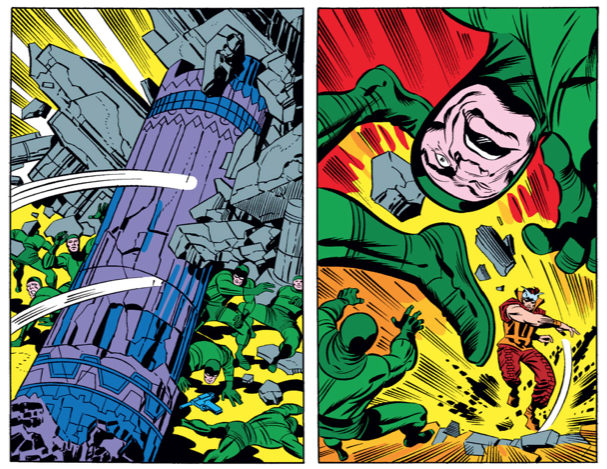
Dig That Kirby Krackle
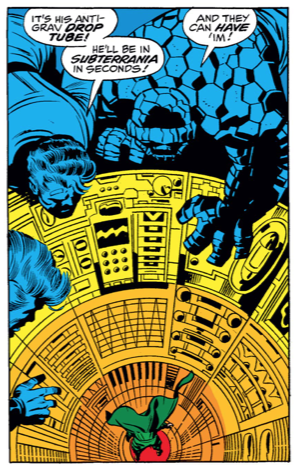
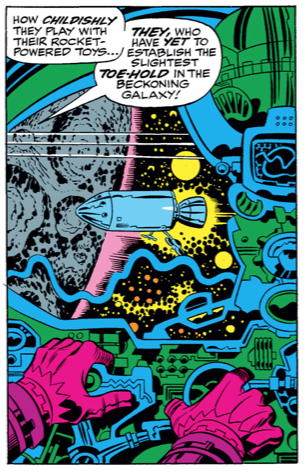
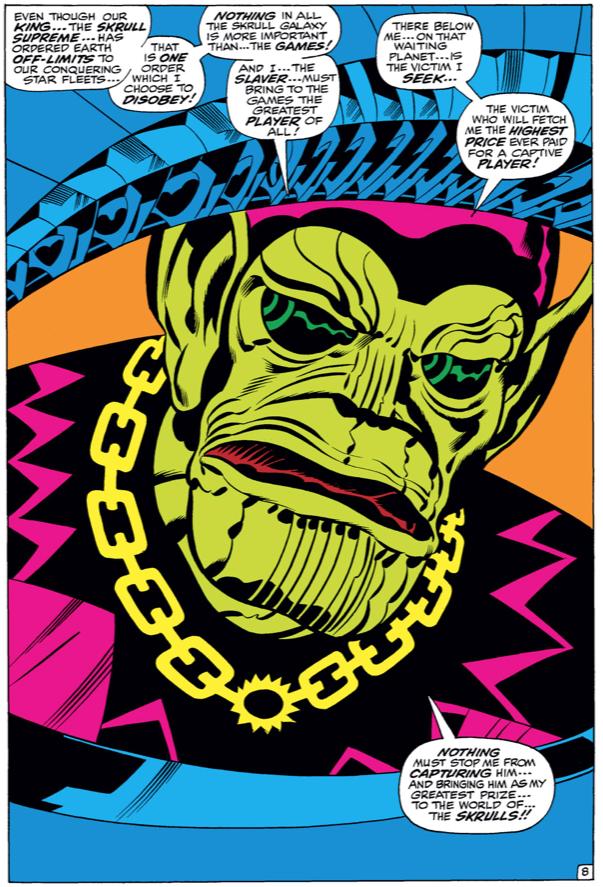
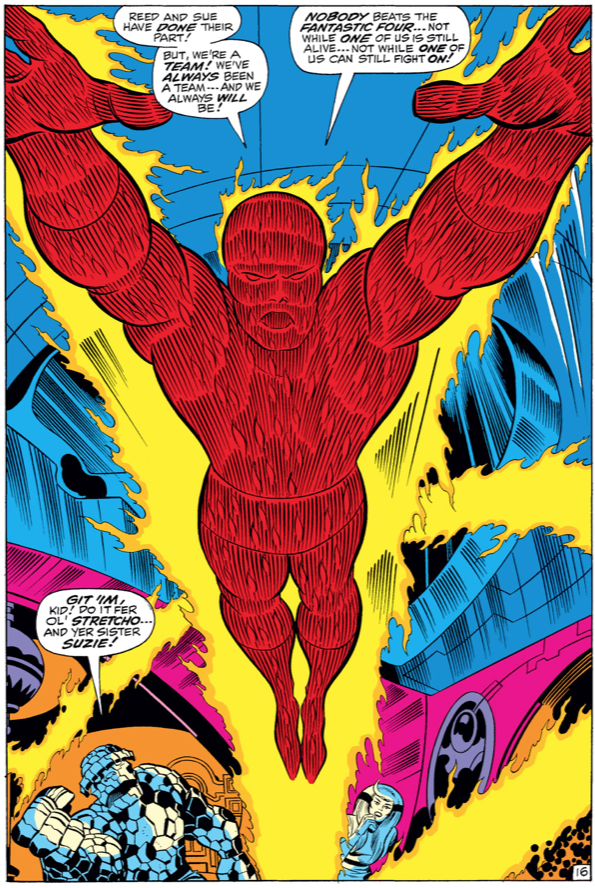
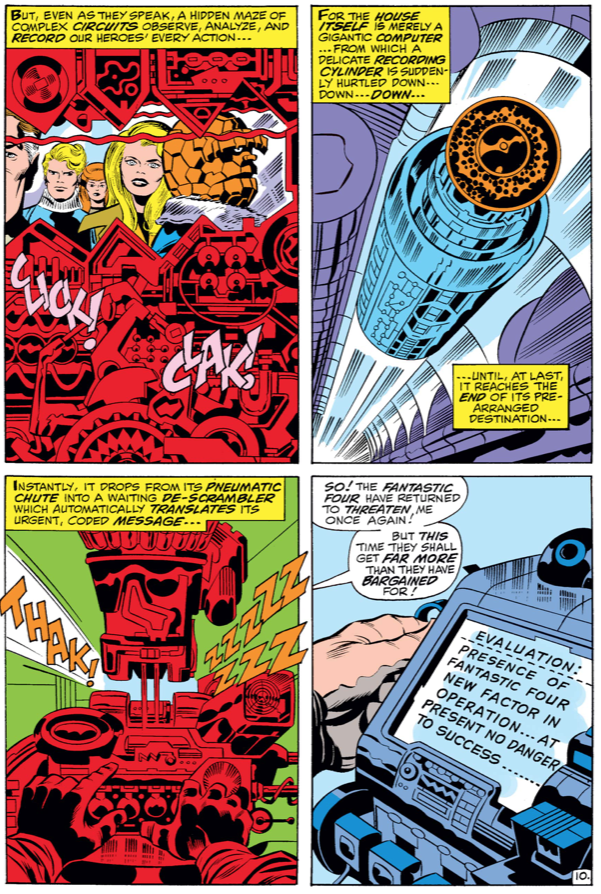
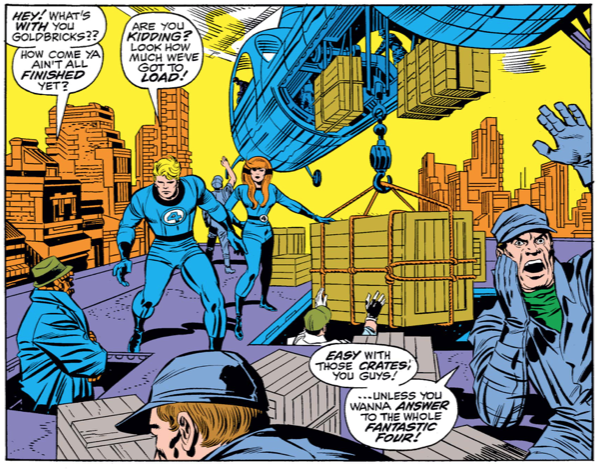
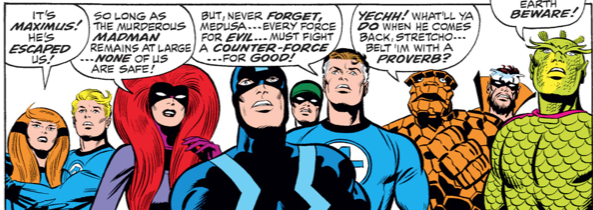
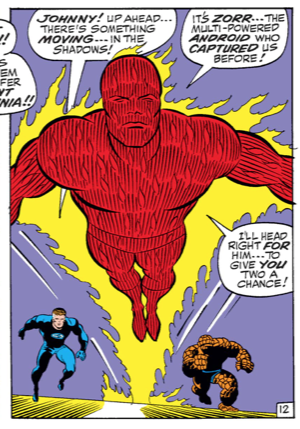
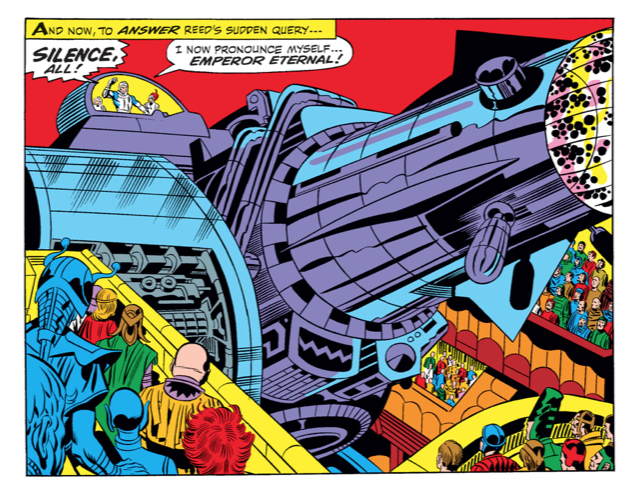
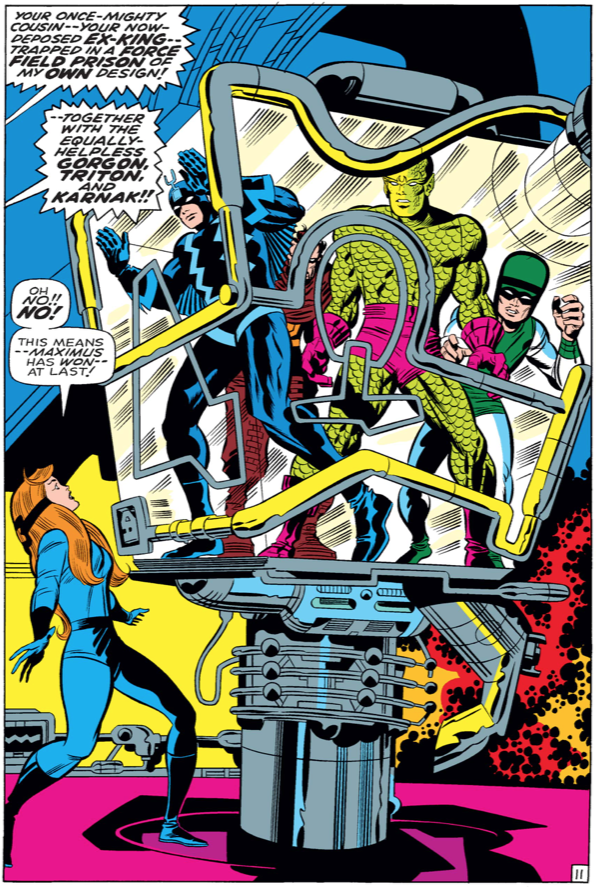
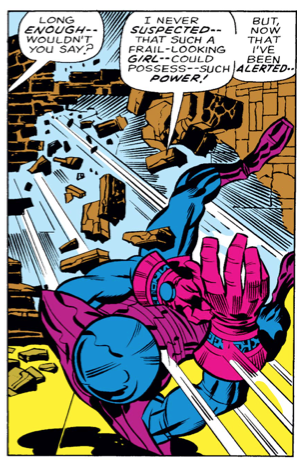
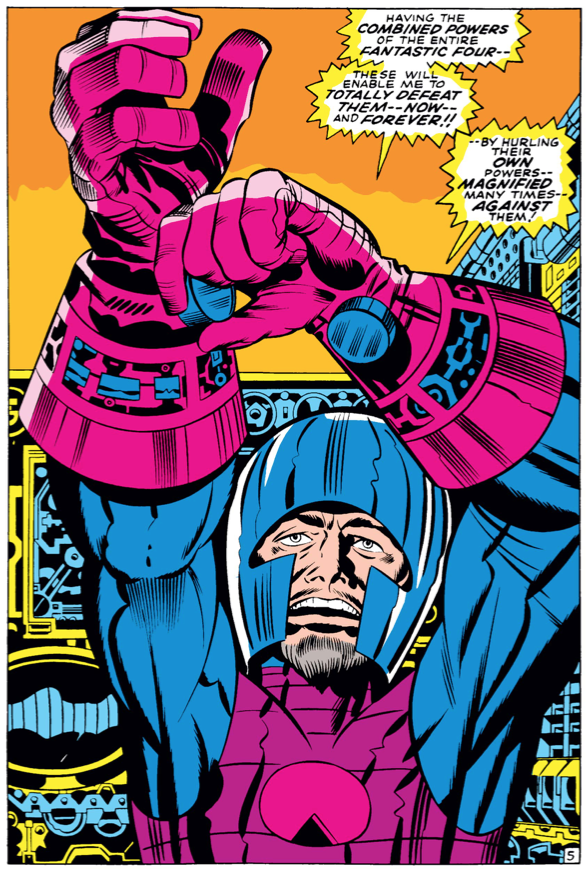
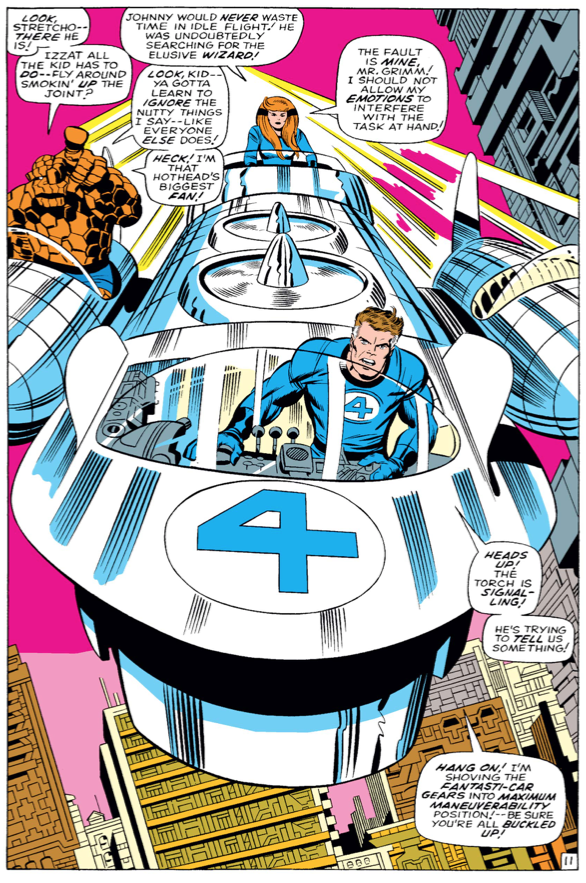
A couple of impressive splash pages in this issue:
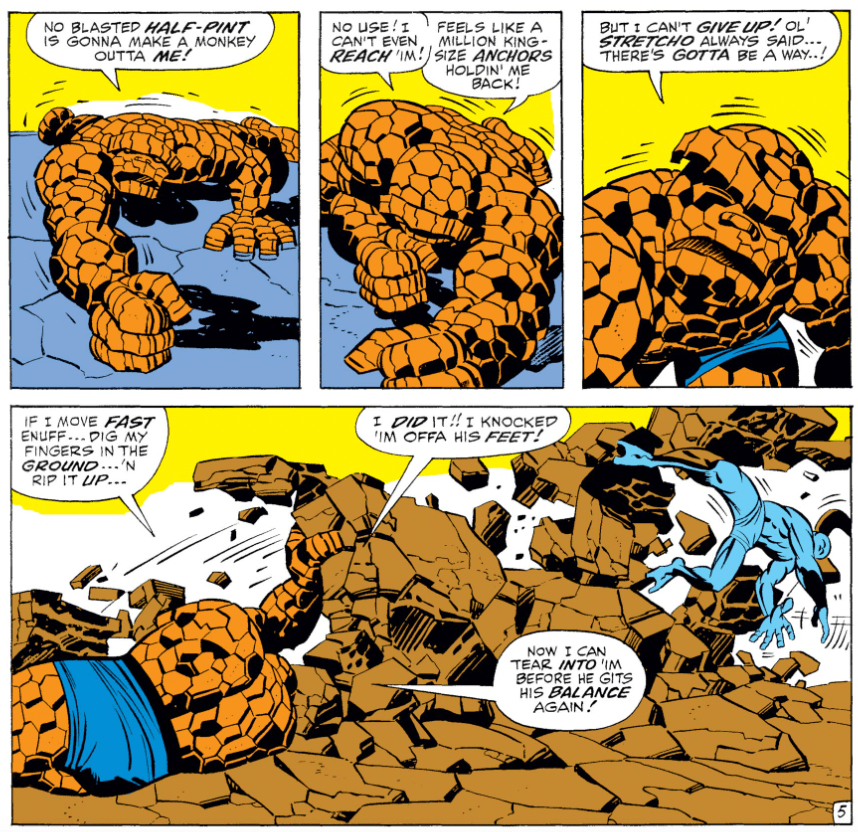
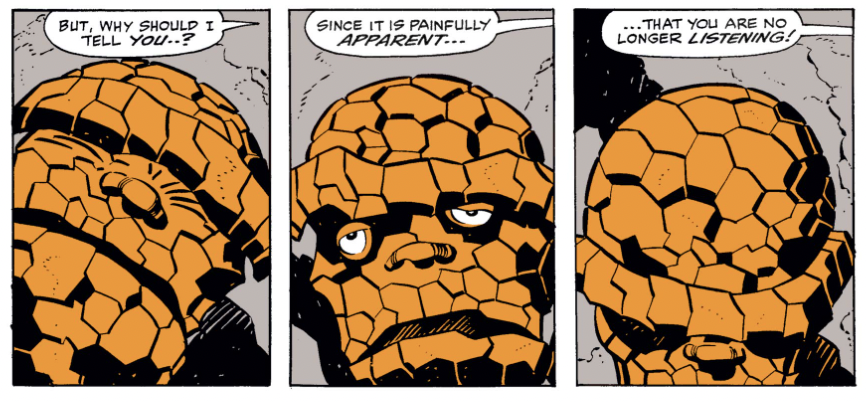
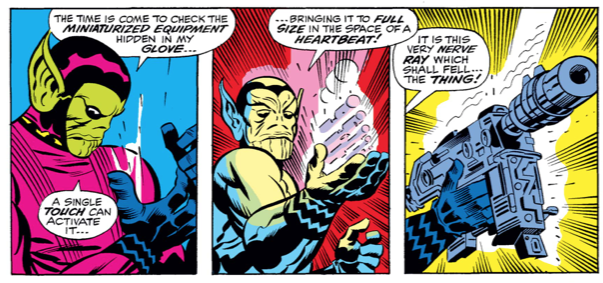
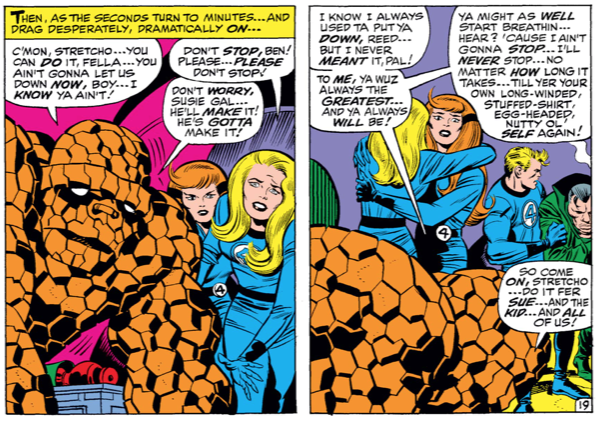
Also some well-done smaller sequences, like this one of the sedated Thing:
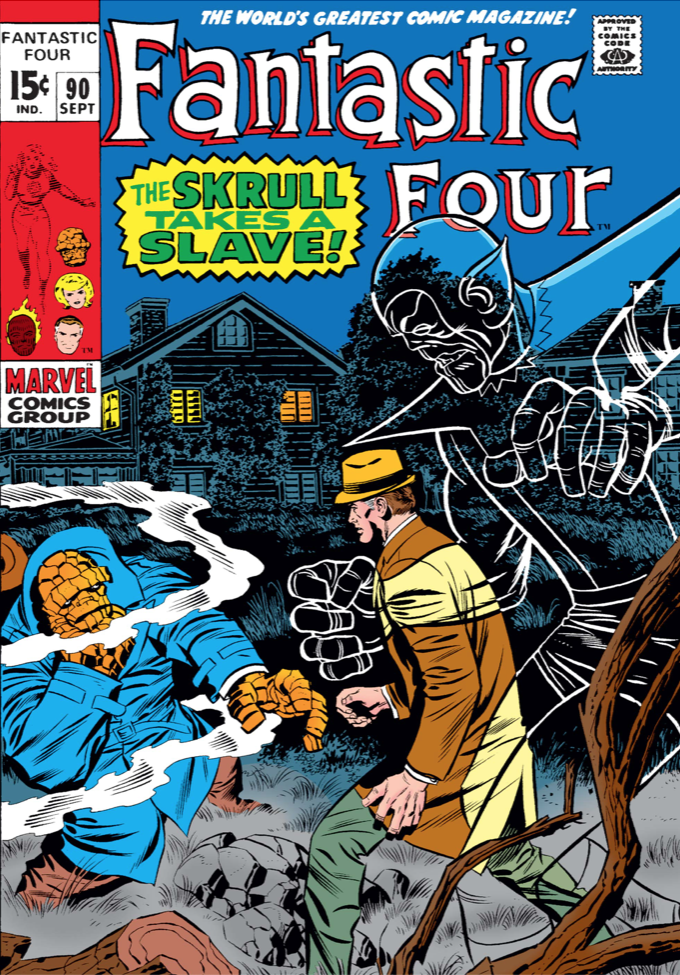
Fantastic Four 90 “The Skrull Takes a Slave!” Published June 1969 Story: Stan Lee and Jack Kirby Script: Lee Pencils: Kirby Inks: Joe Sinnott Letters: Sam Rosen Cover: Kirby and Sinnott
Synopsis
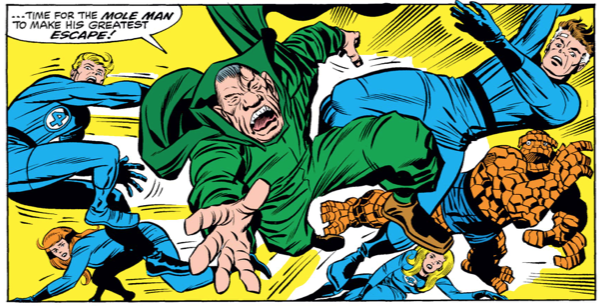
Fantastic Four 90 opens a few minutes after the last issue concludes with the FF regrouping after their battle with the Mole Man in the suburban house from where he planned to launch his conquest of Earth. The Thing begins destroying the Mole Man’s machinery, and when a device is revealed to be booby trapped, he prepares to torture the bound Mole Man to get answers. Mr. Fantastic and the Invisible Girl intervene, and when they release the apparently helpless Mole Man from his ropes, he escapes back to his underground lair.
Ben, disgusted by Reed and Sue’s display of mercy, takes leave, and plans to go into the city to join Alicia.
Meanwhile, the Skrull slaver, last seen in the previous issue, is now on Earth and begins his plans to capture Ben, first disguising his flying saucer, then disguising himself as he looks for Ben in the city. Taking the form of Reed, he lures Ben back to the countryside then immobilizes him with a nerve gun before loading the Thing on to his flying saucer.
What’s going on here?
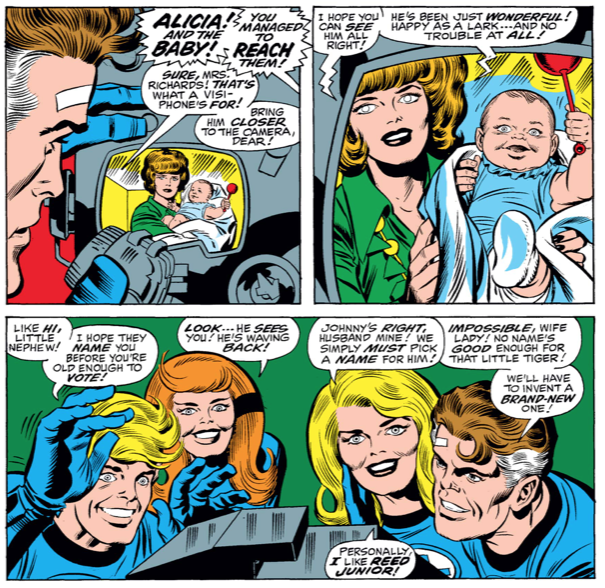
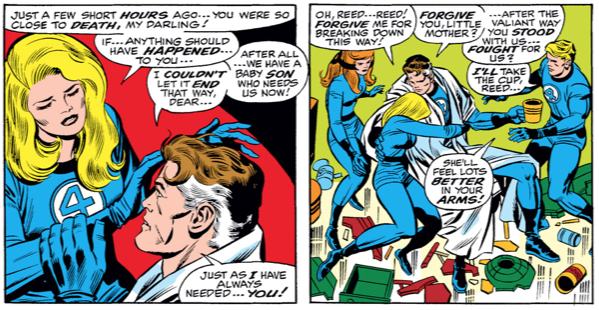
After an issue in which entirely too much time was devoted to fighting the Mole Man, about half of this issue is devoted to the repercussions of fighting the Mole Man. It’s no more satisfying. There is some character development, particularly in the disagreement between Reed and Ben in how best to deal with their prisoner, and we get another glimpse of Reed and Sue’s yet-to-be-named baby, but most of the issue if devoted to mopping up from last issue or setting the stage for the next one.
Baby talk
Speaking of baby Franklin, this is a cute scene:
Oops
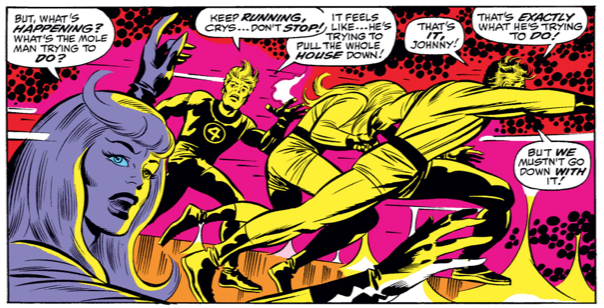
Jack clearly draws Reed in this panel (it’s not just the hair color, but the bandage on his forehead) but Stan scripts him as Johnny. His hair is recolored in the digital version so he looks more like Johnny.
Inflation
The cover price of the Fantastic Four is now 15 cents, up from 12 (this actually happened last issue but I didn’t notice it).
The sexist sixties
Not the most egregious example but still pretty icky.
Topical reference
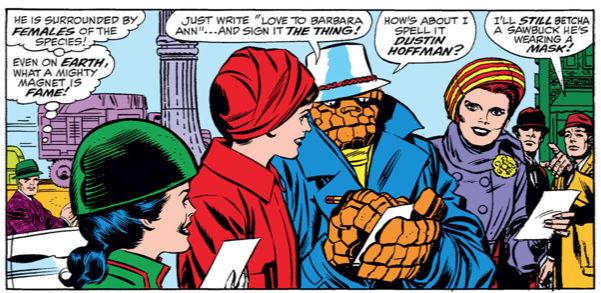
Midnight Cowboy came out in 1969, so maybe that’s what’s on Ben’s mind.
Ladies and gentlemen, I give you Joe Sinnott
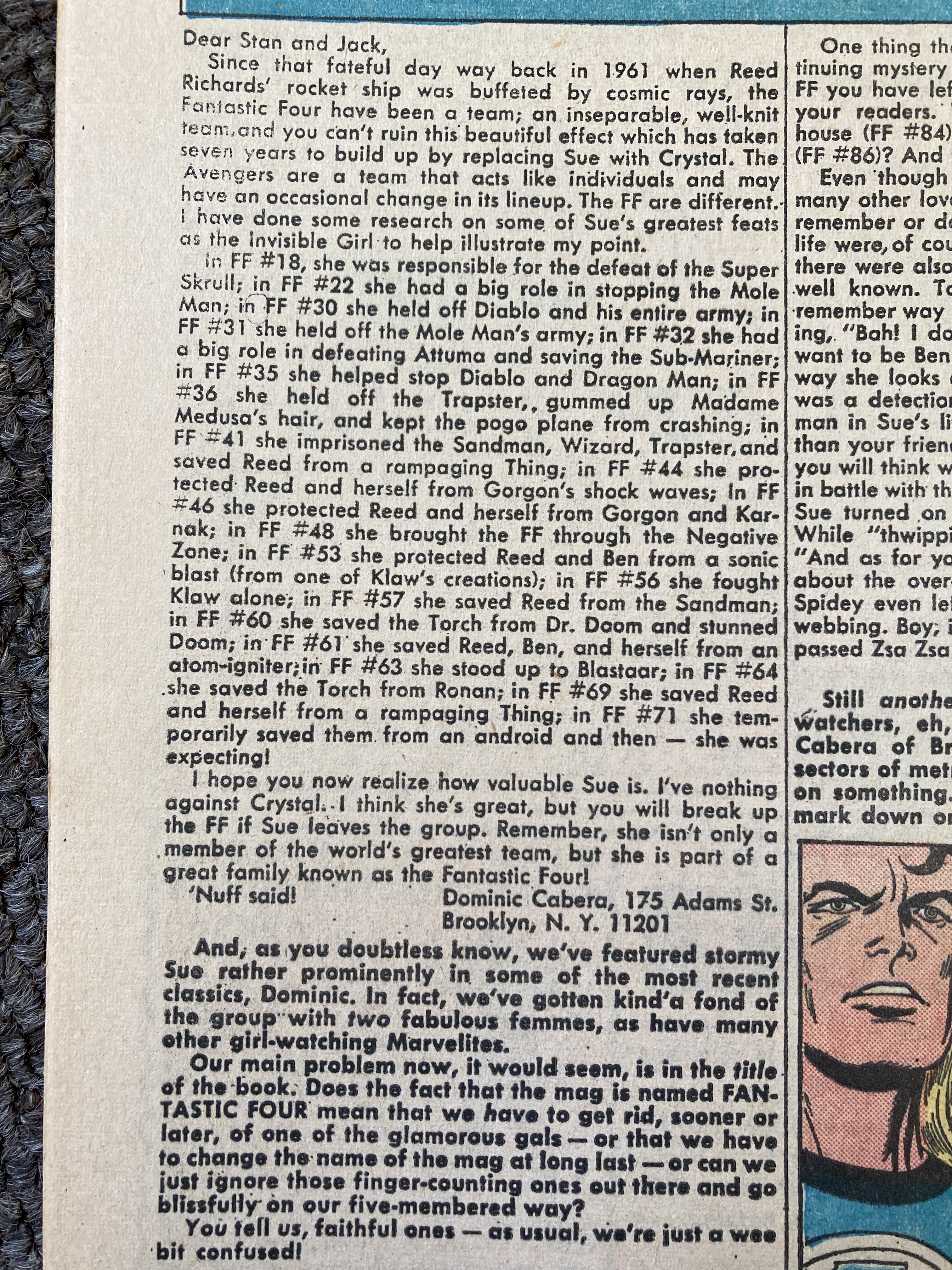
We get letters
Dominic Cabera is clearly a big Sue fan.
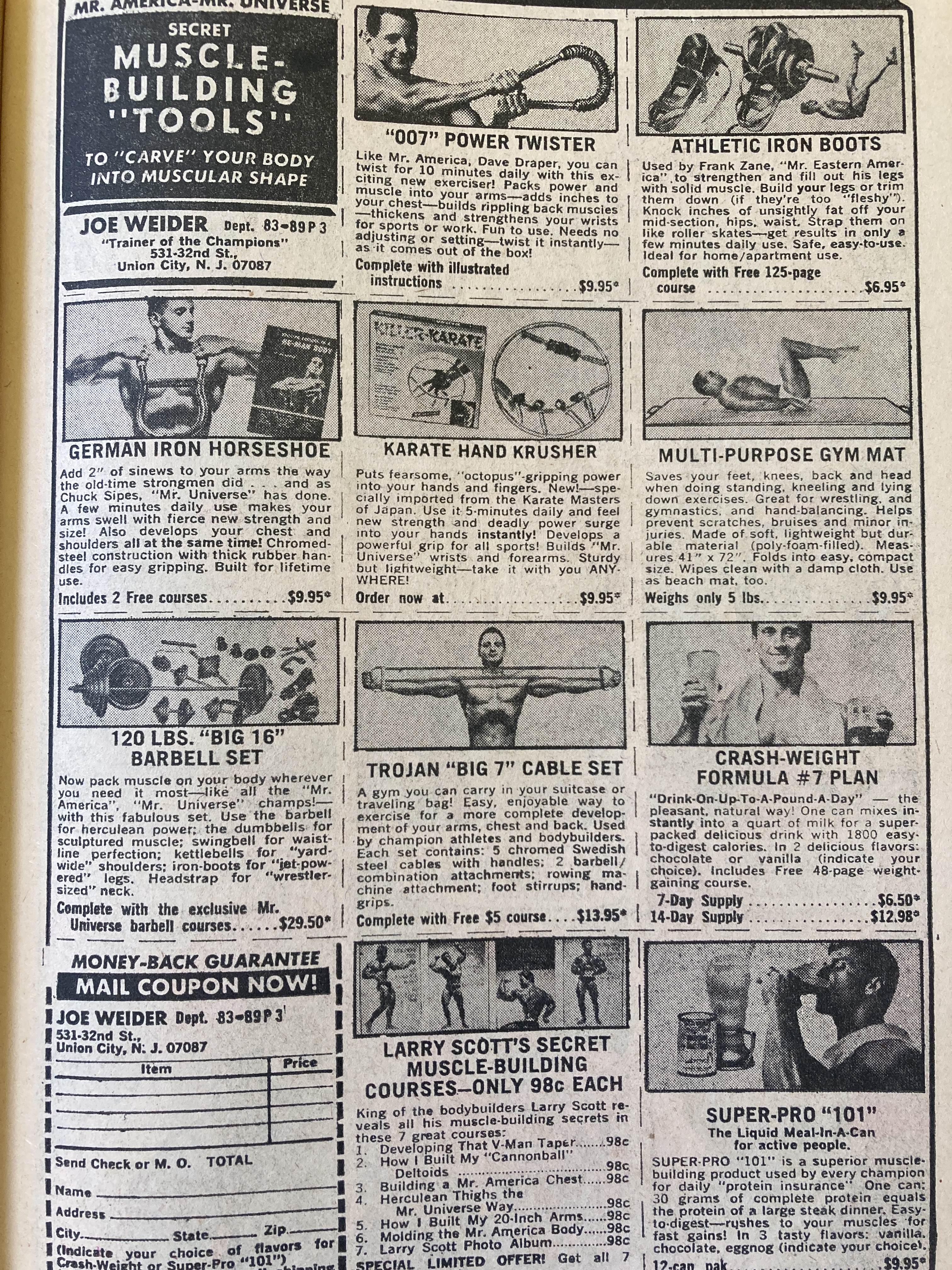
For sale
There’s a big focus on muscle building in comic book ads from this era. It’s almost as if comic fans were spindly geeks and not robust jocks.
Dig that Kirby Krackle
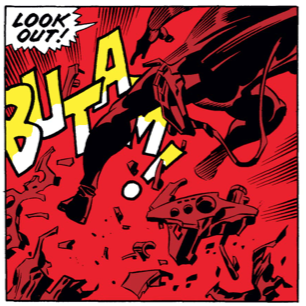
No splash pages (asides from the first page) in the issue, but some smaller gems, like these:
Also on newsstands
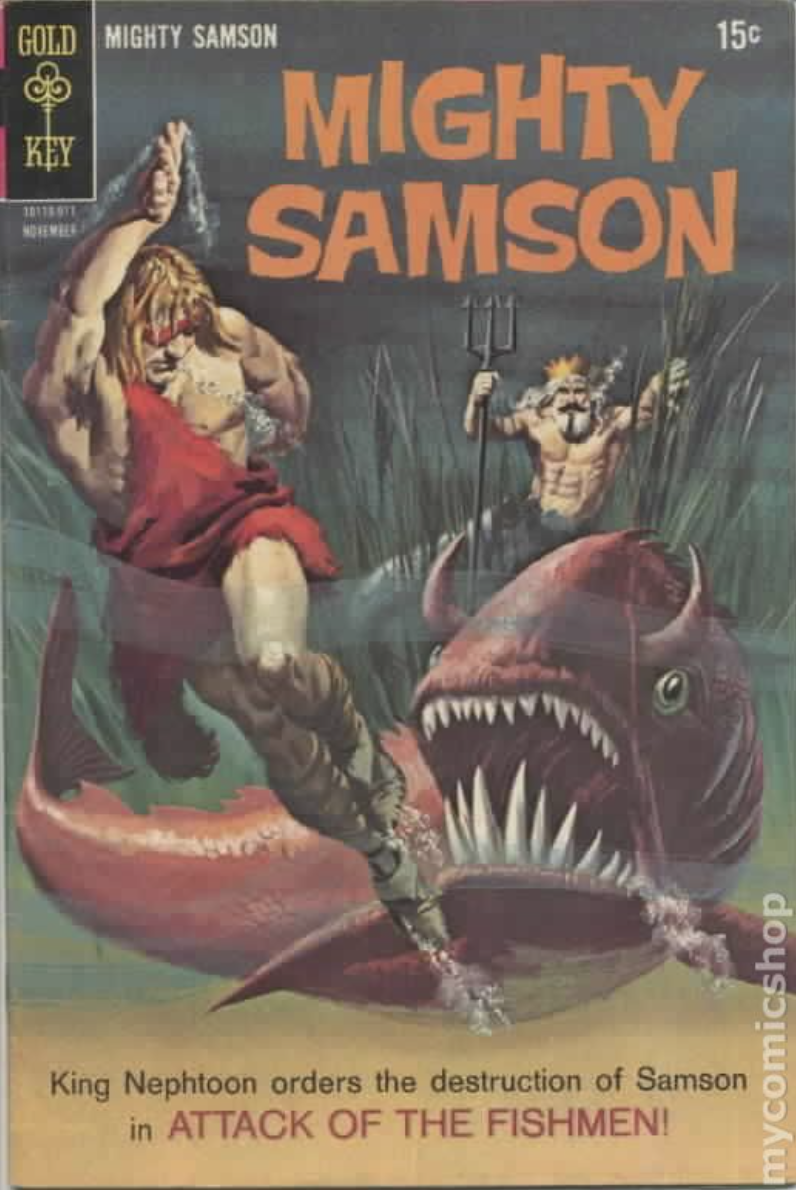
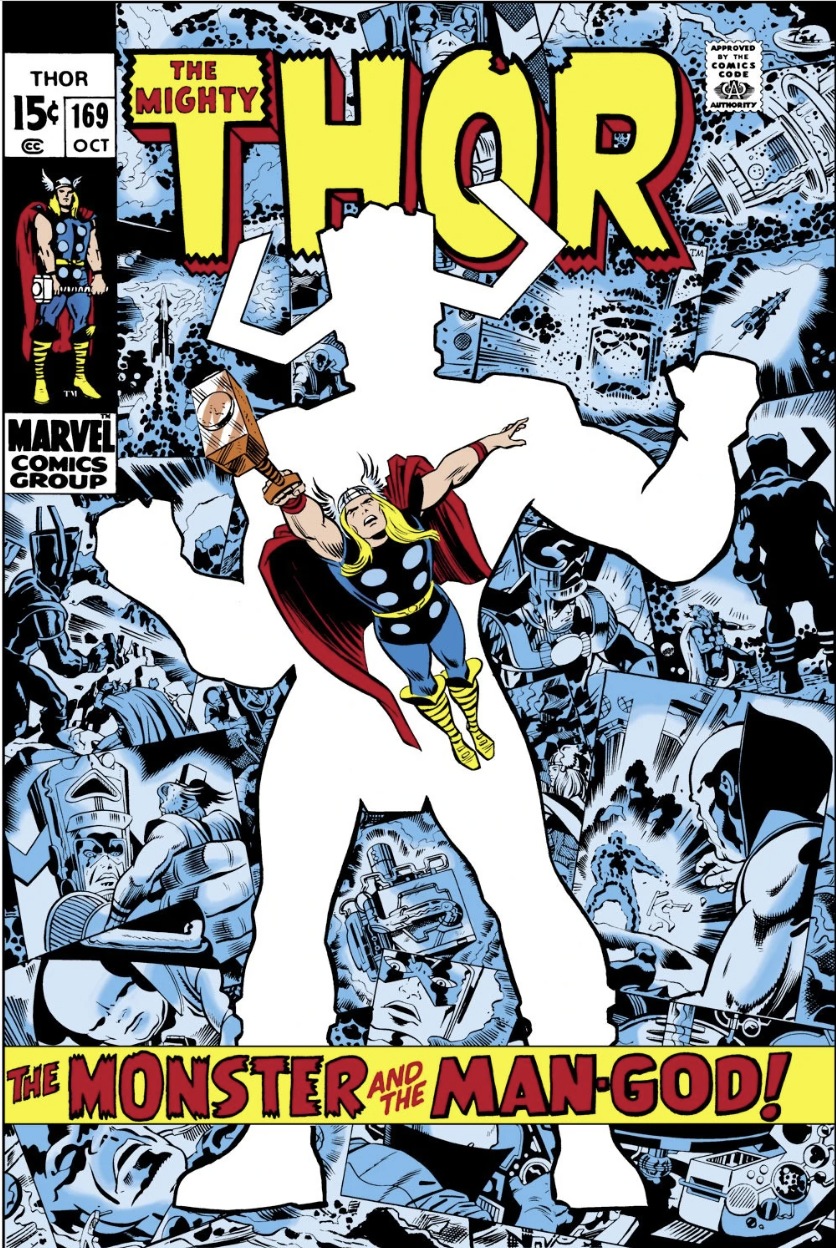
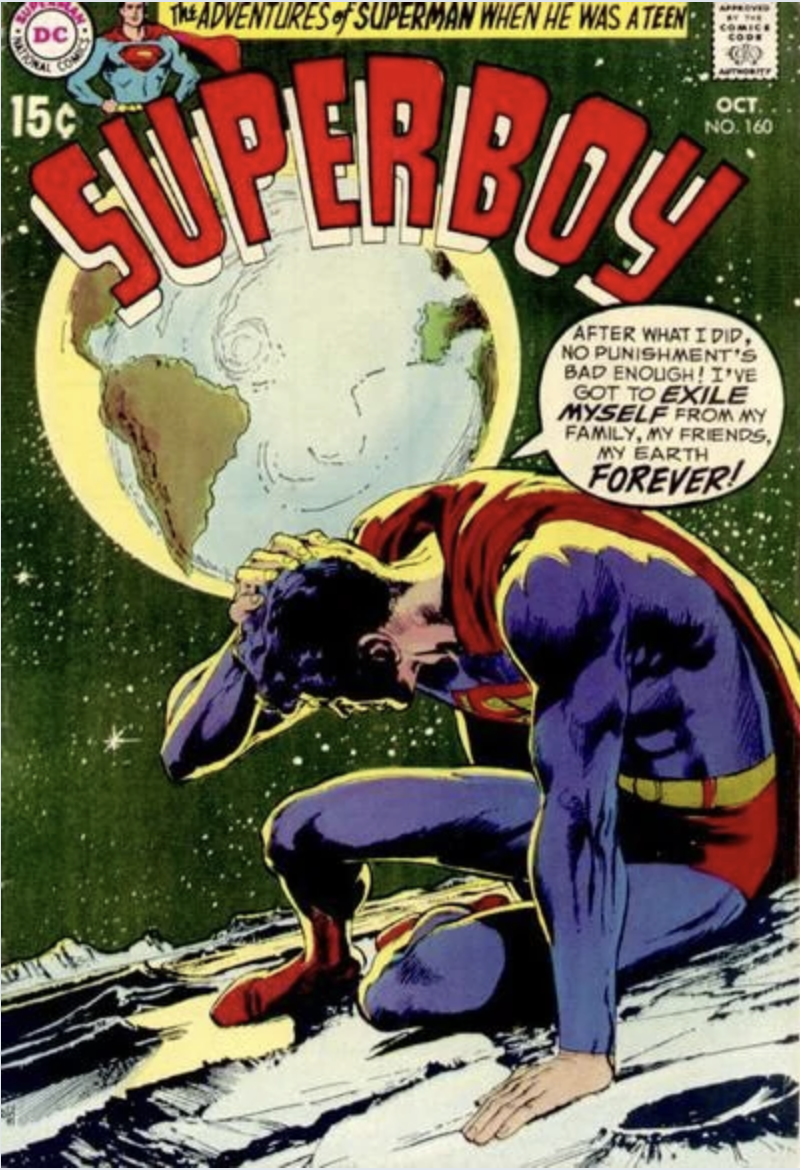
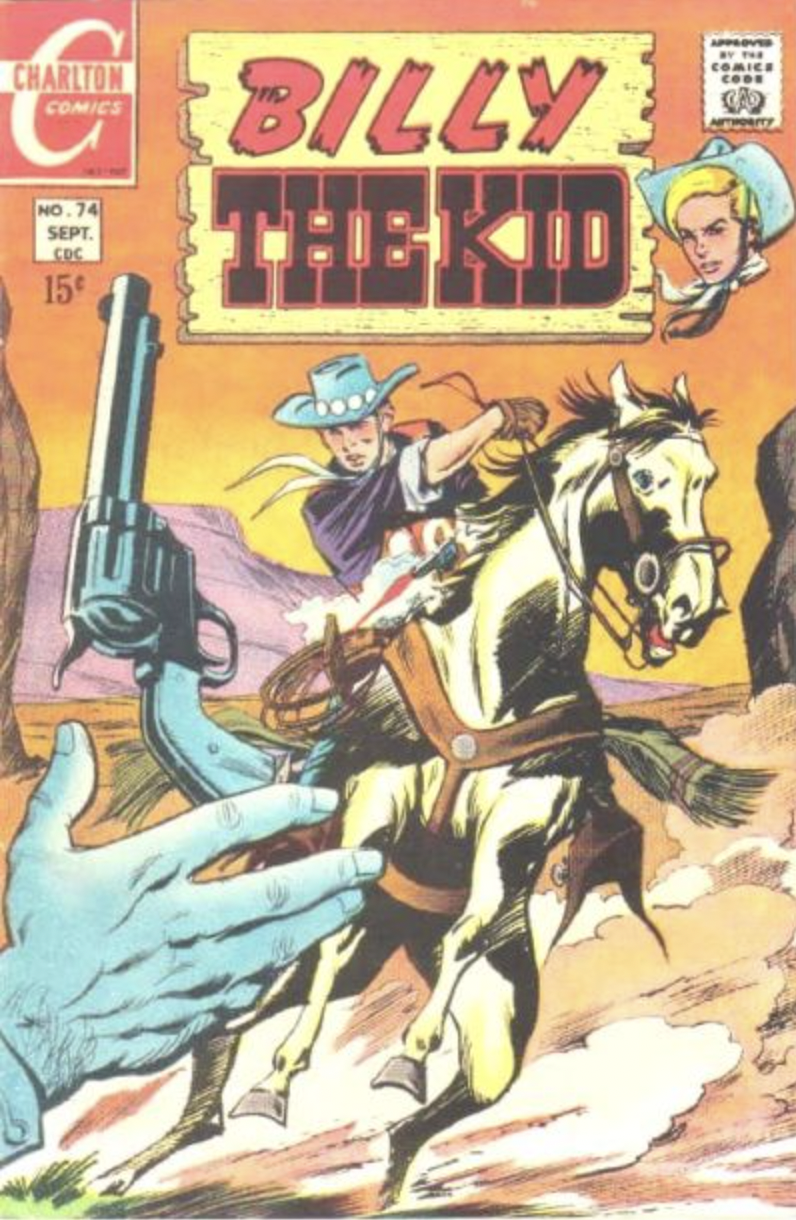
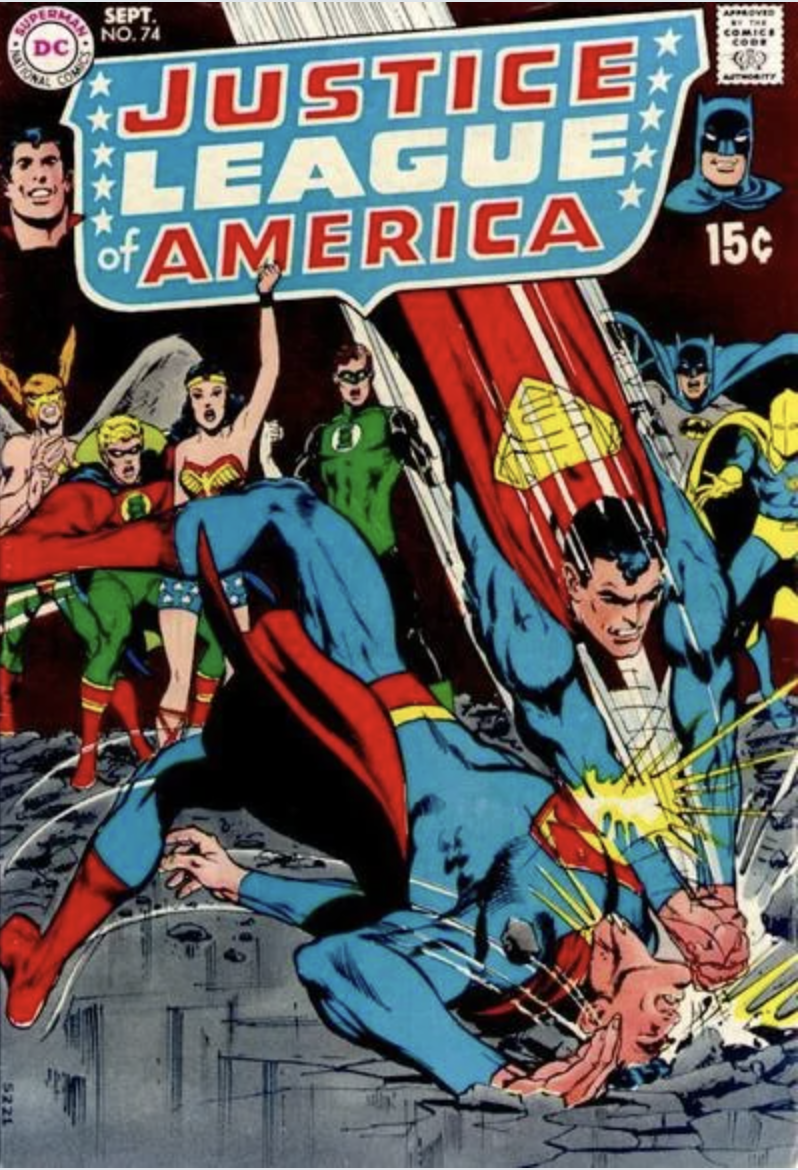
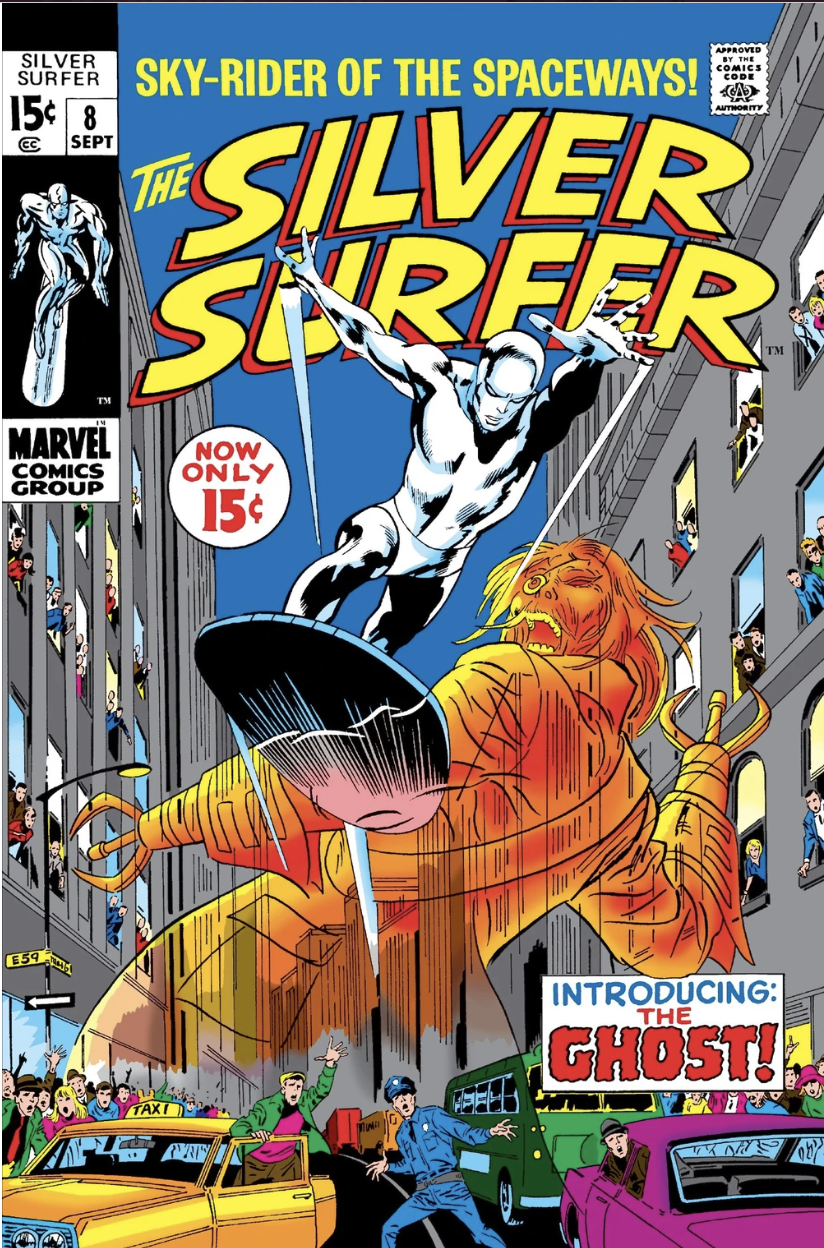
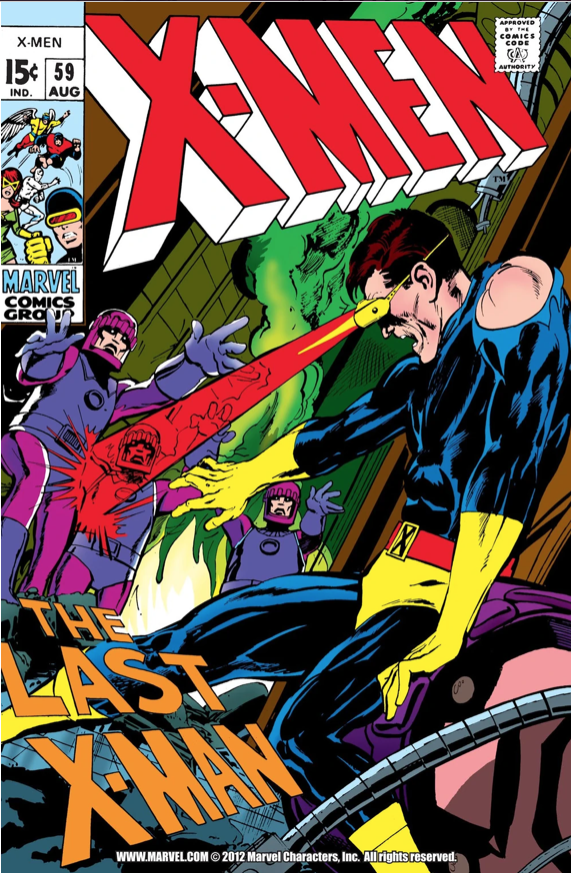
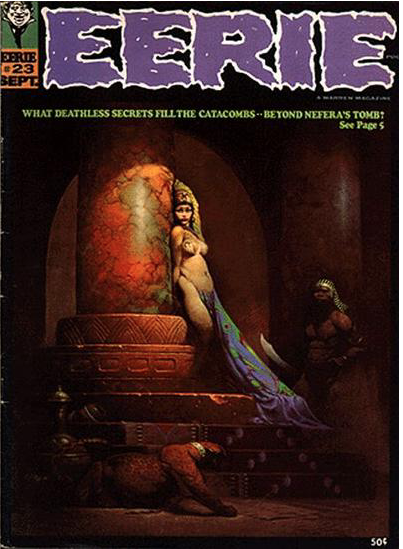
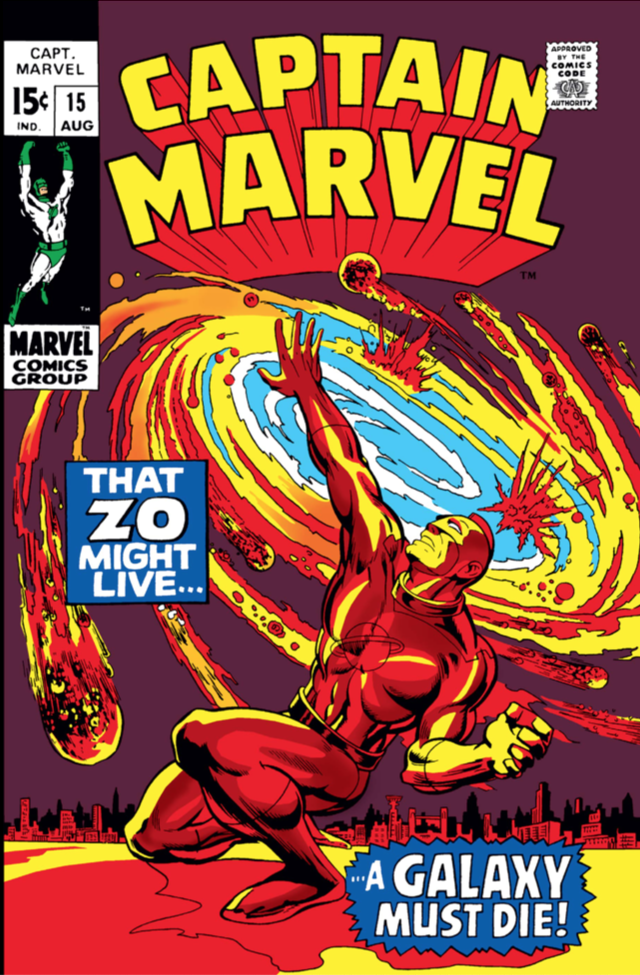
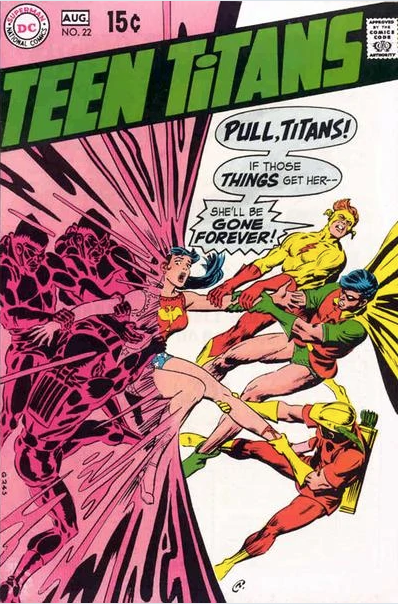
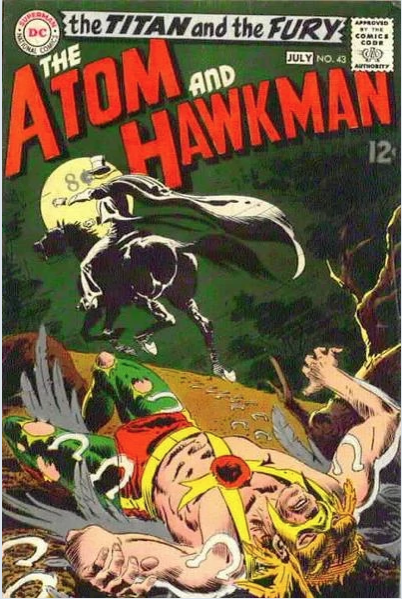
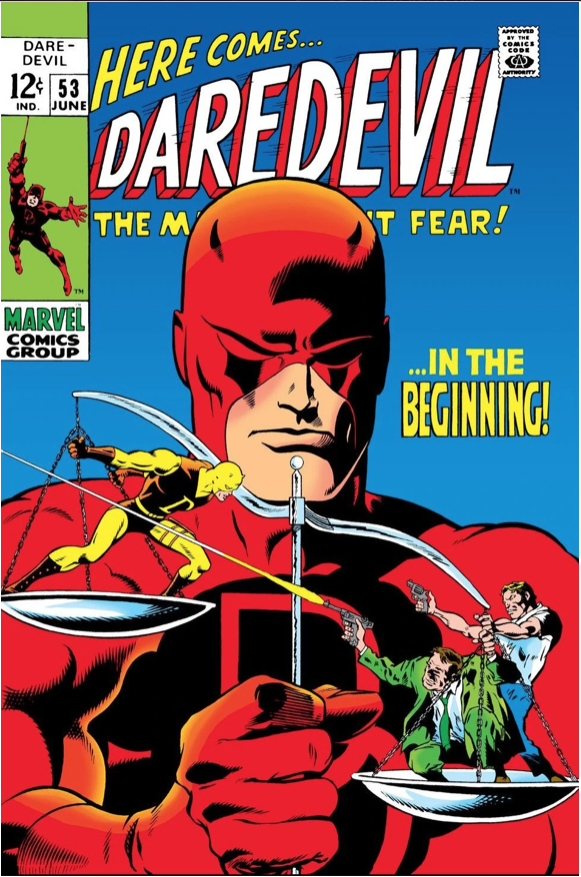
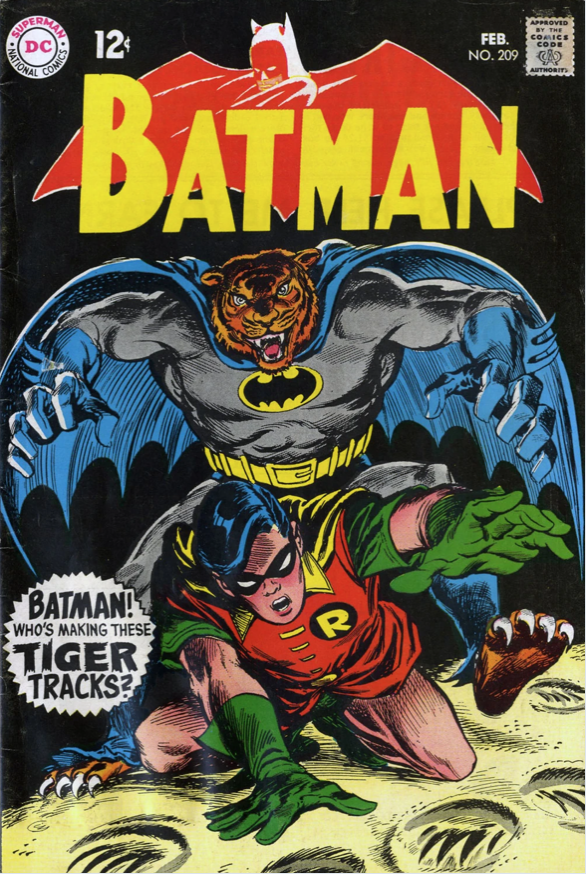
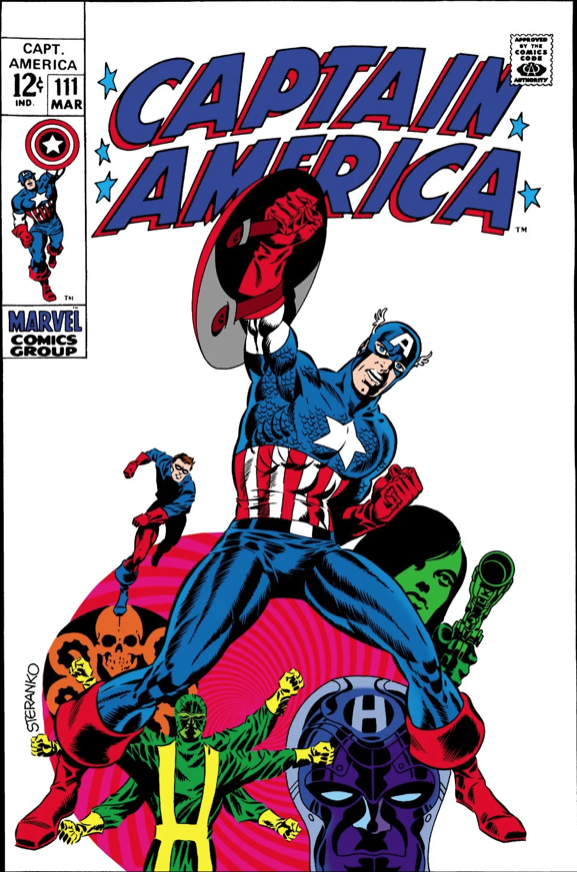
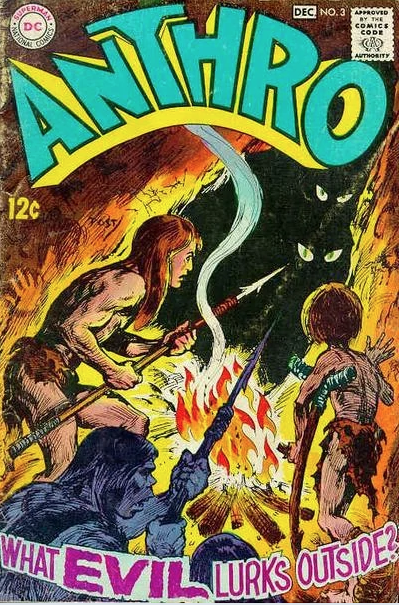
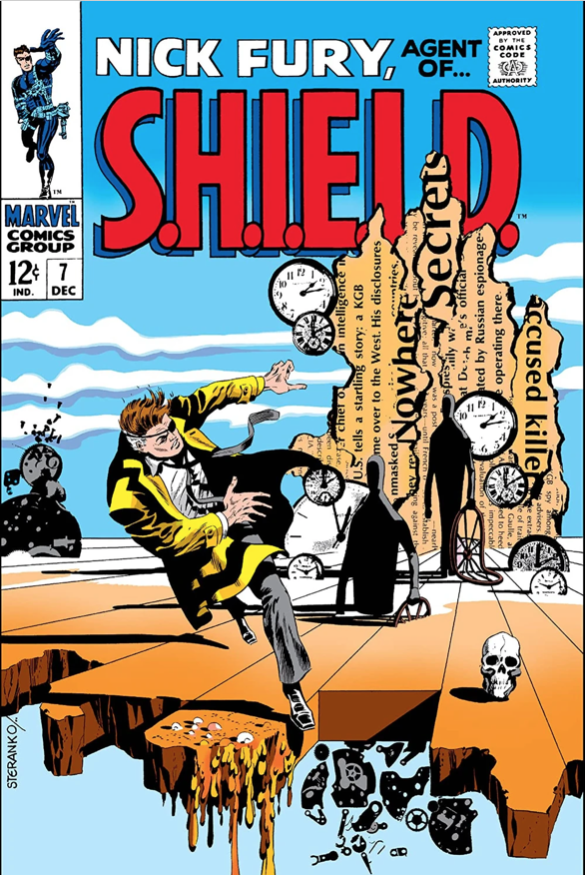
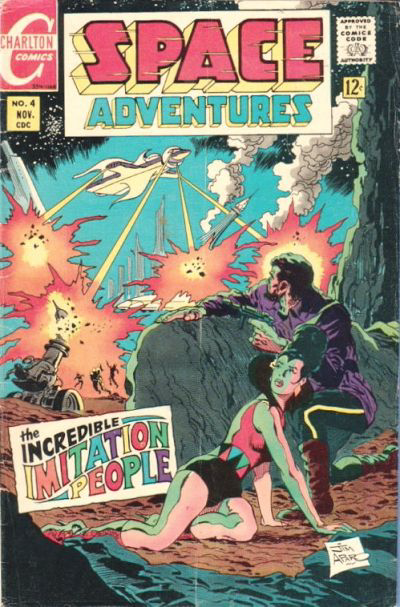
What other comics were on sale in June of 1969? (Covers by Adams, Frazetta and Kubert)
Next issue: The Thing is enslaved on a Skrull planet!
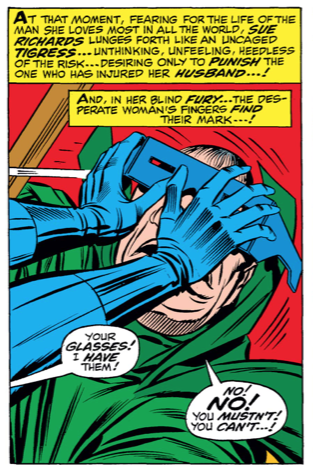
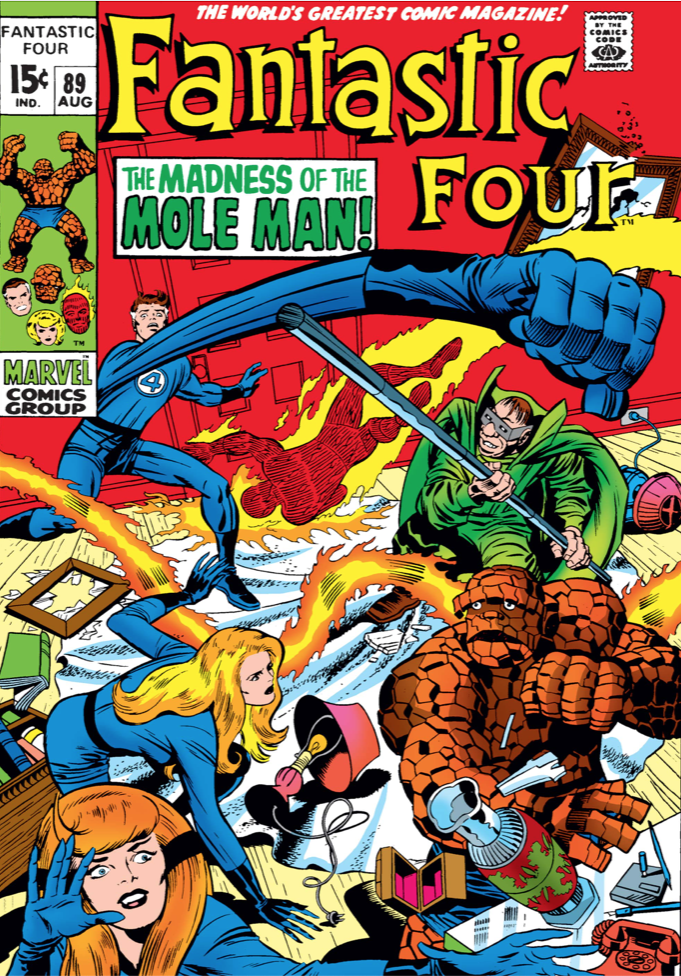
Fantastic Four 89 “The Madness of the Mole Man!” Published May 1969 Story: Stan Lee and Jack Kirby Script: Lee Pencils: Kirby Inks: Joe Sinnott Letters: Sam Rosen Cover: Kirby and Sinnott
Synopsis
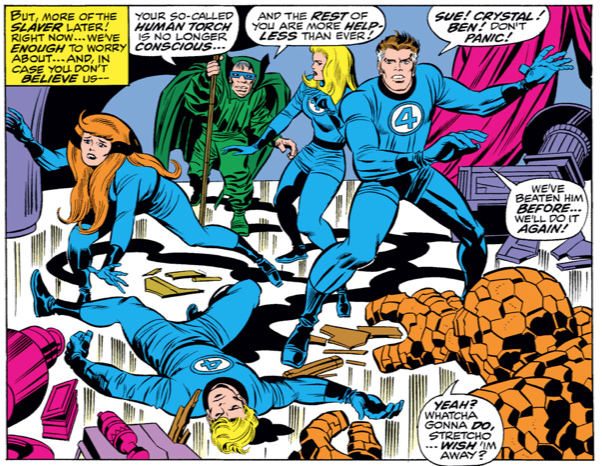
This issues picks up where issue 88 left off, sort of. The Thing is now at the Richards’ new house and under attack by the Mole Man, when last issue he very clearly was not present. Now he and the rest of the team are blinded and stumble about trying to defeat the Mole Man. The Mole Man has the upper hand until Mr. Fantastic tricks him into damaging his staff, and the Invisible Girl removes his glasses, rendering him helpless. Reed is badly injured, but revived by Ben.
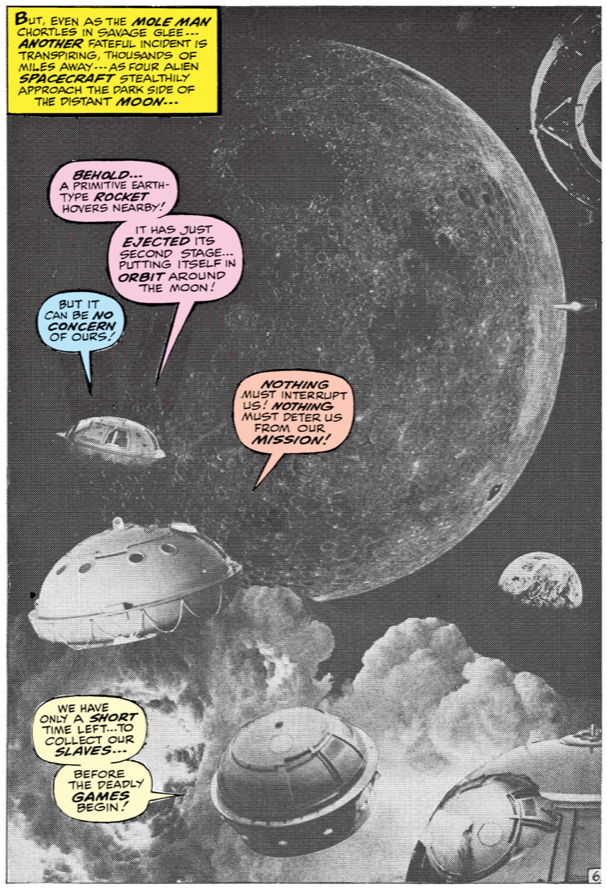
A new subplot introduces a Skull “slaver” who is traveling to earth to abduct an unnamed contestant to compere in the Skrull’s games. Who could it be?
What’s going on here?
I hate to say it, but this issue is a dud. Last issue had a fun set-up and revealed a genuinely surprising villain, but this comic took a turn to the pedestrian. Most of the issue is a simple fight between the Mole Man and the FF and even blinded, it shouldn’t have been that difficult for them to overcome a non-powered human. I can think of half a dozen ways Reed could have concocted to end the fight much earlier, leaving room for a more interesting twist. And not only is there a very obvious continuity error of including Ben in the battle, when he was supposed to be in the city, but Stan and Jack chose not to include Alicia in the story, whose blindness surely would have made the story more interesting. What better answer for a villain who wants to turn the world blind than a character who already is blind?
More interesting was the tease for next issue’s story featuring the skulls. Although just three pages, two were splashes, and together they promised more drama and fun than the turgid story we were reading.
The Space Race
The Skull subplot features a rare Kirby collage—we haven’t seen one of these in a while—and a reference to the Apollo missions, which were building to the first moon landing in a few months.
It becomes more obvious in the next panel:
I love you, man!
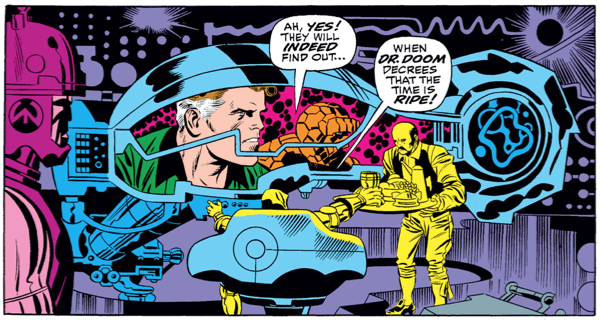
FF 89 also features a declaration of Ben’s affection for Reed. It would be more poignant if the outcome —Reed is going to be OK!—didn’t seem so obvious.
The sexist sixties
Sue can’t just fight bad guys like normal hero. She has to be “an uncaged tigress.”
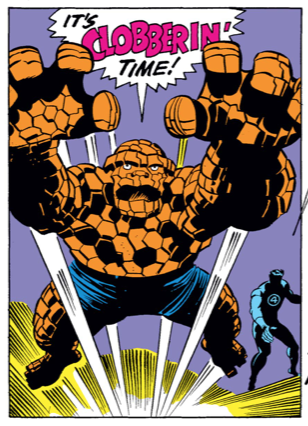
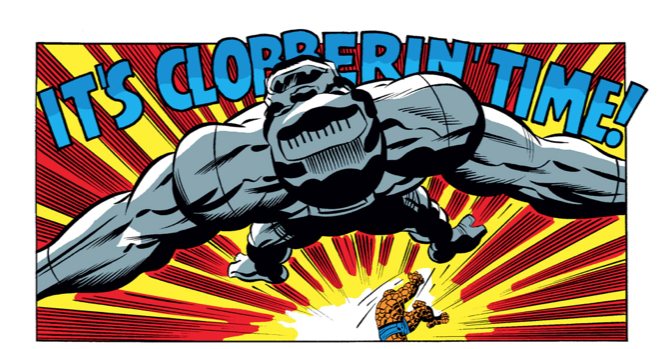
It’s Clobberin’ Time
Even this seems sort of lackluster.
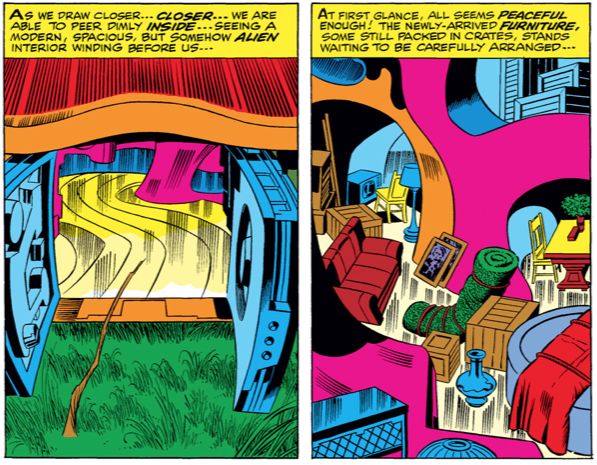
Mid-century Modern
It’s hard to believe Reed and Sue were really going to live in this place, but they brought all their stuff.
We Get Letters
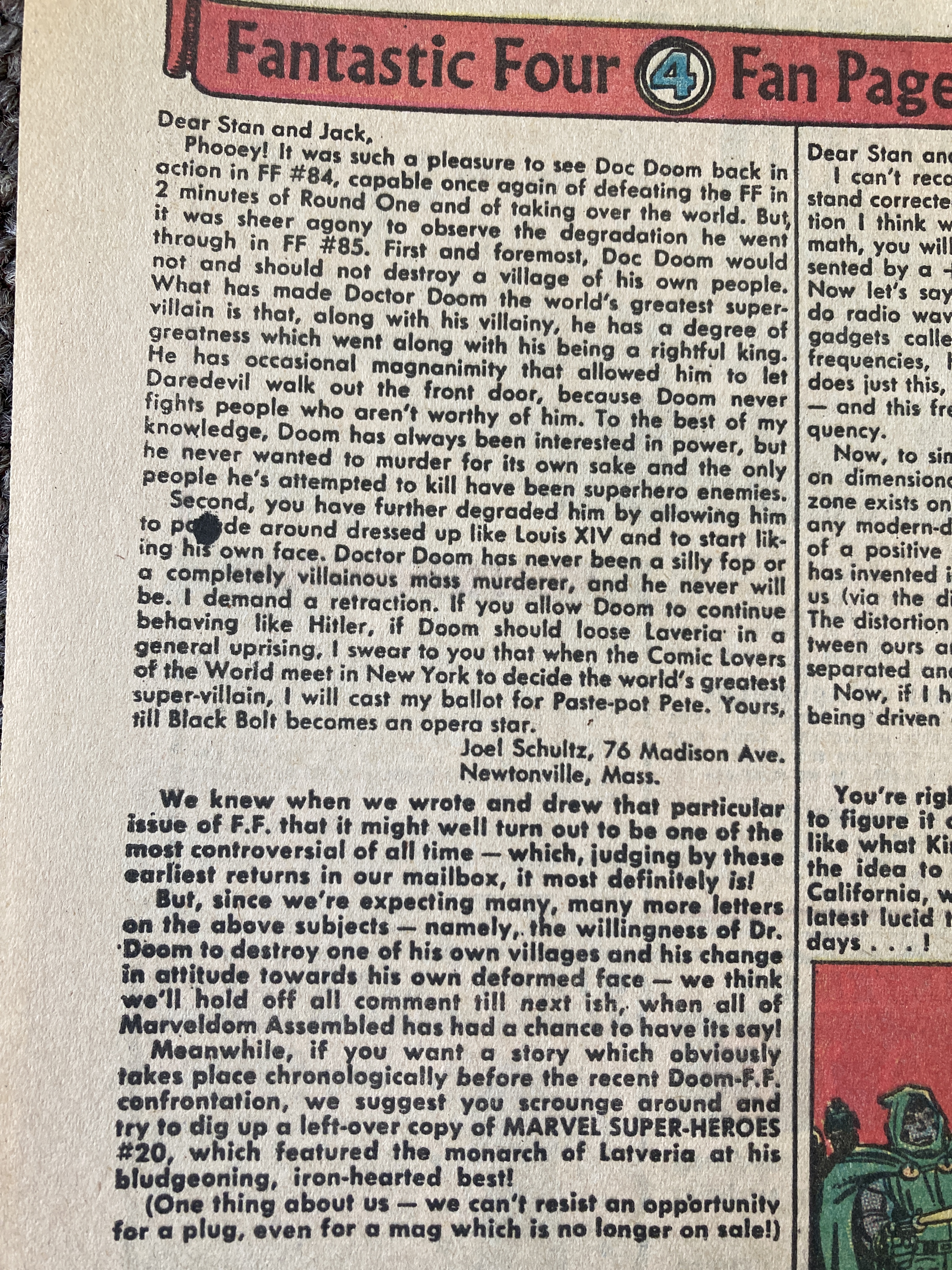
And I thought Doom-stans were a 21st century phenomenon.
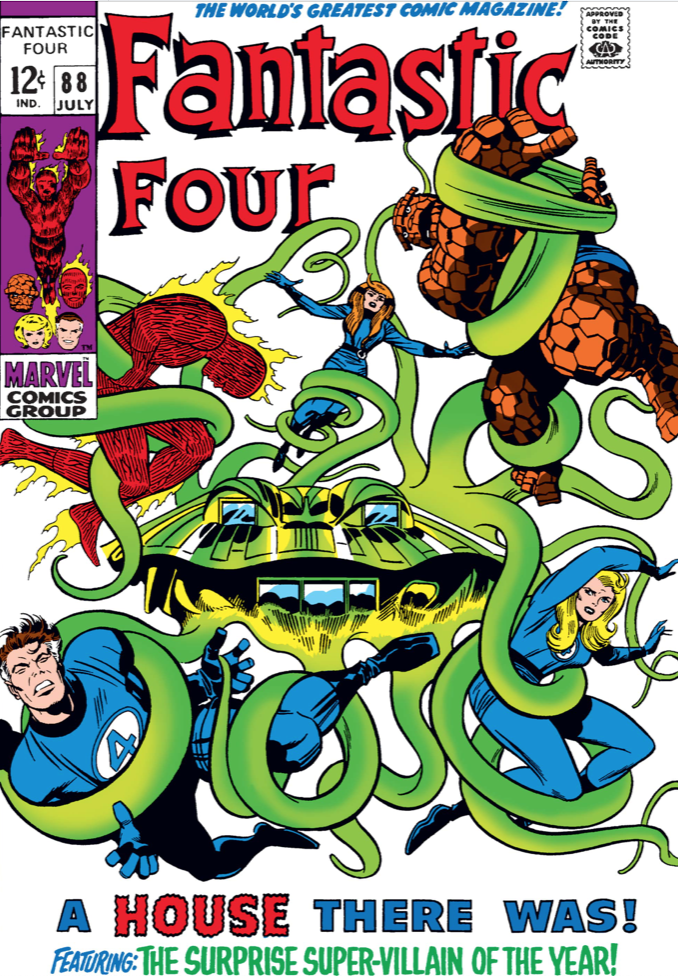
Fantastic Four 88 “A House There Was!” Published April 1969 Story: Stan Lee and Jack Kirby Script: Lee Pencils: Kirby Inks: Joe Sinnott Letters: Sam Rosen Cover: Kirby and Sinnott
Synopsis
The Fantastic Four, which now includes Crystal, arrive back at the Baxter Building following their adventure in Latveria and greet Alicia, who is watching the still-unnamed baby of Mr. Fantastic and the Invisible Girl. After a joyful reunion, the team then heads off to inspect the suburban house Sue first visited a few issues ago, and which has featured in some forboding vignettes in subsequent issues.
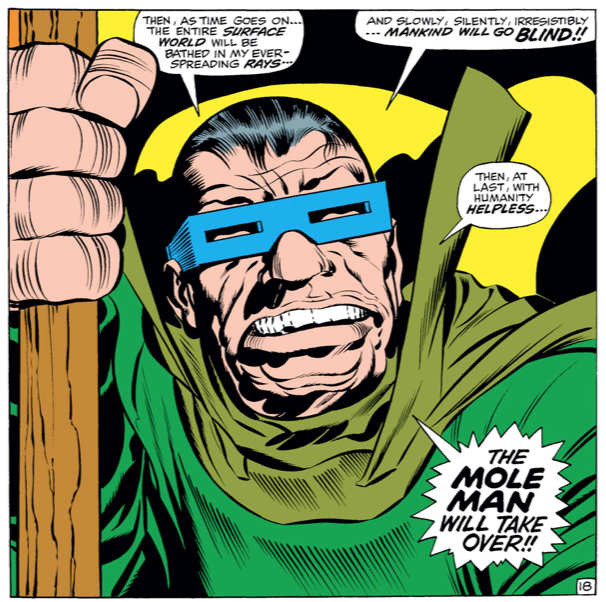
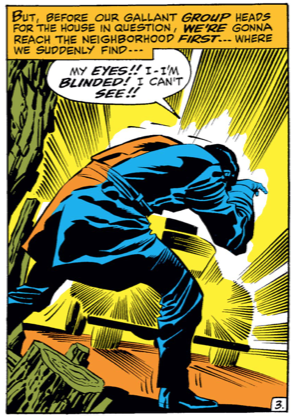
The house, which is mostly subterranean and unusual in almost every way, emits a low-level buzzing, and seems to affect the eyesight of the FF members, yet despite all that, Reed and Sue buy it and begin to move in. Reed, however, is attacked by the house’s security system when he attempts to drill holes in its walls. It is then revealed the house is connected to the Mole Man and his plan to conquer the surface world by blinding everyone. On the last page, the FF (minus Ben, who is remaining in the city with the baby and Alicia) are blinded as the Mole Man reveals himself.
What’s going on here?
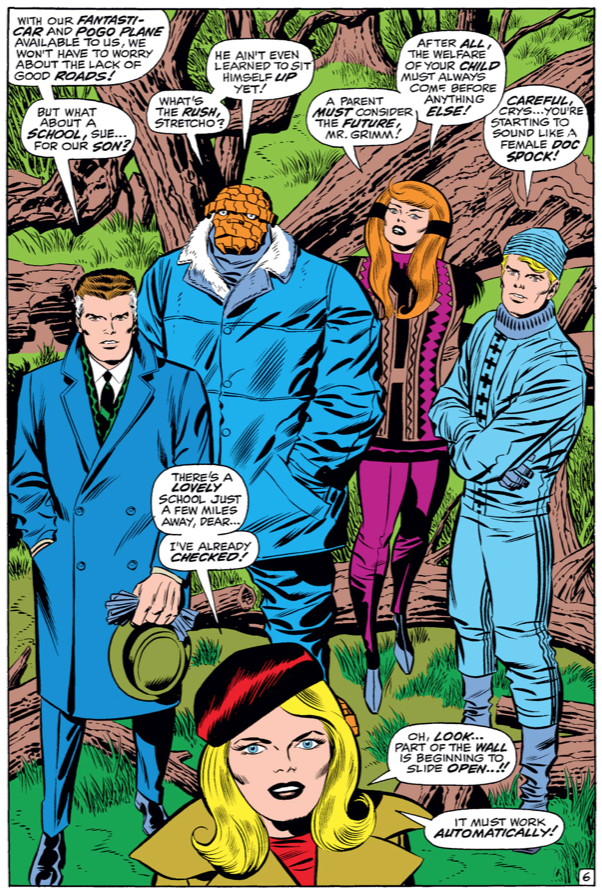
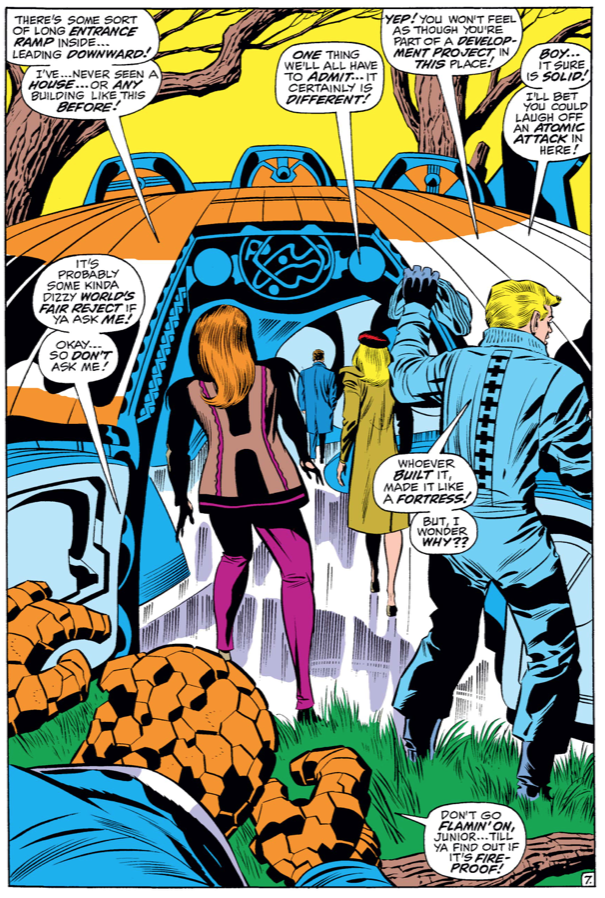
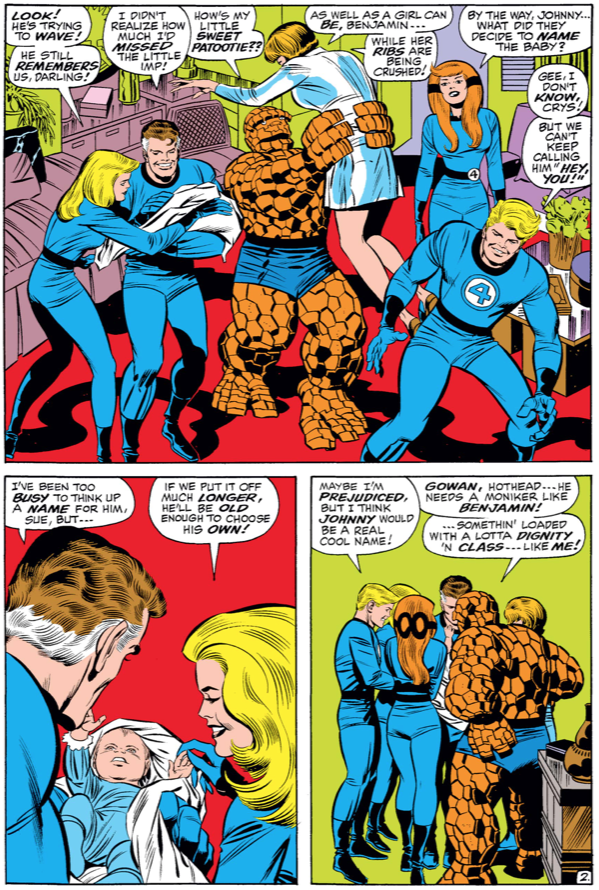
There’s a lot to like about this issue. After the high drama and high stakes of the last four issues, the team needs time to relax at home, and the first few pages show the Fantastic Four as a family, cooing over the baby and gently teasing each other. The house-hunting excursion (which was preceded by hints over the last few issues that something wasn’t right about the house) has the feel of the prelude to a horror story, with an oblivious family stepping into something evil. And Jack seems to have a lot of fun drawing both the extremely modern house, and the clothes the FF are wearing on the visit.
There are, of course, some inexplicable plot developments, like why Reed and Sue buy a house that gives them headaches and blurry vision.
The Mole Man is a genuinely surprising villain (as teased on the cover) and so surprising I forgot he was in it since the first time I read it. His connection to the house isn’t made very clear, and it seems odd that the FF should stumble into a trap he didn’t lay for them, but crazy coincidences are pretty standard for this comic at the point.
Dynamite threads!
Jack drew back-to-back splash pages which both show off the FF’s amazing outfits (what exactly is Crystal wearing?) and create tension as they enter the house.
Domestic bliss
These scenes are quite charming and really drive home that the team is first and foremost a family.
The sexist sixties
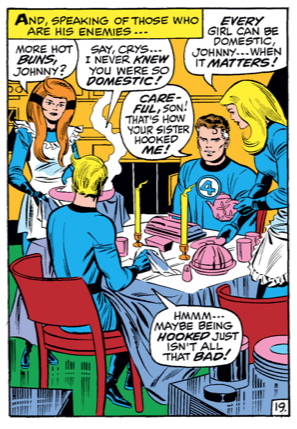
Not only do Sue and Crystal serve the men, but they wear frilly aprons to do so. (I am assuming “hot buns” was not a double entendre).
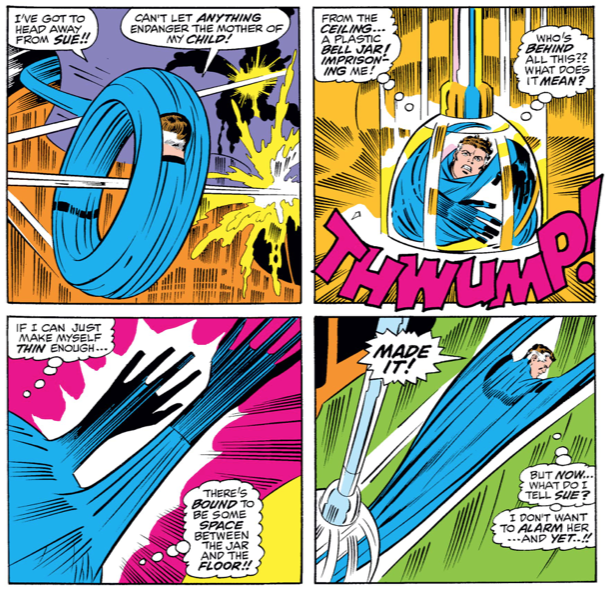
The incredible Mr. Fantastic
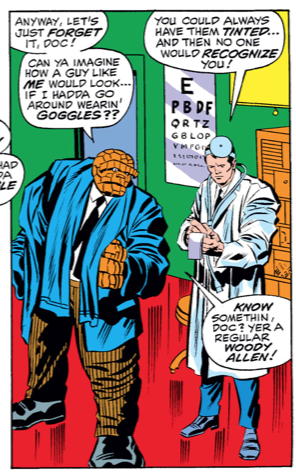
Woody Allen
Another topical reference that hasn’t aged that well.
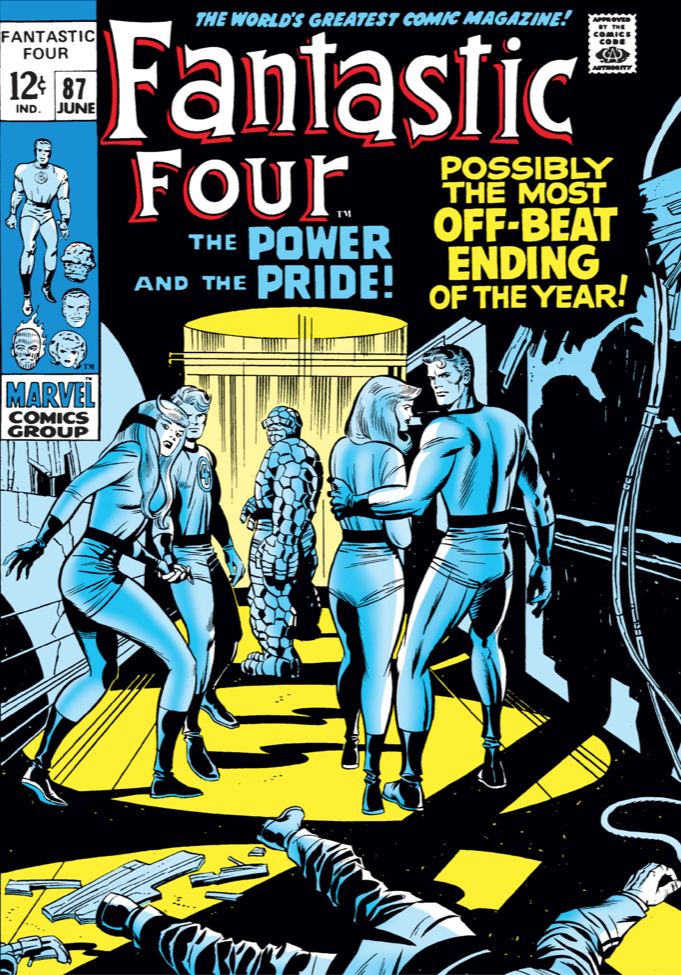
Fantastic Four 87 “The Power and the Pride” Published March 1969 Story: Stan Lee and Jack Kirby Script: Lee Pencil: Kirby Inks: Joe Sinnott Letters: Artie Simek Cover: Kirby and Sinnott
Synopsis
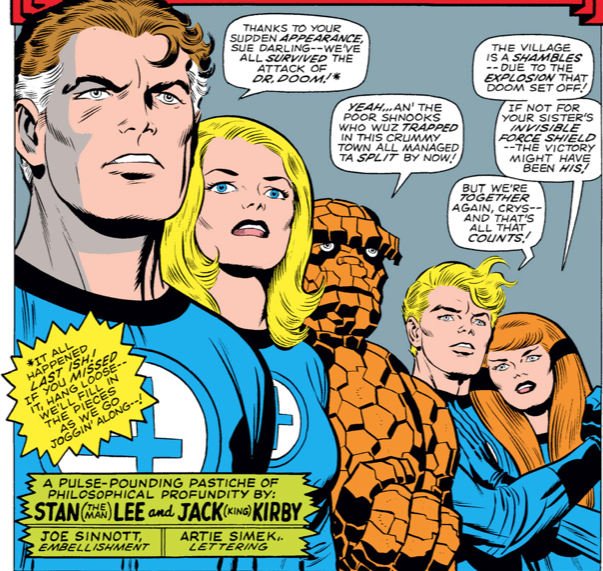
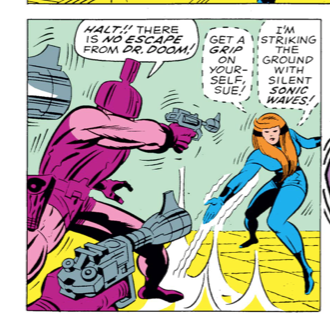
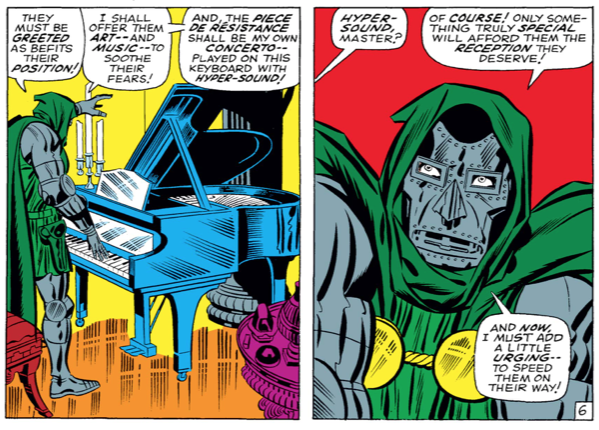
The issue immediately follows the events of the last issue, when the Invisible Girl showed up to save the team from destruction in Latveria. Now, the team—reunited and with Crystal—prepares to take on Dr. Doom in his castle. Doom, however, welcomes their incursion, as he plans to destroy them with a piano that emts “hyper-sound.” That’s right, a super piano.
As the FF crosses the drawbridge, a trap door opens and Sue and Crystal are whisked inside the castle. When the Thing tries to open the door, a booby-trap sends him, Mr. Fantastic and the Human Torch to the castle’s roof, where a “air gun” fires on the Torch. As Ben and Reed battle their way in, Sue and Crystal eventually find themselves before Doom, where he invites them to a feast.
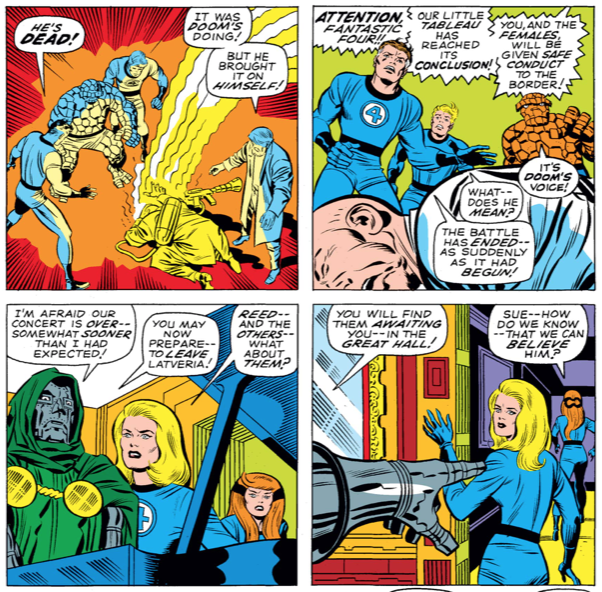
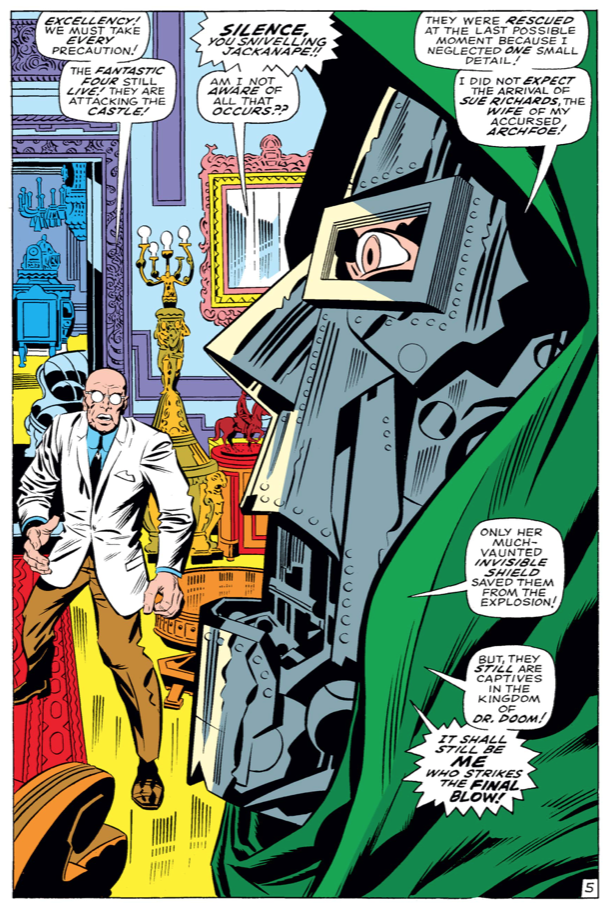
Meanwhile, Doom”s lackey, Hauptmann, has discovered Doom’s portrait artist and art curator is a secret agent of SHIELD, and prepares to incinerate him and Doom’s priceless collection of artwork. Doom is horrified at the thought of his art being destroyed and uses the hyper-sound piano to kill Hauptmann instead. Then, seemingly bored with it all, Doom gives the FF safe passage to leave Latveria and instead of pushing their advantage, the team exits.
What’s going on here
As genuinely suspenseful and thrilling as last issue was, Fantastic Four 87 is as unsatisfying and anti-climactic. The finale of a four-issue arc that brought the FF to Latveria only to be tormented by Dr. Doom, we’ve been primed for a confrontation between our heroes and their nemesis. Instead, we get a plot that turns on an incoherent narrative about Hauptmann and concludes with a fizzle. The ending is reminiscent to the poorly-paced FF stories from the early 60s where Stan and Jack would cram fives pages worth of story into the last page.
Further, much about the story makes little sense. Reed and Doom both maintain the FF are still prisoners in Latveria, but it’s not obvious how; they have their powers back and they are no longer mind-controlled. And then, just as the FF have battled their way into Doom’s stronghold, they seem willing to abandon the fight just because Doom has lost interest. Why not press on and capture Doom?
It’s hard to not to feel Stan and Jack just mailed this one in.
The Feasts of Doom
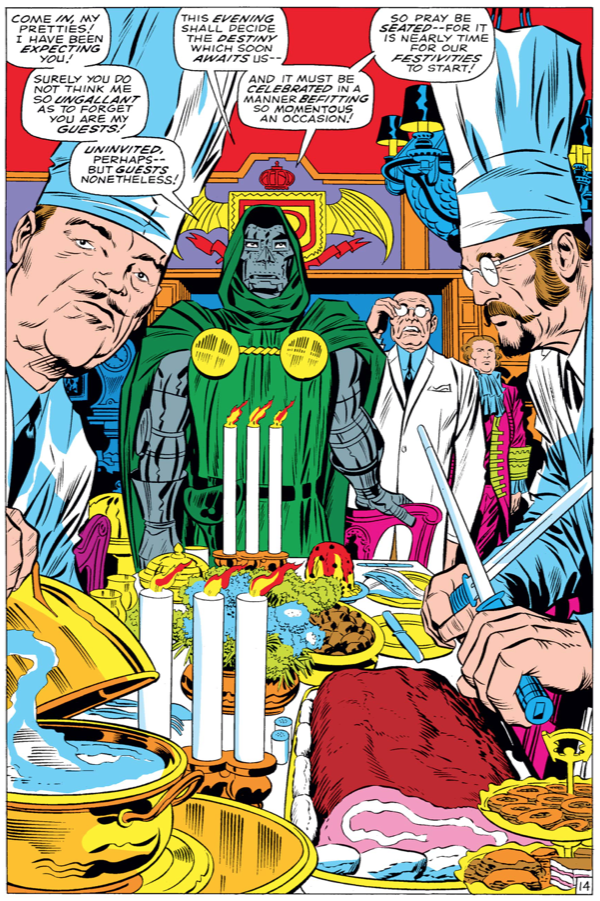
Fantastic Four 87 features a splash page of Doom welcoming Sue and Crystal to join him with an extravagant feast before him.
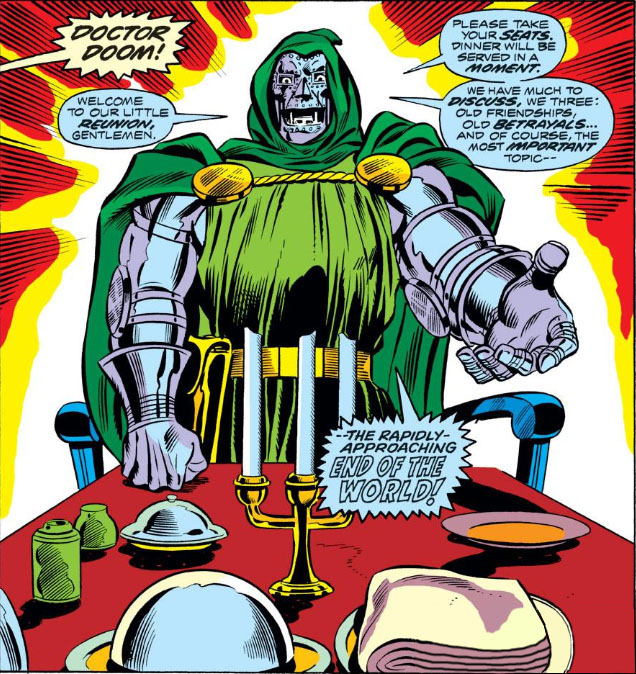
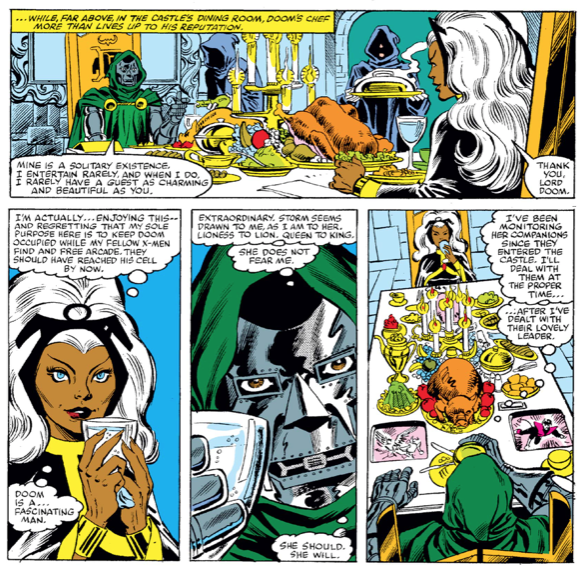
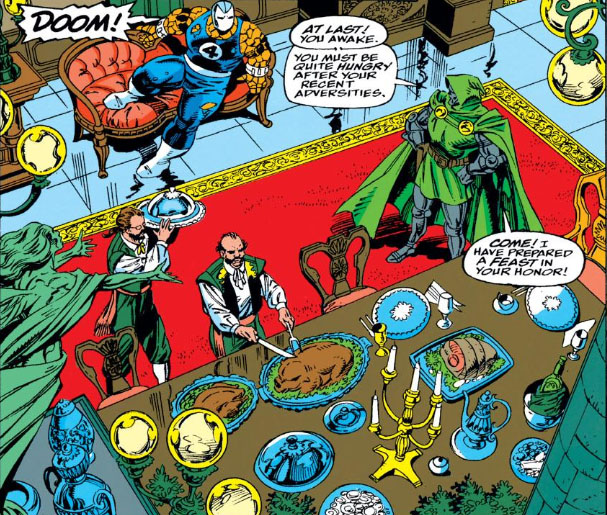
Doom hosting his friends, enemies and frenemies with lavish meals has become something of a Marvel comics trope. Here are a few examples from over the years.
Here, Doom surprises Reed at a Empire State University reunion (Doom is a fellow alum, after all):
Fantastic Four 142 (1973, Gerry Conway, Rich Buckler and Joe Sinnott)
At his castle in the Adirondack, he hosts Storm:
Uncanny X-Men 145 (1981, Chris Claremont, Dave Cockrum and Joe Rubinstien)
In Latveria, Ben is offered a solo feast:
FF 380 (1993, by Tom DeFalco, Paul Ryan and Danny Bulanadi)
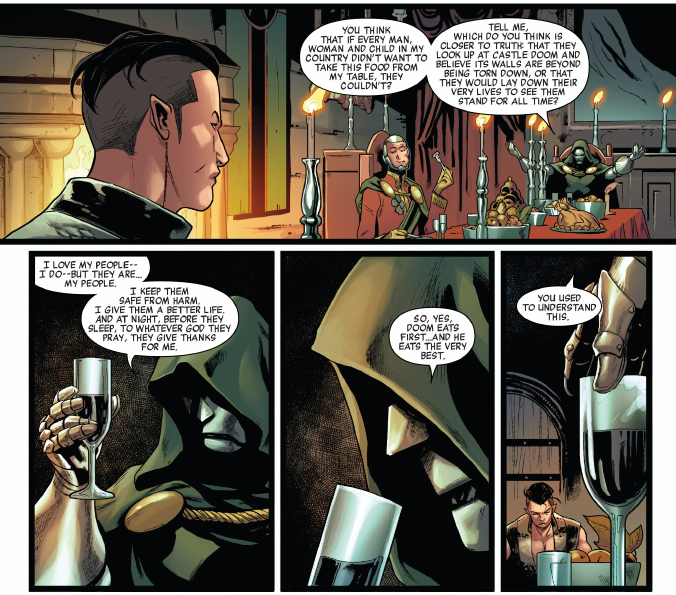
Doom offers Namor a lesson on the rights of kings over a meal.
New Avengers 24 (Vol. 5) (2014, Johnathan Hickman, Valerio Schiti and Joe Caramagna)
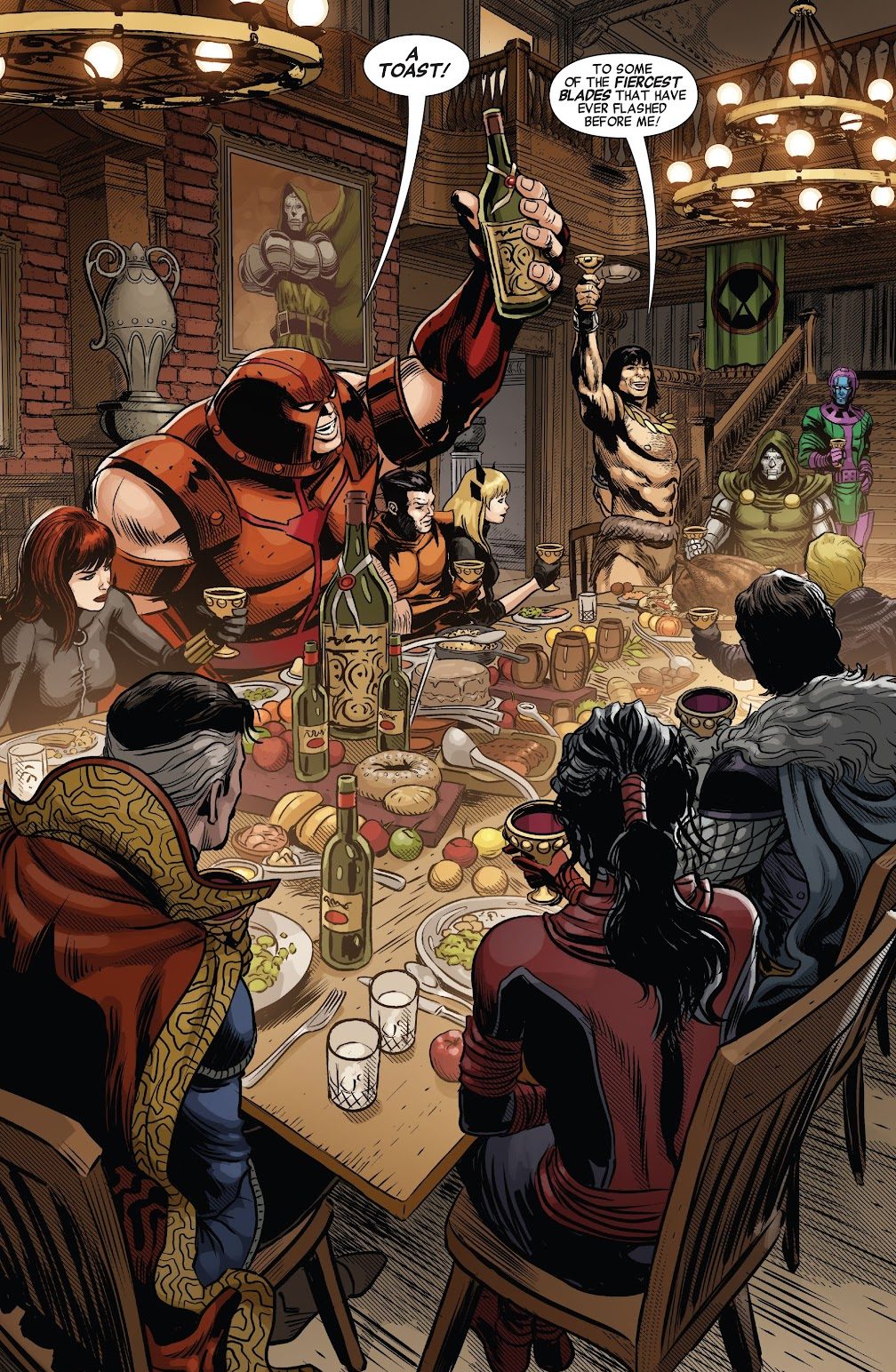
And here he hosts the Savage Avengers after they have triumphed over Kulan Gath (this team’s lineup is extremely eclectic):Savage Avengers 27 (2021, Gerry Duggan and Patrick Zircher)
Nazis! I hate these guys!
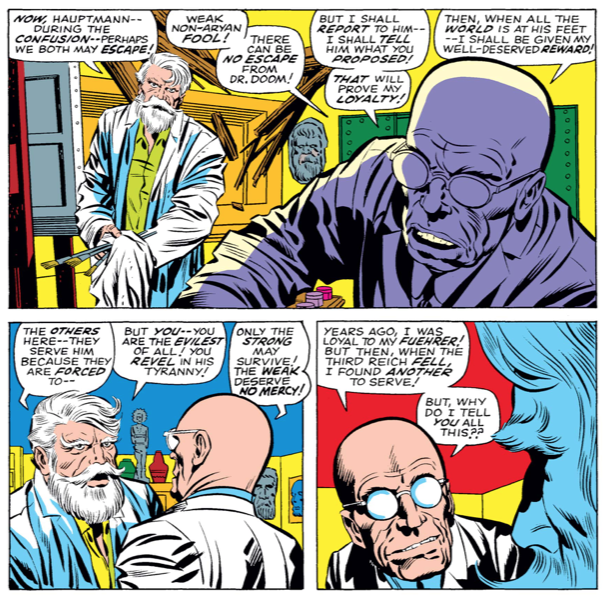
In FF 87, we find out that Doom’s toady, Gustav Hauptmann, was a Nazi who worked for Hitler. (Incidentally, his death in this issue complicates his reappearance in FF 258 (as discussed here) but that Hauptmann was apparently his brother, Gert Hauptmann.)
Mrs. Who?
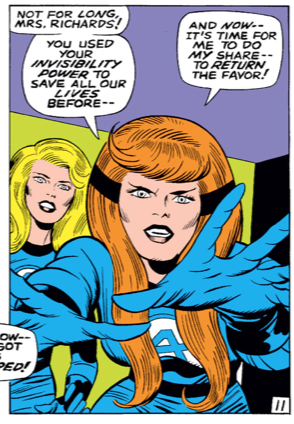
Crystal initially shows Sue proper respect and calls her “Mrs. Richards” but a few panels later they are on a more familiar basis.
Weird science
Here’s that hyper-sound piano.
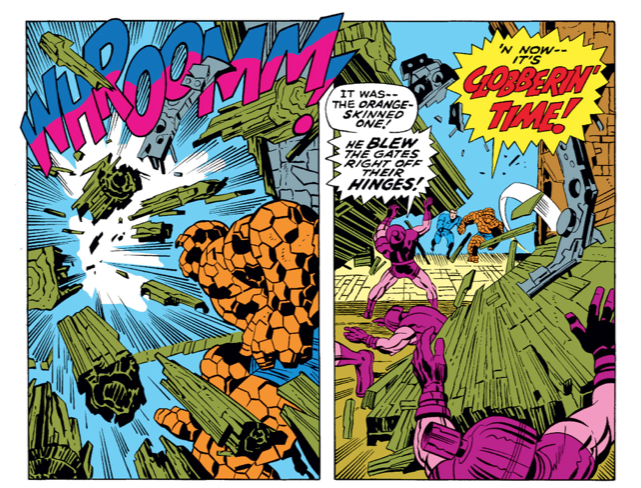
It’s Clobberin’ Time
Ben apparently now has super-breath. No sign of X-ray or heat vision yet.
Dig that Kirby Krackle
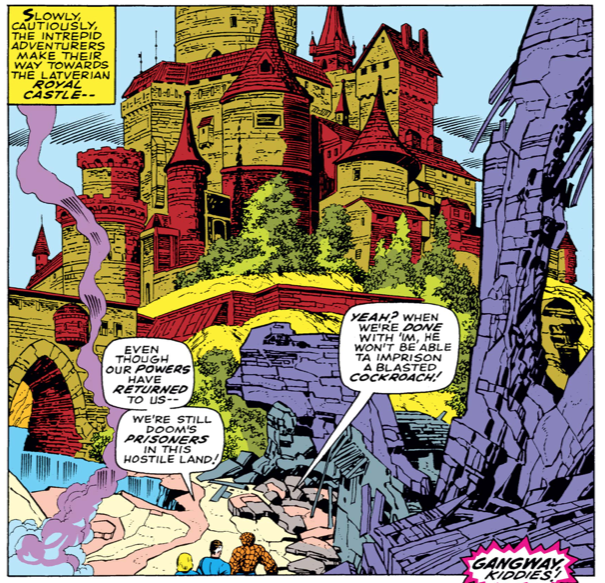
Another cool Doom splash:
Another postcard from scenic Latveria:
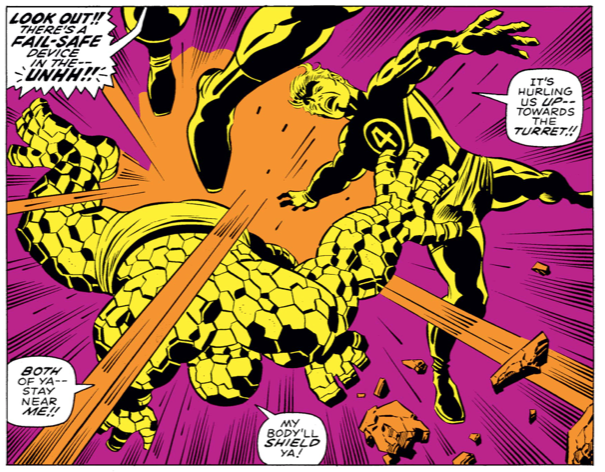
And a cool panel (with lots of credit to Joe Sinnott):
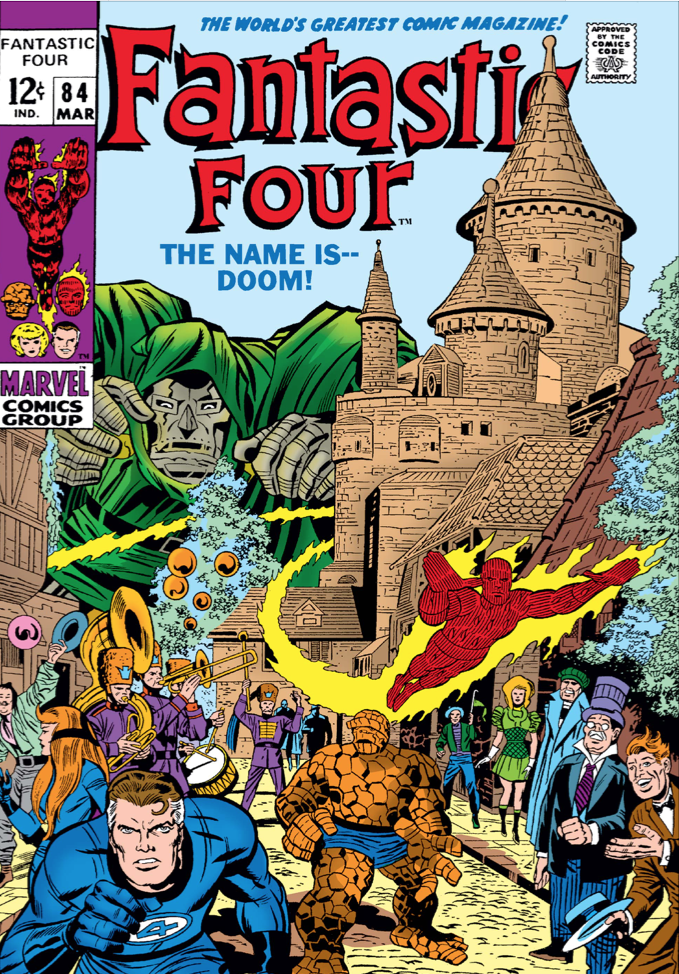
Fantastic Four 84 “The Name is Doom!” Published Dec. 1968 Story: Stan Lee and Jack Kirby Script: Lee Pencils: Kirby Inks: Joe Sinnott Letters: Sam Rosen Cover: Kirby and Sinnott
Synopsis
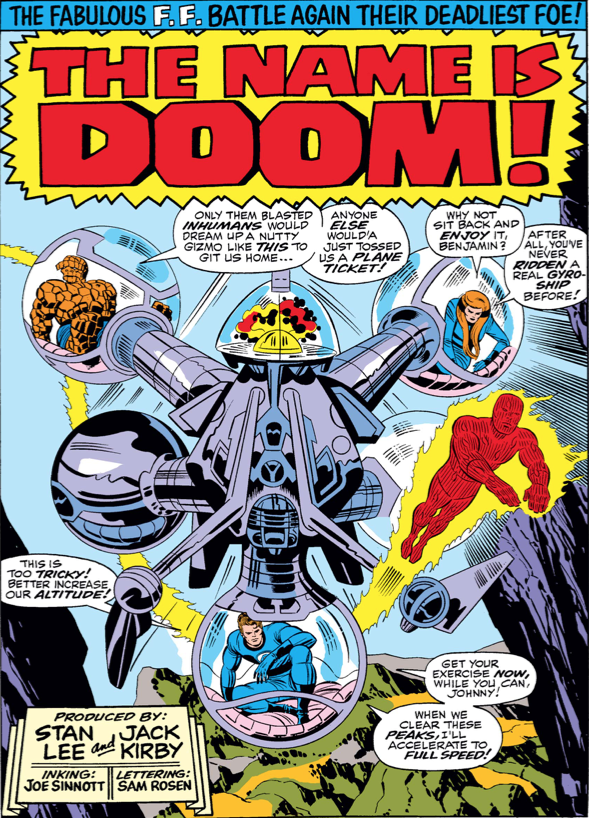
After their adventure with the Inhumans last issue, the Fantastic Four—Mr. Fantastic, the Thing, the Human Torch and Crystal filling in for the Invisible Girl—are flying back home through the Himalayas in a “gyro-ship,” a gift from Inhuman king Black Bolt. They are intercepted by Nick Fury and Dum Dum Dugan of Shield, who need the FF’s help with a secret army amassing in Europe. As Fury shows the FF a robot arm sent by a Shield agent, the arm takes on a life of its own, grabbing a gun and blasting the FF before Johnny destroys it.
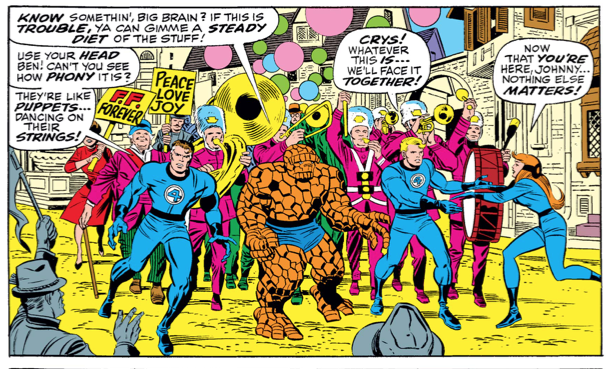
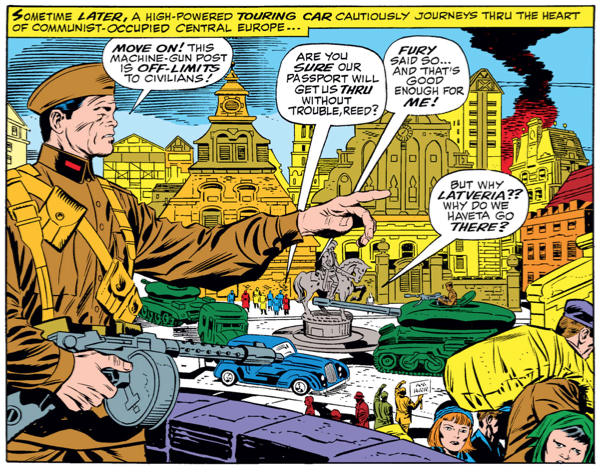
Reed suspects the robot is the handiwork of Dr. Doom, and the team travels incognito from a neighboring Communist country to Latveria, where their car is quickly destroyed and they are surrounded by Doom’s robots. While Reed urges the team not to fight back—his plan is for them to be captured to learn Doom’s secrets—Johnny attacks when they seize Crystal, and the rest of the team battles back before they are subdued. The team awakens in a comfortable inn, and are greeted warmly by Latverians. Doom, monitoring them, reveals they have been hypnotized into not using their powers
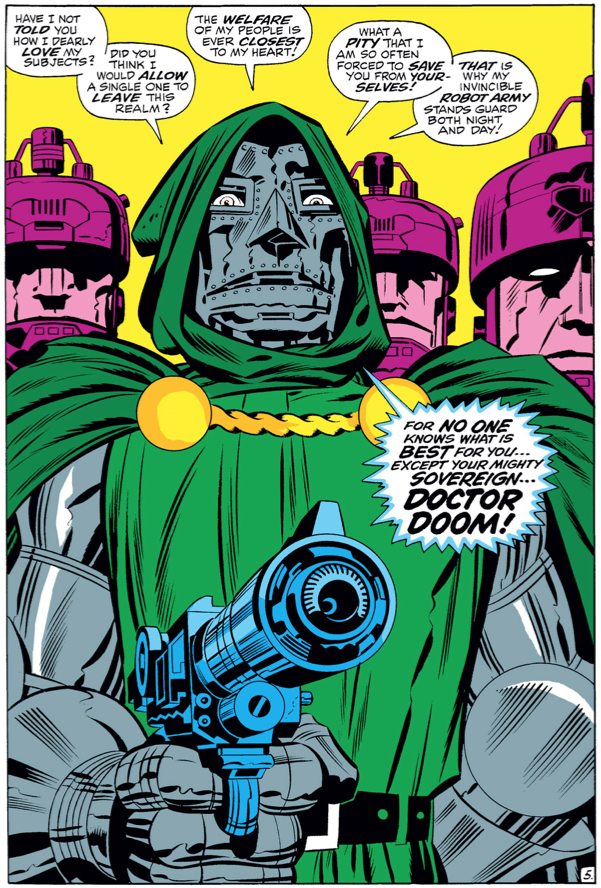
Eventually they are reunited with Crystal in a town square, and only when Reed attempts to escape does Doom warn the FF that they must remain in Latveria as his prisoners, where they must be happy or die.
What’s going on here?
This is a promising set-up for a Doom story, with Doom engaged in his typically sinister machinations, this time with Latveria as the backdrop. While we’ve seen Latveria before, this is the first time the FF (or readers) have spent much time with Latverians, and it adds to the more nuanced view of Doom and Latveria that Marvel writers have developed over the years. Yes, Doom is an absolute monarch and a dictator, but he ensures his people are cared for and happy, provoking questions about security vs. freedom. It’s a bit of a simple construct for political analysis, but hey, it’s a comic book.
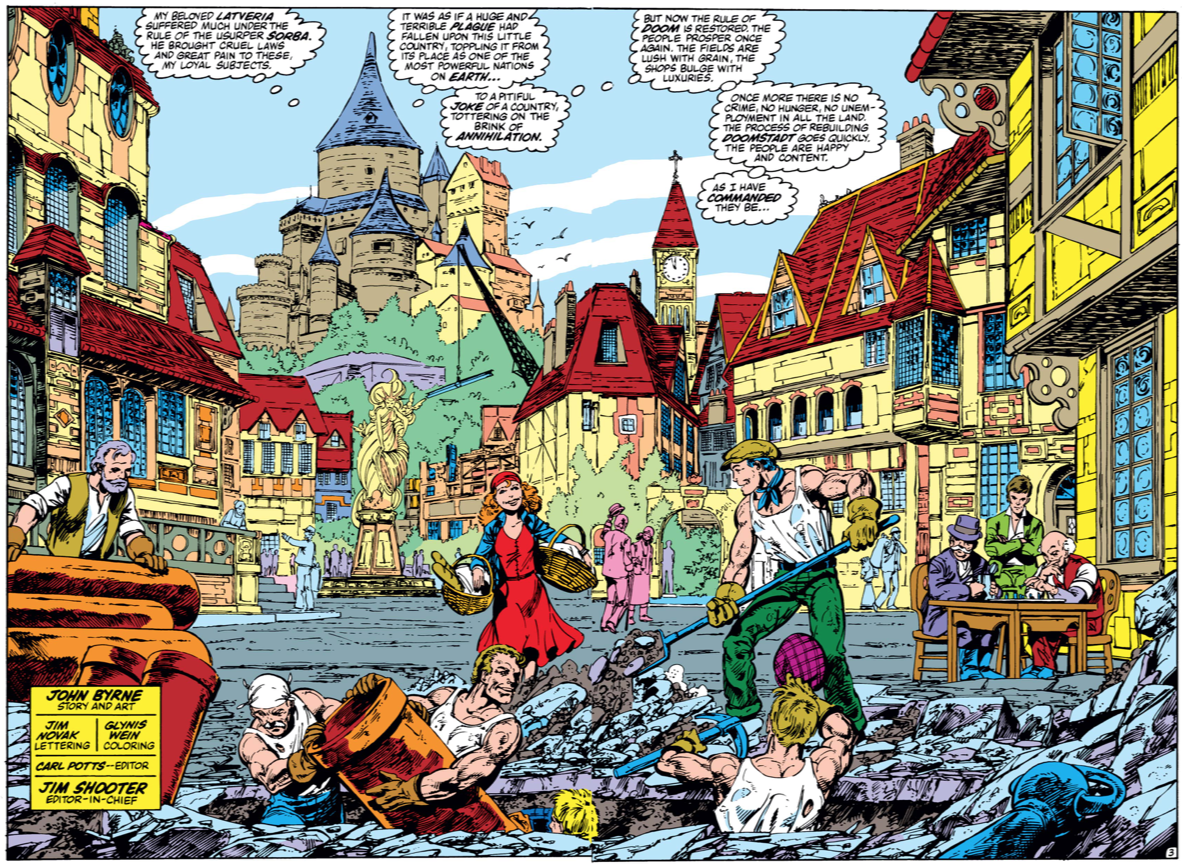
There have been too many depictions of Latveria and Doomstadt to count, but they generally use the template established here by Stan and Jack, of a kind of story-book, fairy-tale European kingdom. John Byrne took the ball and ran with it here in FF 258 (from 1983). In Latveria, the men are all strong, the women are all pretty and the children are all above average. Just don’t ask too many questions.
Where are we?
Geographically, we are told in this issue Latveria lies “deep in the heart of the Balkans,” which is more or less consistent with how it’s described over the years and where it’s depicted in a Marvel Universe map from 1987.
Yet here in FF 84 a dissident tries to escape via the sea. At least it looks like the sea. Maybe it’s a big lake.
The sexist sixties
The comic again pays short shrift to Sue and her (still) unnamed baby. Reed at one point mentions he’d like to go home and see his baby, but he is overruled by Nick Fury, who seems to command anyone at will. Well, at least he tried.
Deus Ex Fury
Fury’s appearance here is typical of how he’s used in many Fantastic Four (and Avenger) comics over the years: He shows up briefly, asks he super-team to investigate someting, then vanishes. It’s an effective way to getting the plot rolling, even if it becomes a bit of a cliche.
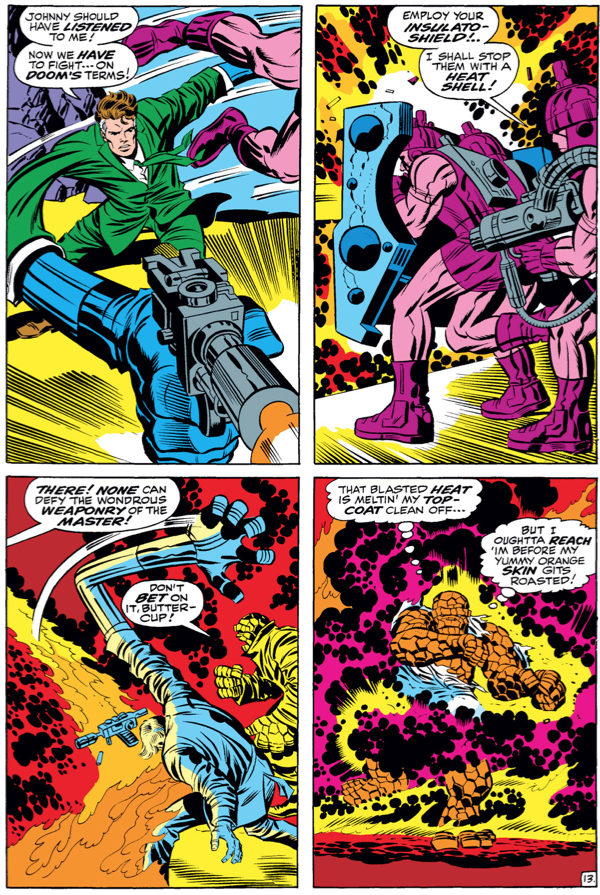
It’s Clobberin’ Time
Indeed it is.
Red Menace
A reminder that it’s still the Cold War.
Dig that Kirby Krackle
Here’s a totally nuts opening splash page:
Plus another excellent splash:
This is an outstanding page:
And a cool panel:
Also on sale
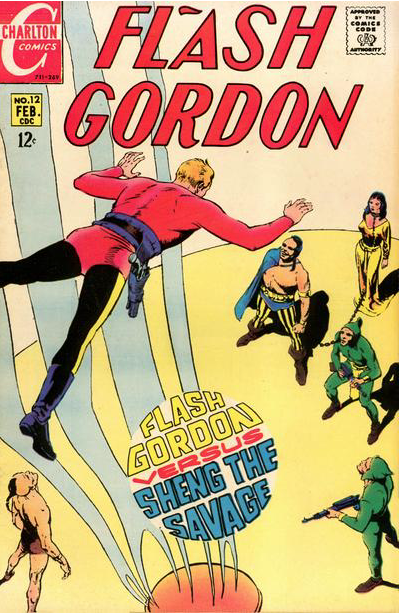
What else was on the newsstands on December 1968? (Sheng the Savage is not to be confused with Ming the Merciless).
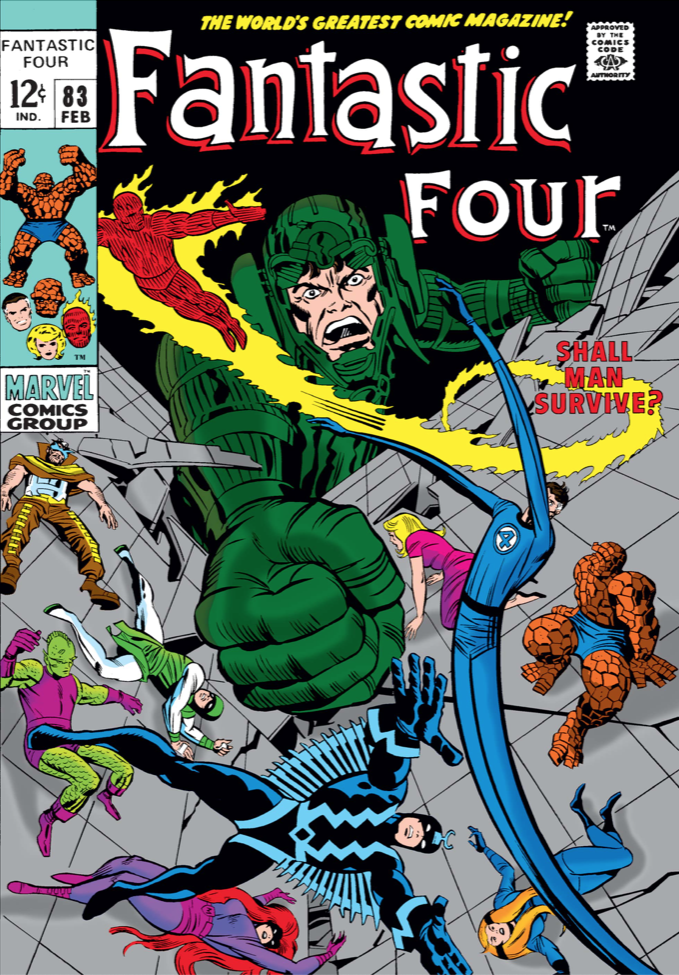
Fantastic Four 83 “Shall Man Survive?” Published November 1968 Story: Stan Lee and Jack Kirby Script: Lee Pencils: Kirby Inks: Joe Sinnott Letters: Sam Rosen Cover: Kirby and Sinnott
Synopsis
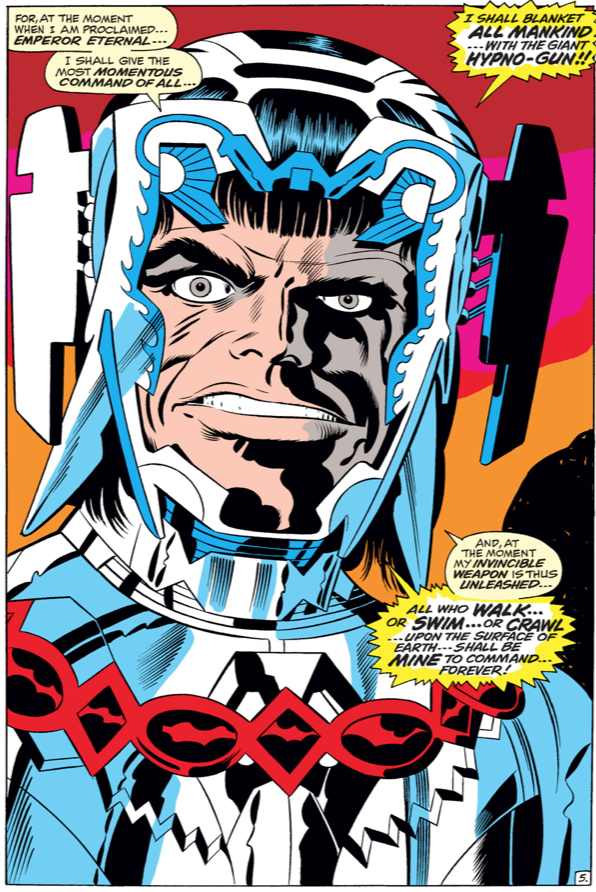
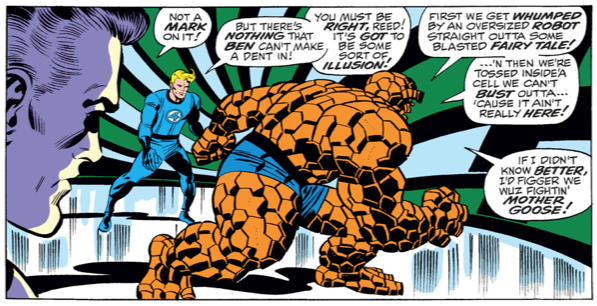
After the events of last issue, in which Maximus the Mad imprisoned the Inhumans and the Fantastic Four, Mr. Fantastic, the Human Torch and the Thing attempt to escape a sealed room, but can’t because Maximus’s hypno-rays leave unable to fully use their powers.
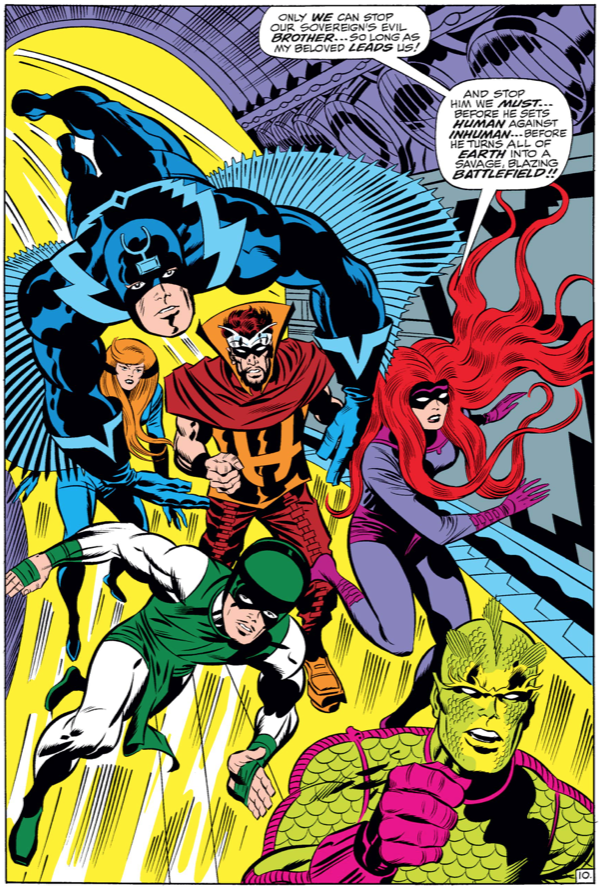
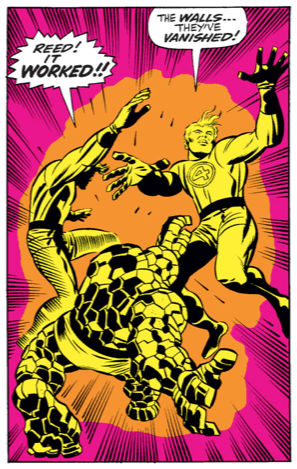
Elsewhere, as Maximus prepares to unleash his hypno-gun on humanity and conquer the earth, Black Bolt uses his voice power to shatter the glass enclosure, freeing the rest of the Inhumans. Separately, the Fantastic Four breaks free after Reed convinces Ben and Johnny to concentrate and realize they weren’t actually trapped. The three then quickly defeat Zorr, Maximus’s robot, before it can use the hypo-powers that beat them last issue.
The Inhuman and the FF then converge on Maximus, and as Crystal destroys his hypno-gun, Maximus escapes.
What’s going on here?
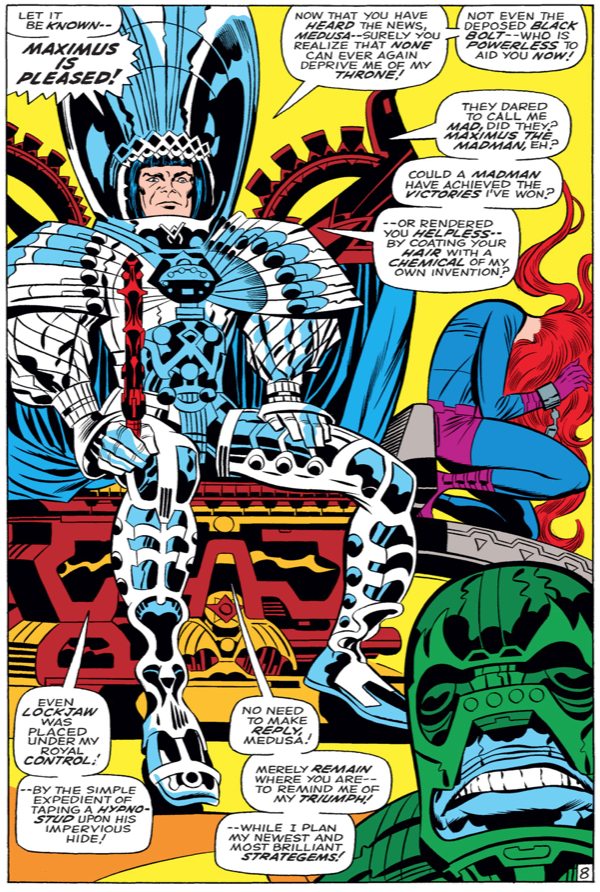
Fantastic Four 83 is a mostly satisfying conclusion to the events of last issue. It’s full of action, has some fun art, and lots of Ben cracking wise. The Inhumans’ escape seems a bit too easy—surely Maximus would have accounted for Black Bolt’s voice—and ultimately Maximus’s plan is foiled without much trouble. But the story is well paced, and we get a lot of Maximus as a mustache-twirling super villain.
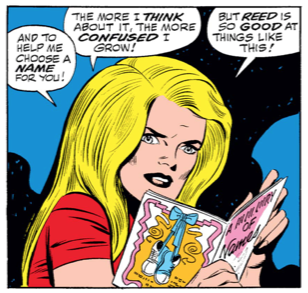
The only big development in FF 83 is we finally see Sue and her baby, three issues after his birth in FF Annual 6. It’s only a few panels, but it’s a sign of life!
Silent Night
Unusually, FF 83 has a long sequence of the Inhumans battling without word balloons, sound effects or narrations. It’s the first time I’ve seen this in the FF, and I wonder if it’s related to Black Bolt’s silence. It reminds me of a sporting event, when the announcers shut up after a big moment (in this case, it was after the Inhumans freed themselves).
Those Wacky Inhumans
Jack clearly has fun coming up with zany Inhuman characters. A centaur, a flying guy, a tree guy etc.
The sexist sixties
This may be the most pathetic example of Sue’s helplessness. I can accept her needing Reed’s help to fight Dr. Doom, but to name a baby????
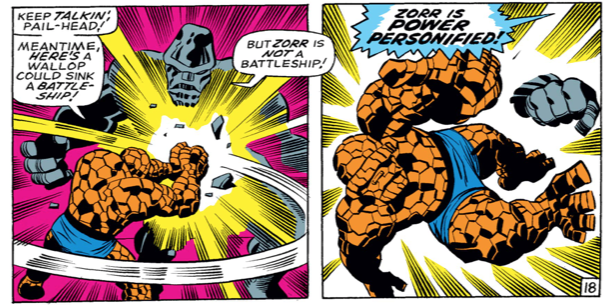
It’s Clobberin’ Time
These get better and better
Reunited
This is a fun panel
Dig that Kirby Krackle
We get two full page splash pages in this issue. If I’m being honest, I don’t love the Inhumans one – Black Bolt’s proportions seem off.
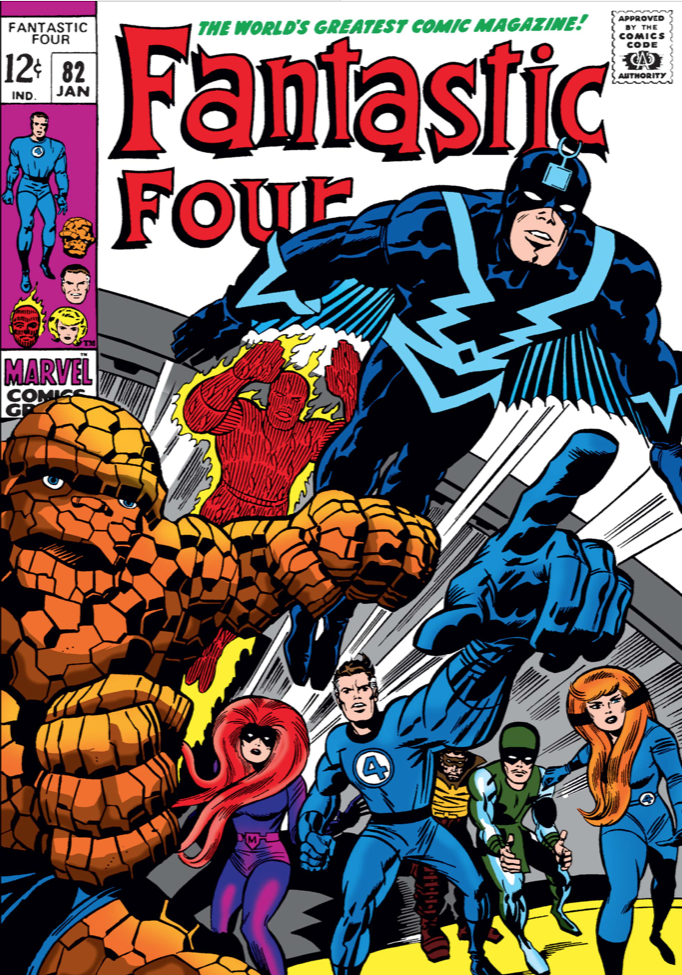
Fantastic Four 82 “The Mark of the .. Madman!” Publiched Oct. 1968 Story: Stan Lee and Jack Kirby Script: Lee Pencils: Kirby Inks: Joe Sinnott Letters: Artie Simek Cover: Kirby and Sinnott
Synopsis
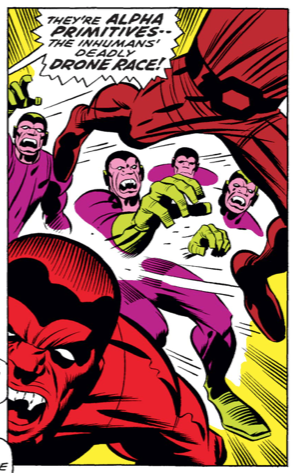
With Crystal now a member of the Fantastic Four—filling in for the Invisible Woman, who recently gave birth—she tells the rest of the team she needs to secure permission from her family, the Inhumans. But as soon as she speaks it, Lockjaw teleports into the Baxter Building, followed by a horde of Alpha Primatives who capture her and disappear with her and Lockjaw. Back at the Inhumans Great Refuge (still not called Attilan), Crystal discovers Maximus the Mad has subdued the rest of the Inhuman Royal family via his “hypno-potions,” and capturing Crystal was his final blow.
Meanwhile, the three male members of the FF pursue Crystal via the FF’s ICBM, and once they arrive in the Himalayas, they are first trapped in a chamber by Maximus, then attacked, and eventually subdued by a robot called Zorr. The issue ends with Maximus planning to conquer the rest of the Earth. (For what’s it’s worth, the scene on the cover appears no where in the comic).
What’s going on here?
This is a fairly straightforward adventure comic that feels somewhat predictable. It features the return of the Inhumans, so naturally the villain is Maximus, and of course his plan is conquering the world. For the second issue in a row, Sue (and her still unnamed) baby are noticeably absent. I get why Stan and Jack wouldn’t want to bog down a comic with too much domesticity, but part of the FF’s appeal is it’s focus on family. Surely checking in on Sue and her new baby once wouldn’t be too much to ask?
If anything helps this comic rise about the average, it’s Jack’s great pencils and layouts. The art looks better than ever, and as we enter the final quarter of his run on the FF, he’s clearly letting his art air out. There’s more four- and even two-panel pages, and more splash pages, including two in this issue. It wasn’t uncommon to go many issues without a single splash page (aside from the opening page) and now they’re a regular feature.
I’m not a robot
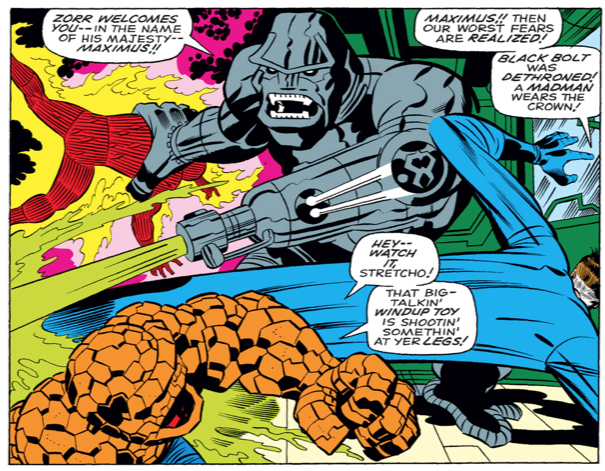
Zorr is yet another very human-like robot the FF have fought in the last dozen or so issues. Along with the Kree Sentry, there was also Galactus’s Punisher, and the Thinker’s Android Man. All had very human-like speech patterns and behaviors (aside from the Punisher, but that was specifically described as half creature, half machine). It’s not clear if this is just a coincidence, or a conscious decision by Stan and Jack, but seems worth noting.
These guys look familiar
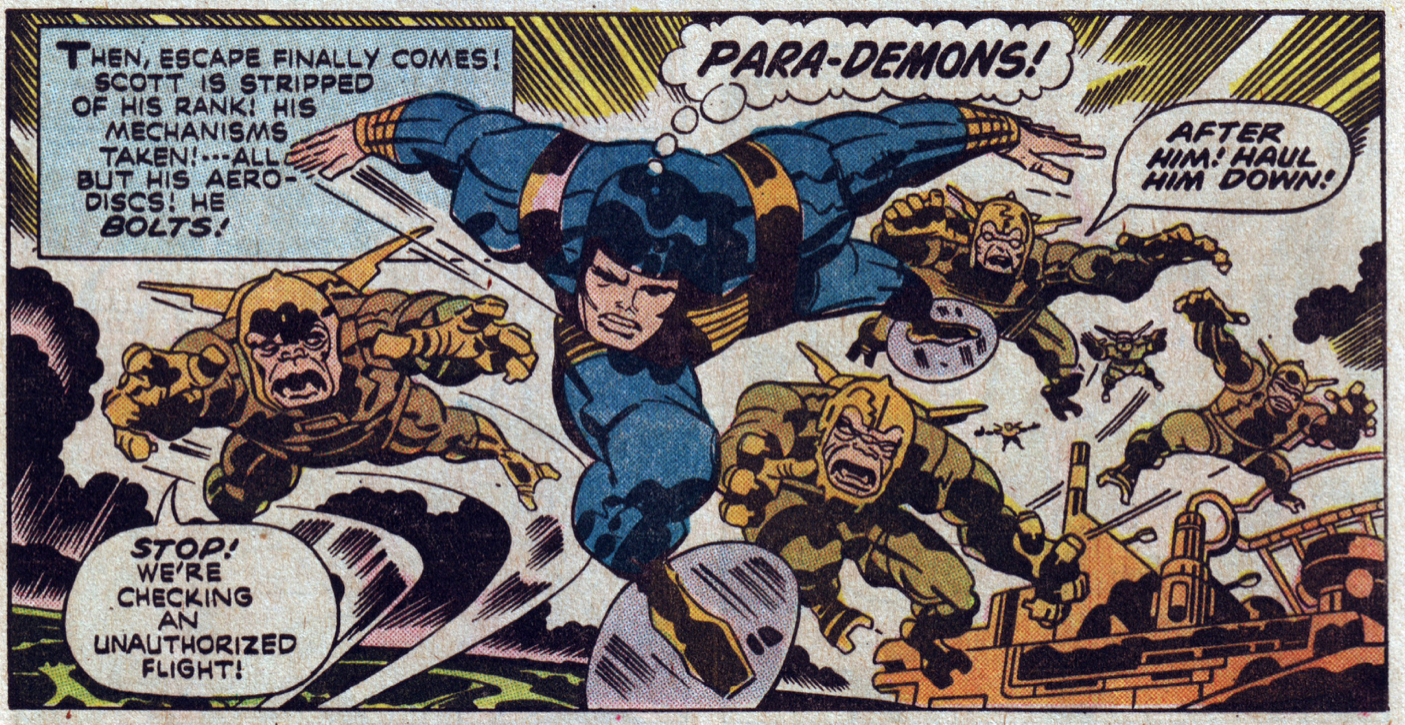
The Inhuman Alpha Primatives here look a lot like the Parademons Jack would create in a few years when he jumped to DC.
Oy vey
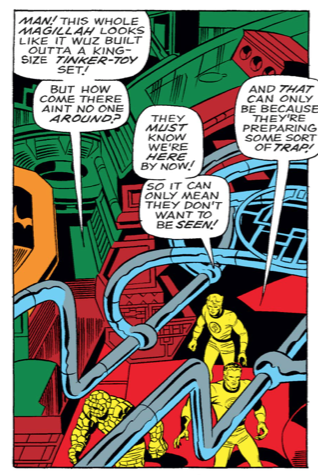
Another very specifically Jewish reference from Ben (a megillah is literally a scroll from the Book of Esther). Ben wasn’t explicitly identified as Jewish until much layer (not until in 2002). but he was the character that most resembled Jack (both grew up on the Lower East Side etc) and it made sense that Ben to sounds like a New York Jew, whether or not Stan and Jack intended to make him Jewish.
Who?
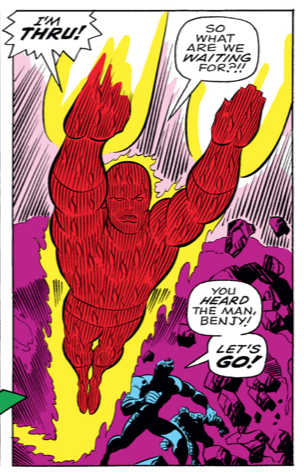
Reed calls Ben “Benjy” here. Which seems like a mistake.
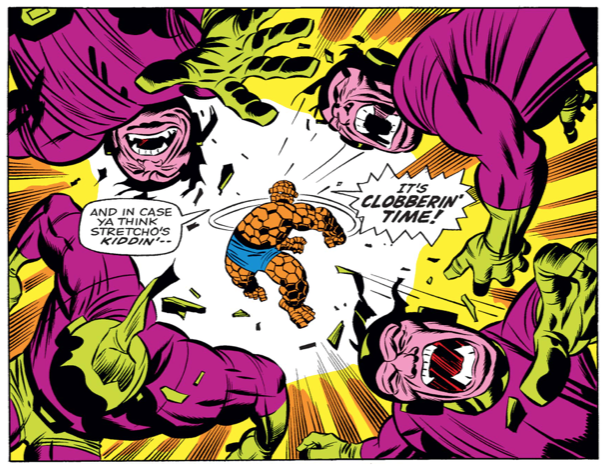
It’s Clobberin’ Time
A pretty good one, at that.
Ladies and gentleman, I give you Joe Sinnott
More great inks from the master.
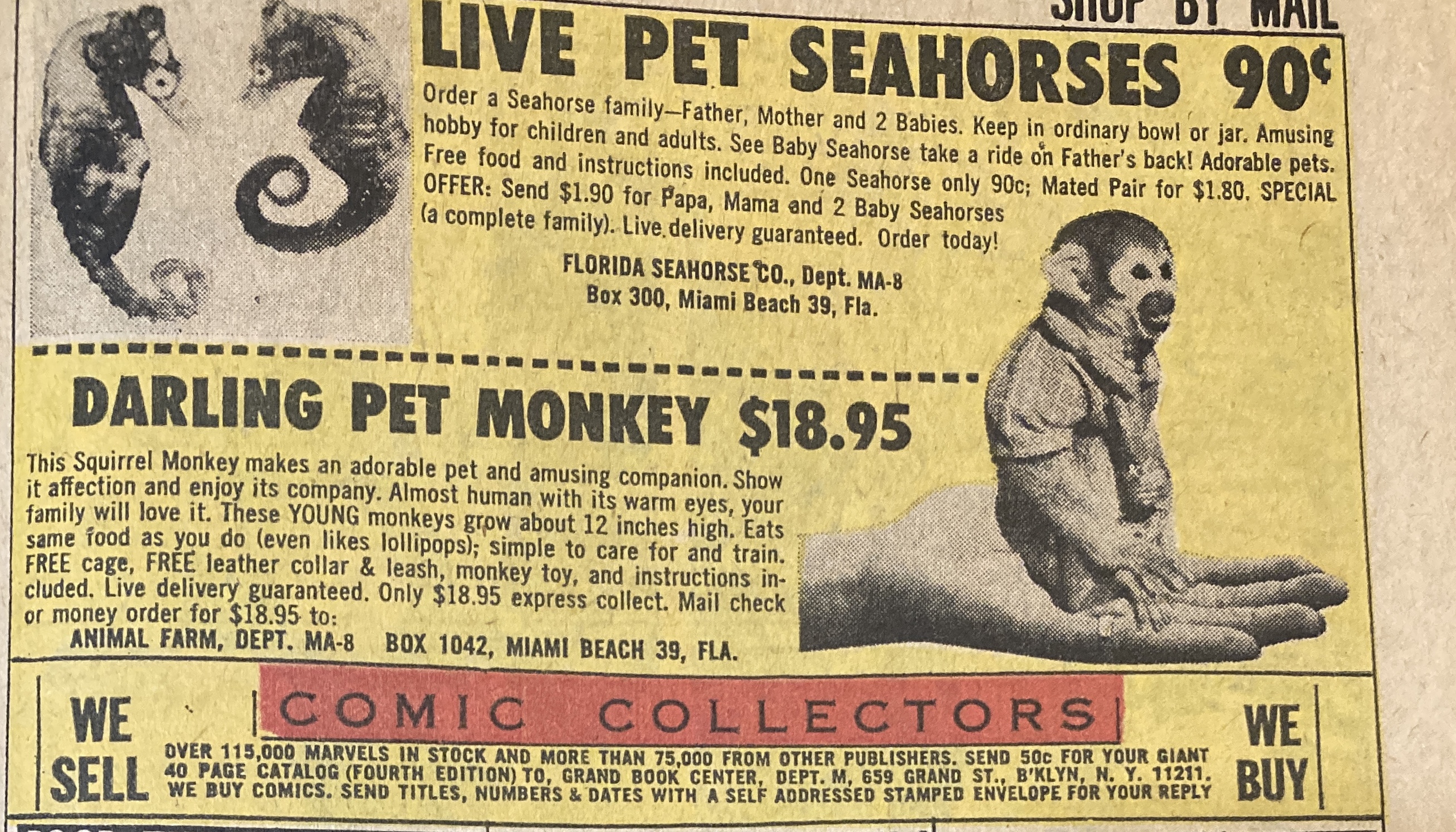
For sale
Live monkeys? Seriously?
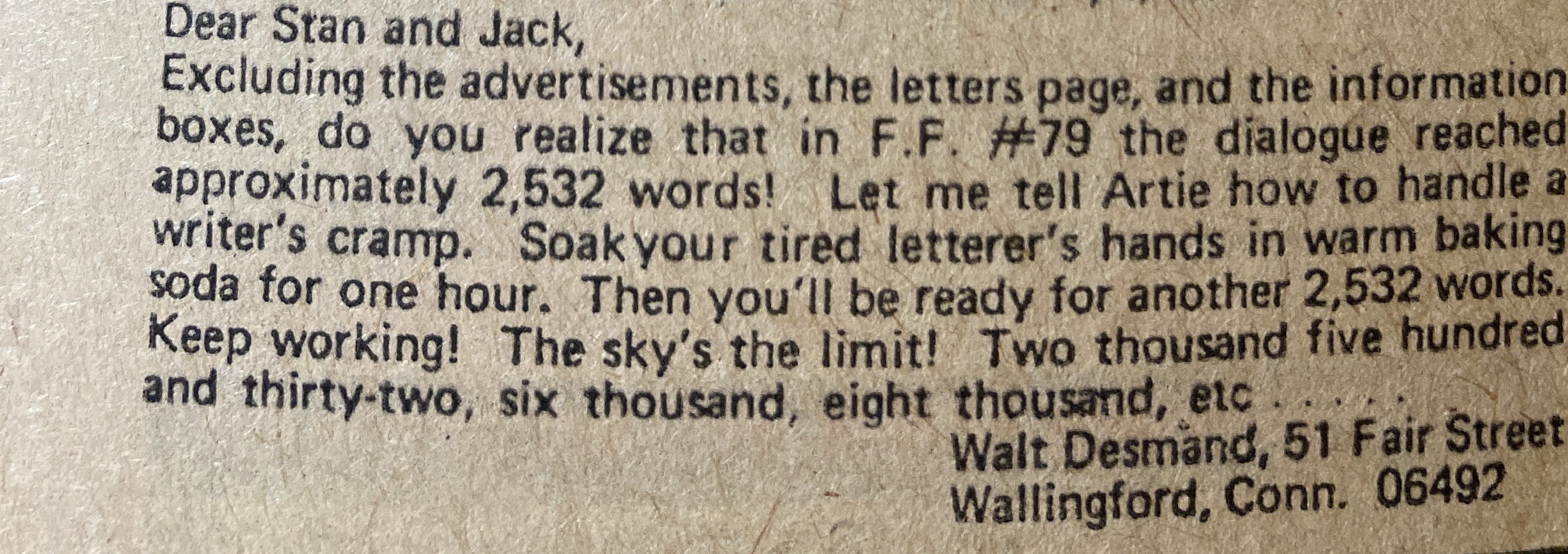
We get letters
Someone had too much time on their hands
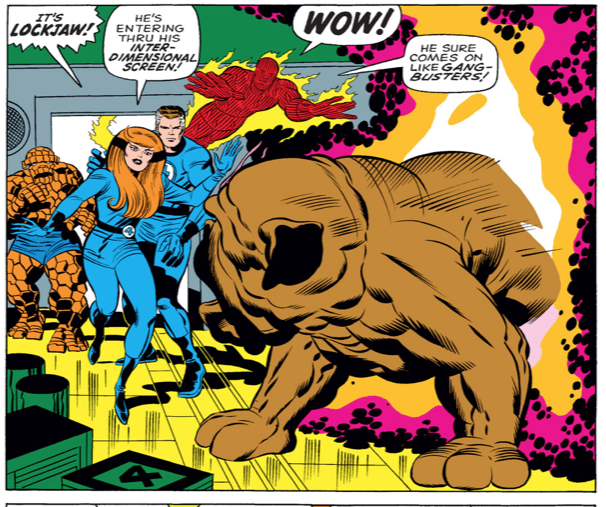
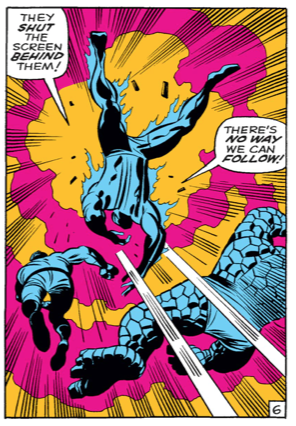
Dig that Kirby Krackle
Along with the great splash pages, there are some impressive smaller panels.
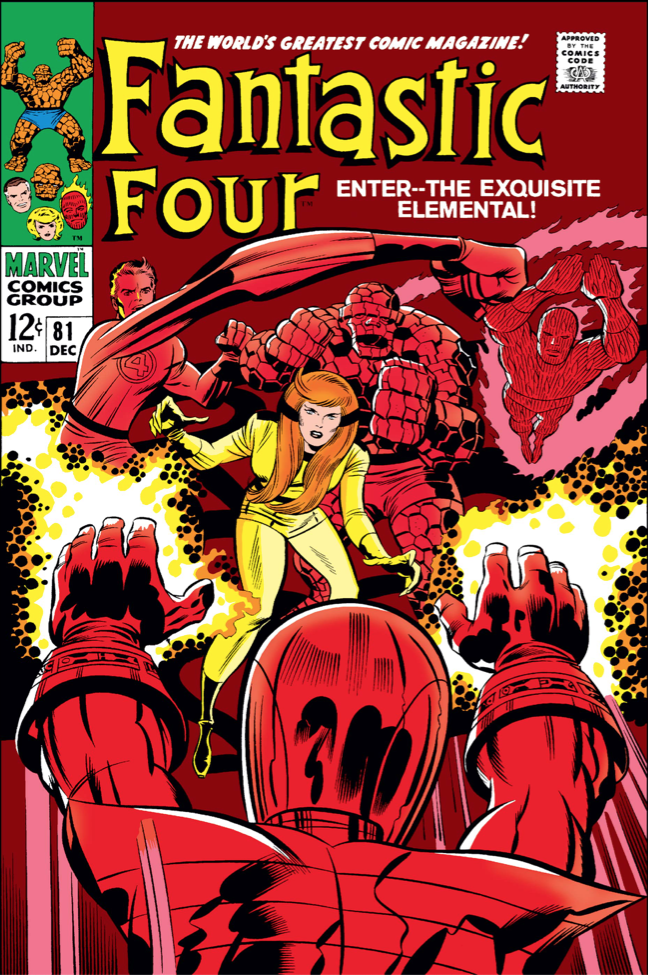
Fantastic Four 81 “Enter — The Exquisite Elemental!” Published Sept. 1968 Story: Stan Lee and Jack Kirby Script: Lee Pencils: Kirby Inks: Joe Sinnott Letters: Artie Simek Cover: Kirby and Sinnott
Synopsis
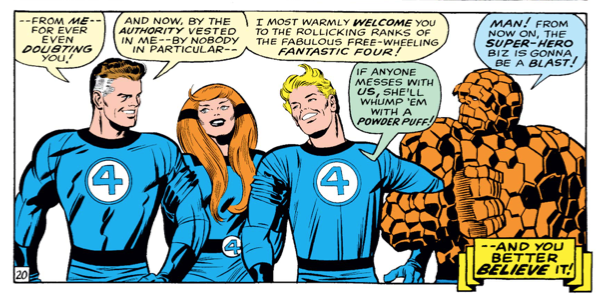
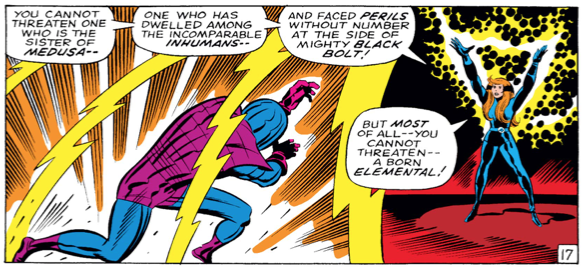
Crystal, the Inhuman girlfriend of the Human Torch, appears in a Fantastic Four costume of her own design and makes the case she should join the team to fill-in for the Invisible Girl, who has just given birth. As the rest of the team expresses doubts because of her age, the Wizard attacks. Johnny rushes out to confront him alone, but is soon joined by Mr. Fantastic, the Thing and Crystal. The FF battles the Wizard, and Crystal demonstrates both her strategic savvy and power, subduing the Wizard almost singlehandedly. The Wizard escapes but the team welcomes Crystal as its first replacement member.
What’s going on here?
After a tense and momentous annual (Annual 6 – read all about it), and before another multi-issue arc begins, this issue feels like an opportunity for everyone to catch their breath. The Wizard is a useful villain for this sort of story: threatening enough to keep it interesting, but not so dangerous that he can’t easily be beaten in a few pages.
The introduction of Crystal as a member of team is obviously the big development here, and the story serves as a reminder she has considerable superpowers of her own. After spending most of the last year sidelined as Sue’s companion and nurse, it would have been easy to forget. Also worth noting is the great cover, which highlights Crystal.
A cast of thousands
Crystal is the first replacement member, but there have been many over the years. Here’s a round up of the most notable, both official and unofficial, new members.
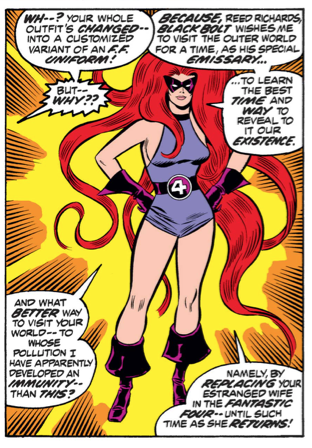
Crystal’s cousin Medusa also replaced the Invisible Girl:
Fantastic Four 132 (1973, Thomas/J. Buscema/Sinnott)
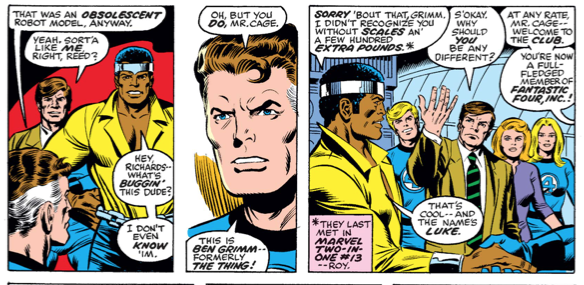
Power Man, better known today as Luke Cage, famous replaced the de-powered Thing for a few issues:
Fantastic Four 168 (1976, Thomas/Buckler/Sinnott)
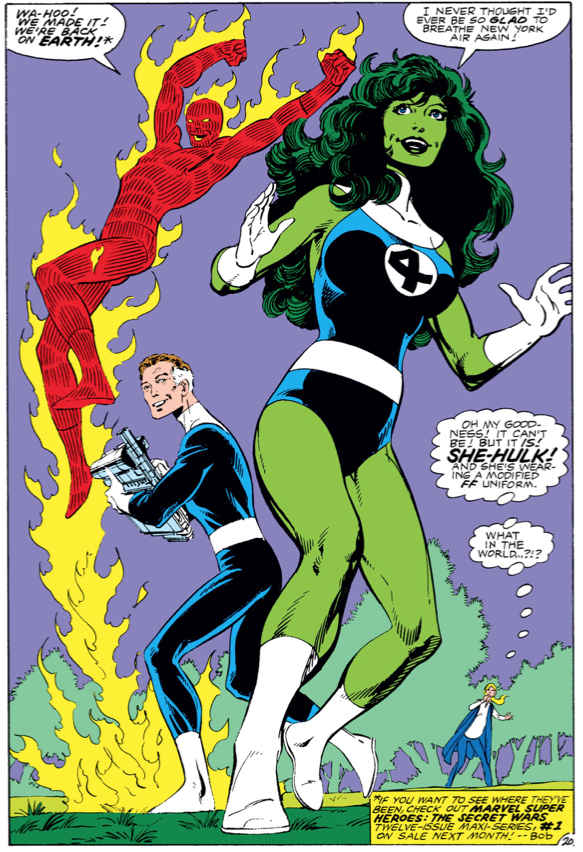
She-Hulk also replaced the Thing. after he elected to stay on Battle World following the Secret Wars:
Fantastic Four 265 (1984, Byrne)
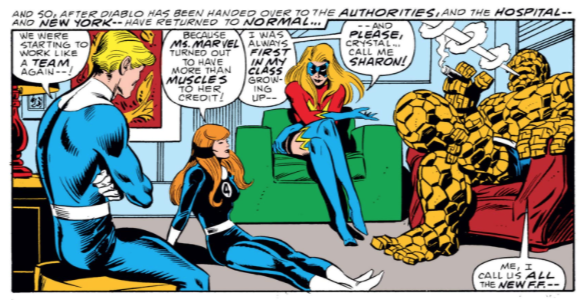
Under writer Steve Englehart, both Reed and Sue were replaced, by Ms. Marvel (Sharon Ventura) and Crystal again.
Fantastic Four 307 1987 (Englehart/J.Buscema/Sinnott)
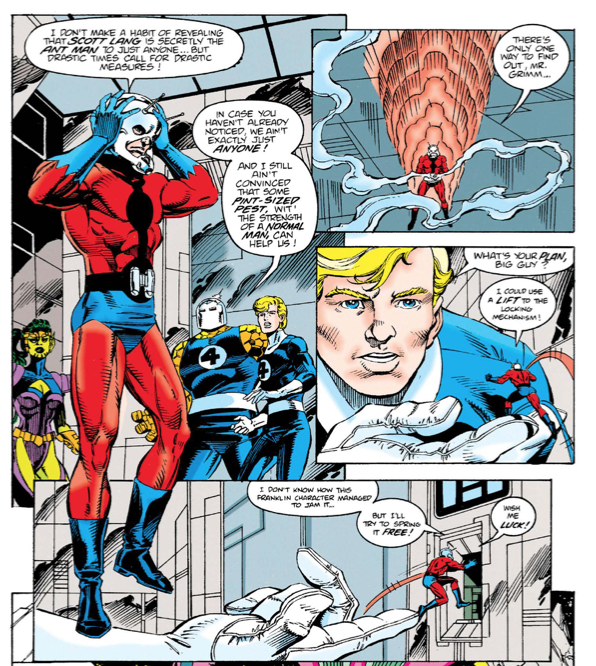
During Tom Defalco’s run, Ant-Man (Scott Lang) was hired by the team as a replacement scientist for Reed. I don’t recall if he ever became an official member, but he hung around for a long time.
Fantastic Four 384 (1994, Defalco/Ryan/Bulanadi)
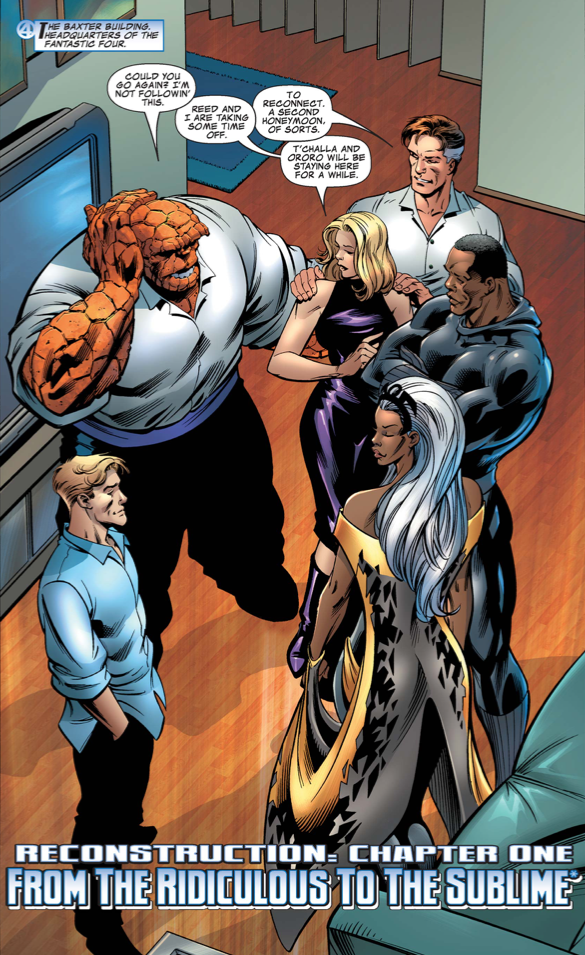
After the Civil War, in which Reed and Sue were on opposite sides, the two took a leave of absence and were replaced by Storm and the Black Panther (who were married at the time).
Fantastic Four 544 (2007, McDuffie/Pelletier/Magyar)
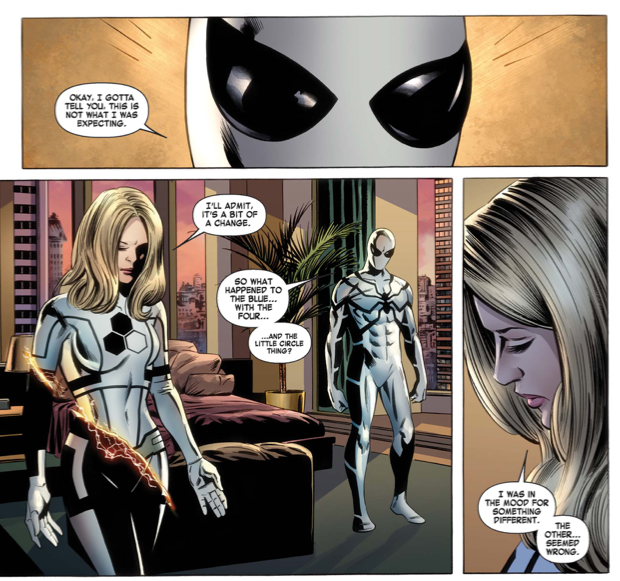
And when Johnny apparently died—he was actually captured by Annihilus—Spider-Man stepped in.
FF 1 (2011, Hickman/Epting/Magyar)
The sexist sixties
Virtually this whole issue could qualify as an example of Stan and Jack’s casual sexism, starting with the title (“the exquisite elemental”). Sue never appears, and he decision to replace her is made without any discussion with her. Crystal is dismissed and condescended to throughout, up until the final panel where Reed asks her to join the team, and Johnny makes a “powder-puff” reference. The Wizard is particularly bad, though.
Fantastic Four Annual 6 “Let There Be … Life!” Published Nov. 1968 Story: Stan Lee and Jack Kirby Script: Lee Pencils: Kirby Inks: Joe Sinnott Letters: Sam Rosen Cover: Kirby and Sinnott
Synopsis
The story begins with Mr. Fantastic frantically looking for a way to save the Invisible Girl, who is about to give birth to their child, from the “cosmic radiation” that remains in her blood following the accident that gave the team its powers. Reed has determined that one element, found only in the Negative Zone, can save her, and as he prepares to enter the zone to retrieve it, the Thing and the Human Torch insist on joining him.
Once in the Negative Zone, Reed is attacked and captured by a Scavenger, a creature in the employ of Annihilus, an insect-like warlord. Eventually Ben and Johnny are also captured, and the three are sent to the arena, where they are subject to Annihilus’s torture devices. The team overcomes them, and Reed realizes Annihilus’s control rod, which he wears around his neck, contains the element he needs to save Sue.
Reed steals the control rod and the team escapes, only to be pursued by Annihilus and his minions. Eventually the trio reaches a zone where “space is transformed into antimatter” (last seen in issue 51) and where they are powerless. Trapped, they strike a deal with Annihilus, who returns their harnesses, which allow them to travel through the Negative Zone, in return for the control rod, (save for a small amount of the element within Reed keeps t save Sue).
The team returns to earth in time to deliver the element to the hospital, and after an anxious wait, find Sue has given birth to a healthy (unnamed) son.
What’s going on here?
This is a big issue, with a lot going on. Aside from some very notable first appearances, it’s just a great story, one of the best of Stan and Jack’s run. The stakes are high and there is genuine suspense, and even if Negative Zone science is a little peculiar, it all make sense. Jack’s art has never looked better, and the extra page count (it’s 48 pages of story) gives him room to stretch out, with six splash pages, including one double-page splash, just the second in his FF run to date.
This comics was voted the 38th best Fantastic Four story in a CBR poll, but I would argue it’s better than that, one of the best of the Lee / Kirby run.
While technically a King Size Special, this comic really functions as an annual, with its numbering consistent with other annuals. And it has all the elements of a great comic annual, with an exciting story anchored by a Big Event. Often it’s a wedding, but here it’s the birth of Franklin Richards.
Who’s the new guy?
The birth of Franklin Richards added a significant new dimension to the Fantastic Four. He helped solidify the family nature of the team, and was often playing with toys or getting underfoot in the Baxter Building. He also was often thrust into the hands of baby sitters—usually Alicia Masters or Agatha Harkness—and opened Reed and Sue up to accusations they were negligent parents (this became a story arc in J. Michael Straczynski’s run in the 2000s). After Dan Slott’s run sent Reed, Sue and their kids into space for six years, Franklin is now a surly teenager who inexplicably died his hair black (I suspect it’s to distinguish him from Johnny in group shots) and uses the horrible codename Powerhouse. Here he is mouthing off to his dad.
X-Men/Fantastic Four 3 (2020), Zdarsky/Dodson/Dodson
After it was revealed Franklin had mutant powers in FF 130, generations of Fantastic Four writers haven’t been able to resist tinkering with him in various ways, whether it’s him using his powers as a child, prematurely aging him, or introducing us to teenage or adult Franklins from the future or other dimensions (or both). Franklin has been depicted by so many writers and artists in so many different ways over the years it would be impossible to show them all, but here are some of the more noteworthy (or egregious) examples.
For a long time, this was Franklin’s basic look (I always loved the “4 1/2” sweatshirt). This is a John Byrne image, but not sure from where.
This is a pretty typical depiction of this era. Note Agatha Harkness.
Another (short-lived) alternate future version, from the classic Days of Future Past
Uncanny X-Men 141 (1981) Claremont/Byrne/Austin
A painful stint as a super hero in the present, as part of Power PackPower Pack 58 (1990) Higgins/Morgan
As a superhero in the future:
Fantastic Four 605 (2012) Hickman/Garney
And finally, a future version with his present self:FF 23 (2012) Hickman/Dragotta
Enter the bad guy
The other major debut in FF Annual 6 is Annihilus, who becomes a top-tier Fantastic Four villain, maybe trailing only Doom as an FF bad guy. Almost every Negative Zone story features him in one way or another, and he was responsible for the apparent death of Johnny Storm in Johnathan Hickman’s run. Although I’m tempted to post his major appearances as well, I think I’ll just go with these great Kirby panels from this issue.
Reed Richards is a Jerk
I get that Reed is stressed, but jeez man, chill out.
It’sClobberin’ Time
Of course it is.
The sexist sixties
Of course fathers aren’t allowed in the delivery room. That would be crazy!
Read all about it
Surely this is a HIPPA violation:
Weird science
That’s “Mr. All-Engulfing Sonic Sponge” to you.
Dig that Kirby Krackle
This issue is frankly a bit insane. Almost every other page has an example of over-the-top Kirby craziness, so I’m going to restrain myself to showing the very best examples. Hold on!
First up of course is this beauty:
More splash pages:
And some other amazing panels:
And some more:
And some more:
Really, I could go on. It’s a hell of an issue for Kirby fans.
Also on sale
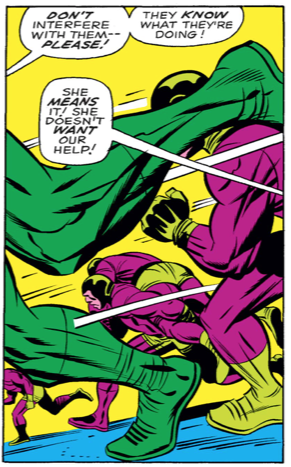
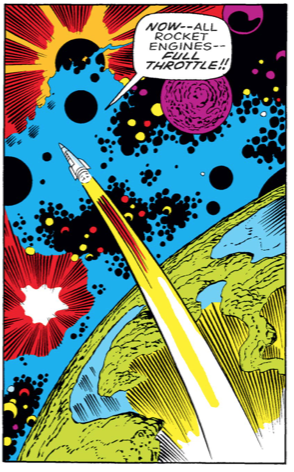
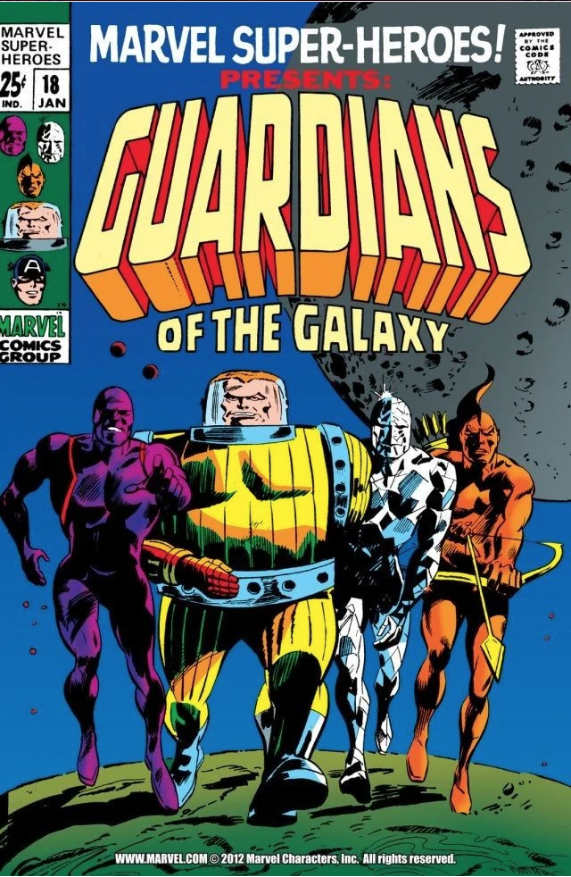
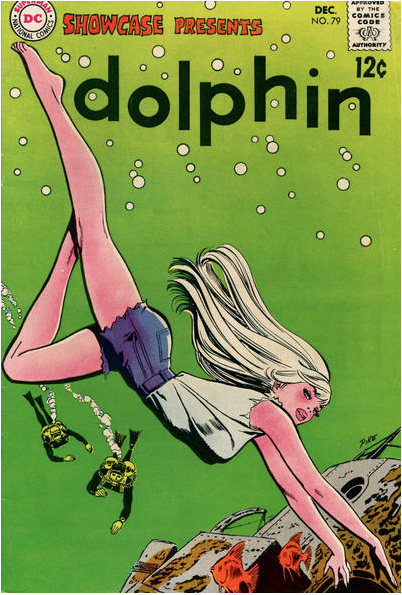
August 1968 was a great month for comic covers. Here are a few more classics, from Carmine Infantino, Joe Kubert and Gene Colan: