• About Percival Henry

Percival Henry: The Fantastic Four and more

~ Blogging the Fantastic Four issue by issue (plus whatever else grabs my attention)

Percival Henry: The Fantastic Four and more

Author Archives: percivalhenry

“The World’s Greatest Comic Magazine” Fantastic Four No. 27

01 Sunday Aug 2021

Posted by percivalhenry in The World's Greatest Comic Magazine

≈ Leave a comment

Tags

1964, Fantastic Four, Fantastic Four 27, jack Kirby, Namor, Stan Lee

Fantastic Four 27
“The Search for the Sub-Mariner”
Published: March 1964
Story: Stan Lee and Jack Kirby
Script: Lee
Pencils: Kirby
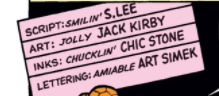
Inks: George Roussos
Letters: Sam Rosen
Cover: Kirby and Chic Stone

Synopsis

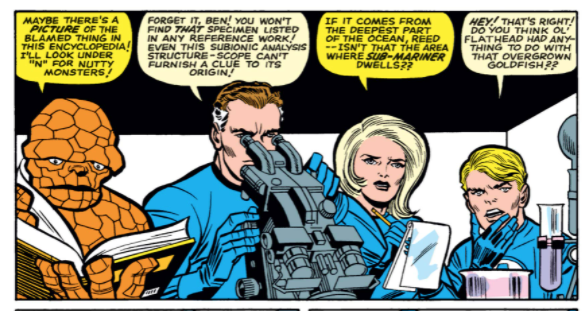
At the Baxter Building, Reed experiments with a new thought projector, then tells Ben and Johnny of his intentions to propose to Sue. Meanwhile, under the ocean, the Sub-Mariner stews in loneliness, then declares his plan to wed Sue.

While Reed is out shopping for a ring, Namor uses new technology to subdue Ben and Johnny and abduct Sue. When Reed returns, he is overcome with rage and insists Ben and Johnny remain behind as he pursues Namor. Unsure of how to find Namor beneath the ocean, Johnny contacts Dr. Strange, who uses his mystic powers to locate Namor’s citadel, where he watches Reed fight Namor.

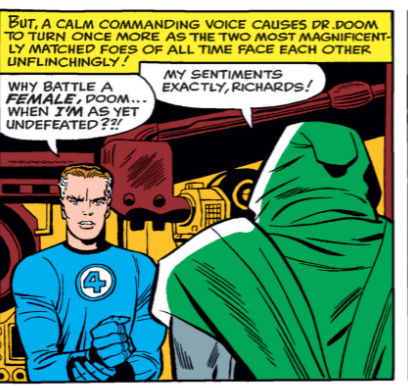
Dr. Strange then uses his to magic to transport Ben and Johnny to the fight, where Johnny frees Sue. After a battle with Namor and his henchmen, Sue ends it by telling Namor she loves Reed. Before Namor can react, Dr. Strange whisks the Fantastic Four away to Reed’s submarine, where Reed worries that Sue only pledged her love to save him from Namor.

What’s going on here?

FF 27 falls in the middle of a busy run of Marvel cross-promotion. Starting with a guest appearance by Ant-Man in FF 16, then with Nick Fury in FF 21, the Hulk and Avengers in FF 25-26, and with Dr. Strange in this issue, it’s clear Stan is leveraging the popularity of the Fantastic Four to introduce readers to other Marvel heroes. (The X-Men will also appear soon). But while those other appearances tended to have some internal logic to them, Dr. Strange doesn’t add much to this story. It’s not obvious why the Torch contacted him to find Namor, given the FF had just battled him in Atlantis in the first FF annual. He mostly serves as a teleportation device, moving the FF from place to place. He does, however, manage to unleash a full arsenal of Dr. Strange-y oaths, invoking the Vishanti, Hoggoth and Dorammu, as he does.

The more significant development is the further evolution of the relationship between Reed and Sue, which has sort of lurched along for the first few years of the FF. Now, finally, we’re on the verge of progress: a proposal! Reed is uncharacteristically exuberant about the idea and (understandably) distraught when she is adducted.
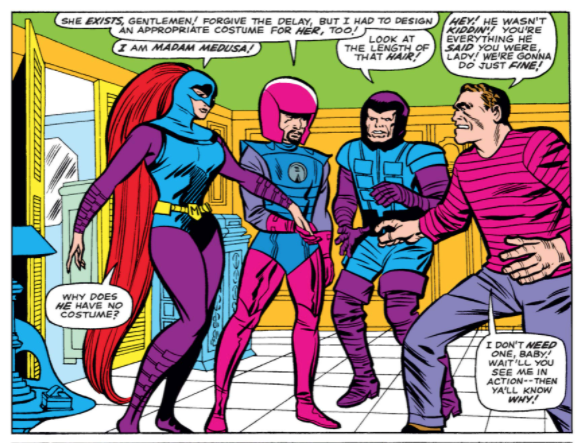
Stan and Jack really lean into the melodrama of the Reed-Sue-Namor love triangle in this issue, even though it feels like all of this was settled in the annual. As a result, none of it feels pareticularly suspenseful.

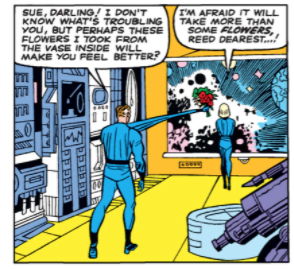
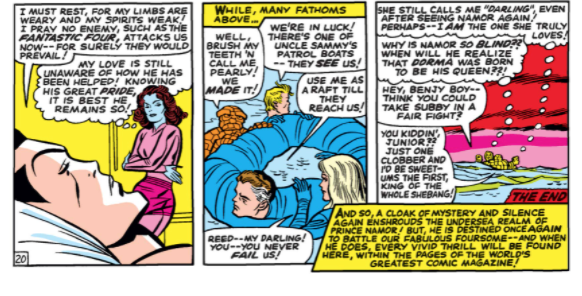
The denouement, however, does create a bit of uneasy tension, as Reed is agony about Sue’s true feelings.

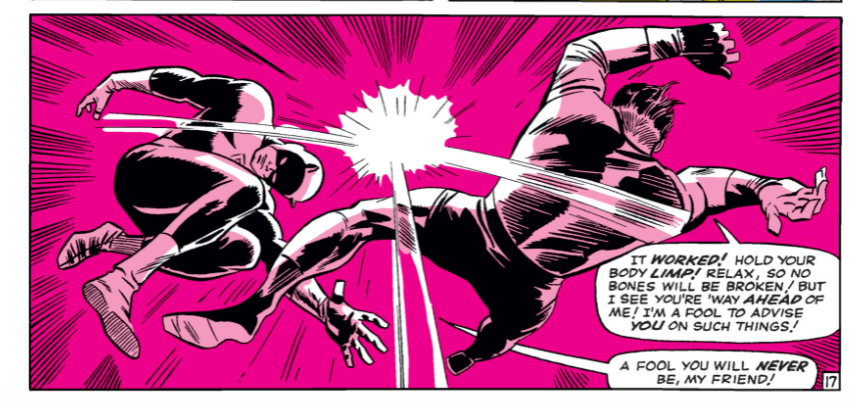
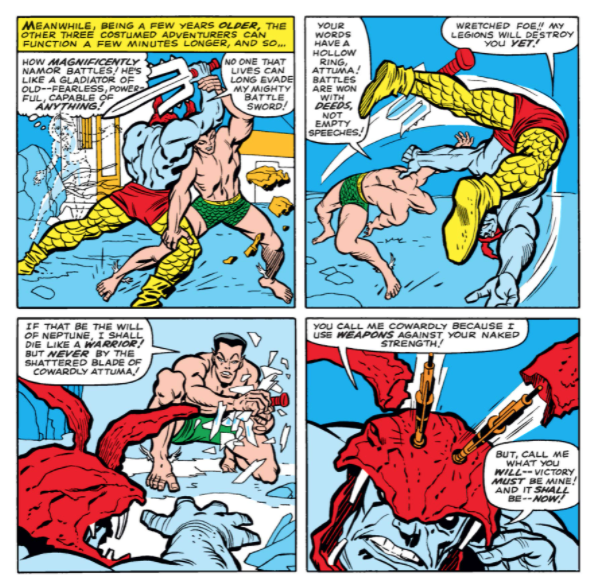
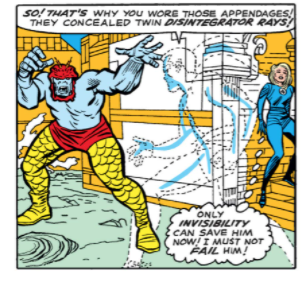
The issue is really devoted to Reed, and features several pages of him in combat with Namor. Here’s a cool one”

Secret agent man


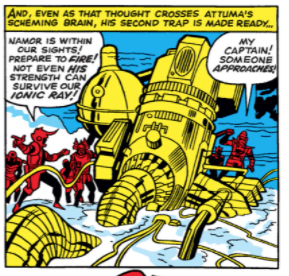
Namor, who previously appeared as a movie mogul to entangle the FF, is now dressed like a James Bond villain.

The sexist sixties

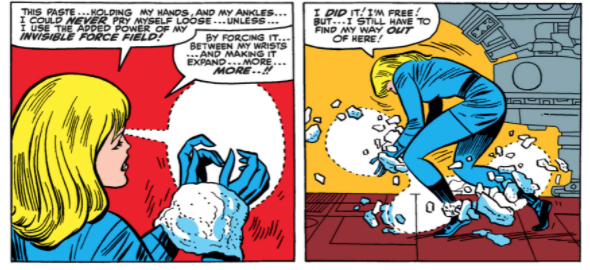
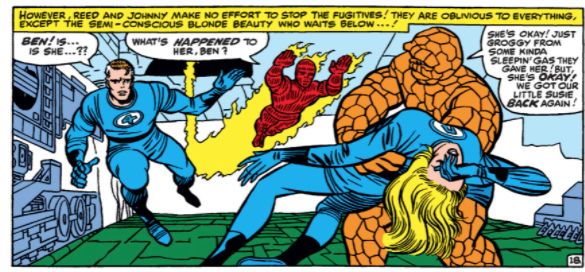
Sue is imprisoned for about the 12th time in the FF’s first 27 issues.

Weird science

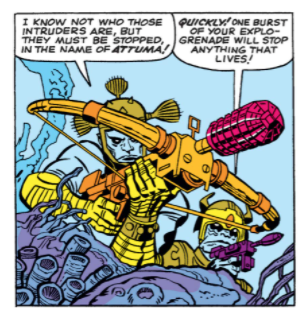
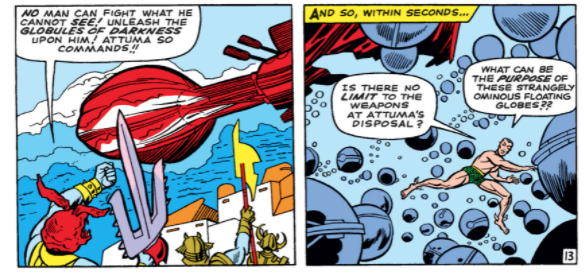
Namor has all sorts of technology. Where does it come from? No idea.

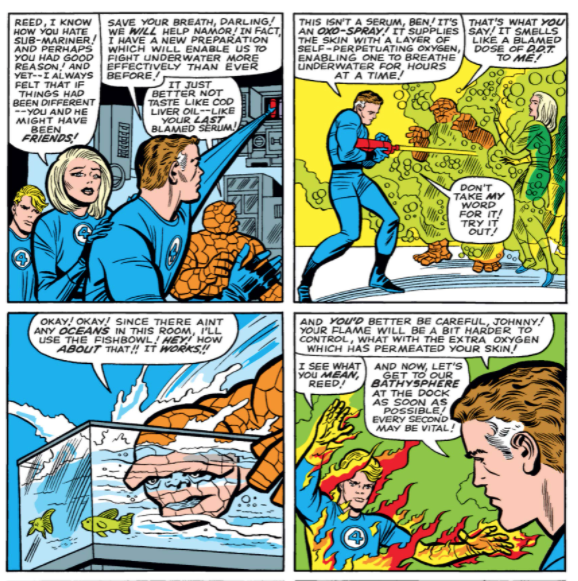
Then there’s Reed’s underwater breathing pills.

The incredible Mr. Fantastic

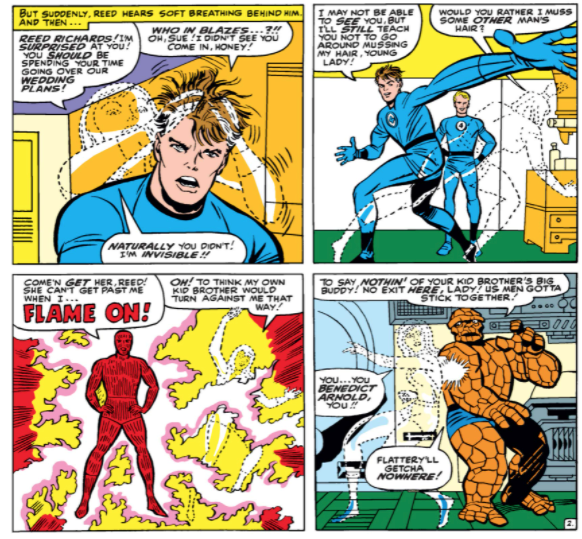
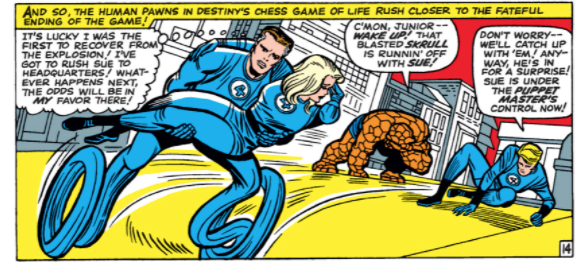
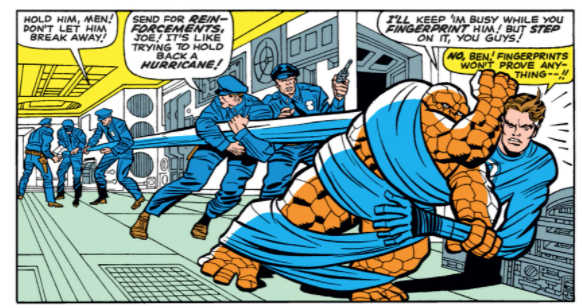
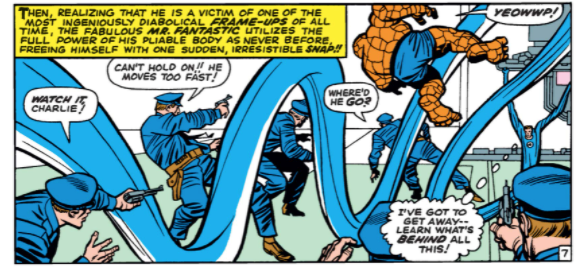
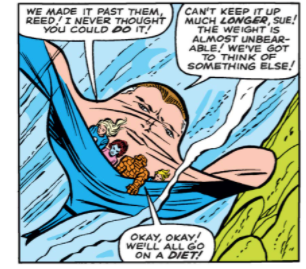
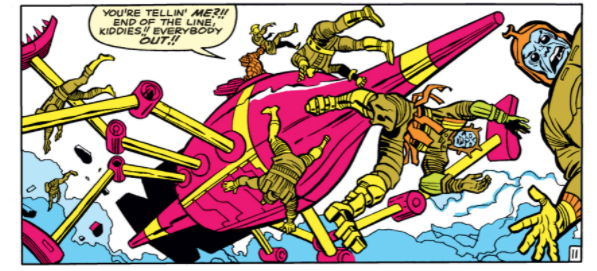
Lots of creative stretching in this issue.

Dig that Kirby Krackle

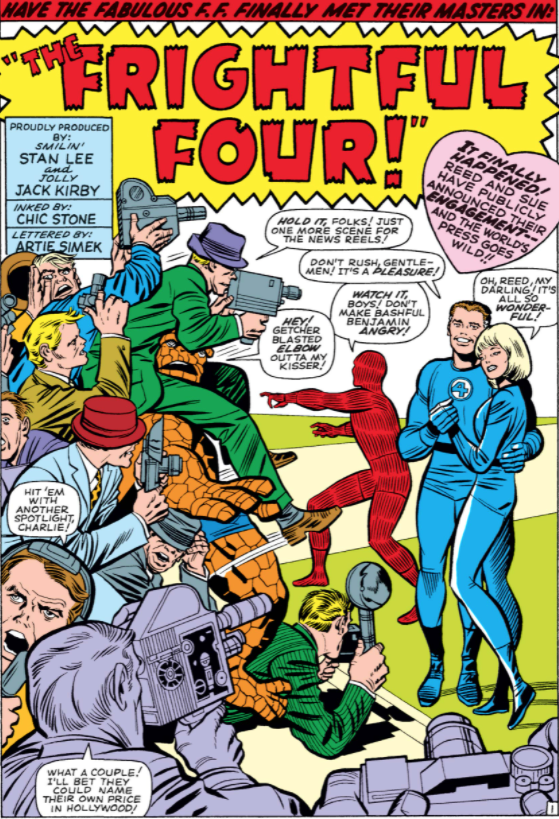
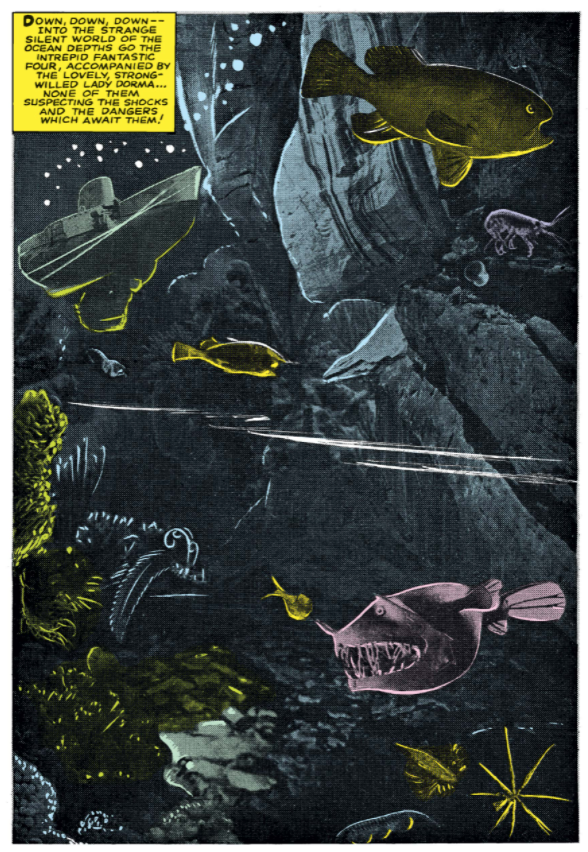
This splash page is amazing

For sale

A mint condition Fantastic Four 27 (9.8) will cost about $21,000.

Next issue: The X-Men!
“The World’s Greatest Comic Magazine” Fantastic Four No. 26

19 Monday Jul 2021

Posted by percivalhenry in The World's Greatest Comic Magazine

≈ Leave a comment

Tags

1964, Avengers, Fantastic Four, Fantastic Four 26, Hulk, jack Kirby, Stan Lee

Fantastic Four 26
“The Avengers Take Over”
Published Feb. 1964
Story: Stan Lee and Jack Kirby
Script: Lee
Pencils: Kirby
Inks: George Roussos
Letters: Art Simek
Cover: Kirby and Sol Brodsky

Synopsis

Fantastic Four 26 picks up right where the last issue left off. As the Hulk rampages through New York looking for the Avengers—who he feels abandoned him—the Thing again tried to stop him. The Human Torch, injured in the last issue, leaves the hospital to rejoin the fray, but the Hulk overpowers them both and eventually make his way (by subway!) to Avengers mansion. There, he tangles with both the FF and the Avengers but escapes with his erstwhile sidekick Rick Jones to a skyscraper under construction. There, the Hulk battles most of both teams individually until Jones gets him to swallow a “Gamma-ray treated capsule,” which turns him back to Bruce Banner.

What’s going on here?

Action! FF 26 is really just a prolonged action sequence, with almost no breaks for character development. There’s none of the shenanigans in the Baxter Building, no squabbling between Ben and Johnny, no pontificating by Reed. In fact, Reed is almost entirely sidelined in these two issues with an illness, and when he does appear in FF 26, he’s mostly ineffectual. It’s Rick Jones, with an assist from Bruce Banner, who saves the day.

The issue does give us an extended look at the Avengers, and we get the same character beats that have lasted 60 years. Iron Man is arrogant, the Wasp is ditzy etc. Notably, this is just Captain America’s second appearance since he was unfrozen from the ice in Avengers 3 (FF 26 came out between Avengers 3 and 4) so in some ways Stan is still feeling his way around Cap’s character.

About that cover

Something about it looks familiar ….

Alert the media

Throughout FF 26 radio and TV reporters pop up to narrate the action, acting as a sort of Greek chorus and helping magnify the stakes of the battle.

While it’s a device used in lots of movies and TV shows, it only occasionally is used in comics as well. In the Dark Knight Returns, the TV news features prominently, both to provide commentary on the events and a comment about the role of media in society. But I most associate the device with the “Fall of the Mutants” storyline in the Uncanny X-Men from 1988, where a TV crew becomes part of the storyline:

UXM 226 and 227 (1988, art by Marc Silvestri and Dan Green)


They’re fighting again

In the grand tradition of all superhero team-ups, the FF and Avengers first must fight with each other before tackling their common foe

Weird Science

Transistors were still a novel technology in the early 1960s, and Iron Man was really into them.

More sixties technology: Iron Man has a built-in short-wave radio, complete with a shoulder antenna. Incredible!

Also, asbestos were a thing back then. Apparently even pajamas were made out them.

The sexist sixies

This time is Jane Van Dyne who gets written like a dingbat

Dig that Kirby Krackle

Great sequence here:

These panels, too:

For sale

A mint edition (9.8) of FF 26 will run you about $22,000.

Next issue: The return of the Sub-Mariner (plus Dr. Strange)!

“The World’s Greatest Comic Magazine” Fantastic Four No. 25

04 Sunday Jul 2021

Posted by percivalhenry in The World's Greatest Comic Magazine, Uncategorized

≈ Leave a comment

Tags

1964, Fantastic Four, Fantastic Four 25, Hulk, jack Kirby, Stan Lee

Fantastic Four 25
“The Hulk vs. The Thing”
Published: January 1964
Story: Stan Lee and Jack Kirby
Pencils: Kirby
Script: Lee
Inks: George Roussos
Letters: Sam Rosen
Cover: Kirby & Roussos

Synopsis

In a lab in the Baxter Building, Mr. Fantastic tries to persuade a reluctant Thing to try a formula that will revert Ben back to his human form. Just then, Alicia Masters walks in with news that the Hulk has left the Avengers and been replaced by Captain America.

Meanwhile, in New Mexico, the Hulk returns to the lab of Bruce Banner (called Bob Banner here) and, discovering a newspaper article about Captain America replacing him, vows to destroy the Avengers. Leaping across the US, he arrives in New York as Reed falls ill from the experimental microbes he used to make the formula for the Thing.

As the Hulk rampages through the city, first the Human Torch, then the Thing try to subdue him while Sue tends to the ailing Reed. After a lengthy battle, the Hulk escapes Ben, who vows to stop him or die trying.

What’s going on here?

Fantastic Four 25 is probably most notable for the scale of the fight between Ben and the Hulk. At about 12 pages, it takes up nearly half the comic, and is significantly more dramatic than their first fight, in FF 12. Here, we have a sense there are real stakes involved: With Reed out of commission, only Ben can stop the Hulk from destroying Manhattan as he pursues the Avengers. It’s another example of Ben rising above his wise-cracking, goof-ball persona and showing the heart of a true warrior.

FF 25 is also the first real cliffhanger in the comic’s short history. While a few stories have carried over from one issue to the next, in all previous cases the main story was resolved. But after more than two years of publishing the FF, Stan and Jack must have had enough confidence in their readers to trust them to come back for the second half of a story. In other words, they knew their readers were no longer causal buyers but fans invested in the FF for the long haul.

In another first, FF 25 marks the Avengers’ debut in the Fantastic Four, although it’s only for a brief few panel and they don’t interact with the FF (I assume we’ll see more of then in FF 26). As with the previous guest appearances of the Hulk, Ant-Man, and Nick Fury, the Avengers appear here shortly after the launch of their own comic (Avengers 3 was published the same month as FF 25), and it seems clear Stan was hoping the leverage the FF’s popularity to juice sales of a new comic.

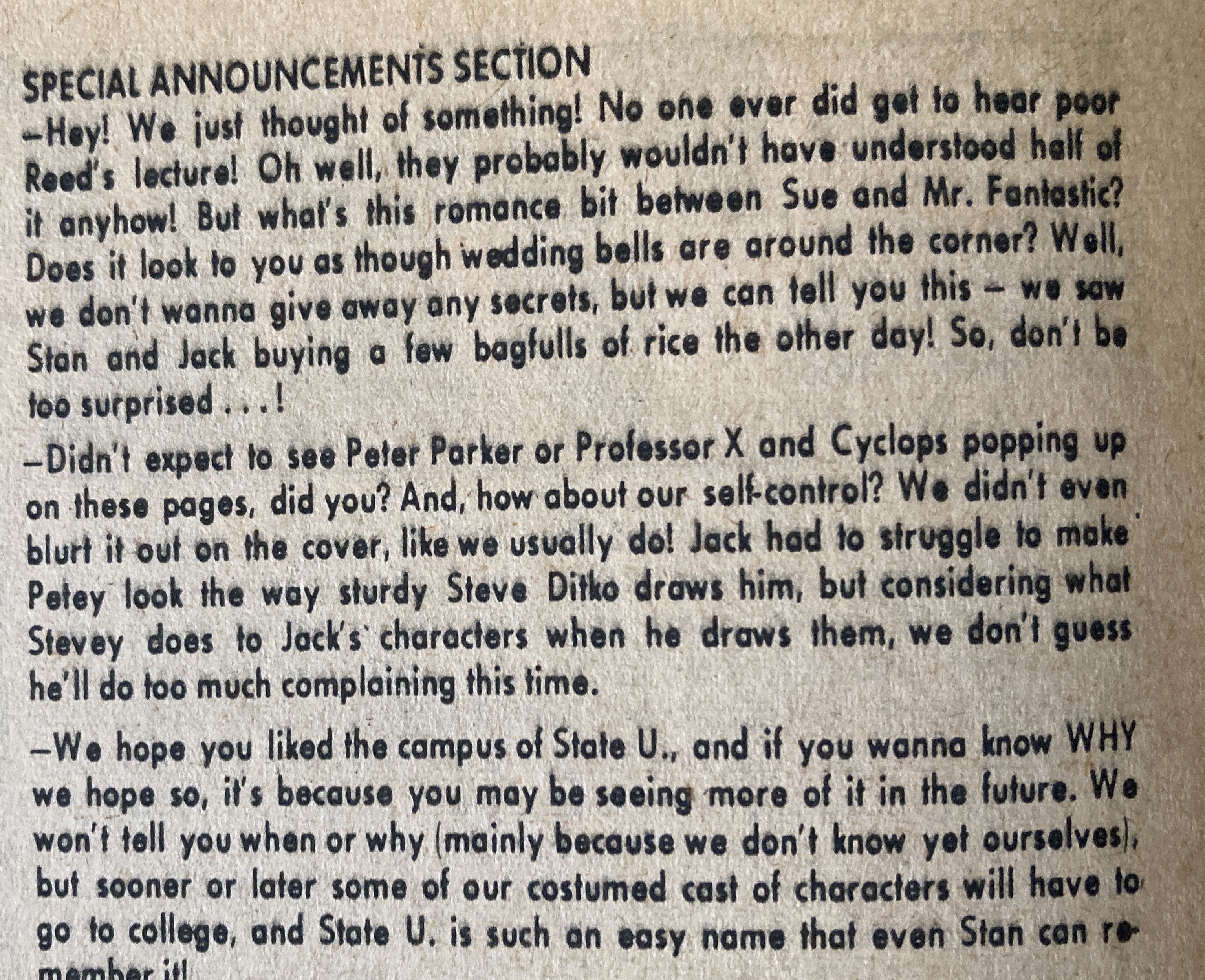
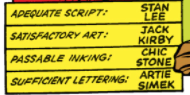
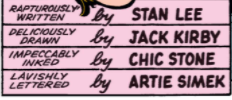
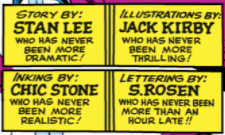
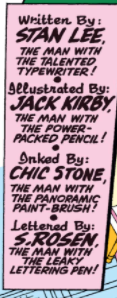
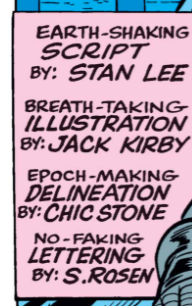
Lastly, FF 25 introduces the gag credits that became a signature Marvel feature. We’re not yet at the nickname state, but those are coming.

Ben and Alicia

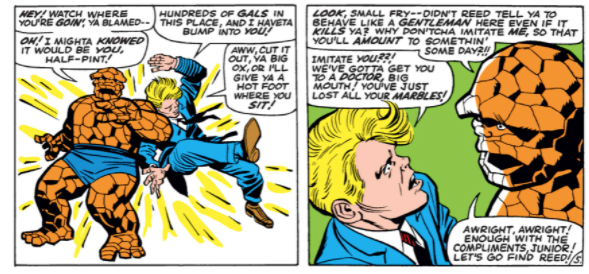
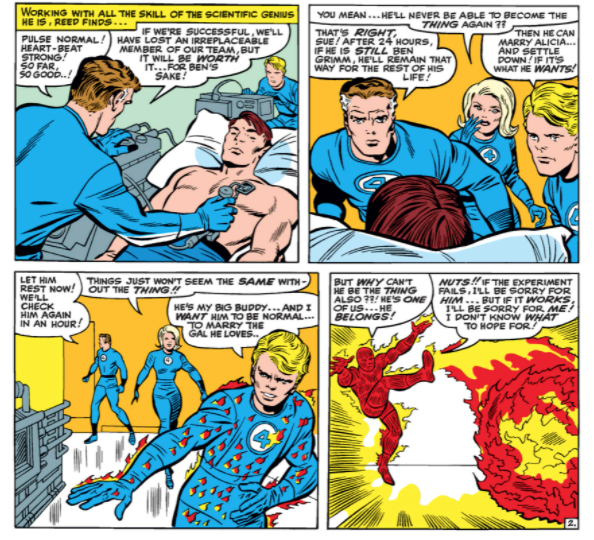
Ben makes it pretty explicit here that he doesn’t want to revert back to his human form because he fears Alicia is only attracted to him as the Thing

That makes the big reveal in FF 245—in which John Byrne discloses why Ben can’t return to human form (as discussed here) — a bit less surprising. It is, however, further evidence of how deeply Byrne mined these early FFs for plot points.

FF 245, art by Byrne

Who’s Bob?

Throughout FF 25, the Hulk’s alter ego is referred to as “Bob Banner,” years after he was introduced as Bruce Banner. As Brian Cronin helpfully explains, Stan simply forgot his name and retroactively changed his name to “Robert Bruce Banner” to cover his goof.

A new ‘do

Sue Storm reveals yet a new hairstyle in FF 25, in what appears to be a bee-hive or bouffant.

Sue’s hair in the first few years of the FF is like a catalog of women’s hair styles from the 1960s. Here are some other looks:

  • FF 2, a “flick up”
  • FF 18, “the artichoke”
  • FF 21, a “bouffant”
  • FF 24, a “bouffant flip”
  • FF Annual 1 “bouffant

Dig that Kirby Krackle

We get lots of examples of Jack’s Hulk in FF 25. Maybe because we’re used to a different, more stylized Hulk as drawn by artists like Herb Trimpe and Sal Buscema, but there’s something particularly monstrous about this more human-like Hulk of Kirby.

We also get a lot of cool action sequences as Ben and the Hulk tussle.

For sale

FF 25 in mint (9.8) condition will cost you about $66,000, a lot more than FF 24 but not unexpected given Hulk-Thing battles are always popular.

Next issue: Part 2!

“The World’s Greatest Comic Magazine” Fantastic Four No. 24

28 Monday Jun 2021

Posted by percivalhenry in The World's Greatest Comic Magazine

≈ Leave a comment

Tags

1963, Fantastic Four, Fantastic Four 24, jack Kirby

Leave a reply

Fantastic Four 24
“The Infant Terrible”
Published: December 1963
Story: Stan Lee and Jack Kirby
Pencils: Kirby
Script: Lee
Inks: George Roussos
Letters: Sam Rosen
Cover: Kirby and Roussos

Synopsis

While posing for photographers from Life magazine, the Fantastic Four are drawn away by a commotion in Times Square (because all such events take place in Times Square in this comic). There, the FF are befuddled by strange phenomena: a giant bottle, an enormous spinning top, giant robots that multiply. Eventually Reed deduces they are created by a childlike but enormously powerful alien he dubs “the Infant Terrible.”

As the FF retreat to the Baxter Building to plan their next move, word gets out and gangsters under orders from Big Joe lure the Infant Terrible with candy and entice it steal an armored car. Meanwhile, the FF appreciate what disasters could befall Earth if the alien isn’t restrained and Reed orders the rest of the team to locate it while he conducts an experiment.

The team find the alien outside the city just as the gangsters lose their patience with its antics, and after subduing the criminals, the FF (minus Reed) attempts to corral the alien. Instead, the alien imprisons them in an energy bubble and returns to New York, causing a panic that stampedes Alicia Masters. As the Infant Terrible solidifies clouds, bringing them to earth, the now-escaped team rescues Alicia. By this point, Reed’s plan has worked: He has summoned the alien’s parents, who come to collect their child.

What’s going on here?

This story feels like a throw-back to earlier, pre-superhero science fiction comics, where rampaging aliens are defeated through some twist. As a Fantastic Four story it works well enough. There are the usual plot beats: antics in the Baxter Building, a confrontation with a bad guy, the FF is trapped, and Reed saving the day. Even though Reed (and Stan) insist the stakes have never been greater, they don’t feel particularly dire. Maybe because the Infant Terrible looks so ridiculous it’s hard to accept that it’s a real threat.

This story doesn’t have much impact on future FF stories. The Infant Terrible reappears a few times over the years, as a character in Power Pack, which makes sense, and in FF Annual 19, where he comes to warn the FF about a Skrull invasion (and yet more evidence of John Byrne’s deep love of these early FFs).

FF Annual 19 (1985), art by Byrne and Joe Sinnott


Then, implausibly, in the 2006 Annihilation mini-series he reappears. There, he is re-named the Delinquent and fights alongside Terrax, Paibok, and other baddies as an agent of Annhilus. This turn of events can be viewed as a metaphor for Marvel’s evolution if you are so inclined. Here, he’s being stabbed by Drax:

Annihilation 2 (2006) Art by Andrea Devito

One to grow on

Stan and Jack offer a little homily at the end, via Reed

The incredible Mr. Fantastic

An almost-yoga like pose on this splash page. Note the even more hyperbolic blurbs than usual:

They’re fighting again

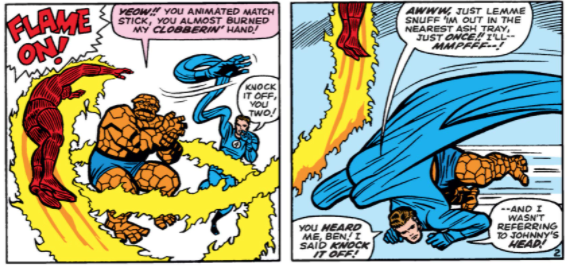
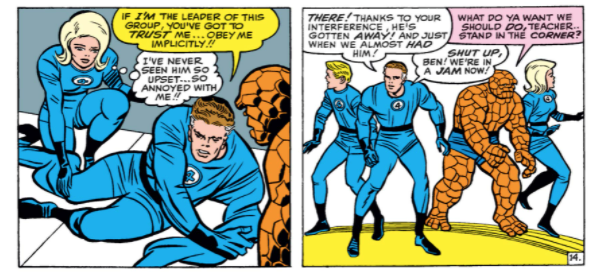
This time it’s Ben chafing under Reed’s leadership

The sexist sixties

Poor Alicia

In what’s becoming a regular occurrence, Alicia is in a pitiable situation

Dig that Kirby Krackle

A nifty panel of the chaos caused by the Infant Terrible

For sale

Fantastic Four 24 in mint condition (9.8) will run you an almost-reasonable $9,750.

Next issue: The return of the Hulk!

“The World’s Greatest Comic Magazine” Fantastic Four No. 23

19 Saturday Jun 2021

Posted by percivalhenry in The World's Greatest Comic Magazine

≈ Leave a comment

Tags

1963, Dr. Doom, Fantastic Four, Fantastic Four 23, jack Kirby, Stan Lee

Fantastic Four 23
“The Master Plan of Dr. Doom”
Published: November 1963
Story: Stan Lee and Jack Kirby
Pencils: Kirby
Script: Lee
Inks: George Roussos
Letters: Sam Rosen
Cover: Kirby and Roussos

Synopsis

A small dinosaur escapes into the Baxter Building from Dr. Doom’s time machine, leading Mr Fantastic to berate the rest of the team for their inattentiveness. Frustrated with Reed’s brusque leadership, the Human Torch, the Thing, and the Invisible Girl decide to vote on a new leader, and when all three vote for themselves, a fight breaks out which ends only when Reed asserts his command over the team.

Meanwhile, three criminals are bailed out of jail by a bald man revealed to be a robot controlled by Dr. Doom. The three have been assembled because of their special talents—strength, superior hearing, and resistance to flame—which are augmented by Doom, and they become the Terrible Trio. The trio use their new powers to capture the Human Torch, Thing, and Invisible Girl, while Doom uses a Thing robot to lure and attract Reed.

The four heroes free themselves from their shackles, then battle Doom only to find he has imprisoned them in a warehouse coated in ionic dust particles, making it vulnerable to a “solar wave” that is transporting the room into outer space. The team is able to escape the room, but Doom plunges into the void.

What’s going on here?

Honestly? Not much, particularly after all the big developments in the last issue. This is fairly inconsequential issue, both for having very little impact on future stories, and for a fairly banal plot, even one involving Doom. If anything, while FF 23 further cements Doom as the team’s primary antagonist, it weakens his impact by dragging him into such an uneventful story. There is a some character building, mostly involving Reed being a jerk and then getting a bit of comeuppance, but it’s not a subplot that is really developed. We do get almost two full pages of Ben and Johnny fighting, though.

The Terrible Trio

The only new characters introduced are the Terrible Trio, a bunch of D-listers who make a handful of appearances over the years. Here they are in Marvel Two-in-One 60, where they crash Alicia’s art opening:

Marvel Two-in-One 60 (1980), art by George Perez and Gene Day

They don’t appear again for almost 40 years, when they show up in Fantastic Four: 4 Yancy Street

4 Yancy Street (2019) Art by Mark Bagley (I think)

Reed Richards is a jerk

He is extra-unpleasant in this issue

He kinda, sorta apologizes after Johnny rescues him after Doom’s freezes him solid.

They’re fighting again

Are they ever

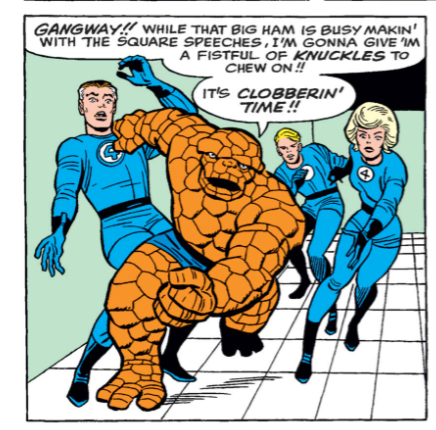
The sexist sixties

Weird science

The ionic dust/ solar wave business is completely perplexing. I have no idea what Stan and Jack were doing here

The incredible Mr. Fantastic

Some cool stretching action.

You call that a trap?

After several issues where Doom builds individual cells to counter the FF’s powers, here he just chains them to a wall (and puts Reed in a box, which Ben smashes. Not even Doom can bother to try very hard in this issue.


He’s a bad man

Doom flexes his bad-guy muscles in disposing of his henchmen

Dig that Kirby Krackle

Jack does get to draw some outer space stuff, so that’s a plus.


Also, this cool sequence:

For sale

A mint issue (9.8) of FF 23 will run you about $21,000. At least that’s what it says here.

Next issue: The FF confront the Infant Terrible!

“The World’s Greatest Comic Magazine” Fantastic Four No. 22

13 Sunday Jun 2021

Posted by percivalhenry in The World's Greatest Comic Magazine

≈ Leave a comment

Tags

1963, Fantastic Four, Fantastic Four 22, jack Kirby, Mole Man, Stan Lee

Fantastic Four 22
“The Return of the Mole Man”
Published: October 1963
Story: Stan Lee and Jack Kirby
Pencils: Kirby
Script: Lee
Inks: George Roussos
Letters: Sam Rosen
Cover: Kirby and Dick Ayers

Synopsis

As Mr. Fantastic experiments on the Invisible Girl, she reveals two new powers: the ability to summon force fields, and to make other objects invisible. Meanwhile, the FF are besieged by complaints from neighbors about the noise and disruption they cause, so the team flies to investigate an island off the coast of New Jersey where Reed can conduct experiments and launch the team’s ICBM.

Once on the island, the team is trapped by the Mole Man, who lured them by instigating the complaints. To get his revenge on the FF from their first meeting in issue 1, he announces a plan to sink the earth’s major cities, provoking a nuclear war. The team is surrounded by a radioactive wall, but they surmount it with Sue’s new force field. The team is then trapped individually in cells designed to counter their powers (much like with Dr. Doom) but through ingenuity they each escape. Reed then hustles them off the island, and when the Mole Man initiates his plan to skink the cities, it’s revealed that Reed rewired the circuits, so only his island sinks.

What’s going on here

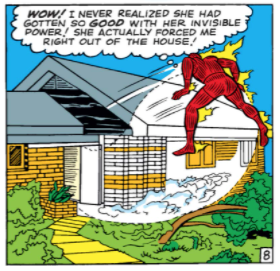
The story is a pretty conventional one: Hijinks in the Baxter Building, confronting a foe who traps them, then a frenzied finish. The issue, however, is notable for a few reasons: A big one is Sue’s new powers. Eventually, it appears, Stan and Jack realized the story-telling limitations of invisibility—there was only so many times Sue could use it to sneak up on a bad guy—so they added a few new wrinkles.

Initially Sue’s force fields were entirely a defensive power and it wasn’t until decades later that she began to wield them offensively, and use them to travel. They’ve effectively become a powerful form of telekineses, leading many to consider her the most powerful member of the FF.

While John Byrne traditionally receives credit for her transformation from weakest to strongest—which culminates with the symbolic adoption of the name Invisible Woman in issue 284—“The Great American Novel” blog makes a compelling case that lots of earlier writers had Sue deploy her force fields in creative, non-defensive ways. That said, I believe it’s fair to note the Byrne made it a project to expand Sue’s arsenal and was deliberate about powering her up.

He was, for instance, the first to have her “fly” on her force fields, an idea which may have come from reader (and author) Carol Strickland:

FF 232 (1981), Byrne

And Byrne has her consistently use her power as a battering ram, something rarely depicted before:

FF 236 (1981), Byrne

FF 22 also debuts Sue’s power to make other things invisible

While not as potent as her force fields, it has come in handy over the years, and maybe is best used here, when she shows the Wizard what his heart looks like:

FF 549 (2007), Written by Dwayne McDuffie, art by Paul Pelletier and Rick Magyar

It’s Clobberin’ Time!

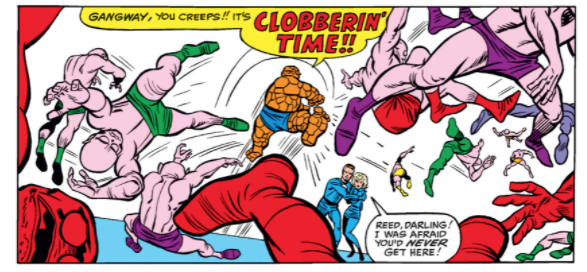
The other big debut in FF 22 was the Thing’s signature phrase (“Yay Bo!” didnt seem to catch on in the same way). “It’s clobberin’ time” quickly becomes as much part of Ben’s identity as his orange rocky appearance. It would be absurd to try to find every use of it, since he says it in virtually every issue, but here are some memorable covers:

Not only does it to become closely associated with Ben, but it becomes one the handful of comic book phrases that have escaped the genre and become part of pop culture. (“It’s a bird, it’s a plane…” “Up, up and away!” and “Hulk Smash!” are maybe the others). There’s no shortage of clobberin’ time merchandise available:

And it’s apparently been adopted / stolen by pro wrestler CM Punk:

Aunt Petunia

Lastly, FF 22 marks the first reference to Ben’s Aunt Petunia, another recurring catch phrase.

For more than 200 issues readers heard about, but never met, Ben’s Aunt Petunia, and it was assumed she was a prim older lady, not unlike Peter Parker’s Aunt May. So Byrne naturally subverted expectations by make her a young-ish country doctor.

FF 239 (1982), Byrne

What year is it?

Topical references abound in FF 22, with children’s comedian Pinky Lee and folk artist Grandma Moses among those getting name-dropped.

Oops

Looks like Stan is covering for Jack here to explain how this stranger wandered past the FF’s vaunted security system

Red menace

The Cold War is again evoked

This is the end?

Even by Stan and Jack’s standards, the ending of FF 22 feels awfully abrupt. The story could have used another page at a minimum instead of cramming all that exposition into the last panel.

They’re fighting again

Aren’t they always?

Dig that Kirby Krackle

This is just a great splash page that captures the personalities of all the members, plus shows off some cool gee-whiz science stuff. George Roussos returned to ink this issue, giving it a different look than most of what came before.

Here’s some other fun stuff from The King (note Reed’s face, and that he’s talking to Mrs. Frobush, a possible precursor to Marvel mascot Irving Forbush):

For Sale

FF 22 in mint condition (9.8) should cost you around $18,000

Next issue: The return of Dr. Doom!

“The World’s Greatest Comic Magazine” Fantastic Four No. 21

06 Sunday Jun 2021

Posted by percivalhenry in The World's Greatest Comic Magazine

≈ 1 Comment

Tags

1963, Fantastic Four, Fantastic Four 21, Hate Monger, jack Kirby, Nick Fury, Stan Lee

Fantastic Four 21
“The Hate Monger
Published: Sept. 1963
Story: Stan Lee and Jack Kirby
Pencils: Kirby
Inks: George Roussos (credited as George Bell)
Letters: Art Simek
Cover: Kirby and Paul Reinman

Synopsis

The Thing startles the rest of the Fantastic Four by lashing out at a punching bag; the cause of his frustration is newspaper articles about the Hate-Monger, a rabble rouser peaching hatred. Taking a walk, the team quickly stumbles across a Hate-Monger rally on a New York Street. When they confront him, he turns his “H-Ray” against them, causing them to fight amongst each other.

Mr. Fantastic, under the Hate-Monger’s influence, declares himself free of the rest of the FF, and, on returning to the Baxter Building, is greeted by Nick Fury, a former colleague from WWII and now a spy and CIA agent. Fury has come to recruit the FF to confront the Hate-Monger in the South American country of San Gusto, a US client state where he is whipping up a rebellion. Reed decides to go himself, and leaves in the FF’s Pogo Plane. The rest of the team, still under the effects of the H-Ray, are goaded by Fury into pursuing him in their ICBM.

Once in San Gusto, Reed takes on the rebel army before he is captured by the Hate-Monger. He is rescued by Fury, who forces the Hate Monger to administer the antidote. The two then capture the rest of the team and restore them to normal, before confronting the Hate Monger. After his H-Ray is turned on his henchmen, the Hate-Monger is unmasked and revealed to be Adolf Hitler (or a clone there of).

What’s going on here?

Fantastic Four 21 marks the first issue where Stan and Jack get anywhere near contemporary social issues. Wearing what looks like a purple Klan hood, surrounded by henchmen dressed like Nazi brown shirts, the Hate-Monger is as close to a real-world villain as exists in early 1960s Marvel. His presence also gives the FF an opportunity to call out the evils of prejudice and “unamerican sentiments” (with a gratuitous swipe at Sue).

The story, unfortunately, doesn’t got much farther in exploring the issues of hatred and bigotry. There is an opportunity there for Stan and Jack to examine why the Hate-Monger’s message is able to find purchase in the American psyche, but instead the story rumbles on in classic FF fashion. The Hate-Monger becomes just another FF villain, with a secret headquarters and zany gadgets. The twist at the end, that he is actually Adolf Hitler, is essentially shrugged off. Future stories reveal him to have been a clone created by Arnim Zola, and he pops up over the decades, but never as a major FF villain.

The story is also notable for the first appearance of Nick Fury as a modern spy. Fury, who debuted in his own World War II comic a few months earlier, is brought up to the present here as a CIA agent and soon goes on to star in his own stories as an agent of S.H.I.E.L.D. in Strange Tales (and later his own book). Notably, he still has two eyes, since he doesn’t begin to wear his eye patch until Strange Tales 135.

He becomes a central figure in the Marvel universe (and Marvel cinematic universe) often serving as a mastermind moving chess pieces, but in this early appearance in the FF, Fury is still more of the WWII brawler. On the cover, he’s dressed as Sgt. Fury, complete with torn Army fatigues.

The issue also establishes a shared history between Nick and Reed in World War II, with an editor’s note plugging Sgt. Fury 3, conveniently on sale, and an early example of marvel using guest stars to promote new books. Here’s their encounter at Massacre Mountain:

Sgt. Fury 3, 1963 (art by Kirby and Dick Ayers)

Fury’s appearance also launches a long tradition of him showing up early in Marvel comics books to set the story in motion. It’s an exceptionally convenient way to drop heroes into stories without a lot of build up: Fury just sends them on a mission and off they go. Often, he summons the heroes to the SHIELD helicarrier, where they confer around a big table that lights up, like here with the Avengers:

Avengers 199, 1980 (art by George Perez and Dan Green)

Or here with the FF:

(FF 241, art by John Byrne)

Sometimes he just appears on a monitor, like here with the X-Men :

(X-Men 1, 1991, art by Jim Lee and Scott Williams)

And to prove the apple doesn’t fall far from the tree, Nick Fury Jr. is up to the same plot-speeding-up tricks decades later:

(Invisible Woman 1, 2019, art by Mattia De Iulis

About those inks

FF 21 was inked by George Roussos, who is credited in the comic as George Bell. Roussos had a remarkably long career at Marvel, with credits stretching from 1941 to 1995, spending his last three decades as a colorist. His style is very distinctive here, and Kirby’s FF take on a very different appearance, looking more like they did in their first issues.

They’re fighting again

This time, at least, it’s with good reason.

Going underground

Instead of flying to San Gusto, the Hate-Monger burrows his way there, using a device that Stan assures us in an editor’s note is *very* plausible.

Speaking of San Gusto

This is the first and only appearance of San Gusto (future Marvel writers tend to use the imaginary country of San Marcos when they need a banana republic) but it does show up in the Marvel Atlas between Colombia and Venezuela.

Mid-centry Modern

The FF’s unique taste in decorating shows up again

The sexist sixties

Sue relaxes by trying on wigs and dresses

The incredible Mr. Fantastic

More creative stretching

Dig that Kirby Krackle

For sale

FF 21 in mint condition (9.8) will cost you about $13,000.

Next issue: The return of the Mole Man!

“The World’s Greatest Comic Magazine” Fantastic Four No. 20

30 Sunday May 2021

Posted by percivalhenry in The World's Greatest Comic Magazine

≈ 1 Comment

Tags

1963, Fantastic Four, Fantastic Four 20, jack Kirby, Molecule Man, Stan Lee

Fantastic Four 20
“The Mysterious Molecule Man”
Published: August 1963
Story: Stan Lee and Jack Kirby
Pencils: Kirby
Script: Lee
Inks: Dick Ayers
Letters: Art Simek
Cover: Kirby and George Roussos

Synopsis

As the Fantastic Four help Mr. Fantastic in his lab, a glowing ball of energy appears on the streets of New York. The team is eventually drawn within it, and it’s revealed to be a gateway sent by the Watcher, who violates his oath of non-interference (again) to alert the team of a new threat to earth. An employee of a nuclear plant suffered an accident, he tells them, and was transformed into Molecule Man, a villain capable of manipulating matter.

The team returns to New York to find the Baxter Building has been moved to Times Square, where the Molecule Man declares he is now ruler of the earth. After a long battle, the FF is unable to subdue him. They retreats into hiding after the Molecule Man announces he will hold Manhattan hostage unless the FF are delivered to him. The FF are rescued by a member of the Yancy Street gang, who delivers them to the apartment of Alicia Masters. There, Reed is inspired by Alicia’s sculptures and devises a trap for the Molecule Man. Deducing he can’t manipulate organic molecules, Reed and the team cover themselves in plaster and pretend to be statues. After he is lured to Alicia’s by a flare, the Molecule Man is overcome with feedback after trying to alter the “statues.” Then the Watcher reappears, and after determining the FF defeated the Molecule Man, he disappears with him after returning the Baxter Building to its normal location.

What’s going on here

Fantastic Four 20 repeats the same basic plot points of earlier issues, such as FF 16, when they battled the Super-Skrull. As in that issue, after an unsuccessful battle with an overpowering villain, the team relies on Reed to outwit the bad guy.

Owen Reece, as the Molecule Man is later identified, goes on to occupy an interesting niche in the Marvel Universe. Although he made occasional appearances as a standard-issue bad guy, he really is too powerful for normal comic purposes and is instead deployed in Marvel’s big events, like Secret Wars and its various sequels, where his power matches the magnitude of the stories.

Here he is in Fantastic Four 188 (written by Len Wein), one his last appearances as an ordinary bad guy (he has taken over Reed’s body in this issue):

FF 188 (1977), art by George Perez and Joe Sinnott

In the first Secret Wars, where earth’s heroes confront the all-powerful Beyonder, writer Jim Shooter writes him as a neurotic nebbish who’s true potential is revealed to him by Dr. Doom (who at this point as stolen the Beyonder’s power):

Secret Wars (1984), art by Mike Zeck and John Beatty

By Secret Wars II, the almost-unreadable sequel about the Beyonder’s sojourn on earth, Reece is now living comfortable in suburbia when he realizes he must confront the Beyonder.

Secret Wars II (1985), art by Al Milgrom and Steve Leialoha

Three decades later, in a new Secret Wars, Johnathan Hickman redeploys the Molecule Man, this time as a human battery powering Doom’s Battle World.

Secret Wars (2015, art by Esad Ribic

Weird science

Throughout FF 20, Stan and Jack toss around various notions about molecules, some of which may surprise chemistry teachers:

I guess newspaper ink contains zinc and lead, but mostly I think they’re paper, ie., carbon (this may be Stan working around Jack’s pencils, since later in the issue it’s revealed that the Molecule man can’t affect “organic” molecules, which presumably includes carbon).

We also have this odd moment of Reed finding proof of life in outer space, as if they hadn’t been to an alien plant in FF 7, much less encountered Skrulls and the Watcher.

The Watcher, insult comic

Uatu doesn’t hold back about the Molecule Man

Pals

I love this bit of back-and-forth between Ben and Johnny. It captures their relationship perfectly.

The strange and terrible power of the atom

Once again, nuclear energy is the one-size-fits-all bestower of powers of the early Marvel universe

The incredible Mr. Fantastic

More creative stretching from Reed

Nu Yawk, Nu Yawk

The FF take the subway

The sexist sixties

Sue wilts under pressure again

Dig that Kirby Krackle

A cool sequence

For Sale

A mint (9.8) copy of FF 20 will run you $33,000, three times more than last issue. Go figure.

Next issue: The Hate-Monger!

“The World’s Greatest Comic Magazine” Fantastic Four No. 19

23 Sunday May 2021

Posted by percivalhenry in The World's Greatest Comic Magazine

≈ Leave a comment

Tags

1963, Fantastic Four, Fantastic Four 19, jack Kirby, Rama-Tut, Stan Lee

Fantastic Four 19
“Prisoners of the Pharoah!” (sic)
Story: Stan Lee and Jack Kirby
Pencils: Kirby
Script: Lee
Inks: Dick Ayers
Letters: Sam Rosen
Cover: Kirby and Paul Reinman

Synopsis

Mr. Fantastic, the Invisible Girl and the Human Torch search New York for the Thing and Alicia Masters. Once they’re all back at the Baxter Building, Reed informs them of his latest discovery: When looking at Egyptian hieroglyphics, he unearthed evidence of a radioactive cure of blindness which could be used to treat Alicia. The team then travels to Dr. Doom’s castle (in the Adirondacks, not Latveria) to find the time machine Doom used in FF 5.

Sent back by Alicia to ancient Egypt, the FF are attacked by local warriors. The FF have no trouble subduing them until they mysteriously lose the use of their powers. Captured, the team is brought before the pharaoh Rama-Tut who reveals himself to also be a time traveler, but from the far-distant future. Bored with his easy life, he traveled to the past (in a vessel that resembles the Sphinx) and set himself up as ruler. Using his future mind-control technology, he makes the FF his slaves, saving Sue to serve as his queen.

The Thing, working as a galley slave, mysteriously transforms back to human form (more on this later), and slips free of his shackles. He then frees the rest of the team before changing back to the Thing. The FF pursue Rama-Tut, who escapes in his time machine. Before returning to the present, Sue discovers the optic nerve treatment for Alicia. Unfortunately, a flaw in the time machine prevents the transport of radioactive material, so the treatment doesn’t make it to the present, leaving Ben distraught.

What’s going on here?

Along with being an entertaining adventure that also contains some nice character building, Fantastic Four 19 has had an out-sized impact on the Marvel universe, primarily because of the introduction of Rama-Tut. Initially conceived as a stand-alone bad, writer Steve Englehart revealed he was actually an earlier incarnation of Kang the Conquerer, a time-traveling Avengers villain.

Avengers 129 (1974), art by Sal Buscema and Joe Staton.

Eventually he was later revealed to also be the Scarlet Centurion and Immortus, and he features in numerous time-twisting stories. It is far beyond the scope of this blog, or the reasoning power of this blogger, to unravel Kang’s complete timeline, but suffice to say he’s a major part of the Marvel firmament.

More specifically, FF 19 also features in a handful of stories when other heroes venture back to the same place and time in ancient Egypt.

First, Dr. Strange is sent back in time by Nightmare (for reasons way too complicated to get into here). Captured by the automated defenses in Rama-Tut’s time machine, he uses his astral form to explore and discovers the captured FF.
Dr. Strange 53 (1982), art by Marshall Rogers and Terry Austin

In this telling by Roger Stern and Roy Thomas, it was Dr. Strange that changed Ben back to his human form, setting off the events that allowed the FF to return to the future.

Here’s Stan and Jack’s telling of the events

And here is Stern and Thomas’s

Artist Marshall Rogers also has fun mirroring Kirby’s great sequence of Ben escaping the galley:

Not to be out-done, Englehart has the West Coast Avengers also travel back to the same moment (and also for reasons way too complicated to get into here). In that story, the team encounters both Strange and the FF.

WCA 22 (1987), art by Al Milgrom and Kim DeMulder

In Englehart’s story, the WCA are desperate to hitch a ride back to the present, but just miss the FF.

Here’s Stan and Jack:

And here’s Englehart

Both the Dr. Strange and the WCA comics are the sort of intricate, multi-layered story telling that rewards fans with obsessive knowledge of their Marvel characters and history, but also represents the fan-as-creator tendencies that left new readers (and some editors) cold. These are the kinds of story helped inspire projects like the New Universe and the Ultimate Universe, where there was no deep past for writers to play in and no fear of convoluted stories losing readers

Pals

FF 19 also featured some nice moments between the team, particularly this panel, where Reed and Ben’s friendship is obvious. We’ve had some many examples of Reed scolding Ben that it seemed Stan forgot they are former college roommates and best friends.

The Amazing Mr. Fantastic

We get some great stretching action in this issue. First:

and then here:

Spalling iz hard!

“Pharaoh” is consistently misspelled “Pharoah” throughout the issue.

They’re fighting again

It’s pretty mild, compared to other issues

The sexist sixties

Once again, Sue is singled out by the FF’s captor for special, creepy treatment.

Fun time

I loved this sequence

Kirby Krackle

There are a lot of great images in this issue, but this might be the single best panel in the first 19 issues of the FF.

These are also great

For sale

A mint (9.8) version of FF 19 is just $11,000. A bargain!

Next issue: The Molecule Man!

“The World’s Greatest Comic Magazine” Fantastic Four Annual No. 1

16 Sunday May 2021

Posted by percivalhenry in The World's Greatest Comic Magazine

≈ 1 Comment

Tags

Annual, Fantastic Four, Fantastic Four Annual, jack Kirby, Namor, Spider-Man, Stan Lee

Fantastic Four Annual 1
Published July 2, 1963

“The Sub-Mariner versus the Human Race” (main story)
Story: Stan Lee and Jack Kirby
Pencils: Kirby
Script: Lee
Inks: Dick Ayers
Letters: Art Simek

“The Fabulous Fantastic Four Meet Spider-Man” (second story)
Story: Lee
Pencils: Kirby
Inks: Steve Ditko
Letters: Ray Holloway

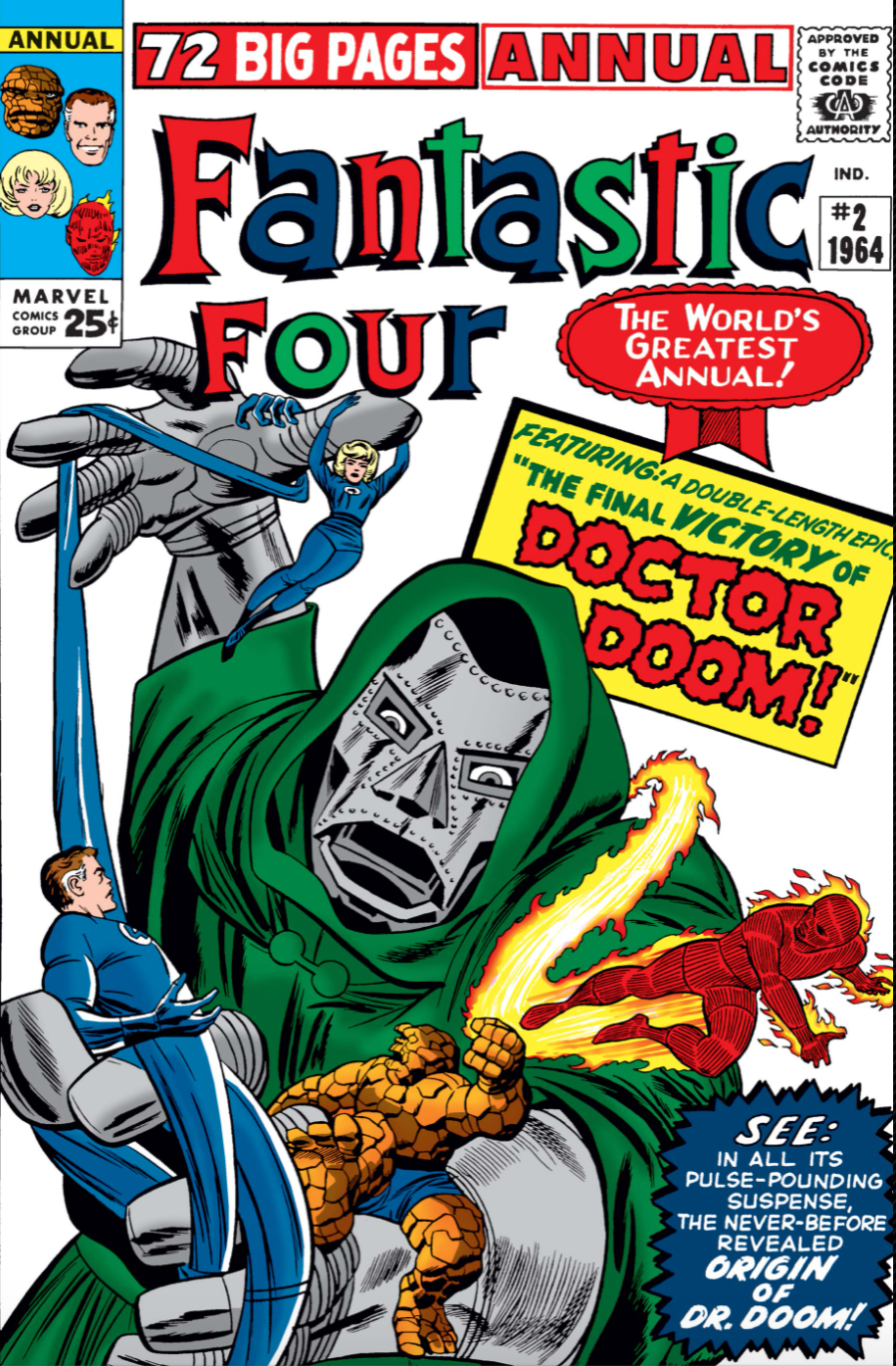
Cover: Kirby and Ayers


Buckle up everyone, because we’ve got a lot to cover in the Fantastic Four’s first annual. It features two stories, both loaded with historic significance, a gallery of pin-ups, and a handful of assorted extras, all of which are worth looking at.

But first, the main event:

Synopsis

The story begins under the ocean, in Atlantis, which Namor the Sub-Mariner has finally rediscovered and where he is now crowned as ruler. We meet Dorma, his love interest, and Krang, a rival. Meanwhile, in New York, the Fantastic Four plan a cruise vacation in part to investigate the sighting of sea monsters. While at sea, the team is captured by Namor (the sea monsters were a lure), who informs the team the surface world can no longer encroach on his ocean kingdom, and releases the FF to spread the word.

Reed summons an emergency session of the United Nations, and introduces Dr. G. W. Falton, who explains the history of homo mermanus, the water-breathing off shot of humans, their civilization, and the birth of Namor. When Reed declares humanity must fight Atlantis, Falton reveals himself to be Namor in disguise, and then launches an invasion of New York.

New York is soon overwhelmed by Atlanteans, but Reed invents a device that evaporates the water in the their helmets, sending them back to the sea. Defeated, Namor abducts the Invisible Girl after a scuffle with the FF, and brings her to Atlantis. The rest of the FF pursues, and while Namor and the team battle, Dorma realizes Namor is in love with Sue and floods her chamber. Sue nearly drowns, and Namor calls off his fight with the FF to take Sue to a hospital on land. When he returns to the ocean, the city of Atlantis is deserted as his people have abandoned him.

What’s going on here?

This is the first annual of the modern Marvel era, but apparently not Marvel’s first annual. While investigating the history of Marvel’s annuals is an exercise in frustration, the lack of explanation in this issue suggests readers were used to them. Initially Marvel used its annuals to tell big stories or for big events like Reed and Sue’s wedding (spoiler!). Later, they became used for Marvel’s interminable cross-over events. While they were once reliably published one a year (annually, you might say) they’ve since become much more erratic. The FF reached 27 annuals before the first series was rebooted in 1998 (though some were reprints).

This first story has a lot going on. Most importantly it tells the story of Namor, his people, and his birth to an Atlantean princess and a human sea captain. Namor has now appeared in five stories in the FF’s first two years, as many as Dr. Doom, and with this annual he’s given more dimension and background. Notably, he’s also identified as by G.W. Falton (really Namor in disguise) “the first known mutant,” a tag line which Marvel used to advertise Namor’s solo book in later, mutant-crazed years.

The story also moves Namor from villain closer to hero, or at least, anti-hero. Despite his new-found leadership of Atlantis, it doesn’t appear his heart is really in the invasion of earth, and he’s still clearly smitten with Sue. And while Sue remains Namor-curious, she seems to realize her future is with Reed and the team.

The annual just has a ton of action as Stan and Jack take advantage of the extra space to stretch out. The regular jokey fight between Ben and Johnny, usually just a panel or two each issue, covers more than two pages. The team also battles Namor twice, each time for several pages.

They’re fighting

As noted above, this is a big brawl.

The sexist sixties

The real victim of Ben and Johnny’s fight? Sue’s dresses.

The Amazing Mr. Fantastic

Reed gets to show off a bit while fighting Namor

Operator

Reed never wrote down the number for the United Nations.

Red Menace

Khrushchev makes his second appearance in the FF. For those keeping score, that’s Khrushchev 2, JFK 1.

Vacation!

Ooops

Very odd drawing of Ben here by Jack. If I didn’t know better, I’d say he looked like Pepe the Frog.

Kirby Krackle

Kack makes up for his stumble with all sorts of cool images, particularly in this double-page spread of Atlantis, the only double-page spread in the FF to date.

Also this is a pretty excellent view of Namor. A swimmer’s body, indeed.

But wait, there’s more!

The second story is an odd one – it’s an expanded version of the FF’s first meeting with Spider-Man, which appeared as part of a larger story in Amazing Spider-Man 1, published a few months earlier.

There’s not much to it: Spider-man, very new to the super-heroing business, breaks into the Baxter Building and fights the FF, hoping to prove his value with the expectation they will hire him. When he finds out there’s no money in being an FF member, he sulks off. While the version in ASM 1 was drawn by Ditko, this one was drawn by Kirby with Ditko’s inks. The dialogue and the layouts are basically the same, but the art is very different. See for yourself:

  • ASM 1 (Ditko)
  • FF Annual 1 (Kirby/Ditko)

Spider-Man tried the same trick decades later with the Avengers, breaking into Avengers Mansion and asking for a job. It didn’t work out then, either. (Much later, of course, he ended up as a member of both teams).

Avengers 236 (Milgrom/ Sinnott)

While Spidey’s initial meeting with the FF was an inauspicious one, it was the first of many encounters that led to a deep friendship between Peter Parker and the FF. They have appeared in so many issues together it would be impossible to list them all but here are some notable ones:


From Marvel Team-Up 17

Art by Gil Kane and “many hands”

From Marvel Team-Up 100

Art by Frank Miller and Bob Wiacek

From Amazing Spider-Man 258

  • ASM 258 (Frenz/ Rubinstein)

And much more recently, from 2011 ‘s FF 1, when Peter joined the team after Johnny was believed dead:

  • FF1 Epting/Mounts

We’re still not done!

Fantastic Four Annual 1 included a series of pin-ups of the FF’s foes. Interestingly, while many—like the Mole Man and the Mad Thinker— had only appeared one, their presence in the gallery suggested Stan and Jack had long-term plans for them.

The annual also included a cutaway drawing of the Baxter Building, the third such illustration of the FF’s headquarters so far. Each one is a little more detailed, and this one includes an interesting tidbit about Sue and Johnny still living at home and commuting in from the suburbs.

Lastly, each of the FF was the subject of a Q&A section that attempted to answer readers’ questions about the team. For example, we learn why Reed is grey at the temples, that Johnny is just 16, and that while the Hulk is stronger than the Thing, Ben is a more wily fighter. Alas, much of Sue’s Q&A is dedicated to her love life.

For sale

A mint version (9.8) of FF Annual 1 should cost you around $46,000.

Next week: Introducing the Rama Tut!

← Older posts
Newer posts →
  • “The World’s Greatest Comic Magazine!” Fantastic Four Annual No. 15
  • “The World’s Greatest Comic Magazine!” Fantastic Four No. 223
  • “The World’s Greatest Comic Magazine!” Fantastic Four No. 222
  • “The World’s Greatest Comic Magazine!” Fantastic Four No. 221
  • “The World’s Greatest Comic Magazine!” Fantastic Four No. 220
  • July 2026
  • June 2026
  • May 2026
  • April 2026
  • March 2026
  • February 2026
  • January 2026
  • December 2025
  • November 2025
  • October 2025
  • September 2025
  • August 2025
  • July 2025
  • June 2025
  • May 2025
  • April 2025
  • March 2025
  • February 2025
  • January 2025
  • December 2024
  • November 2024
  • October 2024
  • September 2024
  • August 2024
  • July 2024
  • June 2024
  • May 2024
  • April 2024
  • March 2024
  • February 2024
  • January 2024
  • December 2023
  • November 2023
  • September 2023
  • July 2023
  • June 2023
  • May 2023
  • April 2023
  • March 2023
  • February 2023
  • January 2023
  • December 2022
  • November 2022
  • October 2022
  • September 2022
  • August 2022
  • July 2022
  • June 2022
  • May 2022
  • April 2022
  • March 2022
  • February 2022
  • January 2022
  • December 2021
  • November 2021
  • October 2021
  • September 2021
  • August 2021
  • July 2021
  • June 2021
  • May 2021
  • April 2021
  • March 2021
  • February 2021
  • January 2021
  • December 2020
  • February 2018
  • May 2016
  • February 2016
  • January 2016
  • December 2015
  • November 2015
  • October 2015
  • September 2015
  • August 2015
  • July 2015
  • April 2015
  • March 2015
  • January 2015
  • December 2014
  • November 2014
  • October 2014
  • September 2014
  • August 2014
  • June 2014
  • May 2014
  • April 2014
  • March 2014
  • February 2014
  • July 2026
  • June 2026
  • May 2026
  • April 2026
  • March 2026
  • February 2026
  • January 2026
  • December 2025
  • November 2025
  • October 2025
  • September 2025
  • August 2025
  • July 2025
  • June 2025
  • May 2025
  • April 2025
  • March 2025
  • February 2025
  • January 2025
  • December 2024
  • November 2024
  • October 2024
  • September 2024
  • August 2024
  • July 2024
  • June 2024
  • May 2024
  • April 2024
  • March 2024
  • February 2024
  • January 2024
  • December 2023
  • November 2023
  • September 2023
  • July 2023
  • June 2023
  • May 2023
  • April 2023
  • March 2023
  • February 2023
  • January 2023
  • December 2022
  • November 2022
  • October 2022
  • September 2022
  • August 2022
  • July 2022
  • June 2022
  • May 2022
  • April 2022
  • March 2022
  • February 2022
  • January 2022
  • December 2021
  • November 2021
  • October 2021
  • September 2021
  • August 2021
  • July 2021
  • June 2021
  • May 2021
  • April 2021
  • March 2021
  • February 2021
  • January 2021
  • December 2020
  • February 2018
  • May 2016
  • February 2016
  • January 2016
  • December 2015
  • November 2015
  • October 2015
  • September 2015
  • August 2015
  • July 2015
  • April 2015
  • March 2015
  • January 2015
  • December 2014
  • November 2014
  • October 2014
  • September 2014
  • August 2014
  • June 2014
  • May 2014
  • April 2014
  • March 2014
  • February 2014
“The World’s Greatest Comic Magazine!” Fantastic Four Annual No. 15

“The World’s Greatest Comic Magazine!” Fantastic Four Annual No. 15

percivalhenry's avatar by percivalhenry July 18, 2026
“The World’s Greatest Comic Magazine!” Fantastic Four No. 223

“The World’s Greatest Comic Magazine!” Fantastic Four No. 223

percivalhenry's avatar by percivalhenry July 14, 2026
“The World’s Greatest Comic Magazine!” Fantastic Four No. 222

“The World’s Greatest Comic Magazine!” Fantastic Four No. 222

percivalhenry's avatar by percivalhenry July 5, 2026
“The World’s Greatest Comic Magazine!” Fantastic Four No. 221

“The World’s Greatest Comic Magazine!” Fantastic Four No. 221

percivalhenry's avatar by percivalhenry June 25, 2026
“The World’s Greatest Comic Magazine!” Fantastic Four No. 220

“The World’s Greatest Comic Magazine!” Fantastic Four No. 220

percivalhenry's avatar by percivalhenry June 15, 2026
“The World’s Greatest Comic Magazine!” Fantastic Four No. 219

“The World’s Greatest Comic Magazine!” Fantastic Four No. 219

percivalhenry's avatar by percivalhenry June 7, 2026

Blog at WordPress.com.

  • Subscribe Subscribed
    • Percival Henry: The Fantastic Four and more
    • Join 74 other subscribers
    • Already have a WordPress.com account? Log in now.
    • Percival Henry: The Fantastic Four and more
    • Subscribe Subscribed
    • Sign up
    • Log in
    • Report this content
    • View site in Reader
    • Manage subscriptions
    • Collapse this bar
Loading Comments...