• About Percival Henry

Percival Henry: The Fantastic Four and more

~ Blogging the Fantastic Four issue by issue (plus whatever else grabs my attention)

Percival Henry: The Fantastic Four and more

Category Archives: The World’s Greatest Comic Magazine

“The World’s Greatest Comic Magazine!” Fantastic Four No. 205

31 Saturday Jan 2026

Posted by percivalhenry in The World's Greatest Comic Magazine

≈ 4 Comments

Tags

1979, Fantastic Four, Fantastic Four 205, Keith Pollard, marv wolfman, Marvel comics, Skrulls

Fantastic Four 205
“When World’s Die!”
Published January 1979
Writer: Marv Wolfman
Pencils: Keith Pollard
Inks: Joe Sinnott
Letters: Jim Novak
Colors: Glynis Wein
Editor: Wolfman
Cover: Pollard and Sinnott


Synopsis

Mr. Fantastic, the Invisible Girl and the Thing travel by “teleportation ray” to the Andromeda Galaxy where Xandar is attacked by the Skulls. The FF battle on the side of the Xandarians before they are captured by the Skulls. Meanwhile, back on Earth, the Human Torch is hypnotized, along with other students at his new colleges, as part of some nefarious scheme of the Monocle and his unknown employer.


What’s going on here?

This comic does a capable job of advancing the two storylines that were kicked off in the previous issue. The main story is very much a space opera, with the Fantastic Four as players in the bigger struggle between Skulls and Xandar.

The fact that the FF are on Xandar came as a surprise, since it was never mentioned in the first issue. I confess I am not a reader of Nova, so I wasn’t familiar with the planet’s unique set-up, but I did think the soldiers looked suspiciously Nova-like. For a comic published in the era where it was assumed every issue was someone’s first, omitting the name of the planet seems like a big goof, and yet another reason why writer’s shouldn’t be their own editors.

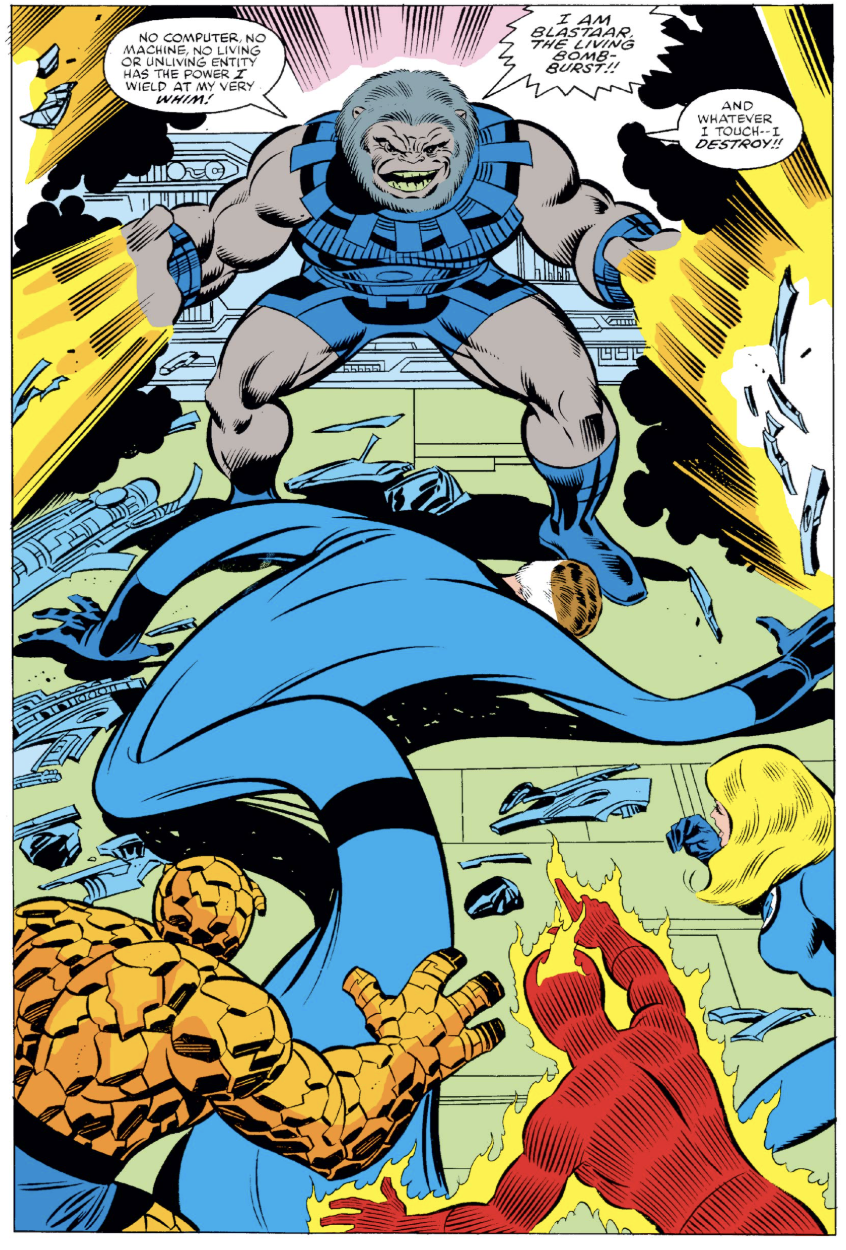
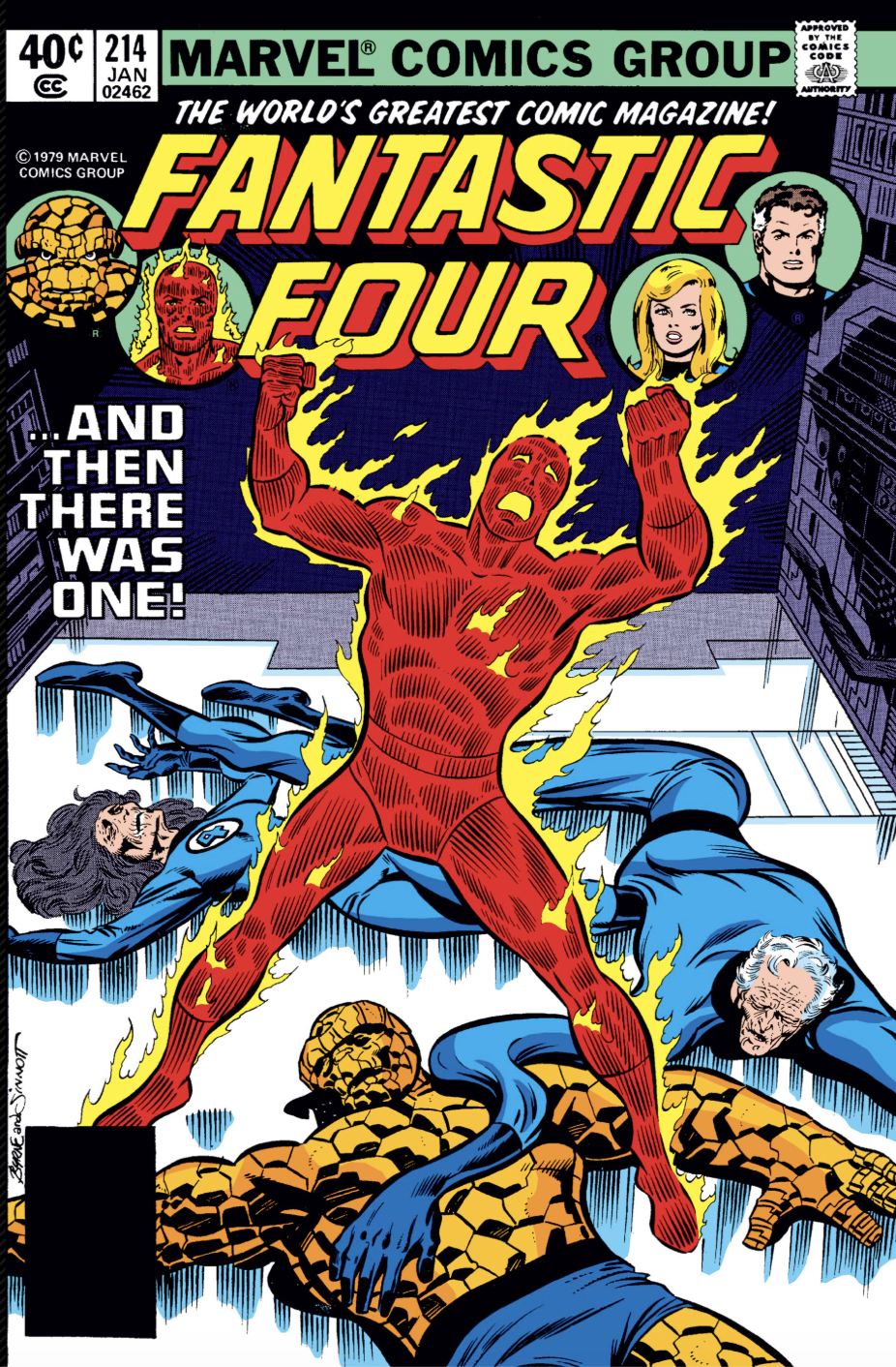
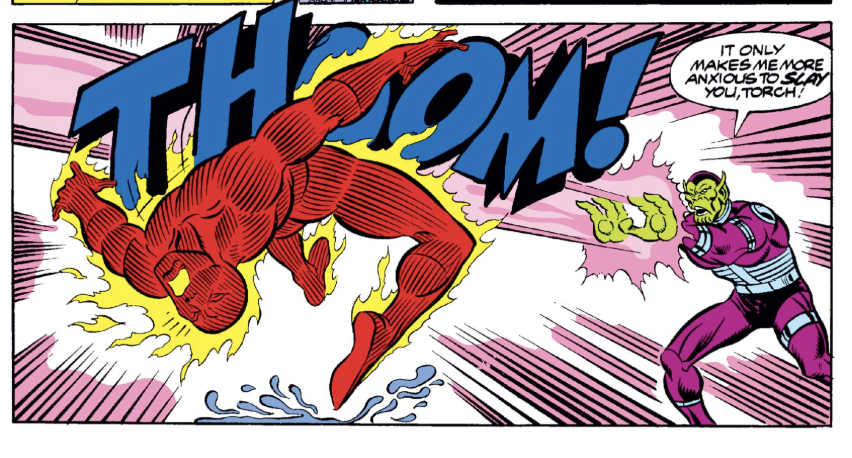
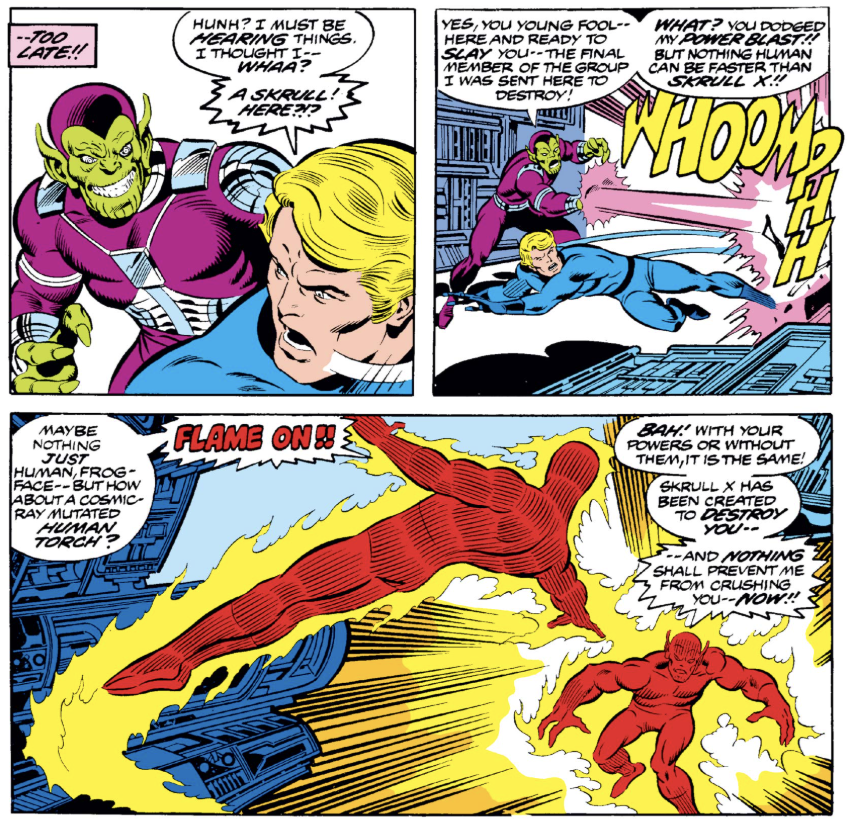
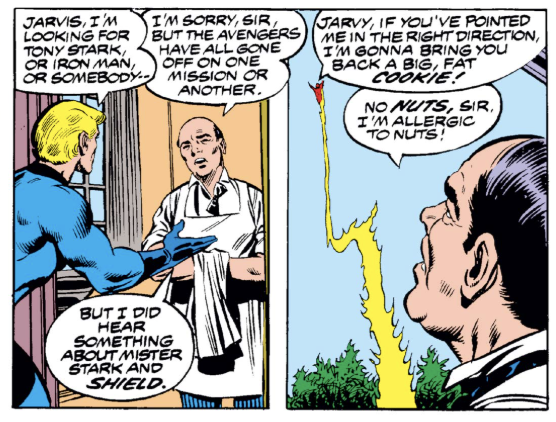
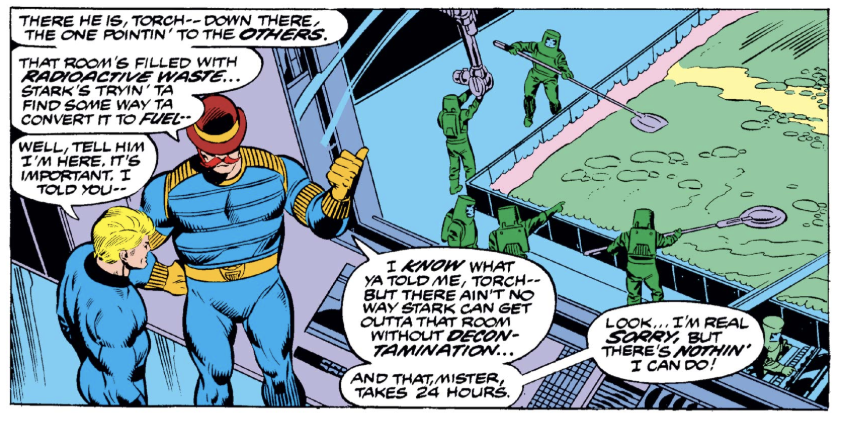
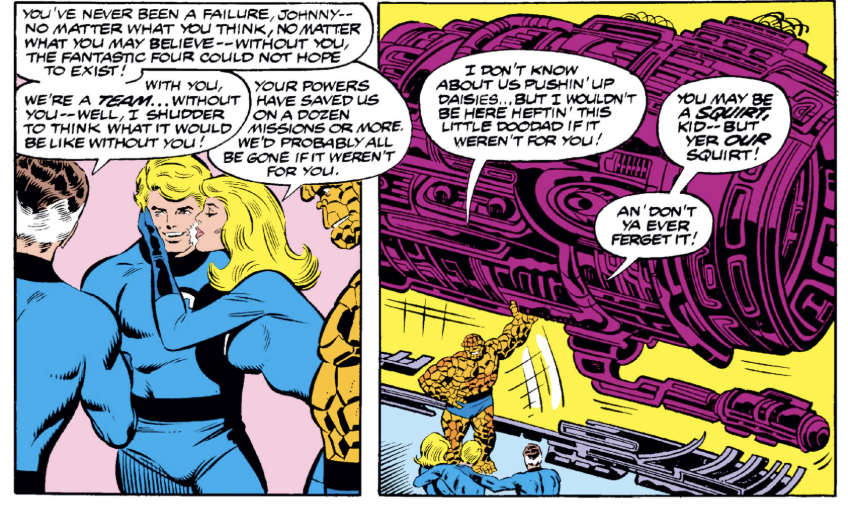
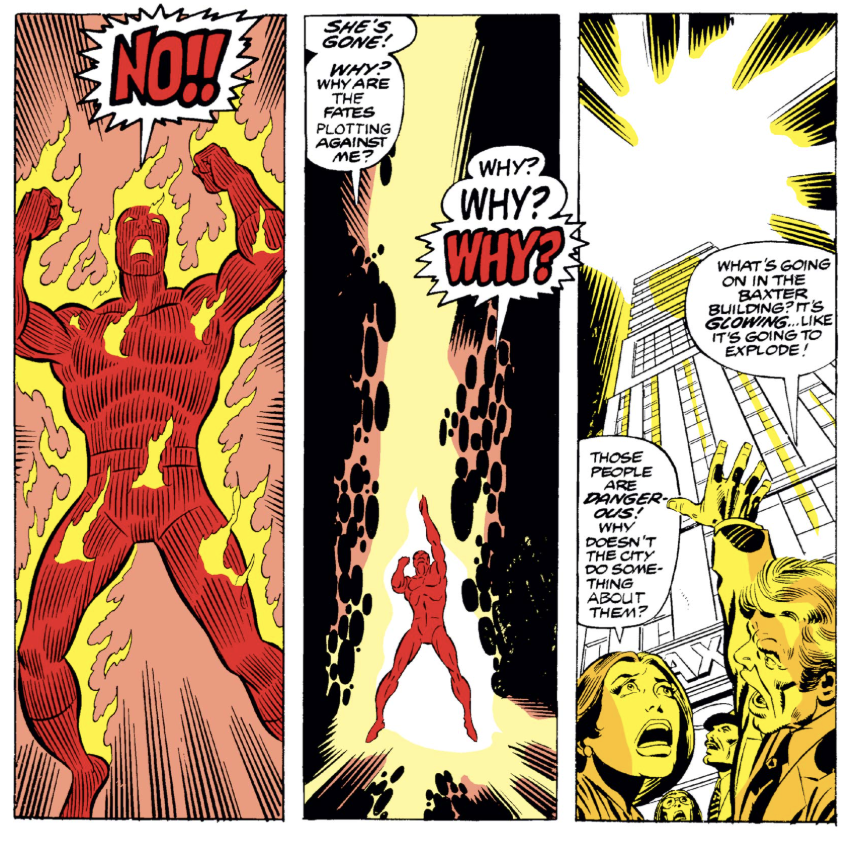
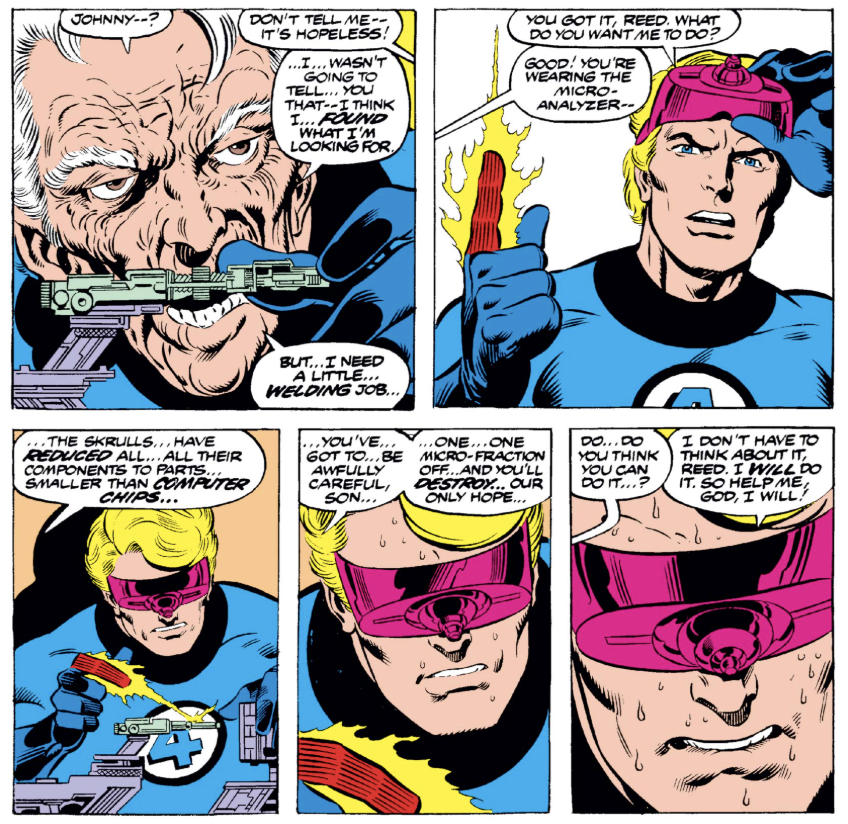
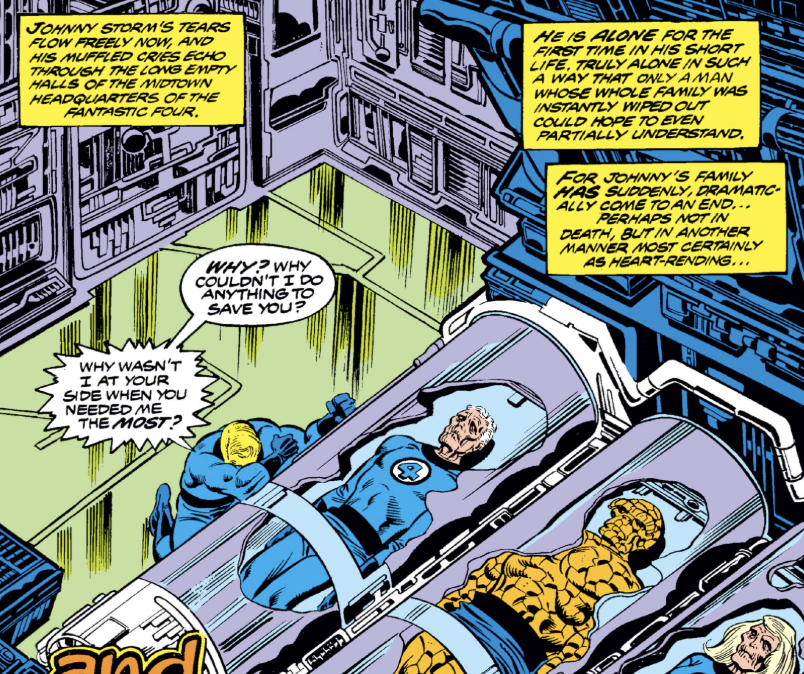
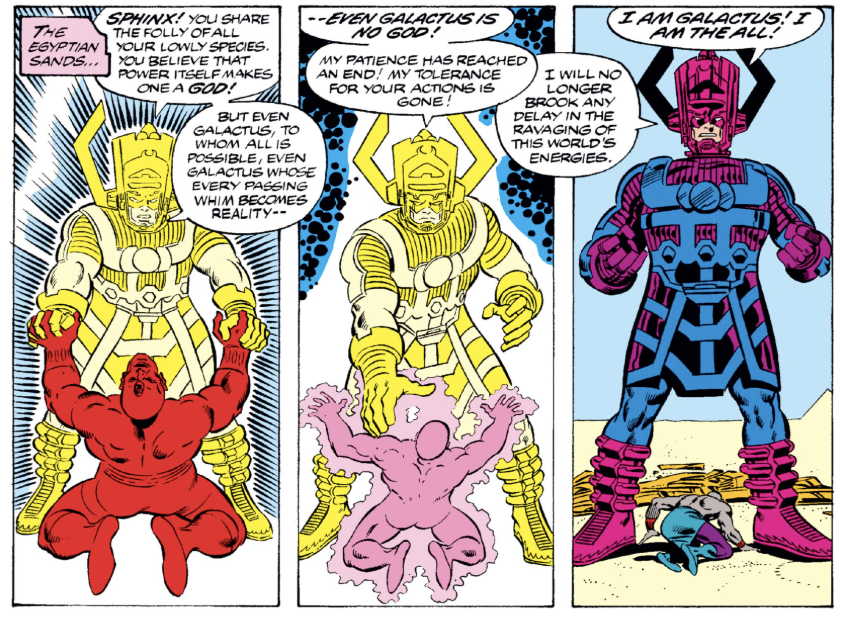
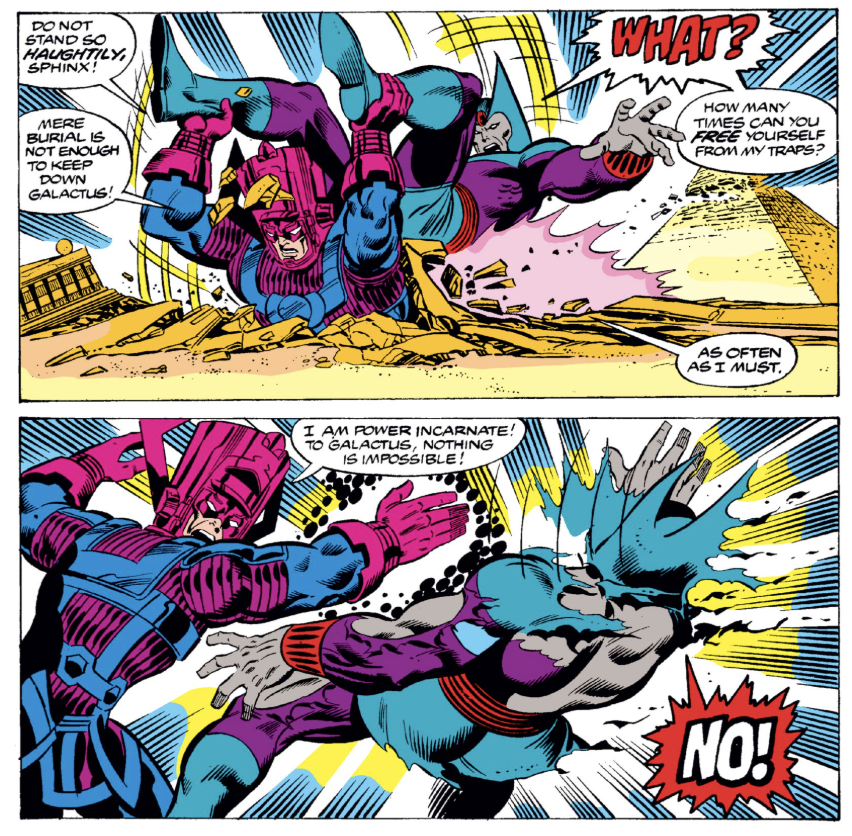
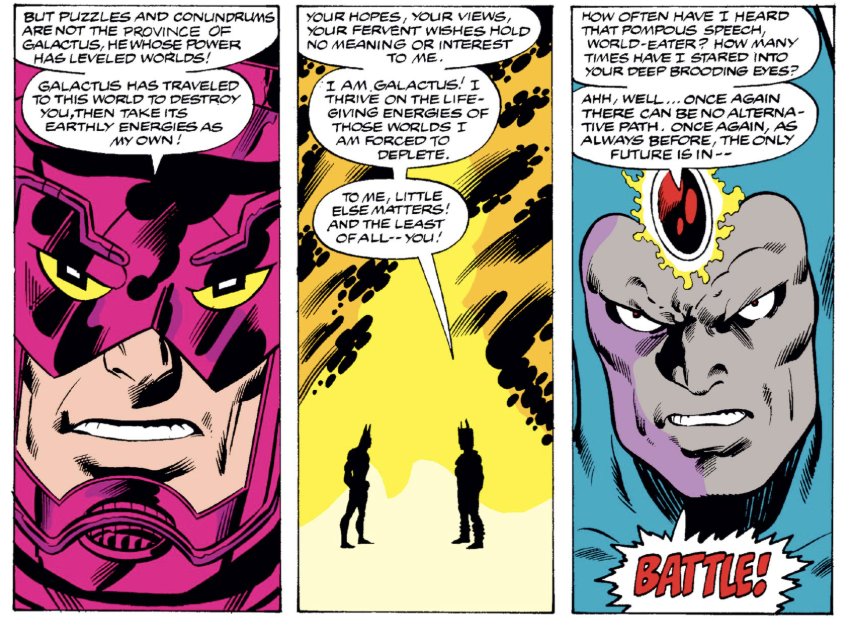
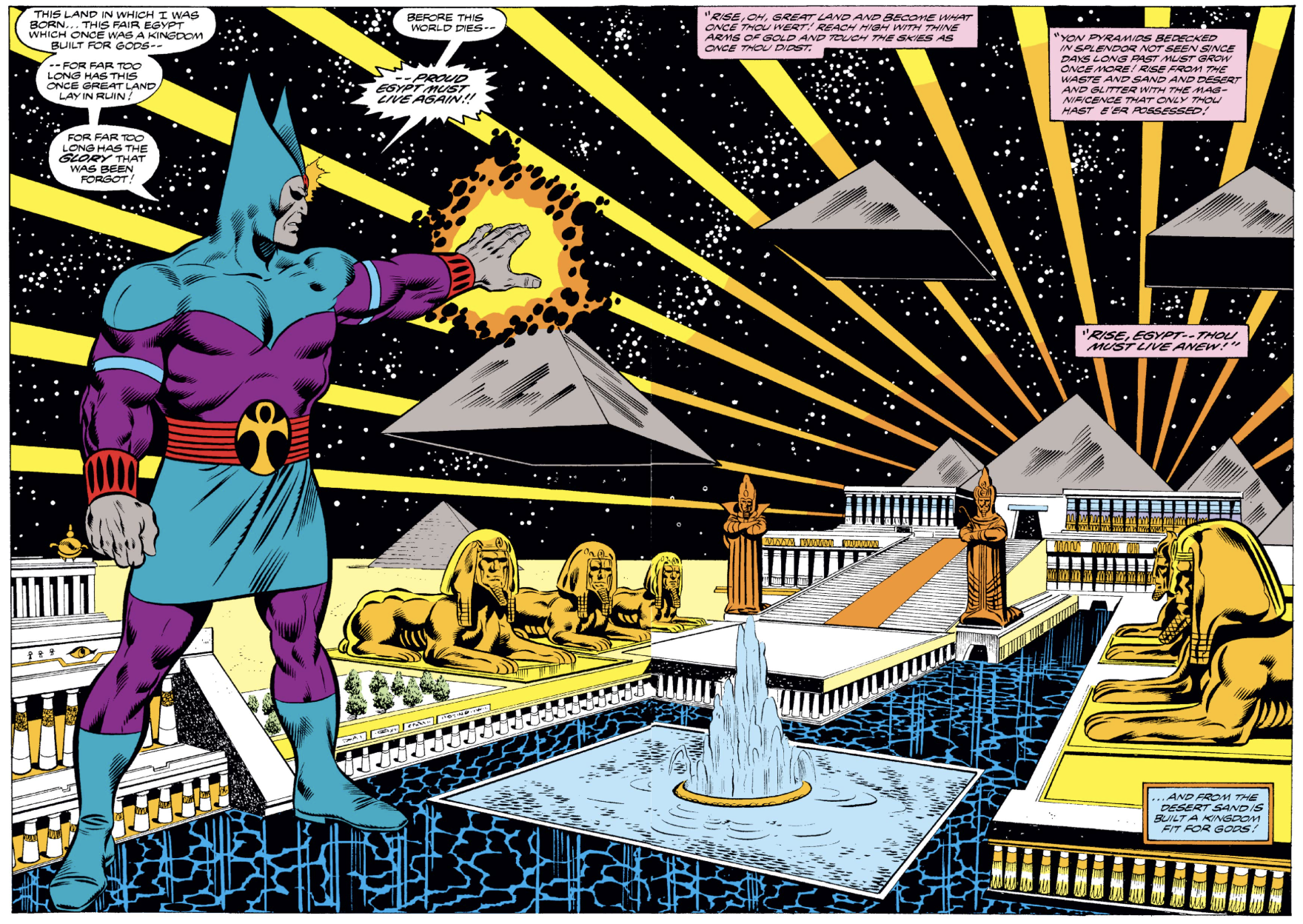
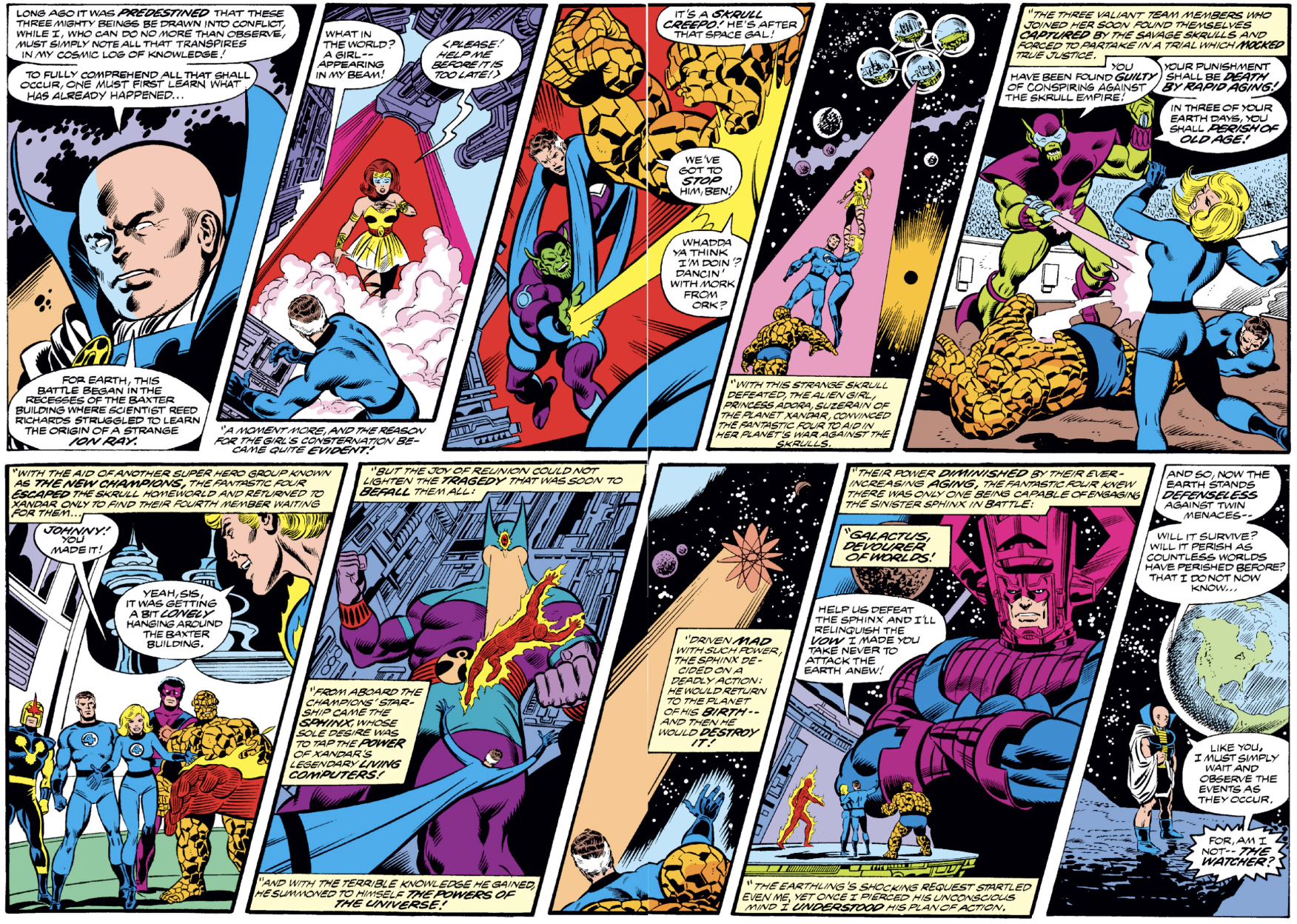
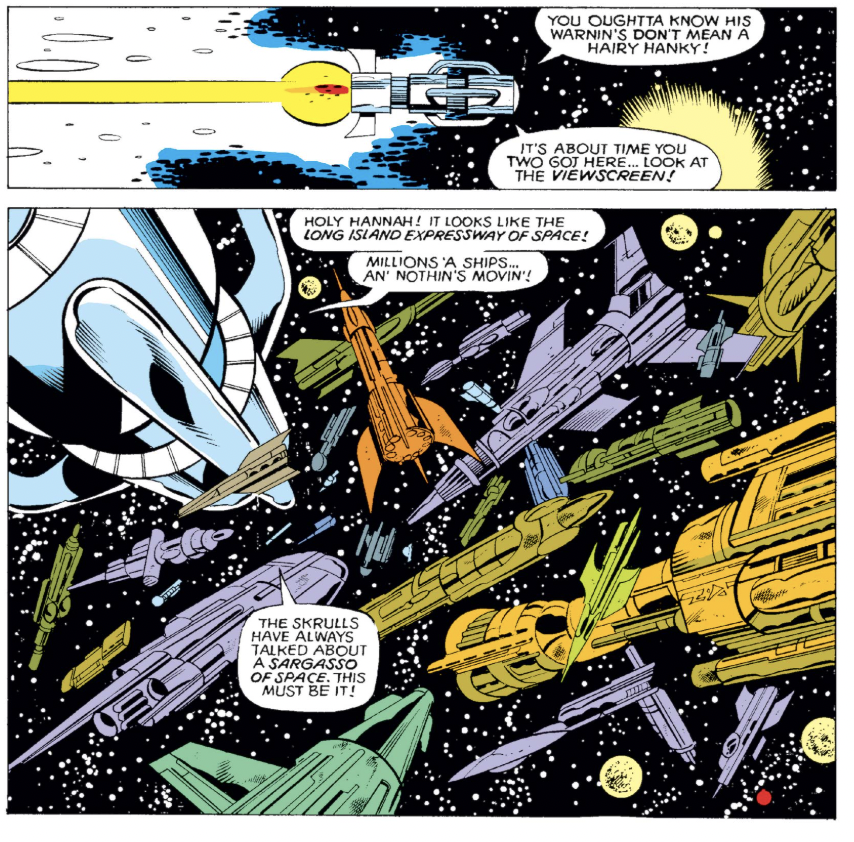
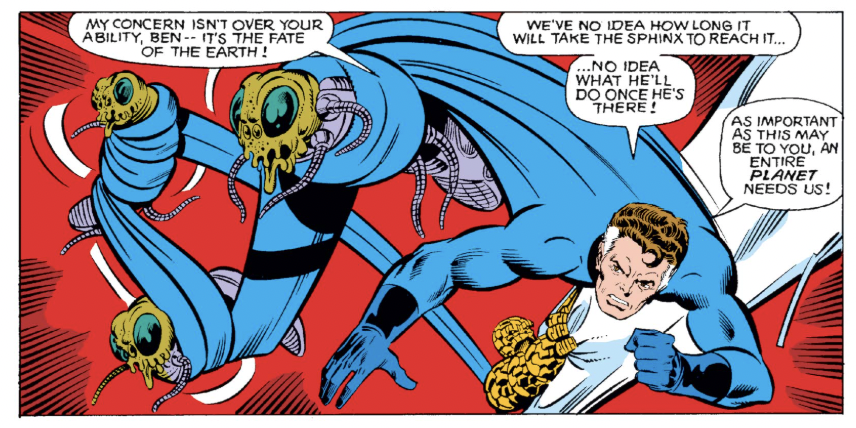
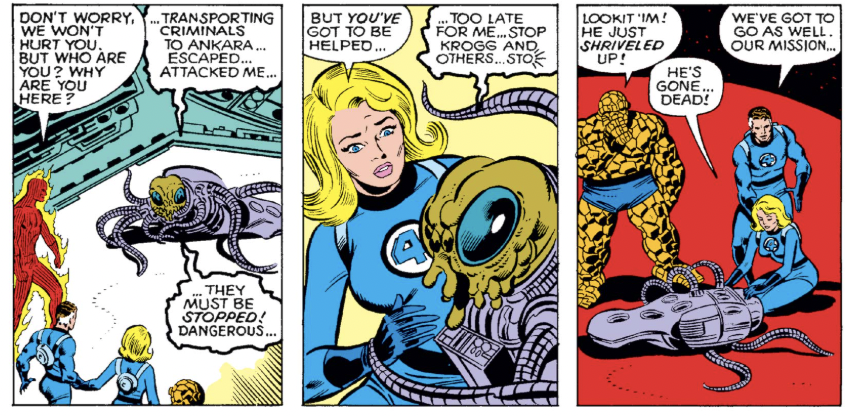
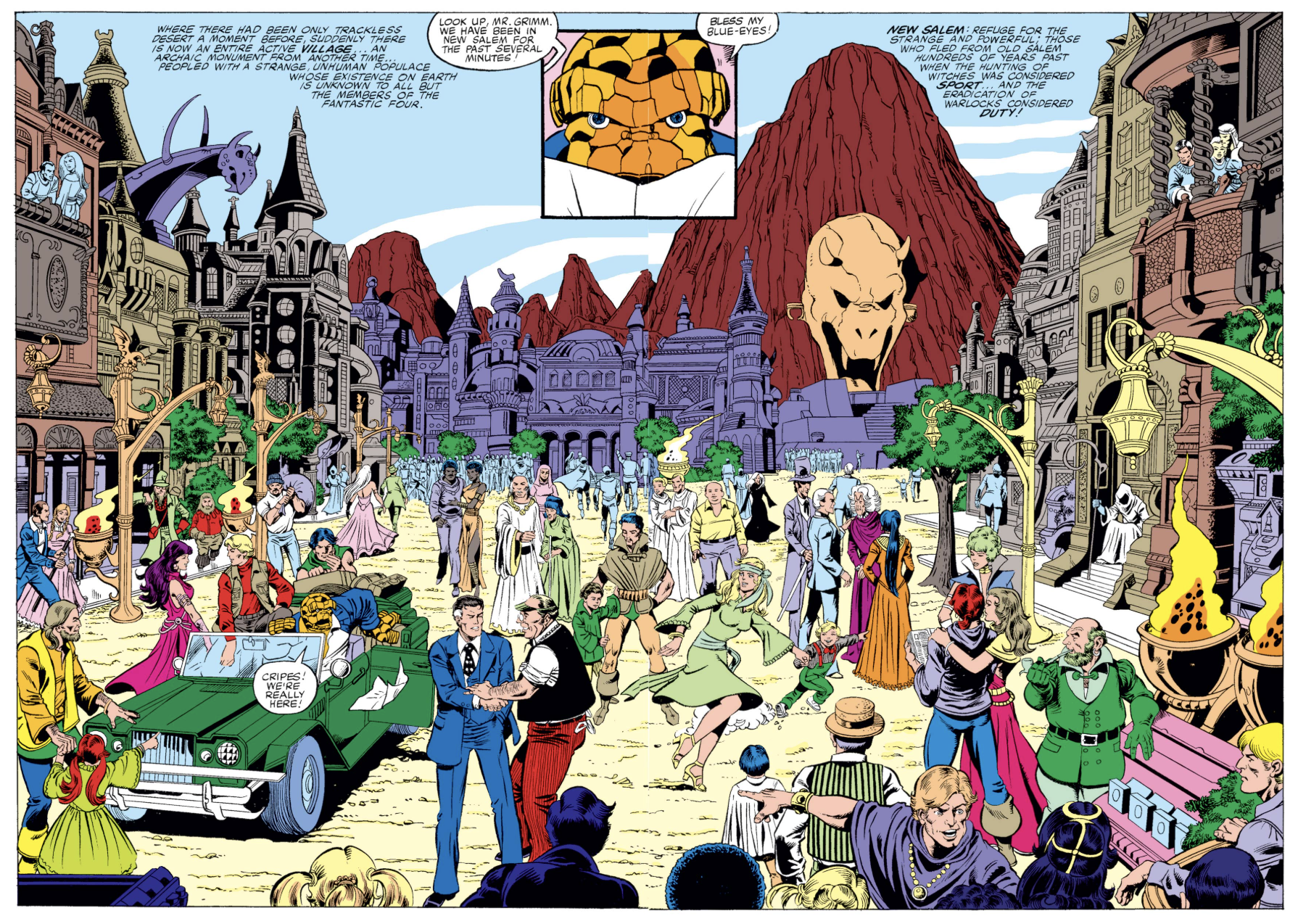
While Wolfman’s story hums along, the star is really Keith Pollard, who delivers some incredible images, including a stunning double-page spread, which needs to be seen in a comic to really do it justice. With each issue, my appreciation for Pollard grows. Like John Buscema, he seems very comfortable within the official house style, as established by Kirby and policed by Sinnott, yet brings a flair for storytelling and dynamic panel designs.


What I liked


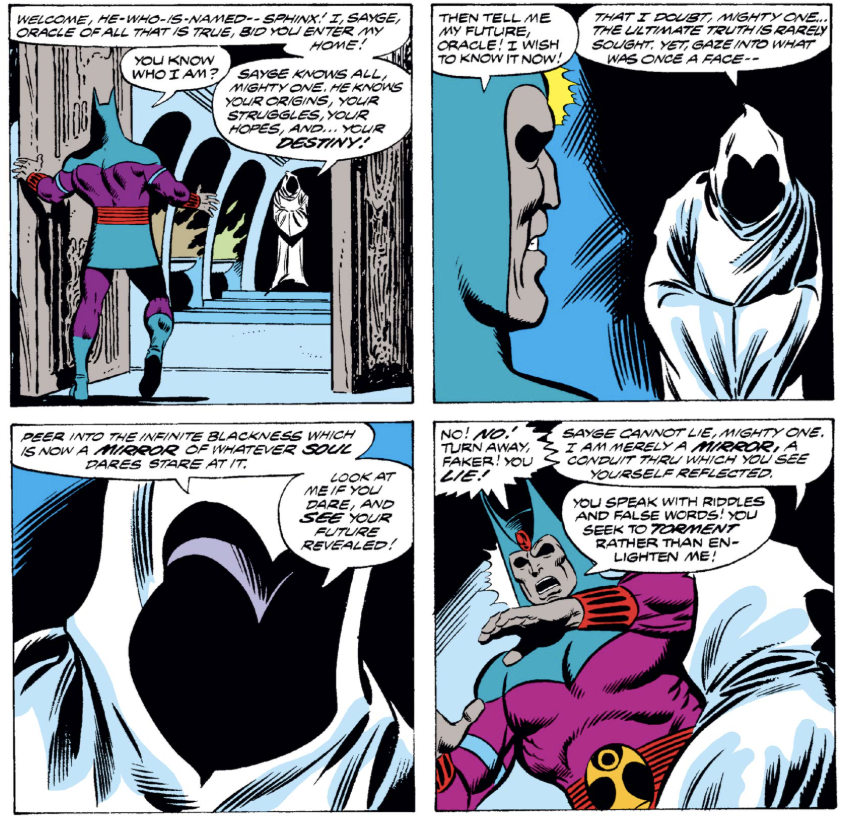
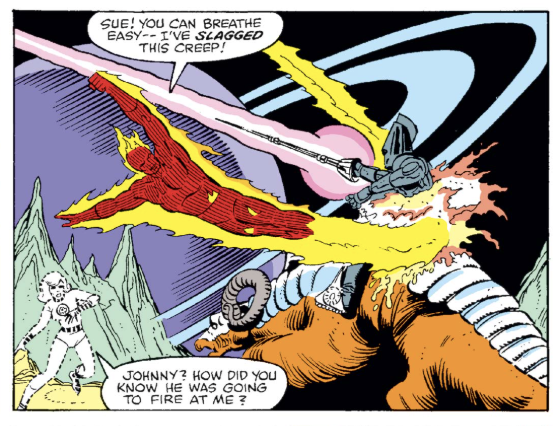
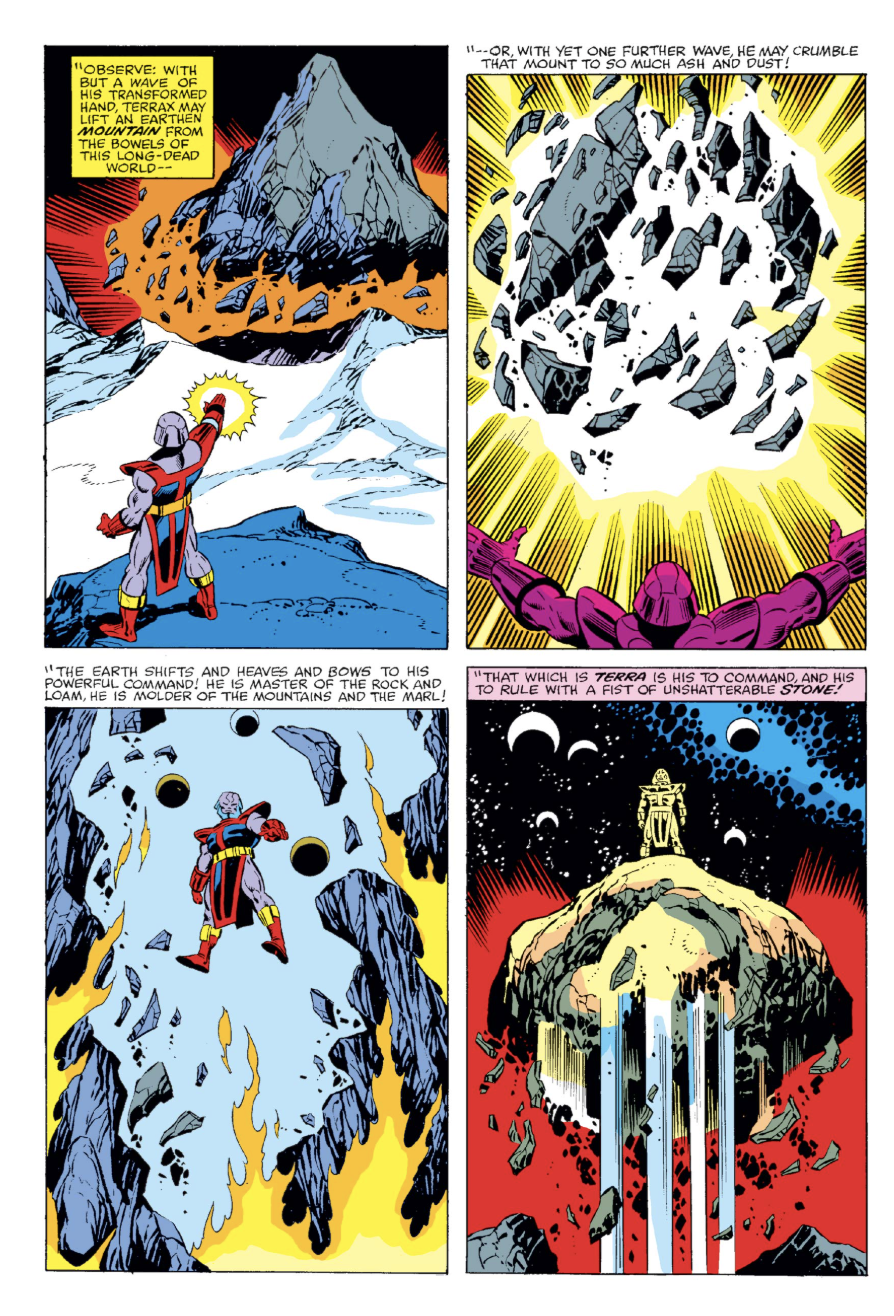
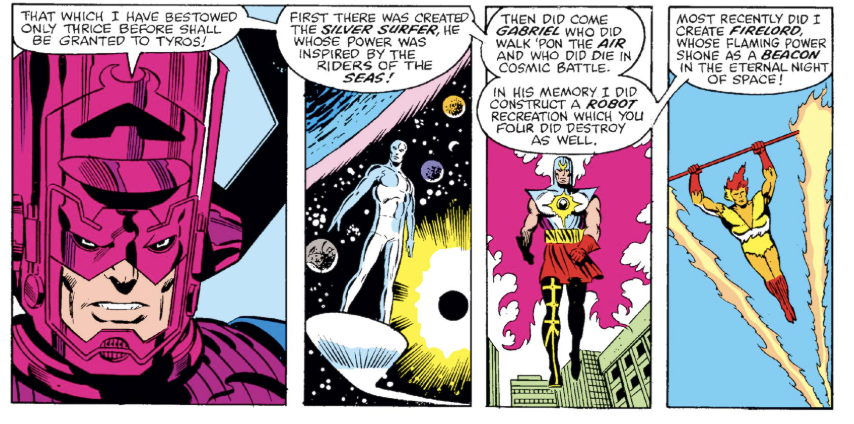
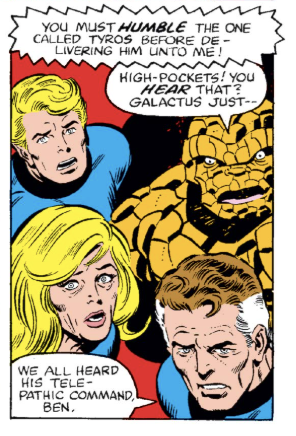
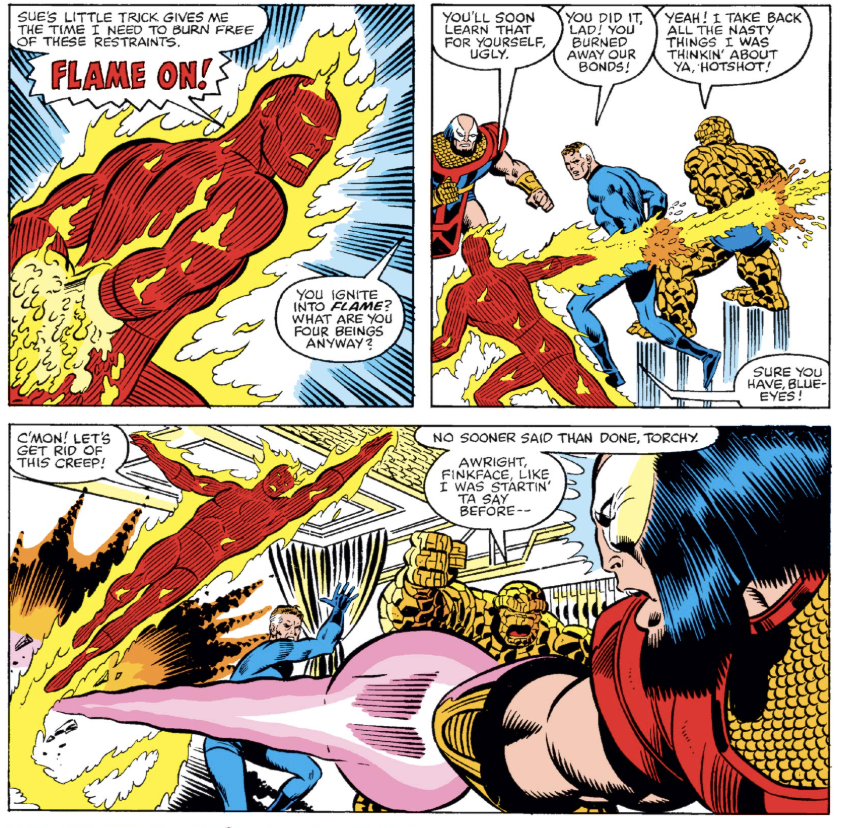
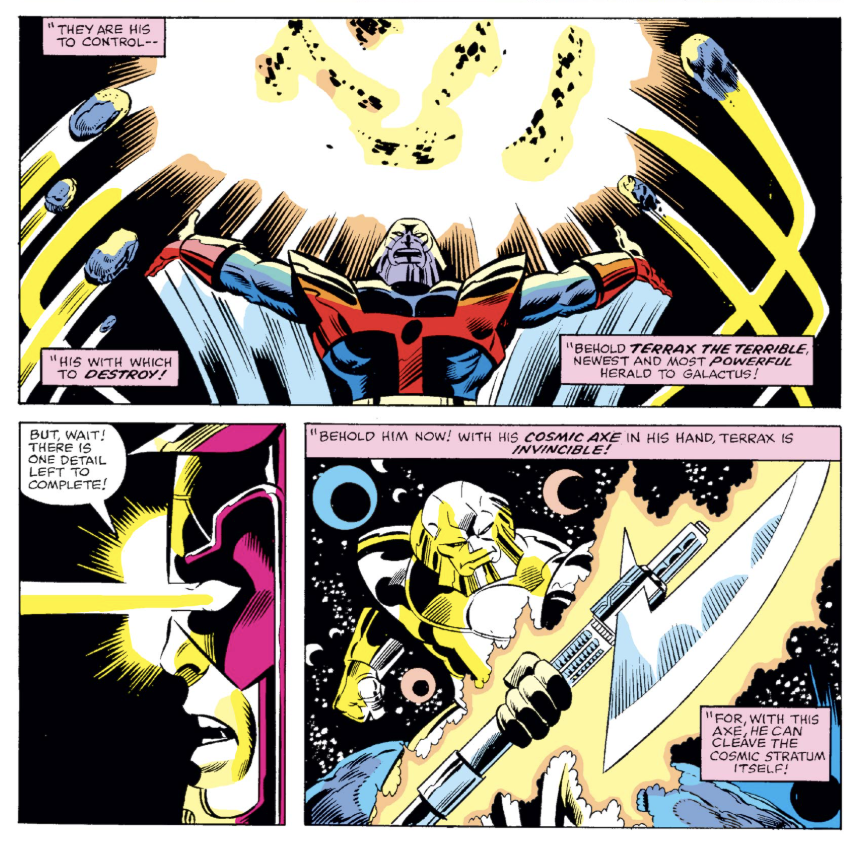
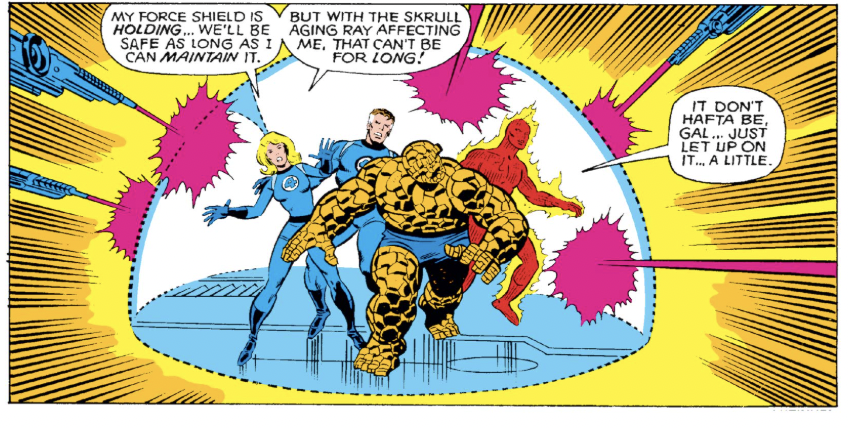
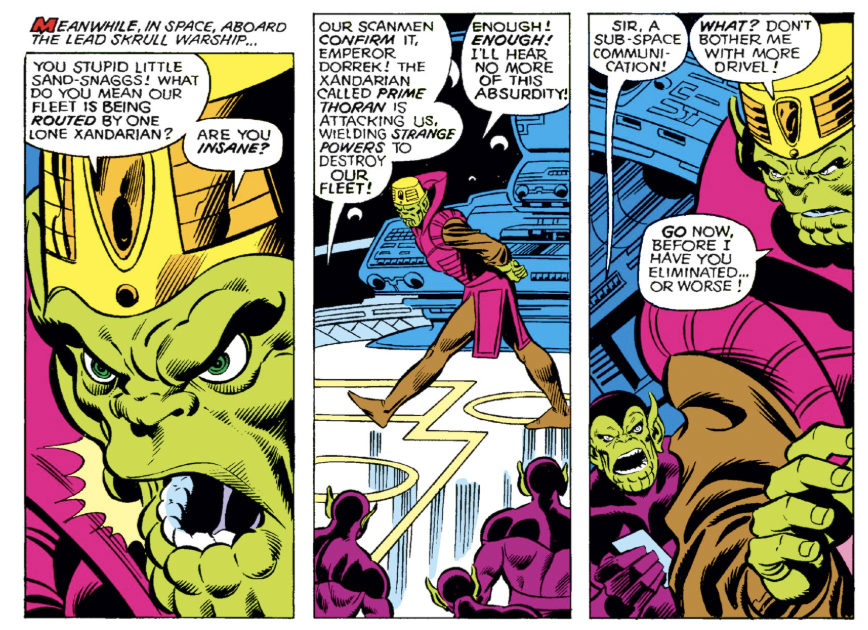
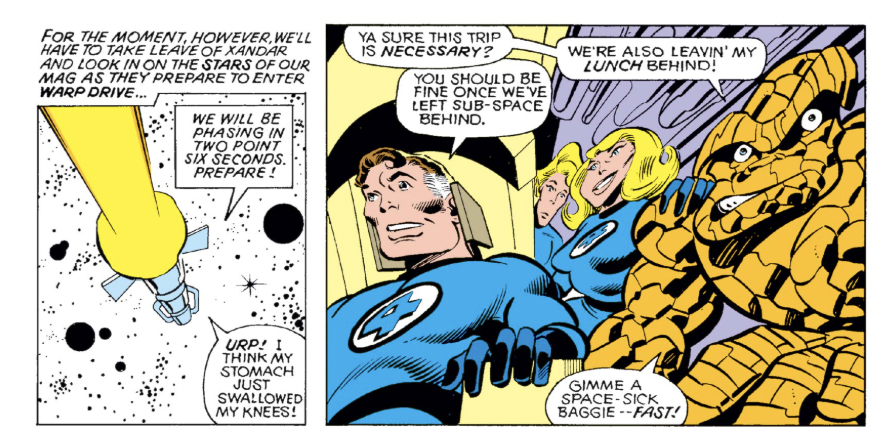
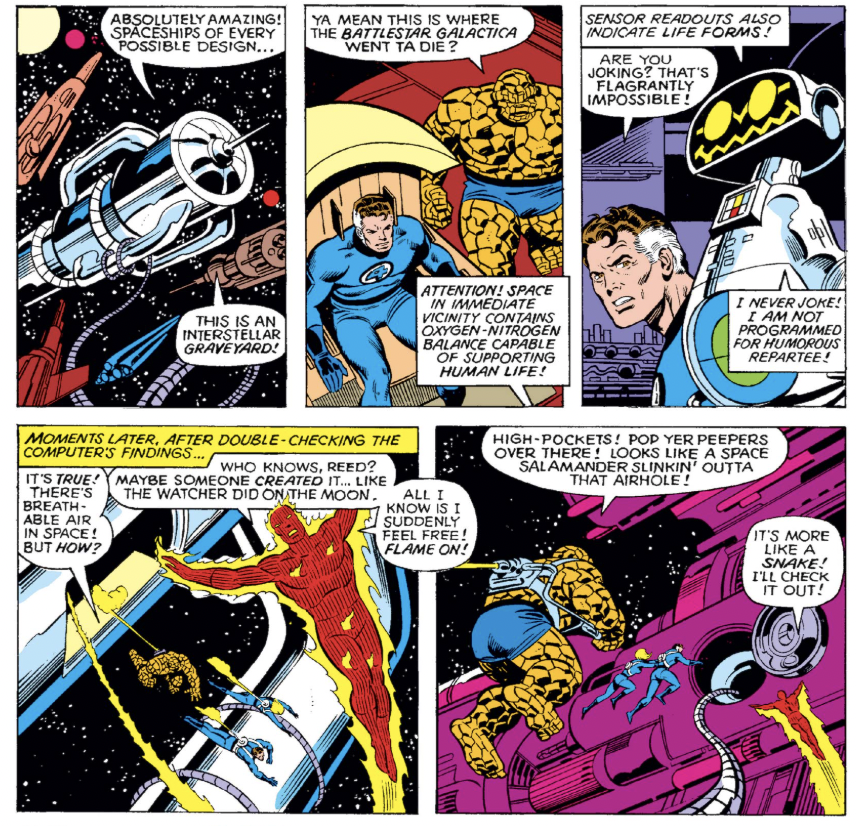
Here’s some more Pollard:


What I didn’t like

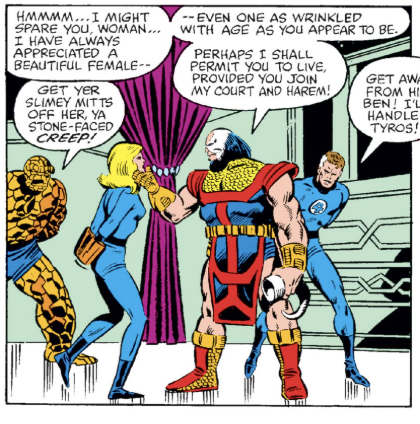
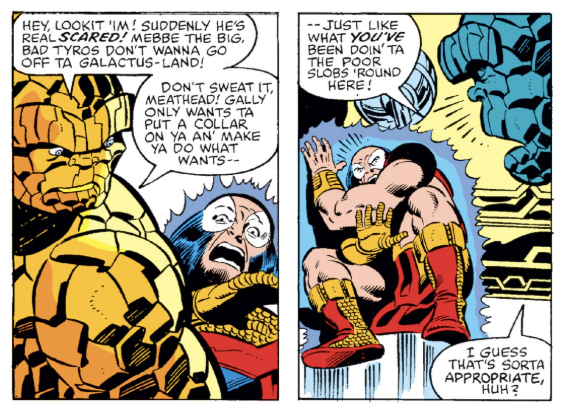
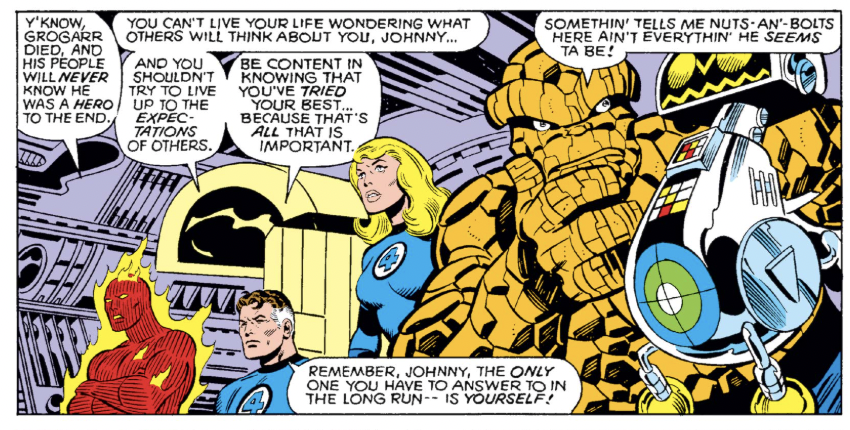
There are a number of odd elements in this comic, such as the narrator’s description of Ben as a “monstrous orange-hided Thing.”


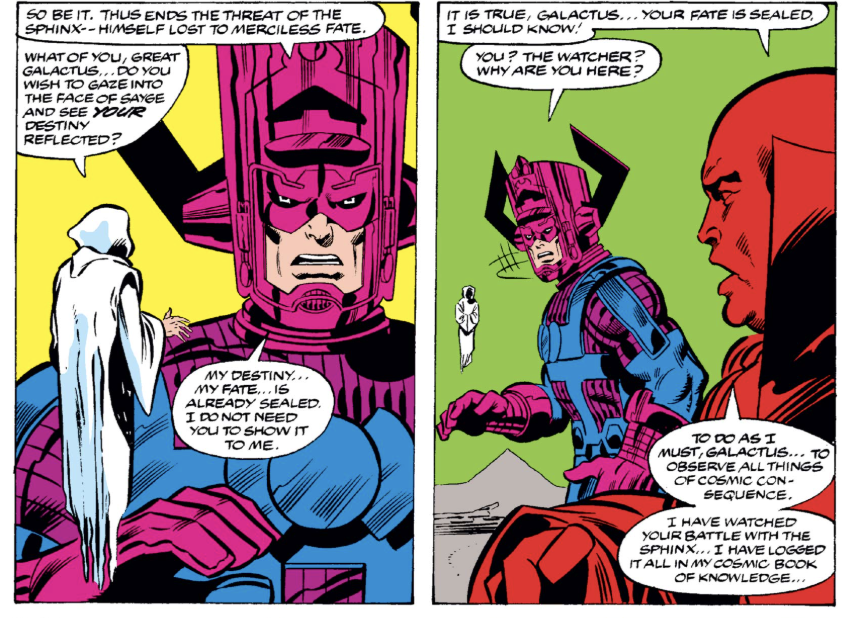
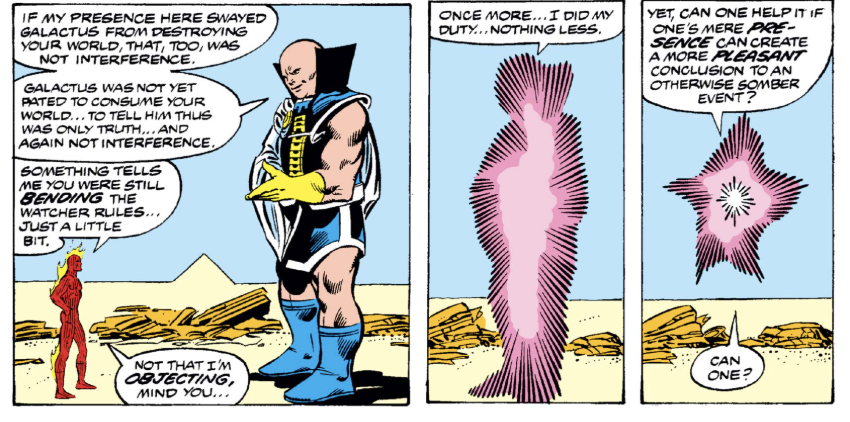
The Watcher shows up and, of course, violates his oath. has there been a comic where he actually honors his oath? I would never lend that guy money because his word is just no good.


For an alien race, the Skulls seem very obsessed with dogs. Do they even have dogs?


Overall

A meh comic redeemed by Pollard

“The World’s Greatest Comic Magazine!” Fantastic Four No. 204

18 Sunday Jan 2026

Posted by percivalhenry in The World's Greatest Comic Magazine

≈ 2 Comments

Tags

1978, Fantastic Four, Fantastic Four 204, marv wolfman, Marvel comics, Skrulls

Fantastic Four 204
“The Andromeda Attack!”
Published December 1978
Writer: Marv Wolfman
Pencils: Keith Pollard
Inks: Joe Sinnott
Letters: Jim Novak
Colors: Françoise Mouly
Editor: Wolfman
Cover: Al Milgrom and Sinnott

Synopsis

Mr Fantastic, investigating lingering damage caused by Quasimodo, discovers a ray leading from Earth to the Andromeda Galaxy. It delivers an alien woman, who is quickly followed by a Skrull. The FF subdue the Skull and learn the woman’s home planet is being attacked. When the team prepares to journey to space to save it, Johnny says he wants to remain on Earth and enroll in a new college, which unbeknownst to him is a trap set by The Monocle.


What’s going on here?

Despite it being a bit of a jumble, I liked this comic. It’s very much a setting-the-stage issue, putting into motion two plots but still leaving plenty of room for the character work that Wolfman excels at. There is an overly-long flashback that goes into great length about the history of the alien race, but it’s sort of fun and feels like a story from the golden age of science fiction. It’s also good to see the Skrulls again; a successful comic rotates stories between new menaces and old, familiar villains and it had been a while since we heard from the Skrulls.

Keith Pollard and Joe Sinnott are again solid on the art. The cover is by Al Milgrom, with inks by Sinnott.

What I liked

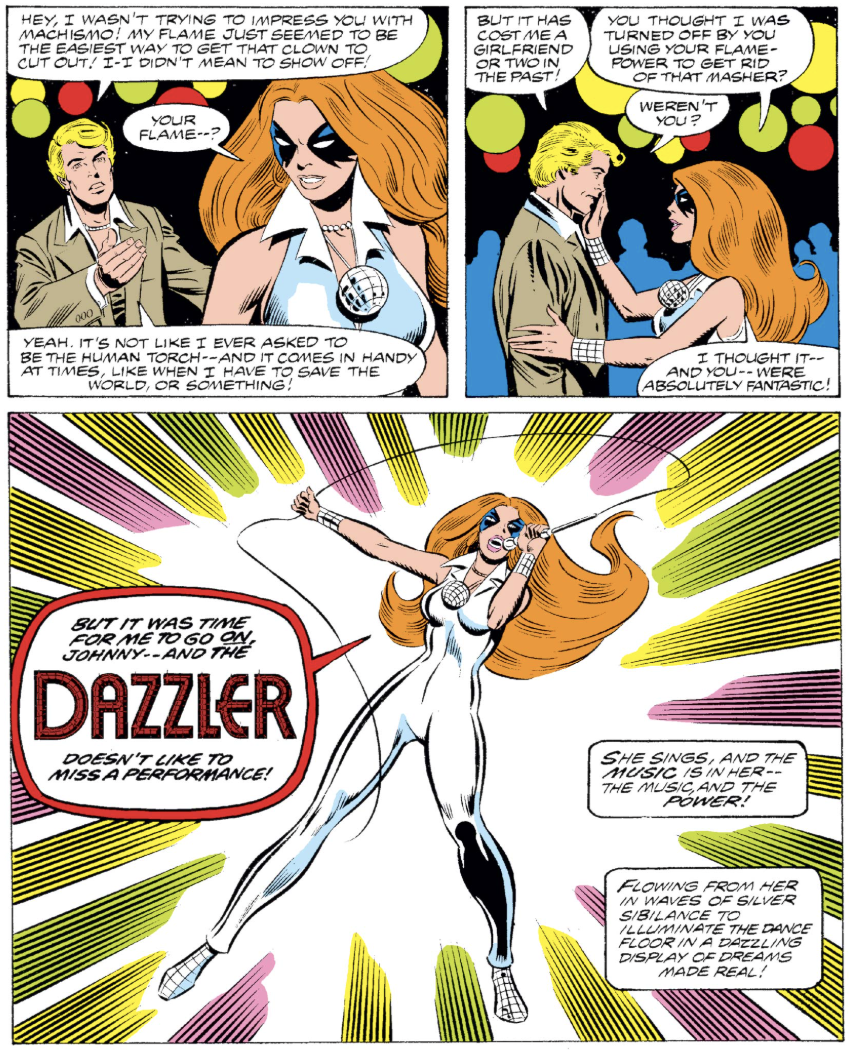
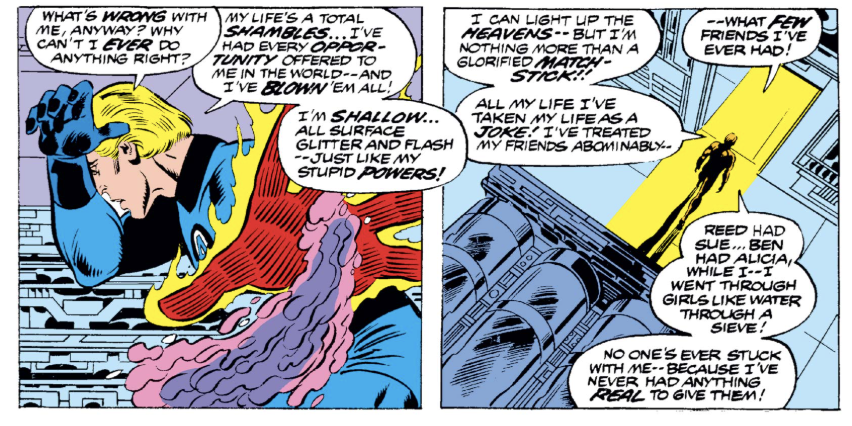
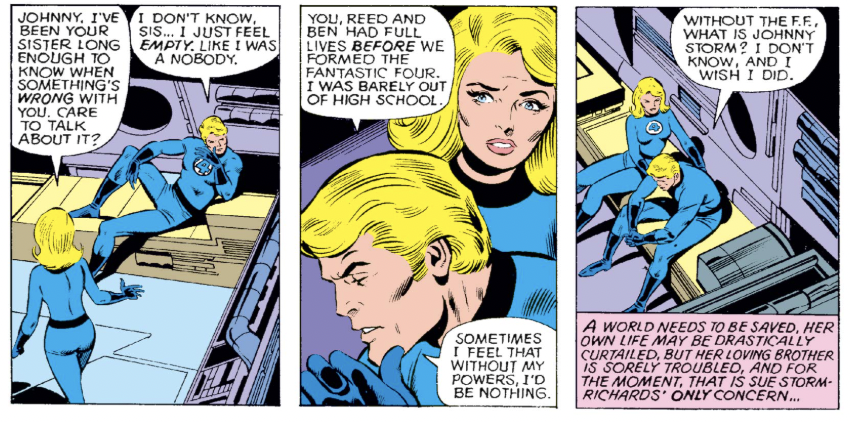
Johnny is really the star of this issue, and Wolfman returns to his feelings of loneliness and lack of independence. There is a cutting sequence where he tries to impress a girl and ends up doing the opposite:

(We later discover she may be a plant from The Monocle to undermine his confidence).


Johnny also runs into Franke Ray again, with similar results.


Johnny’s frustrations are revealed at this family conference, a reminder of how the FF is different from other teams:


I also liked this action sequence with Reed, Ben and the Skrull:


What I didn’t like

Comics often play fast-and-loose with science, and lord knows I’m no physicist, but everything about the ray from outer space makes no sense (and in fact seems borrows from the zeta-beam Adam Strange uses to jaunt around the galaxy). Since when do rays contain minerals?


There is an extended scene of Johnny moping around the city looking for a friend, which begins to feel a little maudlin. If I was a cynic, I would suspect this was just a ploy to plug ASM 190.


Anything else?

Future Marvel writer Peter Sanderson writes another long letter from his Columbia dorm, this time about issue 200. His analysis of that story just happen to agree with mine.


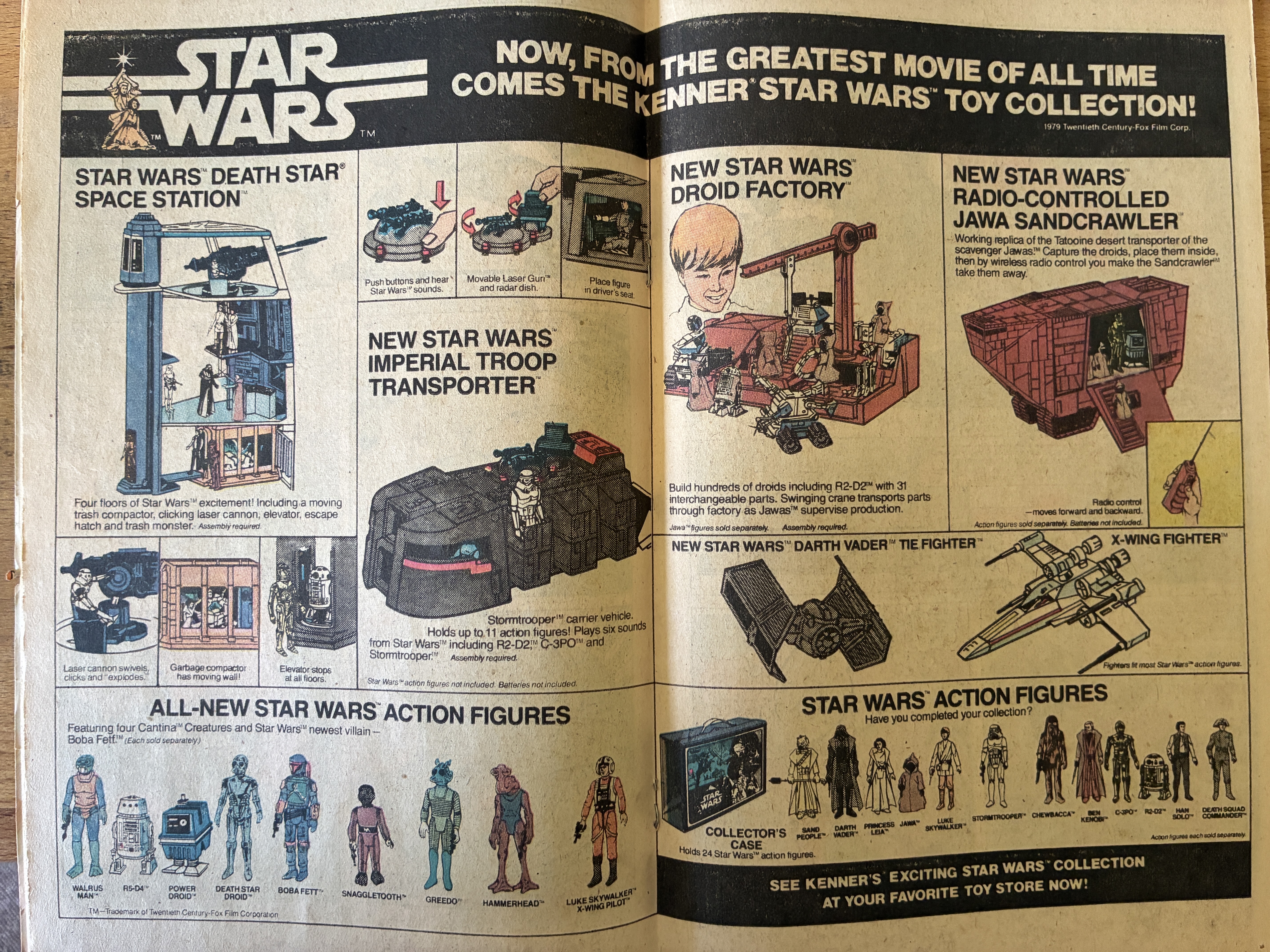
Some more cool house ads, for a pair of comics I never really read (that looks like Gil Kane on the PM/IF ad).

Edited to add: It’s actually Rich Buckler and Dave Cockrum on the PM/IF . A few readers set me straight.


Overall

A satisfying comic book

“The World’s Greatest Comic Magazine! Fantastic Four No. 203

11 Sunday Jan 2026

Posted by percivalhenry in The World's Greatest Comic Magazine

≈ Leave a comment

Tags

1978, Fantastic Four, Fantastic Four 203, marv wolfman, Marvel comics

Fantastic Four 203
“…And a Child Shall Slay Them!”
Published November 1978
Writer: Marv Wolfman
Pencils: Keith Pollard
Inks: Joe Sinnott
Letters: John Costanza
Colors: Glynis Wein
Editor: Wolfman
Cover: Dave Cockrum and Joe Sinnott

Synopsis

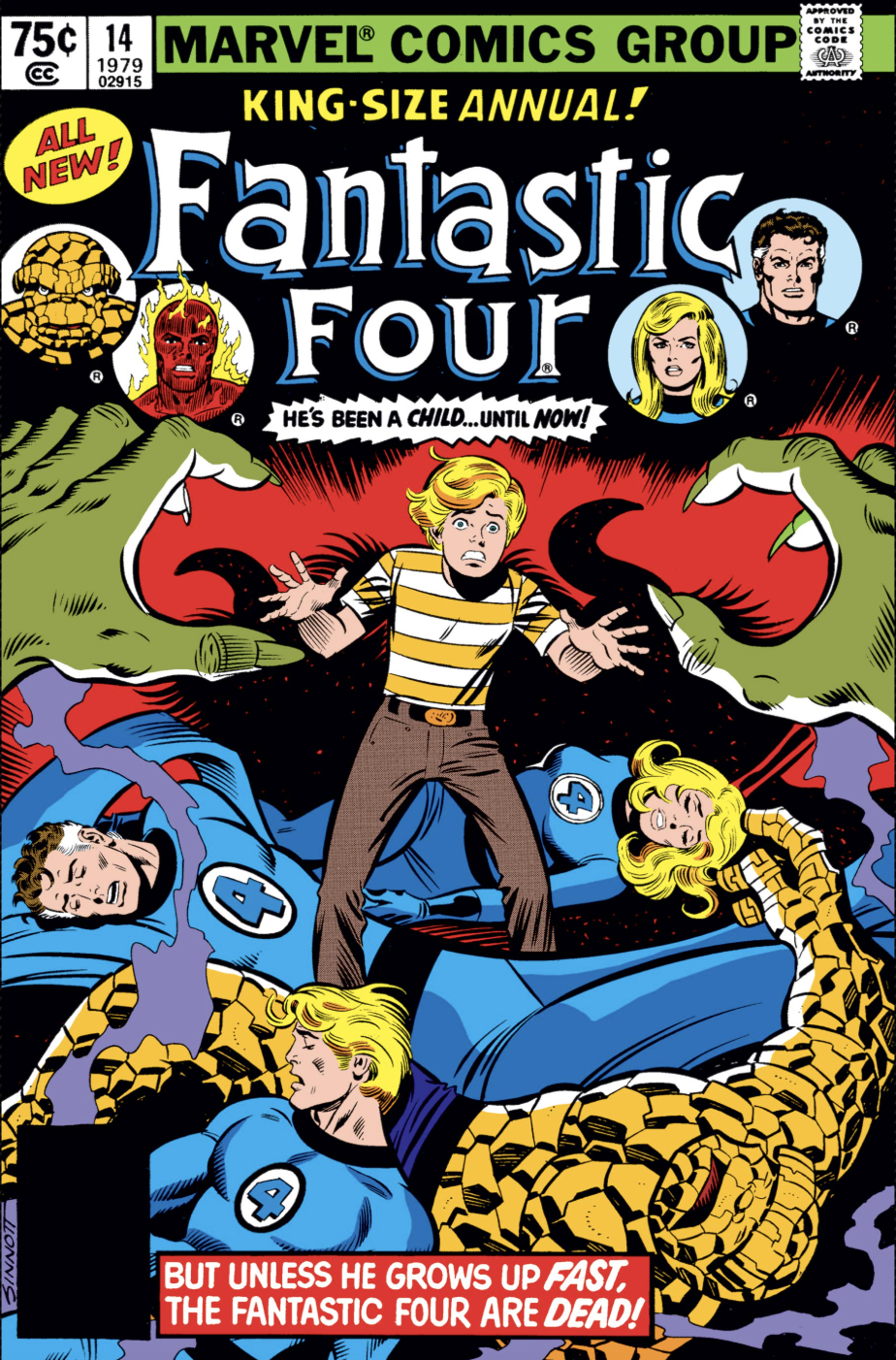
After Reed cleans up left-over radiation from the FF’s fight with Quasimodo last issue, he and Sue are summoned to a hospital to treat Willie Evans Jr., a young boy who is in a coma because his father was exposed to cosmic radiation as a soldier. In his coma, Willie, a mutant and Fantastic Four fan, manifests evil versions of the FF that rampage throughout New York. The FF struggle to contain them until Reed figures out their source and uses his radiation-absorbing device to neutralize them. Willie recovers and Reed suggests the family take him to Professor X for training.


What’s going on here

This is a perfectly fine one-and-done. Nothing of great consequence happens and while the premise is hard to swallow — why does the boy create evil versions of the FF if he’s a fan? — it’s resolved neatly and in classic FF fashion, with Reed saving the day with science. And at least in this issue, Marv Wolfman introduced the device Reed used at the beginning of the story, unlike in the Stan and Jack days, where it would just appear at the end, deus ex machina.

In his ability to create super-powered entities out of radiation, Willie Evans Jr. appears to be an enormously powerful mutant, on a par with the Scarlet Witch and adult Franklin Richards. Apparently there were plans for him to become part of an early version of the New Mutants (along with Kitty Pryde) but Jim Shooter killed that idea. He does reappear many years later, in Iron Man Annual 8, where a manifestation of his power — an evil frog called Grunt — pushes him to battle Iron Man and X-Factor. It’s a pretty good story and worth seeking out.

Iron Man Annual 8 (1986), Words by Bob Harras, art by Paul Neary, Ian Akin and Brian Garvey)


Also of note: the cover is by Dave Cockrum (with Joe Sinnott’s inks). One of the few Cockrum FF covers. I don’t think it’s a particularly good cover, but there it is.


What I liked

There was some fun kibbitzing among team members. Team dynamics is Wolfman’s strength, here and later in the Teen Titans.


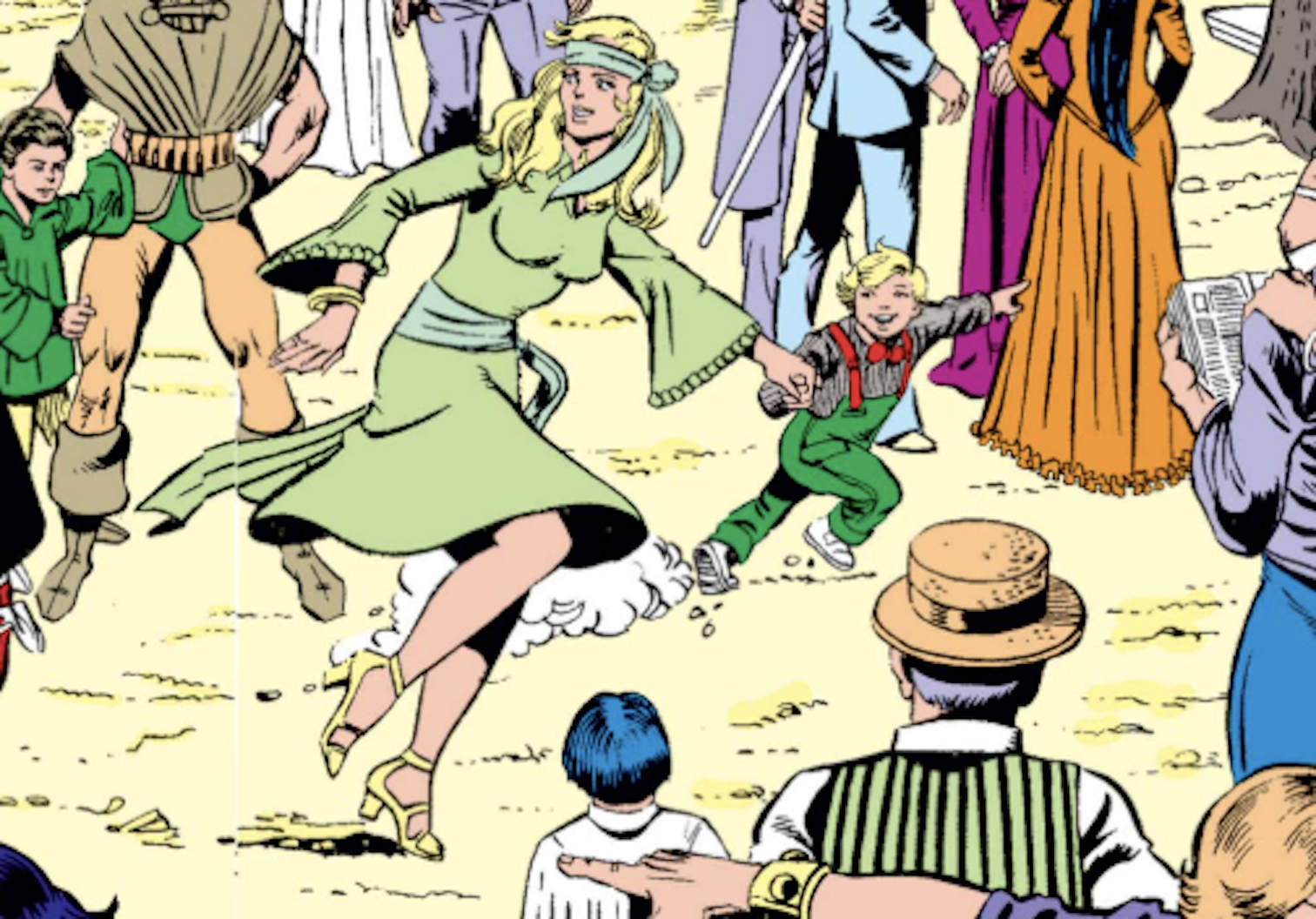
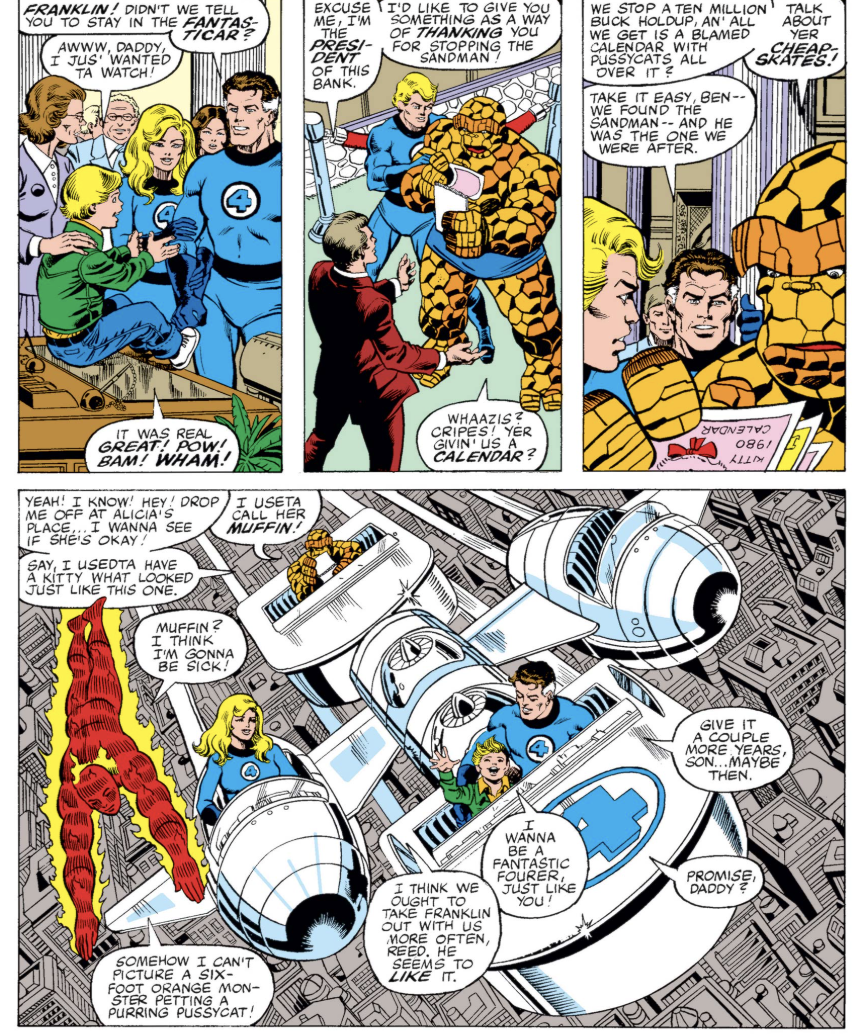
There’s also time for some domesticity, and a glimpse into Franklin’s growth (although it seems like he stays this age for the next two decades):


And I liked this image of Reed and Sue arriving at the hospital, like benevolent deities granting mortals a favor:


What I didn’t like

As mentioned earlier, Wille’s creation of the evil FF didn’t make a lot of sense to me. Buy, hey, mutant powers. They cover up a lot of plot holes.


Anything else?

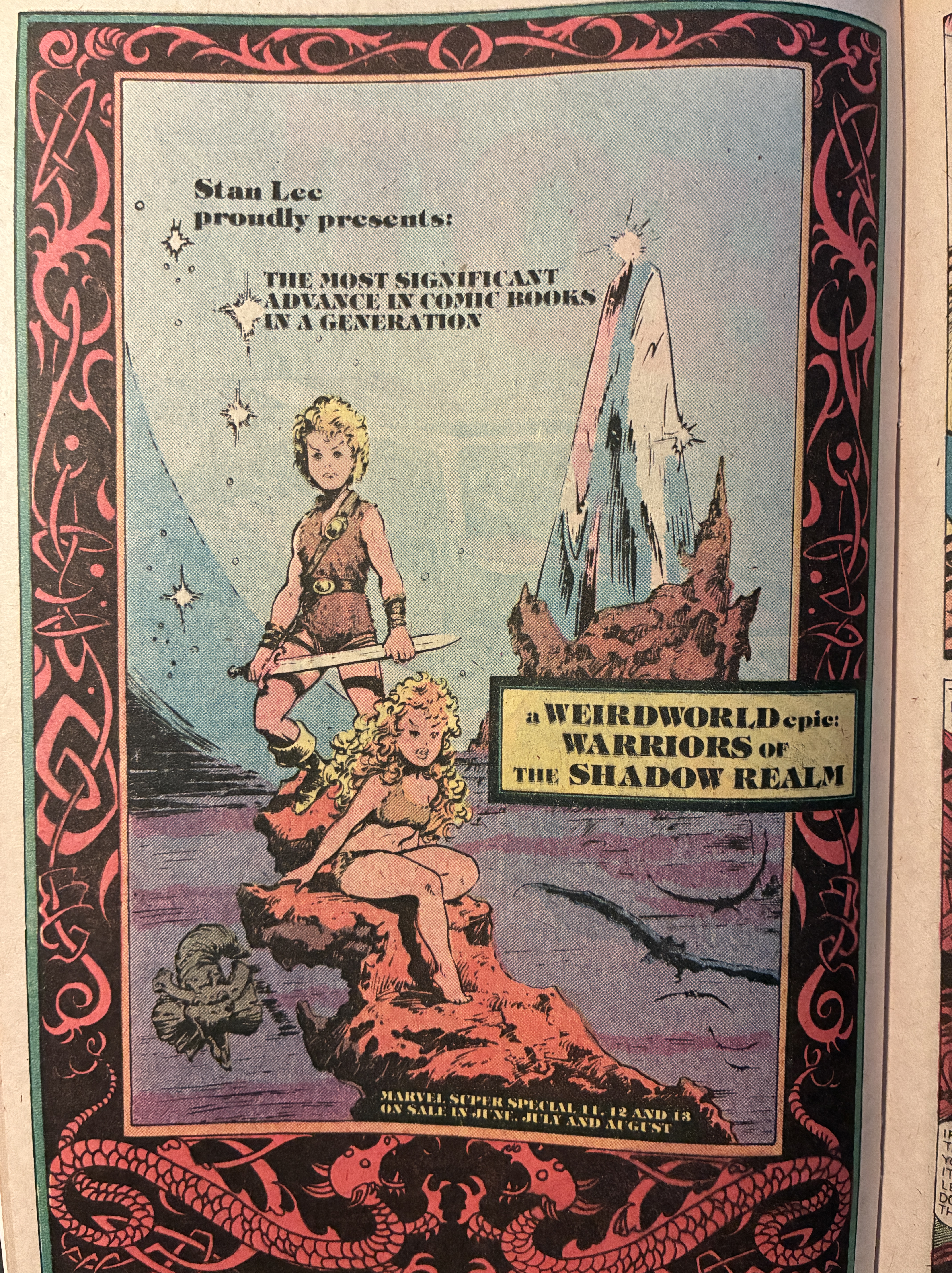
Some pretty good house ads in this issue, especially for Micronauts (Michael Golden!) and Master of Kung Fu (Mike Zeck!)


Overall

Inoffensive but forgettable

“The World’s Greatest Comic Magazine!” Fantastic Four No. 202

28 Sunday Dec 2025

Posted by percivalhenry in The World's Greatest Comic Magazine

≈ Leave a comment

Tags

1978, Fantastic Four, Fantastic Four 202, Iron Man, John Buscema, marv wolfman

Fantastic Four 202
“There’s One Iron Man Too Many!”
Published October 1978
Writer: Marv Wolfman
Pencils: John Buscema
Inks: Joe Sinnott
Letters: Jim Novak
Colors: Janice Cohen
Editor: Wolfman
Cover: Buscema and Sinnott

Synopsis

The Fantastic Four are attacked in the Baxter Building by a doppelgänger of Iron Man, who triggers a new device installed by Mr. Fantastic that allows the top six floors of the building to fly across the world (yes, really). The FF team up with the real Iron Man to track down their building and discover Quasimodo, an artificial intelligence, created a replica Iron Man and stole the Baxter Building to drain its power. After a battle, Quasimodo escapes into space in the FF’s rocket.


What’s going on here?

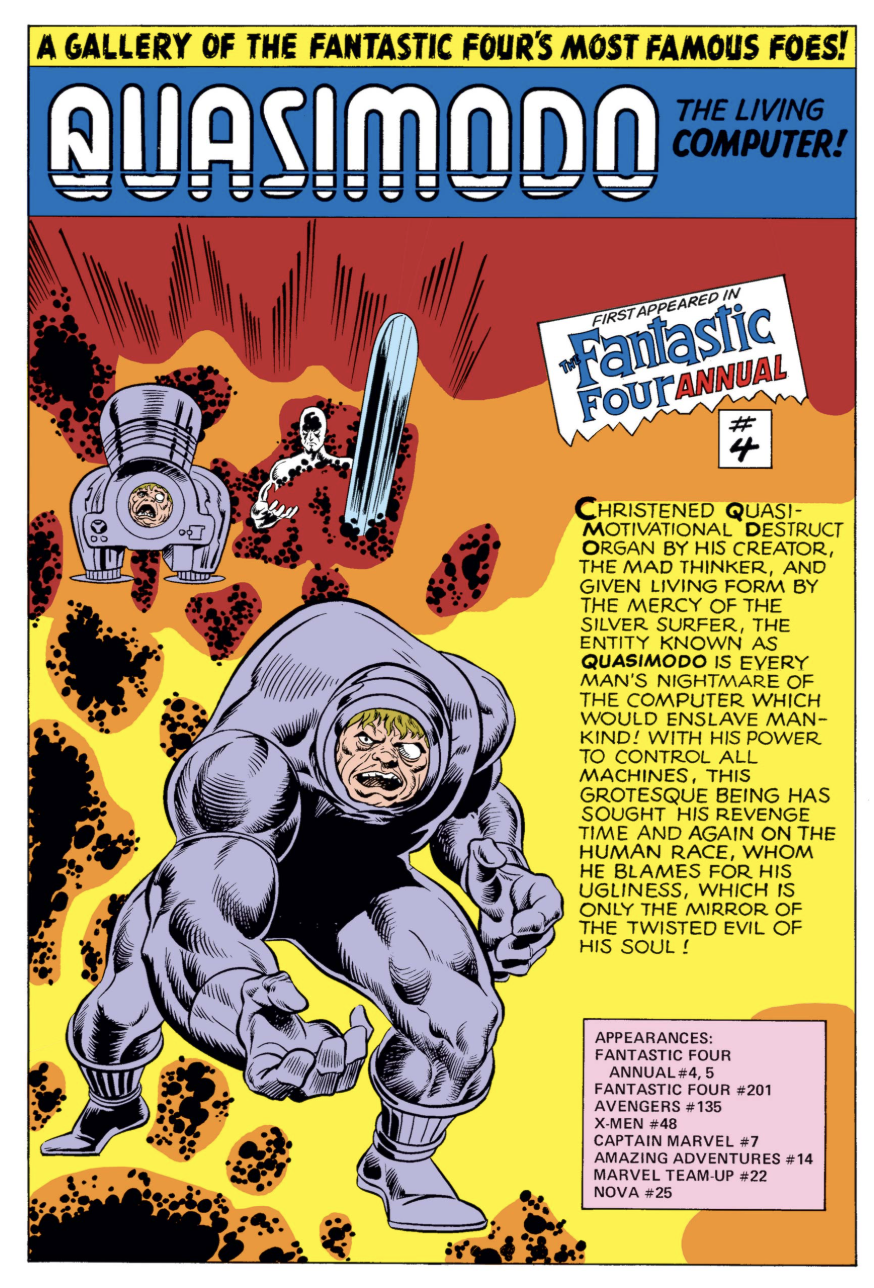
This issue is only notable because of the appearance of Iron Man, but the story makes clear there’s no legitimate reason for Iron Man to be in the comic. Quasimodo explains he needed a robot to serve as his arms and legs — makes sense! — but he could have built anything. It seems he chose a replica of Iron Man to compel Iron Man’s guest appearance in the comic. It’s the sort of plotting problem an editor could save a writer from making, but in this case, writer Marv Wolfman serves as his own editor. It’s a reminder that Wolfman is much stronger at dialogue and characterizations than in story telling, and another reminder (if we needed one) that writers need actual editors.


John Buscema fills in for Keith Pollard on pencils and delivers his usual steady work.


What I liked

Despite its practical impossibility, I liked the idea of the top floors of the Baxter Building shooting into the sky like a bottle rocket. And Reed’s explanation — that the landlord demanded some sort of failsafe to protect other tenants — actually makes sense.


This scene with Tony Stark is a flashback to our pre-MCU concept of Iron Man, where everyone somehow accepted he was Stark’s body guard, despite them never being seen together.


This cliff hanger ending was intriguing:


What I didn’t like

My big complaint is the dumbness of the story’s premise. But I’ve said my piece about that.

Also, I can usually accept that the image on the cover is meant as marketing, and doesn’t literally capture a scene from the comic. But it’s been a while since I’ve seen one this divorced from the events in the story. Even the the blurb — “Mayhem Over Manhattan! — is misleading.

And why does the FF keep a wooden desk in their high-tech control room?


Anything else?

A very eloquent letter to the editor from Cat Yronwode, who would go to be the editor-in-chief of Eclipse Comics, among many other diverse and varied roles.

Overall

The Yronwode letter is this month’s highlight

“The World’s Greatest Comic Magazine!” Fantastic Four No. 201

23 Tuesday Dec 2025

Posted by percivalhenry in The World's Greatest Comic Magazine

≈ Leave a comment

Tags

1978, Fantastic Four, Fantastic Four 201, marv wolfman, Marvel comics

Fantastic Four 201
“Home Deadly Home!”
Published Sept. 1978
Writer: Marv Wolfman
Pencils: Keith Pollard
Inks: Joe Sinnott
Letters: John Costanza
Colors: Françoise Mouly
Editor: Wolfman
Cover: Pollard and Sinnott

Synopsis

After accepting the thanks of Latveria’s new leader, Zorba, the Fantastic Four return to the Baxter Building, where they move back in to their former headquarters. But something is amiss, and the building’s automated systems go haywire, almost killing the FF before the Invisible Girl can overcome its defenses and shut it down.


What’s going on here?

Like most FF comics of this era, FF 201 is a mixed bag. It’s welcome palate cleanser after the high-stakes events of issues 196-200, and it contains some nice character interactions and development. But the plot fizzles and it feels a bit like Marv Wolfman is killing time waiting to start another big story.

Complicating things is that Fantastic Four Annual 13, discussed last week, ALSO was written as a palate cleanser after issues 196-200. Not surprisingly, there seems to have been no coordination between Wolfman and Annual 13 writer Bill Mantlo, so many of the issues this comic deals with — will the FF remain a team? Where will their headquarters be? — were also grappled with in the annual. A true continuity zealot could probably point to where Annual 13 could slip between two panels of FF 201 but even the Marvel Chronology Project, which exists for exactly these purposes, concedes defeat and has the annual following 201.

Also of note is the return of the “quad-cover,” which is a staple of FF cover design from the beginning. The idea is that instead of showing one fight scene on the cover, the four quadrants each depict a member of the FF fighting some menace solo, and thereby creating even more incentive for eager buyers to snap it up. Here are all the other quad-covers from the first volume of the FF (which ended in 1998):


What I liked

In some ways this issue serves to reset the team and provide a jumping-on point for new readers. To that end, it gives Reed an opportunity to restate the purpose of the FF: To use their powers for the betterment of humanity. It’s sort of a mission statement and it puts an end to Reed’s waffling about the future of the team.


Also of benefit to new readers: a neat-o rendering of the interior of the Baxter Building, something we saw a few times early in the Lee / Kirby run but we haven’t seen since. (I think the meditation chamber is a 1978 addition.)


As discussed in previous posts, Wolfman had made it his mission to give Sue more bite, both as a character and a team member. Here, she puts Reed in his place:

And here, she saves the day, shutting down Ben’s objections, then rescuing Johnny.


This was also a fun sequence (although I wonder if Wolfman knows the translation of fromage):


What I didn’t like

After the team spends most of the issue battling the Baxter Building run amok, Reed’s explanation is basically, “I dunno.” It’s deeply unsatisfying and suggests Wolfman really didn’t the story much thought. Maybe it will be explained in a future issue but for now, it’s painfully anti-climactic.


For years I have cringed whenever the FF’s writers try to make commercial real estate a plot point. Here it’s thankfully disposed of quickly but it’s never not clumsy and silly.


Anything else?

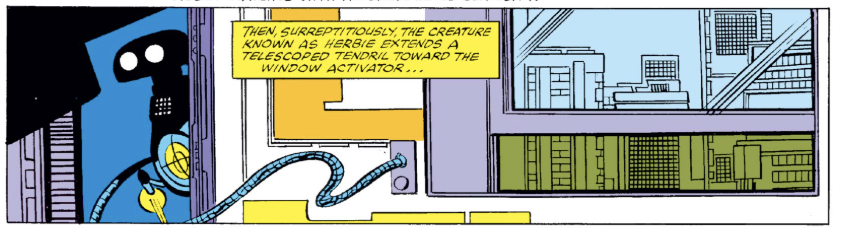
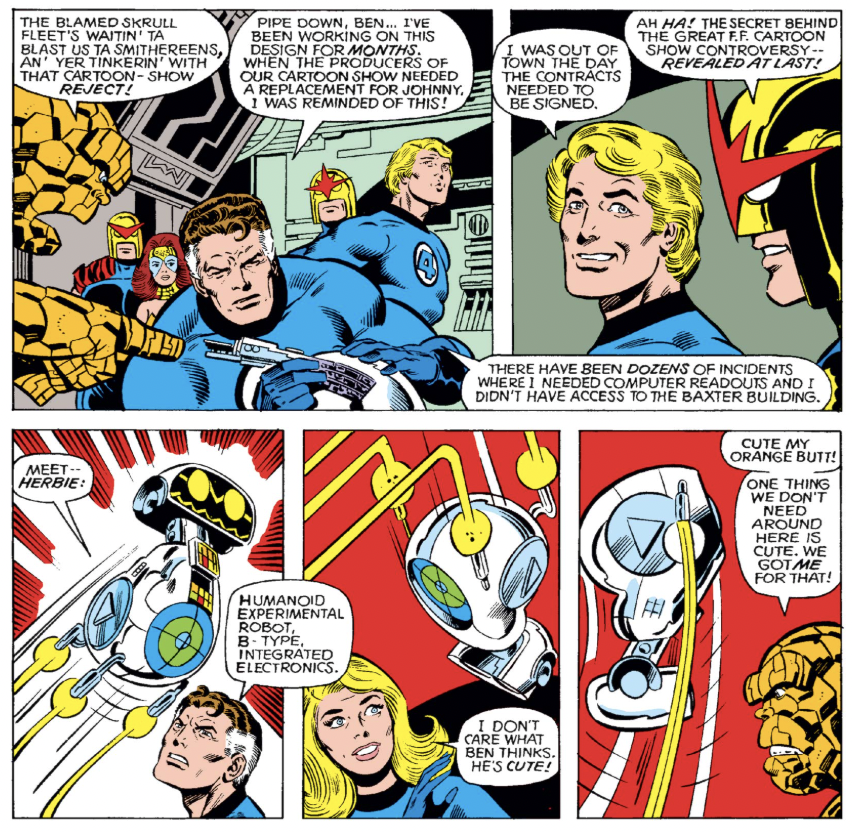
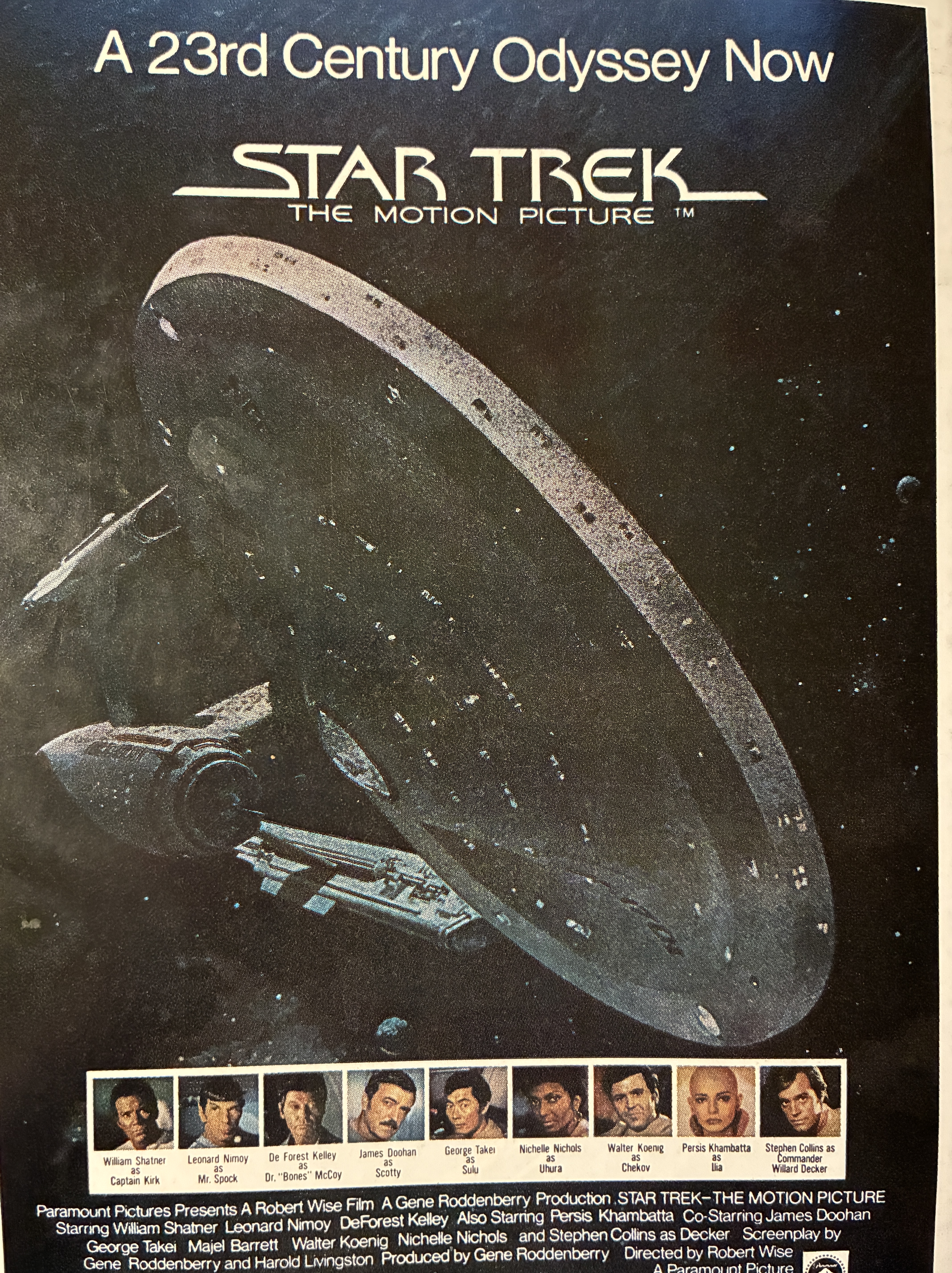
A house ad for the FF’s new TV show, the one that replaces Johnny with H.E.R.B.I.E. (blech) for reasons to do with intellectual property rights and giving rise to all sorts of urban myths.


Overall

Good enough, I guess

“The World’s Greatest Comic Magazine! Fantastic Four Annual No. 13

14 Sunday Dec 2025

Posted by percivalhenry in The World's Greatest Comic Magazine

≈ Leave a comment

Tags

Annual, Bill mantlo, Fantastic Four, Fantastic Four Annual 13, Marvel comics, Mole Man, Sal Buscema

Fantastic Four Annual 13
Published July 1978
Writer: Bill Mantlo
Pencils: Sal Buscema
Inks: Joe Sinnott
Letters: Irving Watanabe
Colors: Françoise Mouly
Editor: Marv Wolfman
Cover: Keith Pollard and Steve Leialoha


Synopsis

In the aftermath of their big confrontation with Dr. Doom, the re-formed Fantastic Four is taking stock of their new situation (since they moved out of the Baxter Building) while a mysterious figure is kidnapping homely and blind New Yorkers, while also stealing statues. At Alicia master’s studio, they discover the Mole Man is behind the abductions. He subdues the FF and captures Alicia, and the FF pursue him to Subterrenea. There, he explains he is capturing outcasts who might prefer a life underground and providing them with statues to enjoy (really). He then lets free anyone who wants to return to the surface while Alicia presents the Mole Man with a statue of himself.


What’s going on here?

This is a lackluster comic, and feels like a regular issue that was padded out into an annual. Nothing of much consequence happens, and after the big events of the last few issues, it makes sense for the FF to chill for a bit. Still, I think annuals should bring something extra, either in terms of story or the creative team, to justify the additional length and cost. This story mostly felt tedious. If it’s notable for anything, it’s the presentation of the Mole Man as a sympathetic figure who’s trying to help the misfortunate. I’m not sure it’s convincing but it’s an interesting evolution of a character that’s been around as long as the FF. And you can draw a through line from how he’s treated in this comic to his depiction in the new Fantastic Four movie.

Oddly, this is the second story in a row Alicia has been kidnapped for her sculpting skills..

Bill Mantlo is the writer, and given his history as a last-minute fill-in specialist, I wonder if he was pressed into service because Marv Wolfman couldn’t get it done in time. Sal Buscema delivers his usual workmanlike pencils which are enhanced by some dramatic inking by Joe Sinnott.

The cover is by Keith Pollard and inked by Steve Leialoha making his FF debut. Leieloha’s inks add a supple, fluid quality to the already strong Pollard and the cover is probably the best thing about this comic.

What I liked

Beginning with Len Wein, continuing with Wolfman and now with Mantlo, there’s been a real effort to upgrade Sue’s powers and role with the team. Here, in a well-told sequence, she pursues the Mole Man by herself, then casually insults the rest of the team and puts Reed in his place (although has anyone outside of comics ever referred to someone as “husband-mine?”).


The padded-out story does give Mantlo room for a few running gags, like having Ben encounter obnoxious Yancy Streeters are every turn (incidentally, I’m pretty sure there aren’t any newsboys in NYC in 1978).

I also enjoyed this cameo of Daredevil. It’s completely incidental to the story, but reinforces the idea of all of Marvel’s heroes living in the same world. These little surprises were one of the things I liked most about reading comics as a kid.

What I didn’t like

Whatever Mantlo’s intentions, the central premise of the story felt clunky and forced. The Mole Man is kidnapping ugly people AND blind people? As if they are the same thing? And giving them statues to enjoy? None of it makes much sense and feels half-baked.


And while we have been trained to believe the Mole Man is a formidable opponent, it’s hard to accept he can take down the entire FF by himself. Here, he knocks out Ben with one zap of his staff.


There’s also some sloppiness that speaks to a lack of communication between Mantlo, Wolfman and Buscema. Here, Reed explains the pogo plane is in storage, except the FF just used it to fly to Latveria and back.

And here, Reed claims the flare gun can now fit in the FF’s belts on a shot that shows Sue holding a bulky gun and wearing a skin-tight uniform.


Lastly, Sal Buscema has some strengths as an artist but drawing faces isn’t one of them. Otherwise why would this fireman look so much like Peter Parker?


Anything else?

Fun house ad for Ms. Marvel (later Binary, later Warbird, later Captain Marvel) by Dave Cockrum.


Overall

Meh

“The World’s Greatest Comic Magazine! Fantastic Four No. 200

10 Wednesday Dec 2025

Posted by percivalhenry in The World's Greatest Comic Magazine

≈ 1 Comment

Tags

1978, Dr. Doom, Fantastic Four, Fantastic Four 200, jack Kirby, marv wolfman, Marvel comics

Fantastic Four 200
“When Titans Clash!
Published August 1978
Writer: Marv Wolfman
Pencils: Keith Pollard
Inks: Joe Sinnott
Letters: John Costanza
Colors: Francoise Mouly
Editor: Wolfman
Cover: Jack Kirby and Sinnott

Synopsis

Reeling after the death of his son/clone, Dr. Doom traps the Fantastic Four in his Latverian castle and flies to New York to realize his plan of world domination. The FF escape, rescue Alicia and follow Doom, with Mr. Fantastic confronting Doom at his stronghold in the Adirondacks while the rest of the team flies to the United Nations to thwart Doom’s scheme. While Reed and Doom battle, Doom’s statue — sculpted by Alicia and intended as a gift to the UN — hypnotizes the delegates, who then attack Ben, Sue and Johnny. Reed eventually gets the better of Doom, and rips off his mask, where the image of his disfigured face reflected back at him hundreds of times in the facets of a giant crystal drive him into a catatonic state. Reed shuts down the UN device and with Doom in a mental institution, Zorba is installed as the leader of Latveria.


What’s going on here?

This is a big milestone issue and almost in spite of itself, the comic lives up to the occasion. It’s the conclusion of a five-part act that meandered unnecessarily — particularly with the clone-of-Doom subplot which fizzled out anti-climatically — but Marv Wolfman manages to stick the landing. He correctly recognizes the conflict between Reed and Doom is the central tension in the book and he gives the two the battle they deserve. Because it’s a double-sized anniversary issue, he has room to stretch out the confrontation, and includes a flashback to their time at university together that reminds us (and informs new readers) of the origin of Doom’s enmity toward Reed. The climax, where Doom goes mad at the sight of his own face reflected back at him, is clever story telling, and centers Doom’s defeat in his own vanity and insecurity. It feels like less of a triumph for Reed than a tragic downfall for Doom. (Although I would have preferred Doom not telling us he was going mad as he was going mad).


A lot of credit for this issue’s success goes to Keith Pollard and Joe Sinnott. Pollard, particularly, uses the extra pages in this issue to stretch out, particularly in the fight scenes, where there are often just four panels per page. There are also three full-page splashes (not including the opening one), a rarity in this era.

This is the most successful of the Fantastic Four’s big milestone issues to date. Issue 50, which included the conclusion of the Galactus saga, didn’t make note of it being a meaningful issue. Issue 100 was a dud, and came at the end of the Lee / Kirby partnership. Issue 150, featuring the marriage of Crystal and Quicksilver, felt more like an Avengers comic (and not a very good one, either). Looking into the future, issues 300 and 400 aren’t that impressive either. Issue 200 manages to deliver story that both feels big, satisfying and consequential.

Fantastic Four 200 also features one of the best covers in the history of the comic, by none other than Jack Kirby. Kirby’s FF covers over the last few years have been hit or miss, but this one has all the hallmarks of classic Kirby (although it’s is unfortunately cluttered with too many blurbs hyping the comic). Sadly, this is Kirby’s last original work on the Fantastic Four and one of his last at Marvel.

And in a nice touch, the comic is dedicated to Stan and Jack:


What I liked

Despite its bombast, the issue also deliver some nice moments of character development. There is this testy exchange between Ben and Reed:


And this romantic interlude:


After restoring Reed’s powers, Wolfman seems serious about powering him up, and in two separate sequences Reed stretches himself into tiny apertures to escape confinement. This one is the most impressive:


Pollard has a real knack for interesting action shots. Here are a few I liked:


What I didn’t like

The plot device — the McGuffin, if you will —of this story never makes much sense. Doom somehow thinks he’s going to take over the world by hypnotizing United Nation’s delegates? If he spent more than a minute paying attention to the UN’s long history of ineptitude, he would realize how ridiculous an idea this was.


We also have the same problem of Doom’s lackeys as in last issue. Are they humans? Or robots? or both? Here one of them has a wife and child, further confusing things.


Anything else?

A letter to the editor from future writer/editor/comic historian Peter Sanderson, who appears to be writing from his Columbia University dorm room:


Overall

Good stuff!

“The World’s Greatest Comic Magazine!” Fantastic Four No. 199

30 Sunday Nov 2025

Posted by percivalhenry in The World's Greatest Comic Magazine

≈ Leave a comment

Tags

1978, Dr. Doom, Fantastic Four, Fantastic Four 199, marv wolfman, Marvel comics

Fantastic Four 199
“The Son of Doctor Doom!”
Published July 1978
Writer: Marv Wolfman
Pencils: Keith Pollard
Inks: Joe Sinnott
Letters: John Costanza
Colors: Janice Cohen
Editor: Wolfman
Cover: Pollard and Sinnott

Editor’s note: Fantastic Four Annual 13 came out between FF 198 and 199, but it’s a stand alone story so I’m going to finish the Doom / Zorba story arc first and pick up the annual after issue 200.

Synopsis

Dr. Doom advances his scheme to transfer the powers of the Fantastic Four to his son — actually his clone — as part of a scheme to keep Latveria in the United Nations, but faces unrest from the rebels of Latveria. Meanwhile the FF escape captivity but are thwarted by Doom, who has taken Alicia hostage. Doom’s clone then battles Doom, who kills him, setting up a showdown between Doom and Reed in issue 200.


What’s going on here?

This is another uneven story. The basic outlines of the plot are interesting: There’s political intrigue, Doom’s Machiavellian plotting, the FF reunited and the ersatz son of Doom gaining the powers of the FF (although the concept was done better with the Super-Skrull). But it’s all jumbled and incoherent, with Doom’s stated motivation for setting all this in motion — a desire to keep Latveria in the U.N. — absurd on its face. And we never quite learn why he’s transferring his powers to the clone.

What salvages the comics are some excellent action sequences delivered by the steady team of Keith Pollard and Joe Sinnott. There’s nothing flashy about their art but it packs a punch (sometimes literally). And I believe this is the first issue of the FF were Pollard signs the cover with his distinct lower-case signature, one of the best in comics.


What I liked

Here are a handful of the fun action panels in this comic:


I also liked the keyboard- control device Doom uses to power up his clone.


What I didn’t like

Most of the flaws in this comic seem to stem from Wolfman’s lack of understanding of Doom and his character. The Dr. Doom I’m familiar with could care less if Latveria was kicked out of the U.N. (hell, most of the U.S. would feel the same way) and would probably wear it as a badge of honor. I assume the hollow sculpture will house a bomb or some device but would Doom really offer a gift to the U.N.?


Nor would Doom feel the need to explain himself to his subjects, or rationalize his decision to abdicate the throne.


Doom’s clone also had odd moments. Here, he goes out of his way to explain he’s like the Fantastic Four but slightly less so. Then he says he forgot Doom had force shields, one panel before he claims to have all of Doom’s knowledge. Which is it, dude?


And the climax, where Doom’s clone faces Doom to acknowledge his self loathing should have been a powerful moment, but instead feels clumsy.


Lastly, longtime readers of this blog will recall that I was puzzled by how Stan Lee and Jack Kirby wrote and drew may of the robots and androids that populated the book. In their hands, they were often muscled like humans and seemed to speak like humans. We have the same problem here. In the last issue, Doom’s henchmen were discussing their children. But now they seem to have been turned into “servo-robots,” even if they still look pretty human.


Overall

Hit and miss

“The World’s Greatest Comic Magazine!” Fantastic Four No. 198

23 Sunday Nov 2025

Posted by percivalhenry in The World's Greatest Comic Magazine

≈ Leave a comment

Tags

1978, Dr. Doom, Fantastic Four, Fantastic Four 198, Latveria, marv wolfman, Marvel comics, Zorba

Fantastic Four 198
“Invasion!”
Published June 1978
Writer: Marv Wolfman
Pencils: Keith Pollard
Inks: Joe Sinnott
Letters: Rick Parker
Colors: Janice Cohen
Editor: Wolfman
Cover: John Buscema and Sinnott

Synopsis

Now in possession of his powers again, Mr. Fantastic flies to Latveria to free the rest of the team from Dr. Doom, who is planning to transfer all of their powers to his son. Reed battles Doom’s robots and is subdued, but he is rescued by the Latvian resistance, led by Zorba. Reed and Zorba’s men storm the castle, but are defeated and Reed is captured.


What’s going on here?

The Doom / Zorba story continues to plod along. This is a pretty lackluster comic and it’s clear this five-part arc could have been told in four or even three issues. This installment feels full of padding as Reed battles robots and Doom’s henchmen, but ultimately ends up captured. The only real development of note is the introduction of the unfortunately named Zorba, the leader of the Latverian freedom fighters. (It’s hard not to picture Anthony Quinn as Zorba the Greek whenever I read that name). This Zorba has a cool, Kirby-esque device on his face and seems to fulfill every stereotype of the noble rebel.

Zorba will reappear in a few more issues over the years and becomes a more complex figure when written by John Byrne.

The art team of Keith Pollard and Joe Sinnott deliver solid, if unspectacular work. The rather confusing cover is by John Buscema and Sinnott.

What I liked

There were a few fun elements in this comic. Throughout, writer Marv Wolfman gives Doom’s soldiers bits of personality, such as this one discussing his daughter:

My sense is these vignettes are intended to illustrate their humanity, in order to highlight Doom’s cruelty when he later reveals he had these men killed. I also liked the appearance of the drone. Technology that seems wildly futuristic in 1978 is now commonplace.

And I liked Reed using his stretching powers to disguise his facial features, something he will do more frequently in years to come:


What I didn’t like

Overall, Wolfman’s writing feels lazy and cliché-laden. It’s not enough to have a mountain, it was to be an “unscalable mountain,” only for it to be scaled in the next panel.
Wolfman doesn’t really have a handle on Doom, who he writes as a thuggish tyrant, rather than an aloof monarch. Here, Doom mocks the people of Latveria, which feels very different from the protective, paternalistic view of his people that we’ve seen elsewhere:


And here, he takes of his mask in front of the Fantastic Four, which would seem a sharp departure from how he has viewed his disfigurement in the past (and which sort of defeats the purpose of the mask):


There are other, smaller mistakes throughout. It appears Wolfman doesn’t know the definition of “laconic:”

And here, Reed pilots a pogo plane that normally can fit four members of the FF plus guests, but now is a two-seater:


None of these little errors are that consequential (and I’m sure any Marvel fan could explain them away to earn a No-Prize) but cumulatively they’re distracting and make the story less engaging.

Anything else?

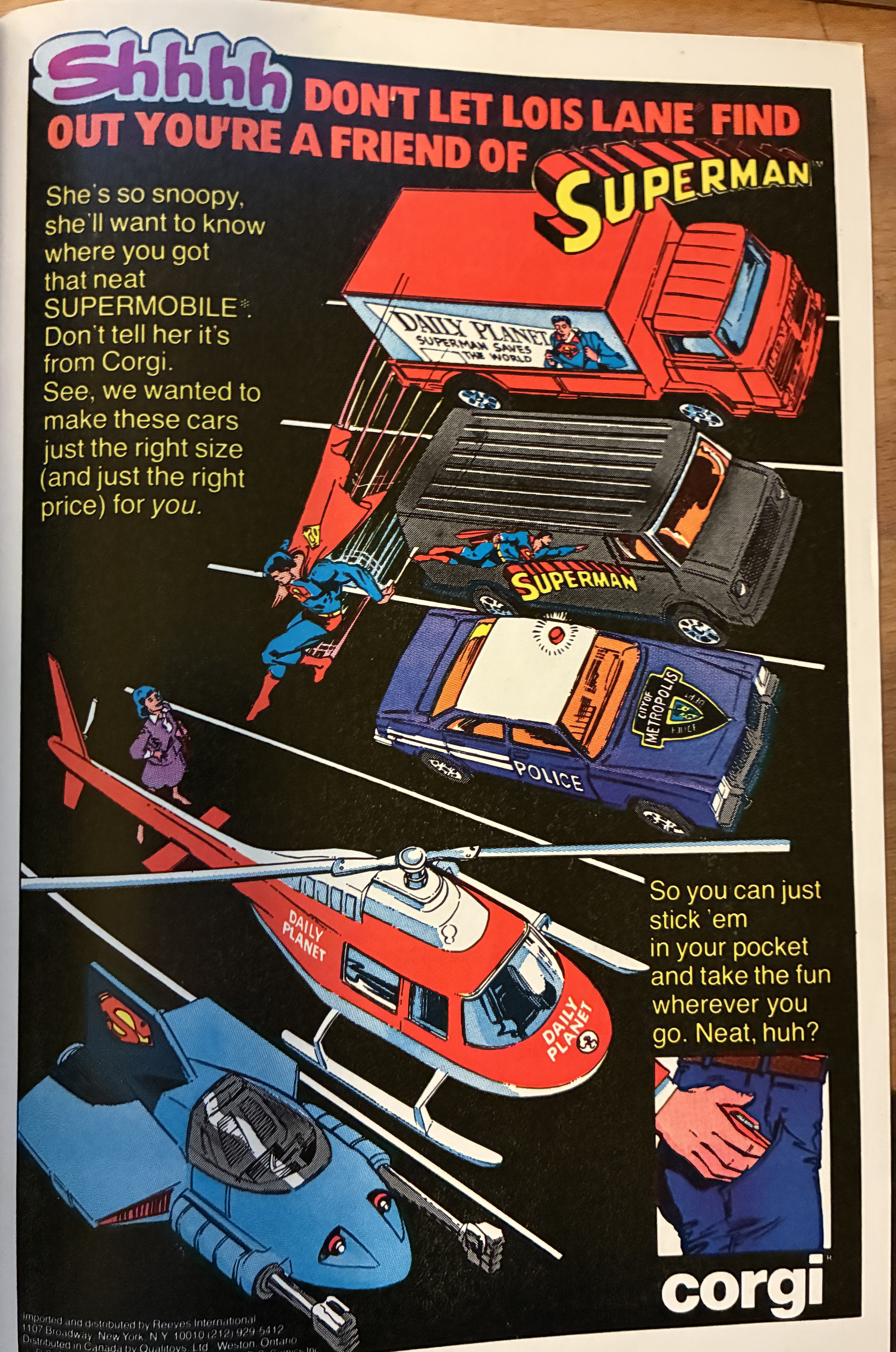
Guys, did you know the Bad News Bears are going to Japan?


Overall

Not much to recommend in this one

“The World’s Greatest Comic Magazine!” Fantastic Four No. 197

16 Sunday Nov 2025

Posted by percivalhenry in The World's Greatest Comic Magazine

≈ Leave a comment

Tags

1978, Dr. Doom, Fantastic Four, Fantastic Four 197, Joe Sinnnott, marv wolfman, Red Ghost

Fantastic Four 197
“The Riotous Return of the Red Ghost!”
Published May 1978
Writer: Marc Wolfman
Layouts: Keith Pollard
Finishes: Joe Sinnott
Letters: John Costanza
Colors: Barry Grossman
Editor: Wolfman
Cover: George Perez and Joe Sinnott

Synopsis

Under the threat of harm coming to his teammates by a mysterious figure (later revealed in this issue to be the son of Dr. Doom), Mr. Fantastic is forced to board a rocket designed to expose him to cosmic rays, thus restoring his powers. But while his powers return, the cosmic rays also (somehow) reconstitute the Red Ghost, who has been dematerialized and floating in space. The two battle and the Ghost sabotages the space ship, which crashes into the ocean with Reed managing to escape. Meanwhile in Latveria, Doom holds the other FF members captive, while summoning Alicia Masters to sculpt his image.

What’s going on here?

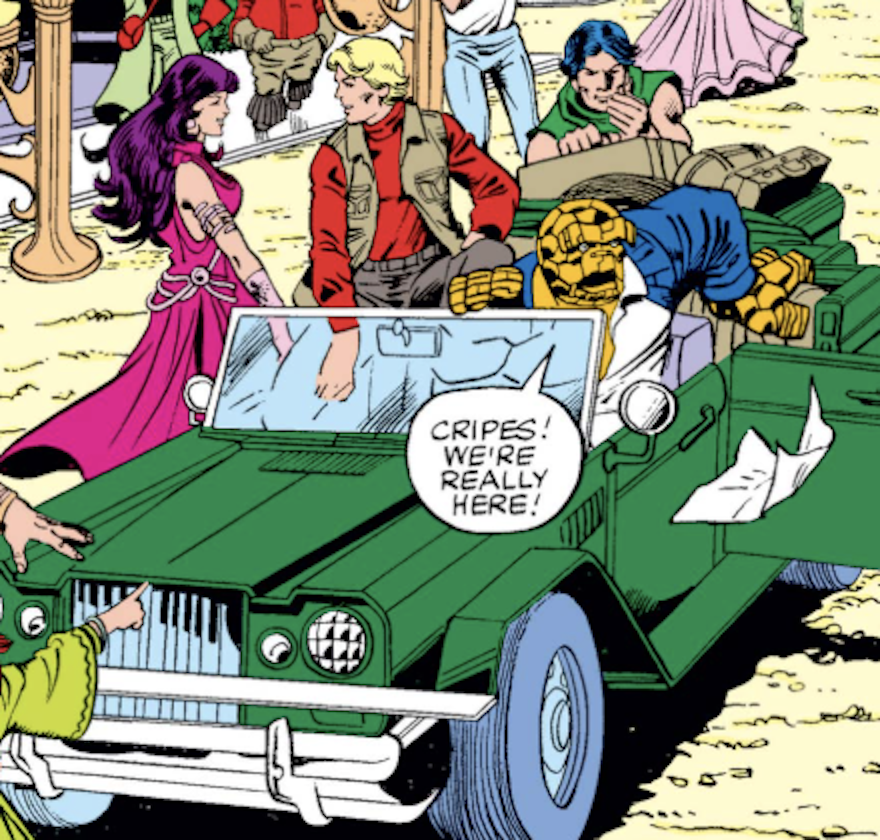
This issue continues the Doom / Zorba story arc that will conclude in issue 200. But the big event here is Reed’s battle in space with the Red Ghost, which doesn’t really have anything to do with the main story or Doom’s machinations. The Red Ghost shows up in one of those only-in-comics coincidences, and his appearance feels like an unnecessary distraction from the main story arc. On the other hand, the other three FF members had their own solo stories that followed the team’s break up (well, sort of: Sue shared her’s with Namor) so maybe it’s only fair that Reed gets his own. The other big development is Reed gets his powers back; more on that later.

The introduction of Doom’s son is a bit of a head fake, as we shall see. He’s not to be confused with Kristoff, who will debut in a few years.
Joe Sinnott returns to inking, and the comic reverts to its familiar style in his hands. The Pollard / Sinnott team is solid, but I miss Pablo Marcos’s inks, which gave the book a refreshingly different look. George Perez and Sinnott deliver an excellent cover.

Jim Shooter is now credited as “editor-in-chief.” He’s the first Marvel EIC to be so credited, as far as I can recall, and it’s somewhat revealing about how he viewed himself.
What I liked

Despite his implausible return, the Red Ghost is an entertaining bad guy and in his fight with Reed, shows he’s no joke (despite what the new Fantastic Four movie would have you believe).


I also liked this sequence of Reed’s power returning:


And I liked the sequence with Alicia and Doom, which serves to add more depth to his character:


What I didn’t like

There’s a lot in this comic that doesn’t make much sense. Reed is being forced to take a space flight but just takes it on this guy’s word that Sue and the others are his captives.


Further, Reed apparently designed and built the space ship, yet has no ability to control it:


Then there”s the matter of his lost powers. Reed’s powers faded over the course of many issues before disappearing altogether, which led him to disband the Fantastic Four. It was never explained why his powers ebbed (or why the other’s did not) but the assumption was we would eventually learn the cause. In this issue, however, they are returned to him by renewed exposure to cosmic rays. No further explanation is offered. Did they simply wear out? It’s a frustrating failure of story telling, probably due to the book having three writers over the length of the story arc.

Now that his powers have returned, Reed is apparently more powerful. Here, he squeezes through a tiny crack:


A get the impression that Wolfman was eager to return the team to the status quo ante as soon as practical, and didn’t feel the need to get bogged down with the particulars.

Overall

A mixed bag

← Older posts
Newer posts →
  • “The World’s Greatest Comic Magazine!” Fantastic Four Annual No. 15
  • “The World’s Greatest Comic Magazine!” Fantastic Four No. 223
  • “The World’s Greatest Comic Magazine!” Fantastic Four No. 222
  • “The World’s Greatest Comic Magazine!” Fantastic Four No. 221
  • “The World’s Greatest Comic Magazine!” Fantastic Four No. 220
  • July 2026
  • June 2026
  • May 2026
  • April 2026
  • March 2026
  • February 2026
  • January 2026
  • December 2025
  • November 2025
  • October 2025
  • September 2025
  • August 2025
  • July 2025
  • June 2025
  • May 2025
  • April 2025
  • March 2025
  • February 2025
  • January 2025
  • December 2024
  • November 2024
  • October 2024
  • September 2024
  • August 2024
  • July 2024
  • June 2024
  • May 2024
  • April 2024
  • March 2024
  • February 2024
  • January 2024
  • December 2023
  • November 2023
  • September 2023
  • July 2023
  • June 2023
  • May 2023
  • April 2023
  • March 2023
  • February 2023
  • January 2023
  • December 2022
  • November 2022
  • October 2022
  • September 2022
  • August 2022
  • July 2022
  • June 2022
  • May 2022
  • April 2022
  • March 2022
  • February 2022
  • January 2022
  • December 2021
  • November 2021
  • October 2021
  • September 2021
  • August 2021
  • July 2021
  • June 2021
  • May 2021
  • April 2021
  • March 2021
  • February 2021
  • January 2021
  • December 2020
  • February 2018
  • May 2016
  • February 2016
  • January 2016
  • December 2015
  • November 2015
  • October 2015
  • September 2015
  • August 2015
  • July 2015
  • April 2015
  • March 2015
  • January 2015
  • December 2014
  • November 2014
  • October 2014
  • September 2014
  • August 2014
  • June 2014
  • May 2014
  • April 2014
  • March 2014
  • February 2014
  • July 2026
  • June 2026
  • May 2026
  • April 2026
  • March 2026
  • February 2026
  • January 2026
  • December 2025
  • November 2025
  • October 2025
  • September 2025
  • August 2025
  • July 2025
  • June 2025
  • May 2025
  • April 2025
  • March 2025
  • February 2025
  • January 2025
  • December 2024
  • November 2024
  • October 2024
  • September 2024
  • August 2024
  • July 2024
  • June 2024
  • May 2024
  • April 2024
  • March 2024
  • February 2024
  • January 2024
  • December 2023
  • November 2023
  • September 2023
  • July 2023
  • June 2023
  • May 2023
  • April 2023
  • March 2023
  • February 2023
  • January 2023
  • December 2022
  • November 2022
  • October 2022
  • September 2022
  • August 2022
  • July 2022
  • June 2022
  • May 2022
  • April 2022
  • March 2022
  • February 2022
  • January 2022
  • December 2021
  • November 2021
  • October 2021
  • September 2021
  • August 2021
  • July 2021
  • June 2021
  • May 2021
  • April 2021
  • March 2021
  • February 2021
  • January 2021
  • December 2020
  • February 2018
  • May 2016
  • February 2016
  • January 2016
  • December 2015
  • November 2015
  • October 2015
  • September 2015
  • August 2015
  • July 2015
  • April 2015
  • March 2015
  • January 2015
  • December 2014
  • November 2014
  • October 2014
  • September 2014
  • August 2014
  • June 2014
  • May 2014
  • April 2014
  • March 2014
  • February 2014
“The World’s Greatest Comic Magazine!” Fantastic Four Annual No. 15

“The World’s Greatest Comic Magazine!” Fantastic Four Annual No. 15

percivalhenry's avatar by percivalhenry July 18, 2026
“The World’s Greatest Comic Magazine!” Fantastic Four No. 223

“The World’s Greatest Comic Magazine!” Fantastic Four No. 223

percivalhenry's avatar by percivalhenry July 14, 2026
“The World’s Greatest Comic Magazine!” Fantastic Four No. 222

“The World’s Greatest Comic Magazine!” Fantastic Four No. 222

percivalhenry's avatar by percivalhenry July 5, 2026
“The World’s Greatest Comic Magazine!” Fantastic Four No. 221

“The World’s Greatest Comic Magazine!” Fantastic Four No. 221

percivalhenry's avatar by percivalhenry June 25, 2026
“The World’s Greatest Comic Magazine!” Fantastic Four No. 220

“The World’s Greatest Comic Magazine!” Fantastic Four No. 220

percivalhenry's avatar by percivalhenry June 15, 2026
“The World’s Greatest Comic Magazine!” Fantastic Four No. 219

“The World’s Greatest Comic Magazine!” Fantastic Four No. 219

percivalhenry's avatar by percivalhenry June 7, 2026

Blog at WordPress.com.

  • Subscribe Subscribed
    • Percival Henry: The Fantastic Four and more
    • Join 74 other subscribers
    • Already have a WordPress.com account? Log in now.
    • Percival Henry: The Fantastic Four and more
    • Subscribe Subscribed
    • Sign up
    • Log in
    • Report this content
    • View site in Reader
    • Manage subscriptions
    • Collapse this bar
Loading Comments...