Thoughts on Serial


serial-2-w352

I finally listened to the last episode of Serial this week. I was waiting to complete the season before commenting on it, but I didn’t need to. The finale was as shot-through with doubts and second-guessing as all the other episodes, so it ended without really concluding. And that’s appropriate. If there was one over-arching theme to the series, it was just how murky and ambiguous the pursuit of truth, and human relations more broadly, can be.

I don’t have a lot to add to all the other discussions about the guilt or innocence of Adnan Syed, or who might have killed Hae Min Lee. Smarter commentators than I can do that. But do have some thoughts about Serial as a work of journalism.

1, It helps to have help. This may be obvious, but it took a tremendous amount of work to produce the show, and far more resources were devoted to it than to most investigations. It’s hard to count but alongside Sarah Koenig, there seemed to be at least two full-time producers helping her with reporting for most of a year. She also pulled in a team of lawyers and paralegals from an innocence project in Virginia. Even the most ambitious stories at New York Times or the Wall Street Journal rarely get that level of attention. Some of the work was necessary – reading the court documents, contacting prospective sources, walking the crime scene – and some of it went above and beyond. Checking the architectural plans of the Best Buy to establish whether it had a phone booth in 1999, for example. When they searched for an AT&T customer service contract from that era – to establish if an accidental cell call would show up on a bill – and found one in the court documents of a class action lawsuit,  I thought, now you’re just showing off.

2, Koenig and her team got lucky. Granted, luck is the residue of design, and we don’t know how many dry wells they sank before arriving at the gusher that was Adnan Syed. But in ways large and small, they benefitted from really rich source material.

Consider the problem of Lee. Any journalist telling the story of a murder would want to convey a sense of the victim. In Lee’s case, her family wouldn’t participate, and few of her friends spoke for her. But Koenig didn’t need them to because she had something better: Lee’s diary. And not just a diary, but a seemingly totally candid, emotional account of her relationships with Adnan and her new boyfriend, Don. Short of some actual recording of Lee confiding her innermost romantic desires, it’s hard to imagine a better vehicle to capture her voice. How many teenagers kept diaries in 1999? Ten percent? Fewer? That’s just lucky.

There are lots of instances where the people in the story, major or incidental, are far more interesting or colorful that the reporters had a right to expect. Syed’s lawyer wasn’t just a run-of-the-mill incompetent attorney, but brilliant defender with a foghorn voice who flamed out in spectacular fashion. The guy who found Lee’s body wasn’t just a school janitor, but also a convicted streaker. Jay Wilds, whose testimony convicted Syed, had surprising depth of character for a petty drug dealer. None of these characters would have salvaged Serial if Syed wasn’t so articulate, thoughtful and charismatic, but they all helped the story telling.

3, Format matters. Telling the story over several months meant it changed as new evidence and sources materialized. That both helped and hindered Serial. Some developments that seemed critical early in the narrative – the Asia McClain letter that offered a potential alibi for Syed (and  supported the argument of an incompetent defense) – fade in importance as Koenig chases other, more promising ideas, such as the discrepancies between the cell-phone towers and Jay’s description of events. Instead of each episode building in importance, the earlier ones just seem irrelevant.

It also meant important voices absent from the beginning didn’t surface until the show began to air. Don, Lee’s boyfriend, is an enigma when first introduced; he’s in his early 20s, but dating a high school student. He seems at best a loser, and at worst creepy and possibly suspicious. But when we finally hear from him in the final episode, he sounds thoughtful and genuinely distressed about Lee’s death, 15 years later. Don’s belated appearance made Serial stronger – and perhaps he only would have emerged once the show became a phenomenon.

Telling a story episodically is completely different that most long-form journalism, certainly from the sort I practice. Most conventional articles present their strongest evidence early on, then elaborate on it as they go. In print, you never want to take your reader’s attention span for granted; there’s no guarantee they’ll make it to the end, so you make sure they know what your story is about early on. Broadcast is different – think of how sports highlights wait for the end to tell you the score, instead of at the beginning like a newspaper account – and Serial, a broadcast spread over weeks, was radically different. Each episode whet our appetite for more, building toward a climax. And ultimately, that’s where the format may have hurt Serial. Because – to its credit – there was no climax, no big reveal at the end.  Rather than appreciating Serial for what it was, critics and observers were frustrated it was tied up like an episode of Law & Order. We’re habituated to thinking that all stories work that way. But that real life is rarely that entertaining.

Year of Fiction: Rosamond Vincy

Sullly.portrait.1832

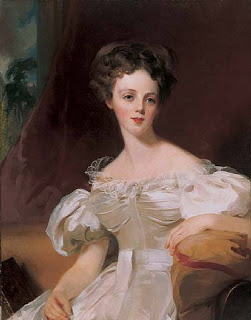
(NOT Rosamond Vincy, but close enough. By Thomas Sully).

For the last month I’ve been steadily churning through Middlemarch, George Elliot’s masterpiece about class and society in an English country town. It is very good, and suggests all sorts of interesting questions, one of which I plan on writing about here. I have two caveats: I have not finished the book and it’s entirely possible the coming events will make this post meaningless. Also, there will be spoilers.

There are three main female characters in Middlemarch:

1, Dorothea Brooke is perhaps the most prominent of all characters in the novel. She’s headstrong, virtuous and naive. She pursues a marriage to Casaubon out of a sense of misplaced desire to have a life of significance and learns quickly the error of that decision. She loves Will Ladislaw, but is powerless to act upon it.

2, Mary Garth is a plain girl from a poor family, but has strength of character. She refuses to consider Fred Vincy until he gets his act together, and when urged to burn the will of Peter Featherstone, her employer on his death bed, she refuses, unwilling to be drawn into his family drama.

3, Rosamond Vincy is a pretty girl from a respectable family. Pursued by the town’s eligible men, notably the foppish Ned Plymdale, she is drawn to the confident doctor, Tertius Lydgate.

Initially, Rosamond has none of the dimension of Dorothea and Mary, and seems to serve only as a model of a respectable young woman of her age. For much of the book, Rosamond hovers in the background, appearing only drive home points about the male characters. We meet her first as the well-mannered good daughter, in contrast with her brother Fred, who is in debt and causing his family trouble. Then she’s the object of Lydgate’s attention,  and it’s in his courting of her that we see how superior he is to the other men of the Middlemarch.

But it’s through her marriage to Lydgate that her character is fully realized, and Rosamond becomes among the most interesting people in the novel. For Rosamond, Lydgate is a stepping stone to a bigger, more exciting world. He comes from a prominent family from northern England, and while he seems to despise them, she hopes to leverage his connections. She has no interest in his work as a doctor – she thinks his experiments are morbid –  but admires his breeding and status.

Lydgate’s intensity, however, has made him unpopular in town, and his reluctance to prescribe the useless medicines favored by his peers is viewed suspiciously by potential patients. His practice suffers, and he soon realizes their lavish lifestyle has left them in debt. He confronts Rosamond with this and tells her they need to sell some of the silver, and she is horrified. When Lydgate proposes additional sacrifices, including making do with one servant instead of three and – most drastically – moving into a smaller house, Rosamond rebels.

She quietly sabotages Lydgate’s efforts to find a new tenant for their house, and without telling him, writes his wealthy uncle asking for help. The uncle refuses, and Lydgate is aghast. Throughout their debt trauma, Lydgate is brusque and demanding, rejecting any suggestions from Rosamond about how to improve his practice and insisting she obey him. But as drawn by Elliot, she’s even worse.

Unwilling to accept any inconvenience, Rosamond conspires against her husband to advance her own goals. She listens placidly to Lydgate’s lecture, then ignores him, believing herself to be the injured party. Convinced of her correctness, she dismisses any other possibility. Lydgate, the uncle, the debtors, even her father, were all responsible for her distress:

“In fact, there was but one person in Rosamond’s world she did not view as blameworthy, and that was the graceful creature with blonde plaits and little hands crossed before her, who had never expressed herself unbecomingly, and had always acted for the best – the best naturally being what she best liked.”

Rosamond’s behavior is abominable. But, crucially, it is effective.

This is what make he so interesting: Rosamond pulls the few levers available to her to get what she wants. Consider her options in England of 1832. She resents her husband, who she believes has deceived her about the life together she was to expect. Divorce is not an option. She owns no property, and has no means to earn her own living. Instead, she exerts force where she can, squeezing Lydgate to get what she believes she is owed.  As she tells him: “I think it was to be expected that I should try to avert some of the hardships which our marriage has brought on me.”

In her view, he has defaulted on the contract and she is resolved to salvage what she can from it. As I stipulated, I haven’t finished the book, and it’s possible her resolve crumbles (or that she dies, a proven solution for disposing of inconvenient characters). But through this episode, at least, she manages her options deftly.

Compare her to the Dorothea Brooke, who never acts in her own interest, but sacrifices herself first to Casaubon, then to an idealized sense of propriety. Or Mary Garth, who rejects Featherstone’s promises of money her family desperately needs.

Rosamond isn’t likable, or even admirable. But in a novel – and world – where many characters, and most women, are swept along by forces out of their control, she is unyielding.

Nerdverse: Comics, Race and Casting Superheroes

Tags

,

Benedict-in-Screen-Magazine-04-2013-benedict-cumberbatch-33870098-1280-15491Strange_Vol_1_5_Textless

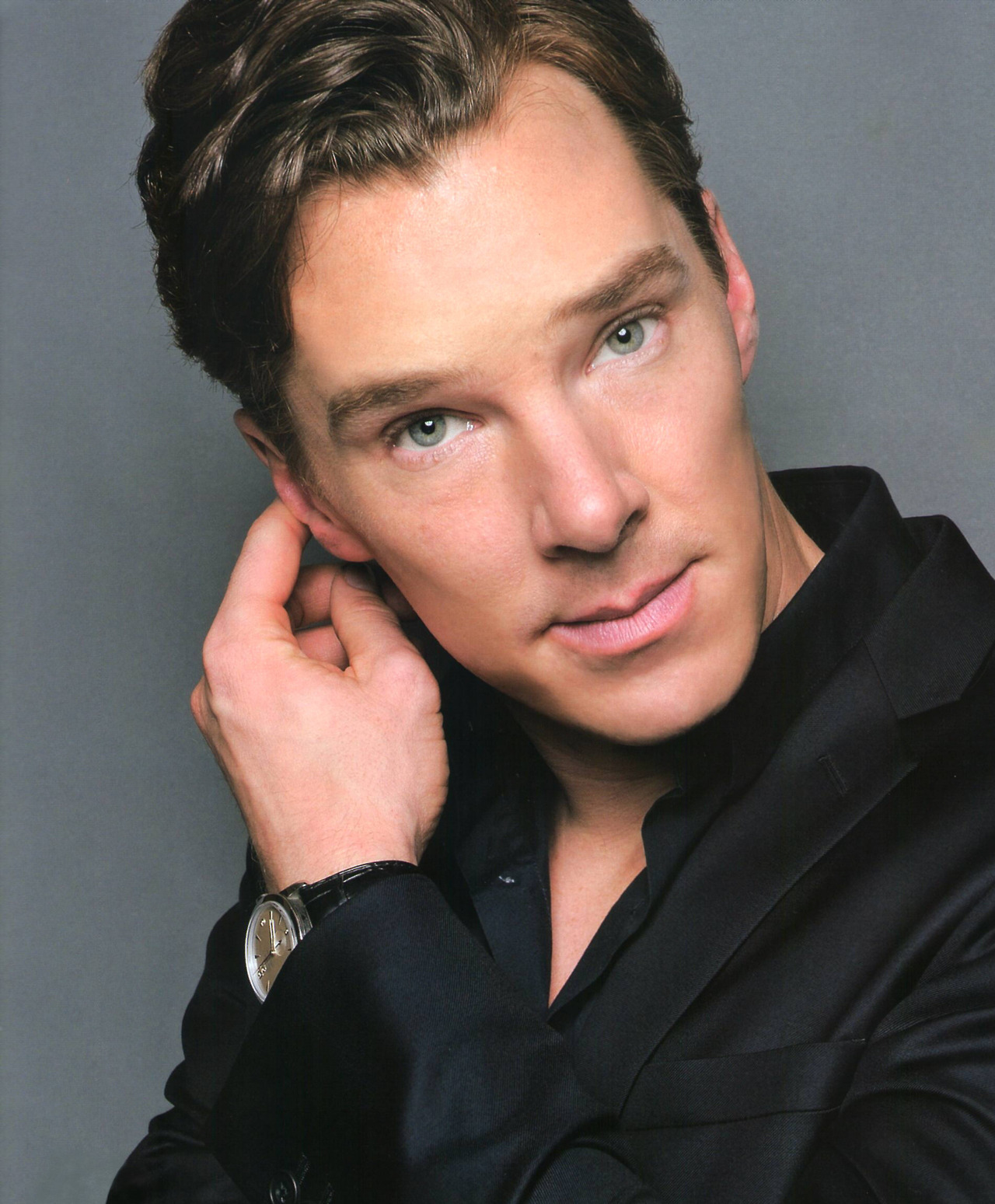
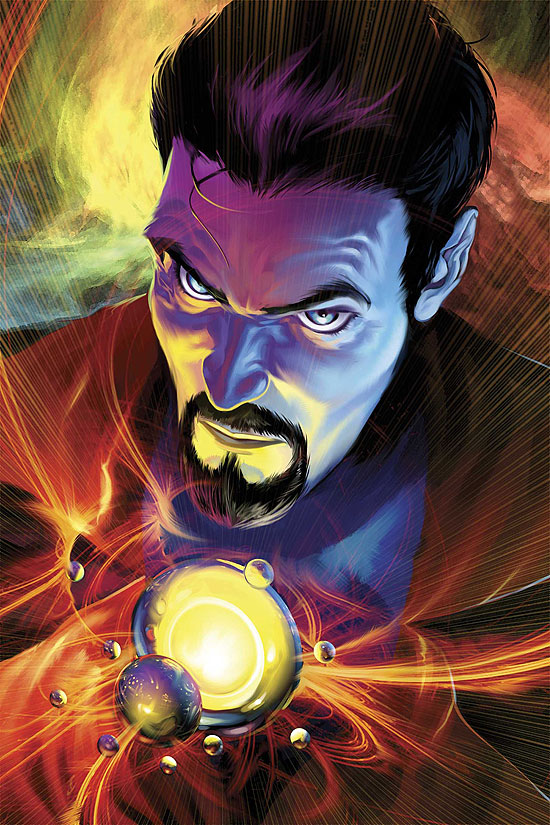
Marvel has announced it cast Benedict Cumberbatch to play Dr. Strange in an upcoming movie. I don’t have a problem with it – I would have preferred Clive Owen, but he’s probably past his sell-by date to carry a blockbuster – and Cumberbatch certainly can do arrogant, which is a big part of Strange’s character.

A lot of other people do seem to have a problem with it, at least judging from the comment sections on various fan sites. There are quibbles about Cumberbatch’s acting style and general ubiquity, but the strongest objections are to his being yet another white guy playing the lead in a super hero movie. Here’s a typical comment on the Marvel website:

Ah, yes, because Marvel needed MORE franchises headed by white males.

Another:

wanna see the number of lineups for diversity in the superhero roster in MCU movies? White Men: 9 (Cap, Iron Man, Hulk, Hawkeye, Thor, Peter Quill, Drax (kinda he’s half Filipino), ant-man, now DOCTOR STRANGE) White Women: 2 (Black widow, Captain Marvel) Men of color: 2 Black panther, ??Falcon?? (he IS a superhero in comics but in MCU he hasnt had his own movie OR been inducted into an official superhero group yet) Women of color: 1 (Gamora) Misc: 2 (Groot, Rocket Raccoon) so with the addition of cumberface, 9 male white superhero leads, 2 white women superheroes, 2 black male superheroes, 1 green female superhero (played by a black actress), and 1 animal and 2 tree

(The above isn’t actually accurate, as it omits Nick Fury)

This is fraught territory, and sucks in race, politics, identity, and the history of both comic books and movies. The flap over casting Cumberbatch for Strange adds a new wrinkle in the debate over the  races of actors. It’s not new – I remember controversy over casting the white Jonathan Pryce as a Eurasian pimp in Miss Saigon – but it’s picked up steam in the age of the superhero flick as black actors were cast as white characters (or characters believed to be white). Samuel L. Jackson as Nick Fury, Idris Elba as Heimdall (a Norse God in Thor) and even Amandla Stenberg as Rue in the Hunger Games all provoked storms of mini-outrage. This, however, is the first example I can think of where people are upset by a black actor NOT being cast for a white character.

For those who live outside the nerd bubble, Stephen Strange was an asshole surgeon who lost the use of his hands in a car wreck. Desperate to find a cure, he seeks out the Ancient One, a Tibetan mystic, who teaches him the art of magic, and Strange becomes the Sorcerer Supreme, Earth’s preeminent wizard.

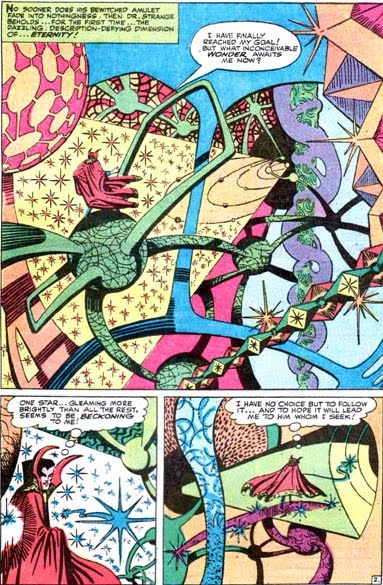
Dr. Strange first appeared in 1963, in a backup story in Strange Tales No. 110, and was created by Stan Lee, who had a hand in almost every Marvel character, and the great artist Steve Ditko, more famous for his work on Spider-Man. Dr. Strange stories were trippy excursions into alternate dimensions and universes, involving ancient artifacts like the Wand of Wattoomb, and epic battles with the Dread Dormammu and Baron Mordo.   STRANGE

Like virtually every character from that era, Strange was white. At least he was drawn as a white man, and while I’m not aware of any explicit discussion of his whiteness, Marvel was not subtle when it came to depicting minorities. If he was intended to be anything other than white, we would have known.

But does he need to be white in the movie? Actually, no. Unlike a number of characters whose racial identity is important to our understanding of them – ie., they come from Africa, they are part of a family of super heroes, they are masters of Kung Fu – Dr. Strange’s ethnicity isn’t tied down. He’s not really from anyplace in particular, and he has few connections to the rest of the world.  It’s not hard to picture a rich black surgeon with the same issues as Stephen Strange (Eriq La Salle played one for years). Casting a non-white actor would change our perception of him, but not the character.

So should Marvel have cast an actor of color? That’s the trickier question. Marvel and DC have gotten better about creating minority characters but there’s no denying that during the Golden and Silver Ages (roughly, from 1938 to 1970) the most prominent superheroes and villains were white, and they remain the tent pole characters for those companies. They didn’t accurately represent America or the world then, and they don’t now. While undoing the 50 or 70 year history of characters in the comics to correct the imbalance is problematic at best (and offensive at worst), one could argue casting the movies offers a chance for a fresh start.

That argument makes more sense if you approach these characters as primarily a movie goer, with little familiarity of the characters. Dr. Strange is, at best, a second tier hero – he didn’t have his own title for years at a time – and it’s a fair bet the general public has no idea who he is. For them, a black Dr. Strange wouldn’t be as challenging as, say, a black Batman. For Dr. Strange fans, though, undoing a key part of the character’s visual identity would be a lot harder to accept. They’ve followed him faithfully since 1963. Now, when he’s finally getting a movie, they’re told a big part of his appearance is being changed to accommodate a movie-going public that has no investment in the character.

Michael+B+Jordan+Premiere+Warner+Bros+Pictures+TP4Lq3J7UB-lsmcs7-1

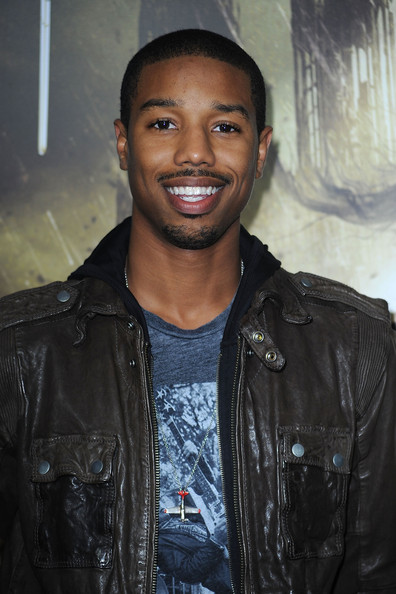
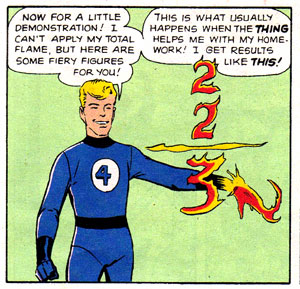
We will be faced with an extreme version of this problem with the casting of the black Michael J. Jordan as Johnny Storm, the Human Torch, in next year’s Fantastic Four. Unlike Strange, the Human Torch doesn’t exist in isolation. The Fantastic Four is a family. His sister is Susan Storm, the Invisible Woman. Tinkering with their races opens up issues so fundamental to the team that it risks invalidating the whole project (Marvel has experience with this: in the 1978 cartoon, it replaced Johnny with H.E.R.B.I.E the Robot) .

To avoid an all-white cinematic super hero universe, it makes sense to cast actors of colors in roles where the characters are less established, and their racial identity is not critical.  More importantly, Marvel and Warner Brothers (owner of DC) should identify their existing black characters and develop them into the anchors of potential movies. To an extent, that’s happening, with Black Panther and Cyborg movies planned.

The easiest solution, of course, is to ignore race altogether. The comics have dozens of red androids, green aliens and blue-furred mutants eager for their star turn. Let the debate over casting Red Tornado begin.

Very Short Review: Captain Phillips (2013)

Captain_Phillips_poster

“Captain Phillips” was both less and more than what I expected.

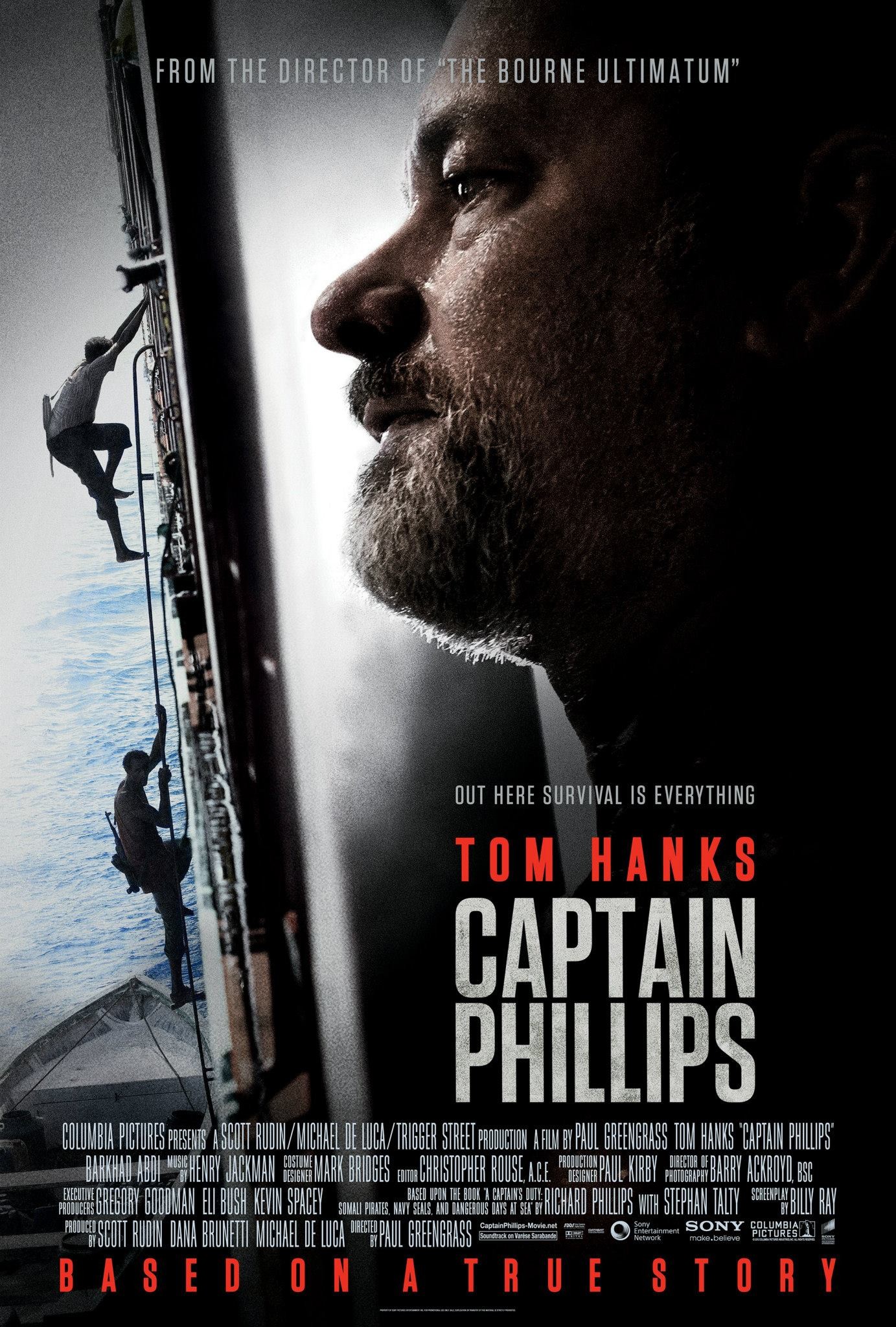
The story, based on real events, is simple: Richard Phillips (played by Tom Hanks) is the captain of a freighter crossing hazardous seas. His ship is boarded by a band of four Somali pirates, he is held hostage on a lifeboat and eventually rescued by the U.S. Navy.

The spareness of the plot lends itself to a lean, stripped down movie. This is what I mean by less. The camera almost never leaves Hanks – the one main exception is scenes that establish the pirates and their motivations – and Captain Phillips is a taciturn man. There are no soaring speeches, no long exchanges between characters. The dialogue is clipped and blunt, and the action scenes are jolting. The one time we see Phillips as anything more than a ship’s captain – the opening scene where he heads to the Burlington, Vermont, airport – he and his wife are filmed from behind and their conversation centers on their worries about their son’s future. The tone is set: worry and anxiety permeate this movie.

The more is Hanks’s performance. Grey-bearded and grim, he occupies the center of the movie without dominating it. For me, the mark of a successful performance from a famous actor is when I forget I’m watching a famous actor, and that’s rare. Star vehicles like “Captain Phillips” often seem produced to fetch awards, and the movie wants you to pay attention to the amazing acting. In “Gravity,” for instance, I never forgot I was watching Sandra Bullock. Not here. The economic script, and Hanks’s muted performance, allows him to disappear into his role of a man pushed to his limits.

Captain Phillips is directed by Paul Greengrass, who made two of the Bourne movies, and it’s a good marriage between a director who eschews frills and a story that offers few. There are no real heroes here. Phillips survives his ordeal with some quick thinking – but he’s rescued by the overwhelming firepower of the U.S. Navy, and it’s clear they’re only there to save the White House from the embarrassment of an American kidnapped in Somalia.

Unlike “Black Hawk Down” or “Zero Dark Thirty,” movies with which it shares a milieu and worldview, “Captain Phillips” largely ignores the geopolitical events that set the stage. The film has sympathy for the Somalians driven to piracy, but has little time to dwell on their plight. Its focus is entirely on the struggle off the Horn of Africa, and the last hour feels like the end game of a chess match, with the few remaining pieces on the board desperately staving off the final checkmate.

The Regular Season Champion

Tags

, ,

UeSQcgev

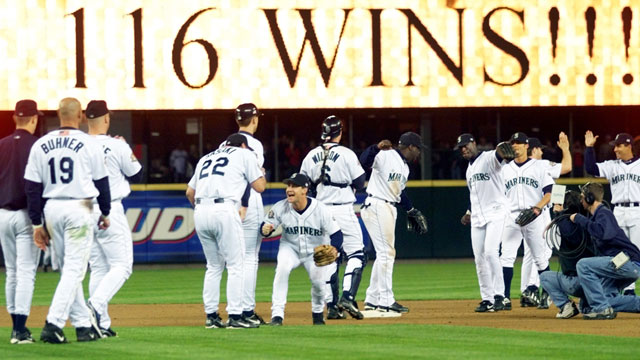
The 2001 Seattle Mariners may be the best baseball team of my lifetime. Led by Ichiro Suzuki  – a veteran from Japan in his MLB rookie year – Edgar Martinez and Bret Boone, they won a record 116 games. But they are a footnote in baseball history because they didn’t win the World Series. They fell in the American League Championship Series, four games to two, to the New York Yankees. (That Yankees team, at the tail end of their dynasty years, eventually lost to Arizona in a dramatic seventh game of the World Series.)

The 2007 New England Patriots may be the best football team of my lifetime. They were the first team ever to go 16-0 in the regular season, but because they lost to the Giants – a 10-6 Wild Card team – in the Super Bowl they’re mostly remembered as team that couldn’t seal the deal.

This year’s World Series will be contested between two Wild Card teams not good enough to win one of their league’s three divisions. The San Francisco finished 88-74, tied for the fourth best record in the National League. The Kansas City Royals, at 89-73, were also fourth in the AL, and nine games back of the Angels. Since 2000, just three World Series champions had the best record in baseball.

In American sports, the championship is the point. We don’t much care how you got there. With the advent of multiple rounds of playoffs, and the introduction of wild card teams, the regular season is now just an extended throat clearing before the main event. It’s only purpose – outside of selling tickets, of course – is to establish seedings for all-important post season tournament. And the seedings rarely matter.

It’s particularly problematic in baseball. Post-season football is pretty much like regular season football – teams play once a week, the same strategies apply – but post-season baseball is a different sport. Teams built to play 162 games now have to win one game at a time. The regular season rewards organizational depth, 5-man rotations and harboring resources. Savvy managers will throw an inferior pitcher to rest a better one, sacrificing one game now to win two or three later. In the post season, pitchers throw with short rest, rotations shrink to three and there’s no value in saving your reliever for tomorrow when there might not be a tomorrow.

Imagine taking the first 10 finishers in the Olympic marathon and having them run a 400 meter sprint. The winner gets the gold medal.

My solution: Give a trophy to the regular season champion.

I’m not suggesting getting rid of the post season. I’m saying let’s acknowledge the accomplishment of finishing the season with the best record. Let’s reward excellence.

Giving out two trophies in a season might seem unorthodox, but that’s standard practice in international soccer. Teams in the English Premier League compete for multiple championships over the course of the season: along with the regular season winner, there’s the Football Association tournament and the League Cup. The best teams also compete in European-wide tournaments. Teams talk about winning multiple trophies, or silverware, and the best teams boast of wining the treble – three trophies in one season (last done by Manchester United in 1998-99).

This will not be an easy adjustment for U.S. sports fans. The National Hockey League gives the President’s Cup to the team with the best record. It you haven’t heard of it, you’re not alone. (It probably doesn’t help that the Stanley Cup is the most iconic trophy in North American sports).

Another obstacle: Unlike European sports, Americans leagues are broken up into leagues and divisions. You could hand out trophies for the best record in each league (or football conference) but I’d rather not. One trophy for the best record. Ties are broken by run (or point) differential.

So congratulations, you 2002 Oakland A’s, winners of 103 Moneyball games! Your efforts are rewarded. Well done, 2004 St. Louis Cardinals (105) and 1998 Atlanta Braves (106). The 1954 Cleveland Indians, winners of an astonishing 111 games in an 154-games season, finally get their championship banner. The 2009 and 1998 Yankees are double winners (and unfortunately, so are the 2013 and 2007 Red Sox).

And take a bow, 2001 Mariners. The best regular season of all time deserves a trophy.

Why I’m not tired of Derek Jeter

Tags

,

Jet1[1]

After a year-long farewell tour, capped by an over-the-top final appearence in New York Thursday, the backlash to the Derek Jeter tribute threatens to overtake the celebration itself. It’s too much, too extravagent for a player whose career numbers are more Biggio more than DiMaggio. (Keith Olbermann sums up this sentiment in blistering fashion here.)

I get that. The Yankees aren’t good at restraint, events in New York tend to get magnified and the whole thing has gotten sort of tacky. If I wasn’t a Yankees fan, I’m sure I would be annoyed.

But I am a Yankees fan. And here’s why I’m not sick of it.

While I vaguely remember the glory years of the late 1970s (and the first game I went to featured a Thurmon Munson home run), I date my fandom from the 1986 season. The Yankees were OK, but that was the year the Mets of Gooden, Strawberry and Carter took over New York. That team was brash and obnoxious, its fans even more so, and the contrarian in me decided to make the Yankees my team.

My timing was not good. The Yankees were at the start of a steep decline. This was the era of Hurricane George, of Howard Spira, of Dallas Green. In these years, the Yankees traded Jay Buhner (career home runs: 310, 3 with the Yankees) for Ken Phelps (career home runs 123, 17 with the Yanks). The once-great Don Mattingly was hobbled with a bad back. Our big free agent signings were Jack Clark and Danny Tartabull. We tried to get excited about rookies like Kevin Maas.

These were the Yankees’ starting shortstops and their batting averages from 1986 to 1995, the year before Jeter became the full time starter:

1986: Bob Meacham .224
1987: Wayne Tolleson .221
1988: Rafael Santana .240
1989: Alvaro Espinoza .282
1990: Espinoza .224
1991: Espinoza .256
1992: Andy Stankwiecz .268
1993: Spike Owen .234
1994 Mike Gallego .289
1995: Tony Fernandez .245

(I know BA is an old-fashioned stat but trust me, their WAR wasn’t very impressive, either. Fernandez was a very good player at the end of his career. Tolleson and Gallego were capable utility infielders unfairly elevated to starting positions. The rest sucked).

The team’s performance was similarly dismal. They had four straight losing seasons from 1989-1993 (for the first time since 1912-15) and lost a record 95 games in 1990. Even worse, the front office seemed to have no clue about what to do. They signed washed-up free agents, traded away prospects and ran through a string of miserable managers. It was horrible to watch.

And these were the Yankees. When I signed up, I thought I was getting the team of Ruth and Gehrig, Ford and Mantle. A team with rich history, with a tradition of winning and winning a lot. The team I got was a sad shell of that, trading on nostalgia and faded glory, bumbling on the field and off.

But gradually, things began to change. George Steinbrenner was banned from the team and when he was reinstated, he stopped meddling. Front office decisions improved. Young talent was identified and groomed. Roberto Kelly was traded for Paul O’Neil. Buck Showalter took over as manager and raised expectations. And into this new, hopeful environment came Derek Jeter.

Jeter wasn’t responsbile for this transformation, but he represented it more than any other player. He was young, talented and more than anything, professional. He acted like a winner, and he played the way we expect of Yankees. He led them to four championships in five years (and tacked on a fifth a decade later). He was the heir to Mantle, Munson and Mattingly. He was, after the Steve Balbonis and Mel Halls, a Yankee that Yankee fans could be proud of.

In the long sweep of Yankees history, the four years of darkness from 1989-1993 is a footnote, the momentary decline that set the stage for the great years that followed. For me, though, they were long and painful. Jeter may not be the greatest Yankee of all time. But he was the right Yankee at the right time. And for that I am grateful.

Ranking Sports: The best National Football League team names

Tags

,

Since my rankings of baseball team names drew so much attention and venomous vitriol constructive criticism, I thought it was time to take another swing at it, this time with NFL team names. As a rule, football team names are more generic and have less local color than those in baseball. But there are a few gems, and one or two stinkers.

Again, this is an aesthetic, not scientific exercise. It represents only my taste. You may – and probably will – disagree with me. That’s cool. I’d love to see how others rank teams.

I’m using the same three basic criterion as I did for baseball:

* Originality. Sort of obvious, but I favor teams that don’t share a nickname with other teams, in any sport.  It doesn’t matter to me if a team got its unoriginal name in some novel way; if they’re still called the Tigers or Pirates, it’s a hackneyed name.

* Geographic specificity. Does the name refer to something that’s unique or characteristic to the city or region? Would it be jarring if the team was relocated? (See: Utah Jazz)

* Unmarketability: I don’t like names that are designed to sell jerseys or appeal to teenagers. I like names that feel organic, and emerge from history.

I’m also adding a new criteria: Footballishness. This is hard to pin down (and can sometimes conflict with unmarketability),  but a football team name should reflect the gritty, tough nature of the sport. The sweet, whimsical nicknames of baseball won’t cut it in football.

Note that I don’t always give these criterion equal weight. Unusual strength or weakness in one category may swamp the others.

Lastly, you’ll note I’ve only ranked 31 teams. I’ve omitted the Washington Redskins, whose name is so bad that it makes the distinctions between the others meaningless. In the Tour de France, the peaks are ranked by difficulty, with the highest mountain hors categorie – beyond categorization. The Redskins are hors categorie.

In reverse order this time:

31, Jacksonville Jaguars
url

Everything about the Jaguars seems focus-group tested and ad agency designed. “We need a ferocious animal that starts with a J. What’s available?” Even if Jaguars once prowled northern Florida, it would still be cheesy. It doesn’t help that half of U.S. sportscasters pronounce it “jag-wire.”

30, Arizona Cardinals
ArizonaCardinals4

Here’s a good example of how a name that’s great in baseball doesn’t necessarily work in football. A cardinal is a pretty, shy bird – about as un-footballish as you can get. Even toughening up their logo didn’t help. It’s definitely unmarketable, and I guess they deserve credit for sticking with it after their moves from Chicago to St. Louis to Phoenix, but it still fails the originality and specificity tests.

29, Atlanta Falcons
url

Boring, generic and bland. “Falcons” sounds like the name assigned to fictional teams on TV and in movies. Could be from anywhere, playing any sport.

28, Kansas City Chiefs
url

I wrestled a bit about what to do with the Chiefs. According to my categories, they deserve a low ranking. But they also have the odious appropriation of Native American imagery, so perhaps they should join the Redskins in oblivion. But I think they are clearly not as bad as the Redskins, which is a straight-up racist insult. Chiefs, while goofy and insensitive, doesn’t suggest actual malice and could be easily tweaked to remove the Native American connotation.

27, New York Giants
new-york-giants-logo

As a Giants fan since 1986, it pains me to rank them so low. But I must. It’s not original (the baseball team had them beat by decades) and it’s not specific. The giants of Greek mythology do have an interesting origin. According to Hesiod, Chronos, the Titan, castrated his father, Uranus, and the drops of blood that spurt forth were raised by his mother Gaia into giants.

26, Carolina Panthers
imgres

Another big, mean cat. Yawn.

25, Detroit Lions
imgres

See above. For some reason, there aren’t nearly was many Lions in major U.S. sports as Tigers, Panthers, Cougars or (the worst) Wildcats. Penn State is the only other one I can think of (Columbia doesn’t count. I said major sports).

24, Tennessee Titans
tennesseetitans

More mythology. The Titans are a bit more interesting than Giants (and I like the nod to classicism in the logo). But aside from the ersatz Parthenon in Nashville, I’m not sure what the connection is between Tennessee and Ancient Greece. The franchise used to be a the Houston Oilers, which was a great name. This is not.

23, New York Jets
url

The Jets used to be the known as the Titans (not that it would help them here). They changed their name to the Jets when they began playing in Shea Stadium, near LaGuardia Airport, so they’ve got some local connection in their name, but it’s not very specific or unique (Winnipeg Jets, anyone?). Nor is it very footballish. It is a great name for headline writers, though, and fills out the New York troika of Mets, Nets and Jets nicely.

22, Indianapolis Colts

url

A storied franchise, an uninspired name. It’s equally at home in Indianapolis as it was in Baltimore, which is to say it has no local connection and could fit anywhere. If the name suggests anything besides young horses, it’s the Old West and Colt .45s. Their logo is kind of Old West-ish, too. That doesn’t make much sense in either Baltimore or Indianapolis.

21, St. Louis Rams
imgres

Another team that moved without any need to update its name. Never a good sign. Rams are unoriginal and unspecific, but it does have a good footballish quality. “Ram” is a great verb for the sport. I would have had them higher but I remembered that a ram, at the end of the day, is still a sheep.

20, Oakland Raiders
imgres

Great colors, great mascot but a mediocre name. If there’s something piratical about Northern California, I’m unaware of it. It does have a nice sound to it, though.

19, Chicago Bears
imgres

Heresy! you say. Sacrilege! What could be more footballish than the Chicago Bears? But great tradition is not a great name. There are lots of teams called the Bears (or Bruins), and bears could once be found everywhere in the U.S. As a name, it’s nothing special. (The Bears started life as the Decatur Staleys, which, needless to say, was a GREAT name.)

18, Dallas Cowboys
imgres

Despite my loathing of the Cowboys as a team and franchise, I couldn’t figure out how to rank them any lower. It’s really not that bad a name. Not very original, but definitely regionally specific. And not obviously marketable, either. The team gets far more mileage pushing its cheerleaders than its horrible mascot.

17, Cincinnati Bengals
imgres

Here’a team I wish I could rank higher. It’s original (even if it’s a derivative of the ubiquitous tiger mascot) and it’s the basis for one of the best helmets in the NFL (a subject for another list). But there are no more tigers in Cincinnati than there are in Detroit, and even if the team has been around for a while (and named after an even older Bengal team), the name does have the whiff of a marketing decision. If the team dropped the tiger motif and went with the Bengalis, they would score much higher in originality.

16, Denver Broncos
imgres

Broncos aren’t a huge improvement over Colts, but the name does make more sense in Denver than in Indianapolis. And Broncos are a more rugged version of horse. Like a lot of these names, it’s fine, but unexceptional.

15, Philadelphia Eagles
imgres

The connection to Philadelphia’s role in American history helps elevate the Eagles above the other generic flesh-ripping animals, but it’s still not a great name. There are a lot of Eagles out there.

14, Houston Texans
imgres

“Texans” is an odd choice for a name, so I sort of like it. It’s hard to imagine a team in any other state doing something similar. (The Columbus Ohioans? The Birmingham Alabamians?) It’s a naked appeal to Texas’s weird sense of state-patriotism (and is another nod to an earlier team), and is obviously local. Still, the Oilers were a great name and it’s too bad they didn’t revive that one.

13, New England Patriots
imgres

Definitely local, definitely original. Not obviously footballish (I tend to think of wizened men in powdered wigs like John Adams when I think of New England patriots). They did remedy that in their earlier logo with the burly, 18th century football player who they sadly replaced with the weird logo they use now. The name Patriots does sort of bug me, if only if it implies everyone else is not a patriot. But maybe I’m being too sensitive.

12, Tampa Bay Buccaneers
imgres

Unlike a lot of pirate-type teams, the Buccaneers have some claim to the name because of Gasparilla, a legendary (and maybe fictional) pirate who raided the West Florida coast. Gasparilla is a big deal in Tampa, so the name is definitely steeped in local tradition. It has a snappy, footballish sound to it, too. I’d probably rank it higher if there weren’t so many pirate-themed names out there. Trivia: “buccaneer” derives from buccan, an Arawak word for the the wooden frame used to smoke meat.

11, San Diego Chargers
imgres

This is a great name, even if it’s not obvious what it means. The logo and mascot suggest something to do with electricity (some sort of battery, perhaps?), but a charger is also a medieval warhorse and a Dodge sedan. Charge is a great action verb for football, like ram. Apparently the team’s founder liked the name because it evoked soldiers charging after a bugle is sounded. If only it had something to do with San Diego …

10, Miami Dolphins
imgres

The Dolphins tick a lot of boxes for me. But it’s possible the real reason I like the name is it allows the team to use a dolphin wearing a football helmet as their mascot. Which is awesome.

9, Baltimore Ravens
imgres

I’m sure plenty of market analysis went into picking this name when the team changed its identity after moving from Cleveland in 1996. But it was an inspired choice, to the extent that it’s a reference to Edgar Allan Poe, who lived and died in Baltimore, and his most famous poem. Will there ever be another NFL team named for 19th century literature? Nevermore.

8, Seattle Seahawks
imgres

The last of the flesh-ripping animals (and the fifth bird) on the list. A sea hawk is really an osprey, which would have been a fine choice, too, but it wouldn’t have the nice alliteration of Seattle Seahawks. It’s a good name: original and regionally specific. Bonus points for the great mascot (note to Chiefs: That’s how you do Native American imagery).

7, Cleveland Browns
cleveland_browns_logo

Is there any team in sports with a less marketable name than the Browns? The team may or may not have been named after coach Paul Brown, but either way, they went confidently in the direction of dull, and haven’t looked back. So they get all sorts of credit from me for being original, historical and unconventional. Should the name be ranked even higher? Sorry, but it’s just too boring.

6, New Orleans Saints
imgres

Admittedly very un-footballish, but a fun, interesting, colorful name. It’s a tribute to “The Saints Go Marching In,” the unofficial anthem of New Orleans first popularized by Louis Armstrong. There’s no other name like it in sports (the Angels are closest, I guess).  And it works great with the black-and-gold colors and the fleur-de-lis logo. Biggest downside: It turns into Aints a bit too easily.

5, Minnesota Vikings

images

The Vikings, a name which pays homage to the Scandanavians who migrated to Minnesota, are my favorite Team Named for a European Ethnic Group that Settled in Defined Areas of North America. (Other TNEEGS-DANAs include the Celtics and Knicks). The Vikings are particularly footballish if you focus on the blood-thirsty myth and ignore that most of them were farmers. (Trivia: there’s no evidence that Vikings wore horned helmets.)

4, San Francisco 49ers
images

We’re at the point in the list where you can make a case for any of these teams to be No. 1. The 49ers are a great name. Local, original and very unmarketable. The abbreviation “Niners” is good, too.

3, Buffalo Bills
bills-logo

The Buffalo Bills are unique in major sports in that the name only makes sense with both the city and mascot together (the only other one like I can think of are the Macon Whoopee – get it? – a minor league hockey team,  although I’m sure here are others). They’re also alone in using the name of the city as their mascot, and buffalo are big, shaggy, smelly, powerful animals, ie. perfect for football. Buffalo Bill Cody was from Iowa, and I don’t know if he ever visited Western New York (he got his nickname from slaughtering bison for the railroad) but the name works in just one city.

2, Green Bay Packers
Green_Bay_Packers3

Pretty much everything you want in a football team name. Original, regionally specific – named for the meat packing company that first sponsored them – and definitely footballish. There’s something hard working and honest about Packers- I picture guys in coveralls with blood stains on them – and it’s a pretty good verb, too. They would top this list if it weren’t for the …

1, Pittsburgh Steelers
Pittsburgh_Steelers

The Steelers are the 1972 Dolphins of football names: perfect. Few cities’ identities were as linked to one industry as Pittsburgh’s was to steel manufacturing, and to have the team reflect that identity is the ultimate match of city and name. No other team could hope to use the name. Plus it just works so well for football. It’s synonymous with toughness and resiliency, lends itself to puns like “steel curtain” and, of course, is a perfect verb for football. Is it the best name in all of sports? It’s in the running.

 

Year of Fiction: Leviathan Wakes, by James S. A. Corey

Tags

, ,

8855321

Among the new statistics taking over baseball is the concept of the “replacement player.” To judge the value of any player, you can measure then against a generic player that might be available to a team as a replacement (hence, the new stat WAR, or Wins Above Replacement). A replacement-level player is basically competent but not outstanding. He won’t do much to hurt you but won’t help, either.

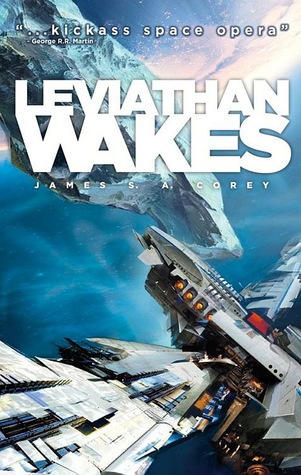
“Leviathan Wakes” is replacement-level science fiction. It’s not terrible, but it’s pretty bland and – time will tell – probably forgettable.

I picked it up on the recommendation of a bookstore clerk in Manchester, and after plowing through some thicker stuff, I was eager for a breezy page turner. “Leviathan Wakes” is set in the not-too-distant future. Humans have spacecraft and have colonized the moons and planets, but haven’t escaped the solar system. The book is the first of a planned trilogy that intends to document mankind’s leap to the stars.

The “author,” James S.A. Corey, is actually the pseudonym of two writers, one of whom is billed as “the assistant to George R.R. Martin,” which explain’s Martin’s breathless blurb on the cover.

The story itself is a lengthy, slightly confusing and occasionally entertaining tour of the asteroid belt, told through the alternating perspectives of an idealistic space pilot and a disillusioned police detective. Their stories converge over an abandoned freighter, a missing woman and a rogue space germ that causes horrifying mutations. The backdrop is an unstable political balance between Earth and Mars that topples into war.

All of this is rich material, but it suffers in the telling. The two main characters too easily fall into genre cliches, the supporting characters are thinly drawn and their milieu of space stations and mining colonies is so standard-issue they seem ordered in bulk from Acme SciFi. (It really suffers in this respect when compared to Heinlein’s Moon is a Harsh Mistress, which has a similar setting, but is far more inventive in creating a unique culture away from Earth). The plot has some twists, and it picks up steam toward the end, but it lumbers on for too long, sagging in the middle. The twin narratives – a device familiar to readers of Martin, and which works in his far-flung narratives – seems unnecessary here, as the two characters frequently cross paths and share the same story.

“Leviathan Wakes” is never outrageously bad, and there are worse ways to pass the time. But it’s hard to root for a replacement player.

Books completed this year:

1, The Man in the High Castle (Dick)
2, Disgrace (Coetzee)
3, The Finkler Question (Jacobson)
4, The Moon is a Harsh Mistress (Heinlein)
5, Beautiful Ruins (Walter)
6, Petropolis (Ulinich)
7, The Caves of Steel (Asimov)
9, Winter in the Blood (Welch)
10, Lena Finkle’s Magic Barrel (Ulinich)
11, The Strange Case of Dr Jekyll and Mr Hyde (Stevenson)
12, Moby-Dick (Melville)
13, The Road (McCarthy)
14, The Corrections (Franzen)
15, Leviathan Wakes (Corey)

Year of Fiction: Lena Finkle’s Magic Barrel, by Anya Ulinich (2014)

Tags

,

9780143125174_LenaFinklesMagicBarrel.indd


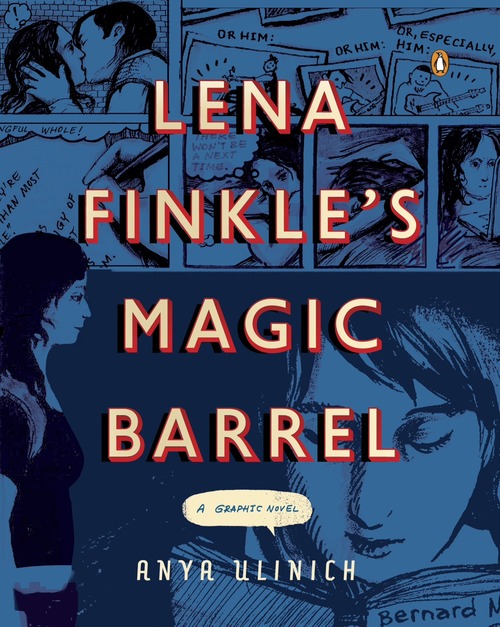
My wife and I are friends with Anya Ulinich, and she sent us an advance copy of her new book a few months ago. At the time, I thought I would hold off writing about until it was published, to, you know, help with that critical marketing push. But in the last few weeks Anya’s book received rave reviews in the Los Angeles Times and New York Times, making my meager contribution less than necessary. To save time, I’ll stipulate that I agree with those reviews: it’s a sharp, clever take on life and love in our confusing times, told from Anya’s unique, divorced-Russian-mother-emigre-in-Brooklyn-by-way-of-Phoenix perspective.

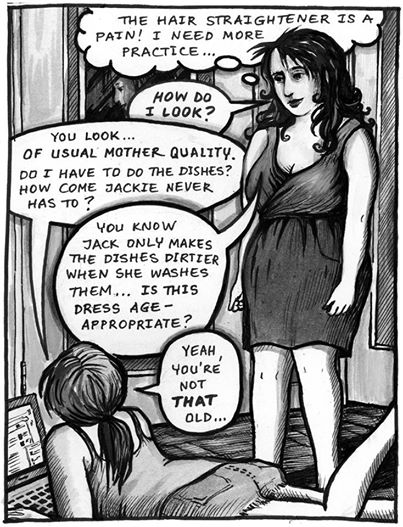
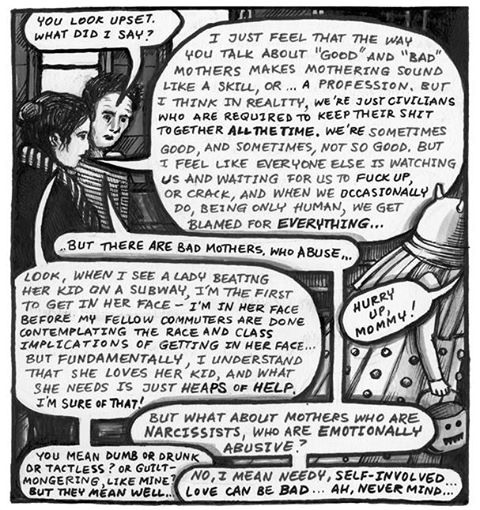
Anya’s book isn’t just a novel, though, it’s a graphic novel, and while the some reviews* treat the art as secondary, it’s not; it’s essential to the story. So if I can add anything to the discussion, it’s as a longtime reader of graphic novels (ie. comic books) who understands that art can work with writing to tell a different sort of story.

Anya comes into graphic novels from an interesting direction: she trained in fine arts (studying with my wife at UC Davis), then wrote a traditional novel (Petropolis) in 2008, before combining the disciplines in “Lena Finkle’s Magic Barrel.” The resulting synthesis is unlike anything I’ve seen before. I don’t know what Anya’s exposure to graphic novels was before she started hers – perhaps none – but she’s clearly at home in the genre, and is happy to play with the form in fun and interesting ways.

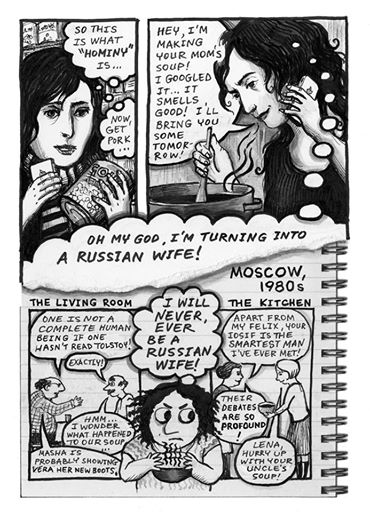
There’s a mix of styles and techniques in “Lena Finkle”, used for different purposes throughout the story. The most frequent is a straightforward, semi-realistic illustration that propels the plot:

10303473_10152586128387269_8499866710991482018_n

But for flashbacks to her girlhood in Russia, she deploys a cartoony style:

1461030_10152125653137269_1522296221_n

Sometimes the two combine, when Anya’s inner voice appears as a frizzy-haired avatar to mock her, an ingenious representation of her self doubt.

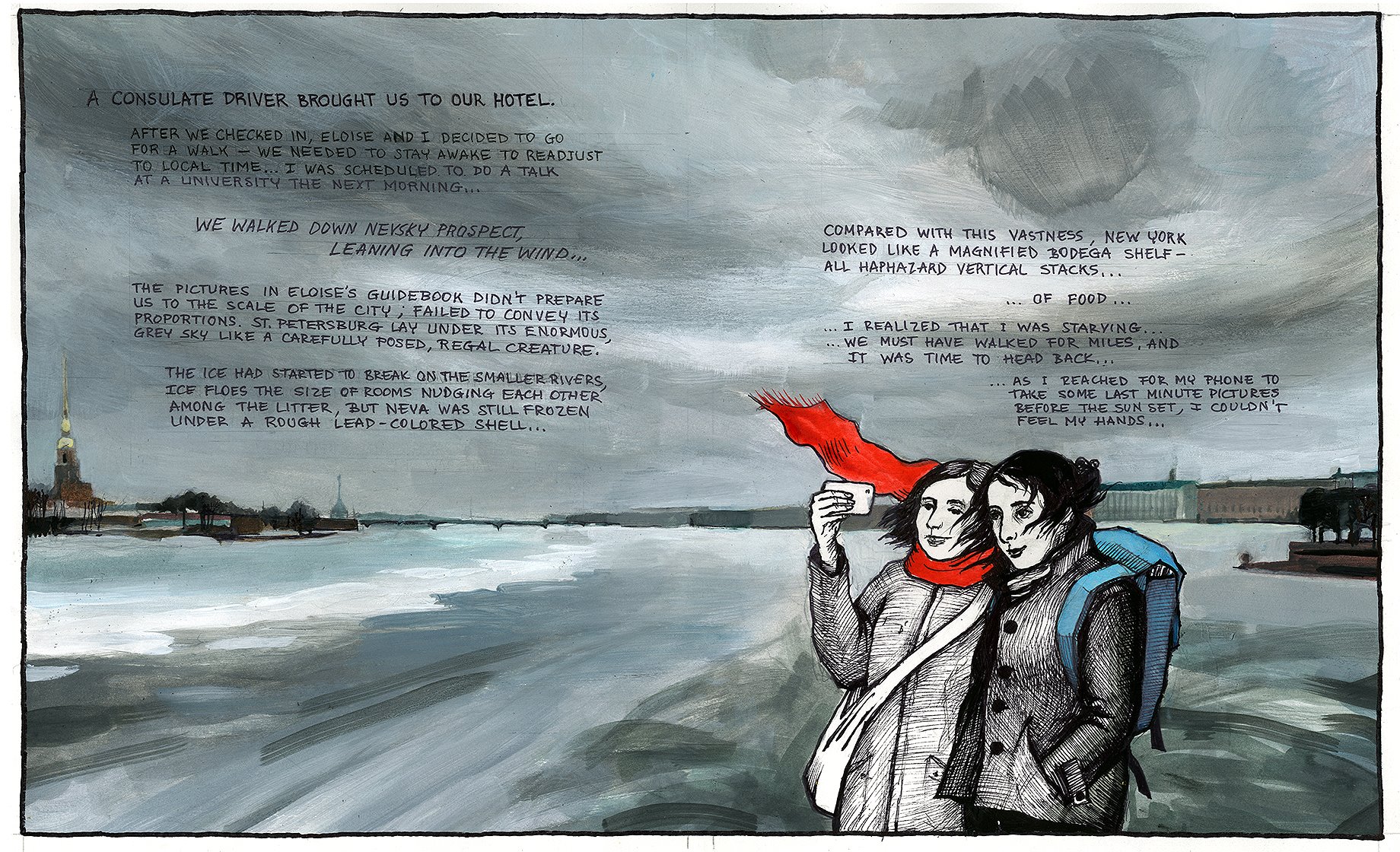
Anya also paints gorgeous, atmospheric images, like this one of St. Petersburg (the color here isn’t in the actual book):

335964_10151038454397269_415700114_o

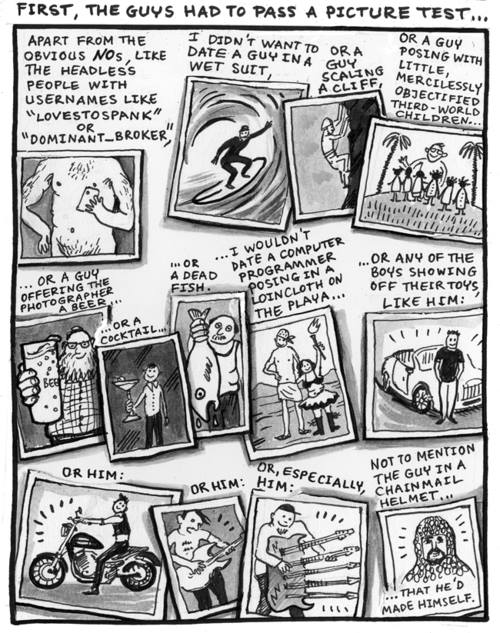
At its best, “Lena” takes full advantage of the opportunities offered by illustration. In journalism, we say “show, don’t tell,” an injunction to breath life into stories with color and detail, and that’s literally possible in a graphic novel. In one great double-page spread, she diagrams the various cliques and social groupings of Arizona State University undergraduates. And here, she gives a run down of potential dates whose online images make them non-starters:

anya

Among Anya’s strengths as an illustrator is knowing when and how to employ her various styles, dialing up and down the realism-to-cartoony meter as the story moves from humor to pathos and back. She’s also a gifted artist, as demonstrated by this chapter introduction:

998556_10151809030527269_37374093_n

If “Lena Finkle” has a weakness, Anya the Writer can overpower Anya the Illustrator, and at times her text crowds out her art:

1458707_10152081827537269_558021650_n

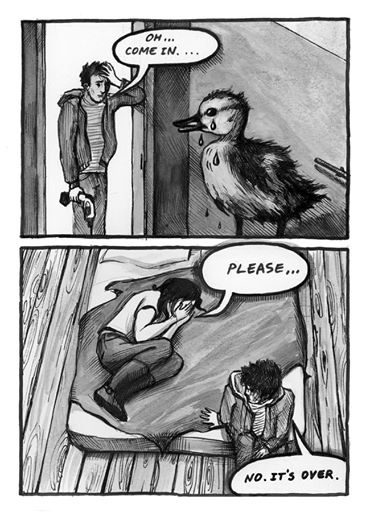
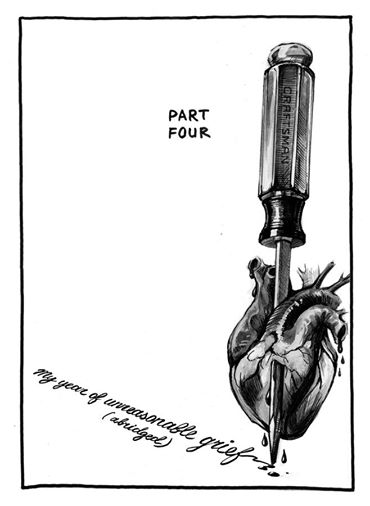
There’s a denseness to Lena’s neurotic introspection that’s part of the character, and her merciless examination of her life and choices give the book it’s honesty. But the story comes most alive when she gives her art room to breath.  The strongest sequence comes at the book’s emotional climax, where Lena is trying (and failing) to understand why she was dumped. Anya draws her as a duckling, in a series of repeating images that captures the despair of the heartbroken. In a novel, Lena-as-duckling is a metaphor. In a graphic novel, Lena can become an actual duckling, literally helpless, a device that shows Anya’s creative embrace of the medium.
37050_10151972644777269_1360201832_n

“Lena Finkle” is in black and white, which is unfortunate, because I suspect Anya would use color in smart and powerful ways. But that’s a quibble. The art soars in black and white, carrying the book with it.  I’m eager to see what Anya does next.

*I fixed this after my wife pointed out a number of reviewers did write about the art. I was generalizing. My bad.

Books completed this year

1, The Man in the High Castle (Dick)
2, Disgrace (Coetzee)
3, The Finkler Question (Jacobson)
4, The Moon is a Harsh Mistress (Heinlein)
5, Beautiful Ruins (Walter)
6, Petropolis (Ulinich)
7, The Caves of Steel (Asimov)
9, Winter in the Blood (Welch)
10, Lena Finkle’s Magic Barrel (Ulinich)
11, The Strange Case of Dr Jekyll and Mr Hyde (Stevenson)
12, Moby-Dick (Melville)
13, The Road (Cormac McCarthy)

Very Short Review: Now You See Me (2013)

mza_1285555125164861751


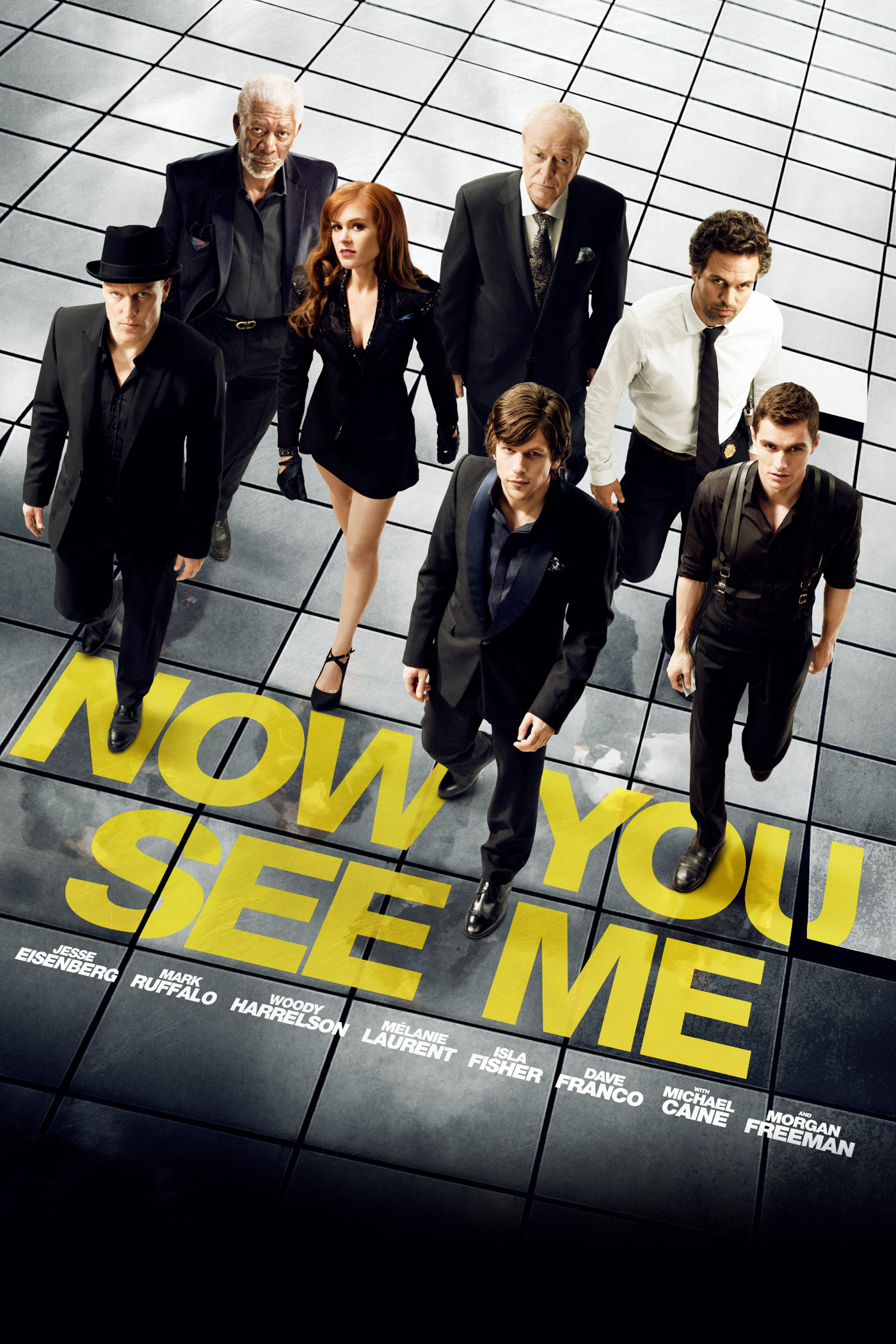
The tricky thing about writing reviews for movies built on surprises and twists is describing the movie without giving away the plot. You don’t want to spoil the reader’s fun. But when it comes to an utter failure like “Now You See Me,” I have no such qualms. The twist at the end doesn’t make you rethink everything you just saw, it makes you rethink your decision to waste two hours watching it. The premise is this: a team of four magicians, pick pockets and hypnotists are recruited to form a super team of performers, who use lavish shows in Vegas and New Orleans to rob banks and billionaires and give the money to their audiences in outlandishly public ways. This attracts the attention of the FBI, and Agent Rhodes, played with gruff exasperation by Mark Ruffalo, gives chase, accompanied by a (surprise!) beautiful French agent assigned by Interpol (because the magicians robbed a French bank). The true motives of the Four Horsemen (as the team is called) are not known, nor do we know the identity of their benefactor. Various suspects are supplied, including a former magician-turned-debunker Morgan Freeman. As the stunts become more elaborate and the chase scenes more frenzied and desperate, the tension builds and the movie blows up like a balloon, promising a big reveal. But instead of achieving lift off, or even popping in some novel way, it leaks away like a sad flatulence. The mastermind behind the heists was Ruffalo’s FBI agent, who all along, for reasons unexplained, gave the appearance of trying to catch the crooks while bankrolling them. His motive? Some vague revenge for the death of his magician father (How the son of a famous magician gets assigned the FBI’s first magician-bank robbery case without anyone noticing is only one of the dozens of  holes and flaws in the movie). The Four Horsemen, who never progress past their snappy banter into real people, achieve some sort of magician Nirvana and ride away on a mystical carousel (really). The movie ends, insipidly, with Ruffalo and the French agent declaring their love on the Pont Des Arts (the bridge with the cheesy locks) in Paris. But the movie’s biggest problem isn’t the improbable twist that Ruffalo was pulling the strings – in the hands of a gifted director, it could have been sold. (Think of Christopher Nolan’s “The Prestige” as a template for how to make this sort of movie work).  It’s that “Now You See Me” makes no attempt to sell it. Instead of rewinding the camera to show the clues we missed, we get a halfhearted shrug, as if it couldn’t be bothered to try. It’s like a botched magic trick: a lot of razzle dazzle before the magicians flubs the finale.