• About Percival Henry

Percival Henry: The Fantastic Four and more

~ Blogging the Fantastic Four issue by issue (plus whatever else grabs my attention)

Percival Henry: The Fantastic Four and more

Tag Archives: jack Kirby

“The World’s Greatest Comic Magazine” Fantastic Four No. 15

18 Sunday Apr 2021

Posted by percivalhenry in The World's Greatest Comic Magazine

≈ Leave a comment

Tags

1963, Fantastic Four, Fantastic Four 15, jack Kirby, mad Thinker, Stan Lee

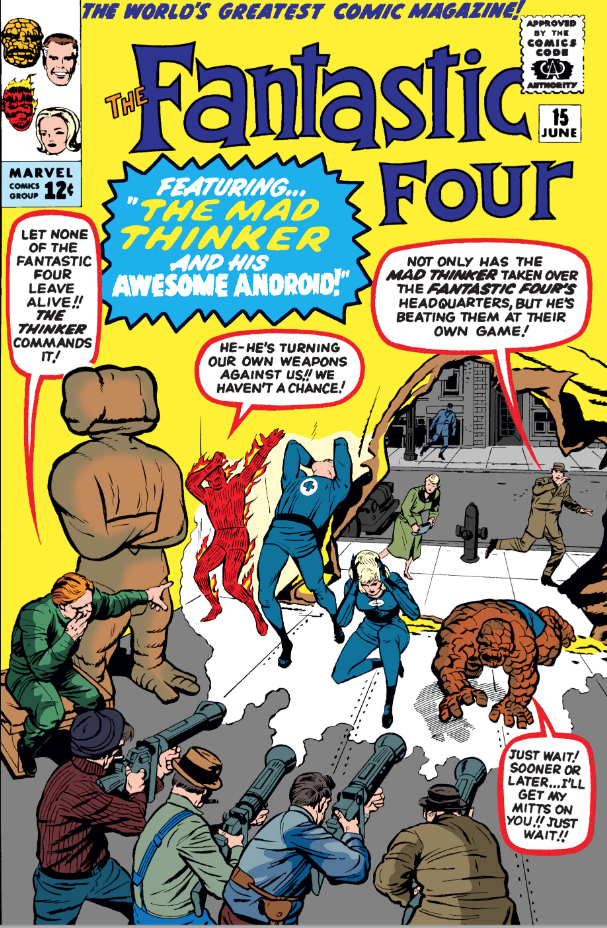
Fantastic Four 15
“The Mad Thinker and his Awesome Android”
Published March 1963
Story: Stan Lee and Jack Kirby
Script: Lee
Pencils: Kirby
Inks: Dick Ayers
Letters: Art Simek

Synopsis

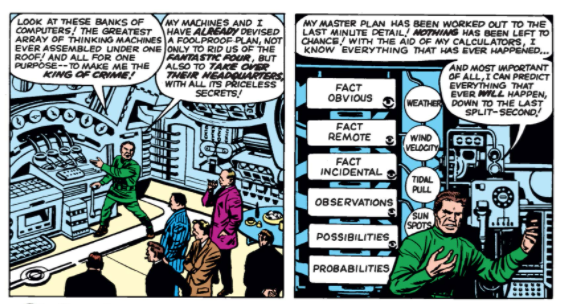
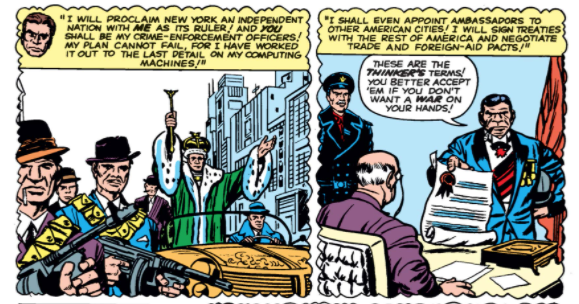
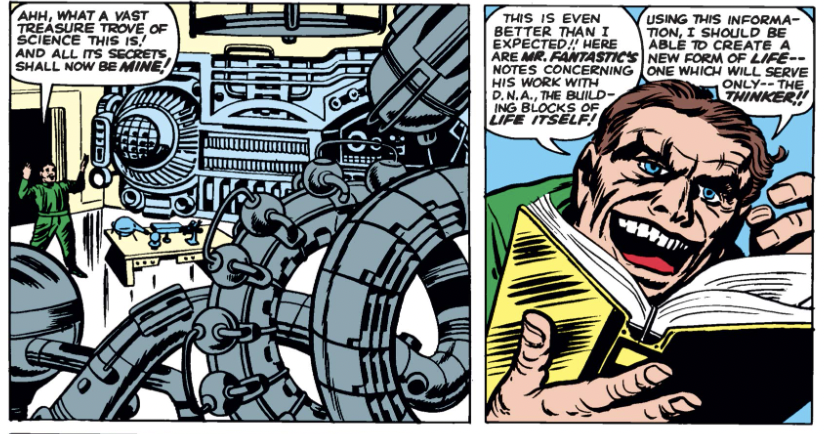
In an echo of the first issue, Mr. Fantastic uses a flare gun to summon the team, and informs them he’s been alerted by the police that gang leaders from around the country are assembling in the city. Meanwhile, we are introduced to the Mad Thinker, a genius scientist, who has convened the crime bosses. He debuts his plan to use the predictive powers of his computers to defeat the Fantastic Four and become king of New York.

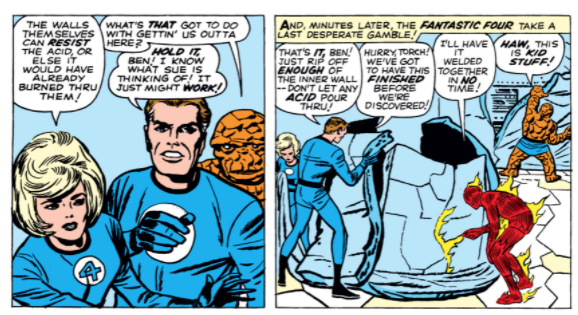
Putting his plan in place, he arranges for the FF to be drawn away from the team to pursue other goals: Johnny joins his cousins’ circus, Ben become a pro wrestler, Sue makes a movie and Reed becomes a research scientist. All are dissatisfied with their new careers, however, and return to the (newly named) Baxter Building only to find it turned to crystal by the Thinker. The team fight their way in and overcomes a series of traps and obstacles laid by the Thinker, who uses Reed’s own inventions against him. The last is an android, which adapts to its foes, that Reed designed by the Thinker built. The Thinker is finally defeated after Reed prearranged for the building’s power to cut out, shutting down the Thinker’s weapons.

What’s going on here?

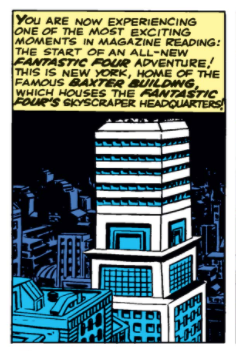
A fairly straight-forward issue that introduces the Mad Thinker to the FF’s rogues gallery. While never a first-tier bad guy, he reappears fairly steadily over the years, often teaming up with other villains. He’d often included a in run-down of the smartest characters in the Marvel Universe. The issue also features the first time their headquarters is named the “Baxter Building,” 12 issues after its first appearance in issue 3.

Those guys

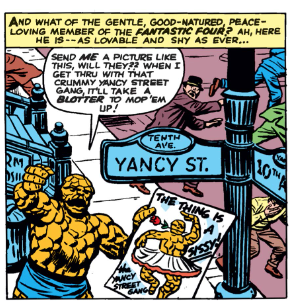
FF 15 also marks Ben’s first actual visit to Yancy Street, where he is of course harassed by the Yancy Street Gang. While the fictional Yancy Street is understood to be a stand in for Delancy Street on New York’s Lower East Side, here it’s intersecting with 10th Avenue.

Crime does pay

It seems strange now that the FF would be involved in a story with mafia-type criminals but Marvel had’t fully yet separated its “street-level” books like Spider-man and Daredevil from its more cosmic type comics like the FF and Avengers. So in this issue we get both mob hoods in pin-stripe suits and toothpicks and the Thinker whose ambition to become king of New York is surprisingly literal.

Rasslin’

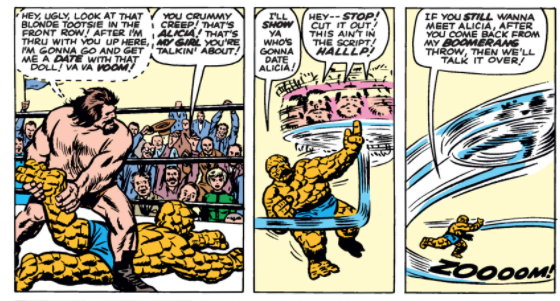
On his short sabbatical from the team, Ben becomes a pro wrestler and fights Fatal Finnegan.

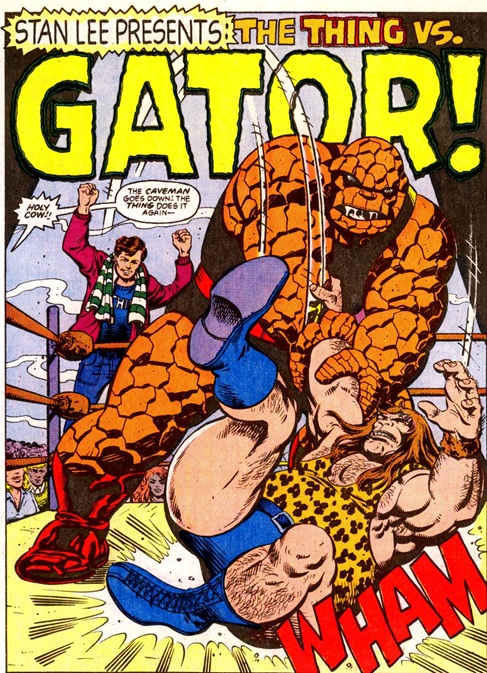
That foreshadows Ben’s foray into grappling as part of the Unlimited Class Wrestling circuit in his own series in the 1980s (a pretty forgettable story line, to be honest).

Thing 29 (1985) Art: Ron Wilson & Paul Ryan

Life and times of the Human Torch

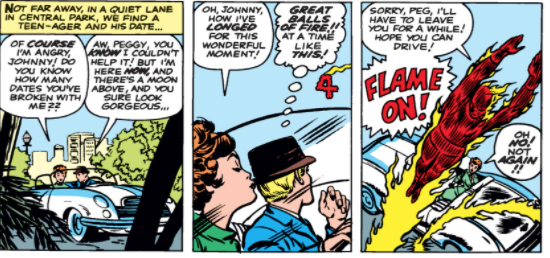
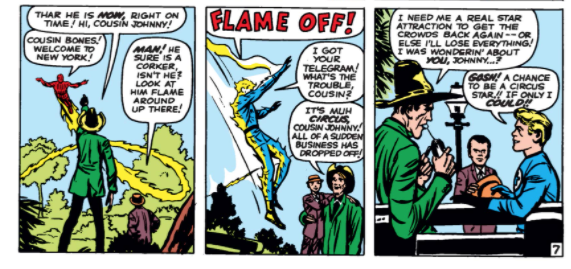
Jack Kirby again displays his questionable fashion sense, dressing teenage Johnny in a fedora while on a date.


We also meet Johnny’s cousins from the Bones ‘N Bailey Circus (presumably they are also Sue’s cousins but that goes unaddressed).

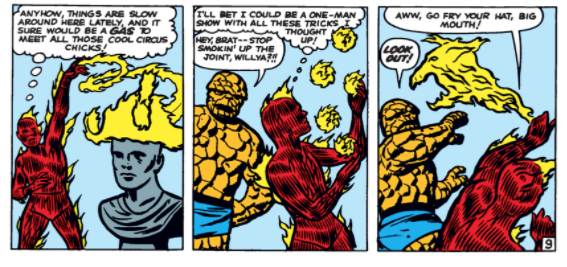
Johnny signs up, in part because can’t wait to meet those “cool circus chicks.”

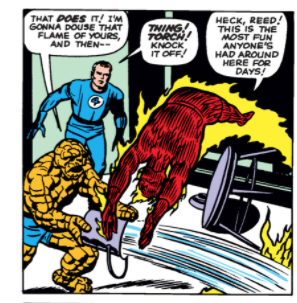
They’re fighting again

The sixties are sexist

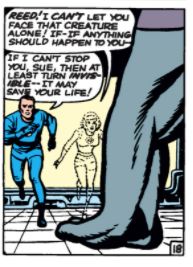
Sue just isn’t cut out for super-heroing

Kirby Krackle

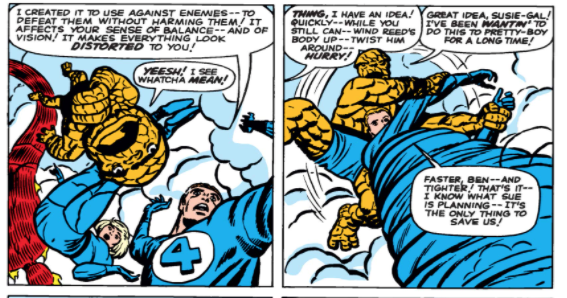
These two panels are about as Kirby as it gets

These are fun, too.

For sale

A mint copy (9.8) will run you about $70,000.

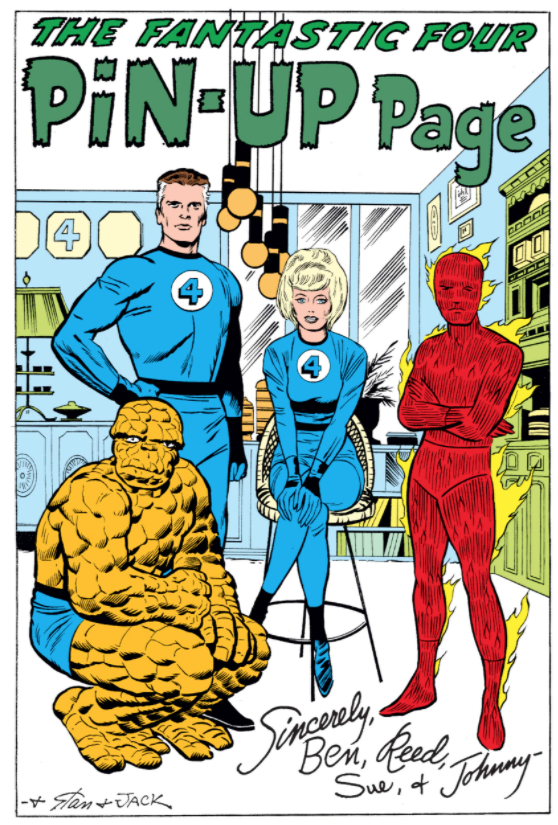
Pin up time

A rather odd-looking Kirby pin up. I’m guessing it was drawn earlier and saved until this issue.

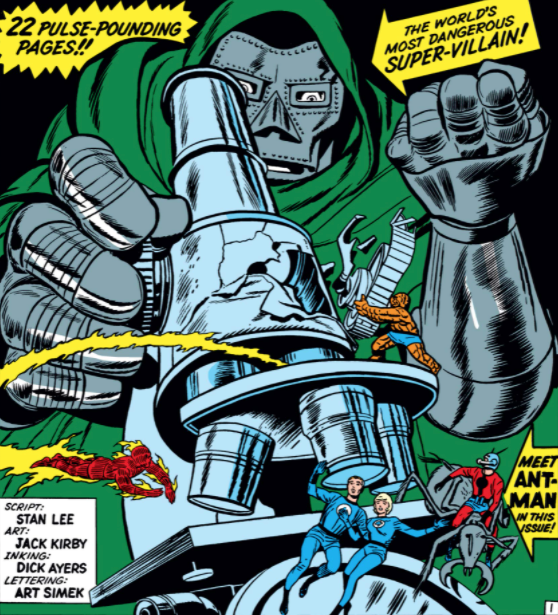
Next issue: Dr. Doom and the Ant-Man!

“The World’s Greatest Comic Magazine”: Fantastic Four No. 14

10 Saturday Apr 2021

Posted by percivalhenry in The World's Greatest Comic Magazine

≈ Leave a comment

Tags

1963, Fantastic Four, Fantastic Four 14, jack Kirby, Stan Lee

Fantastic Four 14
“The Merciless Puppet Master”
Published: Feb. 12, 1963
Story: Stan Lee and Jack Kirby
Script: Lee
Pencils: Kirby
Inks: Dick Ayers
Letters: Art Simek
Cover: Kirby and Steve Ditko

Synopsis

The Fantastic Four return from the Moon and are greeted as heroes. Meanwhile, the Puppet Master, last seen falling to his death, has survived and plots his revenge, using his radioactive clay to manipulate the Sub-Mariner into destroying the FF.

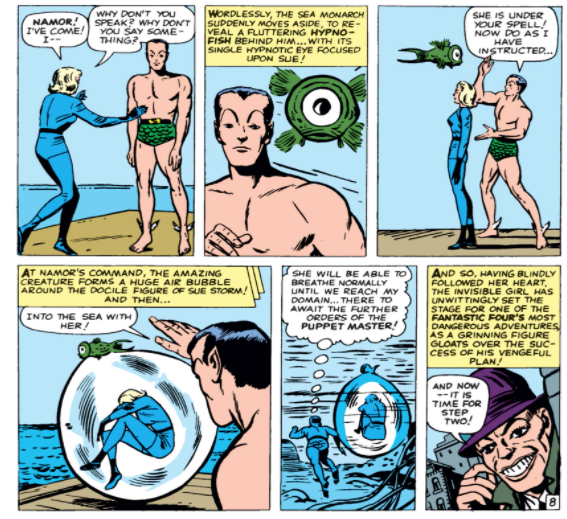
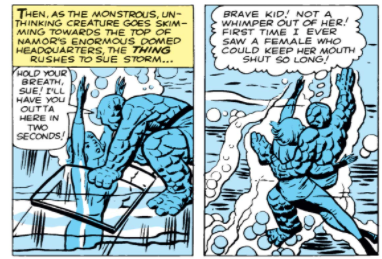
Under the control of the Puppet Master, Namor uses a “hypno-fish” to compel the Invisible Girl to join him underseas (so double mind control, for those keeping track), then taunts the rest of the team into pursuing her. Once in the Sub-Mariner’s underwater citadel, the team battles Namor, and the Thing rescues Sue from the clutches of a giant octopus. The octopus then breaks out of Namor’s lair and attacks the Puppet Master in his submarine. Once free of the Puppet Master’s control, Namor orders the FF to leave, but not before making another bid for Sue to remain at his side.

What’s going on here

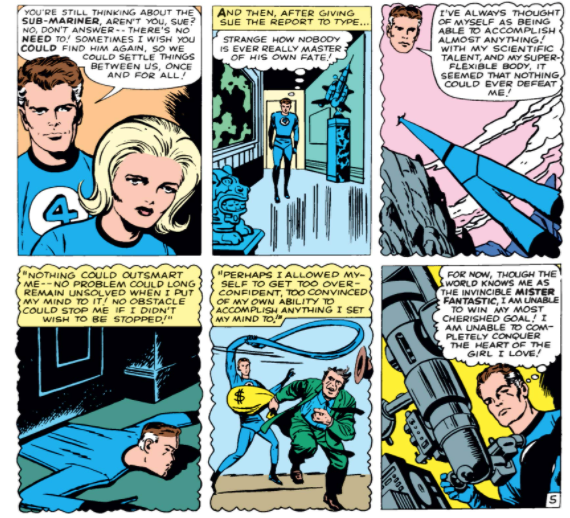
A pretty straight-forward issue that recycles two previous antagonists. The story is a bit clumsy, and the FF never actually confront the villainous Puppet Master, but it has a clear beginning, middle and end. Perhaps the most significant development is the furthering of the Reed-Sue-Namor love triangle sub-plot, in which Sue’s interest in Namor now seems to be more than a passing crush.

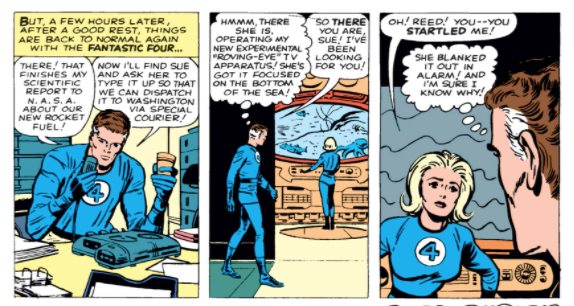
Early in the comic we see Sue using Reed’s “roving-eye” device (basically a drone with a camera) to find Namor:

Reed, naturally, is not thrilled that his fiancee is pining after the Sub-Mariner.

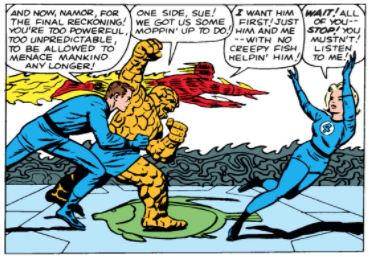
As the team battles Namor, Sue comes to his defense …

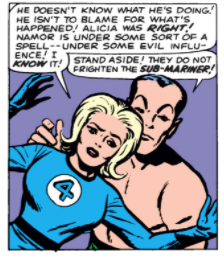
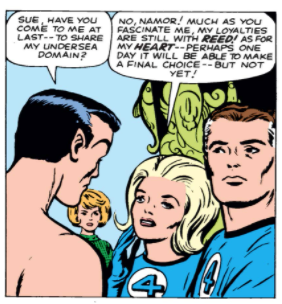
… before finally declaring that despite her “fascination” with Namor, her loyalties lie with Reed. Not exactly an ardent pledge of devotion, and Reed looks understandably skeptical.

That cover

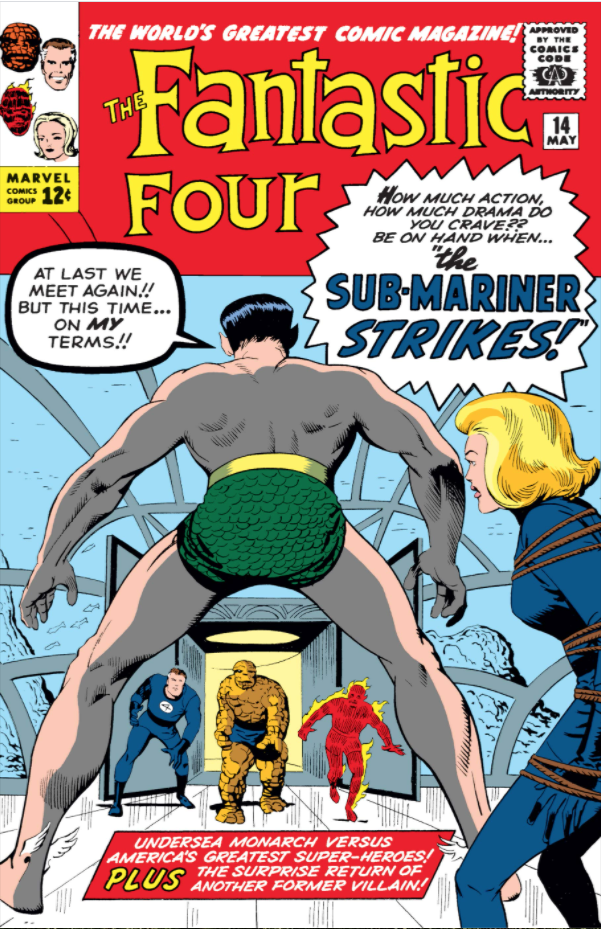
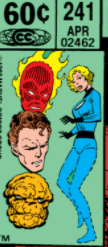
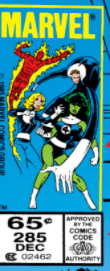
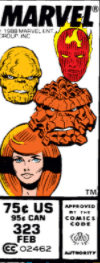
Fantastic Four 14 features a great Kirby cover inked by Steve Ditko, and introduces the cover box, which becomes a Marvel staple. Not every FF issue has a cover box—there was a stretch of about 70 issues in the 70s when it didn’t appear at all—but it always seems to reappear, often drawn by the penciler of the time and reflecting the team’s current membership. Here are few from over the years.

The Briney Deep

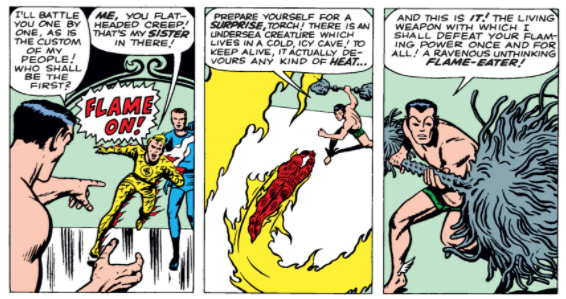
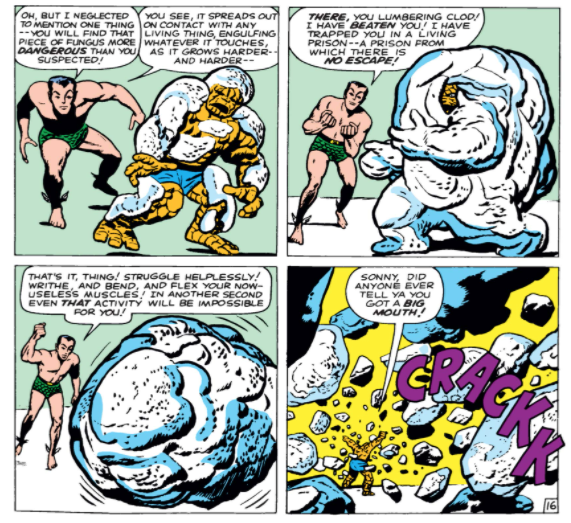
The Sub-Mariner deploys an unusual array of aquatic life in his plot to defeat the FF, some which seem suspiciously useful for the occasion.

Not only can the hypno-fish mind-control Sue across great distances, but it flies and creates an air bubble.

The Flame-Eater is handy when fighting the Human Torch.

And then there’s the super-strong fungus when you need to battle the Thing.

The Sexist Sixties

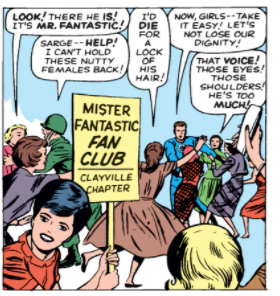
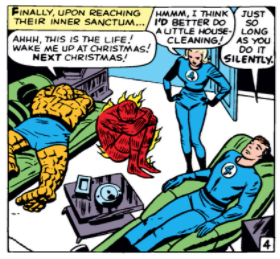
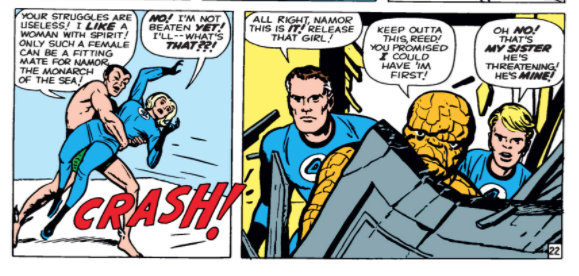
This issue may be Stan and Jack’s low point (so far, anyway). First “nutty females” mob Reed.

The Sue offers to do some house work over Reed’s objections. And he wonders why she’s lukewarm about him.

Finally, this gem from Ben.

Whoops

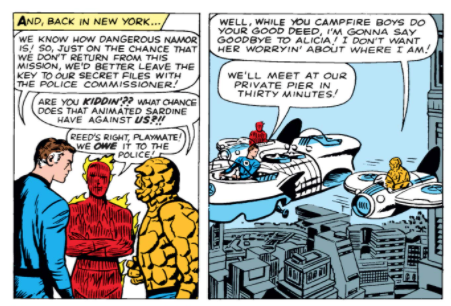
It seems the only reason Stan adds this stuff about the leaving the FF’s secret files with the police is to explain why Jack doesn’t have Reed and Johnny accompany Ben. It doesn’t get mentioned again.

Kirby Krackle

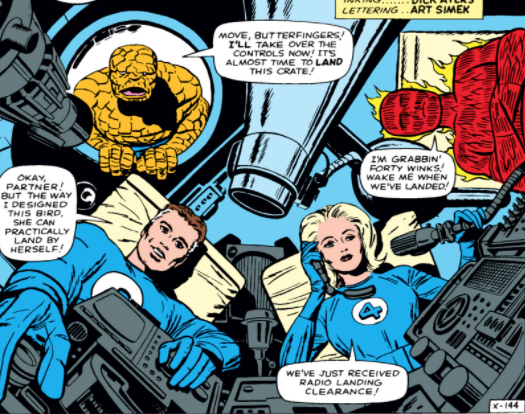
A pretty cool panel from the King. Note the Human Torch sleeping ablaze (in a space ship, no less)

For sale

A mint (9.8) copy sold for $15,000 in 2012. It would probably be closer to $20K today.

Next issue: The Mad Thinker and his Awesome Android!

“The World’s Greatest Comic Magazine” Fantastic Four No. 13

27 Saturday Mar 2021

Posted by percivalhenry in World's Greatest Comic Magazine

≈ 1 Comment

Tags

1963, Fantastic Four, Fantastic Four 13, jack Kirby, Stan Lee, Steve Ditko

Fantastic Four 13
“The Red Ghost and his Indescribable Super Apes”
Published: Jan. 1963
Story: Stan Lee and Jack Kirby
Script: Lee
Pencils: Kirby
Inks: Steve Ditko
Letters: Art Simek
Cover: Jack Kirby and Don Heck

Synopsis

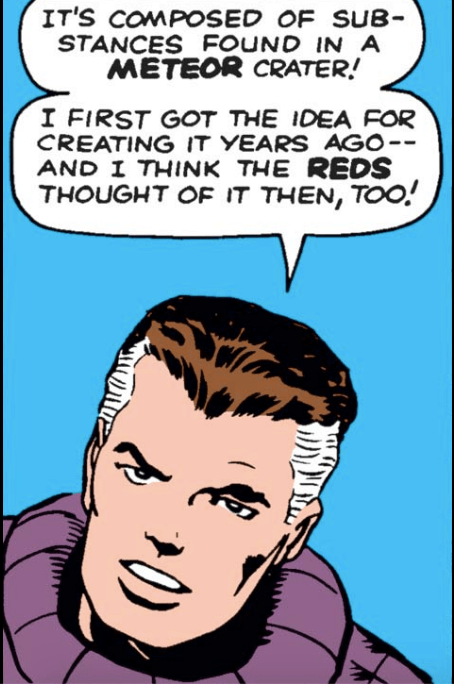
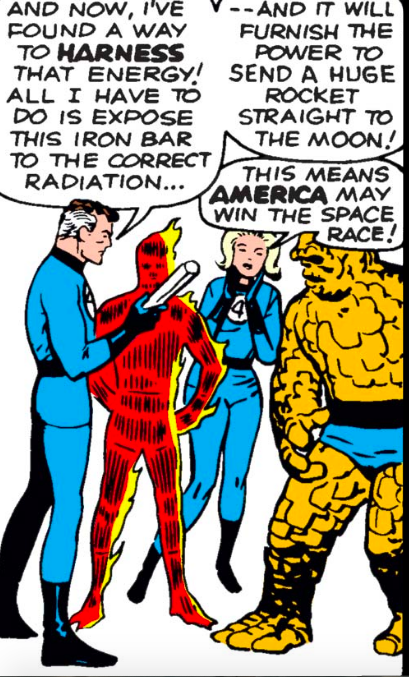
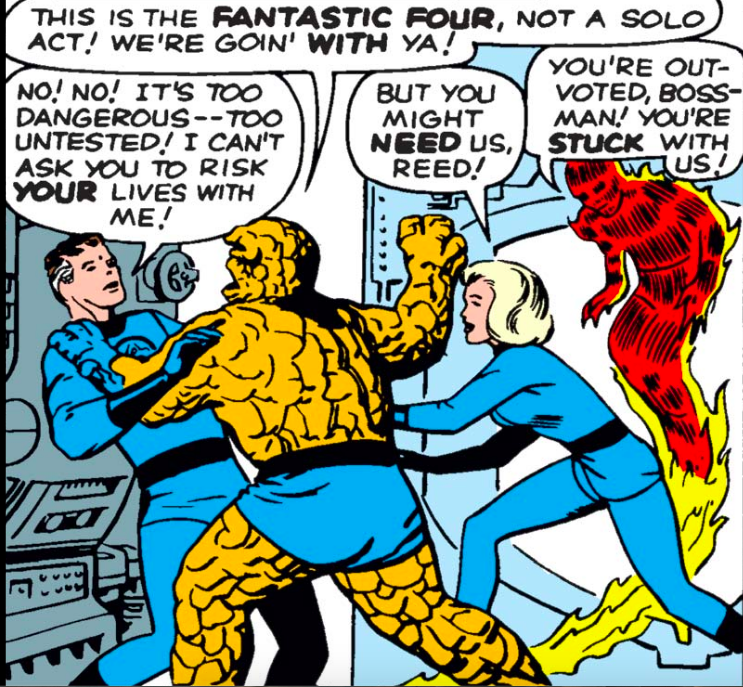
In his lab, Mr. Fantastic unveils his latest discovery to the rest of the team: A substance retrieved from a meteor crater in Arizona that provides “limitless energy.” He tells the team he intends to use to travel to the Moon, as he believes the “the reds” have found a similar substance in Siberia, and he wants to win the space race. The rest of the team persuades him to bring them along.

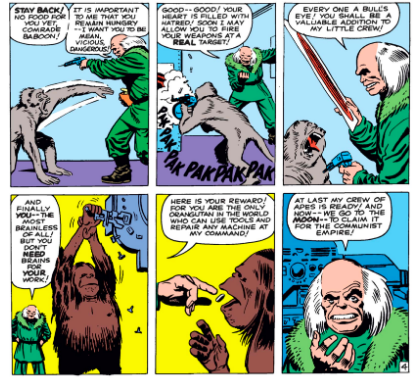
Meanwhile, “behind the Iron Curtain,” Ivan Kragoff launches his own rocket to the moon crewed by a team of trained apes. He leaves his ship unshielded to deliberately expose himself and the apes to the same cosmic rays that transformed the Fantastic Four. His plan works and the four gain powers.

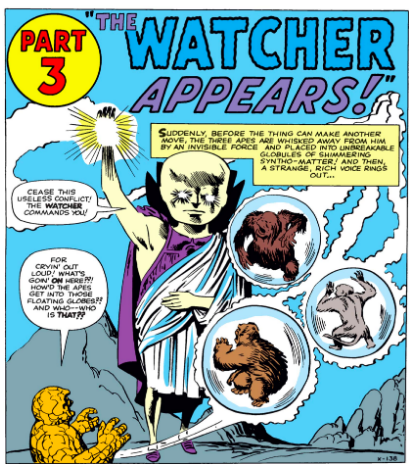
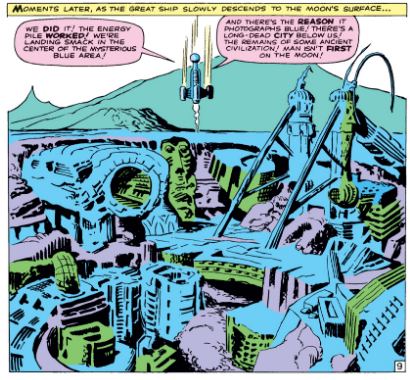
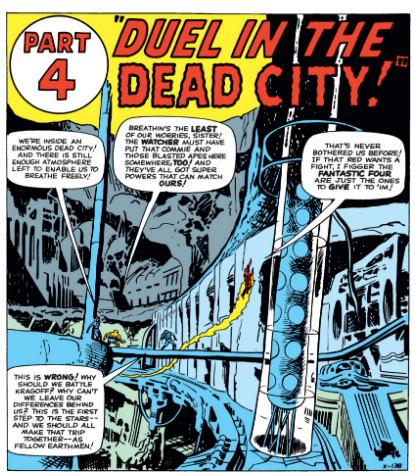
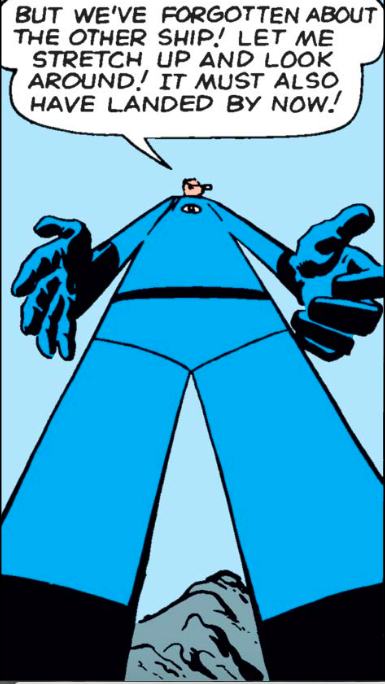
Both ships land on the Blue Area of the Moon, which contains an oxygen atmosphere and the ruins of an ancient civilization. As the Thing confronts Kragoff, now called the Red Ghost, and his apes, the Watcher appears. An ancient alien tasked with observing the Earth, he instructs the Ghost and the FF to “fight it out” for control of the moon. The Ghost captures the Invisible Girl, but as a hostage, she manages to free the apes and foil the Ghost’s plan to use a disintegrator ray on the Human Torch. The Ghost tries to escape, but is bewildered in the Watcher’s house, and is captured by a paralysis ray invented by Reed. He escapes again, only to be pursued by his apes as the FF return to Earth.

What’s going on here?

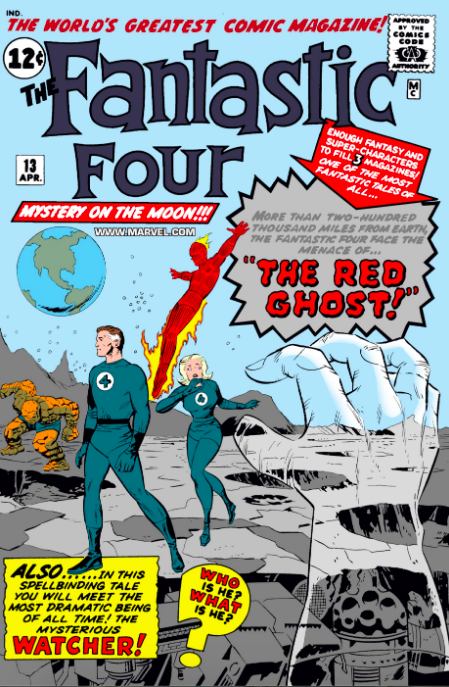
Fantastic Four 13 marks the first appearance of the Red Ghost (and his Super Apes), a recurring villain who never quite rises to the ranks of the A-list, but appears in plenty of comics over the years.

More notably, it’s the first appearance of the Blue Area of the Moon and its most famous denizen, the Watcher. Both appear prominently over the years and across Marvel’s entire line of comics. The Watcher often serves as a Greek chorus, introducing particularly big stories—among them Uncanny X-Men 137 and the death of Phoenix—and “hosted” the What If? comic, where he would introduce stories from alternative timelines. Uatu was killed in 2014’s Original Sin crossover event (he less said about that the better) before being resurrected in last year’s Empyre crossover.

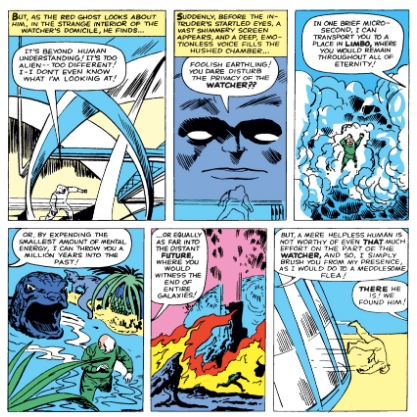
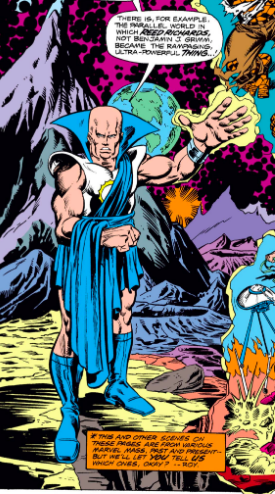
As originally drawn by Kirby in FF 13, the Watcher (not yet named Uatu) has spindly limbs and an enormous head, giving him a distinctly alien appearance.

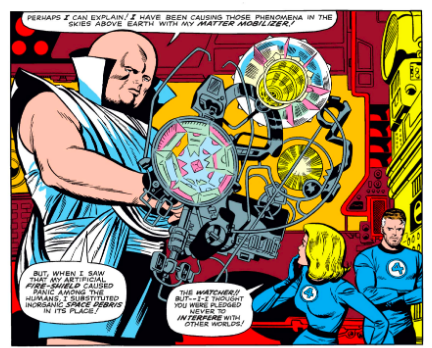
A few years later, in FF 48, Kirby made him significantly beefier.

By the time What If? 1 comes out in 1977, he’s pretty much unrecognizable.

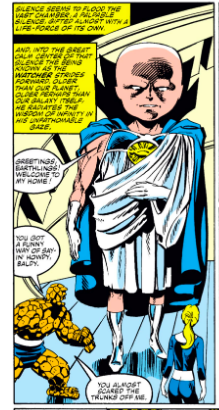
It’s not until John Byrne takes the reins of the FF does he revert back to his original proportions.

FF 261

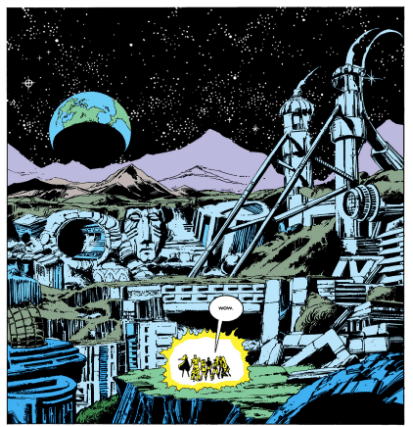
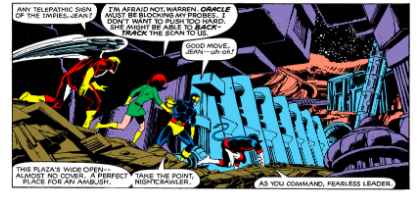
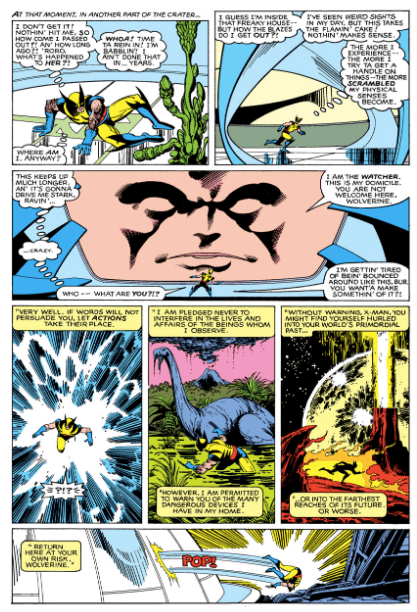
FF 13 also introduced the Blue Area of the Moon, another fixture of the Marvel universe. Created by the Skrulls, it became the home of the Inhuman’s city of Attilan, and featured prominently in X-Men 137, as a battleground between the X-Men and the Shi”ar Imperial guard. Byrne, then the X-Men’s penciler, drew heavily on FF 13 for his images of the Blue Area.

Both the FF and the X-Men arrive at the same location, for example:

  • FF 13
  • UXM 137

Later, both the FF and the X-Men pass the same alien machinery

The homage extends to a sequence when the Ghost invades the Watcher’s home, which Byrne duplicates with Wolverine.

Fantastic Four 13 is also notable as the only regular issue of the comic inked by Steve Ditko (he also inked stories in a pair of annuals). Ditko, better know as the penciler of Spider-Man and Dr. Strange, is a good choice here, given the story has few Kirby-esque brawls, but is more about the spooky landscapes Ditko excels at. Despite that, I think his influence is most noticeable in close ups of the FF, and particularly Reed.

Red Menace

The Cold War and space race features prominently in the comic. Reed is determined to beat “the reds” to the Moon, while Kragoff wants to the extend the “communist empire.” Stan is notably averse to mentioning the Soviet Union by name even if Kragoff’s ship features a hammer and sickle.

They’re fighting again

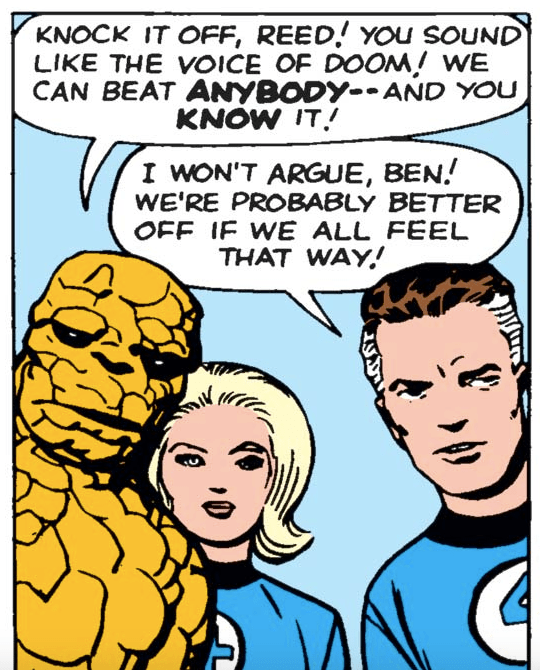
This time it seems more playful.

Dig That Kirby Krackle

This is a fun sequence.

And so is this panel.

Oops

It seems like Stan is trying to explain why Jack drew this thing.

The sexist sixties

More cringing from Sue

For sale

A mint (9.8) edition of FF 13 will cost you about $68,000

Next issue: The Puppet-Master and the Sub-Mariner team up!

“The World’s Greatest Comic Magazine” Fantastic Four No. 12

21 Sunday Mar 2021

Posted by percivalhenry in The World's Greatest Comic Magazine

≈ Leave a comment

Tags

1962, Fantastic Four, Fantastic Four 12, Hulk, jack Kirby, Stan Lee

Fantastic Four 12
“The Incredible Hulk”
Published Dec. 1962
Story: Stan Lee and Jack Kirby
Script: Lee
Pencils: Kirby
Inks: Dick Ayers
Cover: Kirby and Ayers

Synopsis

Ben Grimm and Alicia Masters are leaving the symphony when a company of soldiers mistake Ben for the Hulk and try to capture him. Later, at the (still unnamed) Baxter Building, General Thunderbolt Ross tells the Fantastic Four the Army is searching for the Hulk, who it believes is destroying military hardware. The team discusses how they would capture the Hulk.

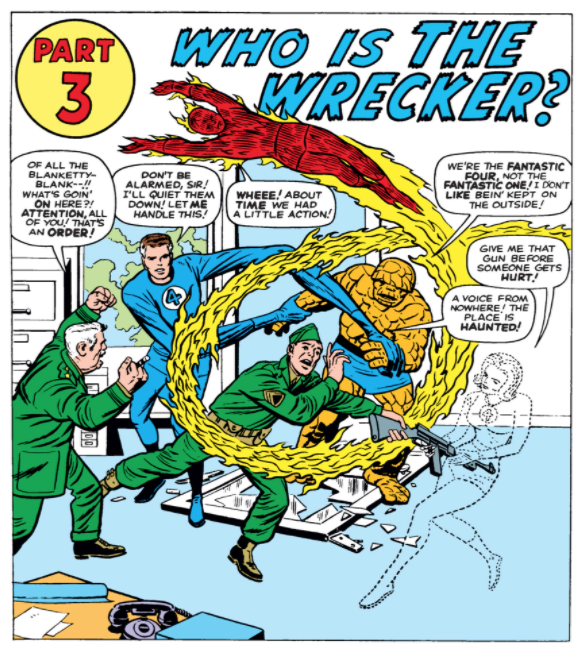
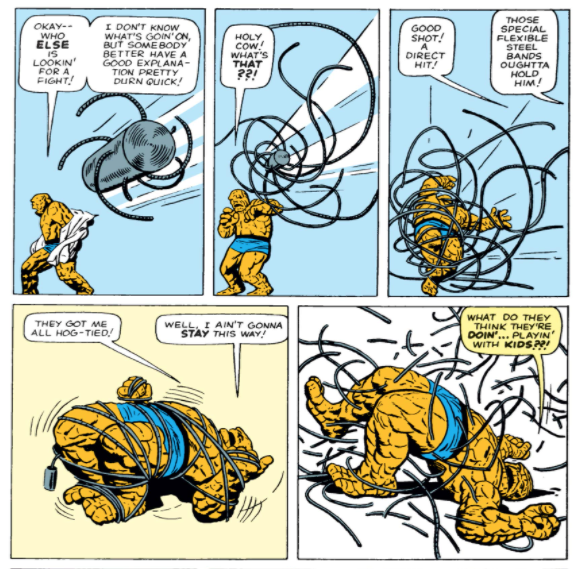
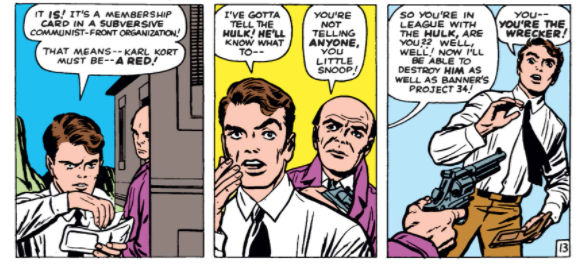
The FF and Ross fly to the southwest in a newly remodeled Fantasticar, where the meet Bruce Banner (secretly the Hulk, of course), his sidekick Rick Jones, and his new assistant Karl Kort. Banner and Jones try to persuade Ross and the FF that the Wrecker, not the Hulk, is not responsible for the damage but the FF persist in investigating. While leaving, Kort drops his wallet and when Jones finds it, he discovers Kort is a communist. Kort—in a Scoobey-Doo-esque plot twist that should surprise no one—is revealed to be the Wrecker, and takes Jones prisoner. He then blackmails the Hulk to drive the FF out of the area.

The FF searches for the Hulk in the tunnels beneath the military installation, and he finally confronts them. After a battle, the Hulk is knocked out by a ray from a giant robot wielded by the Wrecker. The Thing and the Invisible Girl apprehend Kort while the Hulk escapes.


What’s going on here?

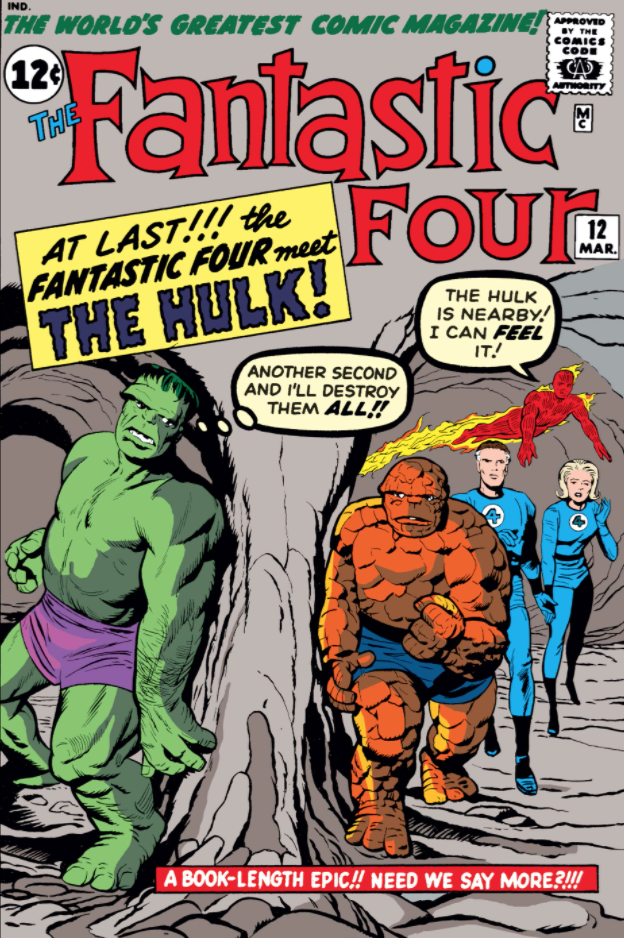
It takes an extremely convoluted story to do it, but after 12 issues, the Fantastic Four finally cross over with another headliner in the Marvel Universe. This same month, the FF will also make a brief appearance in Amazing Spider-Man 1. These stories firmly plant the FF in the same interconnected world as other Marvel characters, and helps establish the pattern of cross overs and tie-ins that knit together the Marvel universe. That shared universe is big part of the secret sauce that makes comics, and later Marvel’s movies, so addictive to fans. It’s both the fear of missing out on a vital chapter, and the rewards that come from knowing the full story. Marvel would of course learn to cynically exploit this later with massive crossover events, but for fans who first encountered it here in its embryonic stage, it much have been thrilling.

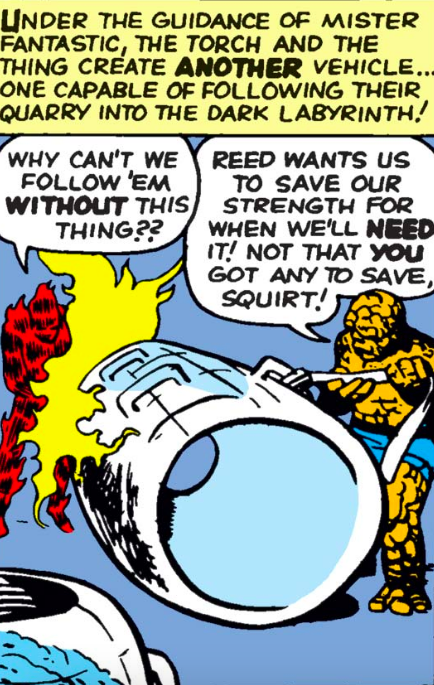
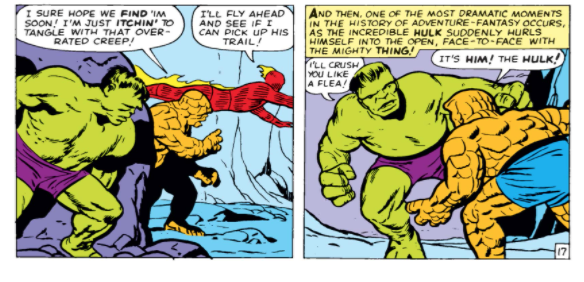
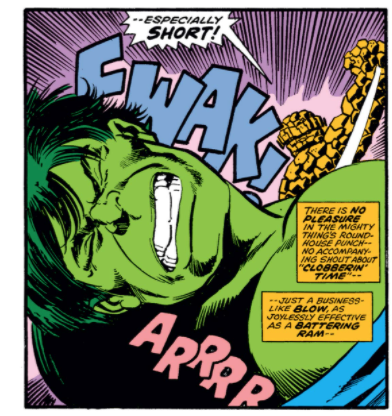
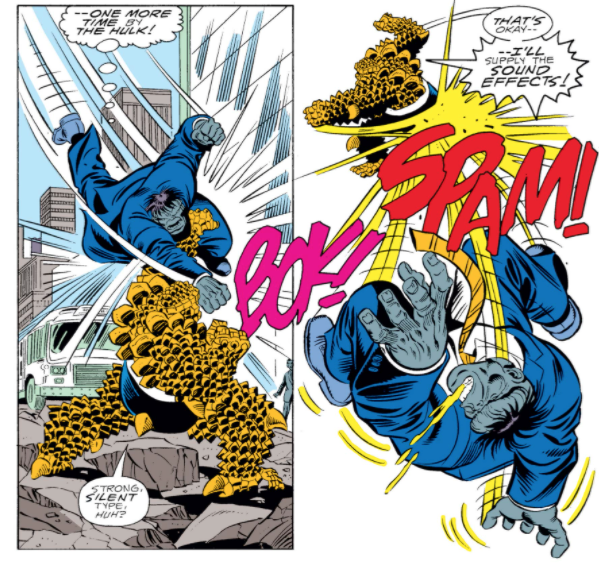
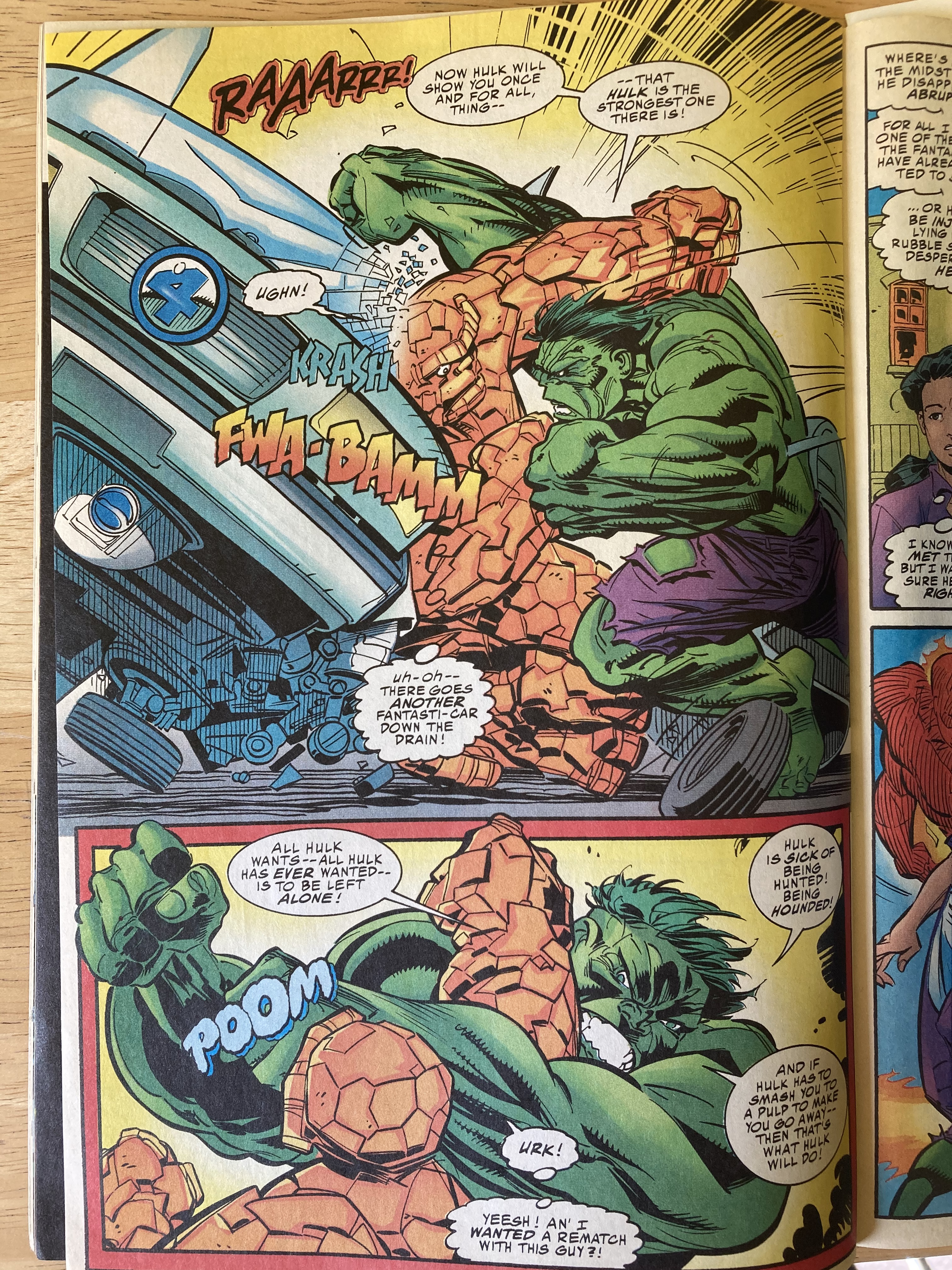
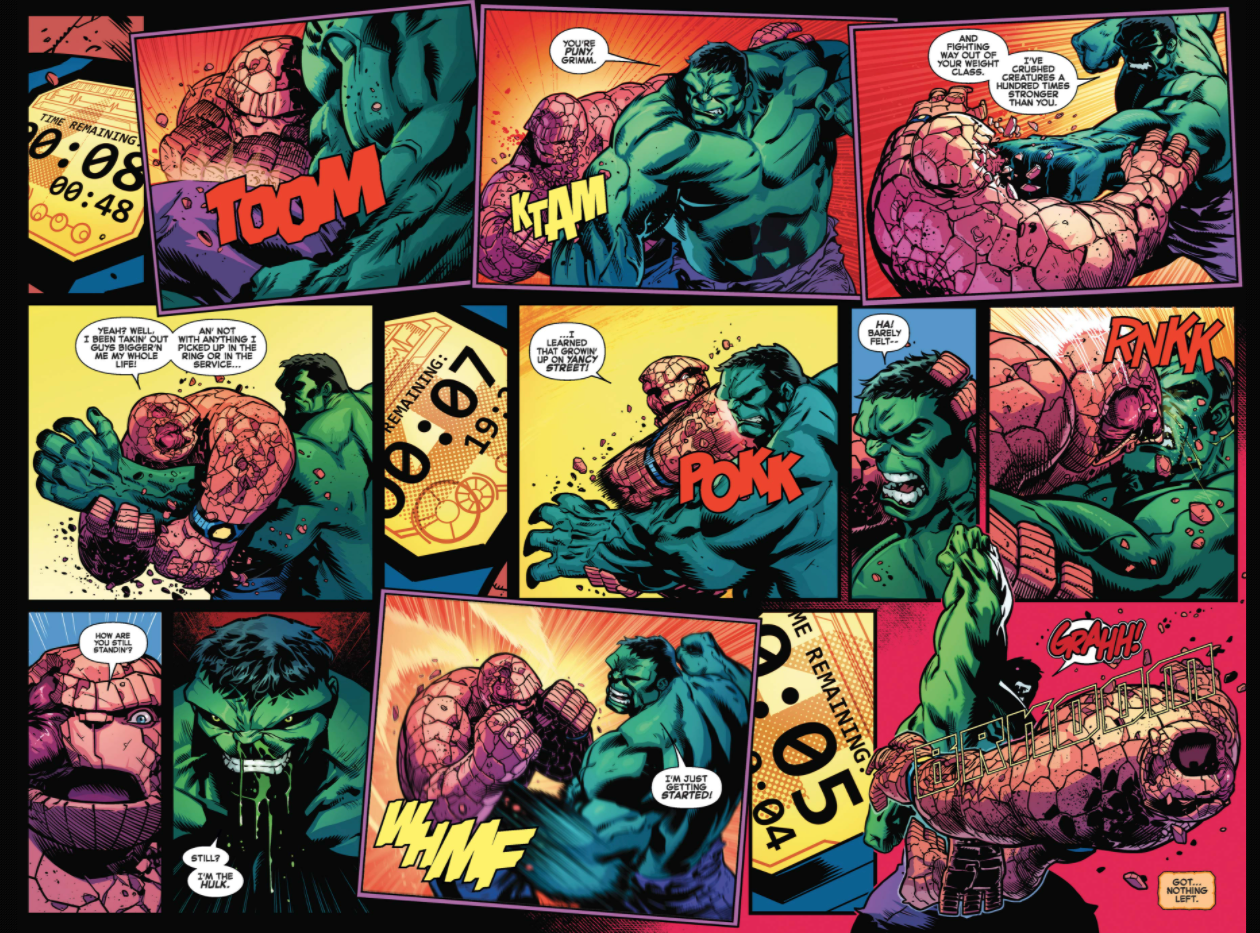
The story also features a fight between the Hulk and the Thing, the first of dozens of times they tangled. It takes 17 pages to get there, and Stan violates the first rule of writing by telling us, instead of showing us, what a big deal it is with a caption describing it as “one of the most dramatic moments in the history of adventure-fantasy.”

Given their roles as Marvel’s two biggest, baddest bruisers, it’s perhaps inevitable they would fight frequently. The Hulk—stronger and more ferocious—usually comes out on top, although the Thing occasionally scores a moral victory, often by displaying more “heart.”

While there are far too many of these fights to recount here, (although blogger John Cimino valiantly tries to do so in his Hero Envy blog here) here’s a taste of them fighting in the 1970s …

FF 166 (1975, art by George Perez and Vince Coletta)

… in the 1980s …

FF 320 (1988, art by Keith Pollard and Joe Sinnott). FYI, both the Thing and Hulk were mutated away from their classic forms during this stretch.

… in the 1990s …

Rampaging Hulk 5 (1998, art by Rick Leonardi and Dan Green)

… and this century.

FF 13, vol. 6 (2019, art by Sean Izaakse)

New wheels

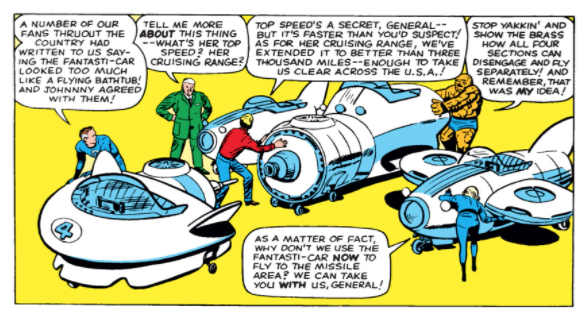
The issue debuts the new, more space-age Fantasticar. The older “flying bathtub” version will still make occasional appearences.

They’re fighting again

This time everyone joins in.

The sixties are sexist

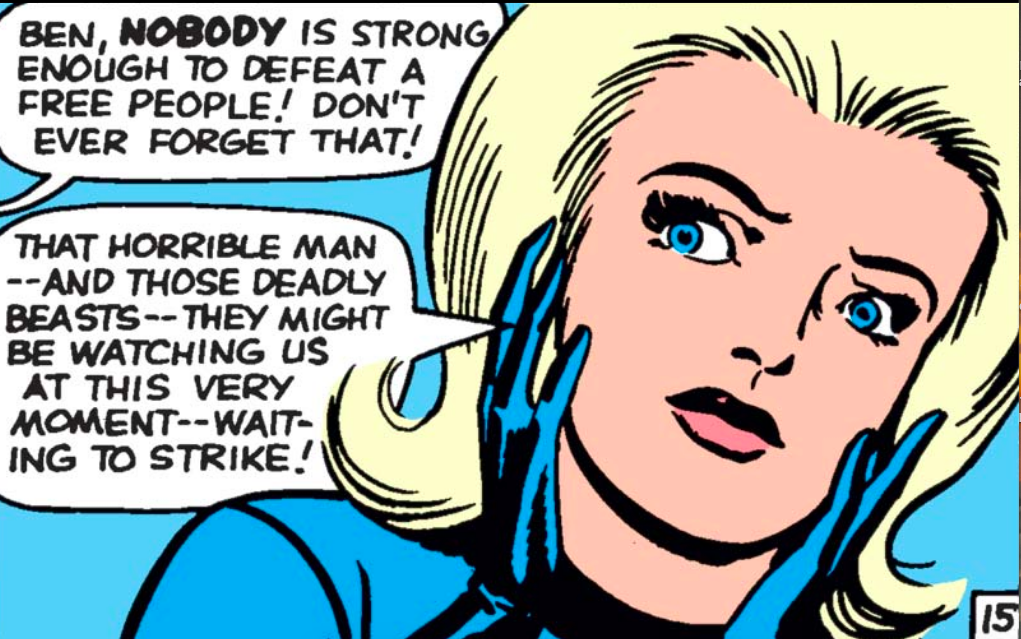
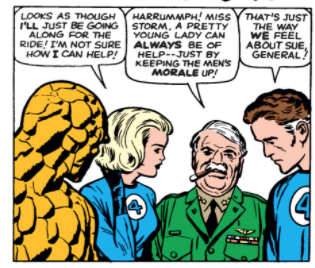
After last issue’s defense of Sue’s contributions to the team, we sink to new lows with more painful stereotyping.

Kirby Krackle

Check out this cool sequence of Ben fighting the soldiers.

The red menace

Not only does Rick Jones feel entitled to go through Kort’s wallet, but he is horrified by what he discovers.

It’s an honor

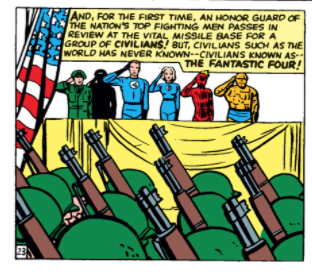
The FF is treated to a rare military parade, according to Stan. At least Reed and Ben are veterans.

For Sale

Thanks to the appearance by the Hulk, FF 12 will set you back about $200,000

Next issue: The Red Ghost and his Super Apes!

“The World’s Greatest Comic Magazine” Fantastic Four No. 11

14 Sunday Mar 2021

Posted by percivalhenry in The World's Greatest Comic Magazine

≈ 1 Comment

Tags

1963, Fantastic Four, Fantastic Four 11, Impossible Man, jack Kirby, Stan Lee

FantasF

Fantastic Four 11
“A Visit with the Fantastic Four” and “The Impossible Man”
Published: Feb. 1963
Story: Stan Lee and Jack Kirby
Script: Lee
Pencils: Kirby
Inks: Dick Ayers
Cover: Kirby

Synopsis

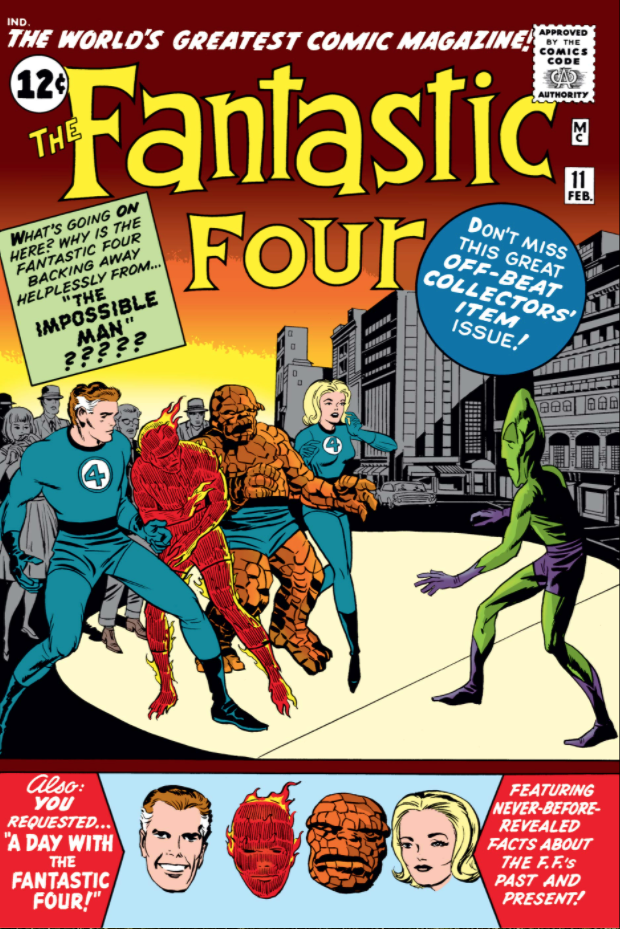
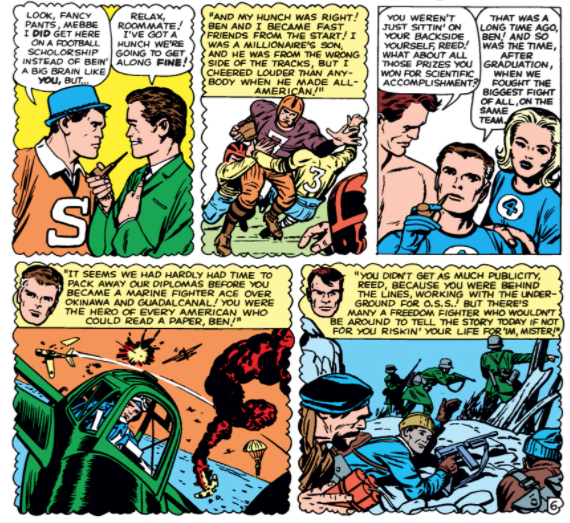
This is an unusual issue in that there are two short stories instead of one, full-length story. The first is devoted to character building and revealing more of the Fantastic Four’s back story, allegedly in response to readers’ requests. The plot, if you can call it that, begins with the FF showing off in front of their fans, then reading fan mail after Ben is (again) temporarily turned human again by a concotion of Reed’s. They recount the team’s origins, filling in some important details about Reed and Ben’s time together in college and in the military, before they have a surprise birthday party for Sue.

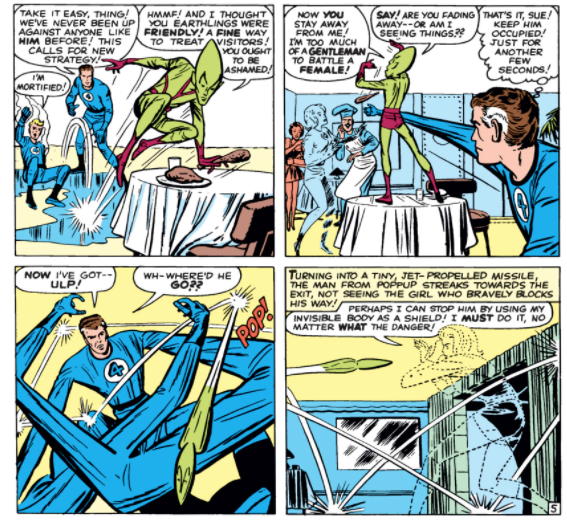
The second story introduces the Impossible Man, a recurring character—slash—blight from the planet Poppup who reappears over the years. In this story, the FF are summoned to capture the Impossible Man, who can change his form into any object or substance. After futilely chasing him around New York, Reed decides it’s best to ignore him and the Impossible Man grows bored and eventually returns home.

What’s going on here

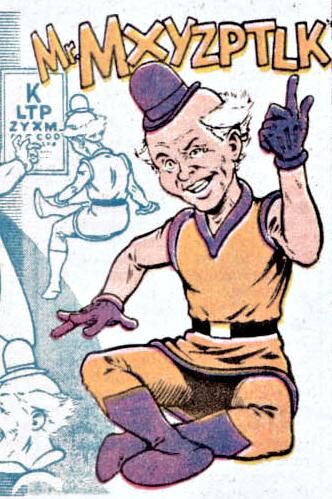
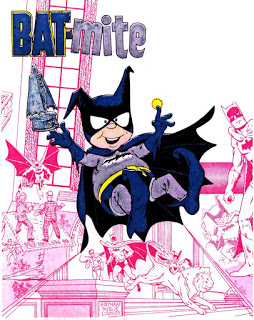
Both stories are significant, although for very different reasons. For better or worse (and it’s mostly been worse), the Impossible Man is an established part of the Marvel Universe, showing up over the decades in stories that tend to be full of gags and fourth-wall breaking. Your mileage may vary, but I tend to loathe these stories, which often feel self-indulgent and pointlessly silly. He’s very much a character of the Silver Age, and a reminder that these publications are called “comic books” for a reason. The Impossible Man owes a lot to Plastic Man, a Golden Age character with similar powers and tone, but his role as antagonist to the FF is most reminiscent of that of DC’s Mr. Mxyzptlk and Bat-Mite, who would make life miserable for Superman and Batman (and their readers), respectively.

In the first story, Stan and Jack eschew the normal conventions of the genre, dispensing with a villain and fight, and instead spend 10 pages developing the characters and filling in some of the blanks of their story. We learn that Reed and Ben were roommates in college, where Ben was a football star “from the wrong side of the tracks” while Reed was a pipe-smoking “millionaire’s son.” We also discover the served in World War II—Ben as a pilot in the Pacific theater, Reed as an OSS operative—placing their ages around 40 in 1961. That eventually gets retconned as another, unnamed conflict as Marvel’s sliding time scale means they are too young to be WWII veterans.

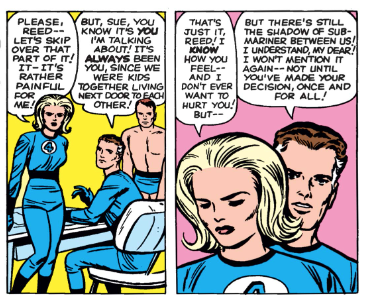
We also learn how Reed and Sue met, when Reed describes them as “kids together living next door to each other.” Sue continues to be ambivalent about Reed in this issue, which he attributes to her interest in the Sub-Mariner.

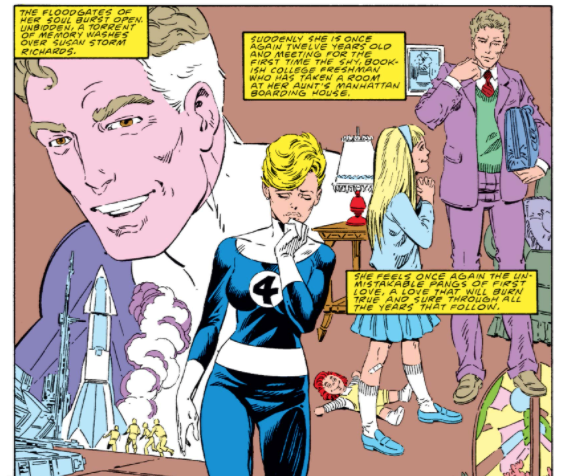
Growing up as kids would suggest they were roughly the same age, but later stories establish Reed as significantly older than Sue. In Fantastic Four 291, from 1986, John Byrne describes Sue as a 12-year old (who looks like a six-year-old, complete with doll) with a crush on the college-aged Reed.

FF 291

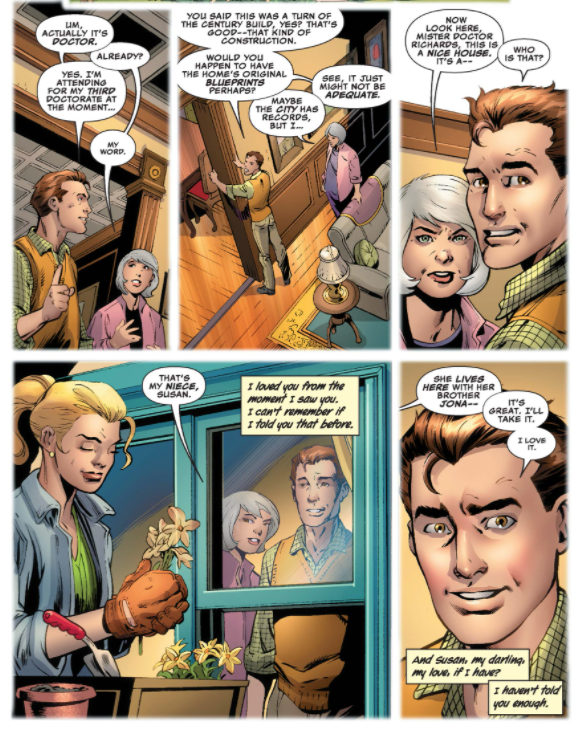
Later creators realized the creepiness of that scenario, and in 2013, writer Matt Fraction retconned Byrne’s retcon, making Sue more age appropriate.

FF 4 (vol. 3)

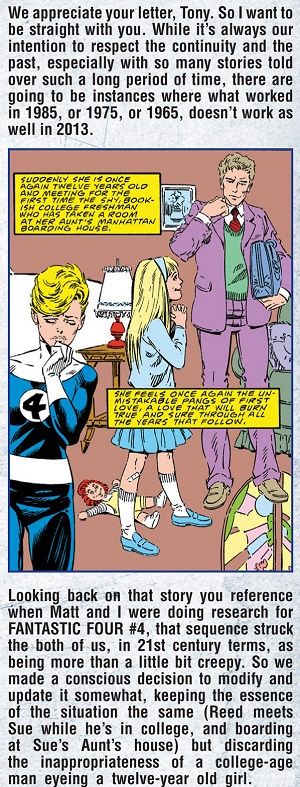
The editors were upfront about the need to address the age issue (thanks to Brian Cronin in CBR.com for detailing this history).

They’re (not) fighting again

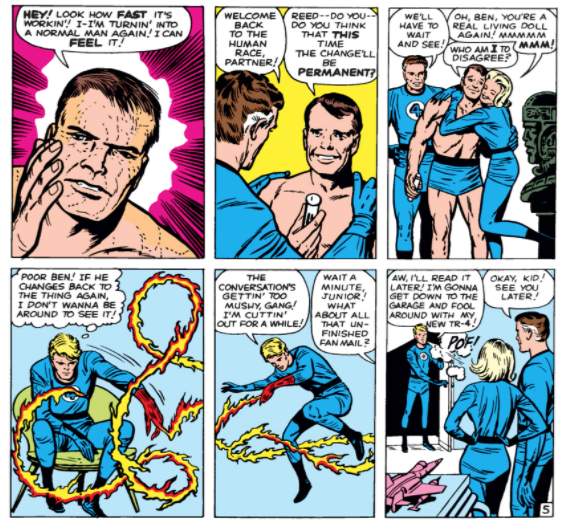
Fantastic Four 11 contains a nice moment where Johnny, concerned about the implications of Ben reverting back to human, reveals his actual feelings about his frequent sparring partner. (A TR-4 is apparently a sports car made by Triumph).

Meet the Yancy Street Gang …

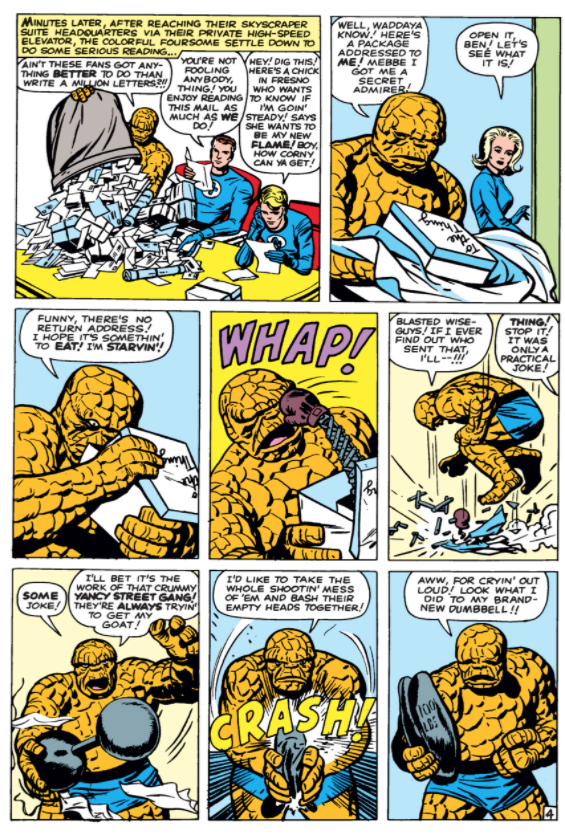
FF 11 also marks the first time Bn is pranked by the Yancy Street Gang, a group from his old neighborhood on the Lower East Side. The Yancy Street Gang becomes another recurring feature of the FF, and Yancy Street (a riff on the real-life Delancy Street) grows in importance as a touchstone for Ben over the decades. The FF’s current headquarters is located there.

… and Willie Lumpkin

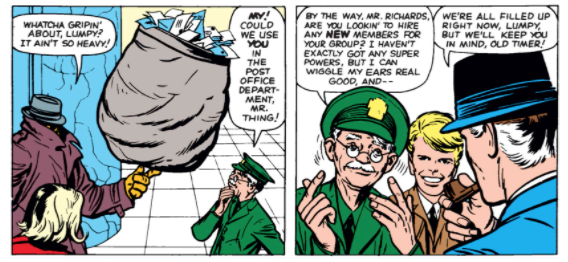
We’re also introduced to Willie Lumpkin (referred to here as Mr. Lumpkin, or Lumpy), the FF’s elderly letter carrier with the “power” to wiggle his ears.

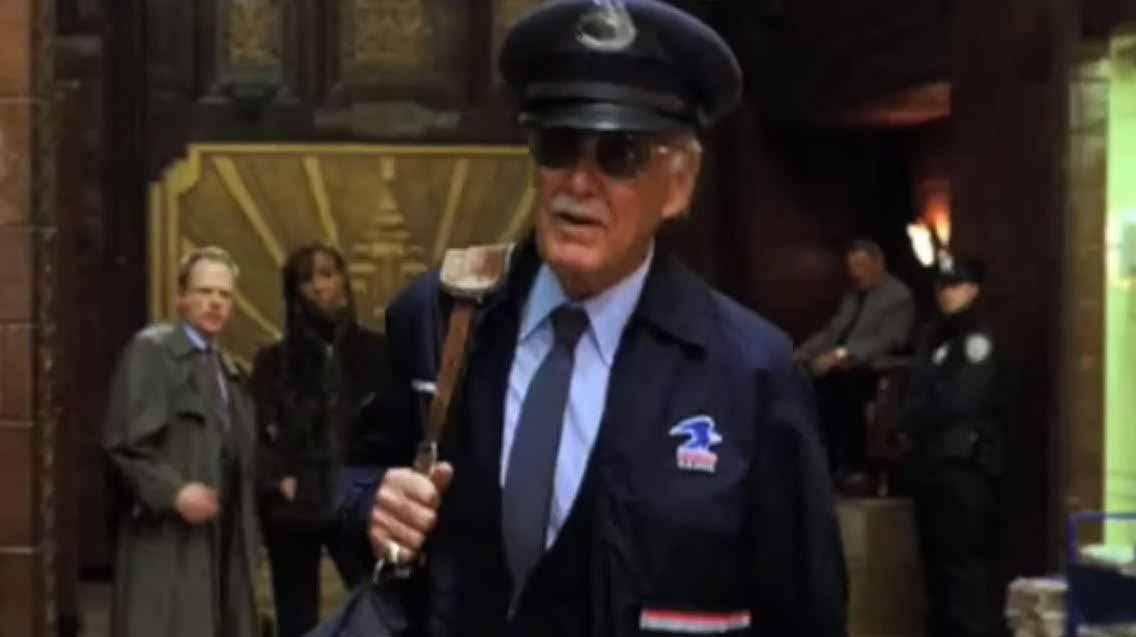
In a fun bit of casting, Stan Lee played Willie in the 2005 Fantastic Four movie.

The sexist sixties

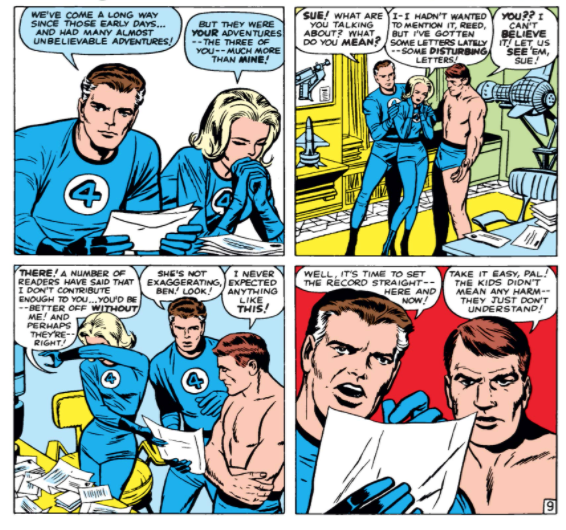
In a strange sequence, Sue recoils at the letters that point out that she’s not pulling her weight on the team (probably an accurate reflection of the real-life letters Marvel was getting).

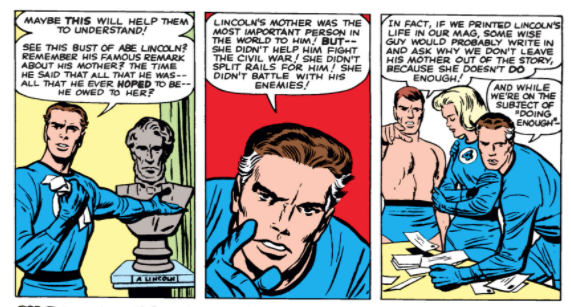
Before noting the times Sue has rescued the rest of the team, against the Skrulls and Dr. Doom, Reed makes a bizarre analogy to Abraham Lincoln’s reverence for his mother as evidence of Sue’s value (and of course the FF has a bust of Honest Abe in their home. Who doesn’t?).

Ben later suggests if readers want to watch women fight, they should “go see lady wrestlers.”

Let’s talk about us

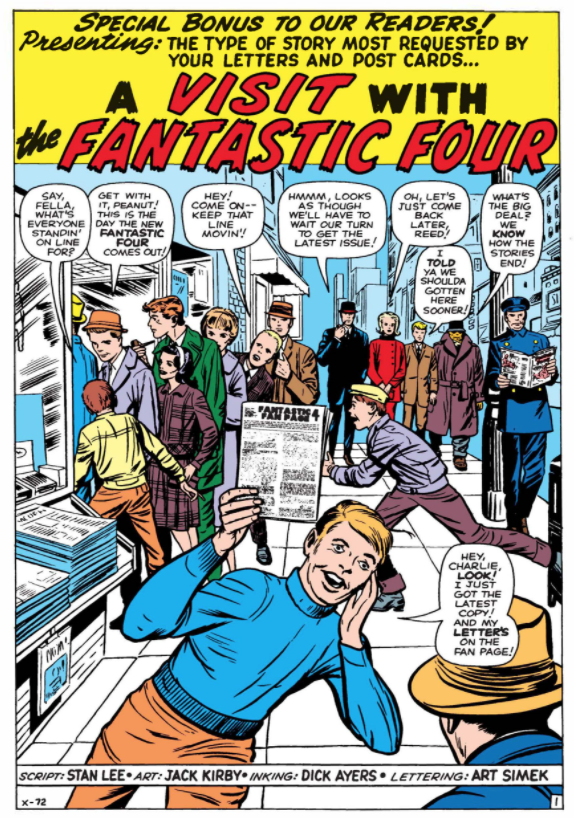
The issue opens with a knockout Kirby splash page with the FF, dressed like they’re in the 1940s, lining up to buy the latest edition of the Fantastic Four comic.

For sale

A mint (9.8) issue of FF 11 is worth about $49,000.

Pin up

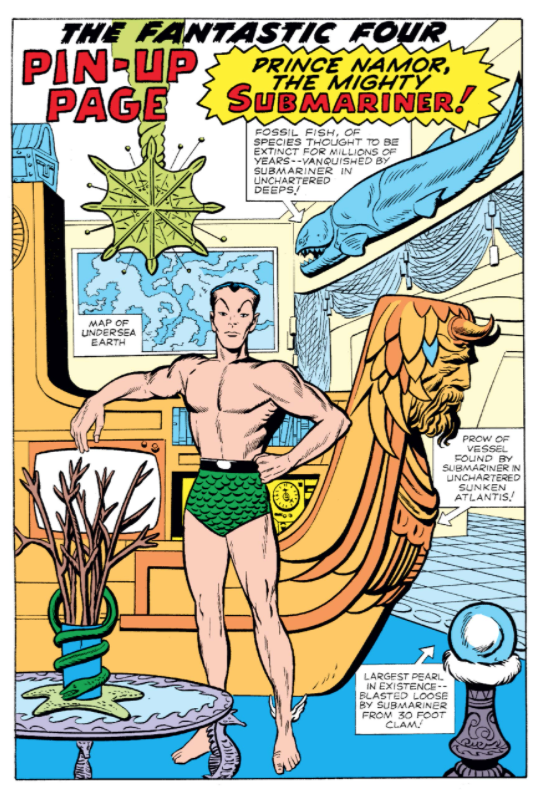
The Sub-Mariner gets his own pin-up

Next issue: The FF meet the Incredible Hulk!

“The World’s Greatest Comic Magazine” Fantastic Four No. 10

06 Saturday Mar 2021

Posted by percivalhenry in The World's Greatest Comic Magazine

≈ 2 Comments

Tags

1962, Dr. Doom, Fantastic Four, Fantastic Four 10, jack Kirby, Stan Lee

Fantastic Four 10
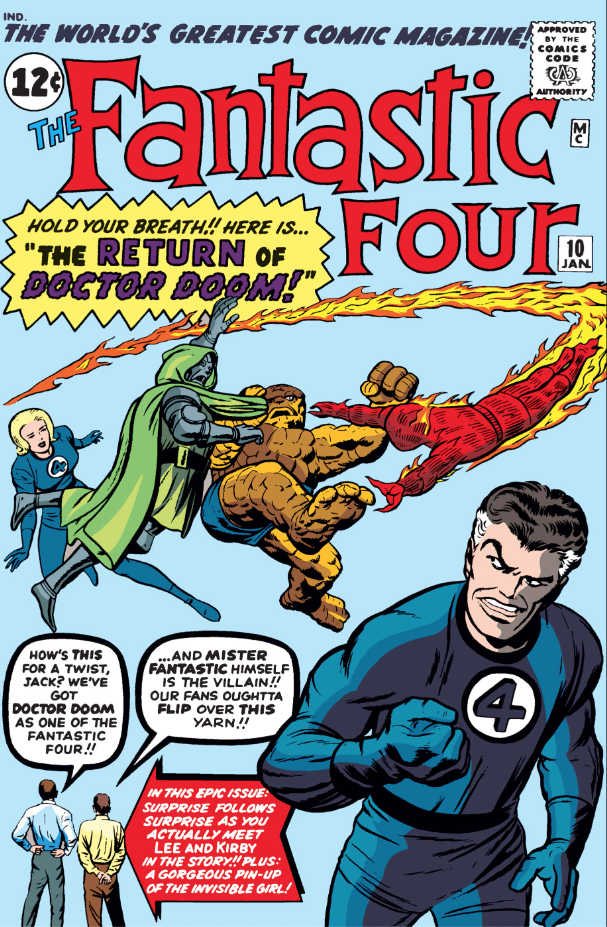
“The Return of Doctor Doom”
Published: October 1962
Plot: Stan Lee and Jack Kirby
Script: Lee
Pencils: Kirby
Inks: Dick Ayers
Cover: Kirby and Ayers

Synopsis

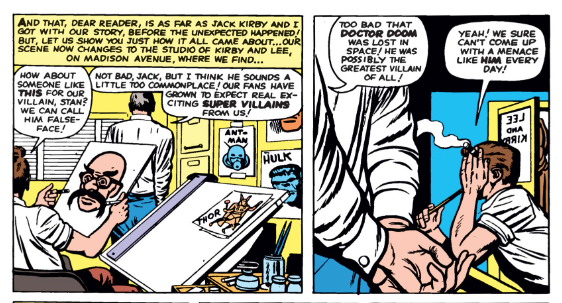
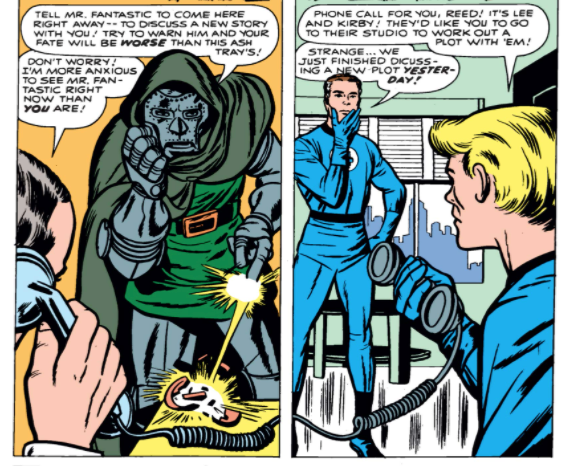
A meandering start to the comic is revealed to be a case of writer’s block from creators Stan Lee and Jack Kirby, who are plotting the issue only to be interrupted by Dr. Doom. Doom, last seen lost in space, was rescued by an the Ovoids, an alien race that taught him to the ability of transferring his mind into another body. They returned him to earth, and Doom demands Lee summon Reed Richards so that Doom can capture him and switch minds.

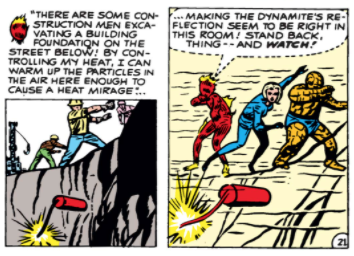
As planned, the rest of the FF arrive to rescue Reed, who unbeknowst to them is in the body of Doom. Doom, in the body of Reed, emprisons Reed and convinces the rest of the team to undergo a shrinking process he says will make them more powerful, but will actually reduce them to nothingness. Reed escapes and before the team undergoes the shrinking process, Johnny uses his powers to create a mirage of dynamite. While Reed (as Doom) tries to prevent it from exploding, Doom (as Reed) flees, each revealing their true nature. Confronted, a distracted Doom lets his mental power slip and he and Reed switch bodies again, returning to their true selves. As Doom tries to escape, he accidentally triggers the shrinking ray, which renders him microscopic.

What’s going on here?

Aside from the return of Doom, this convoluted story is notable for the extremely meta insertion of the creators of the comic into the comic itself. Prior to this issue, members of the FF referred to comics, and Johnny read an issue of the Hulk, but this is the first indication that there is an in-universe Fantastic Four comic that recounts their adventures. We also learn the team is actively involved in telling their own stories to Stan and Jack, who appear in the comic (and on the cover!) but without ever revealing their faces

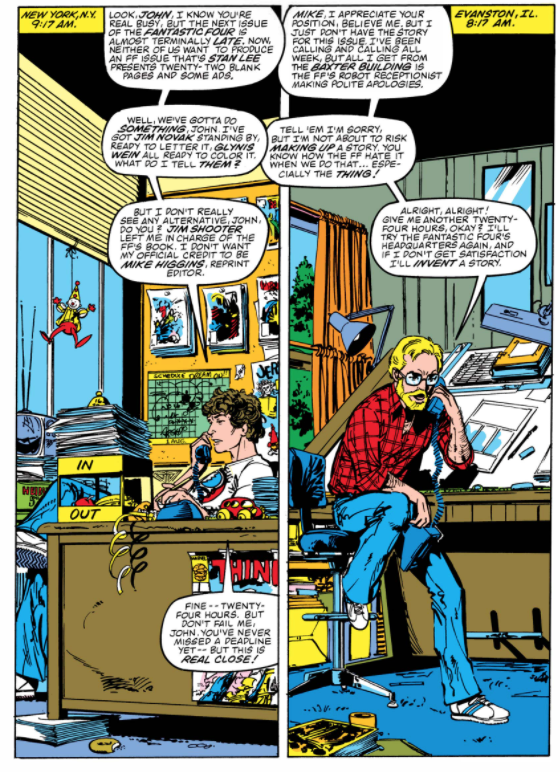
The conceit returns on occasion, often as a comedic device but occasionally in more serious stories, such as Fantastic Four 261, where author John Byrne is summoned into space to witness the trial of Reed Richards. The likelihood of a comic creator inserting him or herself into a story seems directly correlated to the size of the creator’s ego. (This device is similar but different from the fourth-wall breaking of comics like She-Hulk, Deadpool, and Animal Man, where the characters understand they are in a comic, and address the reader or creator directly).

FF 261

The old switcheroo

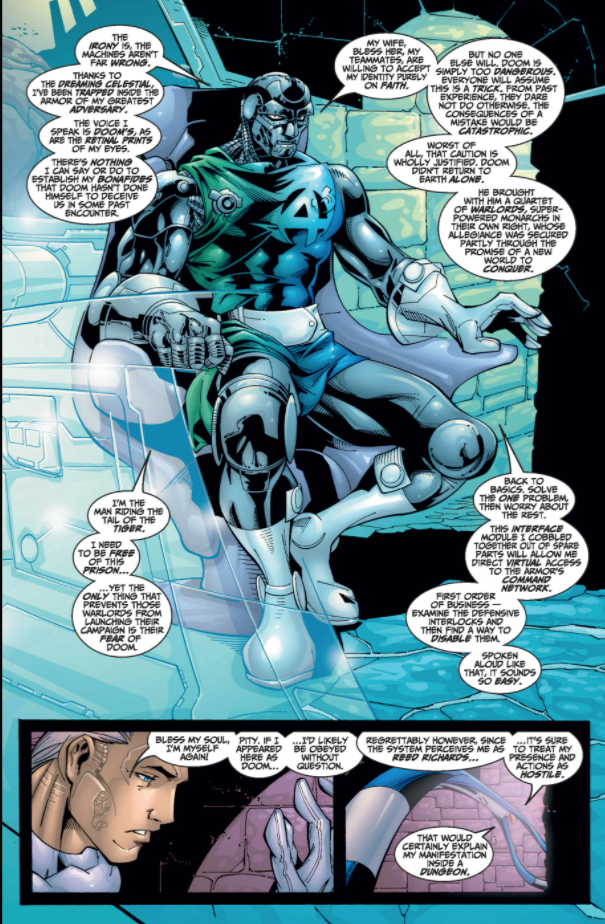
The story also is the first instance of Doom switching bodies with someone else, a power he manifests over the decades, although I don’t recall the Ovoids being mentioned again. He switches bodies with Reed at least one more time I’m aware of, in an arc written by Chris Claremont around the year 2000. In that story, the switch is performed by a Celestial, not Doom himself.

FF 27, vol. 3. Art by Salvador Larroca and Art Thibert

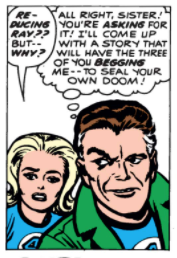
Back in issue 10, Doom (as Reed) talks more like a 30s gangster than the monarch of an Eastern European country.

Trapped!

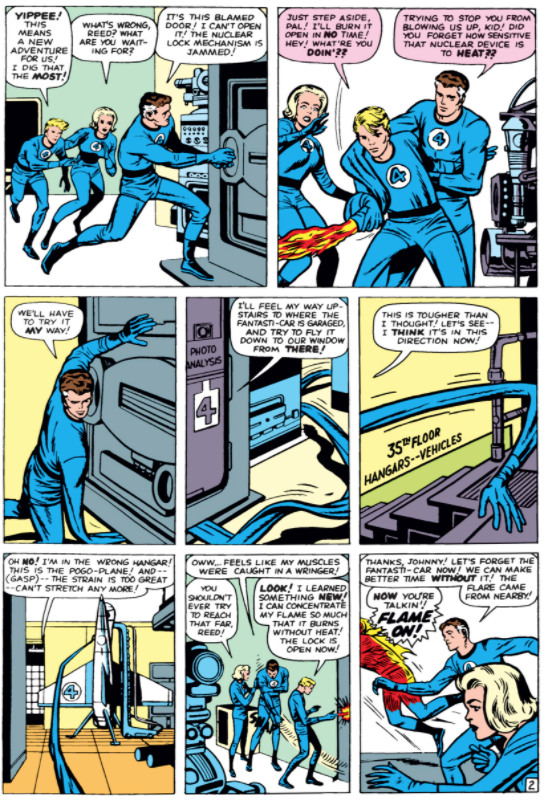
In one of the story’s odder moments, Reed, Sue, and Johnny are stuck in Reed’s lab because the “nuclear lock mechanism” is jammed. It’s yet another reminder of how atomic power is sprinkled liberally across these stories. And while the trio spend a page being trapped, it doesn’t advance the story in any way, save to show that Stan and Jack are spinning their wheels.

Weird science

Doom, as Reed, comes up with a pseudo-scientific explanation of why the rest of the team should subject themselves to his shrinking ray (he later concedes it’s bullshit and that Reed would never have fallen for it).

Later, Johnny uses his powers to create a mirage of a stick of dynamite so real both Reed and Doom fall for it.

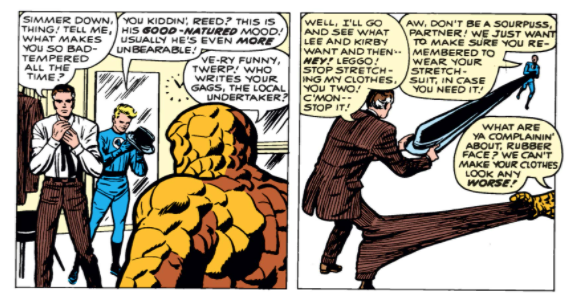
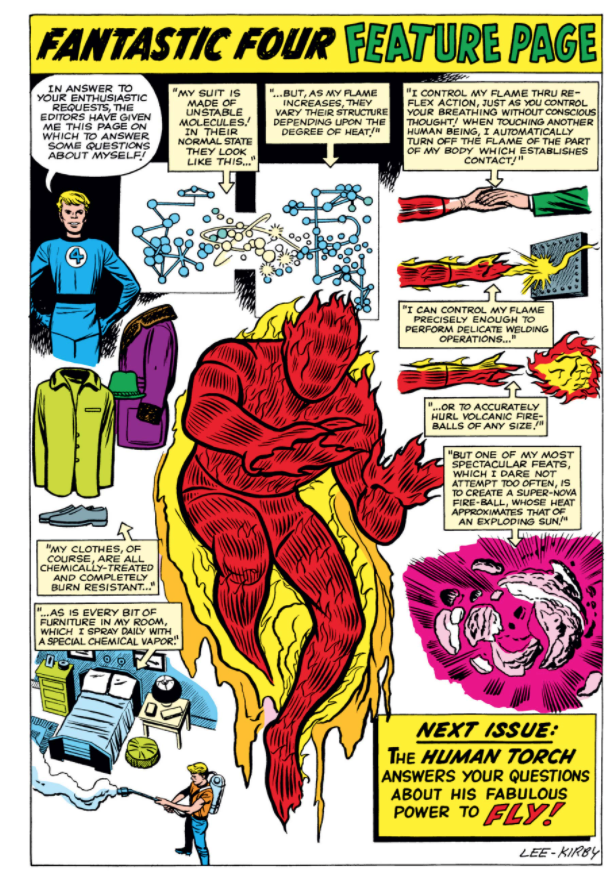
We get a demonstration of unstable molecules at work in Reed’s suit and hat.

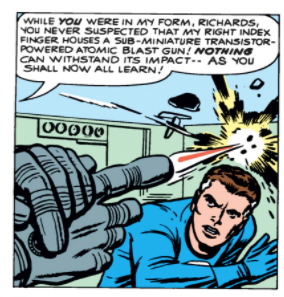
And Doom invokes nuclear power again as he fires the “sub-miniature transistor powered atomic blast gun” housed in the index finger of his armor (this weapon reappears, but never with such an awesome name).

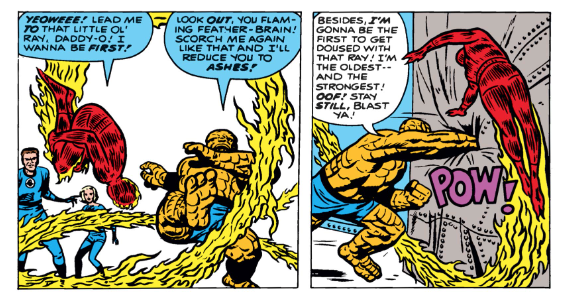
They’re fighting again

Kirby Krackle

A cool panel here from Jack

Pin up

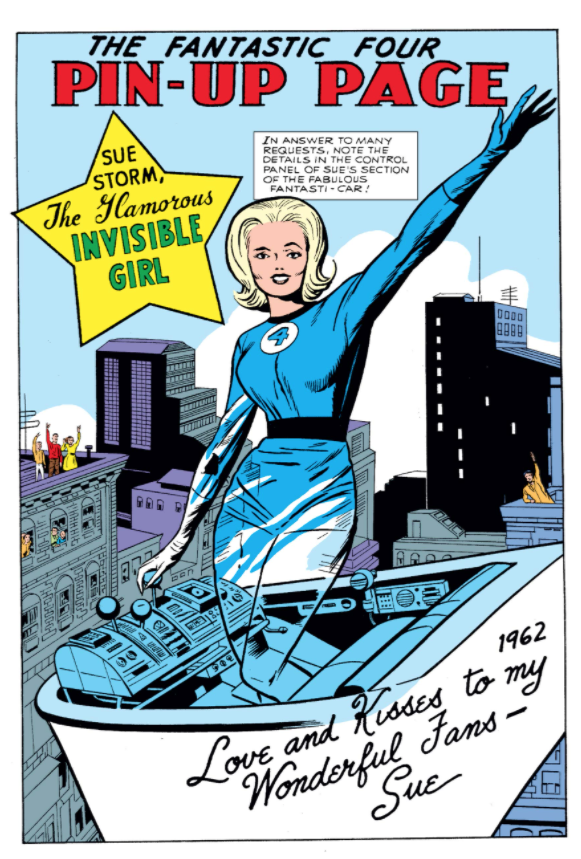
The “glamorous Invisible Girl” gets a pin up that shows the controls of the Fantasticar (apparently by popular demand).

For sale

A mint (9.8) version of Fantastic Four 10 is worth about $25,000.

Next issue: The first appearance of the Impossible Man

“The World’s Greatest Comic Magazine” Fantastic Four No. 9

26 Friday Feb 2021

Posted by percivalhenry in The World's Greatest Comic Magazine

≈ 2 Comments

Tags

1962, Fantastic Four, Fantastic Four 9, jack Kirby, Stan Lee, Sub-mariner

Fantastic Four 9
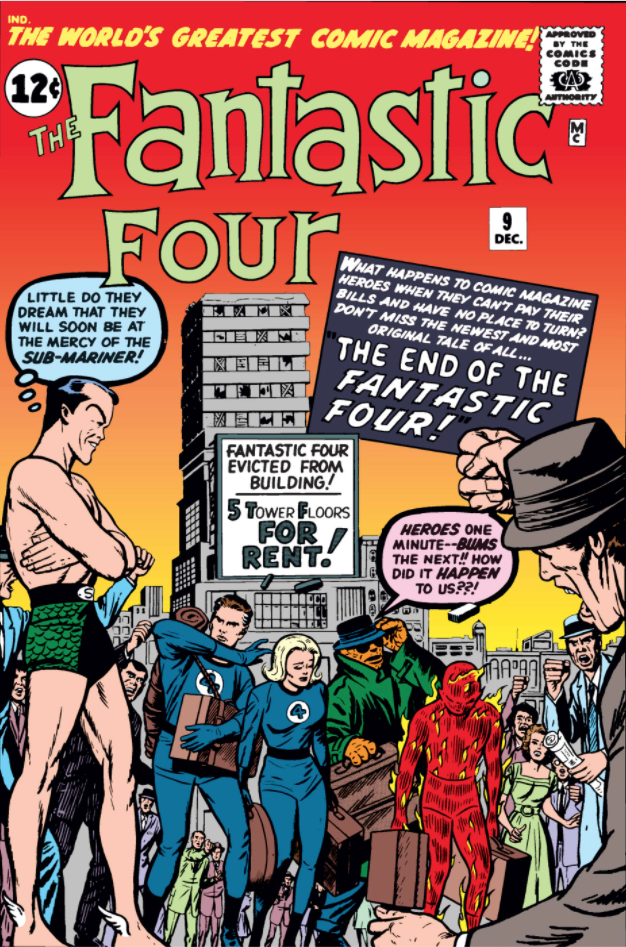
“The End of the Fantastic Four”
Published: Sept. 1962
Plot: Stan Lee and Jack Kirby
Script: Lee
Pencils: Kirby
Inks: Dick Ayers
Lettering: Artie Simek
Cover: Kirby & Ayers

Synopsis

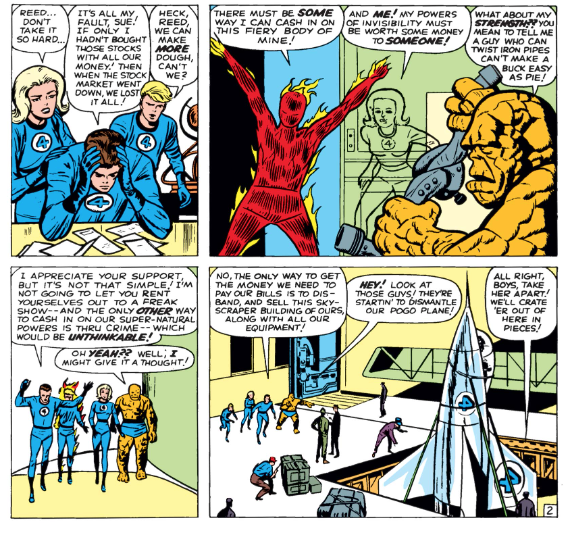
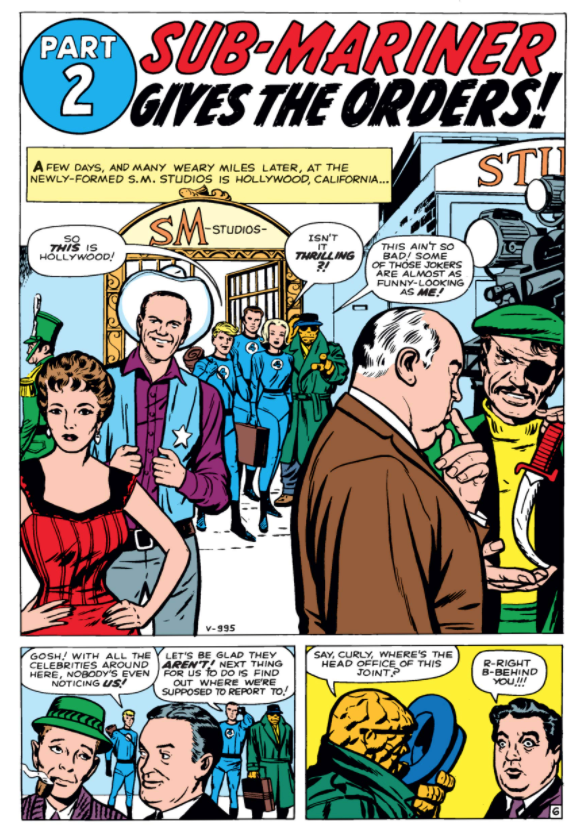
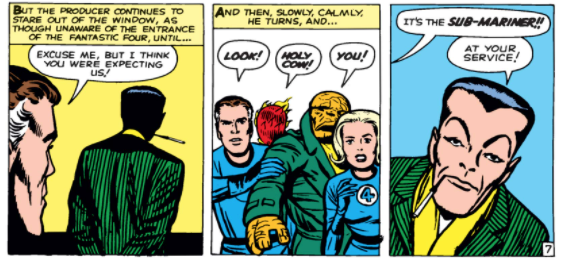
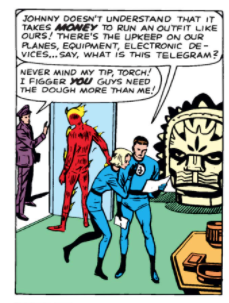
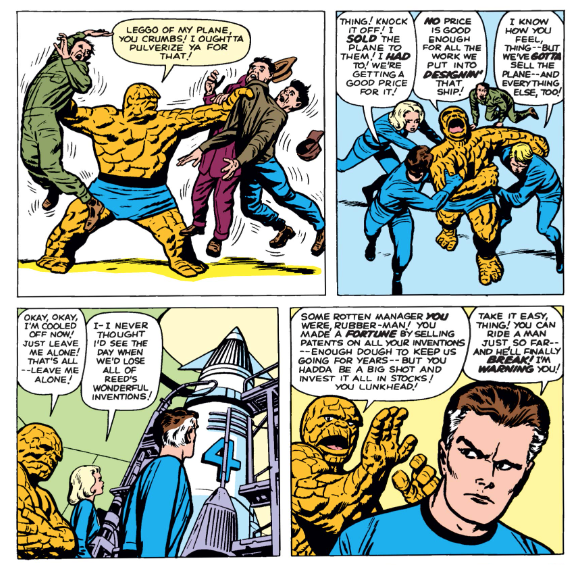
The Fantastic Four are broke, a result of Reed’s poor stock market investments, and are selling their (not-yet-named) headquarters and equipment. The Sub-Mariner gets wind of their plight and launches a plan. The team is offered $1 million to appear in a movie, which they eagerly accept only to later discover is being bankrolled by Namor.

After dining with the Invisible Girl, Namor escorts the team’s male members to their “scenes” which are actually ambushes. Mr. Fantastic fights the mythical Cyclops, the Human Torch must escape a fire-proof African tribe (really) and the Thing battles Namor himself. Finally, after Sue rejects Namor’s marriage proposal, they fight before the rest of the team arrives to save her. She brokers a peace that lets the Sub-Mariner leave unharmed in exchange for the team receiving their money and appearing in the movie.

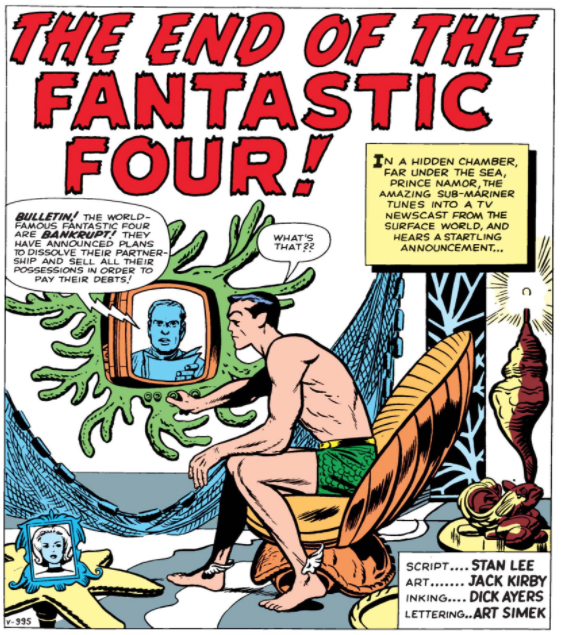
This is the first issue with proper credits (previous issues were signed by Stan and Jack), so inker Dick Ayers and letterer Artie Simek finally get their names in print.

What’s going on here?

This bizarre story strains credulity at every turn. From Reed losing everything in the stock market to Namor financing a movie studio (“SM Studios”) to the ridiculous traps he sets for the team, the comic feels more like an absurdist Julie Schwartz-era Superman that the science-fiction infused Fantastic Four. There’s very little here that advances the characters and their story, save for a brief reappearance of Alicia Masters and her deepening friendship with Ben. The issue is otherwise a madcap lark, or a waste of time, depending on your appetite for this sort of thing.

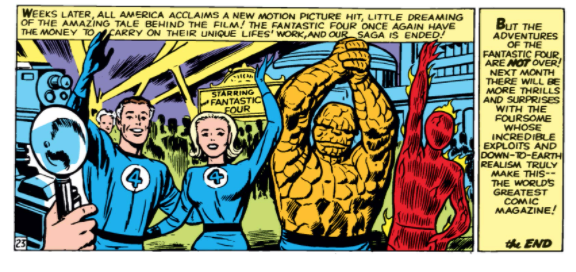
Without any indication of irony, the issue ends with the FF as movie stars and Stan boasting about the FF’s “down-to-earth realism.”

About the Fantastic Four’s money troubles

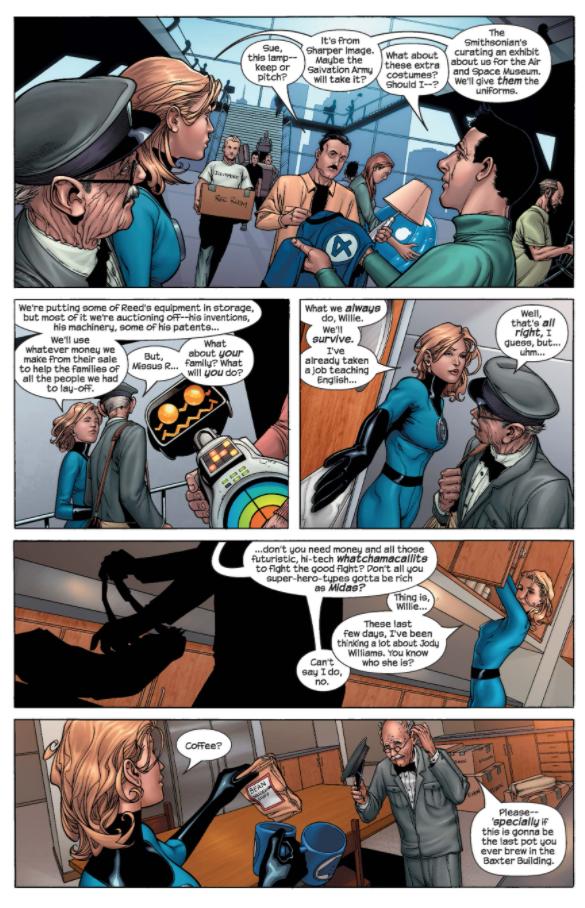
This is the first time a FF story hinges on the Fantastic Four’s financial woes or business dealings, but it won’t be the last. Over the years the FF have either owned their building and had trouble with their tenants, or been tenants and had issues with their landlord. They are also evicted again, the plot device in 2004’s Marvel Knights 4 (an FF book aimed at older readers). In that story, the City of New York refuses to indemnify the team for damages caused by their battles, and demands the Baxter Building as compensation. The FF then find “real” jobs: Sue teaches high school english, Reed performs IT support at a law firm, Johnny tries to become a firefighter and Ben works construction. The premise was as far-fetched in 2004 as it was in 1962.

To move the plot of FF 9 along, Stan and Jack suggest that Reed is both a terrible and reckless investor, but also that he has no capacity to imagine jobs for the FF outside of freak shows and crime. Again, none of this makes much sense if we are to accept Reed is one of the world’s smartest men.

Hooray for Hollywood

Jack includes some movie stars cameos as the FF go show biz.

I recognized Bing Crosby, Bob Hope and Alfred Hitchcock. The internet tells me John Wayne, Amanda Blake, Charles Bronson and Jack Benny are also there. Dean Martin appears in another panel.

The Sub-Mariner goes all-in as a movie mogul, which includes dressing like Noel Coward. Namor hangs on to his movie studio and it shows up years later, renamed Imperial Pictures.

That escalated quickly

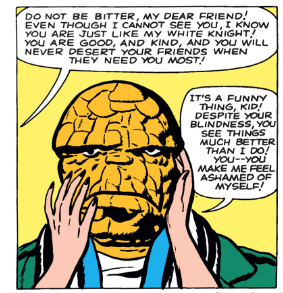
After her introduction last issue, Alicia Masters is now established as Ben’s “dear friend.” Expect to see a lot more panels like this one:

Speaking of Ben

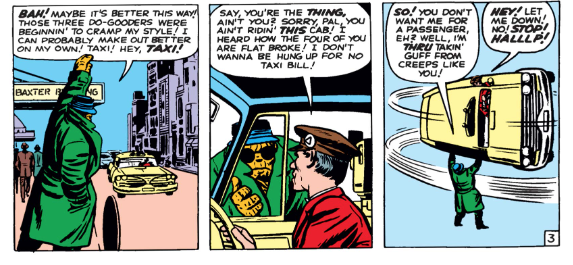
Ben has trouble catching a cab, not because he’s an orange monster but because the cabbie thinks he’ll stiff him on the fare.

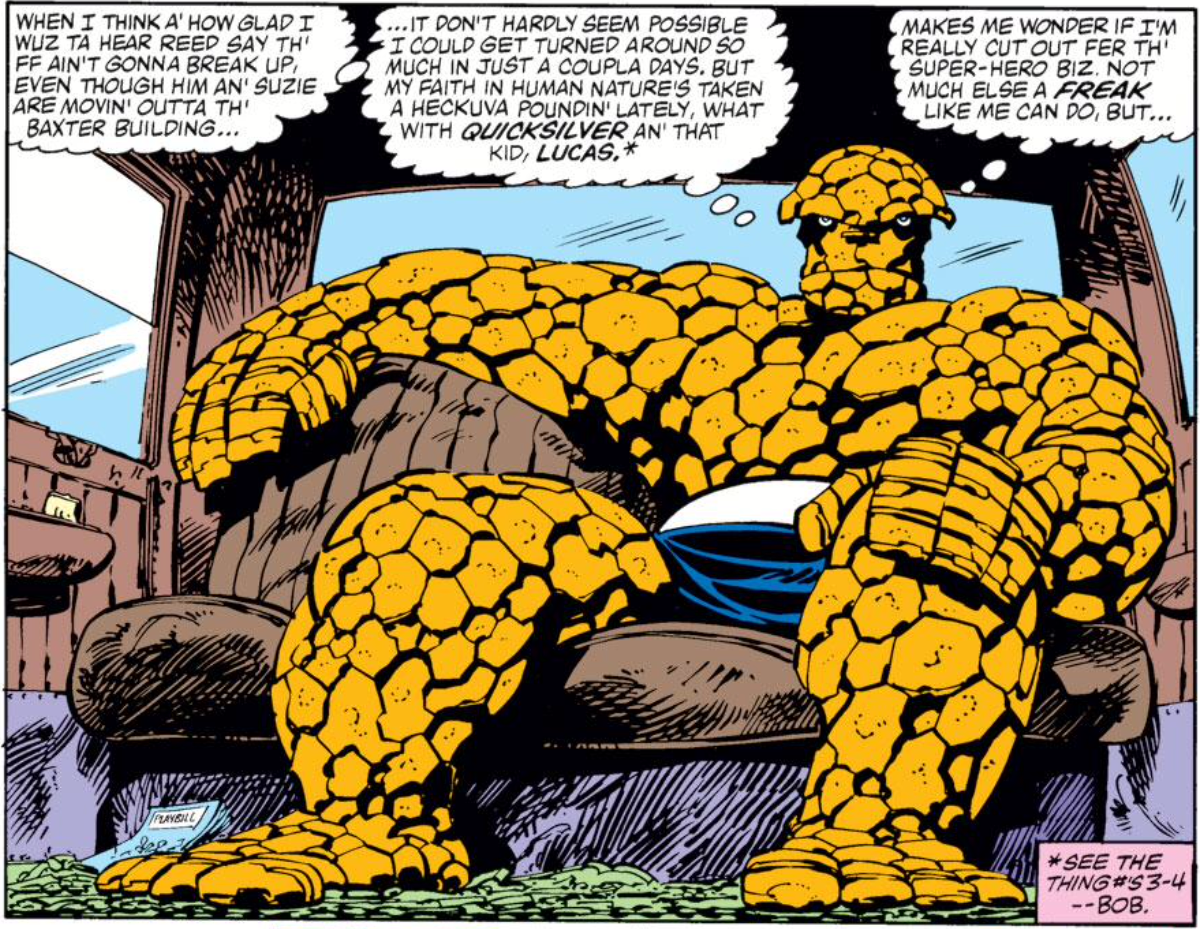
Which is as a good an excuse as any to drop in this panel of Ben taking a cab by John Byrne, one of my favorite drawings of the Thing (and which also echoes the Ben’s concern about getting a job in the real world).

Fantastic Four 249 (1983)

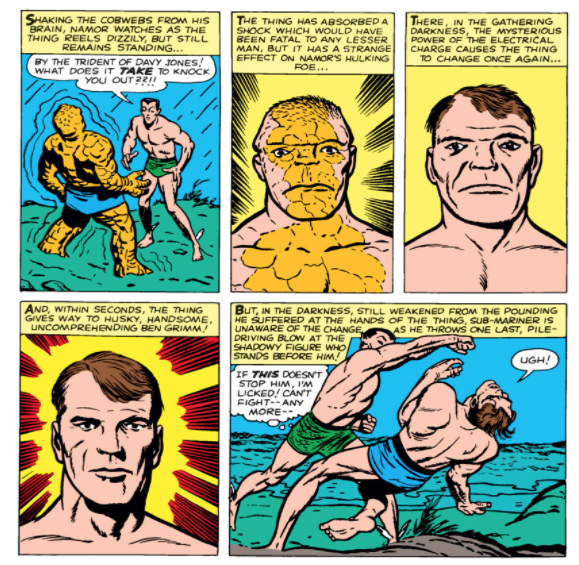
Also in issue 9, Ben also transforms to human form after being struck by lightning while fighting Namor (it’s a sign of how bananas this issue is that it’s the first time I’ve mentioned this totally random event). This marks at least the third time the Thing has reverted to human form in the first nine issues.

And now for my next trick

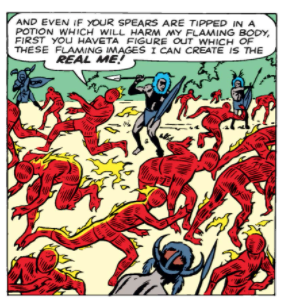
The Human Torch creates flame duplicates, I think for the first time

Call my decorator

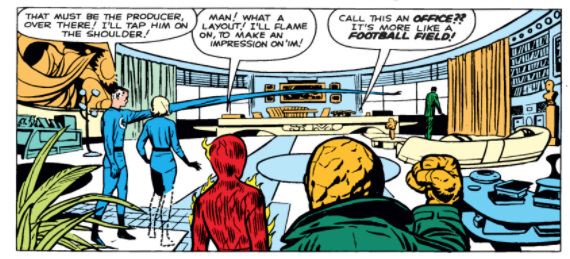
Another interesting interior design choice for the FF.

Meanwhile, Namor enjoys the latest in underwater TV technology. Note the photo of Sue.

Namor’s Hollywood office is pretty groovy, too

They’re fighting again

The sexist sixties

Sue needs to be rescued, because of course she does.

Kirby Krackle

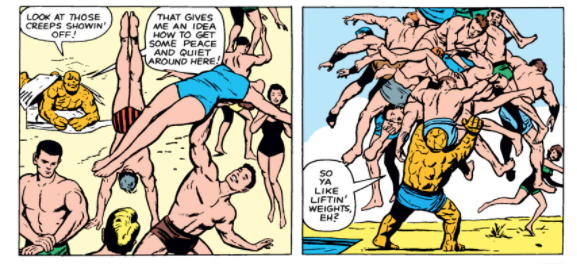
More good stuff from the King as the Thing fights some beach bullies, a la Charles Atlas

Let’s talk about us

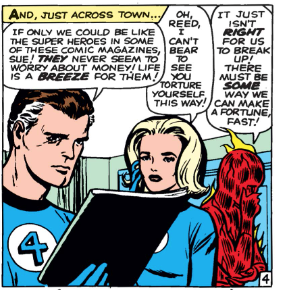
Reed is reading comics, and takes a meta-swipe at the lack of such prosaic concerns as money in (presumably) DC’s comics

For sale

A mint (9.8) copy of FF 9 is worth $14,000, quite a bit less than the previous issue.

Pin up

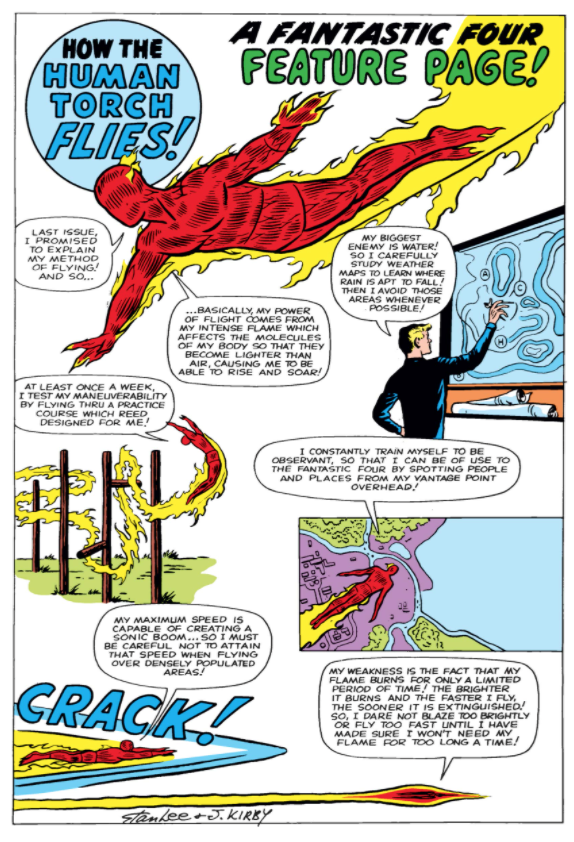
Part 2 of the Human Torch’s explainer pin ups. He seems lot more level headed here than in actual stories.

Next issue: The return of Dr. Doom!
“The World’s Greatest Comic Magazine” Fantastic Four No. 8

20 Saturday Feb 2021

Posted by percivalhenry in The World's Greatest Comic Magazine

≈ 1 Comment

Tags

1962, Alicia Masters, Fantastic Four, Fantastic Four 8, jack Kirby, Puppet Master, Stan Lee

Fantastic Four 8
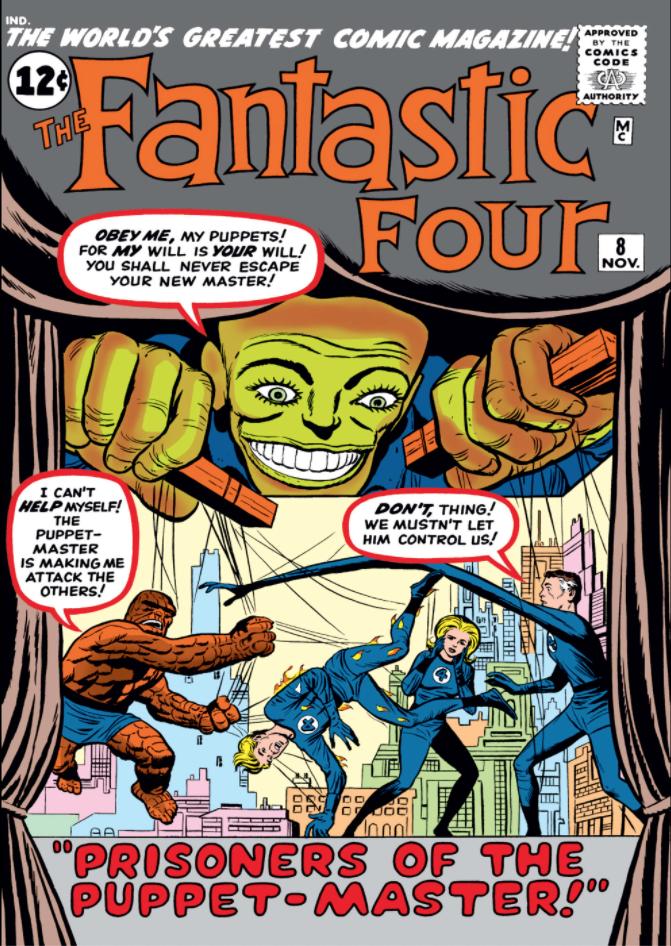
“Prisoners of the Puppet Master”
Published: August 1962
Story: Stan Lee and Jack Kirby
Script: Lee
Pencils: Kirby
Inks: Dick Ayers (uncredited)
Cover: Kirby and Ayers

Synopsis

The Fantastic Four squabble after the rest of the team keeps the Thing from learning what Reed is working in in his lab (eventually revealed to be a cure for his condition). Later, the team rescues a man, under the thrall of the Puppet Master, who attempts suicide by jumping from a bridge. Thwarted, the Puppet Master takes control of the Thing, and later captures the Invisible Girl. He sends Alicia Masters, his blind step-daughter, disguised as Sue back with the Thing to capture the rest of the team, but Ben stumbles into Reed’s chemicals, reverting him back to human form and breaking the Puppet Master’s mind control.

Meanwhile, the Puppet Masters is using his puppets to engineer a jailbreak (apparently as a test of his abilities although it’s never really made clear). The FF rescue Sue and foil the jailbreak, although the Puppet Master evades capture. Reunited with Alicia, he reveals his plan to use his puppets to make him ruler of the world. Horrified, she grabs at his puppet and as he trips, he plummets out a window, seemingly to his death

What’s going on here?

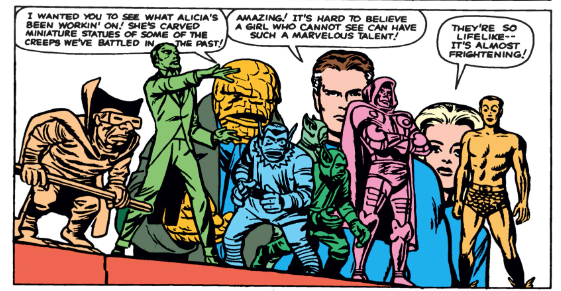
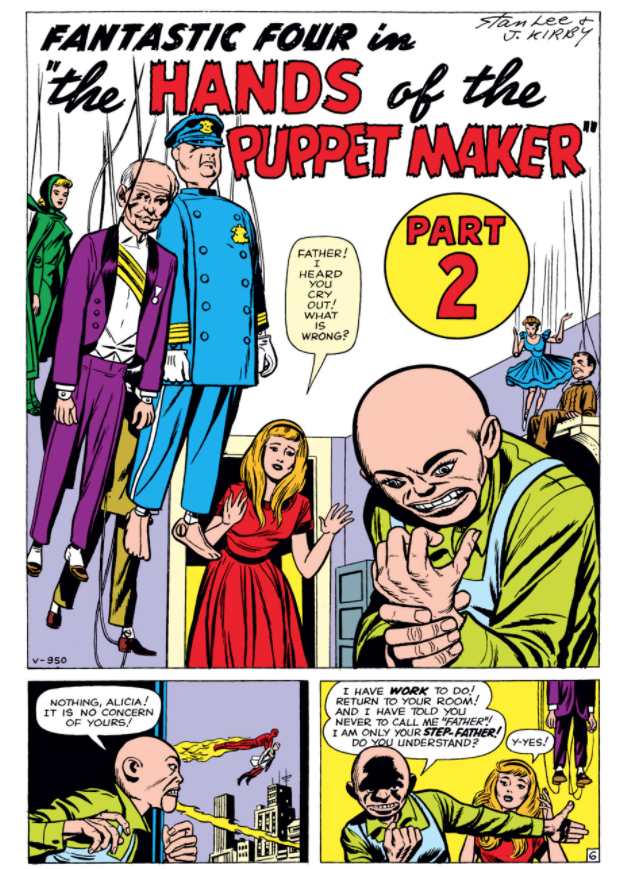
Fantastic Four 8 introduces Phillip Masters, who as the Puppet Master will be a recurring villain, and more significantly, his step daughter, Alicia. Alicia Masters becomes one of the team’s most consistent supporting characters, first as the Thing’s girlfriend and much later, his wife. She develops into a renown sculptor (although her works are invariably shown as fairly uninteresting depictions of Marvel heroes) and often served as a babysitter to young Franklin Richards when the team went on a mission. She also, unfortunately, filled in for Sue as the requisite hostage of the super villains after the Invisible Woman evolved past that role.

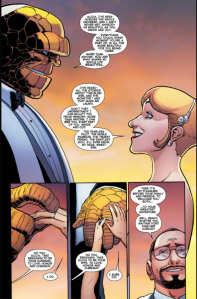
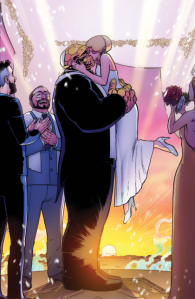
After many twists and turns in their relationship—including a period where she left Ben for Johnny in the 1980s, a betrayal later retconned as the actions of Lyja, a Skrull in disguise (the less said about that the better)—the two finally got hitched in 2018’s FF No. 5:

It’s clear Stan and Jack had long-term plans for Alicia as early as issue 8, as she and the Thing quickly develop feelings for each other:

Alicia, disguised as Sue

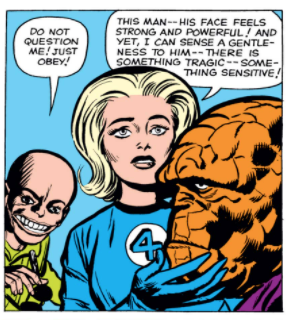
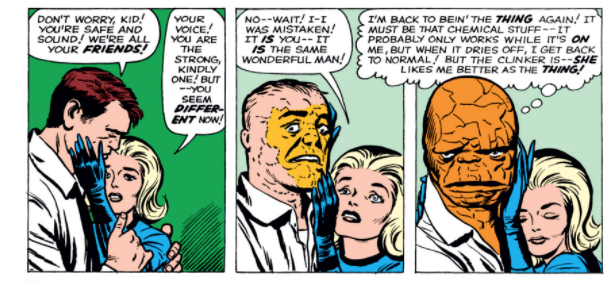
The Thing/Ben/Alicia dynamic becomes fraught over the years. It begins with the Beauty-and-the-Beast cliche, and the story-telling crutch of her blindness, because of course only a blind woman could love the Thing. Later writers, notably John Byrne, investigate whether Ben’s psychological need for Alicia’s love has prevented him from reverting back to human form. The seeds of that storyline were introduced here in issue 8, as Ben reverts back to the Thing after temporarily turning human

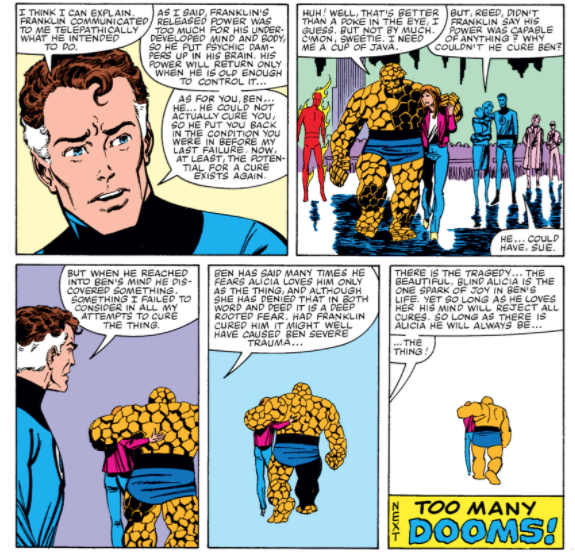
Byrne runs with that idea in issue 245, while giving Reed a convenient explanation for why all his attempts to return Ben to human form failed:

About that clay

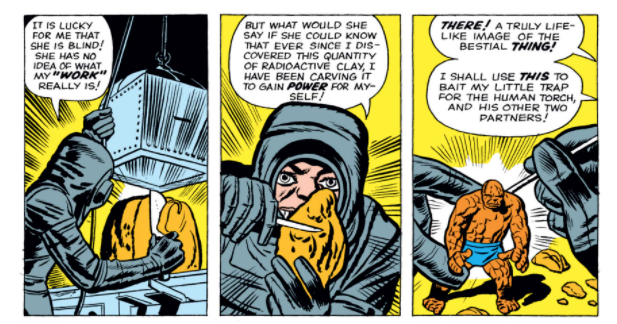
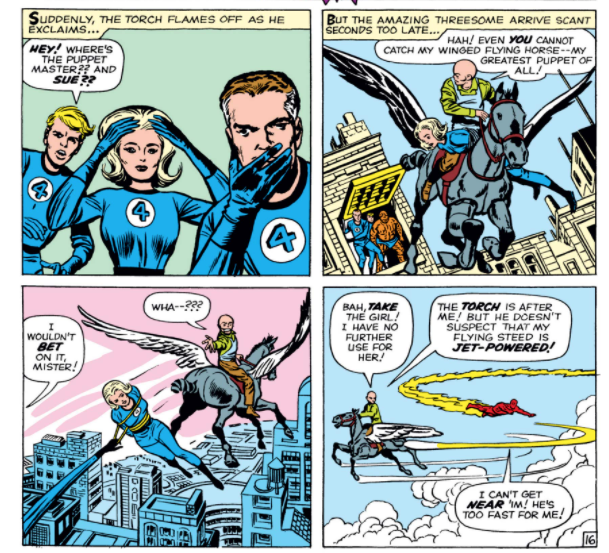
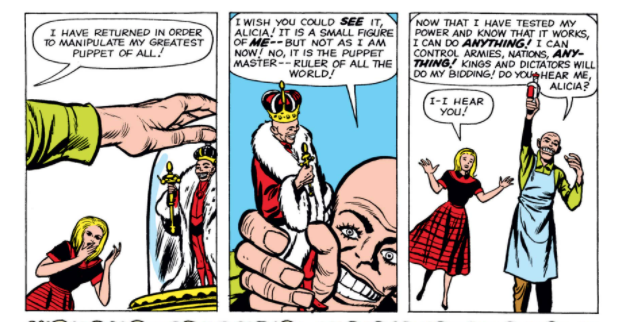
Phillip Master’s puppet powers derive from radioactive clay (another reminder of how in the ’60s, radioactivity was an all-purpose bestower of super powers), but it’s a little unclear how it actually works. Usually, he needs to mold a clay form of a living person to manipulate them, sort of like a voodoo doll.

But here he has sculpted a flying, jet-propelled horse, which seems to work just fine without him using a small version of it.

And then he plans to rule the world by sculpting himself as its king. Would he manipulate himself?

They’re fighting again

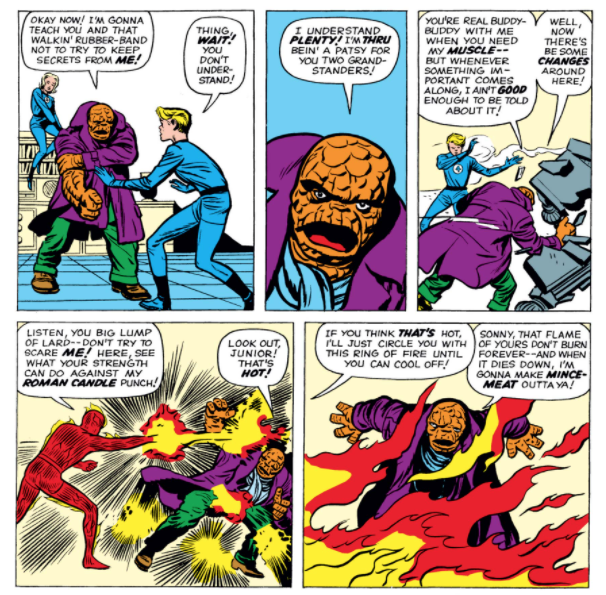
After skipping last issue, Ben and Johnny pick right up where they left off:

The sexist sixties

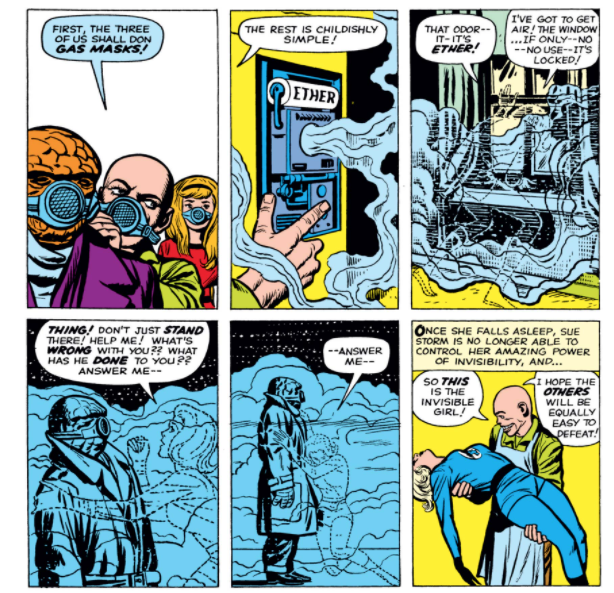
Sue is, of course, captured by the bad guy, for the fourth time in the first eight issues.

What year is it?

For the first time, the year is mentioned, which will become a problem for continuity hounds as Marvel’s sliding time scale means these issues no longer take place in the ’60s.

Dig that Kirby Krackle

Some great stuff from Jack in this issue.

The Incredible Mr. Fantastic

Reed finds a new use for his powers.

Pin up

Johnny gets another pin up, this one offering scientific explanations for his powers and costume (I love the image of the unstable molecules).

For sale

A mint copy of FF 8 will cost you about $130,000.

Next issue: The return of the Sub-Mariner!
“The World’s Greatest Comic Magazine” Fantastic Four No. 7

14 Sunday Feb 2021

Posted by percivalhenry in The World's Greatest Comic Magazine

≈ Leave a comment

Tags

1962, Fantastic Four, fantastic Four 7, jack Kirby, Stan Lee

Fantastic Four 7
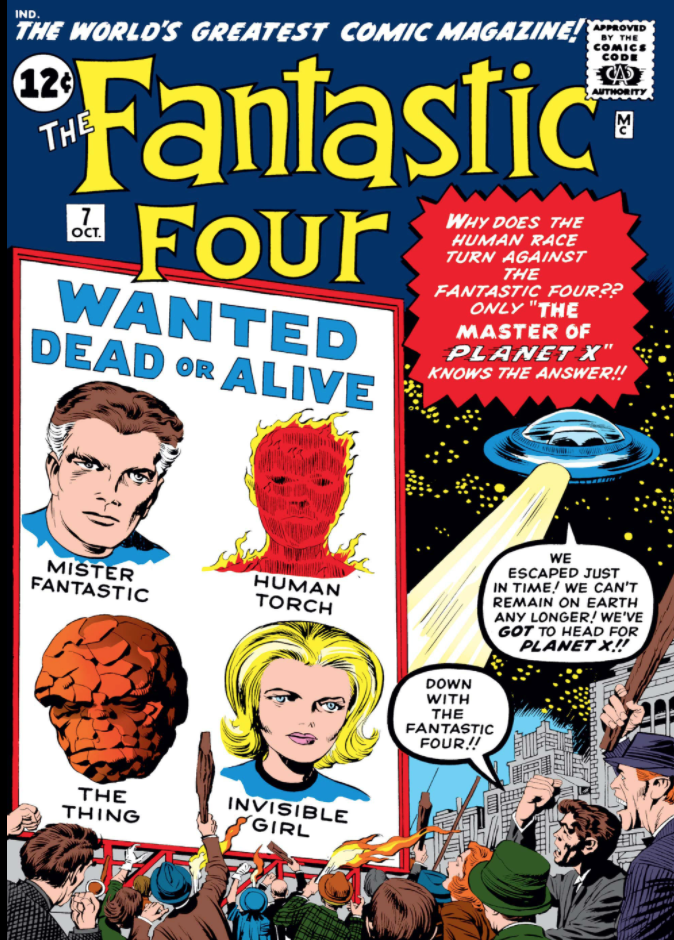
“Prisoners of Kurrgo, Master of Planet X”
Published: July 1962
Plot: Stan Lee and Jack Kirby
Script: Lee
Pencils: Kirby
Inks: Dick Ayers (uncredited)
Cover: Kirby

Synopsis

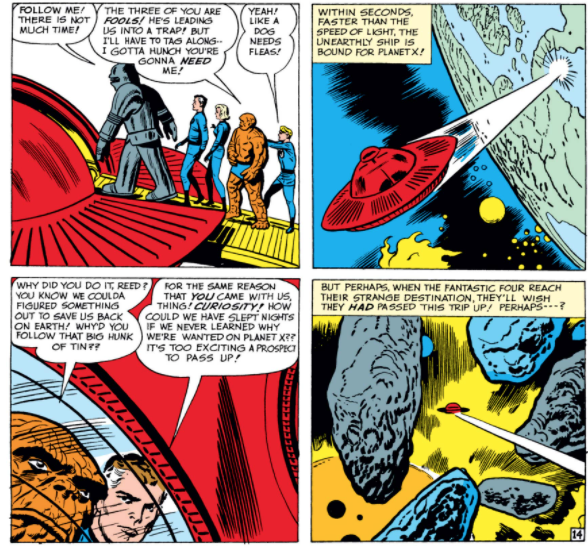
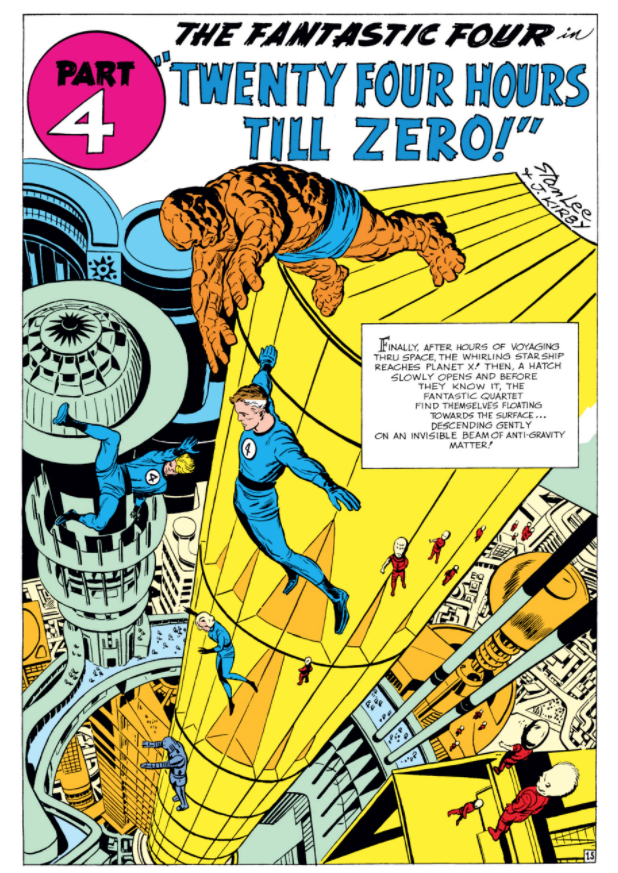
On Planet X, Kurrgo sends a spaceship piloted by a robot to capture the Fantastic Four to help him prevent the destruction of his people from a collision with a runaway asteroid, Meanwhile, on Earth, the Fantastic Four are feted at a dinner held by Congress when Kurrgo’s robot, now on Earth, unleashes an energy ray that turns the people against them. After escaping the police and military, the FF accept the ultimatum offered by the robot: perish at the hands of your countrymen or come to Planet X. Once on Planet X, Reed invents a gas that shrinks the planet’s population to tiny size, enabling them to fit on its spaceship. Kurrgo, however, plots to keep the enlarging gas for himself, planning to rule his countrymen as a giant, but encumbered by the gas canister he fails to reach the ship before it takes off. As the FF return to earth, Reed reveals there never was an enlarging gas, but he made it up so the citizens of Planet X would accept shrinking.

This is the first issue to appear on its new monthly schedule, a mark of the comic’s growing popularity.

What’s going on here?

After encounters with the Sub-Mariner and Dr. Doom in the last three issues, the FF return to the Silver Age, in this silly science fiction-flavored story. It’s part of a series of comics where the FF are forced do a villain’s bidding (as they did in FF 5 with Doom), although in this case Reed admits they didn’t really need to go to Planet X, but he was curious and wanted to check it out.

The story is pretty unremarkable. Kirby gets to draw some cool outer-space stuff, we get some character building moments as the FF fret about attending a fussy dinner, and once again Reed’s genius saves the day (although he was kind of a dick about it). Kurrgo makes one more appearance, in 1973’s Marvel Feature 11, but he’s as forgettable a villain as the FF ever fight. The Marvel wikipedia identifies Planet X as Xanth, and extrapolates some details about Xanthians, but they too only appear once more.

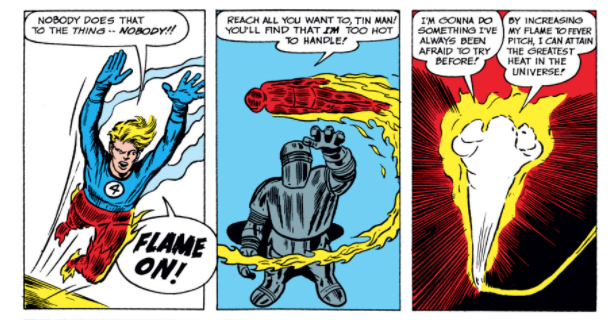
Really, the only event of significance is it marks the first time the Human Torch goes “super nova,” a manifestation of his powers where he can “attain the greatest heat in the universe.”

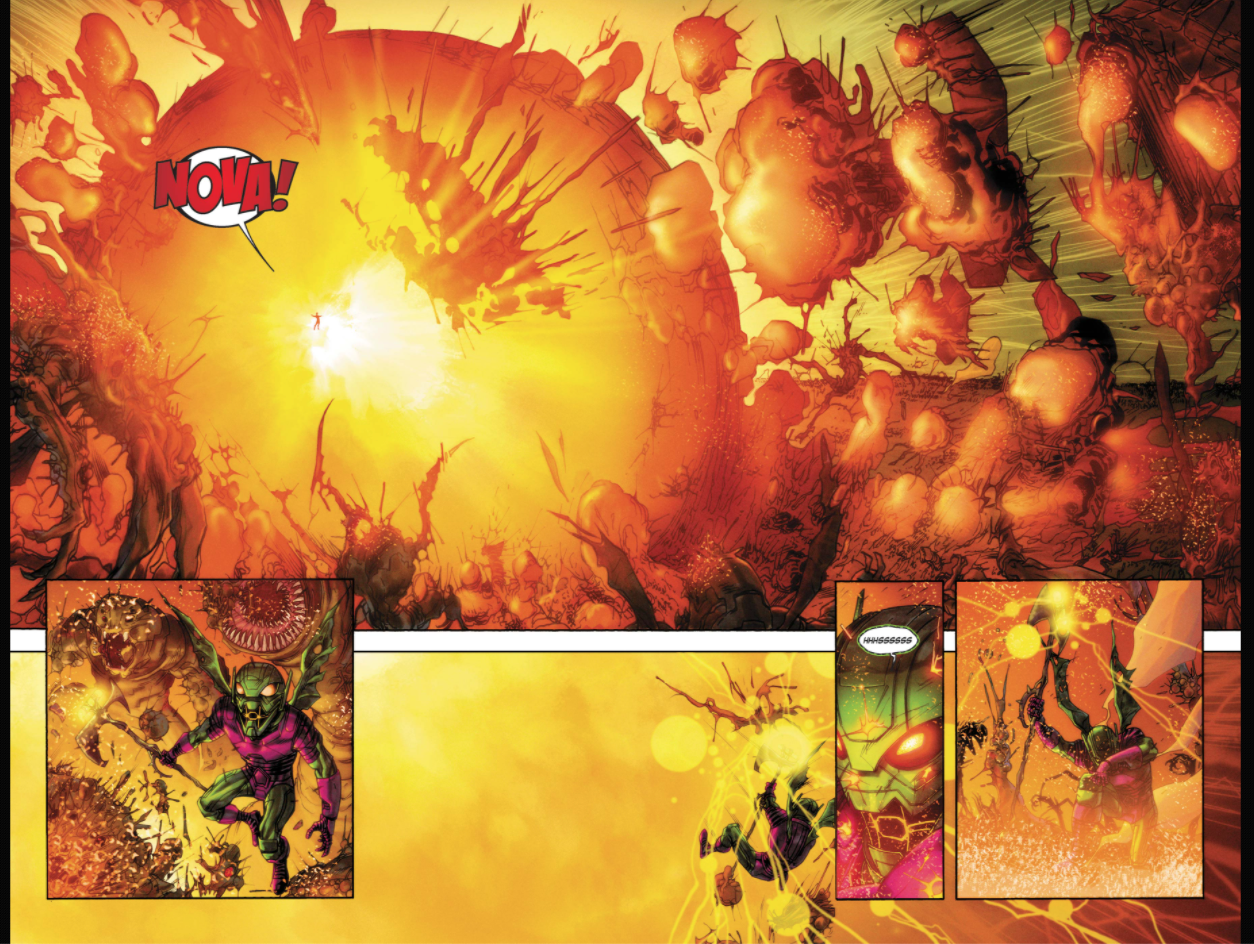
Johnny’s nova power becomes part of his arsenal of tricks and is used repeatedly over the years, although perhap never with as much spectacular impact as in Fantastic Four 600, where he uses it to incinerate Annihilus’s army as it prepares to invade Earth from the Negative Zone.

FF 600, art by Carmine Di Giandomenico

The Sexist Sixties

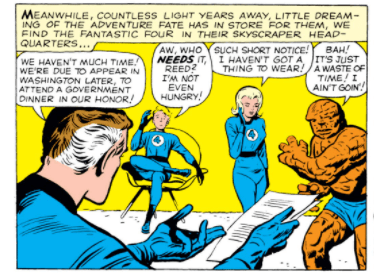
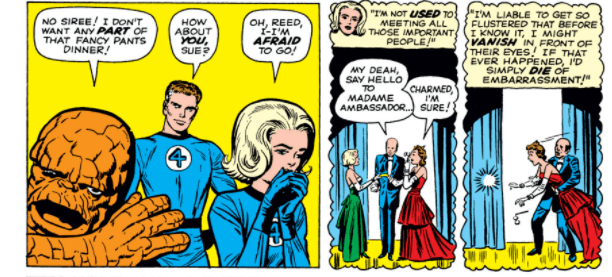
The FF’s invitation to a dinner in their honor gives Stan and Jack ample opportunity to trot out some stereotypes:

Talk to my decorator

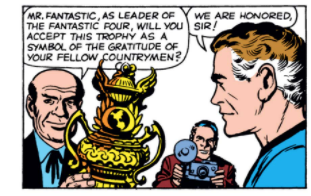
At the dinner in their honor, Reed is presented with an odd trophy from an official in a bolo tie. Apparently the FF don’t yet merit medals of honor.

Red Menace

The Cold War is still very much a thing

Kirby Krackle

It seems Jack is never happier than when he gets to draw alien machinery

For sale

A mint (9.8) copy of FF 7 should run you about $80,000

Next issue: The first appearances of Alicia Masters and the Puppet Master!
“The World’s Greatest Comic Magazine” Fantastic Four No. 6

06 Saturday Feb 2021

Posted by percivalhenry in The World's Greatest Comic Magazine

≈ 2 Comments

Tags

1962, Dr. Dom, Fantastic Four, Fantastic Four 6, jack Kirby, Stan Lee, Sub-mariner

Fantastic Four 6
“Captives of the Deadly Duo!”
Published June 1962
Plot: Stan Lee and Jack Kirby
Pencils: Jack Kirby
Script: Stan Lee
Inks: Dick Ayers (uncredited)
Cover: Kirby and Ayers

Synopsis

The Fantastic Four are unsuccessful at finding Dr. Doom, who escaped in the last issue. Meanwhile, Doom recruits the Sub Mariner to help him attack the FF, appealing to Namor’s desire for revenge. Namor plants a magnetic “grabber” in the the FF’s headquarters, which lifts the entire building into space. Doom, however, has double-crossed Namor, who is in the building as it leaves Earth and intends to send him into the sun with the FF. While the members of the FF are unable to reach Doom’s spaceship, Namor—revived by the FF’s water tank—successfully disables Doom’s ship, and returns the building to Earth. Doom, clinging to a meteor, is lost in space.

What’s going on here?

This is the best issue to date. The story is suspenseful, the plot is straightforward, and the villains have plausible motivations (revenge!). And Kirby delivers some gorgeous art.

Fantastic Four 6 establishes Dr. Doom as a recurring villain (oh, how he reoccurs!) and the Sub-Mariner as a more complex character, as he eventually joins forces with the FF to defeat Doom. The story also layers in more world-building, as we are introduced to various elements of the FF mythos that serve as touchstones over the years, such as the unstable molecules in their uniforms and the Yancy Street gang.

The main plot device— Dr. Doom lifts the team’s still-unnamed headquarters building into space—is delightfully absurd and Doom-ish. So delightful that John Byrne recreates the basic plot in FF 278:

What’s up with Sue?

Sue is revealed to have a crush on the Sub-Mariner, hiding away a photo of him in a book shelf. Where, exactly, she got an 8×10 glossy of Subby is unclear, but the plot device reveals that Stan and Jack view Sue as little more than a silly teenage girl, despite being engaged to Reed. (She also refers to her brother as “Torch” which seems a bit weird, while Johnny calls Namor the team’s “arch-enemy,” despite only facing him once).

Inside the (not yet) Baxter Building

For the second time in three issues, we are treated to a cutaway illustration of the FF’s headquarters. This one is a bit more in depth and shows four floors, not just three.

  • FF 3
  • FF 6

In this issue we are introduced to unstable molecules …

Want to know how Reed’s clothes stretch with him? So did a kid in a nearby hospital, whom Reed is more than happy to lecture while visiting.

… and elevator belt buckles …

FF 6 introduces another gee-whiz aspect of the team’s gear.

… and the Yancy Street Gang …

They don’t appear (well, they never really do) but they are first introduced here as Ben’s antagonists from his old neighborhood. “Yancy Street” is derived from Delancey Street on the Lower East Side of Manhattan, near where Kirby grew up.

and footnotes!

Long a staple of Marvel comics, Stan started using footnotes to remind readers about what happened in past issues. Even though there have been only six issues so far.

Mid-century modern

It’s never clear who decorated the FF’s headquarters, but they certainly had an eye for interesting objet d’art.

Kirby Krackle

Kirby drew some wonderful street scenes for this issue. I wonder who he used as models for the faces.

He also drew this amazing sequence of Namor leaping into space to attack Doom

The sexist sixties

In the thin air of our space, Sue is the only member to succumb from the last oxygen because of course she is. (The Sub-Mariner also wears red trunks in this issue, insead of his standard green).

Oops!

Jack draws the headquarters returning safely to its block in New York, while Stan is left to explain in a word balloon that it was Namor who somehow used Doom’s spaceship to maneuver it in place, all off-camera. It seems Stan may have had of explain just exactly how the building returned to Earth.

For sale

A mint (9.8) copy of FF 6 should cost you $98,000.

Next issue: The FF battle Kurrgo, master of Planet X!

← Older posts
Newer posts →
  • “The World’s Greatest Comic Magazine!” Fantastic Four Annual No. 15
  • “The World’s Greatest Comic Magazine!” Fantastic Four No. 223
  • “The World’s Greatest Comic Magazine!” Fantastic Four No. 222
  • “The World’s Greatest Comic Magazine!” Fantastic Four No. 221
  • “The World’s Greatest Comic Magazine!” Fantastic Four No. 220
  • July 2026
  • June 2026
  • May 2026
  • April 2026
  • March 2026
  • February 2026
  • January 2026
  • December 2025
  • November 2025
  • October 2025
  • September 2025
  • August 2025
  • July 2025
  • June 2025
  • May 2025
  • April 2025
  • March 2025
  • February 2025
  • January 2025
  • December 2024
  • November 2024
  • October 2024
  • September 2024
  • August 2024
  • July 2024
  • June 2024
  • May 2024
  • April 2024
  • March 2024
  • February 2024
  • January 2024
  • December 2023
  • November 2023
  • September 2023
  • July 2023
  • June 2023
  • May 2023
  • April 2023
  • March 2023
  • February 2023
  • January 2023
  • December 2022
  • November 2022
  • October 2022
  • September 2022
  • August 2022
  • July 2022
  • June 2022
  • May 2022
  • April 2022
  • March 2022
  • February 2022
  • January 2022
  • December 2021
  • November 2021
  • October 2021
  • September 2021
  • August 2021
  • July 2021
  • June 2021
  • May 2021
  • April 2021
  • March 2021
  • February 2021
  • January 2021
  • December 2020
  • February 2018
  • May 2016
  • February 2016
  • January 2016
  • December 2015
  • November 2015
  • October 2015
  • September 2015
  • August 2015
  • July 2015
  • April 2015
  • March 2015
  • January 2015
  • December 2014
  • November 2014
  • October 2014
  • September 2014
  • August 2014
  • June 2014
  • May 2014
  • April 2014
  • March 2014
  • February 2014
  • July 2026
  • June 2026
  • May 2026
  • April 2026
  • March 2026
  • February 2026
  • January 2026
  • December 2025
  • November 2025
  • October 2025
  • September 2025
  • August 2025
  • July 2025
  • June 2025
  • May 2025
  • April 2025
  • March 2025
  • February 2025
  • January 2025
  • December 2024
  • November 2024
  • October 2024
  • September 2024
  • August 2024
  • July 2024
  • June 2024
  • May 2024
  • April 2024
  • March 2024
  • February 2024
  • January 2024
  • December 2023
  • November 2023
  • September 2023
  • July 2023
  • June 2023
  • May 2023
  • April 2023
  • March 2023
  • February 2023
  • January 2023
  • December 2022
  • November 2022
  • October 2022
  • September 2022
  • August 2022
  • July 2022
  • June 2022
  • May 2022
  • April 2022
  • March 2022
  • February 2022
  • January 2022
  • December 2021
  • November 2021
  • October 2021
  • September 2021
  • August 2021
  • July 2021
  • June 2021
  • May 2021
  • April 2021
  • March 2021
  • February 2021
  • January 2021
  • December 2020
  • February 2018
  • May 2016
  • February 2016
  • January 2016
  • December 2015
  • November 2015
  • October 2015
  • September 2015
  • August 2015
  • July 2015
  • April 2015
  • March 2015
  • January 2015
  • December 2014
  • November 2014
  • October 2014
  • September 2014
  • August 2014
  • June 2014
  • May 2014
  • April 2014
  • March 2014
  • February 2014
“The World’s Greatest Comic Magazine!” Fantastic Four Annual No. 15

“The World’s Greatest Comic Magazine!” Fantastic Four Annual No. 15

percivalhenry's avatar by percivalhenry July 18, 2026
“The World’s Greatest Comic Magazine!” Fantastic Four No. 223

“The World’s Greatest Comic Magazine!” Fantastic Four No. 223

percivalhenry's avatar by percivalhenry July 14, 2026
“The World’s Greatest Comic Magazine!” Fantastic Four No. 222

“The World’s Greatest Comic Magazine!” Fantastic Four No. 222

percivalhenry's avatar by percivalhenry July 5, 2026
“The World’s Greatest Comic Magazine!” Fantastic Four No. 221

“The World’s Greatest Comic Magazine!” Fantastic Four No. 221

percivalhenry's avatar by percivalhenry June 25, 2026
“The World’s Greatest Comic Magazine!” Fantastic Four No. 220

“The World’s Greatest Comic Magazine!” Fantastic Four No. 220

percivalhenry's avatar by percivalhenry June 15, 2026
“The World’s Greatest Comic Magazine!” Fantastic Four No. 219

“The World’s Greatest Comic Magazine!” Fantastic Four No. 219

percivalhenry's avatar by percivalhenry June 7, 2026

Blog at WordPress.com.

  • Subscribe Subscribed
    • Percival Henry: The Fantastic Four and more
    • Join 74 other subscribers
    • Already have a WordPress.com account? Log in now.
    • Percival Henry: The Fantastic Four and more
    • Subscribe Subscribed
    • Sign up
    • Log in
    • Report this content
    • View site in Reader
    • Manage subscriptions
    • Collapse this bar
Loading Comments...