• About Percival Henry

Percival Henry: The Fantastic Four and more

~ Blogging the Fantastic Four issue by issue (plus whatever else grabs my attention)

Percival Henry: The Fantastic Four and more

Tag Archives: Fantastic Four

“The World’s Greatest Comic Magazine!” Fantastic Four No. 186

24 Sunday Aug 2025

Posted by percivalhenry in The World's Greatest Comic Magazine

≈ 1 Comment

Tags

1977, Agatha Harkness, Fantastic Four, Fantastic Four 186, George Perez, Len Wein, marvel-comics, Salem's Seven

Fantastic Four 186
“Enter: Salem’s Seven!”
Published June 1977
Writer: Len Wein
Pencils: George Perez
Inks: Joe Sinnott
Letters: John Costanza
Colors: Glynis Wein
Editor: Len Wein
Cover: Perez and Sinnott

Synopsis

Captured last issue by Nicholas Scratch in New Salem, his town of witches, the Fantastic Four watch as Scratch prepares to execute Agatha Harkness for the crime of revealing the town to the outside world. Although Scratch takes Franklin hostage to ensure the FF’s docility, they escape their cell only to confront Salem’s Seven, a group of super-powered minions. The Seven are defeated when they encounter Reed’s artificial arms (no, it doesn’t make much sense) and the FF manages to turn New Salem against Scratch by revealing it was he, not Harkness, that revealed their location of the outside world when he abducted Franklin. The town’s witches banishes Scratch and as the FF depart, Harkness reveals she is Scratch’s mother.

What’s going on here?

This is a pretty satisfying comic, despite a few questionable plot holes. It neatly wraps up the New Salem arc that has been percolating for a few issues, introduces some fun new villains, fills in some of Agatha Harkness’s backstory and adds some desperately needed dimension to Sue and her power set. All of these developments are proof of Len Wein’s confidence as writer and his willingness to both plumb the FF’s history for ideas while forging ahead with new ones.

The most obvious development in the comic is the introduction of Salem’s Seven, who are later revealed to be the children of Scratch (and grandchildren of Harkness). There’s a fun, goofy quality to these villains, who don’t really seem supernatural at all but rather like generic characters created by rolling dice in a role playing game. They’re generic enough that they could sub in for other Marvel villains-of-the-month, like the Wrecking Crew or Seprent Squadron, and it’s a bit surprising that they are not more frequently used. Nor did they ever become first tier FF villains.

(It’s also a bit odd their debut doesn’t at get a full splash page).

Also interesting is the glimpses into Harkness’s history. Her mysteriousness was a defining part of her persona, and while peeling back the curtain on characters with a murky past is not always a good thing (see: Puck, Han Solo), what we learned in this issue adds depth and a bit of tragedy to Harkness. Dropping the line about Scratch being her son in the final panel was definitely a dramatic twist I didn’t see coming.

The art in this issue is much like last issue’s, with Perez contributing layouts and breakdowns and Sinnott finishing it up. It works but lacks the richness of detail Perez is capable of when he fully applies himself.

What I liked

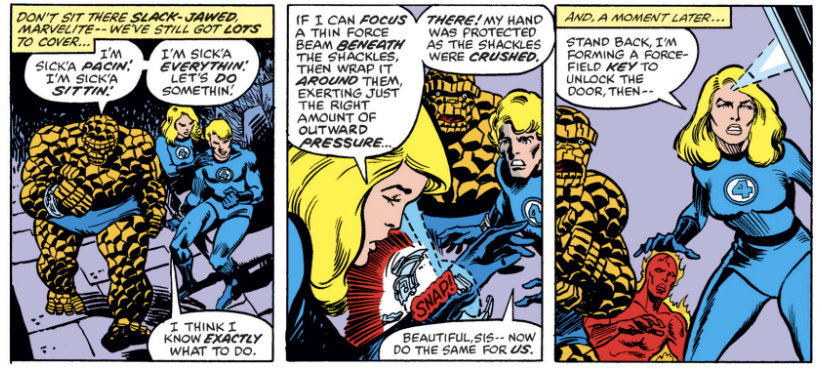
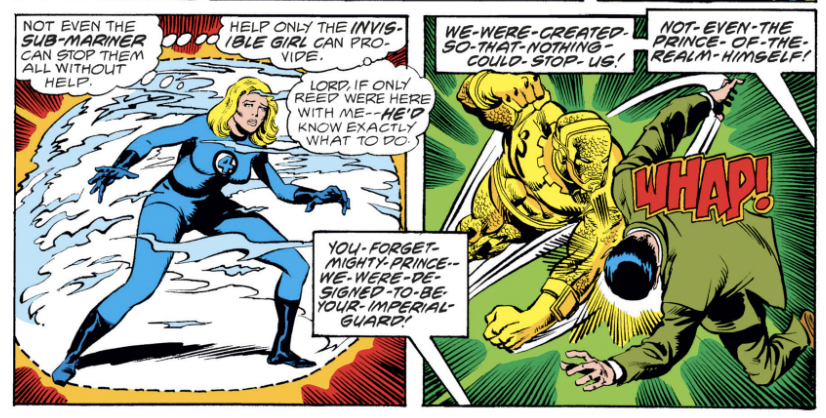
Wein seems determined to expand Sue’s use of her powers and with them, her role on the team. While there’s still a bit of her being treated like a hysterical mother when Franklin is abducted, she rises to the occasion by breaking the FF out of their jail cell (the key was it has to be done stealthily as not to raise the alarm and endanger Franklin).

Later, she uses her invisibility in a way we’ve seen many times but it still comes at a pivotal point in the story.


Perhaps not coincidentally, this expanded role for Sue comes in an issue when there are three letters to the editor making the case for just that. Notably one of the letters is from Kurt Busiek, who went on to become a longtime writer for Marvel and DC (but sadly, never of the Fantastic Four). Did Wein, who was also the comic’s editor, choose these letters to advance the case about Sue he was making in the story? It certainly seems possible.

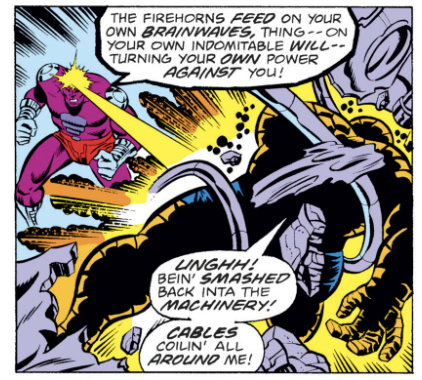
Also: Star-Lord!

What I didn’t like

The resolution of the story, where Reed and Johnny convince the town of New Salem that Scratch is the bad guy, seems a bit too pat. Why would the town believe these outsiders over their leader (It’s possible he had them ensorcelled, and when he loses his staff he loses his power over them, but that is never explained).


There is something very silly about how Salem’s Seven introduces themselves by announcing their names in the third person. To be clear, all seven of them do this.


And the FF’s defeat of Salem’s Seven makes no sense. Somehow encountering Reed’s artificial arms negates their powers?


Anything else?

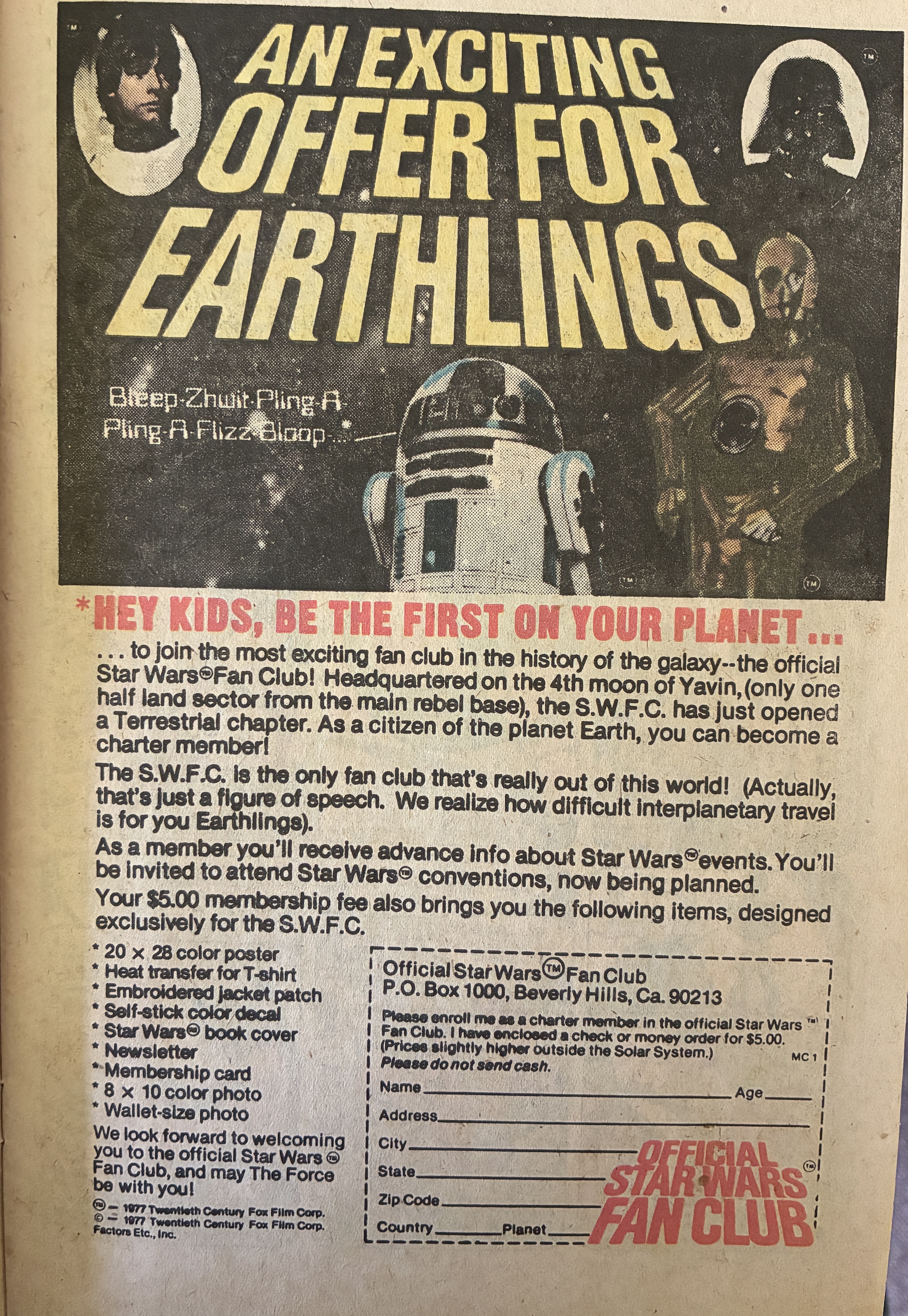
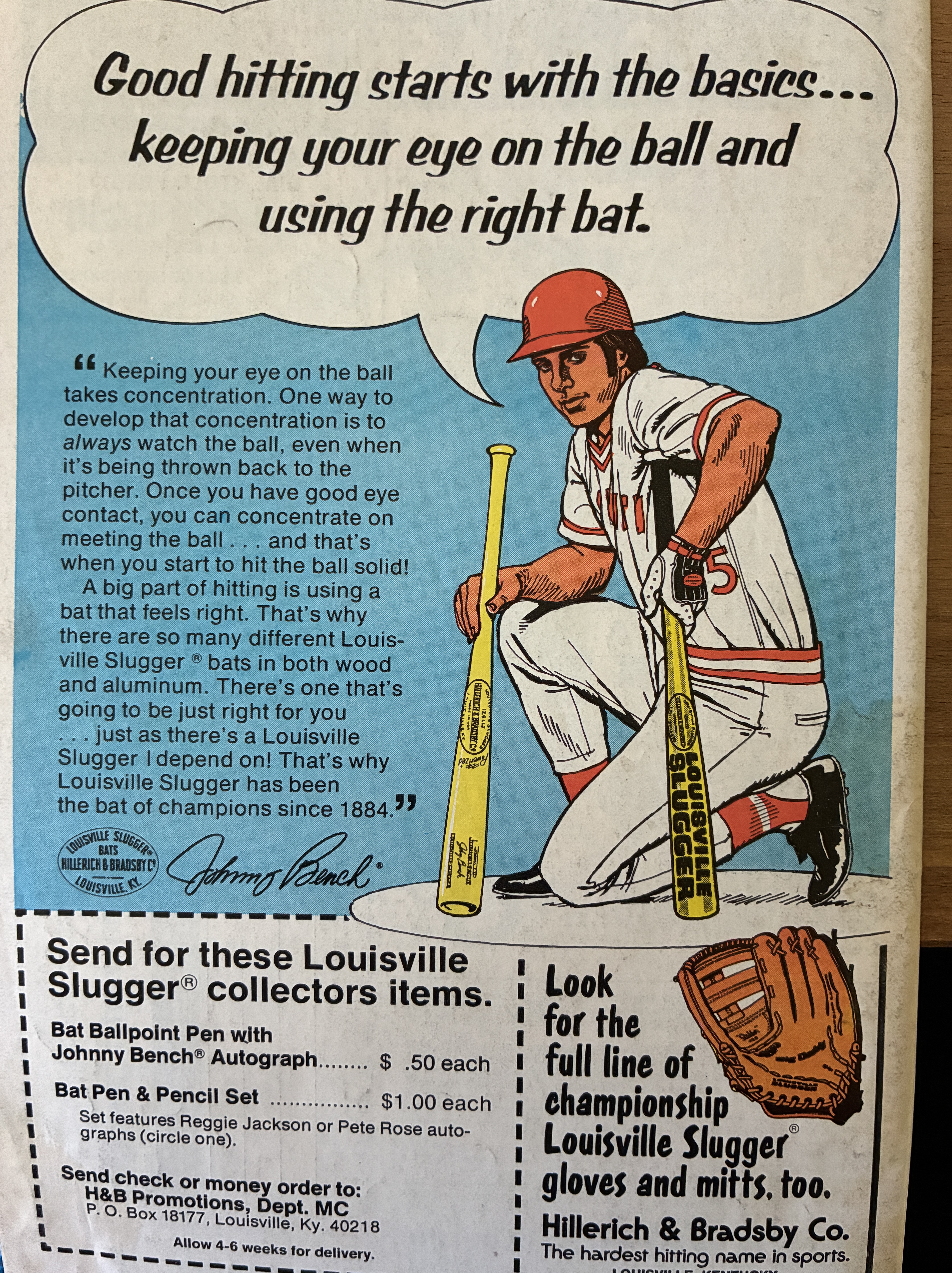
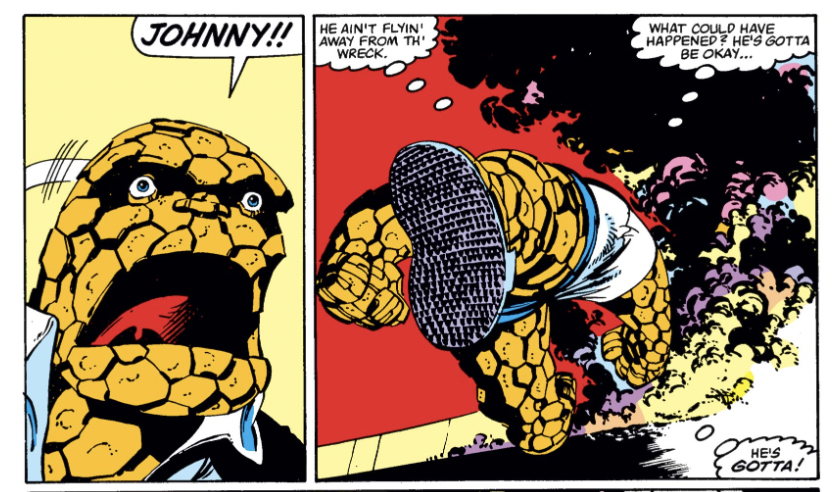
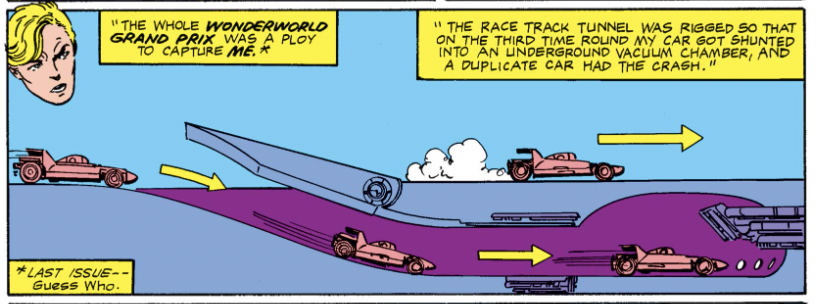
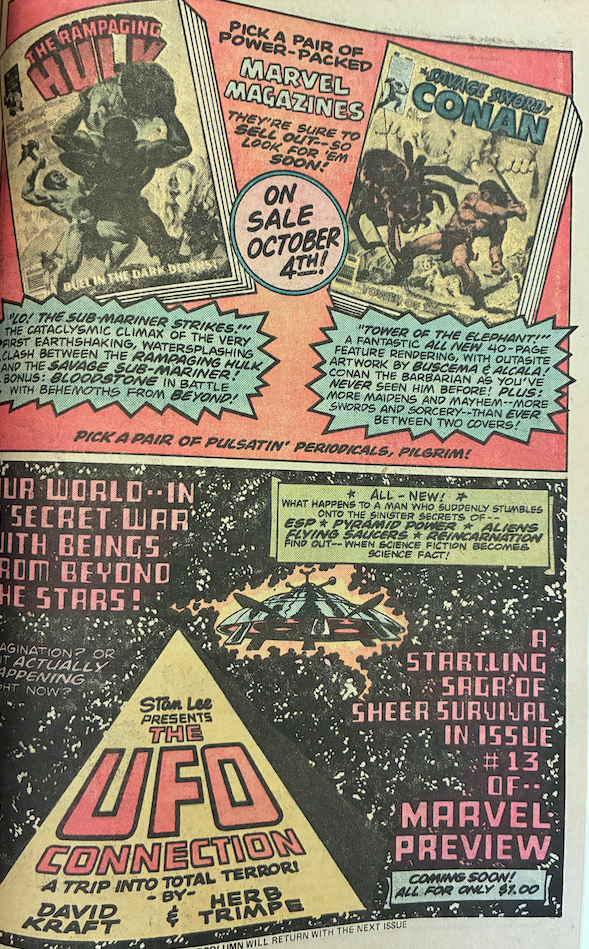
I remember this ad for the Orca movie when I was a kid and thinking it was very exciting. In retrospect it looks a lot like a Jaws rip-off, even if has a decent cast (fwiw, it gets an 11% rating from Rotten Tomatoes). Also, I’m pretty sure I had no idea who Johnny Unitas was when I first saw the ad for Daisy BB guns. Still not sure why he was a pitch-man for these things.


Overall

A fun if flawed comic

“The World’s Greatest Comic Magazine!” Fantastic Four No. 185

17 Sunday Aug 2025

Posted by percivalhenry in The World's Greatest Comic Magazine

≈ Leave a comment

Tags

1977, Fantastic Four, Fantastic Four 185, George Perez, Len Wein, marvel-comics, Salem's Seven

Fantastic Four 185
“Here There Be Witches!”
Published May 1977
Writer: Len Wein
Pencils: George Perez
Inks: Joe Sinnott
Letters: Gaspar Saladino
Colors: Glynis Wein
Editor: Len Wein
Cover: Perez and Sinnott

Synopsis

In search of missing Franklin and Agatha Harkness, the Fantastic Four track their whereabouts to a small town in the Rocky Mountains. Despite several indications that something is amiss, the town seems normal until Harkness alerts the FF to its supernatural nature. The town is then revealed to be a haven for witches and the FF battle stone gargoyles before succumbing to the power of the coven’s leader, Nicholas Trask.


What’s going on here?

This is a solid comic that introduces Nicholas Trask and sets the table for the debut of the Salem Seven, who will appear next issue and in a subsequent annual. Having the FF battle supernatural foes is an interesting idea, since they are very much a science-based team. Over the years Reed, in particular, struggles with sorcery and it creates an intriguing challenge.

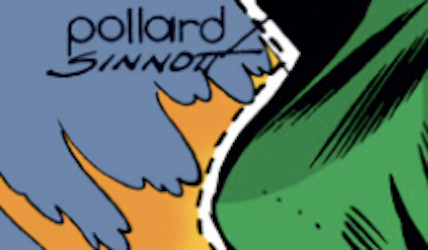
The notable aspect of this comic is the looseness of George Perez’s pencils, and it appears he really only did breakdowns, because Joe Sinnott’s inks really dominate the panels. Here’s an example:


Compared to last issue, which was Perez as the peak of his powers, the difference is jarring. There’s much less detail, the panel designs are less intricate and it’s all a bit bland. My guess is that Perez was still getting used to the demands of a monthly comic, and fell behind, so Sinnott picked up the load for him.

What I liked

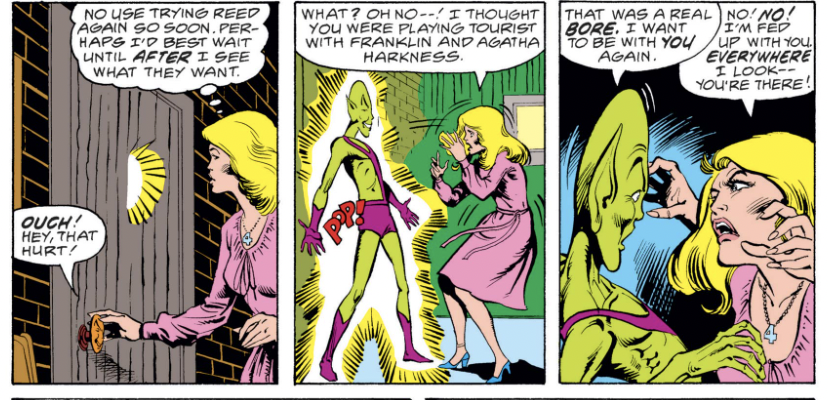
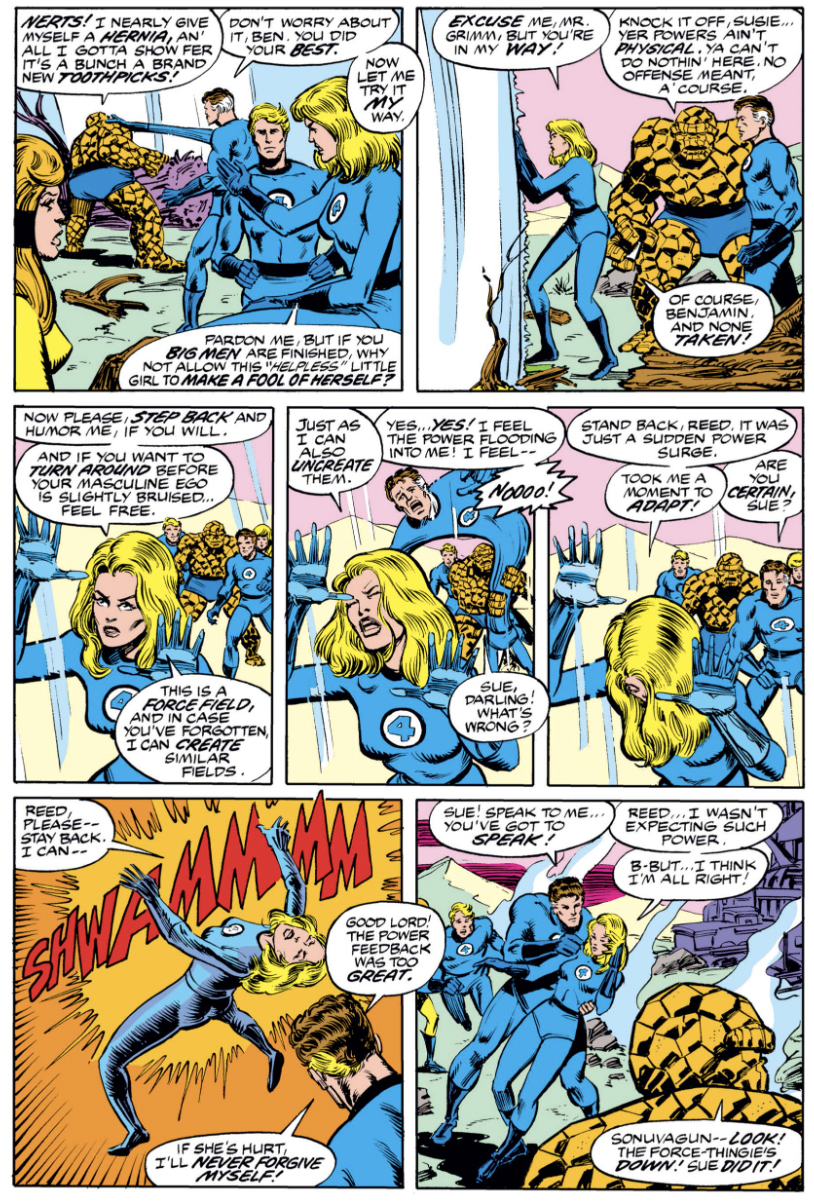
Sue gets a nice action sequence, and it seems like Len Wein sees more potential for her powers than previous writers.


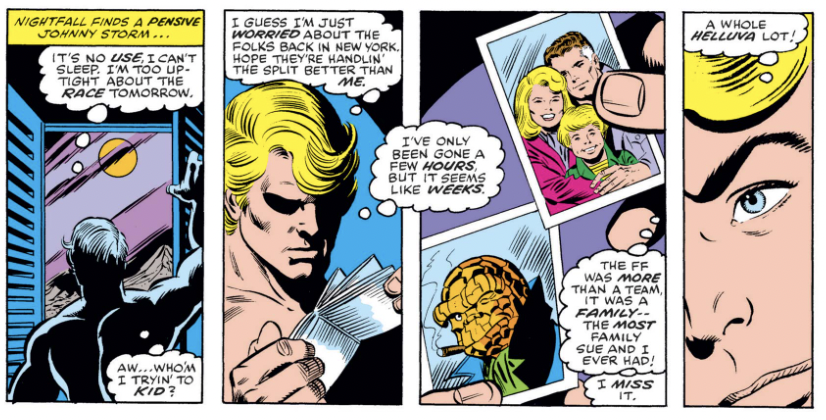
Wein also gives Johnny a speech that, while out of character for the Torch, reads like Wein’s declaration of principles for the FF. (It also feels like it could have been in the new Fantastic Four movie).


I liked this sequence, although it should have been bigger in the comic:


What I didn’t like

Reed seems to think the location where metal is mined is also where it is manufactured. Pretty sure that’s almost never the case.


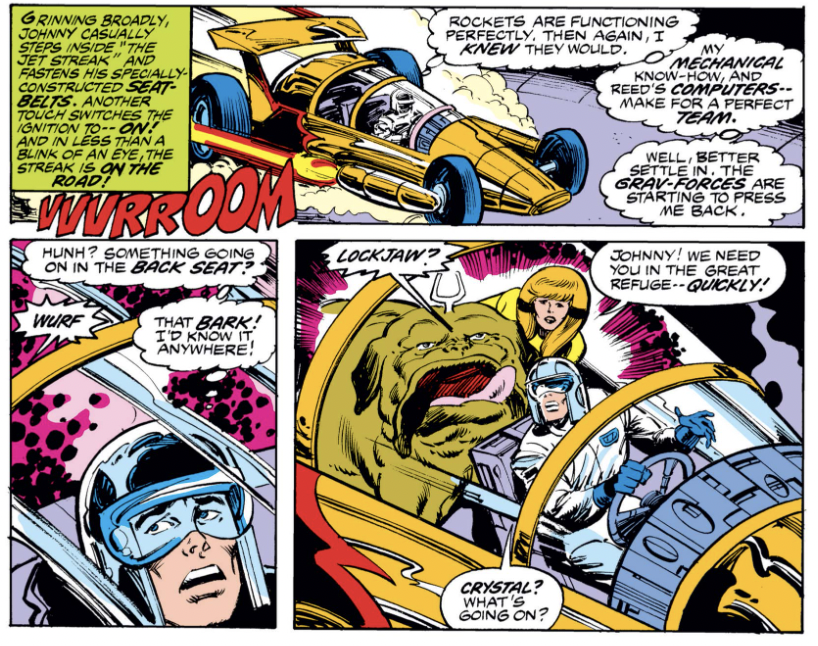
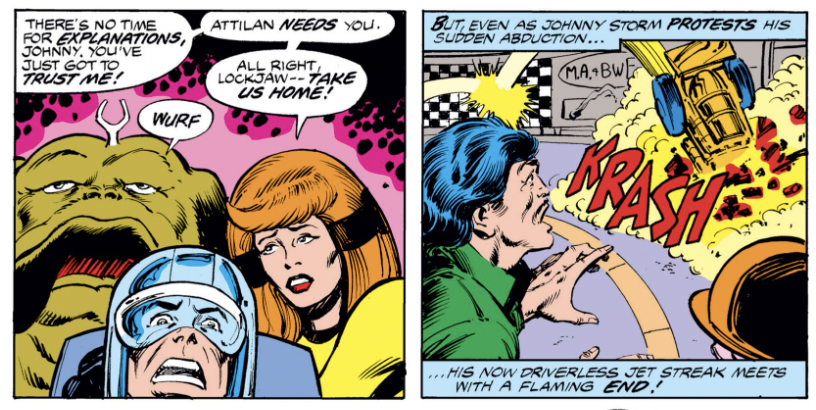
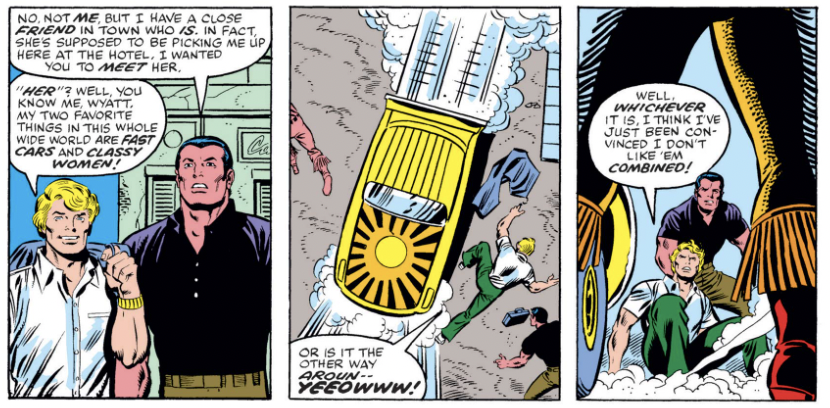
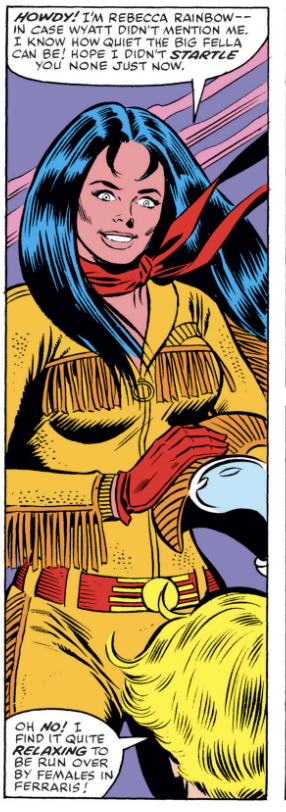
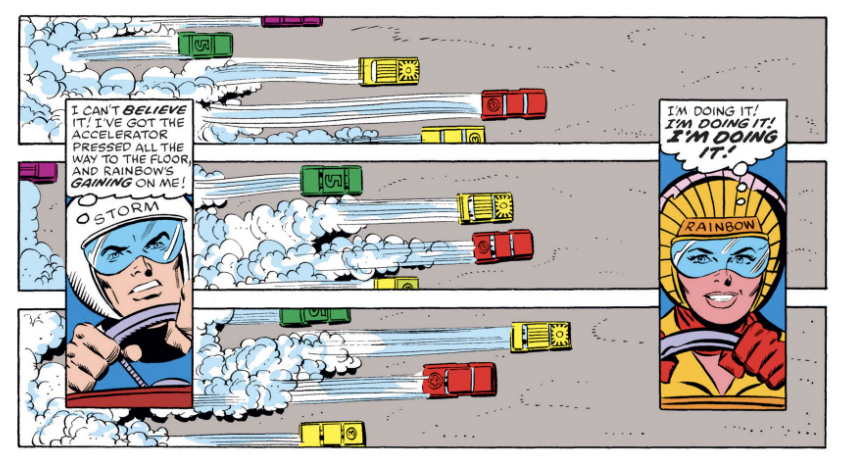
Johnny can apparently assemble a sports car from its parts in a matter of minutes:


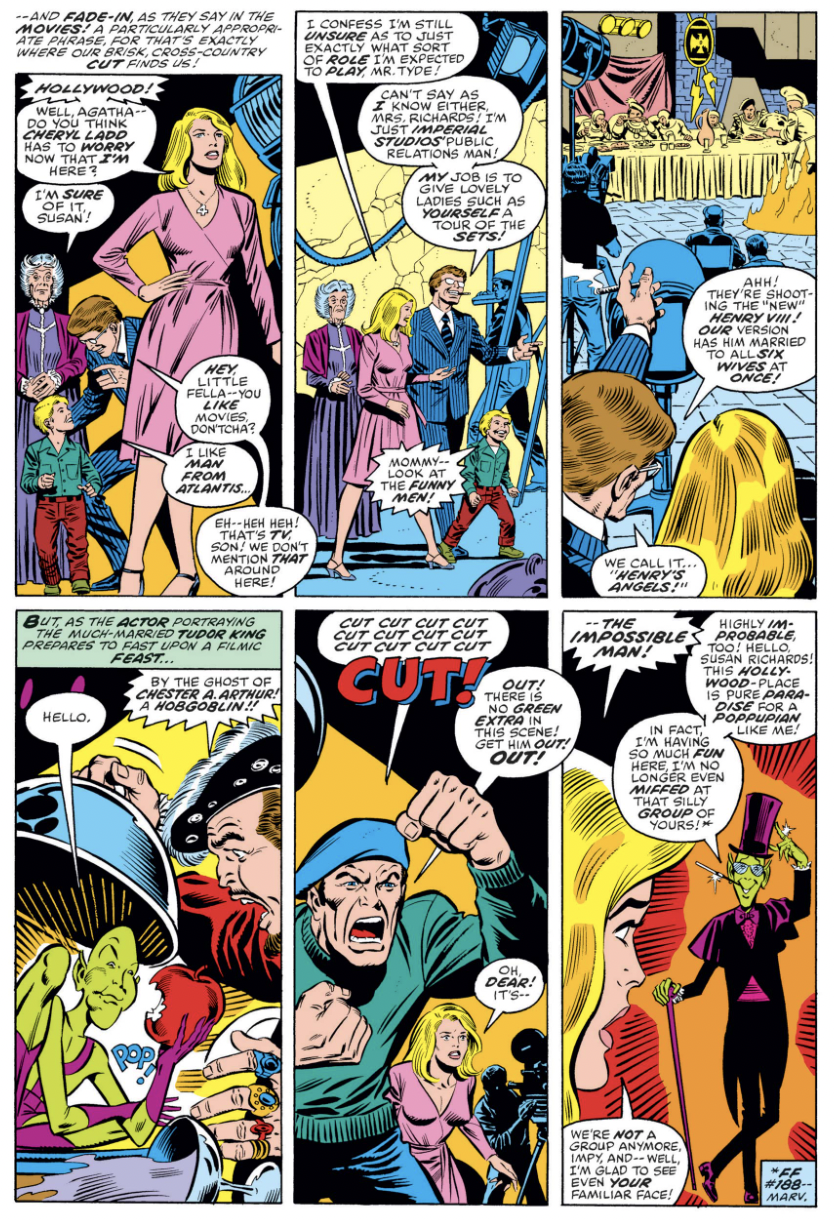
And there seems no getting rid of the Impossible Man:


Overall

A perfectly fine comic, although a let down after last issue

“The World’s Greatest Comic Magazine!” Fantastic Four No. 184

10 Sunday Aug 2025

Posted by percivalhenry in The World's Greatest Comic Magazine

≈ 1 Comment

Tags

1977, Fantastic Four, Fantastic Four 184, George Perez, Len Wein, Marvel comics

Fantastic Four 184
“Aftermath: The Eliminator!”
Published April 1977
Writer: Len Wein
Pencils: George Perez
Inks: Joe Sinnott
Letters: Joe Rosen
Colors: Glynis Wein
Editor: Len Wein
Cover: Perez and Sinnott

Synopsis

The Fantastic Four regroup in the Baxter Building after last issue’s battle, and Sue explains to Reed that Agatha Harkness abducted their son, and then both of them disappeared from her home of Whisper Hill. The Fantastic Four go to investigate, when they are attacked by an armored creature called the Eliminator, which calls itself an enemy of Harkness. The FF trick it into destroying itself, but they are no closer to finding Franklin.


What’s going on here?

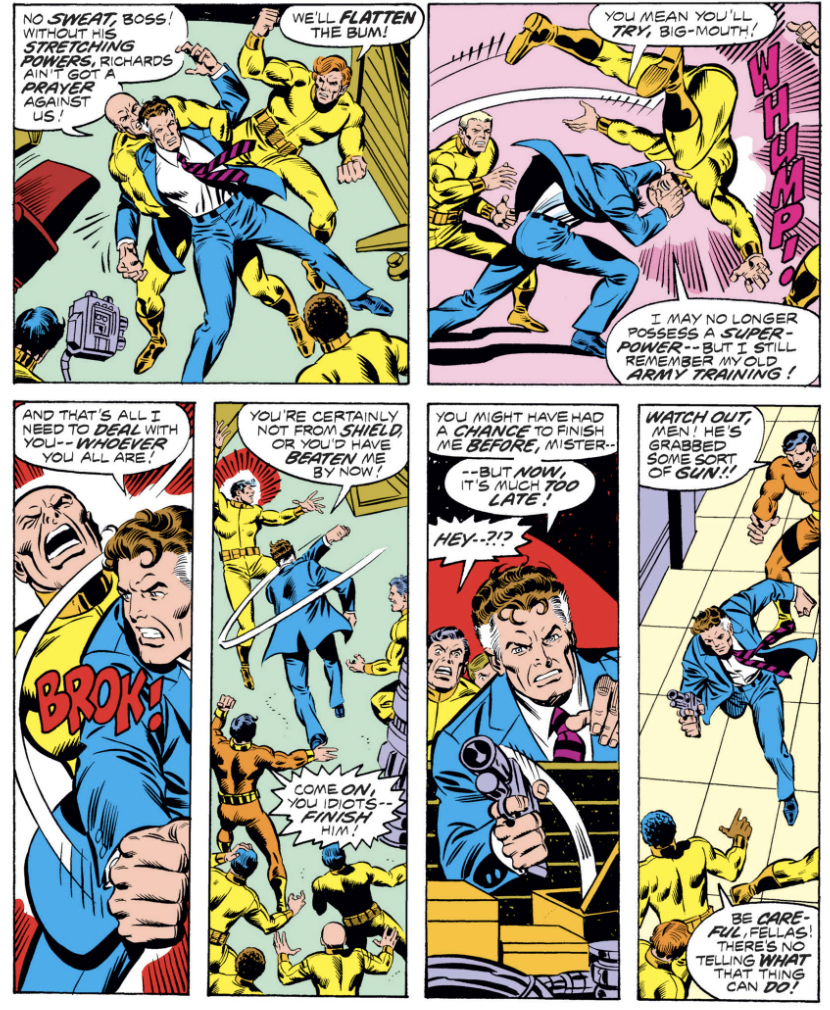
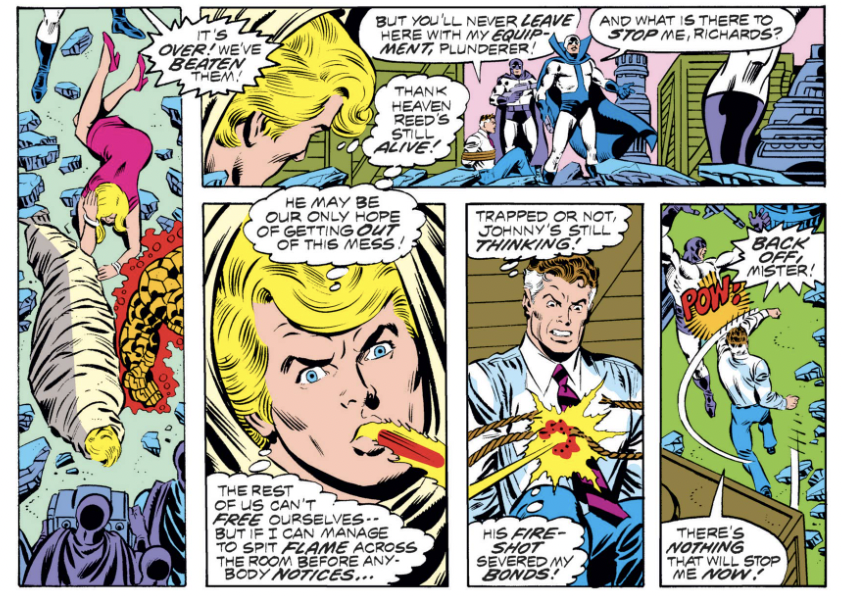
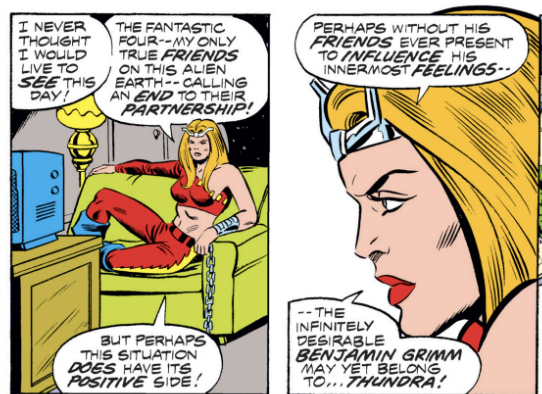
For the last handful of issues, we’ve been promised Len Wein would take over as writer. And now that he finally has … it was worth the wait. I don’t know what his future issues promise, but this one, at least, is one of the best written and enjoyable Fantastic Four comics in quite a while. There’s no real magic to it, and Wein sticks to the tried-and-true Lee / Kirby formula: some Baxter Building hijinx, some interpersonal dynamics among the team and their loved one, followed by a slow build-up toward an action-packed finish. But while it’s a familiar structure, Wein breathes new life into it, scripting a fun love-triangle between Ben, Tigra and Thundra; introducing new introspection to a now-powerless Reed; and crafting a genuinely suspenseful plot that culminates in a fun fight.

Of course, none of it would be half as interesting without the pencils of George Perez, who returns from a five-issue absence and delivers his best work on the Fantastic Four to date. The steadying presence of Joe Sinnott’s inks are still evident, but this issue feels like the first where we can really see Perez’s mature style and his signature combination of exquisite detail and powerful panel designs. It’s a treat to read.

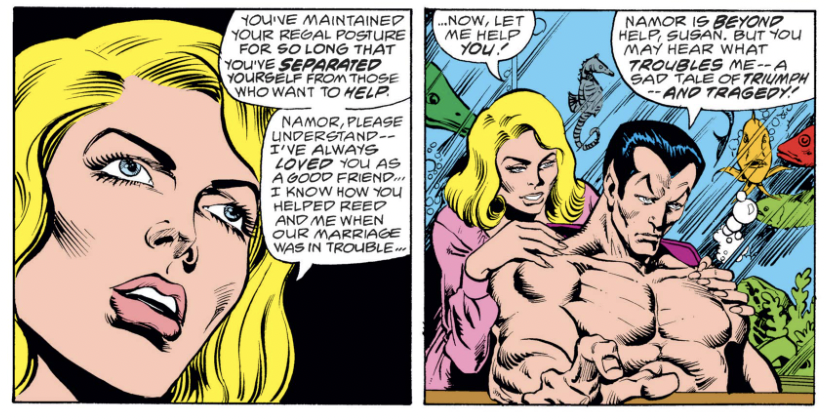
Most notable in this issue is this incredible, 12-panel design spread over two pages, something rare at the time:

Also worth mentioning are the colors turned in Glynis Wein, then married to Len. The Whisper Hill sequences are particularly eerie because of her colors, and I wonder if sharing a home with the writer helped her better understand the story and what Len hoped to convey.

What I liked

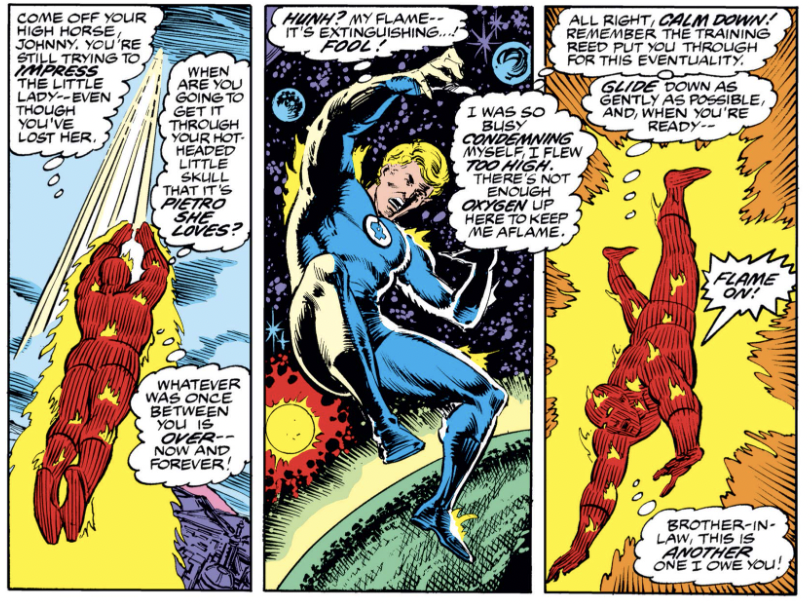
There’s just a ton of great Perez art, like on these pages:


And this is an amazing panel (The Eliminator is a great looking villain, and his speech bubbles are a fun effect):


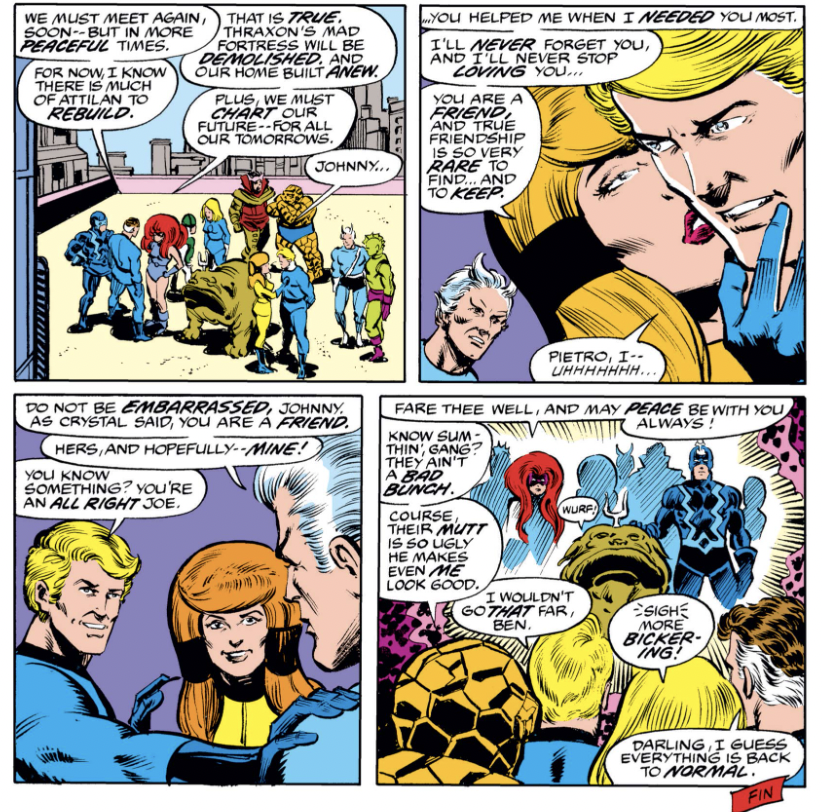
I liked this by-play between Ben, Tigra and Thundra:


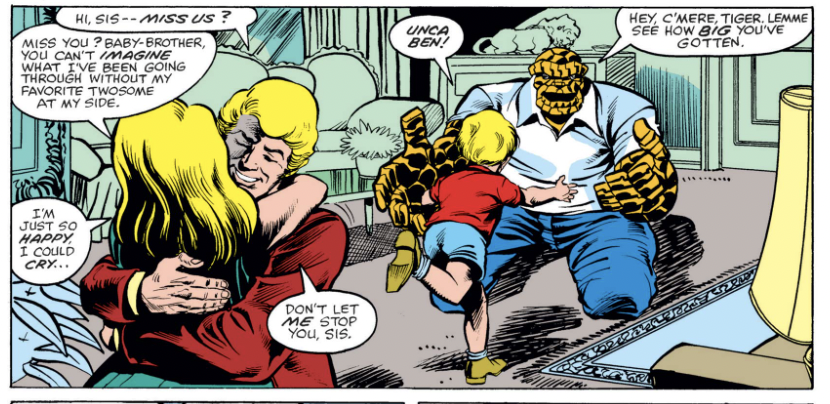
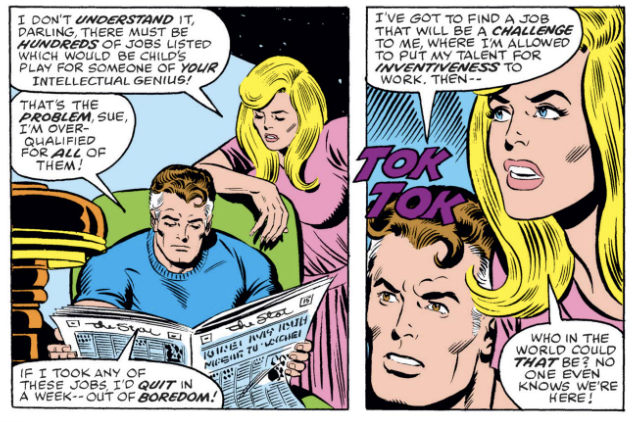
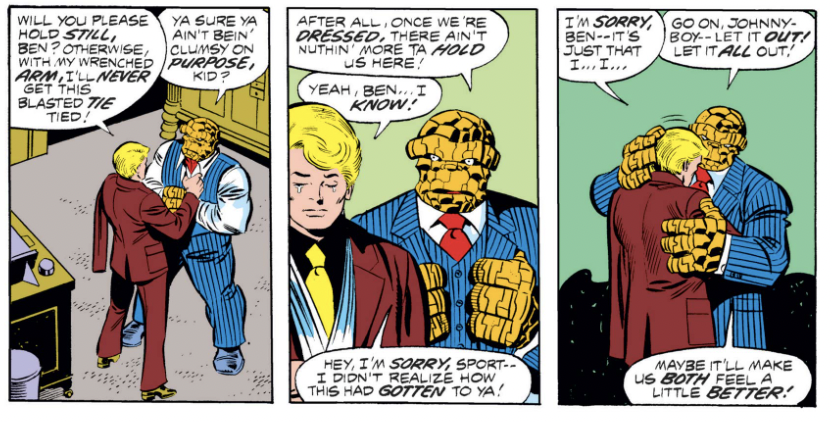
And this scene with Reed and Sue:


What I didn’t like:

The big reveal of how the team fooled the Eliminator wasn’t all that revealing, and didn’t add much to the story.

Also, vacuum vent boots are very convenient way to defeat the Human Torch:


Overall

One of the best since the Kirby / Lee era.

“The World’s Greatest Comic Magazine!” Fantastic Four No. 183

03 Sunday Aug 2025

Posted by percivalhenry in The World's Greatest Comic Magazine

≈ Leave a comment

Tags

1977, Annhilus, Bill mantlo, Fantastic Four, mad Thinker, Marvel comics, Sal Buscema

Fantastic Four 183
“Battle Ground: The Baxter Building!”
Published March 1977
Writer: Bill Mantlo
Pencils: Sal Buscema
Inks: Joe Sinnott
Letters: Gaspar Saladino
Colors: Phil Rachelson
Editor: Archie Goodwin
Cover: George Perez and Sinnott

Synopsis

Tigra, Thundra and the Impossible Man save the Invisible Girl — defenestrated by the Brute (who is an evil Reed Richards from Counter Earth) at the end of last issue — then they all band together to overcome the Baxter Building’s defenses and attack the Brute. Meanwhile, The Thing, the Human Torch and a powerless Mr. Fantastic strike a deal with Annihilus to recover his cosmic control rod from the Mad Thinker’s Android in exchange for the use of his ship to escape the Negative Zone. The story concludes in the Baxter Building, where the Android attacks the Brute, and restores him to human form. The FF arrives, and the Thing snatches the cosmic control rod, rendering the Android inert. The Mad Thinker escapes and the Counter Earth Reed, no longer evil, enters the negative Zone to fulfill the other Reed’s pledge to return the control rod to Annihilus.


What’s going on here?

This issue marks yet another where a complicated, multi-part storyline ends with a whimper, not a bang. It’s hard to blame writer Bill Mantlo, who was handed this mess by a departing Roy Thomas, and who had to tie it up in a way that made some sense. But all the various plot threads introduced over the last four issues turned out to be easily, and in some cases lamely, resolved. Annihilus? Becomes an ally, then disappears from the story. The Android? Quickly defeated by Ben. The Mad Thinker? Skulks off without ever confronting the FF. Evil Reed? Miraculously cured of his evilness and, much like the nameless villain in issue 51, makes amends by plunging into the Negative Zone. The only loose end seems to be the Impossible Man, who wanders off mid comic.

For Mantlo, being given a thankless assignment was nothing new. He earned a reputation as an emergency fill-in guy, who could quickly churn out a story after the regular writer dropped the ball. It kept Mantlo busy and employed, but as I explored in my 2017 article about Mantlo’s tragic life, it meant he was often overlooked for more interesting work. He eventually quit comics to become a lawyer, only to suffer a massive head injury in a roller blading accident, never to fully recover.

Again filling on pencils this issue was Sal Buscema, adding to the ad-hoc feel of the comic. The “regular” creative team — although they have yet to produce an issue together — of Len Wein and George Perez takes over next issue with a clean slate, thanks to Mantlo and Buscema. (Perez did return for this issue’s cover, but it’s almost unrecognizable as his).

What I liked

The highlight of the comic was the team-up of Sue, Thundra and Tigra. As written by Mantlo, they have three distinct personalities, making for fun interactions. And led by Sue, they also rose to the occasion by fighting their way in the Baxter Building.


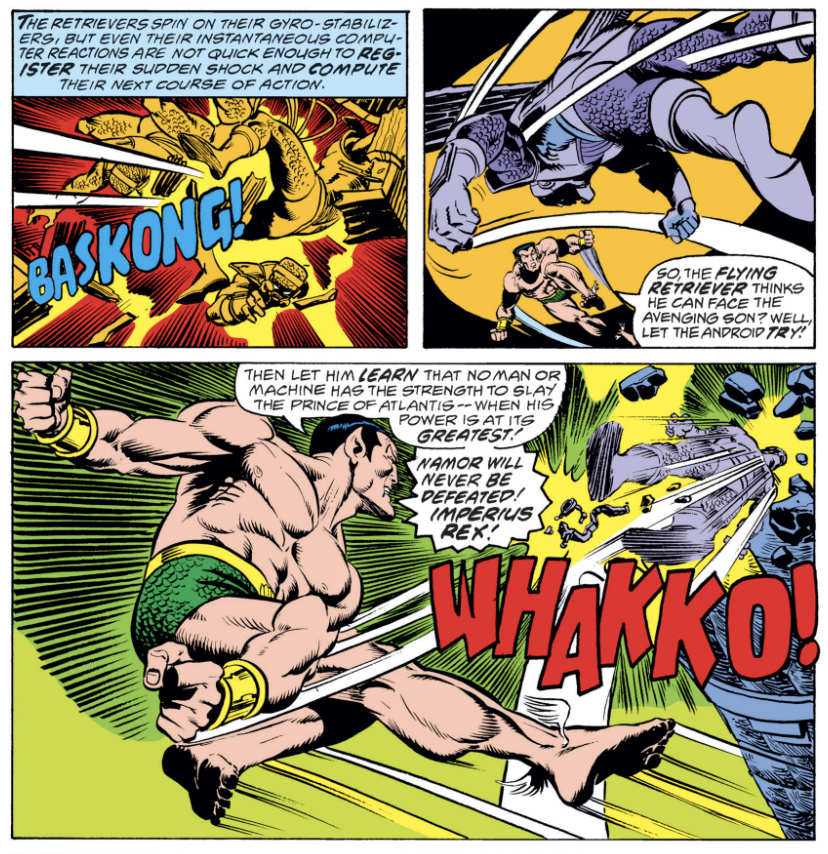
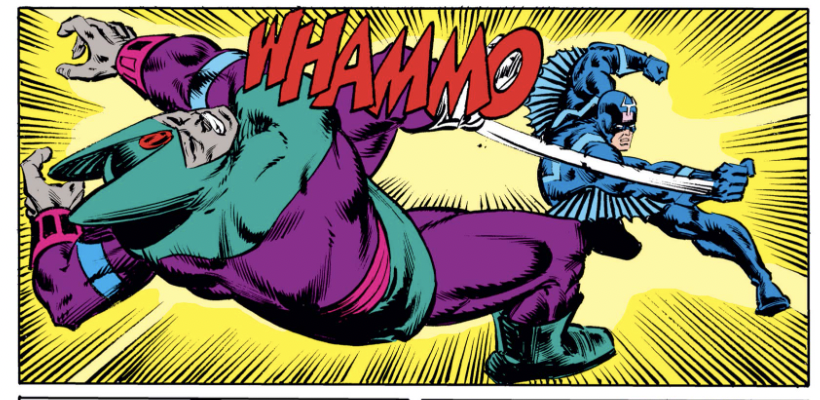
I am on the record as being unenthusiastic about Sal Buscema’s art, which is workmanlike without ever being very exciting. But I have to admit, the man can draw a punch.


What I didn’t like

As previously stated, much of this issue suffers from anti-climax or deus ex machina resolutions. The sudden reversion of the Brute to evil Reed by the Andoid’s cosmic rays is one example.


Another is his “cure” from being a bad guy:


Also aggravating, and taking up far too much of this comic to bother reproducing, is the convoluted explanation of the Android’s origins. While it clears up some of the confusion from last issue, it also feels like a cobbled-together explanation to tie the Mad Thinker to Annhilus and tie up the loose ends Thomas began.

Lastly, I am very weary of titles that involve some combination of “Battle” and Baxter Building.”

Overall

An unfortunate pratfall.

Very Short Review: Fantastic Four: First Steps (2025)

27 Sunday Jul 2025

Posted by percivalhenry in Very Short Review

≈ 2 Comments

Tags

2025, Fantastic Four, Fantastic Four: First Steps, galactus, marvel cinematic universe, Silver Surfer


Warning: spoilers below

As a longtime fan-slash-collector-slash-blogger of the Fantastic Four, I had anticipated the new movie — the first FF film produced by Marvel Studios — with a mix of optimism and dread. Optimism because Marvel understands its own characters and generally does right by them, even if they veer off from the original source material of the comics. Dread because the three previously released FF movies ranged from mediocre to terrible, dread because the trend of recent Marvel movies has been decidedly downward and dread because the universe doesn’t want us FF fans to have nice things.

I am pleased to report that the dread was misplaced and the optimism justified. The movie wasn’t perfect, and there are lots of things for fans of the comic to quibble about, but it got the main things right: The Fantastic Four are a family, they are scientists and explorers, and in contrast many costumed heroes, their identities are very public.

Unlike other adaptations, the movie doesn’t start with their origins on an ill-fated space flight, but takes up their story four years later. They are at this point established heroes, universally beloved, and Reed and Sue are expecting their first child.

The story is roughly based on the Fantastic Four’s first encounter with the world devourer, Galactus, from issues 48-50, but with many significant differences. There is no Watcher warning the team (and violating his oath not to intervene in human affairs), there is no ultimate nullifier, the Silver Surfer doesn’t discover the goodness in humanity via blind sculptor Alicia Masters (who puzzlingly is not in the movie) and Galactus doesn’t vow to leave Earth alone. But in many ways, this version is just as good as the Stan Lee / Jack Kirby original. Once warned of his approach by the Silver Surfer (who is unnecessarily gender swapped in the movie), the team flies into space to confront Galactus. This cinematic Galactus is vast and terrifying, and the offer he makes the Fantastic Four to spare Earth — Reed and Sue must hand over their unborn son, whose powers are enormous — creates an agonizing dilemma for the team.

Unfortunately, that sequence — and the subsequent birth of Franklin while the FF flee the Surfer — mark the high point of the movie. For the remainder of the film the team struggles with ways to thwart Galactus’s plan while conscious that their choice to protect Franklin endangers all of humanity. The final confrontation, where the team tries to bait Galactus into a teleportation device, seems a bit too obvious a plan for the world’s smartest man. But it is Sue who ultimately defeats the bad guy, creating a satisfying reversal from her Lee / Kirby depictions as the team’s weakest member to now its strongest.

Much as been made of the retro-futuristic world this story is set in, and in many ways it’s the logical place to stage this movie. It pays homage to the Fantastic Four’s 1960s origins, it means the film can reference villains like the Red Ghost and his Super-Apes without appearing (too) ridiculous, and it creates a bubble of isolation from the rest of the Marvel Cinematic Universe, so this story can be told without wondering why Iron Man isn’t lending a hand. But it’s also frustrating choice, because it’s the same one so many comic creators make. They are so smitten with the Lee / Kirby past they seem to forget that the Fantastic Four is about the future. Hopefully the next film appearance of the FF escapes that trap.

Despite that failing, there’s a lot to like. The performances are excellent, the characters feel both real and true to the comic, and the family dynamic that makes the FF unique is at the center of the film. The movie also includes a nice homage to Kirby, a much-belated official recognition of his contributions to the Marvel Universe.

This movie version of the Fantastic Four isn’t the same as the one in the comics, but that’s OK. If we’ve learned anything after 60 years and nearly a thousand issues, there are lots of ways to tell a great Fantastic Four story.


“The World’s Greatest Comic Magazine!” Fantastic Four No. 182

27 Sunday Jul 2025

Posted by percivalhenry in The World's Greatest Comic Magazine

≈ Leave a comment

Tags

1977, Fantastic Four, Fantastic Four 182, negative Zone, Sal Buscema

Fantastic Four 182
“Enter: The Mad Thinker!”
Published February 1977
Plot: Len Wein, Archie Goodwin and Jim Shooter
Script: Bill Mantlo
Pencils: Sal Buscema
Inks: Joe Sinnott
Letters: John Costanza
Colors: George Roussos
Editor: Goodwin
Cover: Ron Wilson and Sinnott

Synopsis

The Thing returns the bank-robbing android to the Baxter Building, and the evil Reed Richards doppleganger claims it comes from the Negative Zone, sending Ben and Johnny there ostensibly to investigate but in fact to strand them with the real Reed. In the Negative Zone, they encounter Reed and Annihilus battling a giant android, and after a brief battle, they flee and realize that they’ve been fooled by the evil version of Reed. The android vanishes, and it is revealed it is being summoned back to our dimension by its creator, the Mad Thinker. Meanwhile, Sue and Alicia travel to Agatha Harkness’s home on Whisper Hill to retrieve Franklin, only to witness the the child and his nanny abducted by mysterious, apparently supernatural creatures. Back home, Sue confronts the evil Reed, who turns into the Brute, and after a brief battle, throws her out of a Baxter Building window.


What’s going on here?

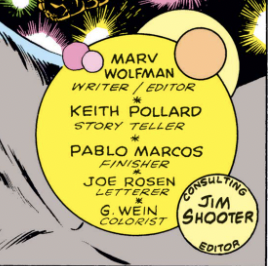
This issue is jammed full of plots and sub-plots, and coheres fairly well, despite it being the product of four (!) writers, including the FF debut of Jim Shooter. While Shooter was never a regular FF writer, he had a big impact on the comic as Marvel editor-in-chief from 1978 to 1987. He sadly passed away earlier this month at age 73.

Why so many writers were needed is unclear, although last issue Roy Thomas suggests he made an abrupt departure from the FF, leaving incoming editor Archie Goodwin in the lurch. Also filling in is penciler Sal Buscema, Marvel’s ultimate journeyman penciler, making his Fantastic Four debut. Buscema, younger brother of John, would contribute a few more fill-in issues before taking over as semi-permanent penciler in 1986. And Ron Wilson penciled the cover.

There are so many creators for this issue that it appears they only added credits for the letterer and colorist as an after thought:


It’s no secret Marvel was in a state of editorial flux, if not chaos, in the late seventies and the revolving door of creators during this stretch of comics is certainly evidence of a lack of stability. In the four issues from 178 to 182—and not including 180, a reprint of issue 101 (and more proof of the upheaval) the Fantastic Four was credited with six writers, three pencilers, two inkers, two editors and four cover pencilers.

What I liked

Sue finally confronted the evil Reed, a satisfying resolution to an uncomfortable storyline.


I also liked this elegant solution that established that the Reed on Earth was in fact the evil version.

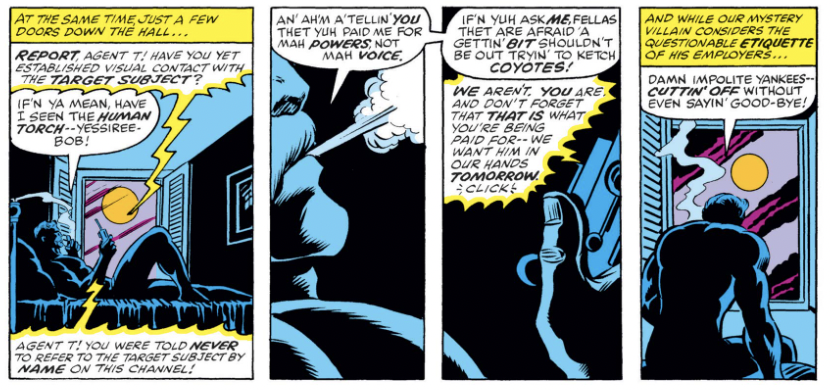
This scene was appropriately unnerving:


As was this:


What I didn’t like

This vignette with the Mad Thinker was deeply confusing, in part because issue 69 (discussed here) doesn’t really explain what’s going on.


Even after Sue recovers some agency and confronts evil Reed, she’s easily battered about and defeated by the Brute:


Overall

A perfectly fine issue, particularly given the disruption on the masthead.

“The World’s Greatest Comic Magazine!” Fantastic Four 181

20 Sunday Jul 2025

Posted by percivalhenry in The World's Greatest Comic Magazine

≈ Leave a comment

Tags

1977, Annihilus, Fantastic Four, Fantastic Four 181, Marvel comics, negative Zone, Roy Thomas

Fantastic Four 181
“Side By Side with … Annihilus??”
Published January 1977
Writer: Roy Thomas
Pencils: Ron Wilson
Inks: Joe Sinnott
Letters: Joe Rosen
Colors: George Roussos
Editor: Thomas
Cover: Jack Kirby and Sinnott

Editor’s note: The previous issue, FF 180, was a reprint of FF 101, so this comic picks up the story from issue 179

Synopsis

Mr. Fantastic, exiled to the Negative Zone by his evil doppelgänger, is attacked by Annihilus, who eventually admits he needs Reed’s help in defeating the Mad Thinker, who is attempting to conquer the Negative Zone. The rest of the issue is taken up by various subplots which are either advanced or introduced, and will be discussed below.


What’s going on here

This is very much a place-setting issue, with the main storyline — Reed in the Negative Zone —inching along, and a whole of space is devoted to four other narratives. This issue also happens to be Roy Thomas’s last as writer, and in an editor’s note he almost gleefully announces he is handing over this mess to his successor, Len Wein (and in fact next issue is written by four writers). Thomas, who wrote 32 issues of the title in the 1970s, won’t return to the FF until 1995, when he writes something called Fantastic Four Unlimited.

Thomas finishes his run as the writer with, to date, the second or third longest tenure writing the FF, depending how you want to count Stan Lee’s solo writing efforts. Not counting annuals and the like, here is how it breaks down (occasionally two writers are given credit for the same story):

Stan Lee and Jack Kirby: 102 issues
Thomas: 32 issues
Lee solo: 11 issues
Gerry Conway: 20 issues
Len Wein: 3 issues
Archie Goodwin: 3 issues
Tony Isabella and Bill Mantlo: one each

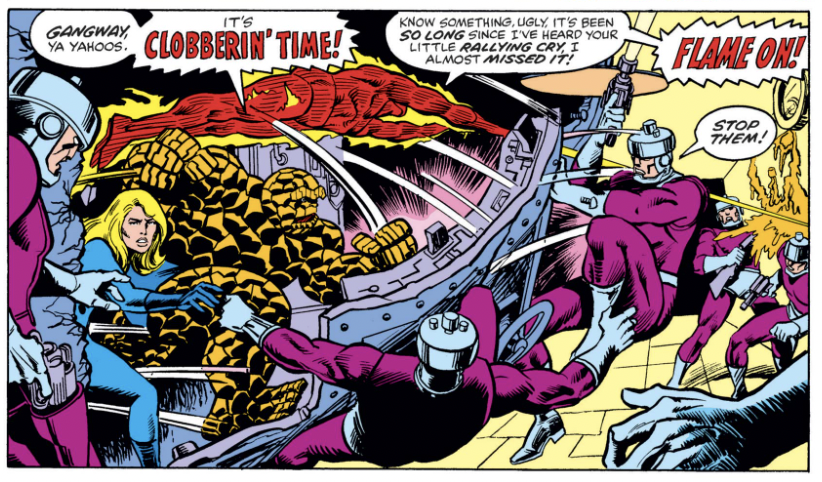
The art was again handled by Ron Wilson, who does a workman-like job filling for George Perez. It’s unclear if the editor’s note announcing Perez’s absence is meant to be taken seriously.


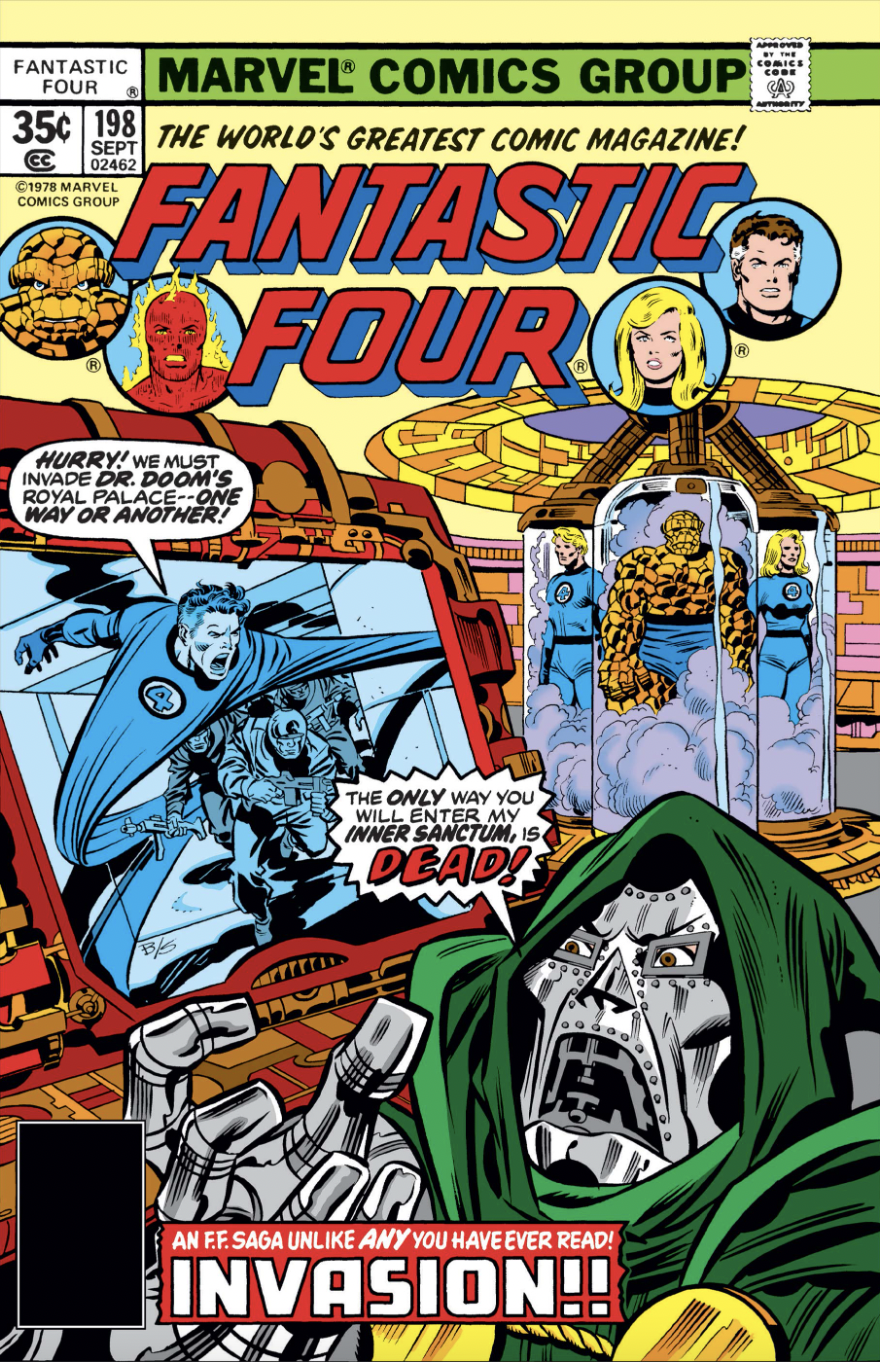
The cover, by Jack Kirby and Joe Sinnott, is pretty generic, probably because they used the story-specific one last issue.


What I liked and didn’t like

Instead of my usual likes and dislikes commentary, I’m going to discuss the various plots in this issue in order of my interest in them:

1, The Creepy Evil Reed

This storyline continues to give me the willies, as an evil Reed is sharing a home (and bed) with Sue. At least in this issue she realizes it’s not really her husband, but it’s definitely an icky idea.


2, Reed in the Negative Zone

Despite the absurdity of its various elements (Annihilus just happens to stumble upon Reed floating on a rock in the middle of nowhere), a villain needing Reed’s help is an intriguing concept. The monster animated by the Mad Thinker looks pretty lame though.


3, Agatha and Franklin

This came out of nowhere. While Sue visits Alicia, who is babysitting Franklin, to discuss her suspicions about Reed, Agatha Harkness appears and kidnaps Franklin for reasons unknown. Sue then sets off in pursuit. I suspect this will tie into a Salem’s Seven story coming later, but we’ll see. Either way, it’s unsettling.

4, About that robot …

Much of this issue is devoted to Ben — with the eventual help of Tigra, Thundra and the Impossible Man — retrieving from the ocean the bank-robbing robot he defeated in issue 179. The heroes then fight the military which the claims the robot for their own, then relent when they discover there’s more to the robot than meets the eye. I don’t know where this is going, but at least the robot now has a backstory.


5, Frankie and Johnny

Johnny once again acts like a jerk around women. Maybe it’s because I know how this relationship ends, but it’s not all that interesting to me.


Anything else?

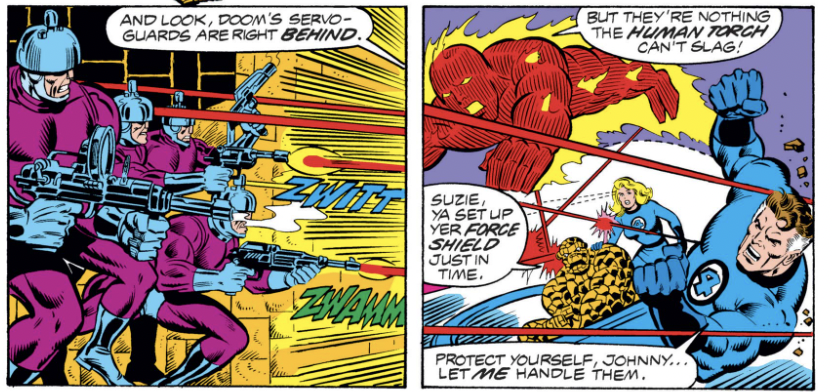
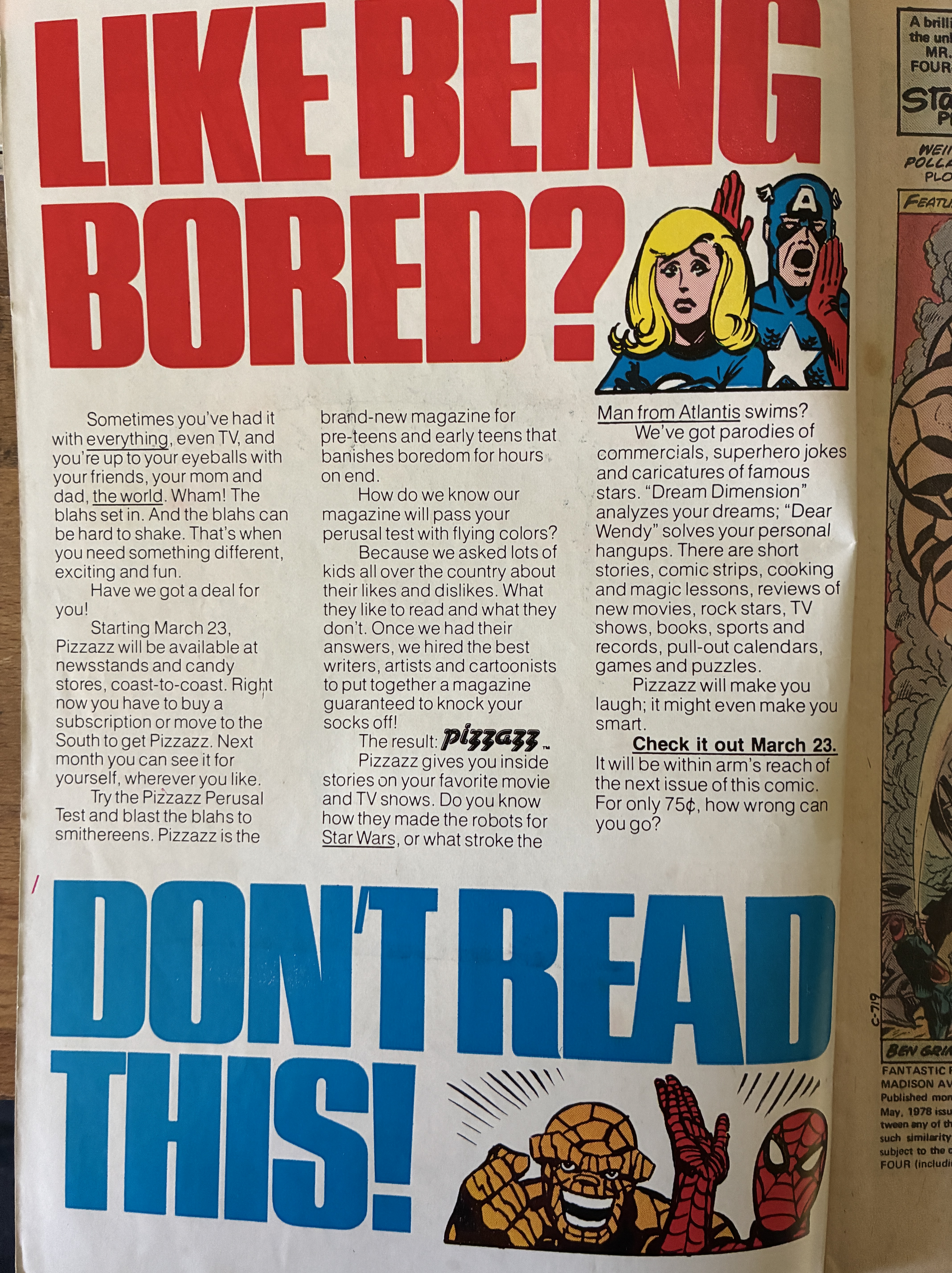
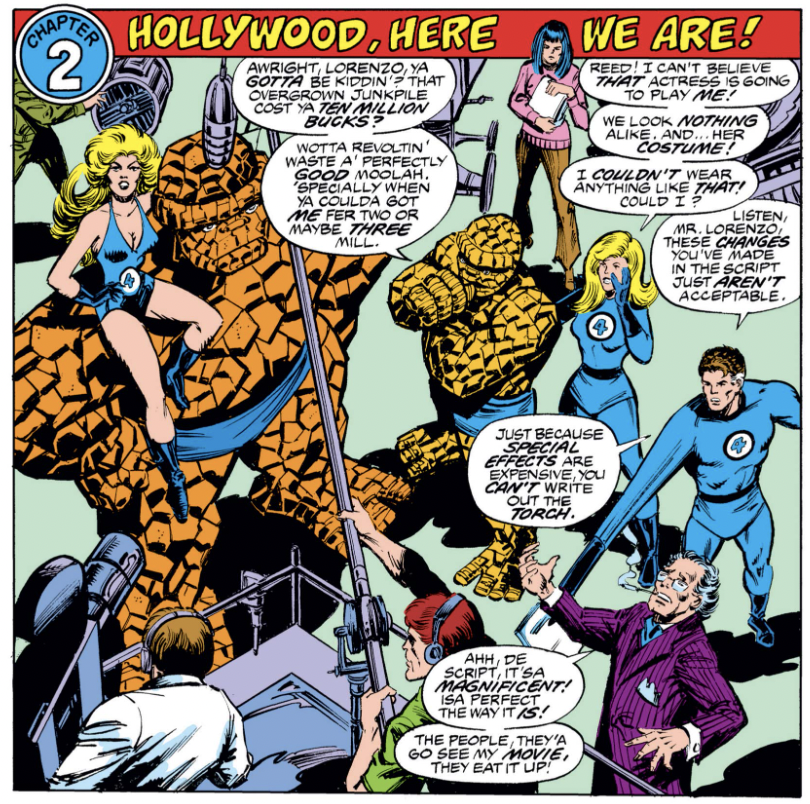
This is the first ad for a movie I recall seeing in the Fantastic Four (also, this comic came out in January, a full year before King Kong would debut). They will appear more often in the years that follow.


Overall

A lot of spinning plates

“The World’s Greatest Comic Magazine!” Fantastic Four No. 180

20 Sunday Jul 2025

Posted by percivalhenry in The World's Greatest Comic Magazine

≈ Leave a comment

Tags

Fantastic Four, Fantastic Four 180, jack Kirby, Stan Lee

Fantastic Four 180
“Bedlam in the Baxter Building!” (reprinting FF 101)
Published December 1976
Story: Stan Lee and Jack Kirby
Script: Lee
Pencils: Kirby
Inks: Joe Sinnott
Letters: Artie Simek
Cover: Kirby and Sinnott

What’s going on here?

This issue is a reprint of Fantastic Four 101 (previously discussed here), with the only modification as far as I can tell an editor’s note claiming deadline trouble prevented Marvel from publishing a new comic. Unfortunately, the cover, by Jack Kirby and Joe Sinnott, is new and appears to continue the story begun a few issues ago, so any reader who bought this issue of the stands probably felt like the victim of a bait and switch. I’m including the comic here because of the Kirby cover, and because I hate the idea of not accounting for every issue. Hopefully readers of this blog won’t also feel ripped off. The recap of issue 181 will follow shortly.

“The World’s Greatest Comic Magazine!” Fantastic Four No. 179

13 Sunday Jul 2025

Posted by percivalhenry in The World's Greatest Comic Magazine

≈ Leave a comment

Tags

1976, Fantastic Four, Fantastic Four 179, Gerry Conway, Marvel comics, negative Zone, Ron Wilson, Roy Thomas

Fantastic Four 179
“A Robinson Crusoe in the Negative Zone!”
Published November 1976
Writers: Roy Thomas/ Gerry Conway
Pencils: Ron Wilson
Inks: Joe Sinnott
Letters: Joe Rosen
Colors: George Roussos
Editor: Thomas
Cover: Al Milgrom and Sinnott

Editor’s note: Apologies for the two week absence. It’s summer vacation season!

Synopsis

While Mr. Fantastic is trapped in the Negative Zone, his evil doppleganger infiltrates the Fantastic Four. Tigra—who is hanging around the team along with Thundra and the Impossible Man—has her suspicions, but before she can reveal them to the Thing, the two fight and defeat a giant bank-robbing robot. The comic ends with Reed about to confront Annihilus in the Negative Zone.


What’s going on here?

This is an odd issue, one that interupts the momentum of the recent arc and contains a lot of character development and banter but not much plot. That may be because of the divided authorship, with Gerry Conway returning to plot the comic. The battle with the robot — called Metalloid on the cover but never identified in the issue — seems to serve no real purpose other than to insert an obligatory fight scene, although it may play a larger role in the next few issues. What stands out is the interactions between Johnny, Tigra, Thundra and Ben, and Ben’s obvious discomfort at being an object of attraction. Also of note is the very creepy dynamic between Sue and the imposter Reed.

The credits for this issue are peculiar:

This was Conway’s first FF credit since issue 152. For this month alone, Conway is credited with writing eight (!) comics for two companies: Ms Marvel 2, Ghost Rider 22, Superman 308, Avengers 156, Defenders 44, Iron Man 95 and Spectacular Spider-Man 3, along with this issue of the FF. Why they called on the busiest man in comics to plot this issue doesn’t make much sense, but from the lack of coherent story it’s pretty clear Conway was overstretched.

This issue also marks the Fantastic Four debut of Ron Wilson, who handled the pencils. Wilson would only draw a handful of FF issues, but would have a very long run drawing the Thing in Marvel Two-in-One and the Thing’s subsequent solo book. The cover was drawn by Al Milgrom, using a very Kirby-esque design. Milgrom inked an earlier issue but this is his first FF cover.

What I liked

The scenes of the FF hanging out with their guests are genuinely fun. Johnny flirting with Tigra, Tigra swatting him down, Thundra’s pursuit of Ben, and Ben’s unease with her.

(What’s unclear is who among the writers speaks Yiddish, or if any readers understodd the reference to the “whole magilla.”)

The team then adjourns to watch the Bionic Woman:


This is a great splash page from Wilson:


What I didn’t like:

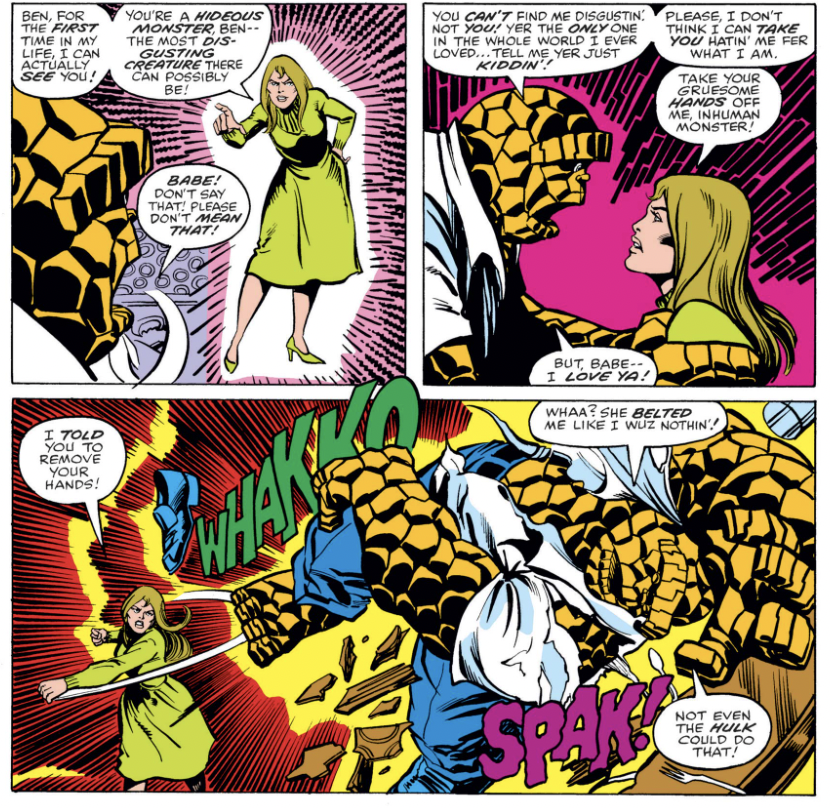
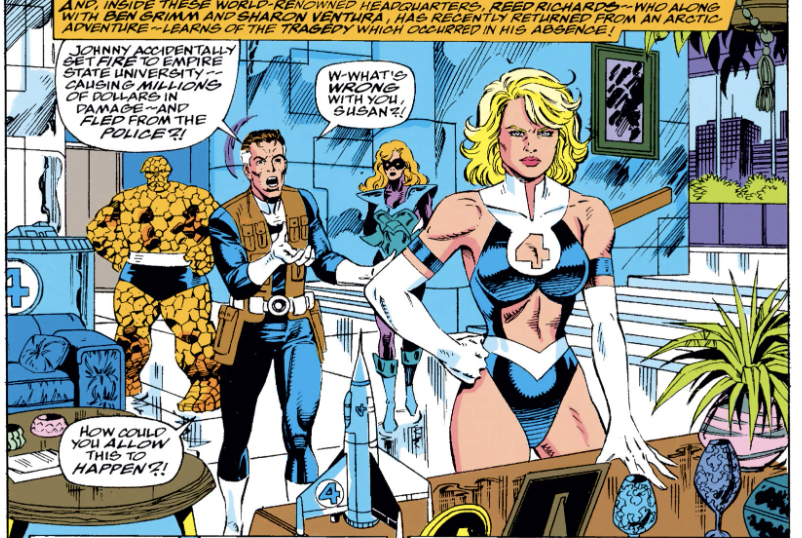
It’s implied that the imposter Reed sleeps with Sue, which today can only be understood as rape. It’s not exactly swept under the rug here, but the magnitude of the crime isn’t made clear, either. We’ll see if it’s addressed more fully in subsequent issues:


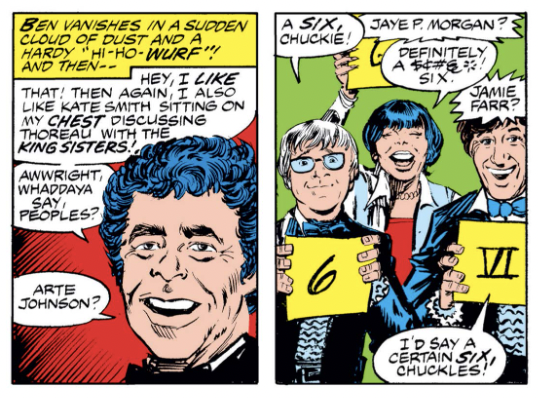
Less seriously, there’s a bit too much fourth-wall breaking by Thomas:


And this reference to Bruce Wayne wasn’t very subtle (or in character for Reed):


Lastly, this is pretty silly. Flint can create a spark, but it’s a stone and doesn’t burn:


Anything else?

Here’s a look at the Marvel masthead, the first time I recall seeing this printed:

Lots of familiar names.

This is a cool looking toy:


Overall

A decidedly mixed bag


“The World’s Greatest Comic Magazine!” Fantastic Four No. 178

22 Sunday Jun 2025

Posted by percivalhenry in The World's Greatest Comic Magazine

≈ Leave a comment

Tags

1976, Fantastic Four, Fantastic Four 178, Frightful Four, George Perez, Marvel comics, Roy Thomas

Fantastic Four 178
“Call My Killer — The Brute!”
Published October 1976
Writer: Roy Thomas
Pencils: George Perez
Inks: David Hunt
Letters: Joe Rosen
Colors: Hunt
Editor: Thomas
Cover: John Romita and Joe Sinnott

Synopsis

The Thing is retrieved from the Negative Zone and captured by the Frightful Four alongside the rest of the Fantastic Four, Tigra and Thundra. The villains announce a billion dollar ransom for the team, but the city of New York is unable to deliver and the team faces death when the Impossible Man coincidentally pulls the plug on the Baxter Building’s power, freeing the heroes. They defeat the Frightful Four and the evil Reed Richards of Counter-Earth is apparently exiled to the Negative Zone — but it is revealed that it’s the real Reed, and the evil Reed has secretly infiltrated the Fantastic Four.


What’s going on here?

If last issue was an example of a successfully whimsical issue, this one is a successful return to classic adventure storytelling. There are some gags, but it’s mostly a taut, action-packed issue that delivers on the implicit promise of all Fantastic Four comics. The evil Reed / Brute plot creates suspense and the rest of the Frightful Four are just menacing enough to be compelling villains. Roy Thomas has struggled to stick the ending of his previous multi-part story arcs—which unfortunately tend to end with a whimper, not a bang—but I’m hopeful the payoff of this one will match the buildup.

This issue again features excellent George Perez pencils, and unusually, he’s inked not by Joe Sinnott but Dave Hunt (who also colored this issue). For better or worse, Sinnott had been inking the FF for more than a decade by this point and no matter the penciler, he brought a uniform, consistent look to the comic. Under Hunt’s inks, Perez’s pencils look lighter and crisper, and it’s a preview of what we will come to see from him on New Teen Titans, where he was inked by Romeo Tanghal.

I’m not that familiar with Hunt, who had a 30-year career as an inker, letterer and colorist. He seems like a classic comic journeyman. Also of note is the return of John Romita as cover artist (inked by Sinnott). He was then serving as Marvel’s art director, and I suspect he came to the rescue as an emergency fill-in.

What I liked

There’s a great fight scene in this comic, brilliantly choreographed by Perez, with the Fantastic Four and Frightful Four trading partners. It’s a lot of fun.


This issue also featured an amusing tour of politicians responding to the Frightful Four’s ransom demands. Often real politicians in comics are only alluded to but here it’s quite explicitly Abe Beame who is the mayor. The others are pretty obvious too. Ford’s comment is a reference to Washington’s refusal to bail out New York in 1975 (“Ford to City: Drop Dead”). Note this issue came out the weeks before the 1976 presidential election.


As mentioned, the business with evil Reed-slash-the Brute is pretty effective. This is a powerful sequence from Perez:


And while the switcheroo at the end was a bit predictable, it lends itself to a nice cliffhanger:


And I really liked this exchange between Ben and Reed, which reveals the family dynamic that’s at the core of the FF:


What I didn’t like

The issue opens with Ben drifting in the Negative Zone, but is instantly transported back to the Baxter Building with no real explanation. It suggests Thomas didn’t really have a plan after last issue and was making it up as he went along.


Anything else?

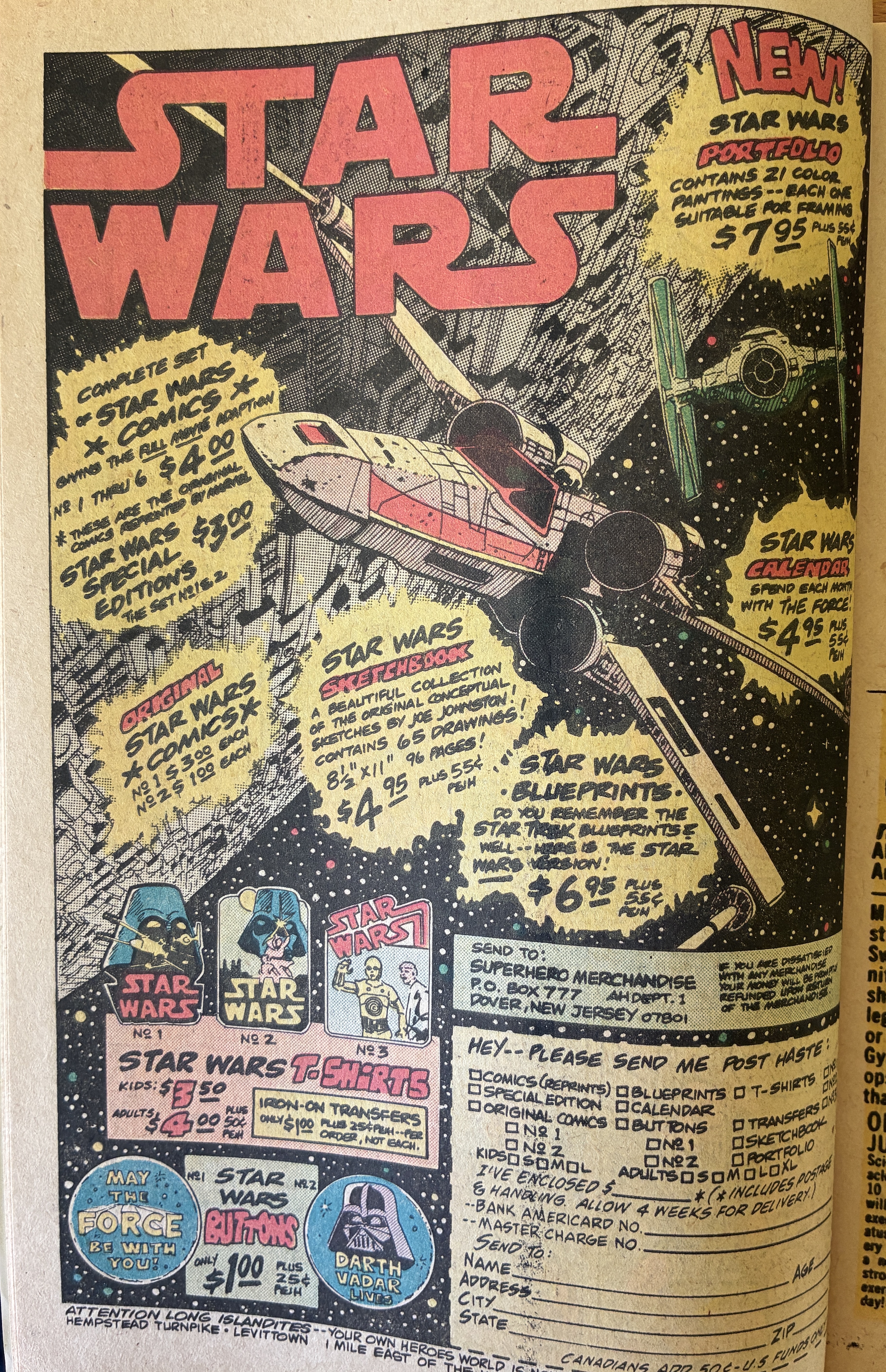
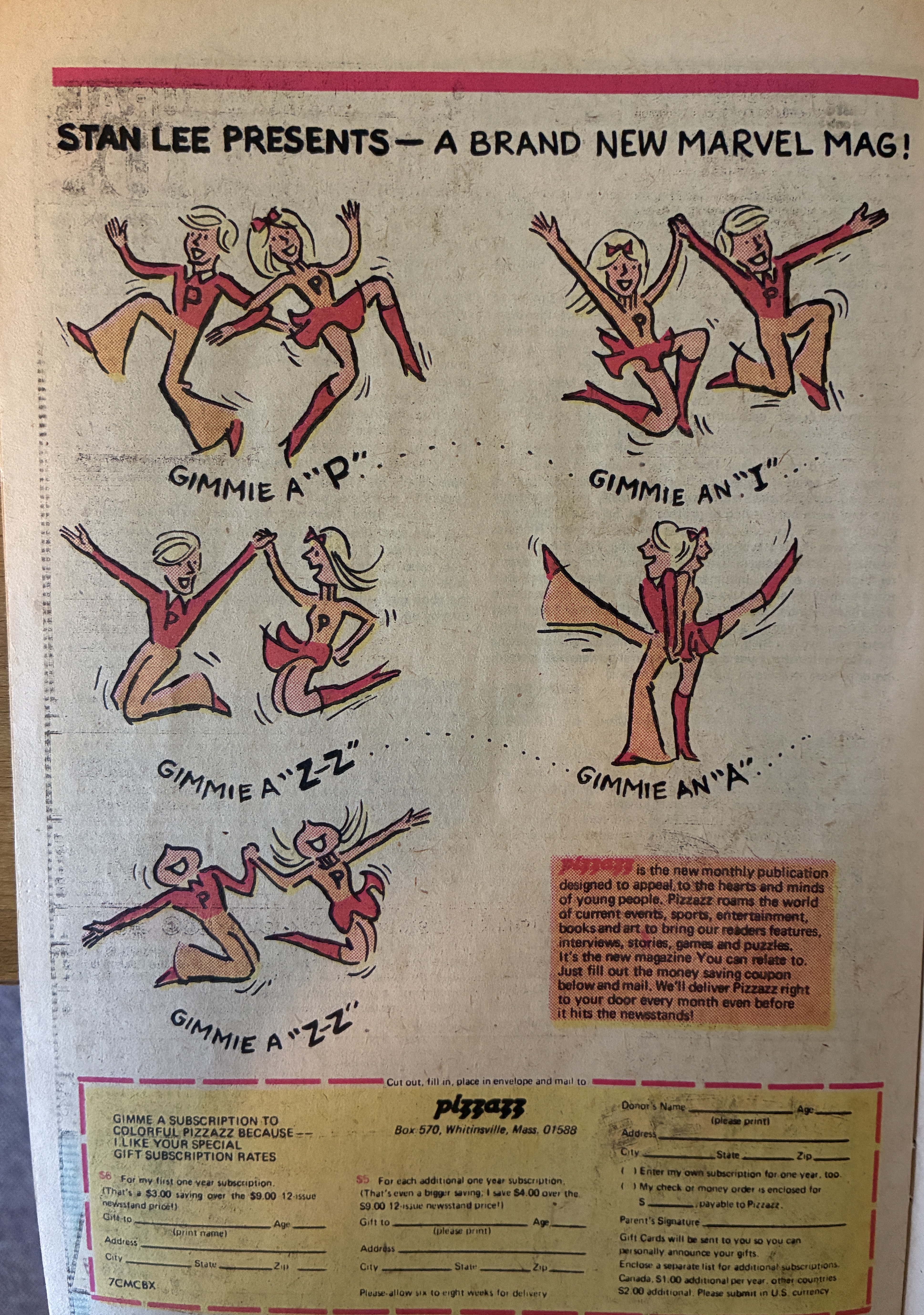
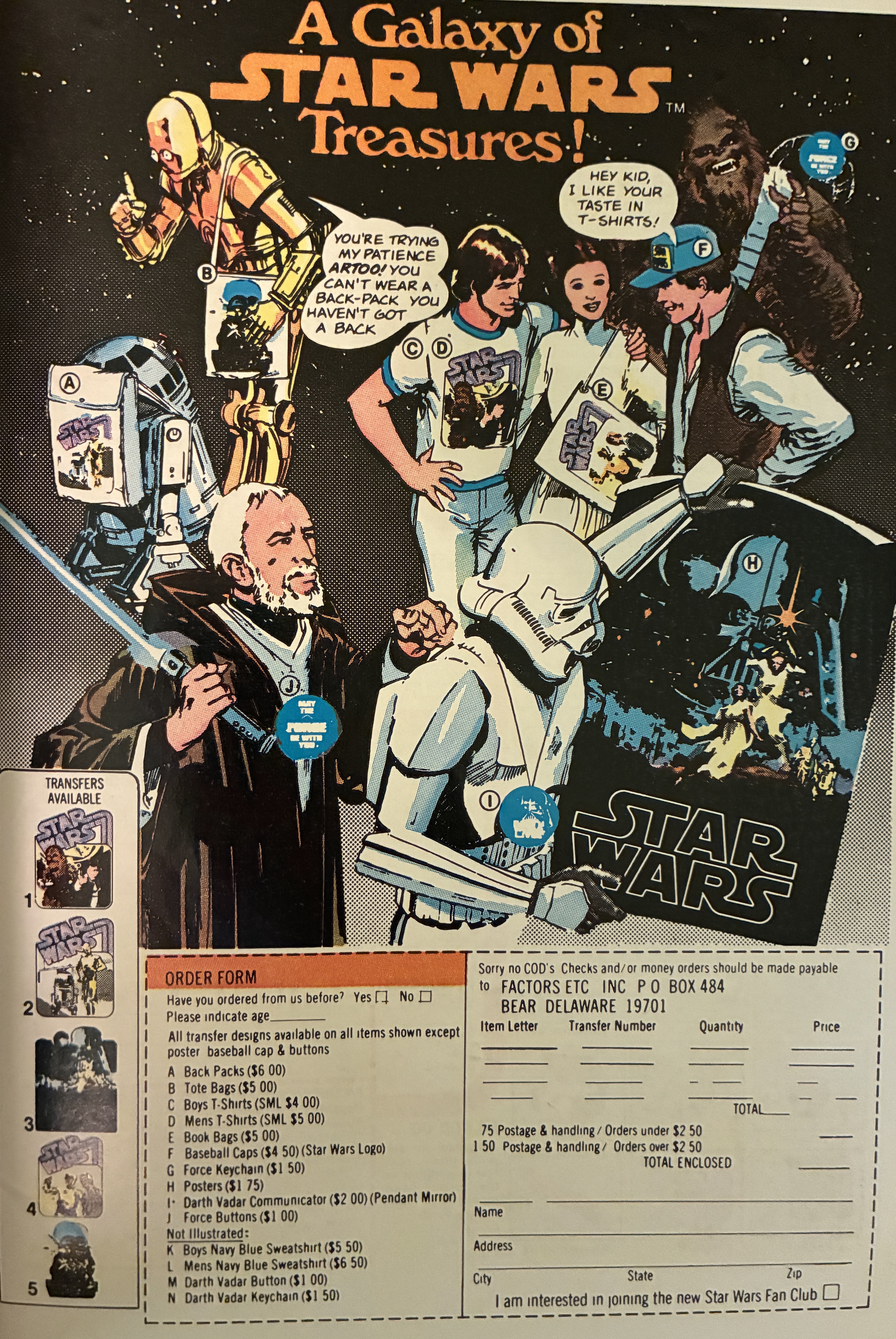
Some fun ads in this comic:


Overall

An excellent Fantastic Four comic book

← Older posts
Newer posts →
  • “The World’s Greatest Comic Magazine!” Fantastic Four Annual No. 15
  • “The World’s Greatest Comic Magazine!” Fantastic Four No. 223
  • “The World’s Greatest Comic Magazine!” Fantastic Four No. 222
  • “The World’s Greatest Comic Magazine!” Fantastic Four No. 221
  • “The World’s Greatest Comic Magazine!” Fantastic Four No. 220
  • July 2026
  • June 2026
  • May 2026
  • April 2026
  • March 2026
  • February 2026
  • January 2026
  • December 2025
  • November 2025
  • October 2025
  • September 2025
  • August 2025
  • July 2025
  • June 2025
  • May 2025
  • April 2025
  • March 2025
  • February 2025
  • January 2025
  • December 2024
  • November 2024
  • October 2024
  • September 2024
  • August 2024
  • July 2024
  • June 2024
  • May 2024
  • April 2024
  • March 2024
  • February 2024
  • January 2024
  • December 2023
  • November 2023
  • September 2023
  • July 2023
  • June 2023
  • May 2023
  • April 2023
  • March 2023
  • February 2023
  • January 2023
  • December 2022
  • November 2022
  • October 2022
  • September 2022
  • August 2022
  • July 2022
  • June 2022
  • May 2022
  • April 2022
  • March 2022
  • February 2022
  • January 2022
  • December 2021
  • November 2021
  • October 2021
  • September 2021
  • August 2021
  • July 2021
  • June 2021
  • May 2021
  • April 2021
  • March 2021
  • February 2021
  • January 2021
  • December 2020
  • February 2018
  • May 2016
  • February 2016
  • January 2016
  • December 2015
  • November 2015
  • October 2015
  • September 2015
  • August 2015
  • July 2015
  • April 2015
  • March 2015
  • January 2015
  • December 2014
  • November 2014
  • October 2014
  • September 2014
  • August 2014
  • June 2014
  • May 2014
  • April 2014
  • March 2014
  • February 2014
  • July 2026
  • June 2026
  • May 2026
  • April 2026
  • March 2026
  • February 2026
  • January 2026
  • December 2025
  • November 2025
  • October 2025
  • September 2025
  • August 2025
  • July 2025
  • June 2025
  • May 2025
  • April 2025
  • March 2025
  • February 2025
  • January 2025
  • December 2024
  • November 2024
  • October 2024
  • September 2024
  • August 2024
  • July 2024
  • June 2024
  • May 2024
  • April 2024
  • March 2024
  • February 2024
  • January 2024
  • December 2023
  • November 2023
  • September 2023
  • July 2023
  • June 2023
  • May 2023
  • April 2023
  • March 2023
  • February 2023
  • January 2023
  • December 2022
  • November 2022
  • October 2022
  • September 2022
  • August 2022
  • July 2022
  • June 2022
  • May 2022
  • April 2022
  • March 2022
  • February 2022
  • January 2022
  • December 2021
  • November 2021
  • October 2021
  • September 2021
  • August 2021
  • July 2021
  • June 2021
  • May 2021
  • April 2021
  • March 2021
  • February 2021
  • January 2021
  • December 2020
  • February 2018
  • May 2016
  • February 2016
  • January 2016
  • December 2015
  • November 2015
  • October 2015
  • September 2015
  • August 2015
  • July 2015
  • April 2015
  • March 2015
  • January 2015
  • December 2014
  • November 2014
  • October 2014
  • September 2014
  • August 2014
  • June 2014
  • May 2014
  • April 2014
  • March 2014
  • February 2014
“The World’s Greatest Comic Magazine!” Fantastic Four Annual No. 15

“The World’s Greatest Comic Magazine!” Fantastic Four Annual No. 15

percivalhenry's avatar by percivalhenry July 18, 2026
“The World’s Greatest Comic Magazine!” Fantastic Four No. 223

“The World’s Greatest Comic Magazine!” Fantastic Four No. 223

percivalhenry's avatar by percivalhenry July 14, 2026
“The World’s Greatest Comic Magazine!” Fantastic Four No. 222

“The World’s Greatest Comic Magazine!” Fantastic Four No. 222

percivalhenry's avatar by percivalhenry July 5, 2026
“The World’s Greatest Comic Magazine!” Fantastic Four No. 221

“The World’s Greatest Comic Magazine!” Fantastic Four No. 221

percivalhenry's avatar by percivalhenry June 25, 2026
“The World’s Greatest Comic Magazine!” Fantastic Four No. 220

“The World’s Greatest Comic Magazine!” Fantastic Four No. 220

percivalhenry's avatar by percivalhenry June 15, 2026
“The World’s Greatest Comic Magazine!” Fantastic Four No. 219

“The World’s Greatest Comic Magazine!” Fantastic Four No. 219

percivalhenry's avatar by percivalhenry June 7, 2026

Blog at WordPress.com.

  • Subscribe Subscribed
    • Percival Henry: The Fantastic Four and more
    • Join 74 other subscribers
    • Already have a WordPress.com account? Log in now.
    • Percival Henry: The Fantastic Four and more
    • Subscribe Subscribed
    • Sign up
    • Log in
    • Report this content
    • View site in Reader
    • Manage subscriptions
    • Collapse this bar
Loading Comments...