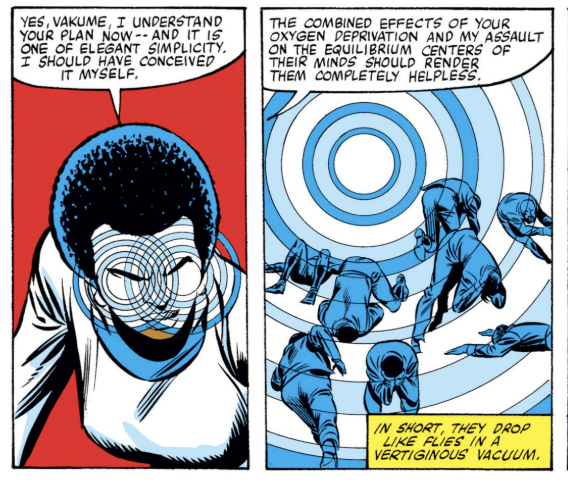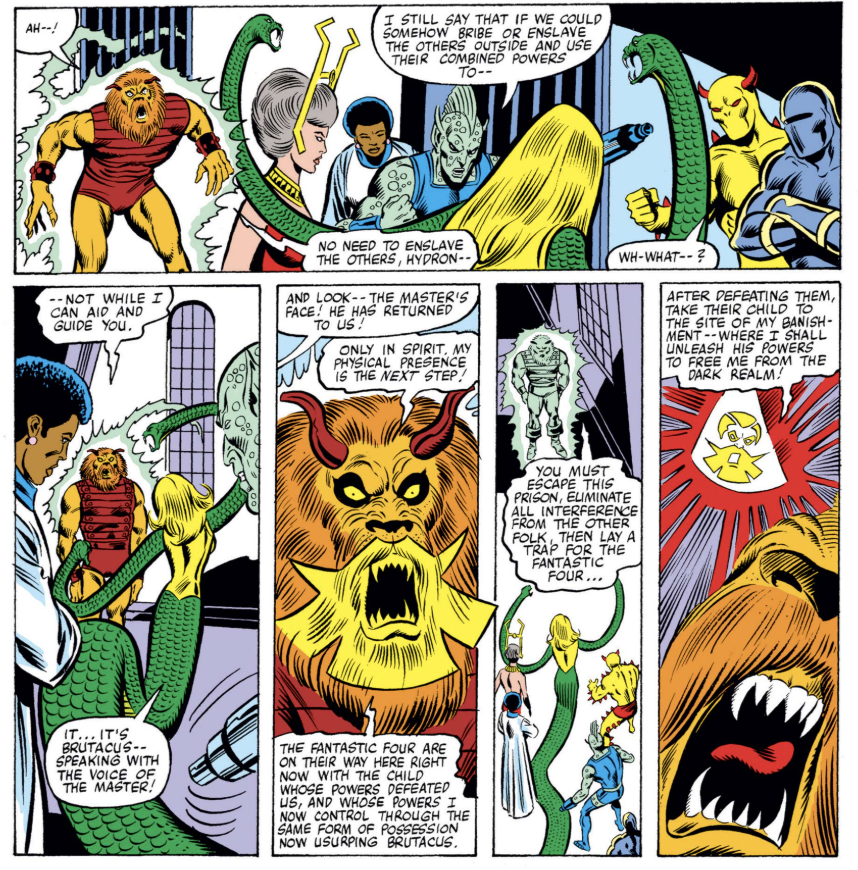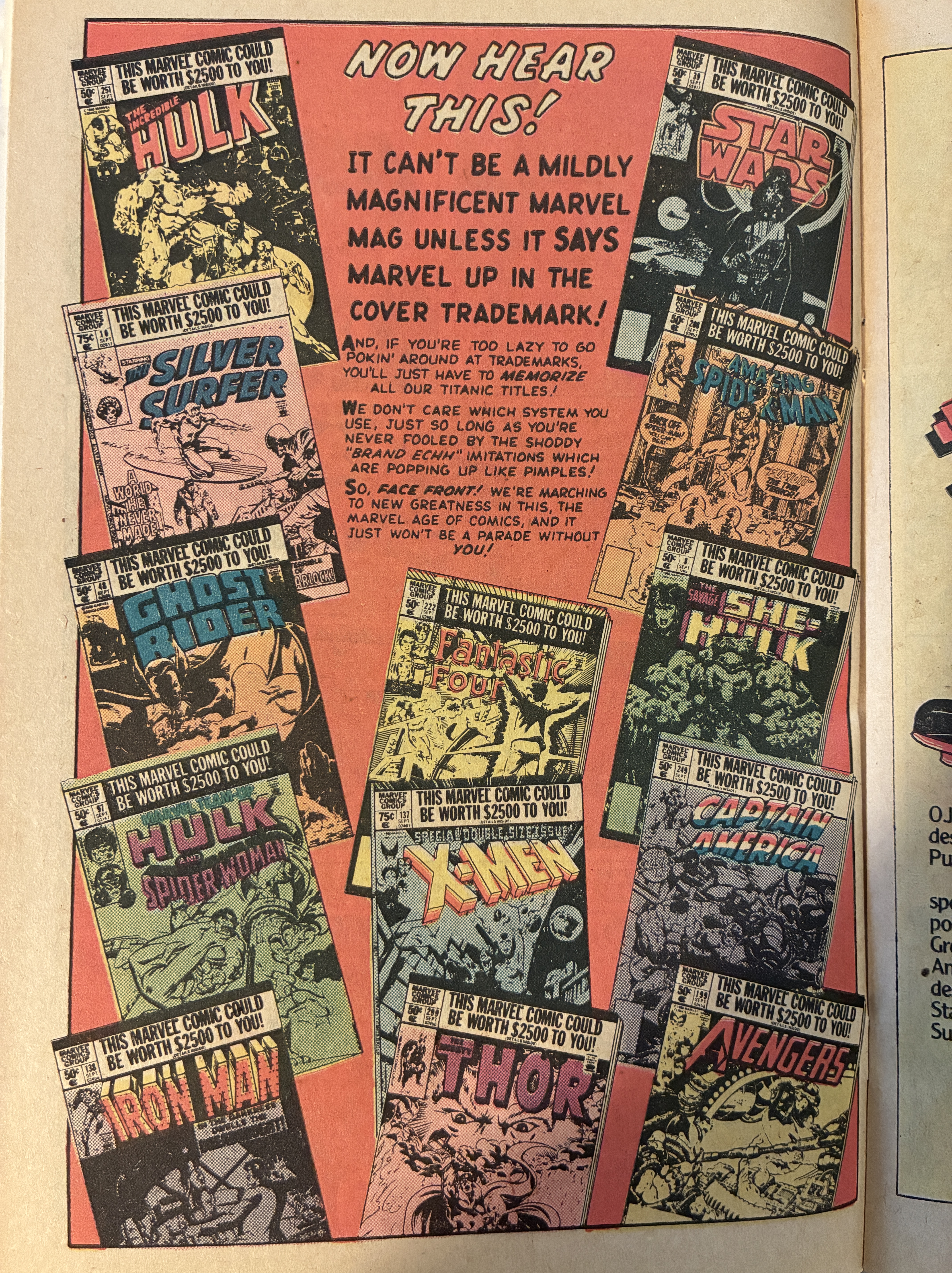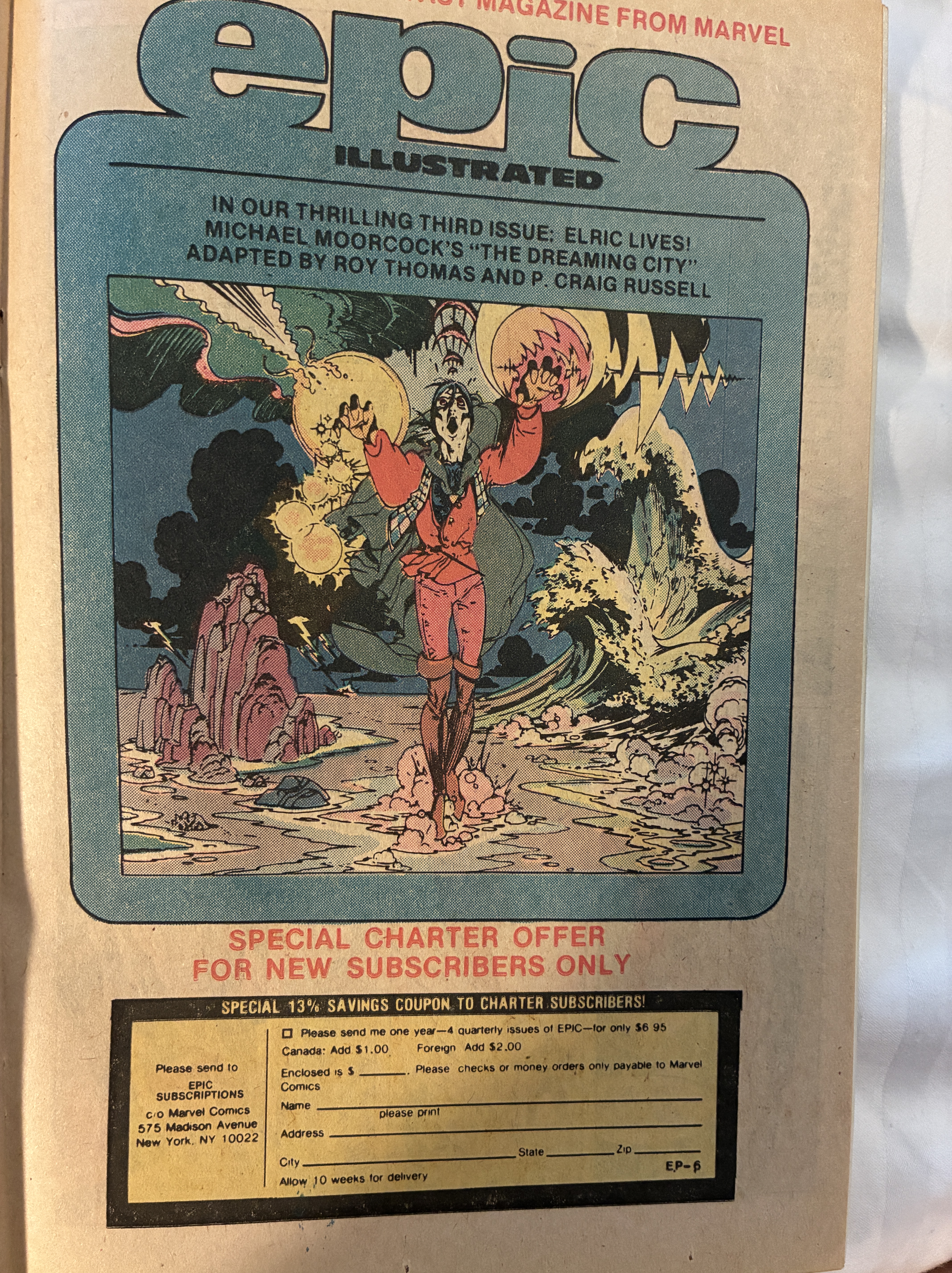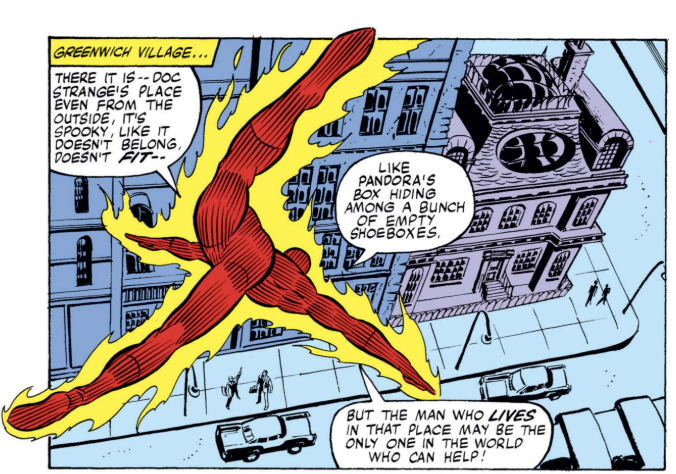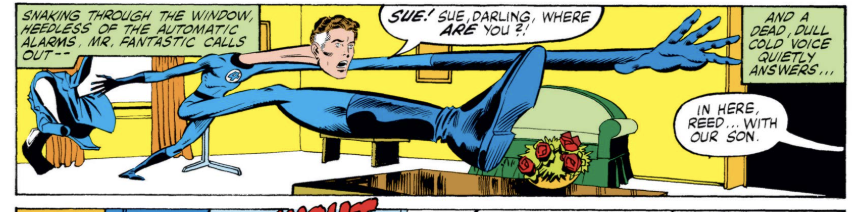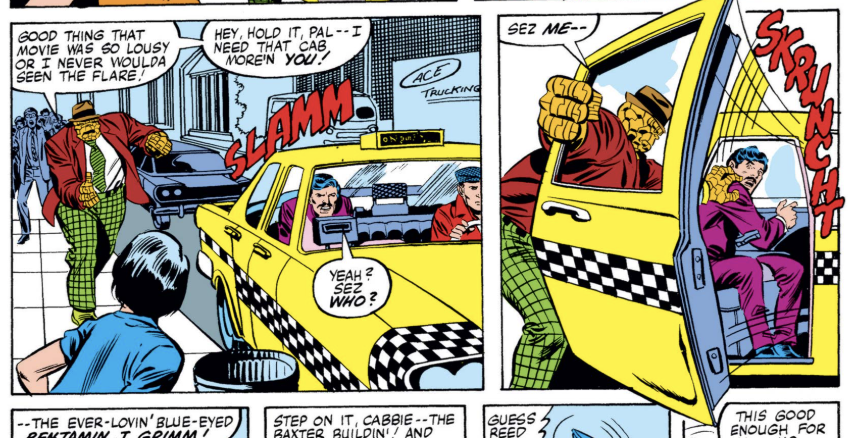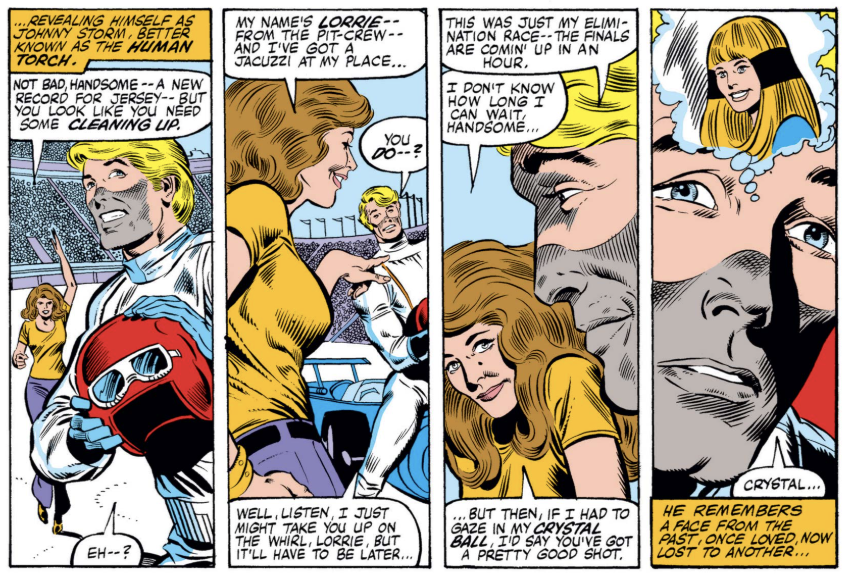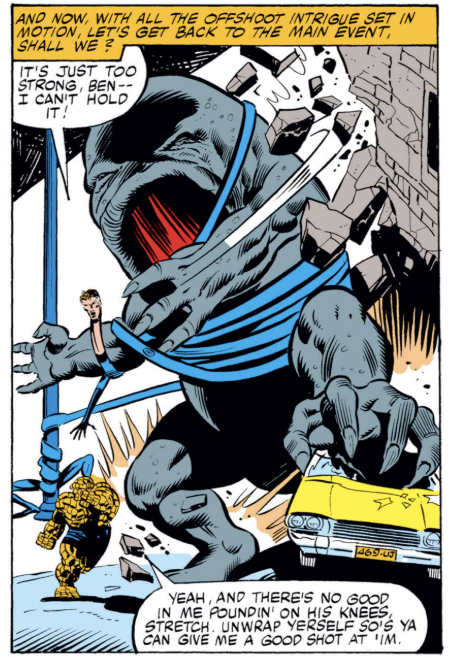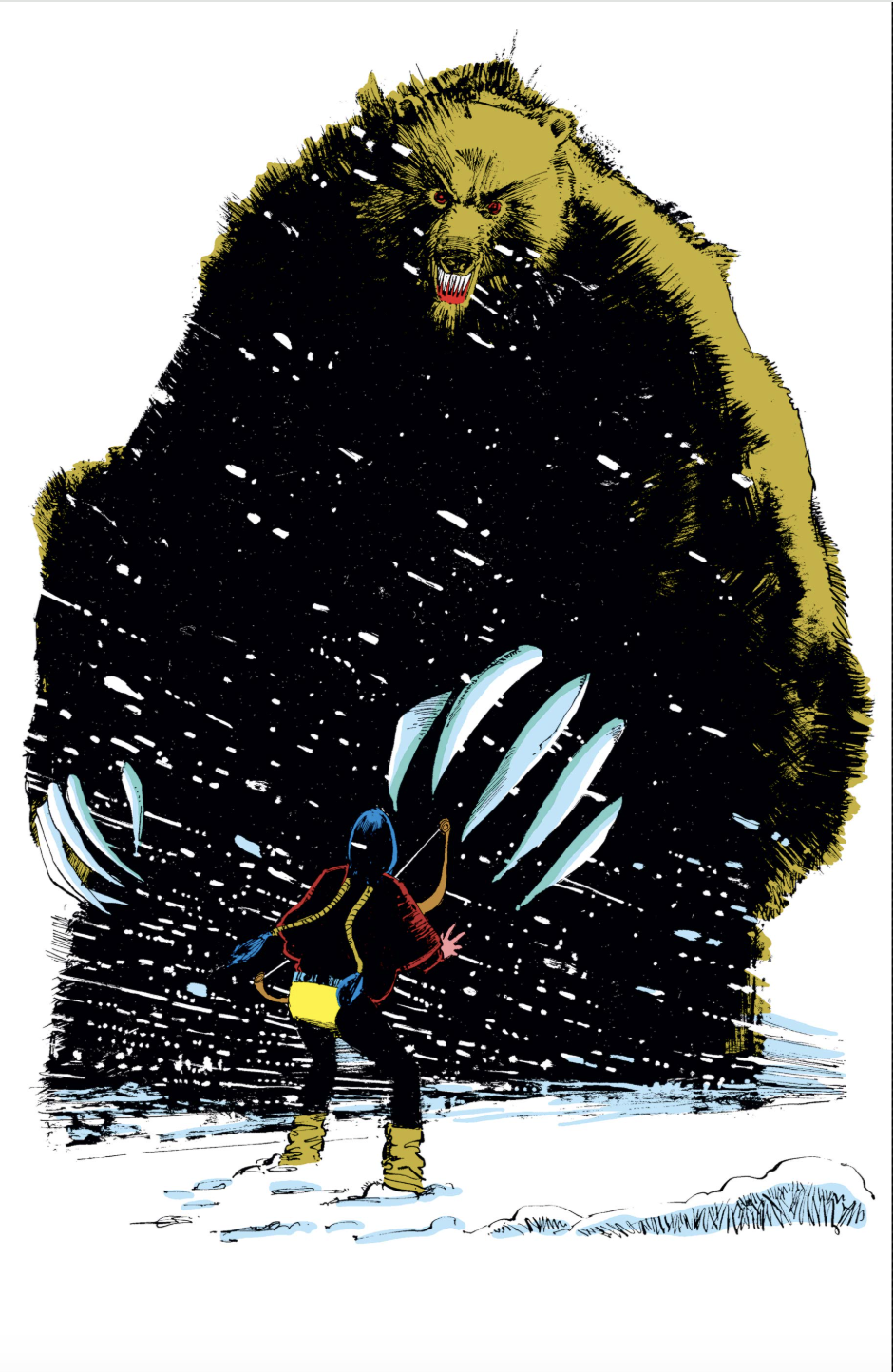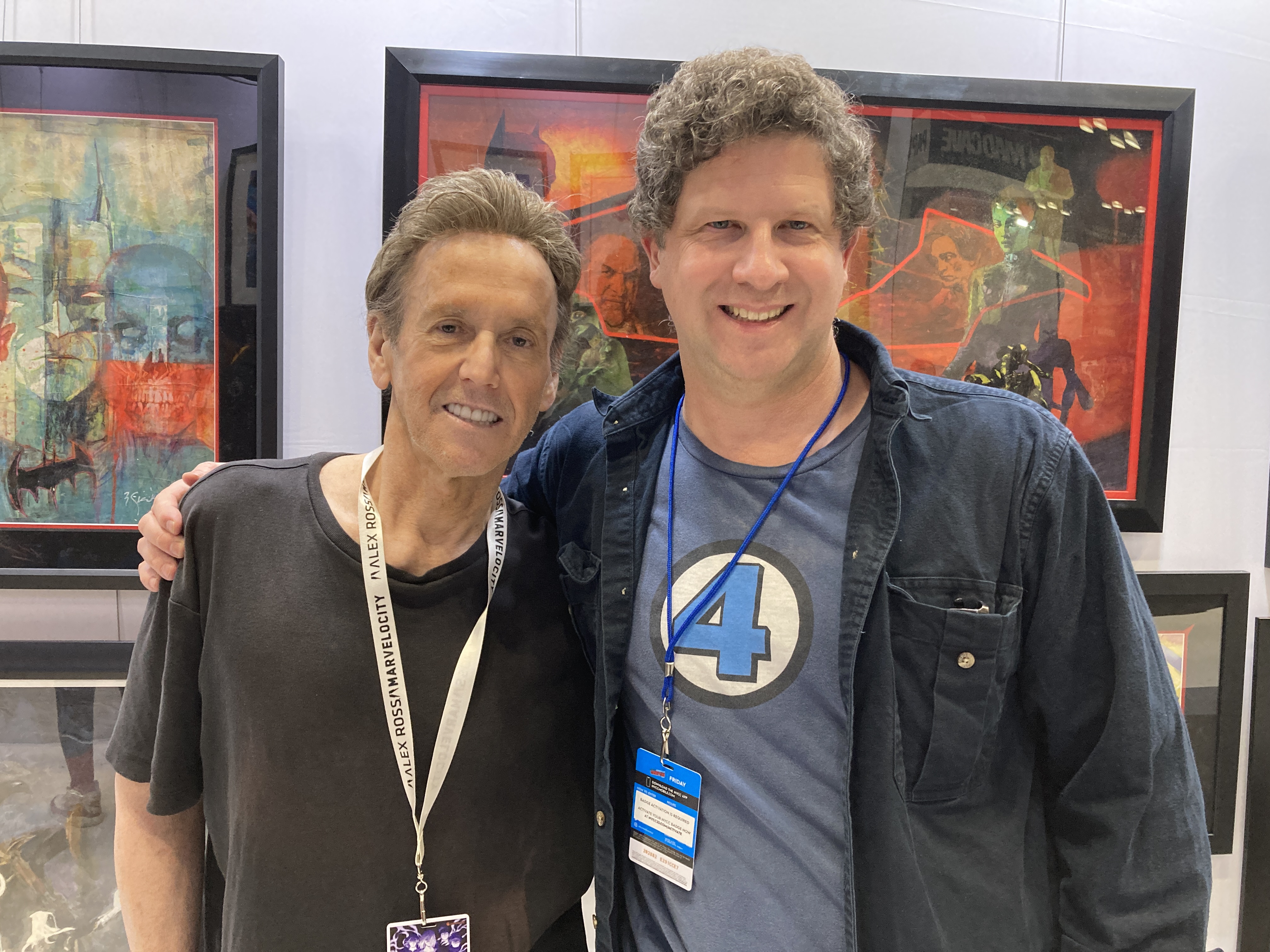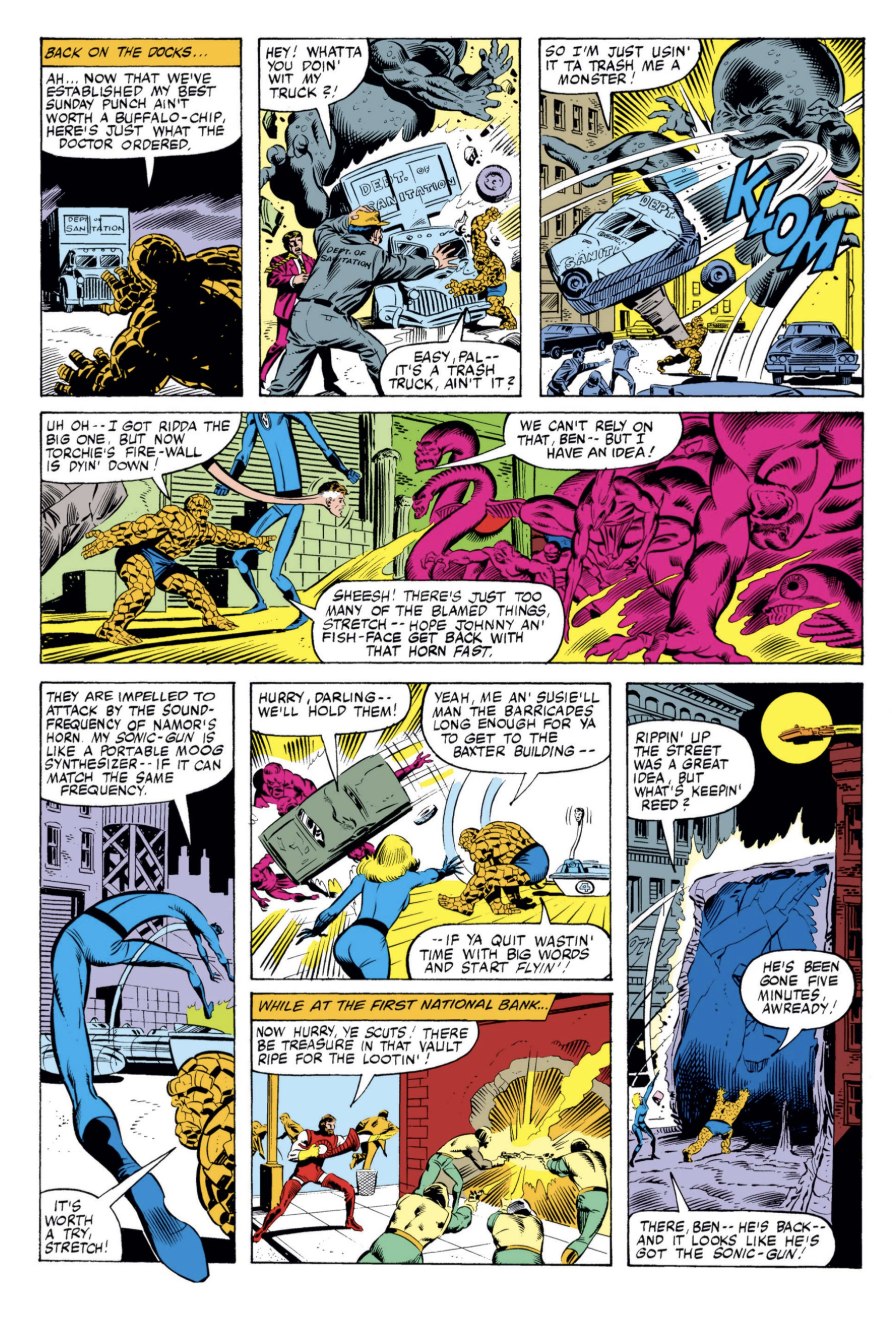
• About Percival Henry

Percival Henry: The Fantastic Four and more

~ Blogging the Fantastic Four issue by issue (plus whatever else grabs my attention)

Percival Henry: The Fantastic Four and more

Tag Archives: Marvel

“The World’s Greatest Comic Magazine!” Fantastic Four Annual No. 14

19 Sunday Apr 2026

Posted by percivalhenry in The World's Greatest Comic Magazine

≈ 5 Comments

Tags

1979, Agatha Harkness, Annual, Fantastic Four, Fantastic Four Annual 14, George Perez, marv wolfman, Marvel, marvel-comics, Salem's Seven

Fantastic Four Annual 14
“Cat’s-Paw!”
Published October 1979
Story: Marc Wolfman and Geore Perez
Pencils: Perez
Inks: Pablo Marcos
Letters: Jim Novak
Colors: Carl Gafford
Editor: Wolfman
Cover: Joe Sinnott

Synopsis

After a brief battle with Sandman, the Fantastic Four return to the Baxter Building to find Agatha Harkness, who convinces the team plus Franklin to accompany her to New Salem for her annual visit. Meanwhile, a group of Salem witches is plotting to restore Nicholas Scratch — defeated by his mother, Harkness, and the FF in issue 186 —and then reveal themselves to be Salem’s Seven. They battle and subdue the FF, but Franklin escapes and is found by Harkness. Back in New York, Salem’s Seven harnesses the powers of the unconscious FF in order to summon Scratch, creating a powerful force field around the Baxter Building that resists the military and the Avengers. With Franklin, Harkness withstands Scratch’s assaults and once in the Baxter Building, Franklin’s latent powers restore the hostile, mind-controlled FF back to normal. Harkness then defeats Salem’s Seven and prevents Scratch from returning to Earth.


What’s going on here?

This is a big, fun, rollercoaster of an annual that only barely makes sense and is held together by George Perez’s amazing layouts and pencils. He is ably assisted by Pablo Marcos on inks, who has a nice light touch. If Perez had not worked on this book I would likely have a much lower opinion of it but thankfully we’ll never know. More on this great art in a bit.

Like a lot of annuals, this story feels a bit padded, particularly the opening sequence with Sandman, which serves no real purpose. It’s filled out at the end with a series of pinups. The story hinges entirely on the FF’s impromptu decision to join Harkness, and she ultimately is the hero of the story. After they are captured, the FF are barely players in their own annual.

This annual brings back Salem’s Seven, a fun group of villains who are surprisingly underused. They only appear a handful of times after this issue, despite seemingly tailor-made for fighting other super teams. Couldn’t the X-Men have fought these guys?


Also of note, the cover is by Joe Sinnott working solo, which is rare. It’s unfortunately not a particularly exciting or interesting cover, and my guess is Perez either couldn’t deliver his cover on time or it was rejected by Jim Shooter, necessitating a quick fill-in job by Sinnott.


What I liked

This is the first comic I’m aware of where we really see Perez’s layout innovations take hold. He was a master of propelling the story with panel designs, and often can fit seven, eight or nine on a page without it feeling cramped (most artists don’t exceed six). We can see the beginnings of that here, where he uses the bottom panel on four consecutive pages (I can only show three here) to introduce the main plot of the story through the sinister villainy of Salem’s Seven. Another artist might gave simply broken away from the main action and used four contiguous panels, but by using one panel per page, Perez undergirds the FF’s triumph over the Sandman with a portent of menace.


Here’s another page where Perez creates simultaneous action through page design. The small light blue panels show the machinations of the villains at the same time Harkness invites the FF to the evening’s big event. It’s a technique unique to comics; the movie or TV equivalent would be a picture-in-picture with separate characters and dialogue, which would be awful (you do sometimes see this in sports, but it’s hard to watch).

Perez uses 10 panels on this page, and it allows him to give the readers a sense of New Salem’s weirdness while advancing the plot.

The high point of Perez’s panel wizardry was probably Crisis on Infinite Earths, six years later, where he had roughly a zillion characters to include and a lot of story to tell. Here, in issue seven, he uses an insane 16 panels to record the death of Supergirl.

Today, one wide-screen artist like Brian Hitch would probably use half of a comic for the same sequence.

There’s lots of other great Perez art FF Annual 14, too, like this crazy double page splash:

Although the design is pretty rudimentary, with its one-point perspective, it’s full of fun details, like Johnny making time with a New Salem native (later revealed to be a succubus) and Franklin and Sue (and what is Sue wearing on her head??)


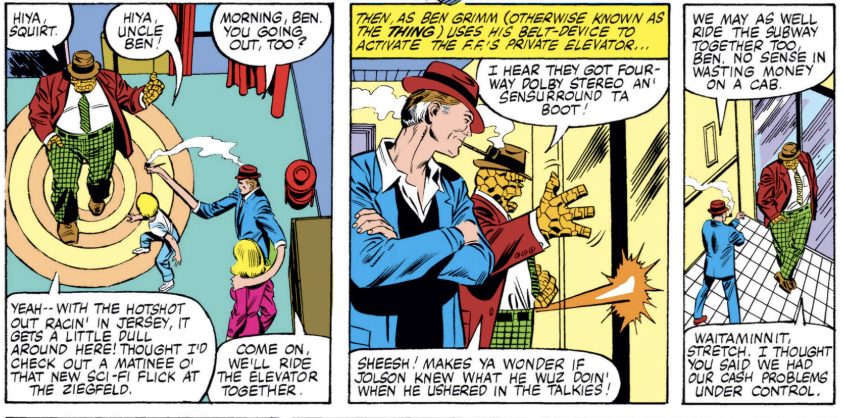
While this issue (and blog post) is really about Perez, Marv Wolfman has his moments. This was a fun sequence that followed the team thwarting the Sandman’s bank robbery and getting a kitten-themed calendar for their troubles:


And to finish up, just a few more amazing pages from Perez (the one with Avengers is stunning):


What I didn’t like

This being a Wolfman comic, there were all sort of odd plot devices and inconsistencies that seems could have been avoided with a bit of thought or (cough) an editor (cough) who wasn’t the same person as the writer.

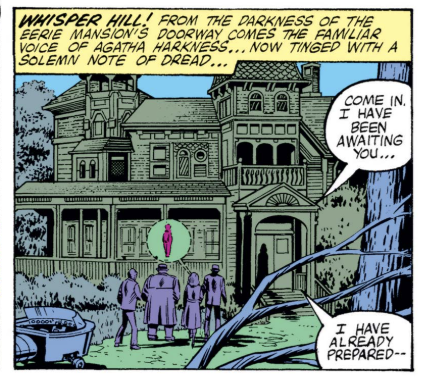
Here, Harkness invites the FF to join her on a trip across the country and they decide to drop everything and go. Apparently world-class scientists like Reed don’t have meetings or lectures or experiments that keep him tied down. Would it have ruined the story to have made this a trip they planned in advance?

Then, instead of flying one of their several vehicles, they fly commercial. Because who doesn’t like an easily avoidable trip to the airport? (Also, note Reed is smoking a pipe on the plane. It was the seventies).


Later, the Salem witch Gazelle announces she’s a “beast of prey.” Really? Her name is Gazelle and she’s a predator??

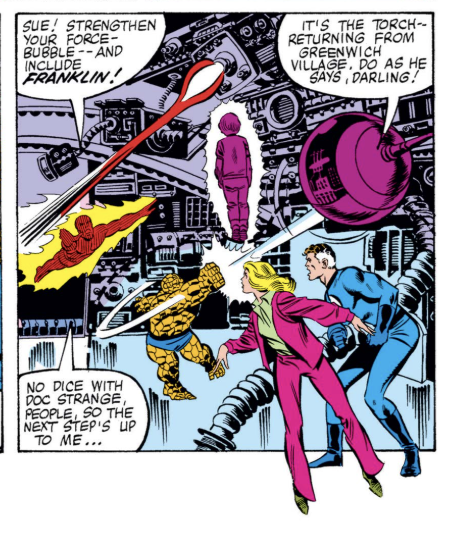
And this feels like an own-goal, but when the Defenders show up and Iron Man says they’re helpless against this mystical, magical forcefield, it kinda begs the question about a certain missing Defender. Wears a cape. Lives in the village. Sometimes called the Sorcerer Supreme. Maybe he could have helped.

Anything else?

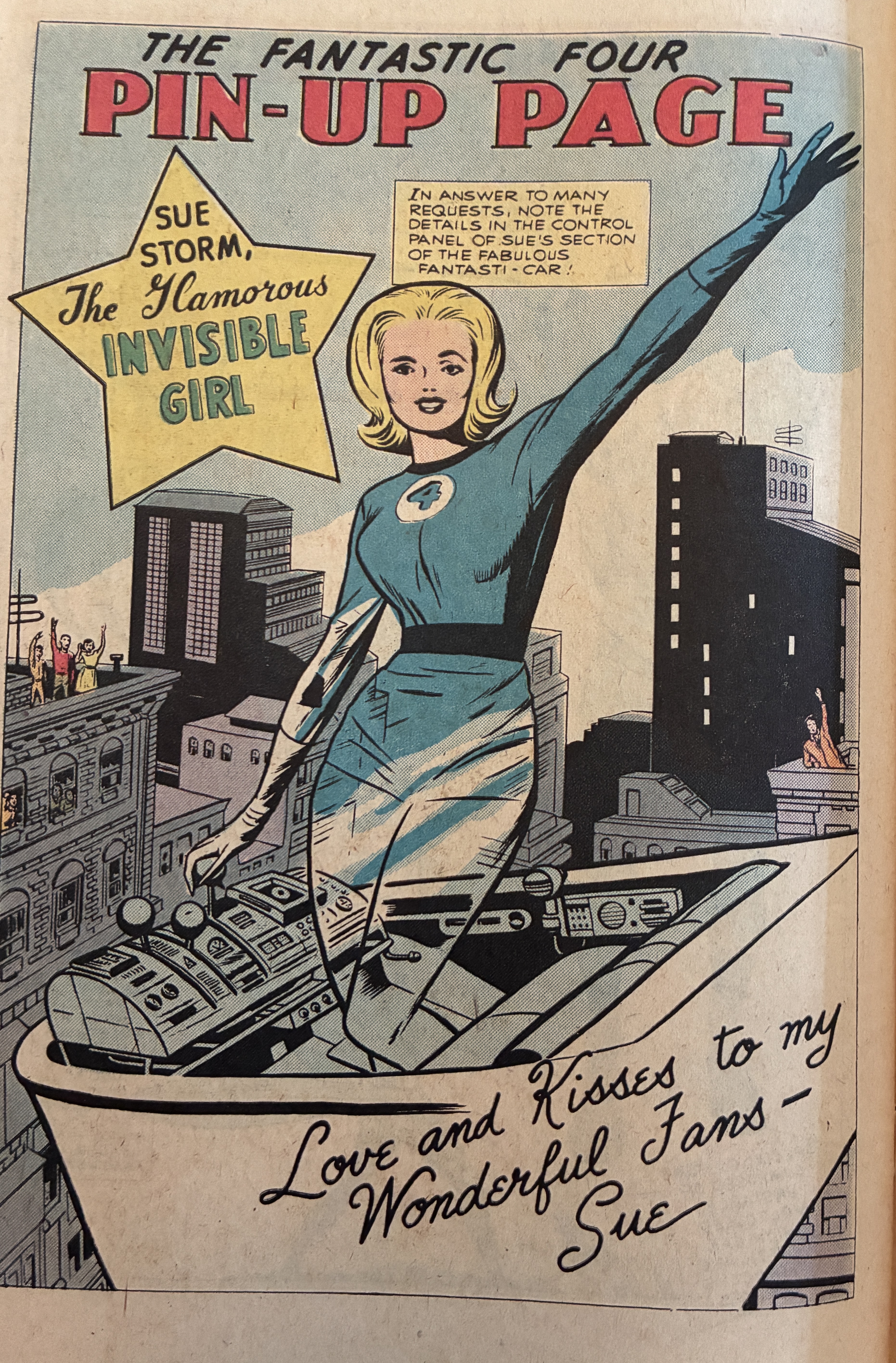
The pinups in the end are by Keith Pollard and Marcos. It’s called a gallery of the FF’s most famous foes but most of these guys are pretty obscure (there were six in total). I like that they each get a custom designed logos.


Overall

A Perez triumph!

“The World’s Greatest Comic Magazine!” Fantastic Four No. 214

11 Saturday Apr 2026

Posted by percivalhenry in The World's Greatest Comic Magazine

≈ Leave a comment

Tags

1979, Fantastic Four, Fantastic Four 214, Joe Sinnott, John Byrne, marv wolfman, Marvel, Marvel comics, Skrulls

Fantastic Four 214
“…and then there was — ONE!”
Published October 1979
Writer: Marv Wolfman
Pencils: John Byrne
Inks: Joe Sinnott
Letters: John Costanza
Colors: Carl Gafford
Editor: Wolfman
Cover: Byrne and Sinnott


Synopsis

The Human Torch, distraught that the rest of his team is approaching death after succumbing to the effects of the Skrull aging ray, goes on a desperate hunt to find a cure— first seeking out Tony Stark, then the Xandarians — but to no avail. Back at the Baxter Building, Johnny is attacked by Skrull X, who, like the Super-Skrull, can mimic the powers of the FF. Johnny defeats him (and reveals he was a robot) but realizes the skrull’s aging ray can be reverse engineered to revive his teammates. He wakes Reed from his “cryonics tube” and helps the very elderly Mr. Fantastic alter the device. Johnny is initially devastated when there is no result but is soon reunited with the rest of the team, now stronger than ever.

What’s going on here?

A good chunk of this issue wallows in the Torch’s self-pity, which is pretty tedious. But despite that, it’s a very good comic, and a solid ending to the Xandar/Sphinx/Galactus arc. There is real dramatic tension as the Torch tries to find a cure, and the fight with Skrull X feels almost desperate (particularly after Johnny incinerates the skull before learning it was a robot). Waking Reed from his death bed also felt like a grim, last-chance gambit. And while there wasn’t much doubt the FF would be saved — the comic does continue after this issue — it’s a sign of successful story telling that there is suspense at all.

This issue concludes what is the FF’s longest story arc to date, one that kicked off in issue 204, 10 issues ago. It suffered from a meandering beginning, and a confusing and unnecessary cast of characters imported from Marv Wolfman’s canceled Nova book. It picked up steam when the Sphinx grew in power and the FF sought out Galactus, which introduced Terrax. But that story element landed with a thud last issue, and while issue 214 resolves the aging-skull-ray storyline more gracefully, it doesn’t exactly salvage the whole arc.

What I liked

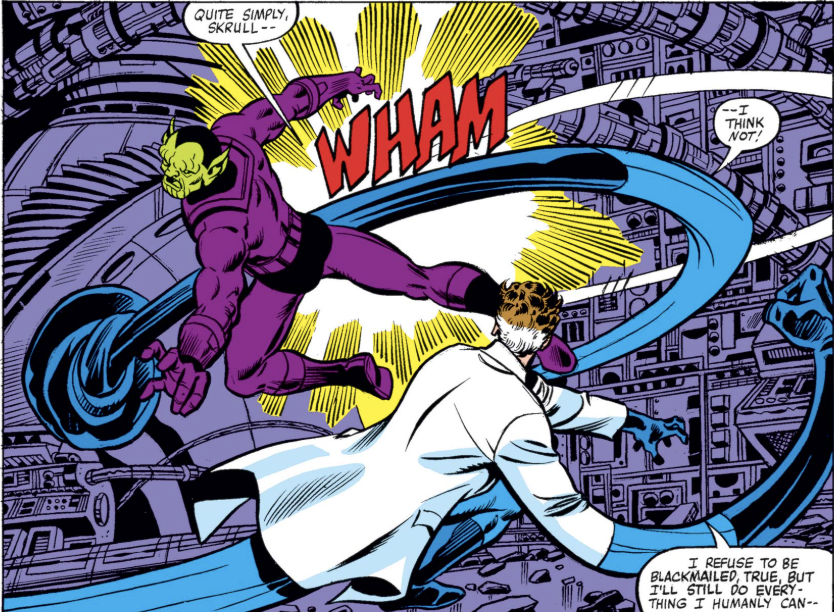
Johnny’s fight with Skrull X is probably the highlight of the book. It’s really everything you want in a comic fight: dynamic action, equally matched opponents, high stakes and not overly long. John Byrne really nails this one.

I also enjoyed Johnny’s search for Tony Stark, which takes him to Avengers Mansion (with an amusing cameo from Jarvis) and then the SHIELD Helicarrrier. I’m a fan of these brief interactions with the rest of the Marvel universe. All these characters know each other; they shouldn’t only get together for a major team up or cross over.


And while it was predictable, I liked the reunion of the Torch and the newly revived FF.


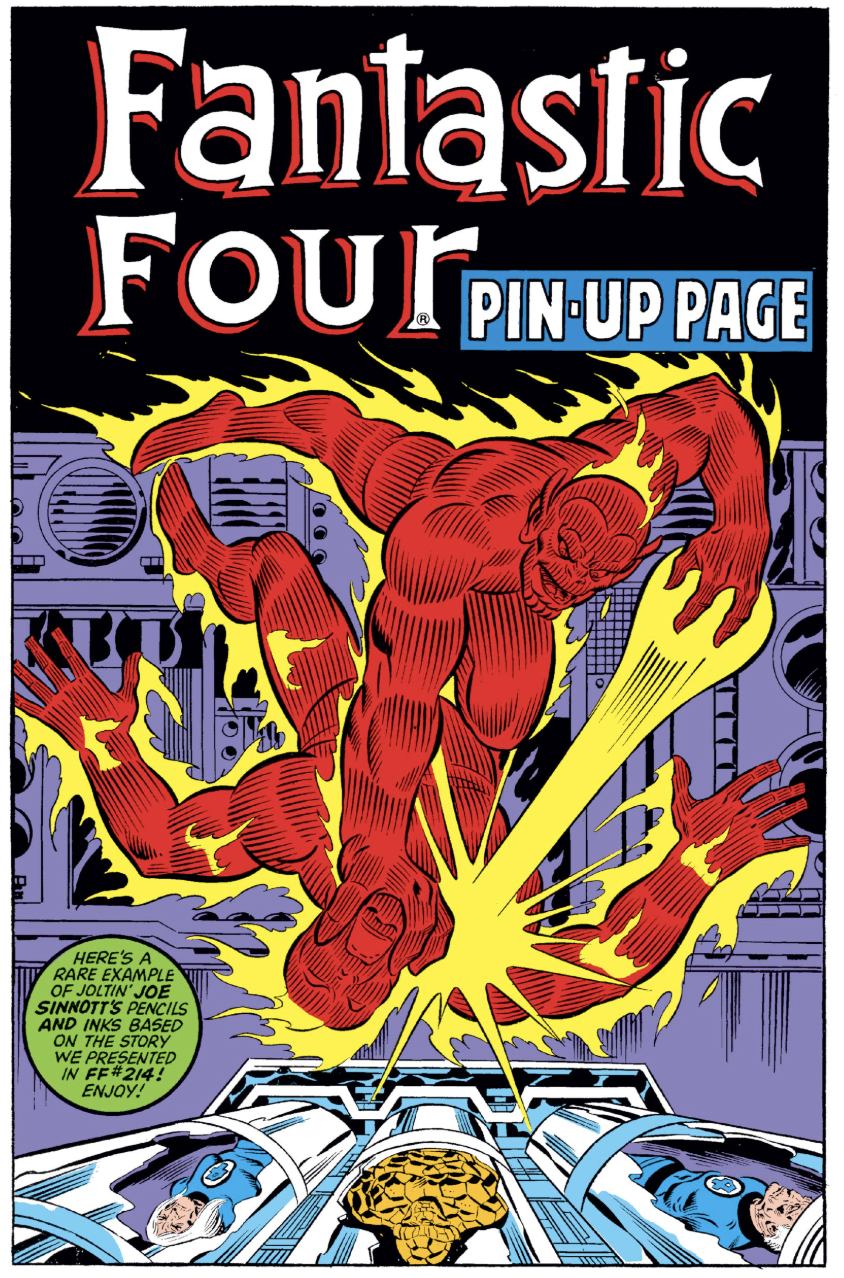
Lastly, Byrne and Joe Sinnott delivered some great sequences, like this one (dig that Kirby Krackle):

And this one:


What I didn’t like

As mentioned, Johnny’s moping around is maudlin and unbecoming. Unfortunately, Wolfman seems to love this sort of pathos, because we got a lot of it the Teen Titans

It starts on the first page:


And gets worse from there:

I’ll spare you the rest.

Anything else?

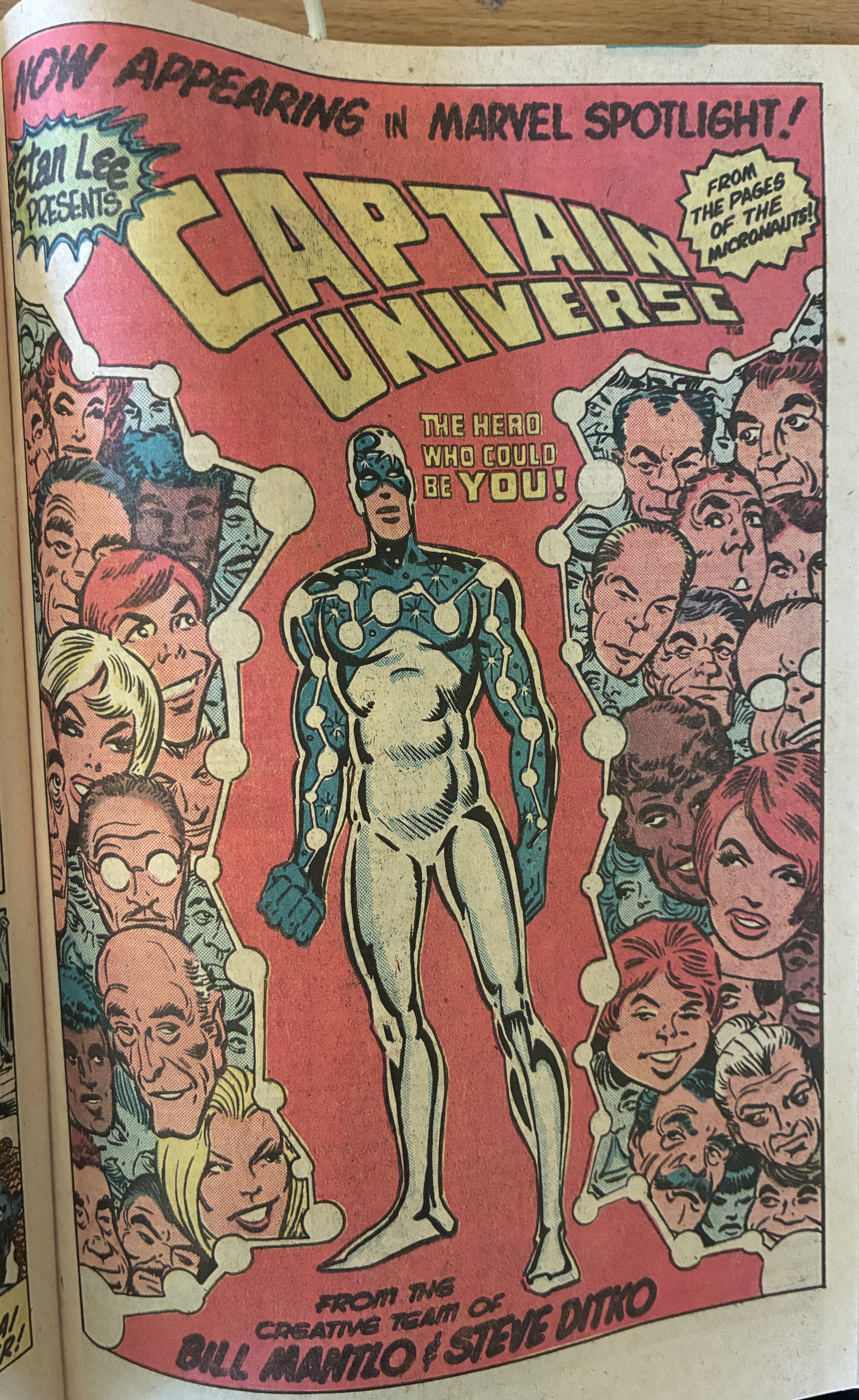
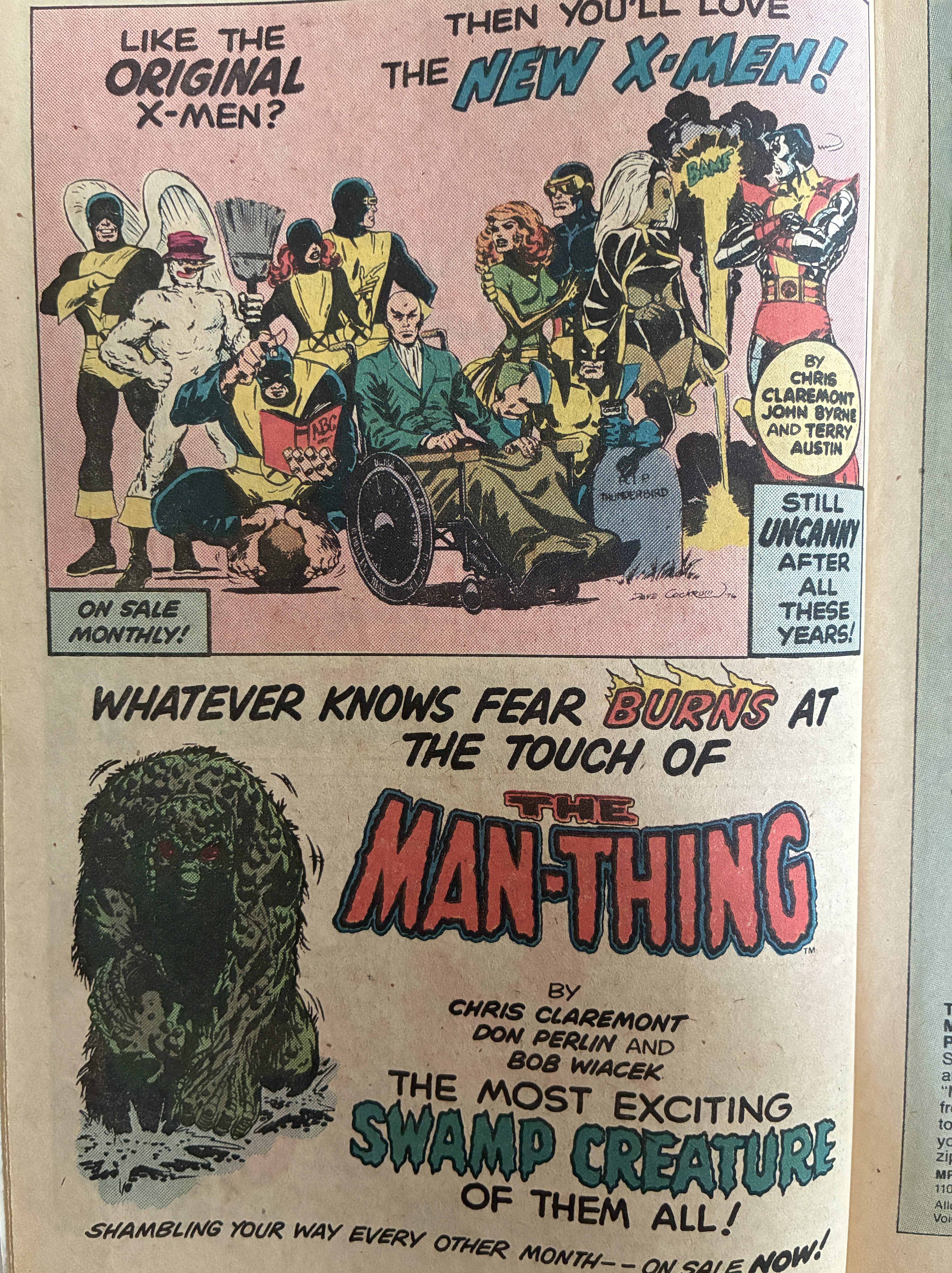
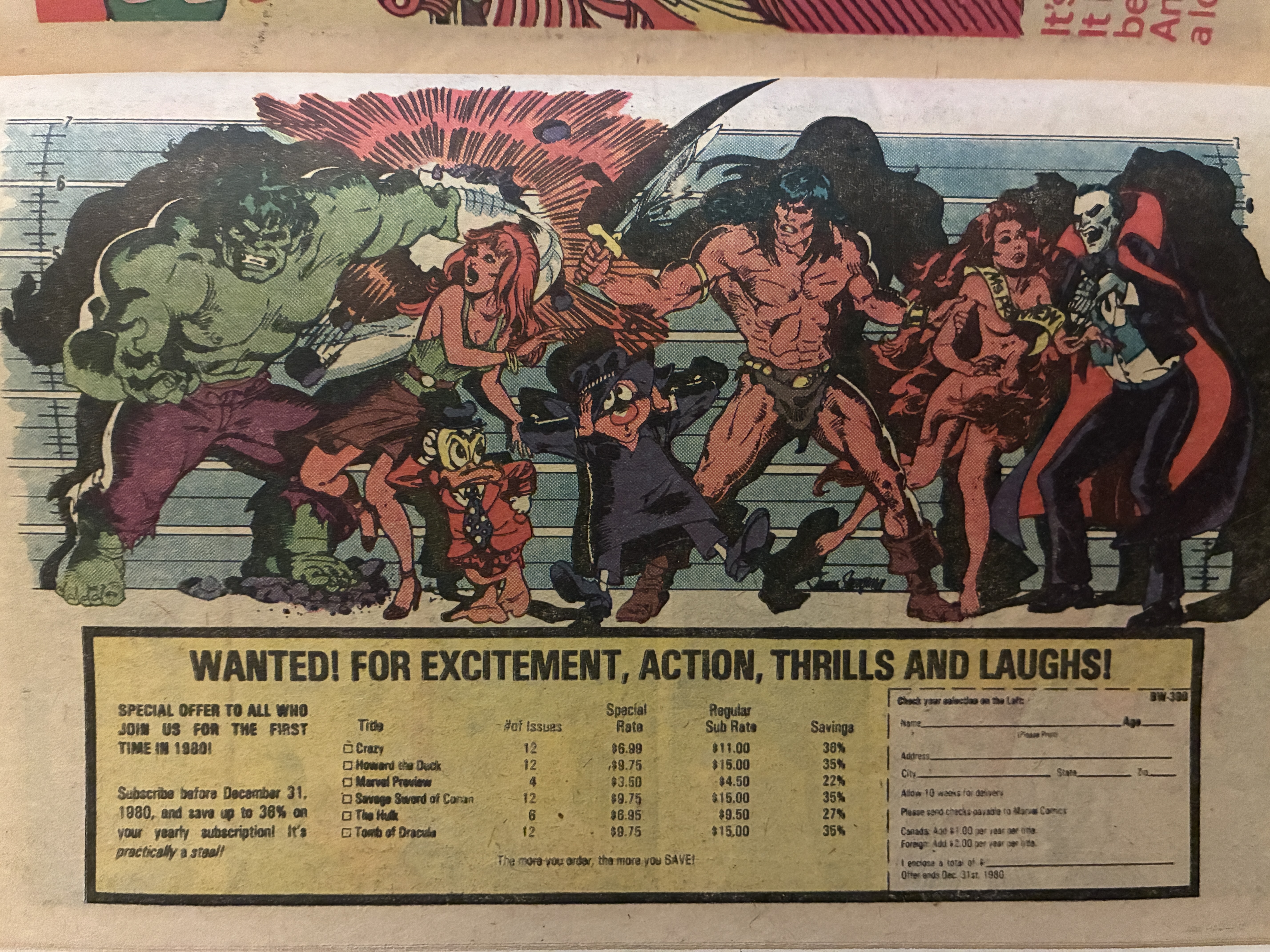
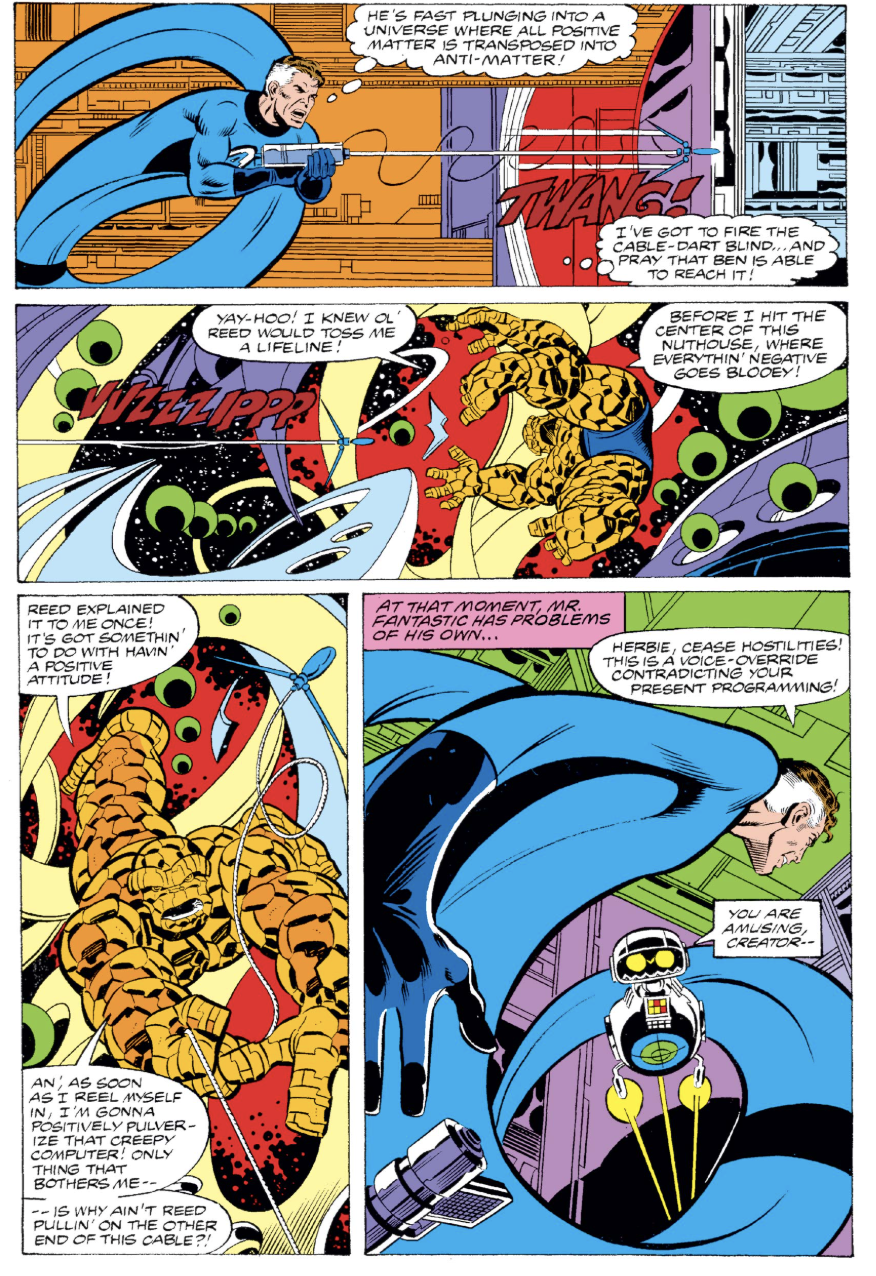
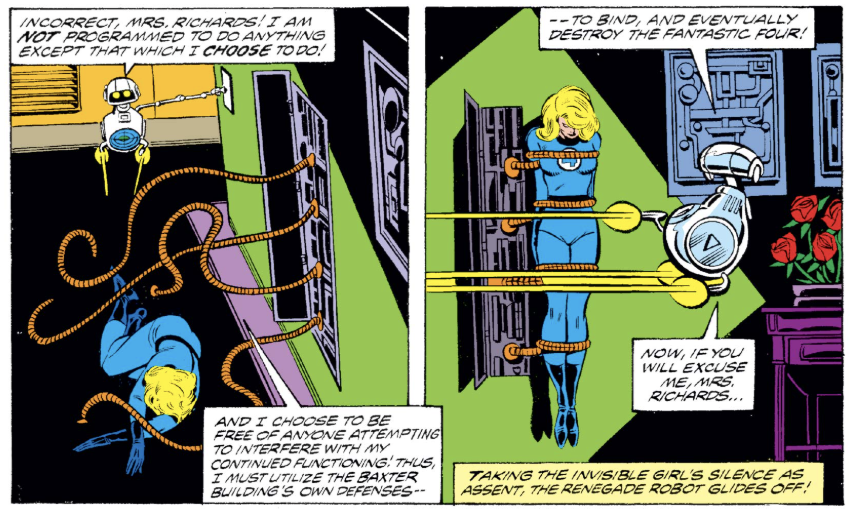
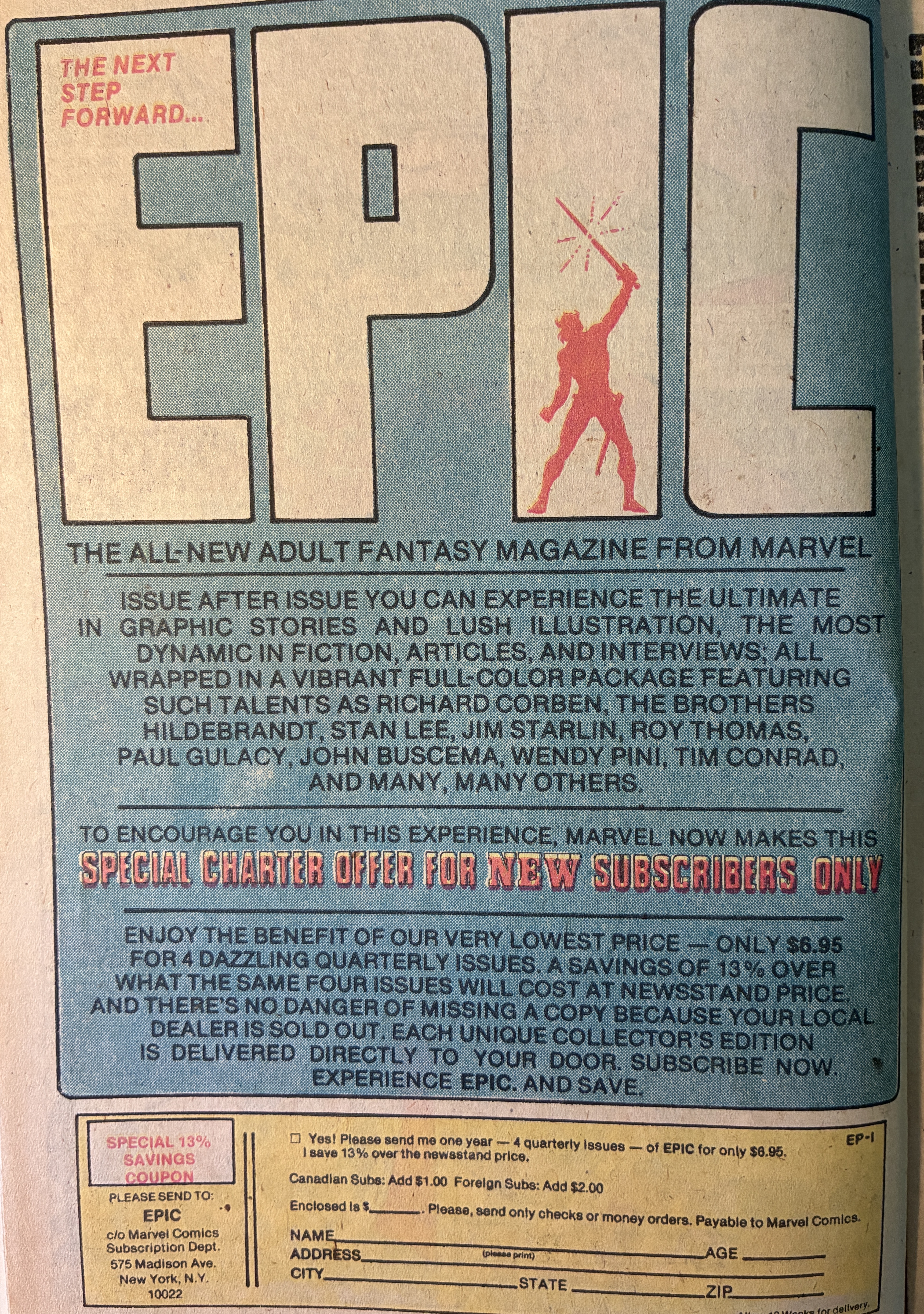
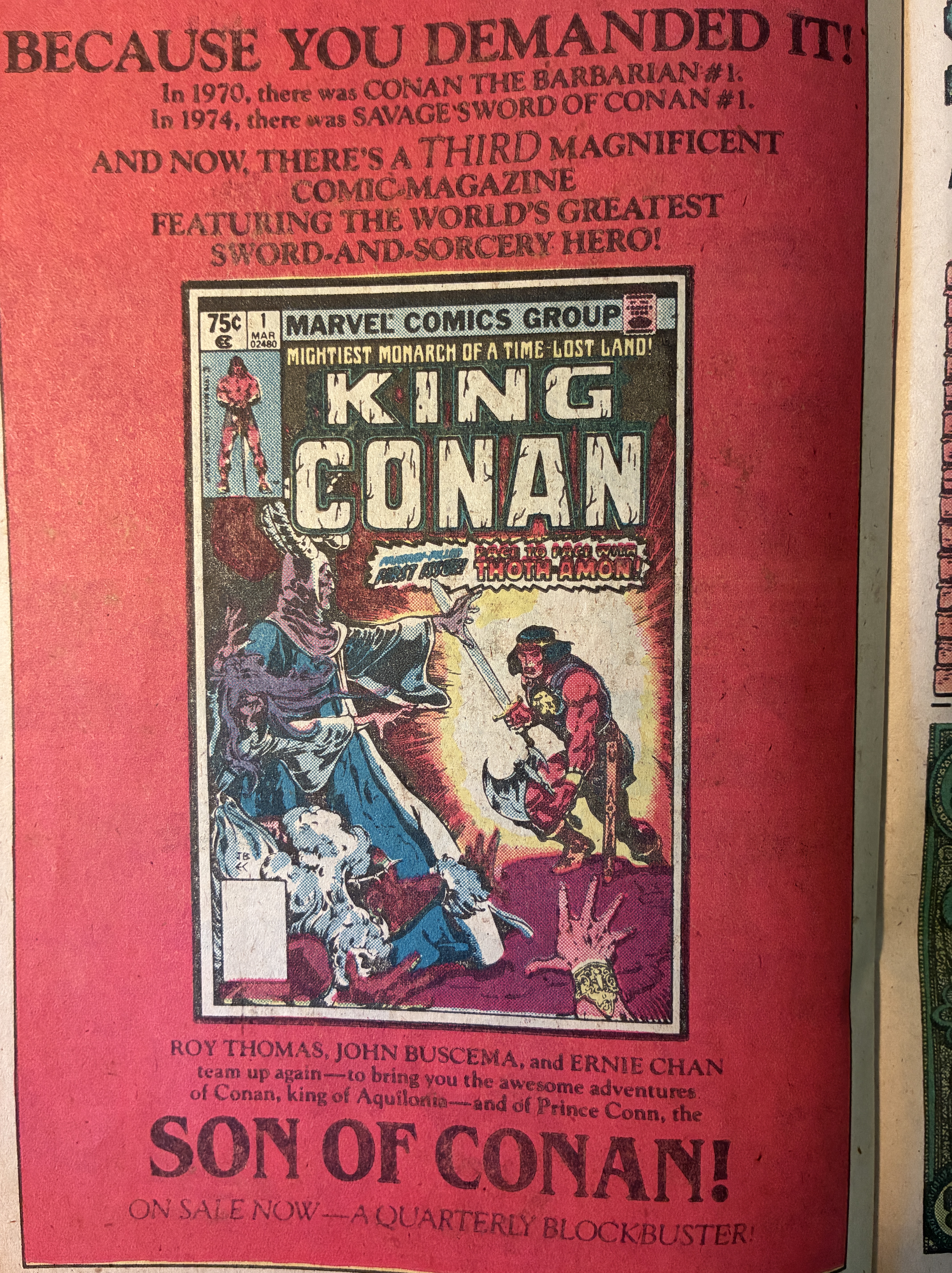
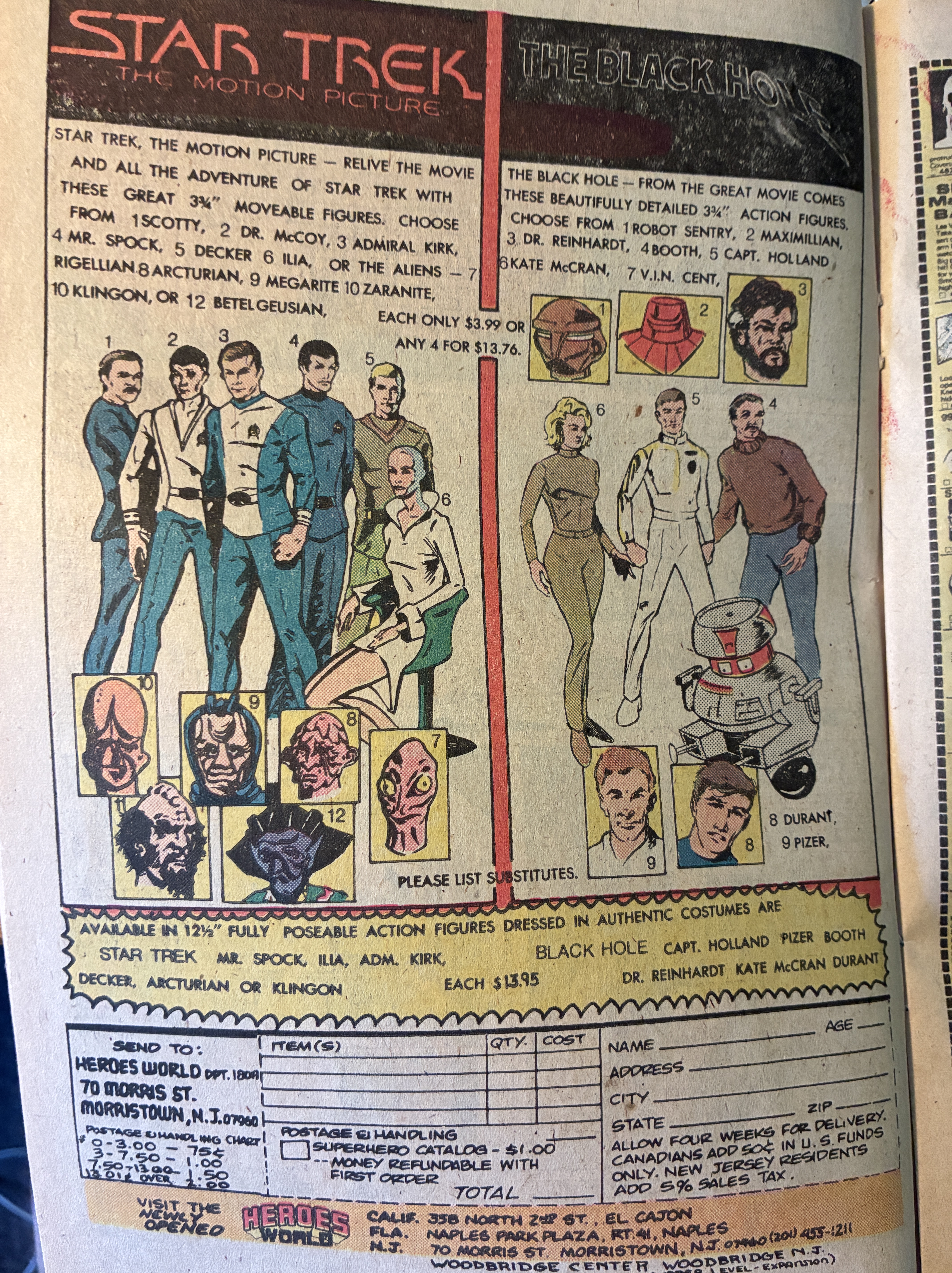
A variety of fun ads. I distinctly remember learning the word “akimbo” from the gum ad when I first encountered it as a kid. Also, why does Superman need an airplane (much less a van).


Overall

Solidly above average.

“The World’s Greatest Comic Magazine!” Fantastic Four No. 213

28 Saturday Mar 2026

Posted by percivalhenry in The World's Greatest Comic Magazine

≈ 3 Comments

Tags

1979, Fantastic Four, Fantastic Four 213, galactus, John Byrne, marv wolfman, Marvel, Marvel comics, Sphinx, Terrax

Fantastic Four 213
“In Final Battle!”
Published September 1979
Writer: Marv Wolfman
Pencils: John Byrne
Inks: Joe Sinnott
Letters: John Costanza
Colors: Ben Sean
Editor: Wolfman
Cover:Byrne and Sinnott


Synopsis

Aboard Galactus’s ship, Reed, Ben and Johnny confront Terrax, who wants his revenge after being humiliated by the team on his home planet. Ben, under the effects of the Skrull aging ray, is overcome, and Johnny defeats Terrax by freezing him in liquid oxygen. Meanwhile, Galactus battles, and defeats, the Sphinx for the rights to the Earth. In punishment, Galactus send the Sphinx to his past to re-live his long life again. Galactus can now consume the Earth, but is confronted by Reed, who again wields a version of the Ultimate Nullifier, this one of his own making. Galactus cannot read his mind, and so can’t tell if Reed is bluffing and so leaves Earth. Reed reveals was a fake nullifier, and the Watcher blocked Galactus’s mental probe of Reed. The issue ends with Reed collapsing from the aging ray, leaving the Torch alone.


What’s going on here?


As promised in the last issue, we finally get the big confrontation between Galactus and the Sphinx we’ve been headed toward for many months, and in truth, it’s a bit of a dud. I’ll get into particulars below, but broadly, it didn’t feel big enough to justify the build up. Galactus takes care of the Sphinx without too much effort, and the fight serves both to marginalize the Sphinx as a cosmic baddie and reinforce Galactus as someone you definitely don’t want to mess with.

The John Byrne/ Joe Sinnott art team does another solid job, and it’s very clear Byrne draws the best Galactus, bar none.


What I liked

The conclusion of the Sphinx / Galactus fight had some cool moments, like this:

Unfortunately, that great panel is just one third of a page. In a just world, it would have been a double-page splash (we got one last issue) but it seems there was so much story to cram into this comic that Byrne was tight on space.

This was also impressive:

I like how the Sphinx literally shrinks before Galactus.

And I enjoyed this sequence where Johnny calls the Watcher on his non-interference bullshit:


What I didn’t like

I’ve said this before, but my preferred version of Galactus is one who uses his power from an Olympian remove. He should be above the fray, god-like, dispatching his minions to fight on his behalf or zapping enemies with his eye beams. I don’t even think he should touch the ground, but should hover above it. So I’m always disappointed when writers pull him into physical confrontations, and this one was just silly.

Galactus in a fist fight? It’s … unbecoming.


There was also some weird stuff between Galactus and the Sphinx, which suggested they have fought before. Is this a possible reference to the time loop Galactus condemns him too? That seems too subtle and intricate for Wolfman. (This is another cool sequence from Byrne and Sinnott).

Reed’s Ultimate Nullifier gambit was also a big disappointment. For the last few issues we’ve been promised he has a secret means of defeating Galactus. But it turns out it’s just the same way he defeated Galactus the first time he came to Earth, only dumber. Also, how is Galactus supposed to recognize Reed’s new Ultimate Nullifier when it looks nothing like the device from issue 50.


After Ben is defeated by Terrax, Reed orders Herbie to fly him home. To New York. From Egypt. More than 5,600 miles, dangling from the air. And since I’m pretty sure that little robot can’t fly as fast as a commercial airline, that must have taken a very long time.


Lastly, I’m not sure this was intentional or not, but Galactus really can’t accuse the Sphinx of speaking in riddles. That’s his whole schtick!


Anything else?

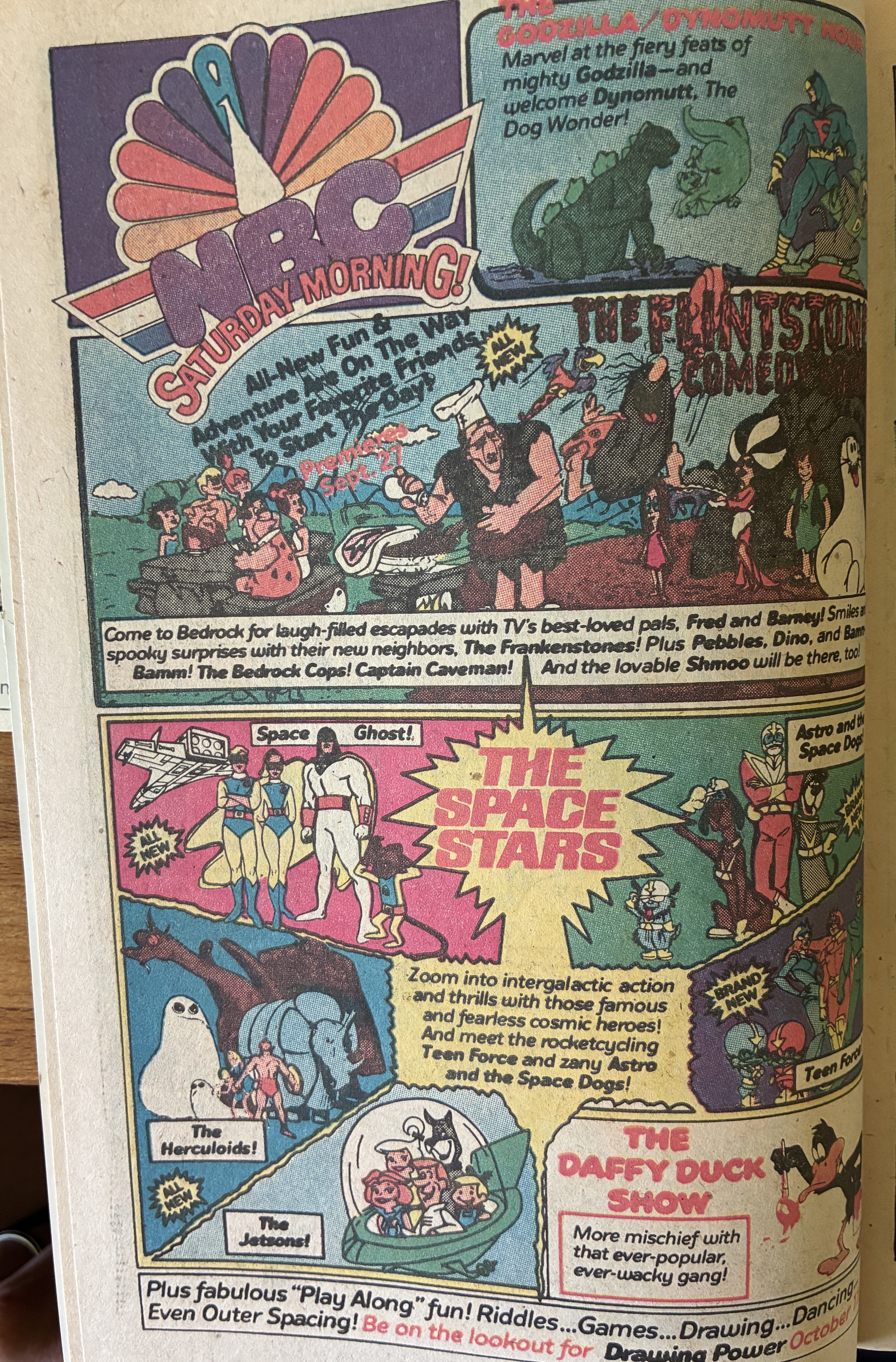
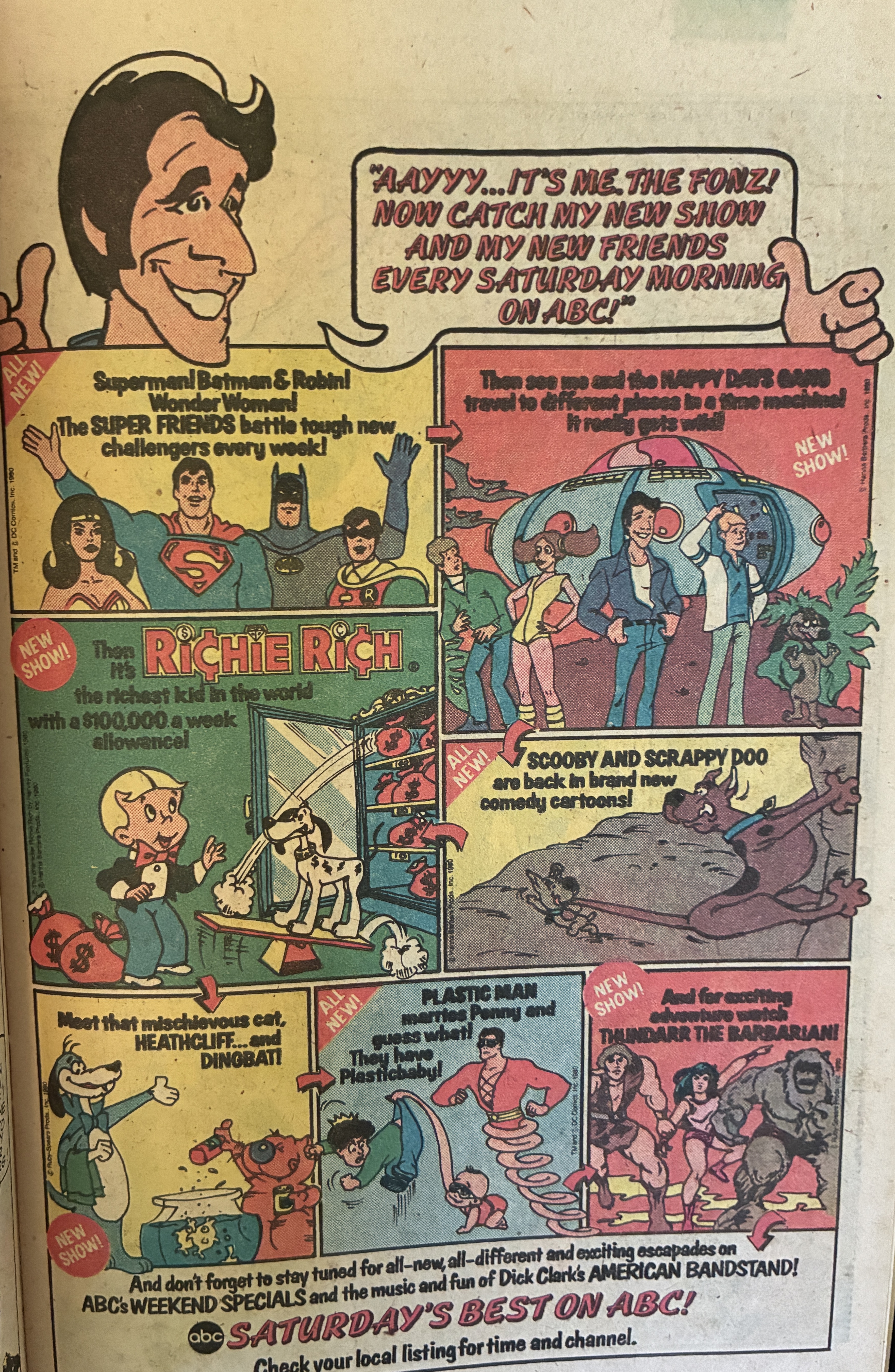
It’s that time of year when the networks rolled out their Saturday morning cartoon lineup. Here are CBS’s and ABC’s (I think NBC’s was in the last issue):


Overall

A fairly predictable disappointment

“The World’s Greatest Comic Magazine!” Fantastic Four No. 212

23 Monday Mar 2026

Posted by percivalhenry in The World's Greatest Comic Magazine

≈ Leave a comment

Tags

1979, Fantastic Four, Fantastic Four 212, galactus, John Byrne, marv wolfman, Marvel, Marvel comics, Skrulls, Sphinx, Terrax

Fantastic Four 212
“The Battle of the Titans!”
Published August 1979
Writer: Marv Wolfman
Pencils: John Byrne
Inks: Joe Sinnott
Letters: John Costanza
Colors: Carl Gafford
Editor: Wolfman
Cover: Walter Simonson

Synopsis

Galactus, Terrax and the Fantastic Four head to Earth to stop the Sphinx. Once there, the Invisible Girl falls unconscious as the Skrull’s aging ray takes effect. The rest of the FF track the Sphinx to Egypt (naturally), where he announces his plans to remake the world. Terrax attacks the Sphinx and is quickly defeated. Galactus then arrives and while he and the Sphinx prepare to do battle for the right to Earth, Terrax launches an attack on the FF.

What’s going on here?

This is a table-setting issue, laying the ground up the next and (one hopes) final chapter in a very long story arc that began way back in issue 204. After maneuvering the chess pieces around for nearly a year, Wolfman seems to have what he wants: Galactus vs. the Sphinx for the Earth, with the FF helpless as they succumbs to the Skrull’s aging ray. It took a lot to get us here and it remains to be seen if Wolfman can stick the landing.

The art in this issue is unremarkable. There are a few panels that have Byrne’s signature elements, but it’s much more by-the-book than last issue. Maybe he got a talking-to.

He does deliver an impressive double-page splash which also seems like an exercise in illustrating one-point perspective:


Perhaps the most significant aspect of this comic is the cover, which marks Walt Simonson’s Fantastic Four debut. At this point Simonson was an established creator with runs on comics like Star Wars and Battlestar Galactica, but he was still a few years from his legendary run on Thor which established him a comics superstar. Simonson, of course, would go on to have his own, too-brief run on the FF as writer and illustrator for 20 issues from 1989 to 1991. I consider it one of the top 5 FF runs of all time.

While I am a huge Simonson fan, I have to say this cover is not exactly his best work. Ben, particularly, is hard to look at. But it has his signature dinosaur signature, which is something.


What I liked

It took a while, but the Skrull aging ray finally is having a serious impact on the FF, as Sue approaches death. Johnny explains that there’s a history of early death in their family, which was brought up a few issues ago. This sequence is appropriately grave and ratchets up the stakes for the team.


I also liked the reappearance of the Skrull from issue 204, who seems to have spent the previous week as a computer.


And I liked how Terrax is again reprimanded by Galactus in a great Byrne panel:


What I didn’t like

A big chunk of this issue is taken up by recaps and flashbacks. The first four pages are devoted to explaining the last eight issues, which makes for a very dull start to the comic. There’s so much to recap Wolfman drags in the Watcher for the sequence:


We also get a lengthy flashback explaining how the Sphinx became suicidal, which involves the intervention of a character called Sayge. Sayge apparently has been around for a while, first appearing in the mid-60s as a Dr. Strange character, but here their appearance feels utterly unnecessary and just drags out the Sphinx’s mostly uninteresting origin story.


Anything else?

These look cool:


Overall

Nothing to get excited about

“The World’s Greatest Comic Magazine!” Fantastic Four No. 145

07 Saturday Sep 2024

Posted by percivalhenry in The World's Greatest Comic Magazine

≈ Leave a comment

Tags

1974, Fantastic Four, Fantastic Four 145, Gerry Conway, Marvel, Marvel comics, Ross Andru

Fantastic Four 145
“Nightmare in the Snow!”
Published Jan. 1974
Writer: Gerry Conway
Pencils: Ross Andru
Inks: Joe Sinnott
Letters: John Costanza
Colors: Linda Lessmann
Editor: Roy Thomas
Cover: Gil Kane and Frank Giacoia

Synopsis

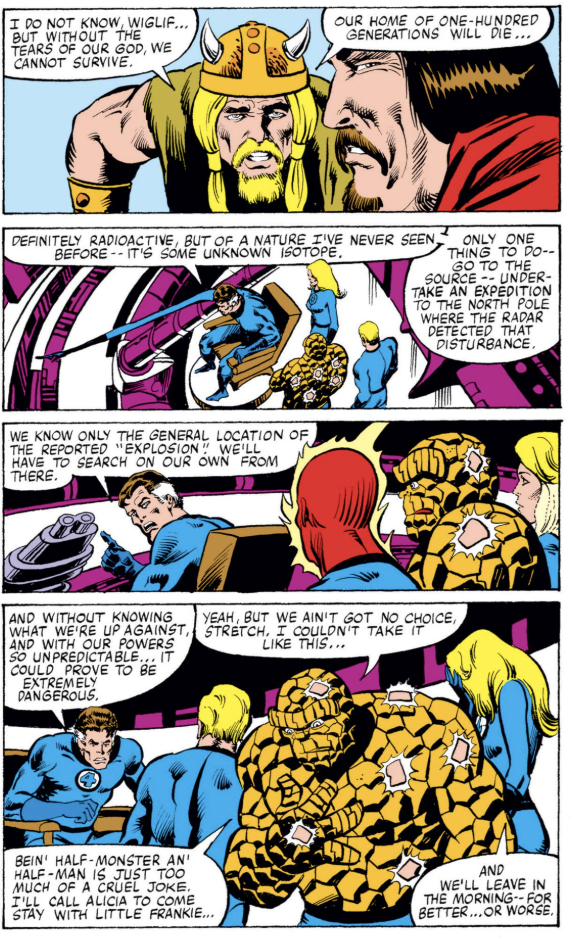
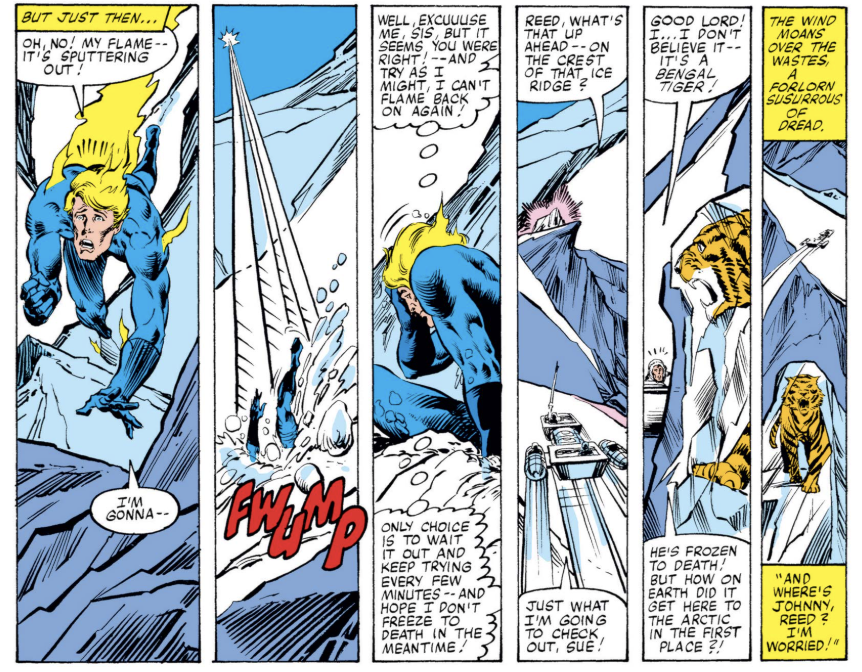
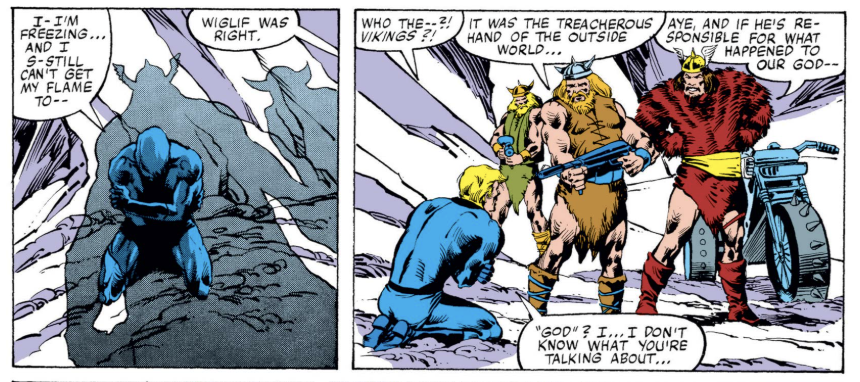
Responding to a summons from Black Bolt to return to Attilan, the Human Torch and Medusa are shot down in the Himalayas and attacked by a yeti-like tribe led by the evil Ternak. Ternak captures them, then reveals his plan to lower the world’s temperatures with his “climate cannon.”


What’s going on here

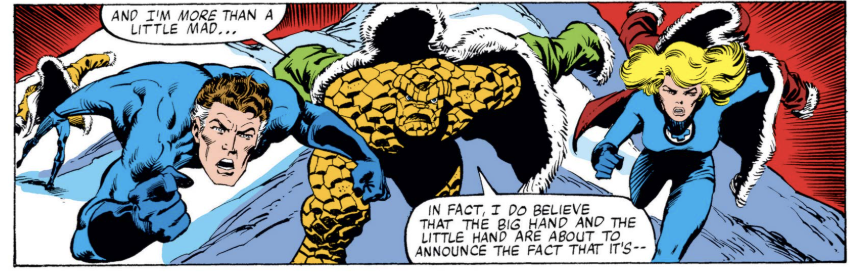
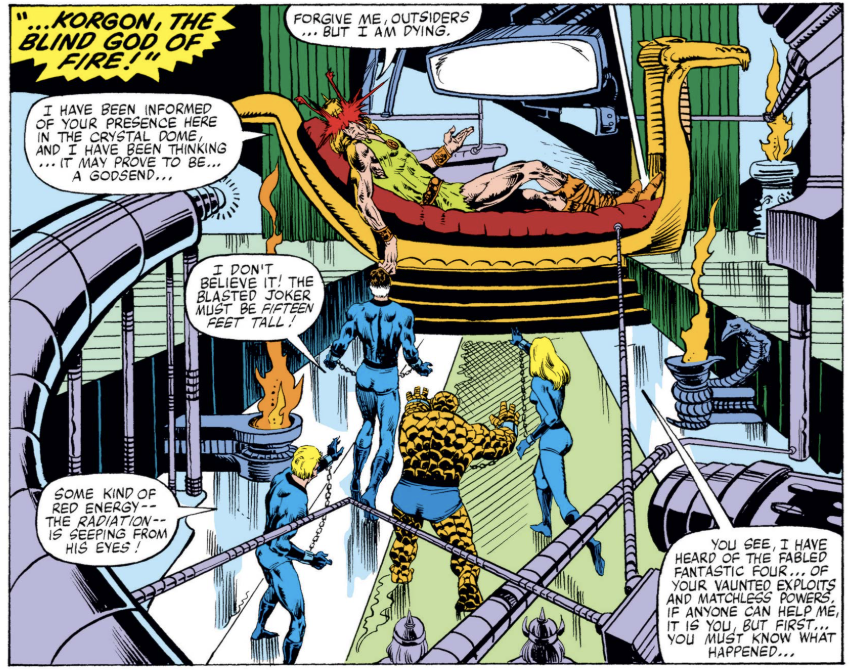
When I started this project several years I was eager to do a complete read-through of the Lee / Kirby issues, and I was looking forward to re-reading the John Byrne run. I was less certain of what I would find in between. The best case scenario would be some bronze-age gems I never would have encountered. The worst case was hokey stories with forgettable villains and inane plots. Reader, this comic represents everything I feared I might find between issues 103 and 232.

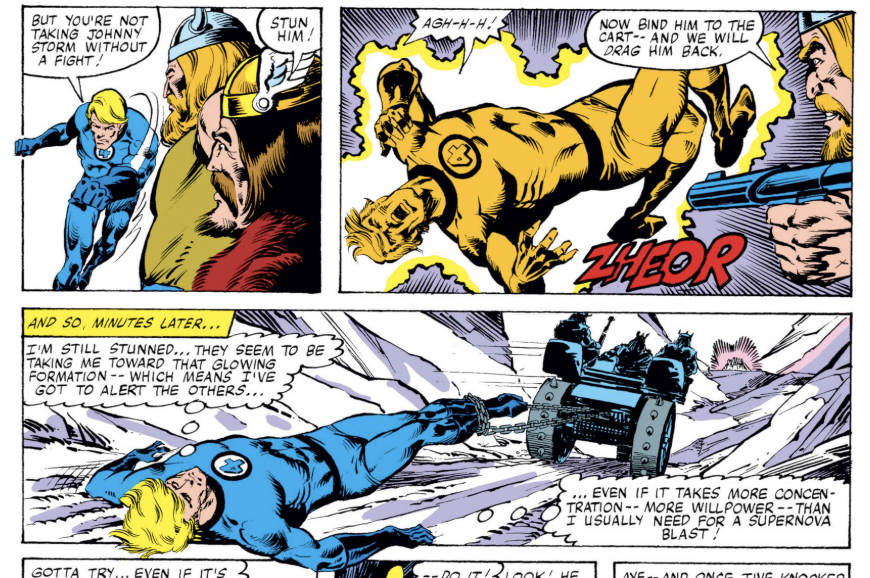
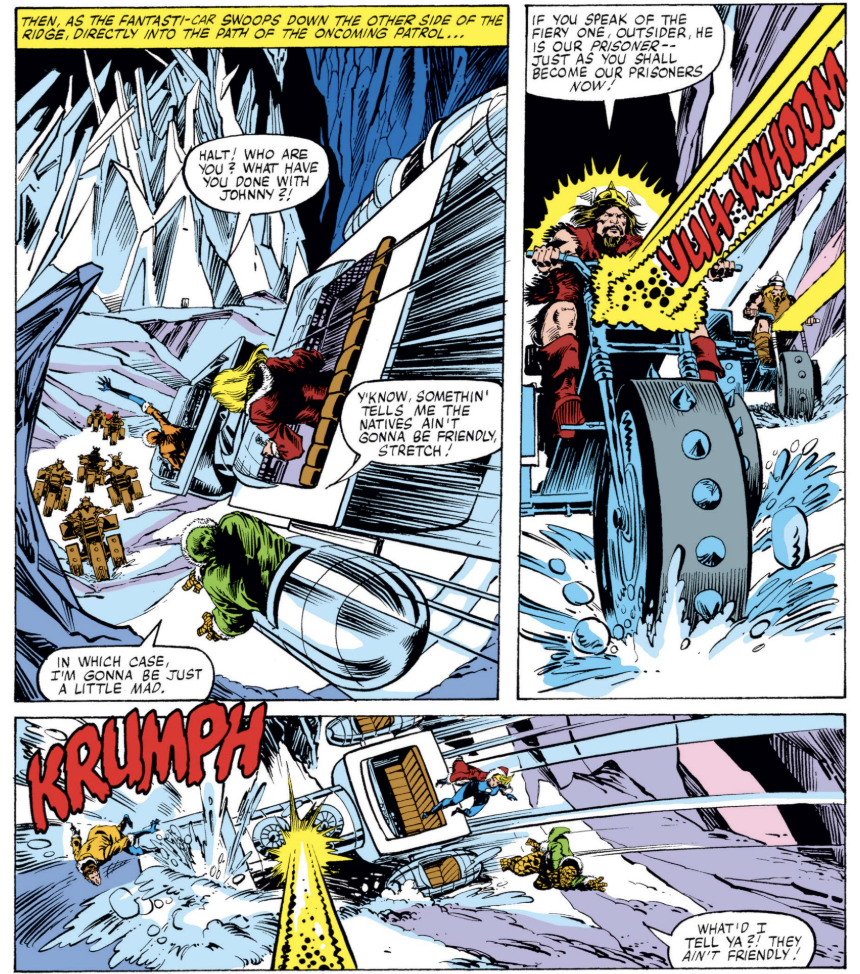
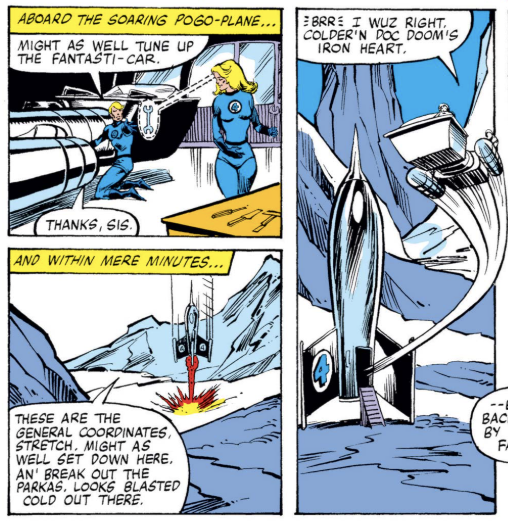
It isn’t terrible, per se, but it is deeply silly, and very forgettable. The story seems stolen from a pulp novel, and while you may believe a race of enlightened snowmen can build a machine capable of lowering the earth’s temperature, I am skeptical (today, of course, they would be celebrated as heroes). The issue’s structure is also odd, starting with the crashed pogo plane in the Himalayas, then the attacking yetis, before finally revealing via flashback how Johnny and Medusa wound up there. I had to check I was reading the right issue to make sure I hadn’t skipped one accidentally.

More compelling than the story is the appearance of some interesting names in the credits. This is Linda Lessmann’s first credited issue of the FF as colorist. She would go one to have a long career, mostly at Marvel but also at First Comics. It also marks the return of Ross Andru, who is filling in here for Rich Buckler. As usual, Sinnott’s inks give the FF a generally uniform appearance, but Andru brings his own energy to the comic and his Human Torch looks unlike anyone else’s.

Lastly, Gil Kane is back for the cover, where he is inked by Frank Giacoia. This effort is more successful than his cover two issues ago, although I don’t know that it screams “Kane.”

What I liked

Medusa finally gets a starring role, about a dozen issues into her stint as a team member. It’s still not clear that Conway knows what to do with her, and her personality seems completely generic, but at least she gets more than two speaking panels. Plus, we now know she can feel through her hair (which seems weird?)

I also liked Andru’s handing of the backstory of the yeti-people, aka The Chosen (not to be confused with the Frozen Chosen). It’s very evocative, and reminded me of Hergé’s Tintin in Tibet.


What I didn’t like

Aside from the above-mentioned critiques, the very lengthy flashback included yet another pointless fight between Ben and Johnny, one that serves no real purpose except to remind us how tedious their squabbles have become. Maybe Roy Thomas insisted Conway deploy these Lee / Kirby gimmicks, but Conway should have known better than to go back to this particular well so many times.


Anything else?

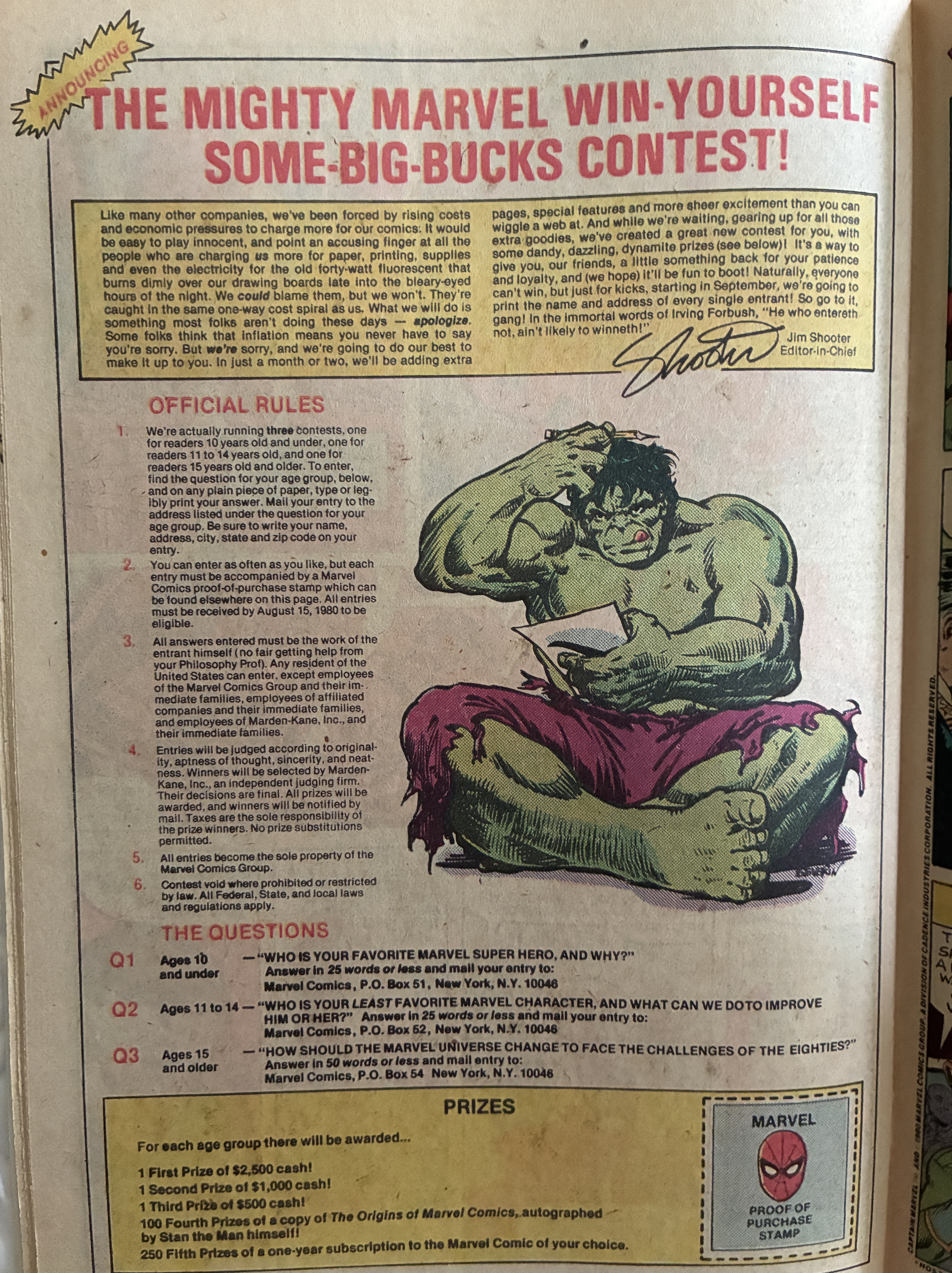
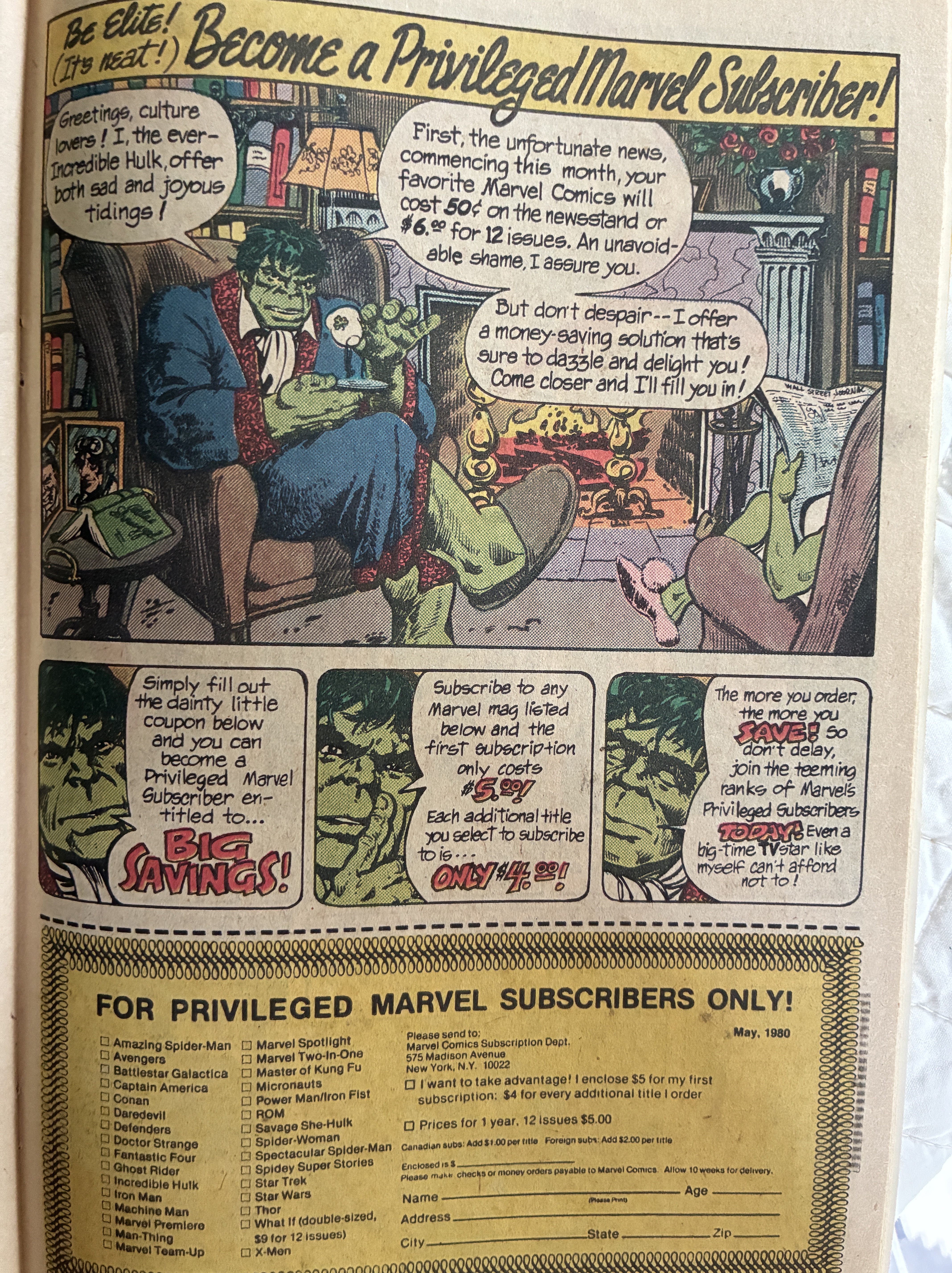
Marvel explains its value stamps (the reason this comics and the one before it have holes cut out of them) and it mostly sounds like a scam.


Overall

A thoroughly mediocre comic book

“The World’s Greatest Comic Magazine!” Fantastic Four No. 139

20 Saturday Jul 2024

Posted by percivalhenry in The World's Greatest Comic Magazine

≈ Leave a comment

Tags

1973, Fantastic Four, Fantastic Four 139, John Buscema, Marvel, Marvel comics

Fantastic Four 139
“Target: Tomorrow!”
Published July 1973
Script: Gerry Conway
Layouts: John Buscema
Finishes: Joe Sinnott
Letters: John Costanza
Colors: Stan Goldberg
Editor: Roy Thomas
Cover: Buscema and Frank Giacoia

Synopsis

The Fantastic Four escape the chasm they plunged into last issue and eventually defeat the Miracle Man, with the help of the ghosts of the Native American elders that granted him his powers. Meanwhile, Franklin’s powers continue to manifest, and a nuclear catastrophe, perhaps caused by Mr. Fantastic’s experiment, looms.


What’s going on here

This is a more-or-less satisfying conclusion to a two-issue story that began with the re-introduction of the Miracle Man as a vastly more powerful character. Here, he displays almost Beyonder-level power, creating a new city and willing into existence quasi-living people and creatures. Given his potential impact on the Marvel universe, it’s probably just as well he’s faded away into obscurity.

This is otherwise an unremarkable issue. It’s not helped by Gerry Conway’s hyperbolic writing (see panel above), which seems even more over-the-top than Stan or Roy’s, maybe because he’s clearly imitating both. There’s a lot of questionable physics and odd plot holes in this story, but it’s basically inoffensive. More interesting are the subplots: Reed’s tinkering with something that seems very dangerous, and more clues about Franklin’s powers. Also, it’s nice to see Sue again after a few issues of her being left out.


What I liked

Speaking of left out, Medusa finally gets a bit more of a role. Her presence on the team still feels incidental, but at least he get a glimpse of her personality in this sequence.


I thought the appearance of the Cheemuzwa spirits at the end was well handled. Yes, mystic Natives are a tired trope, but this was a graceful way to remove the Miracle Man from the board (he apparently shows up just once more, in Marvel Two-in-One 8)

And this sequence with Miracle man being rejected by a woman he just created out of nothing was weird and creepy.


Then there’s this sequence of the FF building a raft. I wasn’t sure if I liked it or hated it, but it’s so ridiculous I think I like it. It reminds me of the montages in the A-Team TV shows, where the the team would assemble some sort of contraption as music played.


What I didn’t like

About halfway through the comic, the action cuts away and we learn of an imminent nuclear threat. It seemed like this was related to the Miracle Man, so I waited in vain to learn how, only for it to be revealed, lamely, that it’s a subplot connected to Reed’s tinkering. I have no problem with setting up next issue’s story, but this was poorly executed.


Anything else?

In previous posts I have written about Stan and Jack created very human androids (or very android-like humans), as if the distinction between alive and machine didn’t much matter. Here, the Miracle Man creates what appear to be living creatures, yet Medusa calls them “androids.” Not sure what Conway was thinking.


This survey seems specifically designed for advertisers. Still sort of interesting. (They seem to want auto advertising).


Overall

Just OK

“The World’s Greatest Comic Magazine!” Fantastic Four No. 137

06 Saturday Jul 2024

Posted by percivalhenry in The World's Greatest Comic Magazine

≈ Leave a comment

Tags

1973, Fantastic Four, Fantastic Four 137, John Buscema, Marvel, Roy Thomas

Fantastic Four 137
“Rumble on Planet 3”
Published May 1973
Plot: Roy Thomas
Script: Gerry Conway
Pencils: John Buscema
Inks: Joe Sinnott
Letters: Artie Simek
Colors Glynis Wein
Editor: Thomas
Cover: Buscema & Sinnott

Synopsis

In the alternate, 1950s-themed world created by the Shaper of Worlds, the members of the Fantastic Four clash, then join together to battle the Warhead, a monster created by the Shaper. When both 50s factions — the “youthies” and “patriots” — are confronted by newly politicized African-Americans of the 1960s, the ’50s construct dissolves. The Shaper admits he made a big mistake choosing Slugger Johnson as the vehicle for his powers, and restores the world back to the 70s.


What’s going on here?

Fantastic Four 137 plays out the barely-intelligible string of last issue, filling in some blanks — we learn that The Brain is actually Slugger, who is intended to resemble Albert Einstein (he doesn’t) — while doubling down on its ham-handed analysis of mid-century sociology. The best thing about this two-issue arc is that it’s over, and seems to have left little mark on the FF or Marvel. One exception: Thomas Gideon, the orphaned son of Gregory Gideon, is whisked off by the Shaper to later become Glorian, who has a long run as a minor Hulk and Silver Surfer character.

One other note: This is the first issue of the Fantastic Four colored by Glynis Wein, who went on to have a long career, with more than 1,000 coloring credits. At this point she was married to comic writer Len Wein, but after their divorce she would return to her maiden name, Glynis Oliver.

What I liked

I’m generally a fan of splash pages, and there’s a few in this issue.


I also liked this sequence of Reed and Ben kibitzing:


What I didn’t like

As with last issue, the story makes little sense, and ultimately feels like a silly and pointless exercise in clumsy cultural anthropology. Thomas and Conway compound their simplistic youths-vs.-olds of the 50s dynamic by introducing the Civil Rights struggle of the 60s (which actually began in the 40s). No doubt it was well intentioned, but in the absence of a coherent story it feels preachy and naive.


This new development somehow destablizes the Shaper’s entire project, until it fades away.


None of it makes much sense, and the Shaper acknowledges as much, telling us “the reason is unclear.” Which is another way of saying Thomas and Conway wrote themselves into a corner and had no way out. The hope is this arc was an aberration but knowing some of the stories in the next few years, I can predict more cringe to come.

Also, Warhead is one of the ugliest comic creature designs I’ve ever seen.

Overall

Good riddance
“The World’s Greatest Comic Magazine!” Fantastic Four No. 136

04 Thursday Jul 2024

Posted by percivalhenry in The World's Greatest Comic Magazine

≈ 1 Comment

Tags

1973, Fantastic Four, Fantastic Four 136, John Buscema, Marvel, marvel-comics, Roy Thomas

Fantastic Four 136
“Rock Around the Cosmos!”
Published April 1973
Plot: Roy Thomas
Script: Gerry Conway
Breakdowns: John Buscema
Finishes: Joe Sinnott
Letters: Artie Simek
Colors: Stan Goldberg
Editor: Thomas
Cover: Buscema and Frank Giacoia

Synopsis

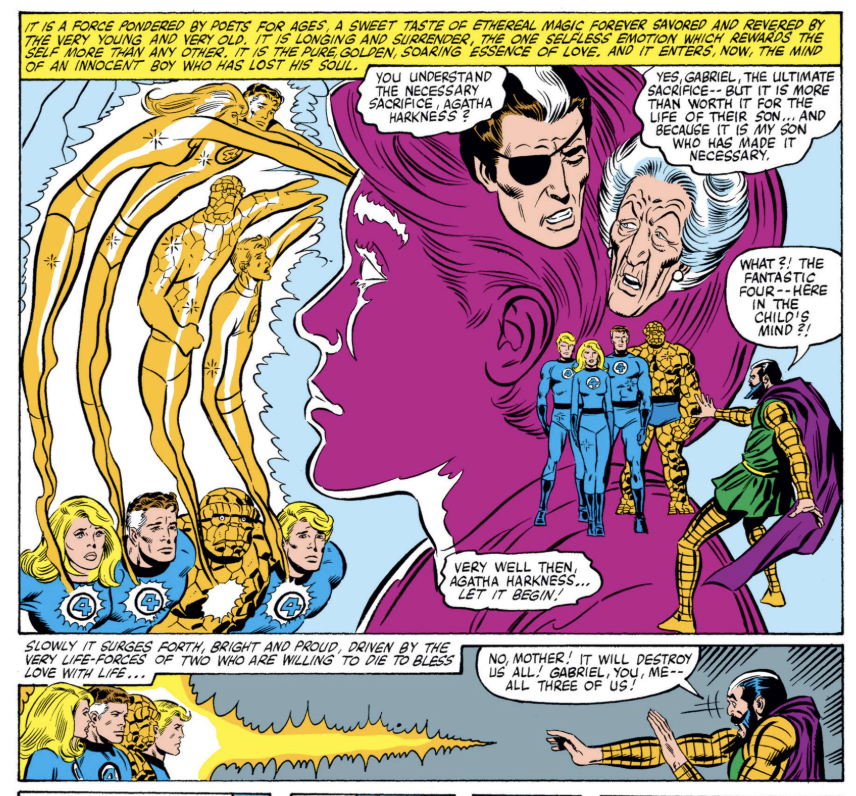
In the aftermath of last issue’s battle, Slugger Johnson, a henchman of Gregory Godfrey who mourns for his lost youth in the 1950s, is imbued with atomic powers and identified by the Shaper of Worlds as a vehicle for its reality-bending visions. The Fantastic Four are then thrust into what appears to be a parallel universe oriented around 1950s culture, where youths battle elders, with Mr. Fantastic and the Thing on side and Medusa and the Human Torch on the other. Both pairs are brainwashed by rival camps and dispatched to retrieve a weapon from a mysterious figure called The Brain.


What’s going on here?

Where to begin? If there was proof that this was now Roy Thomas’s comic, look no further. A cynic might say this is what happens when a comic’s writer is also the editor, because this issue desperately needed editing.

At its core, FF 136 is a multiverse story, a speciality of Thomas’s, who gave us the Squadron Supreme in the Avengers two years earlier, and who later would spin DC’s Earth 2 Justice Society into a multi-generational epic. Here, the alternate earth aspect isn’t mentioned explicitly, but it’s pretty obvious what’s going on, and the tag line previewing the next issue makes it clear.


The defining nature of this alternate earth is that it is rooted in a caricatured vision of the 1950s, one drawn from the psyche for Slugger Johnson by the Shaper of Worlds. As we learn early on, Slugger really loved the 50s:


This painful 50s slang permeates the issue, and it seems clear that scripter Gerry Conway, who was born in 1952, learned it from watching B-movies on TV. What’s less clear is what lesson Thomas, who plotted the comics, wants us to draw from this extremely clumsy story. Is Thomas, born in 1940 and raised in the 50s, nostalgic for the era and its romanticized narratives of bikers rebellion and the birth of rock n’ roll? Or is he poking fun of that nostalgia? Is he using the excesses of the 50s youth culture to critique 60s youth culture? Is he hip? or is he square? Unfortunately, the story is so muddled it’s hard to know.

The presence of the Shaper of World’s is further evidence of the Thomasian drift of the Fantastic Four. Initially a Hulk villain created by Archie Goodwin the previous year, the Shaper is a Cosmic Cube brought to life by the Skrulls, and a character I know almost nothing about prior to this issue. But Thomas loves to play with characters from other comics, the more obscure the better, and a reality-bending cosmic creature is right up his alley. It’s fair to say Stan never would have dreamt of using it.
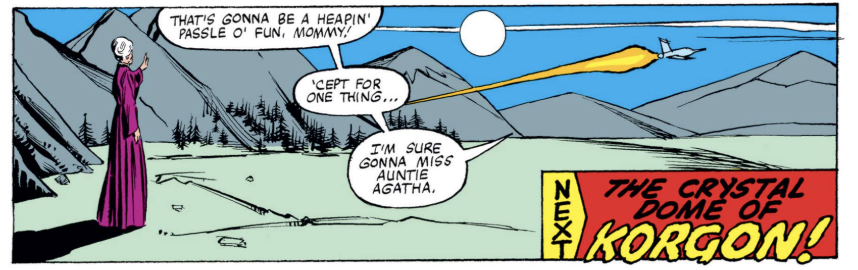

What I liked

Despite its extreme goofiness, I admired how hard Thomas and Conway lean into the 50s conceit. Here is Slugger Johnson reintroduced as Wildman:


Buscema and Sinnott also deliver a socko splash page that introduces the 50s gangsters:


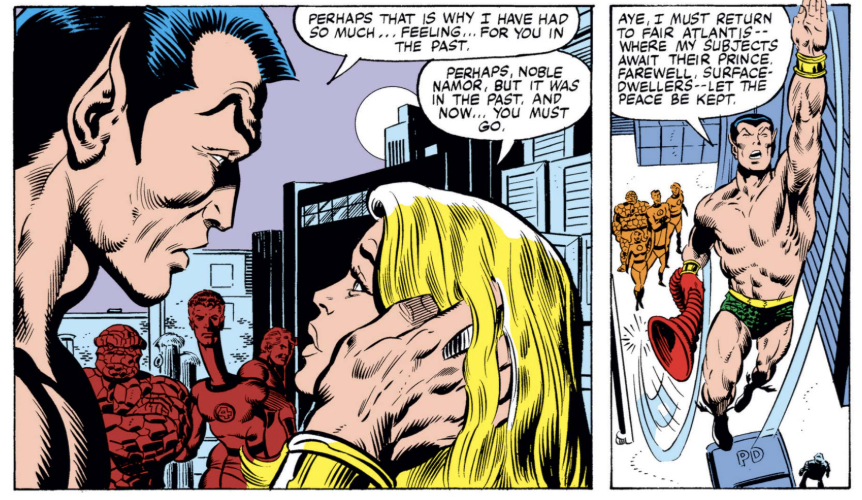
And before the silliness started, there was a touching sequence where Reed awakens from unconsciousness and imagines Medusa is Sue:

What I didn’t like

If it wasn’t obvious, this comic is an incoherent mess. The alternate earth plot is confusing and it’s never clear if Johnny and Medusa are in their right minds or not, since they attack Ben and Reed, then seem their normal selves. (And why is Medusa on the side of the youths? She’s a married Inhuman queen, hardly a teenager.)
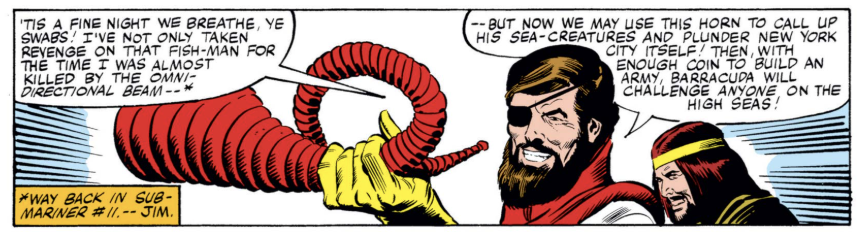
Then, instead of letting the jumbled story gel, Thomas and Conway shake it up again by introducing another character, The Brain, who we meet in this kaleidoscopic sequence:


I can’t imagine a kid picking up this comic as his or her first issue of the FF and making heads or tails of it.

Anything else?

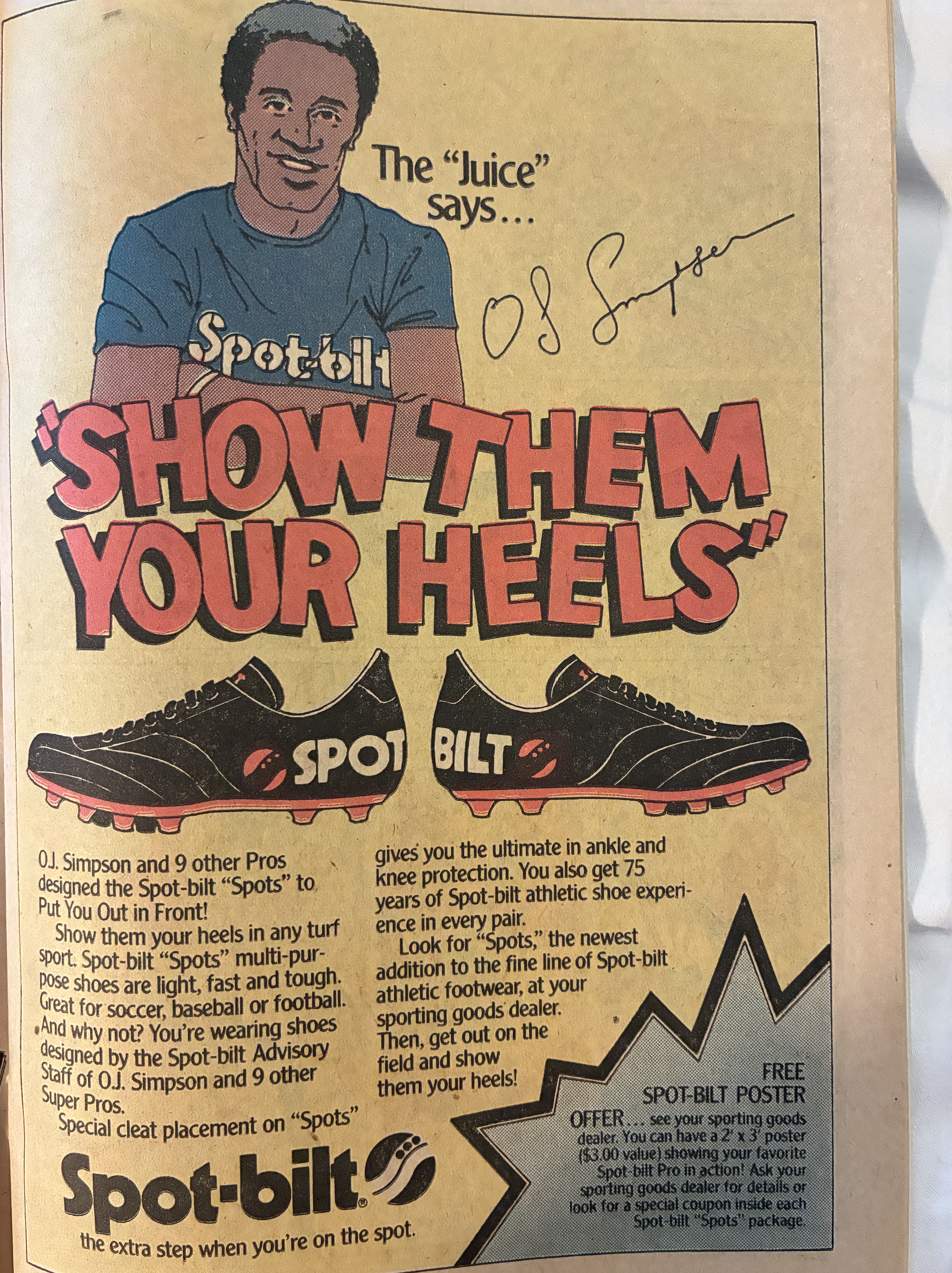
Some interesting ads in this issue. A fumetti-style ad for an anti-authoritarian trade school, and a pretty cool looking role playing magazine.


Overall

For Fantastic Four or Roy Thomas completionists only

So Random! Captain America 293

26 Sunday May 2024

Posted by percivalhenry in So Random!

≈ Leave a comment

Tags

1984, Captain America, Marvel

Captain America 293
“Field of Vision!”
Publisher: Marvel
Published: January 1984
Writer: J.M. DeMatteis
Pencils: Paul Neary
Inks: Eduardo Barreto
Letters: Diana Albers
Colors: Bob Sharen
Editor: Mark Gruenwald


Editor’s note: It’s been a while since I did one of these, so as a refresher: In So Random! posts, I pick a comic more or at less at random from my collection to re-read and analyze.

Synopsis

As Captain America tries to reconcile Bernie Rosenthal’s marriage proposal with his feelings for former love interest Sharon Carter, the villains Mother Superior, Baron Zemo and the Red Skull conspire to get their revenge on Cap. They transform Cap’s pacifist friend Dave Cox into the Slayer, who ambushes Cap and his sidekick, Nomad.

What’s going on here?

Captain America 293 came out pretty early in my collecting days, and about the time of the first Secret Wars series. J. M. DeMatteis was still writing the book and his plots were dark and intricate, particularly compared to his successor, Mark Gruenwald (RIP), who had a much more light-hearted take on Cap.

This would be a tough comic for a new reader to jump into, since so much of the story involves the back stories of Baron Zemo and Dave Cox (and Sharon Carter), but the plot moves along, and there’s plenty of action to go along with the introspection. The art by Neary and Barreto is serviceable, although it never really soars.

What I liked


I liked this scene of Cap dropping into to visit an old friend out of the blue, and disrupting his domestic life. We then get some revealing panels about Cap discussing his love life with Dave, and (oddly) skipping stones from his knees.

In group books like the Avengers, Cap tends to take on a larger-than-life quality, as he serves not just as a leader but a symbol of the American Way. But successfully written, in his own book at least, Steve Rogers is very much a human who is wrestling with his personal life. (Batman suffers from similar problems as a character who can be more symbol than person).

What I didn’t like

DeMatteis’s writing tends toward the purple and overwraught, particularly in the sequences with Zemo and Mother Superior. Consider this elaborate double page splash that attempts to sum up the history of human evil, for example:


Also, the Slayer concept feels vaguely ridiculous, and continues a longtime comic trope of taking civilian characters and making them heroes or villains. I much prefer it when ordinary people remain ordinary.


Anything else?

I always enjoyed these Q & As they ran in the letter pages of the books Gruenwald edited. This one was inspired by a recent Cap arc where he wound up in a post-apocalyptic future with Deathlok.


Overall

Standard mid-80s Marvel fare

“The World’s Greatest Comic Magazine!” Fantastic Four No. 130

18 Saturday May 2024

Posted by percivalhenry in The World's Greatest Comic Magazine

≈ Leave a comment

Tags

1972, comics, Fantastic Four, Fantastic Four 130, John Buscema, Marvel, marvel-comics, Roy Thomas

Fantastic Four 130
“Battleground: The Baxter Building!”
Published Oct. 1972
Writer: Roy Thomas
Pencils: John Buscema
Inks: Joe Sinnott
Letters: Artie Simek
Colors: Petra Goldberg
Editor: Thomas
Cover: Jim Steranko and Sinnott

Synopsis

After subduing the Thing and Meduasa, the Frightful Four—reconstituted with Thundra—take on the rest of the Fantastic Four, minus the Human Torch, in the Baxter Building and are saved only by the awakening of Franklin’s powers. In the aftermath, Sue declares she is leaving the team. Meanwhile, in the Himalayas, the Torch confronts the Inhumans, where a secret concerning Crystal is revealed to him.


What’s going on here?

This is a jam-packed issue, with big developments in the story, and some smaller ones outside it. From an amateur-comic-historian’s perspective, it’s notable for being the first Fantastic Four issue to credit a colorist, in this case, Petra Goldberg.

The history of comic book coloring is complicated, and the technology evolves dramatically over time. But my understanding is that in the 60s, 70s and 80s, the colorist would identify what colors were needed (always a combination of cyan, magenta, yellow and black) and where they would go. They would make notes on the art (or actually color copies of the pages) that would then be used by a color separator at the printer as a guide. Because of the limitations of the process—at most, only 64 possible colors are available—and because the colorist didn’t directly work on the art like a penciler and inker, it seems they were viewed less like artists and more like technicians. Hence, they were not credited. (A pretty good explanation of all this can be found in this Comic Tropes video).

I don’t think it’s a coincidence that this changed soon after Roy Thomas became editor. Thomas also instituted an “editor” credit—here used for himself—and seemed more interested than Stan Lee in assigning proper credit where it was due (a longtime issue with Stan that we know came to haunt him).

Recall, the first issues of the Fantastic Four had no credits all, just the signatures of Stan Lee and Jack Kirby. And when credits first appeared, they were very scant and presented almost as an after thought (this is FF 10):

By FF 130, the credits for all the main creators were in place and they pretty much remained this way for decades. Note Stan Lee’s presenting credit is now his signature. That began with the previous month’s issues, and I neglected to mention it.


Also notable is that Jim Steranko penciled the cover for this issue (which is probably why the Sandman looks so much like Nick Fury). I’m not sure it’s a particularly great cover, but anything by Steranko is worth paying attention to. This is the first of three covers he did for the Fantastic Four, and are the only things he ever did with the FF during his short career.

What I liked

A big—but not the biggest—in-comic event in FF 130 is Sue’s decision to leave the team. This has been brewing for a few issues, and through Thomas’s writing she has voiced her displeasure with Reed and his constant demands that she be sidelined to look after Franklin.

Here, she again raises those objections and he again tries to shut her down:


It finally boils over in the last page, featuring more jerk-like behavior from Reed:


Obviously, this doesn’t stick and she eventually returns. But her departure feels like a significant milestone in the development of Sue’s character, and, perhaps, in Thomas’s repudiation of the status quo he inherited from Stan. Thomas has been writing Reed pretty much the same way Stan and Jack did for a decade, but only under Thomas did Sue finally say, enough.

Speaking of gender dynamics, I also liked how Thomas played with cliches and stereotypes through Thundra, the Femizon from another dimension where women dominate men. Here, she picks up Ben like a doll:


Or here, where she refers to “men and children:”


Thomas also created an interesting and suspenseful sidebar with the Human Torch and Crystal. I legitimately have no idea what he sees here (we have to wait until next issue):


The Inhuman subplot is another example of Thomas’s skill as a storyteller. There’s an awful lot going in in the main plot, yet he’s able to jump out and devote a few meaningful pages to the Johnny/Crystal dynamic that builds character and sets up future arcs, all without distracting from the bigger story. Further evidence that the FF is in very good hands.

Oh, and I would remiss if I didn’t point out this jaw-dropping splash page from Big John. It doesn’t have a big impact on the plot, but it seems like it’s a fun opportunity for him to flex his Kirby muscles.


What I didn’t like

The biggest in-story development in FF 130 is the awakening of Franklin’s powers. Although hinted at a few issues ago, this is the first real manifestation of them.

In the bounds of this issue, it’s fine and I imagine for readers at the time, it must have been pretty cool. But it opened the door for decades of stories about Franklin’s powers that, on the whole, have been unsatisfying, confusing and distracting. No two writers seem to agree what to do with Franklin, and while some have embraced him as a mutant with god-like powers—Jonathan Hickman had him creating whole universes—others would be happier if he was just a kid. Dan Slott depowered him and Ryan North has a goofy retcon that has him using his powers one day a year.

I am sure Thomas didn’t know the can of worms he was opening up here, but the does-he -or doesn’t-he nature of Franklin’s powers been a perennially frustrating aspect of the Fantastic Four

Also, thumbs down for the story title—”Battleground: Baxter Building”—a combination of words which has been used probably a dozen times.

Anything else?

Some more ads for cool toys:


Overall

An excellent comic. Roy’s best to date.

← Older posts
Newer posts →
  • “The World’s Greatest Comic Magazine!” Fantastic Four Annual No. 15
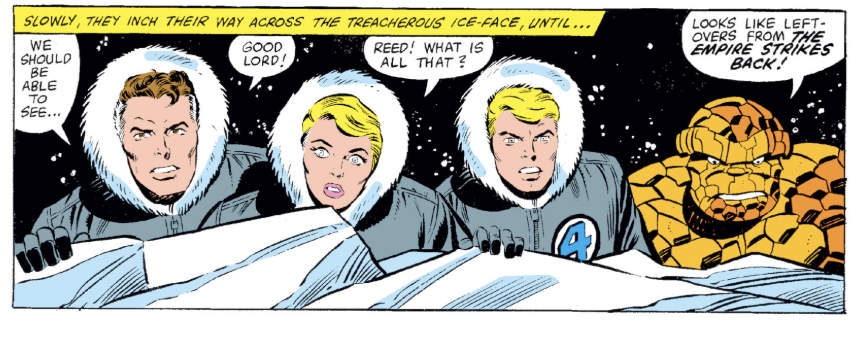
  • “The World’s Greatest Comic Magazine!” Fantastic Four No. 223
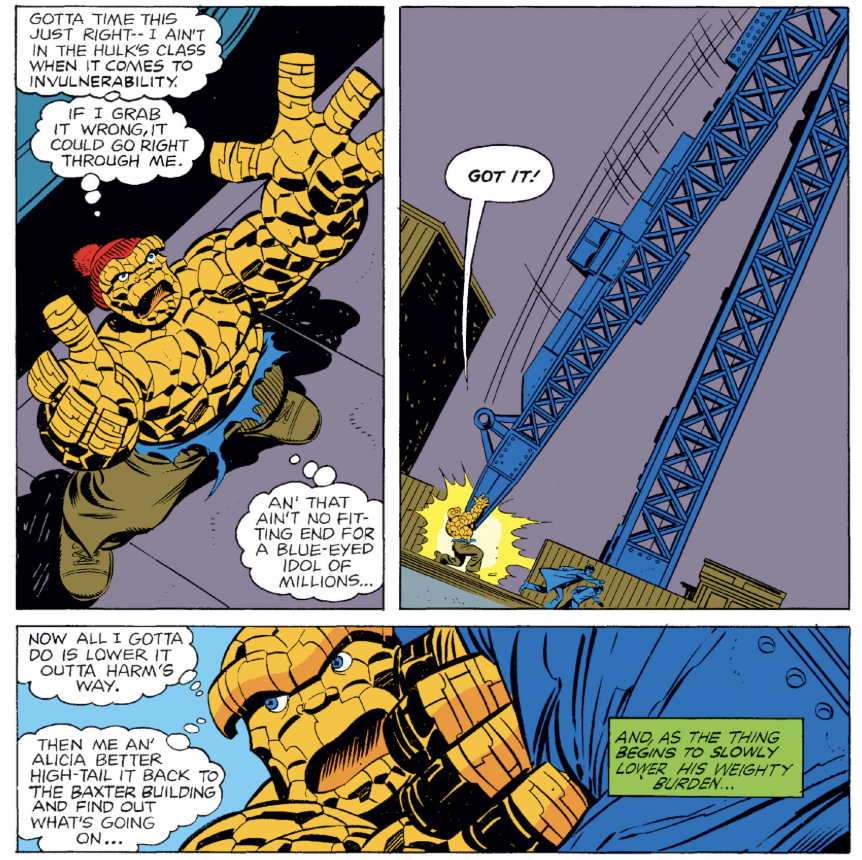
  • “The World’s Greatest Comic Magazine!” Fantastic Four No. 222
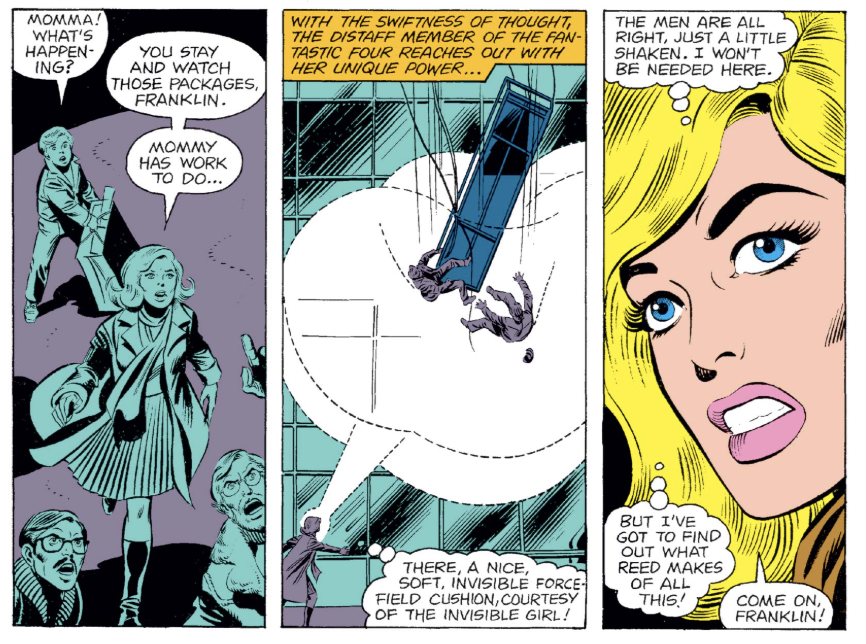
  • “The World’s Greatest Comic Magazine!” Fantastic Four No. 221
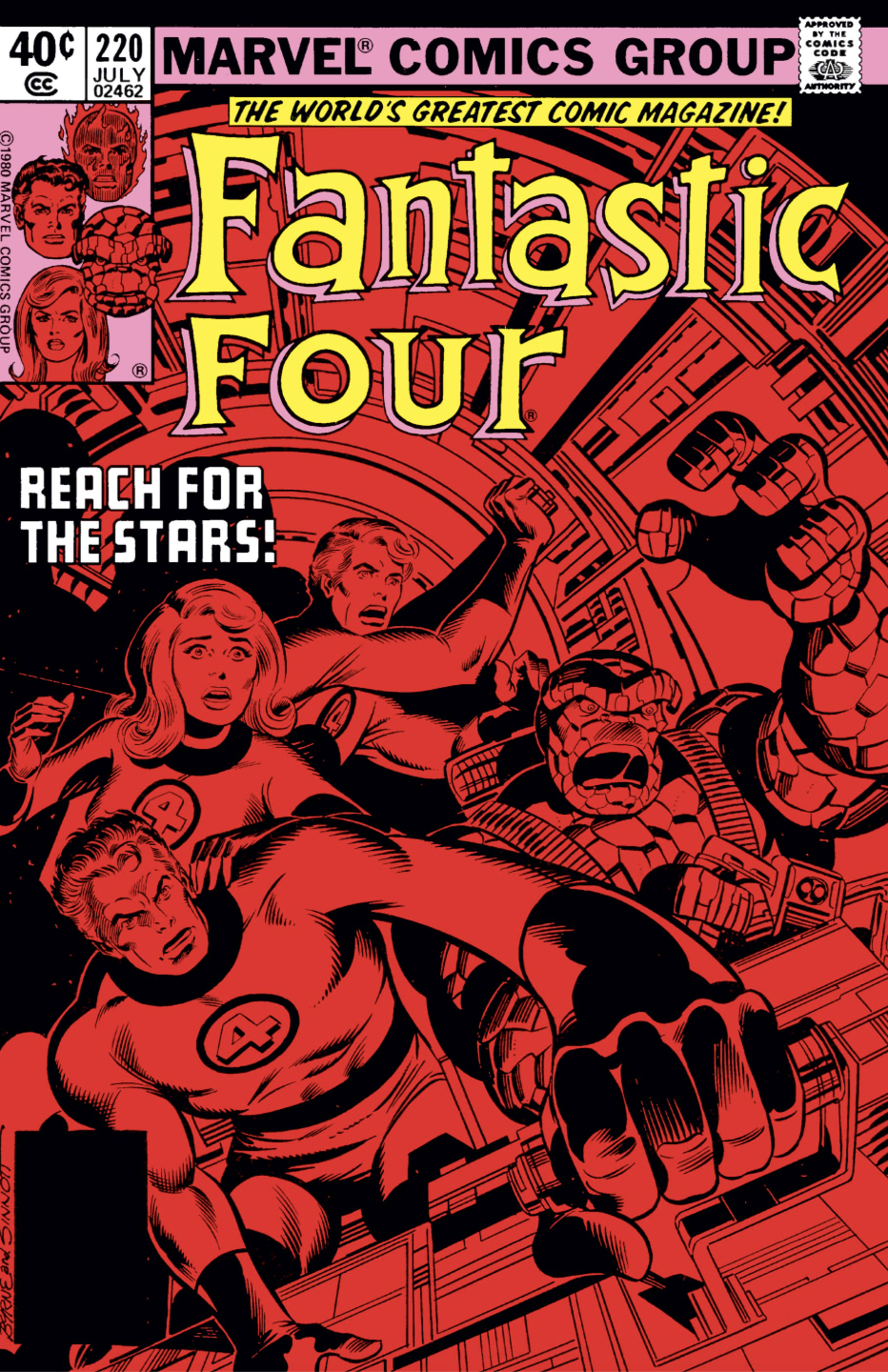
  • “The World’s Greatest Comic Magazine!” Fantastic Four No. 220
  • July 2026
  • June 2026
  • May 2026
  • April 2026
  • March 2026
  • February 2026
  • January 2026
  • December 2025
  • November 2025
  • October 2025
  • September 2025
  • August 2025
  • July 2025
  • June 2025
  • May 2025
  • April 2025
  • March 2025
  • February 2025
  • January 2025
  • December 2024
  • November 2024
  • October 2024
  • September 2024
  • August 2024
  • July 2024
  • June 2024
  • May 2024
  • April 2024
  • March 2024
  • February 2024
  • January 2024
  • December 2023
  • November 2023
  • September 2023
  • July 2023
  • June 2023
  • May 2023
  • April 2023
  • March 2023
  • February 2023
  • January 2023
  • December 2022
  • November 2022
  • October 2022
  • September 2022
  • August 2022
  • July 2022
  • June 2022
  • May 2022
  • April 2022
  • March 2022
  • February 2022
  • January 2022
  • December 2021
  • November 2021
  • October 2021
  • September 2021
  • August 2021
  • July 2021
  • June 2021
  • May 2021
  • April 2021
  • March 2021
  • February 2021
  • January 2021
  • December 2020
  • February 2018
  • May 2016
  • February 2016
  • January 2016
  • December 2015
  • November 2015
  • October 2015
  • September 2015
  • August 2015
  • July 2015
  • April 2015
  • March 2015
  • January 2015
  • December 2014
  • November 2014
  • October 2014
  • September 2014
  • August 2014
  • June 2014
  • May 2014
  • April 2014
  • March 2014
  • February 2014
  • July 2026
  • June 2026
  • May 2026
  • April 2026
  • March 2026
  • February 2026
  • January 2026
  • December 2025
  • November 2025
  • October 2025
  • September 2025
  • August 2025
  • July 2025
  • June 2025
  • May 2025
  • April 2025
  • March 2025
  • February 2025
  • January 2025
  • December 2024
  • November 2024
  • October 2024
  • September 2024
  • August 2024
  • July 2024
  • June 2024
  • May 2024
  • April 2024
  • March 2024
  • February 2024
  • January 2024
  • December 2023
  • November 2023
  • September 2023
  • July 2023
  • June 2023
  • May 2023
  • April 2023
  • March 2023
  • February 2023
  • January 2023
  • December 2022
  • November 2022
  • October 2022
  • September 2022
  • August 2022
  • July 2022
  • June 2022
  • May 2022
  • April 2022
  • March 2022
  • February 2022
  • January 2022
  • December 2021
  • November 2021
  • October 2021
  • September 2021
  • August 2021
  • July 2021
  • June 2021
  • May 2021
  • April 2021
  • March 2021
  • February 2021
  • January 2021
  • December 2020
  • February 2018
  • May 2016
  • February 2016
  • January 2016
  • December 2015
  • November 2015
  • October 2015
  • September 2015
  • August 2015
  • July 2015
  • April 2015
  • March 2015
  • January 2015
  • December 2014
  • November 2014
  • October 2014
  • September 2014
  • August 2014
  • June 2014
  • May 2014
  • April 2014
  • March 2014
  • February 2014
“The World’s Greatest Comic Magazine!” Fantastic Four Annual No. 15

“The World’s Greatest Comic Magazine!” Fantastic Four Annual No. 15

percivalhenry's avatar by percivalhenry July 18, 2026
“The World’s Greatest Comic Magazine!” Fantastic Four No. 223

“The World’s Greatest Comic Magazine!” Fantastic Four No. 223

percivalhenry's avatar by percivalhenry July 14, 2026
“The World’s Greatest Comic Magazine!” Fantastic Four No. 222

“The World’s Greatest Comic Magazine!” Fantastic Four No. 222

percivalhenry's avatar by percivalhenry July 5, 2026
“The World’s Greatest Comic Magazine!” Fantastic Four No. 221

“The World’s Greatest Comic Magazine!” Fantastic Four No. 221

percivalhenry's avatar by percivalhenry June 25, 2026
“The World’s Greatest Comic Magazine!” Fantastic Four No. 220

“The World’s Greatest Comic Magazine!” Fantastic Four No. 220

percivalhenry's avatar by percivalhenry June 15, 2026
“The World’s Greatest Comic Magazine!” Fantastic Four No. 219

“The World’s Greatest Comic Magazine!” Fantastic Four No. 219

percivalhenry's avatar by percivalhenry June 7, 2026

Blog at WordPress.com.

  • Subscribe Subscribed
    • Percival Henry: The Fantastic Four and more
    • Join 74 other subscribers
    • Already have a WordPress.com account? Log in now.
    • Percival Henry: The Fantastic Four and more
    • Subscribe Subscribed
    • Sign up
    • Log in
    • Report this content
    • View site in Reader
    • Manage subscriptions
    • Collapse this bar
Loading Comments...