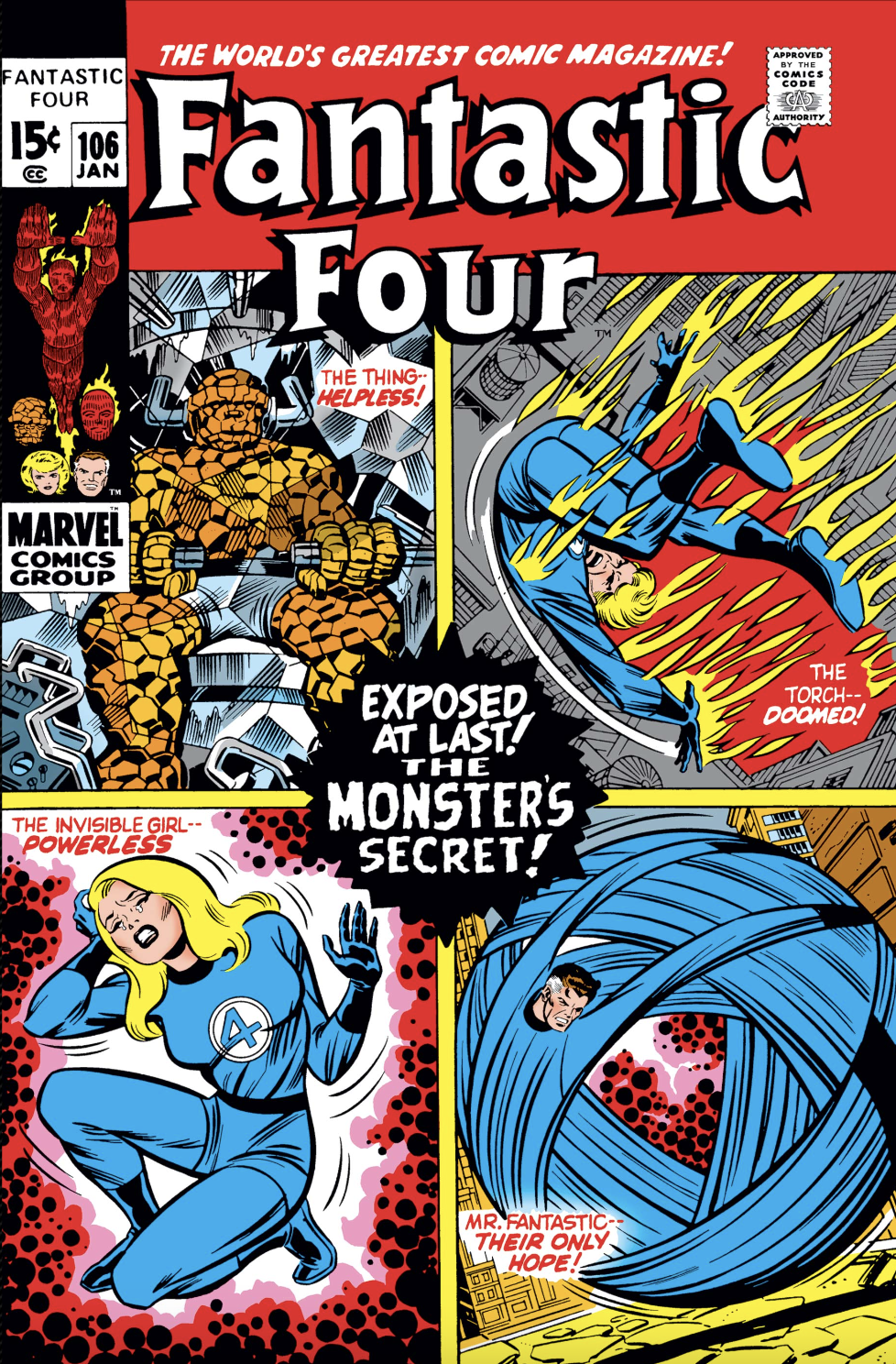
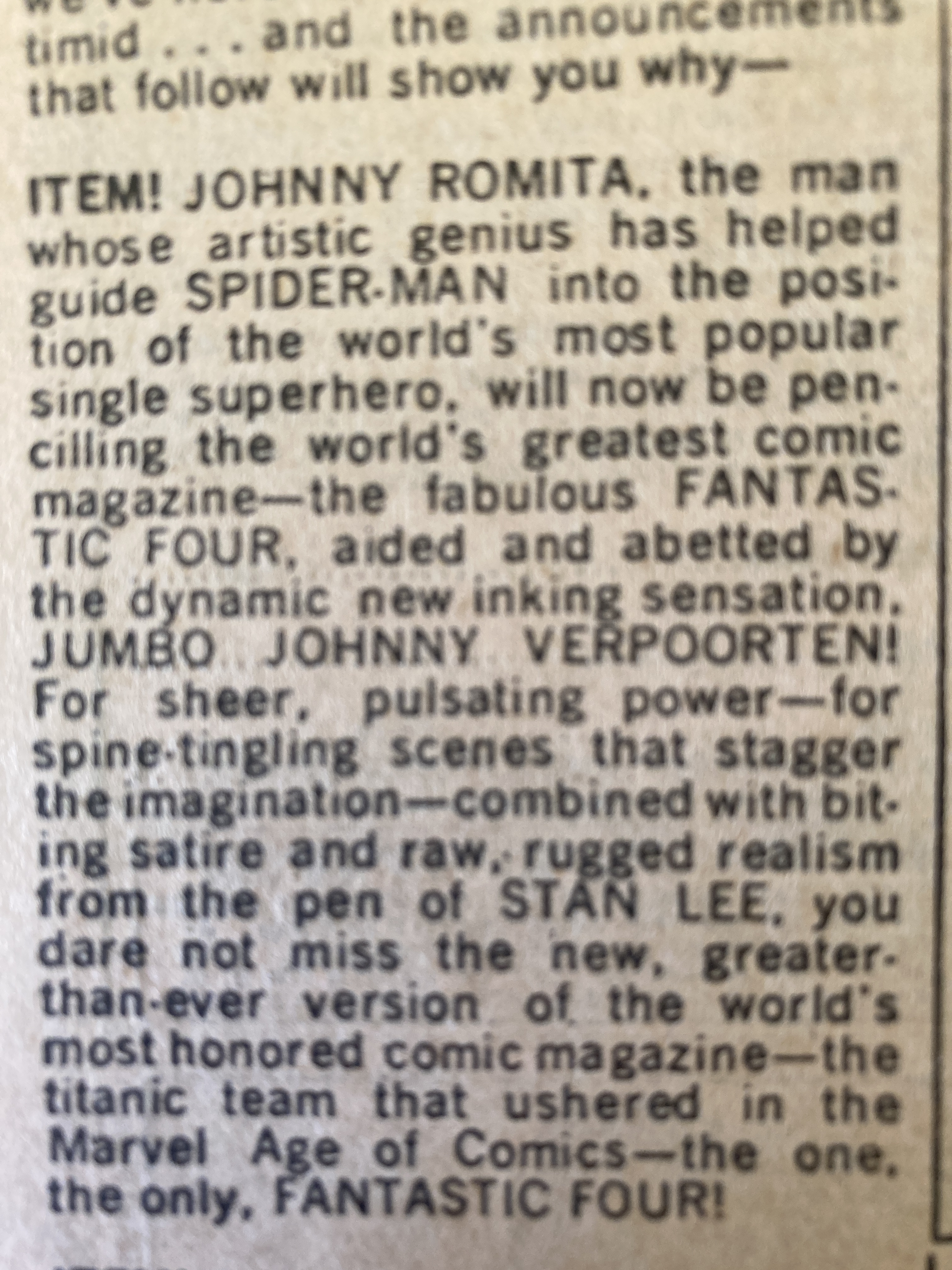
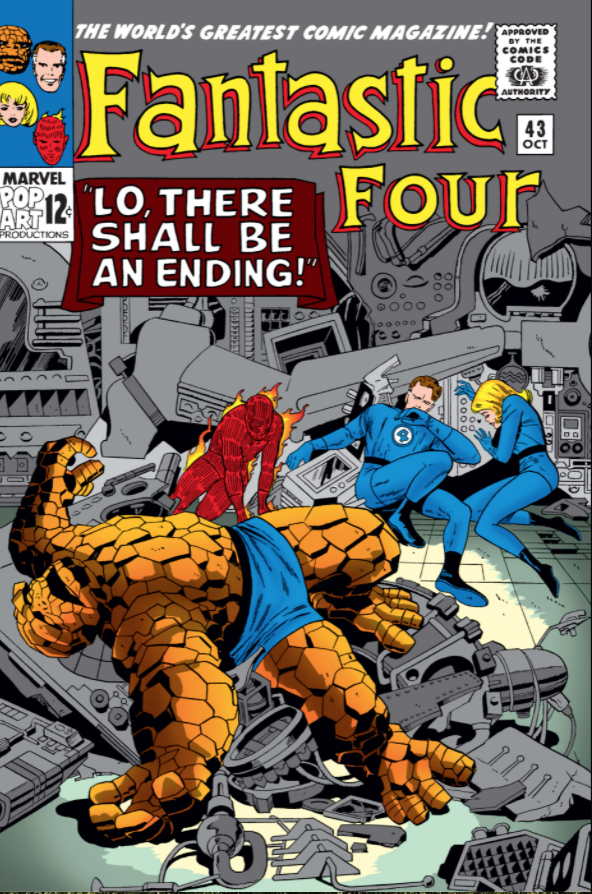
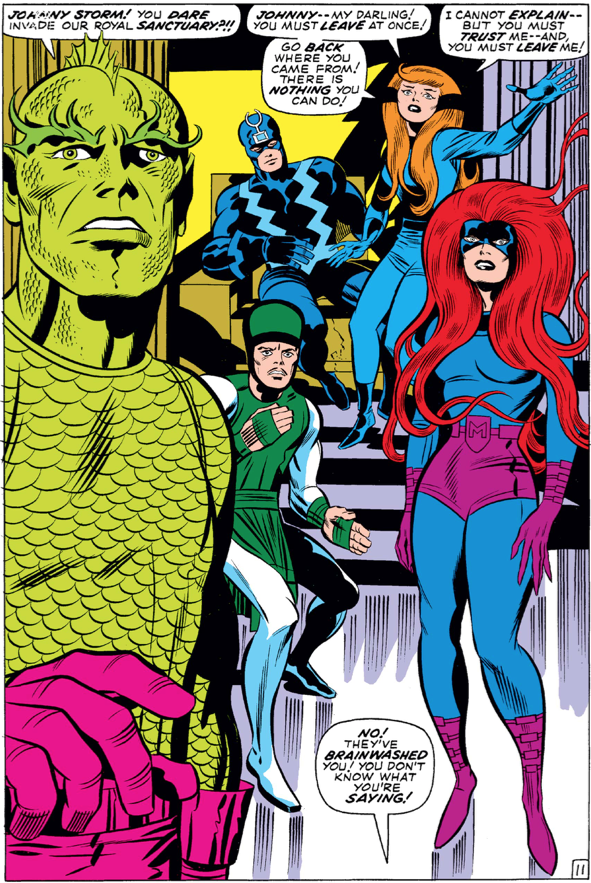
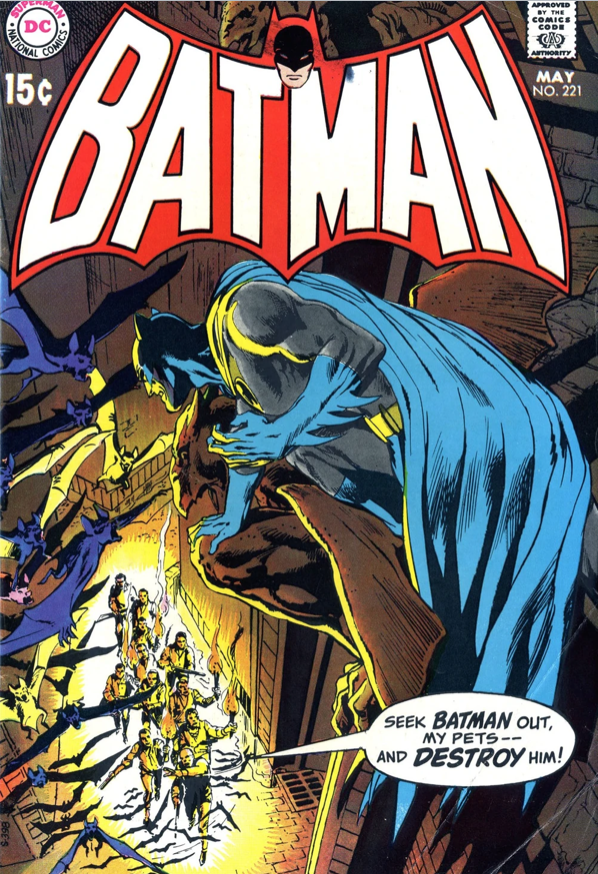
Fantastic Four 106 “The Monster’s Secret” Published: Oct. 1970 Writer: Stan Lee Pencils: John Romita Inks: Joe Sinnott Letters: Artie Simek Cover: Romita and Sinnott
Note: Apologies for the long delay since my last post. I have been dealing with some personal business. I’m hoping to get back to regular, weekly posts.
Synopsis
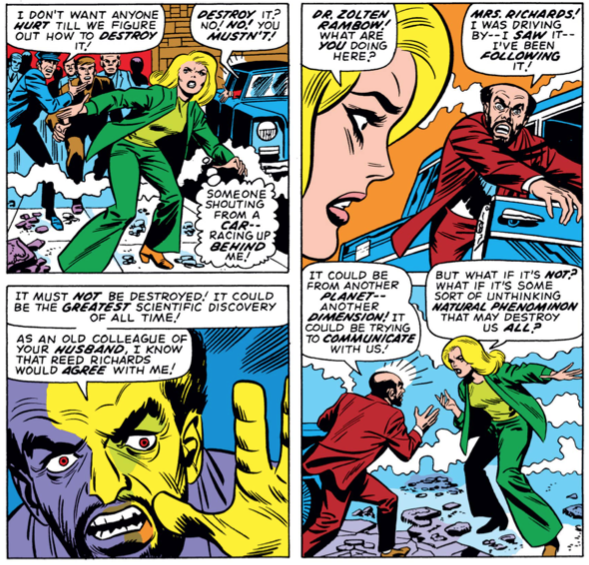
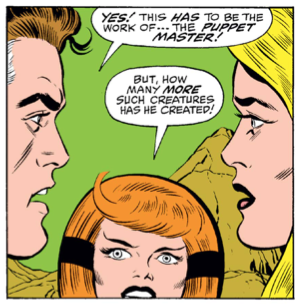
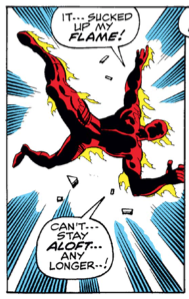
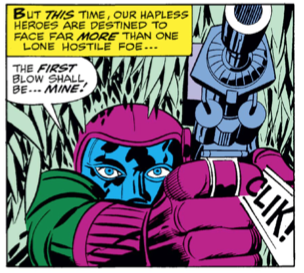
To save Sue and the city from a rampaging energy monster, Reed leaves Johnny to ice down Ben, who is mid-way through a process that could return him to human form. The energy monster turns out to be the son of a scientist and former colleague of Reed’s, part of an experiment gone awry, and with Reed’s help he is restored to normal.
What’s going on here?
This is a much more satisfying comic that last issue, which was notably disjointed. There are still plenty of plot holes—why, exactly, does Johnny need to put Ben in a deep freeze?—but the story is pretty straightforward and the reveal, that the monster is Dr. Rambow’s son, adds a poignant (if predictable) note.
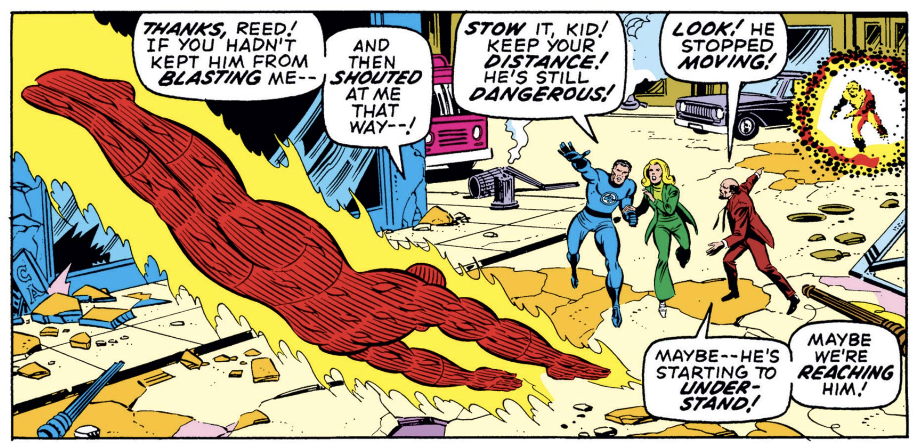
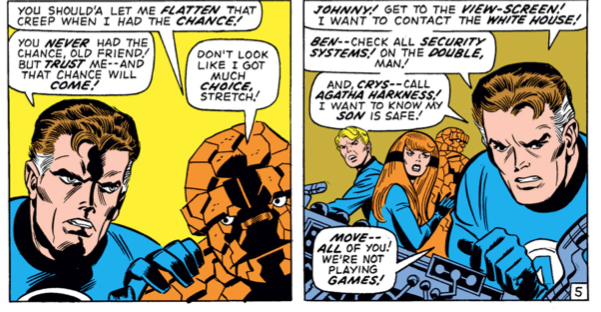
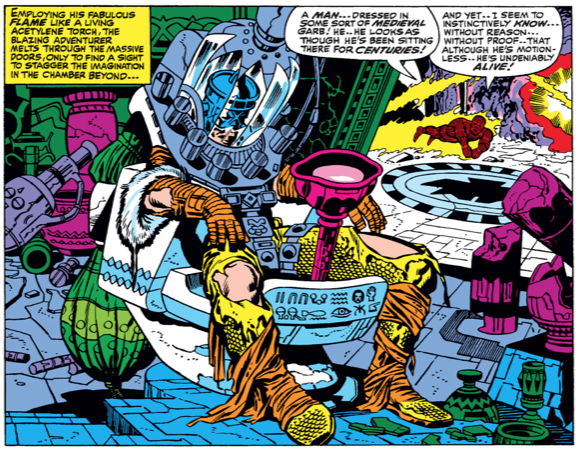
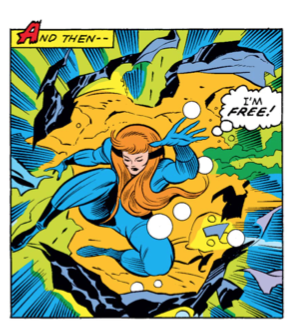
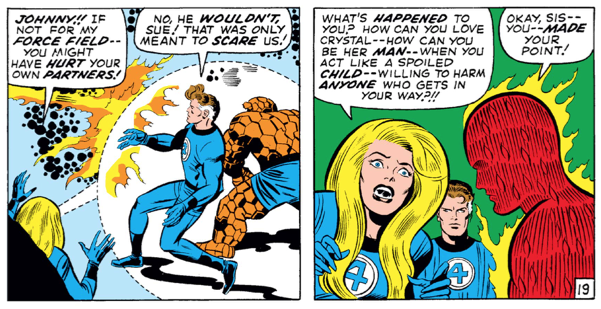
The issue is also notable for the return of Joe Sinnott, who missed the last three issues. John Verpoorten did a credible job in his absence, but under Sinnott the comic looks and feels more like Kirby hadn’t left. That includes a panel like this:
Dig that Kirby Sinnott Krackle!
What I liked
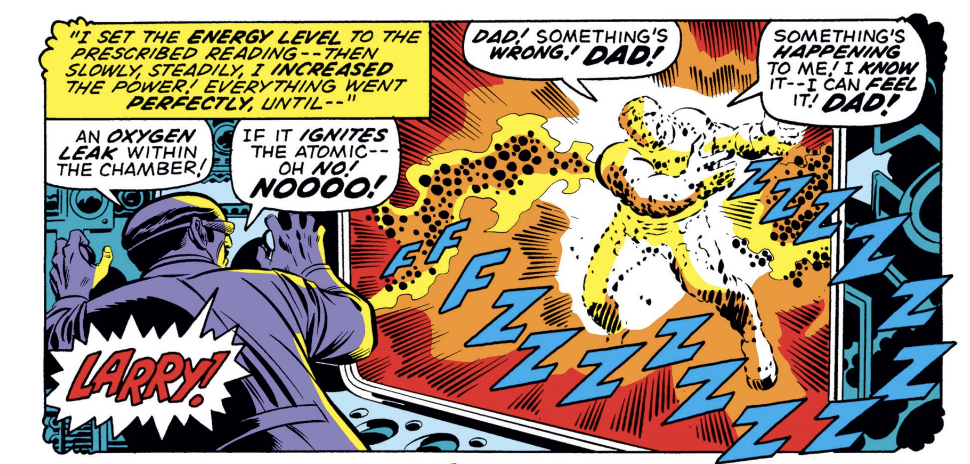
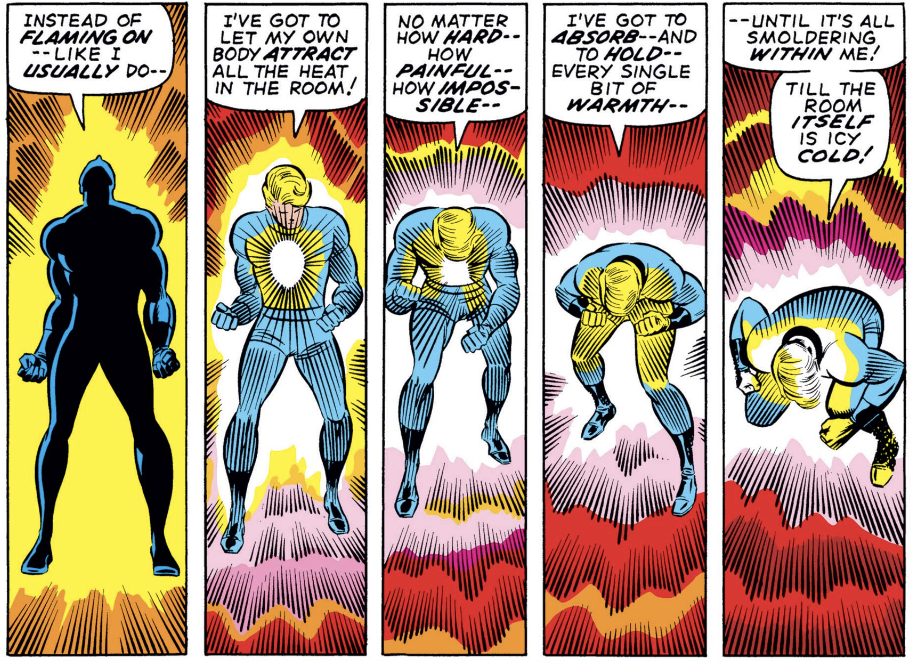
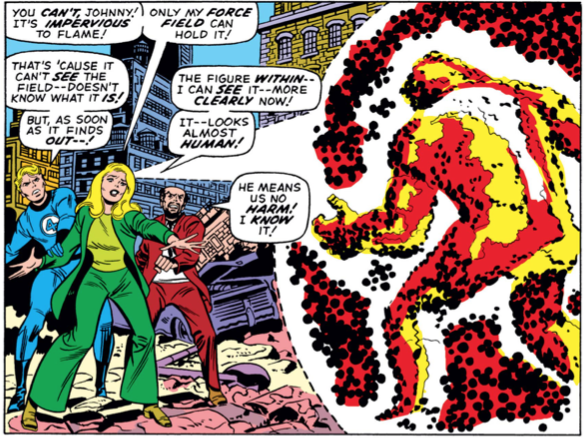
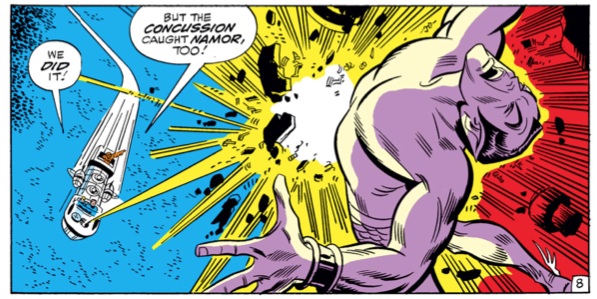
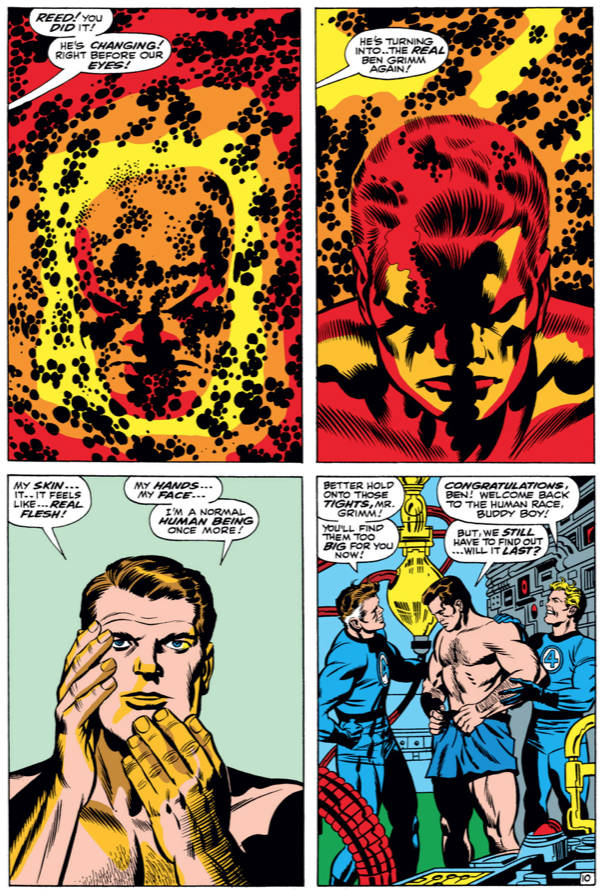
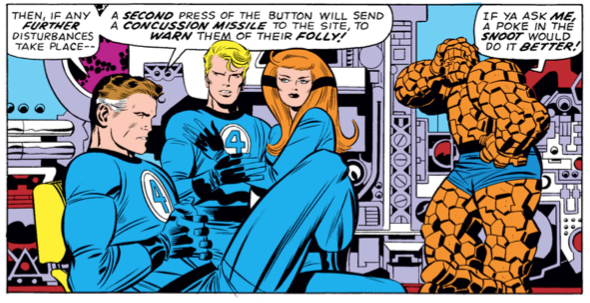
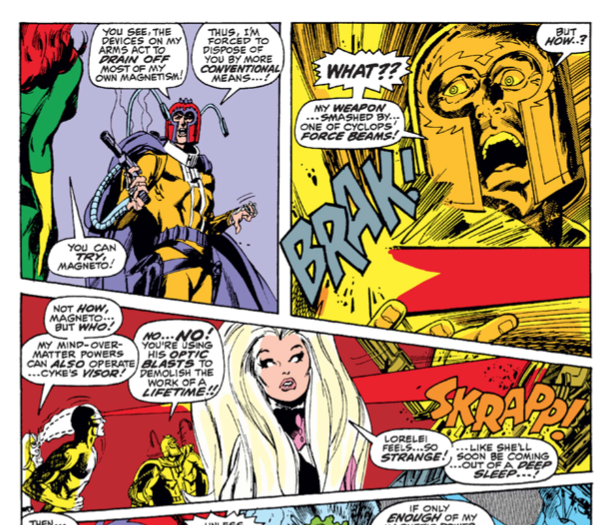
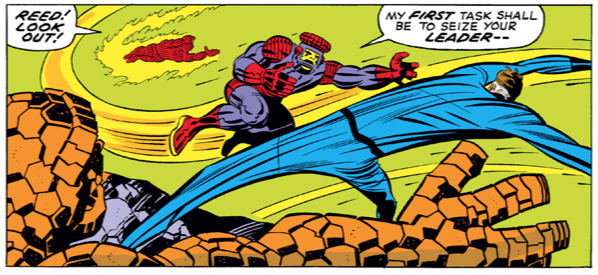
The Romita / Sinnott combination is pretty effective, and the art hits some high notes. I particularly liked this sequence:
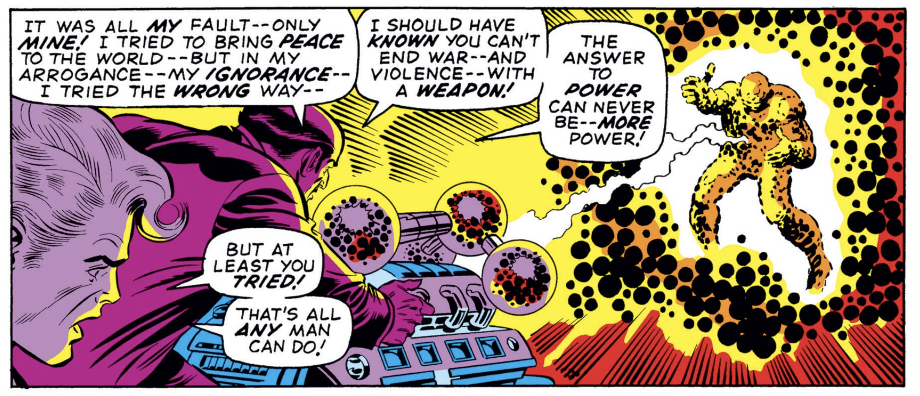
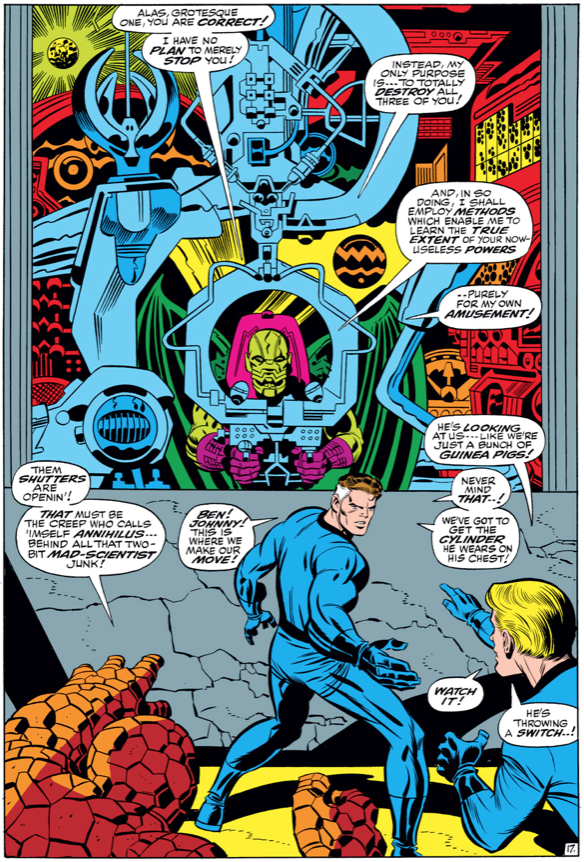
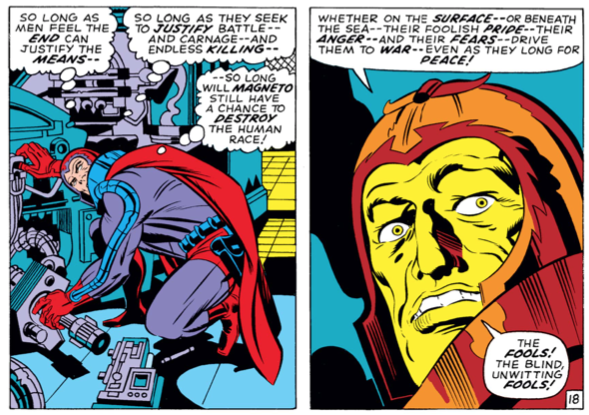
There’s also one of Stan’s moral lessons, about Dr. Rambow’s hubris. These maxims can be a bit corny, but I like how Stan is reaching for an elevated purpose in his stories. (Also: more Krackle)
What I didn’t like
The story feels like a bit of a throwback to one-and one plots of early issues, where the FF tangles with some bad guys and Reed whips up some gizmo to save the day. Outside of the twist about Rambow’s son, it’s all very obvious and linear. There’s no way of knowing for sure, but the lack of originality in the storiy may be a result of Kirby’s departure, with a distracted Stan cooking up plots on his own and resorting to old, clichéd story lines.
Anything else?
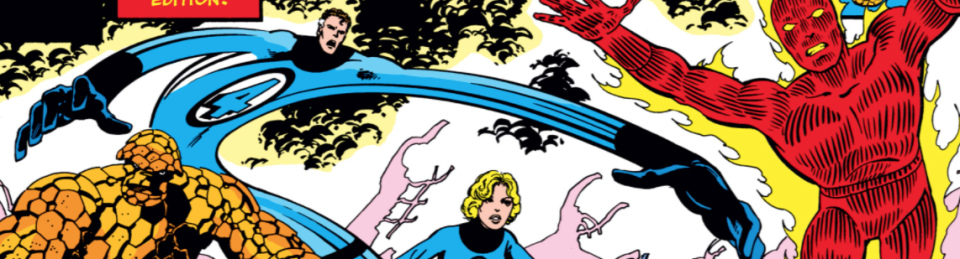
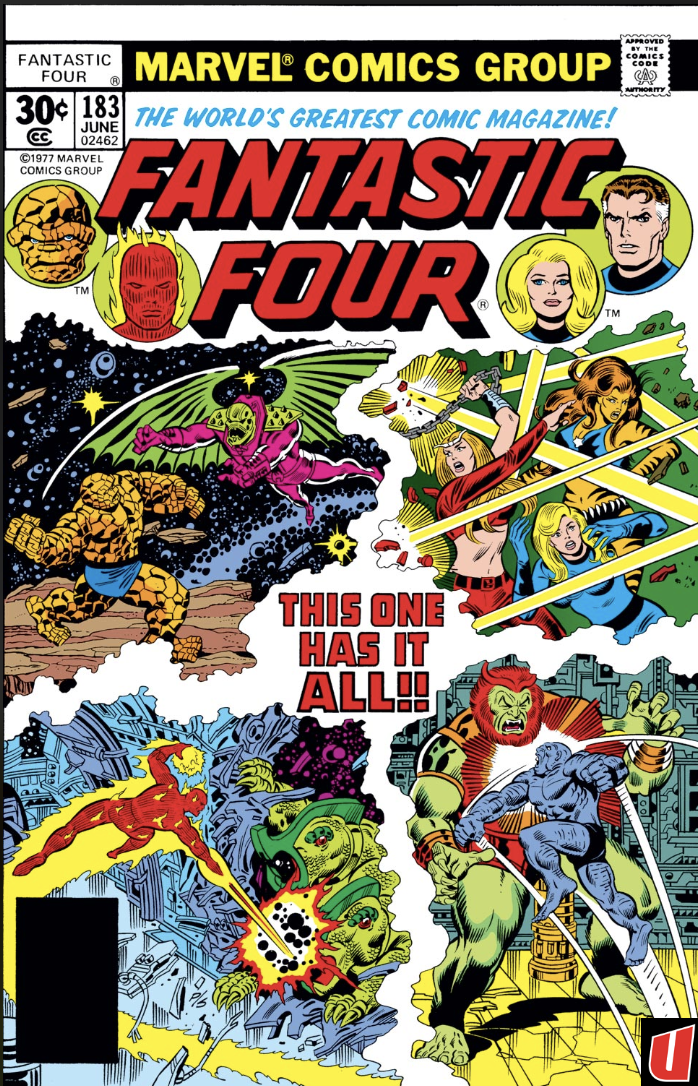
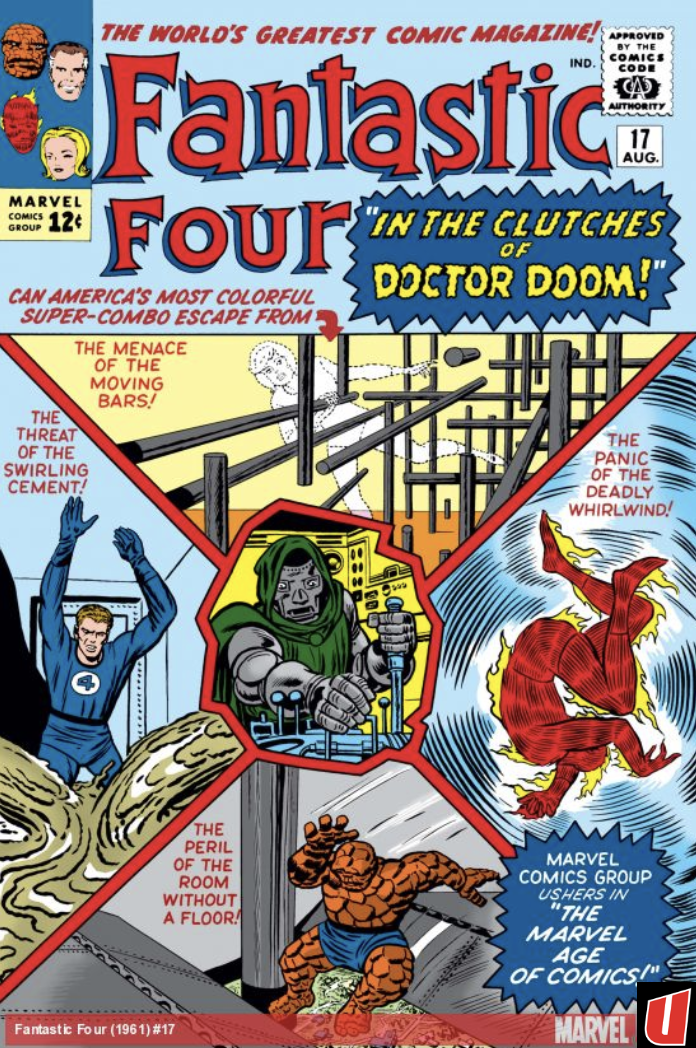
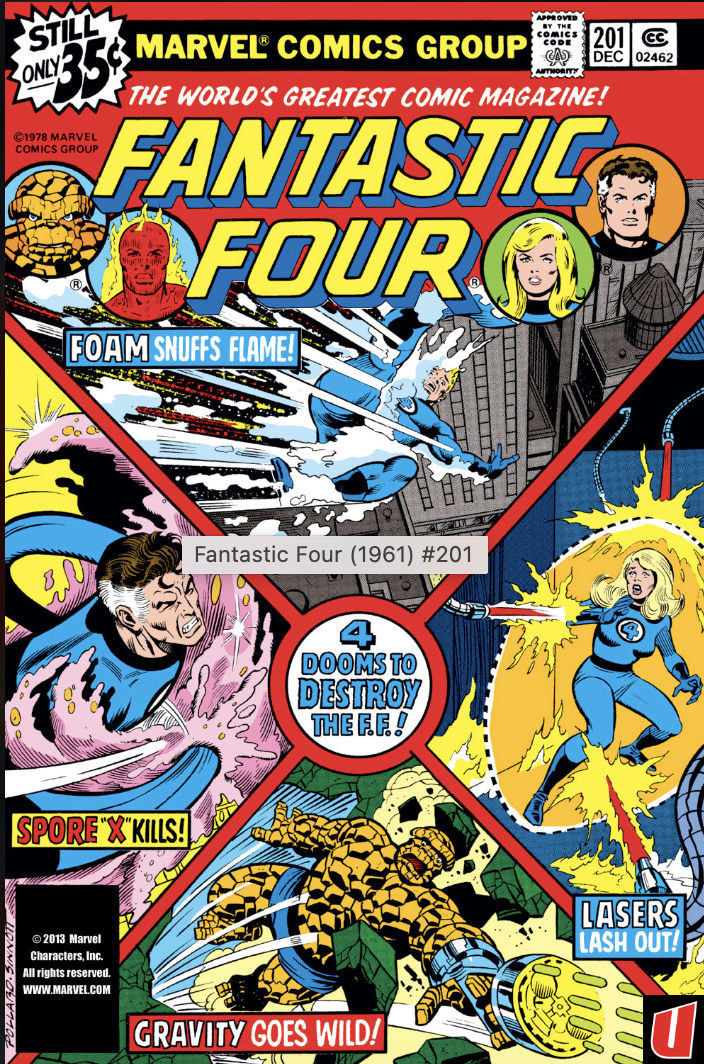
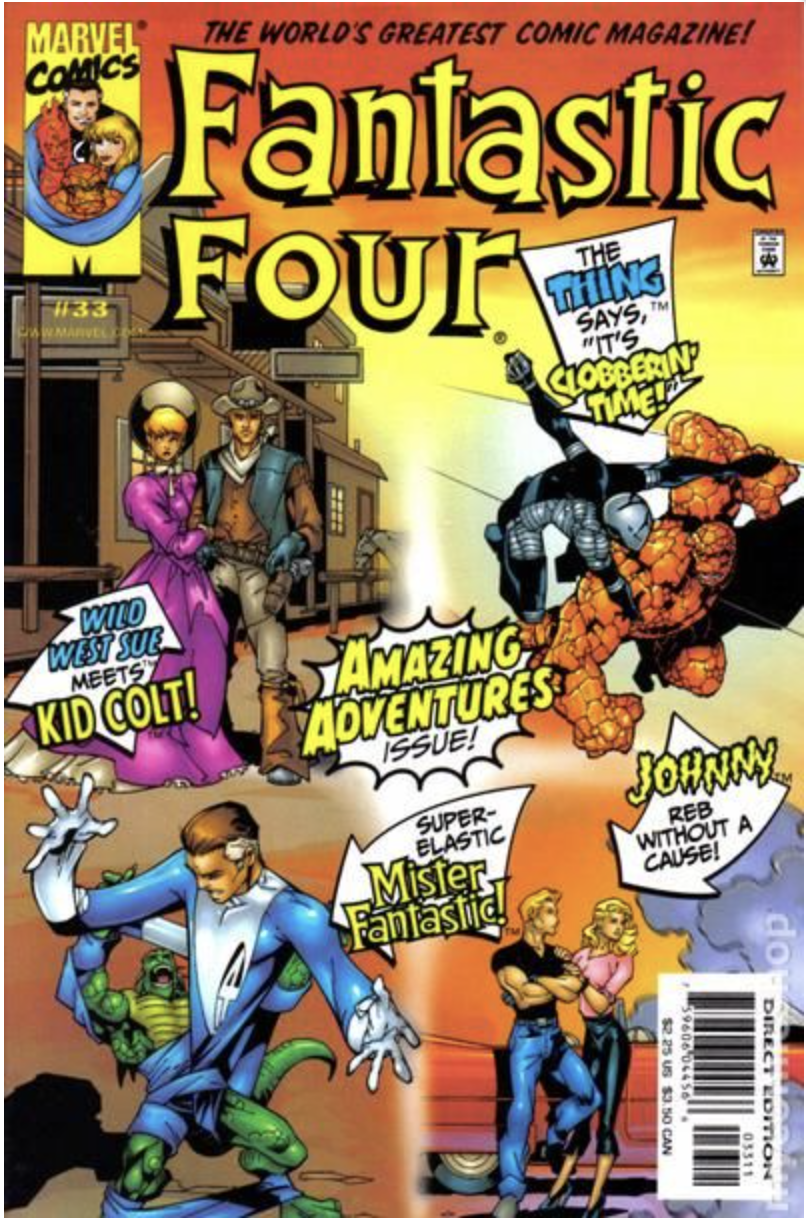
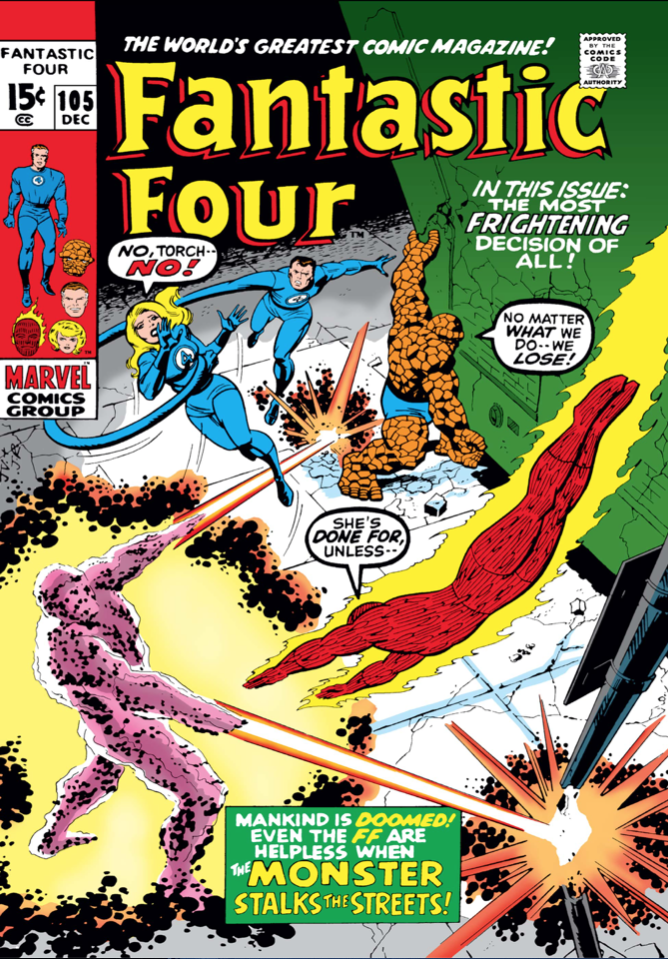
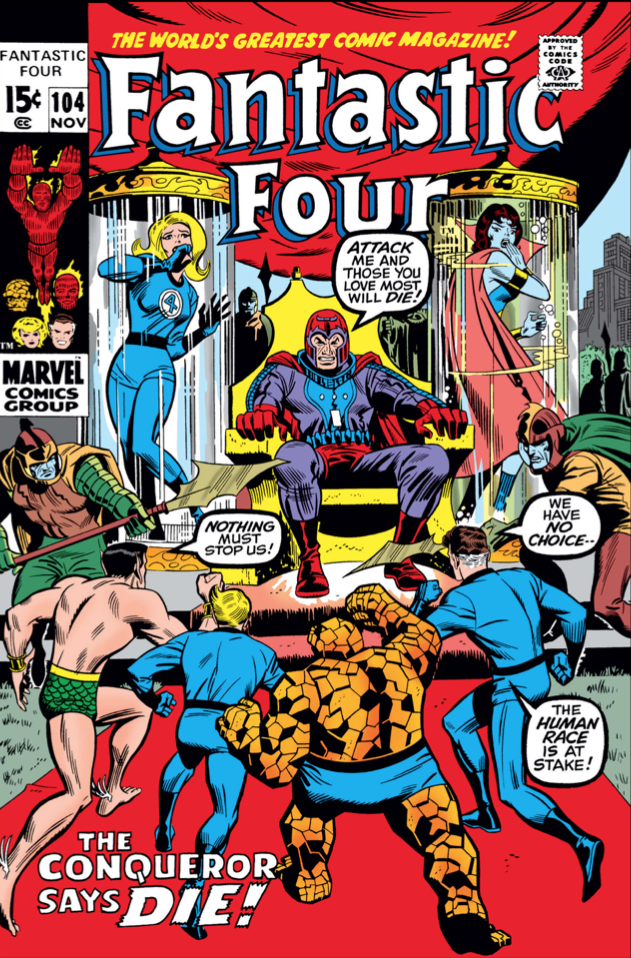
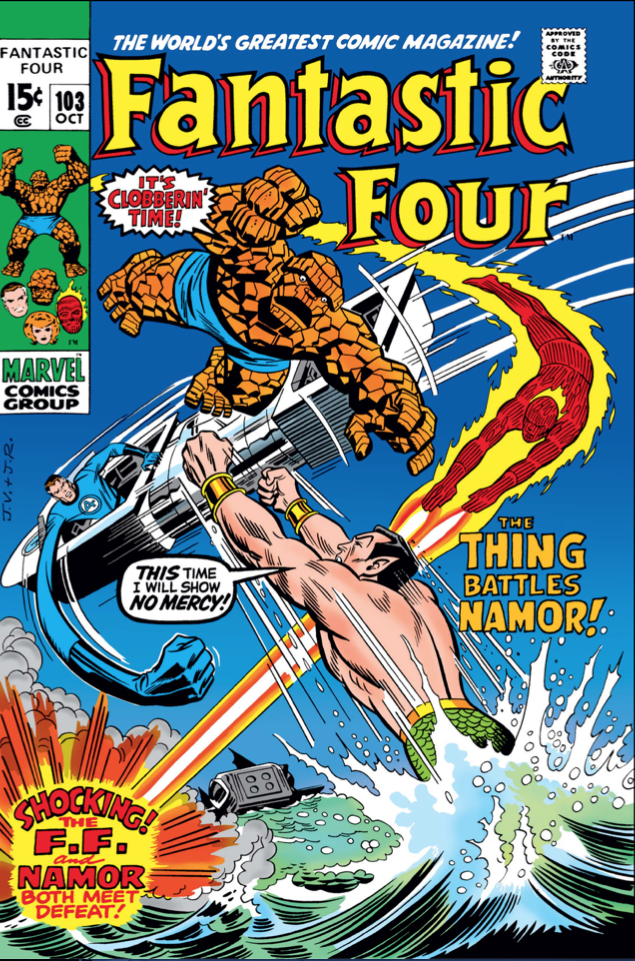
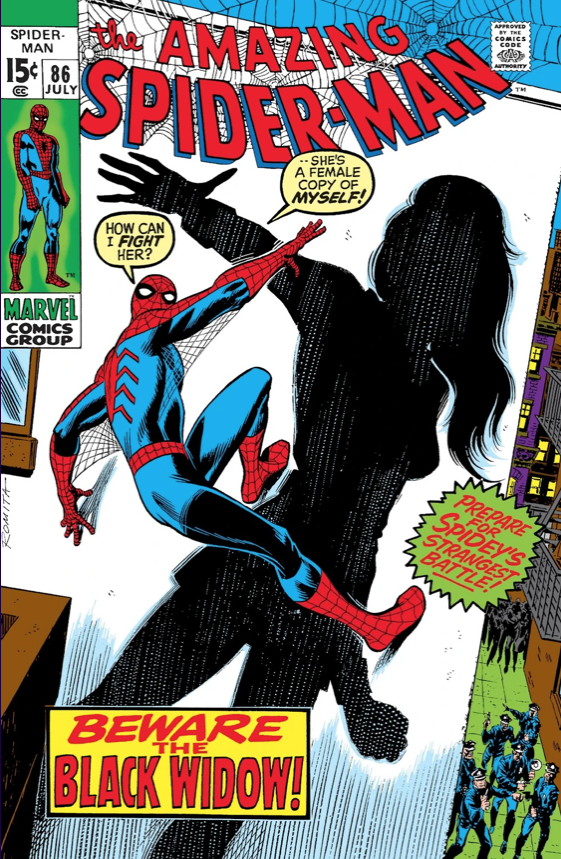
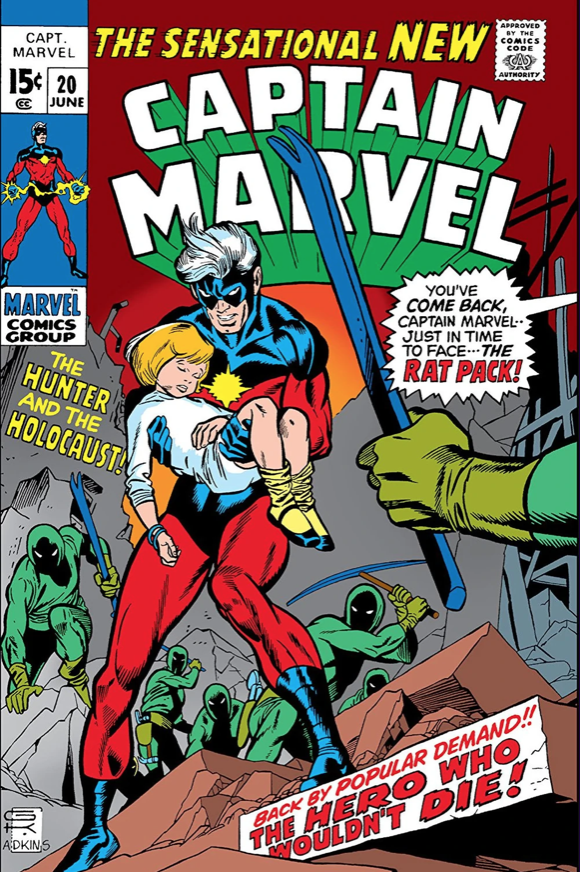
The cover is another in a line of “quad” covers that dates back all the way to issue 17 and extends far into the future. Here are a handful:
Fantastic Four 105 “The Monster in the Streets” Published Sept. 1970 Story: Stan Lee Pencils: John Romita Inks: John Verpoorten Letters: Artie Simek Cover: Romita and Verpoorten
Synopsis
While a mysterious energy creature roams the streets of Manhattan, Crystal falls ill and must return immediately to the Inhuman city of Attilan. Then, as Reed prepares to return Ben back to human, Johnny urges him to help save Sue from the creature.
What’s going on here
This is a bit of an odd issue, with a bunch of different threads that don’t really weave together. There’s Crystal’s illness, which initially seems tied to the energy monster, but not really. There’s her need to return to Attilan, which distracts Johnny, but mostly seems to be a device to get back to a team of four. There’s Reed once again trying to transform Ben, which is loosely tied to Crystal’s illness—Reed saw something Crystal’s blood that he could use to cure Ben—but isn’t really impacted by Crystal. Then there’s Sue battling the energy monster, which is strangely removed from the rest of the action until the end.
What I liked
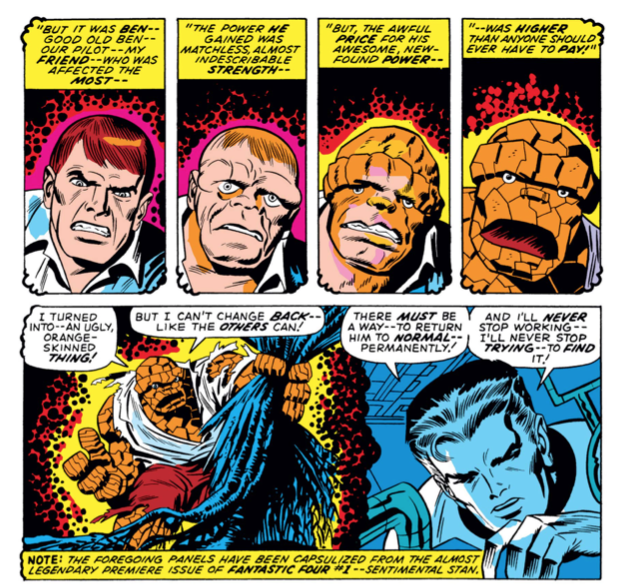
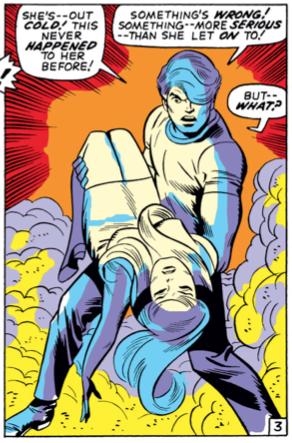
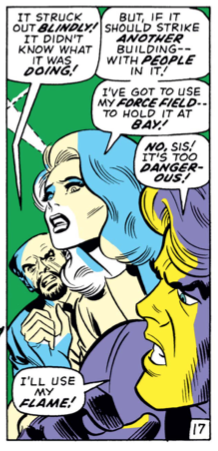
There’s a brief re-cap of the origin of the FF, which I we haven’t seen for a while, and it gives us a chance to see John Romita’s rendition of these iconic events. After an uneven issue the previous month, Romita and John Verpoorten seem to be hitting their stride, and the art overall seems more polished and dynamic. They are aided by the uncredited colorist, who creates some dramatic effects, like these:
What I didn’t like
As mentioned above, the story is disjointed, and seems engineered to A) create an emotional separation between Crystal and Johnny and B) force Reed to choose between transforming Ben and saving Sue. Both of these basic plot points have been use before, and cramming them into one story just seems to ramp up the melodrama at the expense of a coherent plot.
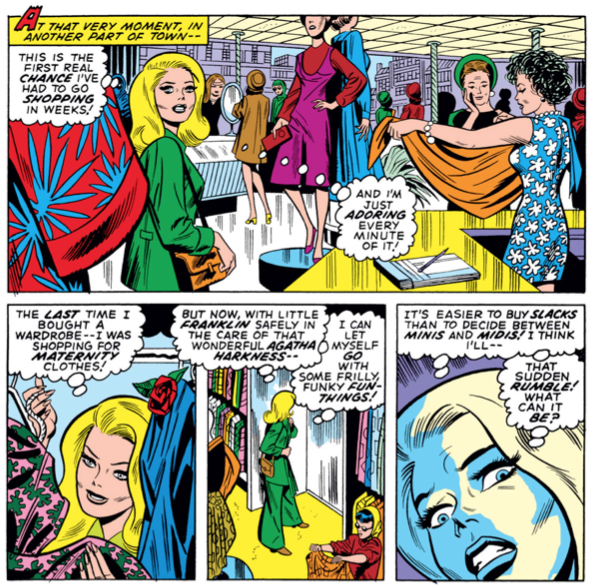
Also, we have an unfortunate flashback to the Sexist Sixties when Sue, in a free moment, is depicted shopping.
Anything else?
This issue features the introduction Dr. Zolten Rambow, about as obscure an FF character as exists. Savor him, because he will gone soon.
Fantastic Four 104 “Our World –Enslaved!” Published: Aug. 1970 Writer: Stan Lee Art: John Romita and John Verpoorten Letters: Artie Simek Cover: Romita and Verpoorten
Synopsis
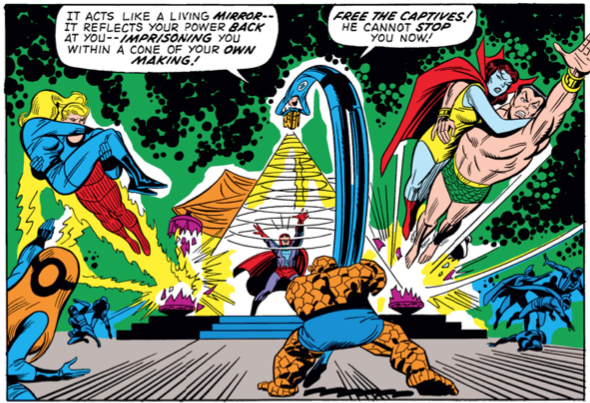
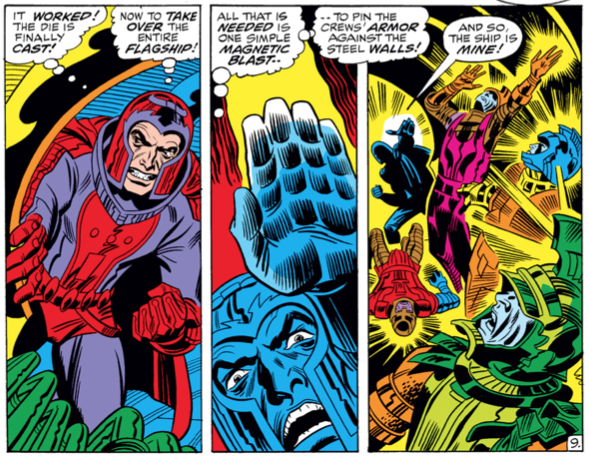
To thwart Magneto’s plans and free his hostages, Mr. Fantastic convinces the Sub-Mariner to return to the evil mutant’s side. Then, with the Earth on the brink of defeat, Reed deploys a weapon that turns Magento’s powers against him, saving the day.
What’s going on here
We are now in the second issue of the post-Kirby era and unfortunately this one has a formulaic, paint-by- numbers feel. This is not the first time Earth has been brought to the brink by invading Atlanteans, nor the first time Reed has saved the day by whipping up a gizmo. In all, the plot reads a lot like FF stories from the first two dozen issues.
What I liked
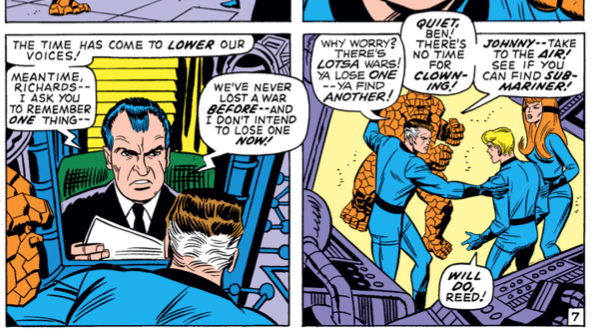
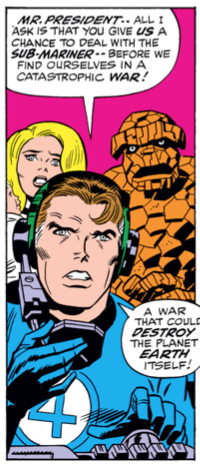
There are some more fun nods to Nixonian geo-politics, including an ironic comment about the US never losing wars. And I loved the design in the climactic panel above.
What I didn’t like
Along with the dull story, the art felt rushed and un-Romita like, making me suspect he only did breakdowns and Verpoorten did the finished work.
Fantastic Four 103 “At War With Atlantis!” Published: July 1970 Story: Stan Lee and John Romita Script: Lee Pencils: Romita Inks: John Verpoorten Letters: Sam Rosen
Note: I’m back! After taking the summer to mourn Jack Kirby’s departure from the Fantastic Four, I plan to resume regular weekly blog service. You may notice some changes in the format; basically I’m trying to streamline the writing process and make it more efficient so I can continue doing this. But hopefully nothing will be too jarring. As always, let me know if you have ideas or suggestions. Onward!
Synopsis
Magneto goads Namor into war against the surface world, then takes the Invisible Girl hostage.
What’s going on here?
This is obviously the first issue without Jack Kirby—and notably, also without Joe Sinnott—but Stan and the two Johns do a credible job of covering for them. In part, that’s because Romita and Veroorten seem to be deliberately copying Jack’s style. There are places where it’s obviously not Jack, such as close ups of the characters faces, but overall it’s a successful effort. Romita takes a back seat to no one in the comic-art business, so there will be no nitpicking of him here.
What I liked
It’s always fun when a villain crosses over from one book to another. This is the first time the FF tangle with Magneto, as far as I am aware, and he’s definitely in his early, raving megalomaniac mode here (vs. his more statesman-like megalomaniac mode of more recent years).
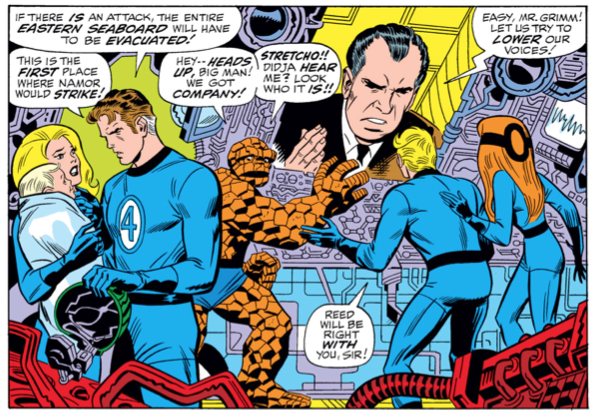
There’s also a very overt depiction of Richard Nixon as president (and Ben even makes a Spiro Agnew reference). While the president often shows up in comics, he’s often more generic, and not always this recognizable as an actual person.
What I didn’t like
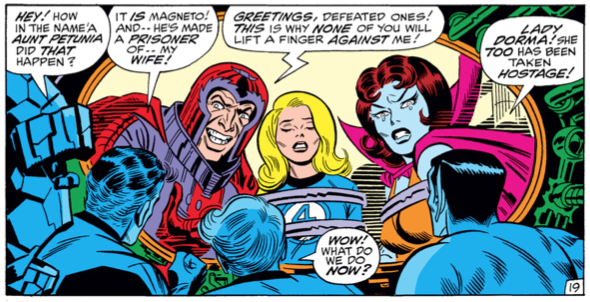
One of the oldest and most tedious cliches in the early FF plots was how often Sue was taken hostage. By my count it was like a dozen times in the first 40 issues. Now, despite it being a new decade and with a new art team, Sue is once again taken hostage (along with Lady Dorma, for good measure).
Also, the Bullpen Bulletin item welcoming Romita as the FF’s new penciler fails to acknowledge jack or his accomplishments, which seems a bit bush league.
Yes, I know I said I was taking a break from Fantastic Four blogging for a while. And I am. Really. But before I do, I thought I’d be remiss if I didn’t try to do a bit more to commemorate the 107 issues by Stan Lee and Jack Kirby, the greatest sustained run of creativity in the history of comics.
What follows is a run down of some of my favorite stories from Stan and Jack. It’s not a list of the best issues (whatever that means) and certainly not the most famous. But these are the stories I think of first when I think of their run, and the ones I most enjoyed reading. Could this list change? Yes! Do I feel strongly about the order? No! Are there great issues I left off? Of course! Do I hope you read some of these comics? Absolutely!
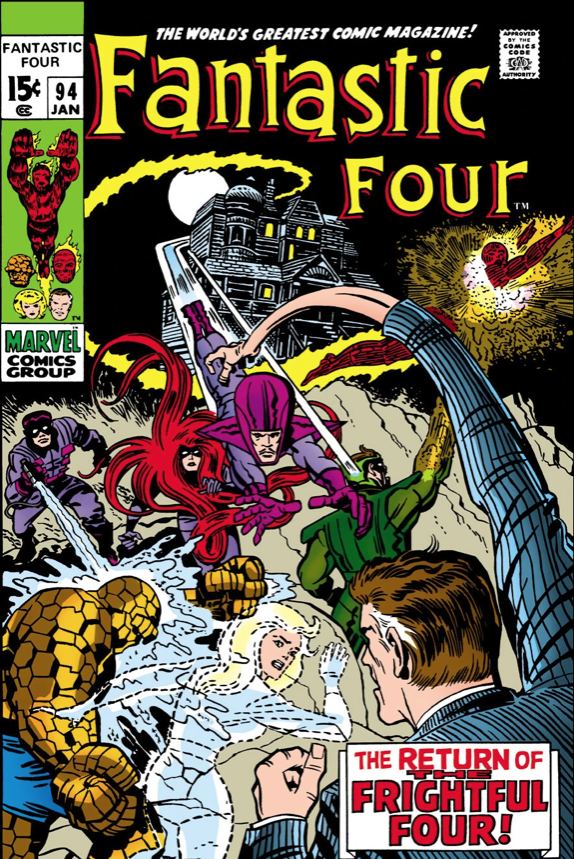
10) Fantastic Four 94
Fantastic Four 94 is a delightful comic. It comes very near the end of the Lee / Kirby run, and an indication there despite whatever disagreements the two had, there was still plenty of creative juice in the partnership.
In FF 94, the team travels to Whisper Hill to meet Agatha Harkness, a potential nanny for baby Franklin. Harkness appears to be a witch and her house seems haunted. But rather than tell a typical horror story, however, Stan and Jack upend our expectations by having Harkness become the hero, single-handedly defeating the Frightful Four and leaving the FF baffled. It’s a great story, told with lots of wit and humor.
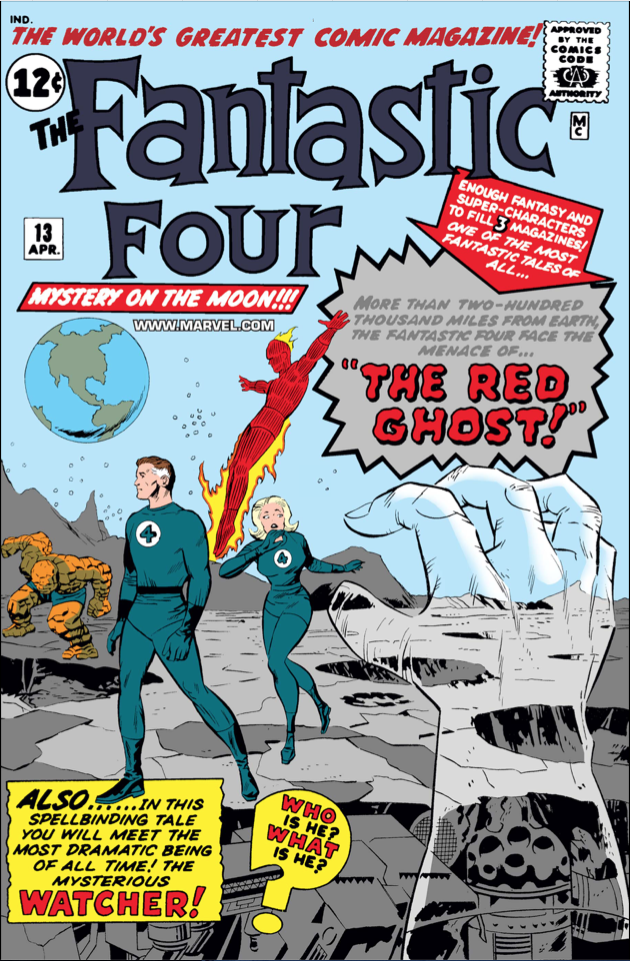
9) Fantastic Four 13
Fantastic Four 13 is a classic Silver Age story, full of Cold War symbolism, as the FF travel to the moon where they encounter the Russian Red Ghost and his Super Apes. Significantly, the story introduces the Watcher, and expands the horizons for this comic and, eventually, the whole Marvel universe. It’s fair to say that FF 13 initiated the Marvel cosmic tradition that eventually leads to not just Galactus and the Silver Surfer, but the Kree, the Shi’Ar, Adam Warlock, Mar-Vell, infinity stones, Thanos, Guardians of the Galaxy and so on. It’s also just a fun comic.
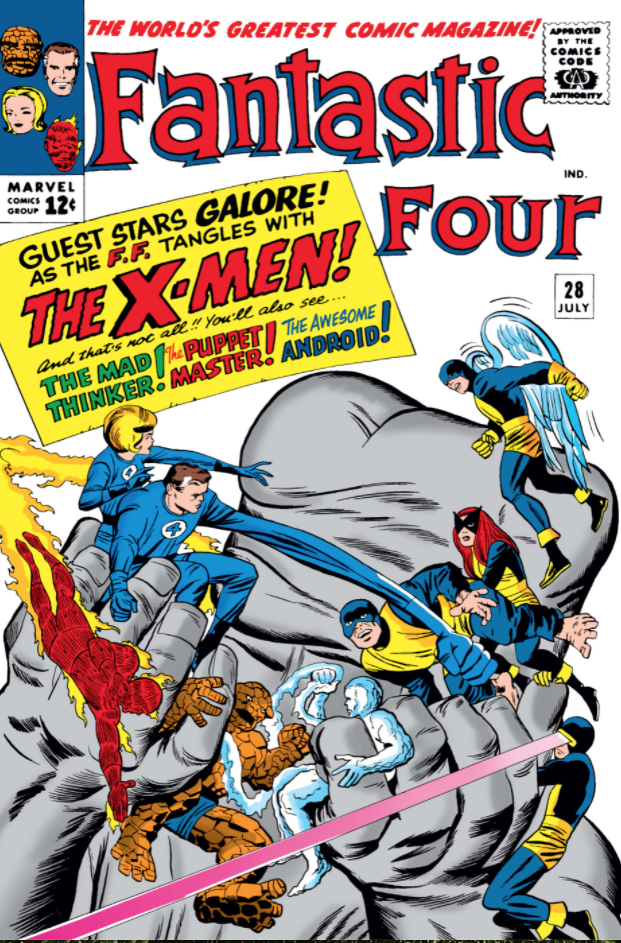
8) Fantastic Four 28
There was a roughly two year period when the FF teamed up with most of the nascent Marvel universe—the Hulk, the Avengers, Nick Fury, Ant-Man, Dr. Strange, Daredevil—but this story featuring the X-Men was the best. If the plot, featuring mind control and the team’s eventually joining forces to defeat the bad guys, feels familiar, it’s because it’s the template for hundreds of subsequent super-hero team ups. It’s also a great cover that has been referenced many, many times over the years.
7, Fantastic Four 91-93
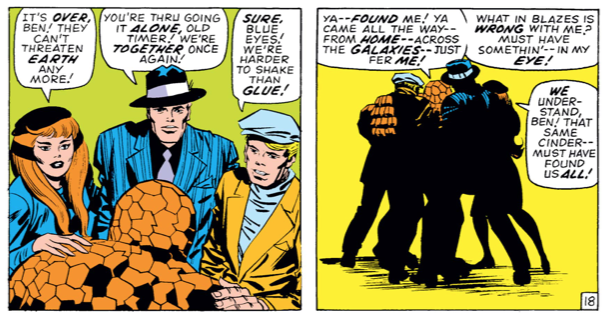
Another story from late in the Lee / Kirby run. Ben is abducted by Skrulls to fight as a gladiator on a planet where the natives have adopted the appearances and mannerisms of 1920’s gangsters. It’s a great adventure that lets Kirby draw both cool alien stuff AND cool urban New York scenes in the same story. And it has one of the most touching endings of any comic (see above).
6) Fantastic Four 54
Fantastic Four 54 falls in the heart of the Lee / Kirby peak period (issues 44-60) so it’s understandable if it gets overlooked amid stories introducing Galactus, the Black Panther and the Inhumans. But it hold its own. Not only is there a fun and interesting adventure involving Johnny, Wyatt Wingfoot and the medeival knight Prester John, but there are loads of other subplots and supplemental story lines involving Wakanda and the Inhumans. This issue helps establish Wyatt as a major supporting character, and features some of Jack’s strongest work during this middle period (and that’s saying something).
5) Fantastic Four 38-43
This is the first real multi-part Fantastic Four story (aside from issues 25-26, where they team up with the Avengers) and as if to make up for lost time, it’s a sprawling six-parter. It begins with the FF battling, and very clearly losing, to the Frightful Four (featuring the first appearance of Medusa), who render them powerless. Then, an un-powered FF teams with Daredevil to battle Dr. Doom, who has captured the Baxter Building. The team’s powers are returned and in the aftermath of that fight, Ben, who is now in his rocky form again, quits the team in disgust, and falls party to the Frightful Four (they’re back!), who hypnotize him and set him against his team. The Frightful Four captures the Fantastic Four, who then escape and reverse Ben’s mind control, freeing him to defeat the bad guys.
Whew!
It’s a lot, and arguably not one unified story, but I think of it as one epic with many twists and turns. It works in part because the FF keep getting beat, but they pick themselves up and keep fighting.
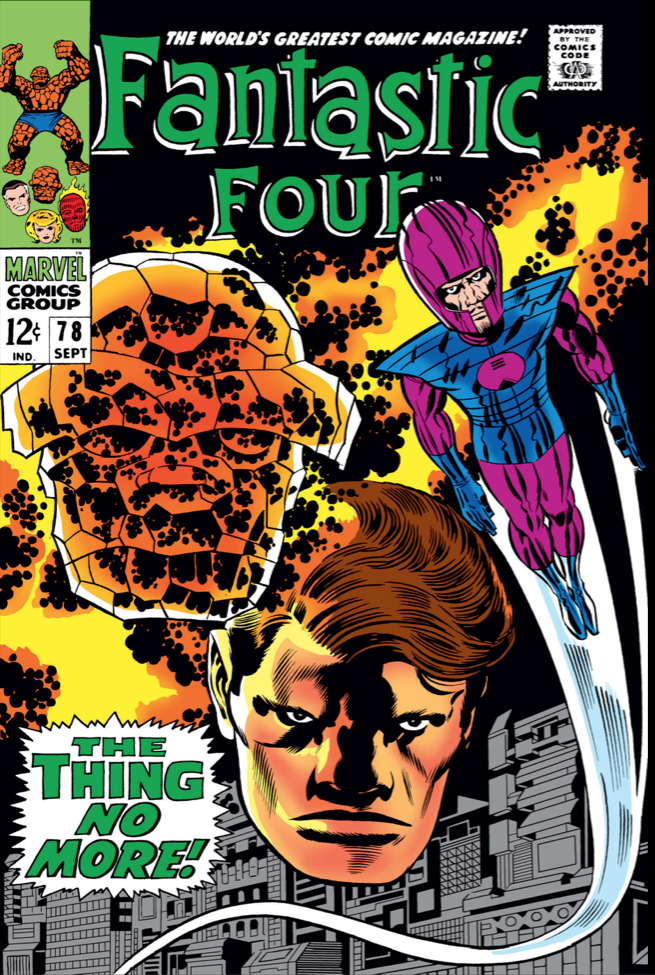
4) Fantastic Four 78-79
Another story that hinges on the transformation of the Thing back to his human form. Ben is the heart of the Fantastic Four, and his constant struggle with his monstrous appearance lies at the heart of his character. Here, he has to choose between his personal happiness and his duty to his adopted family in a story that is particularly well-crafted and poignant. When human-looking Ben and Alicia are having dinner at a restaurant, it’s so painfully awkward we’re almost relieved when the villain bursts into interrupt them.
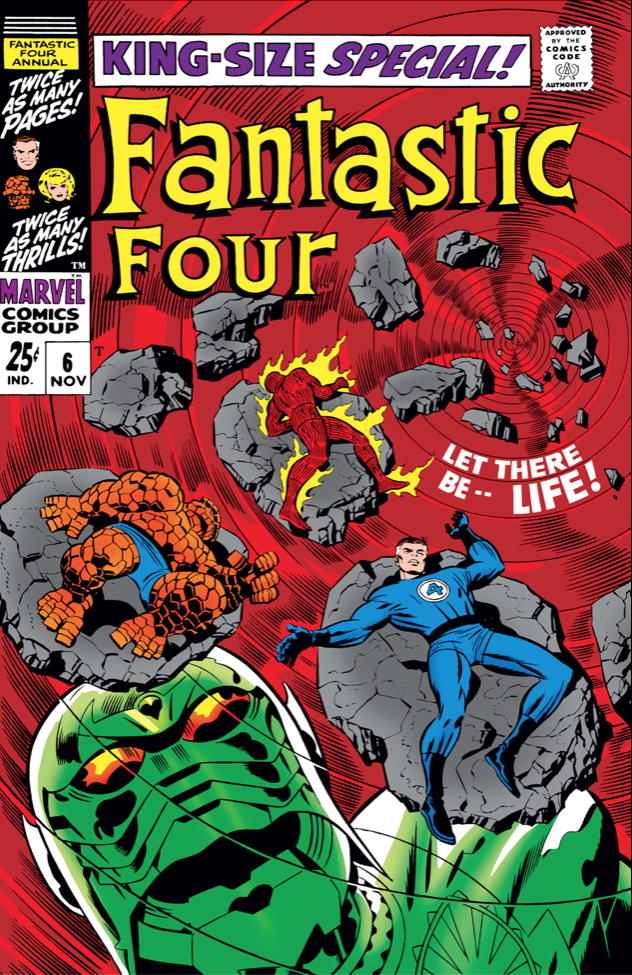
3) Fantastic Four Annual 6
This comic is, simultaneously, a ripping Negative Zone adventure, a high-stakes quest to save the life of Sue and her unborn baby, the introduction of a top-tier villain in Annihilus and, arguably, Jack Kirby’s single best issue of the Fantastic Four. With the birth of Franklin at risk, the stakes are high and Stan and Jack rise to the occasion in one of the best Marvel annuals ever.
2, Fantastic Four 48-50
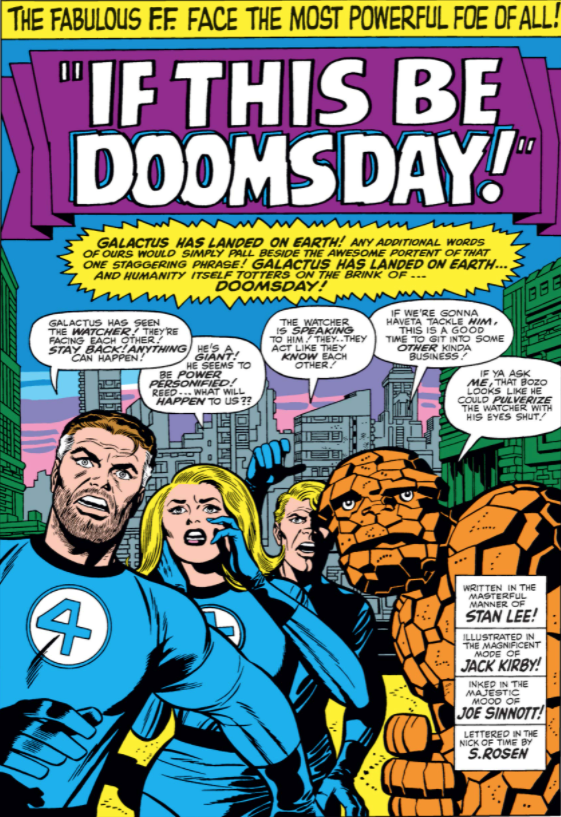
This is probably the most well-known and beloved story from the Lee / Kirby run (and maybe from the entire Silver Age), but its fame and popularity is no reason to exclude it. There are many, many reasons to love this story, from the introduction of Galactus and the Silver Surfer to the Torch’s journey across the universe, but ultimately what sets it apart is its ambition. Stan and Jack gave the FF a threat to the world that not just theoretical, but immediate and seemingly unsolvable. That they needed the help of both Watcher and the Silver Surfer doesn’t diminish the Fantastic Four, but raises the consequences of the threat and hence the story
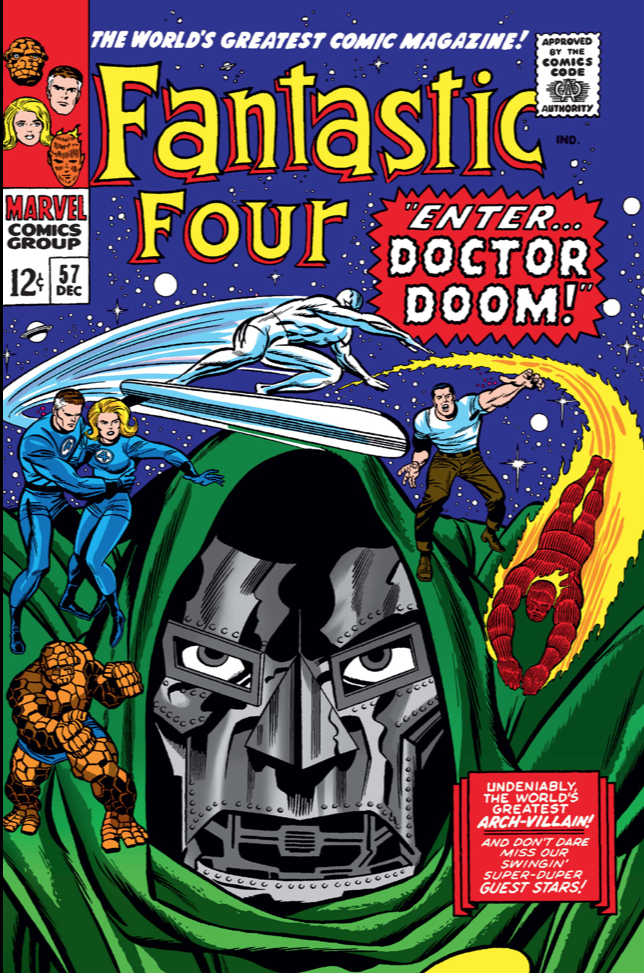
1) Fantastic Four 57-60
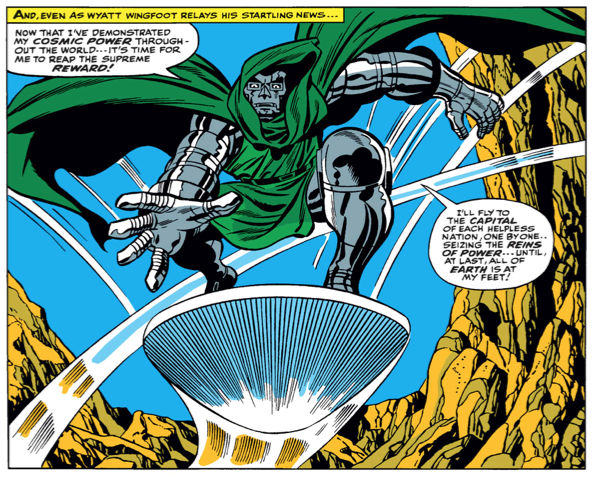
This story concludes the peak Lee / Kirby period and in my considered opinion, it’s the best of their entire run. It’s a gripping story, with Dr. Doom stealing the power of the Silver Surfer and using it to subdue the entire planet, and one that really cements Doom as a bad guy without equal. No one else in comics combines his genius, his ruthlessness and his arrogance with his twisted sense of nobility and purpose. He is a compelling villain and he’s at his best here.
Like all great FF stories, this one also features the Fantastic Four getting their asses kicked. It’s only when they are beaten do we understand how big a challenge they have to overcome. It’s well-paced as well, with the story building over four issues.
But what really sets this story apart is how it combines so many threads of the Fantastic Four up to this point. It’s as if Stan and Jack had been mixing ingredients for five years and they finally pulled the finished cake from the oven. Doom stealing the Surfer’s power, the appearance of Wyatt Wingfoot, the Inhumans sub-plot; they all adds up to be more than the sum of their parts.
That said, they story isn’t without its flaws, particularly the anti-climactic ending, which I have discussed previously. But there is no perfect FF story, even from Stan and Jack (and rushed ending are endemic in their run), and this one comes closer than most.
That’s it! That’s the list! Agree? Disagree? Let me know! And stay tuned for more installments of So Random!, where I analyze a comic picked from my collection at random.
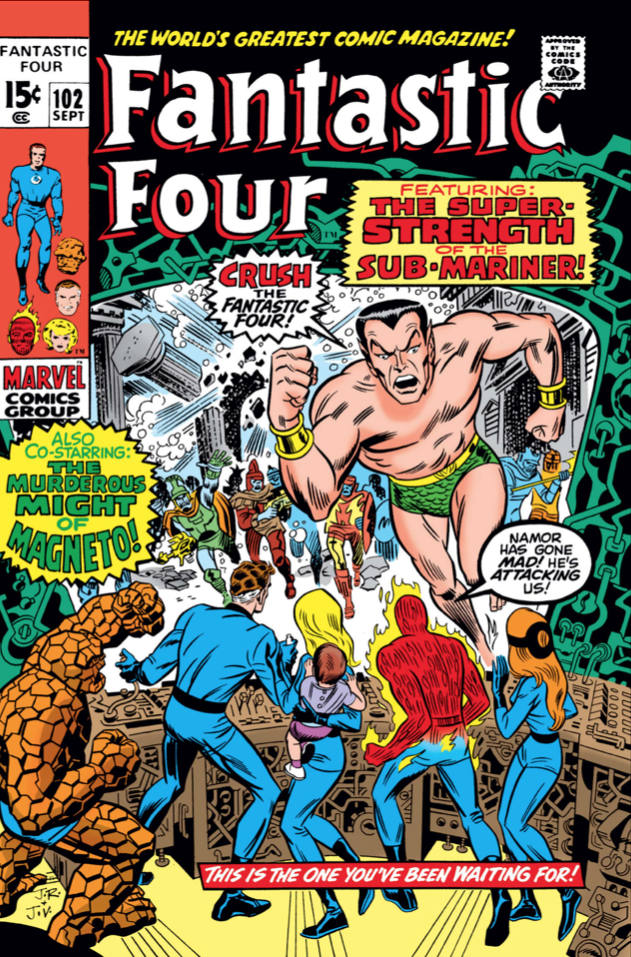
Fantastic Four 102 “The Strength of the Sub-Mariner!” Published June 1970 Story: Stan Lee and Jack Kirby Script: Lee Pencils: Kirby Inks: Joe Sinnott Letters: Artie Simek Cover: John Romita and John Verpoorten
Note: This is a milestone issue of the Fantastic Four, the last issue penciled by Jack Kirby. It’s also a fitting place for me to take a break from blogging duties. After nearly two-and-half-years of writing (almost) weekly posts about the world’s greatest comic magazine, I’m a bit burned out and going to take a short hiatus. I’ll still write occasional entries like So Random!, but I’ll leave the FF alone for a while. I’m not sure how long I’ll be gone, but when I return, I will be looking forward to diving back into the post-Kirby era.
Synopsis
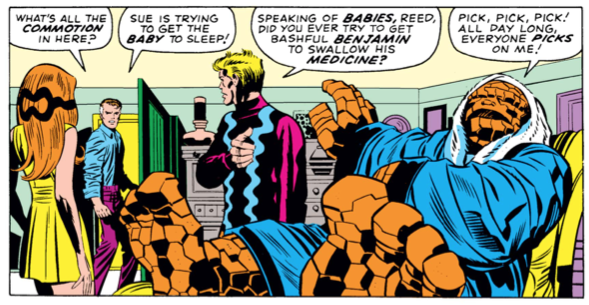
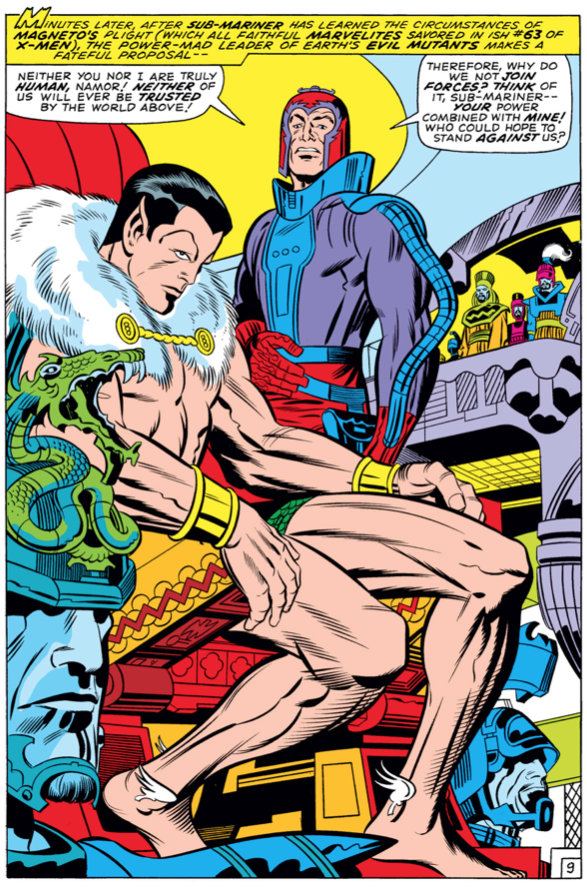
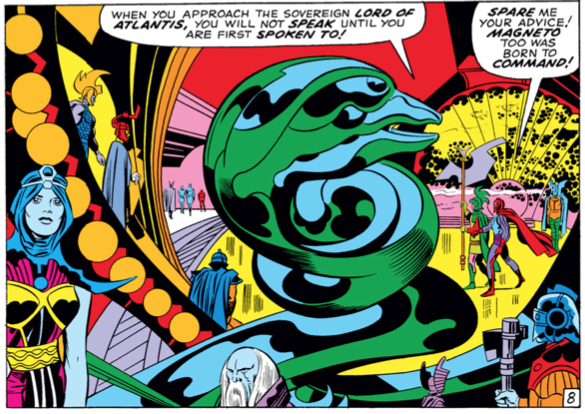
As per usual, the issue opens with Thing and the Human Torch—plus Crystal—hanging out in the Baxter Building. This time, Ben has a cold and is being a baby about it. The action then shifts beneath the ocean, where the Sub-Mariner, investigating a disturbance, discovers Magneto unconscious on a tropical island. He takes him back to Atlantis to recuperate, and there Magneto tries to convince Namor to join him in his fight against humans.
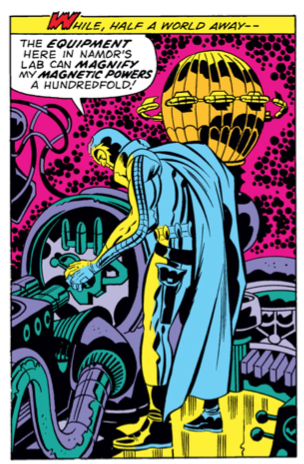
Meanwhile, back in New York, metal objects start to fly out of control, including the machinery in Mr. Fantastic’s lab. Reed uses a “magna-tracer” to track magnetic waves to Atlantis, and as a warning, sends a “sonic probe” which creates tremors under the sea. When the magnetic attacks against New York don’t stop, Ben sends a torpedo to Atlantis, against the protests of Reed, and the provocation leads Namor to declare war on the surface world, with Magneto behind him.
What’s going on here?
This, of course, is Jack Kirby’s last issue of the Fantastic Four and one of his final stories for Marvel before he decamped for rival DC. He didn’t even stick around to draw the cover, which was handled by John Romta.
Kirby’s frustrations with Stan Lee and Marvel had been brewing for years, and ranged from creative—such as seeing his character, the Silver Surfer, taken from him and given to John Buscema to draw—to financial. According to author Sean Howe, Marvel was by then licensing its characters to an entrepreneur who sold posters and other merchandise using Kirby’s images, but Kirby wasn’t compensated. Nor did he receive his share of a settlement in a dispute about the ownership of Captain America. After previously rejecting overtures from DC’s Carmine Infantino to jump ship, in March of 1970 a fed up Kirby finally signed a three-year contract with DC.
There’s no easy way to sum up the significance of the Lee / Kirby run on the Fantastic Four and I’m not sure I’ll be able to do so adequately here. There have been longer sustained runs (Dave Sims wrote and drew 300 issues of Cerebus!) and shorter runs with more recent acclaim (Neil Gaiman’s 75-issue Sandman run is often at the top of fans polls). But when combining quality, creativity, longevity and influence, I don’t think there’s really any comparison.
The Lee/ Kirby FF run seeded the Marvel universe, and the concepts and characters they created became the foundations on which a multi-billion-dollar entertainment empire has been built. Even a short list of characters introduced or reintroduced in their run is breathtaking: The Skrulls, Dr. Doom, Latveria, Namor, Atlantis, Rama Tut aka Kang, the Watcher, the Negative Zone, Annihilus, Galactus, the Silver Surfer, the Inhumans, the Black Panther, Wakanda, Agatha Harkness, Ronan the Accuser, the Kree, the Molecule Man, Him aka Adam Warlock and the Microverse. All of them have been recycled dozens, if not hundreds, of times across thousands of comics, TV shows and movies.
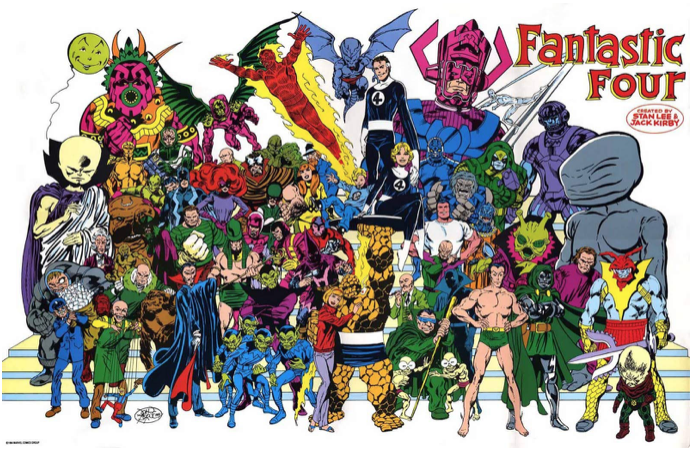
When I was a kid I had a Fantastic Four poster by John Byrne, in which the FF are surrounded by dozens of other characters. All I knew at the times that they were cool characters; what I didn’t realize is that they all had debuted in the Lee / Kirby run.
Back to issue 102
After about eight or 10 uninspired issues, Stan and Jack at least go out on a high note. Fantastic Four 102 isn’t a classic, but it it’s a reminder of how good the book could be when the elements combined into something greater than the whole. We have the Ben and Johnny hijinks, the noble-yet-misguided Namor, a dastardly villain in Magneto, and some amped-up stakes as Atlantis is on the brink of war with the surface world. Jack also leaves us with some great images, his best in a while.
Magneto’s presence is an interesting choice. It’s the first time he’s appeared in the FF’s own book, and according to a footnote, it follows his appearance in X-Men 63, a classic Roy Thomas / Neal Adams comic that features Ka-zar and the Savage Land mutates. In that issues, he’s last seen in a burning compound in Antartica that is collapsing above him. How he winds up on an island and in a differently colored costume is not explained.
Jack’s Magneto isn’t a mad genius like Adams’s, or the hero he later becomes in later X-Men comics. Here, he’s a conniving sneak in a helmet that barely fits him.
The sexist seventies
The Invisible Girl doesn’t appear in this comic, and the only time Sue is mentioned is in a passing mention by Reed.
The latest in men’s fashion
Johnny’s sweater looks a bit like Black Bolt’s costume
Dig that Kirby Krackle
In our last installment of DTKK (sob), some great work from the Kirby, including this splash).
More from the King
Also on newsstands
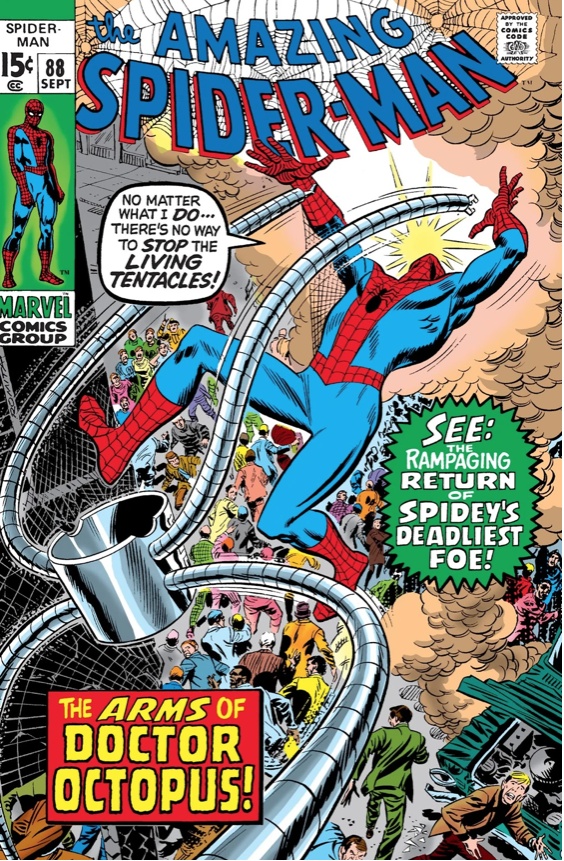
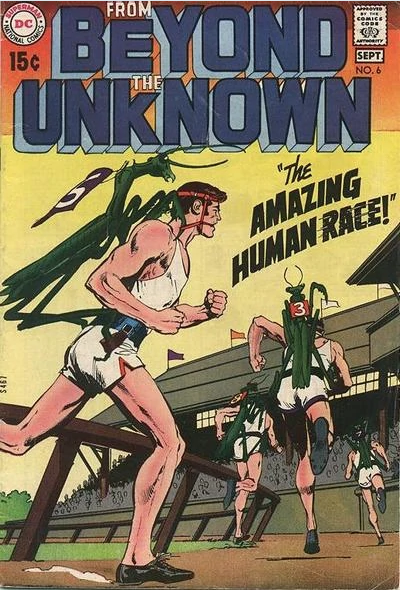
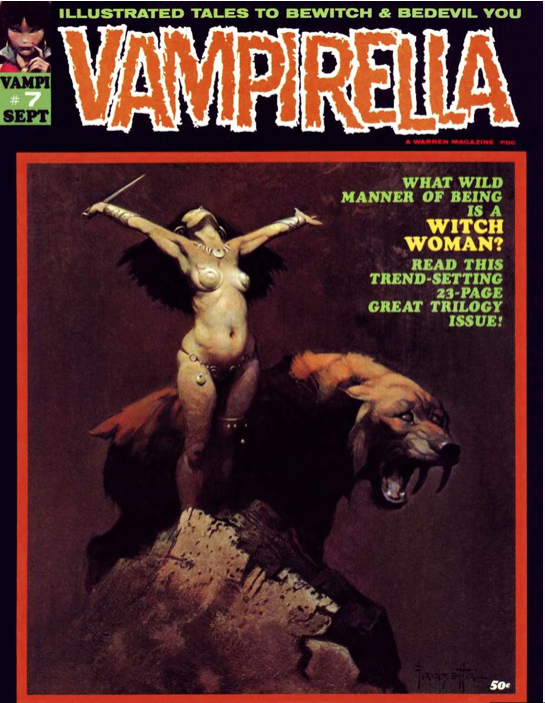
What other comics were on sale in June 1970? Covers by Romita, Adams and Franzetta.
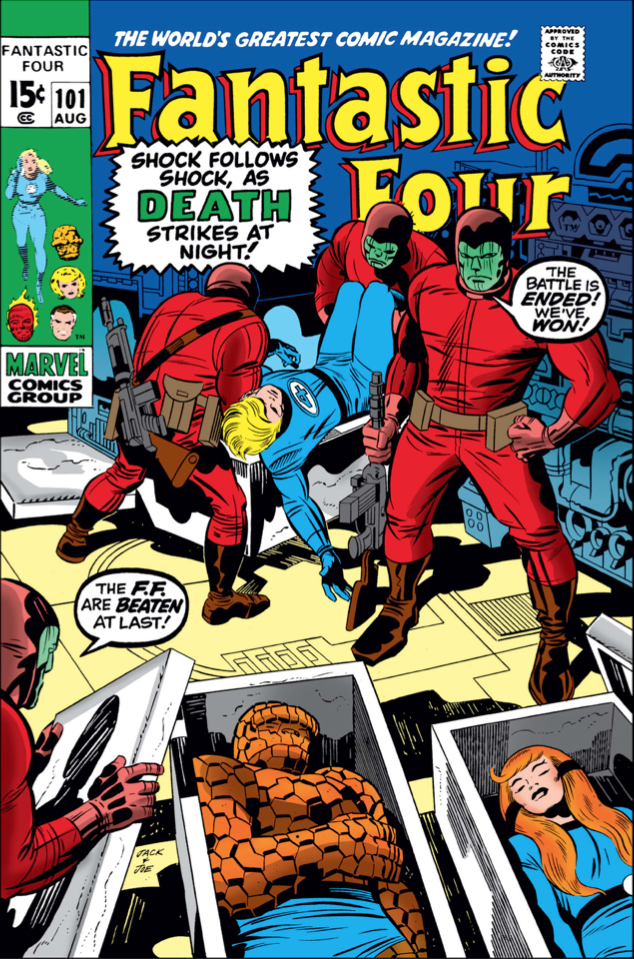
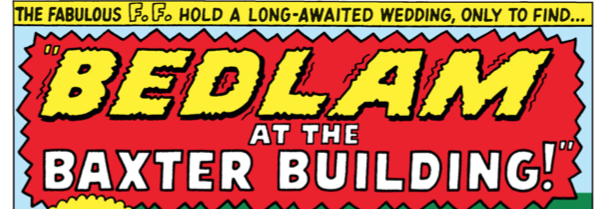
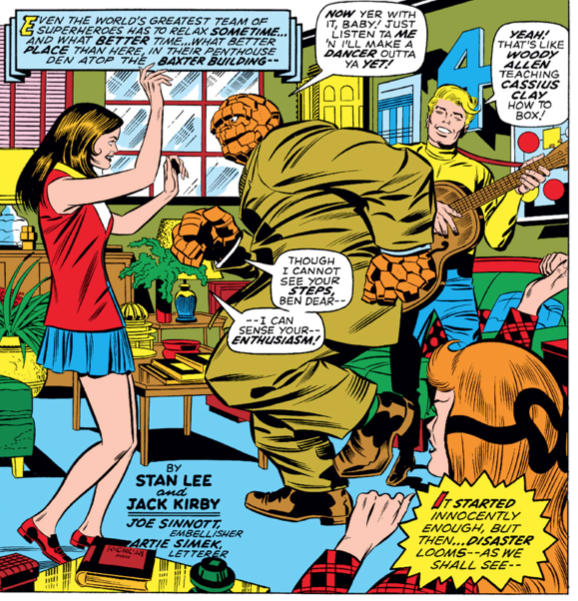
Fantastic Four 101 “Bedlam In The Baxter Building!” Published May 1970 Story: Stan Lee and Jack Kirby Pencils: Kirby Inks: Joe Sinnott Letters: Artie Simek Cover: Kirby and Sinnott
Synopsis
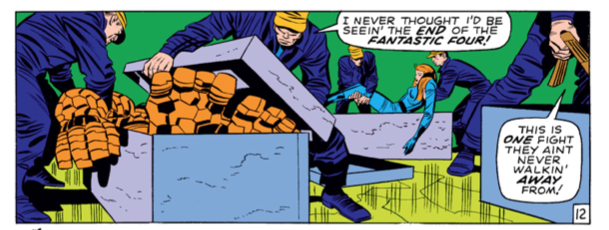
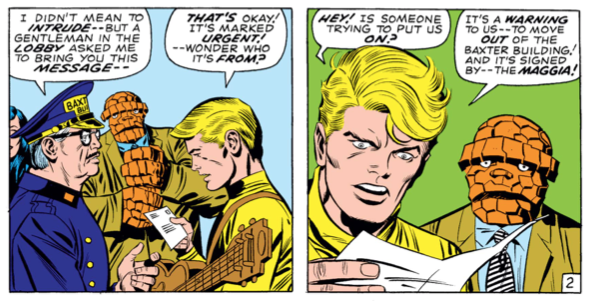
The Fantastic Four, plus Crystal and Alicia Masters, are relaxing at the Baxter Building when they receive a notice from their doorman they need to vacate the building as it has been purchased by “the maggia,” Marvel’s versions of the mafia. The action cuts to a meeting of a crime family, led by “the top man” discussing how they plan to legally evict the FF to seize their weapons and inventions.
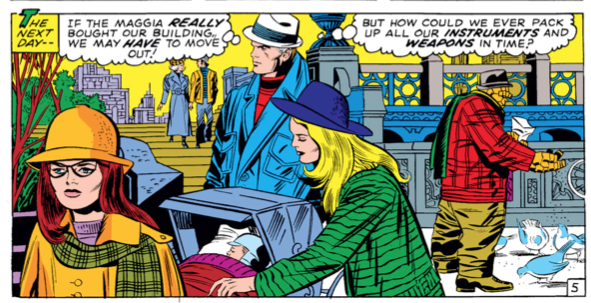
While in the park, the FF see helicopters approaching the Baxter Building. As the team investigates, first the Human Torch, then Mr. Fantastic, the Thing and Crystal are captured by maggia henchmen. The four are placed in caskets and dumped into the ocean, but escape after Crystal breaks free.
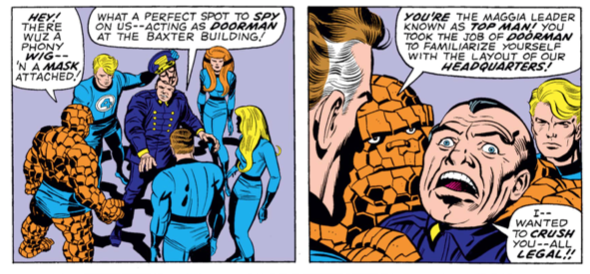
Meanwhile, the Invisible Girl resists capture and battles the thugs until the rest of the team arrives. The leader of the maggia is then shot by the Baxter Building doorman, who is revealed to be the “top man” in disguise.
What’s going on here?
Sadly, this is another lackluster issue of the FF as we count down the few issues remaining in the Lee/ Kirby partnership. While the structure of the comics is sturdy enough—Stan and Jack have used this basic formula and pacing for one-and-done stories many times—the plot is ridiculous. The mob buys the Baxter Building (signing a note announcing that’s who they are?) and the team has to vacate immediately, leaving all their stuff behind? Even the average 12 year-old reader has a better sense of real estate law than that. Then there is the problem of mobsters taking down four of the most powerful heroes in the marvel universe. None of it makes much sense.
By this point Marvel had been using “maggia” instead of mafia for years (it dates back to Avengers 13) but it never stops sounding odd to me. I’ve never read why Stan felt he couldn’t use “mafia” – was he really worried the real-life mob would object? Given how often they are portrayed in TV and movies, it seems overly sensitive.
Stan and Jack attempt to give the story a bit of a twist with the reveal at the end that the doorman was the mob boss, but it falls flat. We don’t have anything invested in either the doorman or the mafioso, and his infiltration of the Baxter Building hardly seemed worth the trouble.
It’s bedlam, I tell you
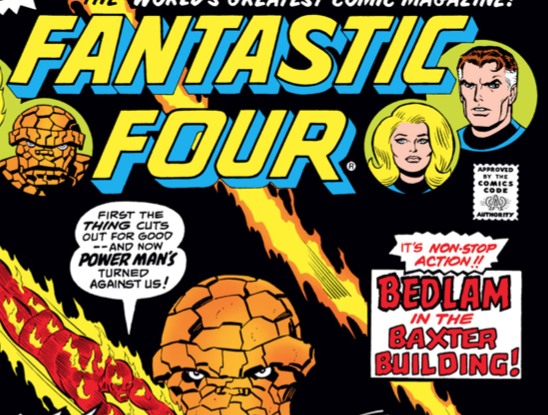
This is the second of at least three FF comics that use Bedlam in or at the Baxter Building. (For those curious, the term “bedlam” derives from the name of a mental hospital in London).
The first instance was in FF Annual 3:
And it appears again on the cover of FF 169 (although that’s not the name of the story)
The sexist seventies
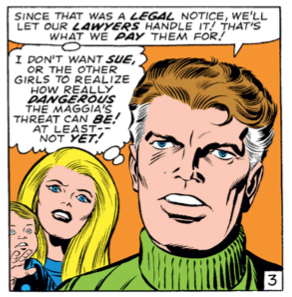
Reed once again wants to protect Sue and the other “girls” from bad news.
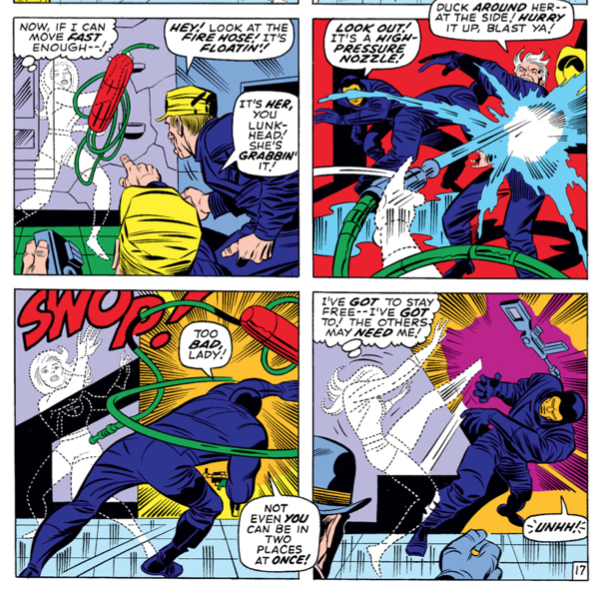
Later in the comic Sue does hold her own against the maggia thugs and kicks some ass. Silly Reed.
Half bad
This issue has another one of these awful half pages (thankfully they are consolidated into one in the digital comic).
We get letters
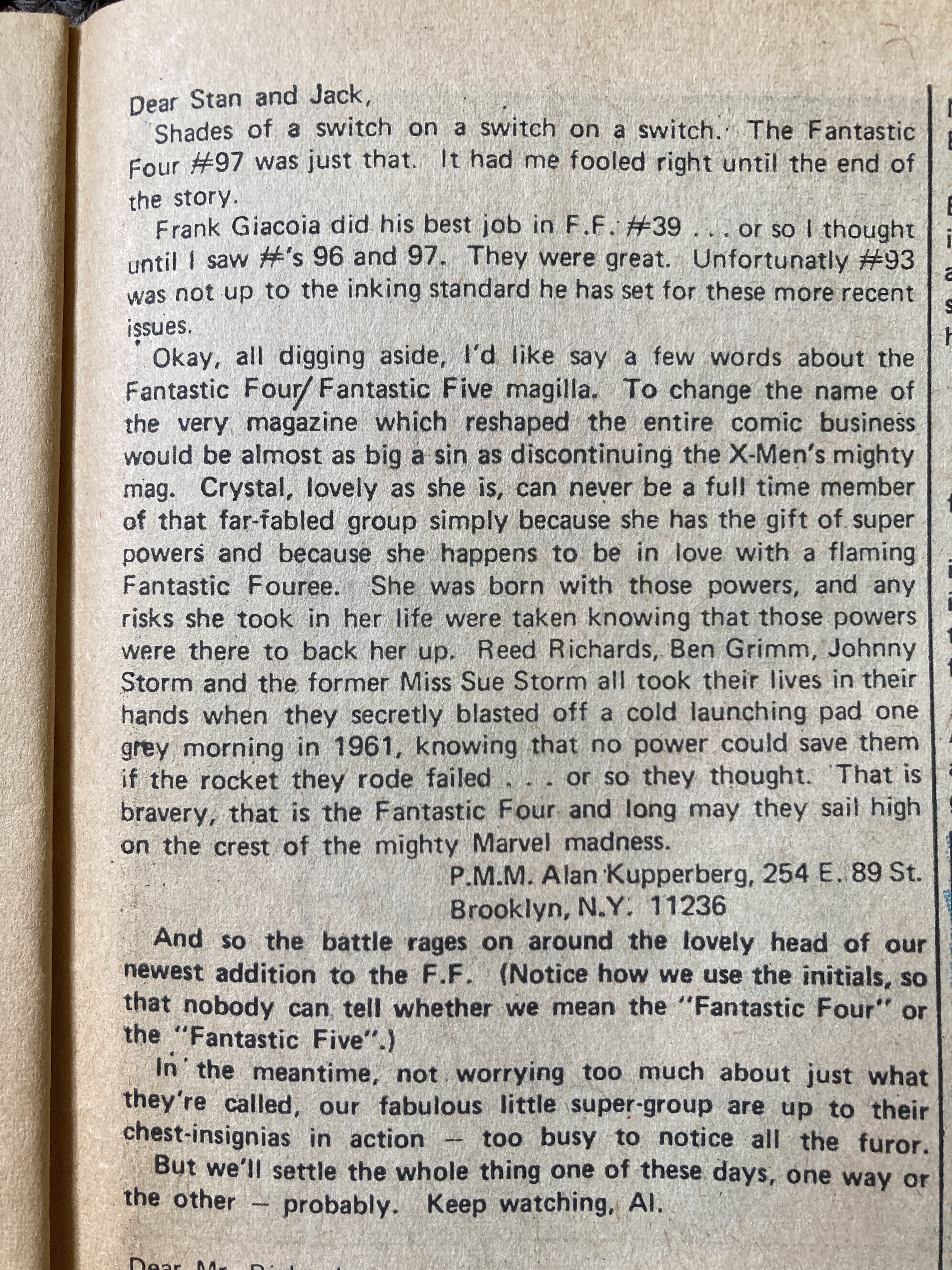
Longtime comic writer Alan Kupperberg has a letter in this issue (at least I assume it’s the same guy). He had his first published story, in Hulk 172, just two years later.
Dig that Kirby Krackle
Another subdued issue from the great Mr. K. There’s no interior splash pages, although the lead one is very fun.
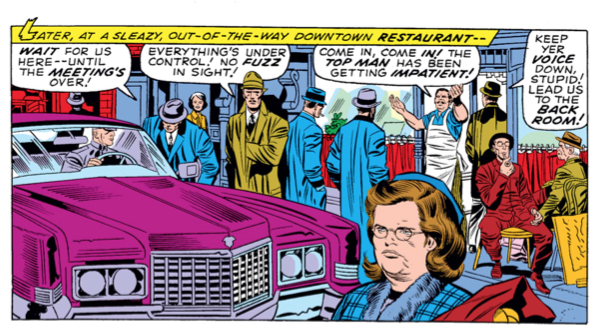
As befitting the nature of this issue, we don’t have much gee-whiz images, but lots of Jack’s city scenes, which can be just as good (note how the mob restaurant is called “sleazy.”)
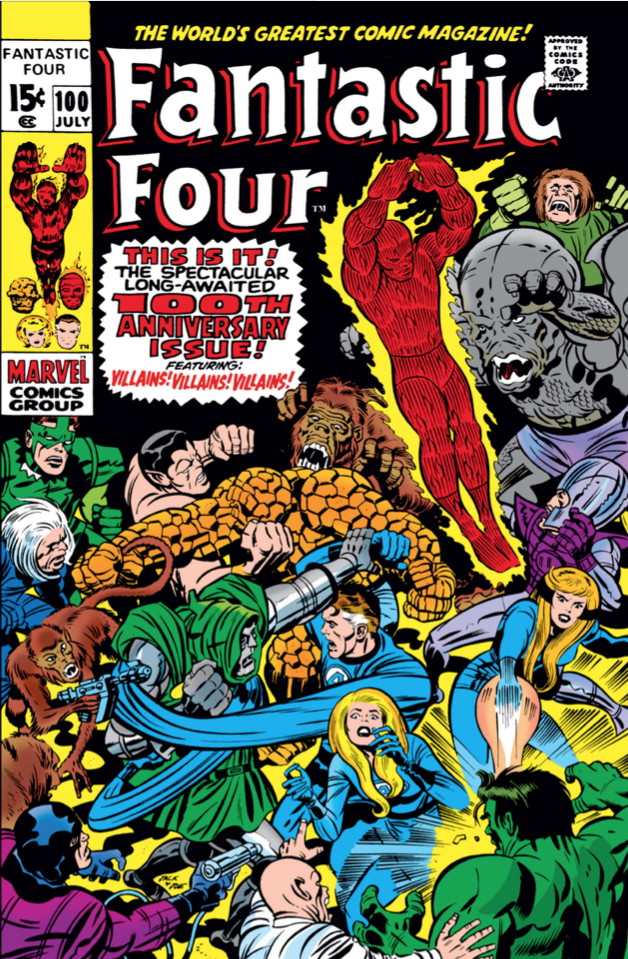
Fantastic Four 100 “The Long Journey Home” Published: April 1970 Story: Stan Lee and Jack Kirby Script: Lee Pencils: Kirby Inks: Joe Sinnott Letters: Sam Rosen Cover: Kirby and Sinnott
Synopsis
As they return from Attilan following the events of last issue, the Fantastic Four—plus Crystal, who has rejoined them—are attacked by Kang and Doctor Doom, who shoot down the FF’s flying saucer (again, the saucer’s origin is never explained). It quickly becomes clear these are not the real Kang and Doom, but androids, and that the Puppet Master and Mad Thinker are behind them.
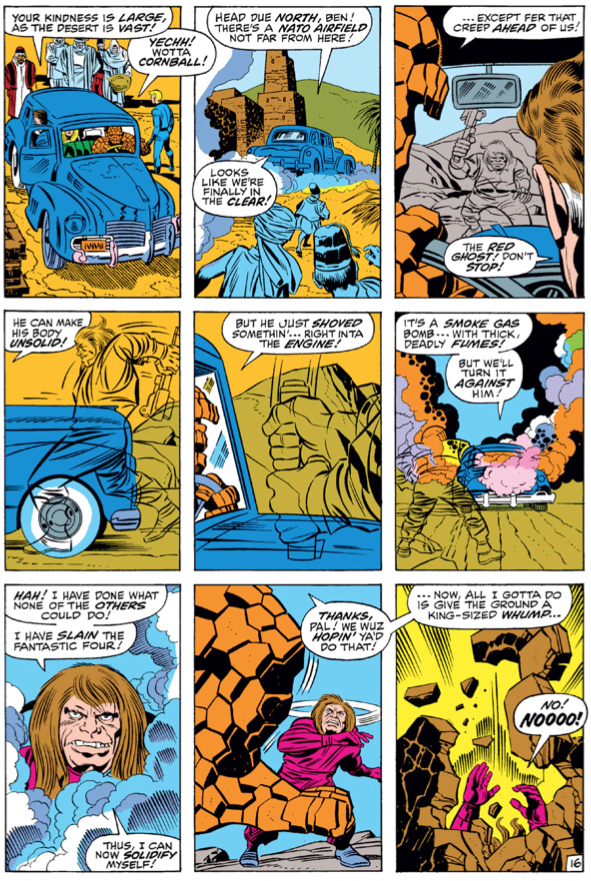
The FF are then attacked by a wave of androids in the form of virtually ever villain the FF has faced in its first 100 issues: The Kree Sentry, Namor, the Red Ghost and his apes, Diablo, Dragon Man, the Hate Monger, the Frightful Four, the Super Skrull, etc. The only obvious omission is Galactus. The FF scramble to escape, via camels, boat and eventually a car in what appears to be Egypt, and eventually make it to a NATO air field when the Puppet Master accidentally destroys the Thinker’s command center.
What’s going on here?
One hundred issues (plus some annuals) is a lot of comics, and it’s obviously an occasion worth memorializing with a big issue. Fantastic Four 100 is the first comic of the modern Marvel era to reach that milestone (other titles with higher issue counts, like Thor and Captain America, were renamed from older titles). Among super hero comics, only old DC stalwarts like Action Comics (issue 389 at this point) and Batman (200) had published more issues.
But despite the big anniversary, FF 100 is still a standard-sized comic with just 20 pages of story. Double-sized anniversary issues didn’t come along until years later (FF 200 in 1978 is a double sized issued) and the big, blow-out issues with extra-long stories, back-up features and pinups were still reserved for annuals at this point. It’s possible FF 100 was originally intended to be a double-sized issue or an annual, because there is a lot of story jammed into relatively few pages and Jack has to resort to a handful of nine-panel pages to fit it all in, something he rarely does at this point in the FF. Needless to say, there are no interior splash pages and overall the art looks pretty cramped in this comic.
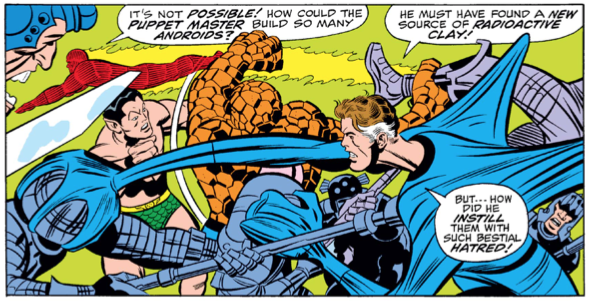
Structurally, FF 100 reads a lot like FF Annual 3, which featured just about every villain attack the FF during Reed and Sue’s wedding. Unlike that story, this one tries to have its cake and eat it too; instead of coming up with an explanation of how all these villains would coordinate with other, Stan and Jack just turn them into androids. As Reed explains, they are androids with the memories and power of the villains they are modeled on, which is somehow a result of the Puppet Master’s radioactive clay. It’s not exactly clear how that works, or why the Puppet Master’s clay seems to work differently in every appearance to date, but no matter, it serves to move he story along. (As we have discussed earlier, Stan and Jack often blur the lines between human and machine when they use androids).
Unfortunately, for such a big occasion, the story falls flat. There’s no real tension or drama, all the action feels rushed, and ultimately it seems like a bit of a gimmick. Great cover though.
Happy anniversary!
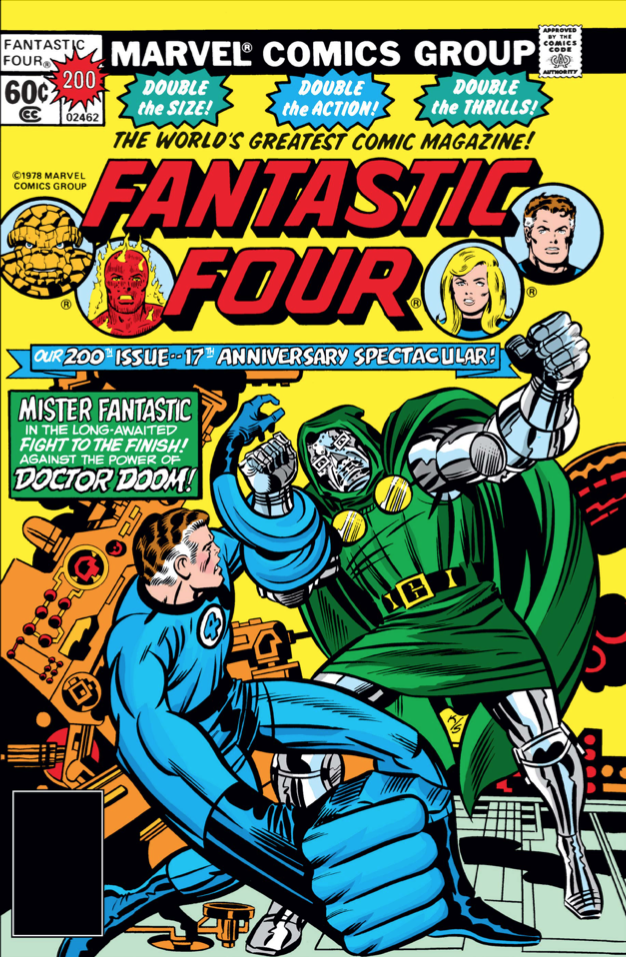
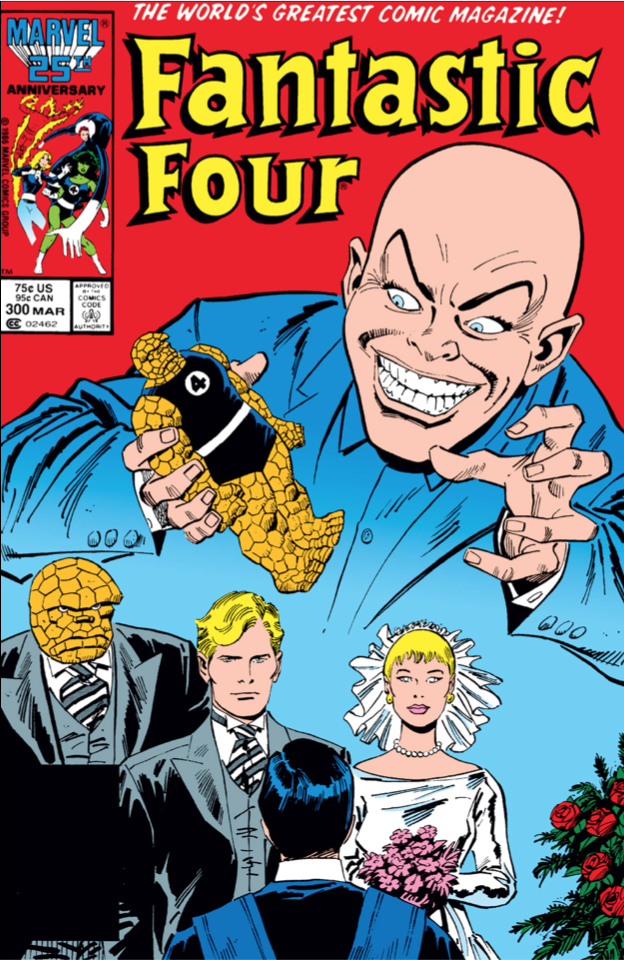
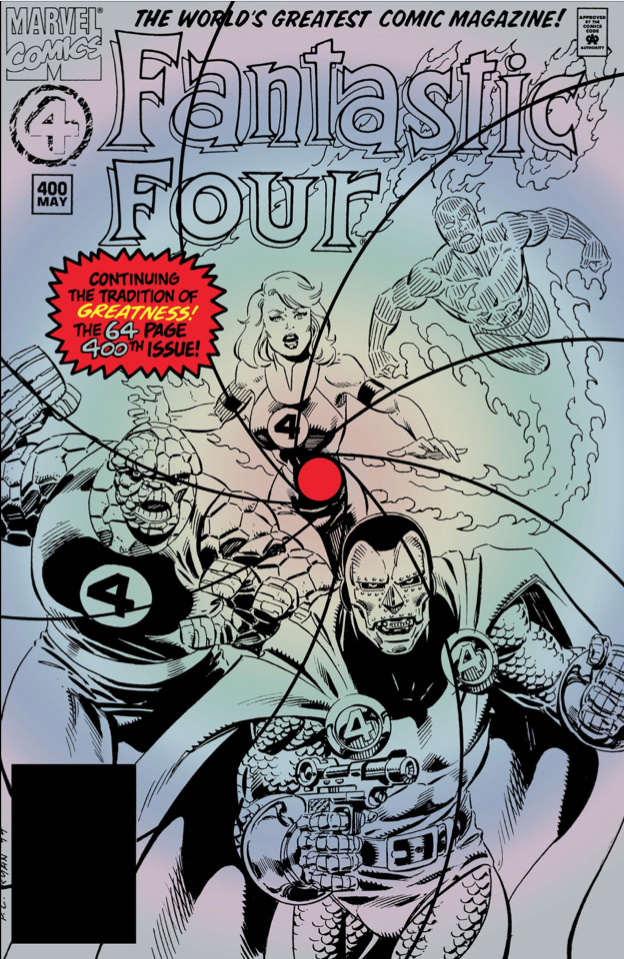
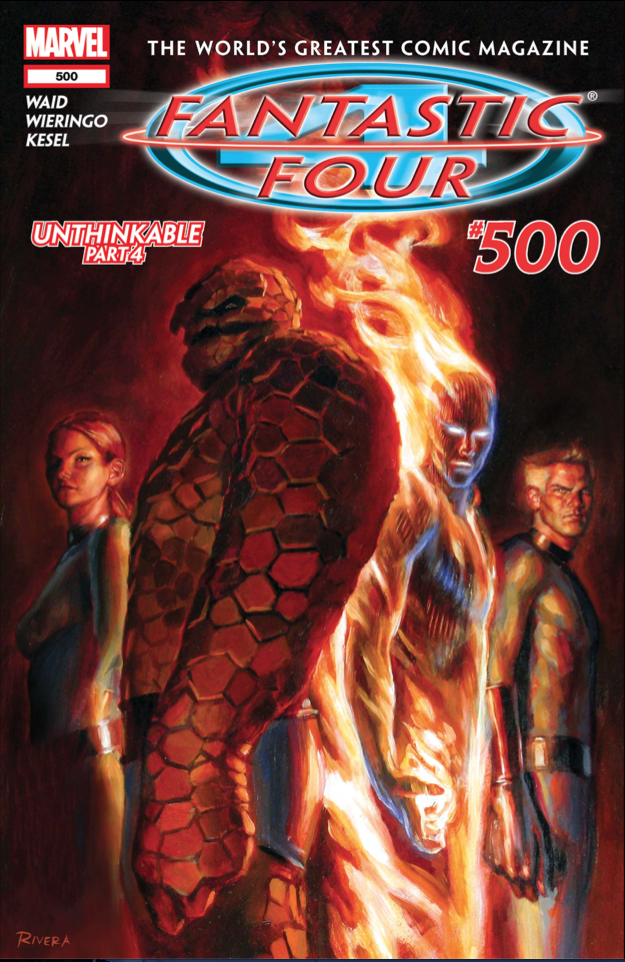
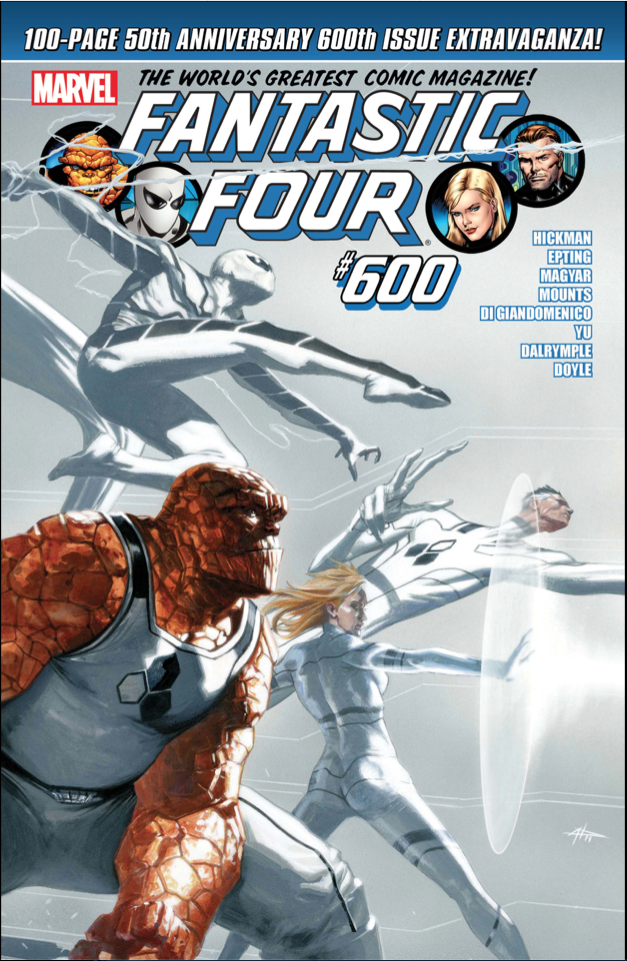
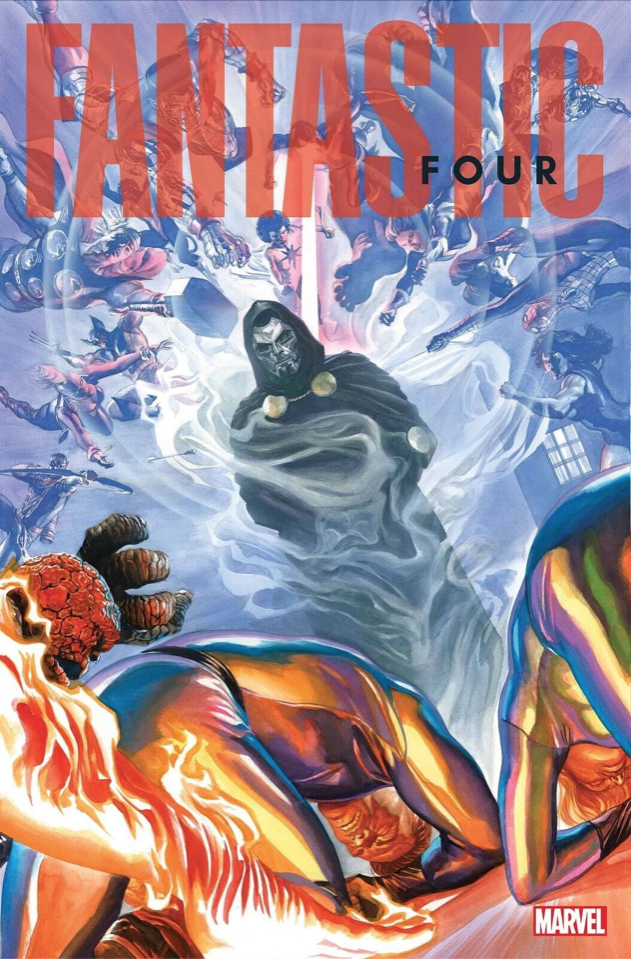
Here are the covers from the other FF comics ending in “hundred.” Unfortunately they’re not all great comics, and some of the best FF creators didn’t get a chance to write one. Note that issue issue 400 had a holographic foil cover (it was the 90s!) and issue 700 is due out in about 10 days of this writing.
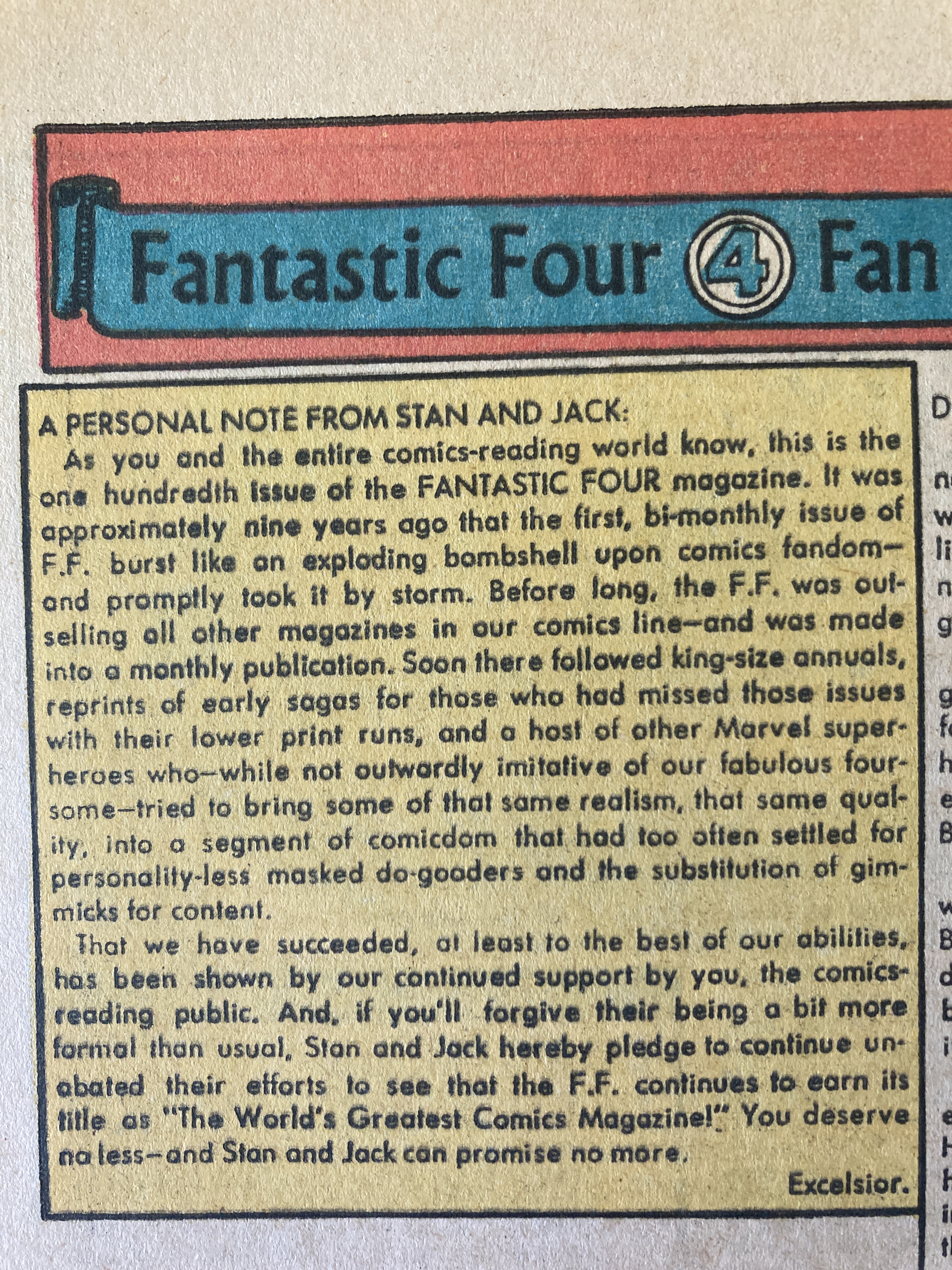
A message from Stan and Jack
The pledge to continue their efforts “unabated” will last another three issues.
Kang who?
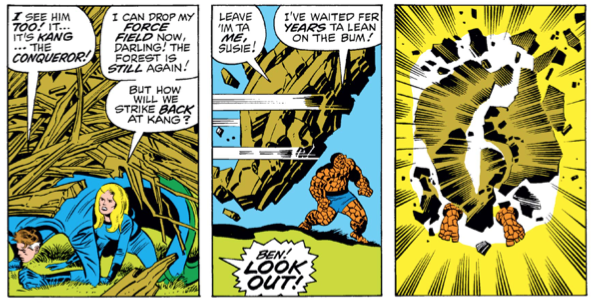
Kang’s appearance here is an odd one. He’s the first bad guy to attack the FF, yet he’s never really faced them in the FF’s own book to this point, with only the briefest of appearances in FF Annual 3. He has of course fought them as Rama-Tut, but it’s not clear that the FF knows they are the same person. He did face the Thing and the Human Torch in Strange Tales 134, which explains Ben’s comments about waiting years to fight him (and a reminder that I really should read those Torch stories in Strange Tales).
There’s also this odd reference from the Doom android, suggesting Kang is a future version of himself, something that came with Rama-Tut in FF Annual 2. In later comics it’s explained that Kang may be a descendent of Doom ( and how an android would know all this is not clear).
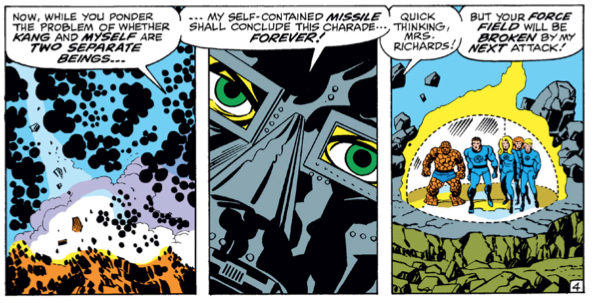
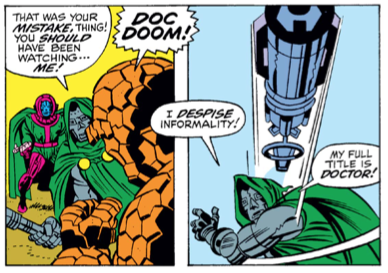
Speaking of Doom, I love this line:
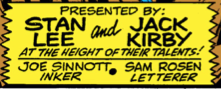
Crazy credits
If only this were true …
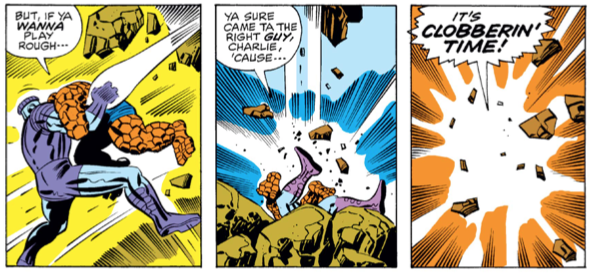
Clobberin’ time
Say what?
Crystal appears to be taking syntax lesson from Yoda
Half and half
There are two of these atrocious half pages in the comic. Neither are included in the digital version on Marvel.com that I use to all these images.
Dig that Kirby Krackle
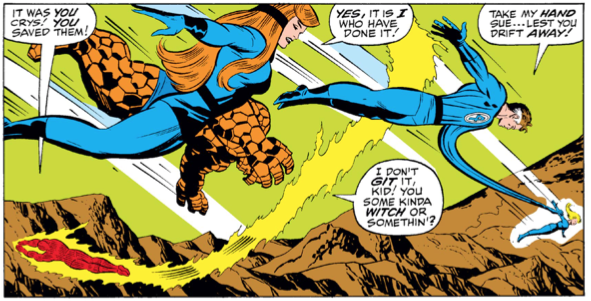
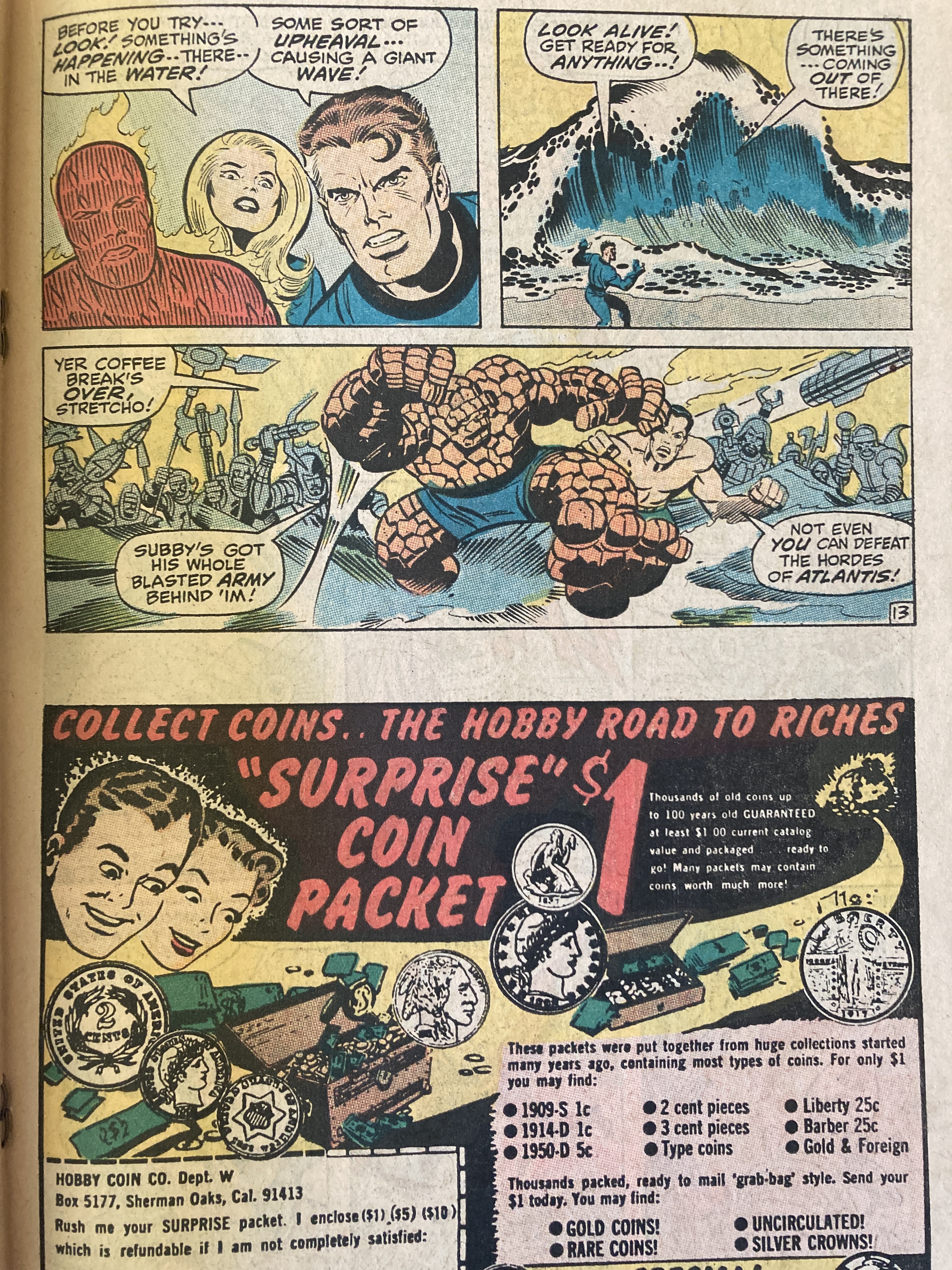
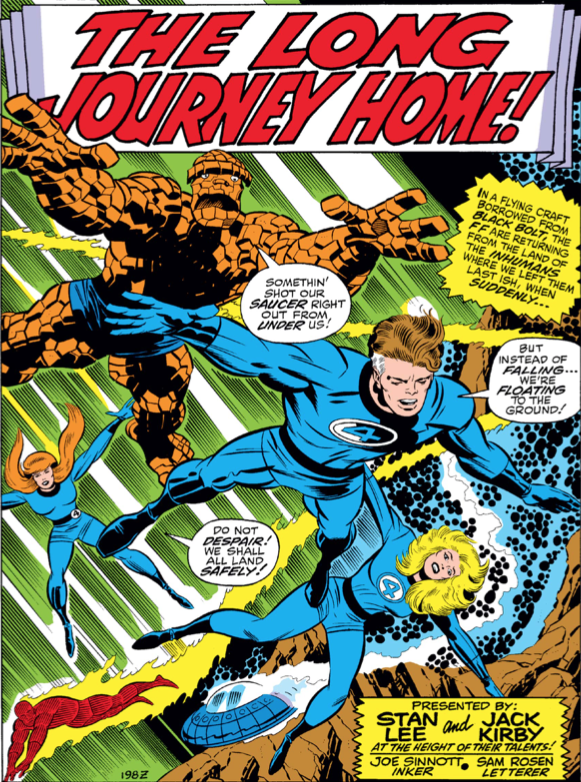
This is the first installment of “The World’s Greatest Comic Magazine!” where I had to actually search for great Kirby panels. As mentioned above, the art feels cramped and workmanlike, and there are not a lot of examples of Kirby’s genius. But there are a few notable panels, particularly the splash:
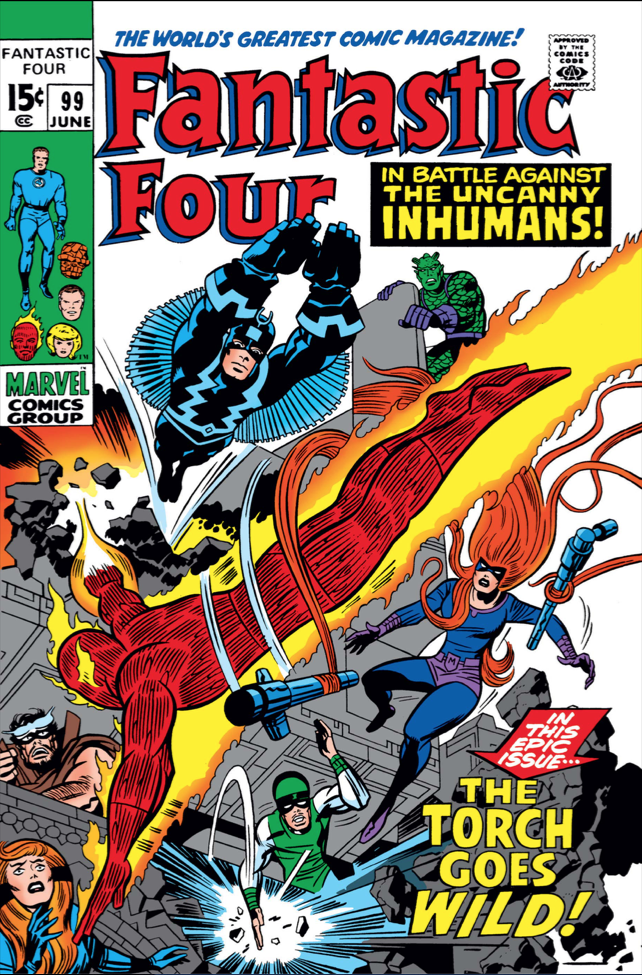
Fantastic Four 99 “The Torch Goes Wild!” Published: March 1970 Story: Stan Lee & Jack Kirby Script: Lee Pencils: Kirby Inks: Joe Sinnott Letters: Artie Simek Cover: Kirby and John Verpoorten
Synopsis
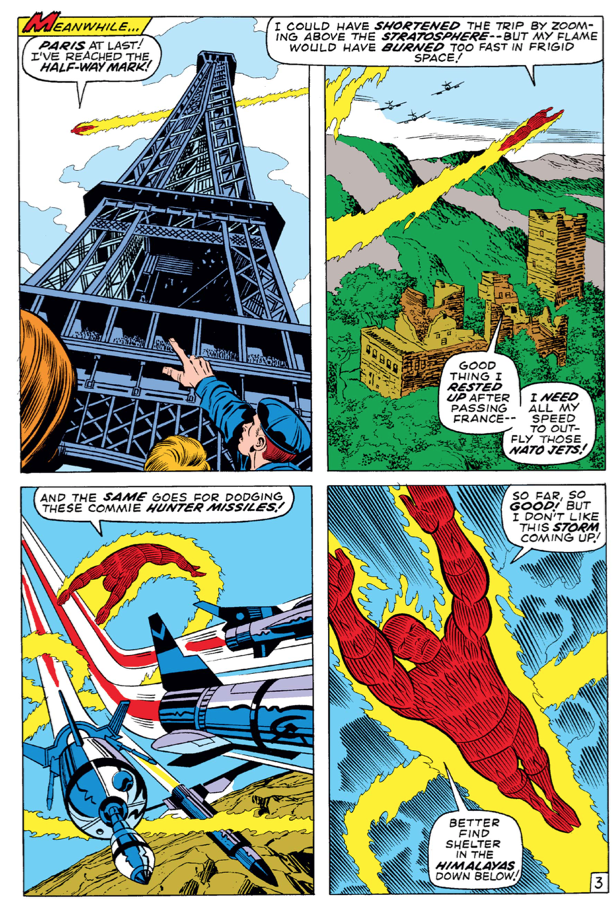
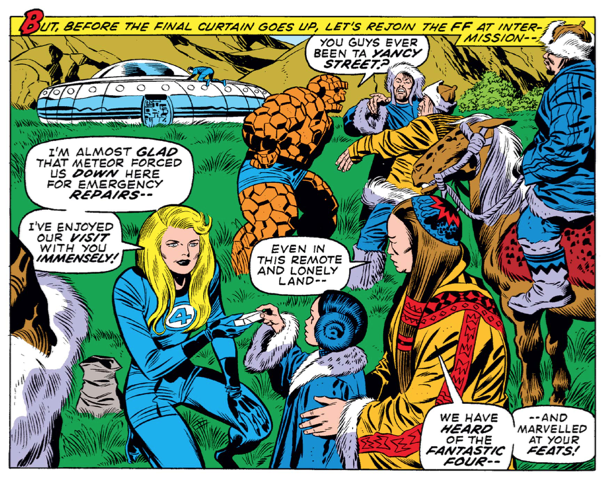
The Thing is preparing for a ski trip with Alicia when Mr. Fantastic and the Invisible Girl report the Human Torch is flying around the world to take on the Inumans and reclaim his girlfriend, Crystal. We cut to the Torch flying across Europe before he takes refuge in a cave in the Himalayas, where he is accosted by what appears to be a talking yeti. Meanwhile the rest of the team take off in a flying saucer, only to be grounded by a meteor strike in the Himalayas as well.
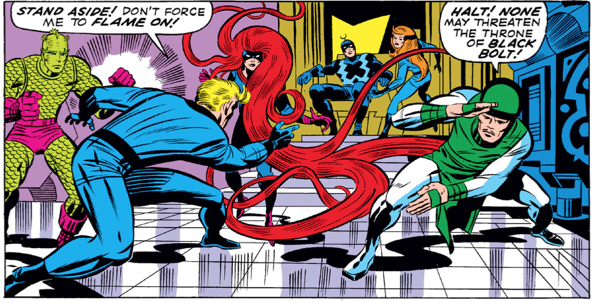
The yeti turns out to be an Inhuman and Johnny, realizing he has reached his destination, battles his way through Attillan, the city of the Inhumans, and confronts Crystal and the rest of the royal family. The Torch fights them, until Crystal, peeved at his immaturity turns against him. Johnny, feeling betrayed, threatens to destroy Attillan with a fireball when the rest of the FF show up and neutralize him. Eventually Crystal explains she was needed by her family because Black Bolt was sick. A chagrined Johnny learns his lesson and Ben is pleased he can still go skiing.
What’s going on here?
This is a pretty weak issue, and it’s hard not to connect it to the the upcoming end of the Lee/ Kirby run, which is coming in just four more issues. The plot is thin, the art feels rushed and the comic as a whole lacks much substance. At this point, we’ve had a number of stories about the Torch’s pursuit of Crystal, and this one didn’t add much to our understanding of them. If anything, it revealed Johnny to be as immature as ever.
If there’s one redeeming quality, it’s that Sue not only joined the mission—after being sidelined for so many because of pregnancy or motherhood—but she’s the voice of maturity and reason, calling out Johnny for being a selfish jerk. So that’s progress.
Comic relief
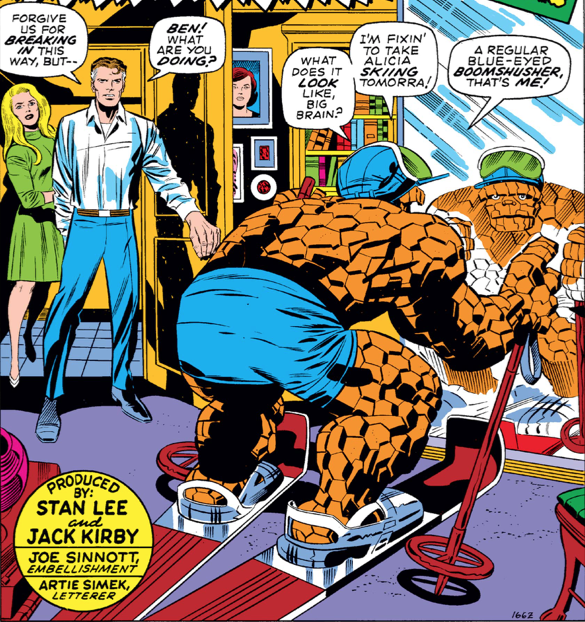
At some point Ben’s character tipped from being a tragic figure who uses humor to cope, to being the team clown. It’s been evolving that way for many issues, but this silly splash page seems like a good example of how Stan and Jack are treating him lately.
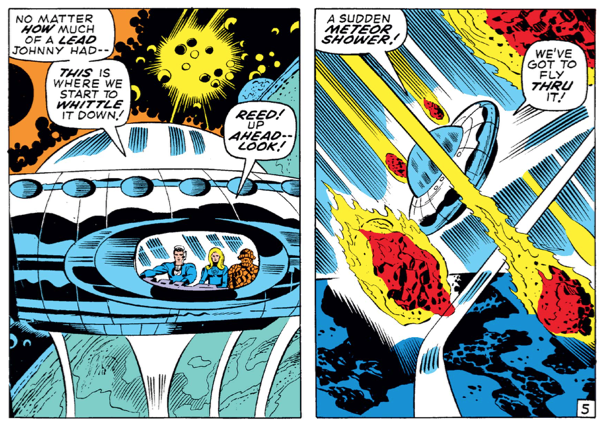
Flying saucer
Yes, the FF have a flying saucer. No, they don’t explain how or why. If I had to create an in-continuity explanation, I would say it’s from the Skrull planet they visited in issue 93, but maybe Reed just decided to make one.
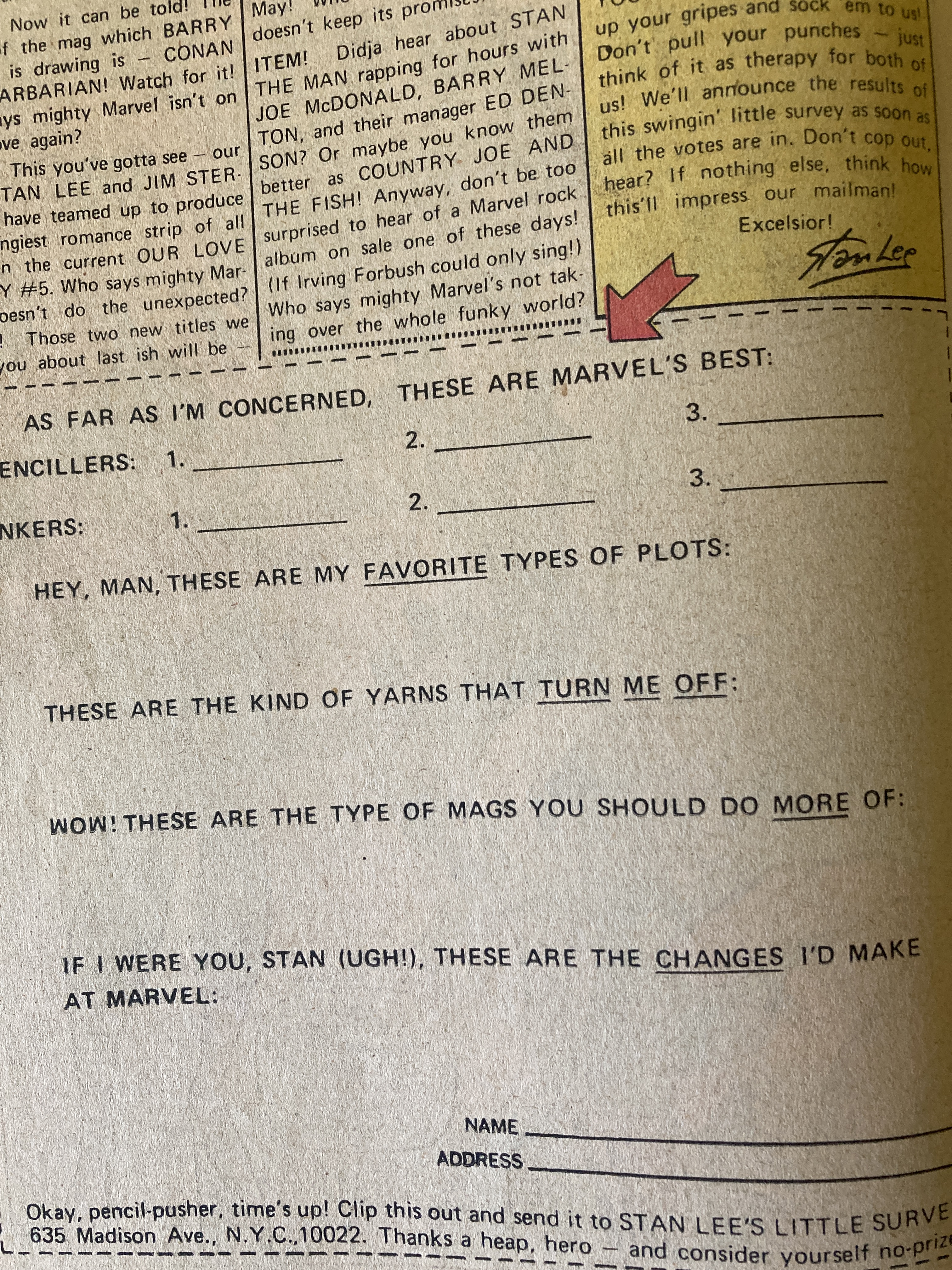
Stan’s survey
From the Bullpen Bulletins page. Note Stan didn’t ask who was the favorite writer. I would love to see the results of this.
Dig that Kirby Krackle
Only one interior splash in this issue, but it’s a fine one of the Inhumans:
I like this sequence of the Torch’s world tour:
And here the rest of the FF meet some elegantly attired Tibetans:
Also on newsstands
What else was on sale in March 1970? Covers by Adams, Kane and Franzetta
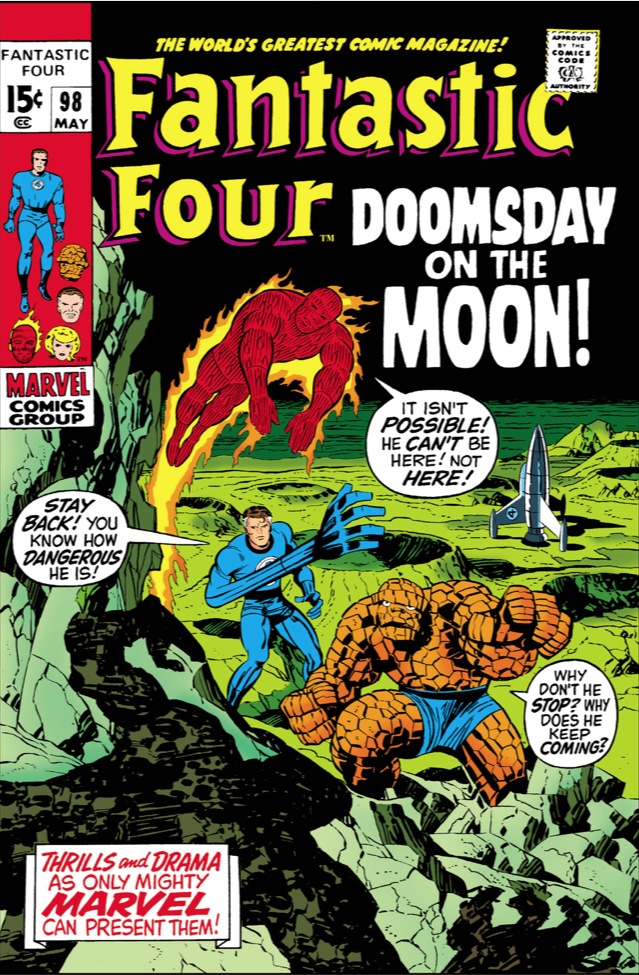
Fantastic Four 98 “Mystery on the Moon!” Published: Feb. 1970 Story: Stan Lee and Jack Kirby Script: Lee Pencils: Kirby Inks: Joe Sinnott Letters: Artie Simek Cover: Kirby and Sinnott
Apologies for skipping the last two weeks! I was on a family vacation without much time for blogging. We should be back on track now.
Synopsis
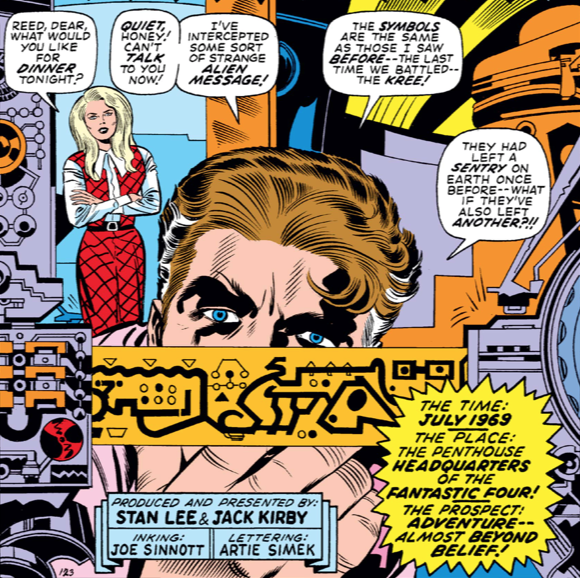
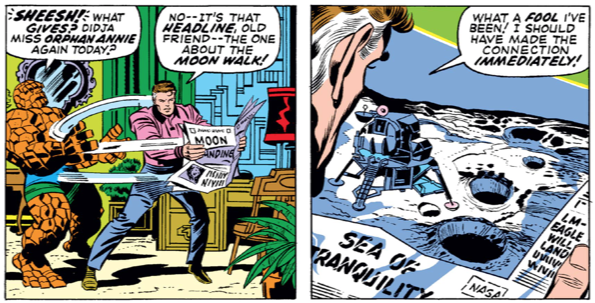
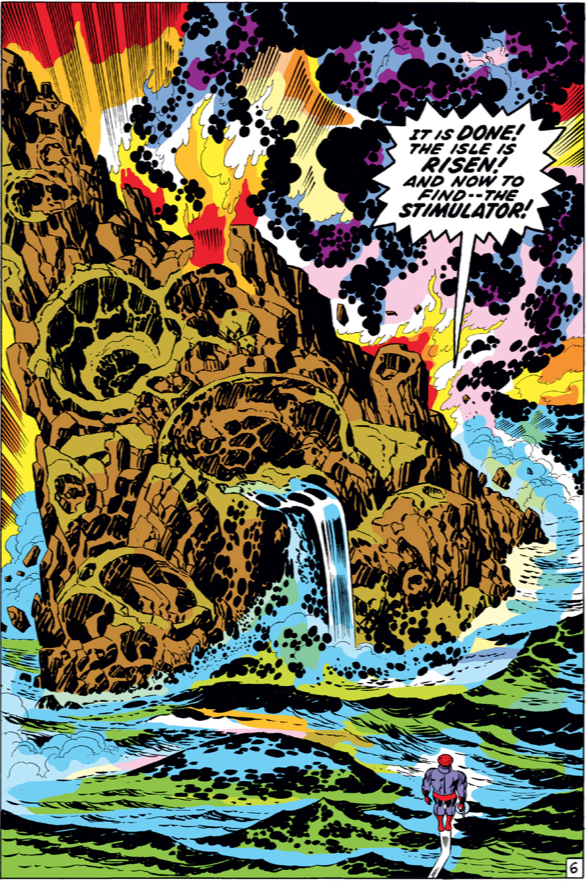
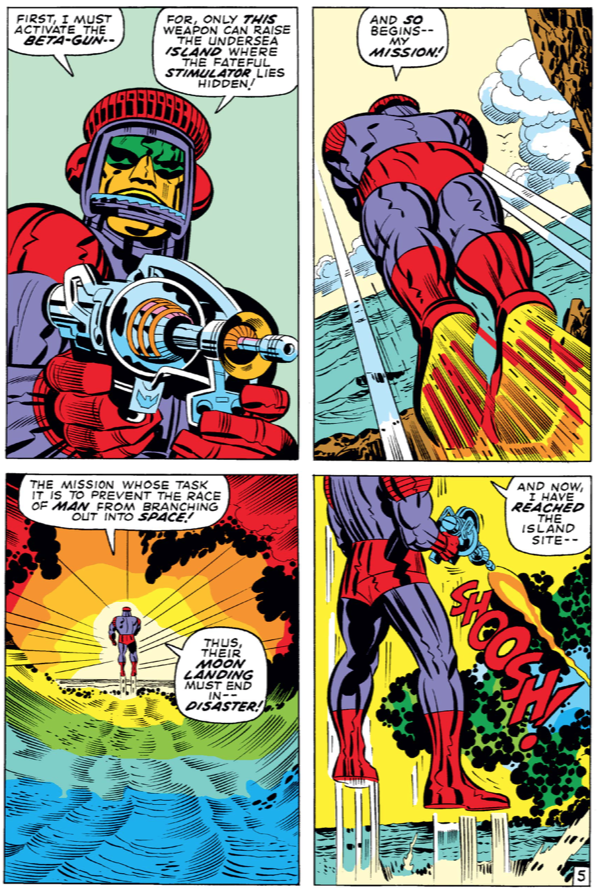
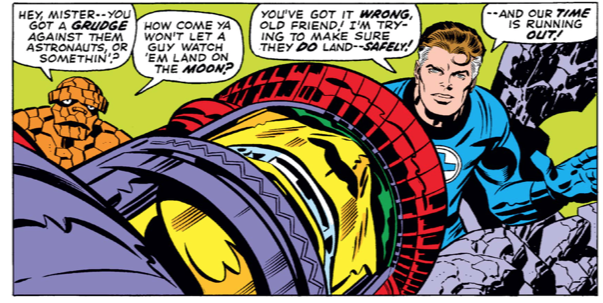
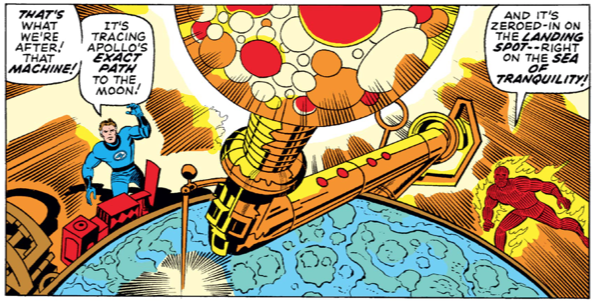
In his lab at the Baxter Building, Mr. Fantastic is deciphering a message from aliens, but can only make out the word “tranquility.” When he sees the Thing’s newspaper article about the upcoming moon landing, he realizes it refers to the Sea of Tranquility on the moon, and believes it’s an attempt disrupt the landing. Meanwhile, a Kree sentry declares it his mission to prevent humans from traveling to space, and uses his beta-gun to raise an island from the Pacific from which it will use a “stimulator” to awaken a “nameless mass” on the moon which will attack any living things that land there.
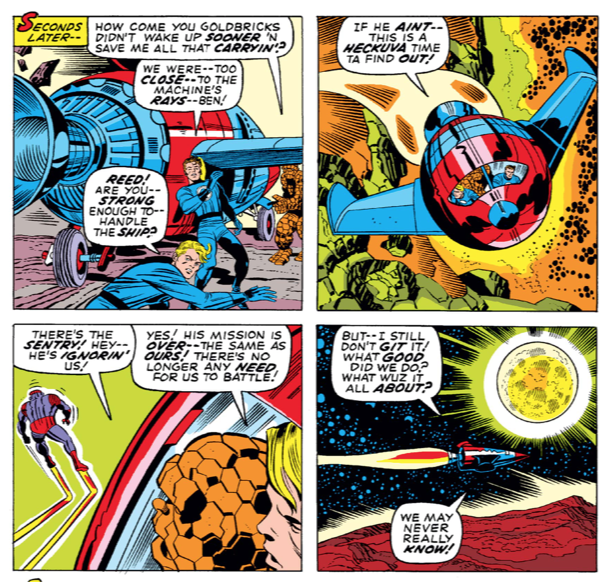
Leaving the Invisible Girl behind (yet again), the three male members of the FF take a missile they borrowed from NASA (why they don’t just take their own plane is not clear) to the island, from where Reed has detected the signals, and after a hazardous landing, battle the Sentry. After it’s defeated, Reed and the Human Torch descend into the depths of the island where they encounter the stimulator. The machine emanates rays which weaken them, however, and with his fading breath, Reed summons Ben, who destroys the stimulator—saving the Apollo 11 astronauts—and rescues his teammates.
What’s going on here?
This isn’t a bad issue, and there’s a lot to like about it, particularly Jack’s depictions of the sentry and the man-on-the street scenes he does so well. He is assisted by the inks of Joe Sinnott, who returns after missing the last two issues. The story is brisk and straightforward, and is a fun attempt to tie current events into an FF story.
That, however, is the story’s biggest weakness. The moon landing, while a big deal in the real world even six months later, would seem to be a pretty minor event in the Marvel universe, given how often our heroes have traveled to space. Remember, the Fantastic Four visited the moon as far back as issue 13, and since they, and many other Marvel heroes, have visited multiple planets outside the solar system. Even if the rest of humanity isn’t aware of this, it’s not clear why Ben—who is frustrated he’s missing the televised broadcast of the landing—or the Sentry should much care.
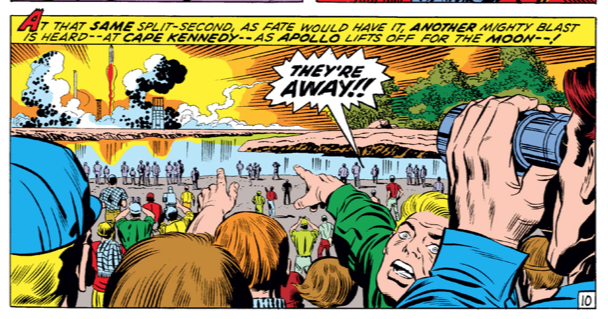
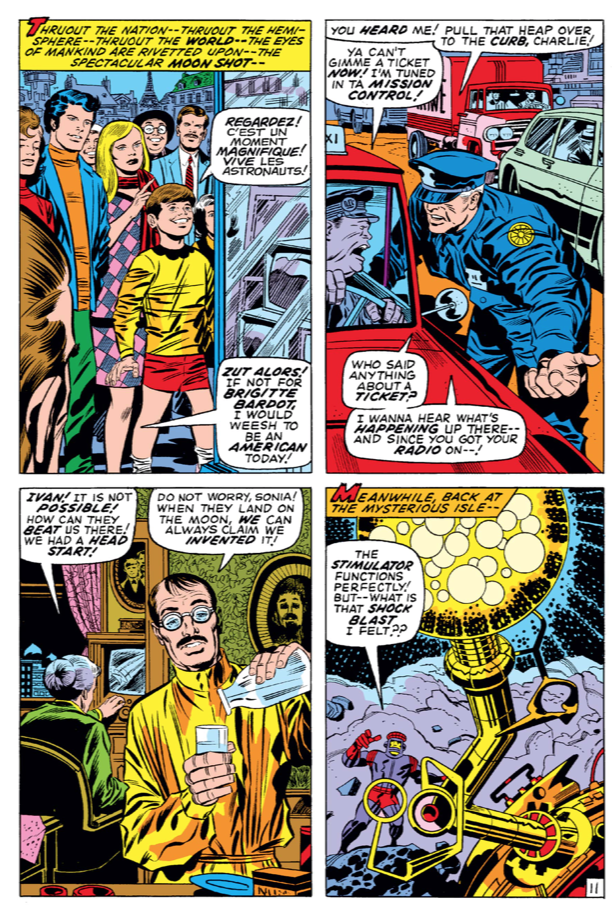
Clearly, this is a case of Stan and Jack embracing the zeitgeist and just running with it, regardless of the continuity or logic problems. And Jack has a lot of fun depicting both the launch of Apollo 11, and the excitement it generated.
Again, Jack really excels at these crowd scenes. The Bridgette Bardot reference is a nice goofy touch.
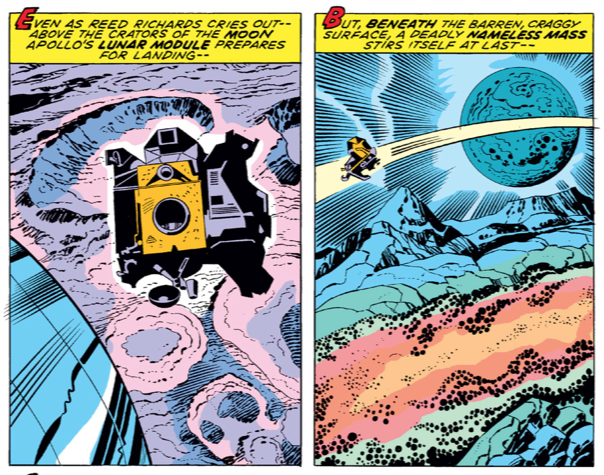
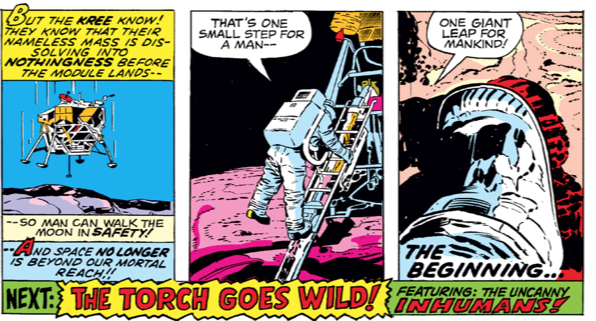
To close the loop, here’s the rest of the landing, as depicted throughout the issue (the nameless mass is never revealed – a McGuffin).
About that cover
There’s some slight of hand at work here, because the the cover sure implies the FF are on the moon, which obviously never happens in the comic (in this comic, anyway). And yet, it never explicitly says they’re on the moon, and the island in the comic is described as looking like the surface of the moon. So technically accurate, if a bit sneaky.
The sexist seventies
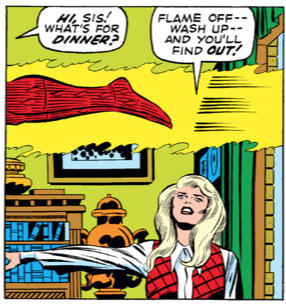
Not only is Sue shunted aside again, she’s reduced to playing a housewife whose role is to cook for the team:
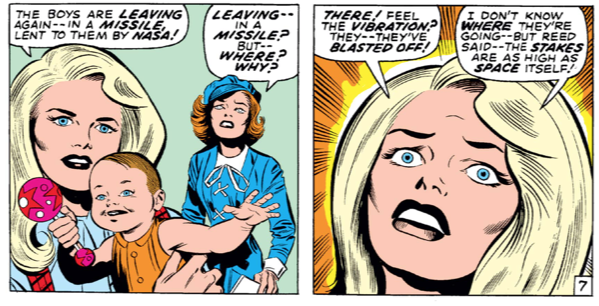
And when they leave her to take care of Franklin, Reed doesn’t even tell her where they are going:
Ooops
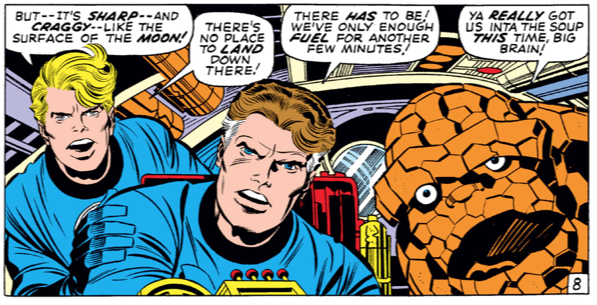
The team has to make a rushed landing because their missile (or is its plane?) is running out of fuel.
Yet at the end of the comic, there seems to be plenty of fuel to fly home:
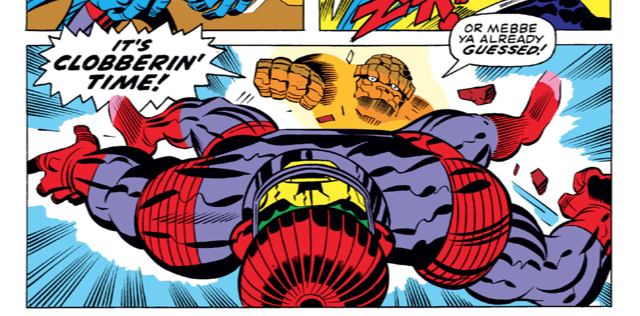
It’s clobberin’ time
This is a good one:
Read all about it:
Once again, newspapers are the information-transmission technology of choice:
Dig that Kirby Krackle
Jack pulls out the stops with this amazing splash page: